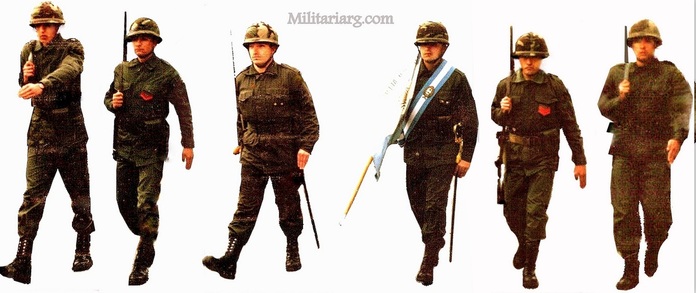
Napoleon held the Gendarmerie in extremely high regard,
viewing them as a foundational pillar of a stable state. He famously stated:
"The Gendarmerie is a unique organization. It is the most effective way to maintain the tranquility of a country, it is a half-civil half-military surveillance, extended all over the place..."
viewing them as a foundational pillar of a stable state. He famously stated:
"The Gendarmerie is a unique organization. It is the most effective way to maintain the tranquility of a country, it is a half-civil half-military surveillance, extended all over the place..."
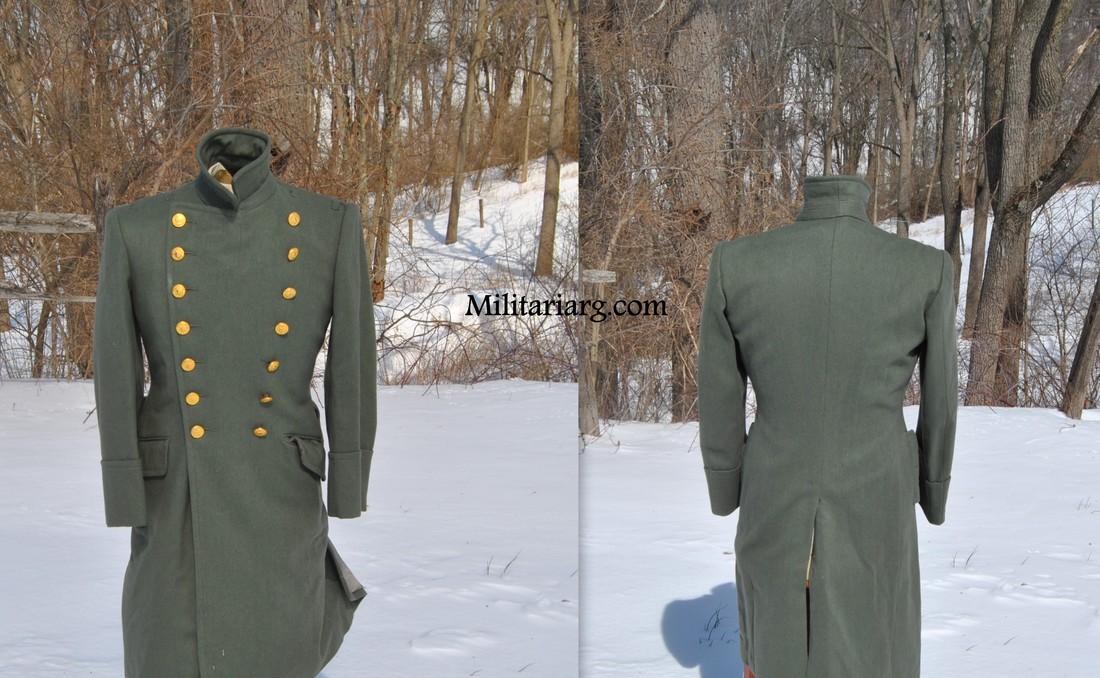
Feldgrau greatcoat 1940s/60s
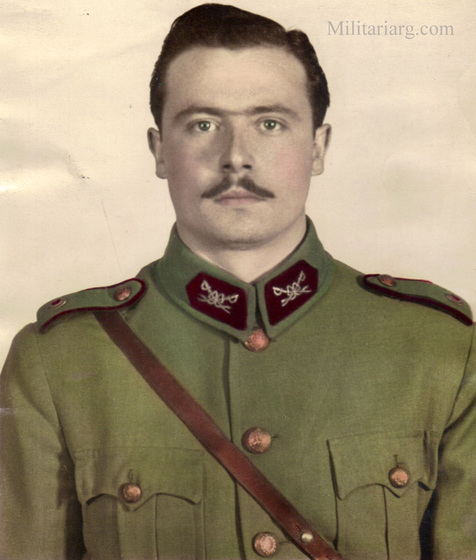
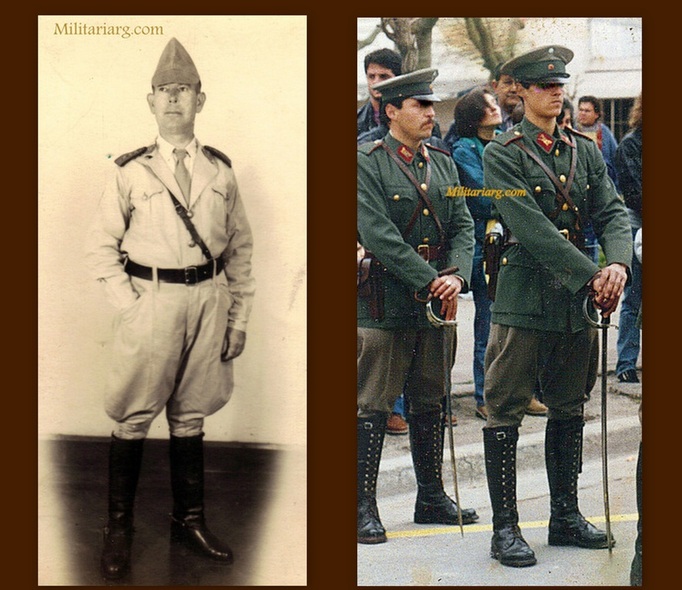
Gendarme (First Class), Escalafon General (Command), Region 1 (BSAS). When the shoulderboards have a dark red, it is for a Command-Troops. When it is blue it is for an administrator. Yellow is for communications.
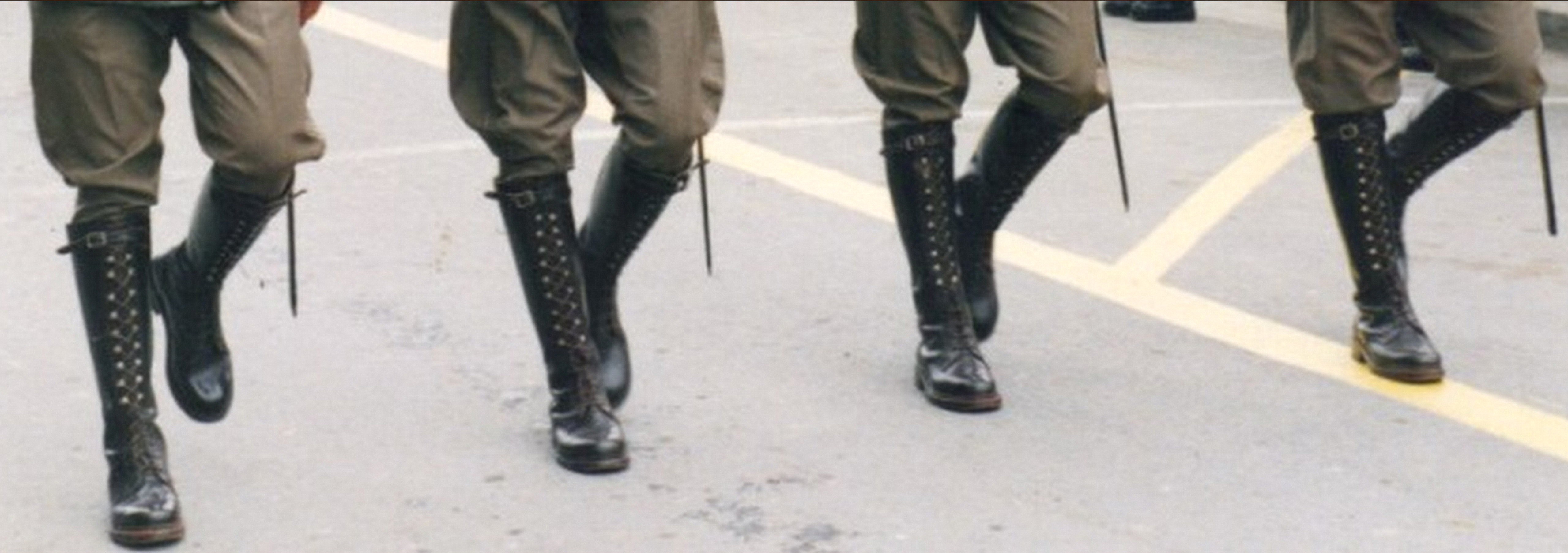
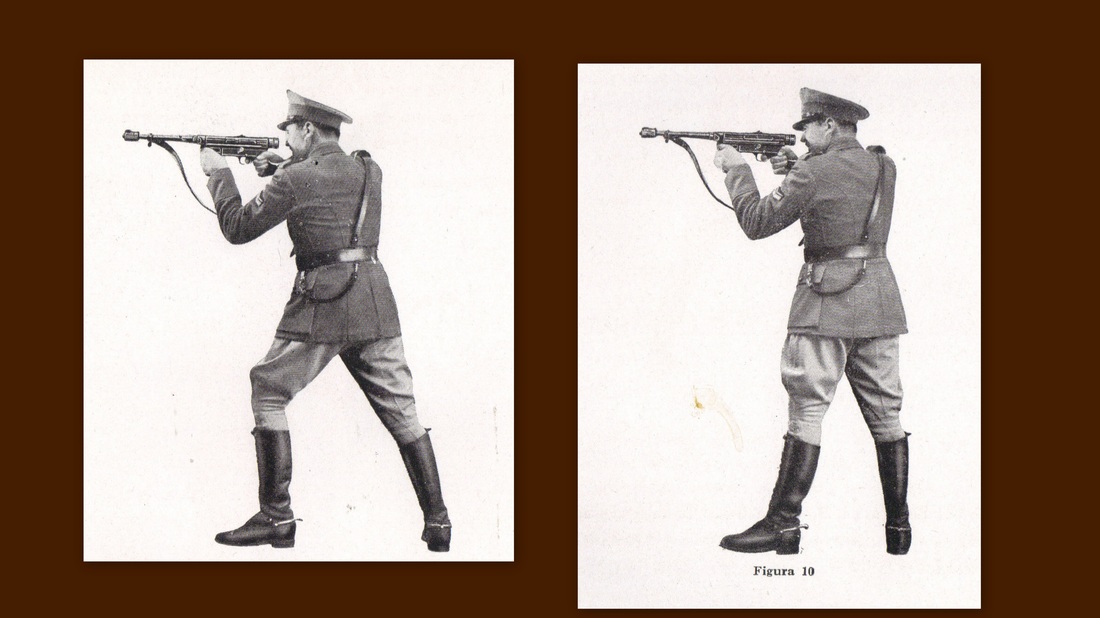
Above right: Uniform model 1938 for Argentine Gendarmerie. It has a visor hat with a region 1 insignia (Buenos Aires), the hat is in sand grey color (the same as the britches) and the hat band olive green. On the rectangular collar patch background, the shoulder board border and the piping are red, a variant of red color was the branch of cavalry between the 30s and 50s, but in Gendarmerie it is the color of 'general escalafon' or 'comando' in a green jacket, and crossed strap. The strap sustains a 1911 holster. The other strap sustains the scabbard. It also has tall boots and a cavalry sabre.
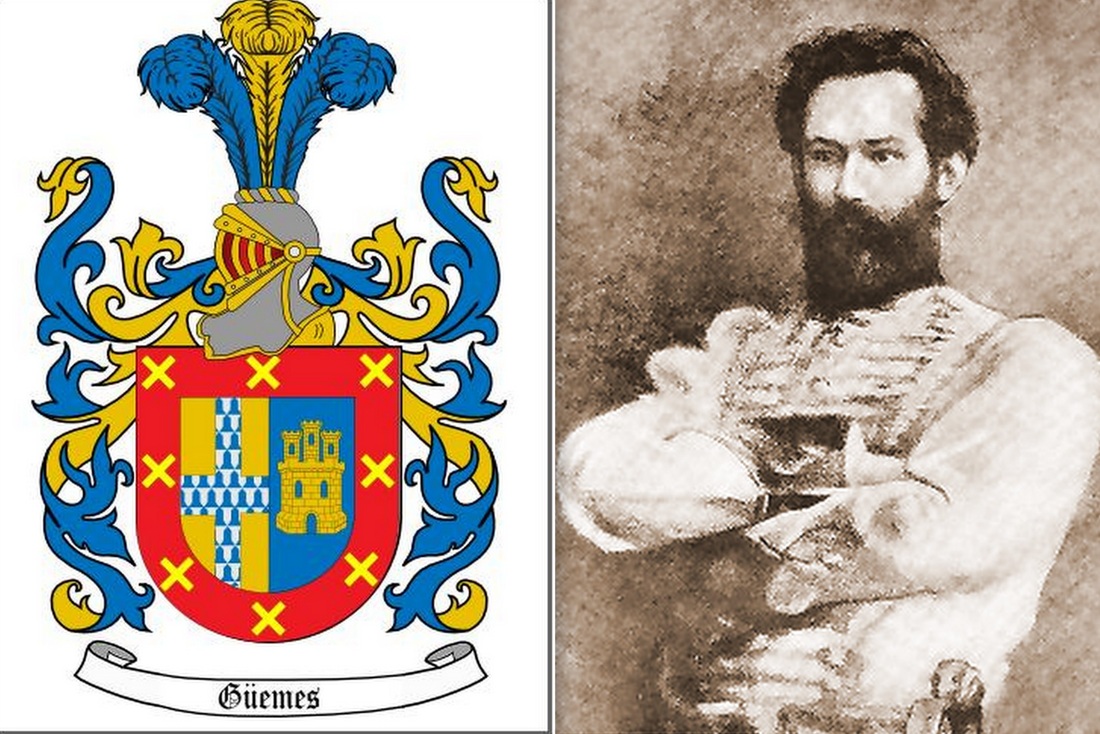
Martin Miguel de Guemes.
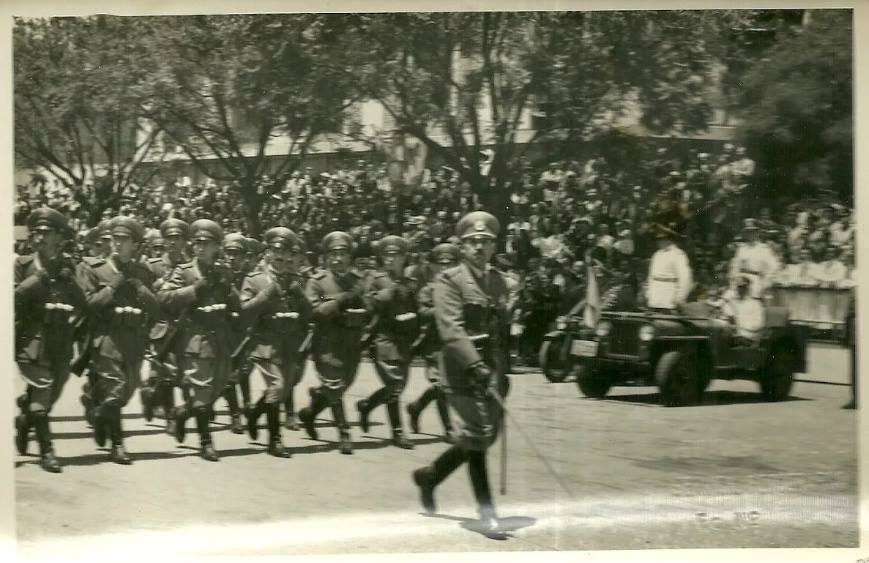
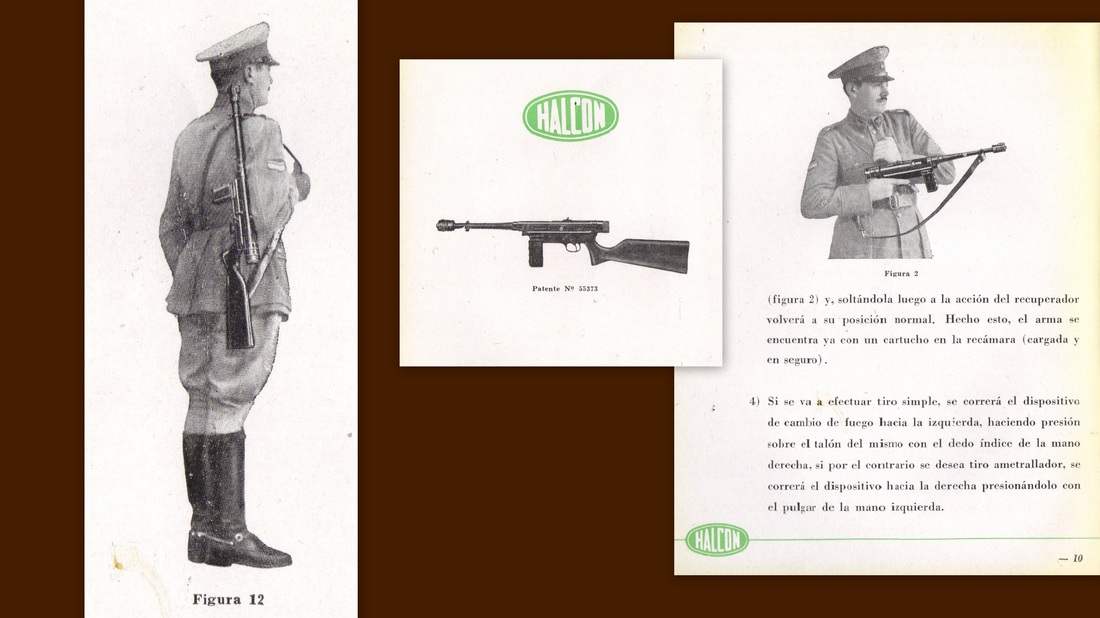
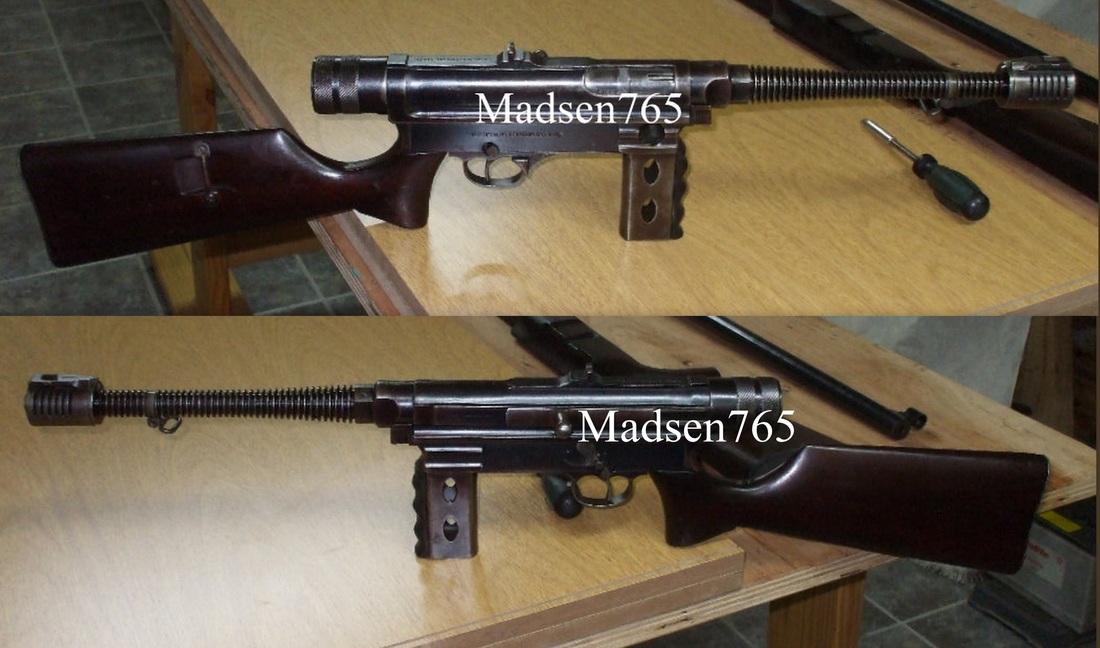
Halcon 45 ACP M/943 M43 Modelo Gendarmeria:
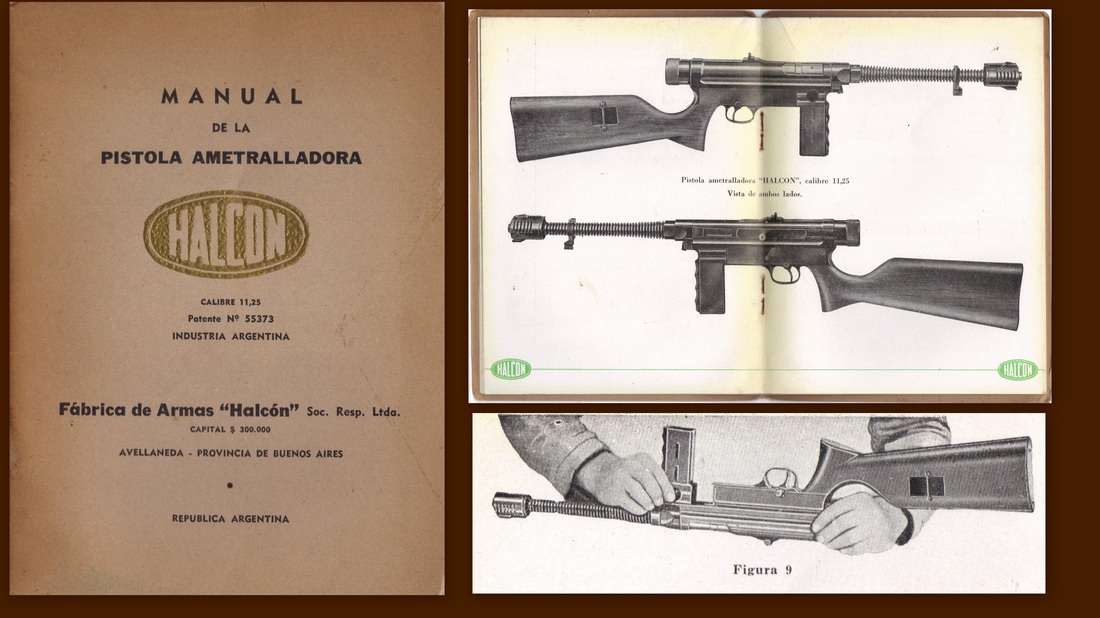
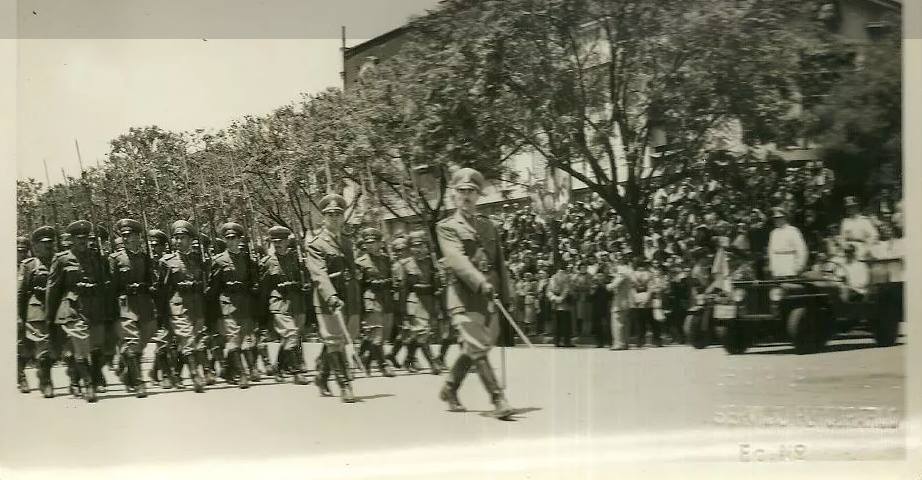
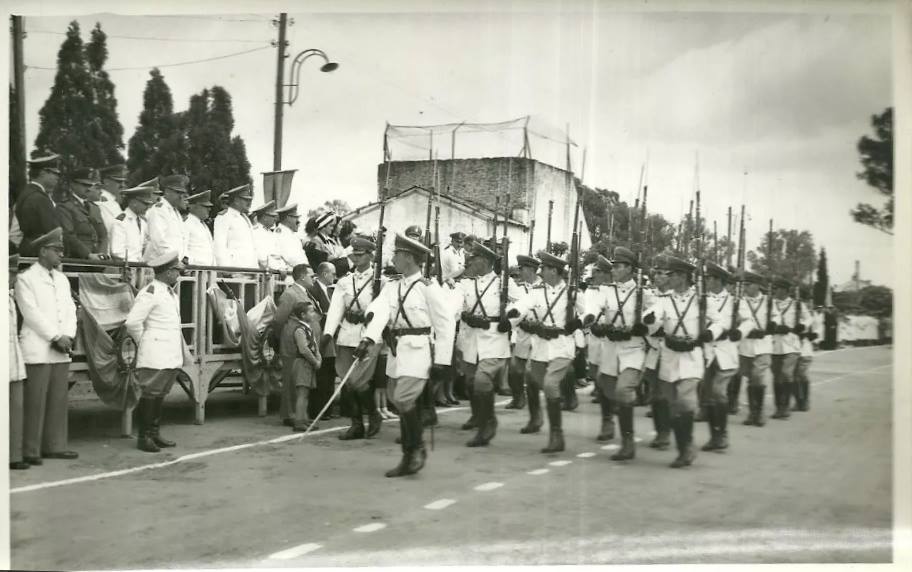
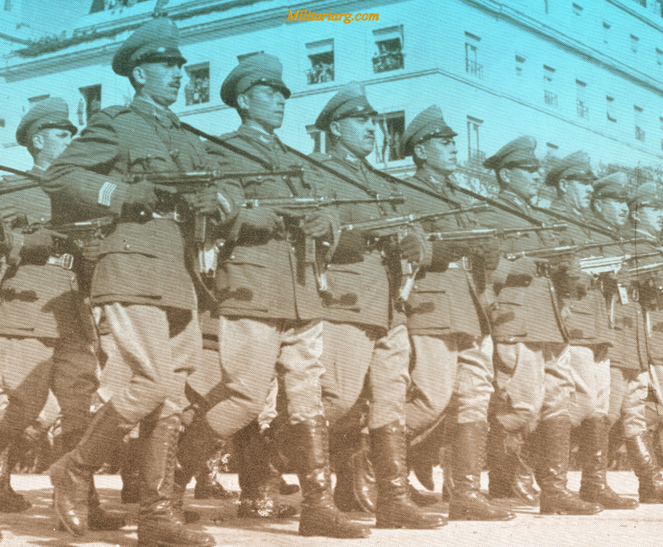
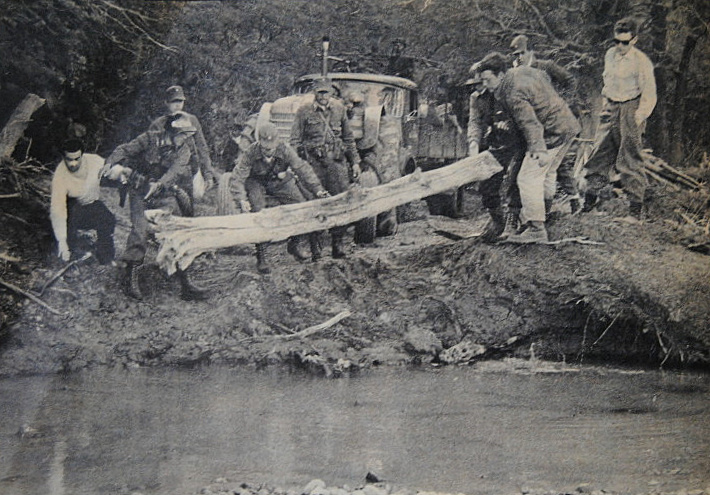
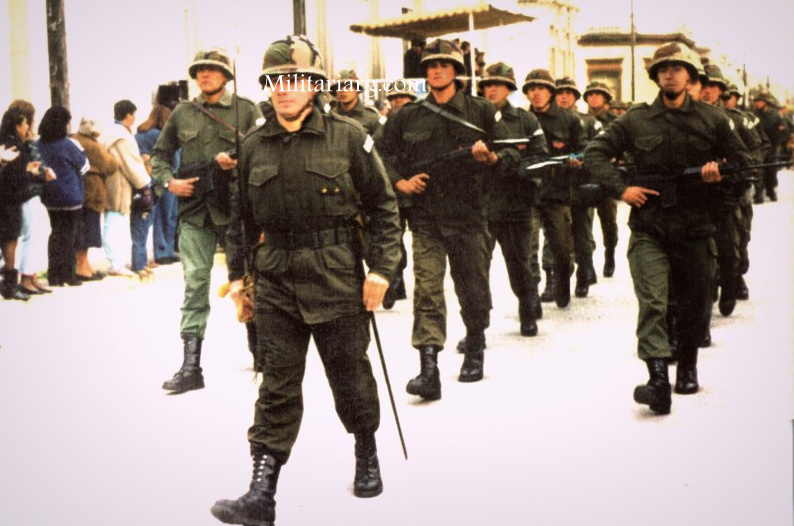
Above: This photo is from 1950 showing a parade celebrating August 17, the Day of San Martin. The group is carrying the Halcon M/943 calibre .45ACP. Photo is from a government publication of the time.
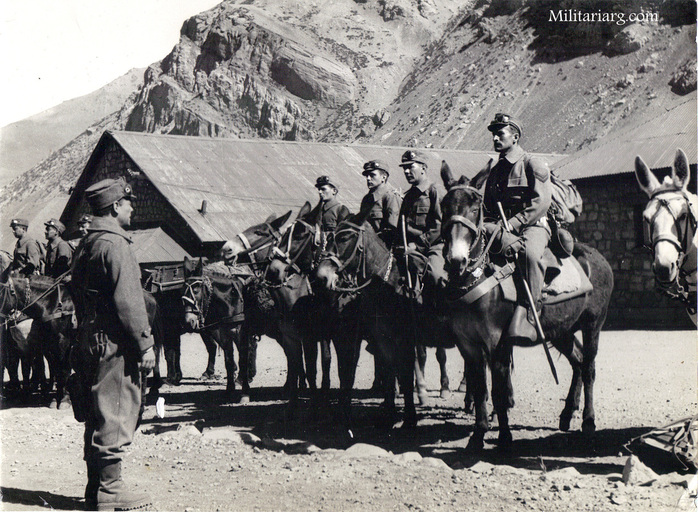
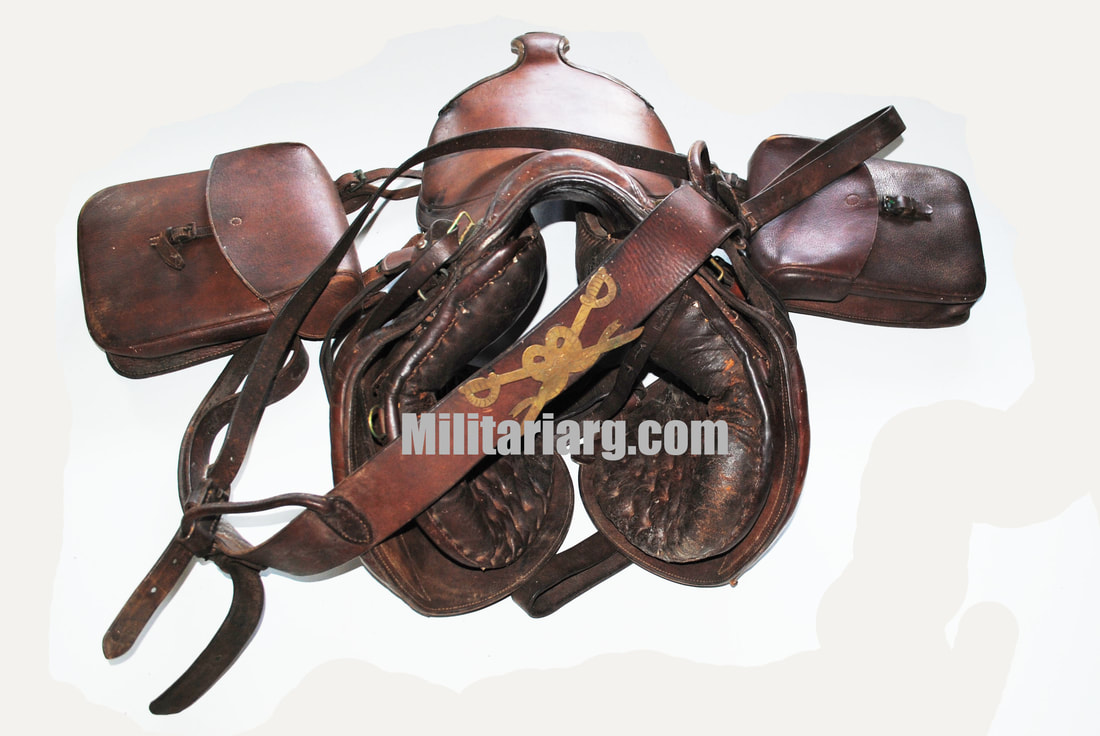
The Argentine Gendarmerie (a kind of national guard) was created in 1938 by decree from the Argentine congress to replace the military unitiies that had, up to that point, protected the country's borders. In order to form the first squadrons, volunteers were solicited from different cavarly ranks. That is the origin of the symbol of the crossed sabres and the historic uniform that bears a cavalry sabre as we see in the photo. In the 1930s the horses in the pampas and the mules in the mountains were found to be a fundamental tactical element for the gendarmerie's patrols, although they were also equipped with vehicles from the military stock. The hierarchy and chevron ranks are the same configuration as the army. Namely, there were NCOs (non-commissioned officers) but the officers adopted the titles Ensign and Commander..
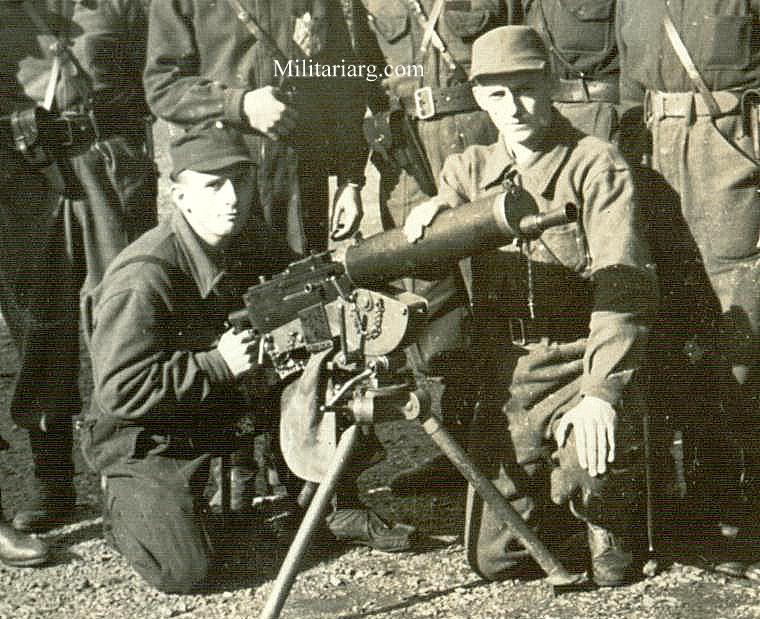
Halcon M/943
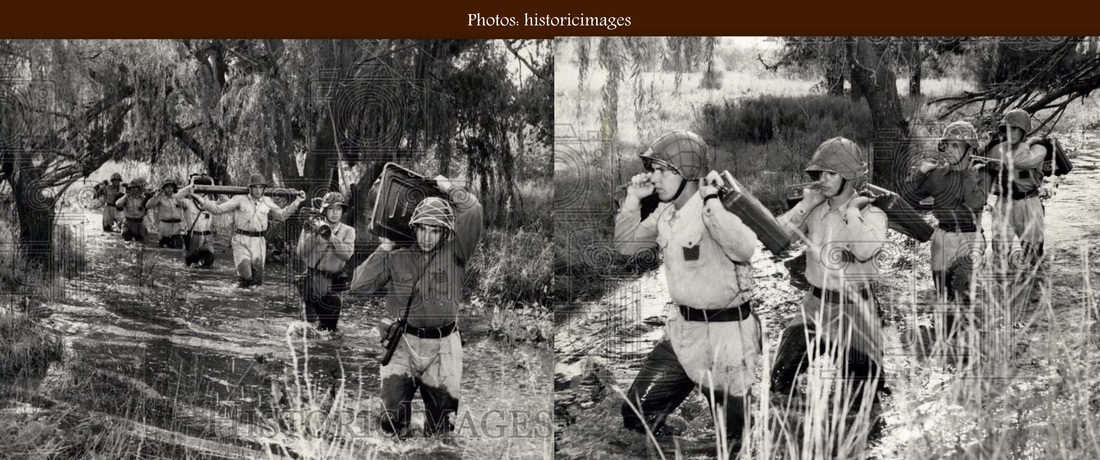
During the period from 1940 to 1982, the Gendarmería Nacional Argentina (GN) transitioned from traditional bolt-action rifles and heavy cavalry-style equipment to modern semi-automatic and automatic weaponry, reflecting its evolution as a military-style security force.
Small Arms and Sidearms
Pistols:
Ballester-Molina (.45 ACP): A standard indigenous Argentine pistol adopted in 1938 and used through the 1970s. It was designed as a cheaper, more durable alternative to the Colt 1911.
Sistema Colt Modelo 1927 (.45 ACP): A licensed Argentine-made copy of the Colt M1911A1, used extensively by all security forces.
Browning Hi-Power (9mm) FM HP-35 (Late 1980s): Produced locally by Fabricaciones Militares (FM) starting in the late 1960s, it gradually replaced .45 caliber pistols as the primary sidearm. the Gendarmería underwent a significant logistical shift in the 1990s. At that time, they began withdrawing the "assigned" (individual) sidearms from a large portion of the NCOs (Suboficiales).
Submachine Guns:
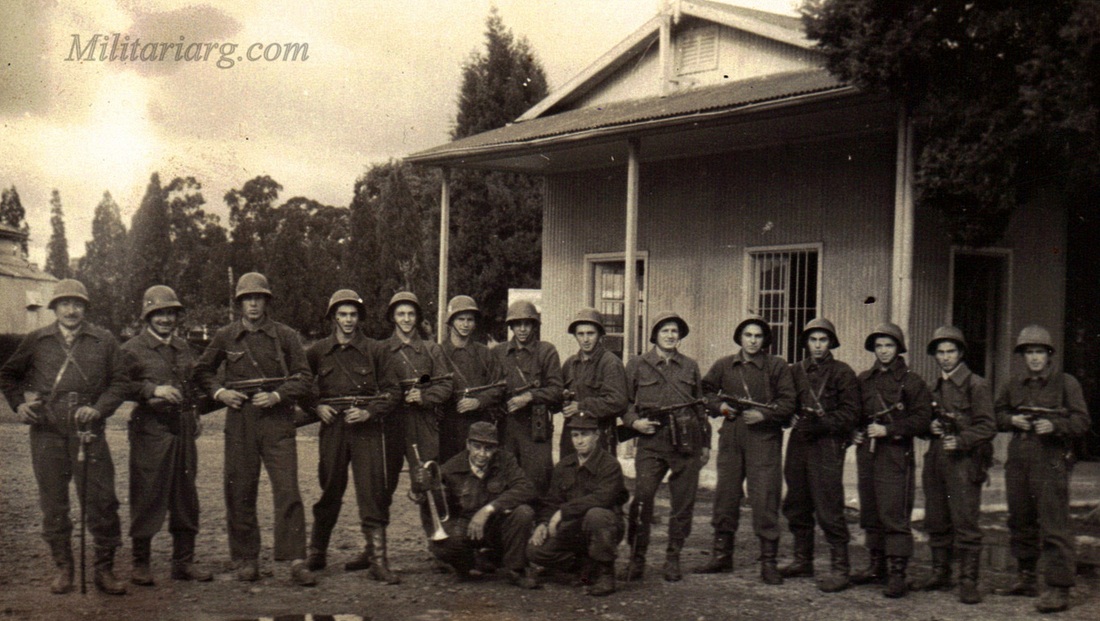
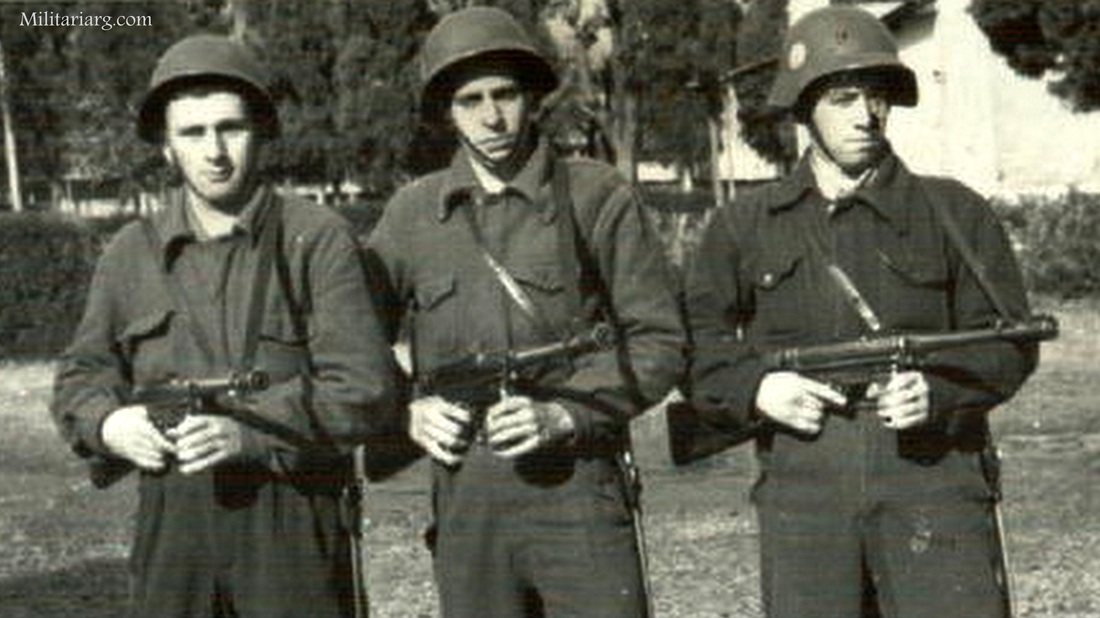
Halcón M-1943 / Modelo Gendarmería: Specifically designed for the GN, these were widely used for border patrol and urban security in the mid-20th century.
FMK-3 (9mm): A modern, locally produced submachine gun introduced in 1974, which became standard issue by the time of the South Atlantic War.
Service Rifles
Mauser Modelo 1909 (7.65mm): The primary bolt-action rifle from the GN's inception through the 1950s. Shorter "Engineers" or cavalry carbine variants were common due to the GN's history as a mounted force.
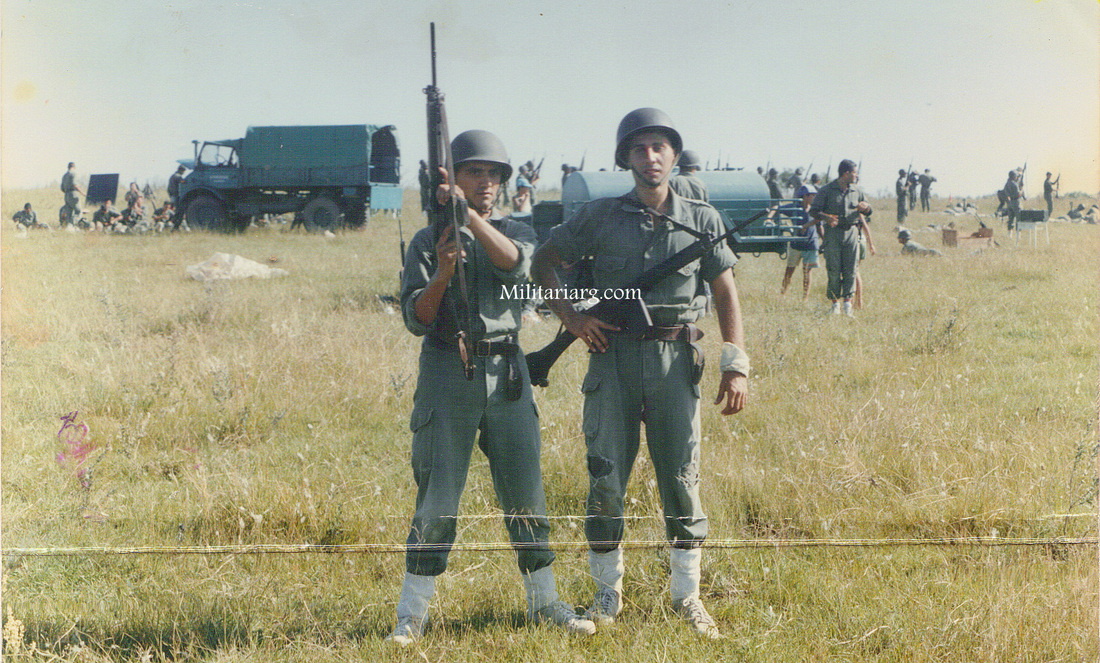
FN FAL/FAP (7.62mm): Adopted in the late 1950s and produced locally as the FM FAL. This became the definitive service rifle for GN units, including the elite Escuadrón Alacrán during the 1982 War.
Support and Special Equipment
Machine Guns: The FN MAG (7.62mm) served as the primary general-purpose machine gun. Some Security Squadrons like Magdalena, Moviles.
Anti-Tank Weapons: In 1982, Gendarmería units were equipped with M72 LAW rockets and locally made 81mm mortars for infantry support.
Ceremonial/Historic: The Cavalry Sabre remained a symbolic part of the uniform for officers and NCOs, reflecting the force's 1938 cavalry origins. Halcón M-63 paired with the 1940s-style historic uniform is a chronological mismatch, or "anachronism," in historical displays. The Halcon M-1943 used at this time was the caliber 45ACP 11,25mmm Model "Gendarmeria".
The Destacamentos Móviles (Mobile Detachments) of the Gendarmería Nacional (GN) were established as rapid-deployment, military-style units for border defense and internal security. By the early 1980s, these detachments—such as Destacamento Móvil 1 (founded in 1957) were equipped with heavy infantry support weapons typically found in army battalions.
81mm Mortars and 88.9mm Rocket Launcher "Instalazas".
The Gendarmería used mortars primarily for indirect fire support during border skirmishes or as part of their military role during the 1982 South Atlantic War.
Small Arms and Sidearms
Pistols:
Ballester-Molina (.45 ACP): A standard indigenous Argentine pistol adopted in 1938 and used through the 1970s. It was designed as a cheaper, more durable alternative to the Colt 1911.
Sistema Colt Modelo 1927 (.45 ACP): A licensed Argentine-made copy of the Colt M1911A1, used extensively by all security forces.
Browning Hi-Power (9mm) FM HP-35 (Late 1980s): Produced locally by Fabricaciones Militares (FM) starting in the late 1960s, it gradually replaced .45 caliber pistols as the primary sidearm. the Gendarmería underwent a significant logistical shift in the 1990s. At that time, they began withdrawing the "assigned" (individual) sidearms from a large portion of the NCOs (Suboficiales).
Submachine Guns:
Halcón M-1943 / Modelo Gendarmería: Specifically designed for the GN, these were widely used for border patrol and urban security in the mid-20th century.
FMK-3 (9mm): A modern, locally produced submachine gun introduced in 1974, which became standard issue by the time of the South Atlantic War.
Service Rifles
Mauser Modelo 1909 (7.65mm): The primary bolt-action rifle from the GN's inception through the 1950s. Shorter "Engineers" or cavalry carbine variants were common due to the GN's history as a mounted force.
FN FAL/FAP (7.62mm): Adopted in the late 1950s and produced locally as the FM FAL. This became the definitive service rifle for GN units, including the elite Escuadrón Alacrán during the 1982 War.
Support and Special Equipment
Machine Guns: The FN MAG (7.62mm) served as the primary general-purpose machine gun. Some Security Squadrons like Magdalena, Moviles.
Anti-Tank Weapons: In 1982, Gendarmería units were equipped with M72 LAW rockets and locally made 81mm mortars for infantry support.
Ceremonial/Historic: The Cavalry Sabre remained a symbolic part of the uniform for officers and NCOs, reflecting the force's 1938 cavalry origins. Halcón M-63 paired with the 1940s-style historic uniform is a chronological mismatch, or "anachronism," in historical displays. The Halcon M-1943 used at this time was the caliber 45ACP 11,25mmm Model "Gendarmeria".
The Destacamentos Móviles (Mobile Detachments) of the Gendarmería Nacional (GN) were established as rapid-deployment, military-style units for border defense and internal security. By the early 1980s, these detachments—such as Destacamento Móvil 1 (founded in 1957) were equipped with heavy infantry support weapons typically found in army battalions.
81mm Mortars and 88.9mm Rocket Launcher "Instalazas".
The Gendarmería used mortars primarily for indirect fire support during border skirmishes or as part of their military role during the 1982 South Atlantic War.
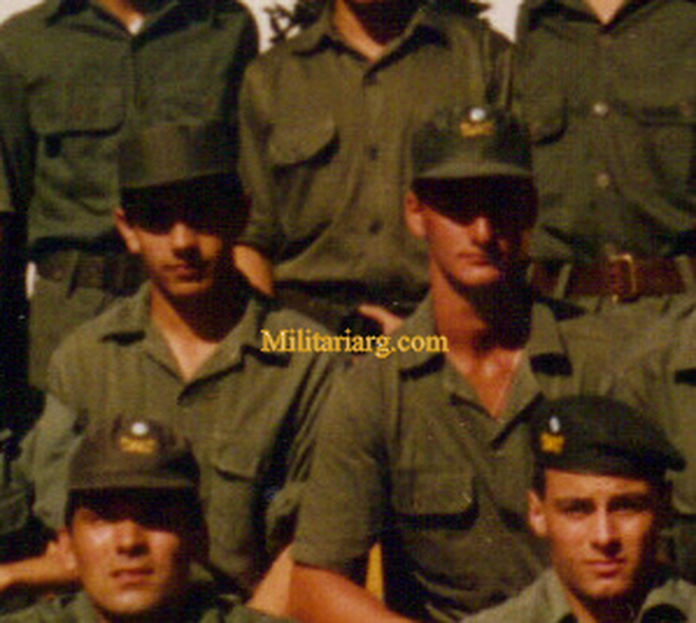
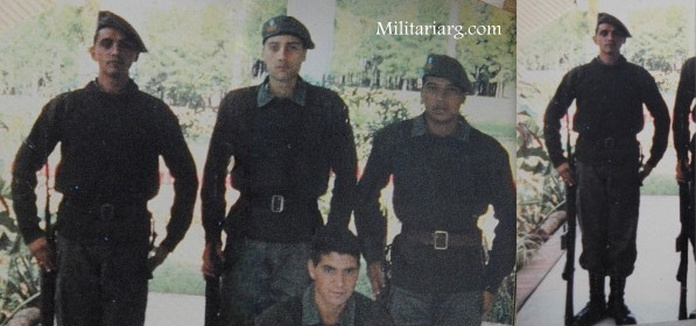
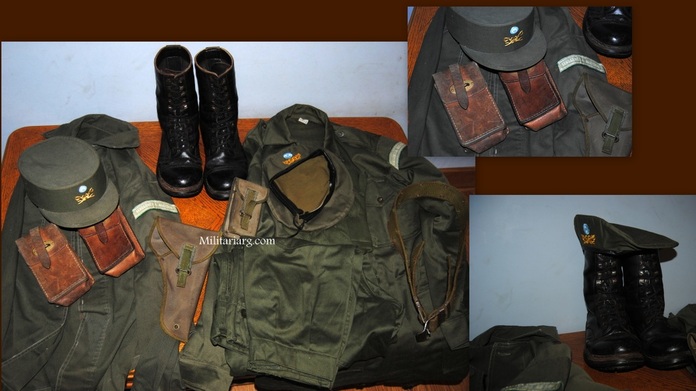
Photo from 1980s of gendarmes which shows various cap types (ridgeway on left, hot weather on right, and green beret lower right).
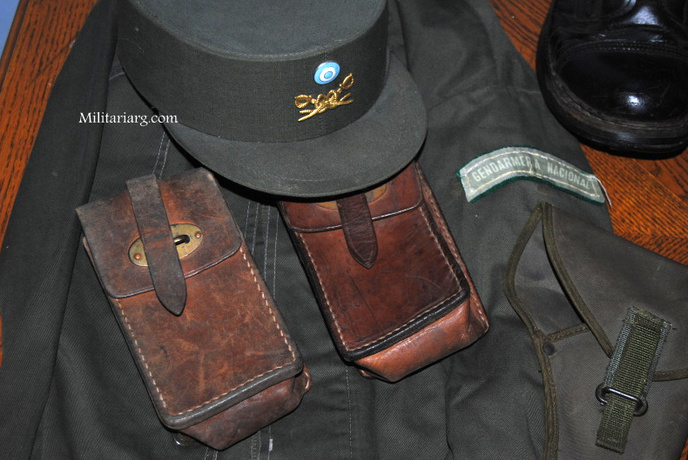
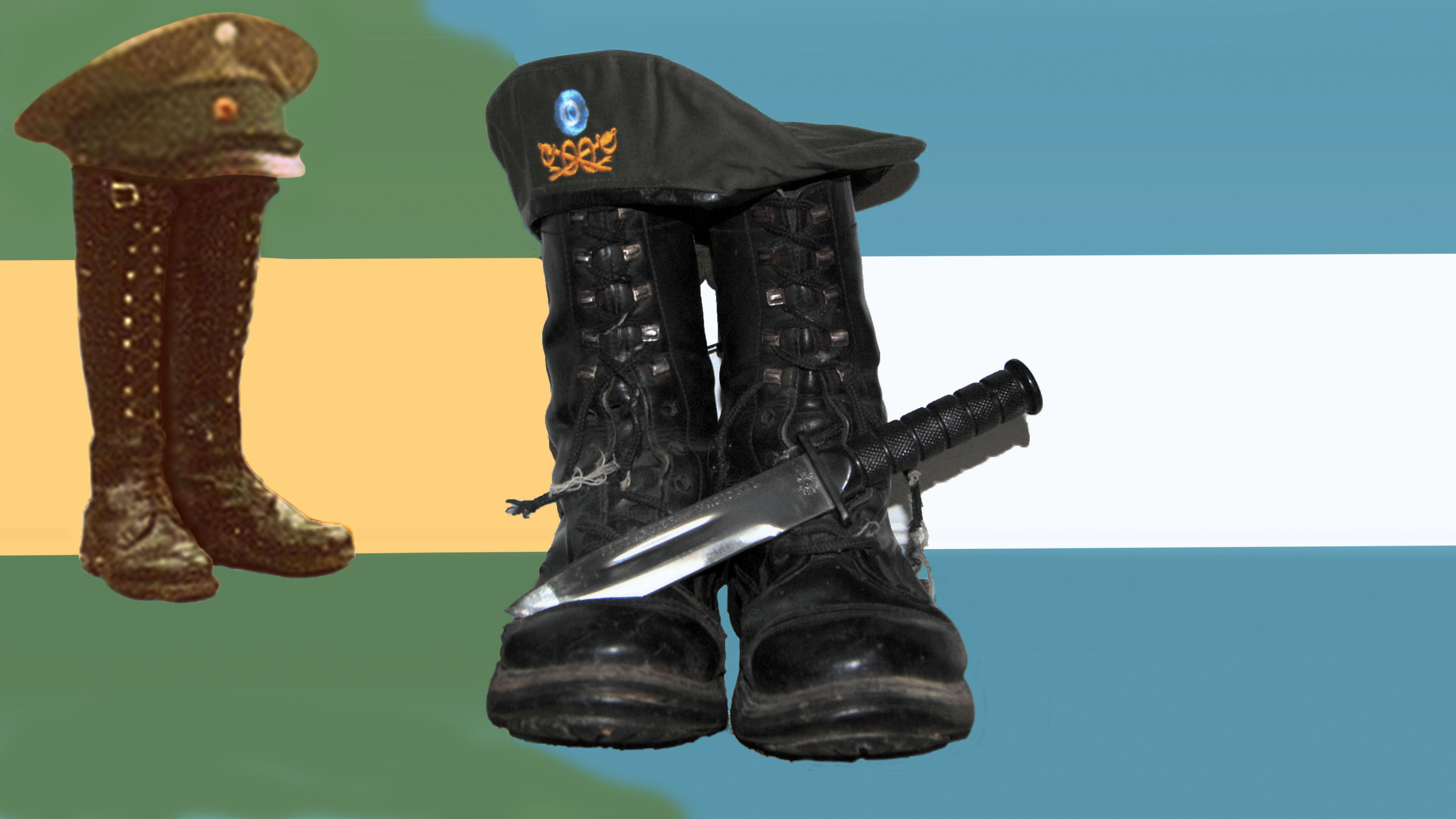
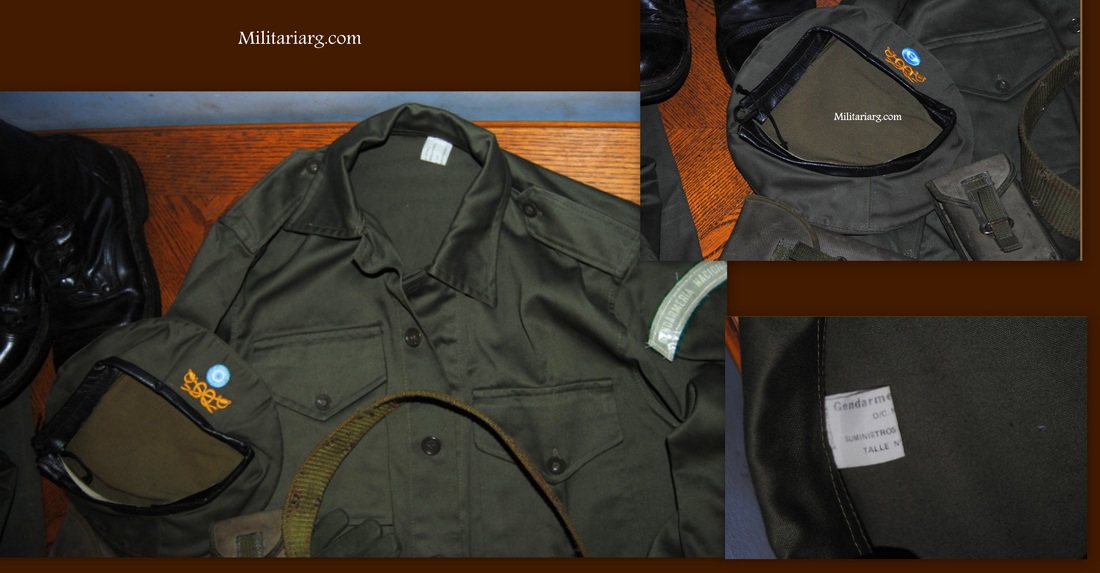
Argentine Gendarmerie kepi from 1980s in the style of an American Ridgeway Cap in olive green.
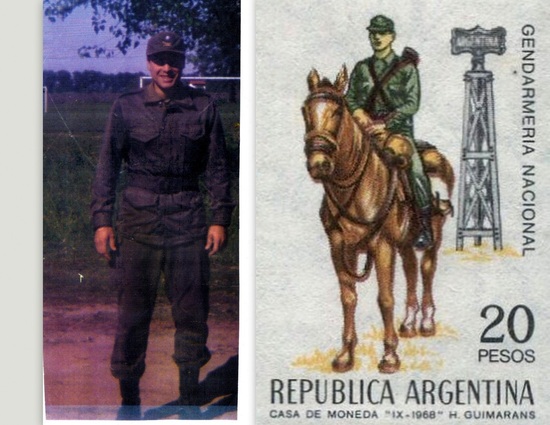
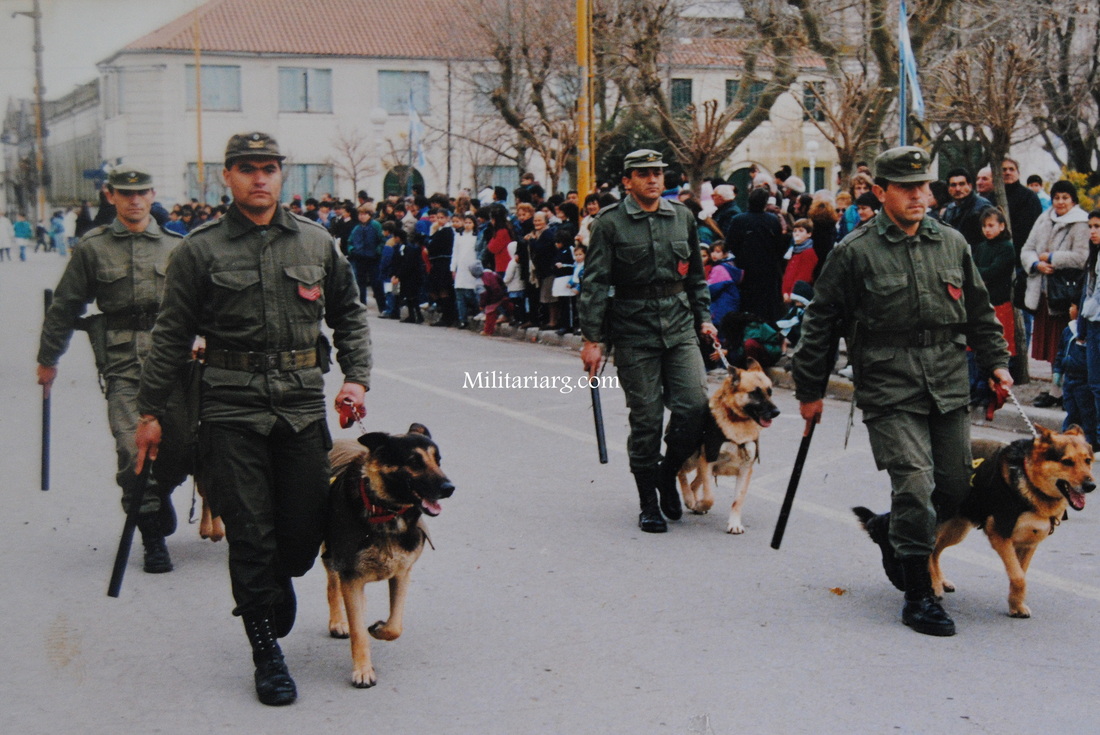
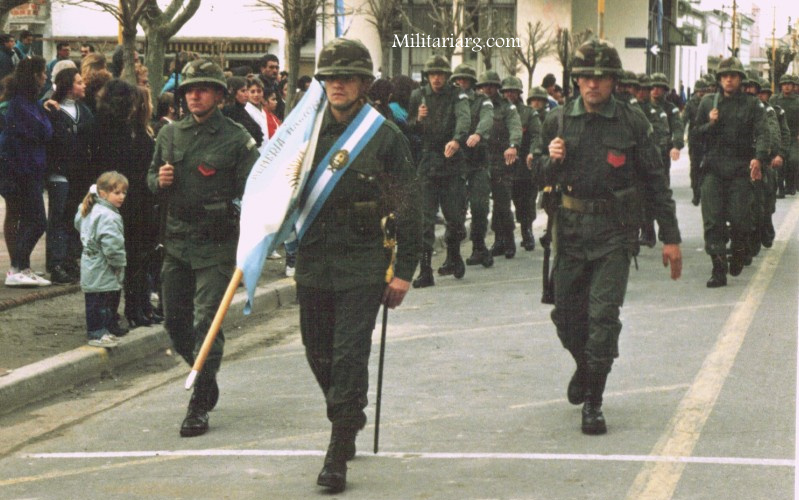
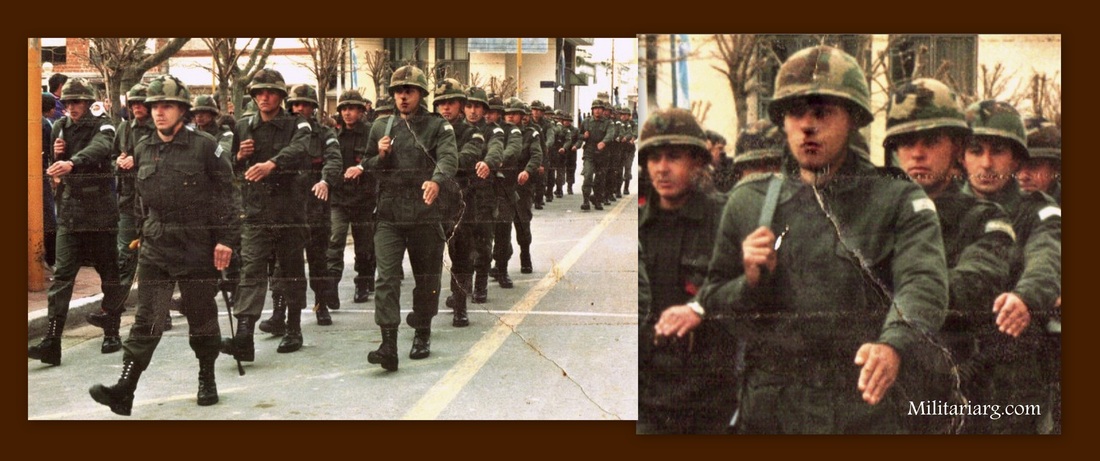
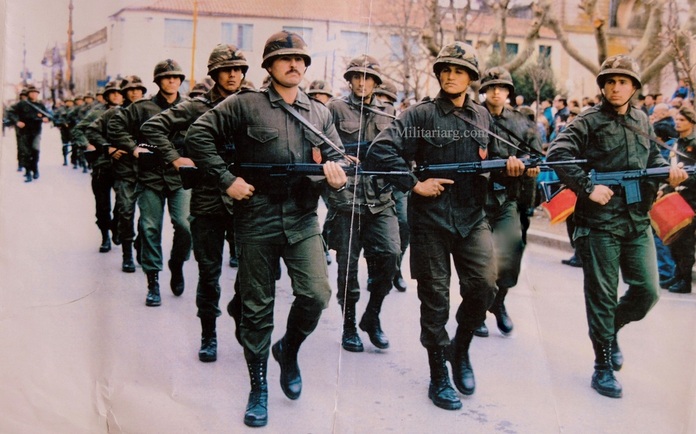
Argentine National Gendarmerie circa 1990. Observe the half-moon like patch on the soldiers' left arms. It said "Gendarmeria Nacional" in a white plastic over a green felt. The second version of this patch appeared in the 1990s and included the Argentine flag.
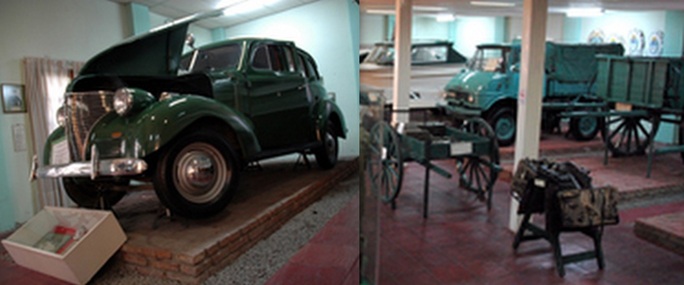
Images from the Gendarmeria Nacional (Museum).
Combat boots model Gendarmeria Nacional, made by Marasco & Speziale.
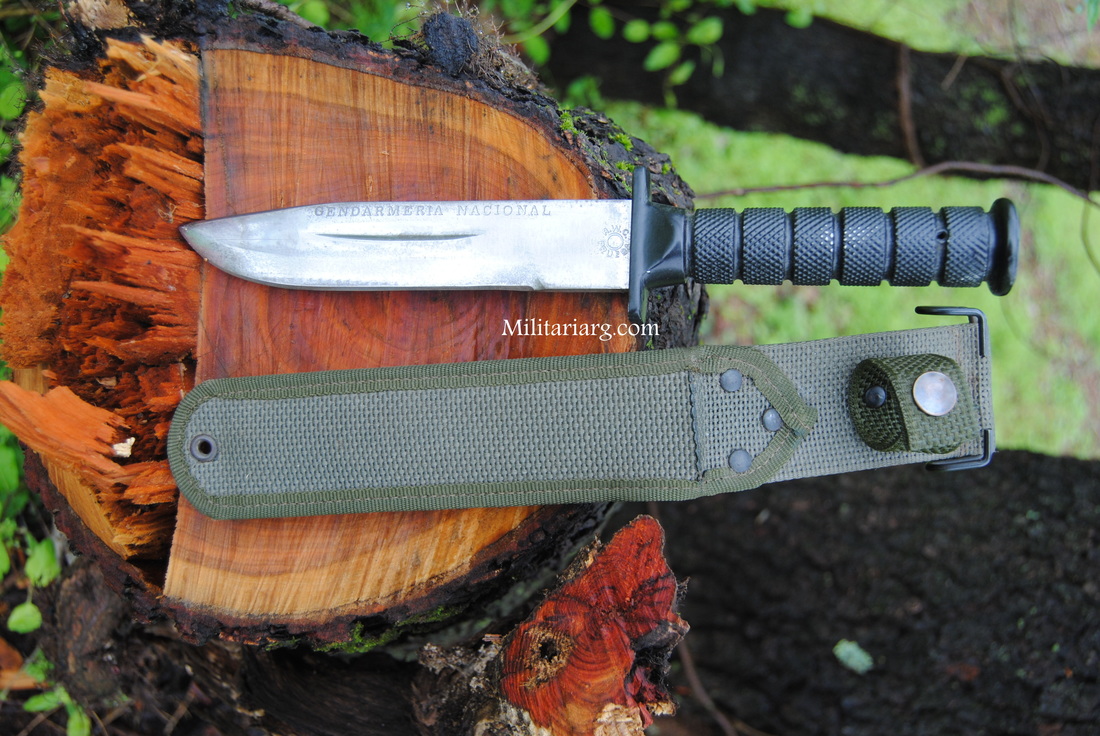
Gendarmeria Nacional Knife made by JORFRA
The aviation history of the Gendarmería Nacional (GN) from its founding in 1938 until the 1982 conflict reflects its role as a border security force. Unlike the heavy combat fleets of the Navy or Air Force, the GN operated a "small air wing" of light aircraft and helicopters designed for transport, reconnaissance in remote regions, and support missions.
Early Years (1938–1950s)
In its first decades, the GN relied heavily on the Argentine Army for logistical and material support, as it was founded to replace Army regiments in border surveillance.
Aviation capabilities were minimal, often utilizing Army hand-me-downs or coordination with the newly independent Air Force (after 1944). Aerial activities focused on patrolling the sparsely populated "National Territories" and providing a "bridge" to isolated settlers.
Modernization and Specialized Fleet (1960s–1981)
By the mid-20th century, the GN began acquiring its own inventory of specialized light aircraft suited for rough terrain and border monitoring:
Fixed-Wing Aircraft:
Cessna 337 Super Skymaster (1965): Used for coastal and border patrol.
Cessna 206 Super Skywagon (1974): A versatile "workhorse" for landing on short, unpaved border strips.
Piper PA-23 Aztec (1973): Utilized for light transport and liaison.
Rotary-Wing Aircraft:
Bell 47G Sioux (1967): The GN's early entry into helicopter operations for search and rescue and reconnaissance.
Hughes 500: Integrated in the 1970s for tactical support.
The 1982 South Atlantic War
While the GN is primarily a security force, its "military nature" allowed it to integrate into the land component during the 1982 war.
Escuadrón Alacrán was the GN's primary combat contribution. While they fought as commandos, they relied on Army Aviation assets for transport, most notably the Aérospatiale Puma (AE-508), which was tragically shot down on May 30, killing six gendarmes.
GN's own light aircraft remained largely on the mainland for security and logistical support, as they lacked the range and defensive systems for the intense air environment of the islands.
Early Years (1938–1950s)
In its first decades, the GN relied heavily on the Argentine Army for logistical and material support, as it was founded to replace Army regiments in border surveillance.
Aviation capabilities were minimal, often utilizing Army hand-me-downs or coordination with the newly independent Air Force (after 1944). Aerial activities focused on patrolling the sparsely populated "National Territories" and providing a "bridge" to isolated settlers.
Modernization and Specialized Fleet (1960s–1981)
By the mid-20th century, the GN began acquiring its own inventory of specialized light aircraft suited for rough terrain and border monitoring:
Fixed-Wing Aircraft:
Cessna 337 Super Skymaster (1965): Used for coastal and border patrol.
Cessna 206 Super Skywagon (1974): A versatile "workhorse" for landing on short, unpaved border strips.
Piper PA-23 Aztec (1973): Utilized for light transport and liaison.
Rotary-Wing Aircraft:
Bell 47G Sioux (1967): The GN's early entry into helicopter operations for search and rescue and reconnaissance.
Hughes 500: Integrated in the 1970s for tactical support.
The 1982 South Atlantic War
While the GN is primarily a security force, its "military nature" allowed it to integrate into the land component during the 1982 war.
Escuadrón Alacrán was the GN's primary combat contribution. While they fought as commandos, they relied on Army Aviation assets for transport, most notably the Aérospatiale Puma (AE-508), which was tragically shot down on May 30, killing six gendarmes.
GN's own light aircraft remained largely on the mainland for security and logistical support, as they lacked the range and defensive systems for the intense air environment of the islands.
During the 1982 Malvinas War, the force was officially referred to as Gendarmería Nacional (GN). The abbreviation GNA (for Gendarmería Nacional Argentina) only became the standard institutional identifier in the mid-1990s as part of a broader push to emphasize its national identity and role as a federal security force.
Subordination to the Army
At the time of the war, the GN was legally and operationally subordinated to the Argentine Army. This relationship explains why the Escuadrón Alacrán was so easily integrated into Army commando operations and why its members wore uniforms that were virtually identical to the Army's, distinguished mainly by their specific insignia.
Gendarmería Nacional (Now GNA), the Naval Prefecture (PNA), and the Federal Police (PFA) are now deployed together for urban security.
Subordination to the Army
At the time of the war, the GN was legally and operationally subordinated to the Argentine Army. This relationship explains why the Escuadrón Alacrán was so easily integrated into Army commando operations and why its members wore uniforms that were virtually identical to the Army's, distinguished mainly by their specific insignia.
Gendarmería Nacional (Now GNA), the Naval Prefecture (PNA), and the Federal Police (PFA) are now deployed together for urban security.
1982 South Atlantic War. Escuadron Alacran (Spadaro's Brigade)
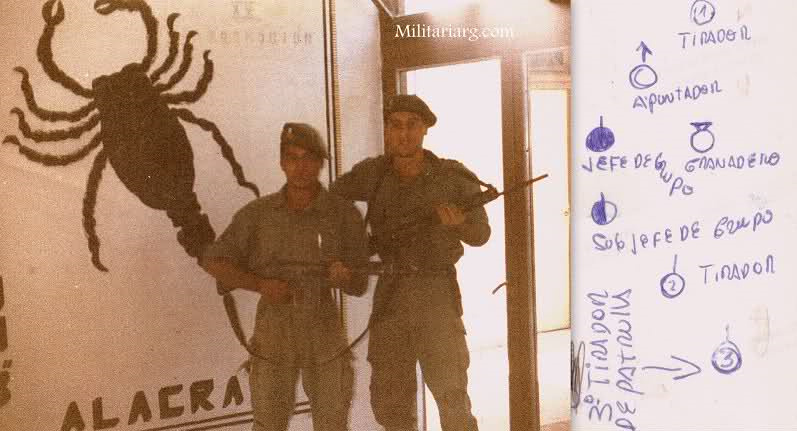
The Escuadrón Alacrán (Scorpion Squadron) was an elite special operations unit of the Gendarmería Nacional (GN) created specifically for the 1982 South Atlantic War. Composed of volunteer gendarmes, it was the first time this internal security force was deployed in a high-intensity international conflict, serving alongside Army commando units.
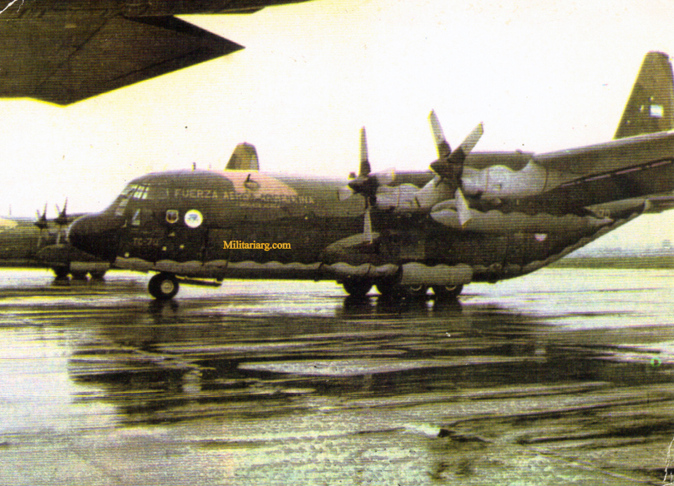
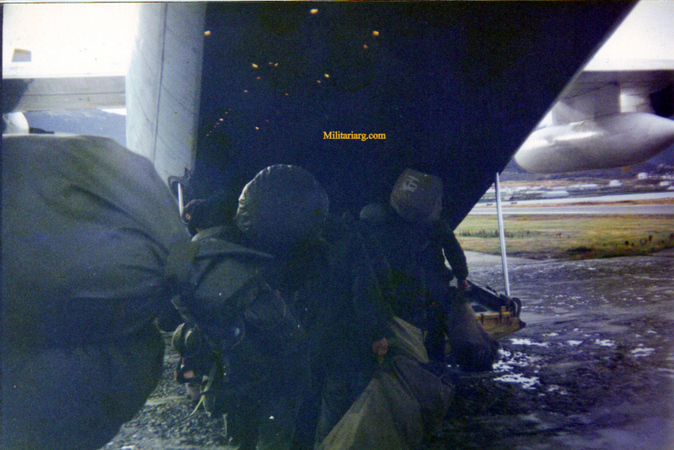
Formed in late May 1982 under the command of José Ricardo Spadaro, the unit was a response to the need for more specialized "Commando" troops as British forces began their land offensive. Forty members of the squadron reached the islands on May 28, 1982, aboard a C-130 Hercules that performed a high-risk landing under the British blockade.
The "Baptism of Fire" (May 30, 1982)
The squadron suffered its most tragic loss just two days after arrival during a mission to reinforce positions at Mount Kent.
While being transported in an Argentine Army Aérospatiale Puma (AE-508) helicopter, the aircraft was struck by a missile or ground fire. Six gendarmes died in the crash and subsequent fire.
Due to the intensity of the fire, several of these men remained "known only to God" for decades until their remains were officially identified in 2021 through a humanitarian project.
Later Combat Actions
Following the tragedy, the remaining members of the squadron continued to operate in the defense of Puerto Argentino (Port Stanley):
Mount Two Sisters
On June 10, 1982, the squadron engaged in a fierce ambush against British forces.
Final Defense
The unit remained active until the Argentine surrender on June 14, 1982, performing reconnaissance and patrol duties under extreme weather and combat conditions.
Formed in late May 1982 under the command of José Ricardo Spadaro, the unit was a response to the need for more specialized "Commando" troops as British forces began their land offensive. Forty members of the squadron reached the islands on May 28, 1982, aboard a C-130 Hercules that performed a high-risk landing under the British blockade.
The "Baptism of Fire" (May 30, 1982)
The squadron suffered its most tragic loss just two days after arrival during a mission to reinforce positions at Mount Kent.
While being transported in an Argentine Army Aérospatiale Puma (AE-508) helicopter, the aircraft was struck by a missile or ground fire. Six gendarmes died in the crash and subsequent fire.
Due to the intensity of the fire, several of these men remained "known only to God" for decades until their remains were officially identified in 2021 through a humanitarian project.
Later Combat Actions
Following the tragedy, the remaining members of the squadron continued to operate in the defense of Puerto Argentino (Port Stanley):
Mount Two Sisters
On June 10, 1982, the squadron engaged in a fierce ambush against British forces.
Final Defense
The unit remained active until the Argentine surrender on June 14, 1982, performing reconnaissance and patrol duties under extreme weather and combat conditions.