The Malvinas/Falklands War of 1982 was primarily a naval and air conflict that culminated in a land campaign, marking the largest air-naval operation between modern forces since World War II. Britain's victory was achieved through a combination of carrier-based air power, a strong naval task force, and an amphibious assault, despite significant logistical challenges.
Aspects of the Air-Naval War
British Naval Task Force:
The UK dispatched a large task force, centered around two aircraft carriers, HMS Hermes and HMS Invincible, to reclaim the islands. This force included destroyers, frigates, submarines, and requisitioned merchant ships, sailing 8,000 miles to the South Atlantic.
Air Superiority: A primary objective for the British was achieving air superiority to protect the fleet and ground troops during the amphibious landing.
The British relied heavily on a small number of Sea Harrier FRS.Mk 1s and RAF Harrier GR.3s, which were capable of vertical/short takeoff and landing (V/STOL).
Despite being outnumbered three-to-one by the Argentine Air Force, the Harriers achieved a remarkable air-to-air combat record, shooting down 21 Argentine jets with no losses in air combat, a testament to pilot skill, tactics, and the effectiveness of the AIM-9L Sidewinder missile.
Argentine Air and Naval Strategy:
Argentina possessed a well-equipped, land-based air force, including modern fighter-attack aircraft like the Dassault Mirage and A-4 Skyhawks, some armed with the potent AM-39 Exocet anti-ship missile. Argentine pilots often flew at low altitudes to avoid British radar, demonstrating significant bravery and skill.
Major Engagements and Losses:
Sinking of the ARA General Belgrano: The Argentine cruiser was sunk by torpedoes from the British nuclear-powered submarine HMS Conqueror on May 2, 1982. This action neutralized the main surface threat and largely confined the Argentine Navy to port for the rest of the war.
Attacks on British Warships: The Royal Navy suffered significant losses to Argentine air attacks, especially during the landing at San Carlos Water. Ships such as HMS Ardent, HMS Antelope, and HMS Coventry were sunk or heavily damaged, highlighting the vulnerability of surface ships to anti-ship missiles and well-executed air strikes.
Exocet Missile Threat: Argentine Super Etendard aircraft successfully used Exocet missiles to devastating effect, notably sinking the destroyer HMS Sheffield and the logistics ship Atlantic Conveyor.
Amphibious Operations: The British successfully executed an amphibious landing at San Carlos Water on May 21, establishing a beachhead to begin the land campaign. The air defense design during the lodgment faced challenges against the low-altitude Argentine attacks, requiring ships to "take the punishment" to protect the landing force.
The naval and air campaigns were decisive, allowing British ground forces to land and advance, eventually leading to the Argentine surrender on June 14, 1982. The conflict offered many lessons for modern military planners regarding force projection, the vulnerability of surface fleets, and the critical role of naval aviation in an anti-access/area denial (A2/AD) environment.
Aspects of the Air-Naval War
British Naval Task Force:
The UK dispatched a large task force, centered around two aircraft carriers, HMS Hermes and HMS Invincible, to reclaim the islands. This force included destroyers, frigates, submarines, and requisitioned merchant ships, sailing 8,000 miles to the South Atlantic.
Air Superiority: A primary objective for the British was achieving air superiority to protect the fleet and ground troops during the amphibious landing.
The British relied heavily on a small number of Sea Harrier FRS.Mk 1s and RAF Harrier GR.3s, which were capable of vertical/short takeoff and landing (V/STOL).
Despite being outnumbered three-to-one by the Argentine Air Force, the Harriers achieved a remarkable air-to-air combat record, shooting down 21 Argentine jets with no losses in air combat, a testament to pilot skill, tactics, and the effectiveness of the AIM-9L Sidewinder missile.
Argentine Air and Naval Strategy:
Argentina possessed a well-equipped, land-based air force, including modern fighter-attack aircraft like the Dassault Mirage and A-4 Skyhawks, some armed with the potent AM-39 Exocet anti-ship missile. Argentine pilots often flew at low altitudes to avoid British radar, demonstrating significant bravery and skill.
Major Engagements and Losses:
Sinking of the ARA General Belgrano: The Argentine cruiser was sunk by torpedoes from the British nuclear-powered submarine HMS Conqueror on May 2, 1982. This action neutralized the main surface threat and largely confined the Argentine Navy to port for the rest of the war.
Attacks on British Warships: The Royal Navy suffered significant losses to Argentine air attacks, especially during the landing at San Carlos Water. Ships such as HMS Ardent, HMS Antelope, and HMS Coventry were sunk or heavily damaged, highlighting the vulnerability of surface ships to anti-ship missiles and well-executed air strikes.
Exocet Missile Threat: Argentine Super Etendard aircraft successfully used Exocet missiles to devastating effect, notably sinking the destroyer HMS Sheffield and the logistics ship Atlantic Conveyor.
Amphibious Operations: The British successfully executed an amphibious landing at San Carlos Water on May 21, establishing a beachhead to begin the land campaign. The air defense design during the lodgment faced challenges against the low-altitude Argentine attacks, requiring ships to "take the punishment" to protect the landing force.
The naval and air campaigns were decisive, allowing British ground forces to land and advance, eventually leading to the Argentine surrender on June 14, 1982. The conflict offered many lessons for modern military planners regarding force projection, the vulnerability of surface fleets, and the critical role of naval aviation in an anti-access/area denial (A2/AD) environment.
Ground Operations:
The ground operations during the 1982 South Atlantic War were crucial for the ultimate British victory, involving a rapid advance across challenging terrain and a series of fierce night battles for the high ground surrounding the capital, Port Stanley.
Initial Landings and Advance
British forces, primarily composed of the 3 Commando Brigade of the Royal Marines and the Parachute Regiment (2 Para and 3 Para), landed at San Carlos Water
on East Falkland on May 21, 1982. This was an unopposed amphibious landing; the location, known to the British as "Bomb Alley," was chosen for its cover from Argentine radar but was vulnerable to air attacks, which heavily targeted the naval support ships during the following days.
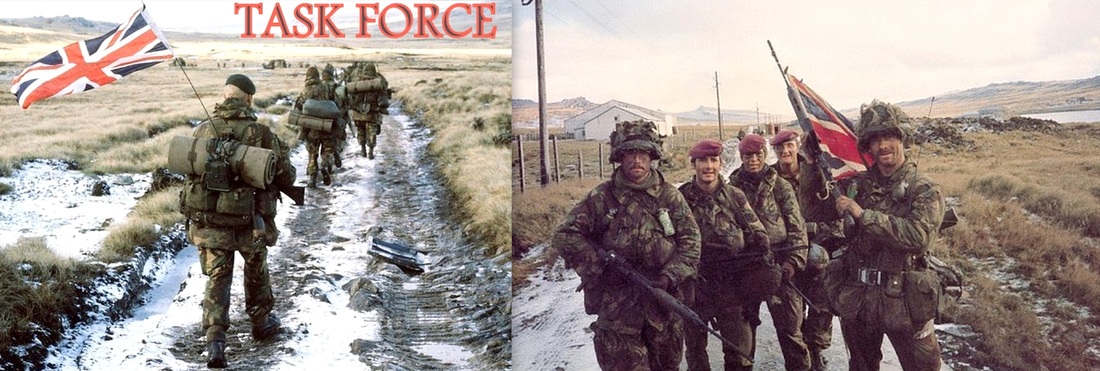
From the beachhead, the troops began a grueling cross-country advance, or "yomp," across the islands' difficult, peat-bog terrain toward the Argentine defensive positions concentrated around Port Stanley. A lack of helicopters due to losses (including the Atlantic Conveyor) meant most equipment had to be carried on foot over long distances.
Key Ground Battles
The campaign to reclaim the islands involved several intense battles:
Battle of Goose Green (May 28-29): The first major land battle, where the British 2nd Battalion, Parachute Regiment (2 Para), attacked a numerically superior Argentine force at the settlements of Darwin and Goose Green. After 14 hours of fierce fighting, the British secured a vital victory, capturing over 1,000 Argentine troops. The British commanding officer, Lieutenant Colonel H. Jones, was killed during the battle and posthumously awarded the Victoria Cross.
Battles for the Port Stanley Heights (June 11-14): The final phase of the ground war involved a series of night assaults on the mountains and ridges surrounding Port Stanley, the capital. The key engagements were:
Mount Longdon: Taken by 3 Para in a fierce, close-quarters battle on the night of June 11-12.
Two Sisters: Captured by 45 Commando on the same night.
Mount Harriet: Taken by 42 Commando on the night of June 11-12.
Wireless Ridge and Mount Tumbledown: The final battles on the night of June 13-14, led by the British 2nd Battalion, Scots Guards, and other forces. The capture of these final positions led to the collapse of the Argentine defenses.
Outcome
Following the capture of the heights surrounding the capital, the Argentine forces in Port Stanley were isolated, low on ammunition, and demoralized. The Argentine commander, General Mario Menéndez, surrendered to Major-General Jeremy Moore on June 14, 1982, bringing the 74-day conflict to an end. The British victory on land secured control of the islands and ultimately led to the downfall of the military junta in Argentina.
The ground operations during the 1982 South Atlantic War were crucial for the ultimate British victory, involving a rapid advance across challenging terrain and a series of fierce night battles for the high ground surrounding the capital, Port Stanley.
Initial Landings and Advance
British forces, primarily composed of the 3 Commando Brigade of the Royal Marines and the Parachute Regiment (2 Para and 3 Para), landed at San Carlos Water
on East Falkland on May 21, 1982. This was an unopposed amphibious landing; the location, known to the British as "Bomb Alley," was chosen for its cover from Argentine radar but was vulnerable to air attacks, which heavily targeted the naval support ships during the following days.
From the beachhead, the troops began a grueling cross-country advance, or "yomp," across the islands' difficult, peat-bog terrain toward the Argentine defensive positions concentrated around Port Stanley. A lack of helicopters due to losses (including the Atlantic Conveyor) meant most equipment had to be carried on foot over long distances.
Key Ground Battles
The campaign to reclaim the islands involved several intense battles:
Battle of Goose Green (May 28-29): The first major land battle, where the British 2nd Battalion, Parachute Regiment (2 Para), attacked a numerically superior Argentine force at the settlements of Darwin and Goose Green. After 14 hours of fierce fighting, the British secured a vital victory, capturing over 1,000 Argentine troops. The British commanding officer, Lieutenant Colonel H. Jones, was killed during the battle and posthumously awarded the Victoria Cross.
Battles for the Port Stanley Heights (June 11-14): The final phase of the ground war involved a series of night assaults on the mountains and ridges surrounding Port Stanley, the capital. The key engagements were:
Mount Longdon: Taken by 3 Para in a fierce, close-quarters battle on the night of June 11-12.
Two Sisters: Captured by 45 Commando on the same night.
Mount Harriet: Taken by 42 Commando on the night of June 11-12.
Wireless Ridge and Mount Tumbledown: The final battles on the night of June 13-14, led by the British 2nd Battalion, Scots Guards, and other forces. The capture of these final positions led to the collapse of the Argentine defenses.
Outcome
Following the capture of the heights surrounding the capital, the Argentine forces in Port Stanley were isolated, low on ammunition, and demoralized. The Argentine commander, General Mario Menéndez, surrendered to Major-General Jeremy Moore on June 14, 1982, bringing the 74-day conflict to an end. The British victory on land secured control of the islands and ultimately led to the downfall of the military junta in Argentina.
An Argentine businessman named Constantino Davidoff had a legitimate commercial contract * with a Scottish company (Christian Salvesen) to salvage scrap metal and equipment from the derelict whaling station at Leith Harbour
on South Georgia.This CEO signed an option to purchase the equipment for the scrap metal operation on South Georgia in
September 1979. He exercised this option in December 1980, when he paid Christian Salvesen Ltd. the agreed sum of £105,000 for the material at the abandoned whaling stations.
Constantino Davidoff did attempt to coordinate the salvage operation with British authorities. The British Foreign Office had intended for the workers to be transported on the Royal Navy's ice patrol ship, HMS Endurance, which would have ensured proper procedures (checking in at Grytviken, passport checks) were followed under British supervision.
The Endurance did not transport them. Reports vary as to whether it had a technical issue or if it was simply unavailable due to other commitments in the vast patrol area. Consequently, Davidoff and his workers traveled on the Argentine Navy transport ARA Bahía Buen Suceso.
The core conflict arose because when they landed at Leith Harbour on South Georgia (March 19, 1982):
They landed at Leith Harbour, which required a permit, rather than reporting first at the main British administrative base at Grytviken.
They did not present passports to the British base commander as required by their permit agreement.
Crucially, they raised the Argentine flag and played the Argentine national anthem.
on South Georgia.This CEO signed an option to purchase the equipment for the scrap metal operation on South Georgia in
September 1979. He exercised this option in December 1980, when he paid Christian Salvesen Ltd. the agreed sum of £105,000 for the material at the abandoned whaling stations.
Constantino Davidoff did attempt to coordinate the salvage operation with British authorities. The British Foreign Office had intended for the workers to be transported on the Royal Navy's ice patrol ship, HMS Endurance, which would have ensured proper procedures (checking in at Grytviken, passport checks) were followed under British supervision.
The Endurance did not transport them. Reports vary as to whether it had a technical issue or if it was simply unavailable due to other commitments in the vast patrol area. Consequently, Davidoff and his workers traveled on the Argentine Navy transport ARA Bahía Buen Suceso.
The core conflict arose because when they landed at Leith Harbour on South Georgia (March 19, 1982):
They landed at Leith Harbour, which required a permit, rather than reporting first at the main British administrative base at Grytviken.
They did not present passports to the British base commander as required by their permit agreement.
Crucially, they raised the Argentine flag and played the Argentine national anthem.