Militariarg.com
  • Home
  • Army
  • Aviation
  • Navy
  • Uniforms and Badges
  • Arms and Weapons
  • Equipment
  • Vehicles
  • Operational and Organizational Structure, Security Forces, Transportation, Books, Models and More.
  • Argentine Confederation Era. 1829 - 1852.
  • From 1852 to 1910 (French fashion)
  • Bunker 1982: South Atlantic War Militaria
  • International Militaria
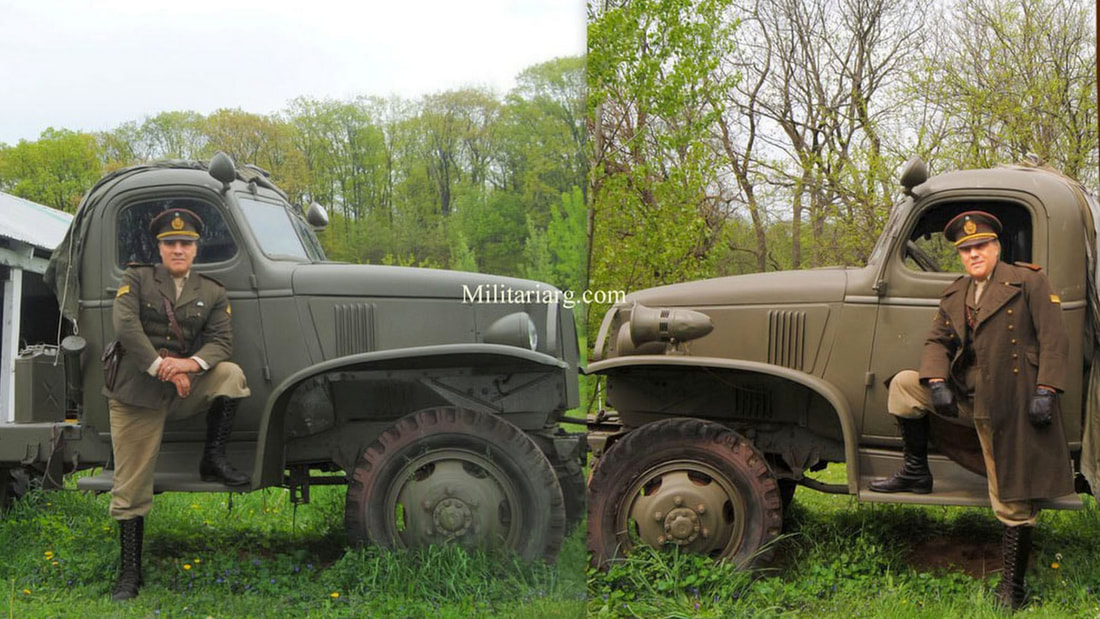
  • Argentina WWII Era (Neutral) Reenactment Impression
  • Links ~ Enlaces
Argentina maintained a general policy of neutrality during the two World Wars and the Cold War conflicts, although its stance was nuanced and evolved over time, sometimes leaning toward specific alliances based on internal politics and economic interests. 

World War I (1914-1918)

Argentina remained officially neutral throughout the First World War under Presidents Victorino de la Plaza and Hipólito Yrigoyen. This stance allowed Argentina to maintain vital agricultural exports, particularly to Great Britain, and benefited its economy. While the government was officially neutral, public opinion was divided, with some citizens volunteering to fight for the Allied powers. 

Interwar:

The United Kingdom was alarmed by the increase in trade and the growing economic influence of Germany
in Argentina during the interwar period. Britain had a long-standing dominant economic role in Argentina, which it considered its "informal empire," and saw German competition as a significant threat to its interests. 

​From the late 19th century to the 1930s, the UK was Argentina's main trading partner and primary source of foreign investment, particularly in railways, banking, and the meat industry. The rise of German trade challenged this established dominance.

Britain's trading position in Argentina had already dwindled during WWI as it focused on the war effort, allowing competitors like the U.S. and Germany to gain ground. British diplomats and commercial representatives were actively trying to recover their position and were worried about the country's declining status in the important Argentine market.

The Great Depression led Britain to abandon free trade in favor of the Imperial Preference system in the early 1930s, which favored trade within its formal Empire. This policy hindered trade with Argentina and made British goods less competitive, allowing Germany to step in with bilateral agreements and exchange controls to expand its own markets.

Beyond immediate economic concerns, the UK was wary of Germany's expanding political and economic influence in Latin America, viewing it in the broader context of pre-WWII geopolitical competition.

The British sought to mitigate this decline through specific trade agreements, notably the Roca-Runciman Pact of 1933. This agreement was designed to secure Britain's beef import quotas in return for concessions to British companies in Argentina, explicitly to avoid losing more ground to competitors. The treaty's terms were generally more favorable to Britain, reflecting the British government's determination to maintain its hold on the Argentine market.

​Argentine Neutrality During WW2

Argentina maintained an official policy of neutrality during most of World War II, a stance rooted in a long political tradition of non-involvement in European wars, strong economic ties with Great Britain, and significant internal divisions. This neutrality severely impacted the supply and modernization of its Armed Forces, primarily due to a de facto arms embargo imposed by the United States.

Argentina declared its neutrality on September 4, 1939, at the war's outset. This was consistent with its WWI policy and intended to safeguard its vital agricultural and food exports, especially to the United Kingdom, from German U-boat attacks as strategy of economic warfare.

​Argentine society and government were split. Some officials and business leaders saw neutrality as pragmatic, allowing trade with both sides and avoiding social conflict in a country with large populations of German and Italian descent. The Argentine Army had a strong admiration for the German military model, training, and history, which influenced many officers to favor neutrality or the Axis cause.

The U.S. applied increasing pressure on Argentina to abandon neutrality and align with the Allies. Relations worsened after a military coup in 1943 brought pro-Axis (GOU) sympathizers to power. Argentina finally broke diplomatic relations with the Axis powers on January 26, 1944, under severe U.S. sanctions, and officially declared war on Germany and Japan on March 27, 1945, just before the war's end in Europe. 

The Argentine military was largely trained on German models and had relied on European (including German) sources for equipment. The war and subsequent embargo made it nearly impossible to procure modern weaponry, leading to an army that was "woefully unprepared" for a potential conflict, as noted by internal assessments at the time.

The UK, while an ally of the U.S., was dependent on Argentine food shipments (especially beef) and sought to maintain a working relationship with Buenos Aires, which sometimes softened the collective Allied pressure but did not translate into military hardware supply.

The isolation during the war forced Argentina to look inwards, boosting its import substitution industrialization process. In the immediate post-war years, the Argentine armed forces sought to modernize, eventually acquiring some surplus Allied equipment, but the neutrality period had created a significant deficit in modern military supply compared to some of its neighbors like Brazil, which had actively participated in the war and received U.S. aid.


Spain was another country severely sanctioned in the post-war. But  Spain post-World War II international isolation was a more comprehensive and severe diplomatic sanction than Argentina's situation, though Argentina did face some U.S. sanctions during and immediately after the war. In fact, Argentina under Juan Perón was one of the few countries, along with Portugal, Switzerland, and Ireland, that maintained diplomatic relations with Franco's Spain during its period of greatest isolation.
Cold War

During the Cold War, Argentina pursued a "third way" foreign policy, which aimed for non-alignment with either superpower. 

Korean War: When the U.S. requested support and troops for the UN effort, President Juan Perón initially agreed but eventually backed down due to strong domestic anti-war sentiment and labor union opposition, so no Argentine soldiers were sent.

Vietnam War: Argentina did not participate in the Vietnam War and maintained neutrality.
Broader Stance: Argentina's anti-communist stance at home allowed for cooperation with the U.S. in certain UN and OAS activities, but it also signed trade agreements with the Soviet Union (e.g., grain sales) to maintain an independent economic policy. 

Middle East, Iraq, Yugoslavia, and Libya - Argentina's policy in later conflicts varied by specific circumstances:

Middle East: Argentina generally maintained neutrality during the major Arab-Israeli conflicts like the Six-Day War and the Yom Kippur War.

Iraq: Argentina participated in the first Gulf War in 1991, contributing a naval contingent as part of the U.S.-led coalition under UN mandates, a departure from its traditional neutrality in non-hemispheric conflicts. It did not send troops during the 2003 invasion of Iraq.

Yugoslavia: Argentina contributed peacekeeping forces to UN missions in the former Yugoslavia during the 1990s.

Libya: During the 2011 Libyan Civil War, Argentina, as a non-permanent member of the UN Security Council, voted in favor of UN Security Council Resolution 1973, which authorized military intervention to protect civilians. However, Argentina did not directly participate militarily.

Argentina's stance on the Ukraine-Russia conflict has evolved from a cautious, somewhat neutral position to one of more explicit alignment with Western powers and support for Ukraine, though it has not imposed economic sanctions on Russia.

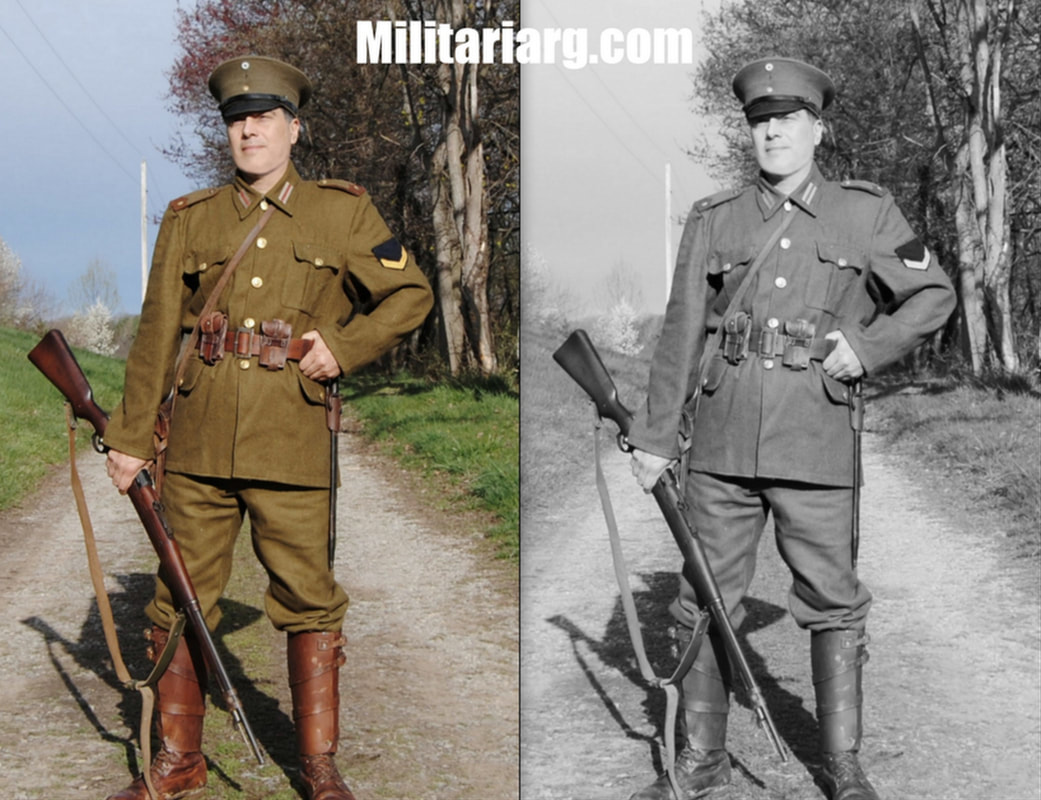
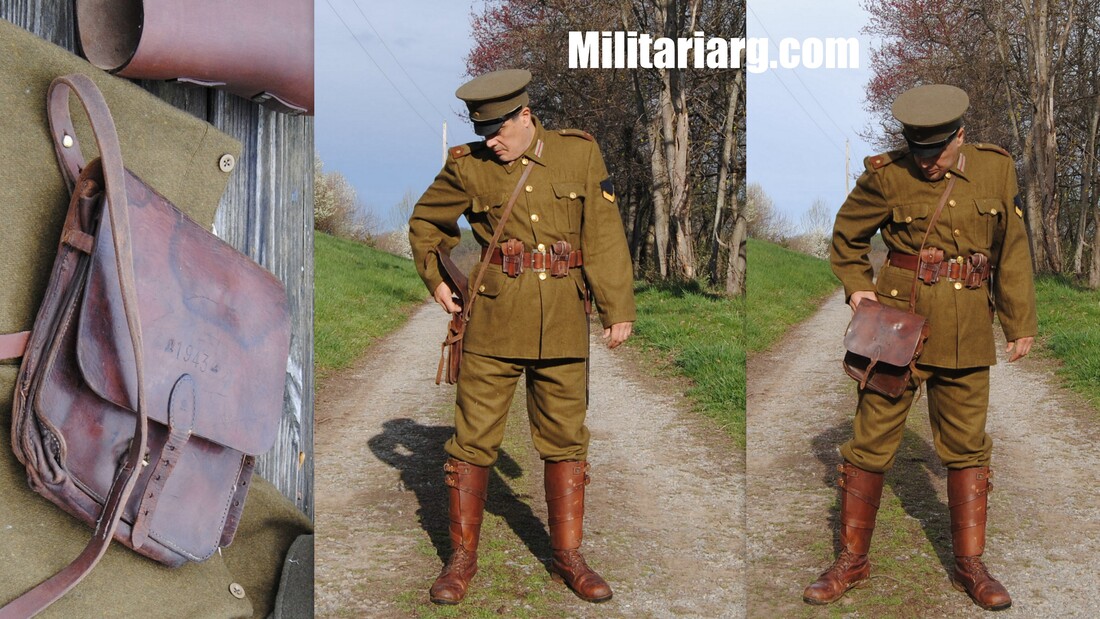
1930s/40s Khaki Uniform.
Picture
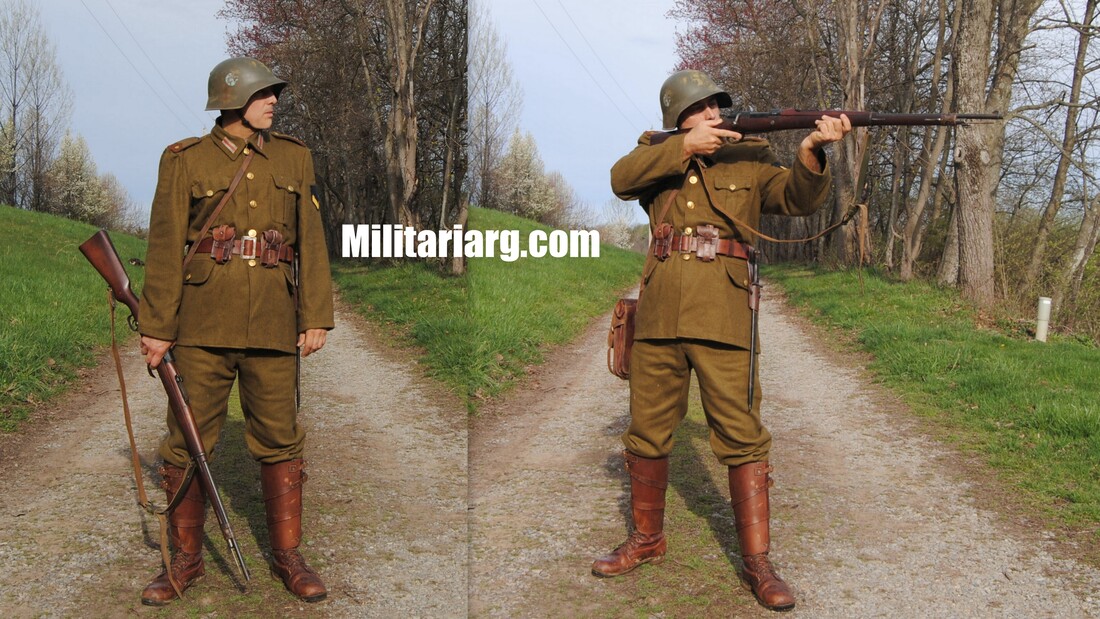
The Mauser 1909 is a slightly modified copy of the German Gewehr 98. Known for its exceptional build quality and smooth action, it remains a popular collector's item and a strong foundation for custom sporting rifles. Adopted by Argentina in 1909, the rifle served until it was eventually replaced by the FN FAL in the mid-20th century. Peru also contracted for a version of the Model 1909 between 1910 and 1914, which was a closer copy of the original Gewehr 98, including the Lange Visier sight. These were chambered in the same 7.65x53mm Mauser caliber.
Picture
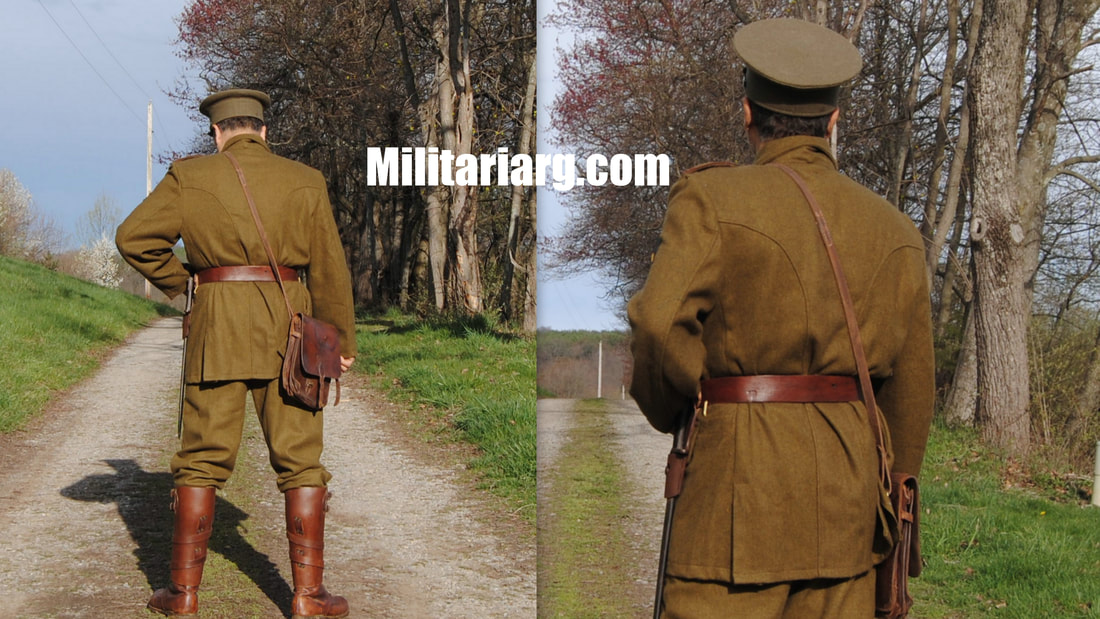
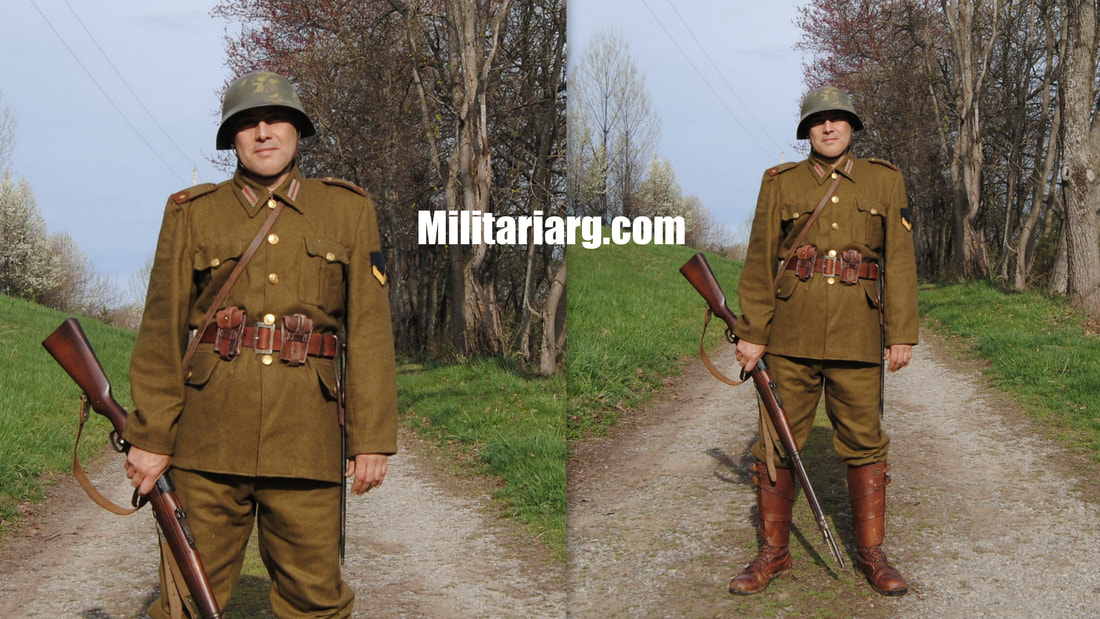
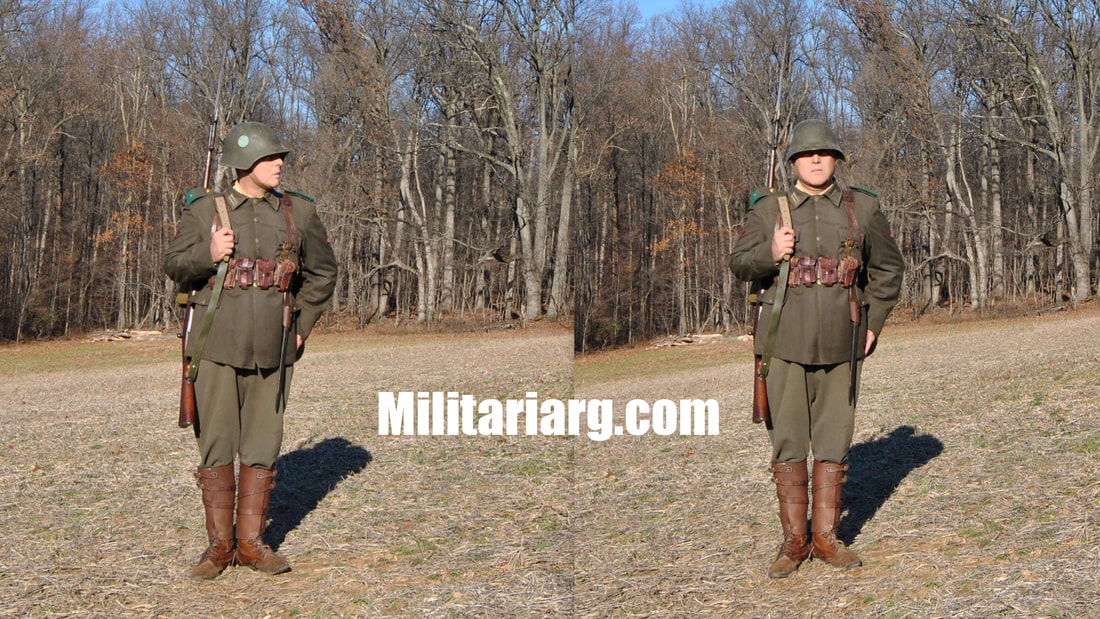
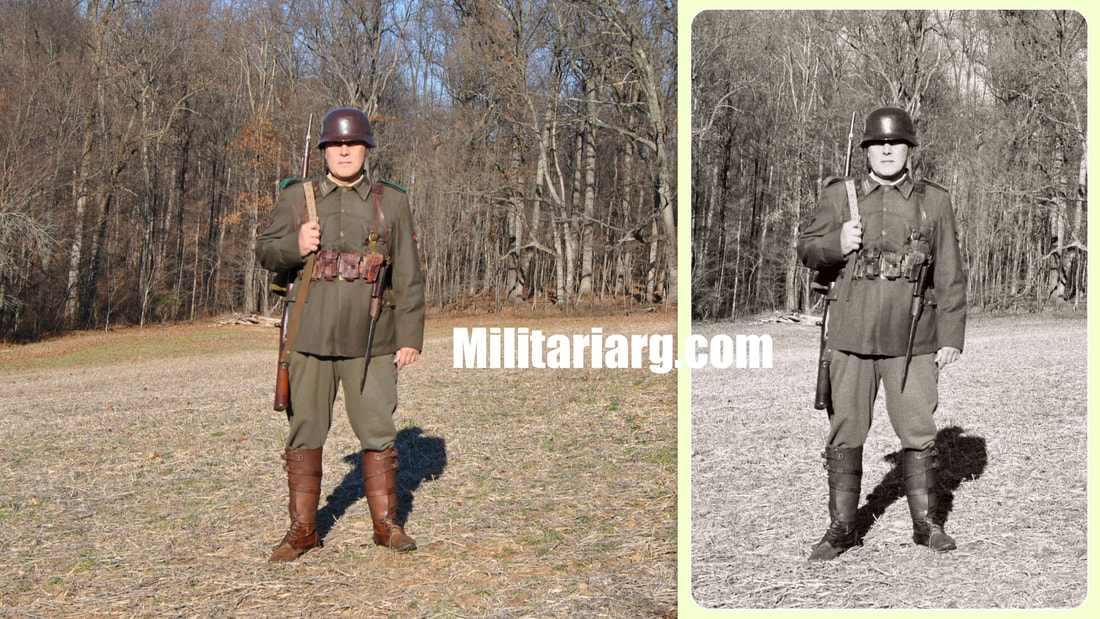
​Despite popular belief, the designs of the Argentine uniforms of the time were copies of the British 1930s colonial uniforms. The jacket was clearly commonwealth style, even in the same color khaki. The adoption of the German-shaped helmet added to the collar tabs, added to the Prussian doctrine of the closed order, Germanized the style considerably. The leather gaiters that in US and UK were considered cavalry in Argentina were worn by the infantry.
Picture
 ​Leather goods were one of the country's specialties. Argentine leather industry, a historical cornerstone of the nation's economy, faced significant disruption due to the Great Depression, leading to a major shift from raw hide exports to developing a local tanning and manufacturing sector. Until 1945, Britain was Argentina's main trading partner. In the 1930s, more than 90% of Argentina's beef exports went to the UK. And for this reason it was difficult for the UK to join the US to isolate Argentina during World War II precisely because of the critical trade relationship and Britain's dependence on Argentine agricultural products, especially beef.
Picture
Swiss M1918 helmet was used by the Argentine Army, which designated it the Model 1938 (M38). Also Brazil reportedly received some copies for trials but did not officially adopt them, but in essence, the Swiss M18 helmet's use outside of Switzerland was largely unique to Argentina.

​Brazil's entry into WW2 and Argentine neutrality. Regional imbalance, arms race as a conflict hypothesis.

The U.S. armament of Brazil through Lend-Lease was explicitly used as leverage and pressure against Argentina's neutrality.
Brazil saw the U.S. aid as an opportunity to modernize its Armed Forces. Also they used the perception of an "Argentine threat" to secure more U.S. aid, hoping the imbalance of power would force Argentina to cease its perceived aggression or alignment with the Axis.
 Brazil Pre-WW2

Before World War II, the Brazilian Army was equipped with a diverse collection of imported European (primarily
German and French) and some American weapons, artillery, and vehicles. Brazil had no significant domestic arms industry at the time and was heavily reliant on imports. 

Weapons

The standard infantry rifle was the Mauser Model 1908 bolt-action rifle, chambered for the 7x57mm Mauser cartridge. Other small arms included: 

Pistols: A mix of models were in service, including the German Luger P08 and US-made Colt Government Model (M1911) pistols, the latter of which was ordered in large quantities in the late 1930s.
Submachine Guns: Various police forces and some military units used German-made Bergmann MP.28s.
Machine Guns: Brazil utilized French Hotchkiss M1914 and M1922 machine guns, as well as Danish Madsen machine guns. 

Artillery

Prior to the war, the Brazilian Army's artillery consisted mostly of French and some British pieces. Specific models included various field guns and mortars, though detailed information on specific pre-WW2 models is less prevalent than the standardized US equipment received later through the Lend-Lease program.
 
Tanks and Vehicles

Brazil's armored vehicle fleet was small and outdated before significant US aid arrived during the war. 

Tanks: The army possessed a small number of French-made Renault FT-17 (or FT-18) light tanks and Italian Fiat Ansaldo CV 33/II tankettes. These were the only tanks in service before Brazil began receiving US-made tanks during WWII.

Vehicles: The army used a motley collection of imported vehicles from various European and American sources. During the war, this was standardized with US-supplied vehicles like the M3 Half-track and T17 Deerhound armored cars (Brazil was the only country to operate the T17 in regular army units). 

The equipment deficiencies and reliance on diverse foreign sources led to the complete transformation and modernization of the Brazilian Expeditionary Force (BEF) with standardized American equipment and doctrine once Brazil formally entered World War II and began receiving US Lend-Lease aid

Brazil enter to WW2

Brazil signed a Lend-Lease agreement with the United States on October 1, 1941, receiving over $154 million in military equipment and supplies by mid-1945. This aid was crucial for modernizing its military and contributing to the Allied war effort, primarily in the South Atlantic and later with the Brazilian Expeditionary Force (FEB) in Italy.
The U.S. provided this aid to secure Brazilian support in defending the Western Hemisphere and the Panama Canal, acquiring military bases in Brazil (such as the key air base in Natal for transporting supplies to Africa), and gaining access to vital strategic raw materials in return.
Brazil's military was largely using WWI-era equipment and tactics in 1942. The lend-lease program provided a significant modernization boost to its armed forces. 

U.S. military equipment acquired through the Lend-Lease program and retained after the war. This modernized the force from its previous mix of older French and German arms. 

Tanks and Armored Vehicles

M3 Stuart Light Tanks: Brazil received around 350 M3 Stuart tanks (M3, M3A1, M3A3 variants) which formed the backbone of its armored units and remained in service into the 1970s.
M4 Sherman Medium Tanks: Brazil was the only South American country to receive M4 Shermans via Lend-Lease during WWII, receiving 53 units in 1944. These were primarily for the defense of Brazil and were not deployed with the Expeditionary Force to Italy.
Armored Cars: The force included M8 Greyhound and T17 Deerhound armored cars, the latter making Brazil the only country to use the T17 in regular army units.
Half-tracks: M3 half-tracks were also in use, especially as the army transitioned to more mobile, "armored infantry" divisions after 1946. 

Artillery 
U.S. Howitzers: The Brazilian Expeditionary Force (FEB) in Italy used U.S.-supplied 105mm and 155mm towed howitzers, which likely became standard issue after the war.
French Cannons: Older French Schneider and Saint-Chamond cannons were still in the inventory from before the war. 

Small Arms
The FEB in Europe was entirely equipped with U.S. standard-issue small arms for logistical ease, and these became the standard for the entire army after their return.

Rifles:
M1903 Springfield and M1 Garand rifles were standard issue for the FEB and were retained after the war.
The older Mauser Model 1908 (chambered in 7x57mm or later rechambered in .30-06 domestically) remained in reserve or secondary service.
Submachine Guns: The M3 "Grease Gun" and various models of the Thompson submachine gun were standard.
Pistols/Revolvers: A mix of U.S.-supplied M1911 pistols and domestically purchased Colt Government Models and Smith & Wesson Model 1917 revolvers were used.
Machine Guns: M2 Browning (.50 cal) and M1919 Browning machine guns were widely used. 

Vehicles
The army utilized over 1,200 U.S. utility and transport vehicles, including jeeps and various trucks, which greatly improved their mobility.
​ Argentina

During the 1939–1945 period, the Argentine Army primarily used a mix of imported European equipment (mostly German and French designs from the WWI era) and a small amount of indigenously produced materiel, as it was unable to purchase newer Allied or Axis tanks and weapons due to its neutrality during most of the war

​Tanks and armored vehicles:
Nahuel DL 43 Medium Tank, Vickers-Carden-Loyd M1934, Vickers Crossley Armored Cars, Artillery:
The Argentine Army relied heavily on German Krupp and French Schneider artillery pieces, many of which were WWI-era designs. 

Field Guns: 105 mm Schneider M1928 howitzer, Bofors 75mm M35 guns. Heavy artillery: 155mm (L15 and L30) Schneider M28. Light artillery: 75mm Schneider M28, mountain and infantry support. 
The aging Krupp 75mm L/30 M1909 was the former backbone of the army. As the Bofors pieces entered service, the Krupps were increasingly relegated to infantry support and secondary roles. In the mid-1940s, the army officially began designing dedicated infantry guns using the barrels * of these "surplus" 75mm Krupp mountain and field guns that were held in storage.

* The Krupp 75mm found a new lease on life in 1943 as the main gun for the locally produced Nahuel DL-43 tank, the first medium tank designed in Argentina.

Anti-Aircraft Artillery: The army established anti-aircraft units in 1939, using weapons such as the Skoda 76.5 mm L50 M1928 AA gun. They also acquired some surplus 88 mm Flak guns after the war. 

Small Arms. Rifles: The primary service rifle was the Mauser Model 1909 rifle in 7.65x53mm caliber. Machine Guns: The military used the Madsen M1926 light machine gun. Mortars: The army employed 81 mm Brandt mortars. 

Vehicles. The army used a variety of trucks and utility vehicles for transport. They were commercial trucks of various brands, painted the color of the army. Horses and wagons were still needed at that time. 

To improve self-propelled mechanization, rural tractors were militarized. The HAFDASA (Hispano Argentina Fábrica de Automoviles SA), the same one that manufactured the colt systems pistols (Ballester Molina), supplied the army with some military transport trucks and artillery. This same company manufactured the Z4 machine guns whose quantities were very limited. In 1946-47, Argentina obtain a small number of StG 44s for testing and reverse-engineering purposes in the late 1940s and early 1950s. 
I.A.P.I (Argentine Trade Promotion Institute) 

As mentioned, based on its agro-export model, Argentina was the main exporter of agriculture and meat to the economic system of the British Empire. For this reason, neutrality allowed it to maintain trade and the UK supported it, but not the United States. Brazil's entry into WW2 and the military aid it received through Lend-Lease, pressured to Argenntina to abandon neutrality. Also the U.S. placed an arms embargo on Argentina after the war to prevent it from acquiring modern weapons from any source. But, in the immediate post-war period, in order to balance Brazil's armaments, Argentina carried out with British help.

​The purchase at the price of scrap metal of fully operational motorized means that had belonged to the United Kingdom during WW2 and were deposited in Belgium in exchange for agricultural products to feed post-war Europe. Among the purchases of armored and motorized vehicles were M4A4 (75mm gun), and "Firefly" (76,2mm gun) tanks, many "Bren" carriers T16, M5, M5A1 y M9A1 halftrack, Crusaders, etc. These armored vehicles came with British modifications and radios as they had been used by the Royal Army during WW2. When these tanks arrived in Argentina, there was no longer any rivalry with Brazil. At that time the United States was preparing for the next conflict with the Soviet Union and needed Latin American countries to fight Moscow's influence as they did before with Berlin.

President Juan Perón made a landmark purchase of 100 Gloster Meteor F.4 jet fighters in 1947. The purchase was financed partly as a way for Britain to repay its substantial financial debt to Argentina for agricultural goods (grain and meat) supplied during World War II, as Britain lacked foreign currency after the war. Paradoxically for Perón, those same Sherman tanks and Gloster Fighters that he bought from the British, were used for the coup of 1955. ​
Picture
​These are Brazilian posters of WW2 and the Cold War reflect the attitude of Latin American countries with respect to world conflicts and geopolitical alignment. After WW2 Franco's isolation ended when his anti-communism served the United States. In the case of Perón, he embraced the doctrine of the Third Position, which was neither capitalist nor communist but could balance its policies according to its national and not foreign interests.

​​Mechanized evolution of Brazil. From the FT-17 to the M3 Stuart

Picture
1921. The Renault FT-17 represents the starting point of armored warfare in Brazil, arriving decades before the massive Lend-Lease influx.
​
1941. Brazil received its first 10 M3 Stuart tanks. 

Following this initial batch, Brazil acquired a total of 437 Stuart tanks (including M3 and M3A1 variants) through the U.S. Lend-Lease Act between 1942 and 1945. These tanks became the most numerous in the history of the Brazilian Army, remaining in active service for over 40 years.
Picture
The Nahuel DL 43 was the Argentine response, born out of concern over the large numbers of American M3 Stuart (and later M4 Sherman) tanks being supplied to Brazil via Lend-Lease. While the project was initiated in 1942 with the creation of the Dirección General de Fabricaciones Militares, the actual design work for the Nahuel began in 1943 under Lieutenant Colonel Alfredo Baisi. 

By late 1943 the Argentine military realized that domestic production of the Nahuel was far more expensive and slower than simply buying surplus tanks (Shermans). Once Argentina finally abandoned neutrality and declared war on the Axis in March 1945, the path was cleared for the U.S. and Britain to sell them. 

In 1943, the tide of the war had certainly turned against the Axis (after Stalingrad and El Alamein). Argentina's civilian government under Ramón Castillo was considering a shift toward the Allies to secure modern weapons and avoid international isolation. So, if the Axis had won, Argentina likely would have followed a path similar to Spain, which purchased Panzer IV Ausf. H tanks and 10 StuG III assault guns from Germany in 1943 to modernize its forces.

​​Nahuel and Ñandú vs Sherman and jeeps.

​The development of the Nahuel DL 43 (the medium tank) and the Ñandú (the general-purpose vehicle) represented a "Plan B" for a nation that found itself isolated and unable to import modern equipment. While the Nahuel was an impressive feat of engineering (designed by Colonel Alfredo Baisi and built in just a few months), Argentina lacked the heavy industrial infrastructure for mass production. Although Argentina eventually made a symbolic declaration of war against the Axis powers on March 27, 1945 just weeks before the war in Europe ended the U.S. government viewed this move as an opportunistic gesture to secure a seat at the founding of the United Nations. 
​
Because of its refusal to break with the Axis earlier, Argentina was the only Latin American nation completely excluded from the U.S. Lend-Lease program, which provided military aid to other regional neighbors like Brazil and Mexico.
Even after the war, the U.S. continued to view the Argentine government (specifically under Juan Perón) with suspicion, maintaining various restrictions until Argentina's foreign policy shifted significantly in later decades.

Historians have noted that almost all official documentation, blueprints, and technical specifications for the Nahuel were destroyed. This lack of records is unusual for a major national project and has led to speculation that the erasure was intentional, possibly to satisfy external diplomatic pressure or to fully transition the military to a foreign-dependent model.

HAFDASA vs GM/Ford/Chevrolet etc, etc....
​

The Lend-Lease program created a profound technological and logistical imbalance between the automotive sectors of Brazil
and Argentina. While Argentina attempted to build a self-sustaining industry with domestic pioneers like HAFDASA, Brazil leveraged an influx of advanced American equipment and infrastructure that HAFDASA simply could not match.

Argentina’s domestic automotive industry, including pioneers like Hispano Argentina Fábrica de Automóviles S.A. (HAFDASA), faced severe structural disadvantages compared to the rapidly growing, foreign-backed Brazilian industry after World War II. While HAFDASA was an indigenous innovator in engines and vehicles, it could not achieve the economies of scale or technological integration that Brazil secured through massive investment from American and European automotive chains.

DL43 Nahuel and EE-T1 Osório. A similar fate.

​1980s. During Saudi Arabian trials, the EE-T1 Osório was considered more advanced than the early M1 Abrams in several specific subsystems and performance metrics. While the Abrams eventually surpassed it through decades of iterative updates (like the M1A1 - SEPv3), for a brief period, the Brazilian design held a technical edge. 

Both the EE-T1 Osório (1980s) and the Nahuel DL 43 (1940s) represent fascinating "what if" moments where South American engineering arguably met or exceeded the initial performance of their iconic American counterparts *, only to be crushed by the industrial and political weight of the United States.

*DL43 Nahuel: 
(Welded Hull and cast turret, liquid cooled engine W12 V-shape. M4A1 cast hull R975 radial engine and M4A2 (Welded hull diesel General Motors 6046 diese engine)​.

​* EE-T1 Osorio vs M1A1 Abrams. The gap between the Osório and the Abrams was a clash of two different modern philosophies, whereas the Nahuel and the Sherman were essentially trying to be the same thing with different tools. The contrast between the M1 Abrams and EE-T1 Osório hulls is defined by their powerplants: the Abrams was designed around a massive, fuel-hungry turbine, while the Osório was built to be a compact, diesel-efficient machine.

Brazil was heavily pressured both politically and economically during the Osório project, and the failure of the tank was not due to a lack of technical capability, but rather a "limit" imposed by global geopolitics and the dominance of American diplomatic influence. Following the 1991 Gulf War, the U.S. successfully argued that as Saudi Arabia's primary military protector, they should be the sole provider of heavy armor (the M1 Abrams). And the Cóndor II missile project is the perfect parallel to the Osório tank. It follows the exact same pattern: a South American nation achieved a high level of indigenous technology, only to have the project dismantled by a combination of U.S. diplomatic pressure, international regimes, and domestic political shifts.

​Brazil’s limit was also enforced by European allies of the U.S. who were pressured to restrict technology transfers: 
When the manufacturer, Engesa, attempted to partner with German firms like Porsche or Thyssen-Henschel, the West German government (under Allied influence) intervened to cancel the cooperation.
Firms like Krauss-Maffei and Mercedes were reportedly convinced not to work with Brazil, forcing Engesa to rely on "subpar" alternatives or develop complex systems entirely in-house with no state support.

The German companies involved in the "sabotage" of the EE-T1 Osório were directly linked to the TAM (Tanque Argentino Mediano) project. The primary player in both stories was Thyssen-Henschel, the German firm that designed the TAM for Argentina.
While the TAM (Tanque Argentino Mediano) was the "little brother" that actually made it to the finish line, the TAP (Tanque Argentino Pesado) was Argentina’s direct, heavy-hitting answer to the same era of "super-tanks" that produced the Osório.

Also in the 80s, another prototype was the TAM VCA (Vehículo de Combate de Artillería), which famously mated a massive Italian Palmaria 155mm turret onto a modified, lengthened TAM chassis
20 years after the Osorio's collapse, in Argentina there was an hybrid project of an AMX-13 turret on a Kürassier (SK-105) chassis. While it (VC Patagon) was the last major attempt at an indigenous hybrid light tank, the country has since moved away from creating "Frankenstein" vehicles to focus on deep digital modernization and global acquisitions, (As long as they are not Russian or Chinese). That shift marks the death of the "Military-Industrial Mystique" that defined Argentina from the 1930s through the 1950s. And the transition from the Soldier-Engineer (the creator) to the Soldier-Bureaucrat (the consumer).

There is no single "official" figure for the total savings accrued since 1983, as the "mystique" of national defense was not traded for a surplus but rather absorbed by recurring economic crises, debt servicing, and a massive shift toward social spending. However, the scale of the reduction is measurable through the dramatic decline in military spending as a percentage of Argentina's Gross Domestic Product (GDP).

The shift from the "Custodians" era to the modern "Catalog" era can be seen in the following historical benchmarks:

1979 Peak: Military spending reached approximately 4.7% of GDP during the dictatorship.
1983 (Return to Democracy): Spending began a steady decline.
1980s Average: Spending was roughly 2.2% to 3.5% of GDP.
Current: Expenditure has fallen to roughly 0.6% of GDP—a record low. 

Where did the "Savings" go?

Argentine Mauser 1909

Picture
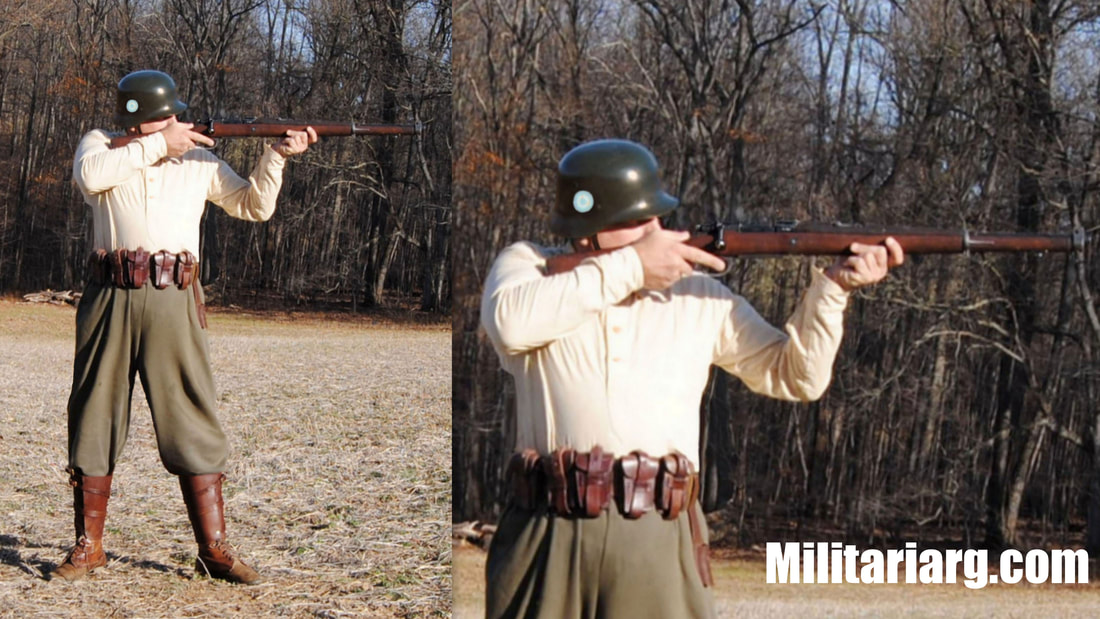
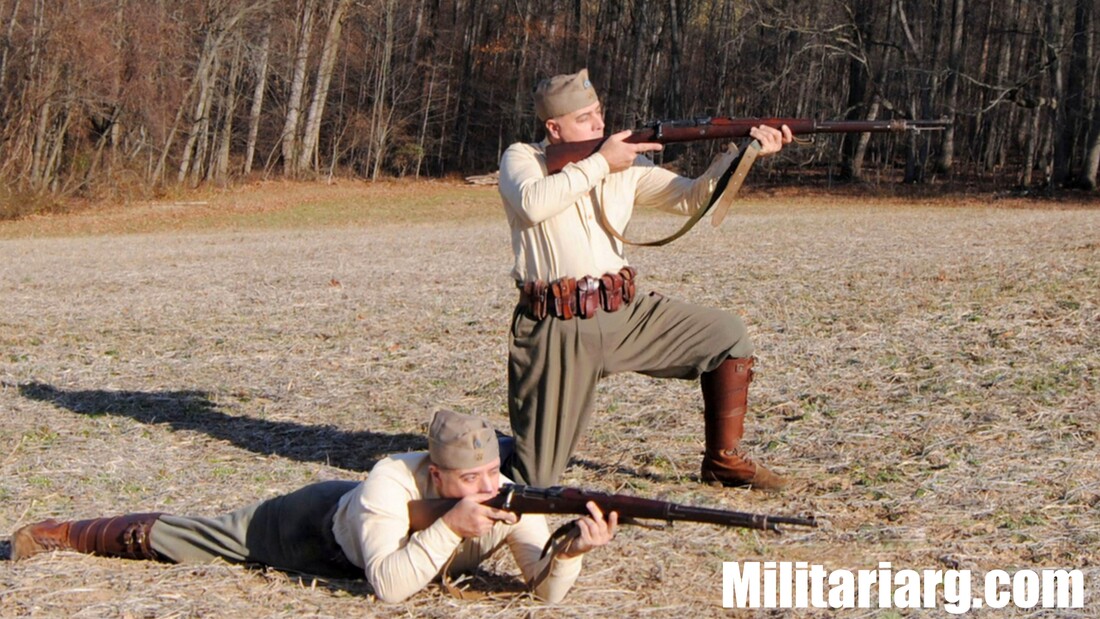
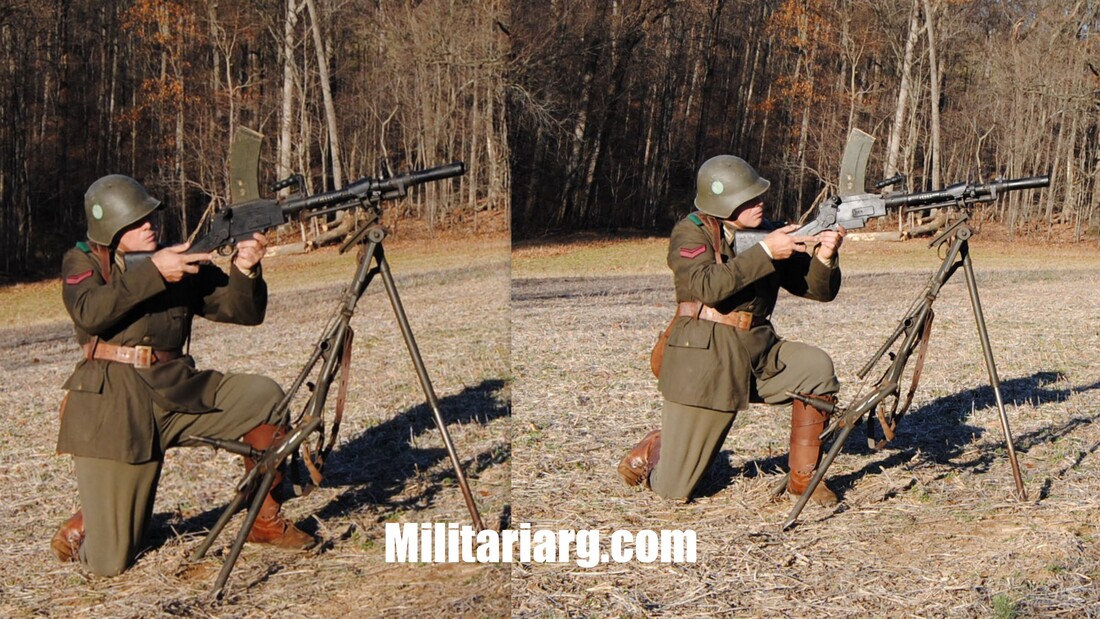
This photo recreates some of the combat shooting positions, which were made in the shooting instructions in polygons. ​Conscripted soldiers received a couple of months of instruction, where they practiced shooting, cleaning weapons and maintenance. The rest of his military service was long months of guard duty and service. It can be said that the Argentine Army was an army trained more for barracks guards, than for combat.
Picture
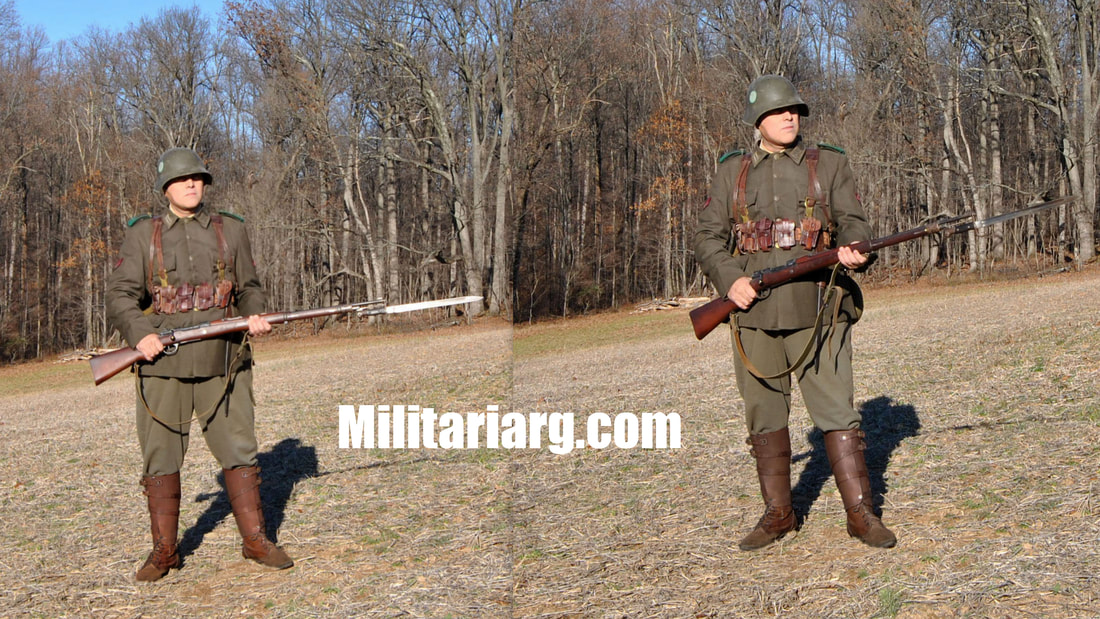
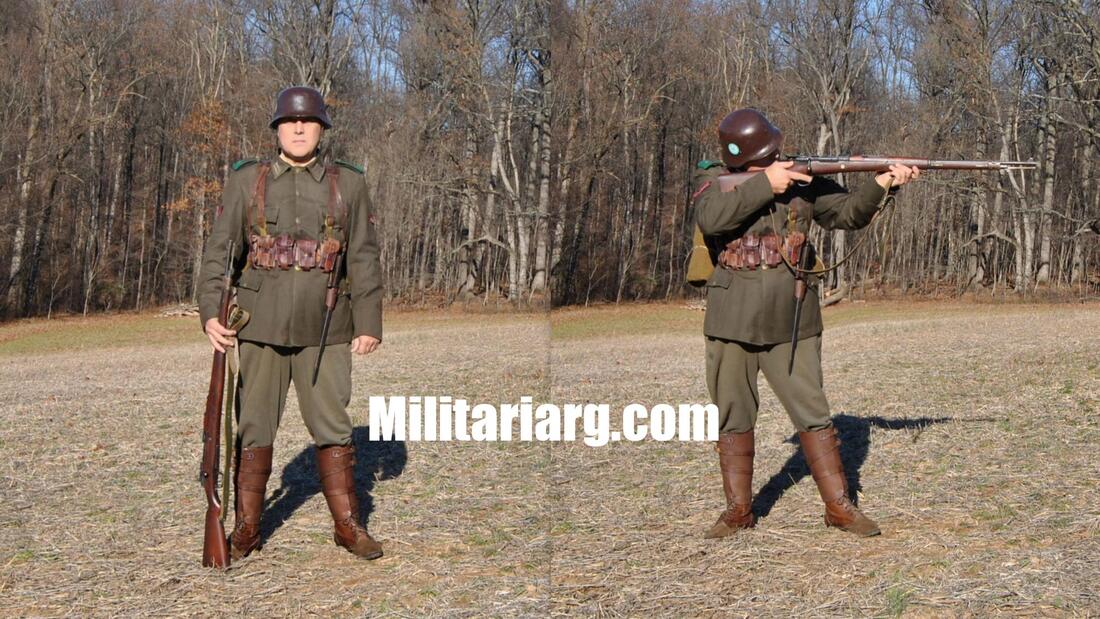
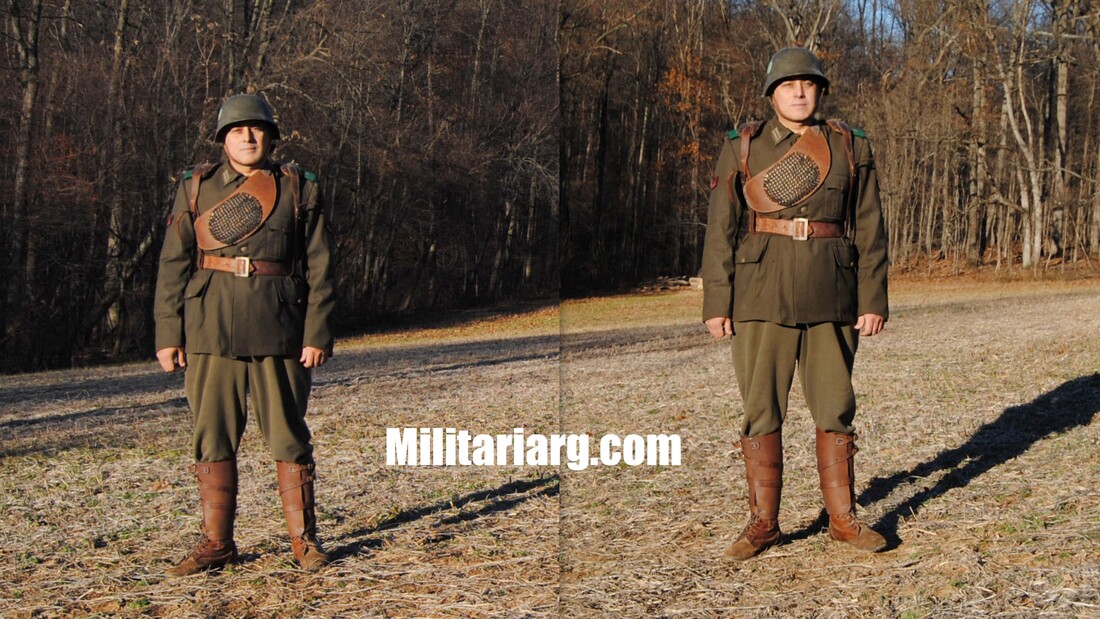
This photo recreates the basic infantry equipment with extra ammo pouches on the belt and the fixed bayonet. It is the classic image of the universal infantry for that time. However, by then it was already overcome, since automatic rifles, modern weapons such as the STG 44, FG 42, M1, had appeared in Europe. The Swiss helmet, still provided good protection, compared to the British M1917 brodies, or MKIII. But the Swiss model was unstable due to the very characteristics of the design. However, the old helmet would remain in service in the army for many more years.
Picture
Picture
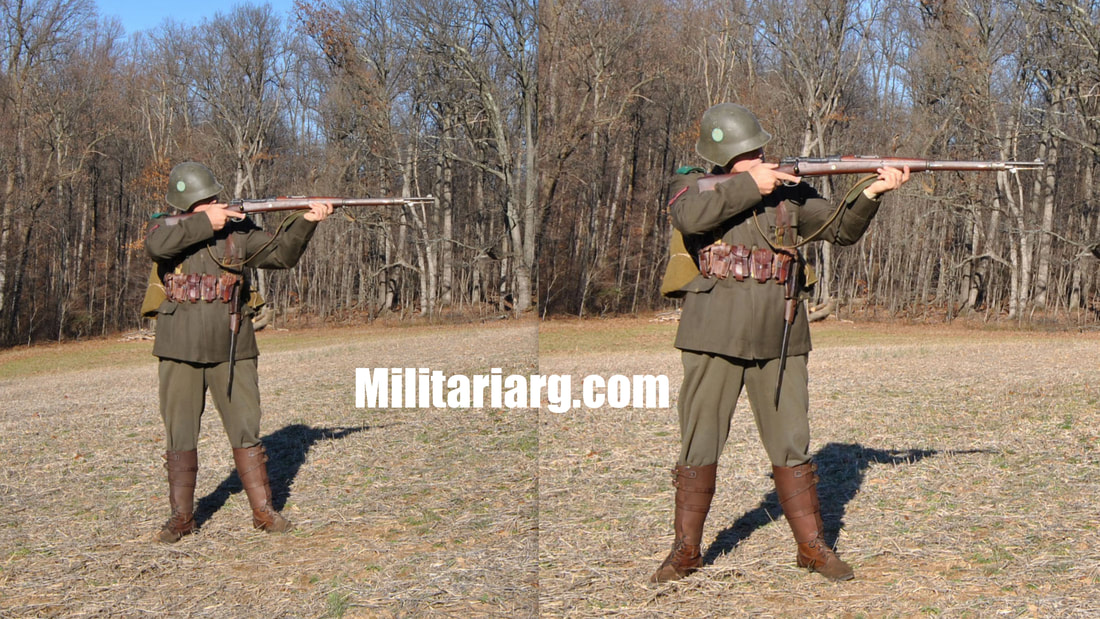
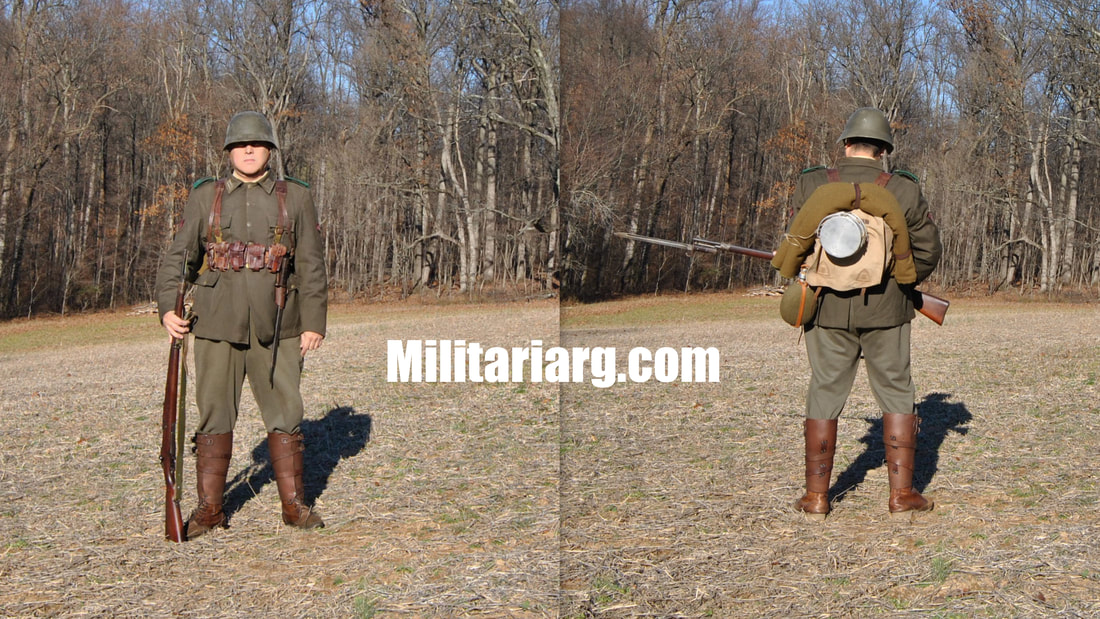
In these photos the basic infantry equipment that would continue to be used in the 50s, 60s and more.
Picture
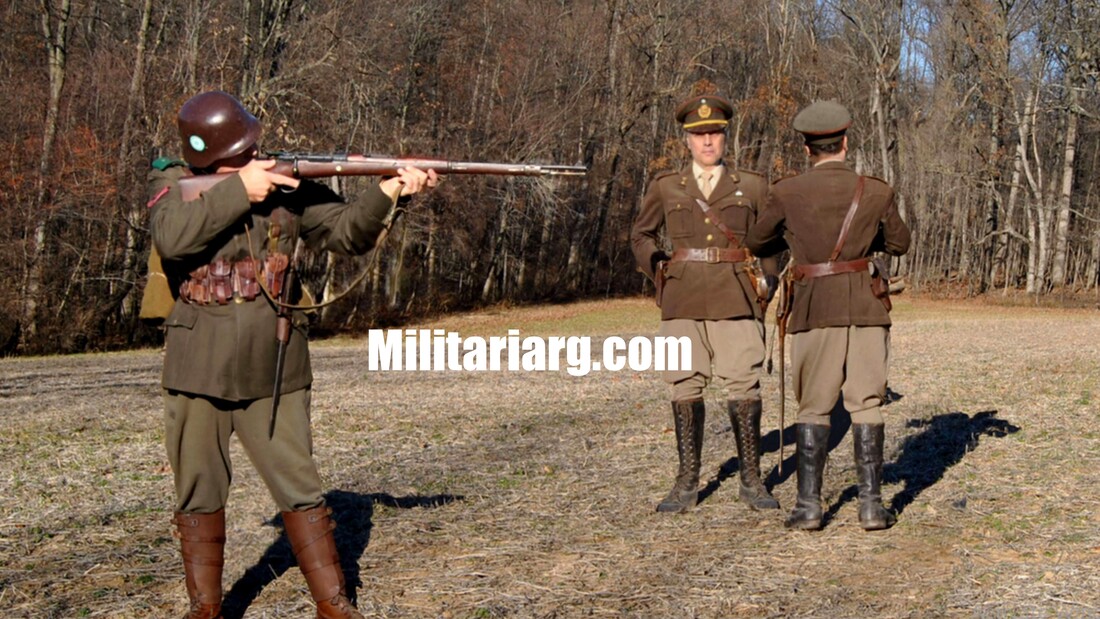
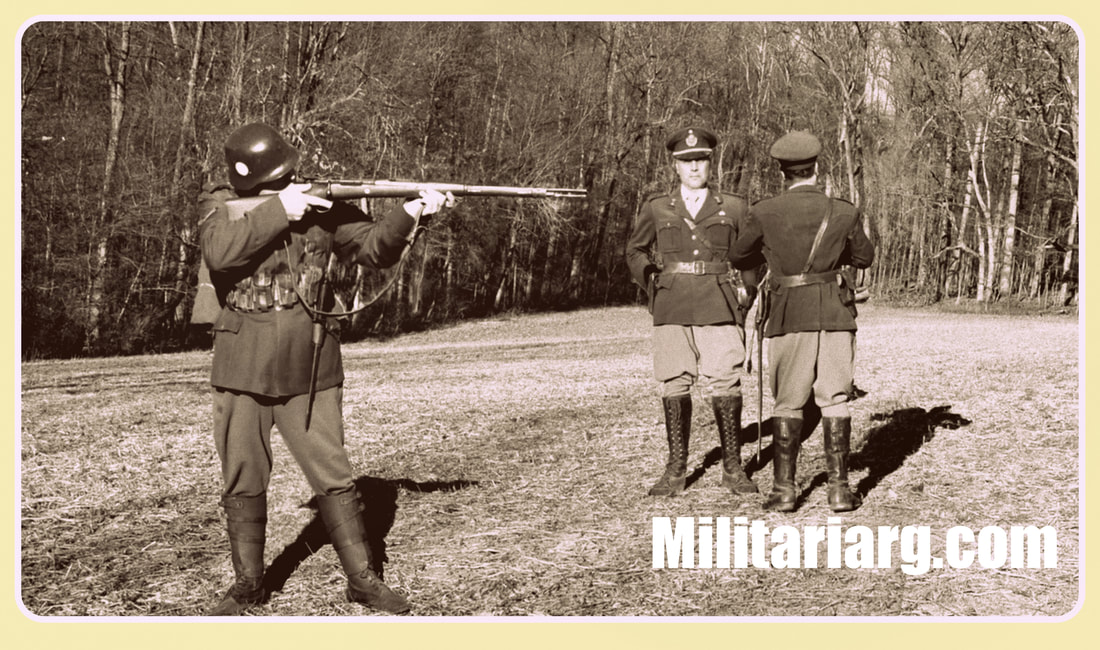
​In the photo, more positions of the closed order that was part of the daily life of a soldier in his conscription are represented. In Argentina, the soldiers were all temporary conscripts.
Picture
Although the Swiss helmet was the Army's steel helmet, it was the parade helmet (also referred to as the M38), the most common, not just for parade. ​The quantities of Swiss-model steel helmets were not enough to equip the entire army, much less in the event of a general mobilization. To the limited quantity must be added the age and wear after decades of consecutive use of the helmets. The WW2 consumed all the capabilities of the military industry, so for WW2, the import of military surplus was impossible. This was not the case with Brazil, which, upon breaking neutrality, began to be equipped and armed by the United States with the standards of the time.

Picture
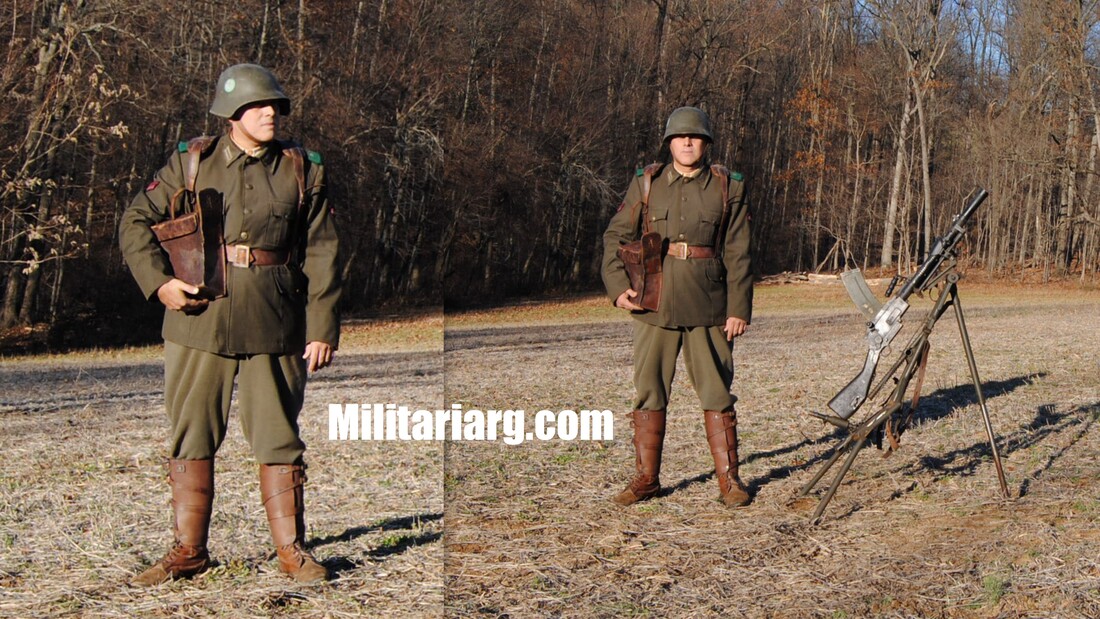
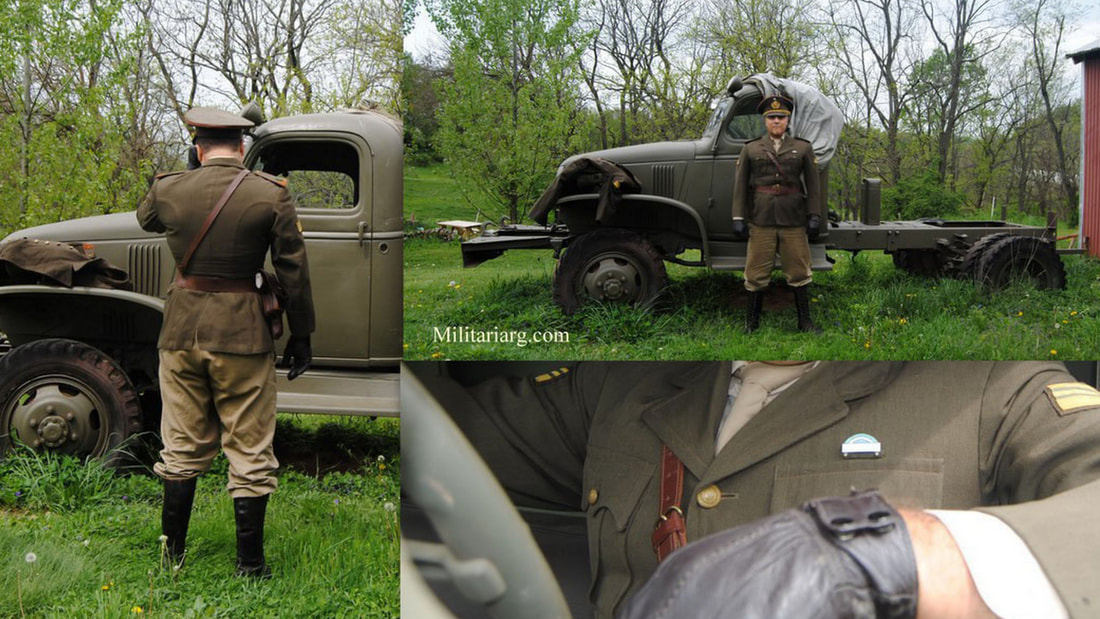
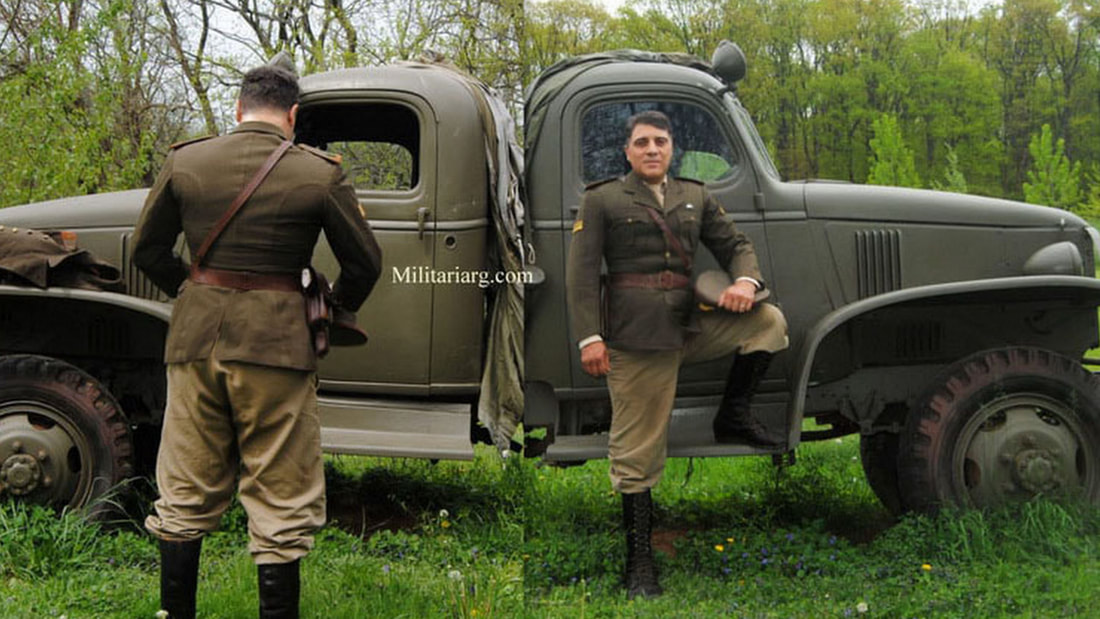
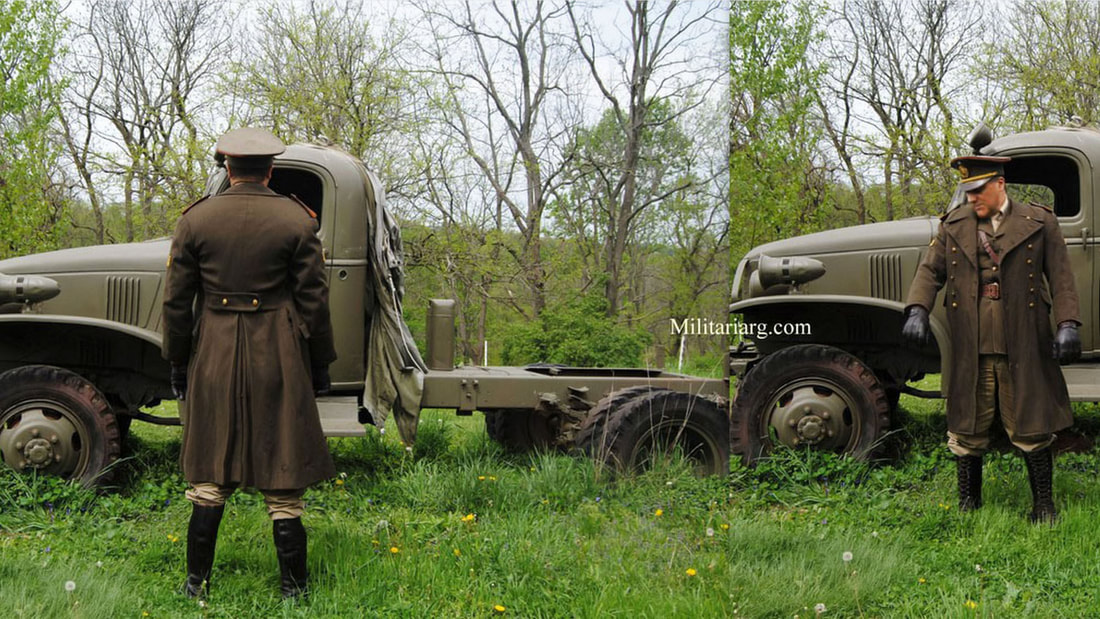
Here are the differences in the uniforms of officers and troops. The officers had uniforms of much better quality than that of the NCOs and soldiers. ​The rank on the soldier's arm is that of a "dragoneante" who was a select soldier.
Picture
NCO 1950s (Peron Era), Army Sargento Ayudante Uniform with Motorized Driver Insignia.​ The Army visor hat is from an officer and does not go with this uniform.  It is from the same period and in the same style.
Picture

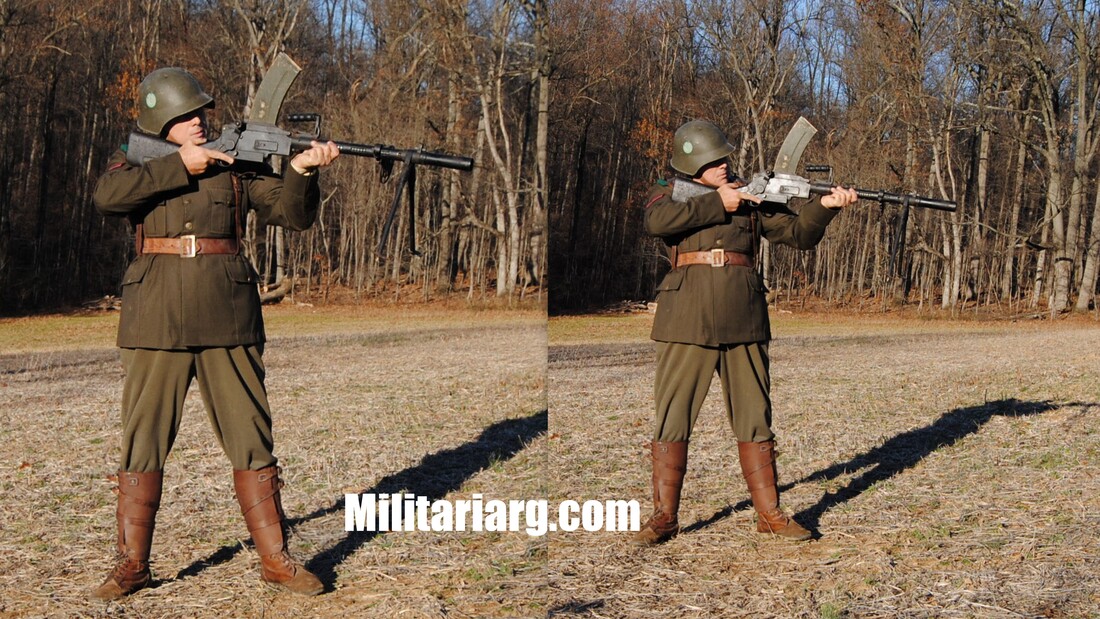
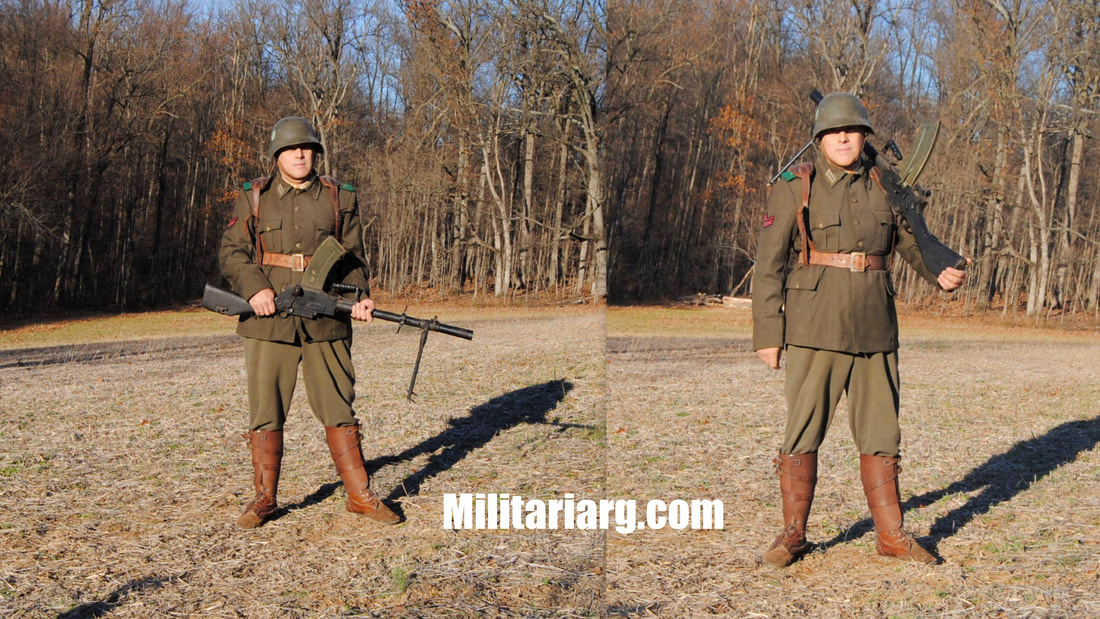
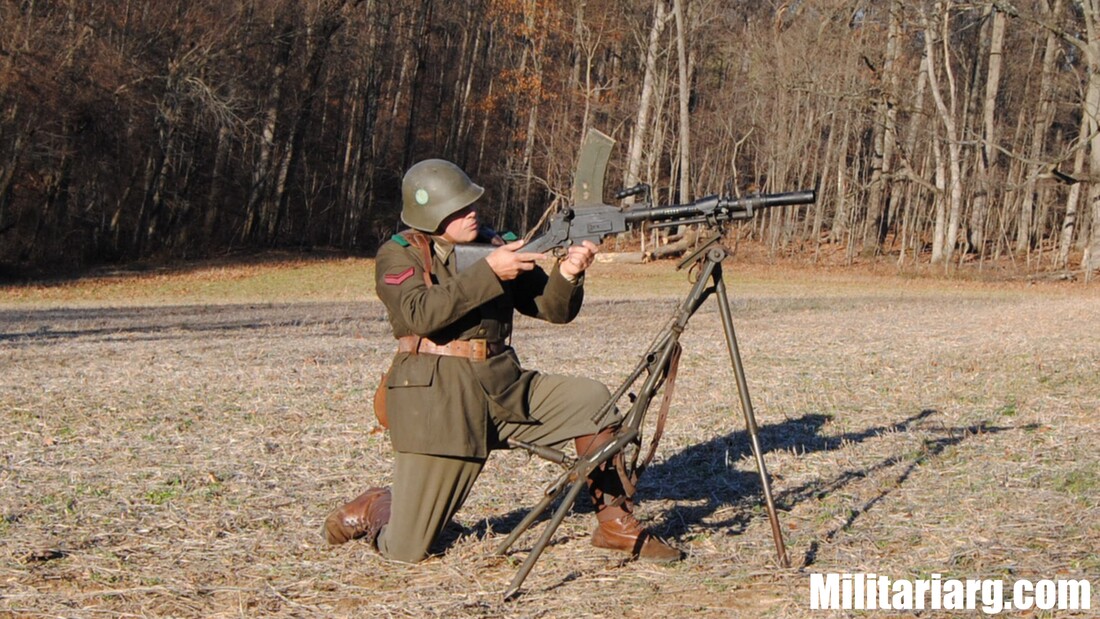
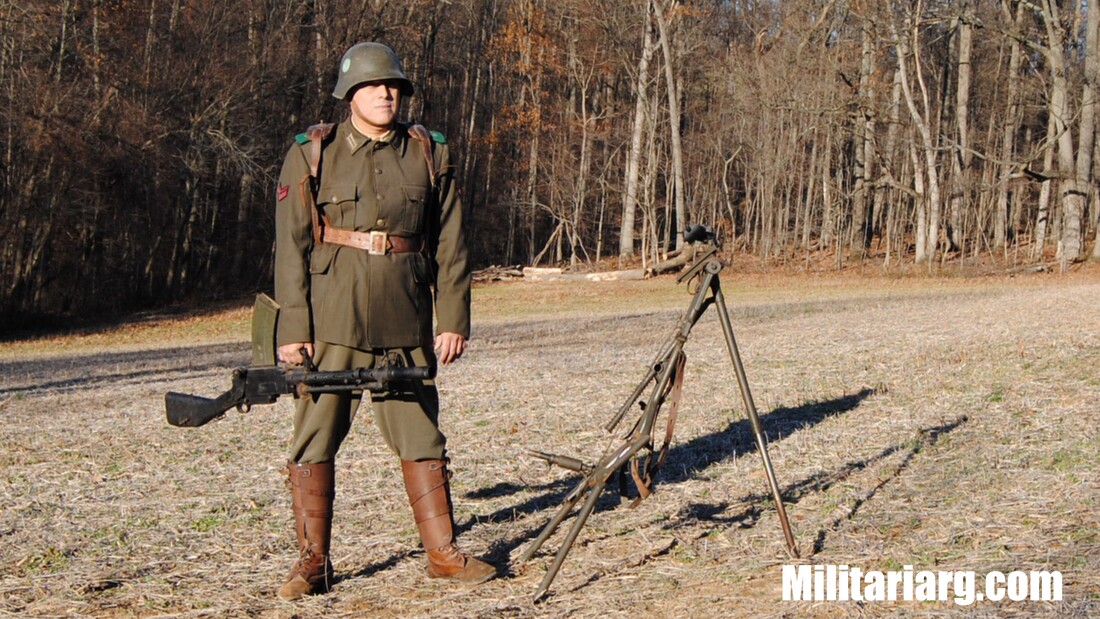
Madsen Machine Gun

Picture
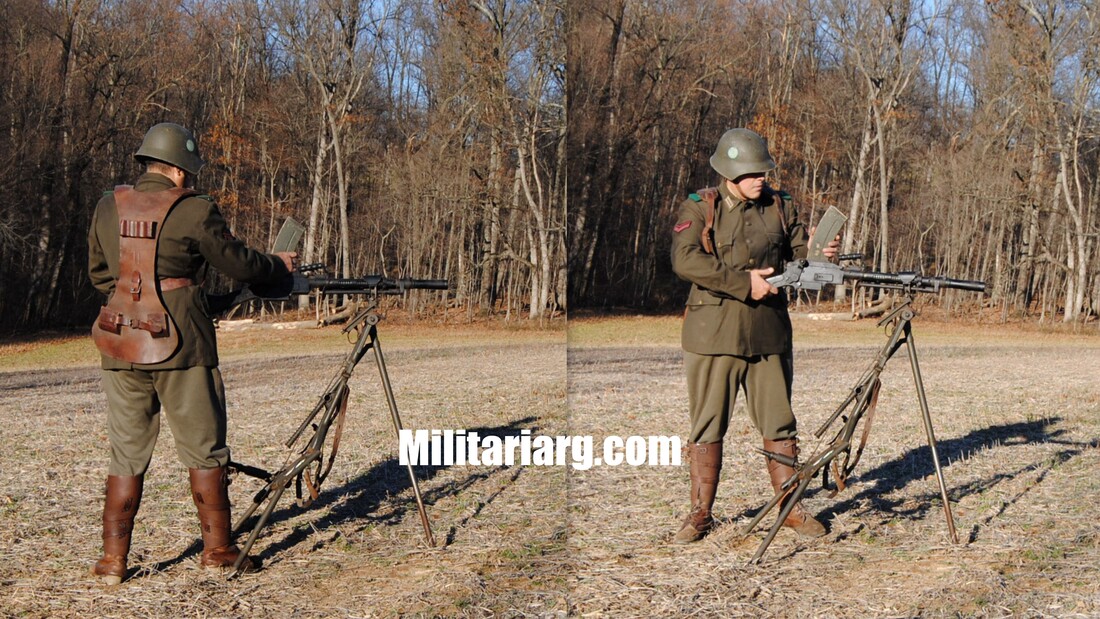
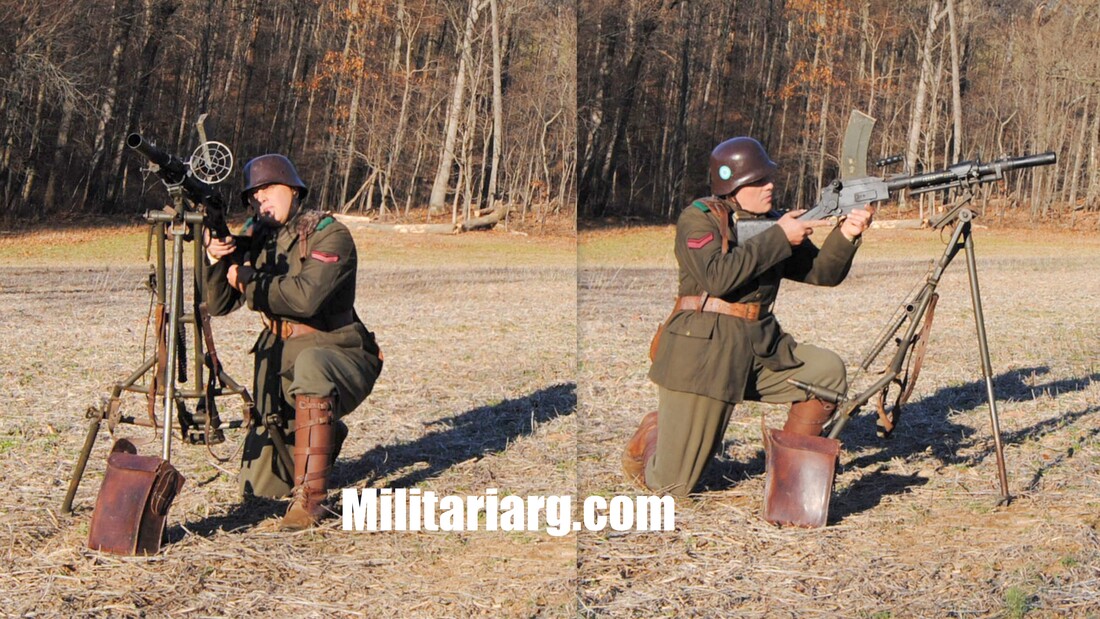
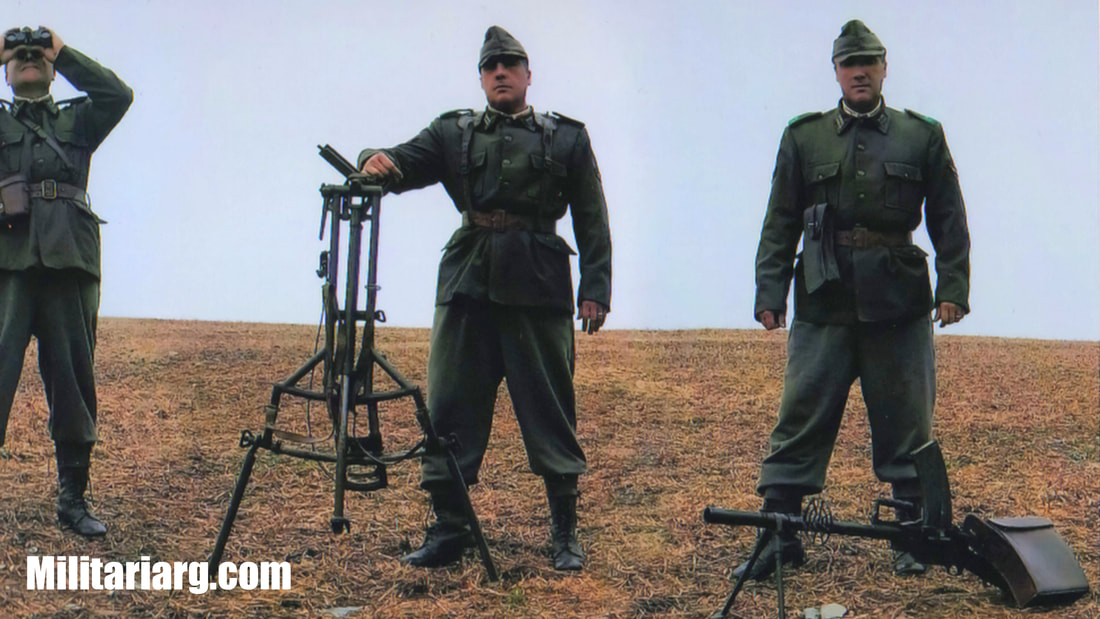
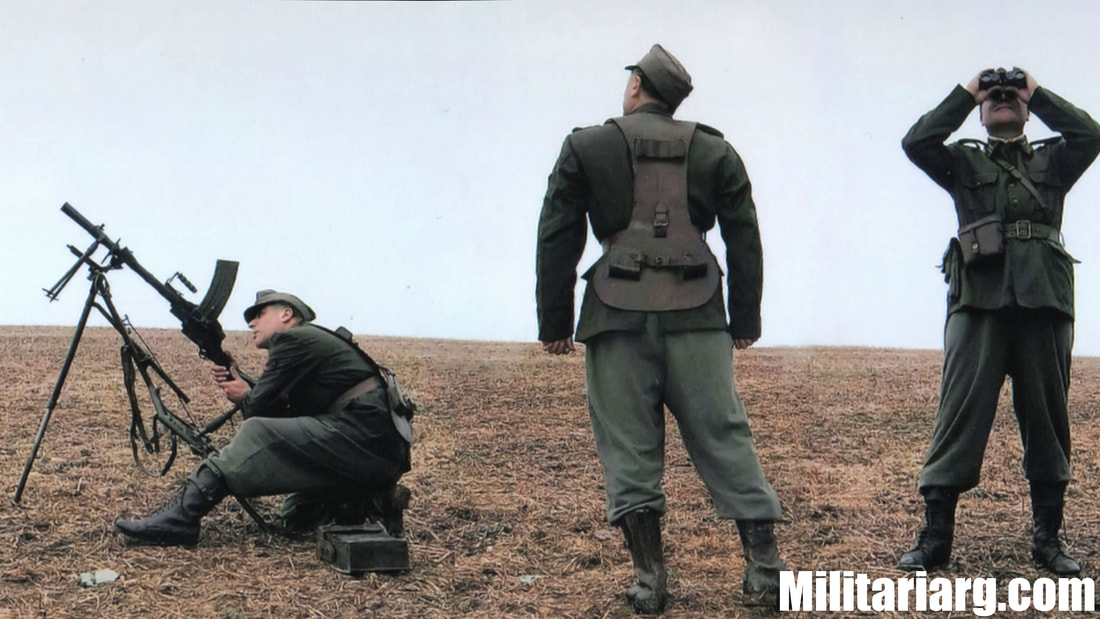
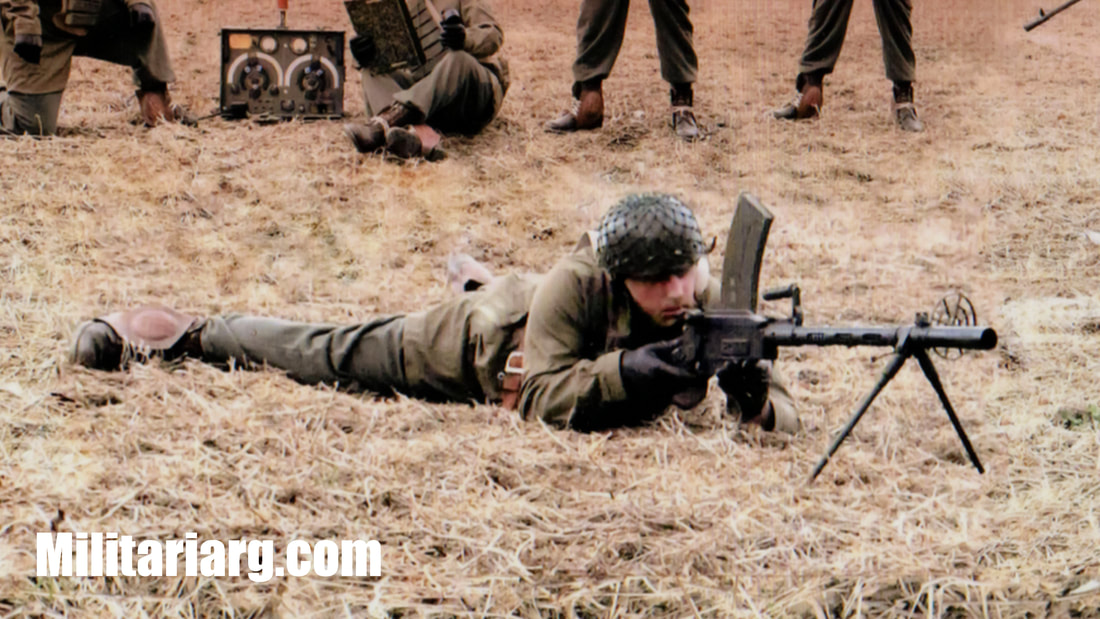
The Argentine Army purchased various models of the Madsen (1910, 1925, 1926, 1931, and 1935), starting before World War I. The Madsen served for many decades in Argentina. This Madsen is a 1946 model, aesthetically the same as the rest of the models. This specimen belonged to the Chilean Army, who used them (Reserve weapon), until the Beagle Conflict.
Picture
Picture
Picture
Picture
Picture

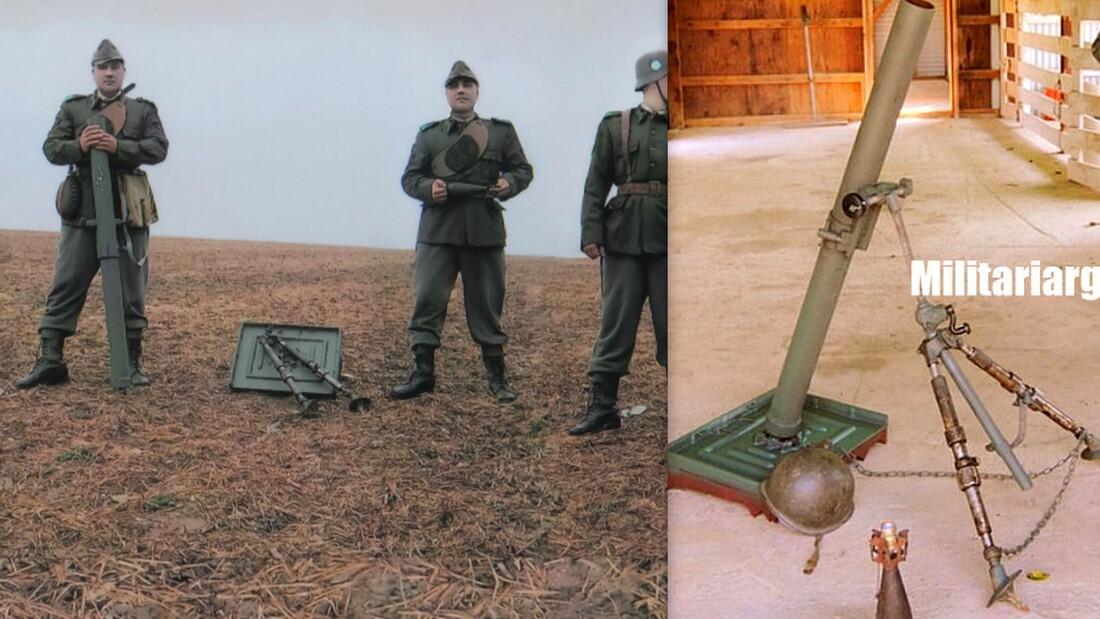
81mm Mortar Type Brandt. Fiberglass Wooden Full Replica

Picture
Picture
​This huge bandolier strap was for loading the tube of the medium mortar. In WW2 photos it is seen in use with the Italian alpini. It is likely that the origin of the model was Italian since the Argentine mountain troops were trained in Italy.

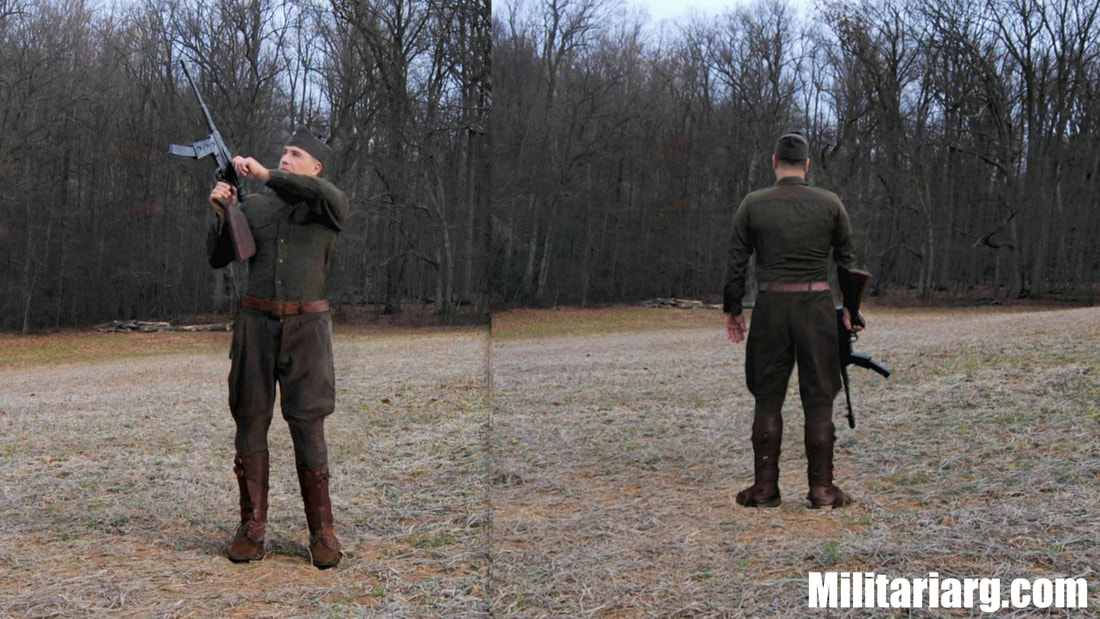
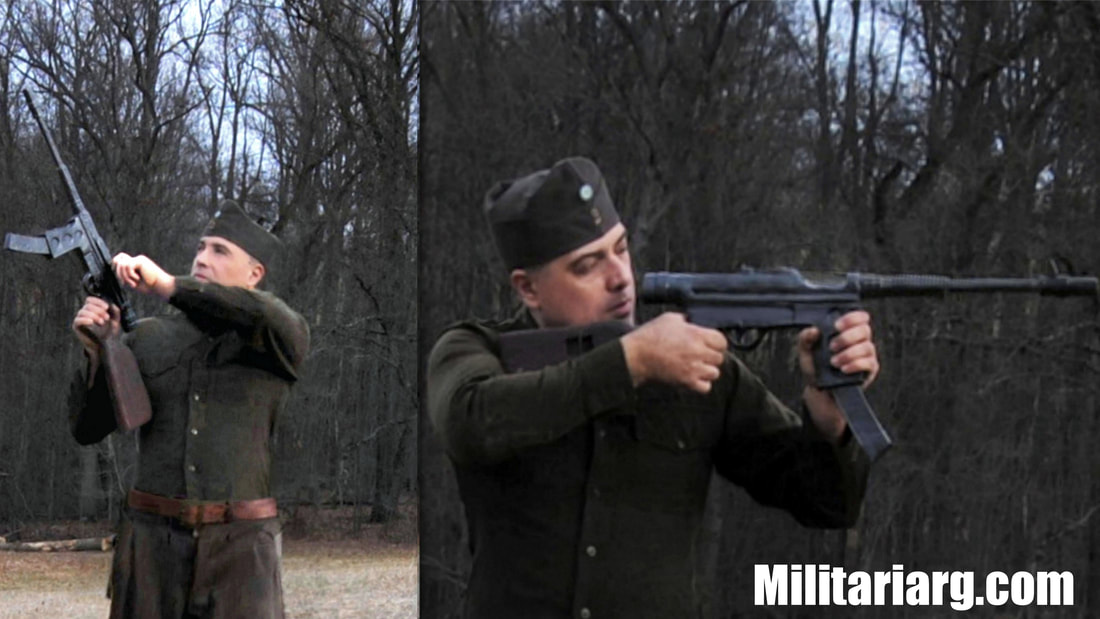
Replica Halcon Modelo 1949 (Modelo Argentino) Sub Machine Gun - Wood-Fiberglass. (Fixed Wooden Stock).
Picture
Picture
Replicas M49, folding stock on the left and fixed stock on right.

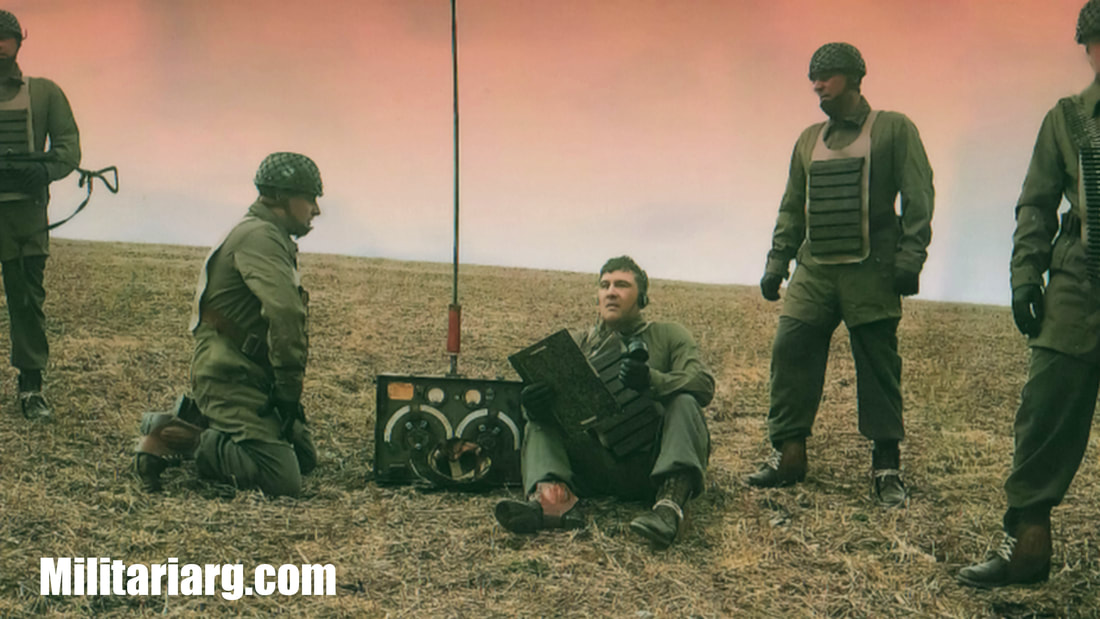
​Argentine Paratrooper WW2 Era - Impression Reenactment.

Picture
​Replica Halcon Modelo 1949 (Folding Stock) - Wooden-Fiberglass.
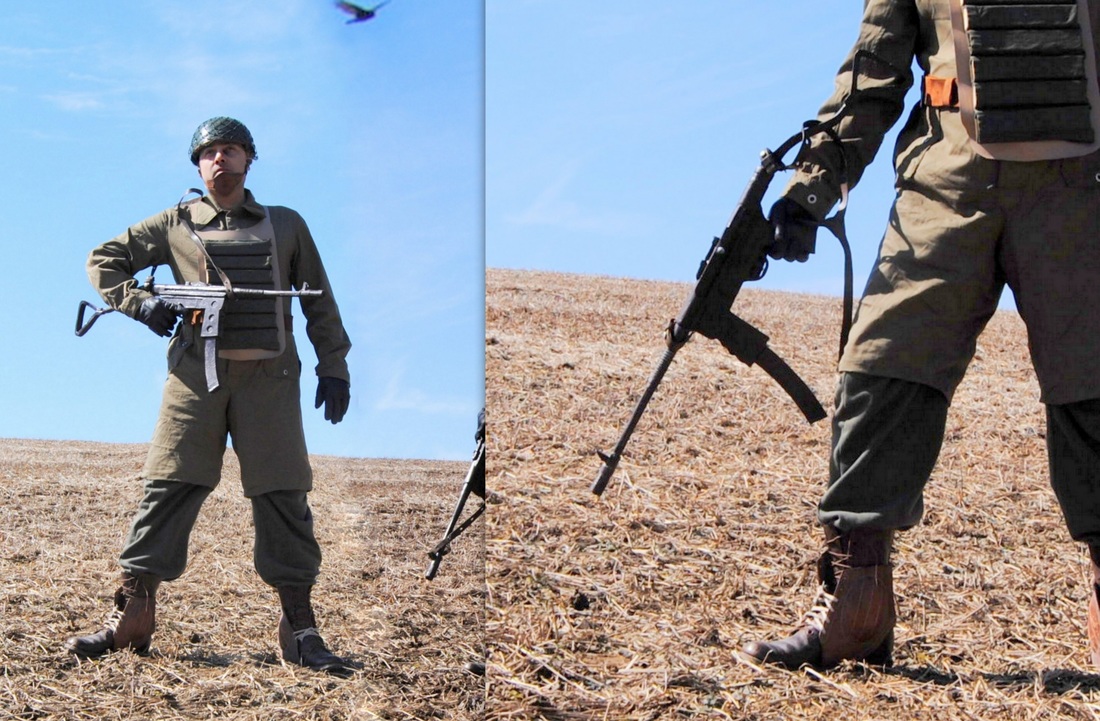
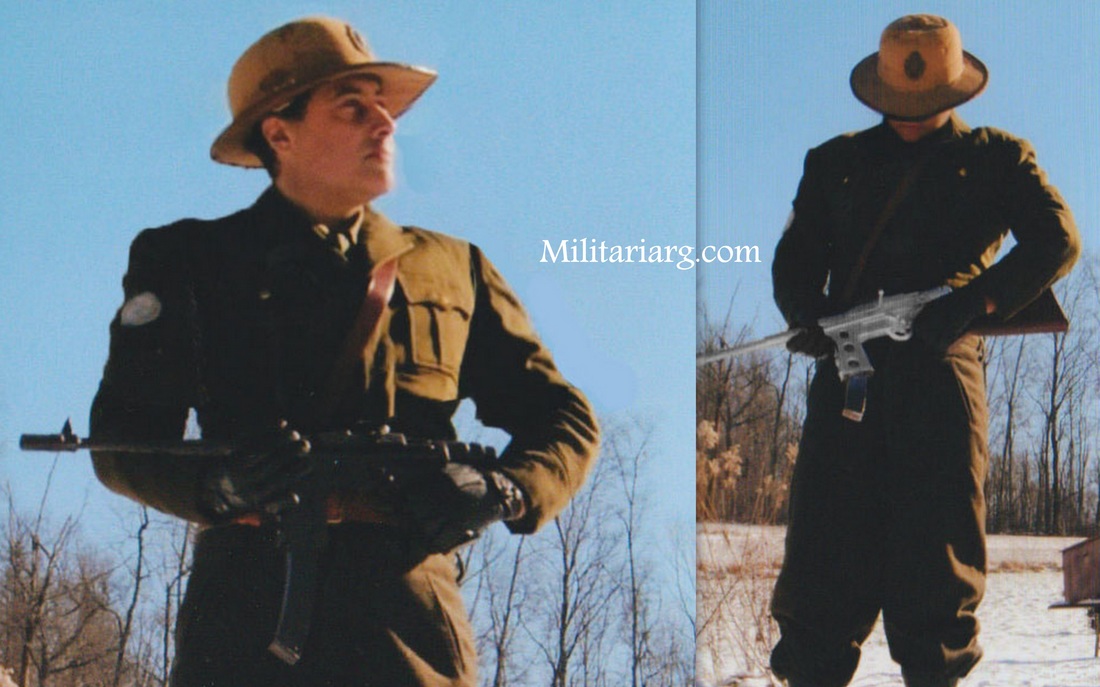
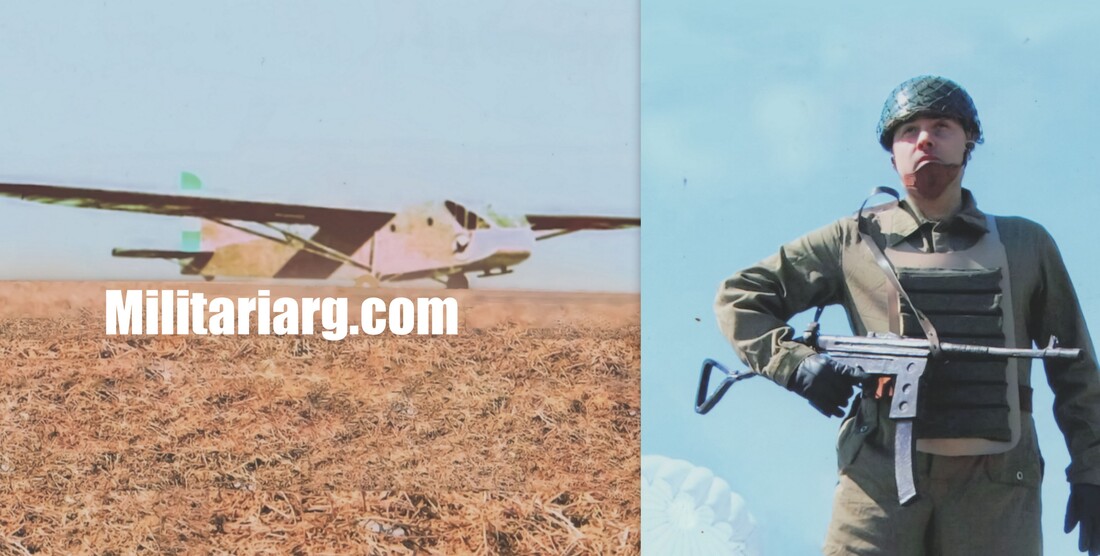
This version of the Halcon Sub machine Gun was widely seen in use in the Argentine army and its paratroopers. It is the version with a folding stock of the M49 Halcon 9mm parabellum. There was another Falcon devised for the air force that had the shorter barrel and had the system of rebutting the stock like the German MP40, that was the Halcon Model 1946 in caliber 45 ACP. 

The paratroopers wore an ammo-type vest. However, these could actually have been an adaptation of the floats to cushion jumps. At that time this type of vest was seen in use in Navy divers trained in Argentina by the famous Italian commando Eugenio Wolk. The Italian assault divers were also paratroopers and in particular Wolk himself designed scuba diving outfits.

The anklets seen in the photo are Spanish copies of the anklets of Argentine paratroopers. In the 40s, Spanish parachutists came to Argentina to practice. Spain did not have official paratrooper units in 1945. The first units were formed shortly after WW2. In the postwar, Argentina and Spain suffered to varying degrees international insolation as a result of neutrality in the case of Argentina, and alignment with the Axis powers in the case of Spain. These anklets are proof that both countries collaborated during that period of "quarantine".
Picture
Mañque was an Argentine airborn assault troop/cargo glider designed in 1945. This glider was intended for airborne operations such as those seen in WW2. The Madsen machine gun, although it was light, was robust and heavy for parachute jumps. However, taking into account that the paratroopers, once on the ground, become just another infantry unit, obviously the Madsen would have been the support weapon as well as 81mm mortars. 

First paratroopers in Spain.

The first unit, the Primera Bandera de la Primera Legión de Tropas de Aviación (1st Flag of the 1st Legion of Aviation Troops), was established in March 1946. They began parachute training in late 1947.The Army's first unit, the 1st Army Parachute Battalion "Roger de Flor", was created in October 1953 and became operational in February 1954. These troops included personnel from the elite Spanish Legion. Both units first saw combat action during the Ifni War in 1957–1958.

Spanish paratroopers used a mix of standard Spanish military issue weapons during this era:

Star Z45 Submachine Gun: This was a key weapon for the paratroopers. It was a domestically produced, highly successful design based on the German MP40, featuring an under-folding stock and chambered in 9mm Largo (the standard Spanish pistol caliber).

Spanish M43 Mauser Rifle: The standard-issue bolt-action rifle for the Spanish Army in the 1950s was the Spanish M43, a domestic copy of the German Karabiner 98k. It was chambered in 7.92x57mm Mauser and was the main infantry weapon until the CETME rifle was introduced in the 1960s.

Pistols: Various Spanish-made pistols were in service, likely including the Star Model A or similar domestic models chambered in 9mm Largo.
​
Machine Guns: Heavier support weapons would have included Spanish versions of light and medium machine guns, such as the M-34 machine gun. 

The Spanish military relied heavily on its own arms industry and designs derived from German WWII-era technology during the post-WWII years. They also used old German transport aircraft, such as the Junkers Ju 52, to deploy their paratroopers.

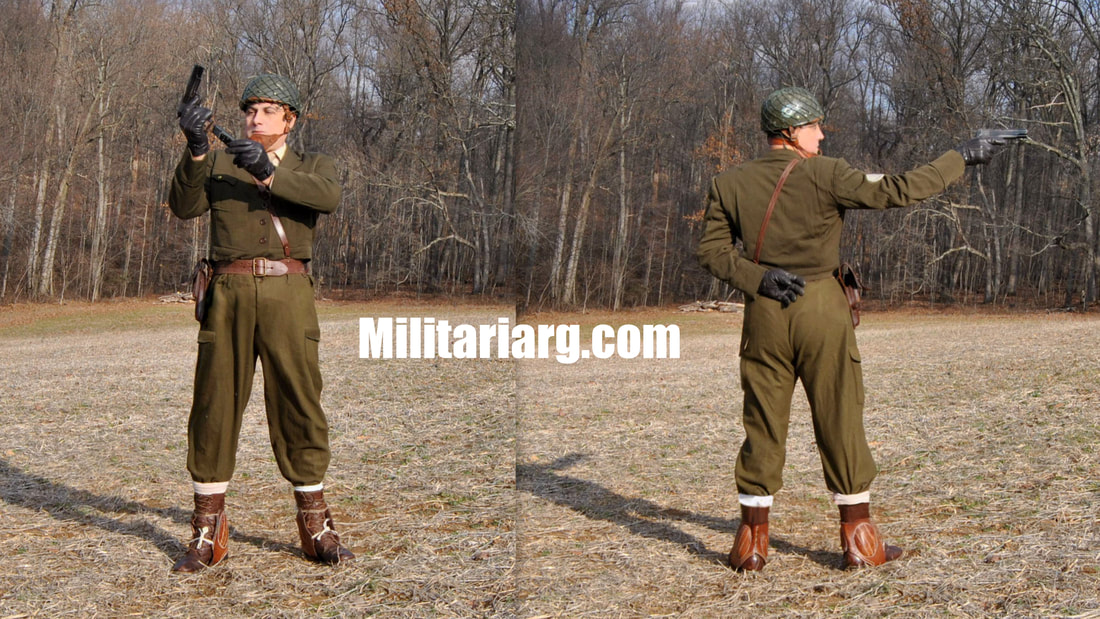
11,25mm 45 ACP Pistols, Colt 1911 (Arg Contract 1927), Ballester Molina, Ballester Rigaud. Plastic Replica.
Picture
The Ballester-Molina was a semi-automatic pistol chambered in .45 ACP that was produced from 1938 to 1953 by Hispano Argentina Fábrica de Automóviles S.A. (HAFDASA). It was designed as a less expensive, domestically manufactured alternative to the Colt Model 1927, which was a licensed copy of the Colt M1911A1 already in Argentine service. HAFDASA ceased production in 1953 but its pistols served with various Argentine security forces and military branches for nearly 50 years, with some units still using them during the 1982 Falklands War (Gendarmeria Nacional). 

During World War II, the United Kingdom purchased about 8,000 to 10,000 Ballester-Molinas for use by the Special Operations Executive (SOE) and to supply resistance forces in occupied Europe. These pistols were issued for clandestine operations to avoid using identifiably British weapons.

Photo Impression:Argentine Paratrooper Middle 1950s -60s (Post War Uniform with Argentine Version of the IKE NATO Jacket. 

Signal Corps
Picture
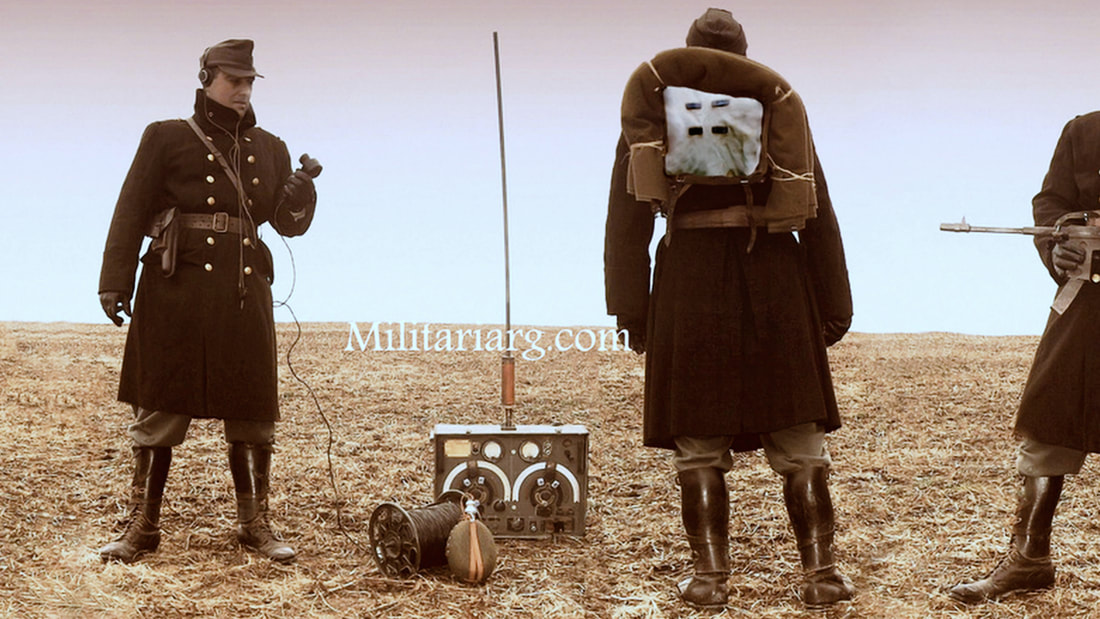
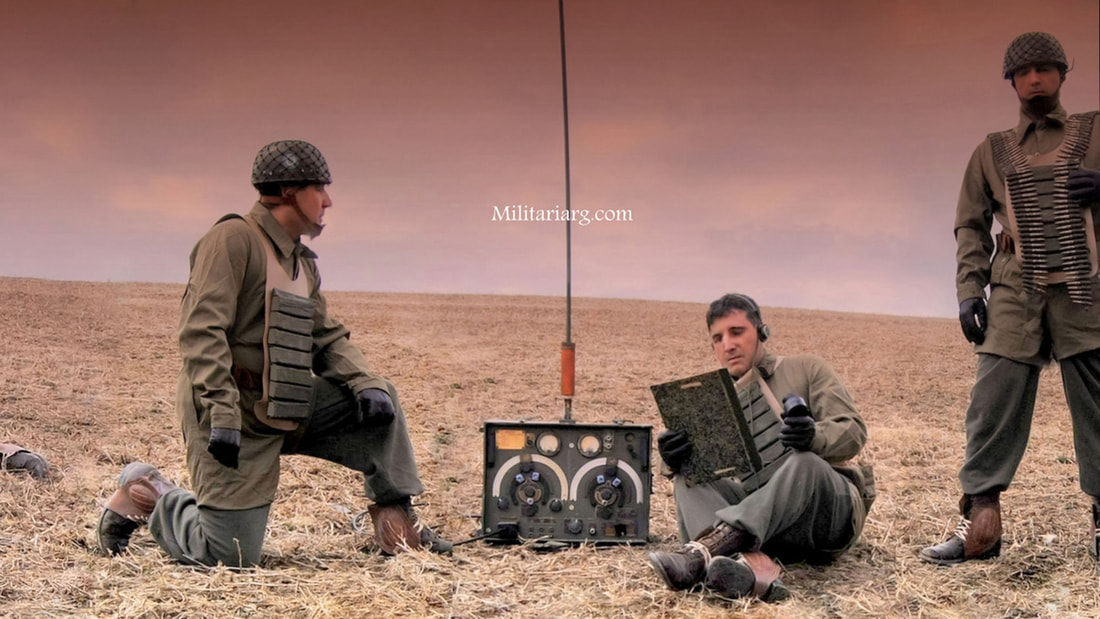
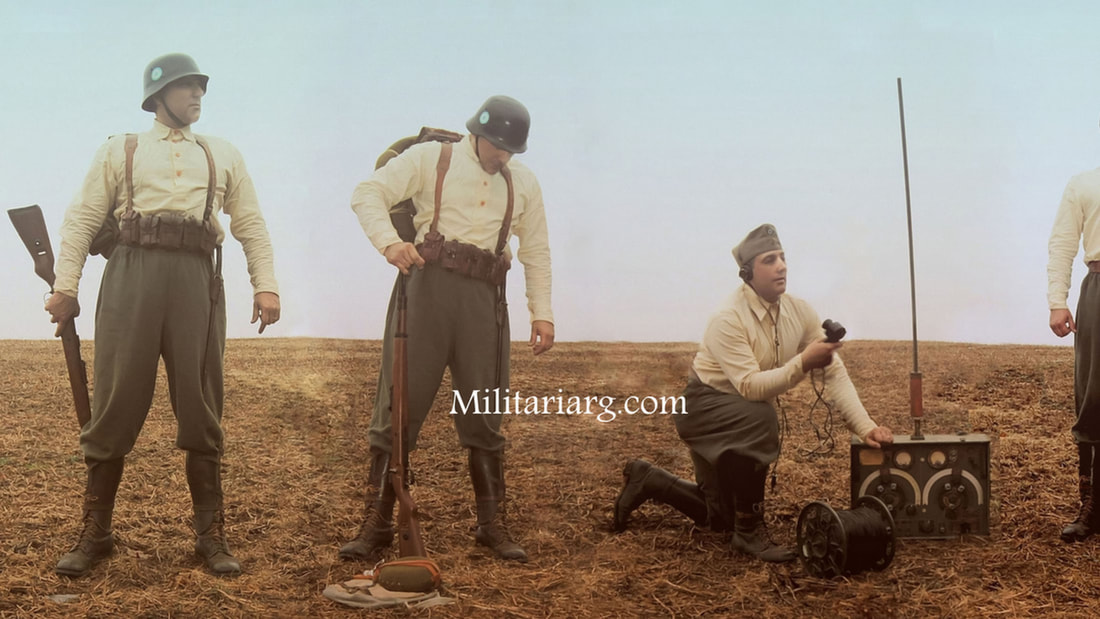
​These were a series of portable radios manufactured in the country with foreign brands that had local branches, such as RCA, Telefunken, etc. These vacuums tubes radios had already been obsolete, taking into account the technological advances that were taking place in Europe during the war.
Picture
Picture
Picture
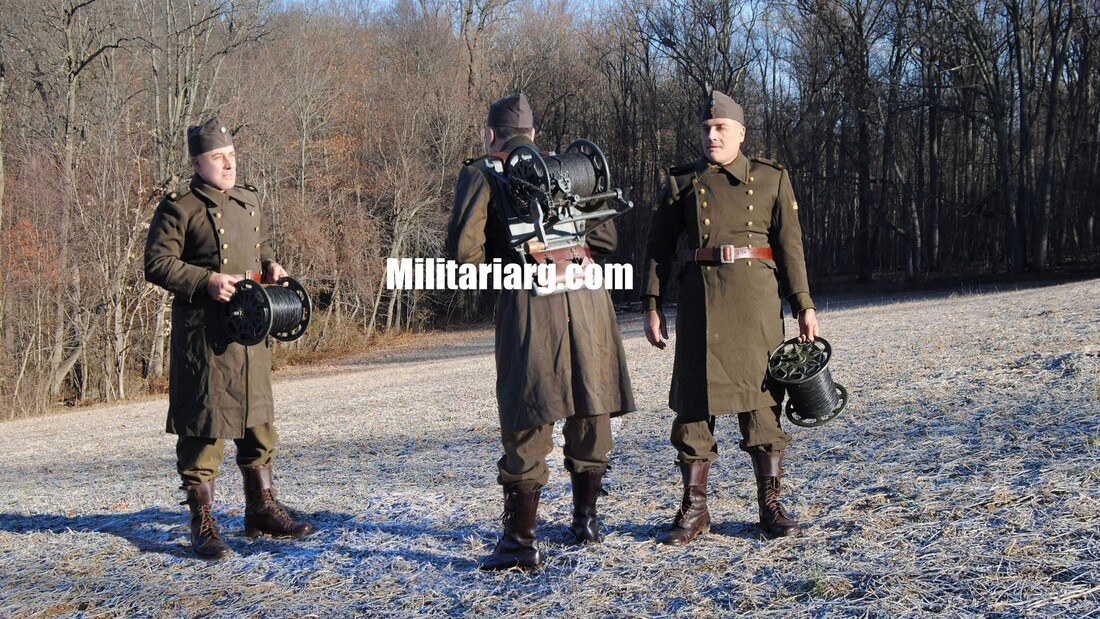
The field phone used from WW1 continued to be used during WW2 and later. In Argentina, the field telephone was used in the South Atlantic War together with its inseparable partner the cable drum. ​Probably much safer than wireless communication.

Argentine Army or Marine Infantry VARTA Flashlight
Picture
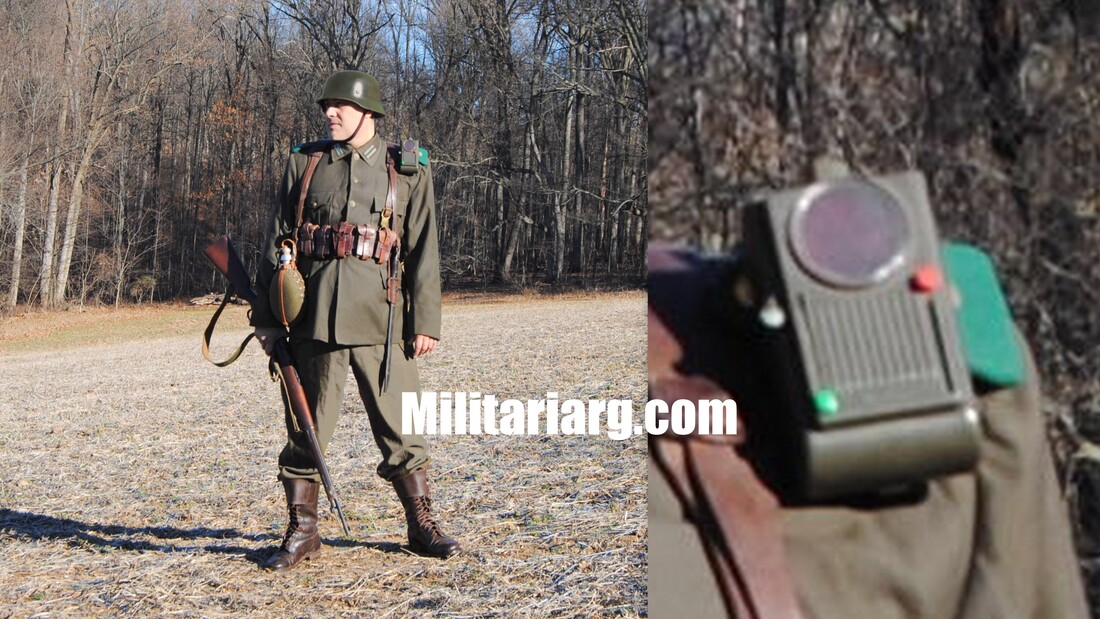
This is a very rare item. It is an Argentine Varta lantern flashlight. It is a copy of the German type flashlight used during WW2. These probably were made in the 50s or 60s. Other details are unknown. The photo Reenactment represents an Argentine soldier between 1945 and the 1950s. Note that he uses the Argentine made combat boots copied from US M43 of the Second War. Probably these boots together with the IKE type short jackets were the beginning of the "upgrade and modernization" of the Argentine military uniform which started at the time of Peron. 

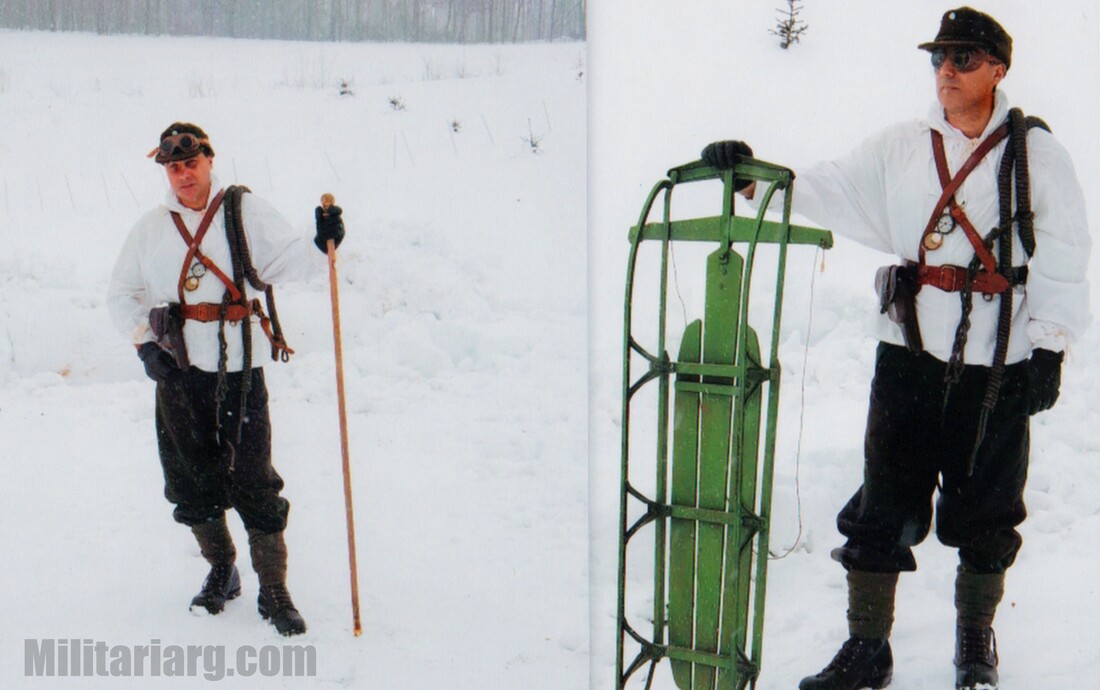
1930s, early 40s. Mountain Troops

Picture
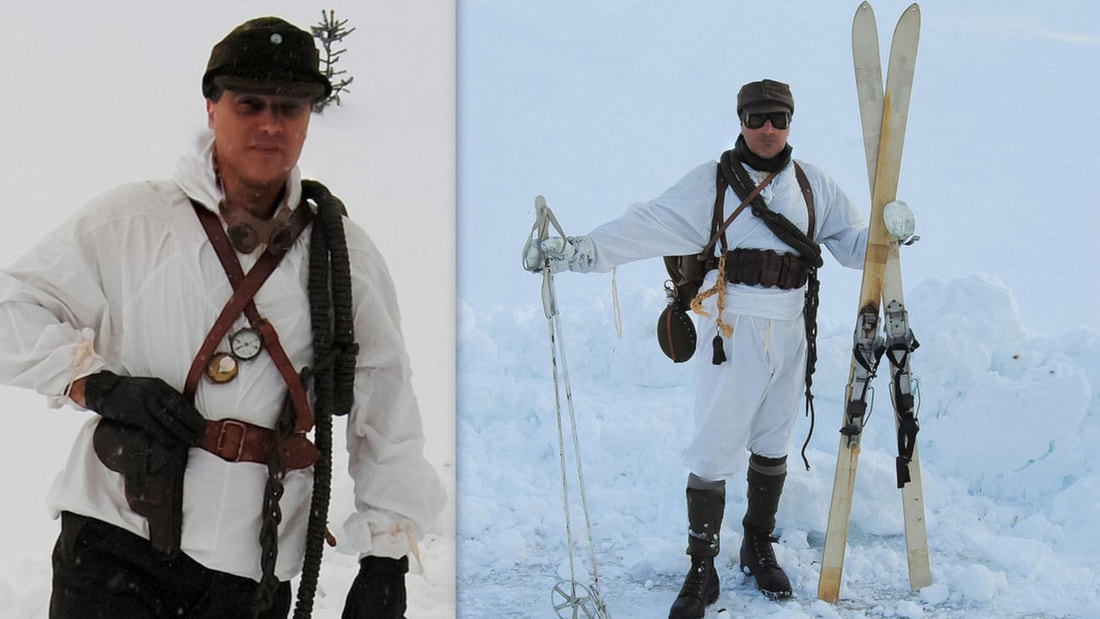
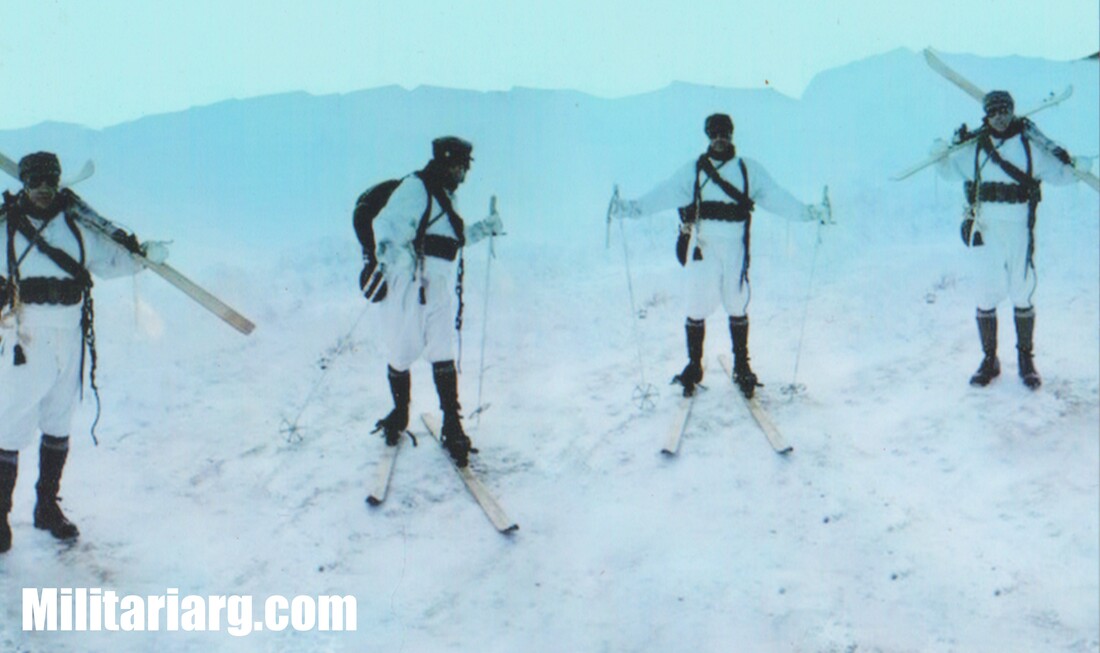
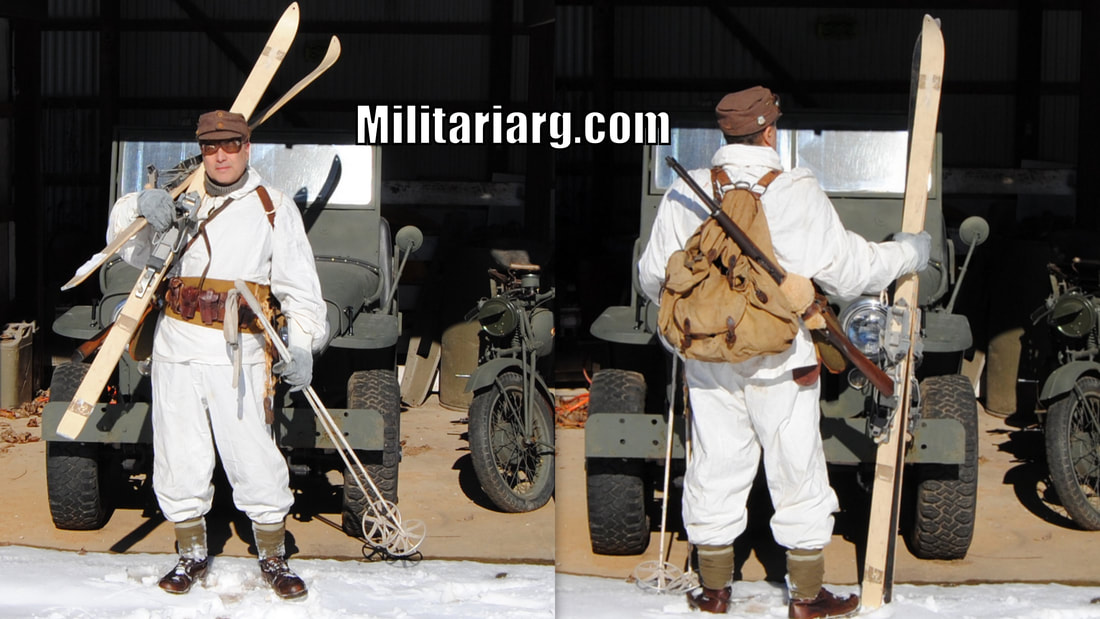
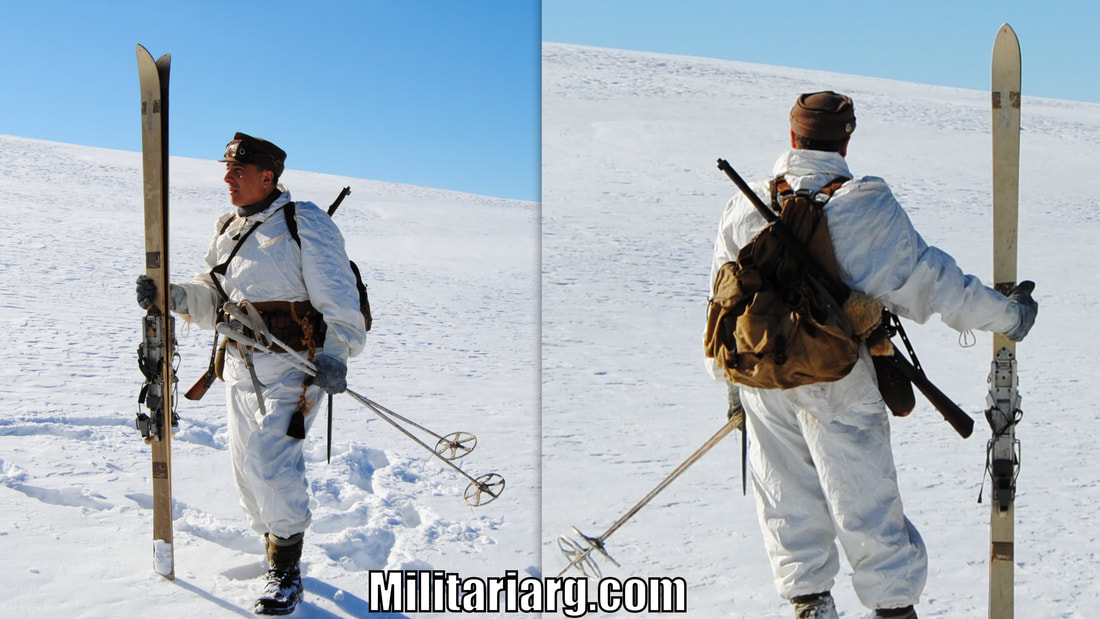
​According to the photographs of the time, the mountain troops in Argentina used the Mauser 1909 rifle like the rest of the infantry. Beyond the boots with spikes, and the cap with sides, the basic equipment was the same as that of the infantry.
Picture
Picture
Picture

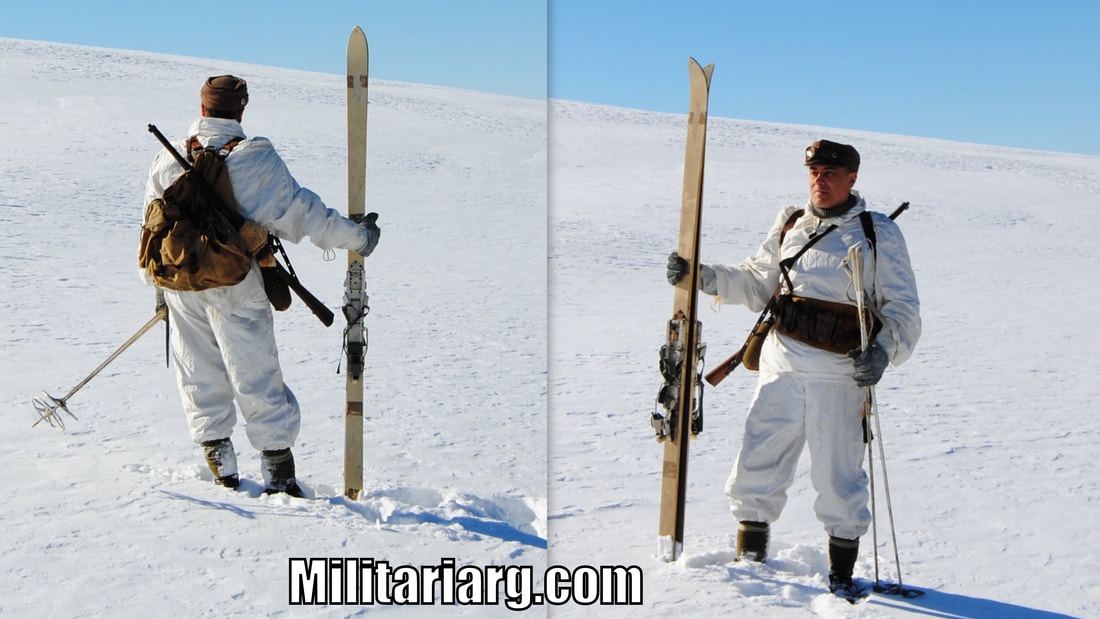
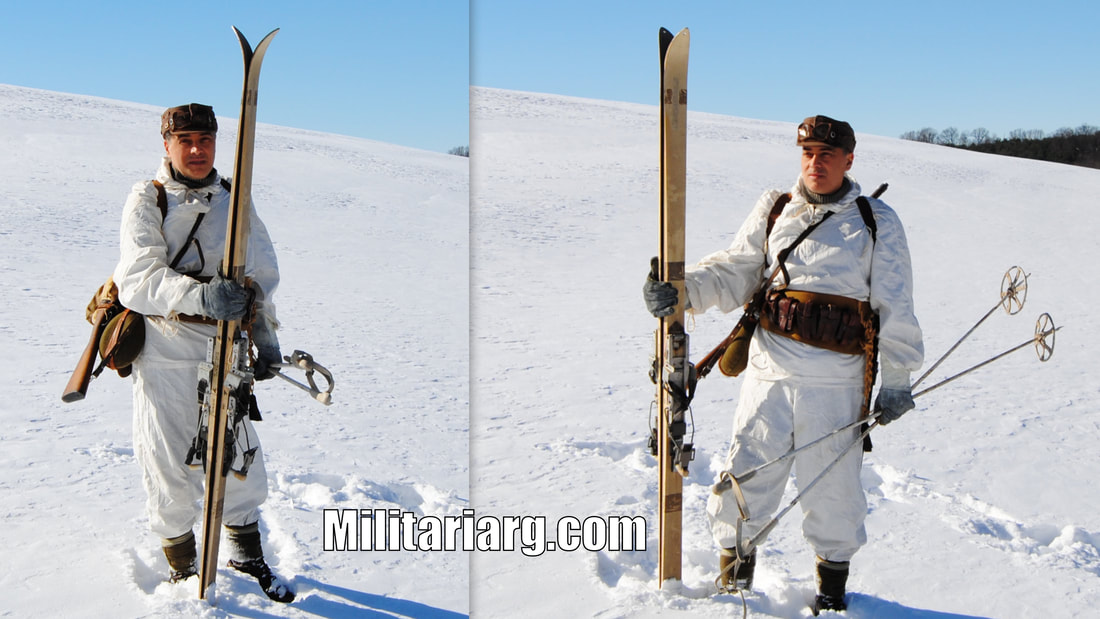
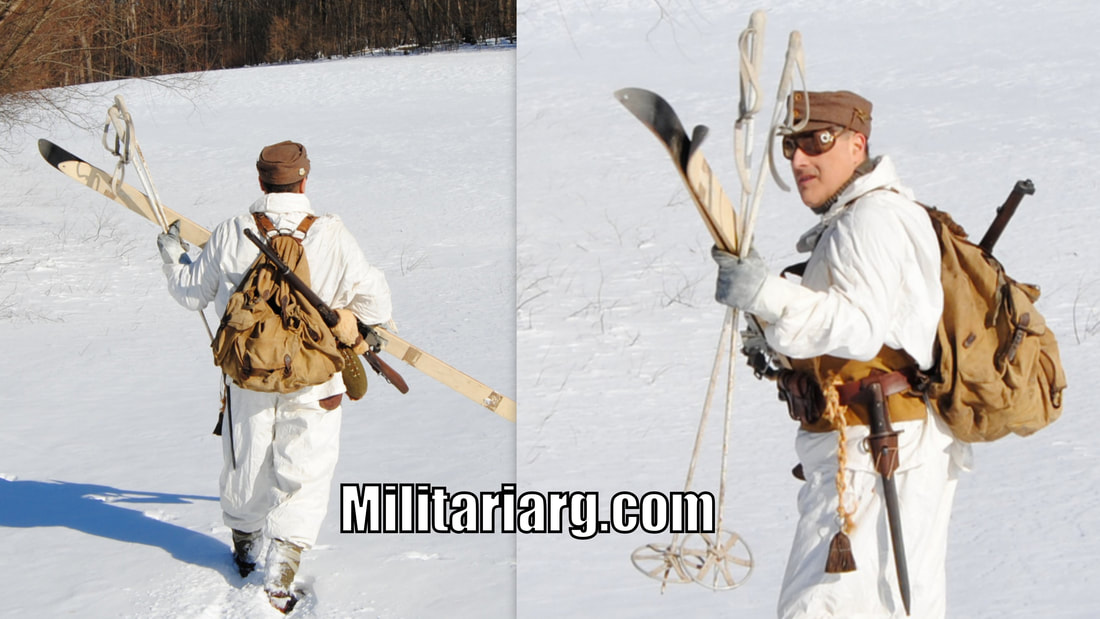
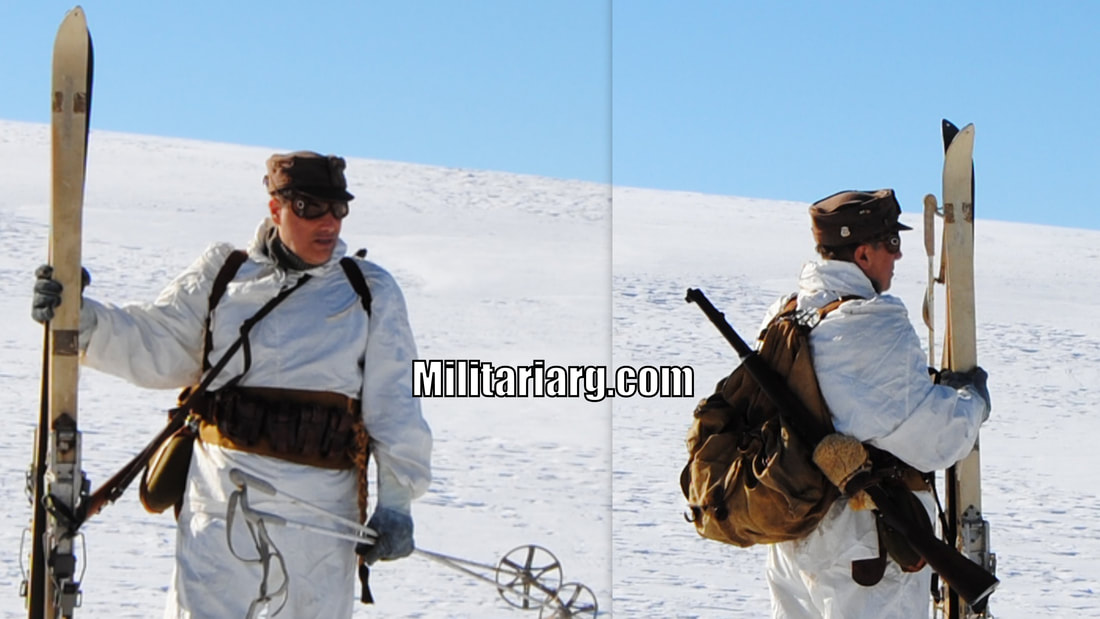
 Mountain Troops - Skiers

Picture
Picture
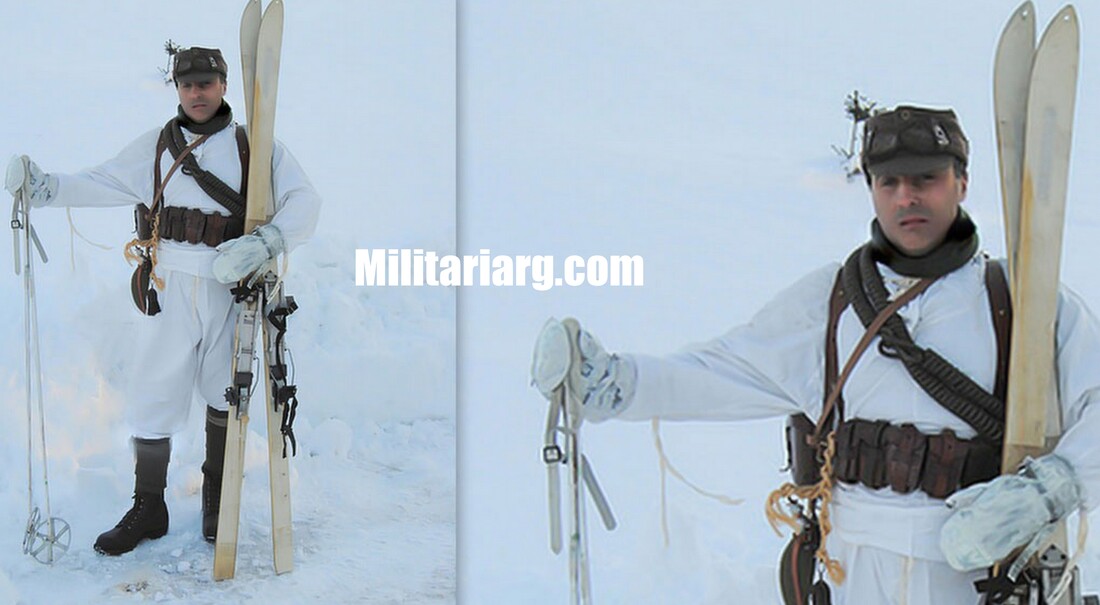
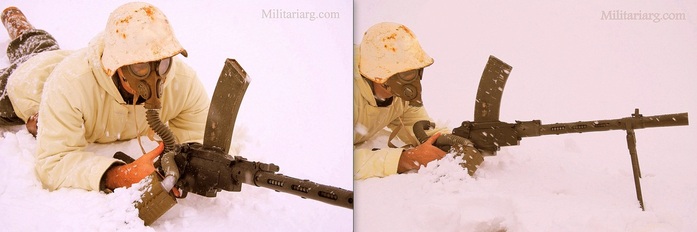
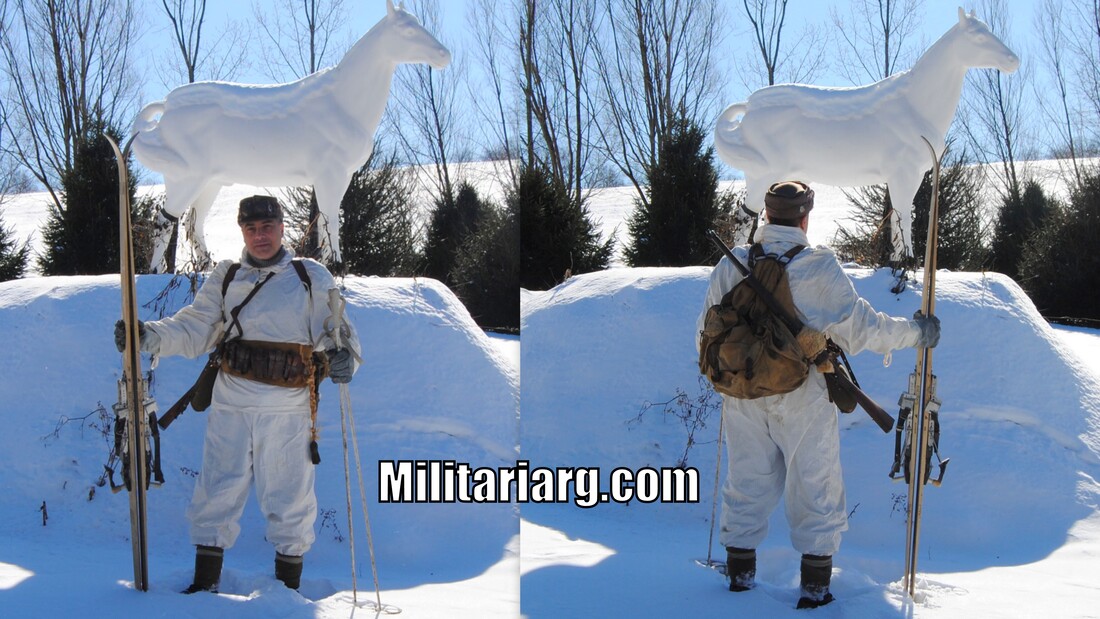
​Argentine Mountain Troops (Reenactment), whit Pirelli M36 Gasmask and canister. The helmet is Swiss, painted in snow camo, however there are no photos documenting its use in mountain troops at that time. It is supposed to have been used.​
Picture
Picture
Picture
Picture

Argentine Mauser 1909 Carbine

Picture
​The Mauser 1909 carbines were produced in Germany by Deutsche Waffen und Munitionsfabriken (DWM) and later in Argentina by Fabrica Militar de Armas Portatiles (FMAP). They were designed for cavalry, engineers, and other specialized units where a full-length infantry rifle was impractical.

Mountain Troops Middle 1940s and 50s


Picture
Picture

Picture
Picture

Picture
Picture

Picture
Picture

Picture
Picture
Picture
Picture
Photo of Colonel Perón in Italy with the leather jacket. In the photo between them is Prince Umberto of Savoy.

Picture
Above a photo reenactment of the Argentine Navy Frogmen in the 50s (Peron Era). This unit was formed towards the end of the 40s, by the famous diver of the X-Mas (Gamma Group of the Decima Mas), Eugenio Wolk (Lupo). The diver equipment used was Pirelli. This was the origin of the famous underwater special forces "Buzos Tacticos" that were protagonists in the South Atlantic War in 1982.
Eugenio Wolk, a former Lieutenant Commander and elite diver of the Italian Decima Flottiglia MAS (Gruppo Gamma), was the foundational architect of the Argentine Navy's modern special operations capabilities. 

After World War II, Wolk emigrated to Argentina in 1947, where the government was actively recruiting European military expertise. His primary contributions included: 

Founding the "Buzos Tácticos". Wolk established the first formal training program for the Argentine Navy's underwater special forces, the Agrupación de Buzos Tácticos (APBT).

Initial Training (1952). Under the name "Lupo," he led the first official course for naval divers alongside his assistant, Petty Officer Marcelino Sotura. This program integrated Italian WWII combat diving techniques and equipment, such as Pirelli closed-circuit rebreathers.

Development of Manned Torpedoes. Wolk also oversaw the training of crews for manned torpedoes and mini-submarines developed by Argentina in the 1950s, continuing the legacy of Italian "Maiale" human torpedo tactics. 

Legacy in the Malvinas War
The units Wolk established were pivotal during the 1982 South Atlantic War (Malvinas/Falklands): 

Operation Rosario. The Buzos Tácticos were among the first troops to land on the islands, transported by the submarine ARA Santa Fe to secure landing zones for the main force.

Operational Readiness. Unlike many conscript infantry units, the special forces trained in the Wolk tradition were professional, highly specialized, and maintained their combat effectiveness throughout the conflict. 

The "Gamma" Connection. Wolk had originally developed the "frogman" concept in late 1941 while at the Naval Academy in Livorno. His transition to Argentina effectively exported the Decima MAS doctrine—emphasizing stealth, underwater infiltration, and sabotage—which remains the core identity of the Argentine Buzos Tácticos today.
Angelo Belloni was a pioneering Italian naval officer whose work was instrumental to the combat diving techniques later introduced to Argentina by Eugenio Wolk. 

Pioneer of Combat Diving. In the early 20th century, Belloni developed advanced breathing apparatuses and "stealth" suits that allowed divers to remain submerged for extended periods. He is considered one of the technical fathers of the Decima Flottiglia MAS, the elite Italian unit Wolk served in.

While Wolk (known as "Lupo") was the direct founder of the Buzos Tácticos (Tactical Divers) in 1952, he utilized the training methodologies and specialized equipment (like the Belloni-designed rebreathers) that had been perfected by Italian commandos during World War II. Belloni’s influence lives on in the doctrine of the Argentine special forces, which still emphasizes the Italian school of underwater sabotage and clandestine naval infiltration used during the Malvinas campaign. 
According to Wolk, Belloni believed that groups of divers, equipped with his heavy pressurized suits and breathing apparatus, could be released from a submarine near an enemy coastline.
Instead of swimming, these men would literally walk along the ocean floor in formation, carrying waterproofed weapons.
They would emerge from the surf like a "ghost army," surprising the enemy by attacking from a direction (the sea floor) thought to be impassable.

The Practical Reality
Wolk, being a more pragmatic soldier, found the idea of "underwater infantry" nearly impossible due to the immense physical toll of walking against currents, the weight of the gear, and the disorientation of the seabed.
However, Wolk respected the core of Belloni's madness. the Belloni Suit. This was a waterproof rubber suit with a "belly entry" (which the diver would tie off in a knot) that allowed for long-term immersion without the diver getting wet or hypothermic.

"Tactical" (Táctico) actually stands for "Tacto" (Touch). That "touch-and-feel" reality is a famous inside joke among the Buzos Tácticos. The irony lies in the gap between the high-tech, "tactical" image of a commando and the muddy, blind reality of the Río de la Plata or the freezing, silt-heavy waters of the South Atlantic

Picture
Powered by Create your own unique website with customizable templates.