Militariarg.com
  • Home
  • Army
  • Aviation
  • Navy
  • Uniforms and Badges
  • Arms and Weapons
  • Equipment
  • Vehicles
  • Operational and Organizational Structure, Security Forces, Transportation, Books, Models and More.
  • Argentine Confederation Era. 1829 - 1852.
  • From 1852 to 1910 (French fashion)
  • Bunker 1982: South Atlantic War Militaria
  • International Militaria
  • Argentina WWII Era (Neutral) Reenactment Impression
  • Links ~ Enlaces

Small arms and light weapons (Including some replicas)

Picture
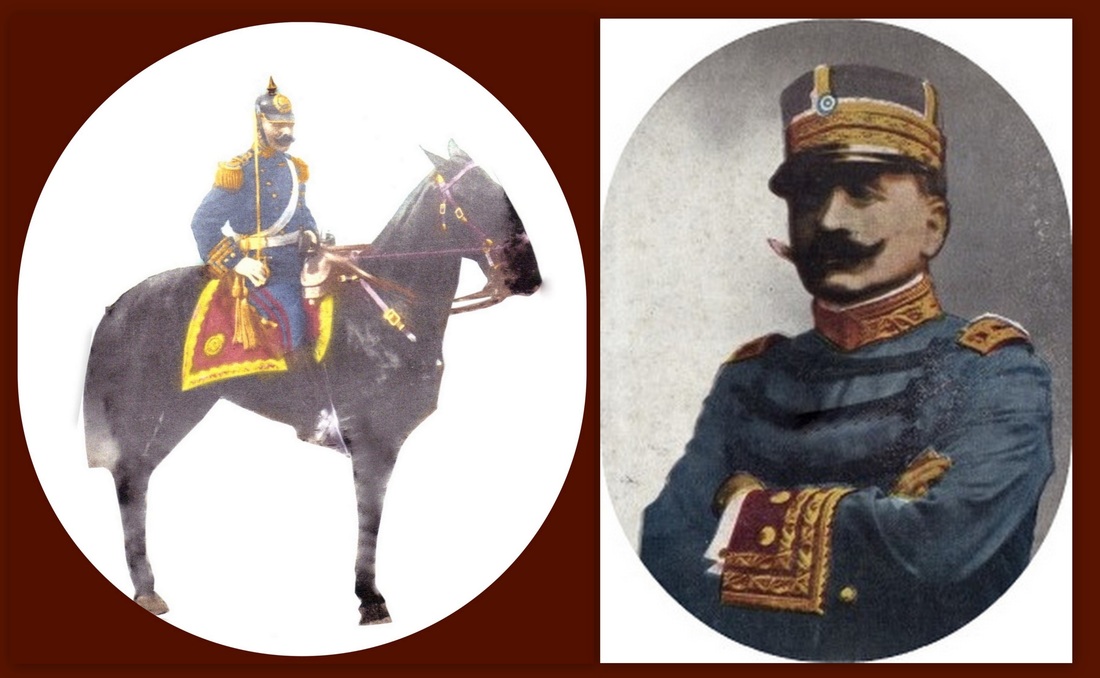
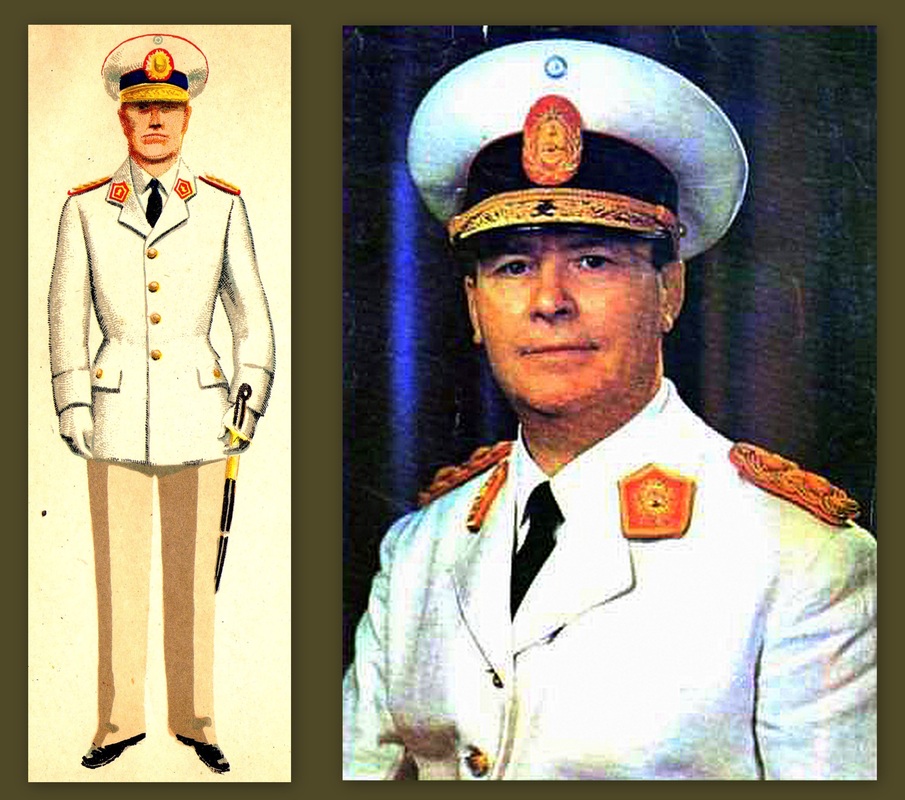
General Juan Savio with summer uniform.
Mosconi was key in Argentina's surveyance and exploitation of petroleum.  He led Yacimientos Petroliferos Fiscales (YPF) from its creation in 1922 through 1930.  He also created the distillery of La Plata which was the 10th largest in the world at the time.  Mosconi strengthened Argentina's position as an oil-producer through tight control of prices and shrewd business moves.  He also helped to develop Argentina's steel industry and realized the importance of linking it to the country's defense needs.  He led a national mobilization of military engineers.  In 1930 after a military coup, Mosconi was ousted from his positions. 
Savio became his successor in Argentina's industrial progress.  He led the project to open the Escuela Superior Tecnica ("Higher Techinical School").  The first class started in 1934 and was open to all members of the armed services.  In 1936 he assumed the role as head of Fabricas Militares (FM) but realized it did not operate the way it should.  This led to the creation of Direccion General de Fabricaciones Militared (DGFM) on December 11, 1938.  The factory started in a small plant in Buenos Aires but moved to Rosario on October 3, 1942 in order to decentralize production.  The initial products were the Colt M1911 .45 pistol, the Mauser rifle and carbine in 7.65mm and several submachine guns.  The factory later made the FAL rifles in 7.62 x 51mm, HI-Power pistols in 9 x 19mm, 22 LR carbines and the FMK3 9 x 19mm submachine gun.
Interestingly, Pablo Ricchieri was the true lead in Argentina's ironworks.  He created the Fabrica de Artilleria y Aceros de Puerto Borghi ("Artillery and Steel Factory of Puerto Borghi") which allowed for the creation and refinement of steel for national and military use.

Source: Guia de Uniformes Militares: Comandantes y Jefes Argentinos del Ejercito 1865-1945 by Jorge G. Crespo 
Projects of the 1900s

Picture
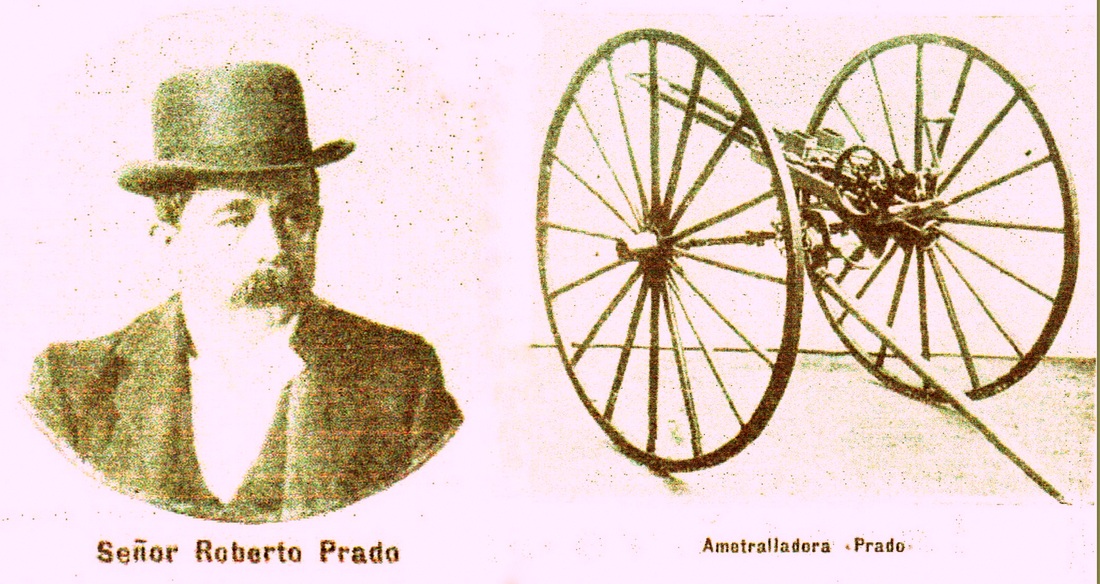
Del Prado Machine Gun.
Picture
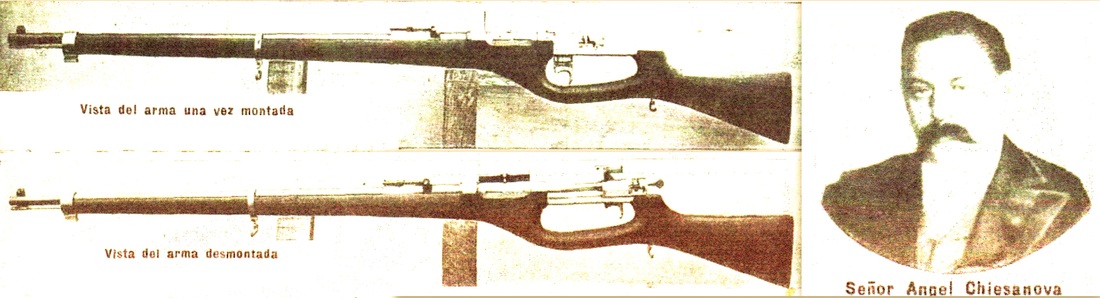
Chiesanova Rifle.

Light Machine Guns (LMG)
Picture
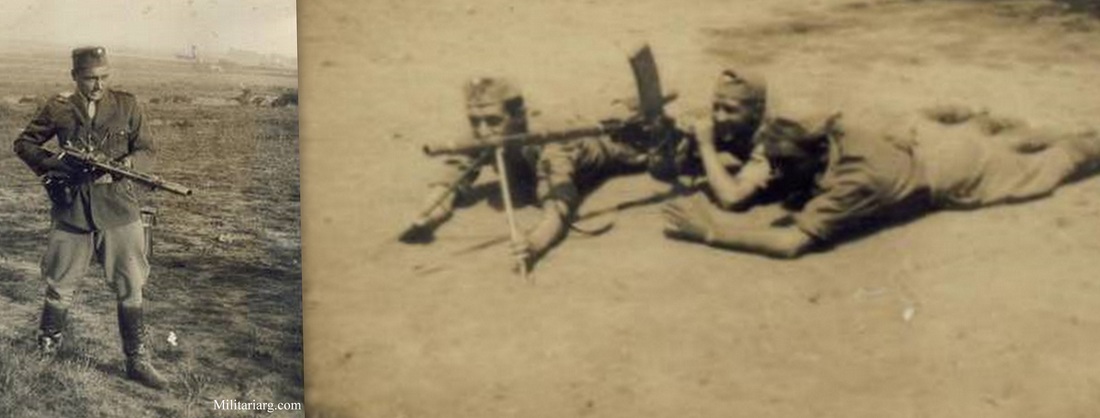
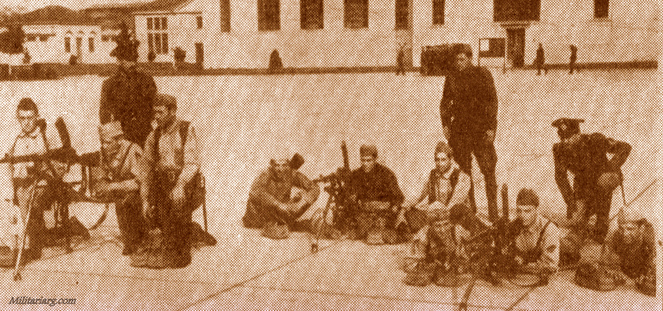
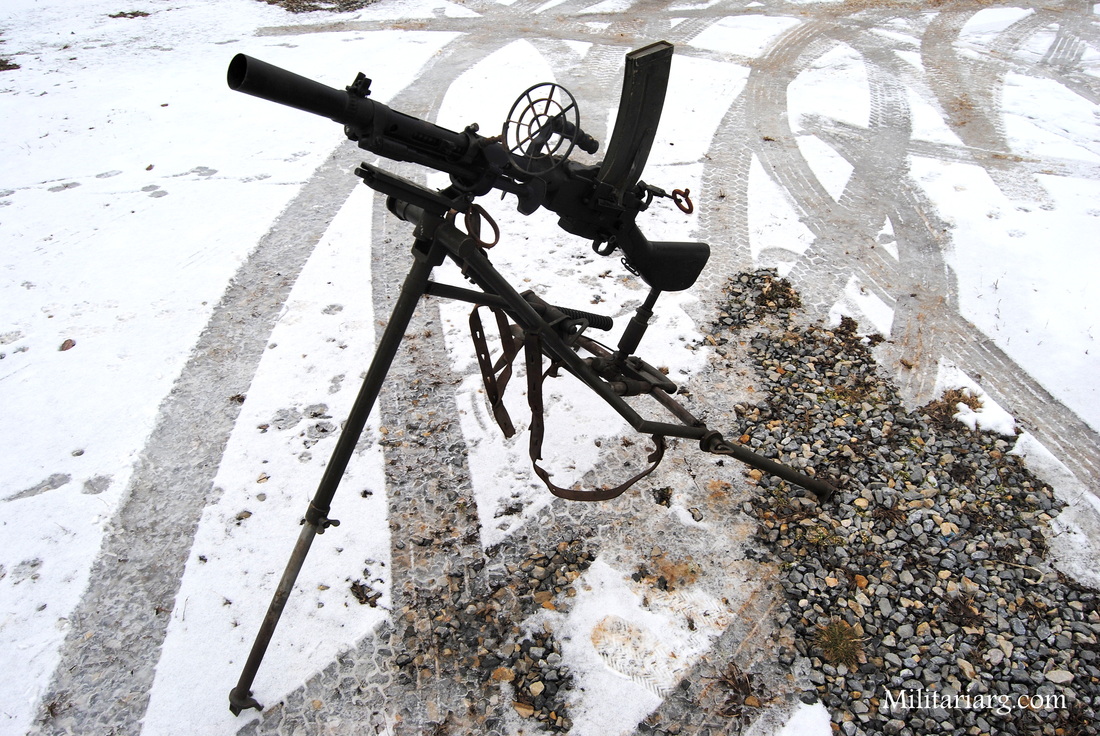
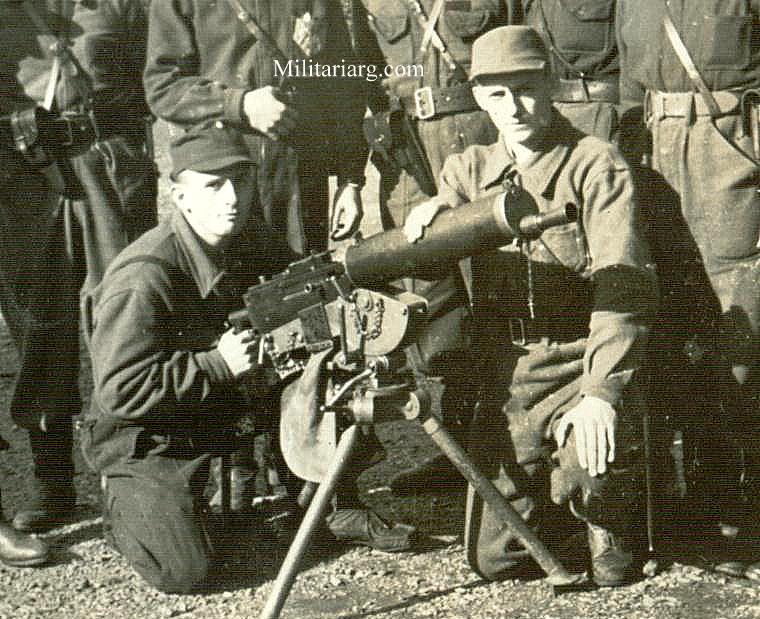
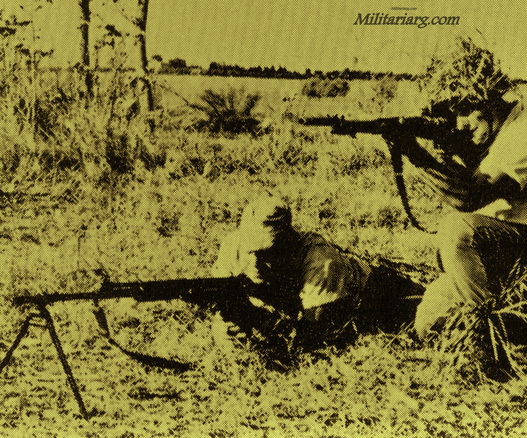
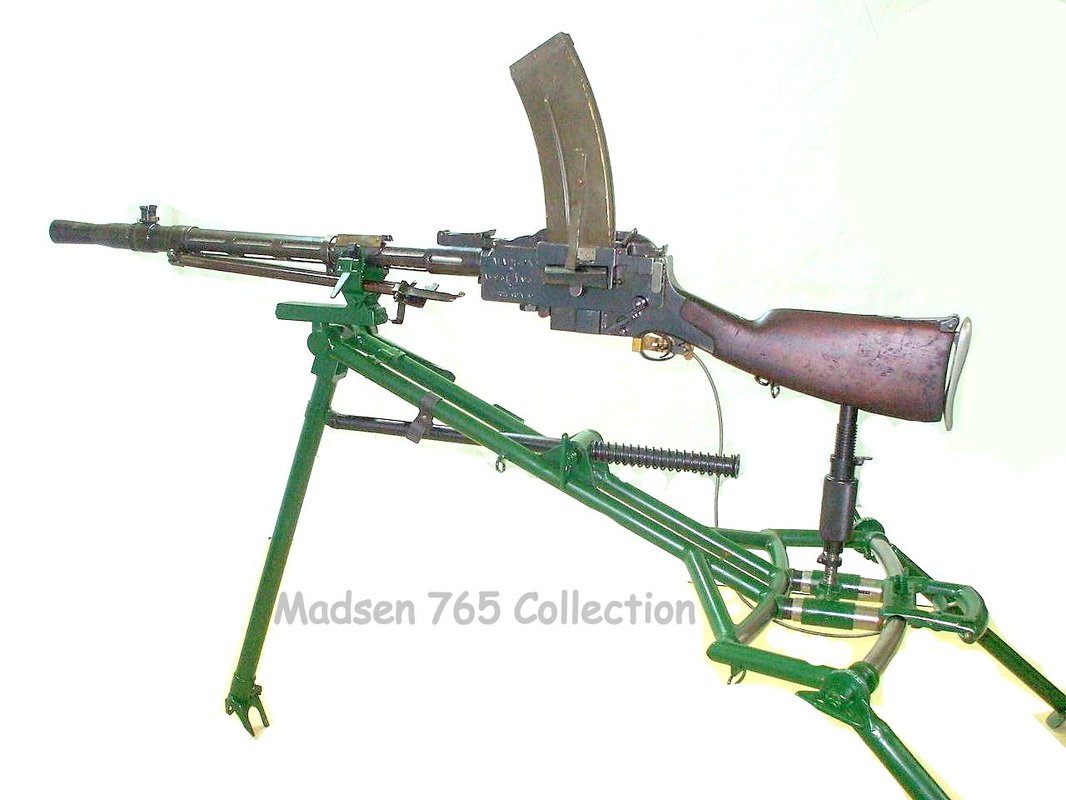
Madsen 1926 Model. ​This one above is a real Madsen used by the Argentine army (not like mine which is Model 46 ex-Chilean Army). The tripod is painted in a strong green, possibly passed from the Army to the Gendarmerie at some time.
Picture
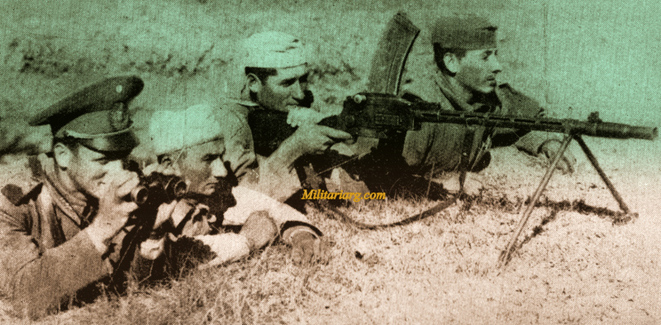
Argentina acquired multiple iterations of the Danish-designed light machine gun (LMG), primarily chambered in the national 7.65×53mm Argentine caliber: 

Initial Acquisition: Model 1910.
Interwar Expansion: Successive purchases of the Models 1925, 1926, 1931, and 1935.

Chaco War Context: During the Chaco War (1932–1935), Argentine border detachments used Madsens to protect neutrality, even engaging in combat with the weapon in 1933. 

Madsen vs. Colt 1928
The Madsens were not meant to replace the Colt 1928, but rather to complement it by filling a different tactical role: 

Tactical Roles: The Colt 1928 (an Argentine-specific designation for the water-cooled Colt-Browning M1917) served as a heavy machine gun (HMG) for sustained fire. In contrast, the Madsen was a light machine gun (LMG) designed for mobility and squad-level use.

Succession: Both weapons were eventually phased out by the same successor. Starting in the late 1950s and 1960s, Argentina replaced its diverse machine gun inventory (including the Madsen and Colt 1928) with the FN MAG 58 as its General Purpose Machine Gun (GPMG).

LMG Configuration:

Picture
Picture
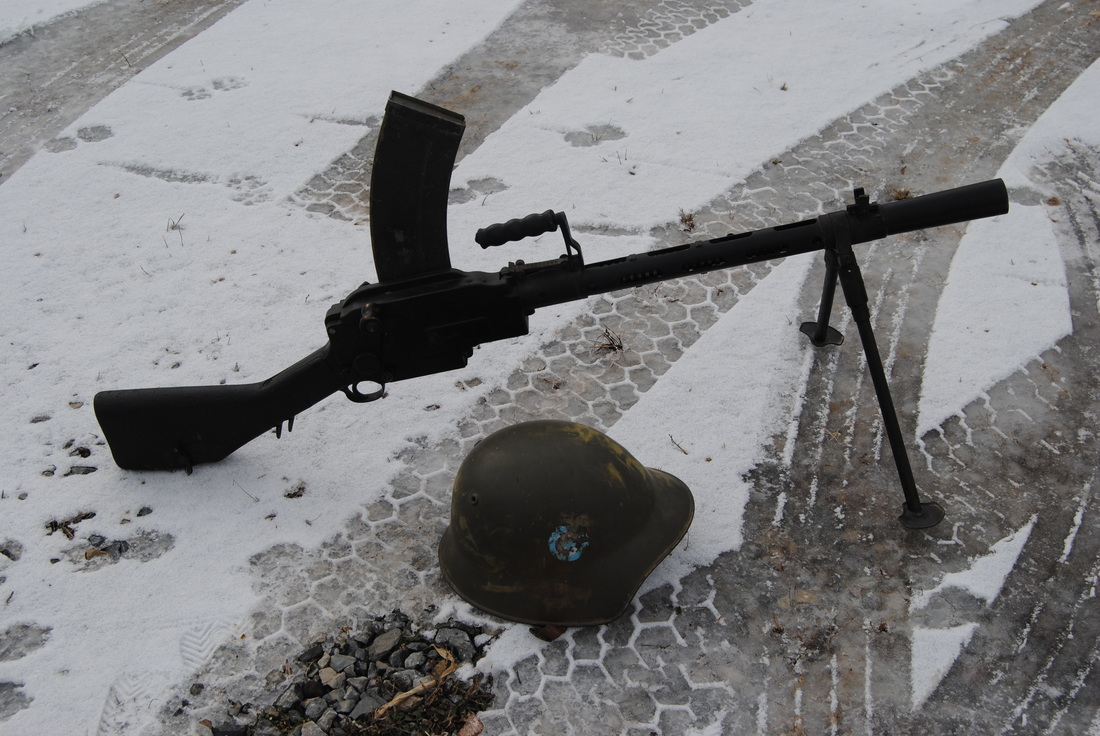
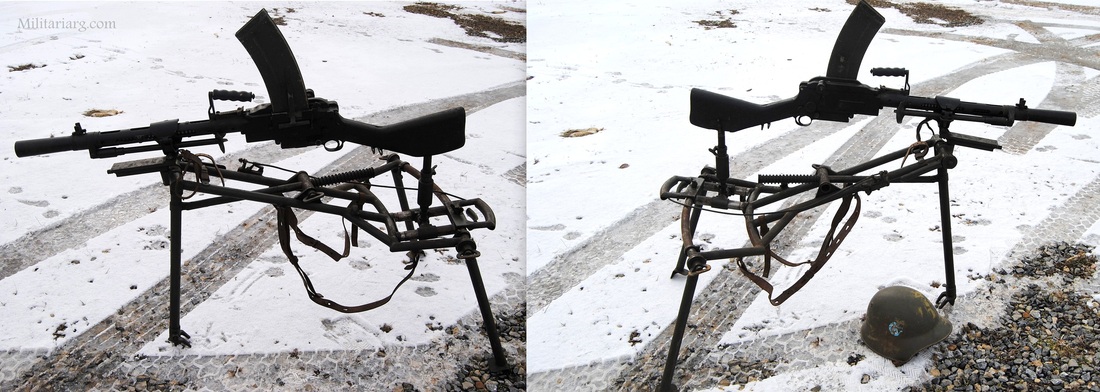
The bipod legs folded up for transport and down for firing. It was designed to support the front weight of the weapon, increasing accuracy and recoil control. Unlike modern bipods, early versions generally had no height adjustment and were fixed at a specific angle when deployed. Later patterns, such as a 1946 model (like this on the photo), featured a sturdier bipod design.
Picture
Note that the Madsen I use in reenactments is actually a 1946 model. This Madsen above belonged to the Chilean army that had them as a reserve during the beagle conflict in 1978 and then sold them to collectors or as scrap metal (like mine).

The core mechanical operation remained consistent—a mixed recoil-operated locking system with a hinged bolt. However, the external features evolved.
​
The Model 1946 and later variants typically feature a crescent-shaped trigger, a departure from the straighter triggers found on the Model 1926 and earlier "World Standard" patterns and introduced a lighter, simplified bipod compared to the sturdier, often heavier designs seen on the 1920s contracts.
While muzzle cones were introduced around 1917, the 1946 models featured more standardized flash hiders designed to help manage muzzle flash for modern smokeless powder cartridges.
Earlier models like the 1926 often featured a straight-line stock or a "bird’s head" grip. The later 1940s models generally moved toward a more ergonomic stock, sometimes including a monopod mounting point at the rear.
As the design matured, the number of cooling perforations on the barrel jacket decreased, but the size of the individual holes increased to maintain cooling efficiency while reducing weight.
Picture

HMG Configuration:

Picture
Picture
Picture
Picture
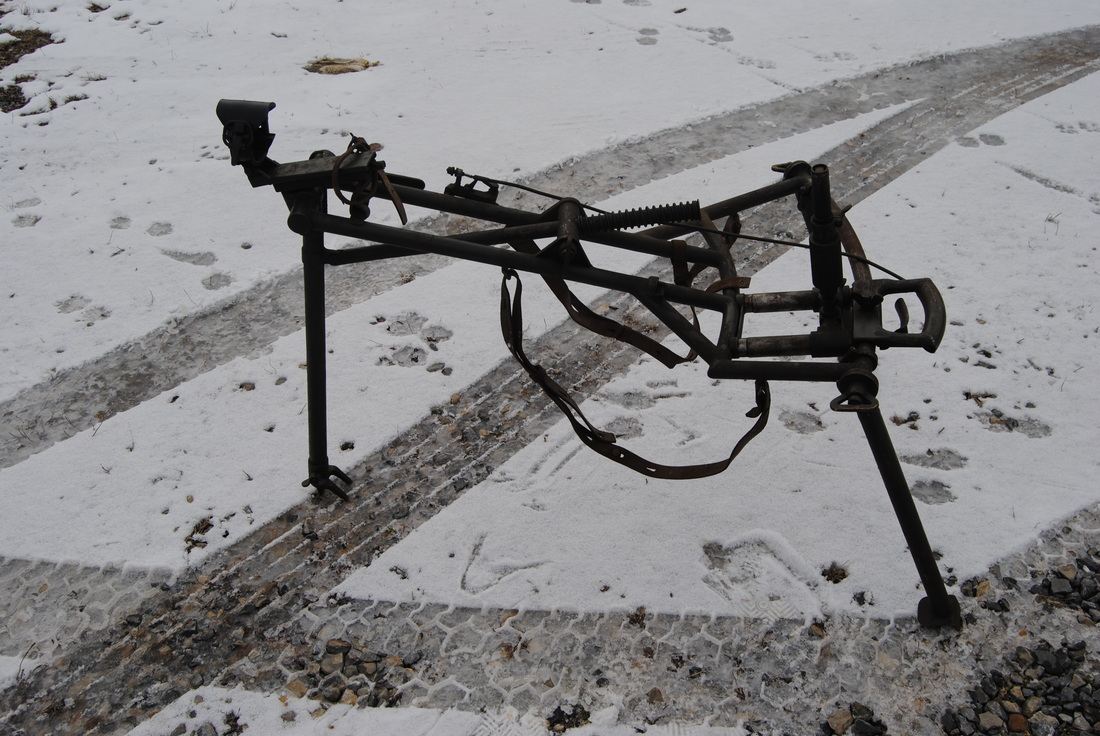
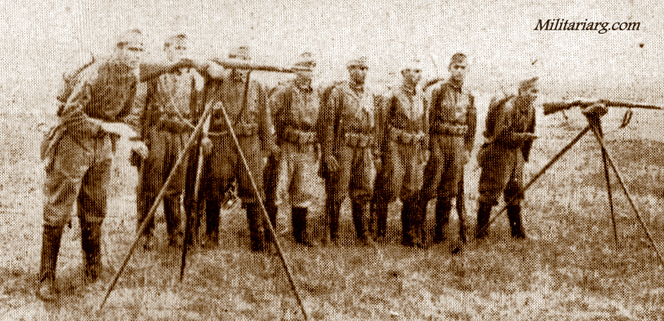
Madsen Tripode.

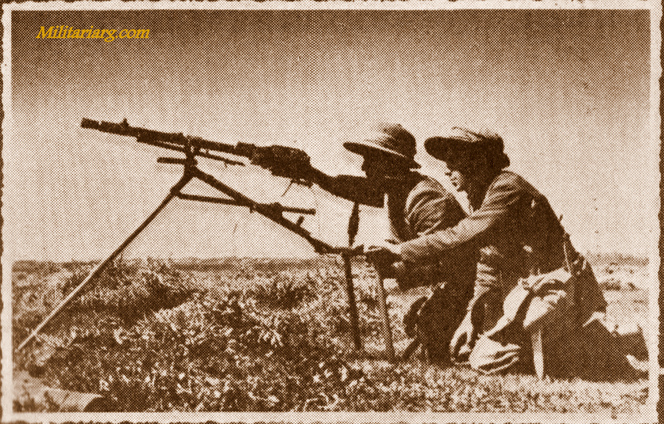
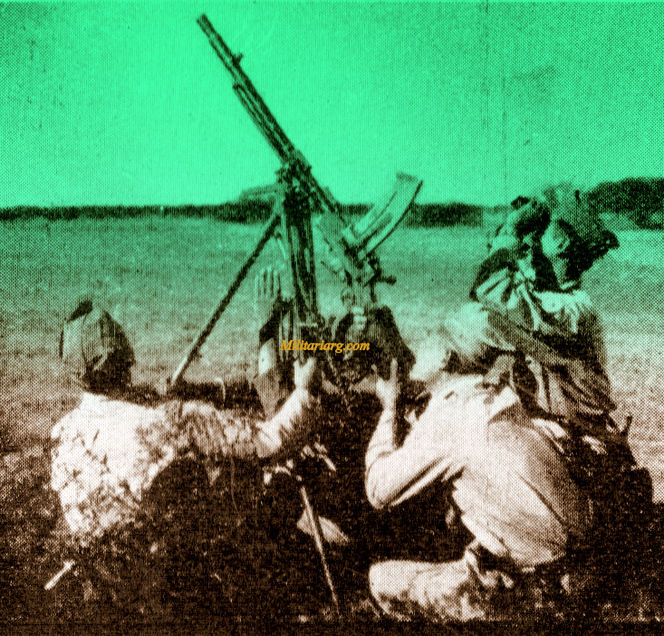
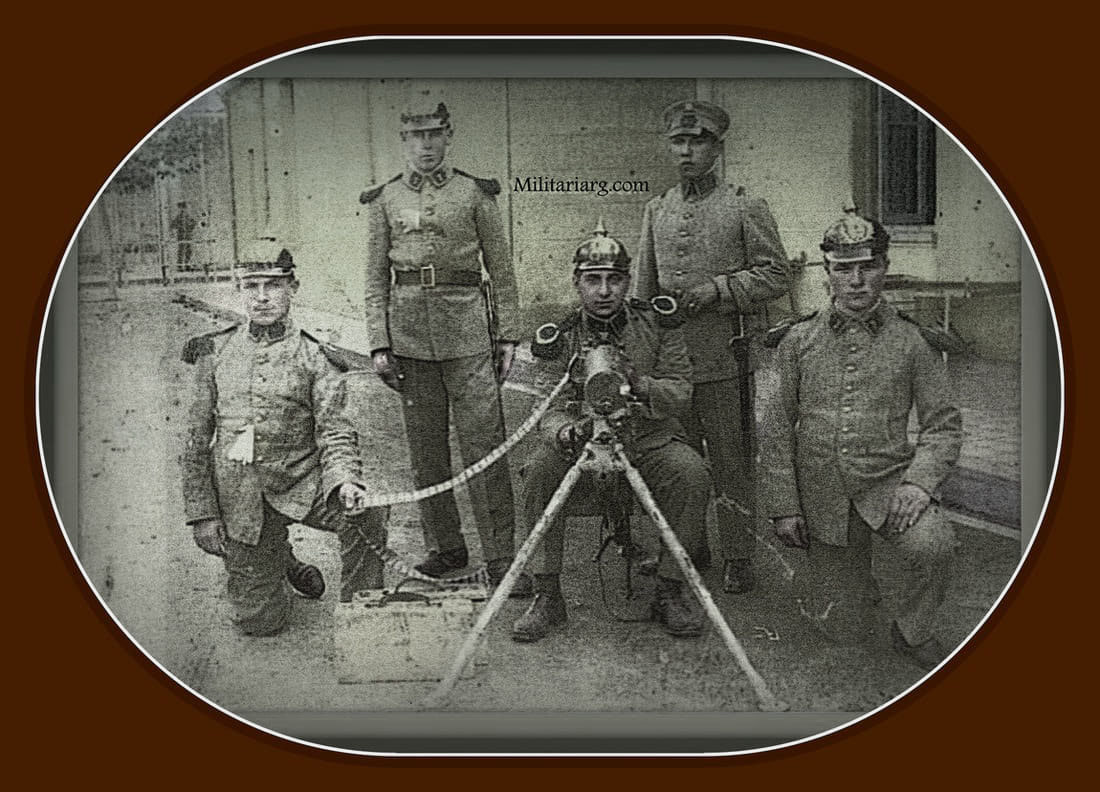
The Madsen machine gun was primarily issued as an LMG with an integrated folding bipod, but various official tripod mounts were developed to enable sustained fire (turning it into a medium machine gun role) and anti-aircraft (AA) use. 
General Characteristics of the Madsen Tripod System

Portability: The Madsen's tripod was designed to be significantly lighter and more portable than the contemporary, heavy Maxim-style water-cooled machine gun tripods. This reflected its role as the world's first true light machine gun.

Versatility: The mount often included a mechanism that allowed it to be converted for anti-aircraft firing by extending the legs or changing the mounting orientation.

Operational Flexibility: When mounted on the tripod, the weapon could be operated via a remote trigger system, allowing the operator to remain in relative cover during operation. This transformed it into a stable, sustained-fire platform superior to the standard bipod for defensive positions.

Compatibility: The tripod interface was relatively standard across many models, though specific national variations existed. For example, some Danish-made tripods found in Portugal were modified during WWII to accept the German MG 42 machine gun, showing a degree of modularity in the mounting pintle system. 

Mount Variations
Due to its long service life (1902 into the 1950s) and adoption by over 34 countries, the Madsen saw numerous mounting solutions: 

Infantry Tripod: The standard ground mount that provided stability for sustained fire.

Anti-Aircraft Mounts: Dedicated AA tripods and other mountings were available as accessories.

Vehicle Mounts: Tank and armored vehicle variations often used specialized pintle mounts, and some tank versions could be converted for field use with a special lightweight tripod.

Madsen tripod in AA configuration

Picture
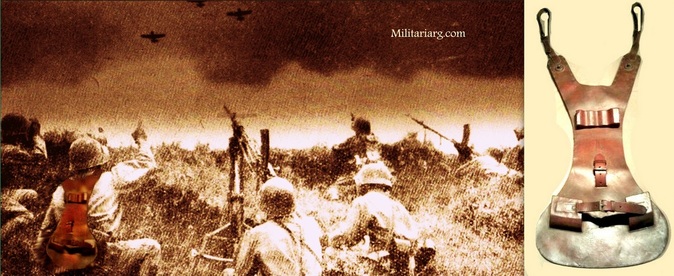
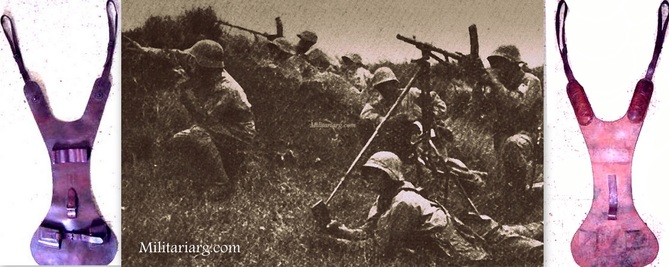
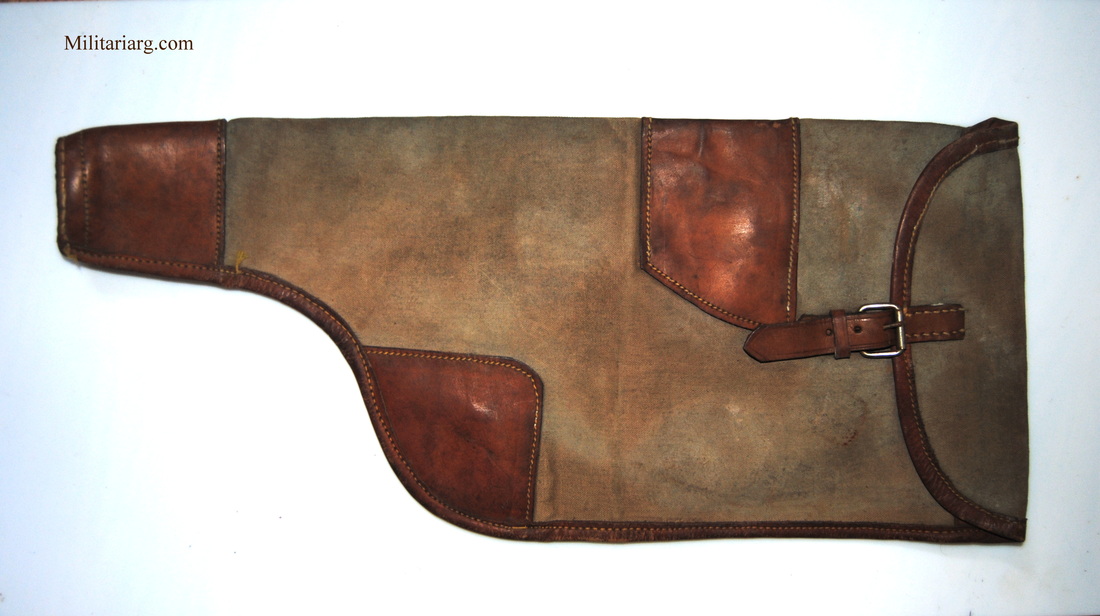
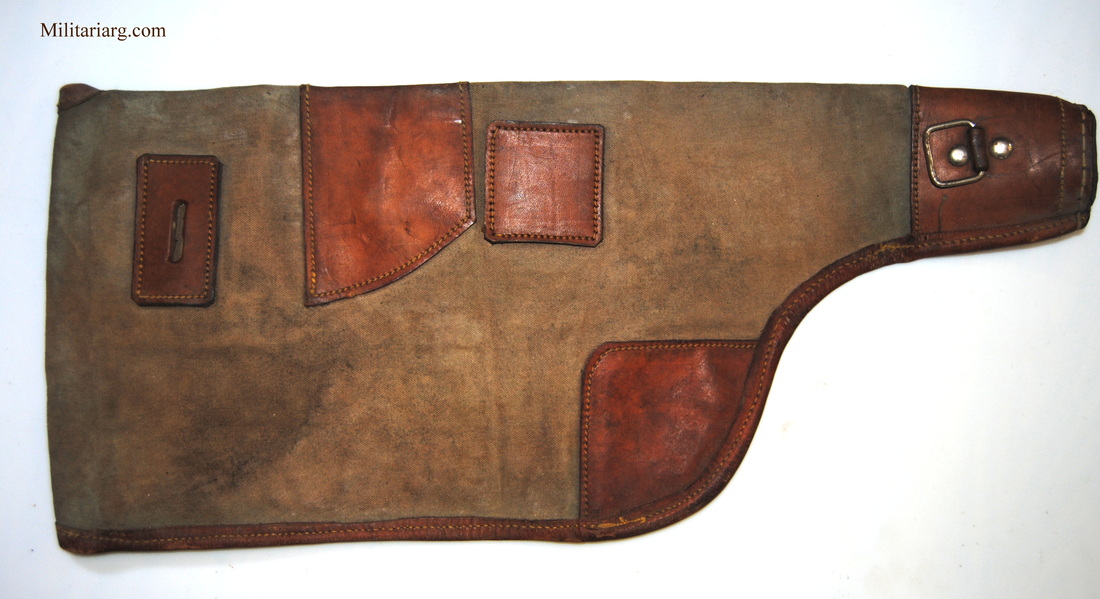
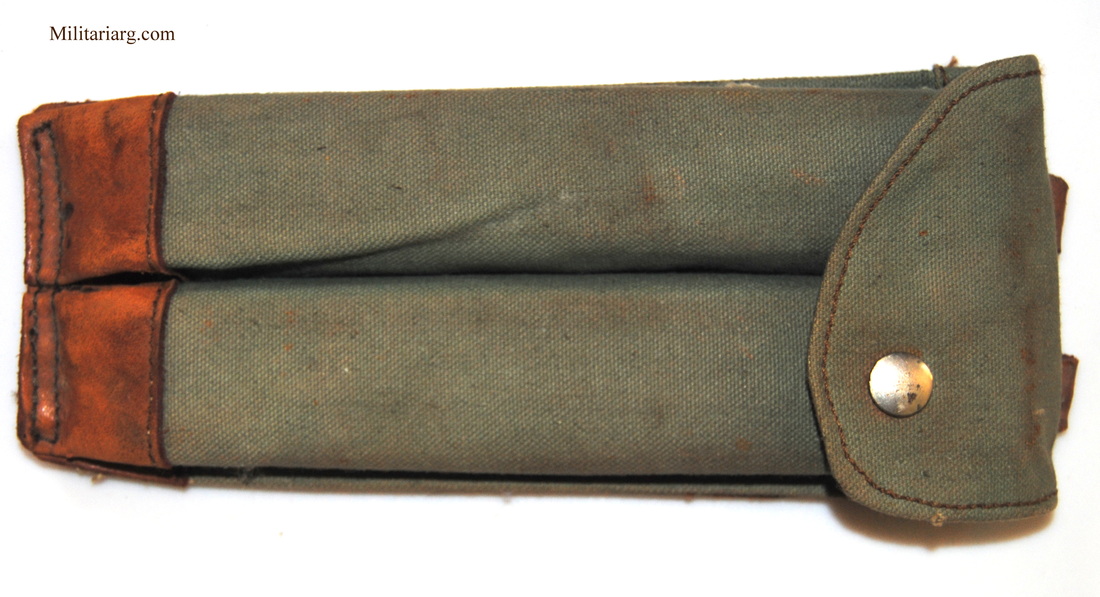
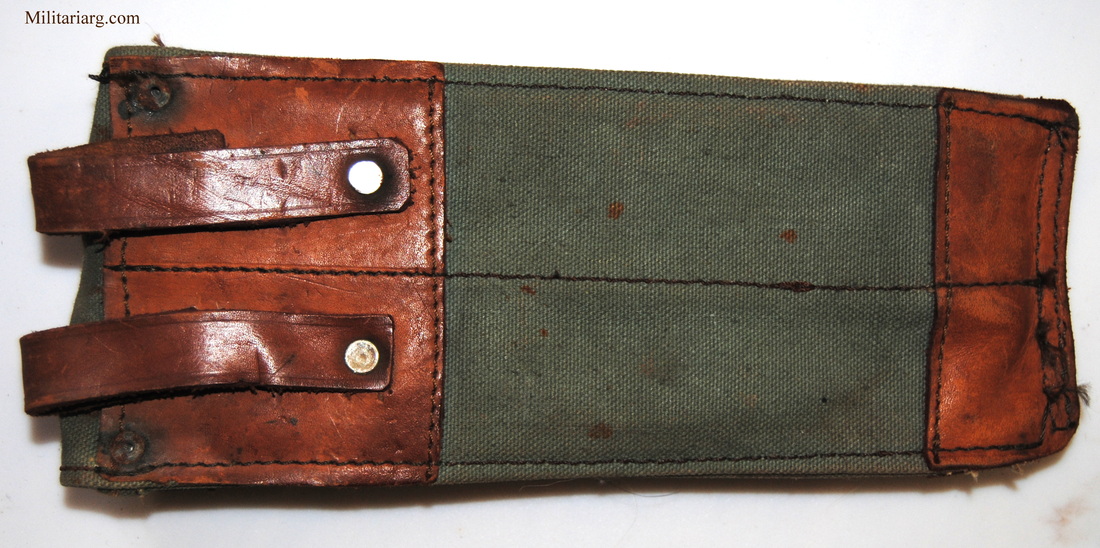
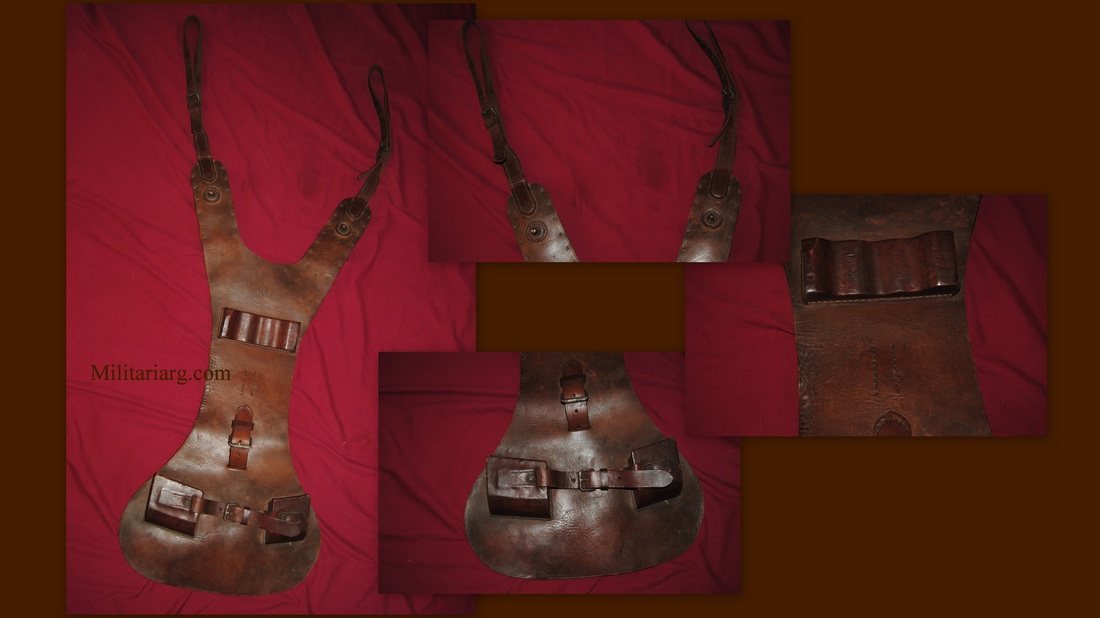
Leather equipment for transporting the Madsen machine gun.
Picture
Picture
Picture
The Madsen LMG's anti-aircraft (AA) performance was considered effective for its era as a close-range defense weapon, especially when mounted on a specialized tripod, but it was limited by its relatively slow rate of fire and low-capacity magazines compared to later AA autocannons. 

AA Performance Factors

Effective Range: The weapon, when chambered in a full-power rifle cartridge (like the 7.65mm Mauser or 8x58mmR Krag), had an effective range of up to 2,000 meters in an AA role.

Rate of Fire: The standard Madsen LMG had a rate of fire of around 400–450 rounds per minute. While respectable for an early LMG, this was low for effective anti-aircraft suppression against fast-moving aerial targets, especially when compared to later dedicated AA weapons like the MG 42's 1200+ rpm or the Oerlikon 20mm cannon.

​Ammunition Capacity: The standard top-mounted 30-round magazine was a major limitation, necessitating frequent reloads during an engagement. German-used aircraft versions sometimes featured a belt-feeding mechanism, which improved sustained fire capability.

Mounting: The weapon's performance was significantly enhanced by its specialized tripod mount, which allowed for 360-degree traverse and high elevation angles (close to 90 degrees) for engaging overhead targets. This mount also often incorporated "soft recoil" technology, which improved accuracy during sustained fire.

Specialized Variants: To improve its effectiveness, the Madsen was also produced in a much more powerful 20mm autocannon version, which was very effective against early World War II light armor and aircraft, though this is a different class of weapon than the LMG. 

In summary, the rifle-caliber Madsen LMG was a reliable and versatile machine gun suitable for opportunistic or close-range AA defense, particularly in the years leading up to World War II. However, as aircraft grew faster and more robust, its limitations in rate of fire and magazine capacity became apparent.
Picture
Picture
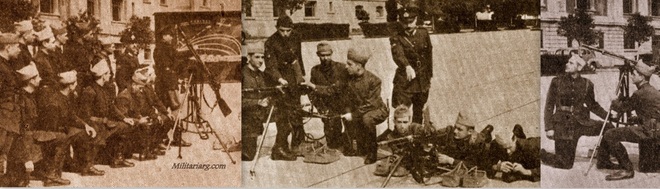
1944. Patricios Regiment.

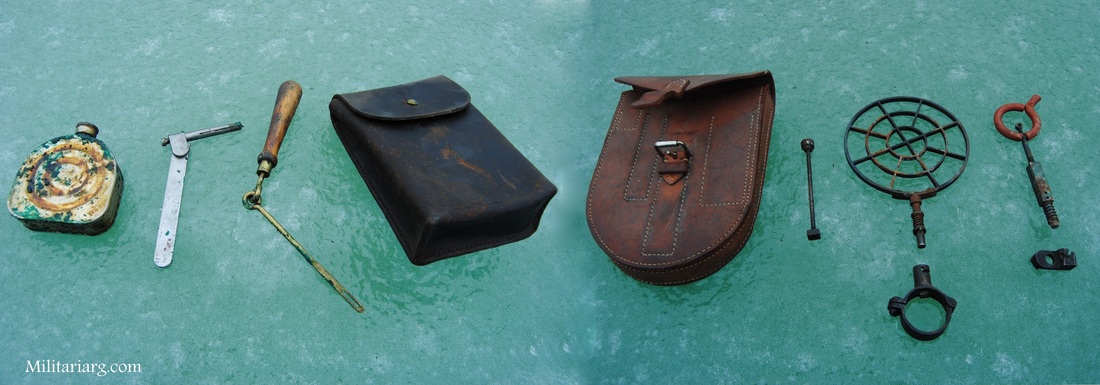
Madsen MG Accessories
Picture
Left: Madsen cleaning kit and pouch. Right: Madsen AA sight with mountings and pouch.
Picture
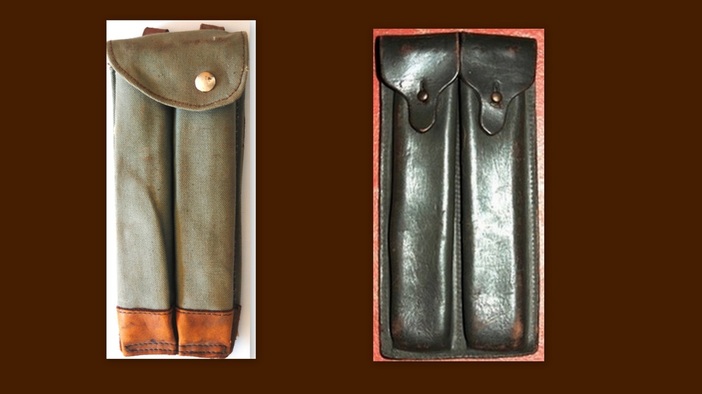
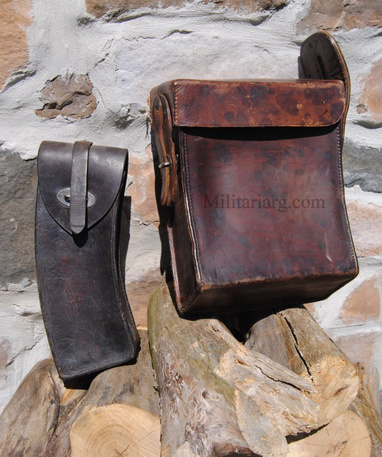
Madsen ammo pouch and ammo box. The curved one is German WW2 for Madsen.
Picture
​The Madsen LMG features an innovative "quick-change" barrel system that was decades ahead of its time, allowing one person to perform a full barrel replacement without tools in about 12 to 15 seconds. 
The Barrel Replacement System Unlike many contemporary machine guns that required extensive disassembly or were water-cooled (like the Maxim), the Madsen's air-cooled barrel could be swapped rapidly in the field when it became hot from sustained fire.

Submachine guns (SMG)

Picture
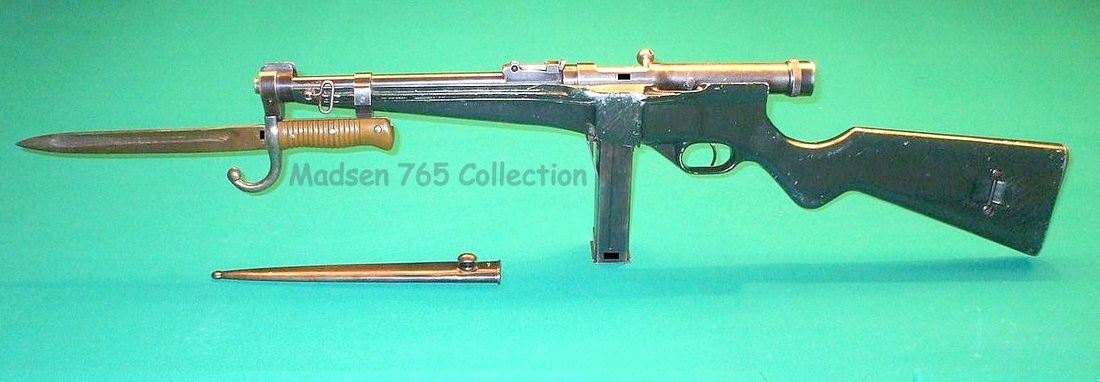
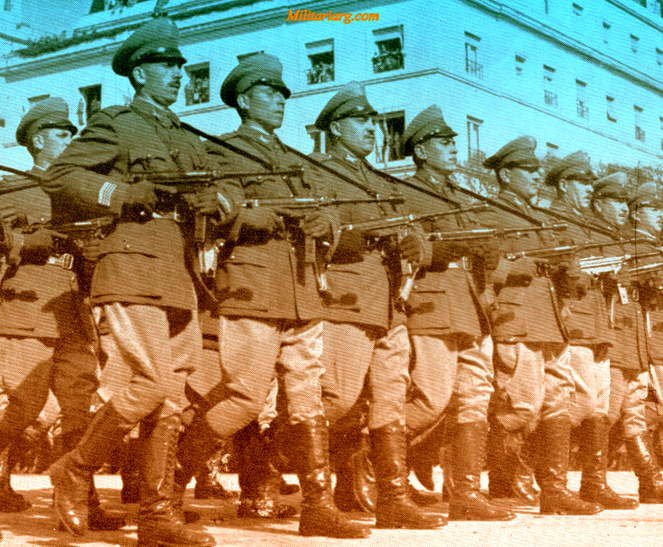
The Hafdasa C-4 (Hispano Argentina de Automotives SA)
9x19mm Parabellum M1938 C2 HAFDASA (Hispano Argentina Fabrica de Automoviles).
11.43x23mm 45ACP (Automatic Colt Cartridge),M1938 C2 HAFDASA (Hispano Argentina Fabrica de Automoviles).
9x19mm Parabellum, M1938 C4 HAFDASA (Hispano Argentina Fabrica de Automoviles).
11.43x23mm 45ACP (Automatic Colt Cartridge), M1938 C4 HAFDASA (Hispano Argentina Fabrica de Automoviles).
9x19mm Parabellum, M1938 Z4 HAFDASA (Hispano Argentina Fabrica de Automoviles).
11.43x23mm 45ACP (Automatic Colt Cartridge), M1938 Z4 HAFDASA (Hispano Argentina Fabrica de Automoviles).
9x19mm Parabellum FMK3 M1974. Selective Fire, blowback closed bolt. Made by FM. 
9x19mm Parabellum FMK4. Fixed Stock Version, blowback closed bolt. Made by FM.
9x19mm Parabellum FMK5. Semi-automatic version, blowback closed bolt. Made by FM.
9x19mm Parabellum Halcon M-43 (1943). Made by "Fabrica de Armas Halcon".
11.43x23mm 45ACP (Automatic Colt Cartridge), Halcon M-43 (1943). Made by "Fabrica de Armas Halcon".
9x19mm Parabellum Halcon M57 (1957). Made by "Fabrica de Armas Halcon".
11.43x23mm 45 ACP (Automatic Colt Cartridge), Halcon M57 (1957). Made by "Fabrica de Armas Halcon".
9x19mm Parabellum Halcon ML-63 (1957?). Made by "Fabrica de Armas Halcon".
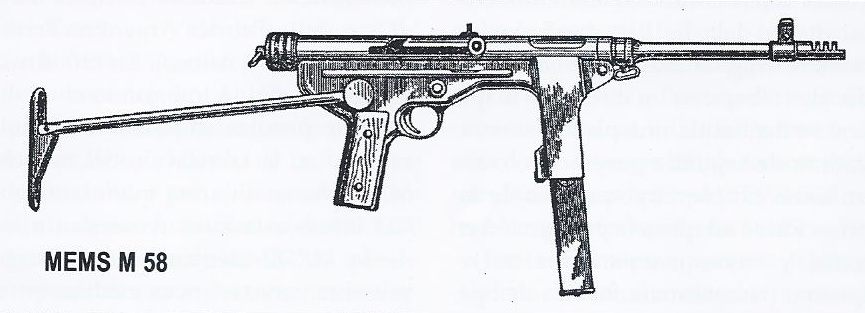
9x19mm Parabellum MEMS M52/60 (1952), Blowback open bolt. Made by "Miguel Enrique Manzo Sal".
9x19mm Parabellum PAM 1, (Copy of the M3A1 "Grease gun"). Made by FM (1950s).
8x19mm Parabellum PAM 2, (With grip safety). Made by FM (1950s).
9x19mm Parabellum MPA M1977. Blowback open bolt. Made by FMAP DM.
9x19mm Parabellum PAP Pistola Ametralladora Patria Model 1, (copy of the Ingram MAC-10), 1980s. Blowback open bolt. Made by FMAP DM (?)
9x19mm Parabellum PAP Pistola Ametralladora Patria Model 2, Type Micro-Uzzi, PDW  Personal Defense Weapon, 1980s). Blowback open bolt. Made by FMAP DM (?)

References: Guns.wikia.com
A submachine gun (SMG) is an automatic carbine, designed to fire pistol cartridges. It combines the automatic fire of a machine gun with the cartridge of a pistol. An assault rifle, in contrast, uses an intermediate-power cartridge with more power than a pistol but less than a standard rifle or battle rifle. (Wikipedia)
Picture
Picture
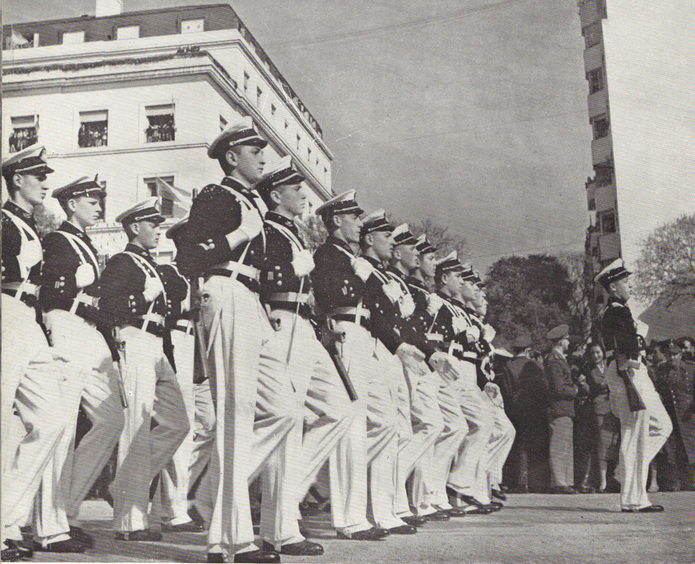
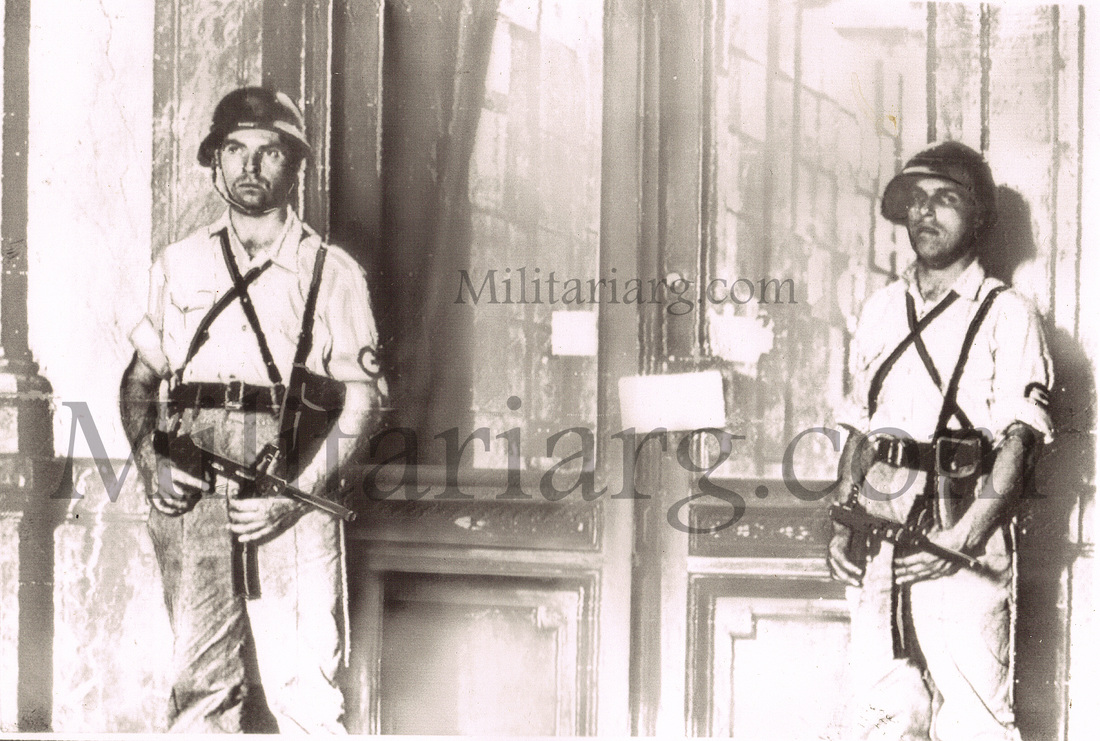
1950s. Liceo Naval Militar "Almirante Brown" with Hafdasa C-4 machine-gun.
Picture
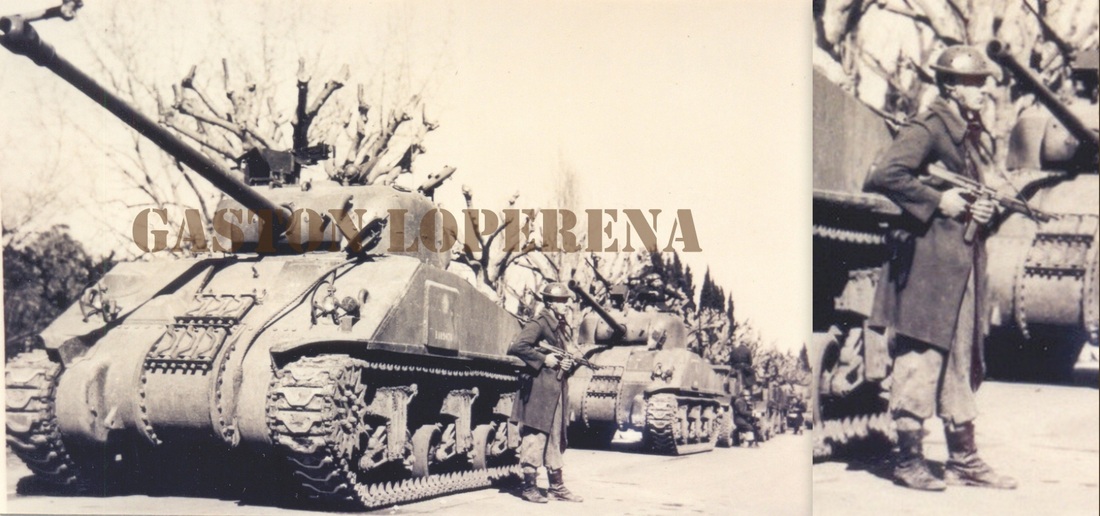
Thompsons M1928 an M1 entered the Argentine Army primarily as organic equipment bundled with the massive acquisition of surplus Sherman tanks in the late 1940s. Between 1946 and 1948, Argentina acquired nearly 450 M4 Sherman tanks (primarily from Belgian surplus stocks). These included both standard 75mm versions and the up-gunned British Sherman Firefly. 
In U.S. and British doctrine, Sherman tanks were issued with internal small arms for the crew’s self-defense. Early and mid-war Shermans typically carried at least one Thompson SMG (M1928A1 or M1A1) stowed inside the turret or hull.
When these tanks were sold to Argentina, they often arrived "combat complete," meaning the internal brackets still held the original American submachine guns. Because they were tied to the vehicles, these Thompsons were used almost exclusively by armored cavalry crews rather than general infantry, who used domestic weapons like the Halcon.

The M1A1 Thompson was never the primary submachine gun of the Argentine Army, as Argentina prioritized domestic production and alternatives like the Halcon series. However, it did see limited and specific usage in the region. 

While the United States widely exported the Thompson under Lend-Lease programs during World War II, Argentina maintained a policy of developing its own indigenous firearms to reduce foreign dependence. 
​
The Argentine firms Hafdasa and Halcon manufactured weapons like the C-4 and M-1943 submachine guns. These weapons were heavily influenced by the Thompson’s layout and performance but were chambered in 9x19mm for the Army and .45 ACP for police forces. 

Halcon

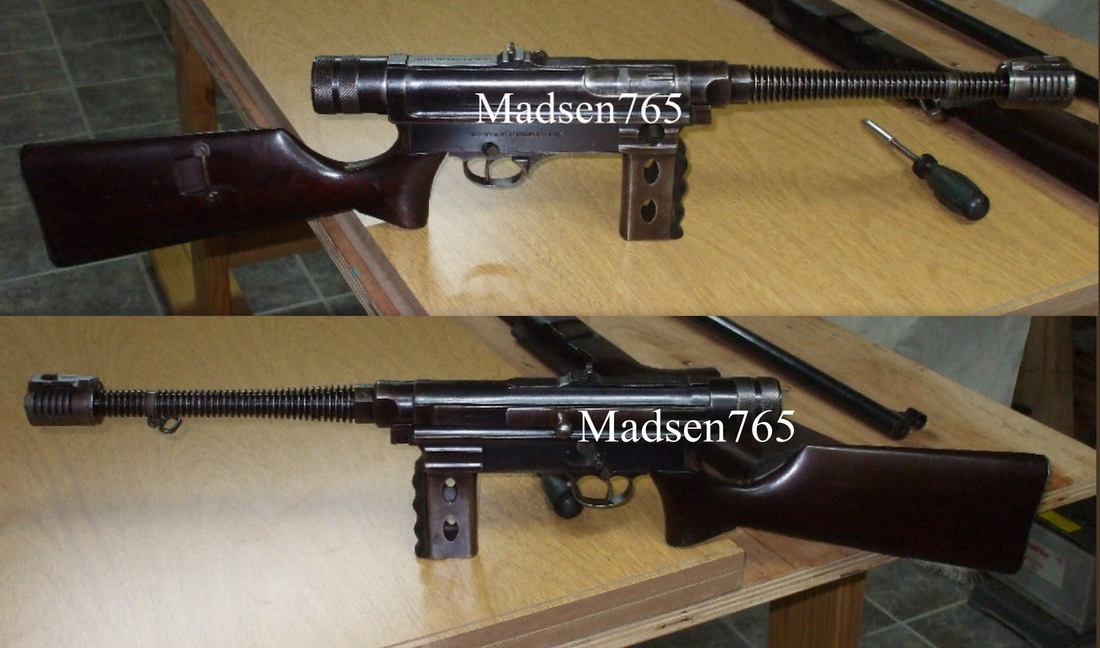
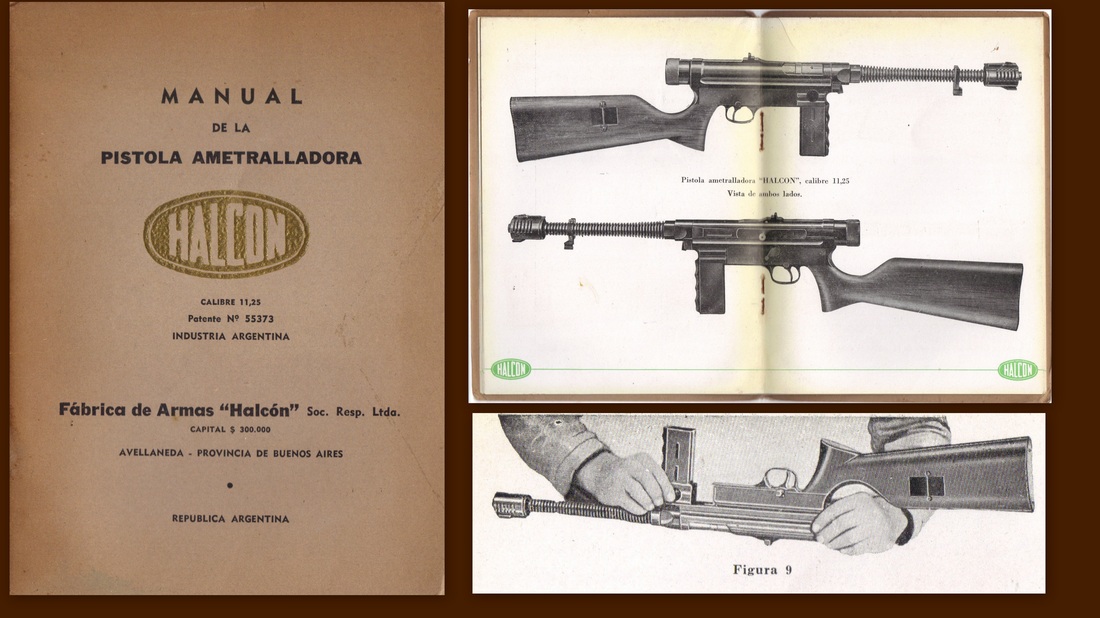
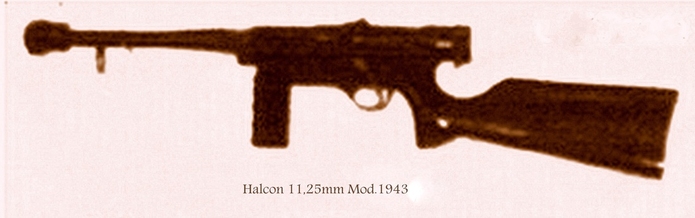
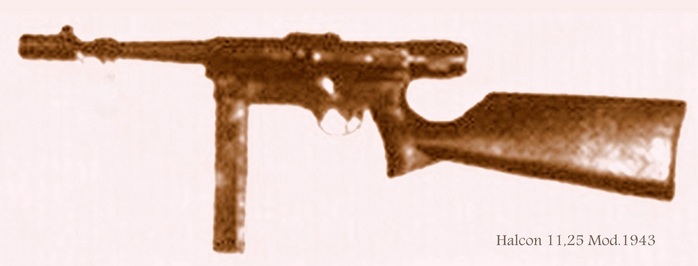
Halcon 11,25mm Mod. 1943 Gendarmeria Nacional.
Picture
Picture
Halcon M/943
Picture
Picture
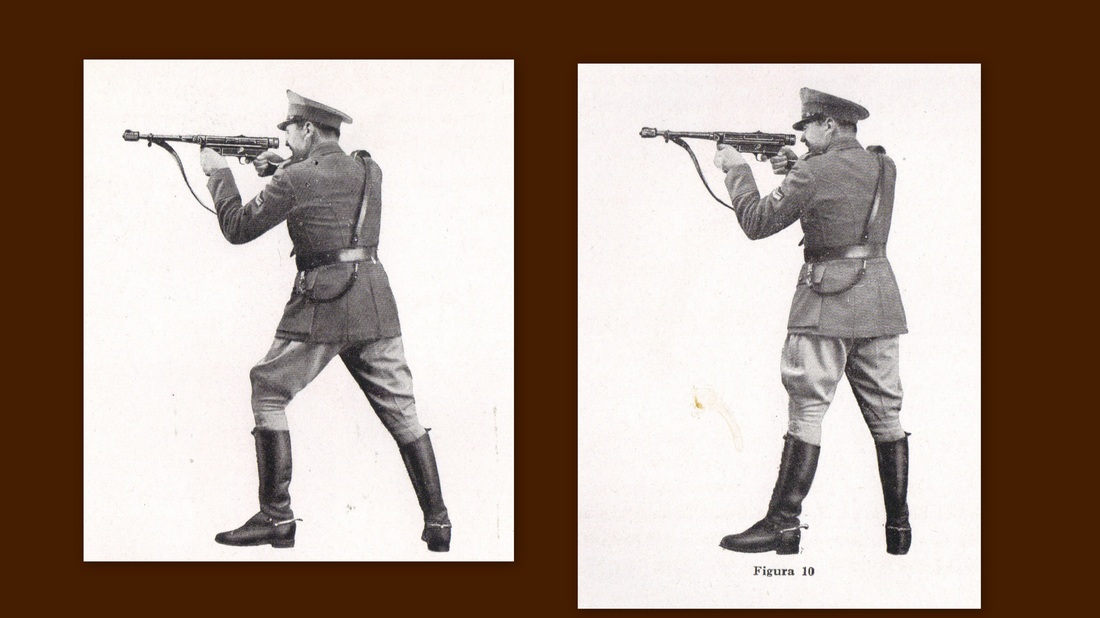
​The Halcón Model 1943 Gendarmería Nacional is a robust, blowback-operated submachine gun chambered in the .45 ACP (11.25mm) caliber, specifically designed for use by Argentina's National Gendarmerie forces. 
Heavy and distinctive weapon, noted for its high-quality finish and resemblance in size and weight to the US Thompson submachine gun. 

Caliber: 11.25mm (.45 ACP).
Action: Straight blowback, firing from an open bolt.
Weight: Approximately 8.65 pounds (3.92 kg), making it quite heavy compared to later SMG designs.
Length: 30.7 inches (78 cm) with the stock extended.
Barrel: A prominent, finned barrel with a large, detachable muzzle compensator to help dissipate heat and mitigate muzzle flash and recoil.
Stock and Grip: Featured a high-quality wooden stock and a long magazine housing that also served as the foregrip.
Magazine Capacity: Used straight box magazines, commonly in 17- or 30-round capacities.
Fire Selector: A push-through button located above the trigger guard (similar to the British Sten gun) selected between semi-automatic and full-automatic fire modes. 
Picture
Picture
Picture

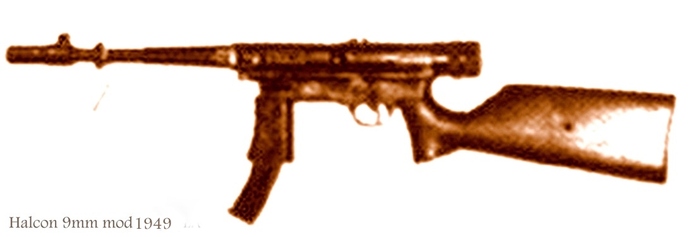
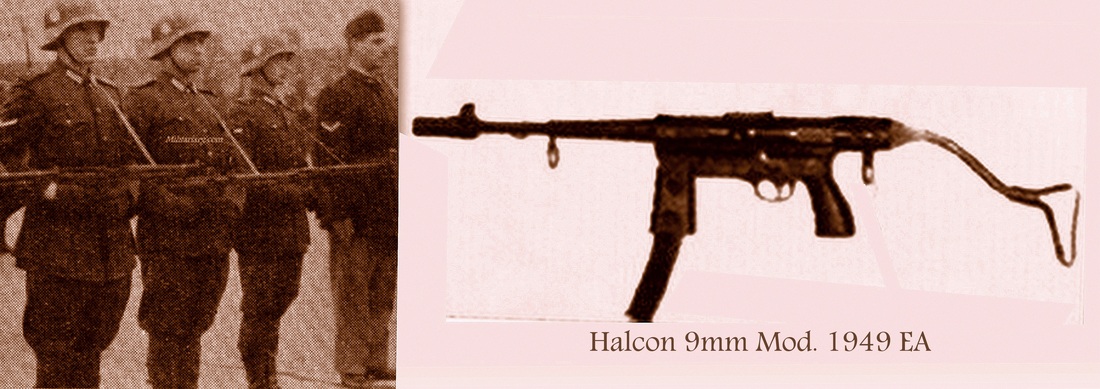
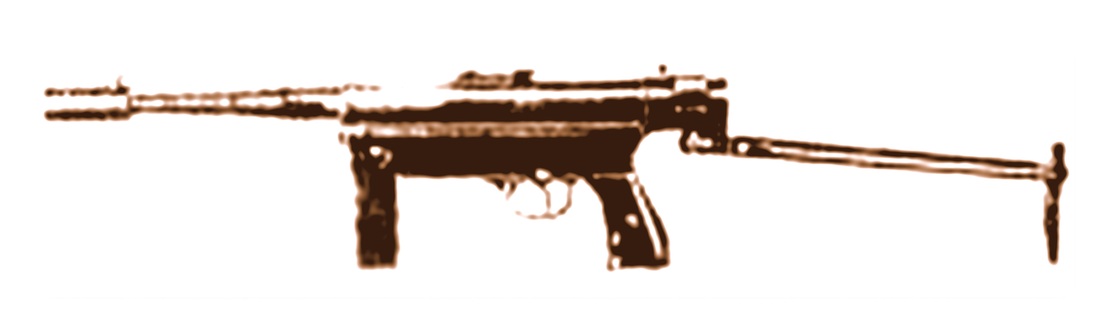
Halcon 9mm parabellum M49 Modelo Ejercito Argentino with fixed and folding stock.
Picture
Halcon 9mm M49 E.A. with fixed wooden stock. Courtesy of Leutnant (Jose).
Picture
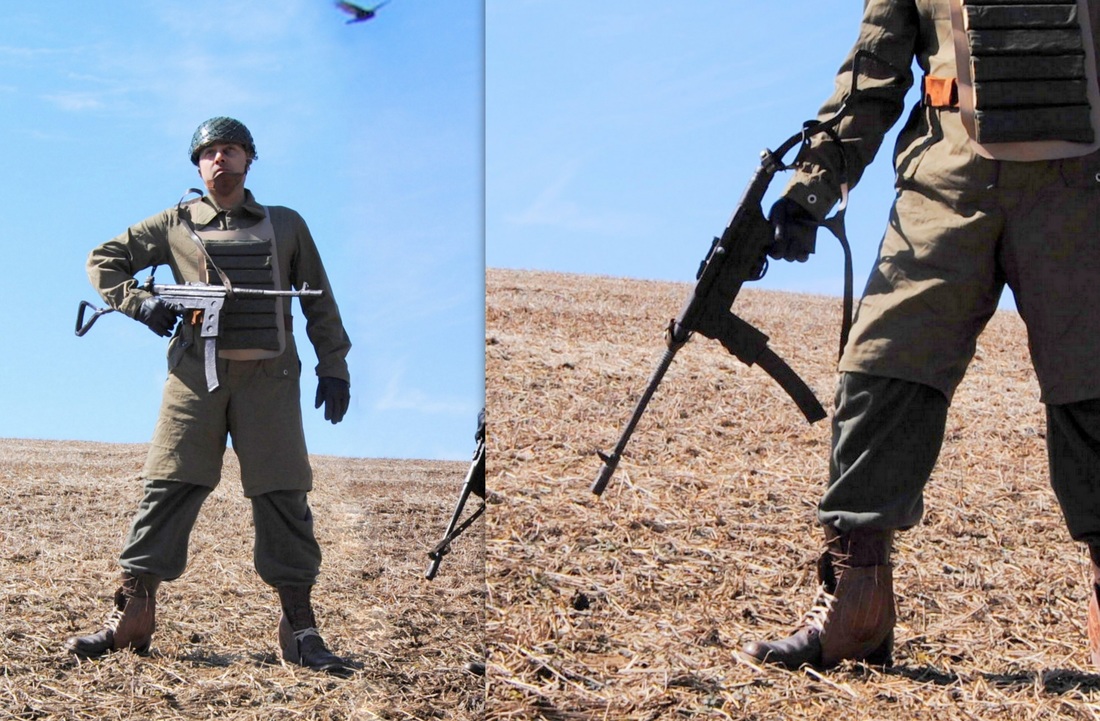
Halcon M49 9mm SMG with retractable metal stock. This prototype combines the features of the M49 with the M46 Airborne. This M49 version with folding stock appears in many photos of the Argentine army, including its paratroopers.
Picture
Picture
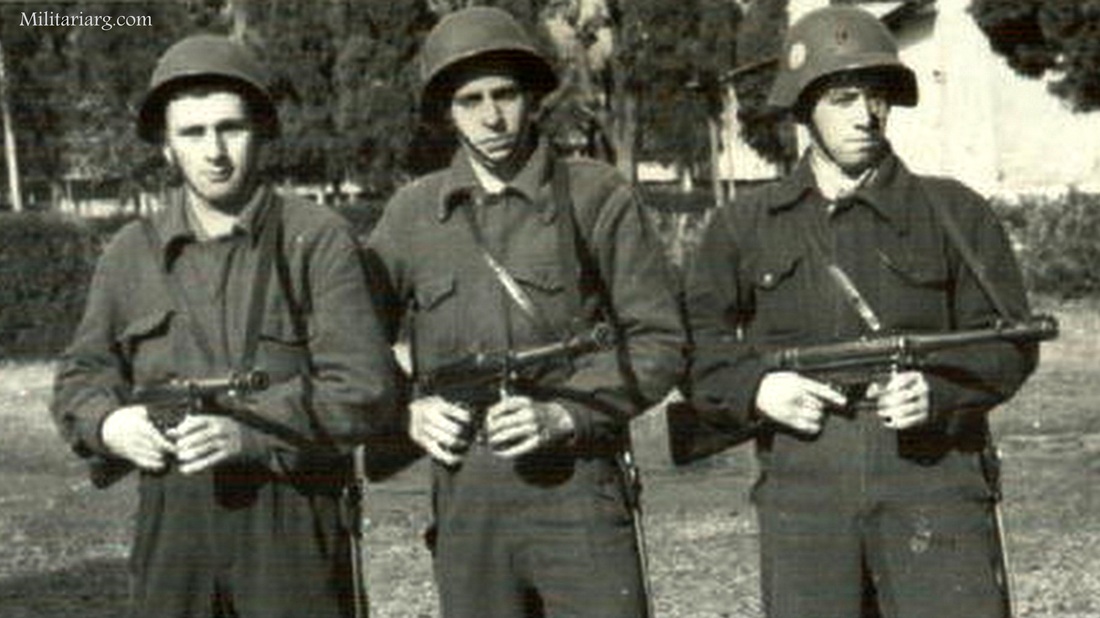
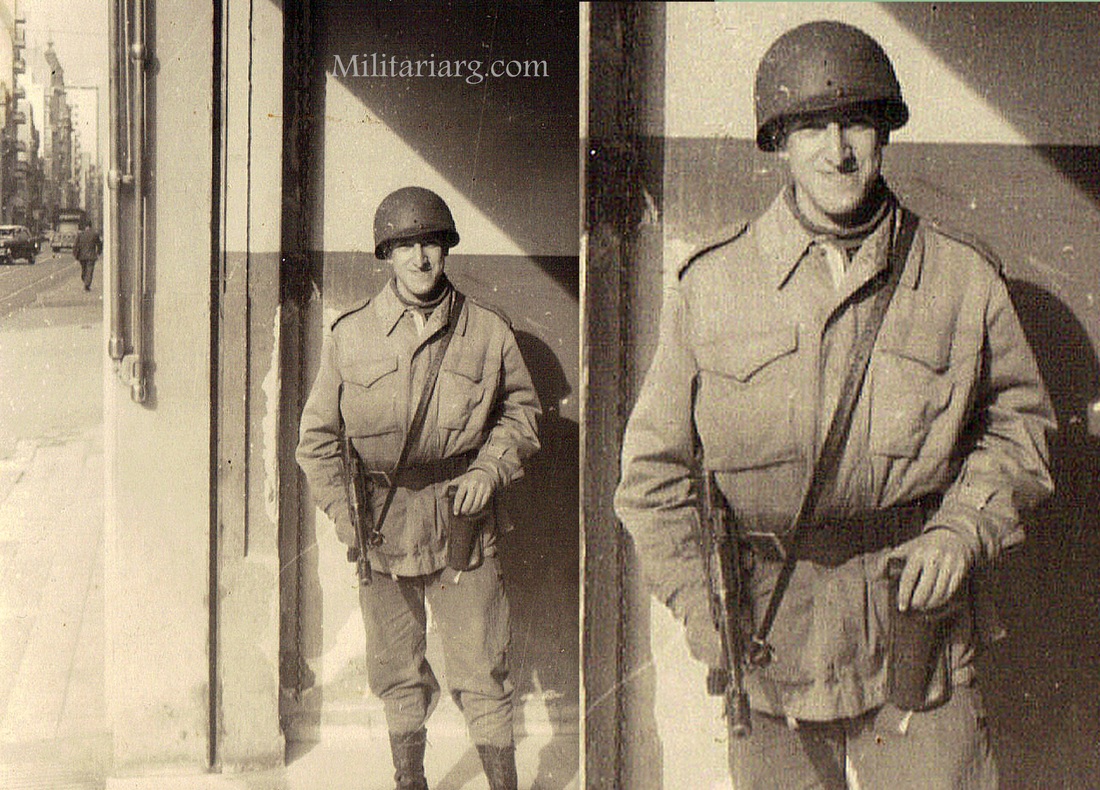
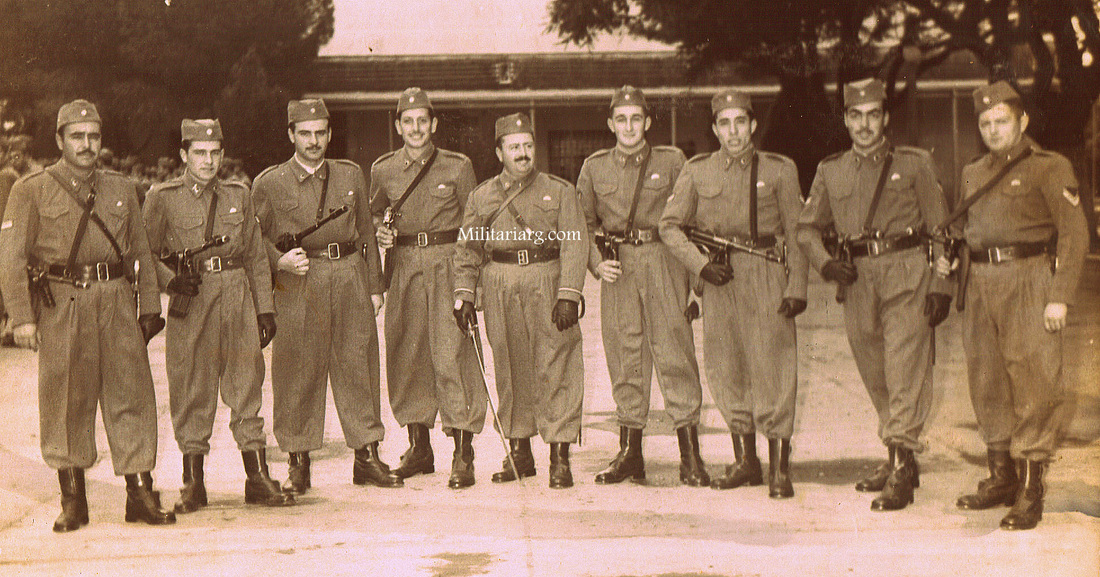
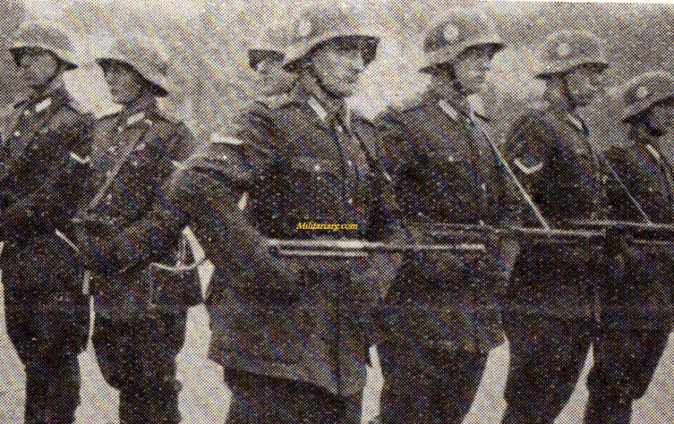
 Infantry soldiers from the Patricios Regiment with the submachine gun Halcon 9mm Mod 49 EA (Army). Argentina produced a number of models of submachine comparable with the Thompson submachinegun like the ML43 45 ACP blowback Action for National Gendarmerie in the 40's. In 1949 Argentina developed a version that had a curved magazine in cal 9mm Luger/Parabellum for the Army. The ML46 model was known as the Aeronautic Model.  In the 1950s they continued developing more models.
Picture
Halcon type 49 machine gun replica with metal folding stock
Picture
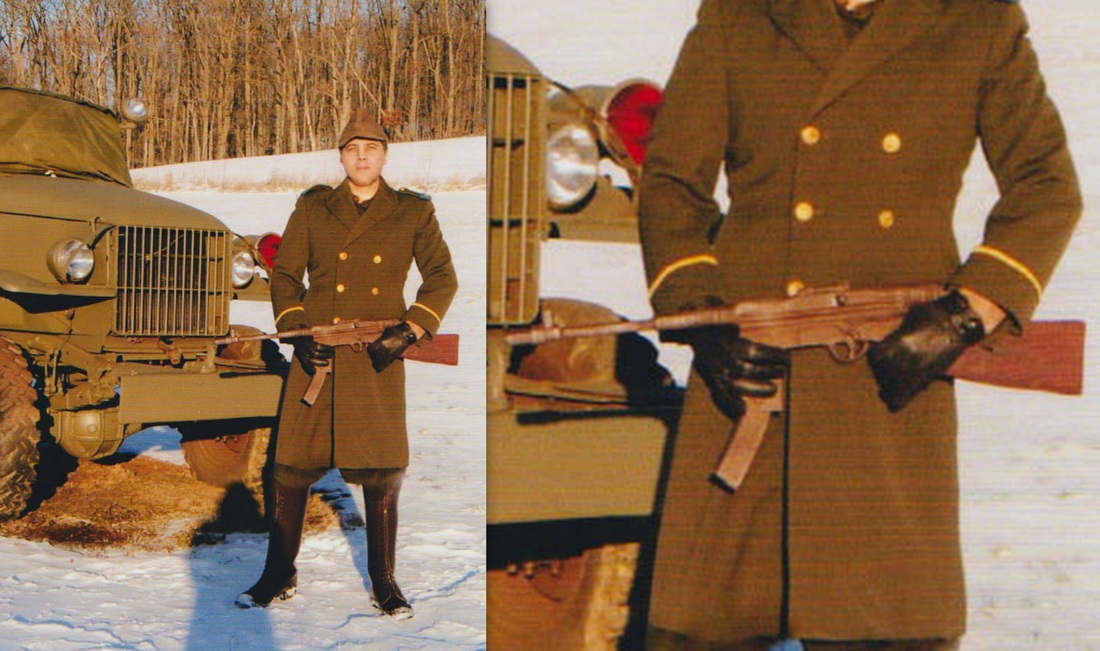
Halcon M49 Machine gun replica.

​The Halcón M46 "Modelo Aeronáutica"
Picture
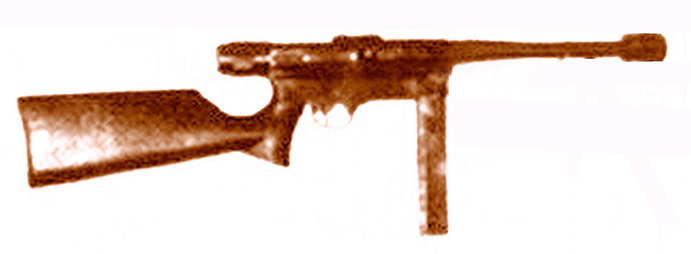
​The Halcón M46 "Modelo Aeronáutica" is a specific variant of the Halcón submachine gun family designed in 1946 at the request of the Argentine Air Force for use by paratroopers. It was a lightened and simplified version of the earlier, heavier Model 1943. The Model 1946 was adopted by the Argentine Air Force in limited numbers, but like other Halcón models, its high cost and complexity compared to other SMGs of the era (like the M3 "Grease Gun") limited its widespread success.
Picture
Source: The Illustrated Encyclopedia of Pistols, Revolvers and Submachine Guns
by Will Fowler, Anthony North and Charles Stronge.
world.guns.ru
Picture
Picture
Halcon ML-57.
The Halcón ML-57 is an Argentine submachine gun produced by the Buenos Aires-based Halcón corporation, introduced in 1957 as a simpler and cheaper alternative to its predecessors. Successor to the Model 1943: The ML-57 was developed as a more cost-effective design than the complex, older Halcón Model 1943, utilizing extensive sheet metal stamping techniques to simplify manufacturing.

In the late 1960s, the company was renamed Metalúrgica Centro S.C.A. Although the "Halcón" brand as a primary entity was winding down, this successor company continued to operate the facility in Munro. Even after mass production for the military ended, the factory site still housed significant quantities of finished weapons, unfinished parts, and specialized machinery.

In December 1975, Montoneros urban guerrillas raided the Halcón armaments factory located in the Munro neighborhood of Greater Buenos Aires. The primary goal was to seize high-quality weaponry for their urban guerrilla operations as they escalated their "tactical offense" against the government (Isabel Peron).
The group successfully fled with approximately 250 weapons, including assault rifles and submachine guns (likely ML-63 or ML-57 models produced at the site).


Picture
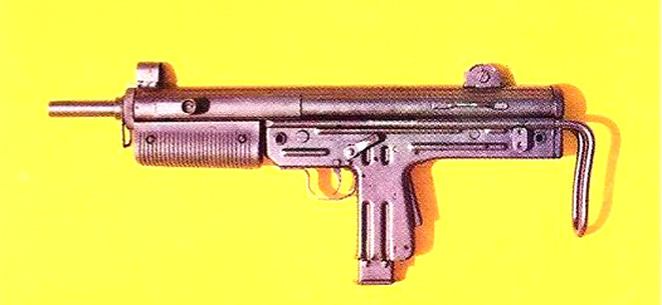
The FMK-3 (Or PA-3 DM Domingo Matheu), is a selective-fire submachine gun of Argentine origin, designed by Fabricaciones Militares (FMAP-DM) in 1974. It was developed to replace older weapons like the Halcón ML-63 and the PAM1/2 in Argentine service. 

Specifications

Caliber: 9x19mm Parabellum.
Action: Blowback-operated, firing from an open bolt.
Rate of Fire: Approximately 600–650 rounds per minute.
Effective Range: Roughly 100 meters.
Magazine Capacity: Detachable box magazines holding 25, 32, or 40 rounds. 

Design and Features

Featuring a magazine that inserts through the pistol grip and a telescoping bolt.It includes both a manual fire selector and a prominent grip safety on the back of the pistol grip, which must be squeezed for the weapon to fire.
Primarily made of stamped steel, known for being a rugged, utilitarian "tube gun". Features a hooded front post and a rear L-shaped flip sight adjustable for 50 and 100 meters. 

Variants

FMK-3: The standard version with a retractable wire stock.
FMK-4: A variant equipped with a fixed wooden or plastic stock.
FMK-5: A semi-automatic-only version produced for the civilian and private security market. 

Operational History

The FMK-3 saw significant use during the Malvinas Falklands War (1982) and has been used in various conflicts including the Salvadoran Civil War and the Croatian War of Independence. It remains in limited service with the Argentine military and police, as well as several other Latin American nations. 
Note: The designation "FMK-3" also refers to an Argentine anti-tank mine used during the same period.
Picture

Picture
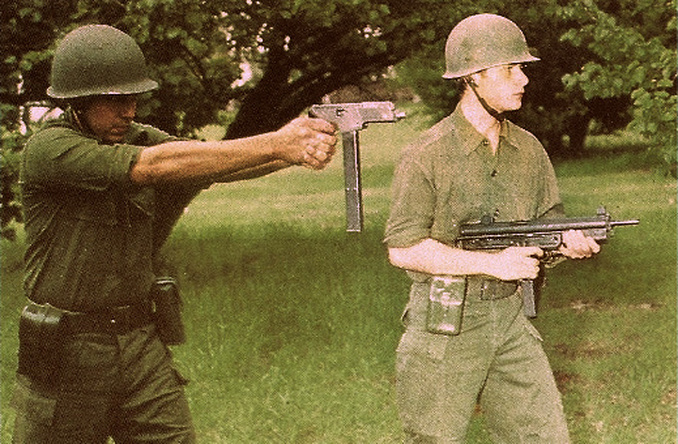
Argentine Submachine Gun "Patria" (Pistola Ametralladora Patria" 9mm Parabellum and FMK/PA3 Submachine Gun.
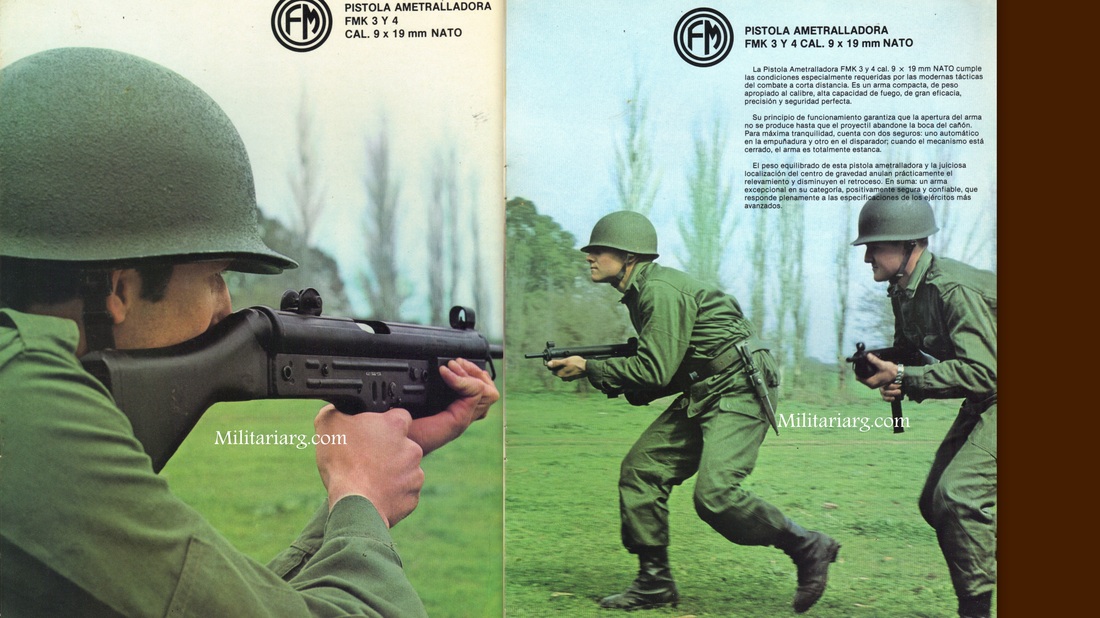
In Argentina, the name "Patria" refers to two different submachine guns: a modern 1980 design resembling the Ingram MAC-10 (Above on the left), and an older 1930s HAFDASA C-4 series based on the Beretta M1918/30.
The modern Patria features a cooling jacket/barrel extension and uses a 32-round 9x19mm magazine, while the vintage C-4 had a high-capacity 50-round (9mm) or 40-round (.45 ACP) magazine.
Picture
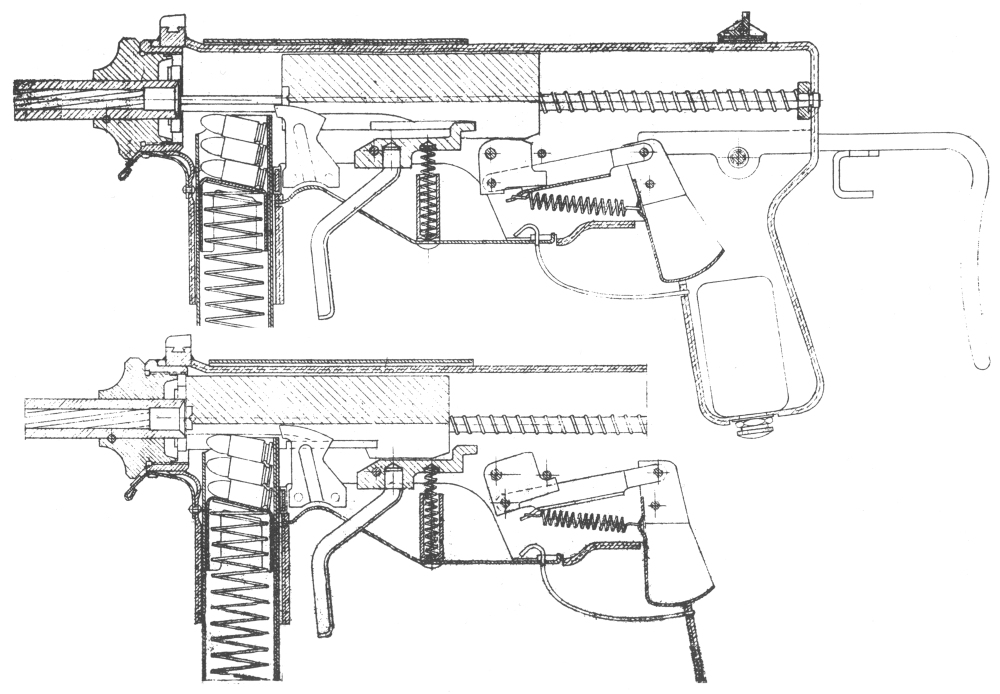
.FMK3/4 Brochure Manual. They had a wire folding stock and a fixed one made of plastic type material as in the photo above. ​After the Halcon M1949, the FMK-3 was the best this country ever made. Even the pull stability of the FMK-3 is excellent due to the design that balances the weight during shooting. 
Picture
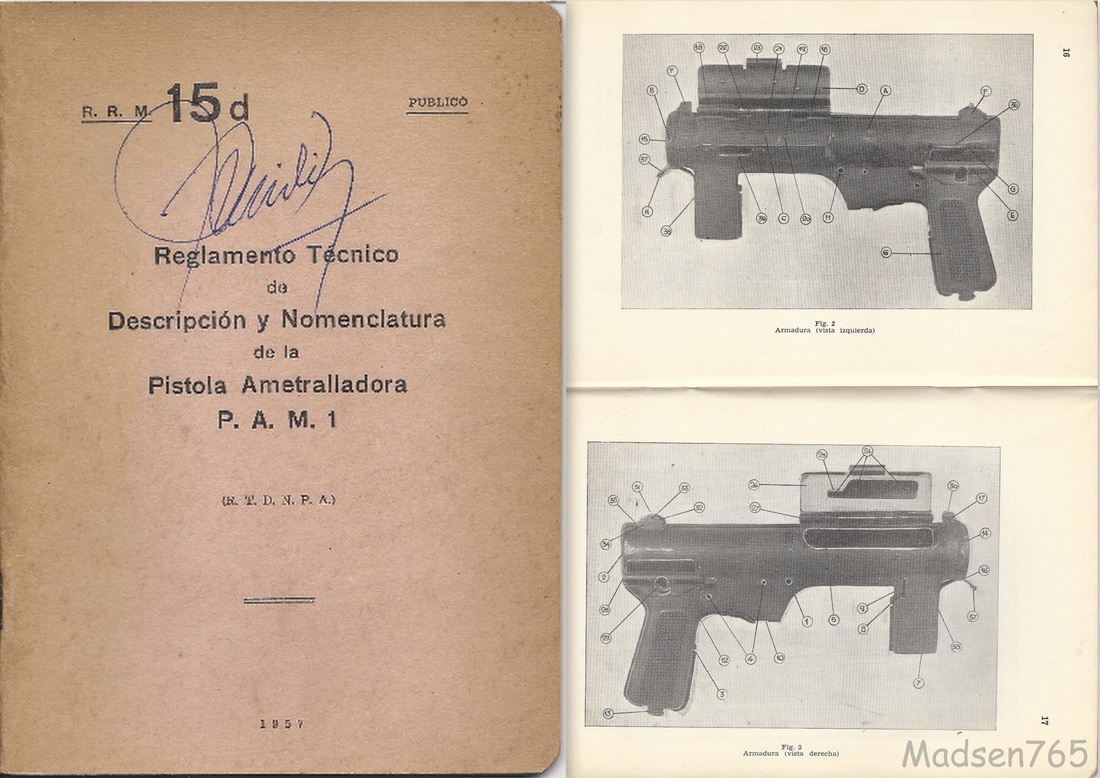
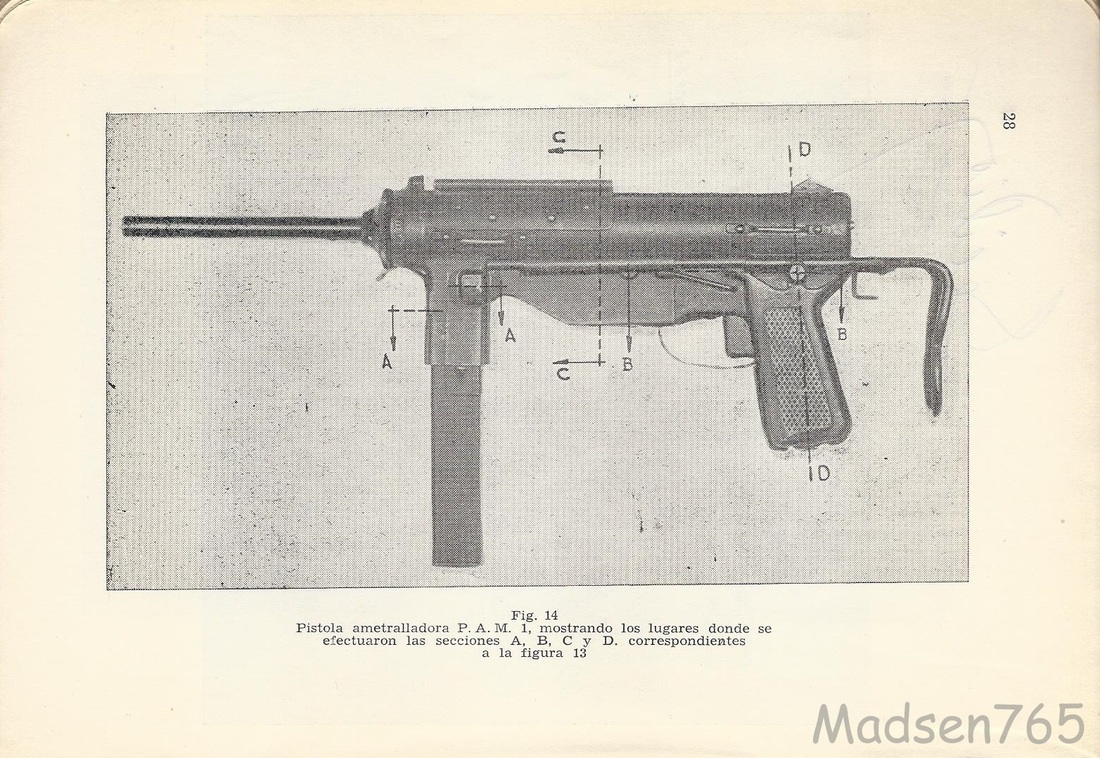
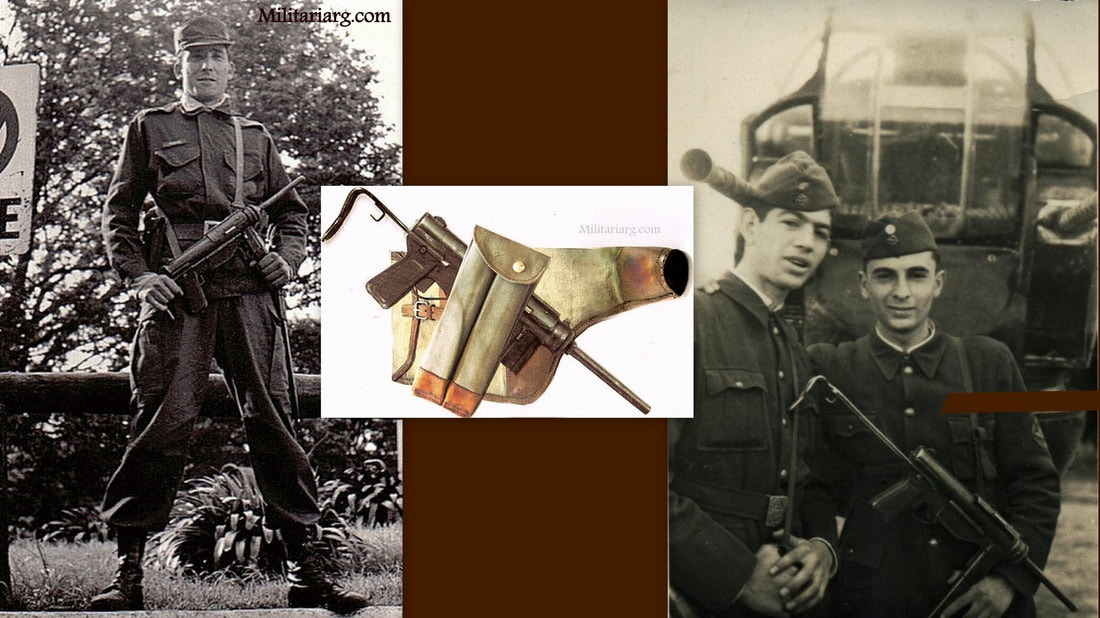
The PAM 1 (Pistola Ametralladora Modelo 1) was the Argentine version of the American M3 "Grease Gun". It was produced starting in 1955 by the FMAP (Fábrica Militar de Armas Portátiles) in Rosario.

Differences from the original M3:

Caliber Change: While the US Grease Gun was famously .45 ACP, the PAM 1 was chambered in 9x19mm Parabellum to align with Argentine military standards Modern Firearms.
Materials: It used thinner-gauge sheet metal than the US original, making it slightly lighter but also more prone to overheating and denting Military-History.fandom.com.
Rate of Fire: Because of the 9mm conversion and lighter bolt, it had a higher rate of fire (approx. 900 rpm) compared to the original M3's chugging 450 rpm.

The Safety Issue (PAM 1 vs. PAM 2)
The original PAM 1 inherited a dangerous flaw: it had no manual safety other than the flip-up dust cover. If dropped, it could easily discharge. This led to the PAM 2 in the 1960s, which added a grip safety (similar to the Uzi) on the back of the magazine well.
Picture
Picture
Picture
Picture
Picture
Picture
Picture
Picture
Picture
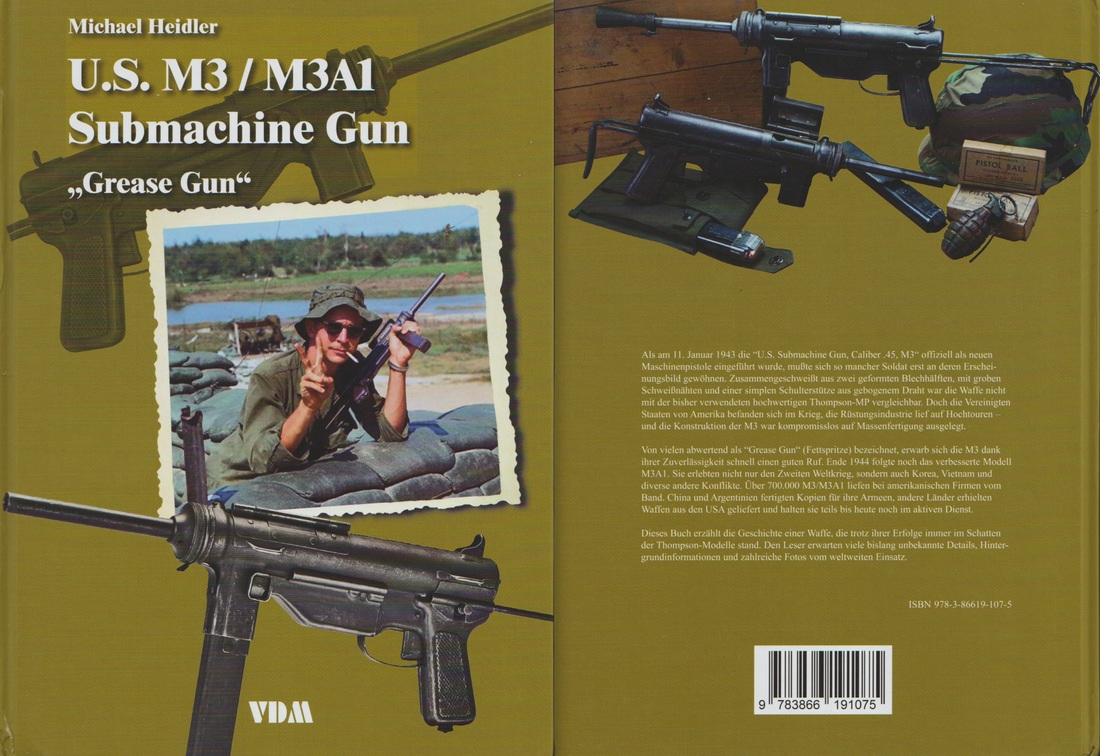
Image above, courtesy of Michael Heidler.
Picture

U.S. M3/M3A1 Submachine Gun "Grease Gun" by Michael Heidler


Pistols and handguns
Picture
Picture
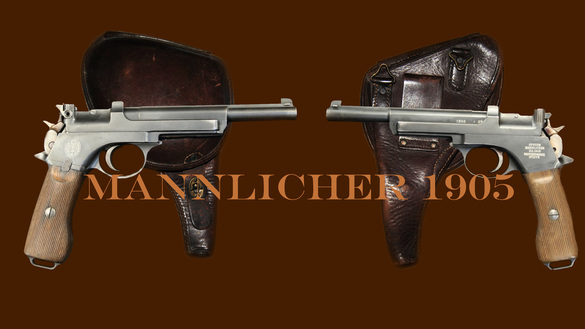
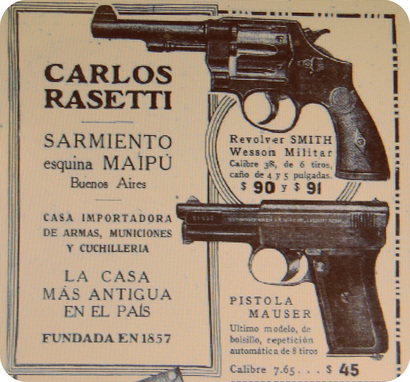
7.63x25mm Mannlicher self-loading, M1901/1903 semi-automatic Austria-Hungarian pistol blowback action, adopted in 1905. Manufactured by Steyr-Mannlicher.
11.43x23mm 45ACP Colt 1911, single action, semiautomatic. Adopted in 1916 (?).
11.43x23mm 45ACP Colt 1911-A1, adopted in 1927 (?).
11.25x23mm 45ACP M27 "Modelo Argentino" copies of the 1911-A1 design. Produced by
FMAP.
11.25x23mm 45ACP Ballester Rigaud (1938/40). Made by HAFDASA
11.25x23mm 45ACP Ballester Molina (1940/53). Made by HAFDASA.
9x19mm Parabellum Browning P35 High-Power. Made by FN Herstal Belgium.
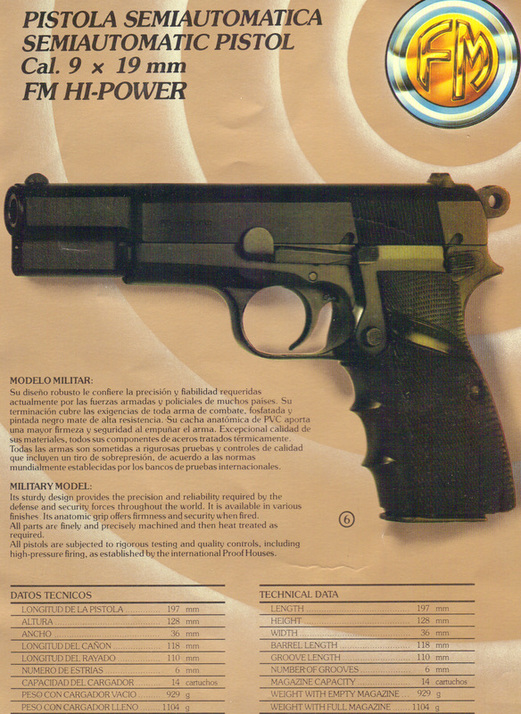
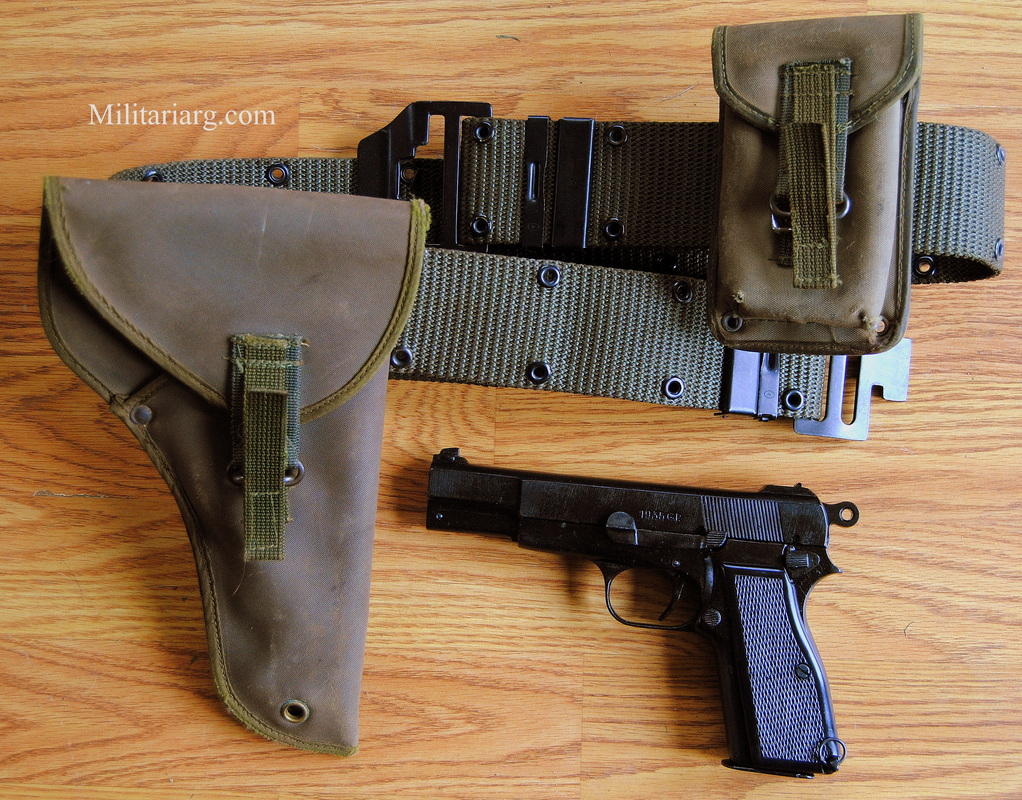
9x19mm Parabellum Browning HP35 High-Power. Made by FMAP DM.
9mm Short 380ACP (Automatic Colt Pistol), Bersa 83.
9mm Short 380ACP (Automatic Colt Pistol), Bersa 380.
9x19mm Parabellum Bersa Thunder 9.
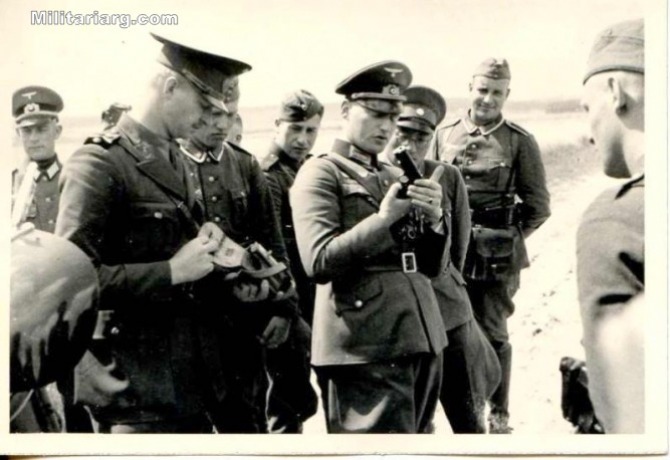
Picture
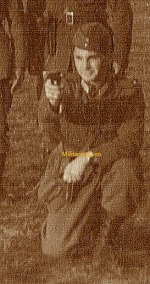
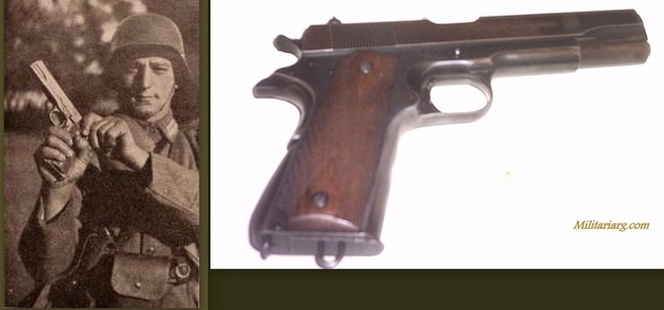
Interesting photo acquired online from Germany.  It shows an Argentine officer perhaps taking a course in Europe.  He happens to find himself in the Third Reich pre-WWII.  The German officer has a 45 ACP caliber pistol M27
(Colt 1911a1) or a DGME 1938 HAFDASA type Colt M1911A1 (Ballester-Rigaud), made in Argentina under Colt license.  There are reps from several countries at the course, including an Asian officer behind the German with the pistol.  The Argentine officer is removing a magazine from a holster.
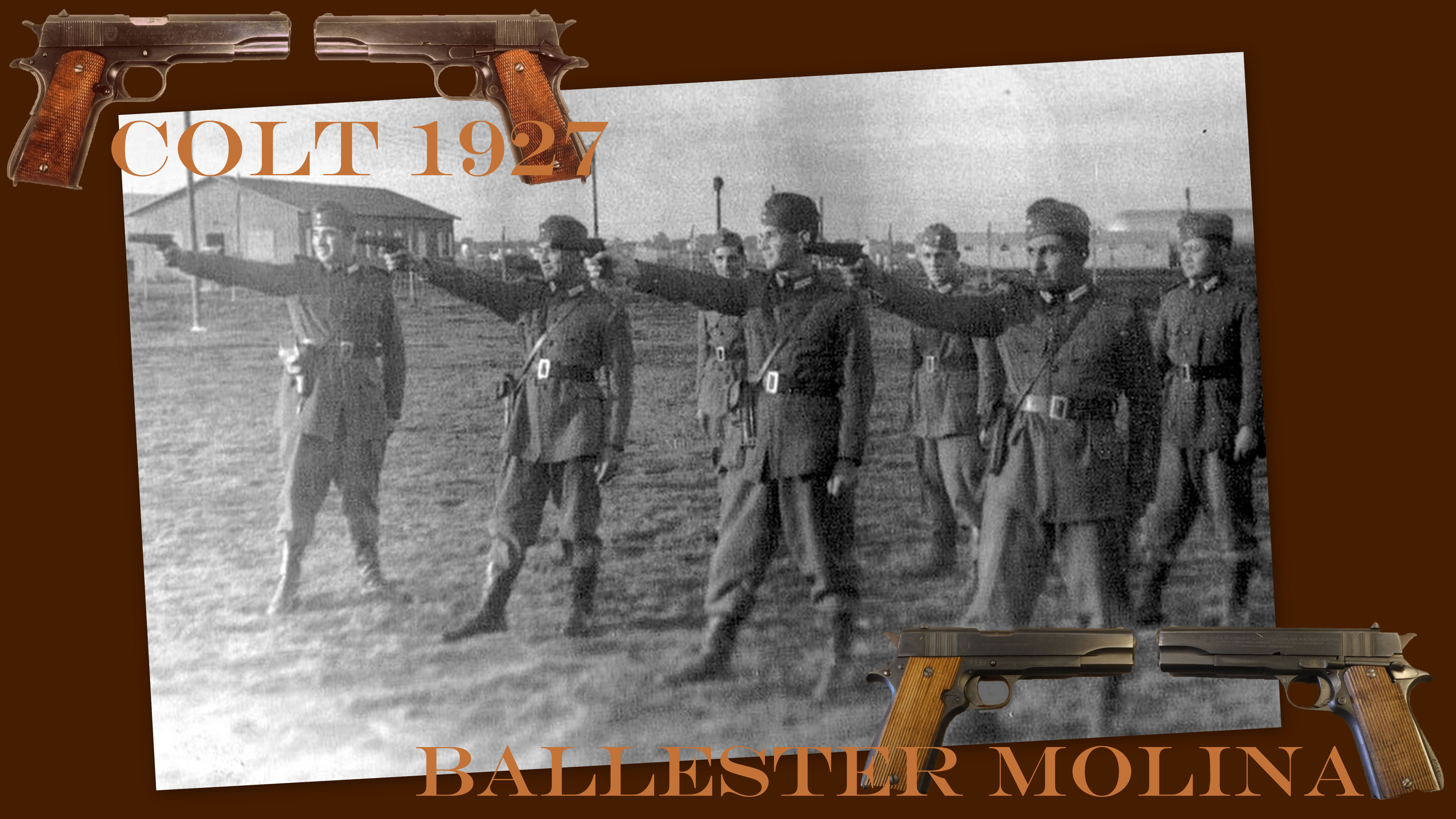
Hispano Argentina Fábrica de Automóviles S.A.) Founded in 1929 by Arturo Ballester and Eugenio Molina as an Argentine branch of the prestigious Hispano-Suiza brand. Despite Argentina's neutrality for much of the war, HAFDASA sold between 8,000 and 15,000 Ballester-Molina pistols to the United Kingdom. These were used by the British Special Operations Executive (SOE) and partisans in occupied Europe.
Picture


Picture
Target practice with Ballester Molina 45 caliber ACP recoil operated, blowback pistols, also known as Ballester Rigaud or HAFDASA (from the initials Hispano Argentina Frabrica de Automoviles Sociedad Anonima).  It was basically a copy of the Colt M1911A1, a cheaper alternative to the Colt M1927 which was made in Argentina under license and was also in use in the country.  During the second world wat HAFDASA made a large quantity of these pistols for the allied countries, especially England.  So the Argentine armed forces could have pistols marked Colt caliber 45 M1927 together with HAFDASA or Ballester-Rigaud, depending on the year of manufacturing, in service.  The first Colt adopted the US was the model 1916 (Colt 1911) when an order of 1,000 arrived.  A second order of 10,000 was interrupted by the war.  In 1926 an order for 10,000 Colt 1911A1 (Colt model 1927) was made along with 926 Colt 1917 machine guns (Colt machine gun model 1928). 
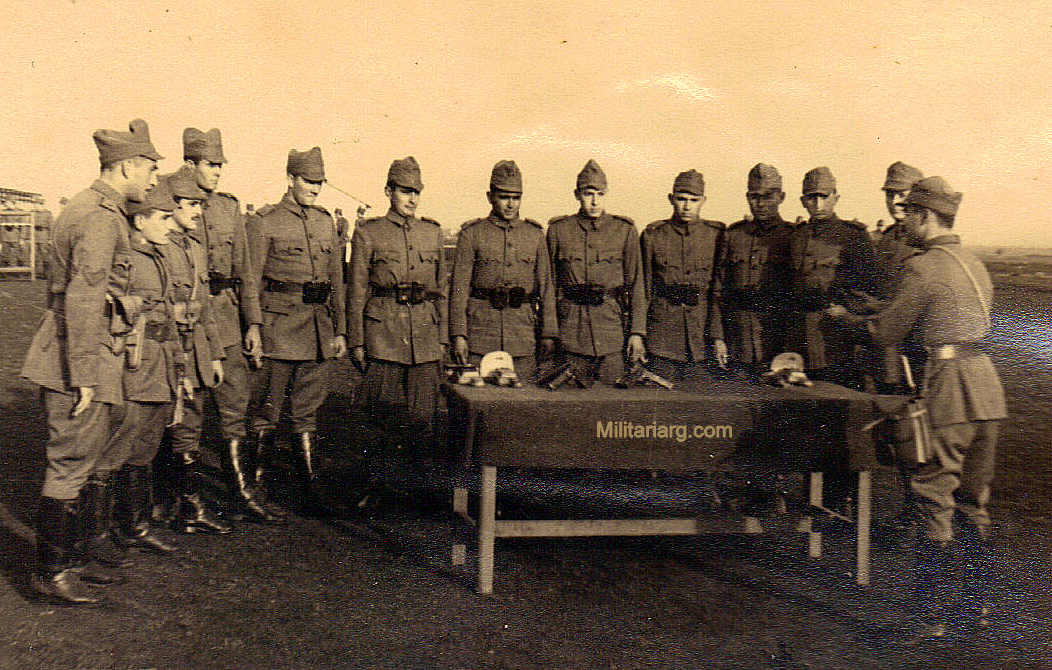
Picture
Picture

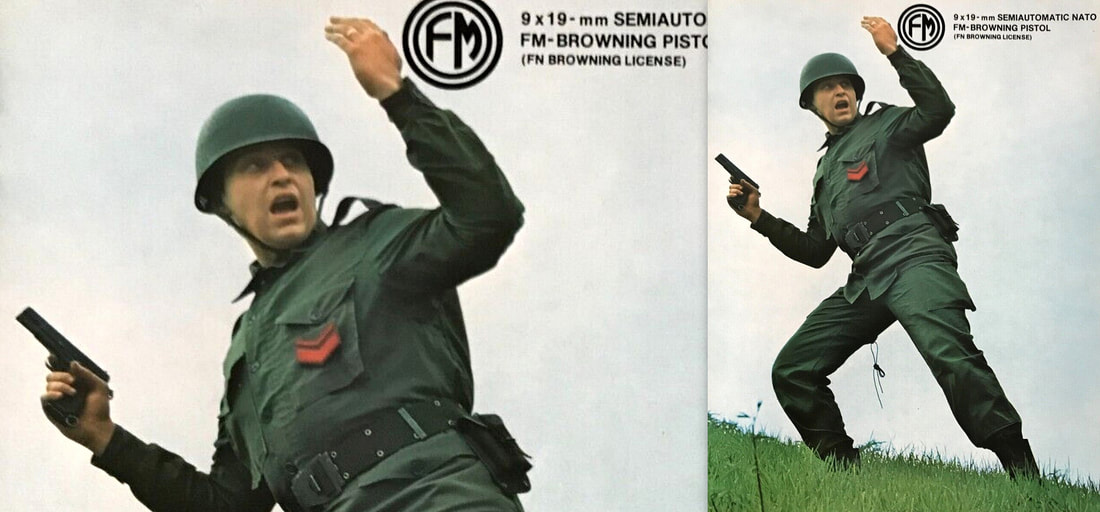
FN Browning Pistol cal 9x19mm Parabellum 

Picture
Argentina has a long history with the FN Browning HP (Hi-Power) pistol, starting with imports in the late 1930s and progressing to licensed domestic production that lasted for decades. 
\

Procurement and Adoption
Argentina's relationship with the Hi-Power began with direct purchases from Fabrique Nationale (FN) in Belgium. 


1937: The Policía de la Capital (Capital Police, now Policía Federal) placed the first order for approximately 1,600 units for its senior staff.
1960s: The Argentine military fully adopted the 9mm Hi-Power as its standard service pistol, phasing out the older .45 ACP Sistema M1927 (licensed Colt 1911 copies). Police forces also transitioned to the Hi-Power during this time.
​1969: The Argentine government's General Directorate of Military Factories (Dirección General de Fabricaciones Militares, or DGFM) began manufacturing the Hi-Power under license from FN at the Fábrica Militar de Armas Portátiles Domingo Matheu (FMAP "DM") in Rosario. 

The Argentine-Made "FM" Hi-Power
Pistols produced in Argentina are often referred to as "FM" Hi-Powers and are well-regarded for their quality. 

Licensed Production: FN provided the tooling, equipment, and technical expertise to set up the factory, ensuring that the Argentine-made pistols were faithful copies of the Belgian design and were generally considered to be of a quality equal to the European versions.
​

Variants: Production spanned several models, including the early Model 63 and Model 65, up to the Model 73. Later, after the license expired around 1989, FMAP developed slightly modified unlicensed versions like the P90 and M95 for commercial export.
Picture
Picture

Argentine Military Rifles and Carbines of the Black Power Cartridge era
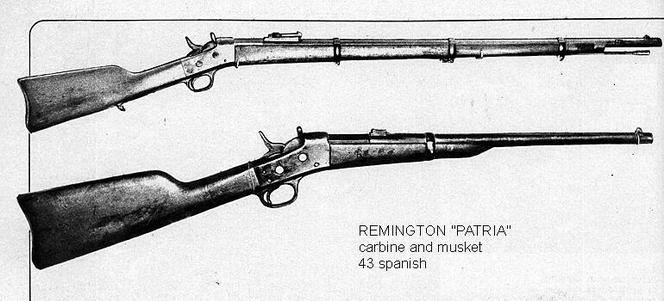
Picture


Bolt-Action Rifles

Picture
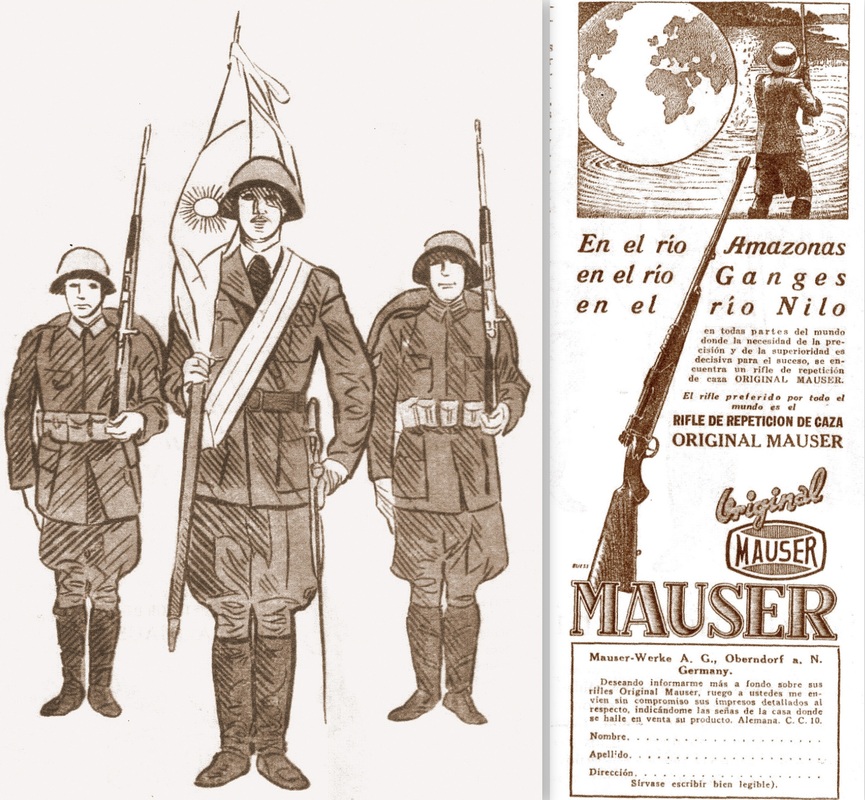
Mauser 1909, Modelo Argentino. Mauser-Werke A.G. Oberndorf a.N. Photo: Caras y Caretas 1937.

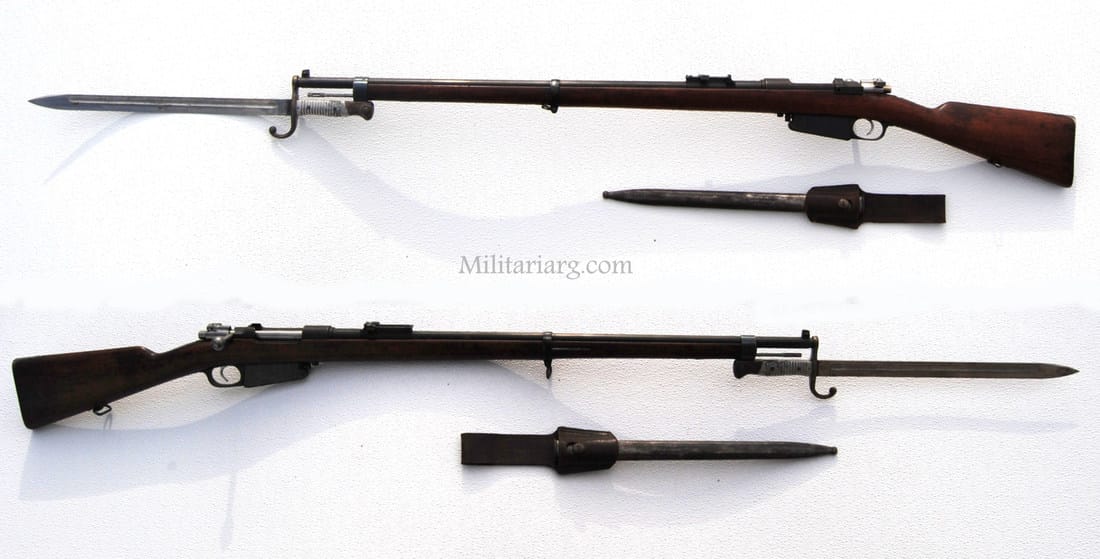
11x60mmR Mauser, Blackpowder Cartridge. Gewehr 71 M1871 made by Mauser. 
7.92x57mm Gewehr-Prüfungskommission (G.P.K.), Gewehr 88 M1888 Comission. Ludwig Loewe. 
7.65x53mm Mauser Cartridge. Mauser Rifle M1891. Loewe Berlin.
7.65x53mm Mauser Cartridge. Mauser Cavalry Carbine M1891. Loewe Berlin. 
7.65x53mm Mauser Cartridge. Mauser Engineers Carbine M1891. Loewe Berlin.
7.65x53mm Mauser Cartridge. Mauser Artilley Carbine M1891. Loewe Berlin. 
7.65x53mm Mauser Cartridge. Mauser Rifle M1909. DWM and FM.
7.65x53mm Mauser Cartridge. Mauser Cavalry Carbine M1909. DWM and FM.
7.65x53mm Mauser Cartridge. Mauser Artillery Carbine M1909. DWM and FM.
7.65x53mm Mauser Cartridge. Mauser Engineers Carbine M1909. DWM and FM.

Gewehr 1888 Comission Rifle:
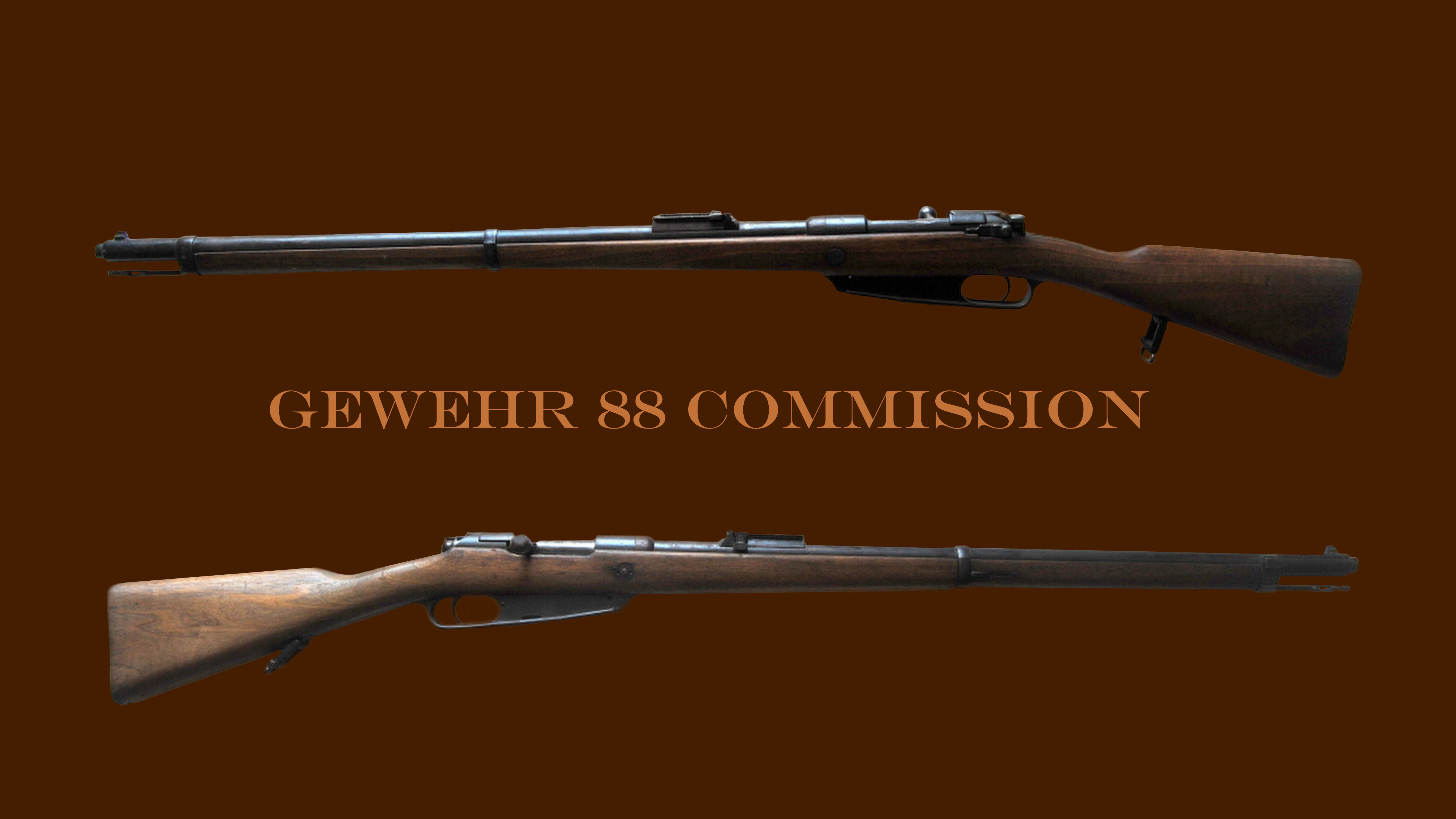
Picture

​1888 comission rifle 7.92mmx57 Mauser, bolt action manufactured by Ludwig Loewe Berlin.


Argentine Mauser 1891:
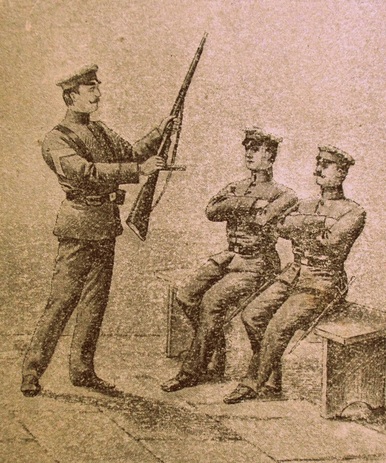
Picture
Picture
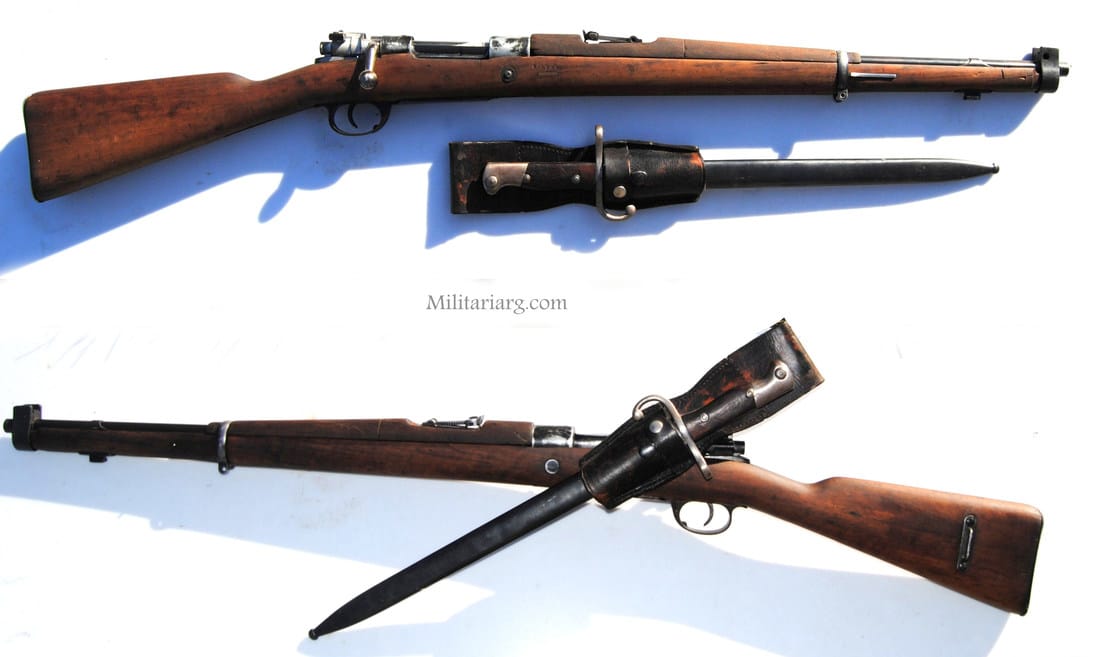
The Argentine Mauser (Model 1891) was used by the Argentine government from 1891 until 1909.  This model has a straight bolt handle that must be altered if a scope is mounted and a 2-position safety.  It is designed to be loaded from the top with five-round charger clips but can also be single loaded. This rifle is no longer in production and some parts are not available. The Argentine Mauser was initially made on contract by Ludwig Loewe and Company of Berlin.  It was introduced to Argentina by then-Major Pablo Ricchieri.
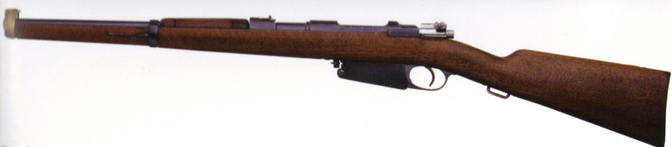
Picture
Model 1891 carbine. Argentine Mauser Rifles 1871-1959 by Colin Webster

Argentine Mauser 1909:
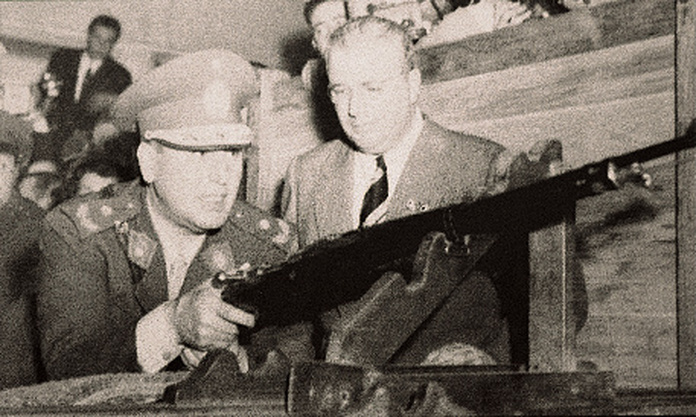
Picture
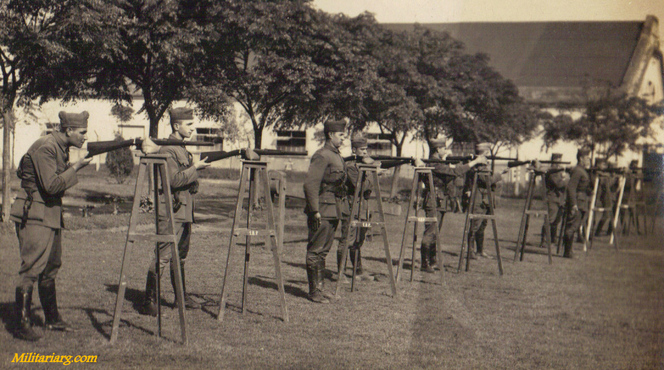
Photo: Never before seen photo, at least for me, of then General de Brigada Juan Peron in the Tiro Federal Argentino de Buenos Aires (Shooting Club)  with an Argentine Model Mauser 1909.  The photo was taken by my friend Enrique "Yatagan", in the Mueso de San Vicente (it was the country home of General Peron).  The old wooden support for the rifle, is still in existence.
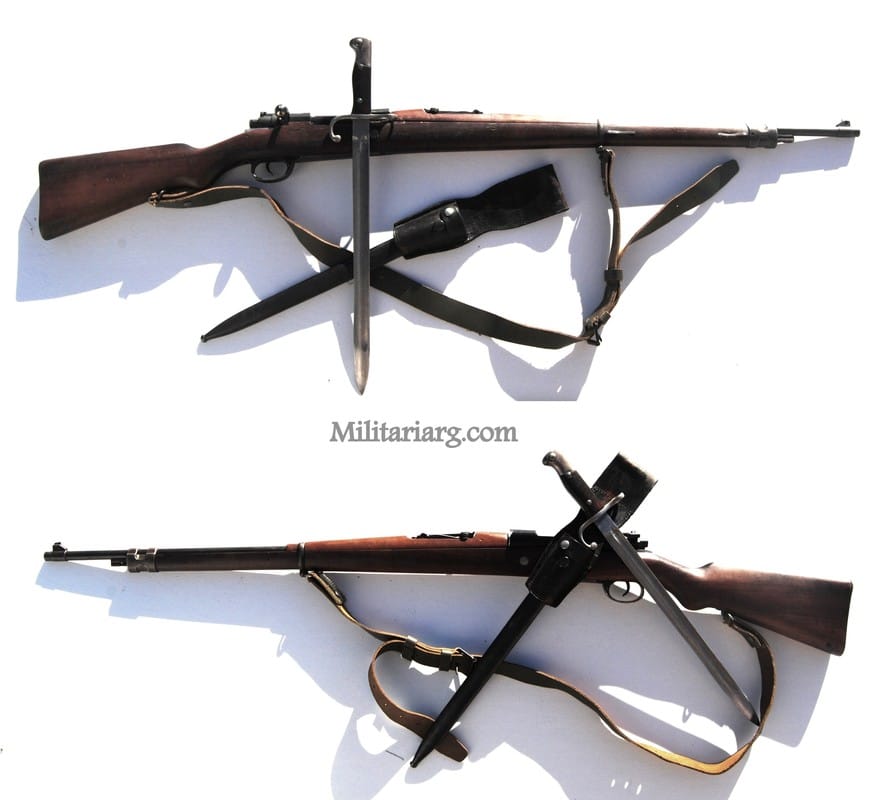
Picture
Picture
Picture
Picture
Picture
Picture
Picture
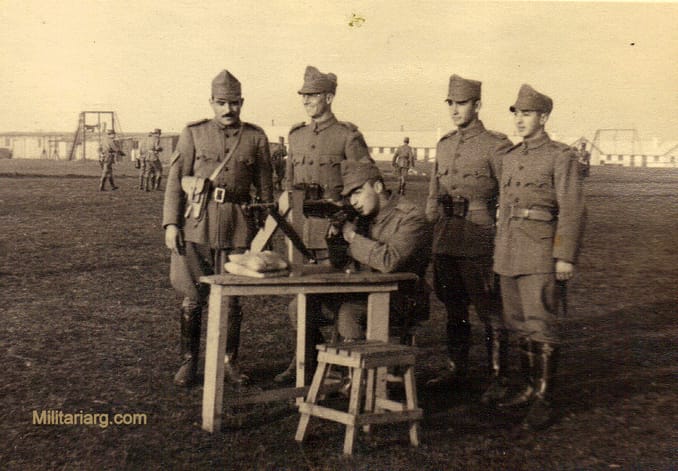
Infantry Rifles on stand.
Picture
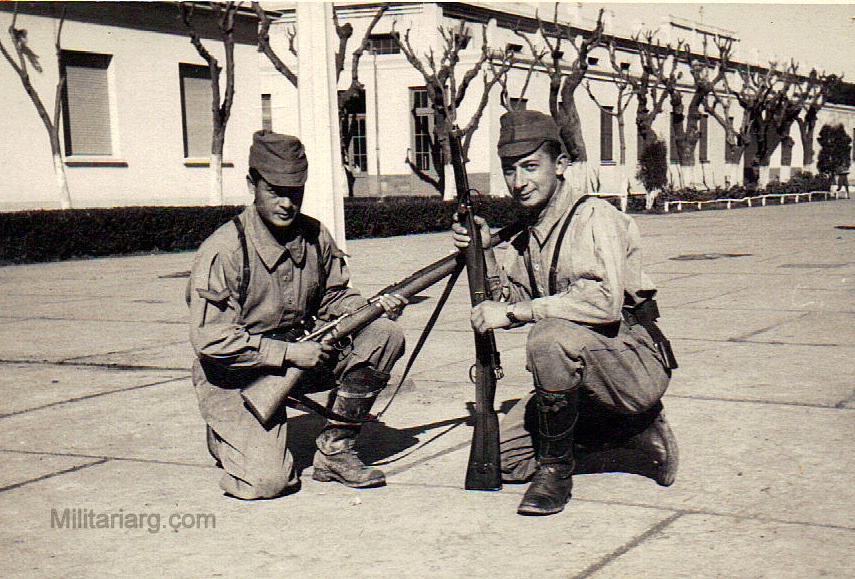
Artillery carbines on stand.
Picture
Picture
A.A Artillery.
Picture
Picture
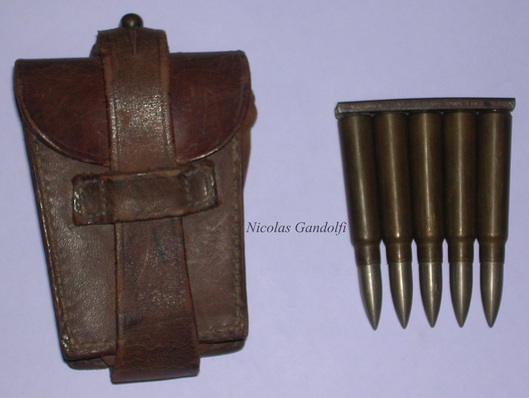
1909 Argentine Mauser Ammo Pouch w/5-round 7.65mm stripper clip. Nicolas Gandolfi Collection. 

Mauser K98 Sportorized and FM Carbine for Civilian Market.
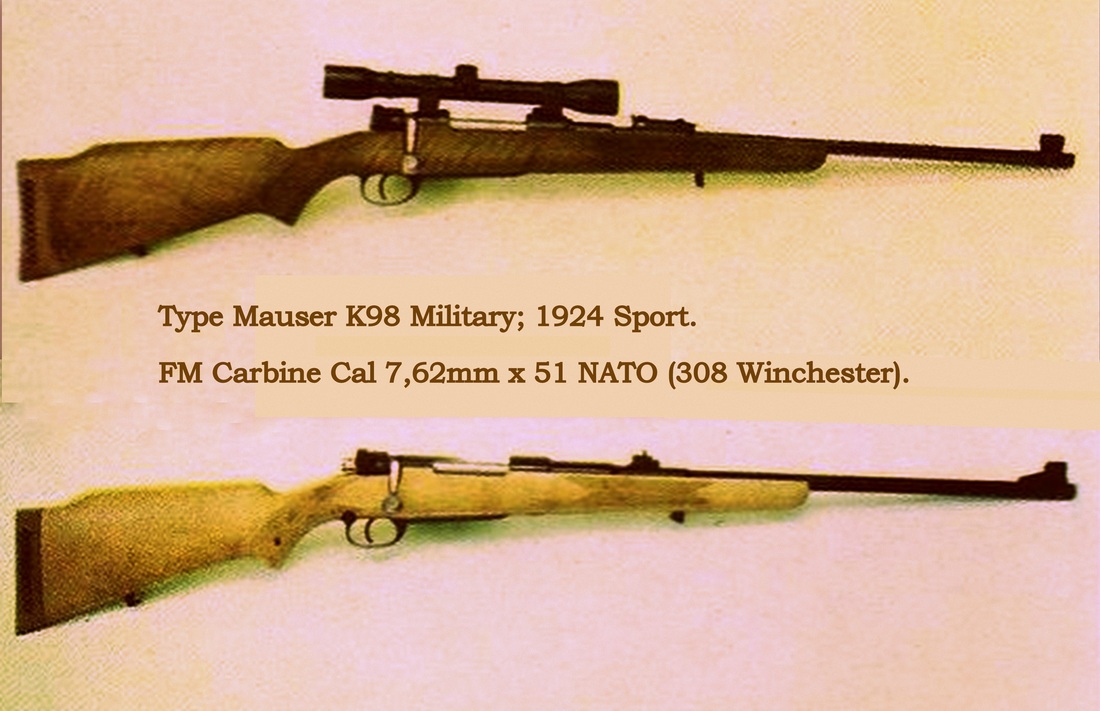
Picture
​Photos From a catalog of FM (Fabricaciones Militares).
​
​Top Rifle: Fabricaciones Militares (FM) produced and sold complete sporting rifles or carbines using Mauser actions and dedicated commercial-style stocks, rather than merely "sporterizing" military surplus rifles with K98 replicas. The text in the image suggests both approaches were present in the catalog's context.

Bottom Rifle: Labeled "FM Carbine Cal 7,62mm x 51 NATO (308 Winchester)". This is likely a post-WWII, locally manufactured or assembled rifle using an Argentine DGFM (FM) action (likely a Model 1909 or 1947 carbine variant) built specifically as a carbine in the popular .308 Winchester caliber (civilian equivalent of 7.62x51mm NATO). This model would have been produced by the Fábrica Militar de Armas Portátiles “Domingo Matheu” (FMAP) for the commercial market.

 Browning 1919 - ALAM-1
​Air-cooled Medium Machine Guns, (MMG)

Picture
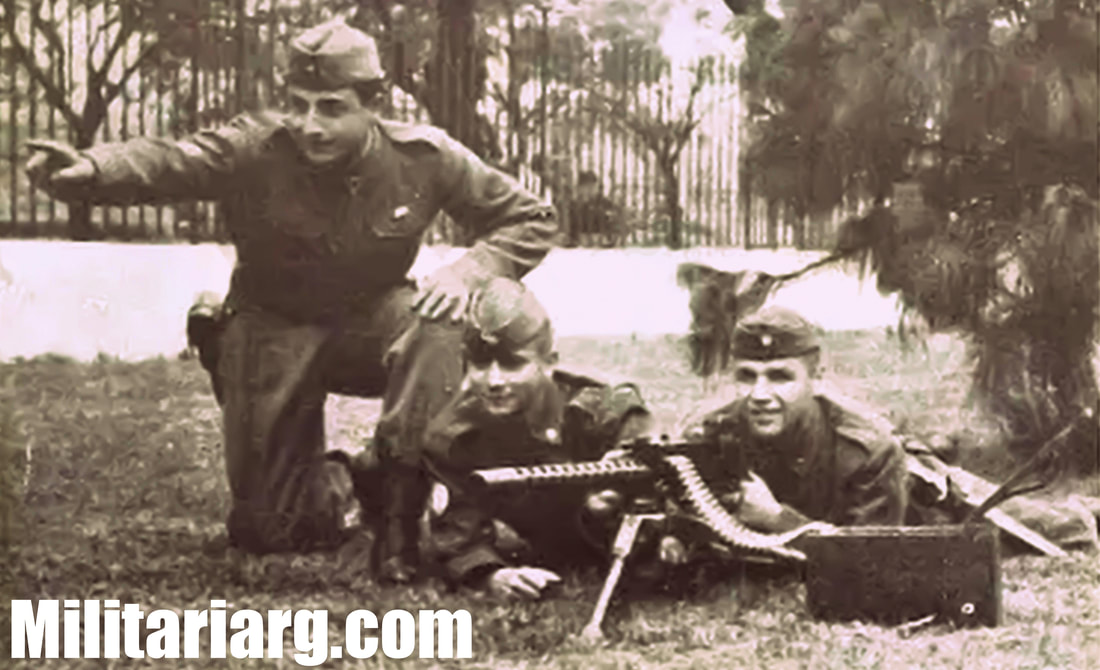
Reg 2 Motorised Infantry Gral Balcarce 1959.
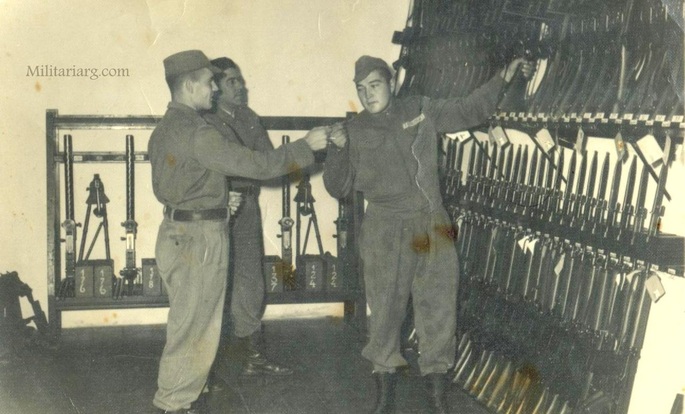
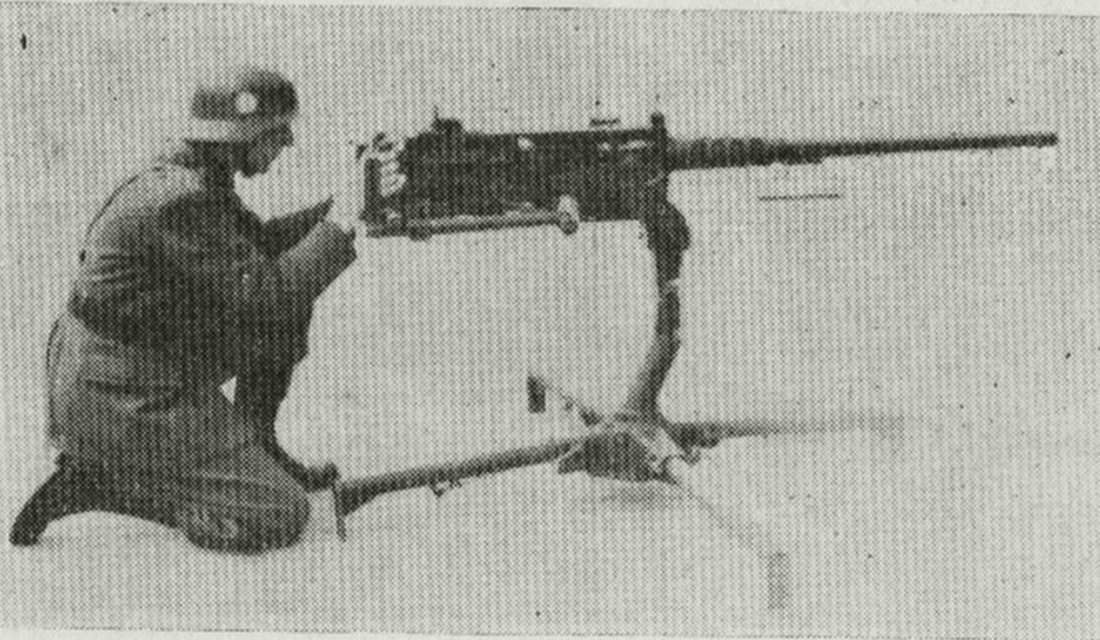
Argentina was a user of the Browning M1919 machine gun and even produced a local variant. It served as a key medium machine gun in the Argentine military for several decades. 

Service and Variants

Original Procurement: Argentina initially acquired US-made Colt-Browning M1917 water-cooled machine guns (designated M28) around 1928, chambered in the standard 7.65×53mm Argentine Mauser caliber. The air-cooled M1919 model followed later as a primary medium machine gun.

Local Production (ALAM 1): The state-owned Dirección General de Fabricaciones Militares (DGFM) developed and produced its own localized version known as the ALAM 1 (Ametralladora Liviana Argentina Modelo 1), initially also chambered for the 7.65mm Mauser cartridge.

Caliber Conversion: As the Argentine military transitioned to the 7.62x51mm NATO caliber in the 1960s (alongside the adoption of the FN FAL and FN MAG 58), many existing M1919s were rechambered for the new standard.
Picture
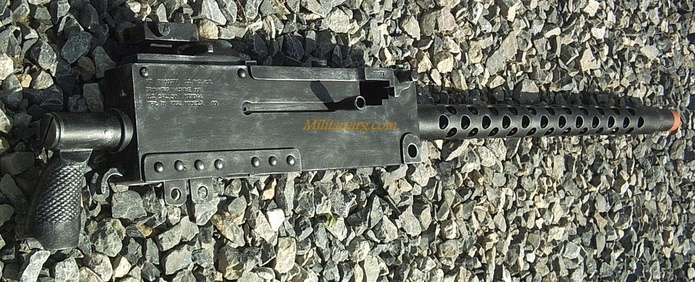
D.G.F.M ALAM 1 Machine Gun 7,65mm Mauser (7.65mmx53 Arg. (Argentine version of the Browning 1919). ALAM 1 (Argentine Light Machine-Gun Model 1).
Picture
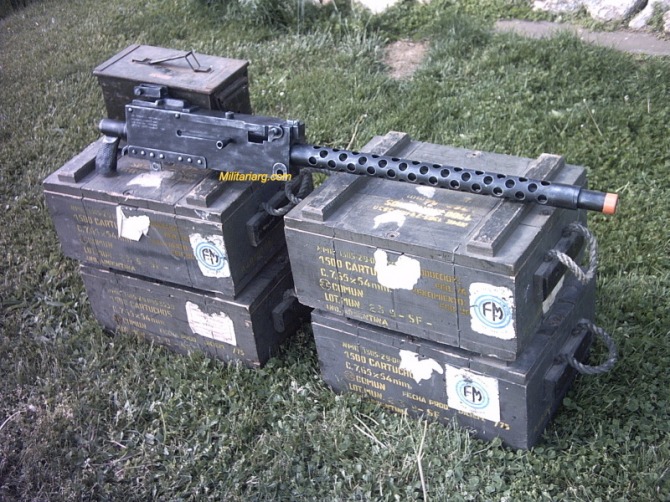
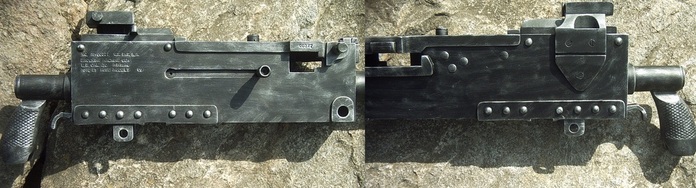
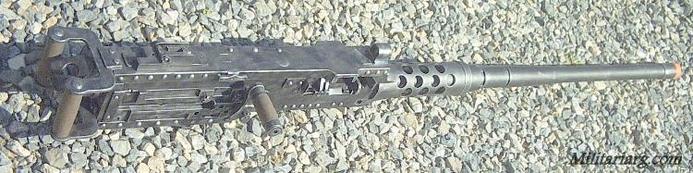
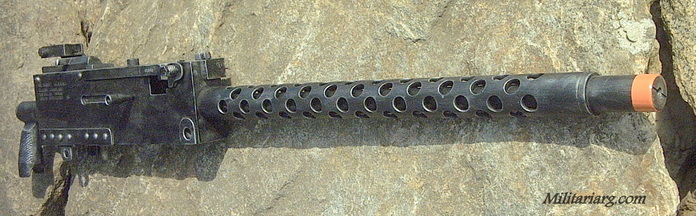
M1919 Browning 7.62x63mm 30-06 Springfield Cartridge. (It was finally replaced by the 7.62x51mm NATO). Photo: 1:1 Scale Replica.
Picture
Picture
Picture

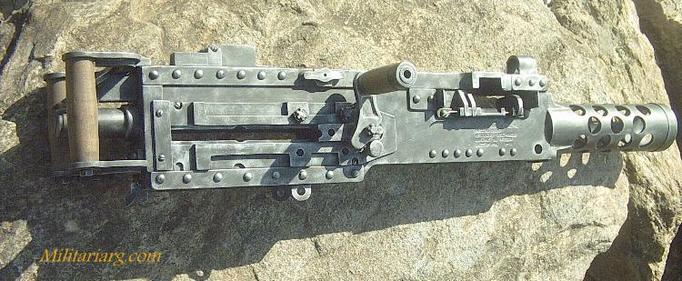
Browning 1919 A4 machine gun replica constructed of plastic, wood and metal.

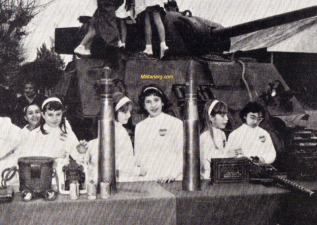
 The Browning M1919 is basically the Browning M1917 but with an air-cooled barrel instead of a water tank cooler.  The photo on the above right is of students who went to an exposition in the 1970s.  The 2 girls on the far right are looking at a Colt 30 caliber which probably were brought along with the Sherman firefly tanks.  The helmet in the photo on the above left is a replica of an Argentine helmet in olive green.
Picture
Picture


Flintlock guns, muskets, rifles and pistols
Picture
Picture
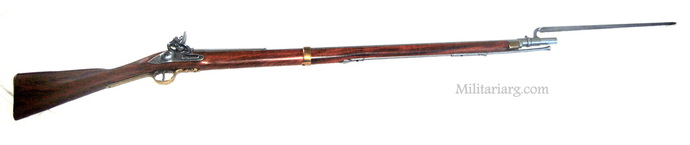
Brown Bess 1777.
Picture
Picture
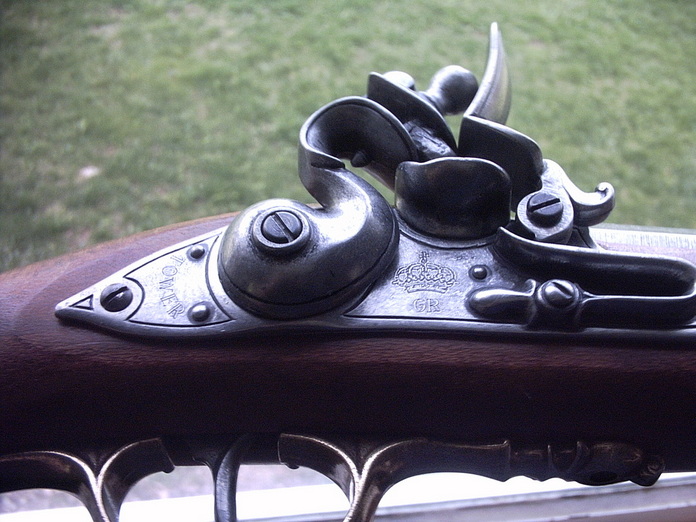
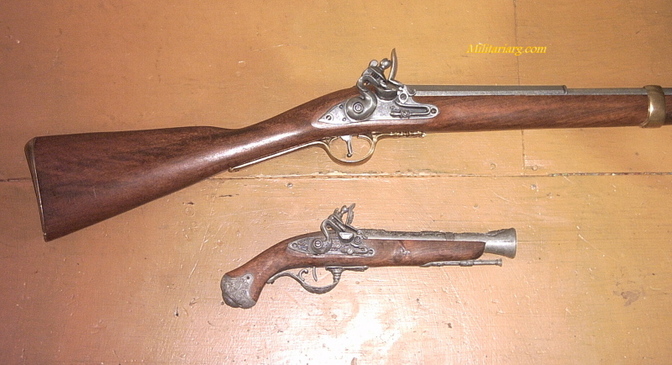
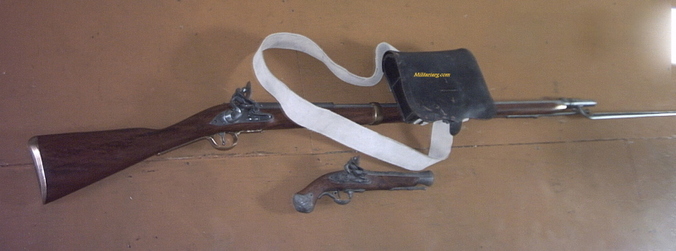
Above are replica percussion or flintlock rifle and pistol from the 18th century, Brown Bess.  The rifle is a British style 1, 93mm diameter caliber . The ammo puch from the first photo is Spanish style M1792, 16mm.  These are often used in reenactments of the British invasions in Buenos Aires between 1806-1807.  Due to these invasions, many elite regiments and unities were formed which later became the Argentine military.  The invasions were during the Napoleonic period when Buenos Aires and its territories were ruled by an English viceroy, William Carr Beresford. He ruled until Santiago de Liniers, a French officer in Spanish service, defeated him and became the viceroy himself. These rifles that remained after the British invasion were used by the Argentines forces for a long time, along with the standard Spanish Rifle 1.75mm.

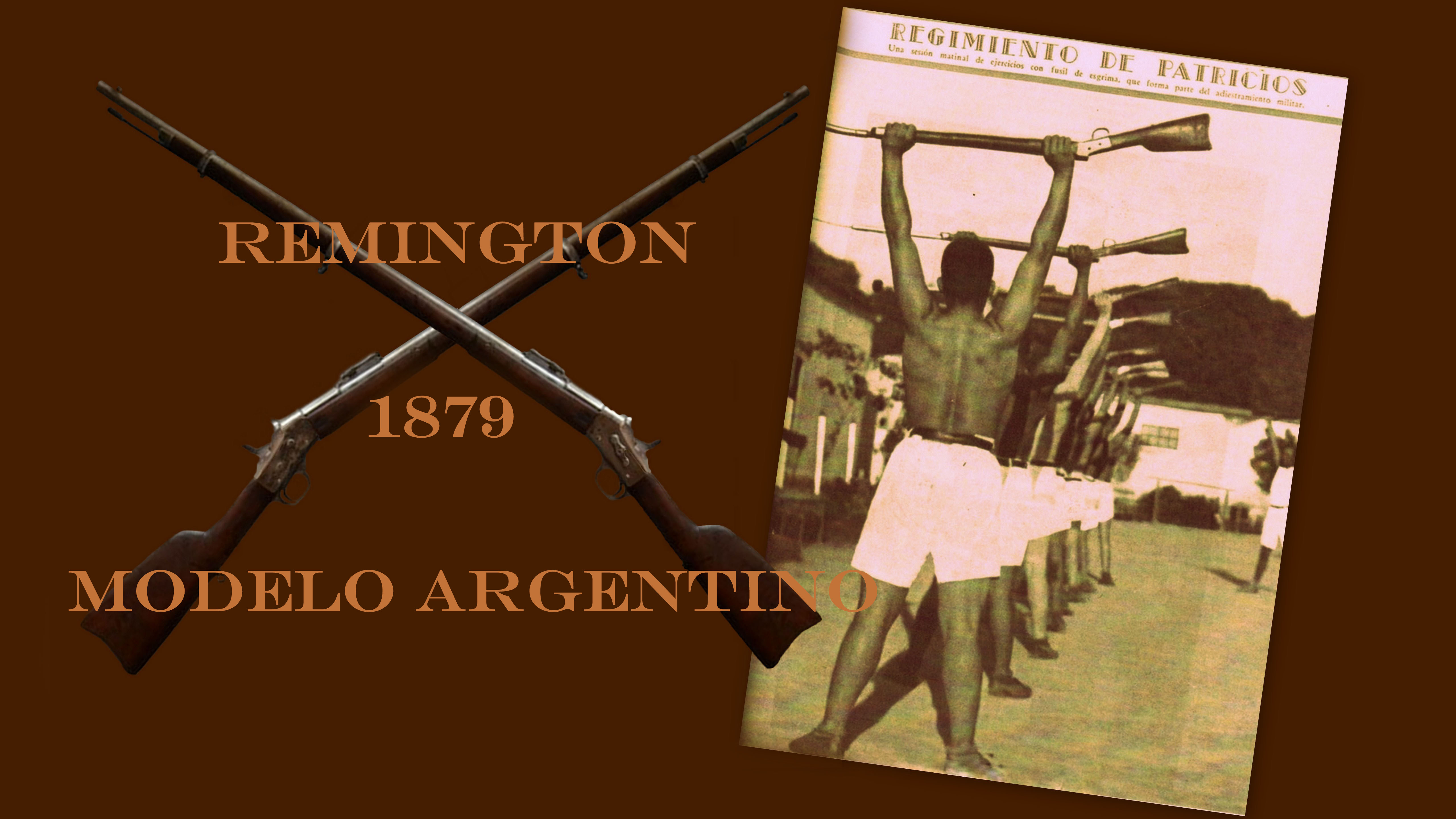
Remington 1879. Rolling block action

Picture
The Remington Model 1879 Rolling Block rifle holds significant historical importance as Argentina's first standard national military weapon. 

Argentine Service History

Following internal conflicts, Argentina sought to modernize its military with reliable firearms, leading to the adoption of the single-shot rolling block action rifle in 1879. This model, marked "MODELO ARGENTINO 1879 E.N.", served as the standard issue until the early 1890s when it was replaced by the Model 1891 Mauser. 

Technical Specifications

Action: Single-shot rolling block.
Caliber: .43 Spanish (11.15x57mmR).
Barrel Length: Approximately 35.5 to 36 inches for the infantry rifle.
Variants: Both infantry rifles and saddle-ring carbines were produced for Argentina.

FN - 49

Picture
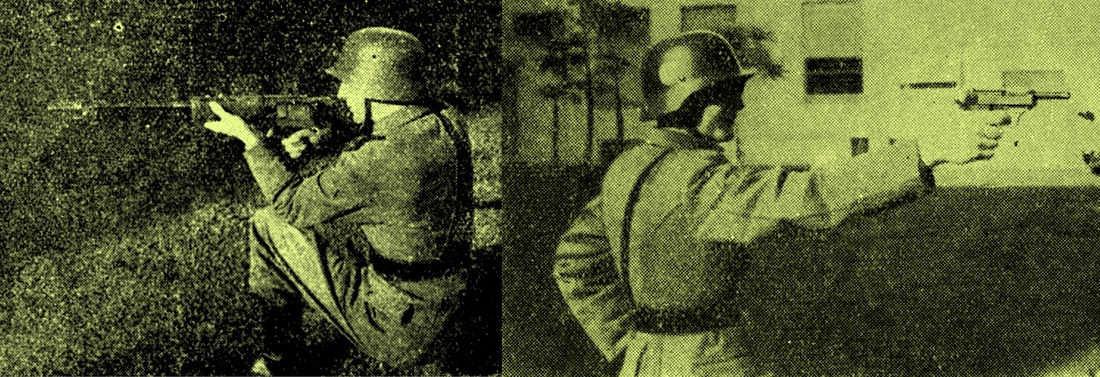
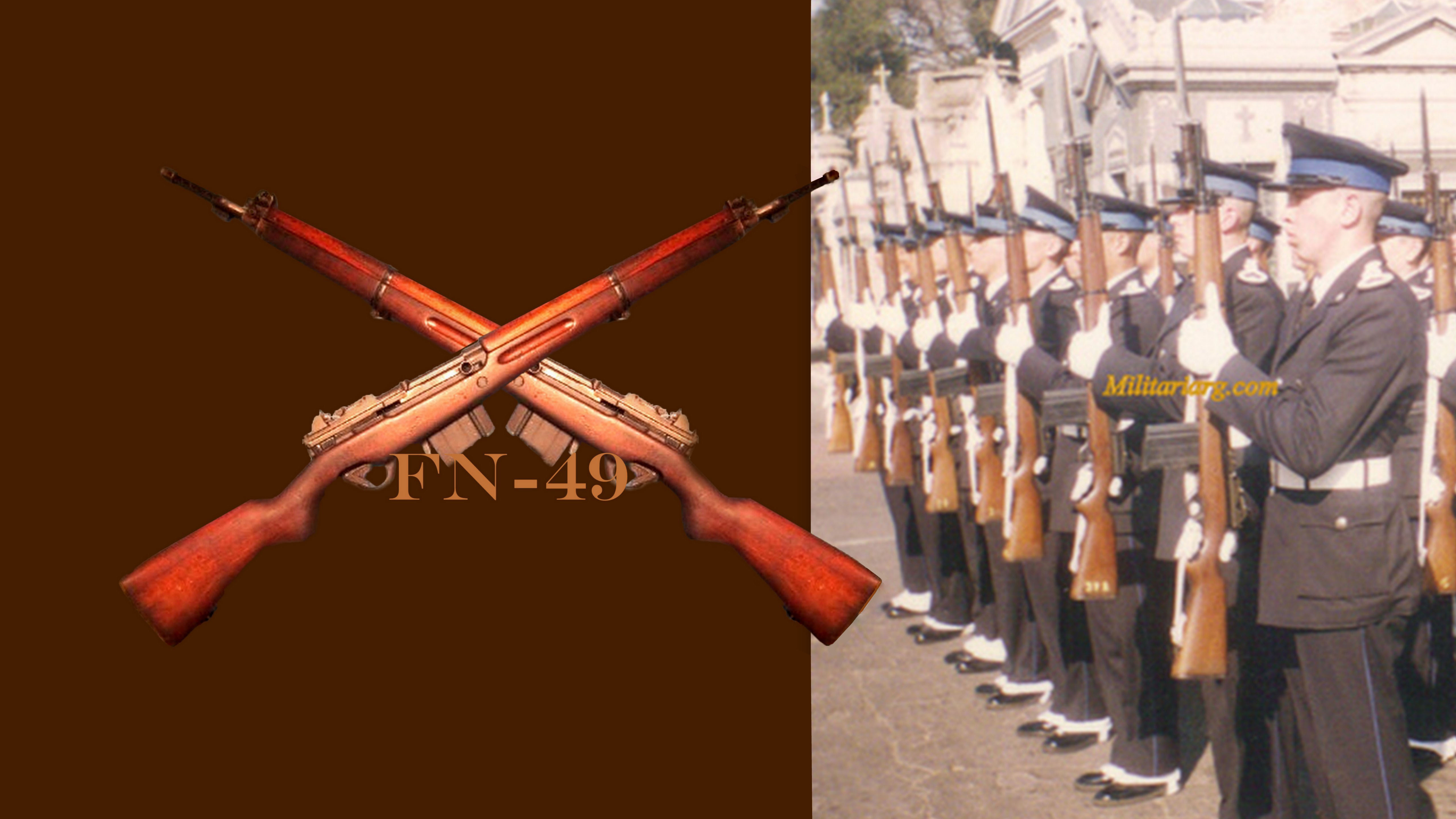
SAFN 49. Right picture the FN-49 with Argentine conversion with 20 round magazine, for caliber 7.62mm NATO. 

The FN-49 (SAFN) holds a unique place in Argentine history as the precursor to the FAL, specifically serving with the Argentine Navy (ARA). Argentina ordered 5,536 rifles on July 29, 1953. These were specifically for the Navy, while the Army continued to use Mauser bolt-action rifles until the adoption of the FAL.

Original Configuration: They were initially chambered in the traditional 7.65×53mm Argentine Mauser caliber and featured a 10-round fixed internal magazine.

Distinctive Markings: These rifles are famous among collectors for the "ARA" (Armada de la República Argentina) stamp and the Argentine crest on the receiver. 

The 7.62 NATO Conversion 
In the early 1960s (or late 1960s/early 1970s depending on the batch), Argentina modernized these rifles to match the new logistics of the 7.62x51mm NATO cartridge. 

Domestic Modification: The conversion was performed locally by Metalúrgica Centro (formerly Halcón).
Technical Changes: They replaced the original barrels and modified the trigger guards to accept a proprietary 20-round detachable magazine.
Magazine Note: Although they look similar, these 20-round magazines are not interchangeable with standard FN FAL magazines. 

Combat and Surplus

Malvinas Falklands War (1982): These converted FN-49s saw limited frontline service with Argentine Marines during the Falklands War, more than 20 years after the rifle had gone out of production.
Rarity: Because of the small initial order and the specific Navy usage, Argentine FN-49s are considered among the rarest variants of the SAFN series.
Picture
​Argentine Navy SAFN-49 chambered for the 7.62mm NATO cartridge. Note the square botton magazine. Phot and source: The SAFN-49 Battle Rifle by Joe Poyer.

FN FAL

DGFM FAP
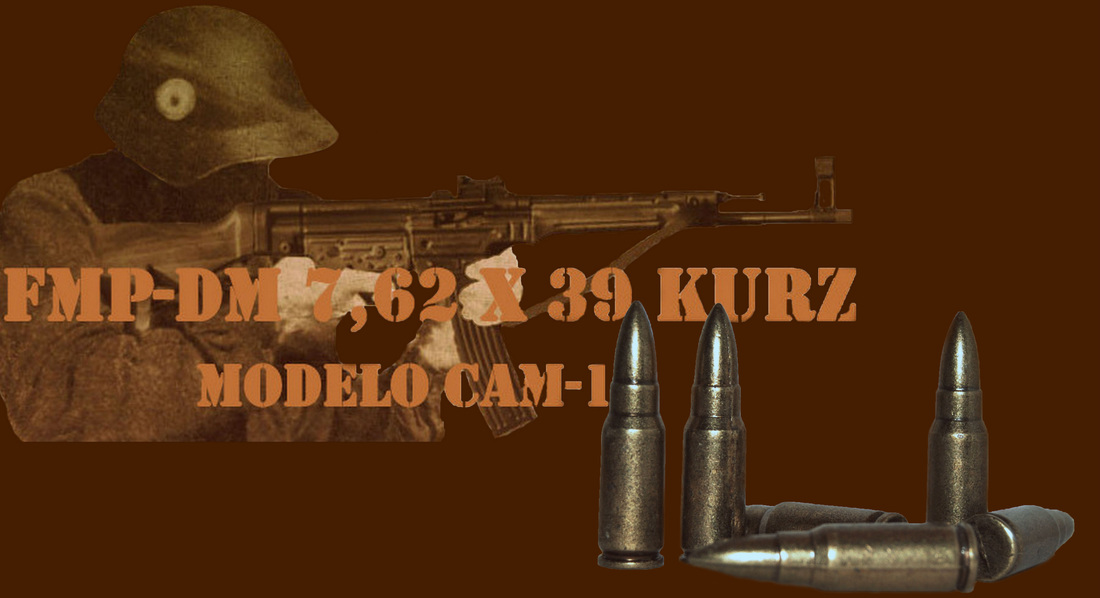
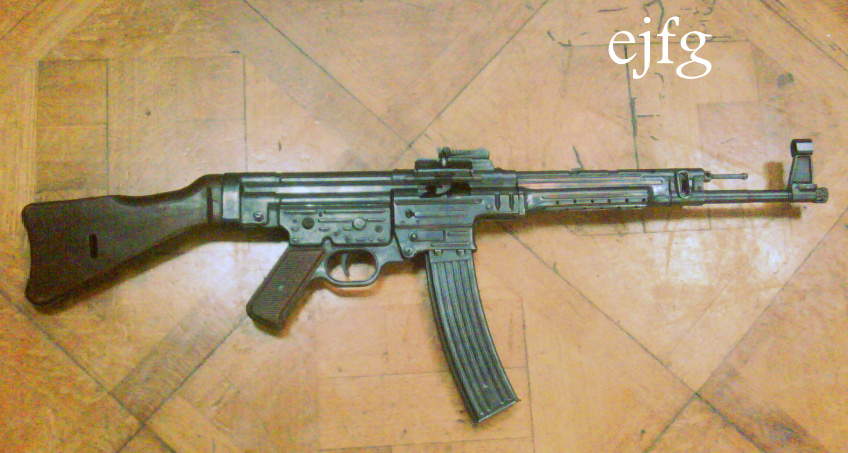
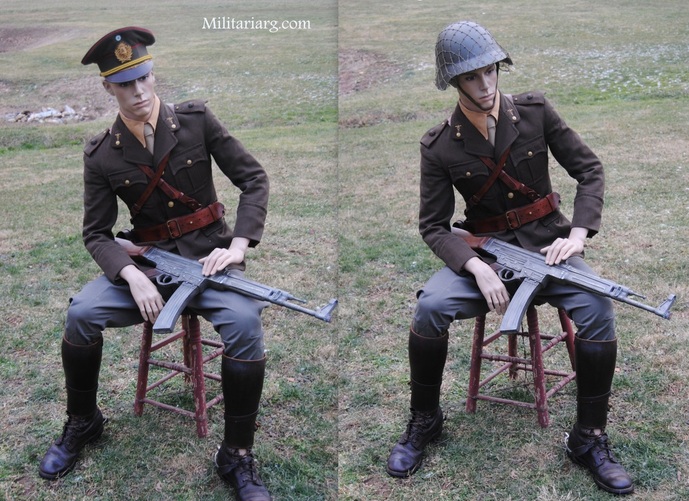
7.92x33mm (Kurz), STG44 (Sturmgewehr 44), Gas-operated, tilting bolt. Made by CITEFA ( Institute of Scientific and Technological Research of the Armed Forces), in the late 1940s and early 1950s.
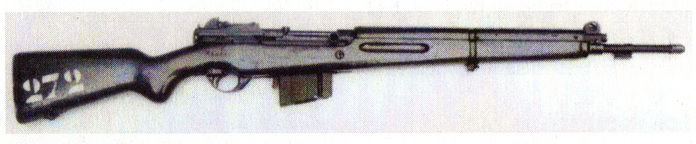
7.62x51mm (308 Winchester), NATO, FAL, Fusil Automatique Léger, "Light Automatic Rifle". Made by FN Fabrique Nationale de Herstal.
7.62x51mm (308 Winchester), NATO, FAL, Fusil Automatico Ligero, "Light Automatic Rifle". Made by FM DGFM (Fabricaciones Militares).
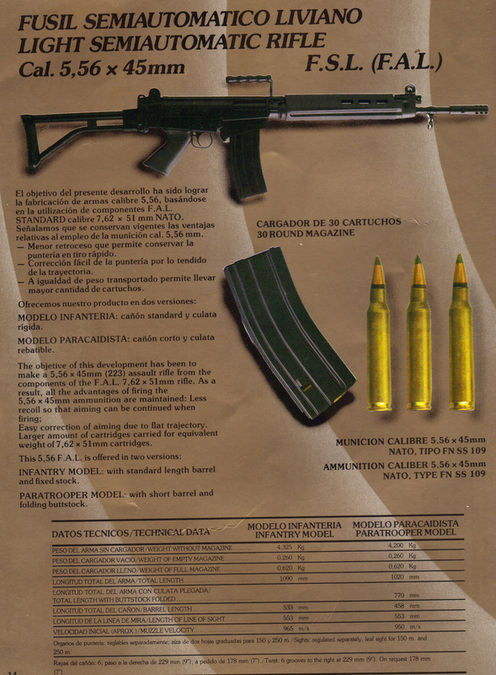
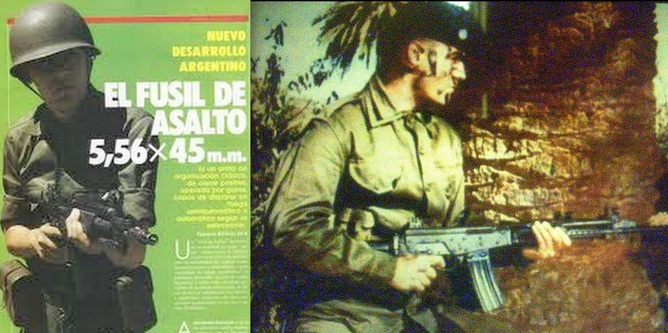
5.56x45mm (223 Remington), NATO, FAL, Fusil Automatico Liviano, "Light Automatic Rifle". Made by DGFM-FMPA DM. 
5.56x45 (223 Remington), NATO, FAA 81, (Fusil de Asalto Argentino) Argentine Assault Rifle Model 81, FARA83 (Fusil de Asalto Republica Argentina) "Argentina Republic Automatic Rifle Model 83". Made by FM (Fabricaciones Militares).
7.65mmx51 (308 Win) NATO. FAP, Fusil Automatico Pesado, "
heavy automatic rifle", heavy barrel version. Made by FM.
Picture
Picture
The initial batch of Belgian-made rifles and the subsequent licensed Argentine production (FM FAL) had distinct cosmetic and material differences. Argentina officially adopted the FN FAL in 1955, with the first rifles arriving directly from Fabrique Nationale (FN) in Belgium before domestic production began at the Fábrica Militar de Armas Portátiles (FMAP) in Rosario in 1960.

These original rifles typically featured wooden handguards and stocks, a hallmark of early-pattern FALs before synthetic materials became the global standard. These are often distinguishable by their higher-quality finishes and specific receiver cuts.
As production transitioned to Argentina, the design was modernized to include synthetic (plastic) furniture to reduce weight and production costs.

Both the original Belgian imports and the locally manufactured versions served side-by-side for decades, including during the 1982 Falklands War, where they faced the British semi-automatic L1A1 SLR.

Photo: FN FAL from the inicial batch.
Picture
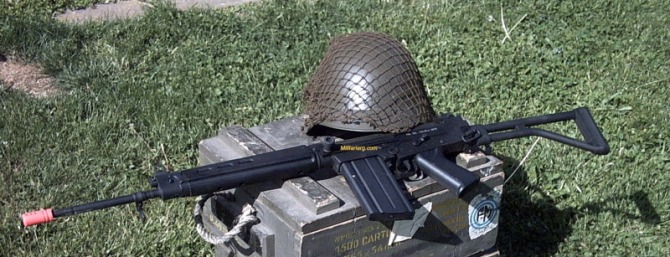
​Light Semiautomatic Rifle Cal 7,62 x 51 mm, 308 Winchester, (Paratrooper model - FAL-PARA). Airsoft replica.
The FSL is an excellent semi-automatic weapon that has been made in the millions and sent to armed forces in over 100 countries.  It is composed of high quality materials which correspond to international norms.  It has a high precision, resistant barrel that is tested for overpressure to ensure a long life.  The bolt is made of specially treated steel for longer service.
Picture
Picture
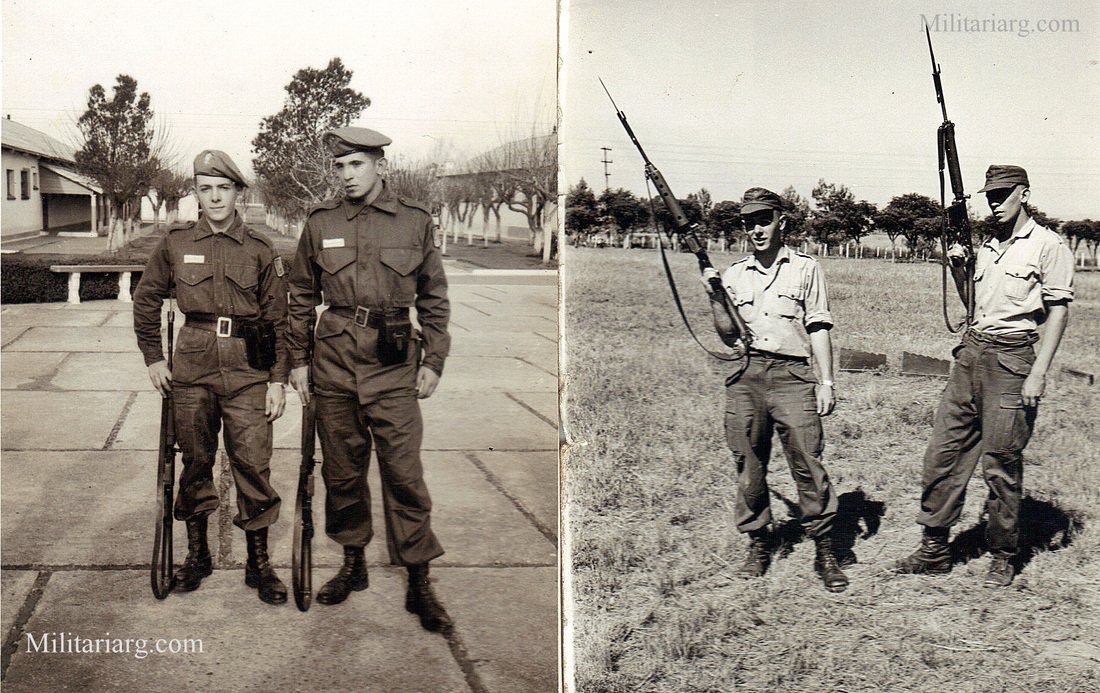
Argentina officially adopted the FN FAL in 1955, but domestic production under license did not begin until 1960. 

The manufacturing was handled by the state-owned Fabricaciones Militares at the Fábrica Militar de Armas Portátiles (FMAP) "Domingo Matheu" in Rosario. 

Initial Adoption (1955): Argentina first purchased complete rifles directly from FN Herstal in Belgium.
Start of Local Production (1959–1960): While the first few hundred examples were completed in 1959, full-scale serial production kicked off in 1960.
Production Volume: At its peak, the factory produced roughly 10,000 units per year. By the time production ceased in the mid-to-late 1990s, an estimated 120,000 FALs had been manufactured in Argentina.
Export Models: Starting in the 1980s, Argentina produced the FSL (Fusil Semiautomático Liviano), a semi-automatic-only version designed for the civilian export market, primarily the United States. 

Despite several attempts to replace it—most notably with the FARA 83—the locally built FAL remains the primary service rifle of the Argentine Armed Forces, now often seen in updated configurations with modern rails and optics. 
Picture
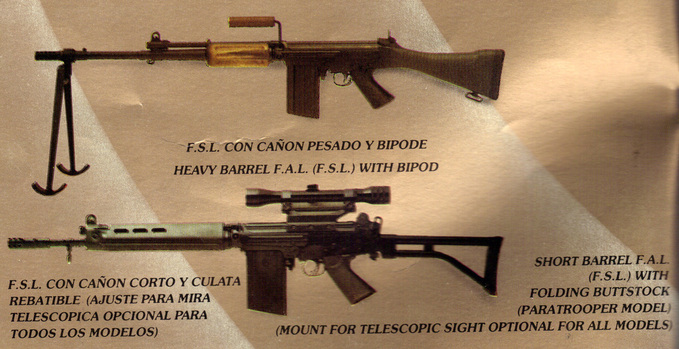
DGFM FAP (Fusil Automatico Pesado) FN FAL Heavy Barrel and DGFM FAL (Fusil Automatico Liviano).
Picture
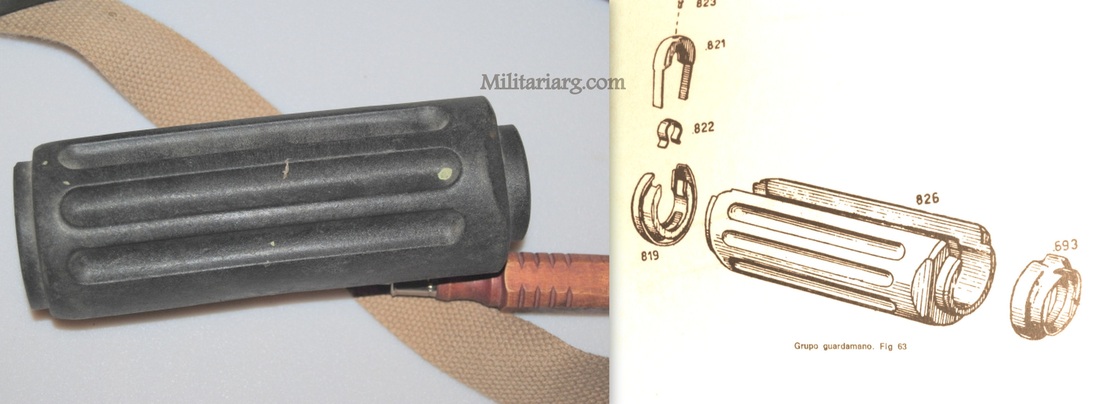
Argentine FN FAL Heavy Barrel Hand Guard.
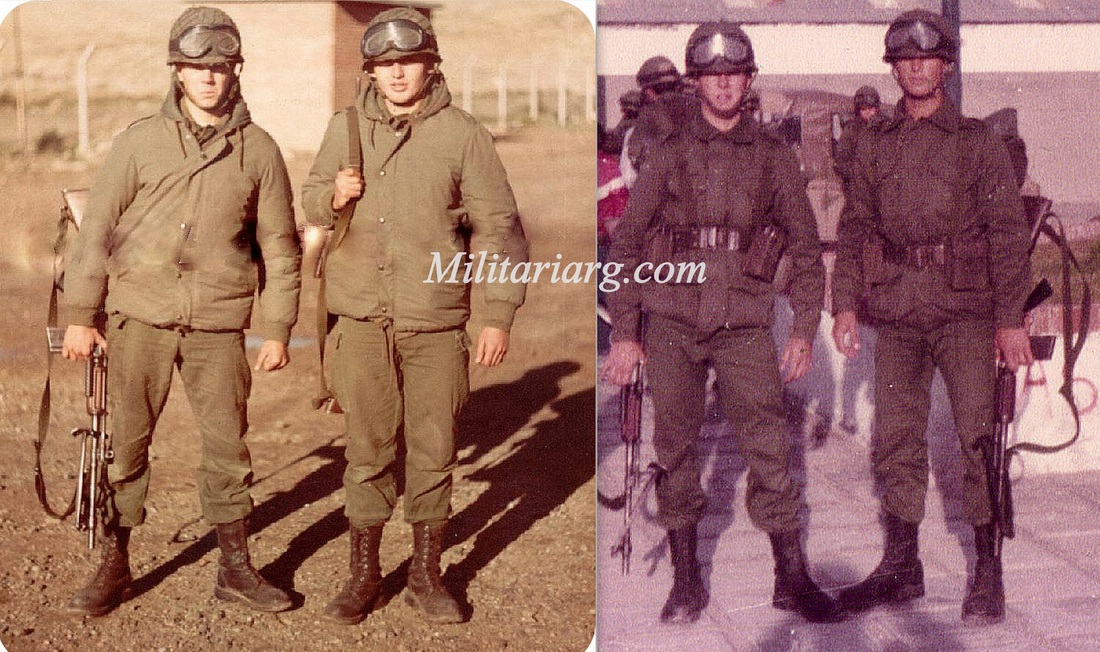
Primary Military Variants

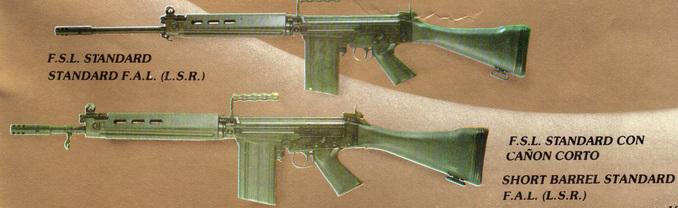
FM FAL (Standard Infantry): Based on the FN Model 50.00, this was the baseline service rifle featuring a 21-inch barrel and a fixed synthetic stock. It was the primary weapon used by Argentine forces during the Malvinas / Falklands War.

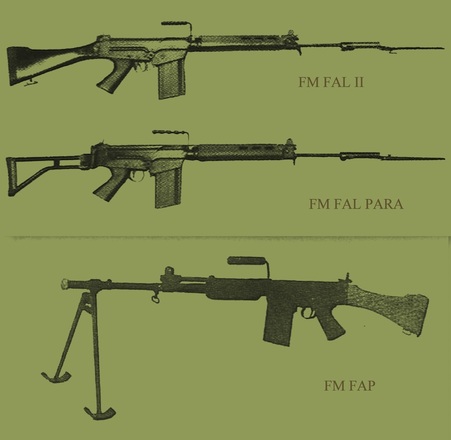
FM FAP (Heavy Barrel): Standing for Fusil Automático Pesado (Heavy Automatic Rifle), this was a licensed copy of the FN Model 50.41 (FALO). It served as a squad automatic weapon and featured a stout 21-inch heavy barrel, a folding bipod, and a wooden handguard designed for better heat dissipation during sustained fire.

FM FAL "Para" (Paratrooper): A compact version based on the FN Model 50.63. It featured a side-folding tubular metal stock and a shorter 17.25-inch barrel. To accommodate the folding stock, the recoil spring was relocated from the stock into the receiver top cover. 

Export and Specialized Variants

FM FSL: The Fusil Semiautomático Liviano was a semi-automatic-only version produced primarily for the civilian and export markets, including the United States. It was available in configurations mirroring the standard, paratrooper, and heavy barrel models.
Congo/Carbine Model: A variation of the FSL featuring a shorter 18-inch barrel but retaining the fixed stock.
Picture

Picture
Picture
Picture
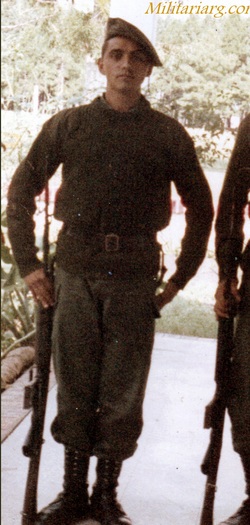
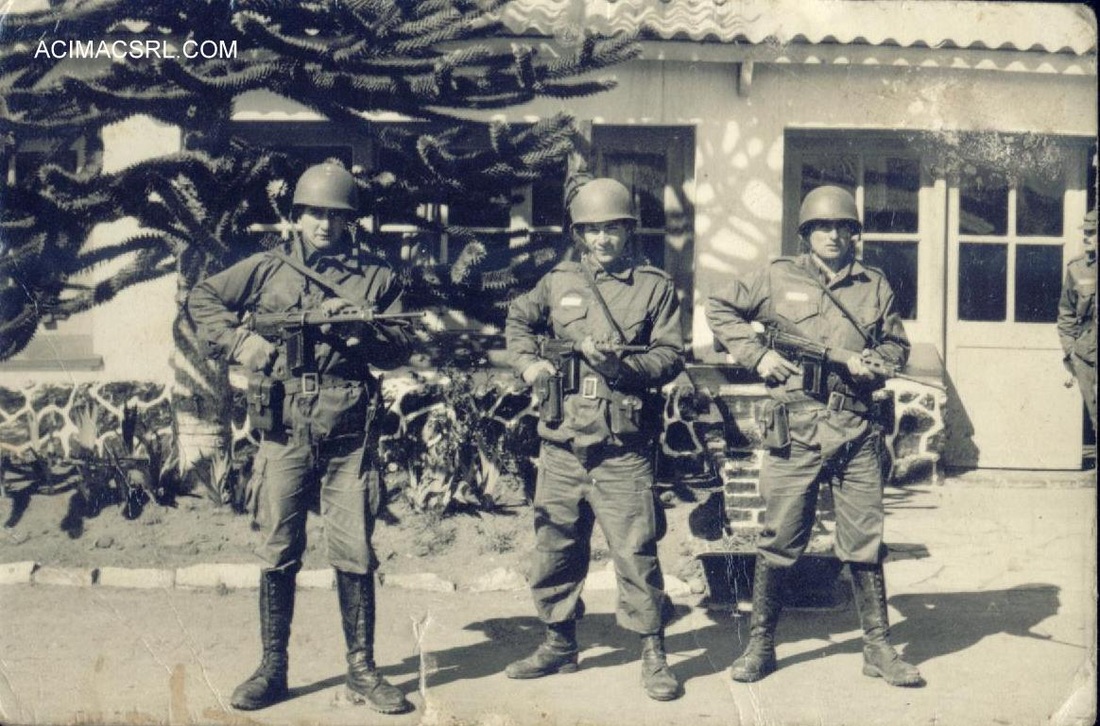
Interesting photo of hussars rifles from the 10th Armored Regiment.  You can see the 2 leather ammo pouches.  Each pouch has 2 magazines, each magazine has 20 rounds.  Each soldier carried 80 rounds on their belt plus 20 in the rifle itself.
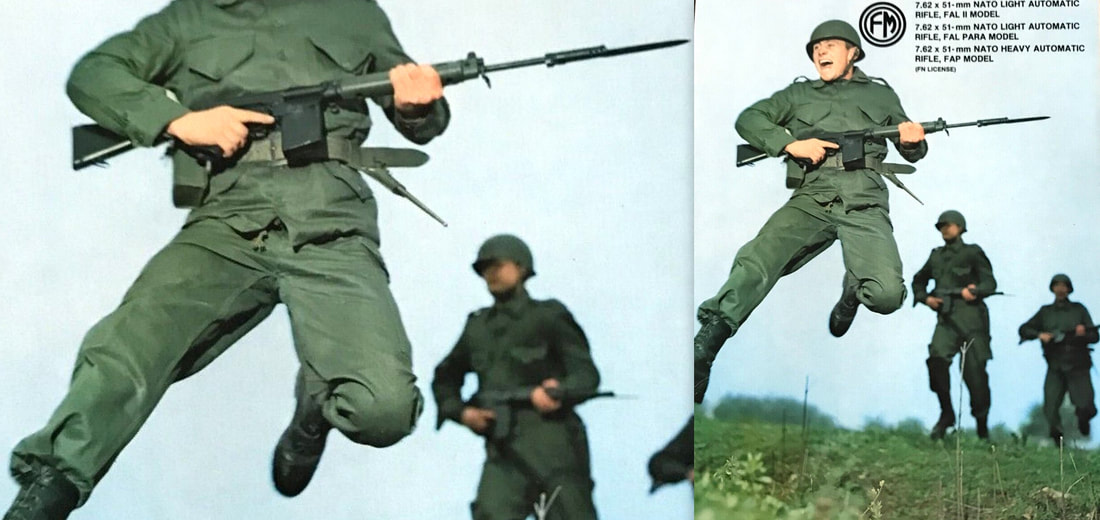
Picture
Picture
Picture
Picture
Picture
Picture
Left: Mauser 1909 rifle. Right: FAP (Fusil Automatico Liviano).

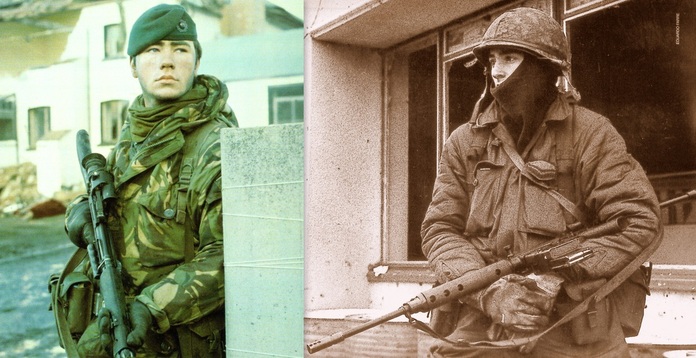
During the South Atlantic War of 1982, both the Argentine and British forces used variants of the FN FAL battle rifle. The two primary differences were the rifles' manufacturing specifications ( FN metric vs. imperial L1A1 SLR ) and firing capability (selective-fire vs. semi-automatic only).
Picture
Left: RM Commando with 7.62mm L1A1 SLR and IWS (Indiviudal Weapon Sight), L2A1 SUIT (Sight Unit, Infantry Trilux). Left: Argentine Corporal with standard 7,62mm FAL and Tempex webbing (Correaje). This photo is very important because it shows the method of changing the ammo.  One set was taped backwards to another so that when the first ran out, the second could be put in right away.  It doubled the cartridges to 40.  This was a tactic employed by the special forces.  In terms of infantry weapons, the British and Argentines were basically equals, with Argentina mainly lacking the quantity of sights. 

Photos: Eduardo Farre. Malvinas album de la campaña ejercito argentino by Chacho Rodriguez Muñoz & Luis Garasino and Modern Military Uniforms by Chris McNab.

FARA 83 (FAA 81)

Picture
FARA 83 cal 5,56mm NATO


FAA 81: This was the initial designation for the pre-production batch of 50 rifles completed in 1981 at the FMAP-DM (Rosario). These were used for intensive field trials by special units (Commandos, Airborne) between 1982 and 1983.

FARA 83: Following trial feedback and the shift in the political landscape after the 1982 war, the design was finalized and renamed in 1983 for official adoption. 

Designed by a team led by Enrique Chichizola. The Chichizola's rifle?
Influences: The rifle was a hybrid design, drawing inspiration from the Israeli Galil, Beretta AR70, and FN FNC.
Technical Specs:
Caliber: 5.56×45mm NATO.
Action: Gas-operated with a rotating bolt.
Features: It featured a folding stock (initially wooden, later synthetic), tritium night sights, and a rate of fire around 700–750 rpm.
Magazines: Early models used proprietary 30-round magazines similar to the Beretta AR70. 

Production and Fate
It was intended to replace the aging FN FAL with a lighter, more modern intermediate-caliber weapon. Despite its quality, the project was plagued by Argentina's economic crisis and shifting military priorities.
Estimates vary, but most sources agree that only 1,100 to 2,000 units were ever produced before the Menem administration officially cancelled the program in the mid-1980s. 

The remaining rifles were mostly distributed to specialized military units and some are currently preserved at the National Arms Museum in Buenos Aires. 
Picture
 The FARA 83 was designed with integral iron sights (which can be seen just below the scope mount) that incorporated tritium inserts for low-light aiming. This would have been the standard sighting system for mass-produced infantry models.
Photo: 
During the testing of one of the prototypes towards the end of the 70s.​
Picture
It seems that Argentina tried to switch between the 7.62x51 NATO (full-power rifle cartridge)caliber for the 5.56x45 NATO (intermediate). Also, the Soviet Union underwent a similar and highly influential caliber evolution during the 20th century, arguably even more definitively than the NATO countries did initially. They switch the 7.62x39mm (Cold-War) by the 5.45x39mm (Post Cold-War).

The primary effort was to replace the 7.62x51mm FAL entirely with the indigenously designed FARA 83, chambered in 5.56x45mm NATO. The FARA was intended to be a modern assault rifle, drawing no direct parts from the FAL design. 
This project resulted in the FAA 81 prototypes used for trials and limited production of the FARA 83 in the mid-1980s. 

When economic crises forced the cancellation of mass FARA 83 production in the late 1980s/early 1990s, the Fábrica Militar de Armas Portátiles (FMAP) factory explored a pragmatic, stop-gap solution: re-chambering the existing, mass-produced FAL platform for the smaller 5.56mm round. 

Argentina's transition from the FN FAL (7.62x51mm) to the indigenous FARA 83 (5.56x45mm) serves as a classic example of "what could have been" in military ballistics. The missed opportunity traces back to the post-WWII era, when Argentina already a heavy user of the Mauser system could have pioneered the intermediate caliber, 7.92x33mm Kurz, the world's first successful intermediate cartridge.

Shotguns

Batann M71

The Bataan M71 is a pump-action shotgun made for the military and police use made by Marcatti Industry. This shotgun was a copy of the Ithaca 37 12.70mm with some differences. The length of the cannon varied within 315 to 615mm. The 5 cartridges are placed at the bottom. Also Argentina used the Ithaca 37 among others.

Manufacturer: Produced by Industrias Marcati S.A. in Avellaneda, Buenos Aires.
Inspiration: It is an unlicensed copy of the American Ithaca 37. To avoid legal issues, Marcati introduced minor internal and external modifications, such as a different barrel attachment method.
Bottom Ejection: Like the Ithaca 37, it features a unique design where shells are both loaded and ejected from the bottom port, making it inherently ambidextrous and protecting the action from debris. 

"La Recortada" (The Sawed-off)
The nickname "La Recortada" refers to the specialized tactical/police versions of the M71.

Configuration: These models featured significantly shorter barrels (often around 315mm to 400mm) and replaced the traditional wooden buttstock with a pistol grip.
Tactical Use: This compact size made it ideal for urban police work, vehicle crews, and boarding parties, allowing for high maneuverability in tight spaces.
Standard Caliber: Most were chambered in 12/70 gauge, though a civilian cal. 16 variant was also highly popular in Argentina. 

It was the standard shotgun for the Argentine Federal Police (PFA), provincial police forces (like the Bonaerense), and the Argentine Army for decades.  

Technical "Achilles' Heel"
Users often noted a weakness in the cartridge positioning forks. Because they were modified from the original Ithaca design to bypass patents, they were held in by screws that could loosen, causing feeding failures.
Like the original Ithaca 37, older M71s could be "fanned" or "slam-fired" by holding the trigger down and rapidly cycling the pump.

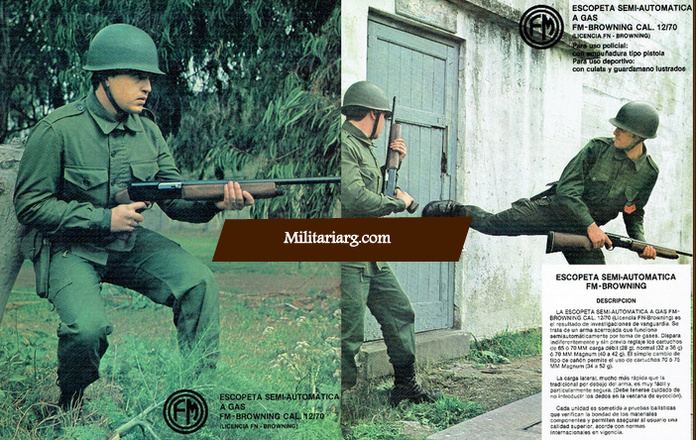
FM Browning 2000
Picture
The Browning 2000 (often called the B-2000) is a semi-automatic, gas-operated shotgun that was produced from the 1970s. It was the first gas-operated shotgun manufactured by Browning. 

Action: Unlike the famous long-recoil Auto-5 designed by John Browning, the B-2000 uses a reliable, compact gas-operated system housed within the forearm around the magazine tube.

Speed Loading System: It incorporated the innovative speed loading feature found on other Browning models, allowing a shell placed in the loading port to be automatically transferred into the magazine when the bolt is released.

"Humpback" Look: The receiver has a distinct rear slope that gives it a "humpback" profile reminiscent of the classic Auto-5, which was popular with many shooters.

Versatility: The B-2000 was designed to handle a variety of loads. With a simple barrel change, it could accommodate both standard 2 3/4 inch shells and 3-inch magnum loads. 

Manufacturer: The shotgun was manufactured in Belgium by Fabrique Nationale (FN Herstal) and assembled in Portugal.
Production Years: Production began in late 1973 and officially ceased in 1980.
Variants: It was available in 12 and 20 gauge, with various configurations for field, trap, and skeet shooting.


Automatic, air-cooled, gas-operated machine gun
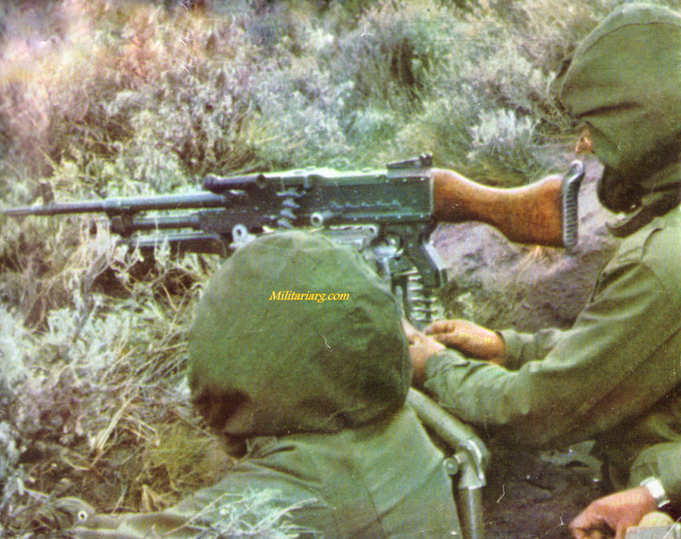
The FN MAG (known in Argentina as the 7,62 Ametralladora Tipo 60-20 MAG) is a cornerstone of Argentine military history, serving as their primary general-purpose machine gun (GPMG) for over 60 years. 
Unlike the M2 Browning, Argentina did manufacture the FN MAG domestically under license. 
Argentina began the domestic licensed production of the FN MAG (Ametralladora Tipo 60-20) in the early 1960s, shortly after adopting the FN FAL.​
Picture
Manufacturer: The state-owned Dirección General de Fabricaciones Militares (DGFM) produced the weapon at the FMAP "Domingo Matheu" factory in Rosario.
Local Designation: The standard infantry model is often identified as the Tipo 60-20.
Domestic Ammunition: High-caliber ammunition for the MAG is manufactured at the Fábrica Militar Fray Luis Beltrán.
Models: While the infantry version is most common, Argentina also utilizes the 60-40 coaxial variant for armored vehicles (like the TAM tank) and the 60-30 for aircraft. ​
Picture
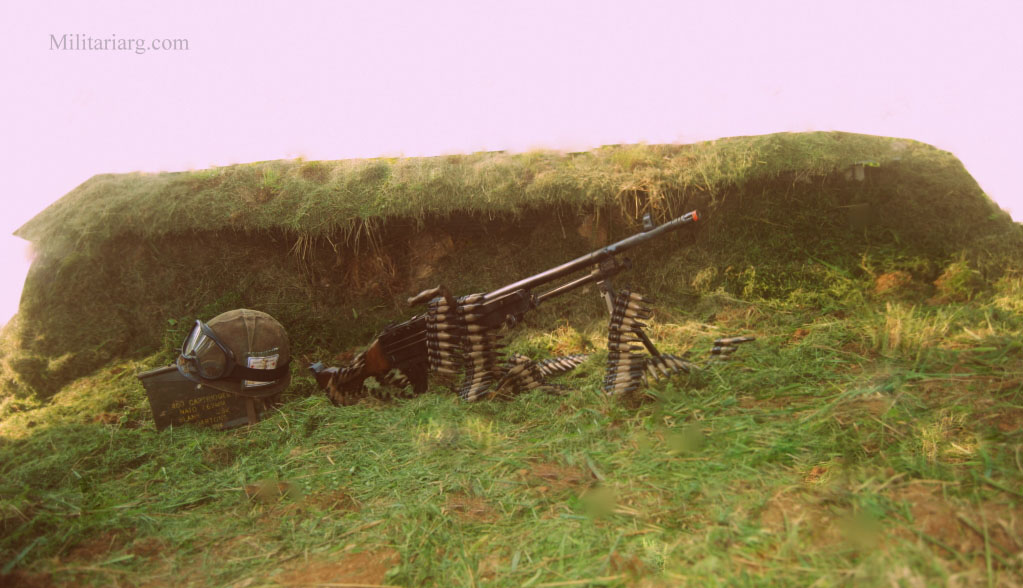
The accessory used to collect spent casings and links from machine guns is generally called a "brass catcher" or "spent case collector," but official military nomenclature might vary.
Picture
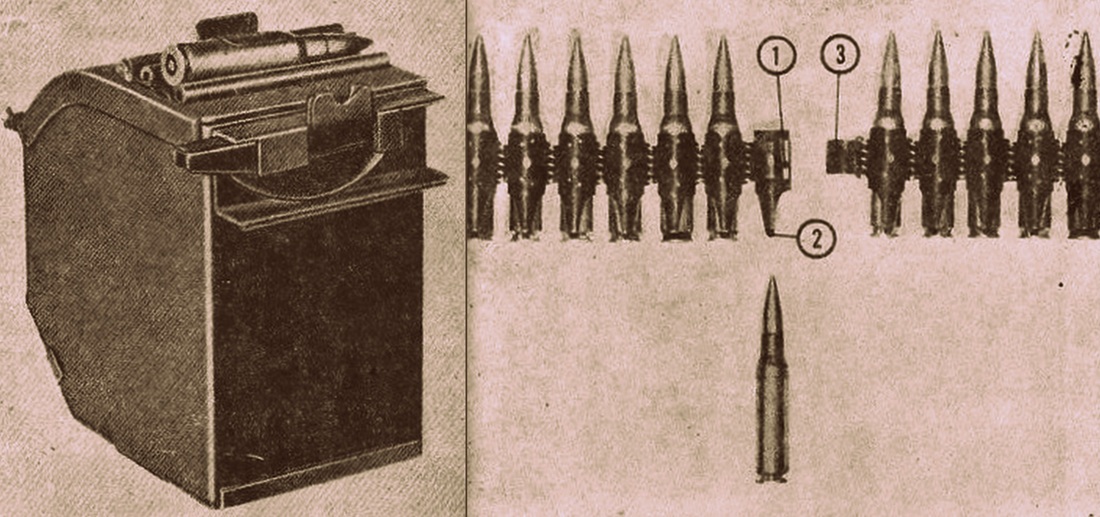
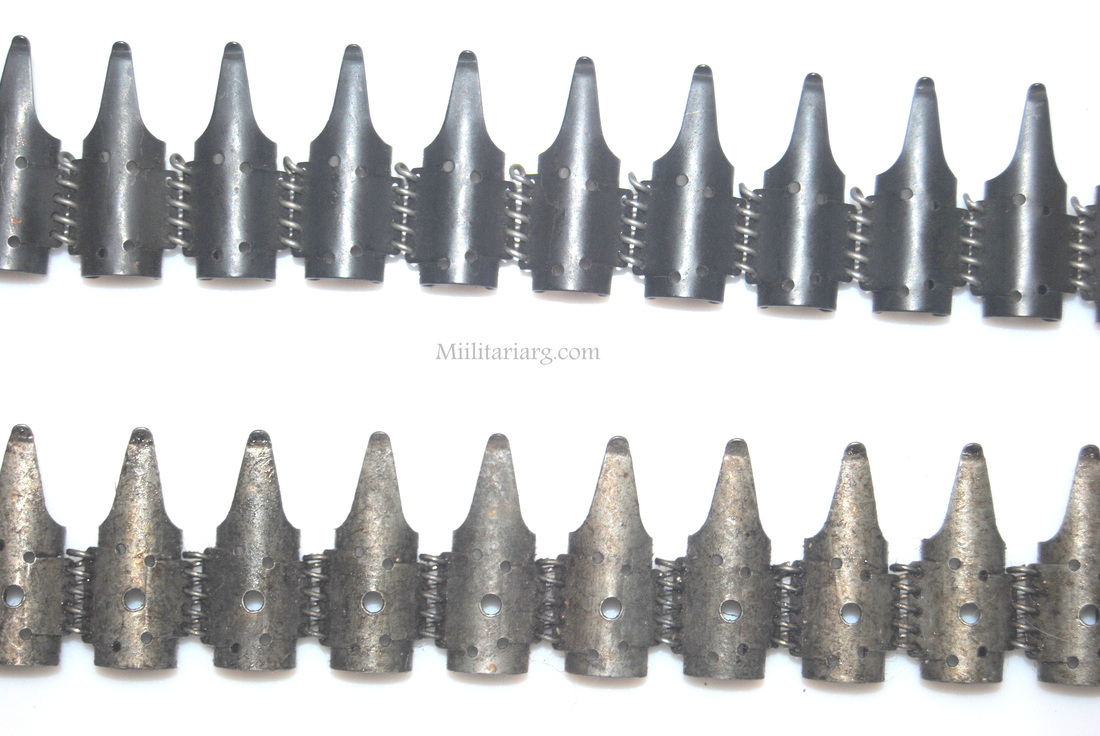
Above: Mg34/42 Ammo Belt. Below: Argentine DM1 Belt for FN MAG.

​While Argentina’s FN MAG (Tipo 60-20) is technically capable of using several types of belts due to its versatile feed pawl system, the Argentine military standardized on the US-style M13 disintegrating link belt.

DM1 (German - Deutsches Modell 1): A non-disintegrating (continuous) steel belt. After the rounds are fired, the empty belt comes out the other side of the gun in one long piece. This is standard for the MG3. The DM1 (non-disintegrating) belt was indeed very common among Argentine forces during the 1982 conflict.

The Fabricaciones Militares (DGFM) produced the DM1 (also called the "Gurt" or continuous belt) specifically for the Argentine FN MAG (Tipo 60-20).

In the cold, muddy environment of the islands, Argentine units found the DM1 more practical. Unlike the British M13 disintegrating links, which scattered individual metal pieces that could easily be lost or clogged with debris, the DM1 segments could be recovered, re-linked with a single cartridge, and reused indefinitely.

British soldiers often captured Argentine ammunition but found it difficult to use immediately because their L7A2 GPMGs were configured for the M13 disintegrating link. To use the captured rounds, they often had to manually strip them from the DM1 belts and re-link them into M13 chains.

M13 (US/NATO): A disintegrating link belt. As each round is stripped and fired, the individual metal links fall away. This system is what Argentina in the postwar standarized for the FN MAG and the M2 Browning.
Picture
The South Atlantic War (1982)

The FN MAG was one of the few weapons used by both sides in the conflict. 

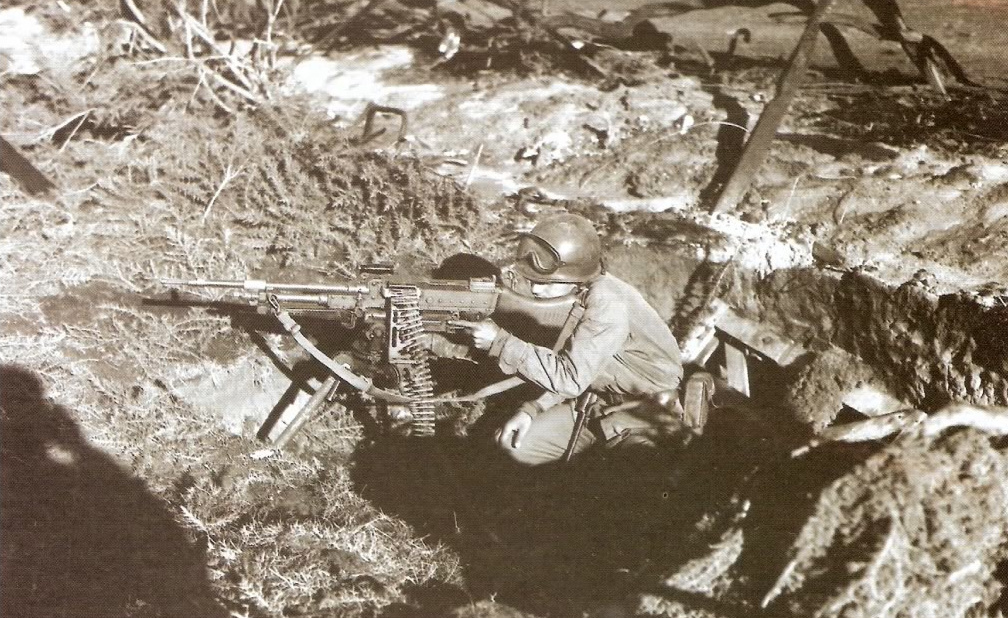
The Argentine MAG: Argentine troops used their MAGs extensively in fixed defensive positions on the hills surrounding Stanley.

British "L7A2": The British used their own licensed version (the L7 GPMG). During the Battle of Mount Longdon, British paratroopers faced heavy fire from Argentine MAGs but also used captured Argentine weapons to bolster their own firepower when their ammunition ran low.
Mounts: Argentine forces frequently used the sustained fire (tripod) mount, which allowed for more accurate, long-range suppression compared to the bipod-only use common in mobile units. 
Picture
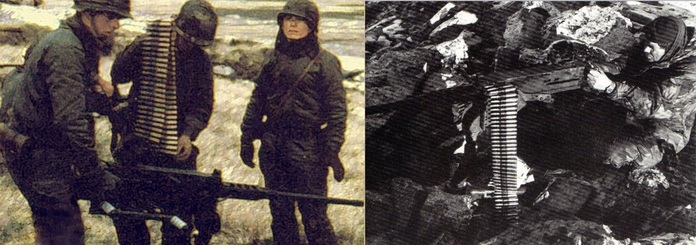
Argentine FN MAG three-man crew during Malvinas War with Mag 58 FN Type-60.20  caliber 7,62mm NATO.

​FN became the world's principle arms maker after WWII causing the MAG 58 to become ubiguitous.  Argentina replaced the 7.65mm Mauser cartridge in rifle and machine guns with the 7.62mm NATO after the adoption of the FAL and MAG 58.  Argentina adopted the MAG 58 in 1960 and it is still in use today.  Observe the version of the dubon-parka IDF Zahal that protected them from the cold.  Photo is from the magazine "La Semana" from 4/29/1982.
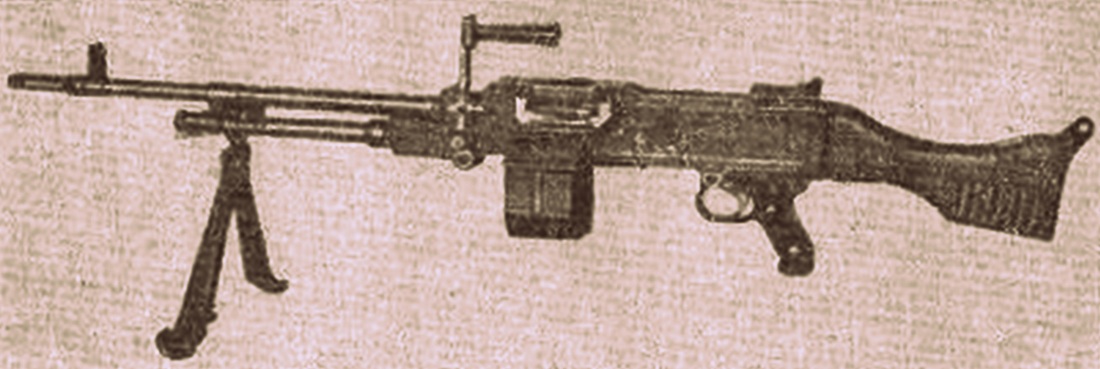
 
Picture
Left: Old Madsen Instruction Manual. Right: Malvinas War "Asi lucharon"( MAG 7,62mm ) by Carlos Turolo.

2013 Postwar  - Civilian disarmament Programme 
​
Destruction of what was left of Ballester Molina, Halcón and Hafdasa.

Picture
​In the post-war period, a civilian disarmament program took place. Also within this program, the government destroyed obsolete weapons from the depots of Armed Forces and Security Forces. 
Among the weapons destroyed were all the nationally made (Industria Argentina) from before, during and after World War II, when Argentina maintained a policy of developing its own indigenous firearms to reduce foreign dependence. 
Today museum and  historical weapons turned into scrap metal.

UN Recognition: The award was presented at a ceremony at UN Headquarters in New York. The High Representative for Disarmament Affairs delivered remarks at a dedicated UN event on October 24, 2013, praising Argentina’s initiative.

In February 2013, the Argentine Army received specialized hardware from Italy for evaluation to fill the same gun depots with new imported stock: Beretta ARX-160 Rifles, GLX-160 Grenade Launchers, Beretta Px4 Storm Pistols: While a larger order of 1,500 units was placed by the Buenos Aires Metropolitan Police in 2014, initial interest and evaluations began in 2013.​

1951."Workers in arms"
Eva Perón ordered for the CGT militias: the HAFDASA "C-4" submachine guns and Ballester-Molina pistols, both in .45 ACP caliber.

Picture
In 1951,Eva Perón did indeed attempt to purchase a significant cache of weapons to arm the Argentine trade unions (specifically the General Confederation of Labor or CGT) to form workers' militias.
​This move was intended to protect the government against potential military coups. 

The Arsenal. Reportedly, she ordered 5,000 automatic pistols and 1,500 to 2,000 machine guns (or carbines) without her husband's knowledge.

Picture
From National Industry. In December 1951, the Eva Perón Foundation allegedly contracted the Argentine firm Ballester-Molina to deliver this equipment for roughly $580,000.

And from abroad" The Prince Bernhard (Netherlands) Connection. Some historians, such as Norberto Galasso, suggest that Juan Perón also used the visit of Prince Bernhard of the Netherlands in 1951 to help facilitate the purchase of foreign automatic weapons for these militias. 
Eva was deeply distrustful of the Argentine Armed Forces after the abortive military putsch of September 28, 1951. She believed arming the "shirtless ones" (descamisados) was the only way to ensure the revolution survived.
In 1951, following an attempted military coup Eva Perón became convinced that the regular military could not be trusted to protect the Peronist project. While Eva Perón actively moved to arm the workers to defend the government,. 

When Juan Perón discovered the plan, he reportedly blocked the distribution of the weapons to the unions, and many were eventually absorbed into the national police forces after her death. Juan Perón’s decision was deeply rooted in his identity and role as a career military officer. While he was a populist an immensely popular leader leader, he remained a professional soldier who viewed the Armed Forces as the sole legitimate "backbone" of the Argentine state.

His attempted arming of workers greatly intensified the military's hostility toward Eva, contributing to the pressure that forced her to withdraw her candidacy for Vice President in August 1951. The military leadership of 1955 would undoubtedly have supported the civilian disarmament of 2013.
Picture
Left: Following the violent bombing of the Plaza de Mayo in June 1955, Juan Perón realized the country was on the brink of a massive internal conflict. He claimed that resigning and leaving was necessary to "avoid massive bloodshed" and he chose exile, even though he had the army at his command and the support of the unions and the majority of the people.

The decision of Peron to adopt the FN FAL was made in 1955, the same year he was ousted from power. The situation with Fulgencio Batista in Cuba was remarkably similar to Perón's in Argentina, as both leaders turned to Belgium (FN) for modern weaponry just as they were losing power.

​Right: This iconic image captures Fidel Castro with the  FN MAG 58 * (Fabrique Nationale Mitrailleuse d'Appui Général), a 7.62x51mm belt-fed general-purpose machine gun, likely taken around 1960 following the triumph of the Cuban Revolution.

*The same FN MAG adopted by Argentina in 1960s.
Picture
​​This book was written by the military engineer who designed the DL43 Tank, Colonel Alfredo Baisi (Ex-GOU) in 1959. On page 89 of her book "la Revolución Faltante" (Buenos Aires, 1959)," he mentions Eva Perón's courage.
Among other books, Colonel Baisi wrote: 

"Tirografo para el cañon de campaña C.75 m 909" (Buenos Aires, 1924).
"Medición de la intensidad y dirección del viento y su corrección en el tiro de artillería" (Buenos Aires, 1925).
"Nuevo tirografo para el cañon de campana (Buenos Aires, 1926).
"Preparación racional del tiro" (Buenos Aires, 1927).
"Preparación del tiro" (San Martín, 1928).
"Apuntes de balística exterior racional" (San Martín, 1928).
"Probabilidades de tiro (San Martín, 1928).
"Manual meteorológico" (Campo de Mayo 1929).
¿Táctica o técnica (Buenos Aires, 1930).
"Comentarios balísticos-meteorológicos" (Buenos Aires, 1931).
"Semáforo automático para tránsito" (Autoregulador del tráfico) (Borgui, 1932)
"Sitógrafo para artillería terrestre (Buenos Aires, 1933).
"Del valor moral" (Buenos Aires, 1934).
"Preparación regular de circunstancias" (Método propio) (Monte, 1937)
T.A.C. (Corrector automático de las i.e.a.) (Buenos Aires, 1938).
"Preparación del tiro con elementos propios" (Buenos Aires, 1939).
"Reflexiones sobre motorización" (Buenos Aires, 1939).
"Puntos de vista para tropas motorizadas" (regl. en el Ej. argentino).
"Manual Trp. Motoriz (Buenos Aires, 1942).
"Ética militar de la Revolución" (Buenos Aires, 1943).
"Mi herencia, colección" (Buenos Aires, 1958).
Picture
1944 parade. Lieutenant Colonel Baisi (the tank's designer) in the commander's position of a Nahuel tank.

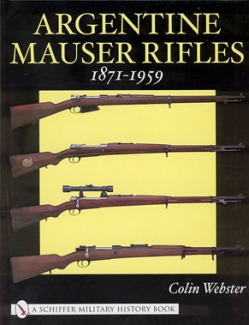
Recommended read: Argentine Mauser Rifles 1871-1959 by Colin Webster
Picture

Powered by Create your own unique website with customizable templates.