Militariarg.com
  • Home
  • Army
  • Aviation
  • Navy
  • Uniforms and Badges
  • Arms and Weapons
  • Equipment
  • Vehicles
  • Operational and Organizational Structure, Security Forces, Transportation, Books, Models and More.
  • Argentine Confederation Era. 1829 - 1852.
  • From 1852 to 1910 (French fashion)
  • Bunker 1982: South Atlantic War Militaria
  • International Militaria
  • Argentina WWII Era (Neutral) Reenactment Impression
  • Links ~ Enlaces
Picture
Picture

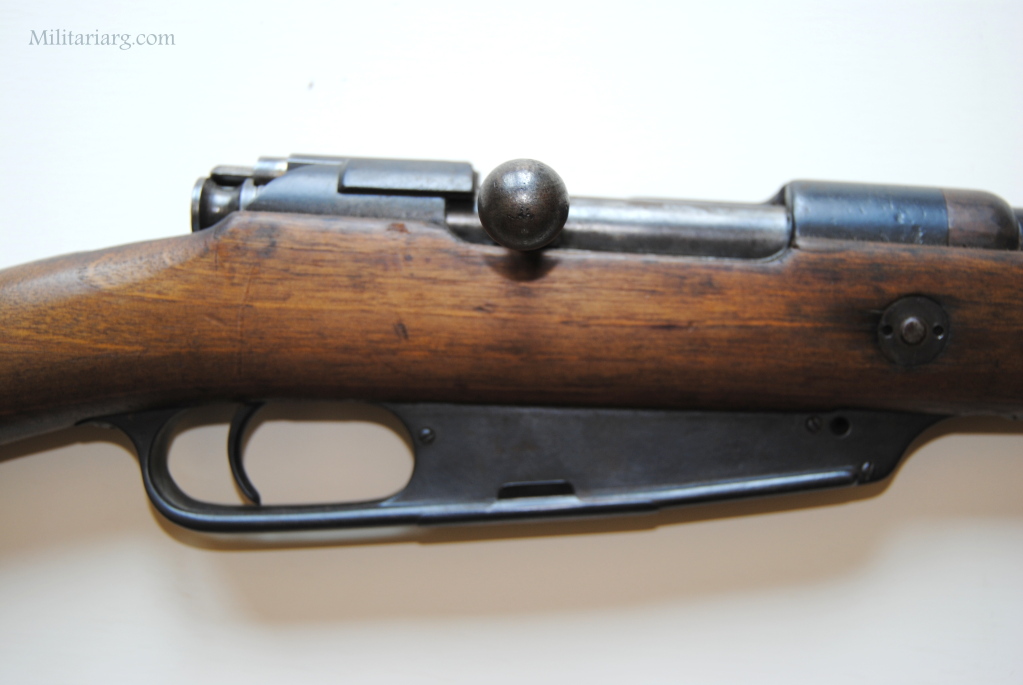
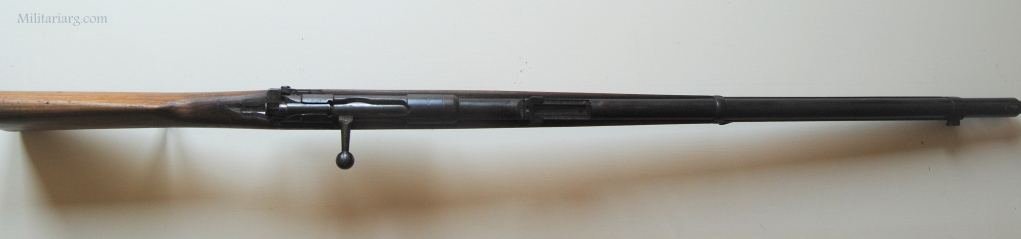
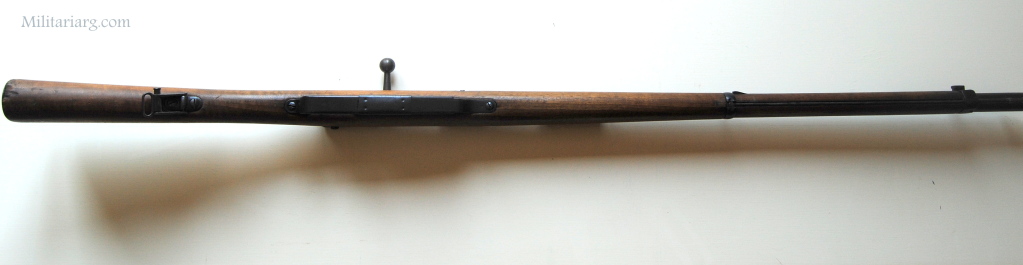
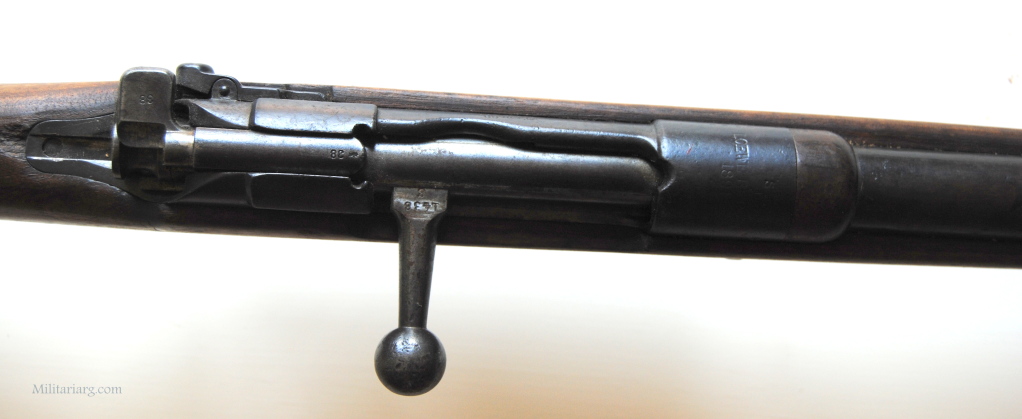
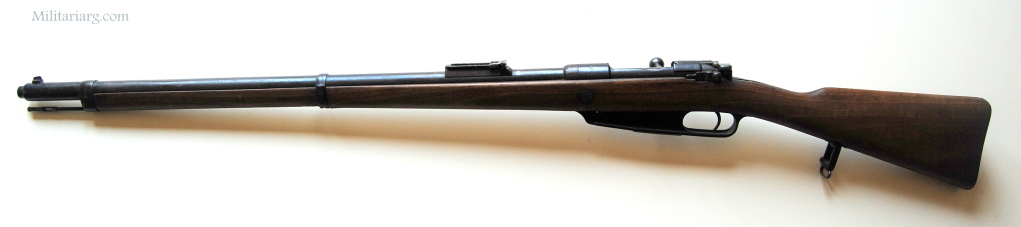
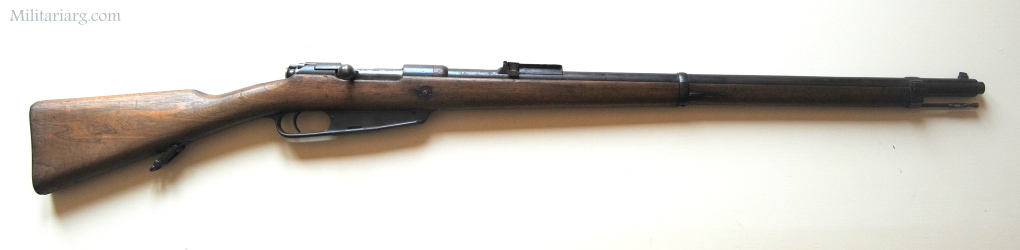
1888 comission rifle 7.92mmx57 Mauser, bolt action manufactured by Ludwig Loewe Berlin.
Service History

​Primary Service:
The Gewehr 88 served as the primary German service rifle from 1888 until 1898, when it was replaced by the superior Mauser Gewehr 98.


World War I:
Despite its replacement as a frontline rifle, vast numbers of the updated Gewehr 88/05 and Gewehr 88/14 variants were used by German second-line, home guard (Landwehr), and colonial troops in the early stages of World War I, and many were supplied to the Ottoman Empire and Austro-Hungarian forces.


The rifle saw service in various conflicts well into the 20th century, with some even appearing in use during World War II with Turkish forces.
This one in the photos was in service in the Peruvian Army, received from the deposits of Argentina (Ricchieri Era) towards the beginning of the 20th century.
Picture

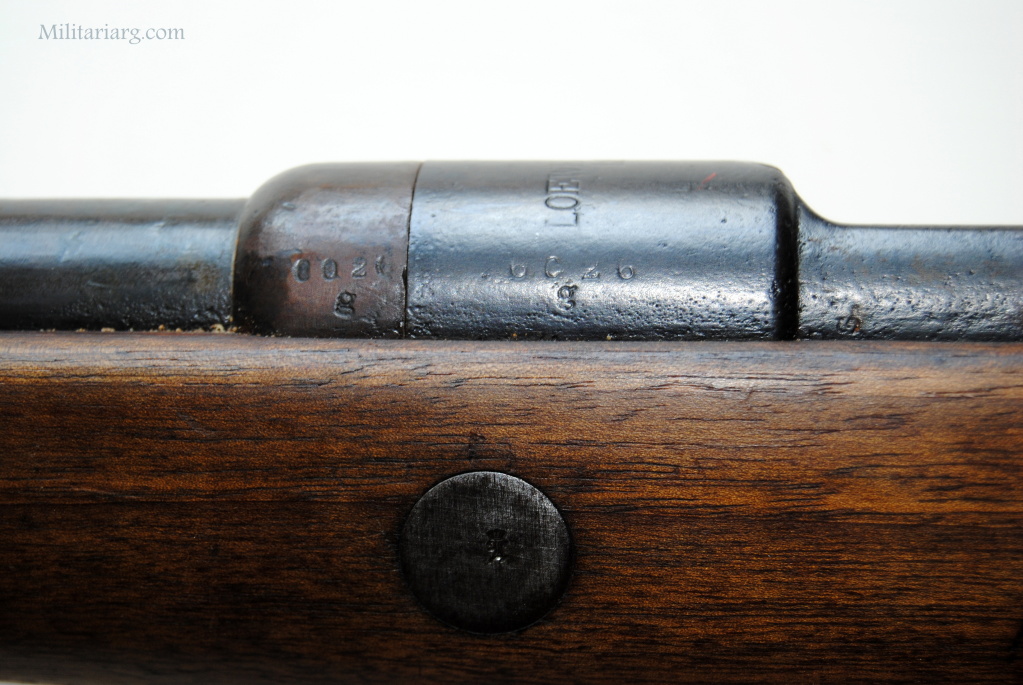
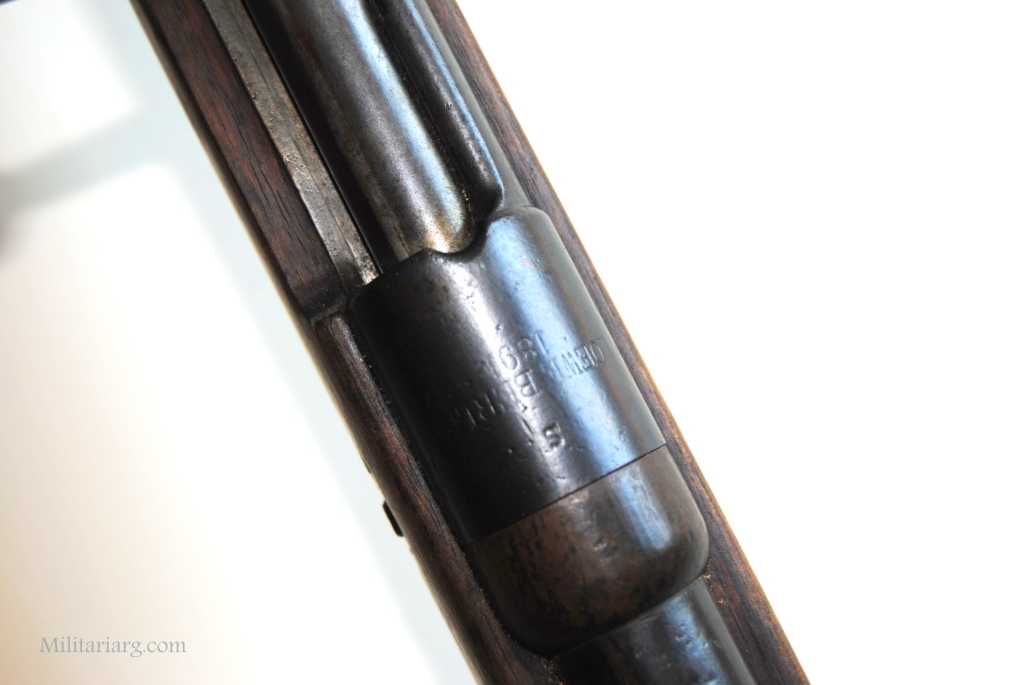
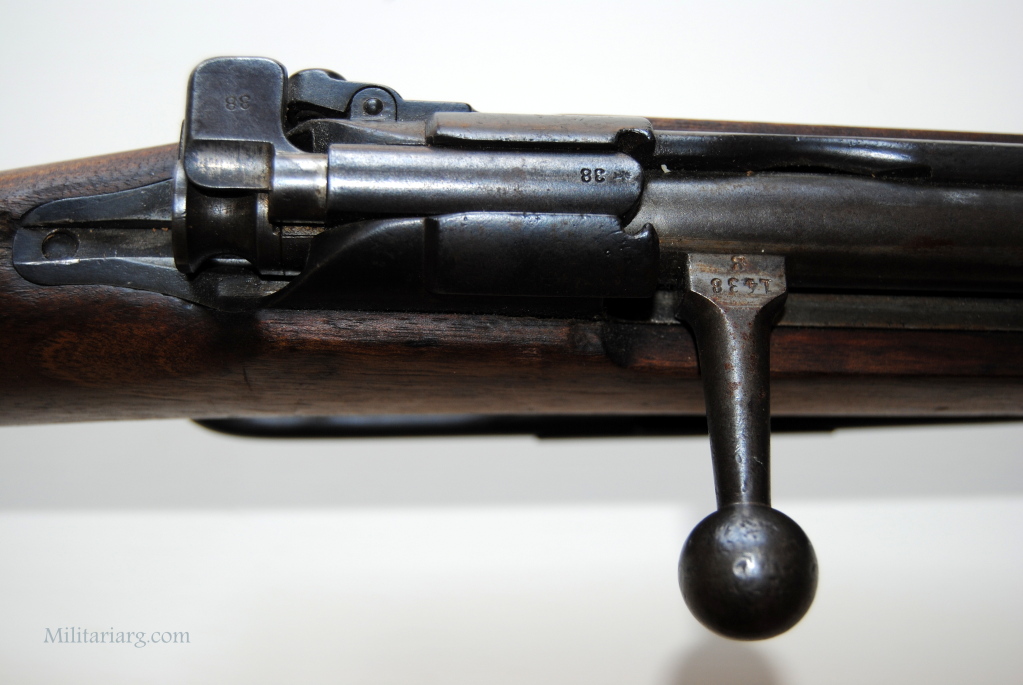
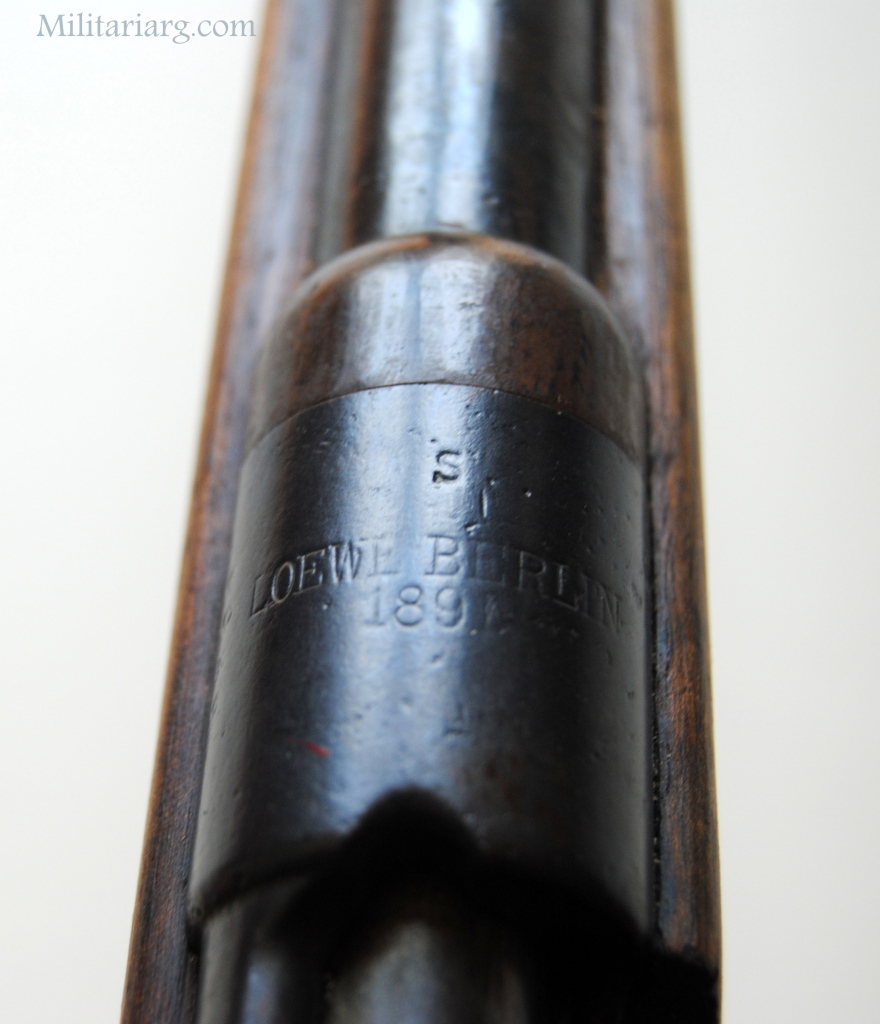
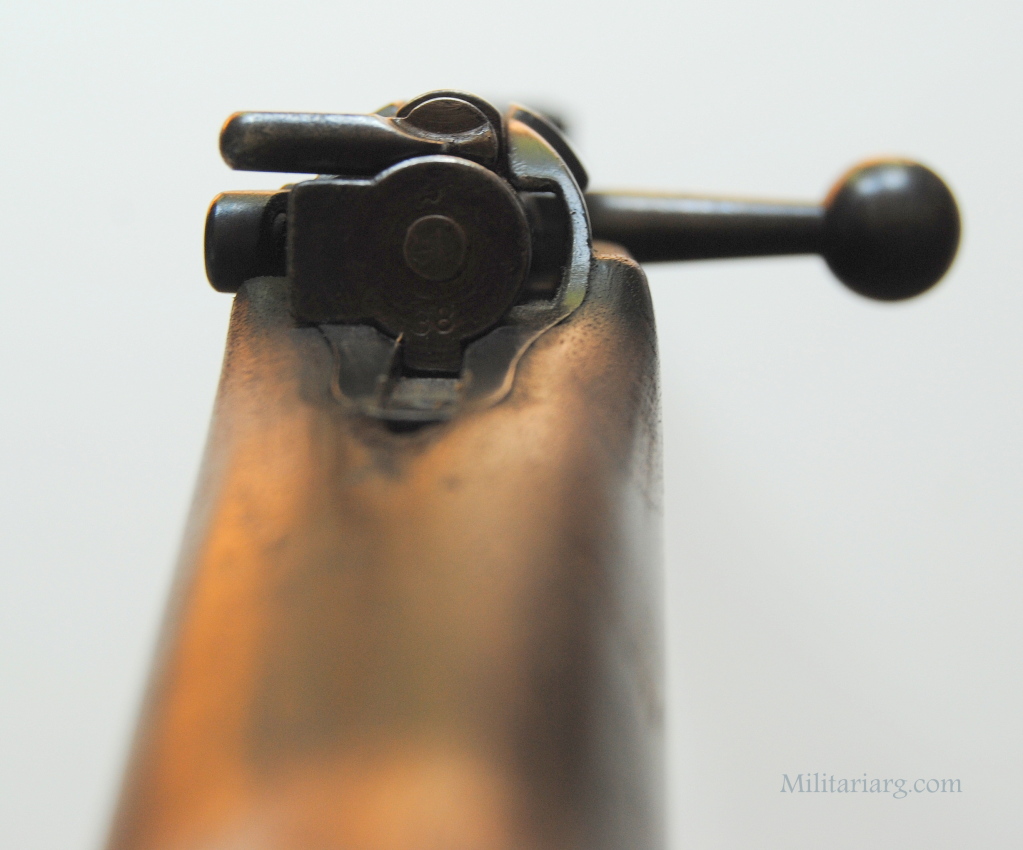
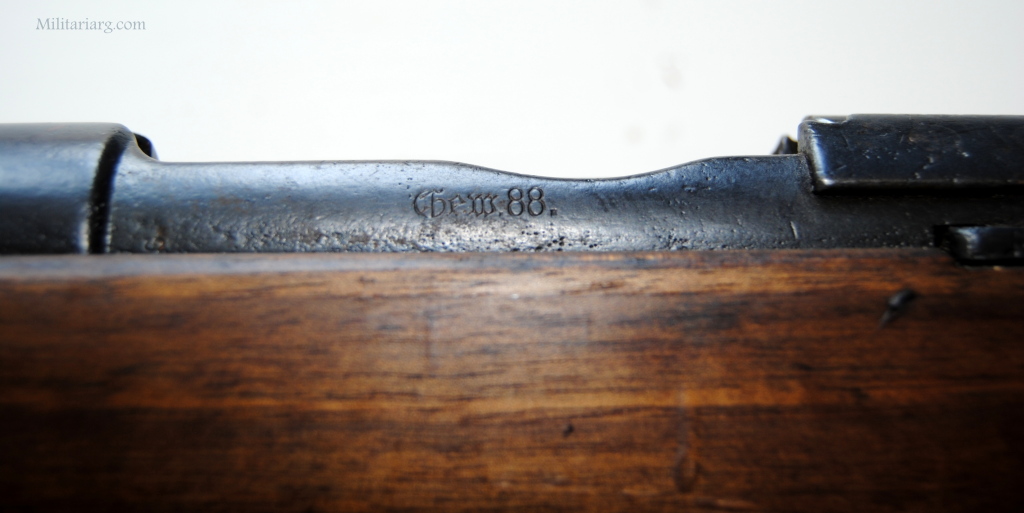
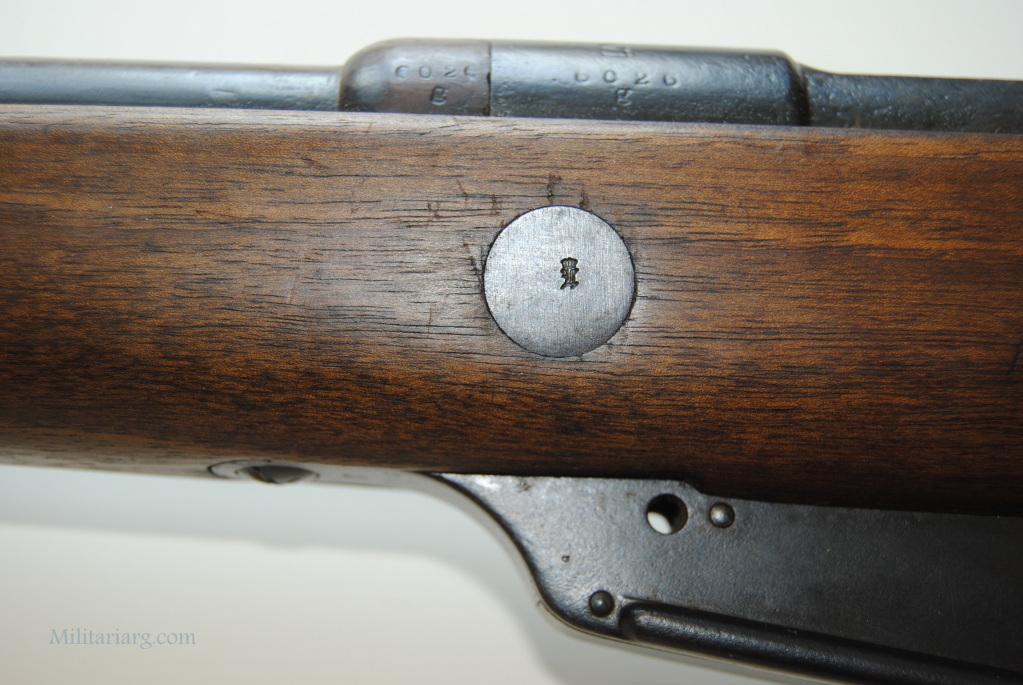
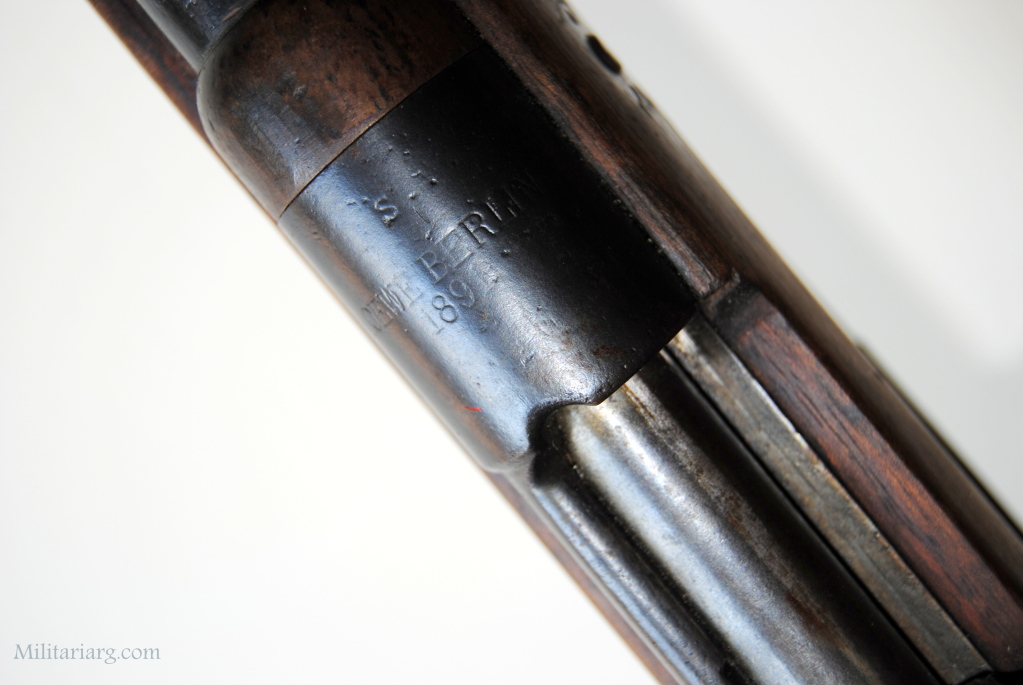
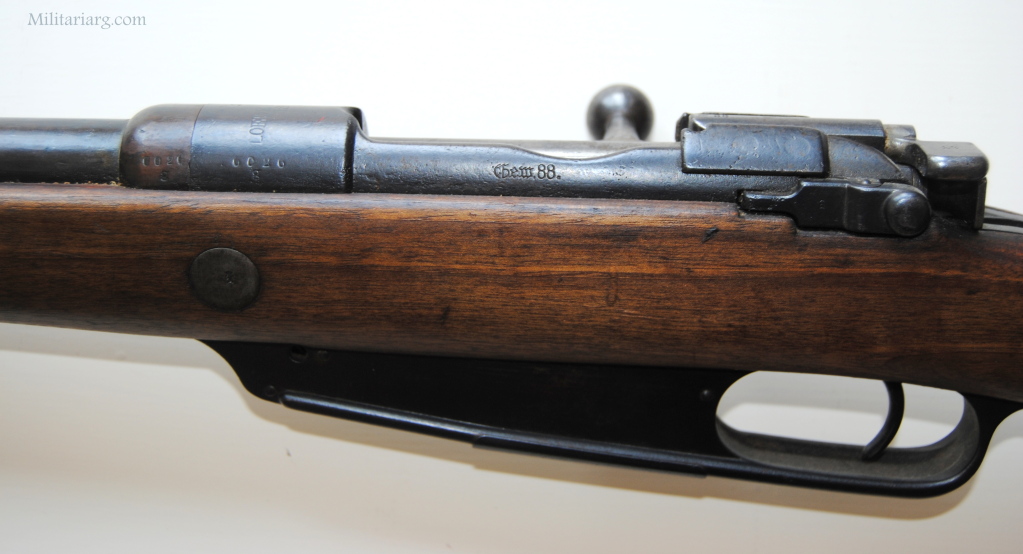
On the above model the barrel is marked "Ludwig Loewe Berlin" over "1891".  The letter "S" is above all of that to signify the type of cartridge.  Germany first used the M88 smokeless powder propelled 8mm which replaced the 11mm black powder, rimmed Mauser cartridge.  The "S" (Spitzengeschoss) cartridge was adopted in 1905 and had lighter, wider bullet.  On the handle bolt is the factory marking of a crown and a Prussian eagle.  The left of the barrel is marked "GEW 88" in gothic letters. ​
Picture
​The Model 1888 Commission Rifle, officially known as the Gewehr 88 (or Gew 88), was a late 19th-century German bolt-action rifle developed by the German Army's Rifle Testing Commission. It was Germany's answer to the French Lebel Model 1886 rifle, which introduced high-velocity, smokeless powder ammunition, rendering existing German rifles obsolete.
Picture
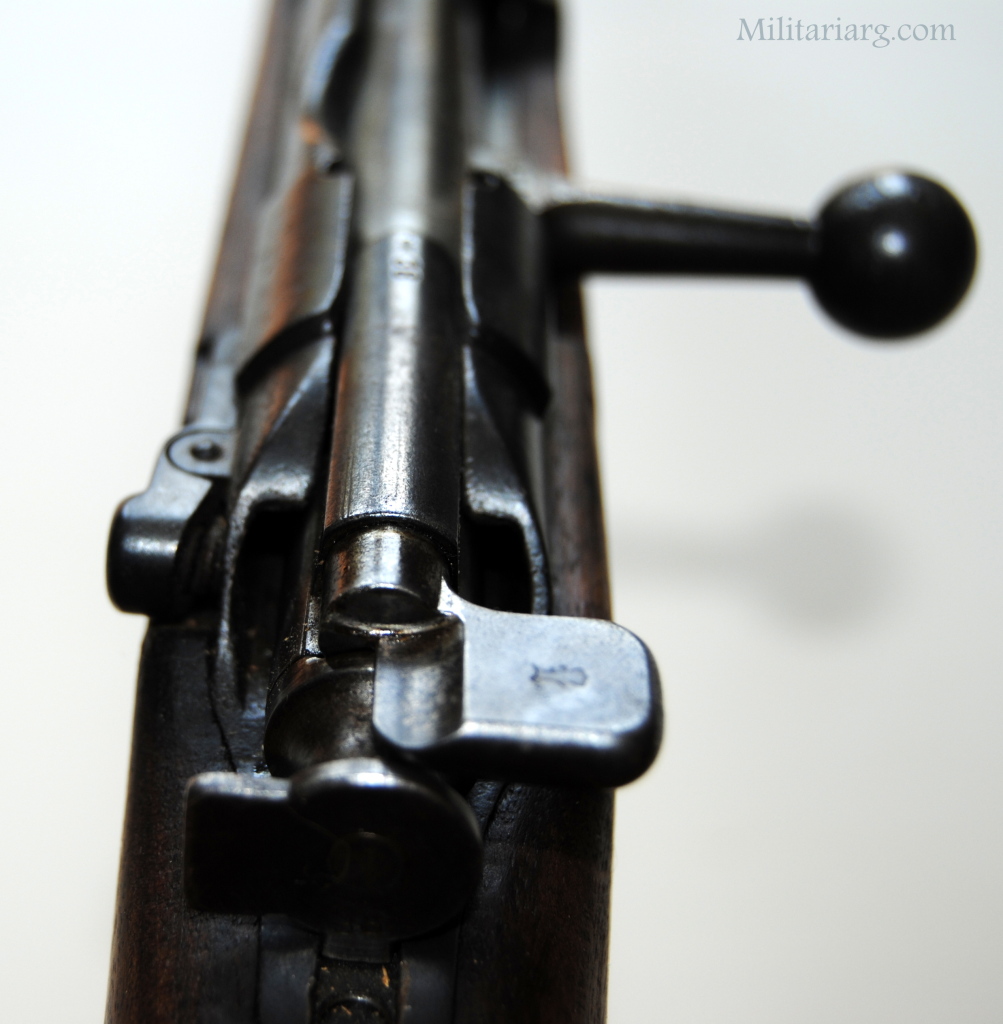
​Action: The rifle features a bolt-action design, which was a combination of features. The bolt has front locking lugs and a rotating bolt head, with design elements inspired by the Mauser 1871 action combined with a Mannlicher-style magazine system.
Picture
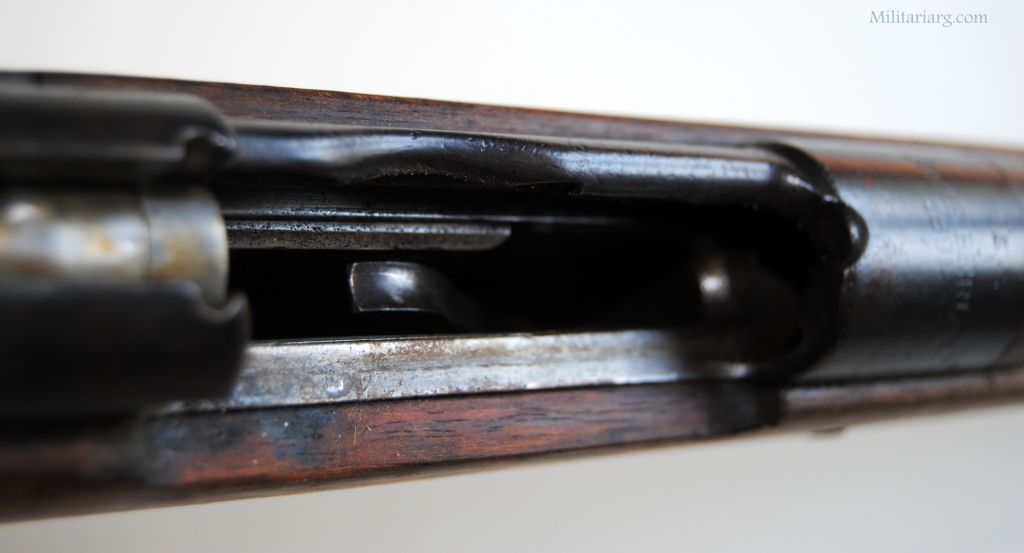
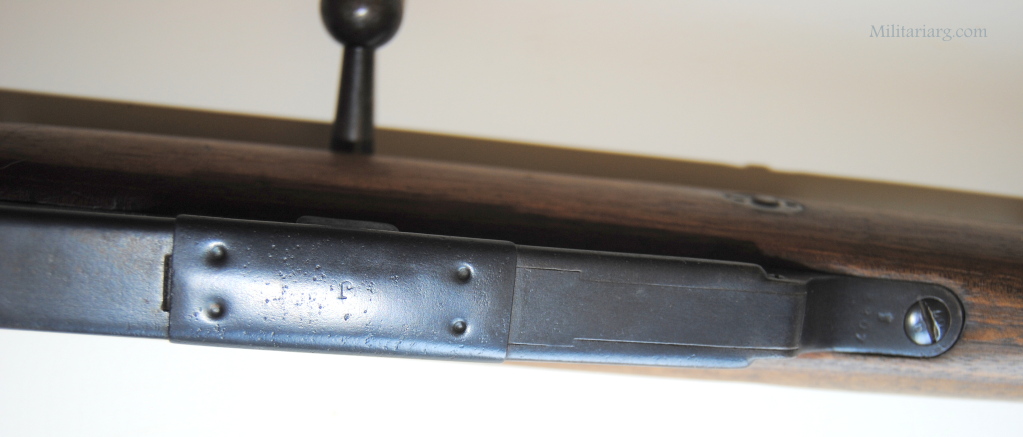
​Feed System: It uses a 5-round, en bloc clip (or "packet loading" system) that holds the cartridges and is inserted into a fixed internal magazine. The empty clip drops out of a hole in the bottom of the magazine when the last round is chambered. This system allowed for faster reloading than the tube magazine of the French Lebel.
Picture
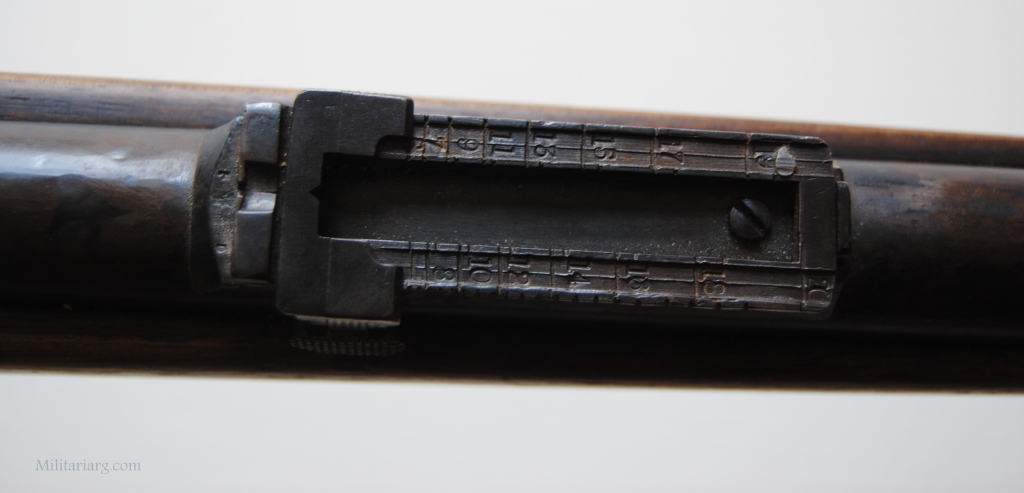
Caliber: It was the first German service rifle chambered for a new, high-velocity, 8 mm rimless cartridge, the Patrone 88 (M/88) (7.92x57mm I, with a .318 inch diameter bullet). In 1905, the cartridge was replaced by the 7.92x57mm Mauser "S Patrone" (.323 inch spitzer bullet), and most Gew 88s were modified accordingly and marked with a large "S" on the receiver.
Picture
Picture
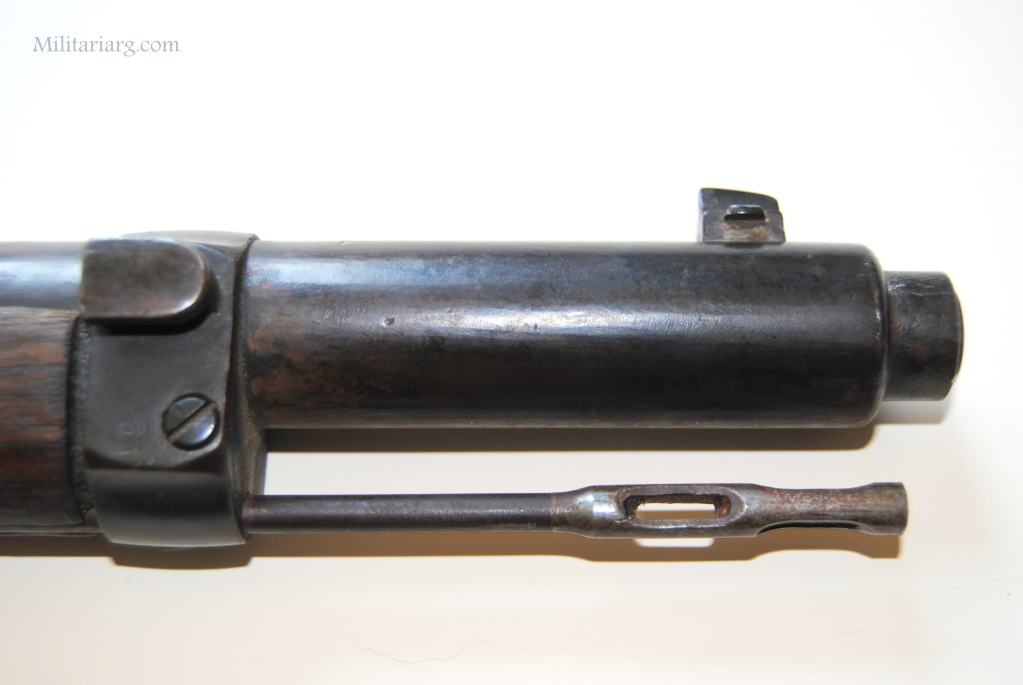
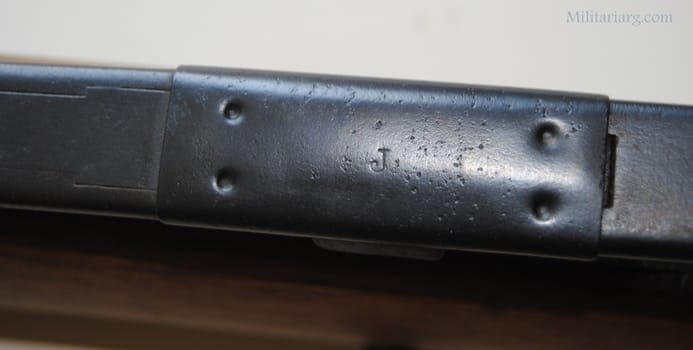
Barrel Jacket: A distinctive feature of the rifle is that the entire "floating" barrel is encased in a sheet metal tube intended to protect it and increase accuracy. In practice, this tube was prone to trapping moisture, which could lead to rusting.
Picture
Picture
Picture
Picture
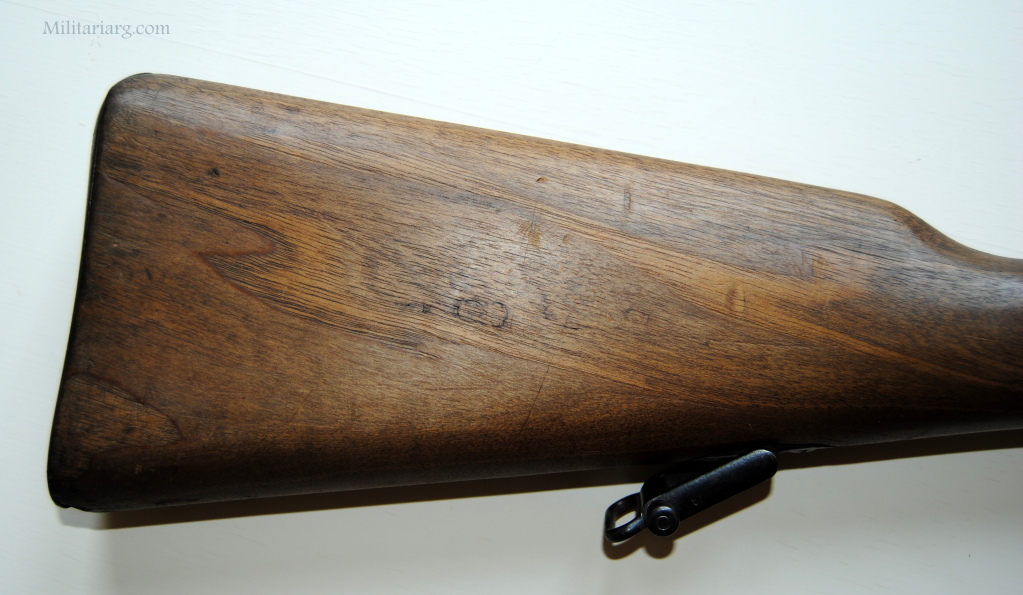
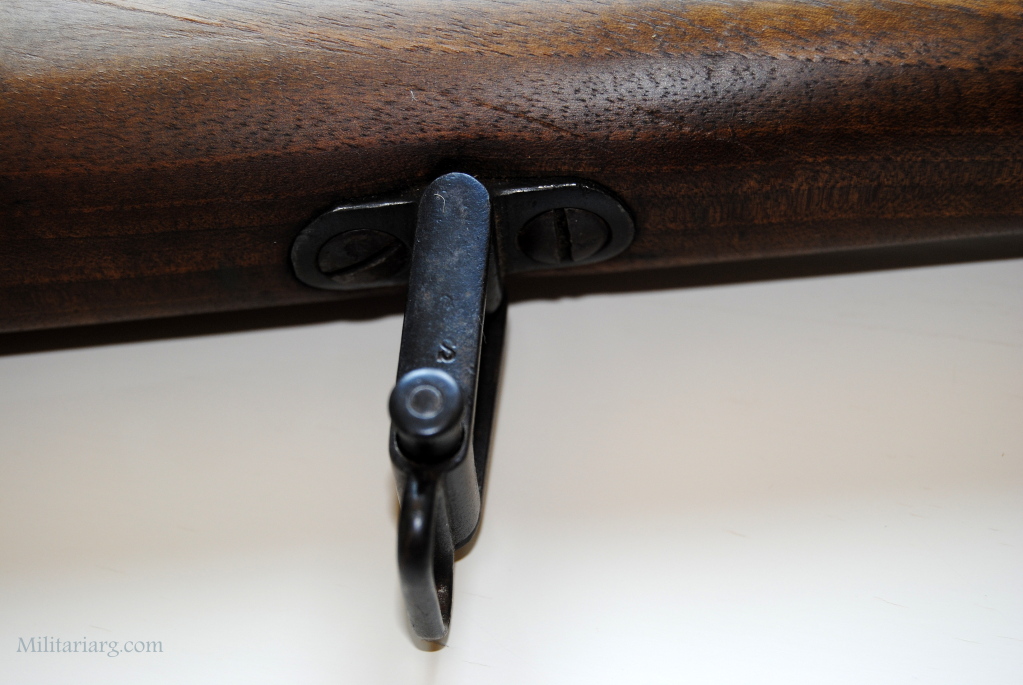
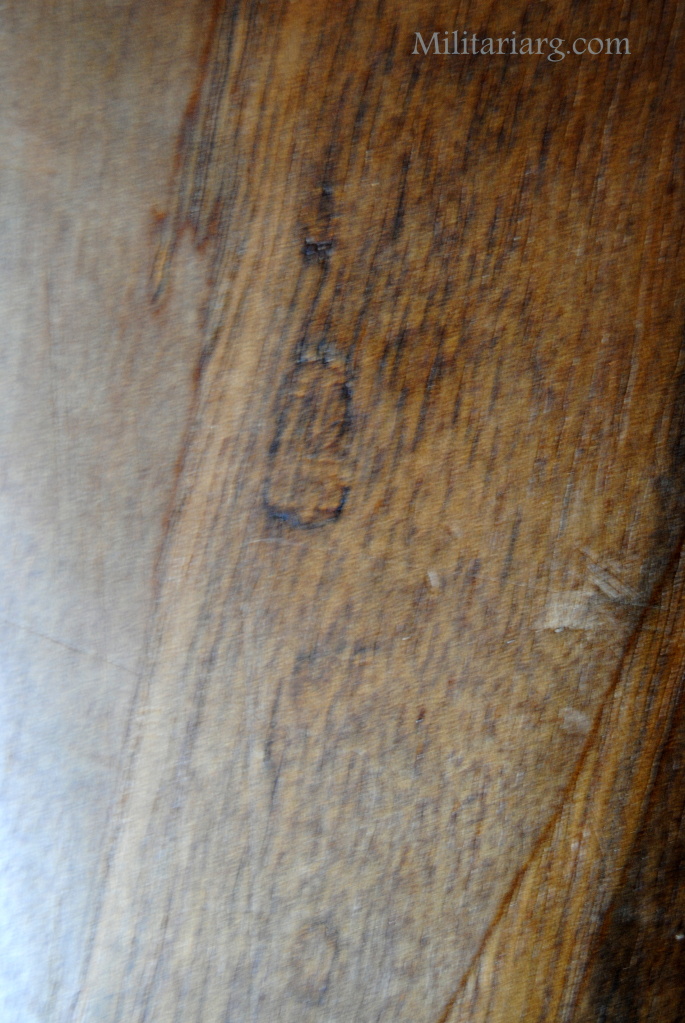
Rear sling swivel.
Picture
Picture
Picture
Picture
Picture
Picture
Picture
Picture
Picture
Picture
Picture
Picture
Picture
Picture
Powered by Create your own unique website with customizable templates.