Militariarg.com
  • Home
  • Army
  • Aviation
  • Navy
  • Uniforms and Badges
  • Arms and Weapons
  • Equipment
  • Vehicles
  • Operational and Organizational Structure, Security Forces, Transportation, Books, Models and More.
  • Argentine Confederation Era. 1829 - 1852.
  • From 1852 to 1910 (French fashion)
  • Bunker 1982: South Atlantic War Militaria
  • International Militaria
  • Argentina WWII Era (Neutral) Reenactment Impression
  • Links ~ Enlaces
Picture
WW1

The Danish Army maintained strict neutrality during World War I and mobilized its forces primarily for border protection and coastal defense to ensure the country was not drawn into the conflict. Its equipment was a mix of domestically produced and European designs. 

Weapons
Danish small arms were domestically designed and produced by the Royal Danish Arsenal.

Rifles: The standard service rifle was the Gevær M.1889, a bolt-action rifle chambered for the 8x58mmR Danish Krag cartridge. The corresponding carbine model (Karabin M.1889) was also widely used.
Pistols: The primary sidearm was the Pistol M.1910 (licensed version of the German Luger P08), supplemented by older revolvers.
Machine Guns:
Madsen machine gun (M.1902/M.1916): Denmark produced the world's first true light machine gun, the Madsen, in its own factories. It was in widespread service with the Danish Army for home defense and coastal units, and was also sold to many other nations.
Schwarzlose machine gun (M.1907): Older, WWI-era heavy machine guns were also in inventory. 

Artillery
Danish artillery included both older models and newer Bofors-designed guns, primarily used for coastal and anti-aircraft defense in addition to standard field use. 

Field Artillery:
7.5 cm Feldkanon M.1902: The primary field gun produced by Bofors and adapted by Denmark.
10.5 cm Haubits M.1910: A medium howitzer of Bofors design.
Coastal Defense: Heavy coastal artillery pieces were installed at strategic locations to protect Danish waters from belligerent warships and submarines.
Anti-Aircraft: The Danish Army was among the first to adopt dedicated anti-aircraft weaponry, using Bofors-designed anti-aircraft cannons to protect key infrastructure. 

The Danish Army did not have tanks but Like Sweden, Denmark began experimenting with tanks only after the war concluded. In 1920, Denmark purchased a small number of French Renault FT-17 light tanks, which were designated the Køretøj M.1920 in Danish service.
Picture
Denmark's history through the World Wars and the Cold War is characterized by an initial policy of neutrality that shifted to a firm Western alignment and status as a founding member of NATO after World War II.
 
World War I (1914-1918)
Denmark successfully maintained a policy of strict neutrality during World War I. 

Policy: The government mobilized a "security force" to guard its neutrality but aimed to avoid conflict. It managed trade with both Germany and Great Britain, navigating blockades to keep its economy functioning.
Outcome: Denmark successfully avoided direct military engagement and even gained territory (Northern Schleswig) from Germany after the war following a plebiscite in 1920. 

World War II (1939-1945)

Denmark again attempted to remain neutral, but this time its neutrality was violated. 

Invasion and Occupation: Germany invaded Denmark on April 9, 1940. Facing overwhelming military superiority and the threat of bombardment, the Danish government surrendered almost immediately and pursued a policy of cooperation.

Cooperation and Resistance: Until August 1943, Germany allowed the Danish government significant autonomy. A resistance movement grew over time, intensifying sabotage and strikes. In October 1943, the Danish population notably orchestrated the rescue of almost all Danish Jews, helping them escape to neutral Sweden.

Liberation: Denmark was liberated by British forces in May 1945. 

Cold War and NATO
The experience of German occupation and the looming Soviet threat convinced Denmark that neutrality was no longer a viable security policy. 

Founding NATO Member: In a significant shift from its historical stance, Denmark became a founding member of the North Atlantic Treaty Organization (NATO) when the North Atlantic Treaty was signed on April 4, 1949.
Western Alignment: Throughout the Cold War, Denmark aligned firmly with the West.
"Ally with Reservations": Denmark adopted some limitations to its NATO participation, notably refusing to allow foreign troops or nuclear weapons on its soil during peacetime. It did, however, permit the U.S. to maintain and expand the strategically vital Thule Air Base (now Pituffik Space Force Base), in Greenland, which was a key part of the U.S. ballistic missile early warning system.
Picture
WW2

During the German invasion on April 9, 1940, the Danish Army was primarily equipped with interwar and WWI-era weaponry, supplemented by some modern domestic designs.

Weapons

Rifles: The main service rifle was the Danish variant of the Krag–Jørgensen (Gevær M/89), chambered in 8x58mmR Danish Krag.
Pistols: The standard sidearm was the Bergmann–Bayard M1910/21 pistol, although older revolvers were still in use by some non-combat units.

Machine Guns:
Light/Medium: The domestically produced Madsen M1924 and M1929 machine guns were widely used.
Heavy: Heavy machine guns, typically Madsen M29s, were often mounted on tripods.
Anti-Tank Weapons: The primary anti-tank weapons were the Madsen 20 mm autocannon (which was highly effective against German armored cars) and the imported Bofors 37 mm anti-tank gun. 

Vehicles and Tanks
Denmark had very few tanks and relied more on armored cars, many of which were of Swedish design or domestically produced on imported chassis.

Tanks: The Danish Army's tank fleet was minimal, including only a few light tanks: the Swedish-built Landsverk L-60 (known as Panserbil m/38 and m/39 in Danish service) and possibly an Italian Fiat 3000.
Armored Cars: The primary armored cars were:
Landsverk L-180 (Panserbil m/36).
Landsverk L-185 (Panserbil m/38 and m/39) which had a 20 mm autocannon.
Domestically produced armored vehicles based on Ford or Dodge truck chassis were also in use.

Other Vehicles: The army used various trucks, motorcycles (including the Nimbus with a mounted 20 mm autocannon), and bicycles for troop movement. 
Picture
The Danish 149mm Schneider (M. 29 L/22 S)

Denmark ordered and built a specialized 149 mm (close to 150mm) howitzer from Schneider in the late 1920s, known in Danish service as the M. 29 L/22 S. They chose this specific caliber to utilize existing stocks of ammunition they had from their previous German-made heavy howitzers.

​​In Danish service, the gun was known as the M. 29 L/22 S (Model 1929).
The 149 mm (5.9 inch) caliber was unusual for Schneider (which typically produced 152mm or 155mm guns), but it was specifically selected by Denmark so they could use existing ammunition supplies.
Denmark initially ordered four prototype guns from Schneider in 1927 and a license to produce another twenty guns domestically at the Hærens Geværfabrik government arsenal in Copenhagen. The last guns were delivered in 1931. 

Picture
Picture

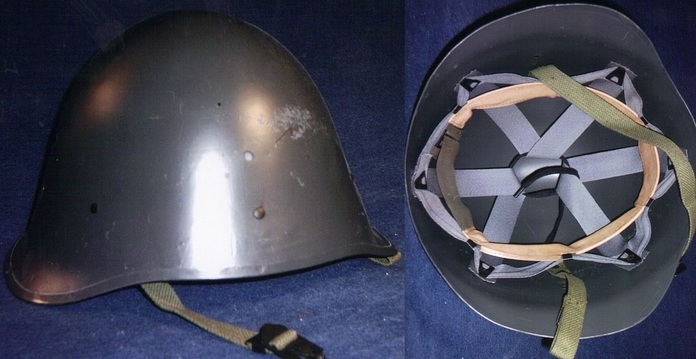
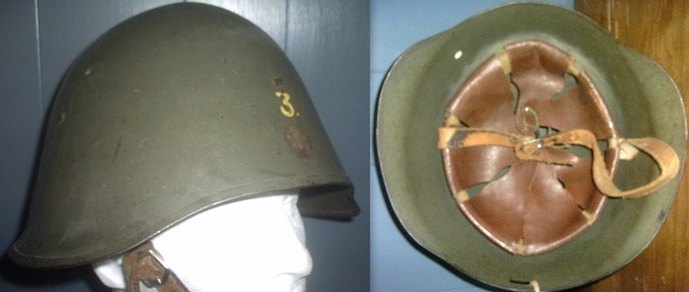
M23 M23/40 Danish Helmet

The Danish M1923 helmet (M23), officially adopted in 1923, was Denmark's first domestically produced steel helmet. It is highly distinct for its "conical" or "manta ray" shape with wide, flared side wings. 
Produced by A/S Glud & Marstrands Fabrikker in Copenhagen using a single piece of high-quality Swedish steel.
The original military version featured a prominent crowned coat of arms badge on the front.

Army. A brass badge showing three lions and hearts (produced by prisoners at Vridsløselille Prison).
Navy. A specific naval anchor emblem.

Liner System. A "Germanesque" three-pad leather liner with eight flaps (tongues). It was a "one-size-fits-all" design where the leather sat flush against the steel.
Transport Slot. A unique rectangular slit in the rear brim allowed soldiers to hook the helmet to their rucksack or belt using a strap or carabiner.
Finish.Early versions were often textured grey or light khaki; later wartime versions used darker olive green. 

WWII Combat
This was the primary helmet used by Danish troops during the German invasion on April 9, 1940. A small number were also used by Danish volunteers in the Winter War.

Unlike other interwar helmets, the M23 was never exported, making it unique to Danish service.
Picture
The Danish M23/40 is a wartime variation of the original M23 "Staalhjelm", modified during the German occupation of Denmark (1940–1945) due to material shortages and political restrictions. 

Differences from the Original M23

The most prominent feature of the original M23—the large bronze or brass royal crest—was removed and replaced by a simple rivet.
The "wingspan" or flare of the helmet's brim was reduced by approximately 10 mm, giving it a slightly more compact profile than the original model.
Due to scarcity, liners were often made from a variety of materials (including cardboard rings to hold the leather flaps) rather than the standard pre-war leather assembly. 

Most M23/40 helmets were issued to the Police (usually painted black) or the Civilforsvaret (Civil Defense), often identified by the "CF" stamp on the liner.
It was famously used by the Danish Resistance Movement during the final stages of WWII and remained in use for recruitment posters following the liberation in May 1945.
Like the Dutch helmets discussed earlier, the M23/40 retained a slit in the rear of the brim for attaching it to a backpack or belt with a leather strap.
They were produced by A/S Glud & Marstrand in Copenhagen, with production ending in 1943 when the Danish military was officially dissolved by the Germans.

Picture
The shell remained in service through the 1950s, eventually receiving modern Riddell-style webbing liners (the M23/57) before the Danish military fully transitioned to American-style M1 clones. 

M23 M23/40 Danish "Amalienborg" Helmet

Picture
​The Danish M1939 helmet, colloquially known as the "Amalienborg Helmet", was a specific, heavy-duty helmet produced for police units guarding the Amalienborg Palace, the residence of the Danish Royal Family. It is distinct from the mass-produced M23/40 variant. 

The M39 was never a standard-issue combat helmet for the Danish Army. It was produced for police and civil defense units who needed a high level of protection for security details, especially after regular Danish troops were disarmed by the Germans in 1943.
Picture
The M39 retained the overall "conical" shape of the M23 but was noted for being very solidly built and heavy, made with high-quality materials.
It typically had a dark grey-green or black finish and featured a specific Police Force badge on the front. Later versions often had the holes for this badge plugged up.
 
Service During WW2.
These helmets were notably used between 1942 and 1944. During a German attempt to seize the Royal Palace on August 29, 1943, the guards fiercely defended the premises while wearing these helmets. 

They were produced by the firm A/S Glud & Marstrands Fabrikker.
The liner was made of high-quality leather and was generally well-made for comfort and stability.
The M39 is considered a unique and relatively scarce helmet in the collecting world, primarily due to its limited and specialized production run.

WW2 German Stahlhelm Postwar Reissued

Picture
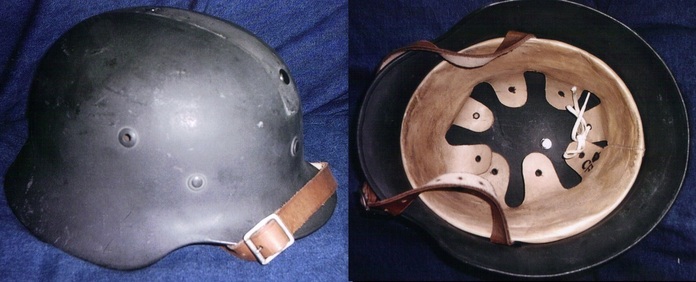
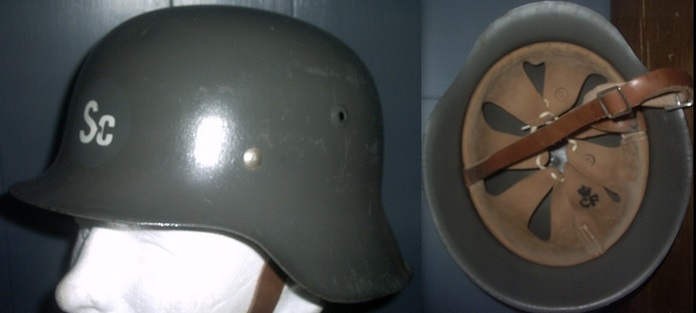
Danish Helmet (Modified WWII M35 German). 
This is a very rare and specific reissue used by the Danish Civil Defense (Civilforsvaret) or Fire Services.
​The Danes sometimes welded or riveted a longitudinal metal comb (similar to a French Adrian or early Belgian helmet) onto the top of captured German shells.
This was done to provide extra structural reinforcement against falling debris for rescue workers and firefighters. It also helped visually "demilitarize" the German Stahlhelm shape, making it look more like traditional fire brigade headgear.
These are often found in a dark grey-blue or black finish.

large-scale military adoption, but small-scale reissues did happen in Denmark, particularly for specific civil and auxiliary services, which is how collectors like yourself find these unique pieces. It seems these reissues were not as widespread as in Norway or Finland, which is why they are often overlooked in major military history texts.

If you have two of them, you likely have specific variants used by post-war Danish forces. These are often identifiable by their modifications:

Danish Civil Defense (CF)
Many were repainted a specific grey-green or occasionally black and issued to the Civilforsvaret (CF).
You might find a large "CF" stencil painted on the front or side, or a stamp on the liner.

Danish Home Guard (Hjemmeværnet)
These units also used mixed surplus gear.They might have simple Danish military green paint, but they are often distinguished by a small three-lion crest decal on the side (though this is rare).

The "Danish Liner". Most importantly, the original German M31 leather liner and spring were often replaced with a locally produced Danish-made liner system in the late 1940s or early 1950s. This is the clearest sign of Danish reissue.
Picture
M42 German Helmet. Reused by Danish Post-war.​
The SC stands for Sivilforsvaret (Civil Defense) or occasionally Statens Civile Luftværn (State Civil Air Defense).
The "SC" stencil was the standard property mark for civil protection units in the late 1940s and 1950s.
 Most of these were M42 German shells (the ones with the raw, unrolled edge), as they were the most plentiful at the end of the occupation. Take a look inside; if it's a Danish reissue, the liner often uses cork spacers between the metal band and the shell, which is a classic Danish modification to make the German shell fit different head sizes.

M48 Danish Helmet NATO

Picture
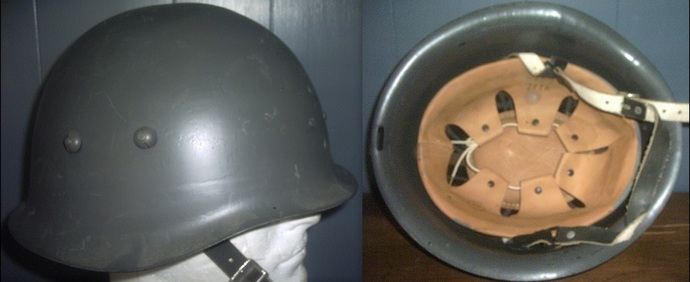
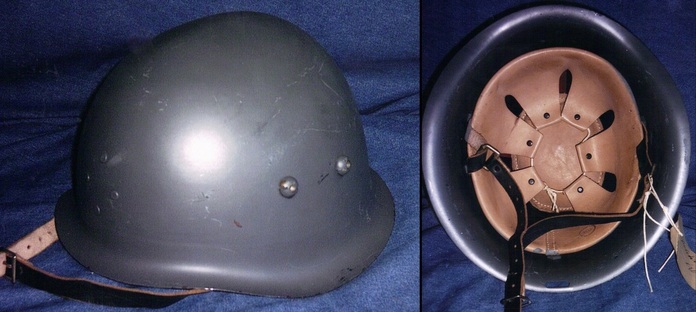
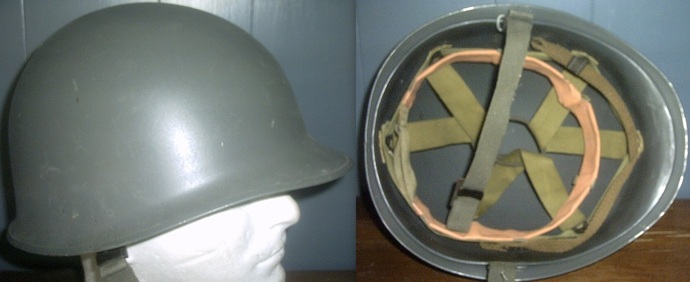
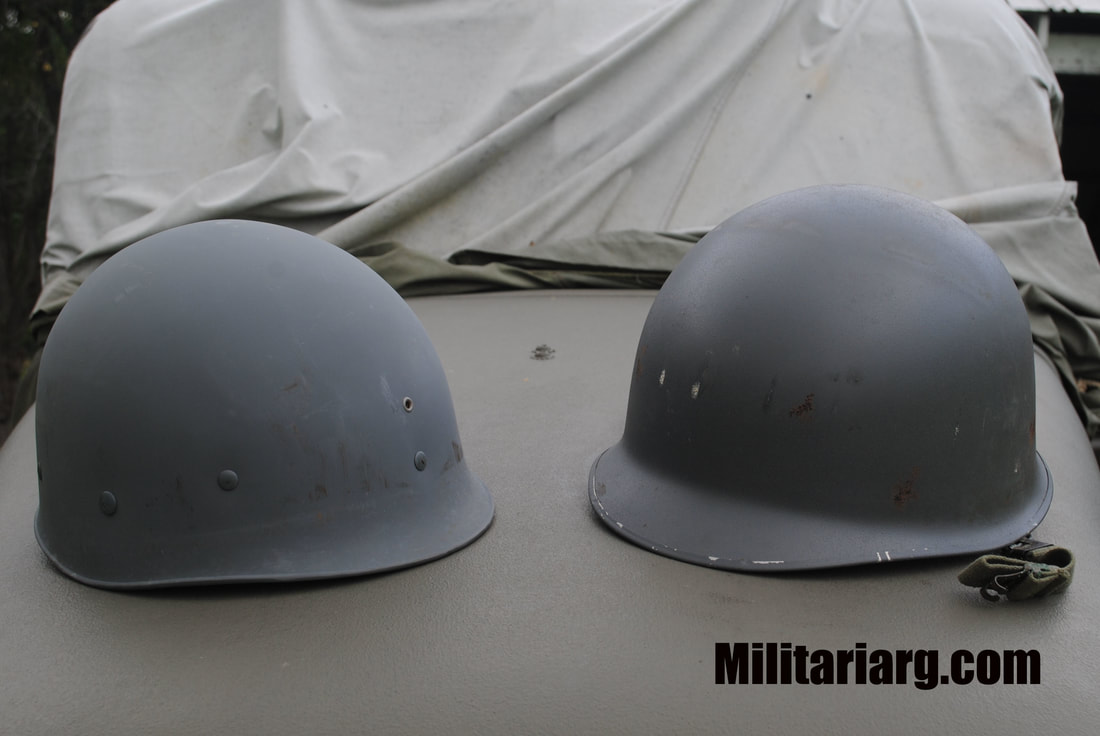
The Danish version of the American M1 helmet is known as the M1948 (or simply M48), adopted as the standard military helmet following World War II and used well into the 1990s. 

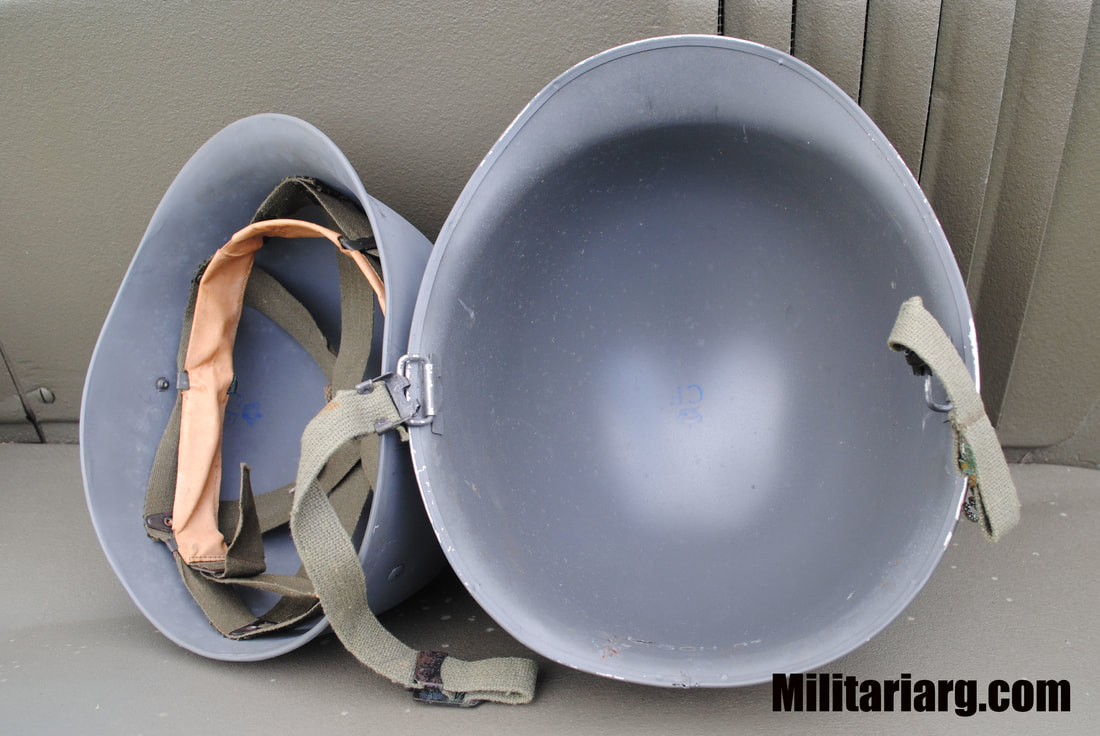
The M48 is a "clone" of the iconic U.S. M1 helmet, consisting of a separate steel outer shell and an inner liner.
The steel shells were not produced in Denmark; they were manufactured as NATO contracts in either West Germany (by Linnemann-Schnetzer) or Austria (by Ulbrichts) using original specifications.

The inner liners, however, were produced domestically in Denmark, primarily by the firm "Dansk Kunststof Industri" (DKI).

The M48 can be identified by specific Danish markings You might find a Danish crown stamp inside the shell or liner. Civil Defense versions often have a "CF" (Civilforsvaret) stamp.
Liners were made in specific colors for different branches: green for the Army, blue for the Navy, grey for Civil Defense, and black for police.These helmets often featured unique Danish-made canvas chinstraps with specific friction buckles. 

The M48 quickly replaced the older Danish M23 and the British MKII clones in military service in the late 1940s and early 1950s as Denmark aligned with other NATO nations. It remained a highly effective, standard-issue helmet for over 40 years.
Picture
Picture

Danish M23 Helmet

Picture
Picture
Picture
Picture
Picture
Picture
Picture
Picture
Picture


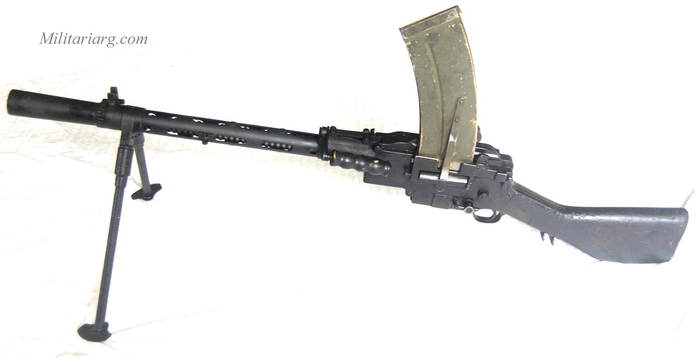
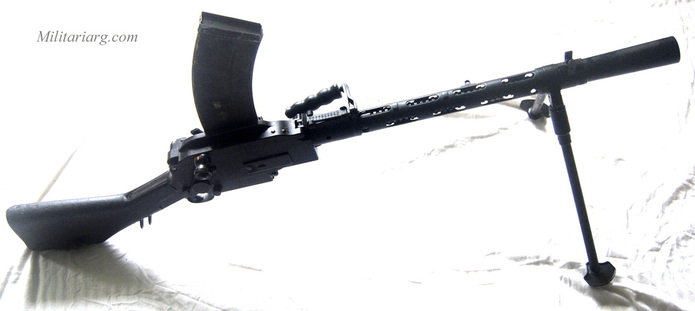
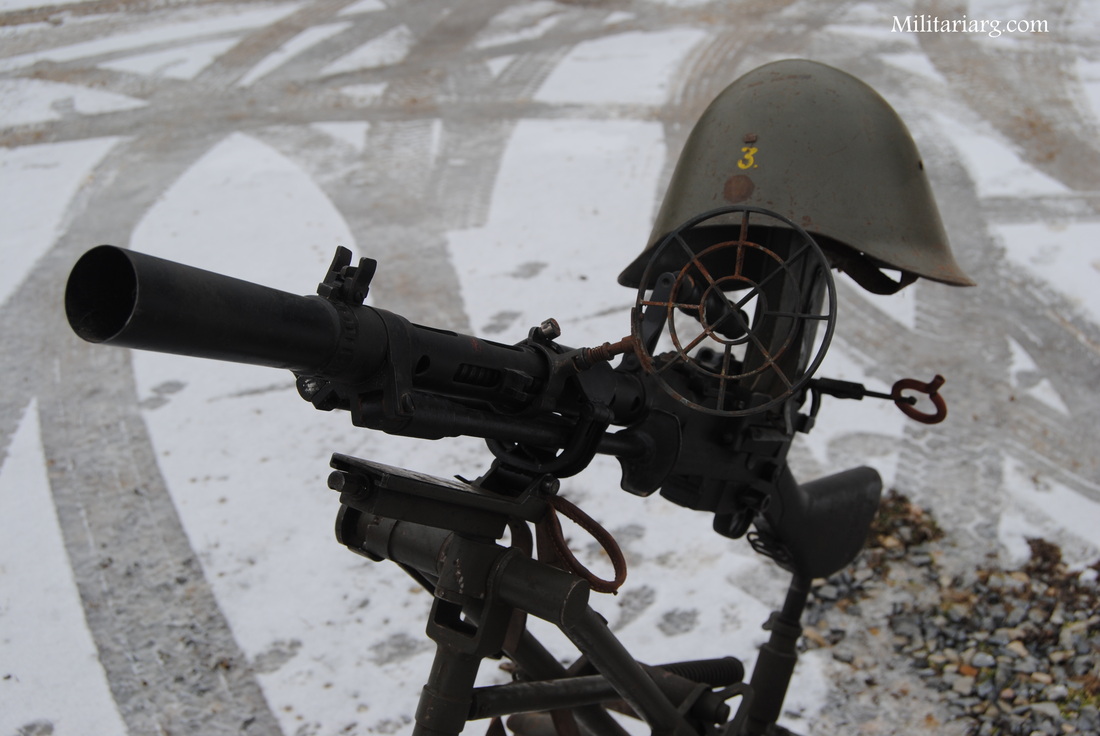
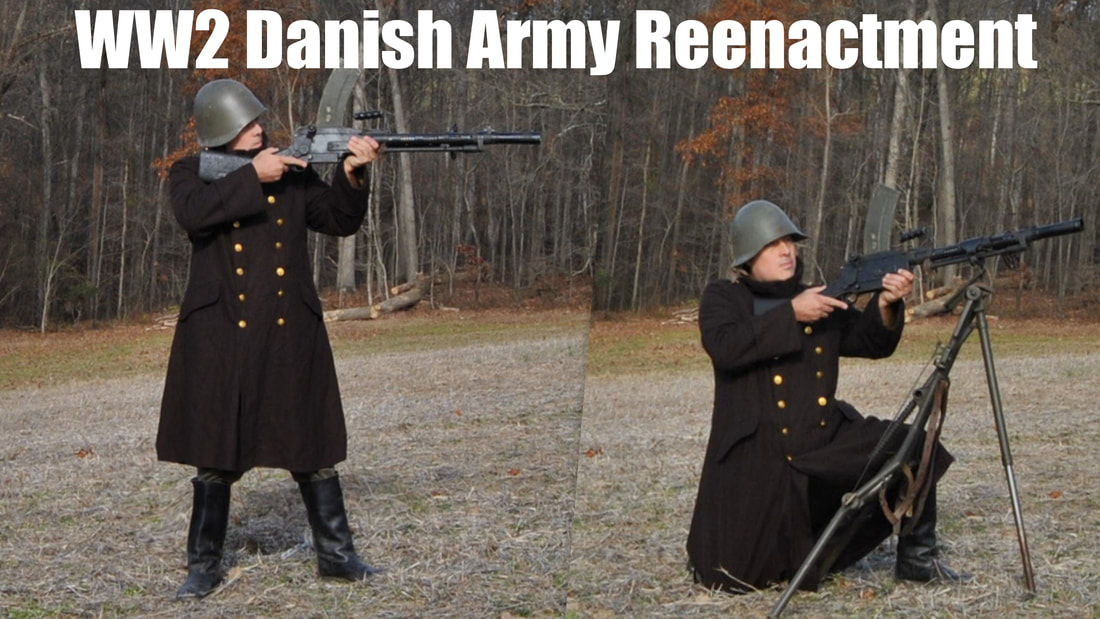
Madsen Machine Gun

Picture
Picture
The Madsen was produced by Compagnie Madsen A/S (later operating as Dansk Rekyl Riffel Syndikat A/S and then Dansk Industri Syndikat A/S.

Picture
April 9, 1940, Fallschirmjäger Operations in Denmark "Operation Weserübung Süd" (the southern component of the invasion of Norway and Denmark). Their operations in Denmark were some of the first combat jumps in history and were swift and highly successful.
 
The primary goal of the operations in Denmark was to secure critical infrastructure and airfields as staging grounds for the main invasion of Norway. 

Capture of the Storstrøm Bridge and Masnedø Fortress:
Approximately 96 Fallschirmjäger jumped from nine Junkers Ju 52 transport aircraft at dawn to secure the vital Storstrøm Bridge, which connected the islands of Falster and Zealand.

They also captured the adjacent coastal fortress on Masnedø island.

The operations were a complete tactical success, as the troops expected heavy resistance but encountered almost none. The Masnedø fortress was defended only by a handful of personnel. The rapid capture of these points allowed German ground forces to advance by land toward Copenhagen.

Seizure of Aalborg Airfields:
A separate platoon of Fallschirmjäger landed in Aalborg in northern Jutland to secure the airfields there, which were the primary target of the entire operation in Denmark.
Again, the paratroopers encountered no resistance and secured the airfields within an hour.
This allowed the Luftwaffe to immediately begin landing hundreds of aircraft, rapidly transporting troops and fuel to Norway for the ongoing campaign there. 

The success and speed of these operations were notable for demonstrating the effectiveness of airborne assaults in seizing key strategic objectives with minimal casualties
Powered by Create your own unique website with customizable templates.