Militariarg.com
  • Home
  • Army
  • Aviation
  • Navy
  • Uniforms and Badges
  • Arms and Weapons
  • Equipment
  • Vehicles
  • Operational and Organizational Structure, Security Forces, Transportation, Books, Models and More.
  • Argentine Confederation Era. 1829 - 1852.
  • From 1852 to 1910 (French fashion)
  • Bunker 1982: South Atlantic War Militaria
  • International Militaria
  • Argentina WWII Era (Neutral) Reenactment Impression
  • Links ~ Enlaces
Picture

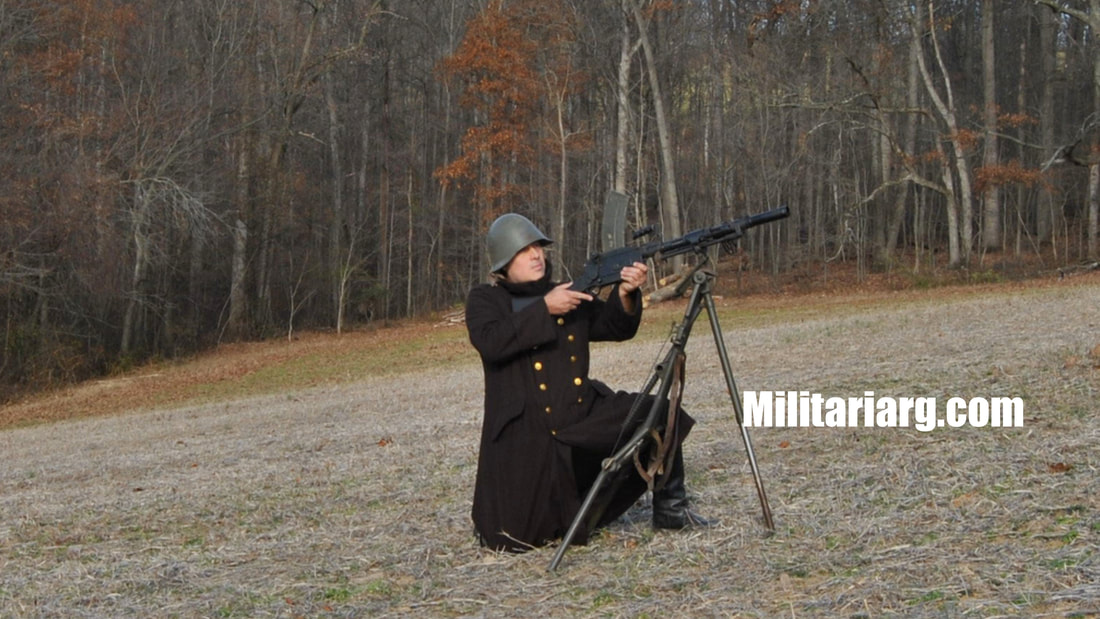
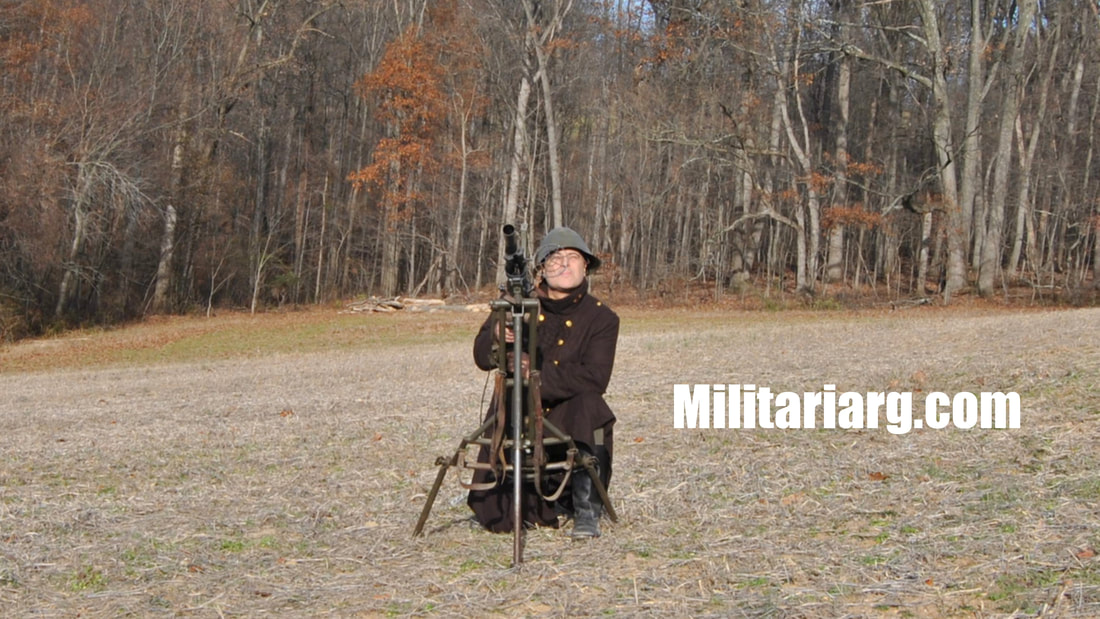
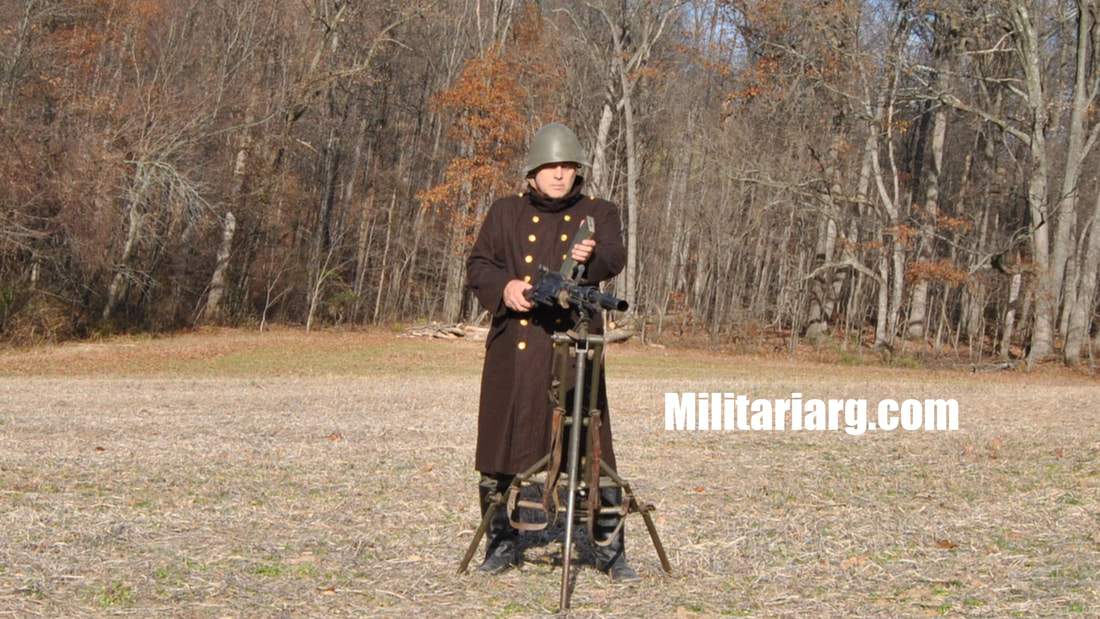
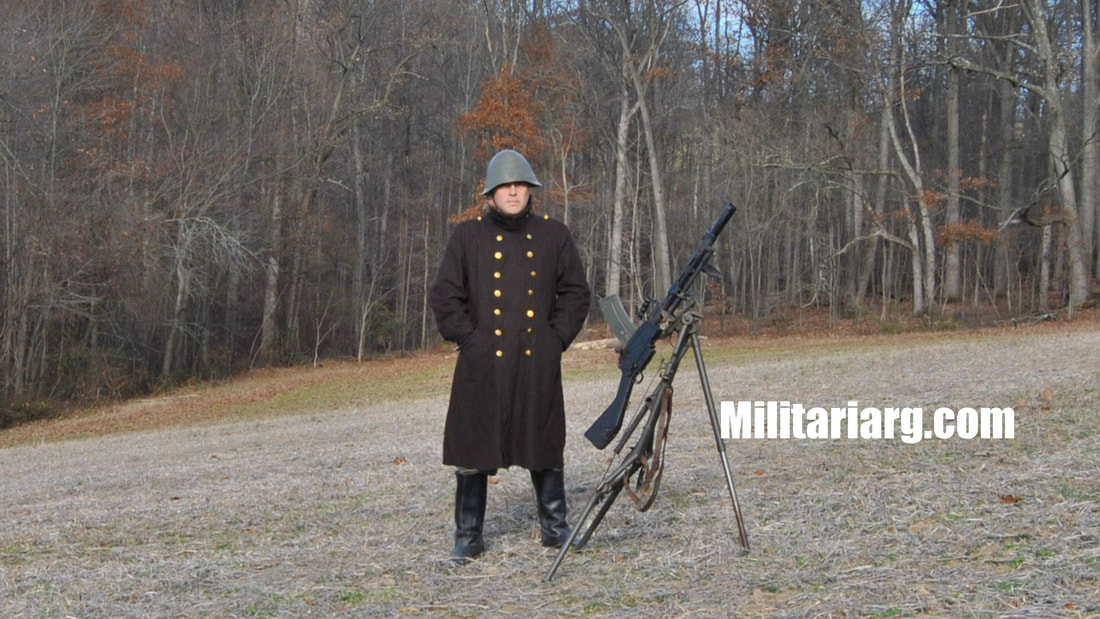
Madsen-maskingeværet - Madsen Machine Gun - Danish Army WW2
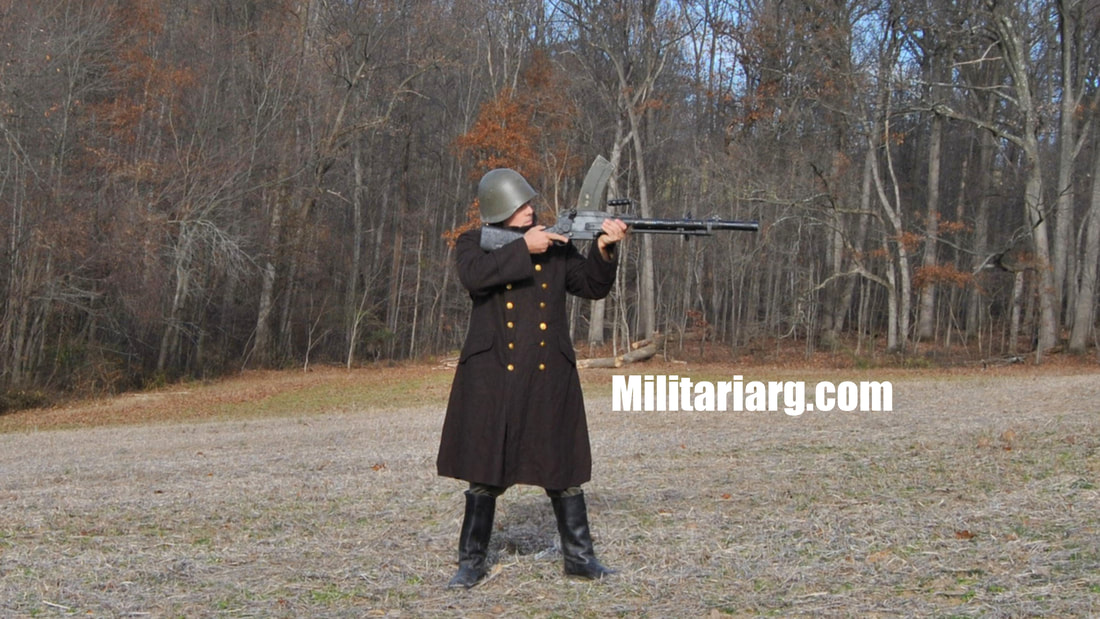
The Madsen machine gun, adopted by the Danish Army in 1902, holds the distinction of being the world's first mass-produced and widely adopted light machine gun (LMG). It was renowned for its reliability, durability, and versatility, seeing service in over 34 countries and more than a dozen different calibers for over a century, until its final retirement from the Brazilian Military Police in 2008. 

The Madsen is distinguished by its unique and complex internal mechanism. It uses a complex mixed recoil-operated action with a unique, cam-controlled, falling-block mechanism, inspired by the Peabody Martini rifle breechblock. This intricate system, while complicated to manufacture, proved remarkably reliable in combat.
It features a distinctive, top-mounted, curved box magazine, typically holding 25 or 30 rounds, offset to the left of the receiver.
This design allowed the sights to remain on the weapon's centerline. At a weight of around 20 lbs (9 kg), the Madsen was significantly lighter than contemporary heavy, water-cooled machine guns (like the Maxim), allowing a single soldier to carry and operate it effectively, defining the LMG role.
 The weapon was designed to be highly adaptable, with features like an easily changeable barrel (in seconds) and the ability to mount on a folding tripod for sustained or anti-aircraft fire. 

Historical Significance and Use
The Madsen saw action in virtually every major conflict of the 20th century. 

It was first used in combat during the Russo-Japanese War (1904-1905) and the Mexican Revolution.
World War I & II: It was used by numerous nations in WWI, with the German Army even forming the first dedicated LMG units ("Musketen Battalions") armed with captured Madsens.

During WWII, it saw service with second-line units of the German Wehrmacht, the Norwegian Army, and Dutch forces in the East Indies.

​Cold War & Beyond: Post-WWII, the Madsen was still utilized in conflicts such as the Portuguese Colonial War and the "Football War" between Honduras and El Salvador. Its incredible longevity is highlighted by its continued use by the Rio de Janeiro Military Police in Brazil until 2008 in operations against drug traffickers.
Picture
Picture
Picture
Picture
Danish Army during WW2
​
The Danish Army's actions in World War II spanned from brief, symbolic resistance during the 1940 invasion to intelligence gathering for the Allies and, later, active participation in the Danish resistance movement and a brigade in exile. 
Denmark's military was vastly inferior in size and equipment to the invading German forces. To avoid heavy civilian casualties, the Danish government surrendered within hours, making it the shortest military campaign of the war. 
Despite the official order to surrender quickly, some Danish Army units in Southern Jutland put up a brief, localized fight against the advancing German armored columns. These skirmishes resulted in minor German equipment losses and 16 Danish military fatalities before communications were established and the ceasefire order received.
The government capitulated after Germany threatened to bomb Copenhagen. The Danish Army Air Service was largely destroyed on the ground in a surprise Luftwaffe attack on Værløse airfield. 

During the early, "lenient" phase of the occupation, the Danish Army was largely demobilized but allowed to maintain a small force. Key members of Danish military intelligence established contact with British intelligence in Stockholm as early as April 1940. They provided highly valued intelligence to the Allies throughout this period, including information on German military units and Atlantic Wall fortifications. The Danish military secretly cached weapons and took steps to prepare for a harsher occupation later on. 

As Danish resistance and sabotage increased in mid-1943, the Germans demanded the Danish government impose the death penalty for sabotage. The government refused to comply and resigned, leading Germany to declare martial law and take direct control. 
In anticipation of German seizure of the Danish fleet, the Royal Danish Navy successfully scuttled 32 of its larger ships in Copenhagen harbor, preventing their use by the Kriegsmarine.
The German forces moved to disarm the remaining Danish Army garrisons. Some minor fighting occurred during this process, and many soldiers were taken prisoner, though some managed to escape and went underground or fled to neutral Sweden. 

Active Resistance and Exiled Forces (1943-1945)

After 1943, former Danish soldiers became central members of the growing, organized armed resistance movement, carrying out sabotage and assassinations of collaborators. 
Danish soldiers who had escaped to Sweden formed the Danish Brigade, a military unit trained and equipped by the Swedish government with the purpose of liberating Denmark.
The Brigade deployed to Denmark on May 5, 1945, the day after German forces in Denmark surrendered to British Field Marshal Montgomery, playing a role in securing the country. 
Powered by Create your own unique website with customizable templates.