WW1
During WW1, he main military force representing the South Slav cause was the Royal Serbian Army. Yugoslavia was formed at the end of the conflict in late 1918.
The Serbian Army was equipped with a diverse range of weapons, primarily French and Russian, as well as some Austro-Hungarian models, due to its reliance on military aid from the Allies. It did not use tanks or armored vehicles.
Weapons
Rifles: The primary service rifle was the Serbian Mauser 1899 (a copy of the Mauser Model 1895). After the retreat through Albania in 1915, the army was re-equipped by the Allies, largely with French Lebel 1886/93 and Berthier rifles, and Russian Mosin-Nagant rifles.
Pistols: Various sidearms were used, often acquired commercially or through aid.
Machine Guns: The army utilized French Hotchkiss Mle 1914 machine guns after being refitted.
Artillery
Serbia's artillery was a mix of French, German, and Austro-Hungarian designs and was known for its mobility and aggressive use during battles like Kolubara.
Field Artillery: The French 75mm field gun (Schneider-Canet) was a crucial asset for the mobile Serbian army. The army also used guns manufactured by Škoda, Krupp, and others.
Mountain Artillery: The Škoda 75 mm Model 15 mountain gun was used in the rugged Balkan terrain.
Tanks and Vehicles
Tanks: The Serbian Army did not have tanks during World War I.
Vehicles: Mechanization was minimal; the army was highly mobile, but this relied on large numbers of horses and mules to move men and supplies.
During WW1, he main military force representing the South Slav cause was the Royal Serbian Army. Yugoslavia was formed at the end of the conflict in late 1918.
The Serbian Army was equipped with a diverse range of weapons, primarily French and Russian, as well as some Austro-Hungarian models, due to its reliance on military aid from the Allies. It did not use tanks or armored vehicles.
Weapons
Rifles: The primary service rifle was the Serbian Mauser 1899 (a copy of the Mauser Model 1895). After the retreat through Albania in 1915, the army was re-equipped by the Allies, largely with French Lebel 1886/93 and Berthier rifles, and Russian Mosin-Nagant rifles.
Pistols: Various sidearms were used, often acquired commercially or through aid.
Machine Guns: The army utilized French Hotchkiss Mle 1914 machine guns after being refitted.
Artillery
Serbia's artillery was a mix of French, German, and Austro-Hungarian designs and was known for its mobility and aggressive use during battles like Kolubara.
Field Artillery: The French 75mm field gun (Schneider-Canet) was a crucial asset for the mobile Serbian army. The army also used guns manufactured by Škoda, Krupp, and others.
Mountain Artillery: The Škoda 75 mm Model 15 mountain gun was used in the rugged Balkan terrain.
Tanks and Vehicles
Tanks: The Serbian Army did not have tanks during World War I.
Vehicles: Mechanization was minimal; the army was highly mobile, but this relied on large numbers of horses and mules to move men and supplies.
WW2
The Royal Yugoslav Army at the start of World War II had a diverse but largely obsolete inventory of weapons, artillery, and armored vehicles from various nations. This mixture, stemming from limited domestic production and pre-war imports, created significant logistical challenges for ammunition and spare parts.
Weapons
The primary service rifle was of a German design, supplemented by a mix of other models.
Rifles: The standard-issue rifle was the domestically produced Yugoslav Mauser M1924, a copy of the FN Model 1924. Other models in inventory included the Serbian Mauser 1899, Mannlicher 1895, and French Lebel and Berthier rifles.
Pistols: Sidearms included the FN M1910/22, the Ruby pistol, and some Rast & Gasser M1898 revolvers.
Submachine Guns: Submachine guns were not widely available, but included small numbers of the Erma EMP-35 and MP34.
Machine Guns: Light and heavy machine guns in use included the Czech ZB vz. 26 and ZB vz. 37, the French Chauchat and Hotchkiss M1914, and the Austrian Schwarzlose.
Artillery
The artillery branch had a large number of pieces, but less than 60% were considered modern by 1941 standards.
Field Artillery: The army used a mix of light field guns and howitzers, including the French 75mm M1897 field gun, the Czech 7.65 cm Model 1928 field gun (Škoda), and older World War I-era howitzers.
Anti-aircraft: Anti-aircraft defenses included Czech-made 7.65 cm and 9 cm guns (Škoda), as well as Swedish 40mm Bofors anti-aircraft cannons.
Anti-tank: Anti-tank capabilities were limited to towed anti-tank guns like the German 37 mm Pak 35/36.
Tanks and Vehicles
The Royal Yugoslav Army's armored forces were very limited, with only about 50 vehicles considered capable of engaging modern German tanks on equal terms at the time of the invasion.
Light Tanks: The main modern tanks were 54 French Renault R-35 light tanks. The remaining inventory consisted of obsolete WWI-vintage French Renault FT-17 tanks.
Tankettes: The army also had a small number of Czech Škoda S-I-d (T-32) tankettes, primarily used for training.
Vehicles: The army was heavily reliant on animal-drawn transport, and mechanization was very limited, mostly consisting of light trucks.
The Royal Yugoslav Army at the start of World War II had a diverse but largely obsolete inventory of weapons, artillery, and armored vehicles from various nations. This mixture, stemming from limited domestic production and pre-war imports, created significant logistical challenges for ammunition and spare parts.
Weapons
The primary service rifle was of a German design, supplemented by a mix of other models.
Rifles: The standard-issue rifle was the domestically produced Yugoslav Mauser M1924, a copy of the FN Model 1924. Other models in inventory included the Serbian Mauser 1899, Mannlicher 1895, and French Lebel and Berthier rifles.
Pistols: Sidearms included the FN M1910/22, the Ruby pistol, and some Rast & Gasser M1898 revolvers.
Submachine Guns: Submachine guns were not widely available, but included small numbers of the Erma EMP-35 and MP34.
Machine Guns: Light and heavy machine guns in use included the Czech ZB vz. 26 and ZB vz. 37, the French Chauchat and Hotchkiss M1914, and the Austrian Schwarzlose.
Artillery
The artillery branch had a large number of pieces, but less than 60% were considered modern by 1941 standards.
Field Artillery: The army used a mix of light field guns and howitzers, including the French 75mm M1897 field gun, the Czech 7.65 cm Model 1928 field gun (Škoda), and older World War I-era howitzers.
Anti-aircraft: Anti-aircraft defenses included Czech-made 7.65 cm and 9 cm guns (Škoda), as well as Swedish 40mm Bofors anti-aircraft cannons.
Anti-tank: Anti-tank capabilities were limited to towed anti-tank guns like the German 37 mm Pak 35/36.
Tanks and Vehicles
The Royal Yugoslav Army's armored forces were very limited, with only about 50 vehicles considered capable of engaging modern German tanks on equal terms at the time of the invasion.
Light Tanks: The main modern tanks were 54 French Renault R-35 light tanks. The remaining inventory consisted of obsolete WWI-vintage French Renault FT-17 tanks.
Tankettes: The army also had a small number of Czech Škoda S-I-d (T-32) tankettes, primarily used for training.
Vehicles: The army was heavily reliant on animal-drawn transport, and mechanization was very limited, mostly consisting of light trucks.
NE44/M59 is a fascinating "ideological" helmet. While you noted the 1952 date, the design was perfected throughout the 1950s to replace the mix of captured German and Soviet gear used by the Yugoslav People's Army (JNA).
The NE44 (often called the "Neretva" model) is famous for being a German M40/M42 silhouette without the flared brim.
It has the classic "Stahlhelm" dome, but the skirt is cut straight down. As we discussed earlier regarding the Spanish Eibar, this design was heavily influenced by the Spanish M34/M38 profile favored by the many Yugoslav "Spanish Volunteers" (Španski borci) who fought in the Spanish Civil War.
The 1952/59 Distinction
The earliest prototypes (NE44) appeared in the late 1940s/early 50s. The M59 was the refined mass-production version.
The Red Star. Almost all original M59s featured a painted red star on the front. During the Yugoslav Wars in the 1990s, many of these stars were painted over with nationalistic decals (Serbian, Croatian, etc.).
Liner System.
Unlike the German M31 liner, the M59 used a complex webbing suspension system (similar to the US M1) that was far more stable and comfortable.
The idea for the helmet definitely traces back to the Yugoslav Partisans in 1944. During the war, the Partisans used a mix of captured German and Italian helmets. However, the German Stahlhelm was hated for its association with the occupation.
Partisan workshops began manually cutting the flared brims off captured German M40/M42 helmets. This created a new silhouette that provided the protection of the German dome but looked distinct from the WW2 German Stahlhelm shape. This field-modified version is often called the NE44 (Neretva 1944).
The NE44 (often called the "Neretva" model) is famous for being a German M40/M42 silhouette without the flared brim.
It has the classic "Stahlhelm" dome, but the skirt is cut straight down. As we discussed earlier regarding the Spanish Eibar, this design was heavily influenced by the Spanish M34/M38 profile favored by the many Yugoslav "Spanish Volunteers" (Španski borci) who fought in the Spanish Civil War.
The 1952/59 Distinction
The earliest prototypes (NE44) appeared in the late 1940s/early 50s. The M59 was the refined mass-production version.
The Red Star. Almost all original M59s featured a painted red star on the front. During the Yugoslav Wars in the 1990s, many of these stars were painted over with nationalistic decals (Serbian, Croatian, etc.).
Liner System.
Unlike the German M31 liner, the M59 used a complex webbing suspension system (similar to the US M1) that was far more stable and comfortable.
The idea for the helmet definitely traces back to the Yugoslav Partisans in 1944. During the war, the Partisans used a mix of captured German and Italian helmets. However, the German Stahlhelm was hated for its association with the occupation.
Partisan workshops began manually cutting the flared brims off captured German M40/M42 helmets. This created a new silhouette that provided the protection of the German dome but looked distinct from the WW2 German Stahlhelm shape. This field-modified version is often called the NE44 (Neretva 1944).
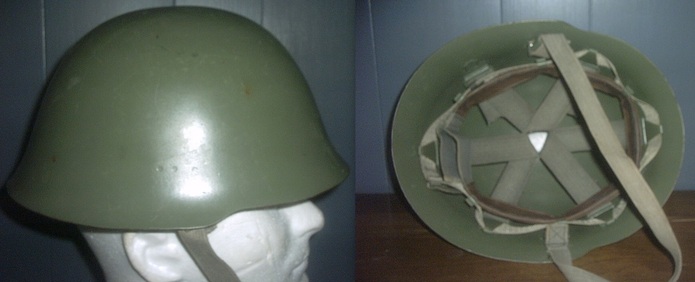
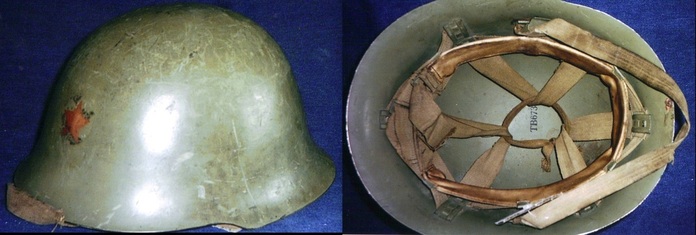
M59/85 (Modernized). In 1985, the shell was slightly modified to be lower-profile to better accommodate modern gas masks and equipment. The rear "point" was smoothed out
While it looks nearly identical to the original M59 (NE44) at a glance, the M59/85 featured several "modern" tactical improvements
The Profile. The most obvious change is the lower rear rim. The original M59 had a distinct "pointy" or high-arched back. The M59/85 was trimmed down so that the soldier's head could tilt back further (useful for firing from a prone position) and to better accommodate gas masks and heavy cold-weather gear.
The Liner. It moved away from the complex leather/webbing hybrid of the M59 to a more simplified canvas webbing system that was easier to mass-produce and adjust.
The Red Star. While early M59/85s still featured the factory-painted Red Star, many were issued with a decal instead. By the early 90s, these were frequently scraped off or covered by the emblems of the various break-away republics (Serbian, Croatian, Bosnian).
While it looks nearly identical to the original M59 (NE44) at a glance, the M59/85 featured several "modern" tactical improvements
The Profile. The most obvious change is the lower rear rim. The original M59 had a distinct "pointy" or high-arched back. The M59/85 was trimmed down so that the soldier's head could tilt back further (useful for firing from a prone position) and to better accommodate gas masks and heavy cold-weather gear.
The Liner. It moved away from the complex leather/webbing hybrid of the M59 to a more simplified canvas webbing system that was easier to mass-produce and adjust.
The Red Star. While early M59/85s still featured the factory-painted Red Star, many were issued with a decal instead. By the early 90s, these were frequently scraped off or covered by the emblems of the various break-away republics (Serbian, Croatian, Bosnian).
On the right, the M55 Zastava 20mm, triple-barrel anti-aircraft gun.
The Yugoslav People's Army (JNA) in the Cold War used a unique mix of domestically produced, Soviet-supplied, and US-supplied weapons, artillery, tanks, and vehicles, reflecting Yugoslavia's non-aligned status and independent military-industrial complex.
Weapons
Yugoslavia developed a robust domestic arms industry that produced a wide range of small arms, heavily based on Soviet designs but with unique modifications (such as gas cutoffs for launching rifle grenades).
Rifles: The standard service rifle was the locally produced Zastava M70 assault rifle (an unlicensed AK-47 derivative), which replaced the earlier Zastava M48 bolt-action Mauser rifle and Zastava M59/66 semi-automatic rifle.
Pistols: The Zastava M57 (a licensed copy of the Soviet TT pistol) and the CZ-99 were standard.
Submachine Guns: The M56 submachine gun (inspired by the German MP40) and the Škorpion vz. 61 were in use.
Machine Guns: Domestically produced machine guns included the Zastava M53 (a copy of the German MG 42), the Zastava M72 (RPK variant), and the Zastava M84 (PK variant).
Anti-Tank: The army used domestically produced recoilless rifles and rocket launchers, such as the M79 Osa and M80 Zolja, along with Soviet AT-1 and AT-3 anti-tank guided missiles.
Artillery
Yugoslavia's artillery combined imported systems with domestic production, prioritizing adaptability for mountainous terrain.
Towed Artillery: The inventory included US-made 105mm and 155mm howitzers (received as US military aid in the 1950s), as well as Soviet 122mm, 130mm, and 152mm guns.
Multiple Rocket Launchers (MRLs): Domestically produced systems were a key asset, including the M-63 Plamen and M-77 Oganj.
Self-Propelled Guns: A mix of US-made M7 Priests, M18 Hellcats (used as tank destroyers), and M36 Jacksons were supplied by the US in the 1950s, alongside Soviet SU-100s and 2S1 Gvozdika self-propelled howitzers later on.
Tanks and Vehicles
The JNA's armored strength relied on a large fleet of Soviet-designed tanks, the domestic production of a modern main battle tank, and US-made armored cars from early in the Cold War.
Main Battle Tanks (MBTs): The bulk of the tank force comprised Soviet T-54 and T-55 tanks (over 1,000 units), supplemented by the domestically produced M-84 (an improved T-72 variant) and some Soviet T-72s. World War II-era T-34/85 and M4 Sherman tanks were also kept in reserve or for training.
Armored Personnel Carriers (APCs) & Infantry Fighting Vehicles (IFVs):
BVP M-80: A domestically produced tracked infantry fighting vehicle.
OT M-60: A domestically produced wheeled armored personnel carrier.
BTR-40, BTR-50, BTR-152: Various Soviet-made APCs were also in the inventory.
M3A1 Scout Cars & M8 Armored Cars: US-supplied vehicles from the 1950s.
Anti-Aircraft Vehicles: The army used the Soviet ZSU-57-2 self-propelled anti-aircraft guns and the domestically produced BOV-3 vehicles mounted with triple 20mm cannons.
Weapons
Yugoslavia developed a robust domestic arms industry that produced a wide range of small arms, heavily based on Soviet designs but with unique modifications (such as gas cutoffs for launching rifle grenades).
Rifles: The standard service rifle was the locally produced Zastava M70 assault rifle (an unlicensed AK-47 derivative), which replaced the earlier Zastava M48 bolt-action Mauser rifle and Zastava M59/66 semi-automatic rifle.
Pistols: The Zastava M57 (a licensed copy of the Soviet TT pistol) and the CZ-99 were standard.
Submachine Guns: The M56 submachine gun (inspired by the German MP40) and the Škorpion vz. 61 were in use.
Machine Guns: Domestically produced machine guns included the Zastava M53 (a copy of the German MG 42), the Zastava M72 (RPK variant), and the Zastava M84 (PK variant).
Anti-Tank: The army used domestically produced recoilless rifles and rocket launchers, such as the M79 Osa and M80 Zolja, along with Soviet AT-1 and AT-3 anti-tank guided missiles.
Artillery
Yugoslavia's artillery combined imported systems with domestic production, prioritizing adaptability for mountainous terrain.
Towed Artillery: The inventory included US-made 105mm and 155mm howitzers (received as US military aid in the 1950s), as well as Soviet 122mm, 130mm, and 152mm guns.
Multiple Rocket Launchers (MRLs): Domestically produced systems were a key asset, including the M-63 Plamen and M-77 Oganj.
Self-Propelled Guns: A mix of US-made M7 Priests, M18 Hellcats (used as tank destroyers), and M36 Jacksons were supplied by the US in the 1950s, alongside Soviet SU-100s and 2S1 Gvozdika self-propelled howitzers later on.
Tanks and Vehicles
The JNA's armored strength relied on a large fleet of Soviet-designed tanks, the domestic production of a modern main battle tank, and US-made armored cars from early in the Cold War.
Main Battle Tanks (MBTs): The bulk of the tank force comprised Soviet T-54 and T-55 tanks (over 1,000 units), supplemented by the domestically produced M-84 (an improved T-72 variant) and some Soviet T-72s. World War II-era T-34/85 and M4 Sherman tanks were also kept in reserve or for training.
Armored Personnel Carriers (APCs) & Infantry Fighting Vehicles (IFVs):
BVP M-80: A domestically produced tracked infantry fighting vehicle.
OT M-60: A domestically produced wheeled armored personnel carrier.
BTR-40, BTR-50, BTR-152: Various Soviet-made APCs were also in the inventory.
M3A1 Scout Cars & M8 Armored Cars: US-supplied vehicles from the 1950s.
Anti-Aircraft Vehicles: The army used the Soviet ZSU-57-2 self-propelled anti-aircraft guns and the domestically produced BOV-3 vehicles mounted with triple 20mm cannons.
Yugoslavia's history through the World Wars and the post-war era is a story of national creation, brutal conflict, and a unique experiment in non-aligned communism under Josip Broz Tito.
World War I
World War I was the catalyst for the creation of Yugoslavia.
Triggering the War: The assassination of Austro-Hungarian Archduke Franz Ferdinand in Sarajevo by a Bosnian Serb nationalist in June 1914 was the immediate cause of WWI.
Serbian Role: The independent Kingdom of Serbia was the first nation attacked by the Austro-Hungarian army and put up fierce resistance, winning early battles. Despite being overrun and occupied in 1915, the Serbian Army retreated through Albania, recuperated on the Greek island of Corfu, and returned to fight on the Macedonian Front.
Creation of a State: The war aim of the Serbian government and the "Yugoslav Committee" (representing South Slavs from the Austro-Hungarian Empire) was the liberation and unification of all Serbs, Croats, and Slovenes. With the collapse of the Austro-Hungarian Empire at the war's end, the Kingdom of Serbs, Croats, and Slovenes was proclaimed on December 1, 1918 (renamed the Kingdom of Yugoslavia in 1929).
World War II
Yugoslavia was invaded and partitioned by the Axis powers in April 1941, leading to a brutal four-year conflict marked by foreign occupation and complex internal civil war among rival factions.
Axis Occupation: The quick collapse of the Royal Yugoslav Army led to the establishment of German and Italian occupation zones and puppet states, such as the Independent State of Croatia (NDH).
Resistance Movements: Two main resistance movements emerged:
Chetniks: Primarily Serbian royalists and nationalists led by Draža Mihailović. They initially fought the occupation but became controversial due to widespread collaboration with Italian and German forces against the communists.
Partisans: The multi-ethnic, communist-led National Liberation Army (NOV), commanded by Josip Broz Tito. The Partisans fought a tenacious guerrilla war against the Axis and their local collaborators (including the Ustaše in Croatia and parts of the Chetniks).
Outcome: The Partisans were the most effective resistance force, acquiring Allied backing at the Tehran Conference in 1943. They liberated much of the country themselves by 1945, laying the foundation for a new communist state.
World War I
World War I was the catalyst for the creation of Yugoslavia.
Triggering the War: The assassination of Austro-Hungarian Archduke Franz Ferdinand in Sarajevo by a Bosnian Serb nationalist in June 1914 was the immediate cause of WWI.
Serbian Role: The independent Kingdom of Serbia was the first nation attacked by the Austro-Hungarian army and put up fierce resistance, winning early battles. Despite being overrun and occupied in 1915, the Serbian Army retreated through Albania, recuperated on the Greek island of Corfu, and returned to fight on the Macedonian Front.
Creation of a State: The war aim of the Serbian government and the "Yugoslav Committee" (representing South Slavs from the Austro-Hungarian Empire) was the liberation and unification of all Serbs, Croats, and Slovenes. With the collapse of the Austro-Hungarian Empire at the war's end, the Kingdom of Serbs, Croats, and Slovenes was proclaimed on December 1, 1918 (renamed the Kingdom of Yugoslavia in 1929).
World War II
Yugoslavia was invaded and partitioned by the Axis powers in April 1941, leading to a brutal four-year conflict marked by foreign occupation and complex internal civil war among rival factions.
Axis Occupation: The quick collapse of the Royal Yugoslav Army led to the establishment of German and Italian occupation zones and puppet states, such as the Independent State of Croatia (NDH).
Resistance Movements: Two main resistance movements emerged:
Chetniks: Primarily Serbian royalists and nationalists led by Draža Mihailović. They initially fought the occupation but became controversial due to widespread collaboration with Italian and German forces against the communists.
Partisans: The multi-ethnic, communist-led National Liberation Army (NOV), commanded by Josip Broz Tito. The Partisans fought a tenacious guerrilla war against the Axis and their local collaborators (including the Ustaše in Croatia and parts of the Chetniks).
Outcome: The Partisans were the most effective resistance force, acquiring Allied backing at the Tehran Conference in 1943. They liberated much of the country themselves by 1945, laying the foundation for a new communist state.
Yugo Yugoslav People's Army (JNA) with Chinese HN-5 SAM (9K32M Strela-2).
N44 (1952) vs M59 (1985)
Yugo M59/85 Helmet
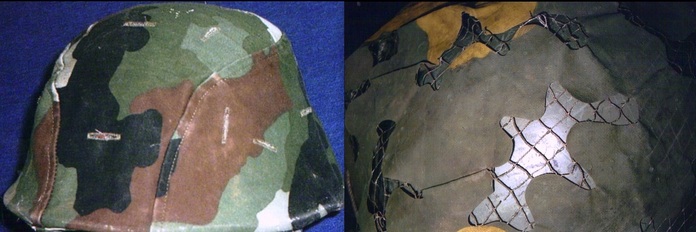
M44 Yugoslavian Helmet with camo cover and net.
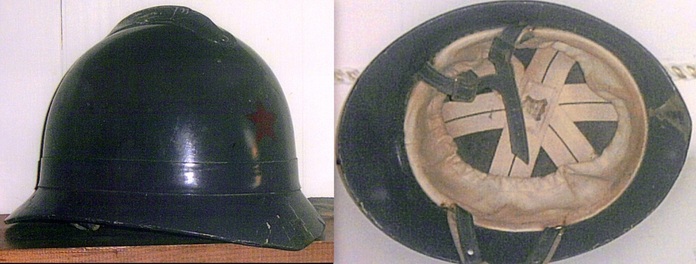
Yugoslavian Milicija Hard Aluminium Helmet.
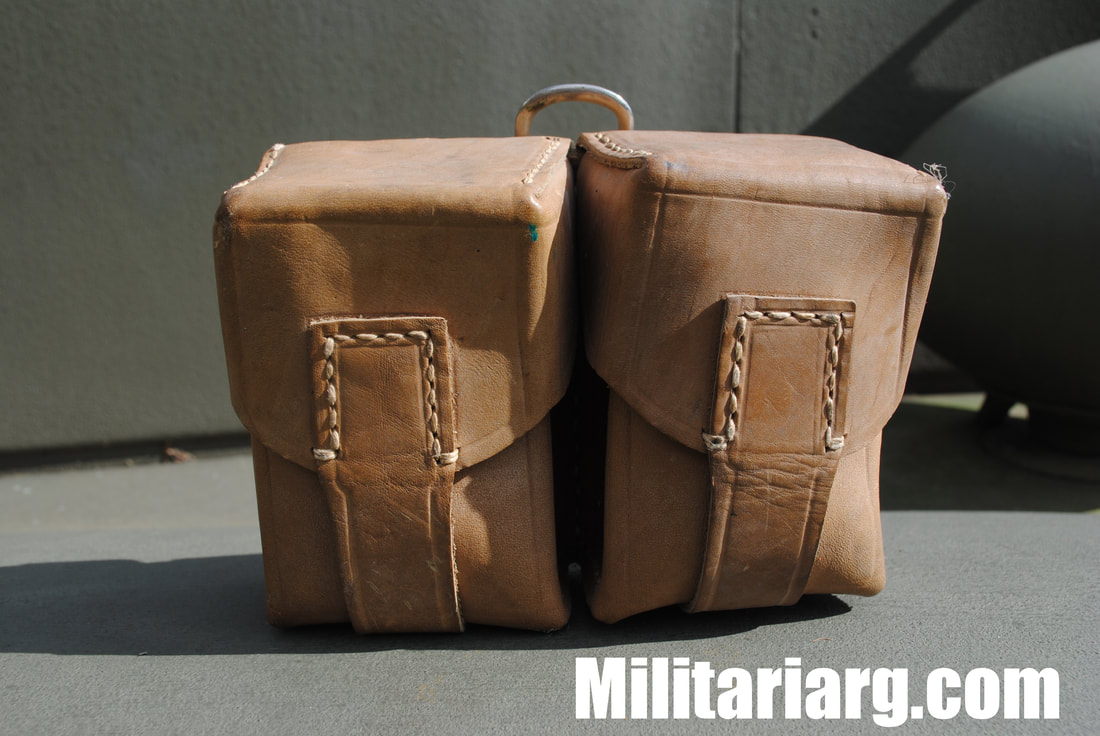
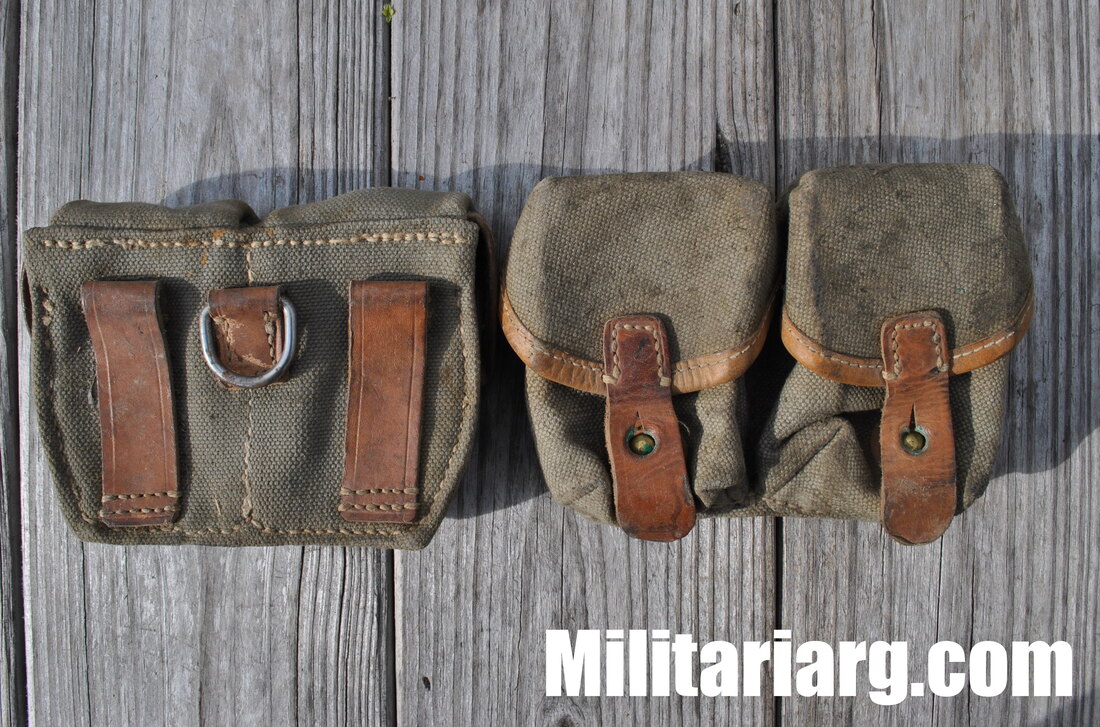
M48 2-Cell Yugo Mauser Ammo Pouch.
Yugo Mauser Canvas Ammo Pouches
Post-War Yugoslavia
After the war, the monarchy was abolished, and the Socialist Federal Republic of Yugoslavia
was established as a federation of six republics under Tito's authoritarian rule.
Titoism and Non-Alignment: Yugoslavia pursued a unique form of socialism independent of the Soviet Union. After the Tito-Stalin split in 1948, Yugoslavia broke from the Soviet bloc, received American aid, and developed the policy of "workers' self-management" domestically. Externally, Tito became a founding leader of the Non-Aligned Movement, a "third way" during the Cold War that refused to align with either the US or USSR power blocs.
Stability and Decline: Under Tito, national unity among the varied ethnic groups was prioritized and largely maintained. However, after Tito's death in 1980, economic problems and rising nationalism in the different republics led to the state's fragmentation in the early 1990s, culminating in the devastating Yugoslav Wars.
After the war, the monarchy was abolished, and the Socialist Federal Republic of Yugoslavia
was established as a federation of six republics under Tito's authoritarian rule.
Titoism and Non-Alignment: Yugoslavia pursued a unique form of socialism independent of the Soviet Union. After the Tito-Stalin split in 1948, Yugoslavia broke from the Soviet bloc, received American aid, and developed the policy of "workers' self-management" domestically. Externally, Tito became a founding leader of the Non-Aligned Movement, a "third way" during the Cold War that refused to align with either the US or USSR power blocs.
Stability and Decline: Under Tito, national unity among the varied ethnic groups was prioritized and largely maintained. However, after Tito's death in 1980, economic problems and rising nationalism in the different republics led to the state's fragmentation in the early 1990s, culminating in the devastating Yugoslav Wars.
The Balkan Federation (Yugoslavia, Bulgaria, Albania, and Greece)
Tito's Balkan Federation was a post-World War II plan, spearheaded by Josip Broz Tito and Bulgarian leader Georgi Dimitrov, to unite the socialist nations of the Balkan Peninsula into a single, powerful federal republic.
Goal The central aim of the proposed federation was to create a strong, independent socialist bloc in Southeast Europe that could pursue its own path to socialism and resist external domination (initially Western, but ultimately Soviet). The plan envisioned unifying the South Slav nations and potentially others, including:
Yugoslavia
Bulgaria
Albania
Parts of Greece (specifically Greek Macedonia, if the communist insurgency there succeeded)
Tito's Balkan Federation was a post-World War II plan, spearheaded by Josip Broz Tito and Bulgarian leader Georgi Dimitrov, to unite the socialist nations of the Balkan Peninsula into a single, powerful federal republic.
Goal The central aim of the proposed federation was to create a strong, independent socialist bloc in Southeast Europe that could pursue its own path to socialism and resist external domination (initially Western, but ultimately Soviet). The plan envisioned unifying the South Slav nations and potentially others, including:
Yugoslavia
Bulgaria
Albania
Parts of Greece (specifically Greek Macedonia, if the communist insurgency there succeeded)
The Tito-Stalin Split
The split was the 1948 culmination of a geopolitical conflict between the Soviet Union and Yugoslavia, resulting in Yugoslavia's expulsion from the Cominform and its pursuit of an independent path to socialism. The conflict stemmed from Josip Broz Tito's refusal to become a Soviet puppet and Stalin's determination to maintain absolute control over the Eastern Bloc.
While publicly framed as an ideological dispute, the real causes were rooted in a power struggle and competing national interests in the Balkans. Unlike other Eastern European leaders, Tito's Partisans liberated Yugoslavia largely without significant Soviet help during WWII. This gave Tito a strong power base and a refusal to be subservient to Moscow's dictates.
Tito pursued an independent and aggressive foreign policy, which often ran counter to Stalin's more cautious approach to the West.
Balkan Federation
Tito sought to create a powerful regional bloc by unifying with Albania and a federation with Bulgaria, without consulting Moscow. Stalin viewed this as a threat to Soviet dominance and a "Trojan horse" tactic.
Support for Greek Communists: Tito continued to support the communist rebels in the Greek Civil War, which Stalin opposed to avoid a wider conflict with the West (due to the secret "Percentages Agreement" that put Greece in the British sphere of influence).
Threat to Hegemony: Stalin viewed a large, unified, and independent Balkan Federation led by the popular and headstrong Tito as a direct threat to Moscow's monolithic control over Eastern Europe. He preferred smaller, easily controlled satellite states.
Independent Action: Tito and Dimitrov pursued their plans without seeking explicit approval from Moscow, an act of defiance that infuriated Stalin.
Geopolitical Concerns: Stalin worried that Tito's aggressive foreign policy and territorial claims in Austria, Italy, and Greece would provoke a war with the Western Allies that the Soviet Union was not yet ready for.
Following the 1948 split, Bulgaria, under immense Soviet pressure, sided with Moscow and annulled the agreements with Yugoslavia, effectively ending the project of a Balkan Federation.
Territorial Claims
Yugoslavia pressed territorial claims on Trieste (Italy) and Carinthia (Austria), which Stalin believed embarrassed the Soviet Union and risked confrontation with the Western Allies.
Soviet Control
Stalin intended to exert complete control over the economies and foreign policies of all Eastern Bloc nations. Yugoslavia's independent economic development plans and refusal to align with Soviet needs were seen as a direct challenge.
"Foibe massacres"
1943 - 1945. Forces under Josip Broz Tito's command perpetrated mass killings against the ethnic Italian population in the regions of Istria and Venezia Giulia (which includes parts of modern-day Slovenia and Croatia) during and after WW2.
Soviet Rape during the liberation of Serbia
Rapes and other acts of violence were committed by Soviet Red Army soldiers during the liberation of Yugoslavia especially in the northeastern regions of Serbia and the capital, Belgrade, in late 1944 and early 1945. These incidents became a significant point of contention between the Yugoslav communist leadership and Moscow.
In late 1944 and early 1945, rapes were committed against women by the Soviet Red Army soldiers during their advance to Berlin through Serbia during the Second World War. According to Yugoslav politician Milovan Djilas, this caused concern to the Yugoslav communist partisans, who feared that stories of crimes committed by their Soviet allies would weaken their standing among the population. According to Djilas, the Soviet refusal to address protests against Red Army war crimes in Yugoslavia enraged Tito's government and it was a contributing factor in Yugoslavia's subsequent exit from the Soviet Bloc.
The Break
The conflict became public on June 28, 1948, when the Cominform (Communist Information Bureau) published a resolution denouncing the Communist Party of Yugoslavia (KPJ) leadership for "deviating from the Marxist-Leninist line" and taking a "nationalist posture". The resolution called on "healthy" members of the party to overthrow Tito's leadership.
The split had far-reaching consequences for Yugoslavia and the Cold War:
Political Purges in Yugoslavia: Tito resisted Stalin's pressure and launched widespread purges against perceived "Cominformists" (Stalin supporters) within the party and military. Thousands were imprisoned in camps like Goli Otok.
Economic Blockade: The Soviet Union and its allies imposed an economic blockade on Yugoslavia, causing significant disruption to the Yugoslav economy, which had relied heavily on Eastern Bloc trade.
Western Aid and Alignment: Isolated from the East, Yugoslavia turned to the United States and Britain for economic and military assistance. The West saw the rift as an opportunity to weaken the communist bloc and provided substantial aid, which helped Tito's regime survive.
"Titoism" and Non-Alignment: Yugoslavia established a unique model of "Titoism" (socialist self-management) and became a founding member of the Non-Aligned Movement, maintaining neutrality between the two superpowers during the Cold War.
Purges Across Eastern Europe: The split prompted Stalin to orchestrate show trials and purges of high-ranking officials suspected of "Titoism" in other Eastern European countries to solidify his control over the bloc.
End of the Greek Civil War: In July 1949, Yugoslavia cut off support to the Greek communist guerrillas, which led to their rapid collapse.
The split was the 1948 culmination of a geopolitical conflict between the Soviet Union and Yugoslavia, resulting in Yugoslavia's expulsion from the Cominform and its pursuit of an independent path to socialism. The conflict stemmed from Josip Broz Tito's refusal to become a Soviet puppet and Stalin's determination to maintain absolute control over the Eastern Bloc.
While publicly framed as an ideological dispute, the real causes were rooted in a power struggle and competing national interests in the Balkans. Unlike other Eastern European leaders, Tito's Partisans liberated Yugoslavia largely without significant Soviet help during WWII. This gave Tito a strong power base and a refusal to be subservient to Moscow's dictates.
Tito pursued an independent and aggressive foreign policy, which often ran counter to Stalin's more cautious approach to the West.
Balkan Federation
Tito sought to create a powerful regional bloc by unifying with Albania and a federation with Bulgaria, without consulting Moscow. Stalin viewed this as a threat to Soviet dominance and a "Trojan horse" tactic.
Support for Greek Communists: Tito continued to support the communist rebels in the Greek Civil War, which Stalin opposed to avoid a wider conflict with the West (due to the secret "Percentages Agreement" that put Greece in the British sphere of influence).
Threat to Hegemony: Stalin viewed a large, unified, and independent Balkan Federation led by the popular and headstrong Tito as a direct threat to Moscow's monolithic control over Eastern Europe. He preferred smaller, easily controlled satellite states.
Independent Action: Tito and Dimitrov pursued their plans without seeking explicit approval from Moscow, an act of defiance that infuriated Stalin.
Geopolitical Concerns: Stalin worried that Tito's aggressive foreign policy and territorial claims in Austria, Italy, and Greece would provoke a war with the Western Allies that the Soviet Union was not yet ready for.
Following the 1948 split, Bulgaria, under immense Soviet pressure, sided with Moscow and annulled the agreements with Yugoslavia, effectively ending the project of a Balkan Federation.
Territorial Claims
Yugoslavia pressed territorial claims on Trieste (Italy) and Carinthia (Austria), which Stalin believed embarrassed the Soviet Union and risked confrontation with the Western Allies.
Soviet Control
Stalin intended to exert complete control over the economies and foreign policies of all Eastern Bloc nations. Yugoslavia's independent economic development plans and refusal to align with Soviet needs were seen as a direct challenge.
"Foibe massacres"
1943 - 1945. Forces under Josip Broz Tito's command perpetrated mass killings against the ethnic Italian population in the regions of Istria and Venezia Giulia (which includes parts of modern-day Slovenia and Croatia) during and after WW2.
Soviet Rape during the liberation of Serbia
Rapes and other acts of violence were committed by Soviet Red Army soldiers during the liberation of Yugoslavia especially in the northeastern regions of Serbia and the capital, Belgrade, in late 1944 and early 1945. These incidents became a significant point of contention between the Yugoslav communist leadership and Moscow.
In late 1944 and early 1945, rapes were committed against women by the Soviet Red Army soldiers during their advance to Berlin through Serbia during the Second World War. According to Yugoslav politician Milovan Djilas, this caused concern to the Yugoslav communist partisans, who feared that stories of crimes committed by their Soviet allies would weaken their standing among the population. According to Djilas, the Soviet refusal to address protests against Red Army war crimes in Yugoslavia enraged Tito's government and it was a contributing factor in Yugoslavia's subsequent exit from the Soviet Bloc.
The Break
The conflict became public on June 28, 1948, when the Cominform (Communist Information Bureau) published a resolution denouncing the Communist Party of Yugoslavia (KPJ) leadership for "deviating from the Marxist-Leninist line" and taking a "nationalist posture". The resolution called on "healthy" members of the party to overthrow Tito's leadership.
The split had far-reaching consequences for Yugoslavia and the Cold War:
Political Purges in Yugoslavia: Tito resisted Stalin's pressure and launched widespread purges against perceived "Cominformists" (Stalin supporters) within the party and military. Thousands were imprisoned in camps like Goli Otok.
Economic Blockade: The Soviet Union and its allies imposed an economic blockade on Yugoslavia, causing significant disruption to the Yugoslav economy, which had relied heavily on Eastern Bloc trade.
Western Aid and Alignment: Isolated from the East, Yugoslavia turned to the United States and Britain for economic and military assistance. The West saw the rift as an opportunity to weaken the communist bloc and provided substantial aid, which helped Tito's regime survive.
"Titoism" and Non-Alignment: Yugoslavia established a unique model of "Titoism" (socialist self-management) and became a founding member of the Non-Aligned Movement, maintaining neutrality between the two superpowers during the Cold War.
Purges Across Eastern Europe: The split prompted Stalin to orchestrate show trials and purges of high-ranking officials suspected of "Titoism" in other Eastern European countries to solidify his control over the bloc.
End of the Greek Civil War: In July 1949, Yugoslavia cut off support to the Greek communist guerrillas, which led to their rapid collapse.
Operation Rösselsprung (German for "Knight's move"). The Fallschirmjäger operation to capture Josip Broz Tito.
The mission, launched on May 25, 1944, involved a combined airborne and ground assault on the Yugoslav Partisan supreme headquarters in the town of Drvar, in occupied Yugoslavia. The primary goal of the operation, executed by the 500th SS Parachute Battalion and other Axis forces, was to capture or kill Tito and destroy his command structure. The operation ultimately failed, as Tito and his key staff managed to escape the encirclement, thanks to fierce Partisan resistance and a lack of precise German intelligence on his exact location. German forces only managed to capture his newly tailored marshal's uniform.