Militariarg.com
  • Home
  • Army
  • Aviation
  • Navy
  • Uniforms and Badges
  • Arms and Weapons
  • Equipment
  • Vehicles
  • Operational and Organizational Structure, Security Forces, Transportation, Books, Models and More.
  • Argentine Confederation Era. 1829 - 1852.
  • From 1852 to 1910 (French fashion)
  • Bunker 1982: South Atlantic War Militaria
  • International Militaria
  • Argentina WWII Era (Neutral) Reenactment Impression
  • Links ~ Enlaces

Gebirgsjäger Reenactment Impression - Thanks to Leo Arko for his advice and guidance in this WWII Gebirgsjäger reenactment.
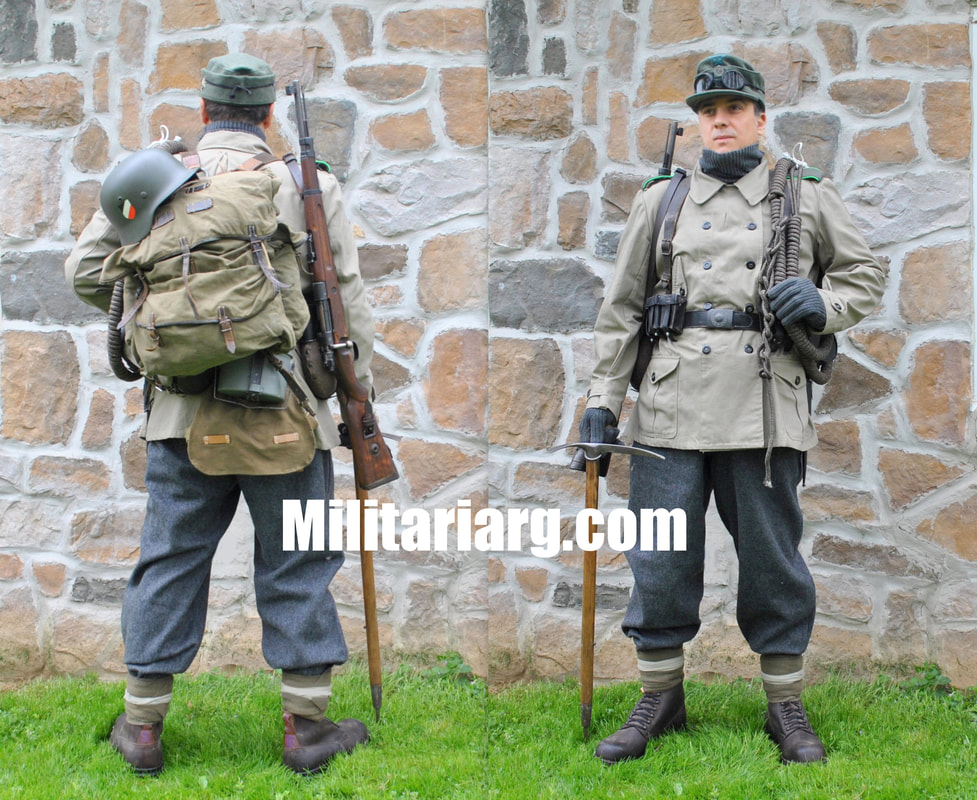
​During World War II, the German Gebirgsjäger were the Wehrmacht's light infantry mountain troops, considered elite soldiers due to their specialized training in high-altitude, cold-weather, and difficult terrain combat. They were identified by their distinctive edelweiss insignia and fought on virtually all fronts, often acting as highly effective shock troops.
 
Organization and Equipment

Gebirgsjäger divisions were lightly equipped compared to standard infantry divisions, with transport primarily provided by mules or horses due to the inaccessible terrain they operated in. A typical division numbered around 15,000 men and was structured with two infantry regiments (as opposed to the standard three) supported by mountain artillery, anti-tank, and engineer battalions.

They wore a standard field-grey uniform but were issued specialized gear for the mountains, including:
Mountain boots (Bergstiefel): Heavy climbing boots used with crampons on ice.
Mountain cap (Bergmütze): A short-brimmed field cap.
Anorak (Windbluse): A reversible, padded jacket for cold weather, often in mouse grey/white.

Weapons

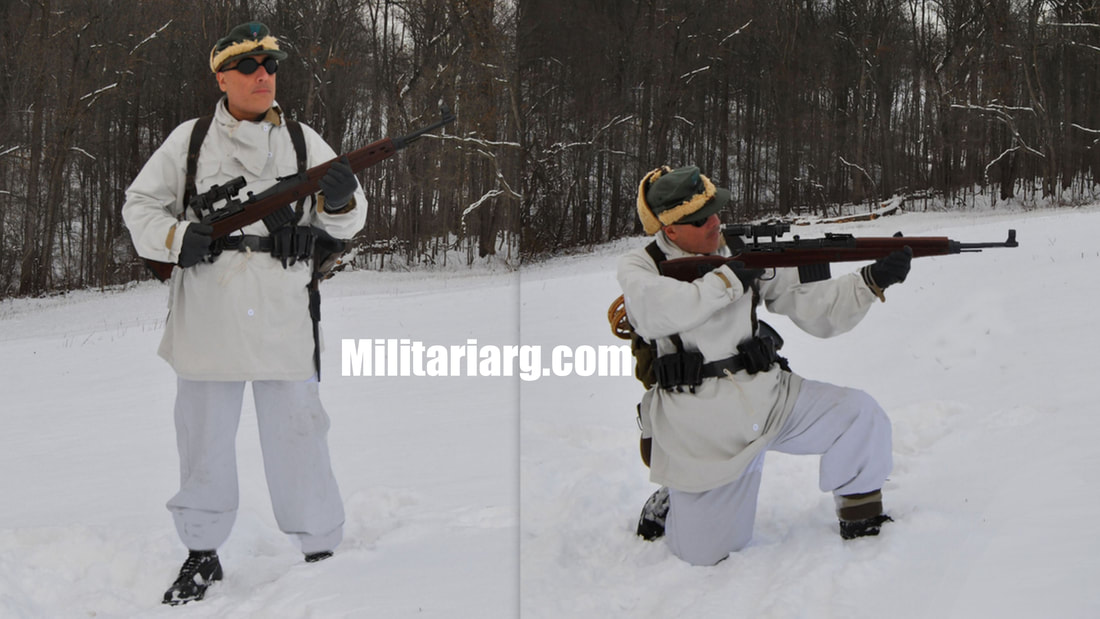
While they used standard German weaponry like the K98 rifle and MG34/MG42 machine guns, a shorter-barreled G33/40 Mauser rifle was specifically produced for them, better suited for mountain use.

Transportable Weapons

Their artillery included light mountain howitzers that could be broken down into smaller loads to be carried by mules to high-altitude positions. 

Campaigns

Gebirgsjäger units saw extensive action across numerous and varied theaters of the war: 

Invasion of Poland and Norway (1939-1940): The 1st Gebirgs Division fought in Poland, and the 2nd Division participated in the Norway campaign, notably capturing Narvik.

The Balkans and Crete (1941): They played a crucial role in breaking through the Greek Metaxas Line fortifications and were involved in the fierce fighting on the island of Crete, where they supported the Fallschirmjäger (paratroopers).

Eastern Front (1941-1944): They served extensively on the Eastern Front, especially in the extreme northern sectors of Lapland (Finland) and the southern Caucasus region, where they planted the Reichskriegsfahne (War Flag) on Mount Elbrus, the highest peak in the range.

Italy and Western Front (1944-1945): As the war progressed, they fought in the rugged terrain of the Gothic Line in Italy and the Vosges region of France, where their skills were vital in the defense of German positions. 

The Gebirgsjäger earned a reputation for resilience and self-sufficiency, though their units were also involved in several notorious war crimes, particularly during anti-partisan operations in the Balkans and Greece.
Picture
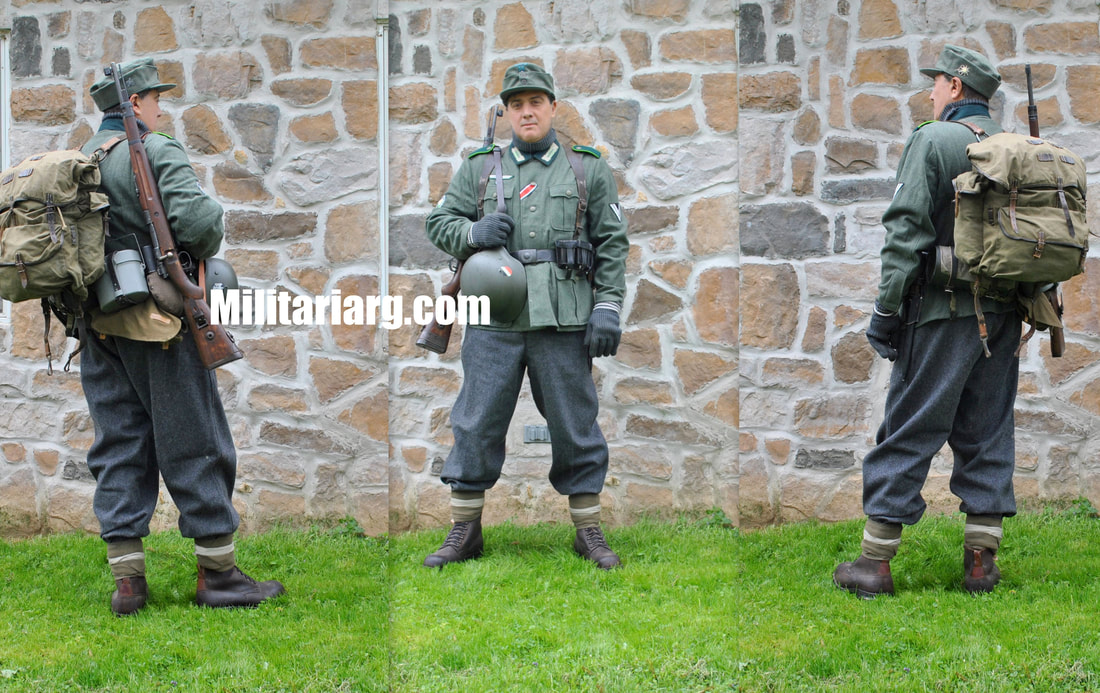
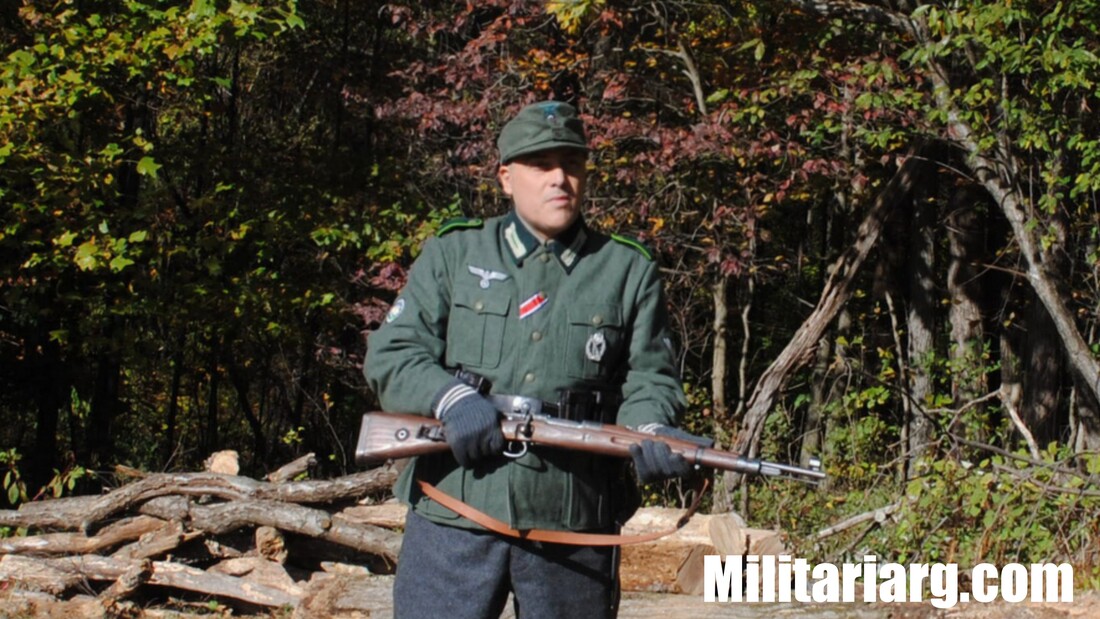
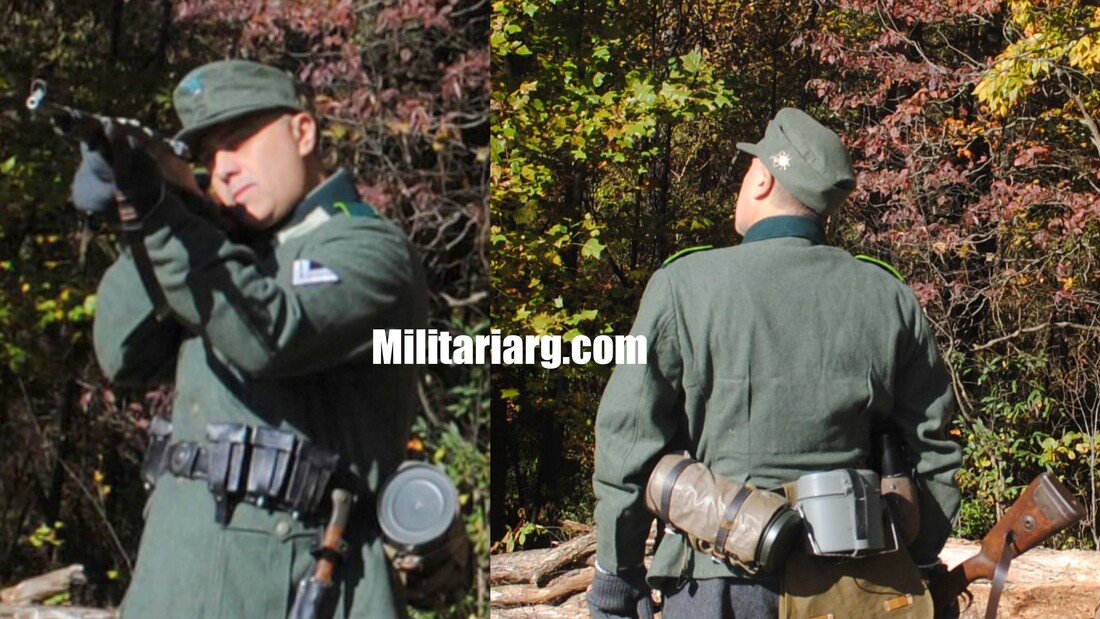
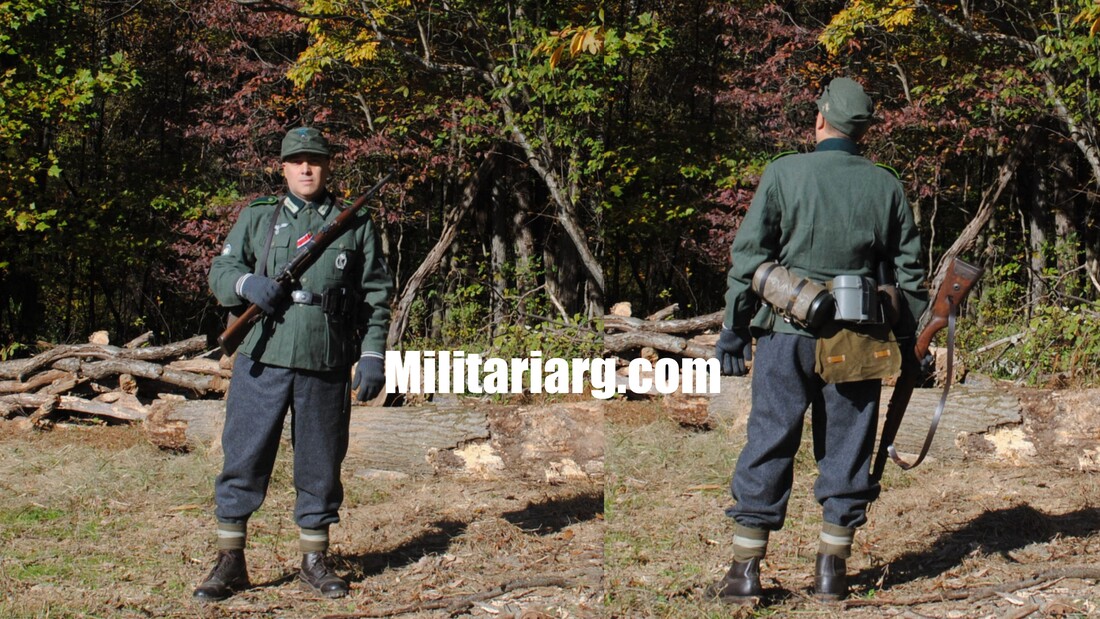
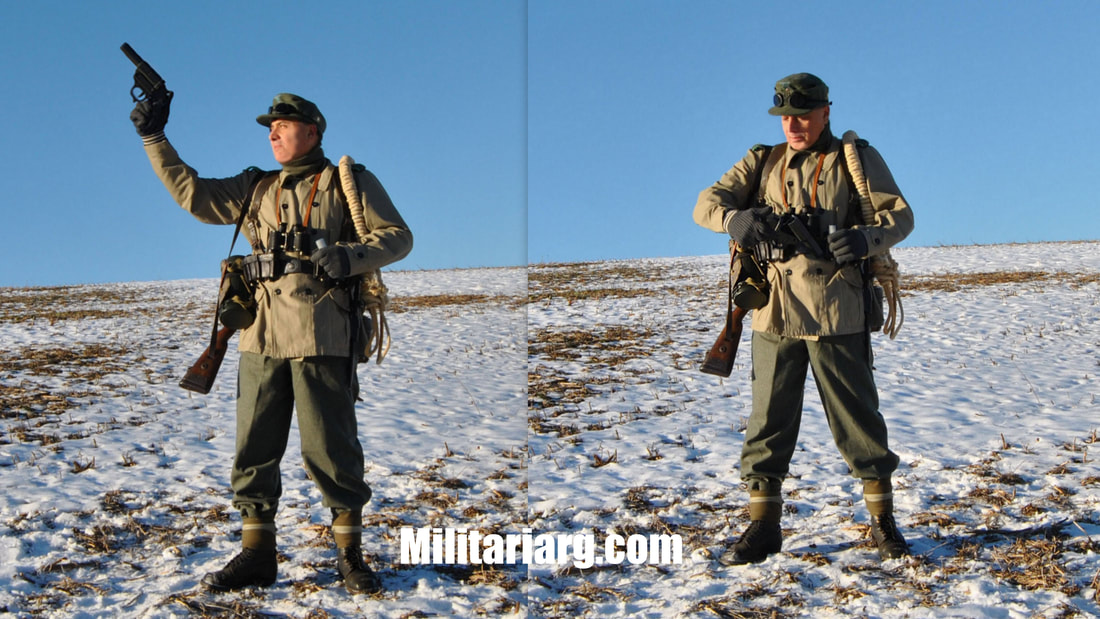
Gebirgsjäger mountain cap "Bergmütze * with the 2nd Gebirgsjäger Division badge (deer or elk head) and the edelweiss metal insignia; mountain goggles, wind jacket, M36 tunic; Wehrmacht German gloves; M37 trousers "Berghosen"; Climbing mountain boots; Felt gaiters; M35 double decal German Helmet "Stahlhelm"; Gebirgsjäger rucksack; Basic field infantry equipment; Mountain ice ax; G33/40 Gebirgsjäger carbine and bayonet.
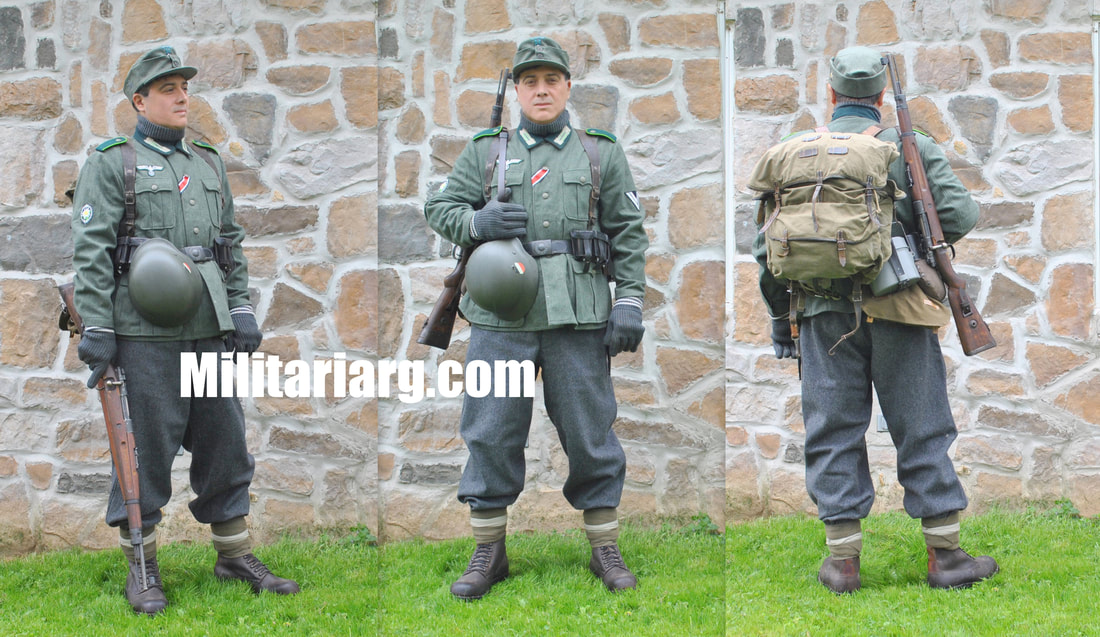
* Bergmütze (Mountain Cap): This grey wool peaked cap was the signature headwear, predating the general issue M43 field cap which was inspired by it. A key identifier was the metal or embroidered Edelweiss insignia worn on the left side (stem to the front for German Army units).
Picture
​Sleeve Edelweiss: In addition to the cap badge, a cloth Edelweiss patch was worn on the right sleeve, embroidered on a field-grey wool base after 1940.

G33/40 Gebirgsjäger Carbine

Picture
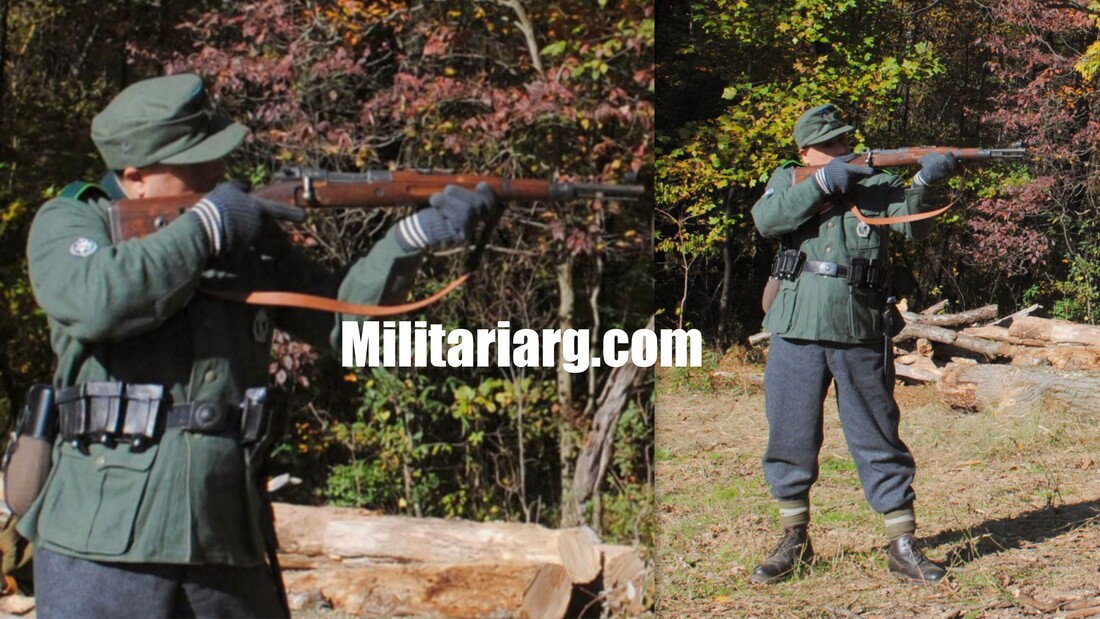
​The Gewehr 33/40 (G33/40) was a light, short, bolt-action carbine developed and produced for the German Army's elite Gebirgsjäger (mountain troops) during World War II. It was based on the pre-war Czech Vz. 33 carbine and manufactured in occupied Czechoslovakia. 
Picture
​The G33/40 was specifically designed for use in rugged, mountainous terrain, prioritizing light weight and a compact form for ease of carrying during climbing and skiing operations.
Picture
​The rifle was engineered to be lighter than the standard Karabiner 98k. This was achieved through features like "lightning cuts" on the receiver, a hollowed-out bolt handle, a shorter barrel (19.4 inches compared to the K98k's 24 inches), and a small ring Mauser action.
Picture
A distinctive feature was a protective sheet metal plate on the left side of the buttstock. This was intended to reinforce the stock and protect the wood from damage when the soldier used the rifle as a makeshift trekking pole or ice ax while climbing on rocky or icy slopes. It fired the standard German 7.92x57mm Mauser cartridge. The short barrel meant the rifle produced significant muzzle flash and a sharp recoil impulse compared to the longer K98k.
​The G33/40 was produced at the Brno factory in Czechoslovakia from 1940 to 1942, using the German factory codes "945" (1940) and "dot" (1941-1942). Production ceased when the factory was converted to produce the standard K98k rifle. Approximately 120,000 to 130,000 units were manufactured in total.

Despite the existence of the Gebirgsjager Rifle G33/40, the Karabiner 98k (K98k) was indeed the most common standard-issue rifle across the entire German Army, including the Gebirgsjäger

Wehrmacht Gebirgsjager Bergschuhe
Picture
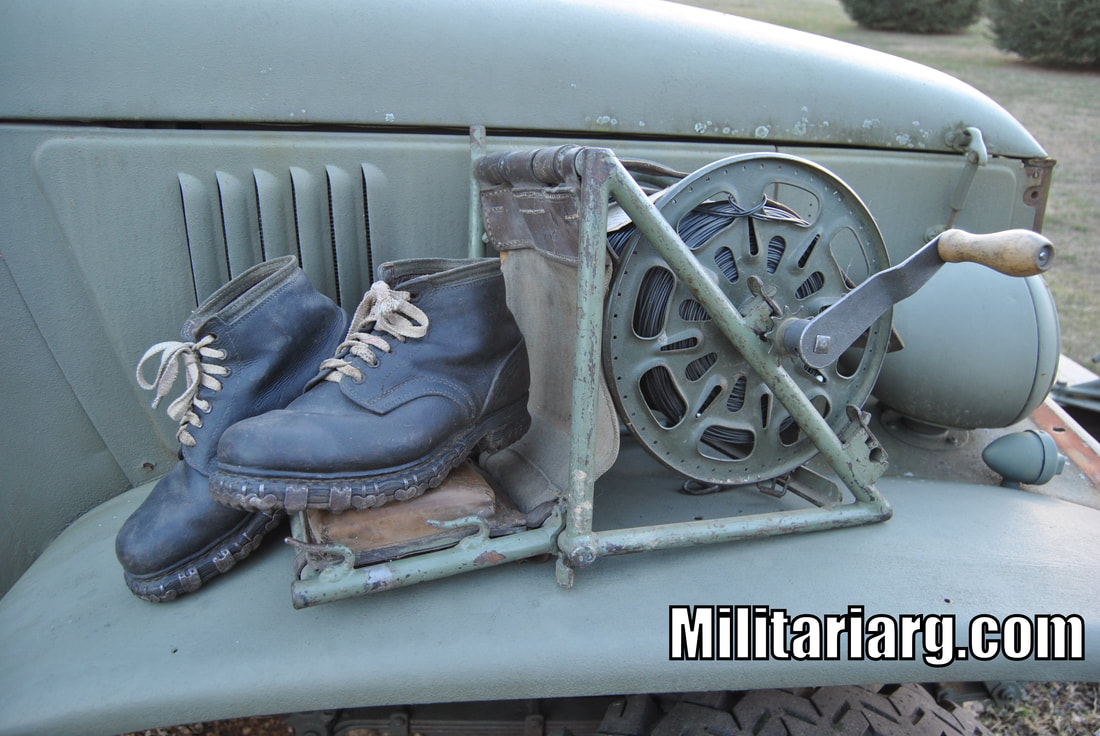
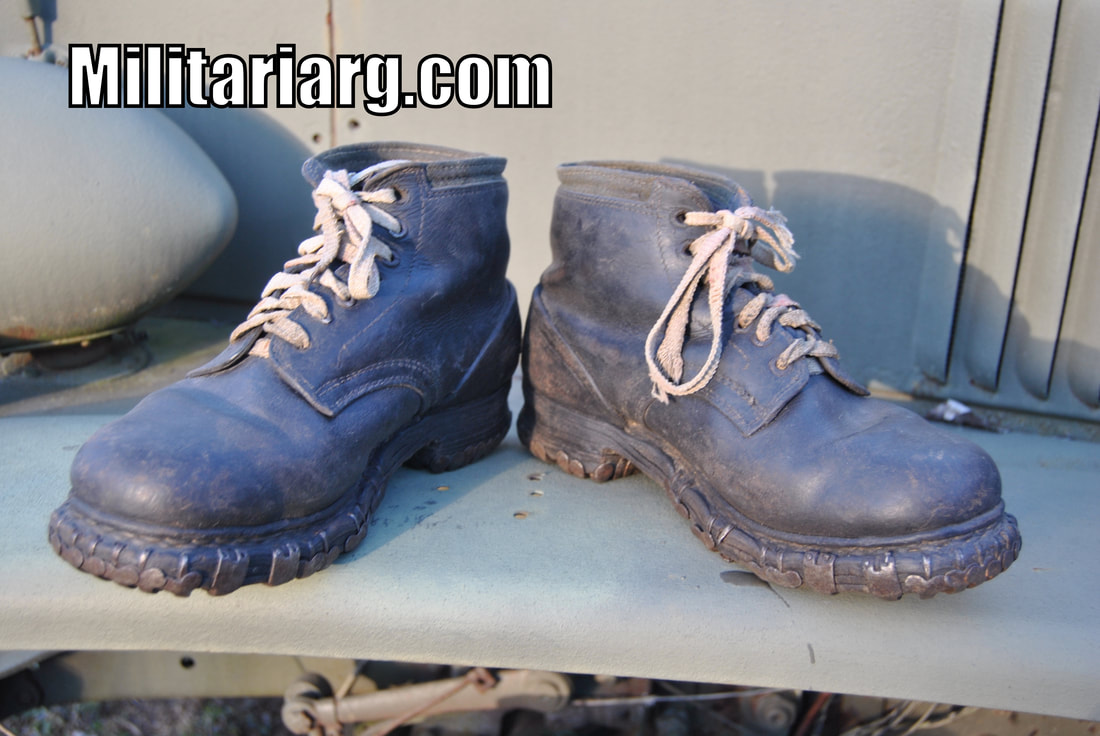
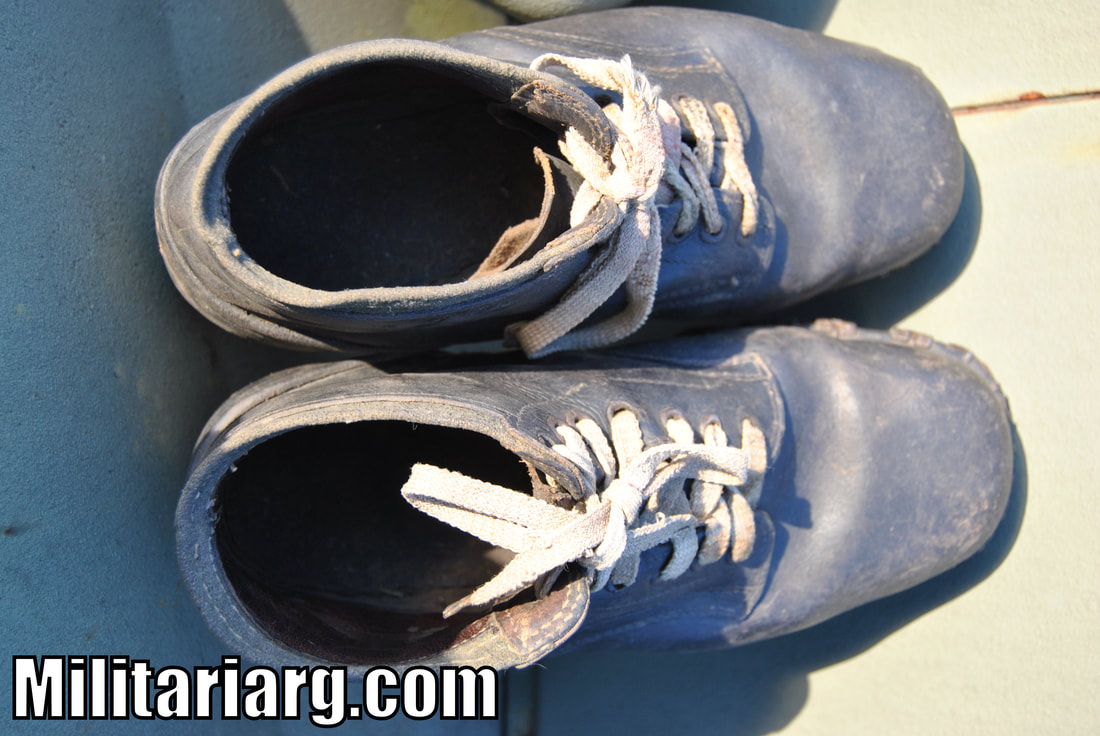
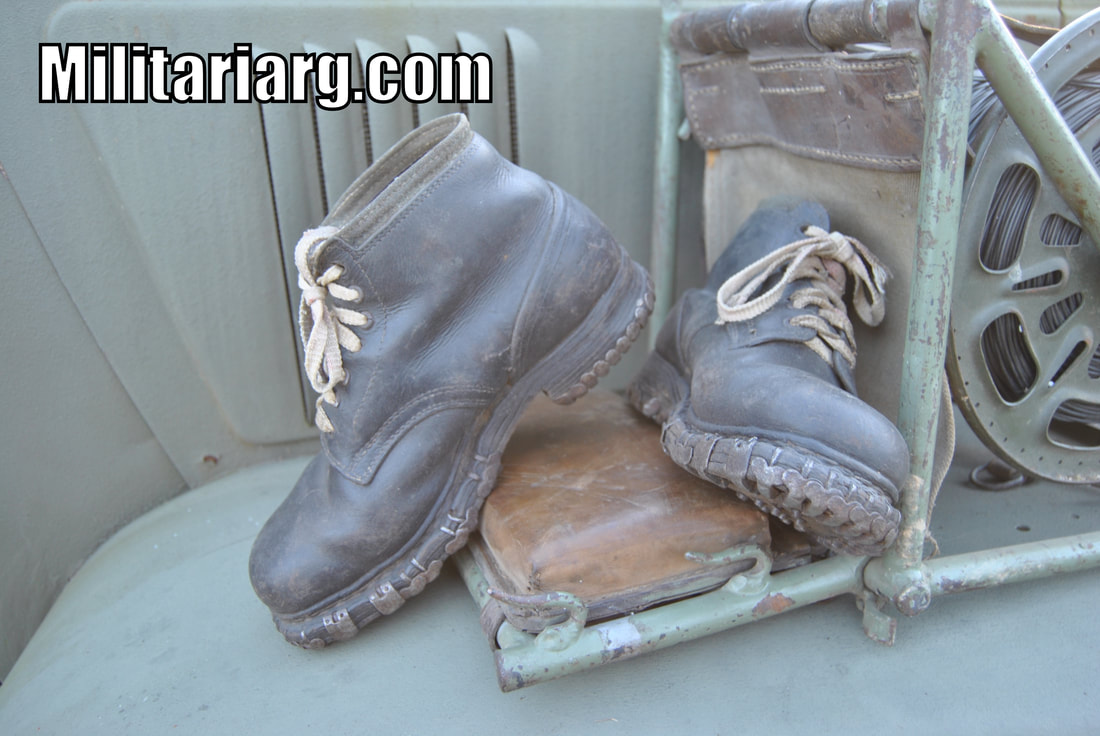
The Wehrmacht Gebirgsjäger Bergschuhe (mountain boots) were robust, ankle-high hiking boots, specifically designed for the rigors of mountain warfare, distinguishing them significantly from the knee-high marching boots of standard infantry.
Picture
They were brown or black leather boots that reached the ankle, similar to modern hiking boots. They were designed to offer freedom of movement while climbing.
Picture
Picture
They were made from heavy, durable leather. Some early or late war models had felt or wool lining at the top edge to prevent chafing and provide insulation.

The boots were laced up, often with strong leather thongs, and had a snug fit that supported the ankle.
Combination: The Bergschuhe were typically worn with Gamaschen (gaiters or ankle wraps) to keep out snow and debris, especially when soldiers wore the specialized knee-breeches (Kniebundhose).
Picture
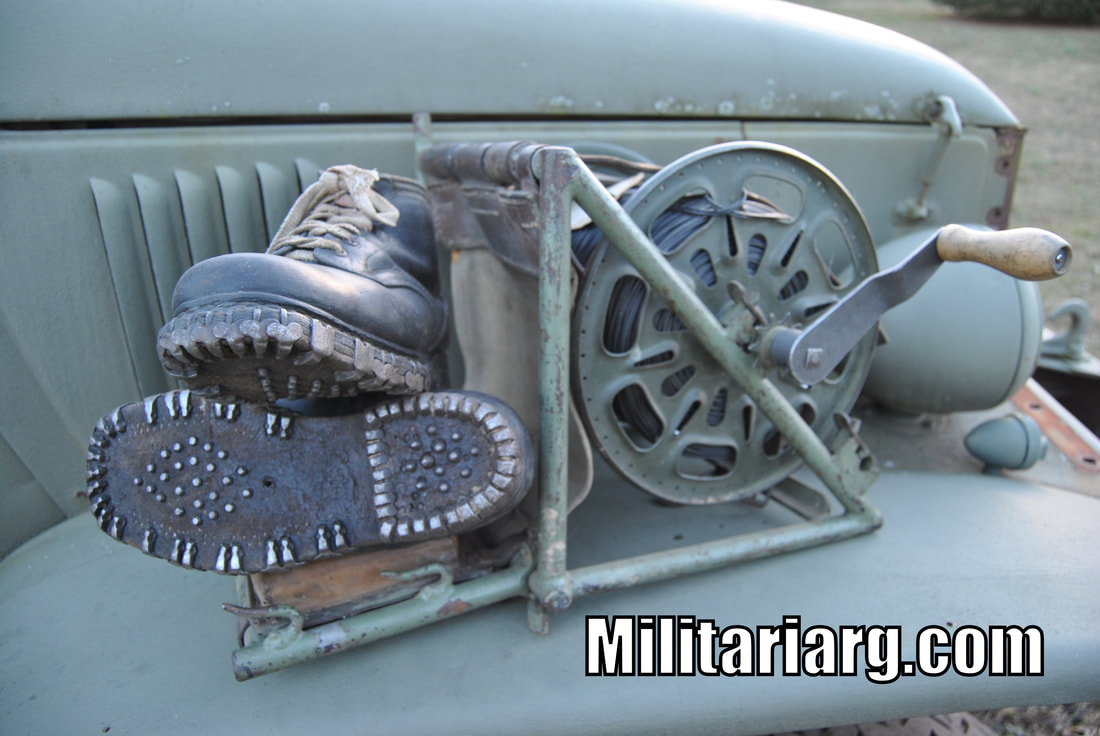
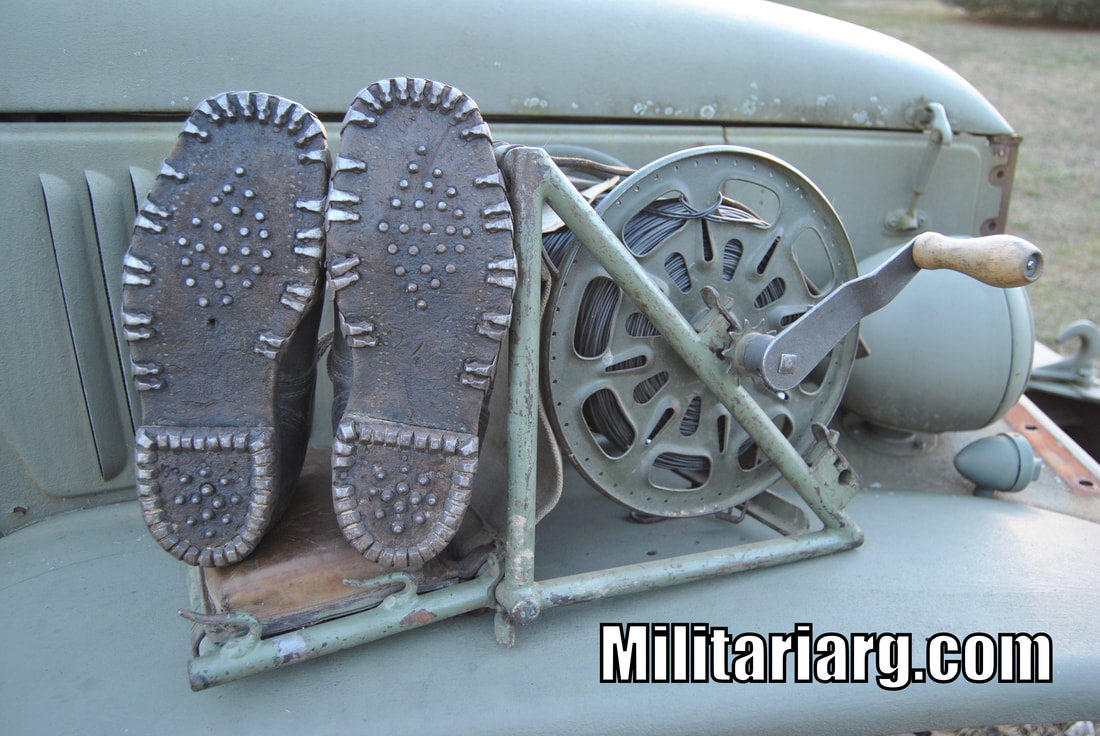
​Soles: The soles were a crucial feature. They were thick and robust, often fitted with hobnails (Randnägel and Stifte) set around the edge and in a diamond pattern under the sole to ensure maximum traction on rock and ice. They also had a notch in the heel for attaching skis.
Picture
This specialized equipment was essential for the unique demands faced by the Gebirgsjäger fighting from Norway to Greece and the Eastern Front.

Picture
Flare gun, signal pistol. The primary German World War II flare guns were the Leuchtpistole 34 (LP 34) and the later, simpler Leuchtpistole 42 (LP 42), which were single-shot, break-action pistols used for battlefield communication and signaling.

Leuchtpistole 34 (LP 34):

Introduced in 1934, this was the primary early-to-mid war flare gun. It was primarily made of machined duralumin (an aluminum alloy) with a steel barrel and Bakelite grips, making it relatively lightweight at around 730g. It featured a single-shot, smoothbore, break-action design and a large trigger guard to allow operation with gloves.
 It was widely issued across all branches of the Wehrmacht for firing various 26.5mm pyrotechnic rounds, including colored flares, smoke rounds, and star clusters for signaling.

Leuchtpistole 42 (LP 42):

Introduced in 1943 as a wartime economy measure. It was constructed from stamped mild steel components, which were galvanized (zinc plated) to resist corrosion. The focus was on reducing production costs and time, resulting in a heavier (around 1.12 kg) but rugged pistol with a rougher appearance.
It fired the same 26.5mm ammunition as the LP 34 and served through the end of the war.

Picture

Picture
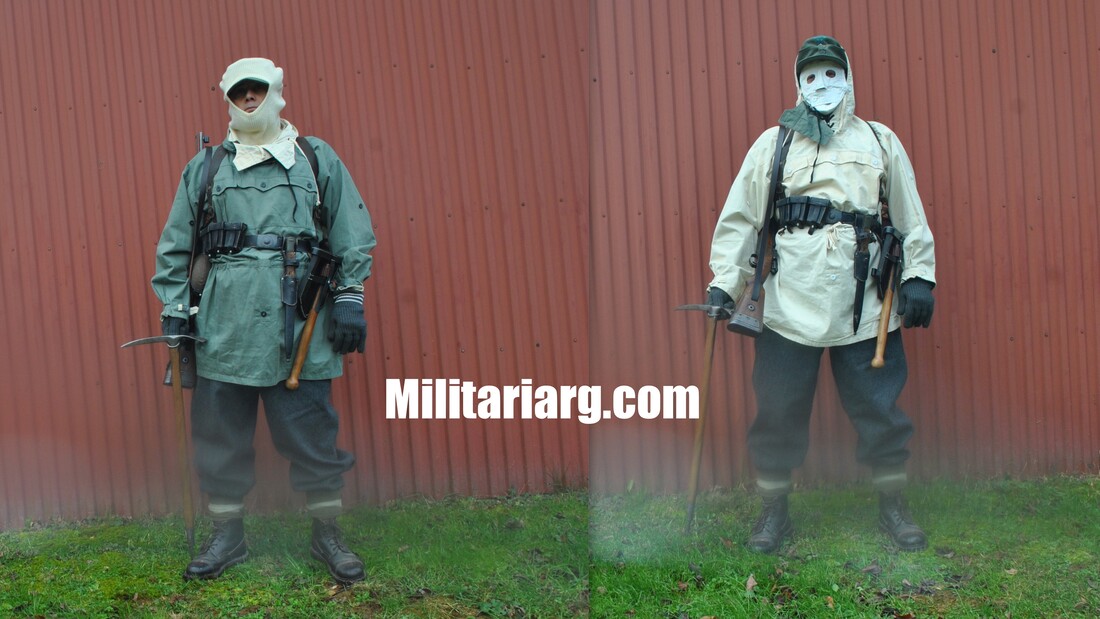
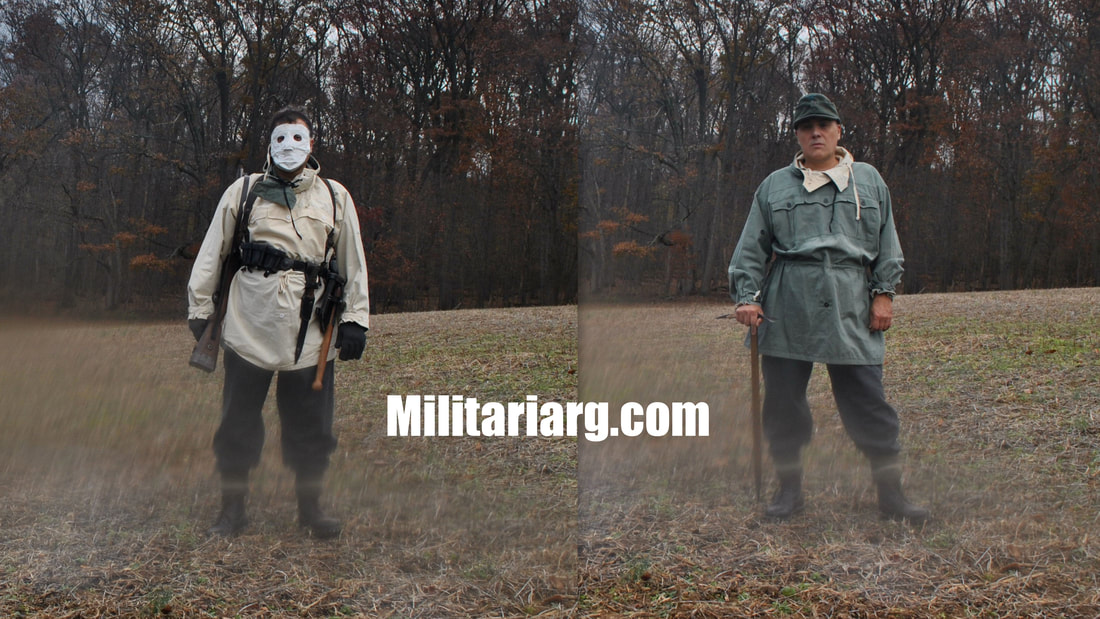
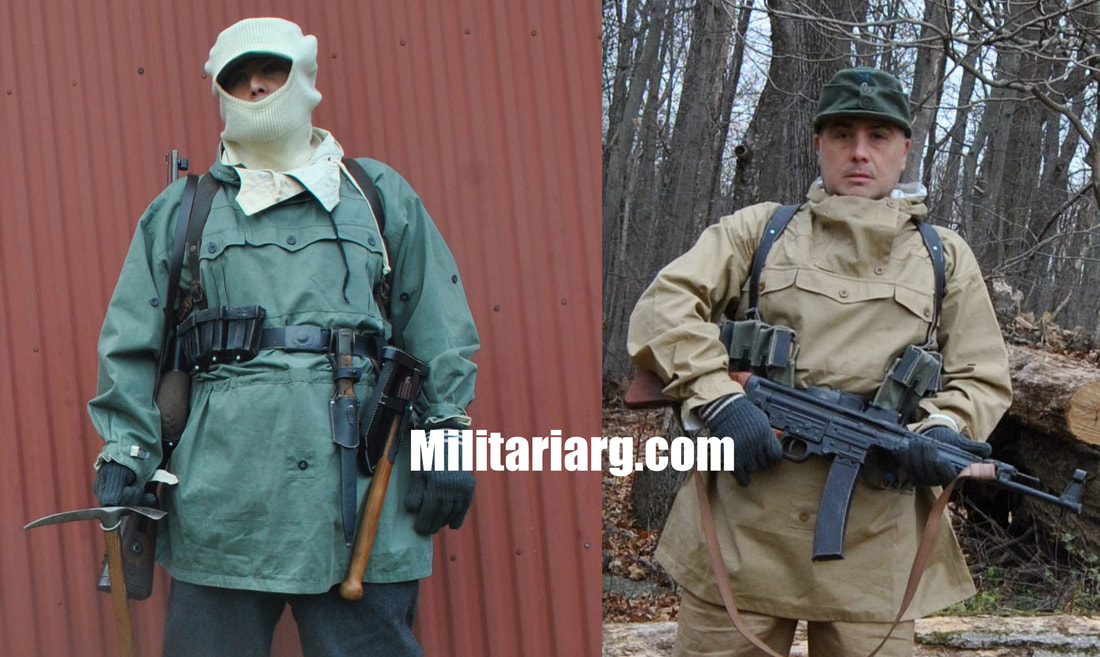
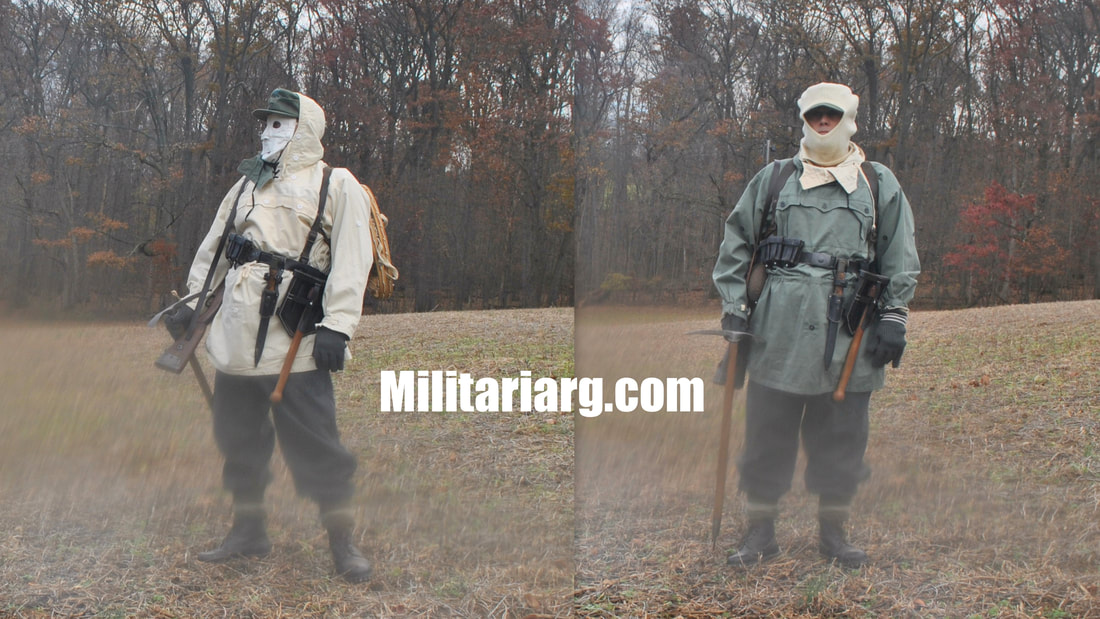
WW2 German Gebirgsjager reversible three pocket white and gray mountain anorak. Folding shovel. Snow mask and balaclava.
Picture
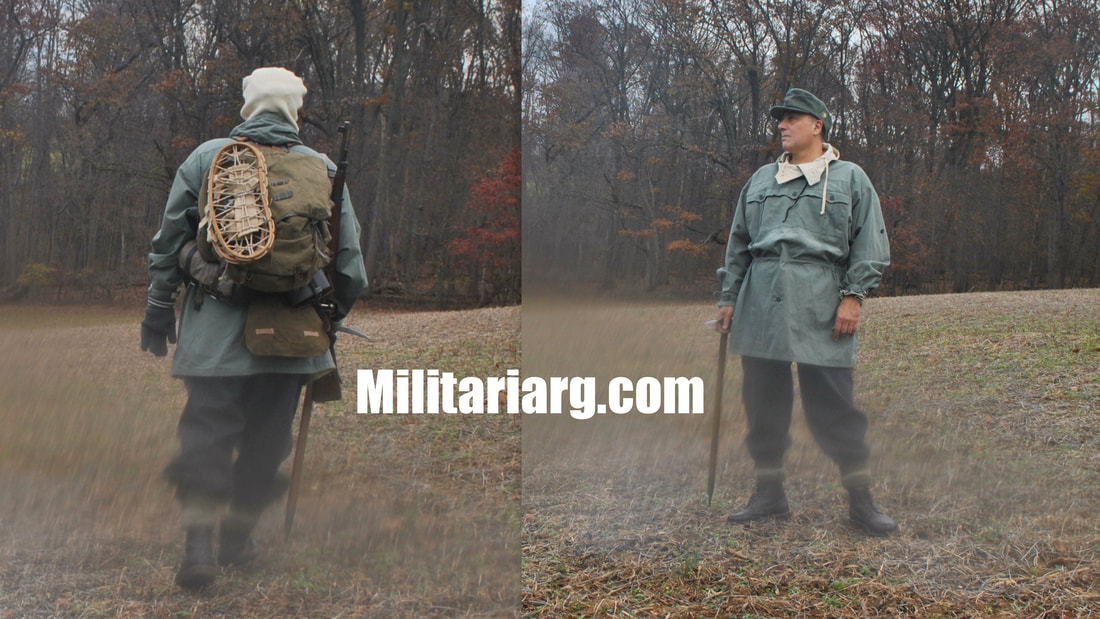
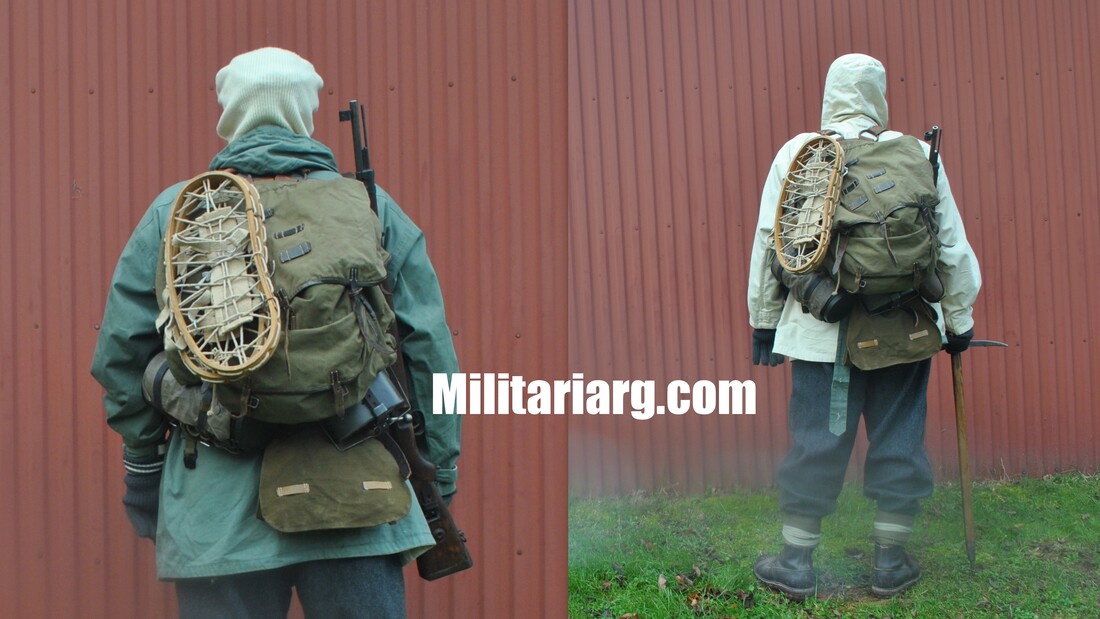
Gebirgsjager backpack, rucksack and snow shoes.
Picture
Picture
Picture

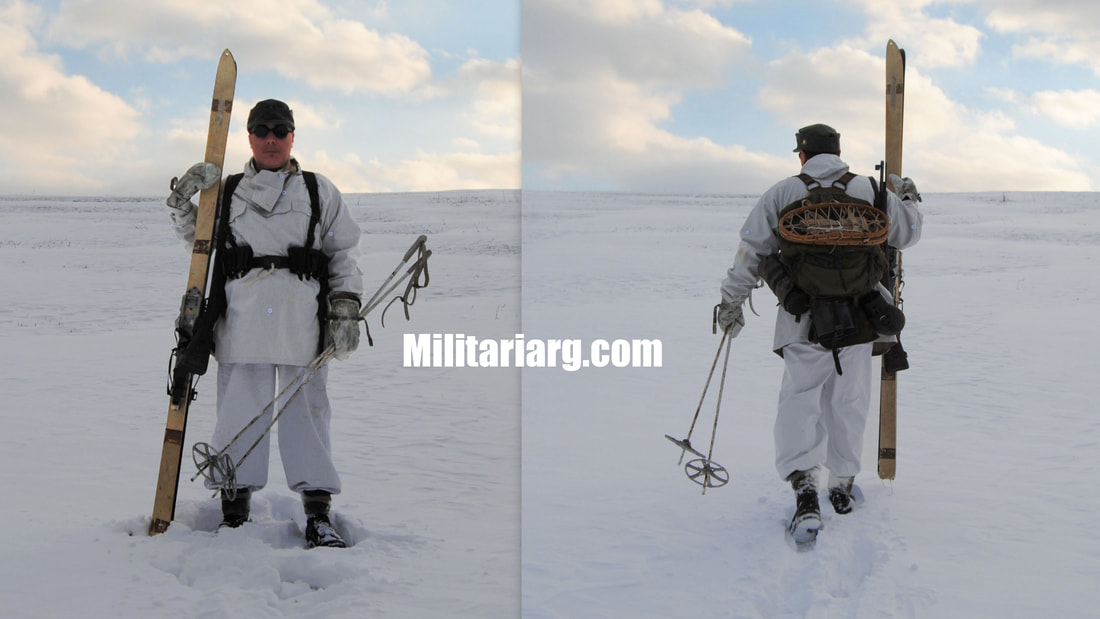
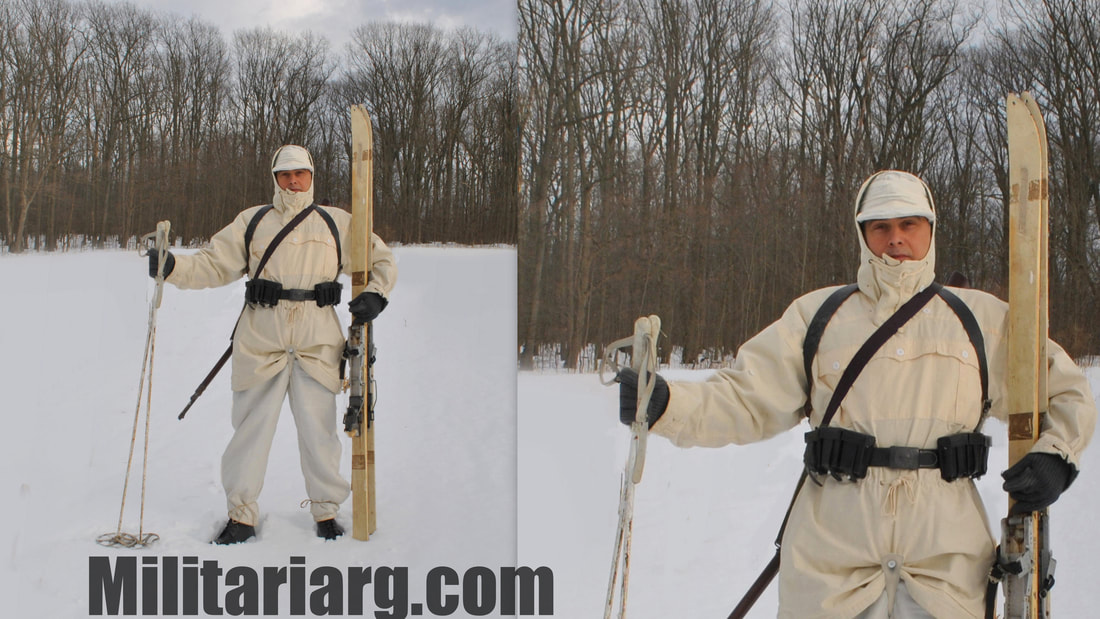
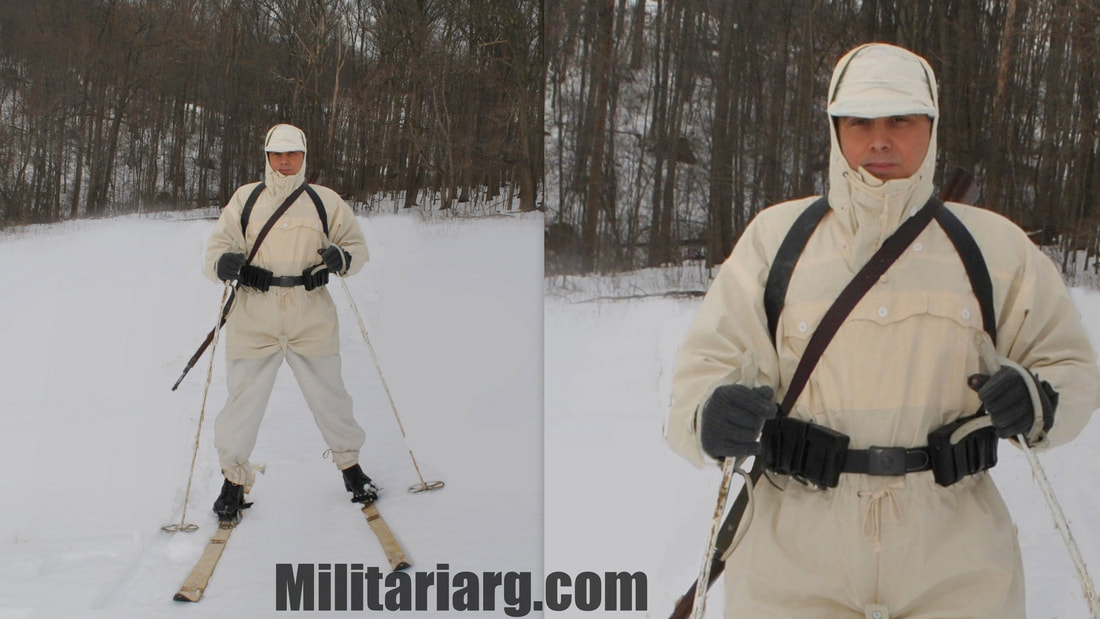
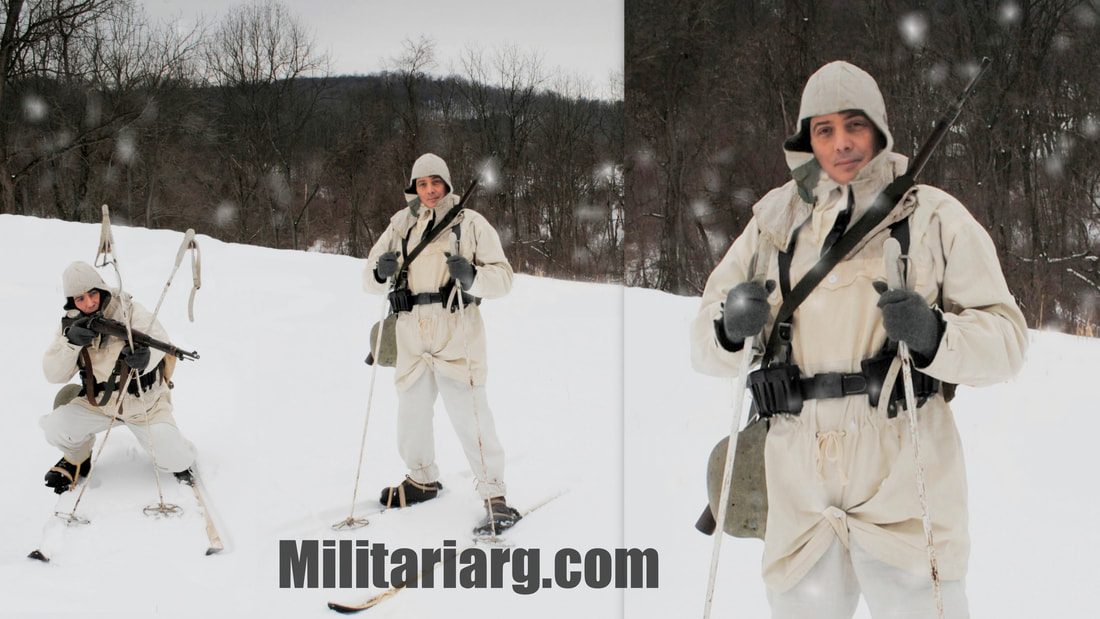
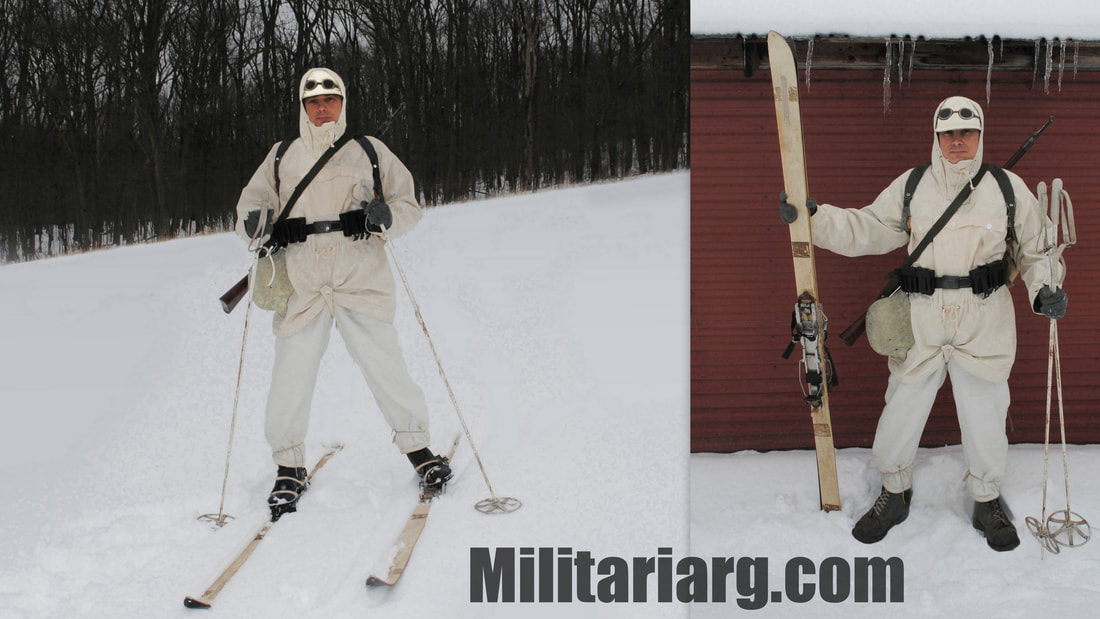
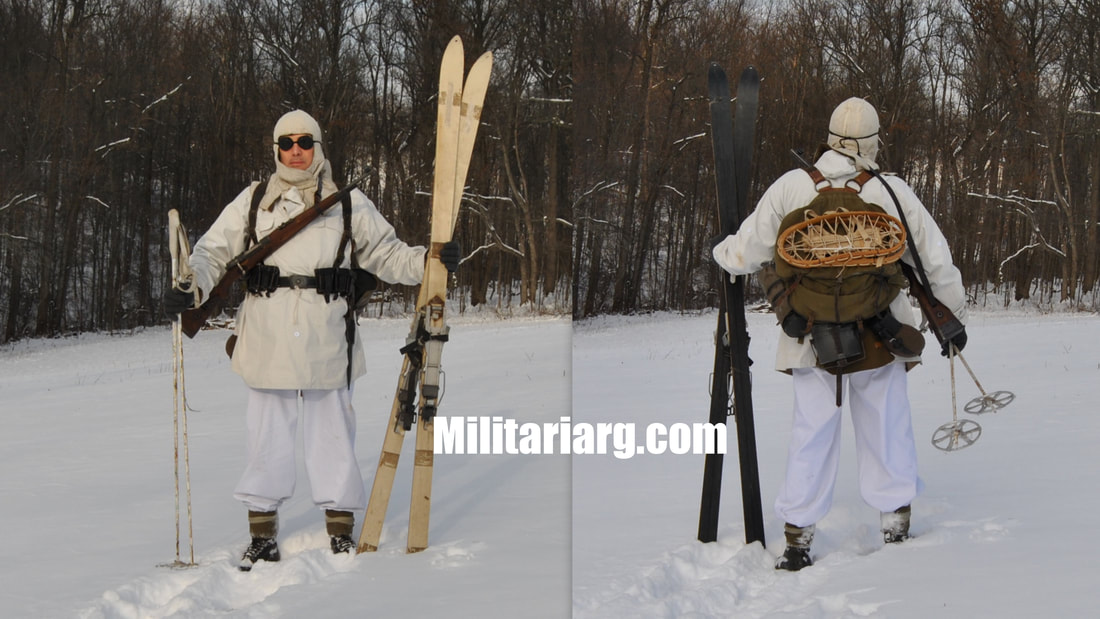
Gebirgsjäger Skijäger (Late War)

They were eventually consolidated into the single 1. Skijäger-Division in late 1943.
They operated exclusively on the Eastern Front, participating in anti-partisan operations and major defensive battles around areas like the Pripet Marshes and the Carpathians.
Picture
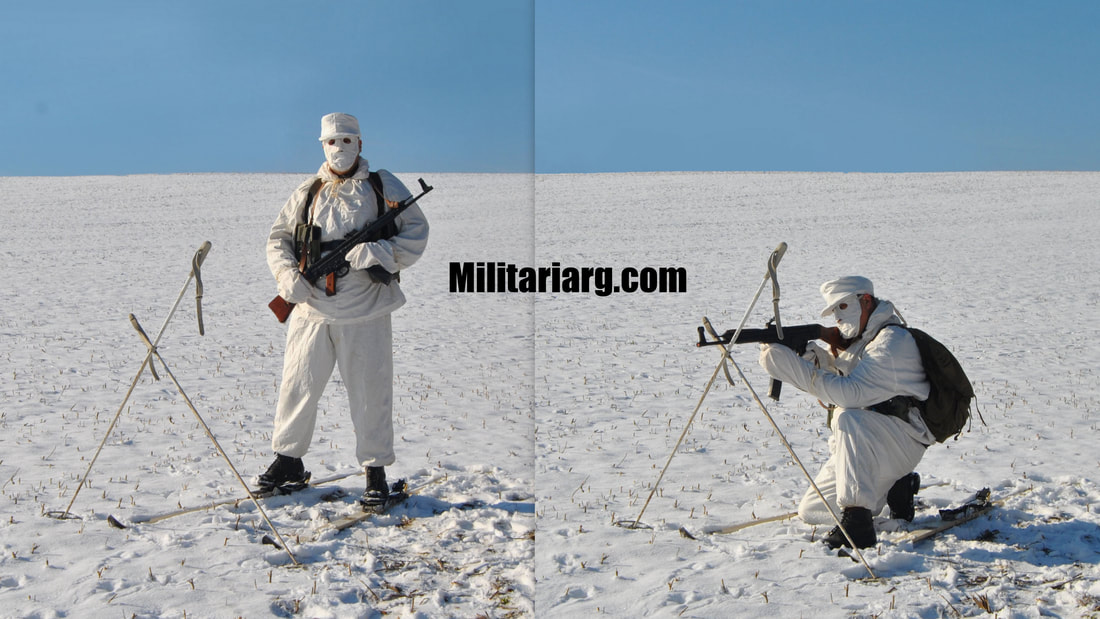
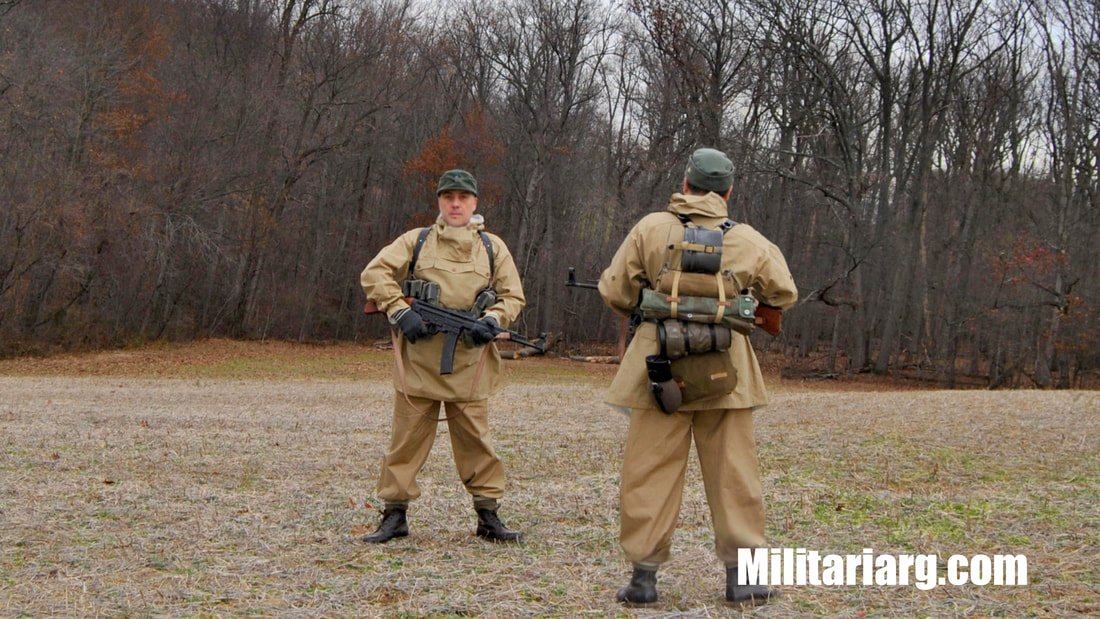
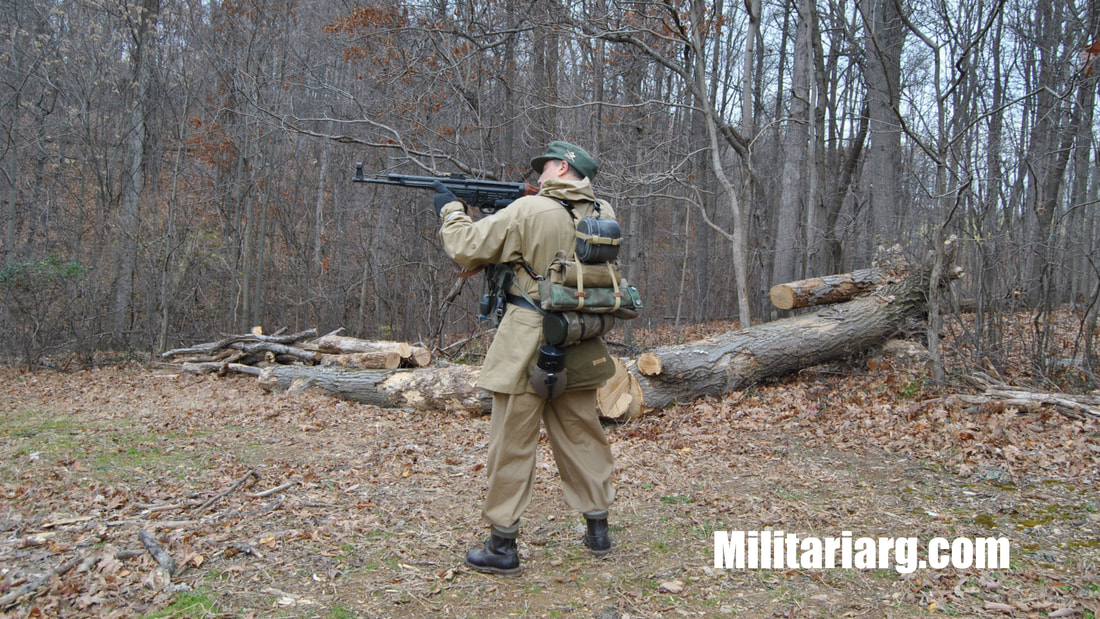
Gebirgsjager reversible snow camo, anorak and trousers. 
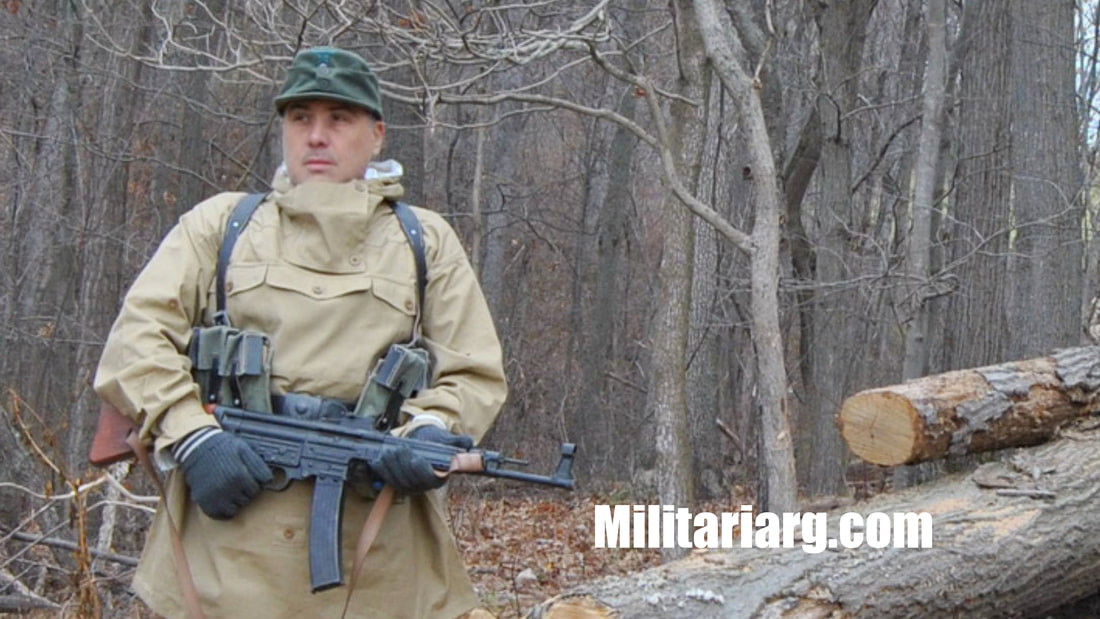
The Skijäger were a more niche unit specifically established for the unique challenges of deep winter warfare on the Eastern Front.
Their entire doctrine was centered around high mobility in heavy snow and forested areas during winter months.
Picture
They were highly proficient skiers and were often heavily reliant on horse-drawn sleighs or specialized tracked vehicles (like the Raupenschlepper Ost) for rapid movement and heavy weapon transport across vast, snowy landscapes.
​I'm not sure if the Jager or Skijager of late war used the A-frame, the Gebrigsjager surely didn't. But being a late war impression, it could have happened.
Picture
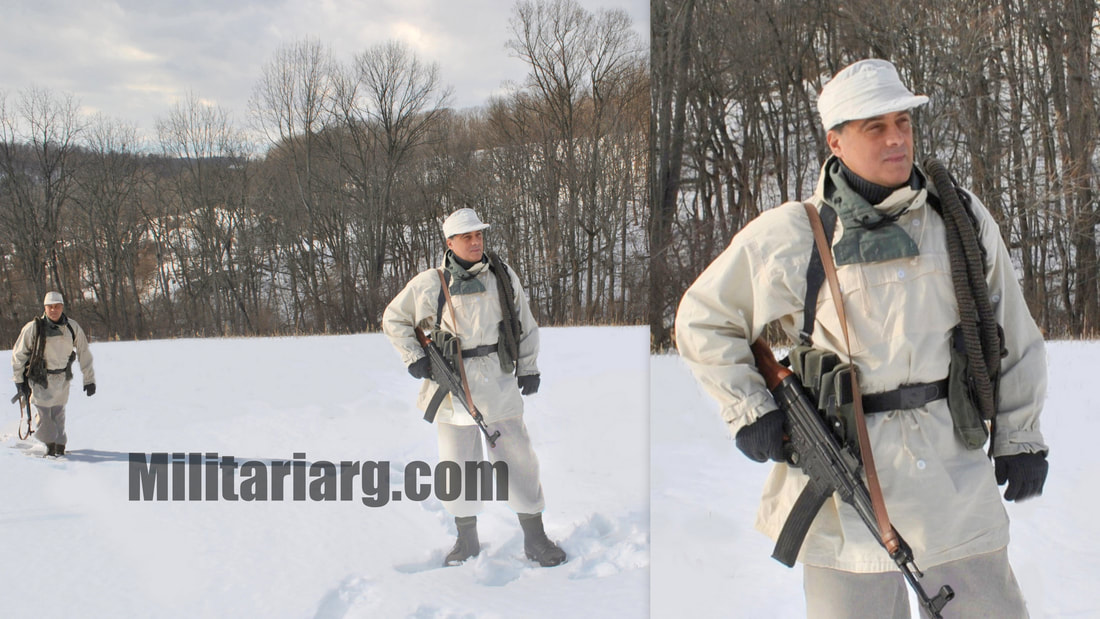
Gebirgsjager reversible windblouse anorak. M43 German cap "Einheitsfeldmütze" with snow camo cover. 
Picture
Picture
Picture
Picture
Reversible splinter/snow camo hood "Kopfhaube".
Picture
Picture
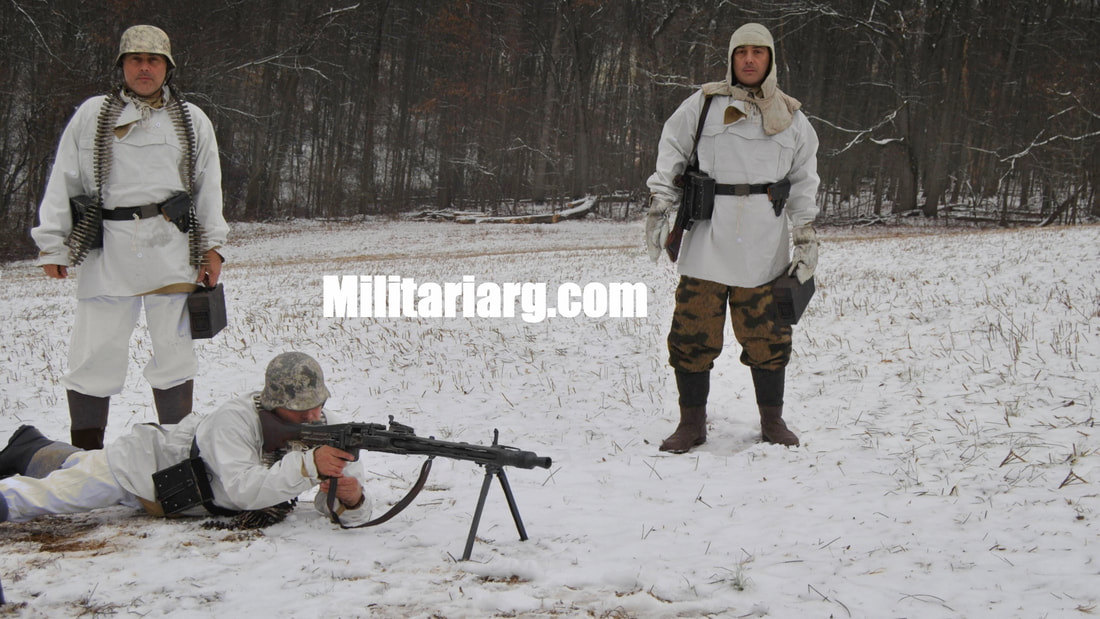
 MG-42 machine gun crew. Reversible mountain anorak, winter felt boots (Winterstiefel) original WW2 and NOS East German Post War.
Picture
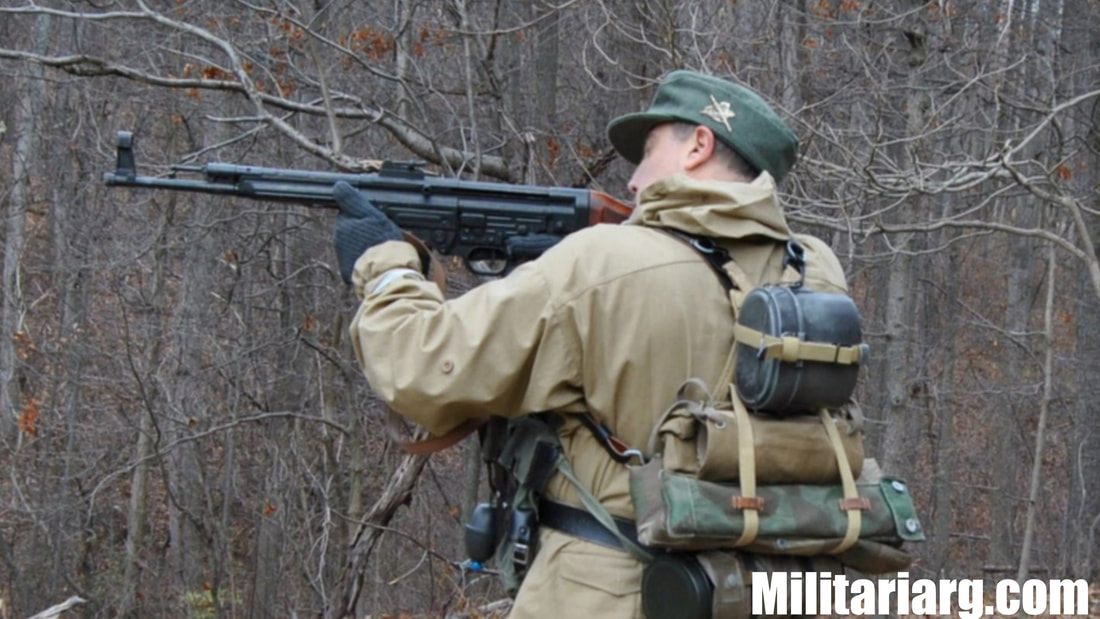
G438mm semi-auto  rifle replica
Powered by Create your own unique website with customizable templates.