Militariarg.com
  • Home
  • Army
  • Aviation
  • Navy
  • Uniforms and Badges
  • Arms and Weapons
  • Equipment
  • Vehicles
  • Operational and Organizational Structure, Security Forces, Transportation, Books, Models and More.
  • Argentine Confederation Era. 1829 - 1852.
  • From 1852 to 1910 (French fashion)
  • Bunker 1982: South Atlantic War Militaria
  • International Militaria
  • Argentina WWII Era (Neutral) Reenactment Impression
  • Links ~ Enlaces

Italian WW1 / Grande Guerra:

Picture
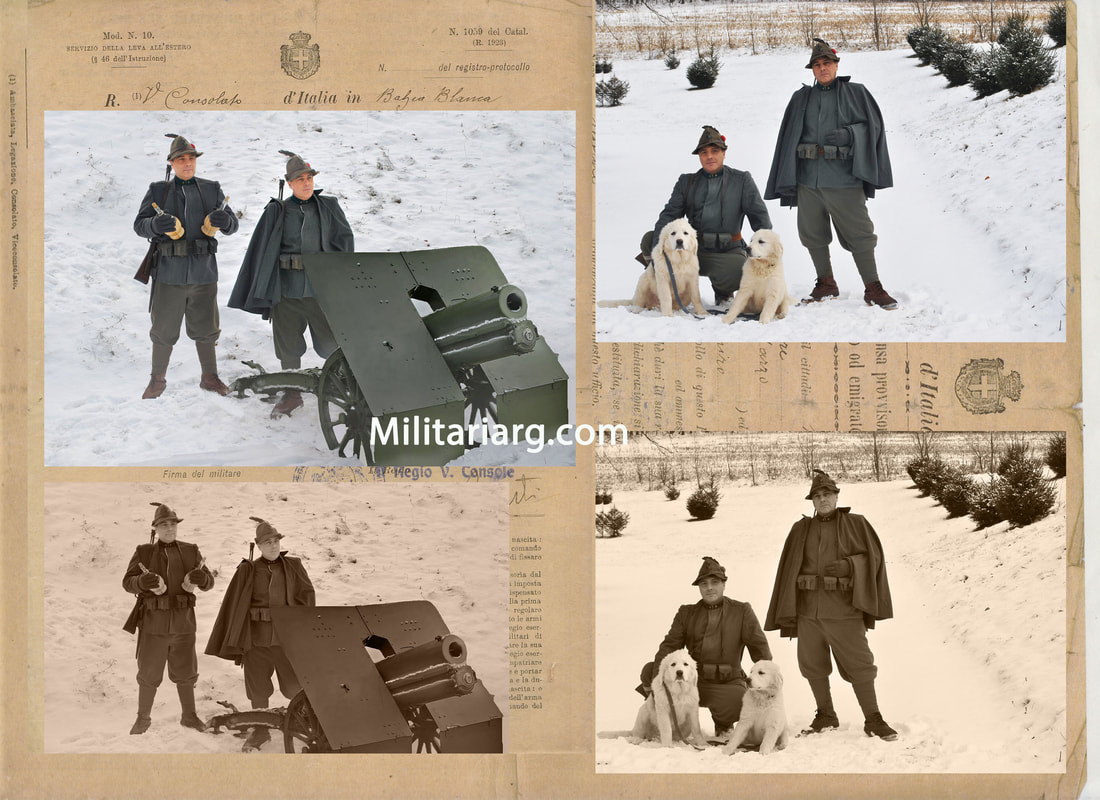
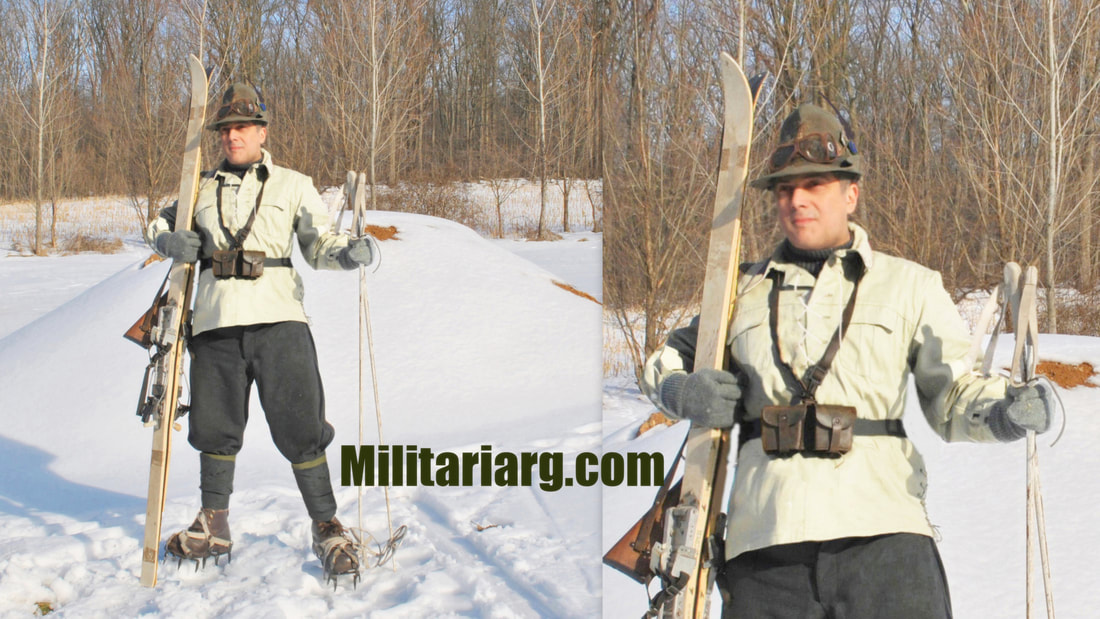
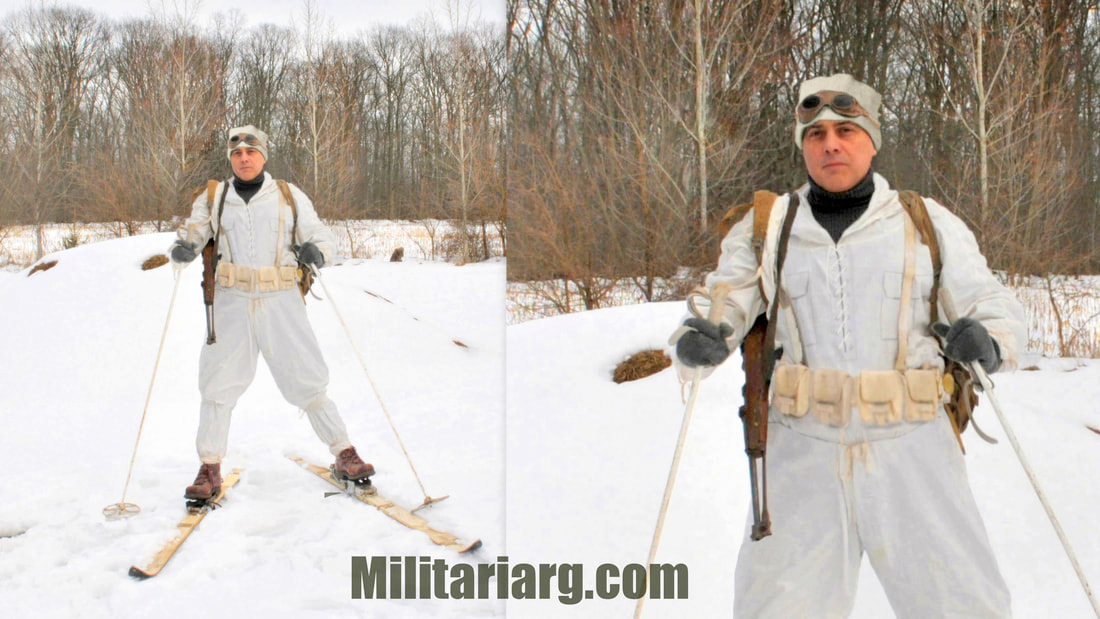
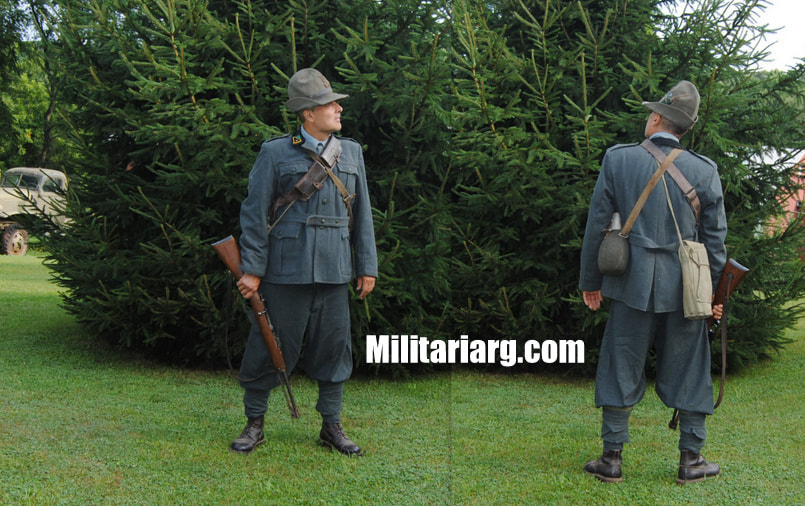
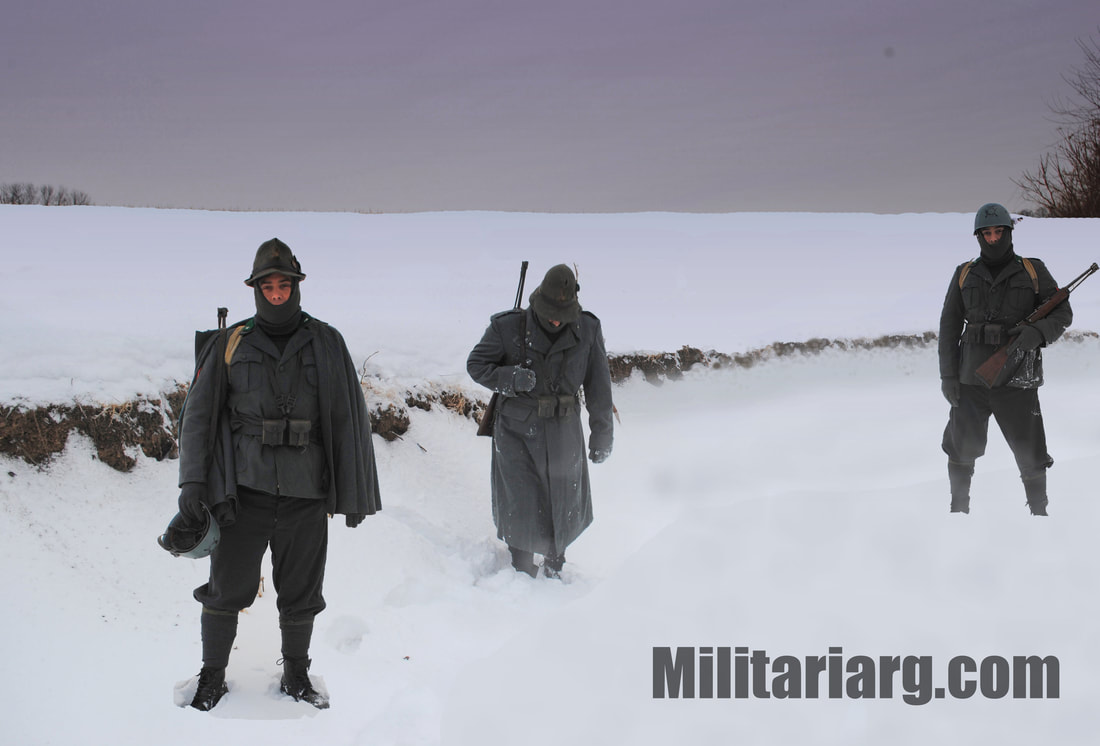
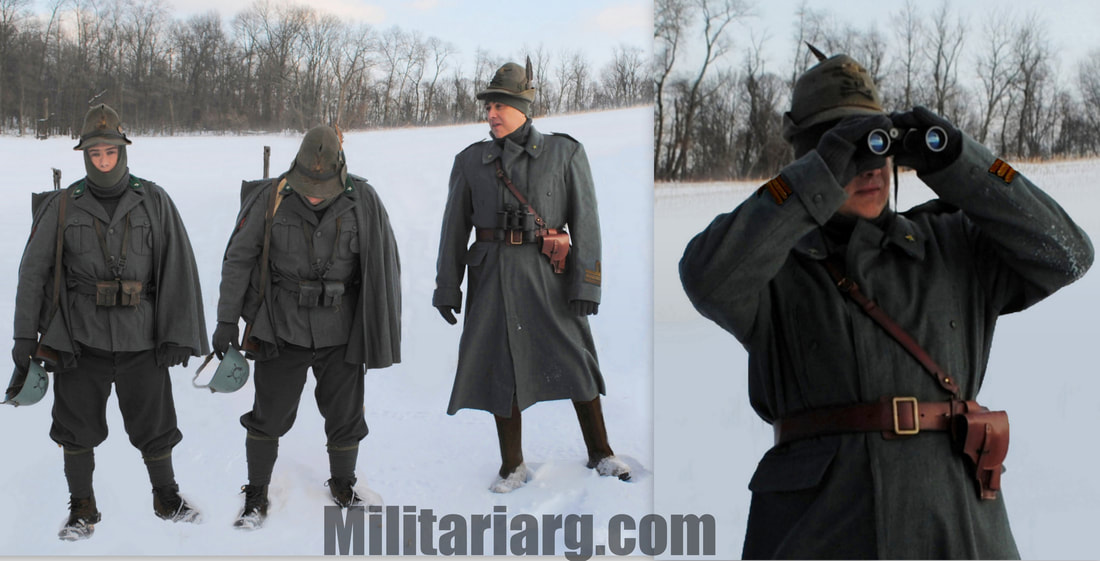
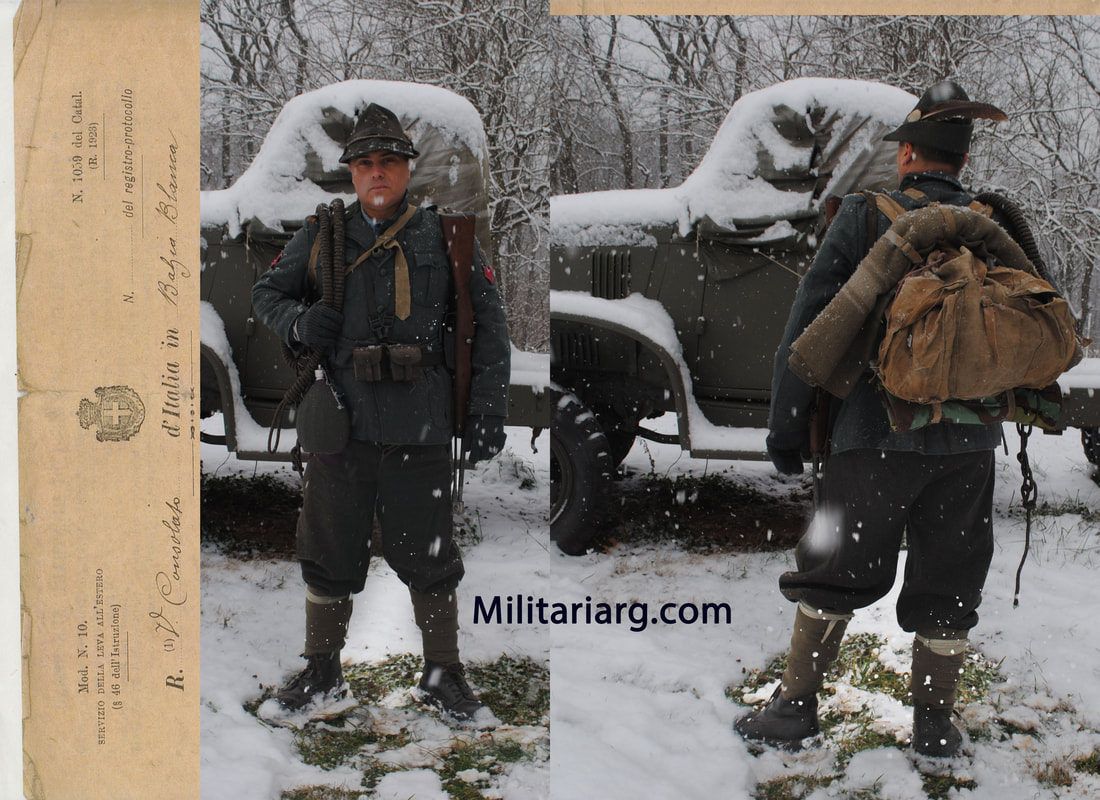
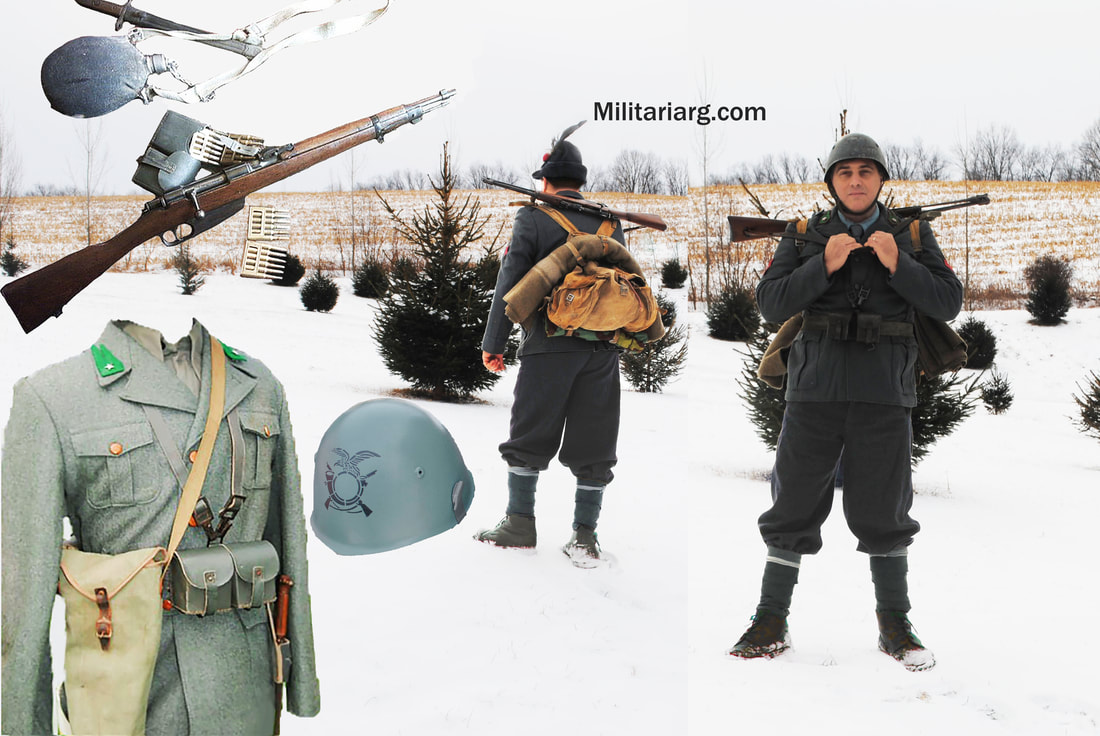
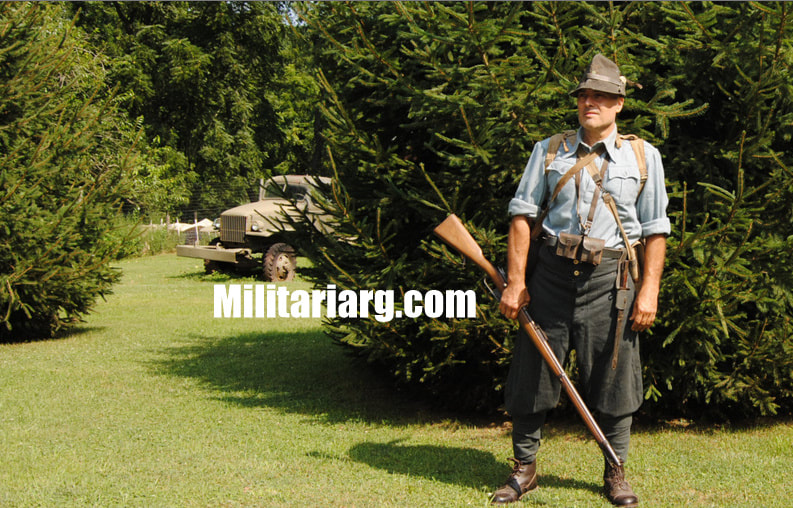
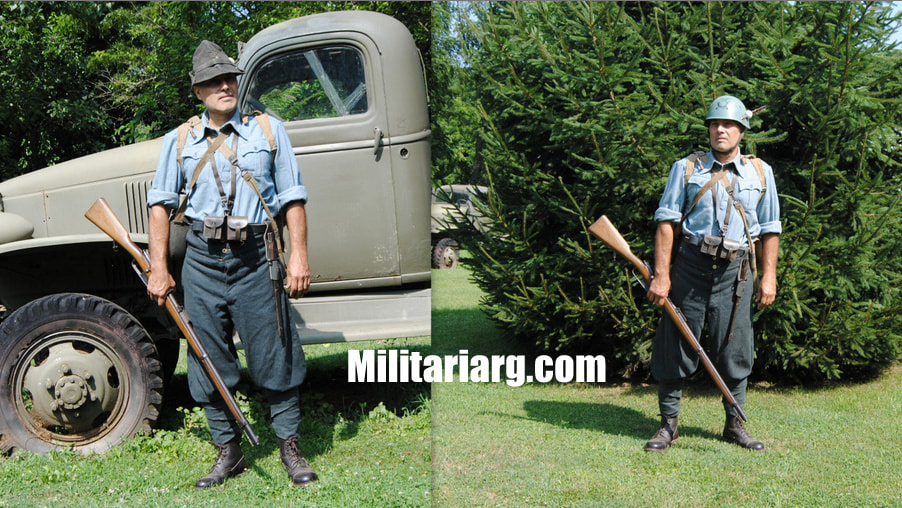
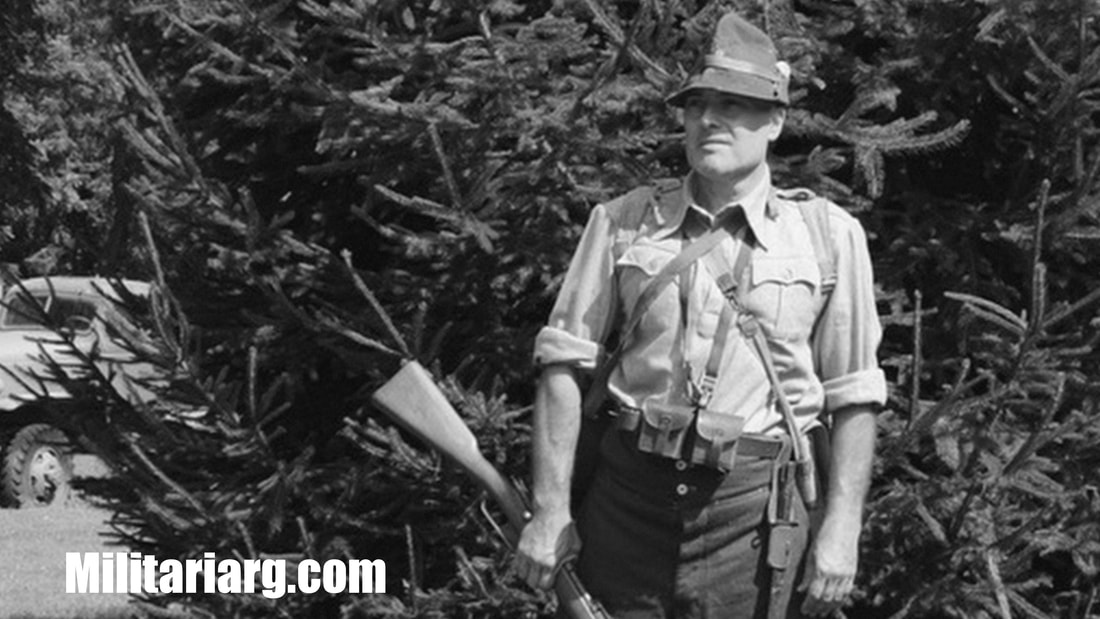
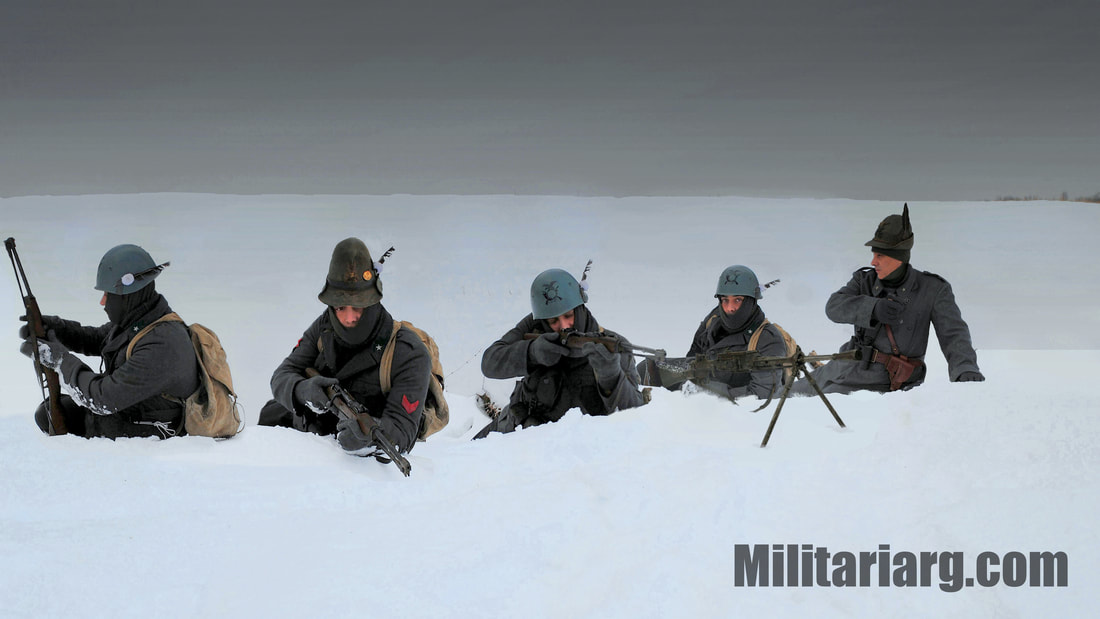
The Alpini were the Italian Army's elite, specialist mountain infantry corps during World War I, renowned for their exceptional skill, bravery, and resilience in the brutal "War in snow and ice" fought in the high Alps against the Austro-Hungarian forces. 

Established in 1872, the Alpini's initial purpose was to defend Italy's northern mountainous borders with France and Austria-Hungary. The soldiers were recruited from local Alpine valleys, leveraging their existing knowledge of mountain survival, farming, and hunting.

When Italy entered WWI in May 1915, the Alpini were the only troops trained and equipped for combat at extreme altitudes, often above 3,000 meters (about 9,800 feet).

The fighting on the Alpine Front was incredibly demanding. Soldiers faced not only enemy fire but also avalanches, frostbite, thin air, and treacherous terrain. Logistical support was a massive challenge, with equipment, artillery, and supplies having to be hauled up steep cliffs using ropes, pulleys, and mules.

The Alpini played crucial roles in several major engagements, including the violent Battle of Mount Ortigara and the Battle of Caporetto.

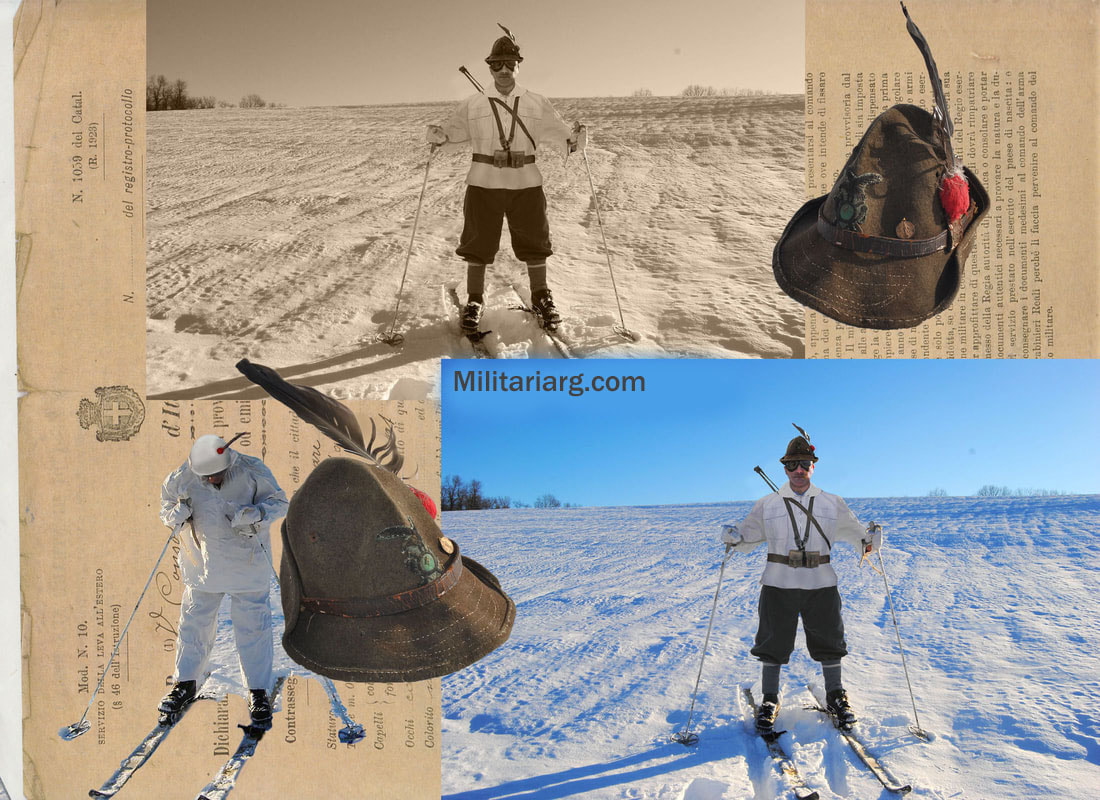
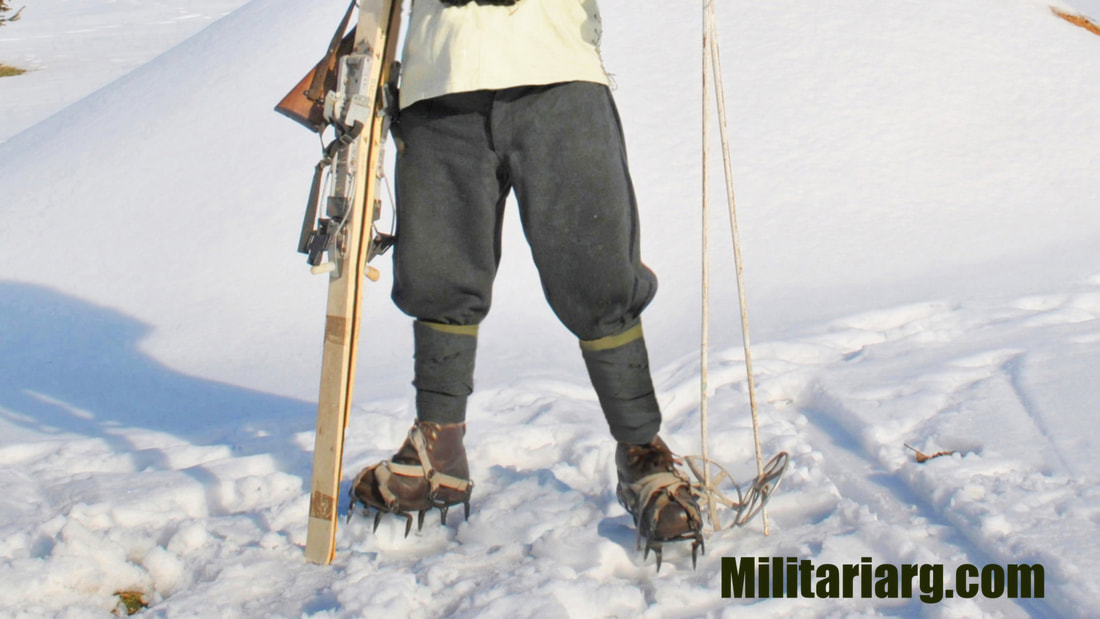
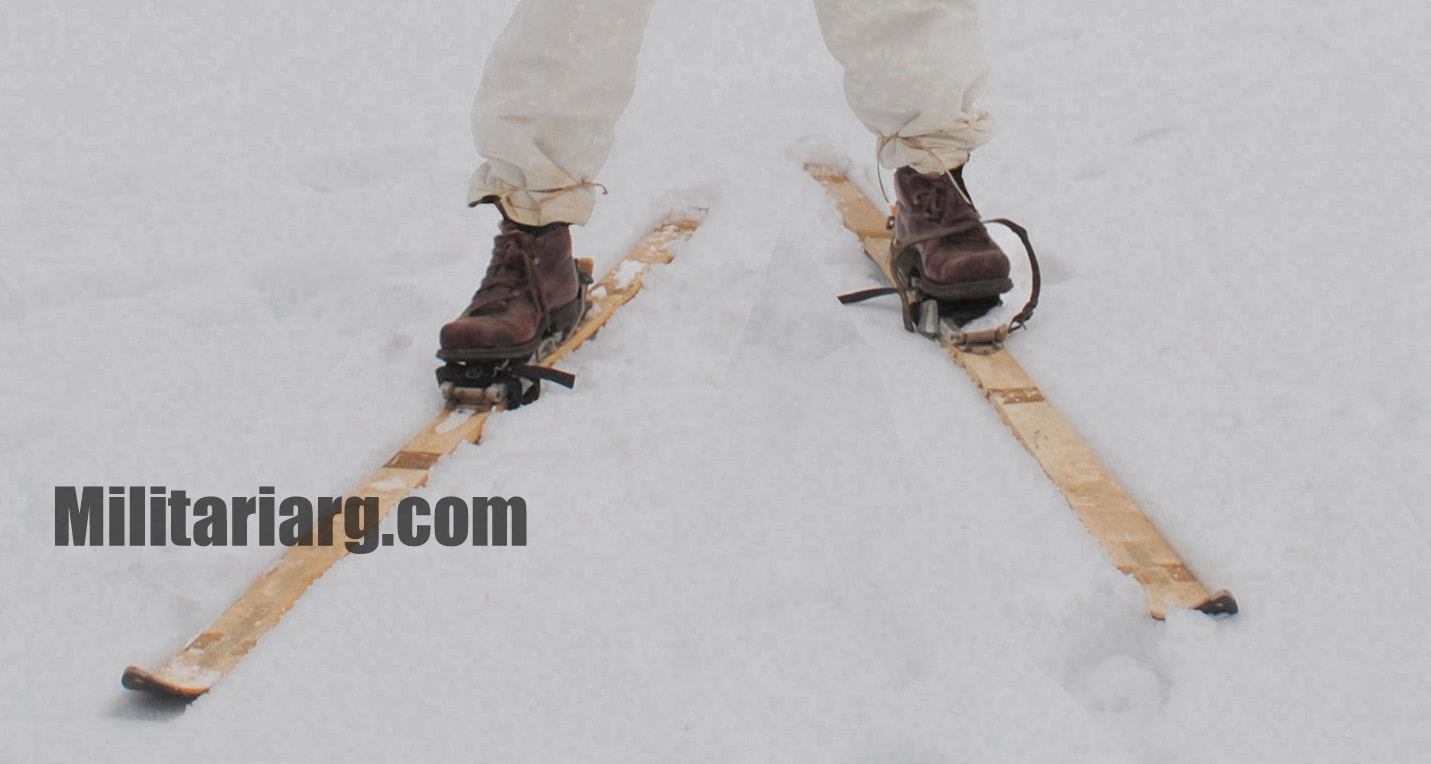
The unique conditions led to the formation of specialized units, including skiers platoons, which were eventually organized into skiers battalions for use on glaciers.

The high-altitude warfare was brutal, resulting in significant casualties. Out of approximately 400,000 Alpini who served, an estimated 120,000 were killed. 

Distinctive Uniform
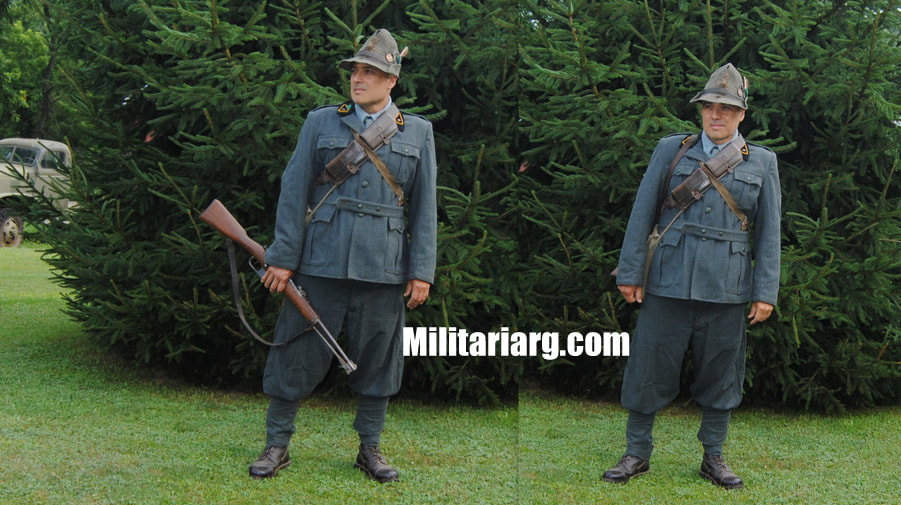
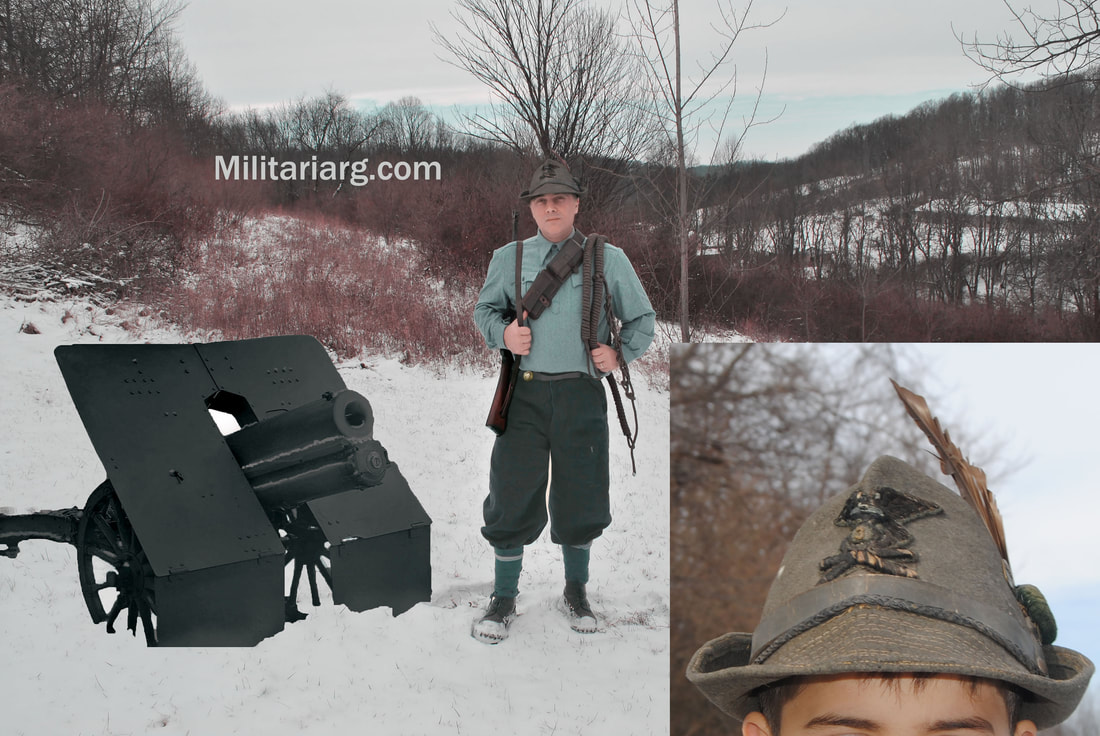
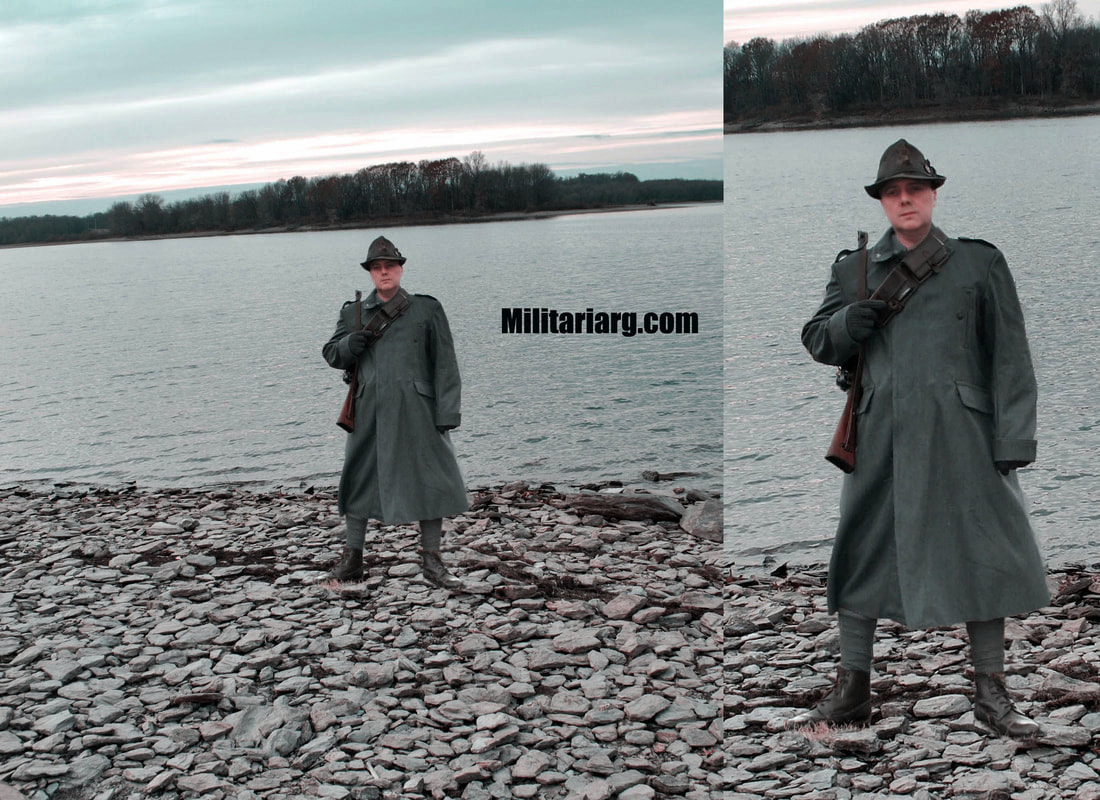
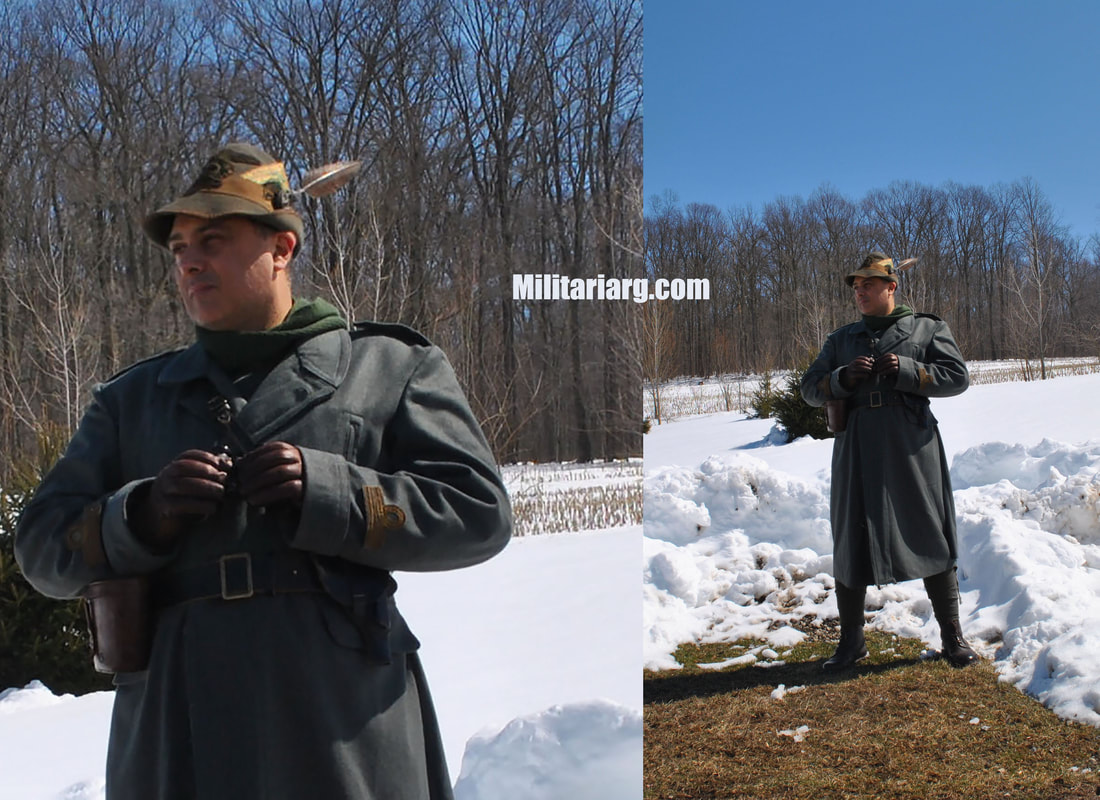
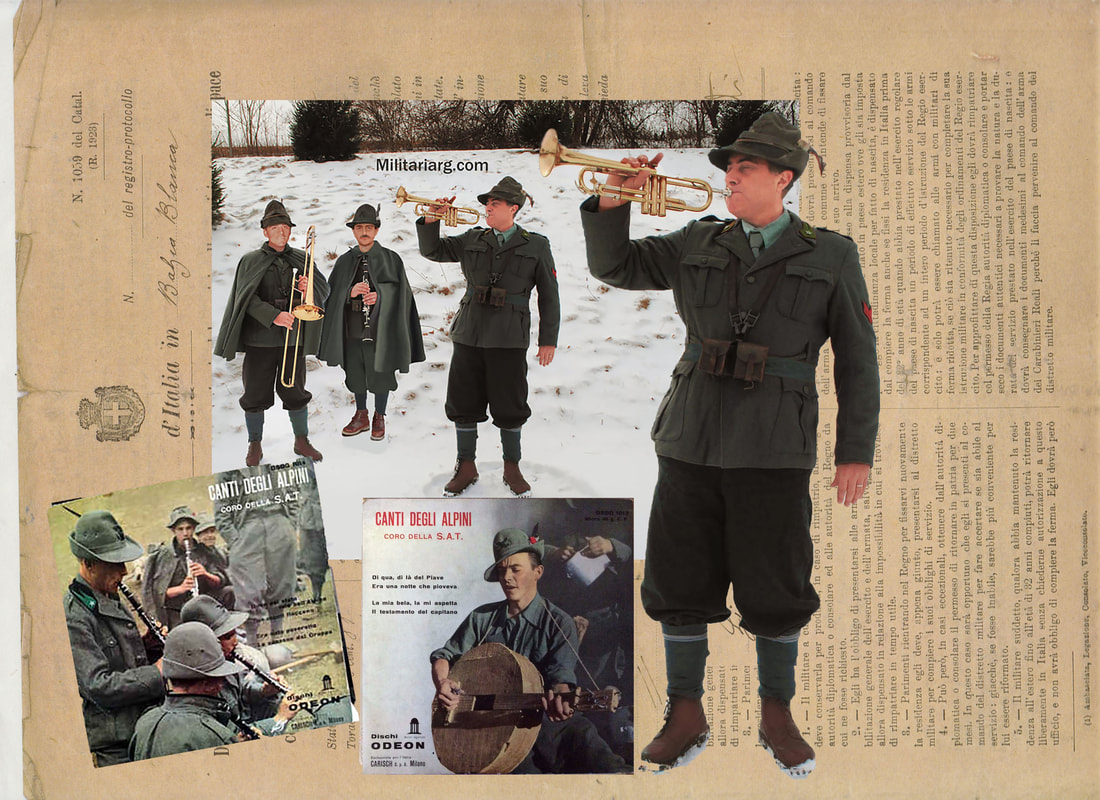
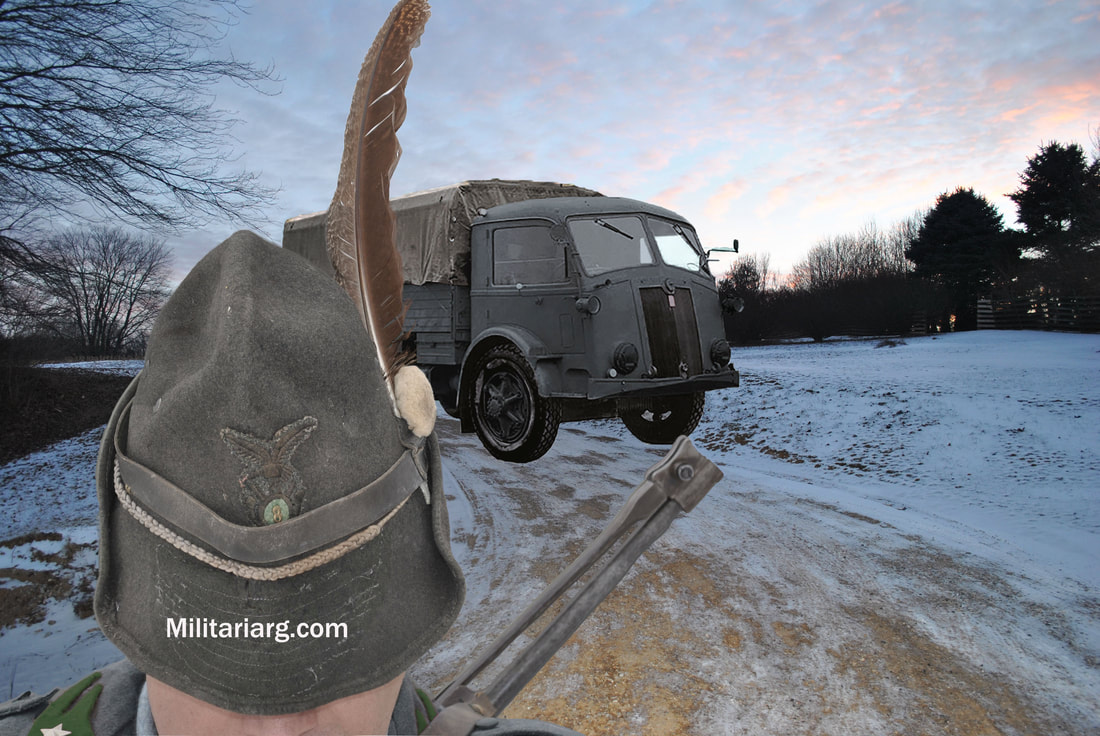
A defining symbol of the Alpini was the Cappello Alpino (Alpine hat). 

This distinctive grey felt hat was adorned with a single feather (black for troops, brown for NCOs and junior officers) on the left side.
The "Cappello Alpino" hat, along with green flame-shaped collar patches on their grey-green uniforms, served as a source of immense pride and identification.
Picture
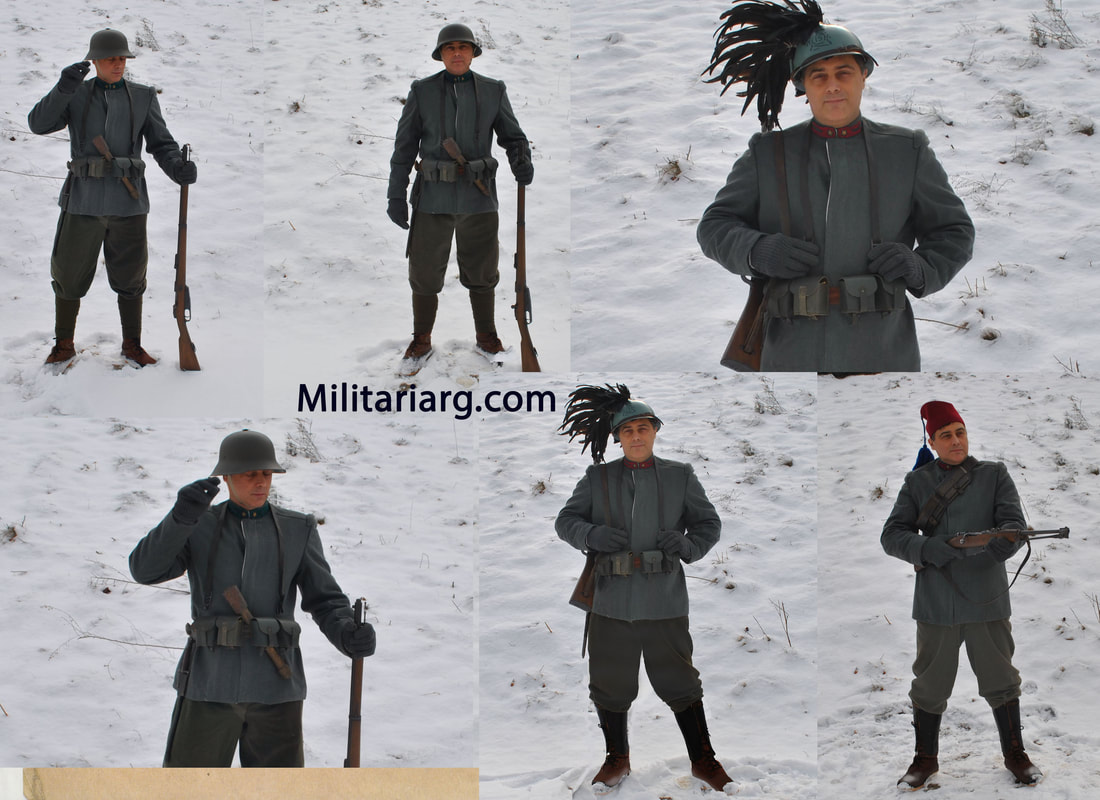
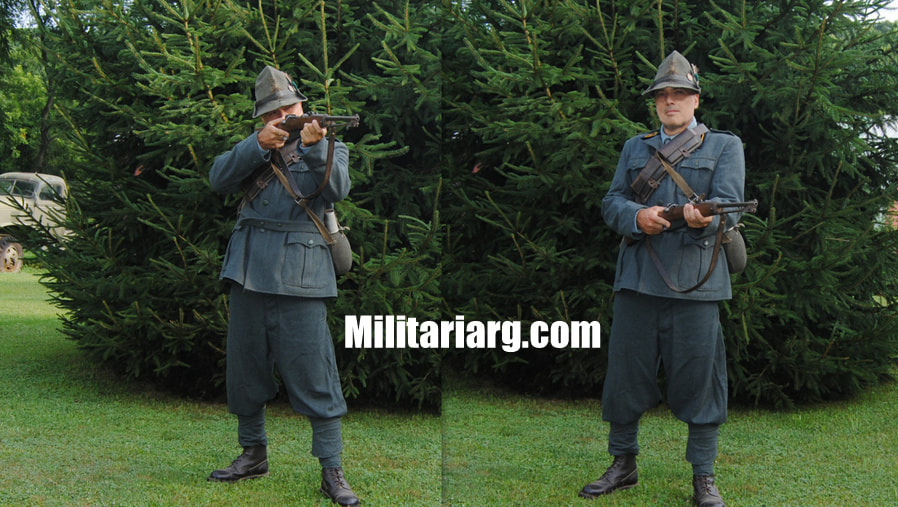
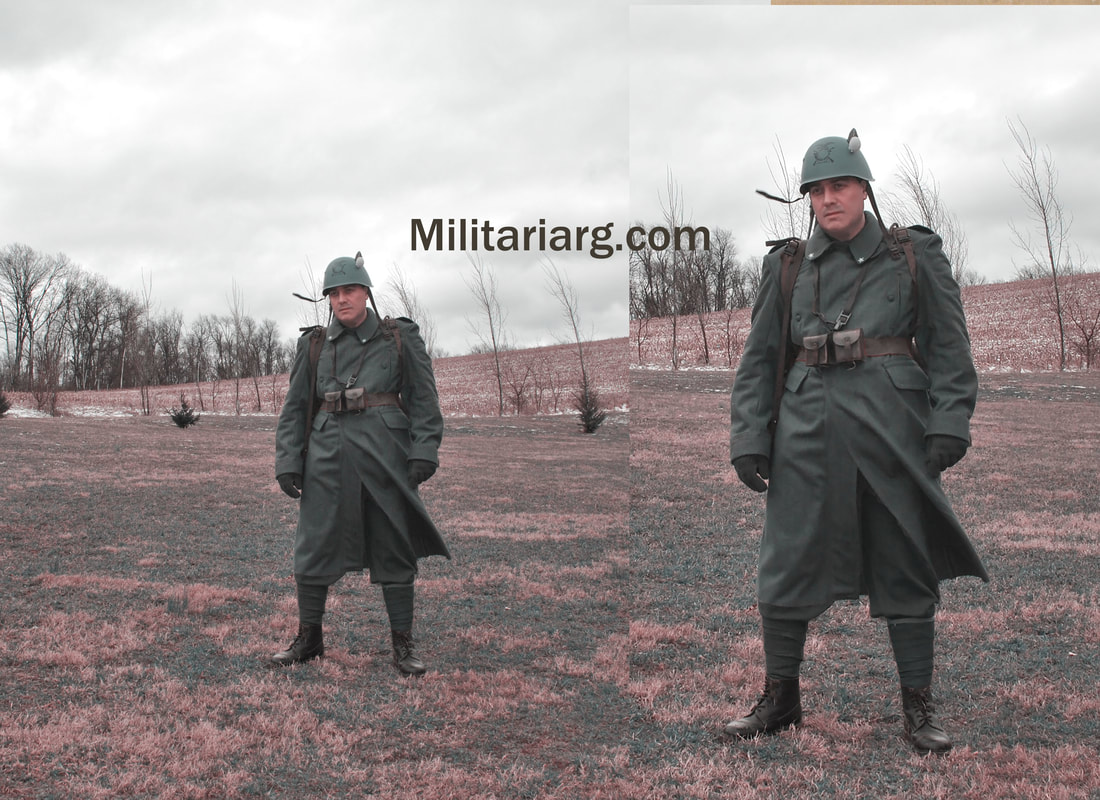
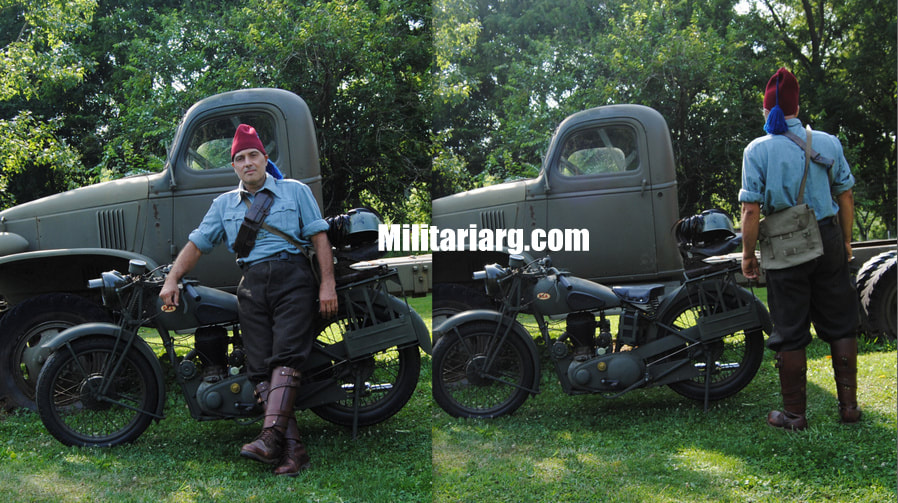
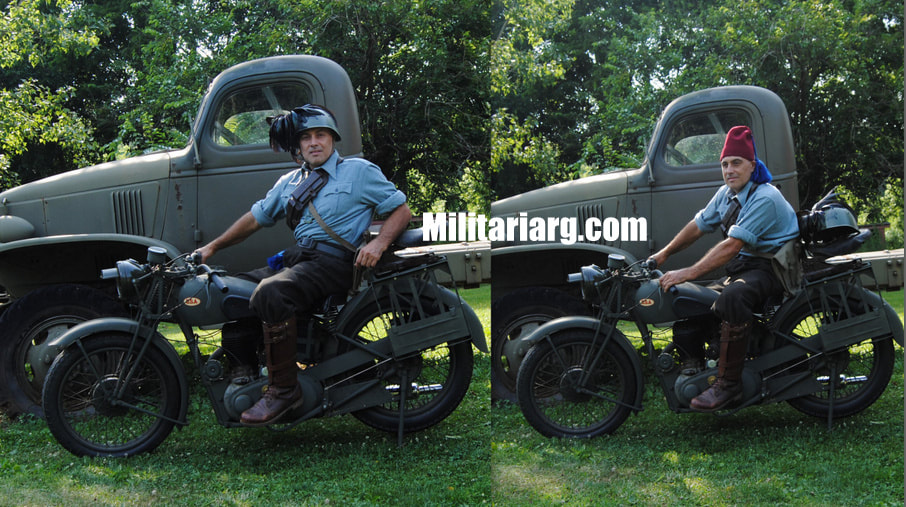
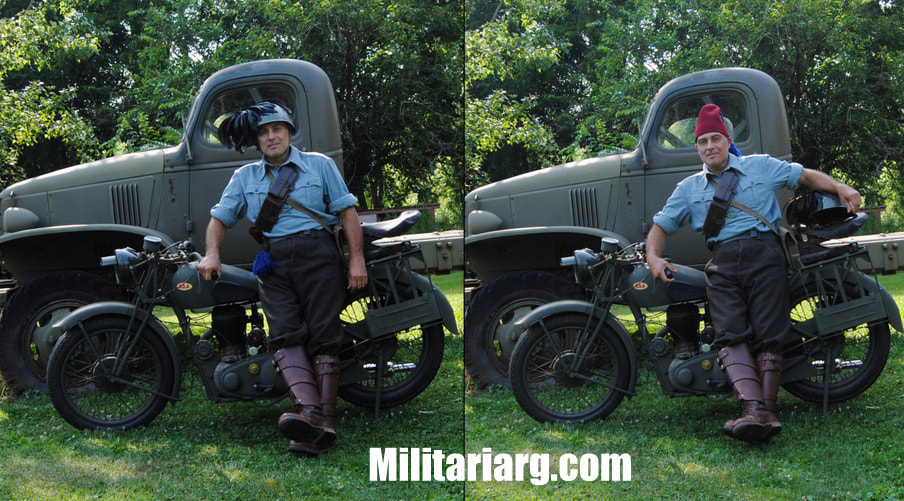
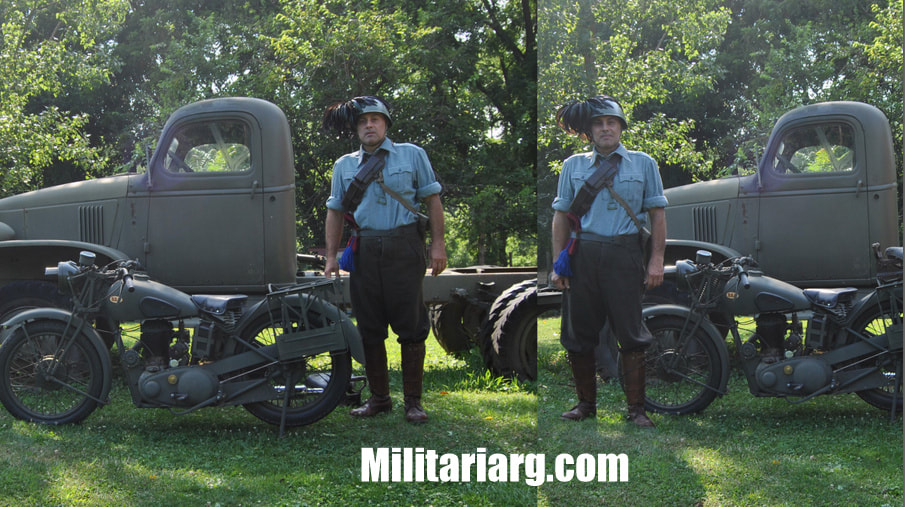
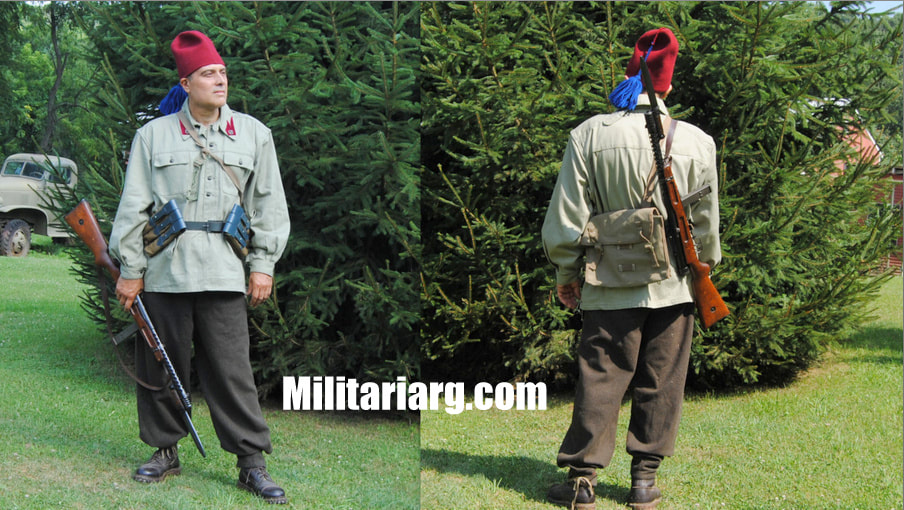
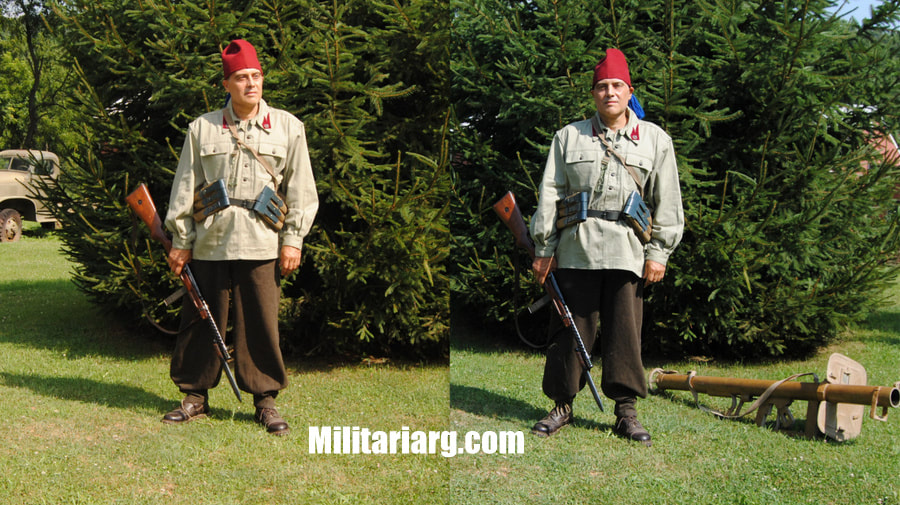
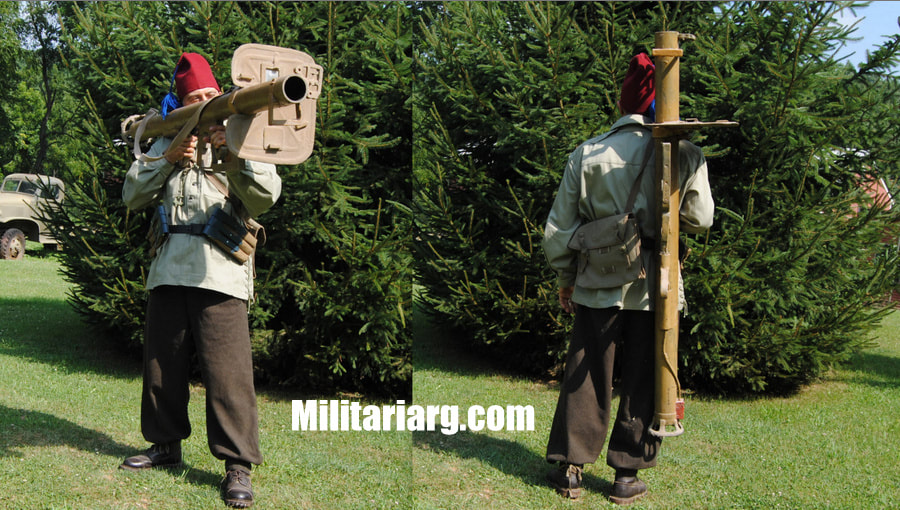
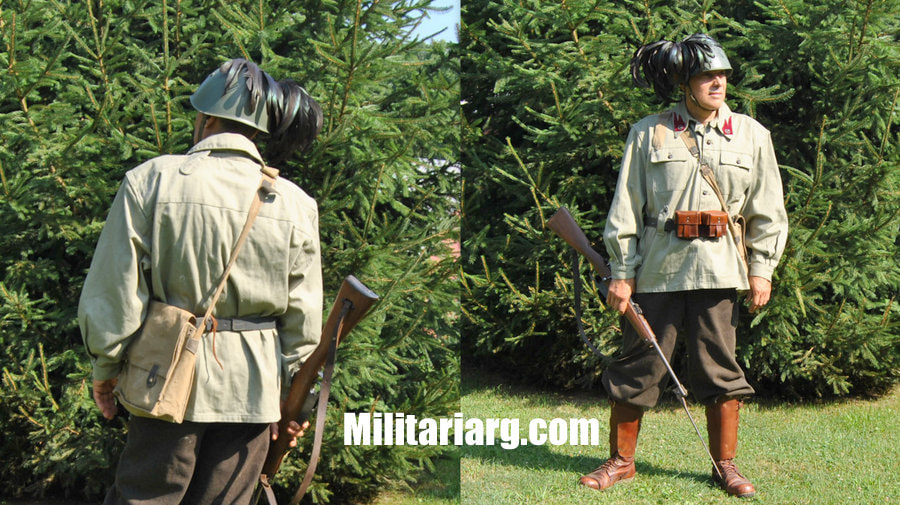
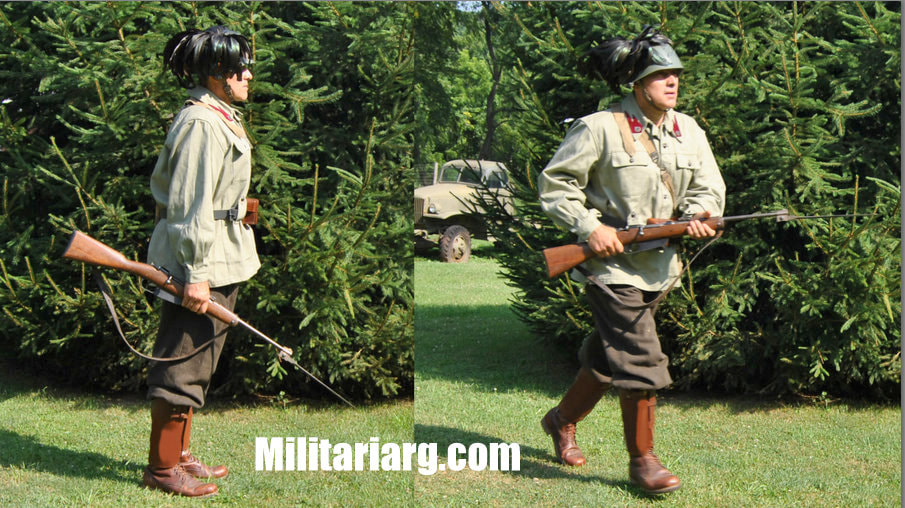
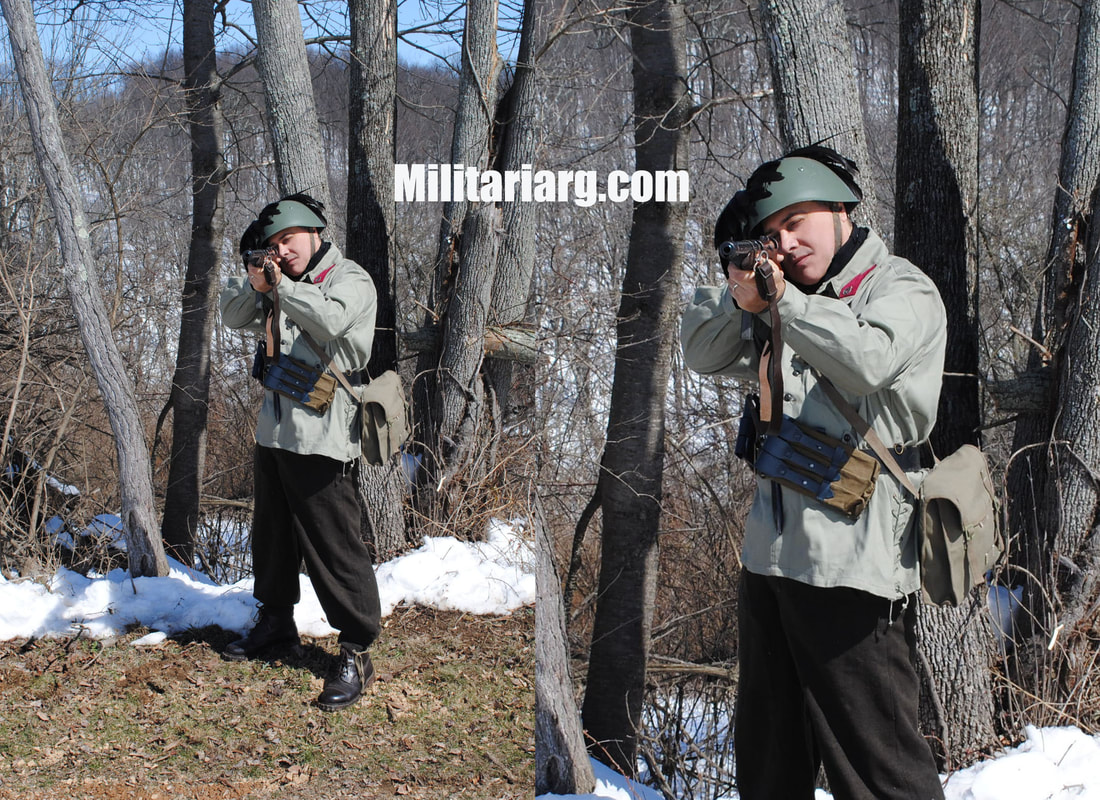
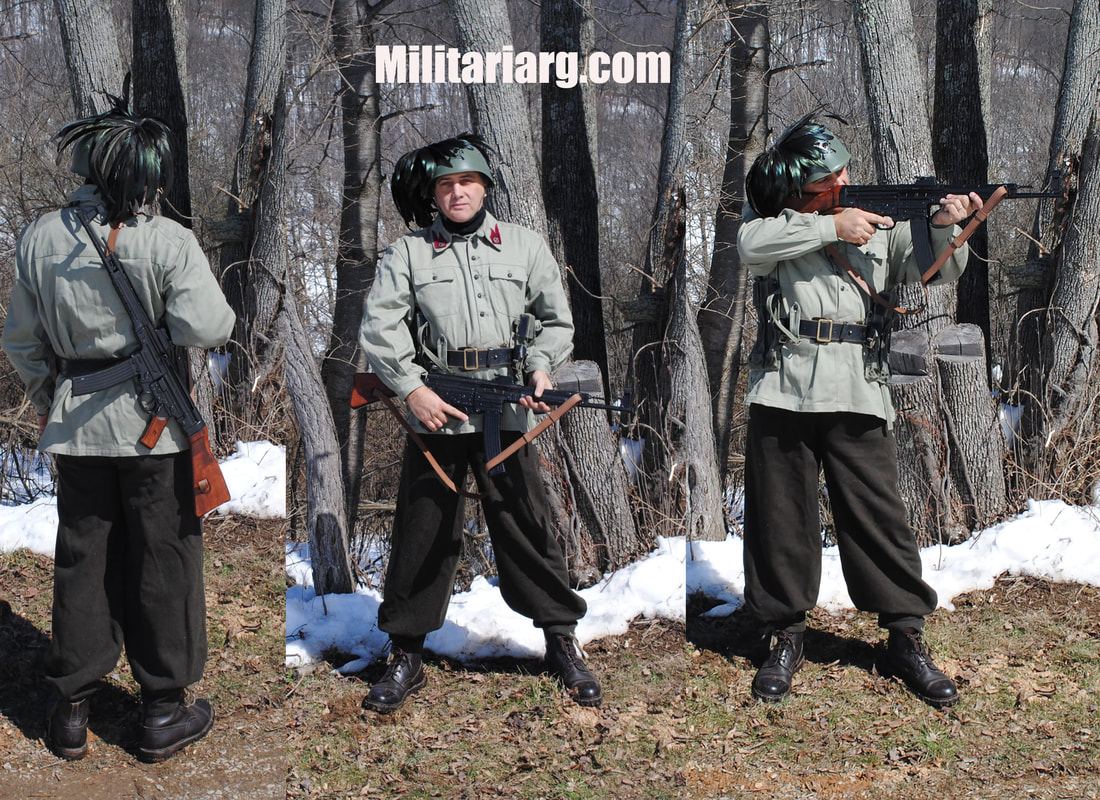
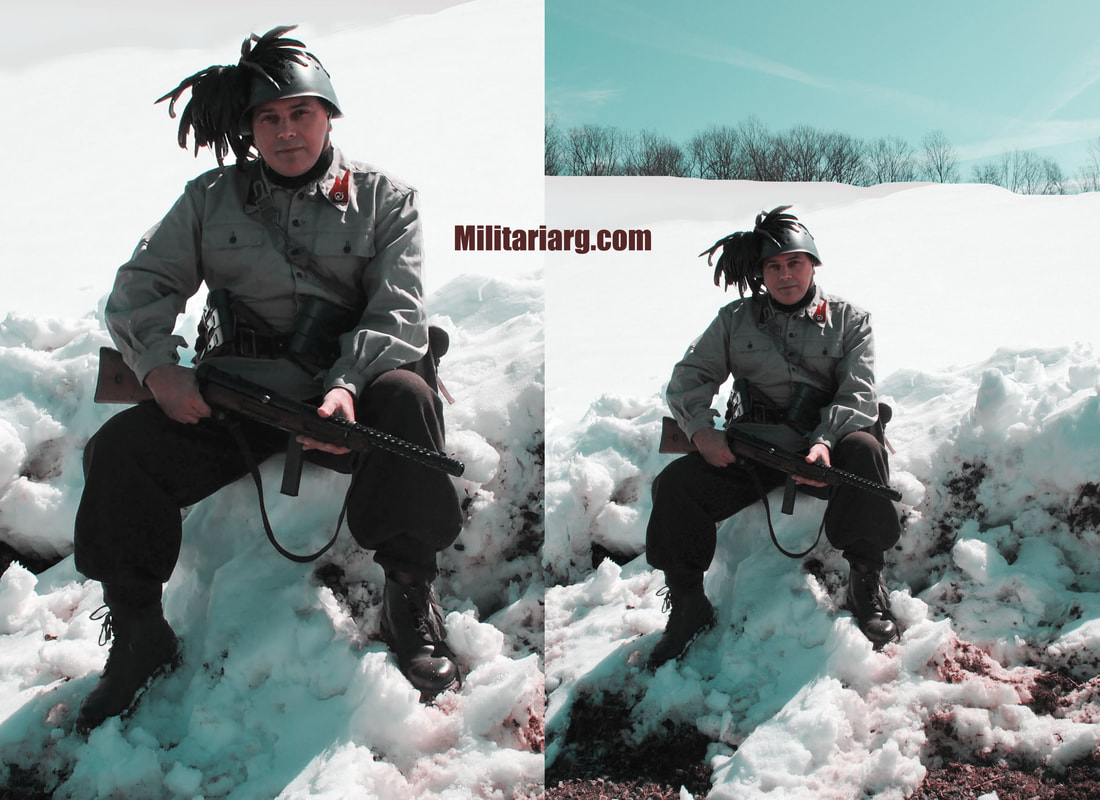
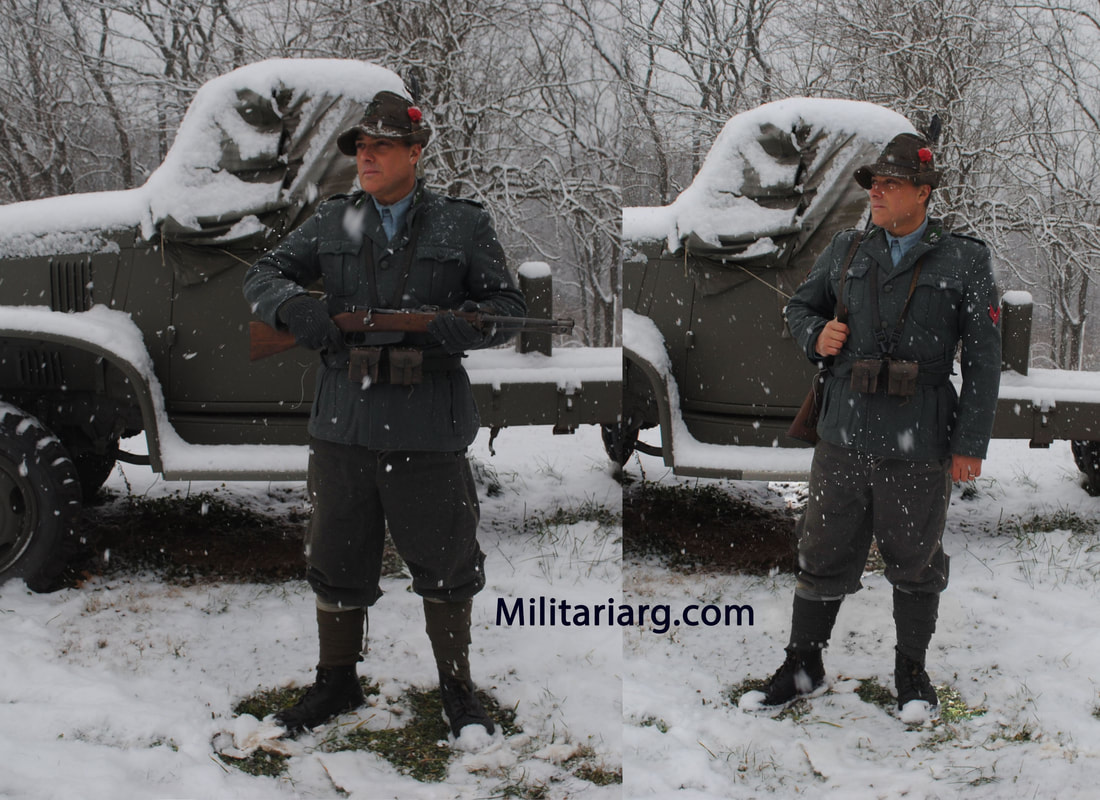
​The Bersaglieri (Italian for "sharpshooters") were an elite, high-mobility light infantry corps of the Italian Army during World War I, known for their distinctive uniform and aggressive fighting spirit. 

The Bersaglieri were originally established in 1836 to act as skirmishers and shock troops, moving quickly to screen the main army and engage the enemy with superior marksmanship. During WWI, this emphasis on speed and mobility continued: 

Traditionally known for moving everywhere at a rapid, high-stepping run, their WWI role adapted to the demands of a modern front.

Several battalions were converted into cyclists, using folding Bianchi bicycles to maintain rapid deployment capabilities, particularly in the later stages of the war's mobile phases.

The Bersaglieri were frequently used as assault units and shock troops, often operating alongside the Arditi (specialist Italian assault troops).

The 12 regiments of Bersaglieri fought across various fronts, including the brutal Isonzo Front, the Piave River, Libya, and Albania. They were a vital part of Italian combat forces, with over 210,000 men serving, of whom 32,000 were killed and 50,000 wounded. 

Distinctive Uniform
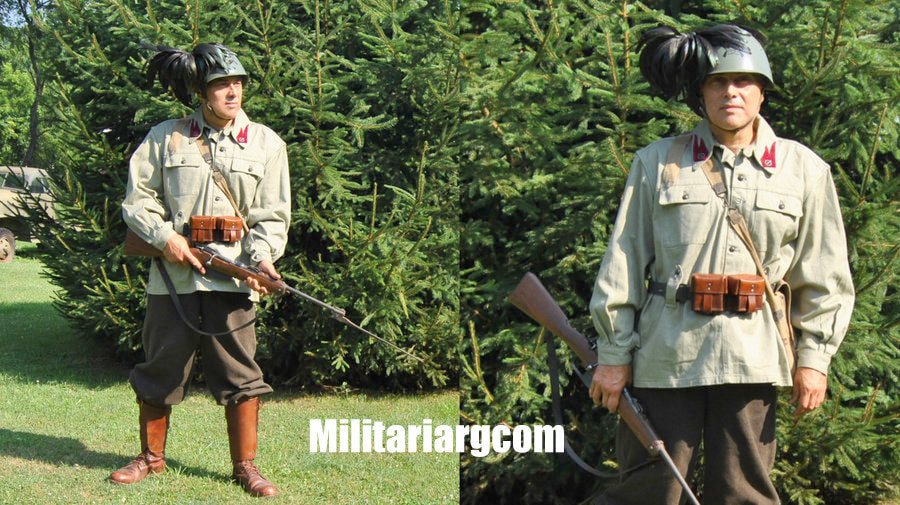
The most notable feature of the Bersaglieri was their unique headwear, which was a source of immense pride and a badge of honor. 

The Vaira or Moretto: Their traditional headgear was a wide-brimmed black hat, adorned with a large plume of black capercaillie (wood grouse) feathers.

Feather Plume Function: The feathers were not merely decorative; they were originally intended to provide shade for the marksman's shooting eye and offer minor camouflage in the field. In combat, the number of feathers was usually reduced, and the plume was often attached to their standard grey-green combat helmets.

Fez and Boots: After serving alongside French Zouaves in the Crimean War, the Bersaglieri also adopted the red fez as part of their uniform. They were issued with special greased, unpolished brown boots, similar to those worn by the elite Alpini troops.

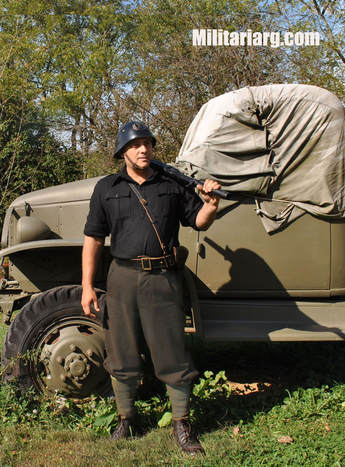
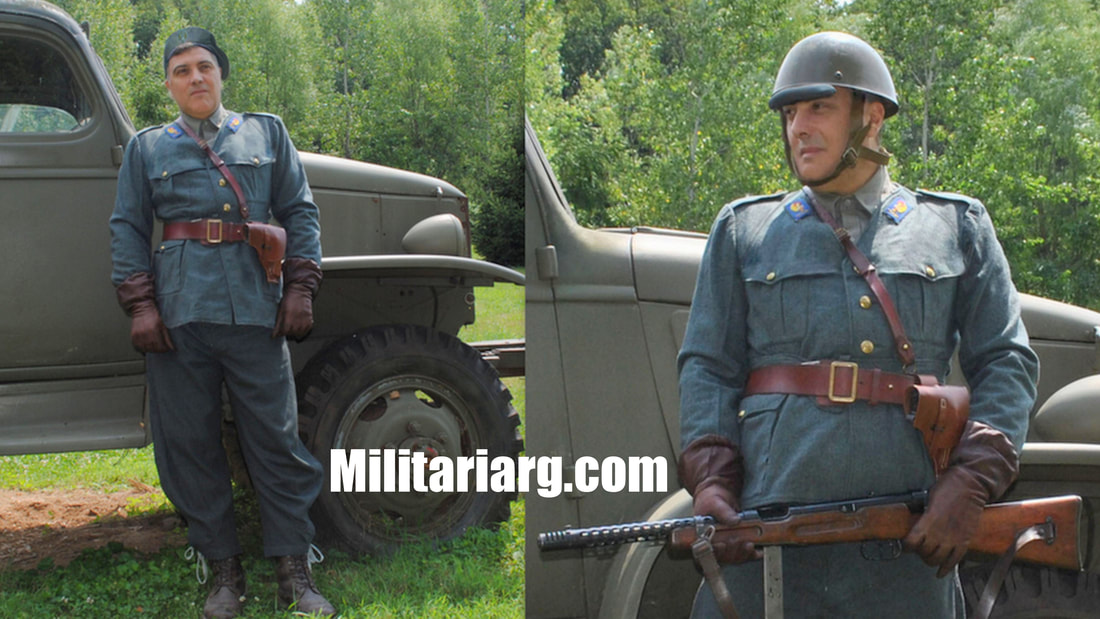
Italian MVSN Roma: 112^ Legione Dell'Urbe
Picture
​The MVSN 112^ Legione "Dell'Urbe" was a territorial legion of the Italian Fascist militia (Milizia Volontaria per la Sicurezza Nazionale, or MVSN) based in Rome ("Dell'Urbe" translates to "Of the City" or "Of Rome"). 
 
The MVSN, commonly known as the Blackshirts, was a nationwide organization created to maintain internal law and order and provide a politically reliable armed force for the Fascist Party. During the war: 

Most legions, including the 112^, were organized on a territorial basis and only called to duty when required.
When the MVSN was used in combat roles, new legions and cohorts were often formed and attached to regular Army divisions.
"M" Battalions: To improve war efficiency after early poor performance, the MVSN formed elite "M" battalions (for Mussolini) in October 1941, which received special training. 

MVSN combat performance focuses on the six divisions sent to North Africa, the units in the Spanish Civil War, and the two Raggruppamenti (groups) that fought in Russia. 
Following the Allied invasion of Sicily and the armistice in September 1943, the Fascist regime collapsed, and the MVSN was largely disbanded in the Kingdom of Italy. Some remaining elements in German-occupied northern and central Italy later became part of the collaborationist National Republican Army (Esercito Nazionale Repubblicano) of the Italian Social Republic (RSI). 

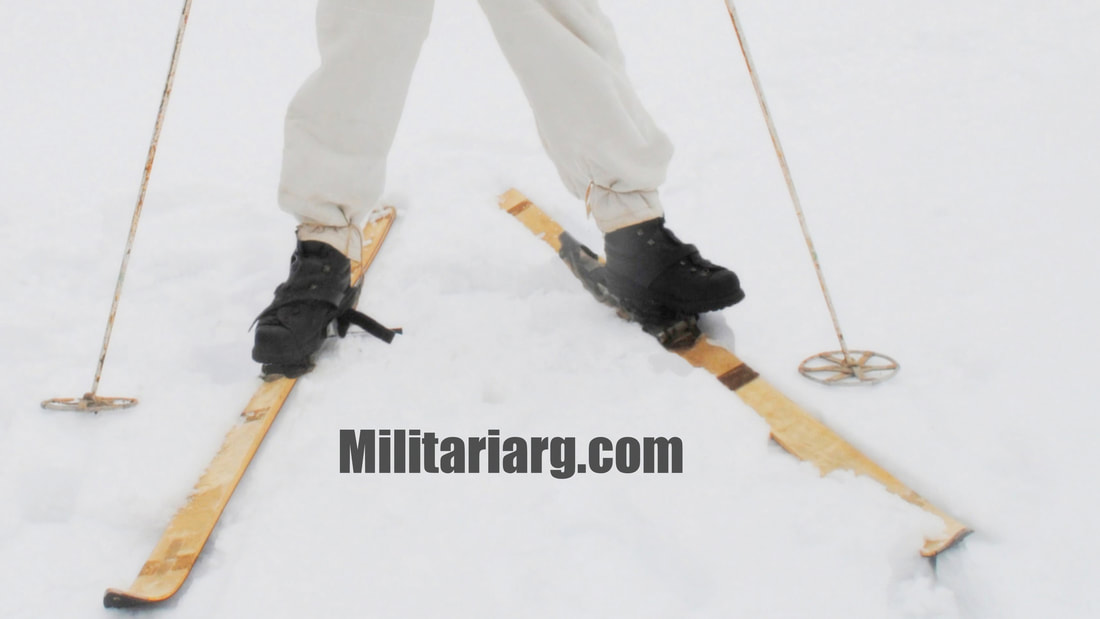
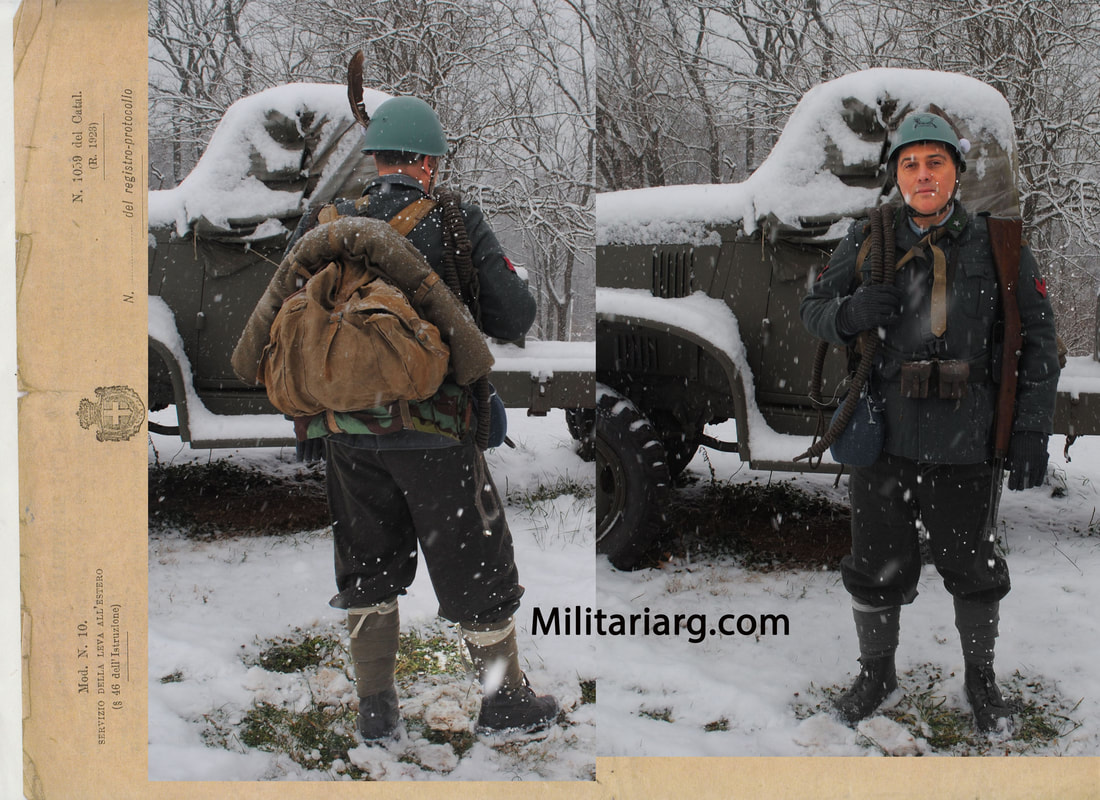
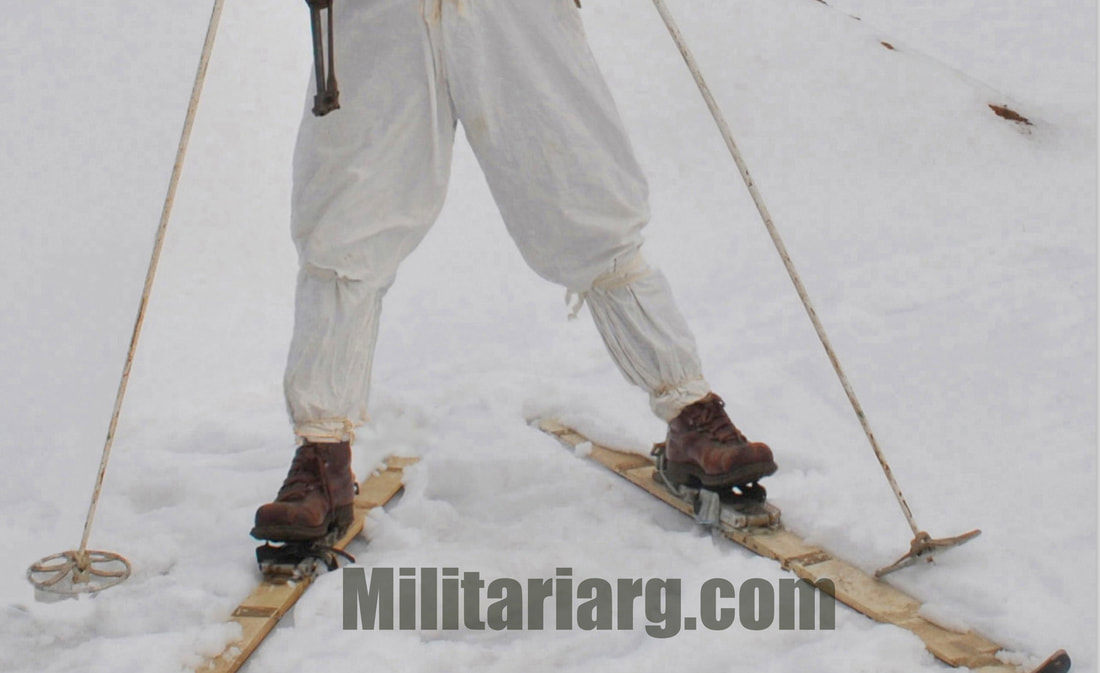
4º Battaglione Alpini Sciatori Monte Cervino. 
Picture
The battalion was initially formed from the 4th Alpini Regiment in December 1940 and sent to the Greek-Albanian front, where Italy's position was critical.
 
After the end of the campaign in Greece in April 1941, the battalion was disbanded in May 1941 but reformed in October of the same year in preparation for deployment to the Soviet Union.
 
Eastern Front (USSR): 

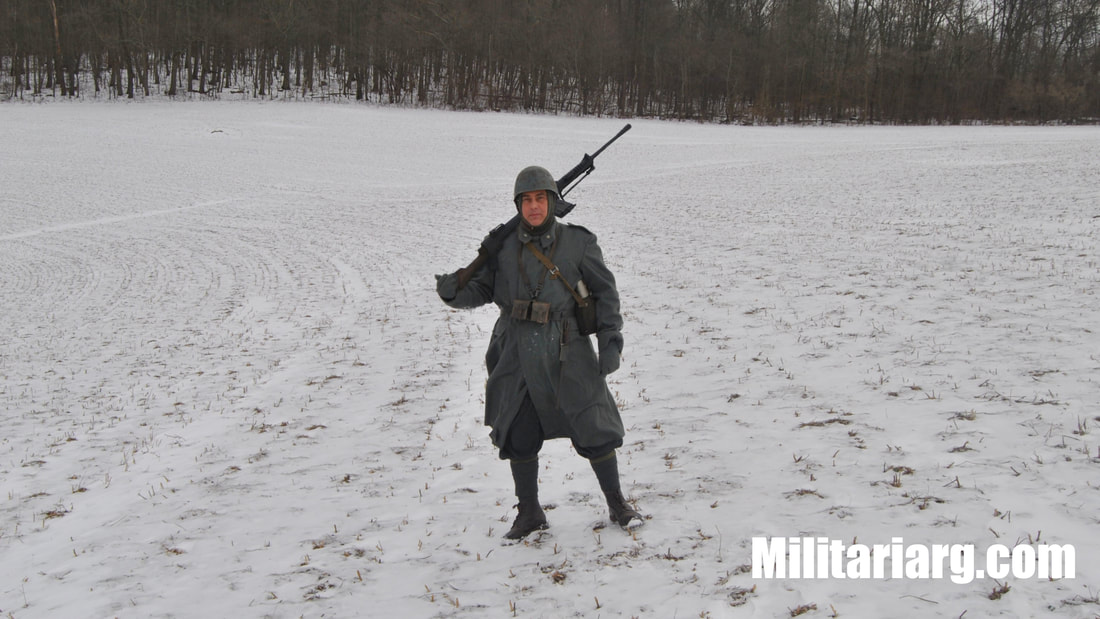
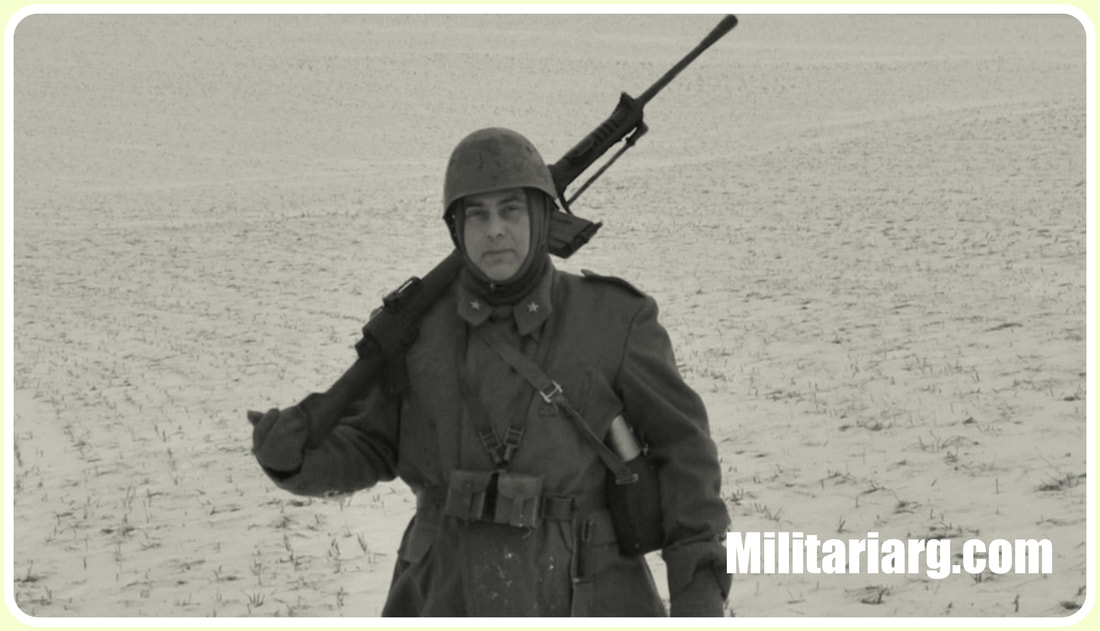
In January 1942, the battalion departed for the Eastern Front as part of the Italian Expeditionary Corps in Russia (CSIR), which later became the Italian 8th Army (ARMIR).

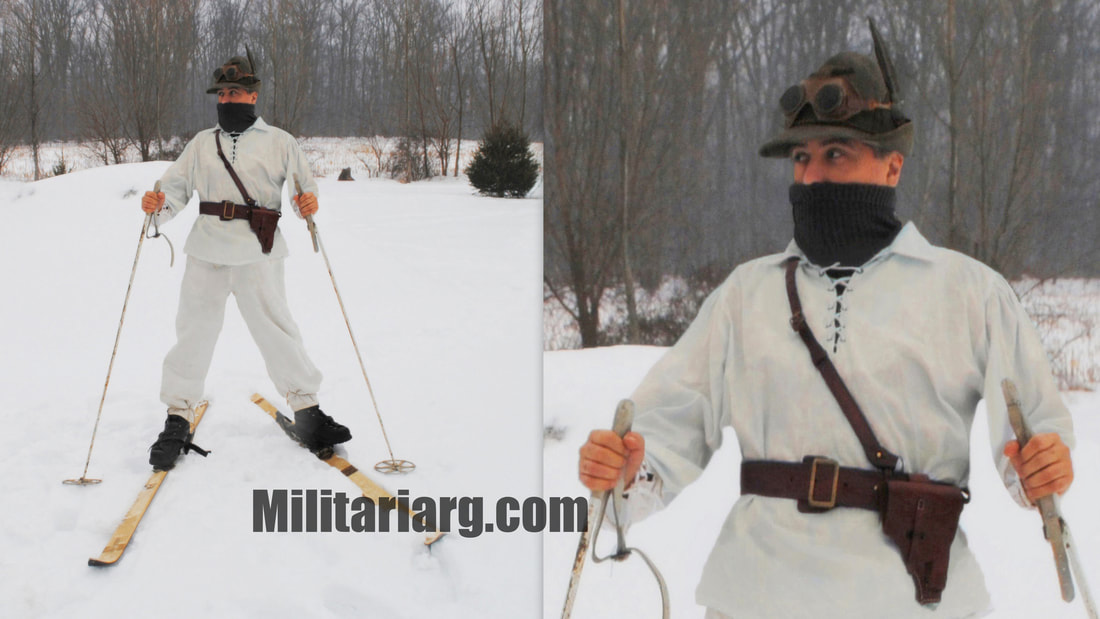
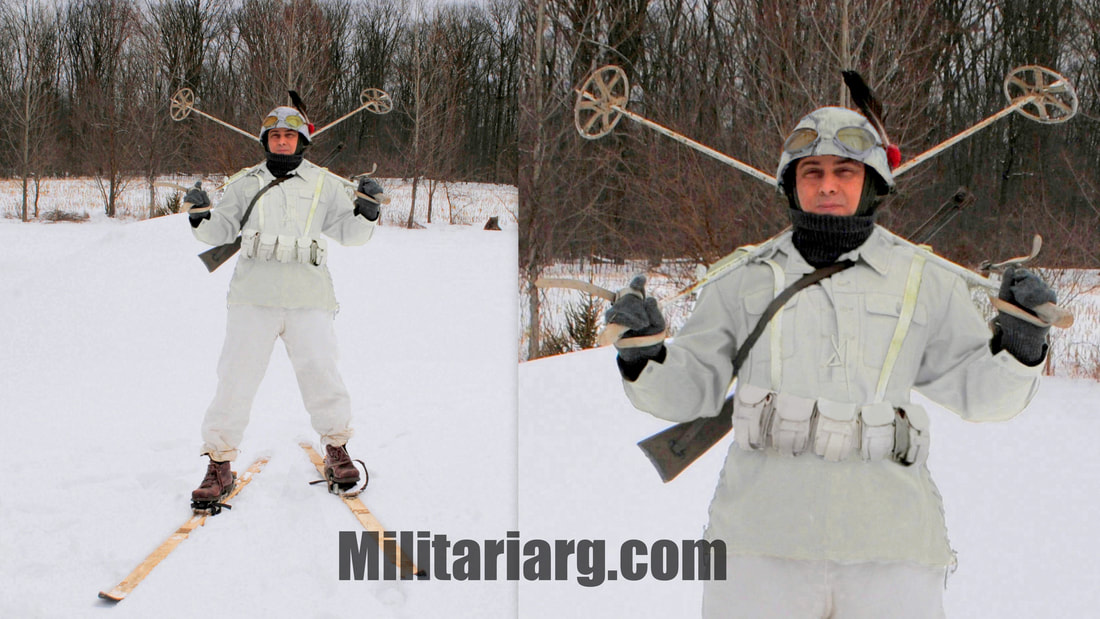
"White Devils": The skiers earned the nickname "Diavoli Bianchi" (White Devils) for their white camouflage suits and their skill in winter combat on the Russian steppe.

Annihilation at Rossoš': The battalion was almost completely wiped out in January 1943 during the Soviet Operation Little Saturn, particularly during the retreat and defense of the city of Rossoš'. In this phase, the battalion, surrounded and out of ammunition, counterattacked using Molotov cocktails and hand-to-hand combat.

Return and Honors: The few survivors returned to Italy in the spring of 1943. For their valor and sacrifice, the battalion (and by heritage, the flag of the 4th Alpini Regiment) was awarded the Gold Medal for Military Valor, the highest Italian military honor, for operations on both the Greek and Soviet fronts.

Second Disbandment and Reconstitution (Brief): The battalion was briefly reformed in June 1943 in Southern France but was disbanded by the Germans after the Armistice of Cassibile in September 1943.
Picture
Picture
Picture
Picture

Picture
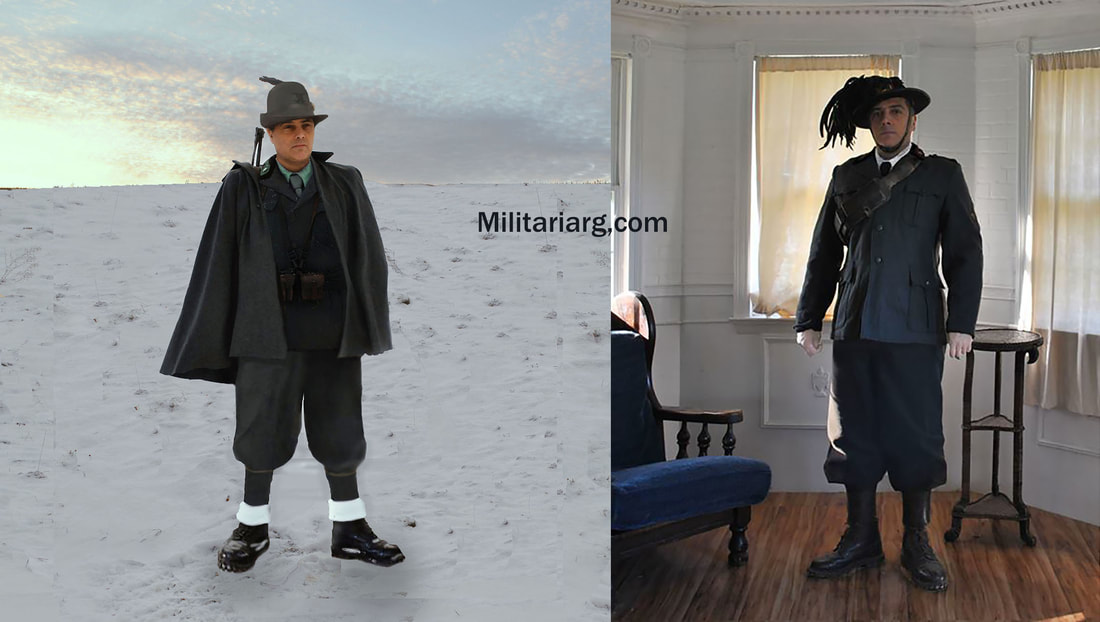
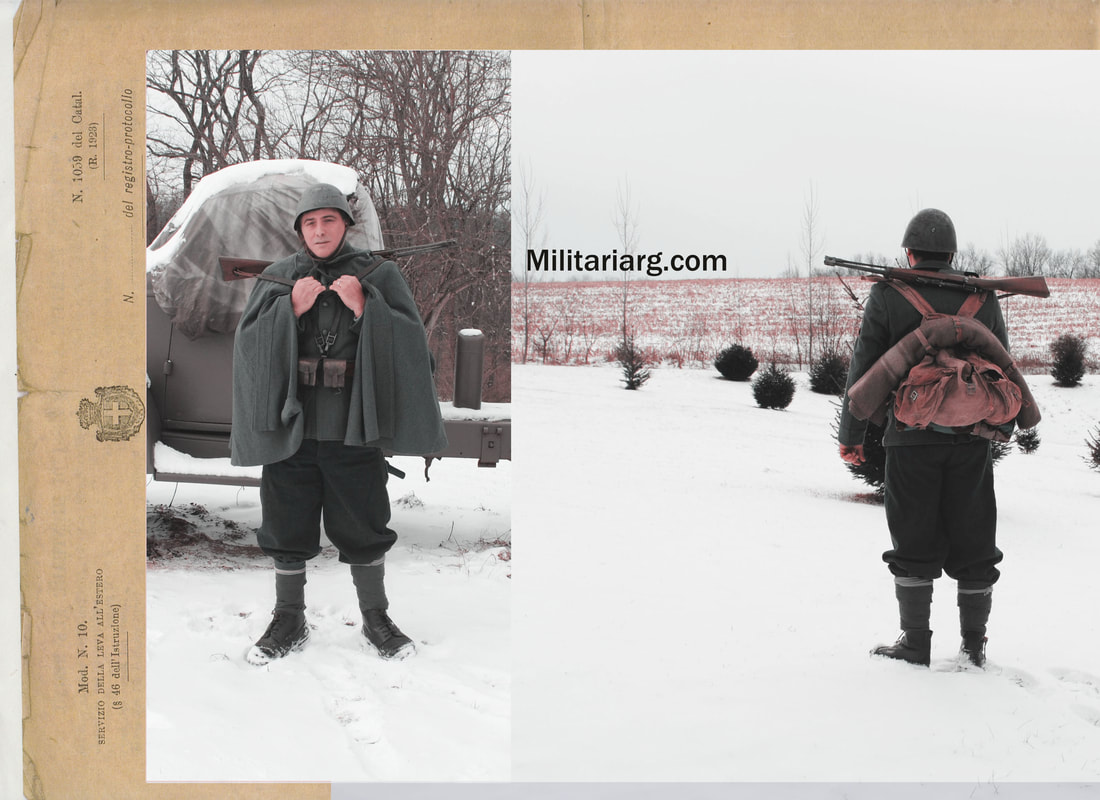
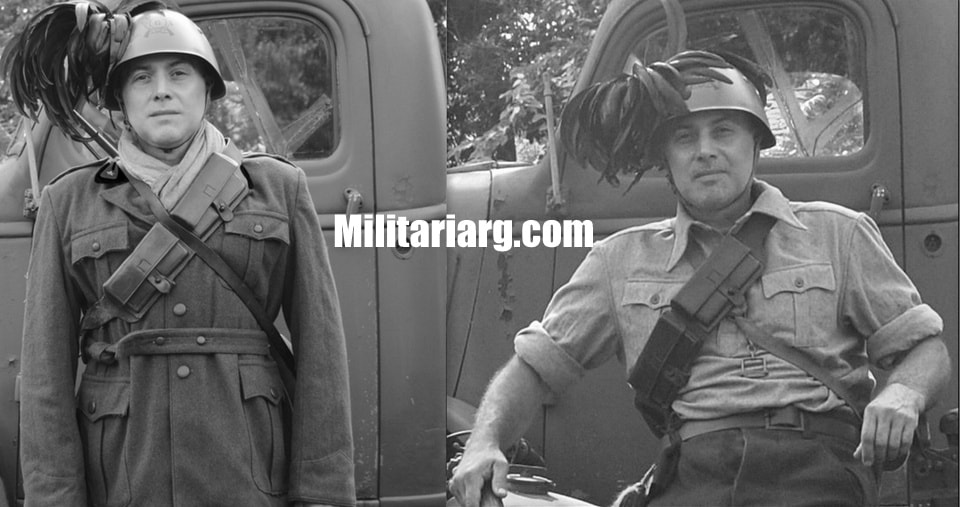
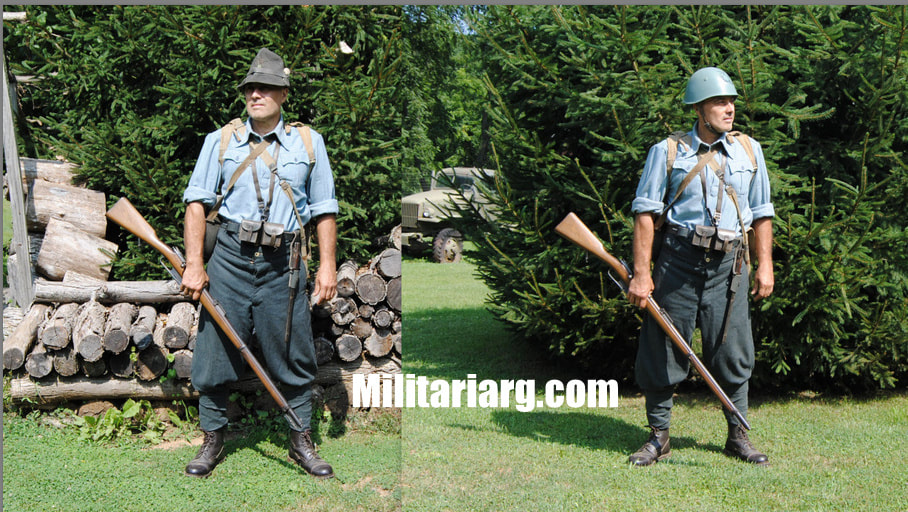
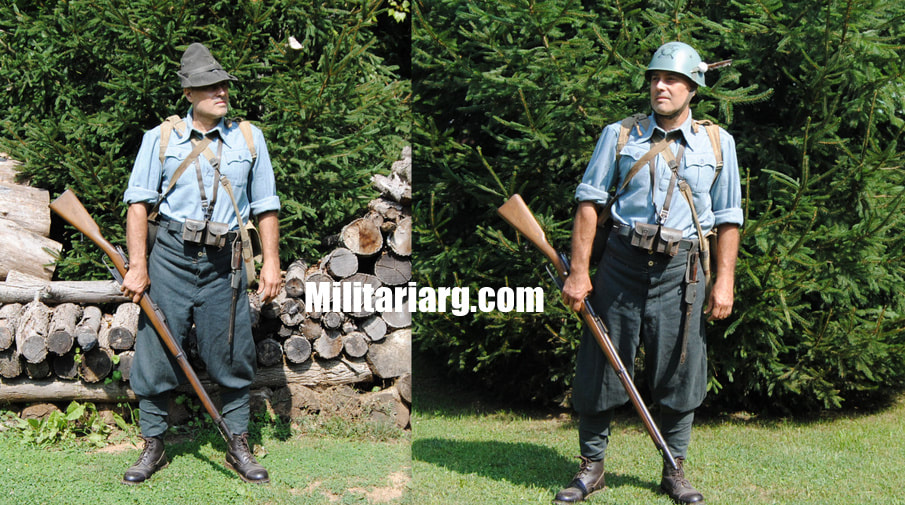
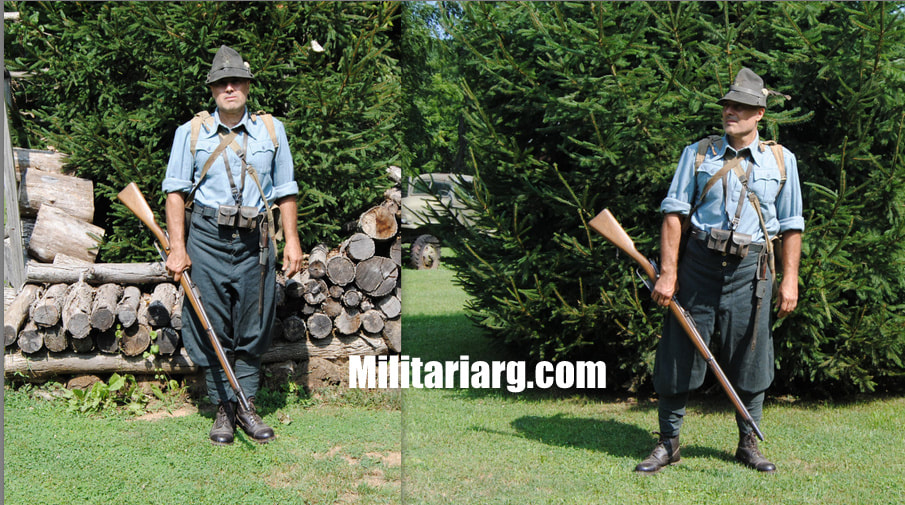
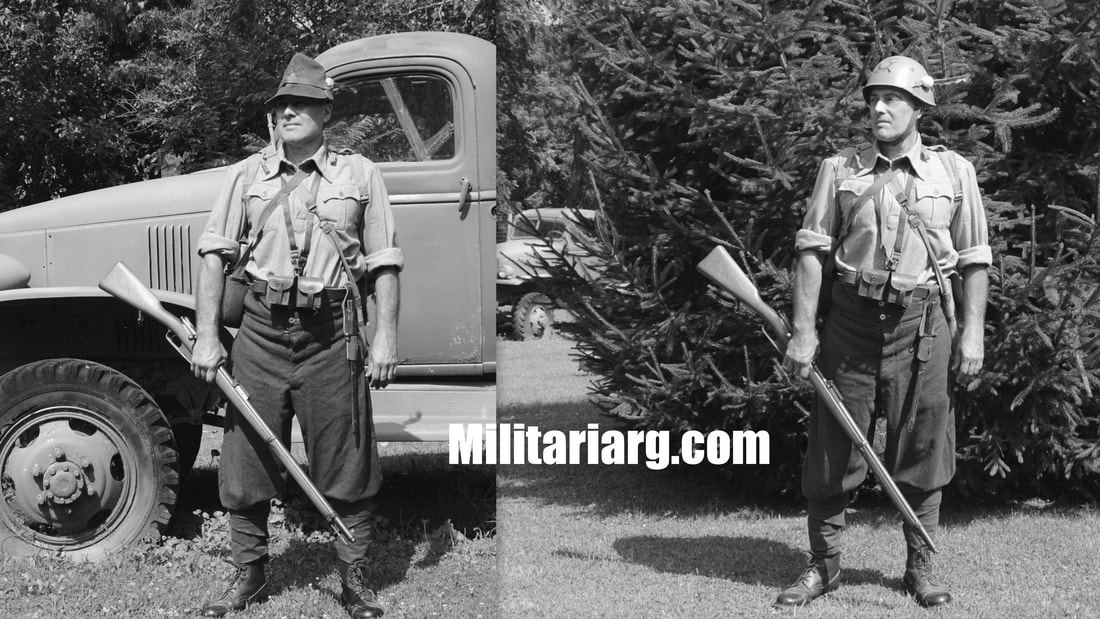
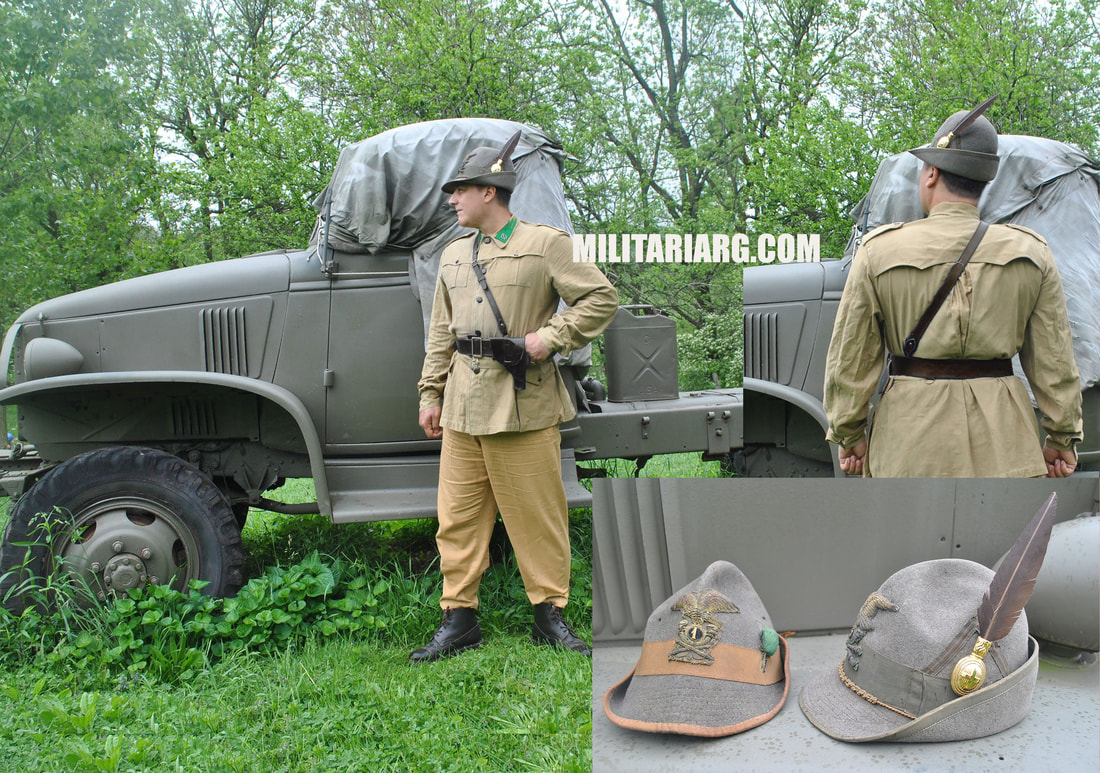
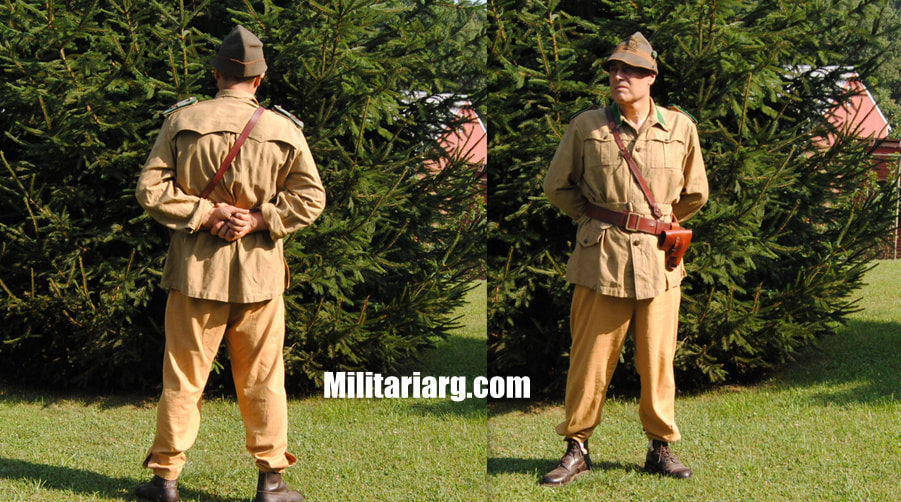
Photo reenactment. Left: 9th Alpini Regiment, 3rd Julia Division, L'Aquila Battallion circa 1937. Right: 6th Bersaglieri Regiment from the 2nd  Division Emanuele Filiberto Testa di Ferro
Picture
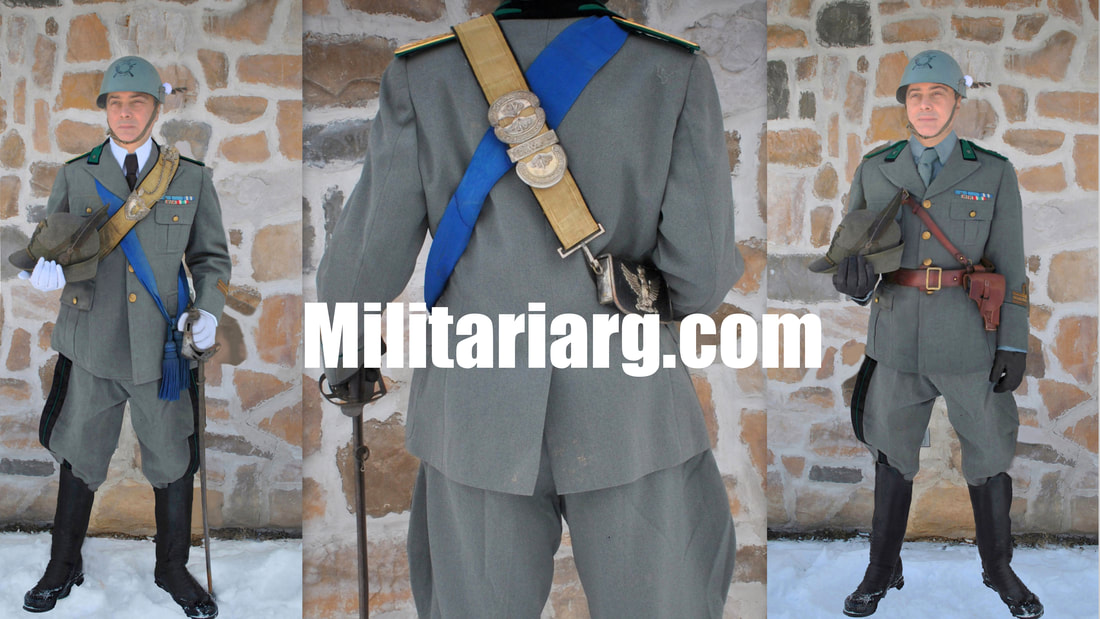
Grande uniforme da Capitano degli Alpini modello 1934. Alpini Captain Gala uniform.mod. 1934. Regio Esercito.

Italian WW2: Albanian Campaign 1939 - French Front 1940 - Balkans Campaign - Greco-Italian War  1940/41 - Russian Front CSIR 1941/42 ARMIR 1942/43.
Picture
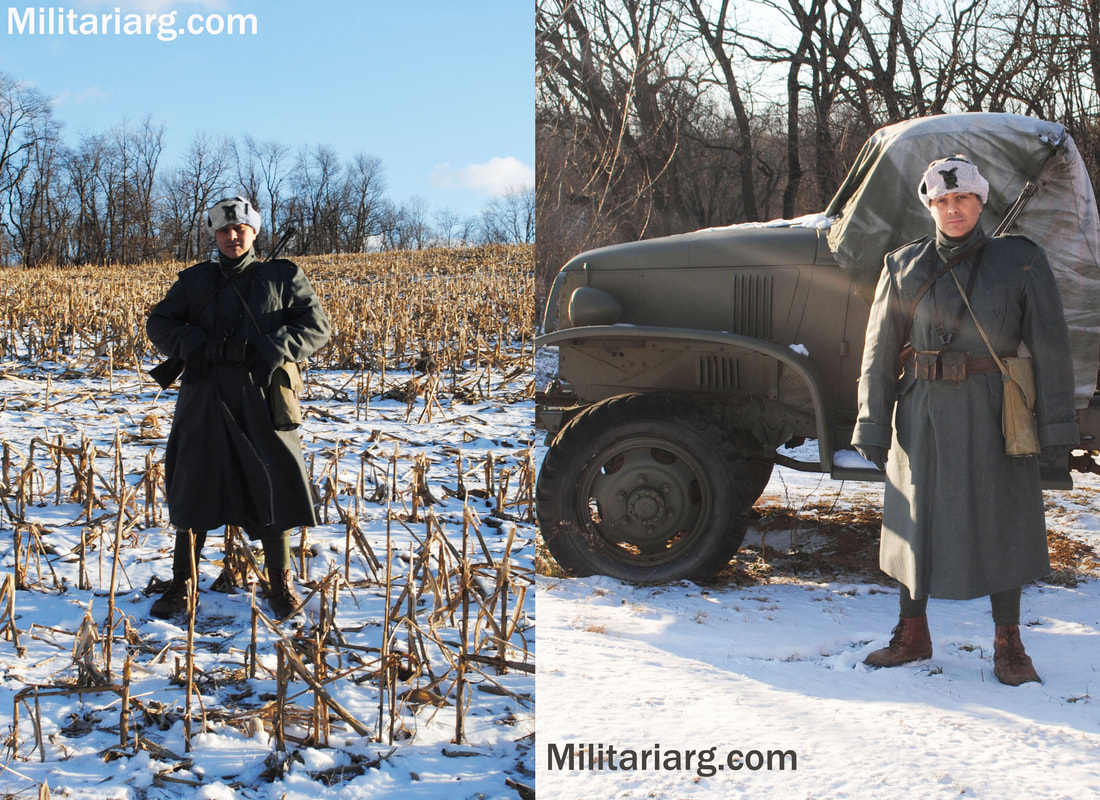
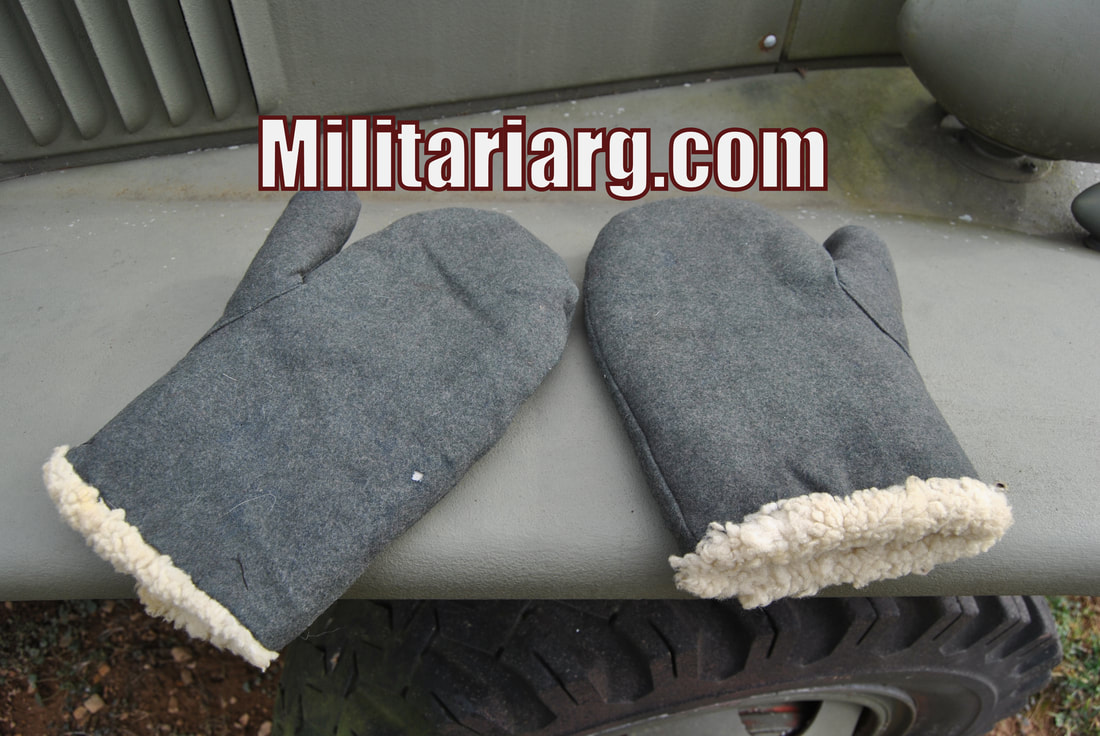
Original WW2 Eastern Front Italian CSIR ARMIR Guanti, Gloves Mittens.
Picture
Picture
Picture
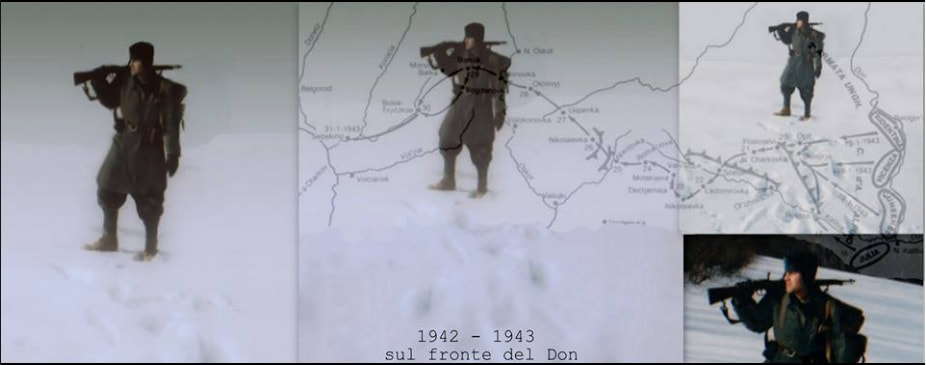
​In 1942, the Italian Royal Army's 8th Army (known by its Italian acronym ARMIR, Armata Italiana in Russia) was deployed along a wide, 270-kilometer stretch of the River Don in the Soviet Union. Their position was intended to cover the left flank of the German 6th Army as it advanced on Stalingrad, but it eventually became the site of a catastrophic Soviet counteroffensive. 


The ARMIR assumed its position on the right bank of the Don in July and August 1942, creating a thin defensive line with inadequate equipment and no deep trench systems.

"First Battle of the Don": 

In August 1942, Soviet forces launched a heavy attack against the Italian 2nd Infantry Division "Sforzesca" and 9th Infantry Division "Pasubio" around the Serafimovič bridgehead. Though pushed back with significant losses, the Italians, with German support and the deployment of specialized units like the "Monte Cervino" Skiers Battalion and the Savoia Cavalleria, managed to stop the Soviet advance and hold the line.

Last Cavalry Charge: During this period, the Savoia Cavalleria regiment conducted the last full-scale cavalry charge in military history near the Don River on August 24, 1942, successfully dislodging a Soviet position. 

Operation Little Saturn and the Collapse 
The major turning point came in December 1942 with the Soviet counteroffensive, Operation Little Saturn. 

The Plan: After encircling the German 6th Army at Stalingrad (Operation Uranus in November 1942), the Soviets targeted the weaker Axis armies (Italian, Hungarian, and Romanian) holding the flanks. Operation Little Saturn aimed to annihilate the Italian 8th Army and cut off the German forces in the Caucasus.

The Assault: Launched on December 16, 1942, the Soviet offensive, using overwhelming numbers of tanks and infantry, broke through the thinly-held Italian lines. The Italian 2nd and 35th Army Corps collapsed under the massive assault.

The Retreat: The survivors of the southern Italian divisions were forced into a desperate and deadly retreat through the sub-zero Russian winter, often without adequate food, clothing, or transport.
Picture
The Alpini Stand: The Alpini Corps, positioned further north and initially unaffected, were hit by a second Soviet offensive on January 13, 1943. Encircled and running low on supplies, they fought a bitter and valiant breakout, most famously at the Battle of Nikolayevka, where the "Tridentina" Division spearheaded the escape.

Aftermath: By March 1943, the remnants of the ARMIR were withdrawn to Italy. Out of approximately 235,000 Italian soldiers in Russia, an estimated 114,000 were killed, wounded, or captured during the winter battles on the Don. The disaster on the Don River effectively ended the Italian Royal Army's significant participation on the Eastern Front
Picture
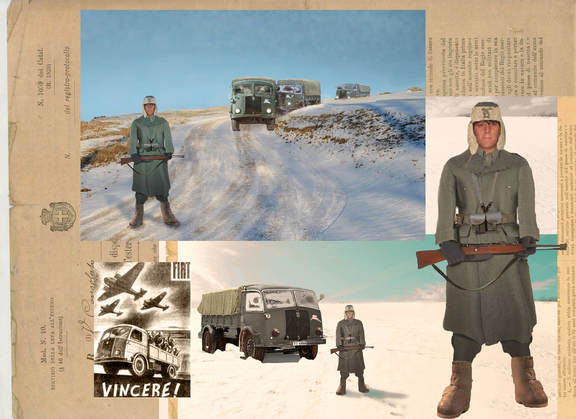
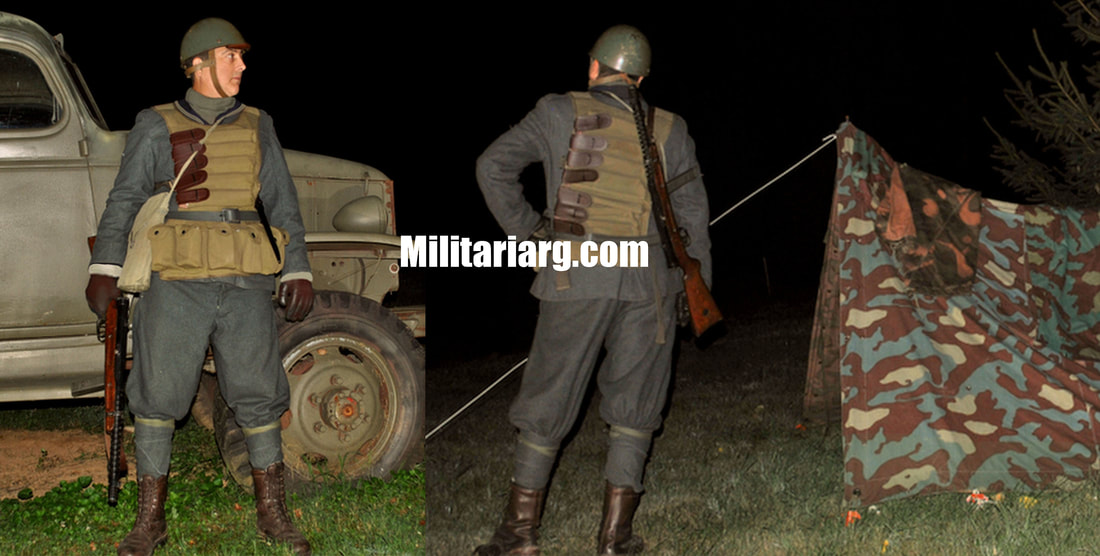
During the disastrous retreat from the River Don in the winter of 1942–1943, the Italian 8th Army (ARMIR) largely relied on standard Italian Royal Army trucks and a limited number of light armored vehicles, many of which were ill-suited for the extreme Russian winter conditions and the overwhelming Soviet offensive. 

Primary Transport Vehicles (Trucks)

Logistics and troop movement depended heavily on a variety of robust but often two-wheel-drive trucks, most of which were designed for European roads or North African deserts, not the deep snow and mud of the Russian steppe. 

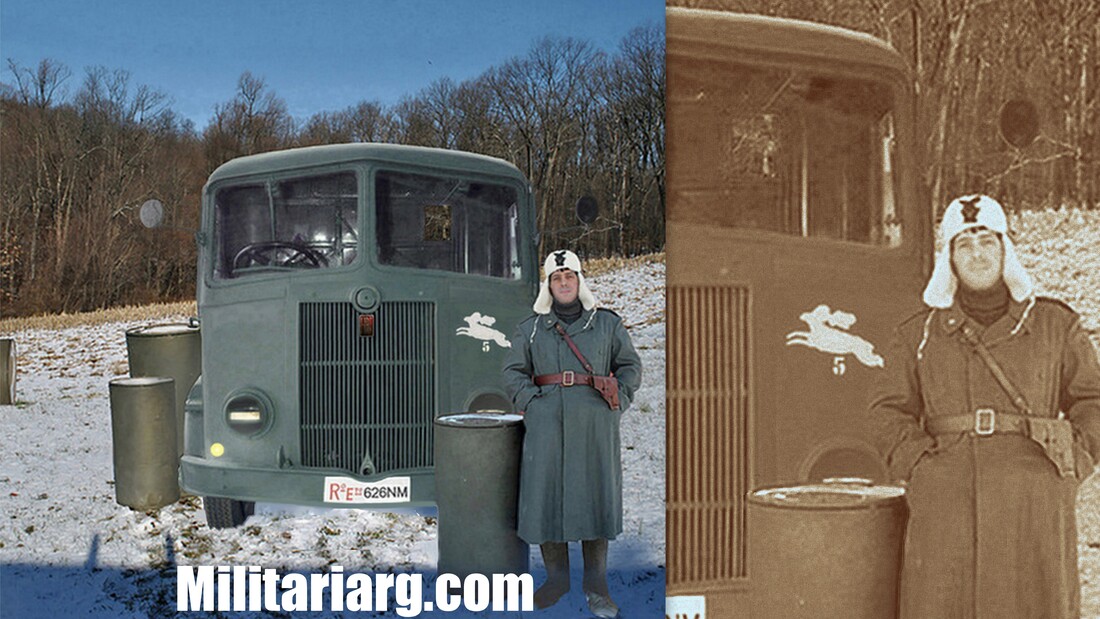
Fiat 626NM: This was the most widely used Italian medium truck of the war, with thousands produced.
Lancia 3Ro: Considered a reliable and sturdy heavy truck, the Lancia 3Ro was a mainstay for transporting supplies and towing artillery.
Fiat-SPA 38R: A common light lorry used in all theaters, although its performance in the harsh winter was likely limited.
SPA Dovunque 35: This all-wheel-drive truck was designed for difficult terrain ("Dovunque" means "everywhere") and was likely more capable in the snow than the standard two-wheel drive variants, though numbers were limited.
Alfa Romeo and Bianchi Trucks: Other manufacturers provided various medium and heavy trucks, such as the Alfa Romeo 430RE and Bianchi Miles. 

Many of these vehicles were lost or abandoned during the chaotic retreat due to fuel shortages, mechanical failures in the extreme cold, or being overrun by Soviet forces. The logistical collapse meant that a high proportion of the retreat was conducted on foot, with soldiers suffering heavily from frostbite and exposure. 

Armored and Combat Vehicles

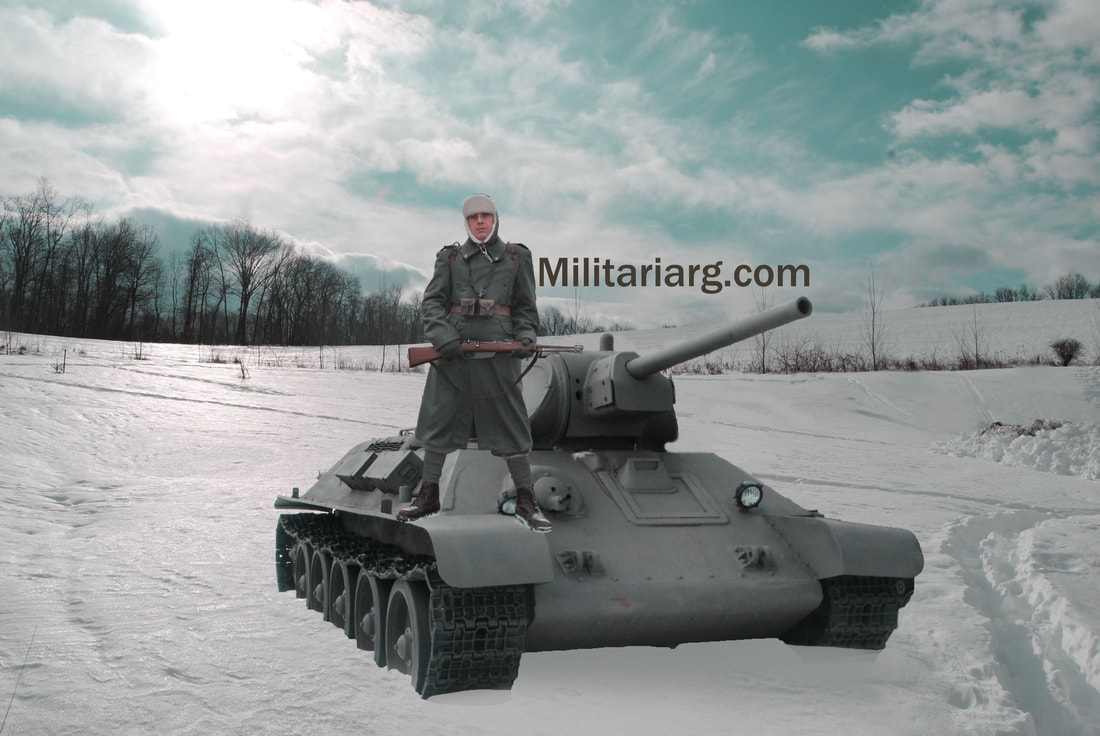
The Italian armored contingent on the Eastern Front was small and largely equipped with obsolete or light tanks, which were easily outmatched by Soviet armor, particularly the T-34. 

L6/40 Light Tank: This was the main tank used by Italian forces on the Eastern Front. It was lightly armored and armed with a 20mm main gun.
Carro Armato L3/33 and L3/35 Tankettes: Obsolete by 1942, these tiny, machine-gun-armed tankettes were used by some units but had very limited combat effectiveness.
Semovente L40 da 47/32: This self-propelled gun, based on the L6/40 chassis and armed with a 47mm anti-tank gun, was present and provided much-needed anti-tank support.
AB40/AB41 Armored Cars: A small number of armored cars were present with reconnaissance units and provided some mobility and firepower, though they were not numerous enough to impact the overall outcome of the retreat. 

During the retreat, armored vehicles were often the last line of defense, with crews fighting until they ran out of ammunition or their vehicles were destroyed or stuck in the snow. 
Picture
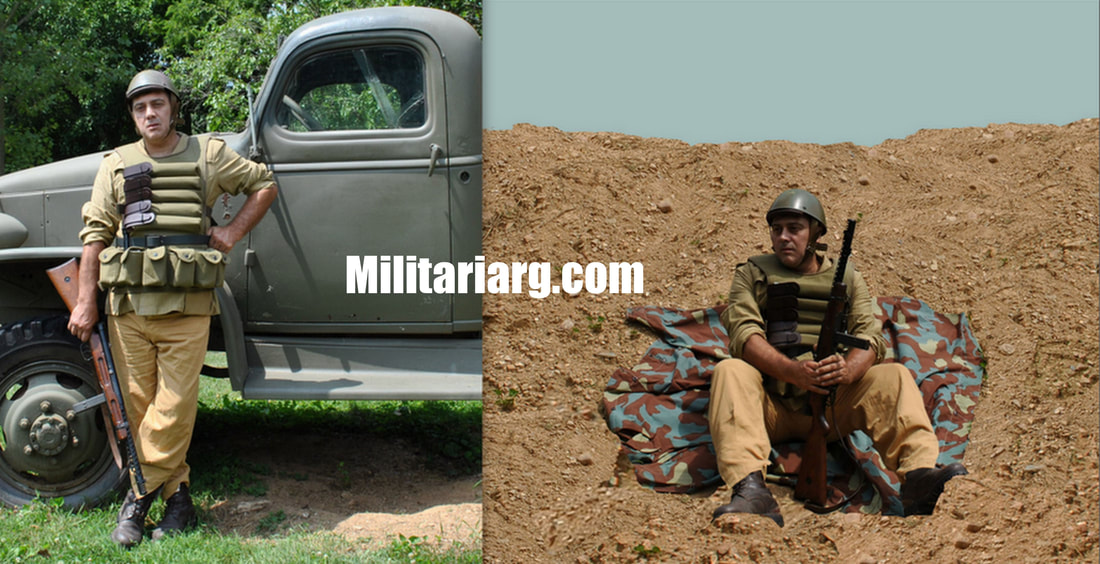
Chevrolet G506, 1.5-ton, 4x4 truck was one of several Allied vehicles used by the Soviet Union to mount Katyusha rocket launchers during World War II. Over 44,000 Chevrolet G506 trucks were provided to the Soviet Union through the Lend-Lease program. While many were used for general transport, as artillery tractors, and for logistics, a significant number served as platforms for the famous Katyusha multiple launch rocket systems. ​The G506 variant used for the BM-13 Katyusha system was sometimes referred to as the Chevrolet G-7107 or G-7117 in Soviet records and modeling references.
Picture
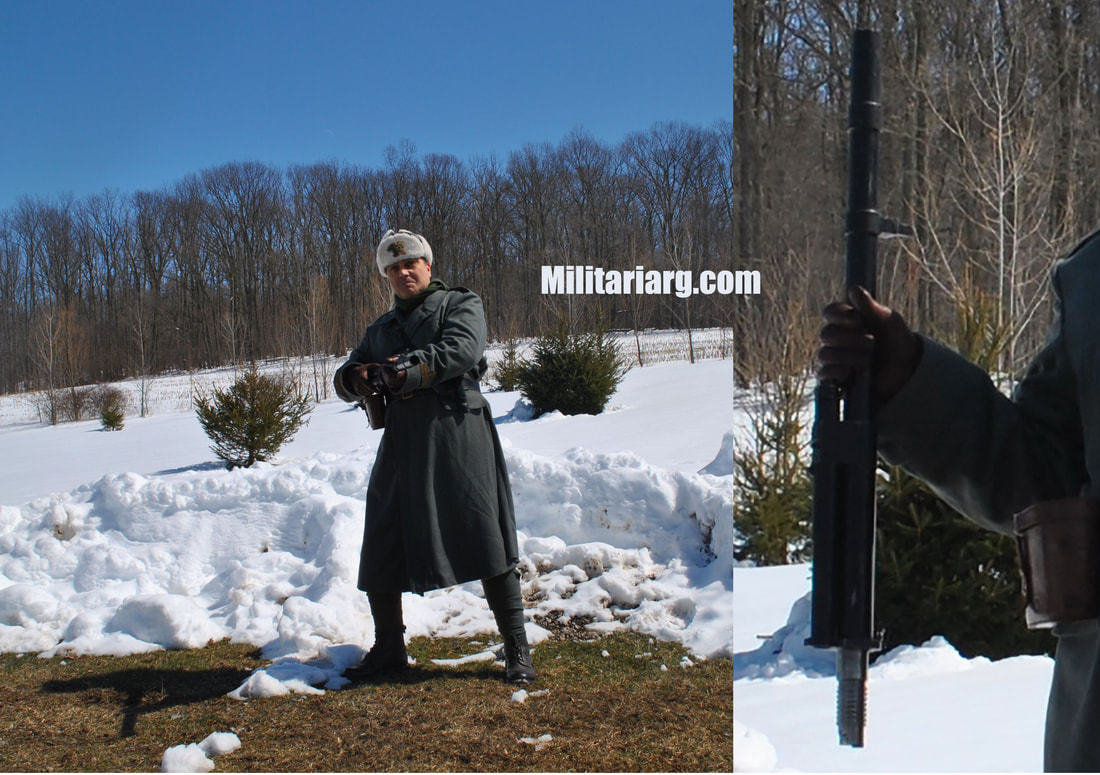
​Italian infantry during the Russian Campaign were equipped with standard Royal Army weapons that were, by 1942 standards, largely obsolete, under-maintained due to logistical failures, and ill-suited for the extreme winter conditions and the modern armaments of the Soviet Red Army.

Primary Infantry Weapons

Carcano M91 Rifle: The standard-issue bolt-action service rifle for the vast majority of Italian soldiers was the Fucile Modello 1891 (and its shorter carbine variant, the M91/38).

It fired the 6.5×52mm Mannlicher-Carcano cartridge from a six-round internal magazine.
While reliable, its stopping power and effective range were inferior to the Soviet Mosin-Nagant and other Allied rifles. A major issue during the winter was that the oil used to lubricate them often froze solid in sub-zero temperatures.
Beretta M38 Submachine Gun: This was arguably the best infantry weapon available to the Italians.
A highly regarded, reliable, and well-designed submachine gun, it was prized by the Bersaglieri and other elite units.
However, due to slow production, it was never available in sufficient numbers for general issue across the line divisions of the ARMIR (Italian 8th Army).

Support Weapons

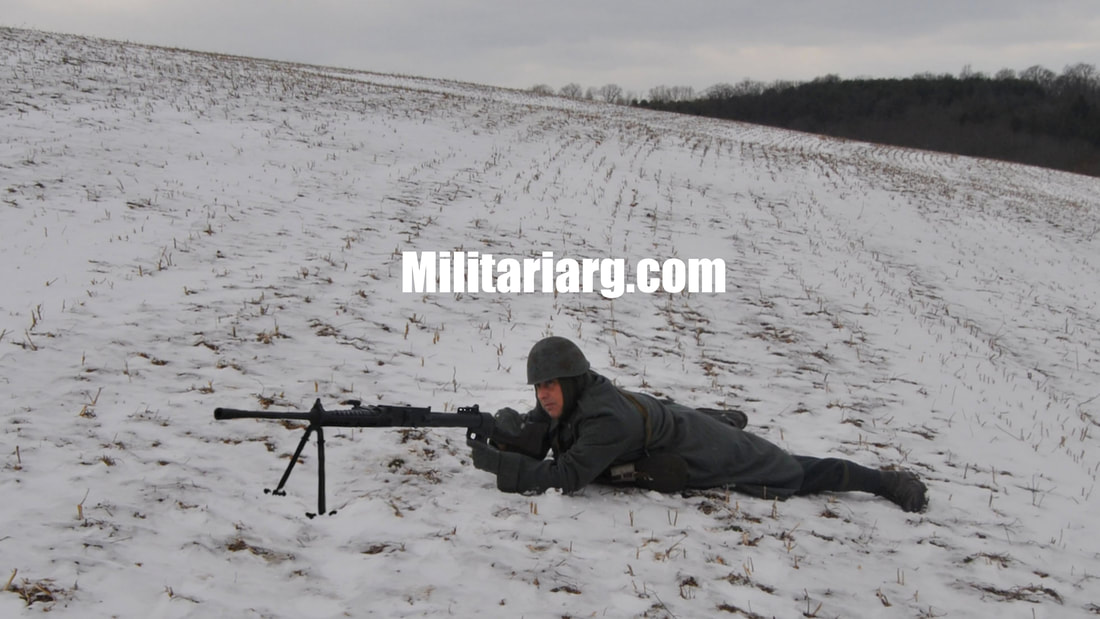
Breda Modello 30 Light Machine Gun (LMG): The standard LMG was notoriously unreliable, complex, and prone to jamming, especially when exposed to dirt and dust in summer or freezing conditions in winter. It fed from a 20-round side-mounted magazine and required a separate oiler mechanism for lubrication, which was a critical flaw in the Russian climate.
Breda Modello 37 Heavy Machine Gun (HMG): This was a more effective and robust weapon than the Modello 30 LMG, used for sustained fire positions along the Don River line. It fed from a 20-round strip rather than a belt or magazine.
Mortars: Italian forces used the 81mm Mortar Modello 35, which was a license-built version of a reliable French design and provided vital indirect fire support. They also employed the smaller, less effective 45mm Brixia Modello 35 light mortar at the squad level.

Anti-Tank Weapons

Pistola Mitragliatrice OVP Modello 1930/31: In the absence of effective dedicated anti-tank rifles, the Italians repurposed captured Soviet PPSh-41 submachine guns and relied heavily on anti-tank mines and improvised weapons (like Molotov cocktails), especially during the fighting at Rossoš'.
47/32 Anti-Tank Gun: The primary dedicated anti-tank weapon was a capable but small 47mm field gun that could penetrate early-war Soviet armor, but struggled to stop the more formidable T-34 medium tank.
Picture

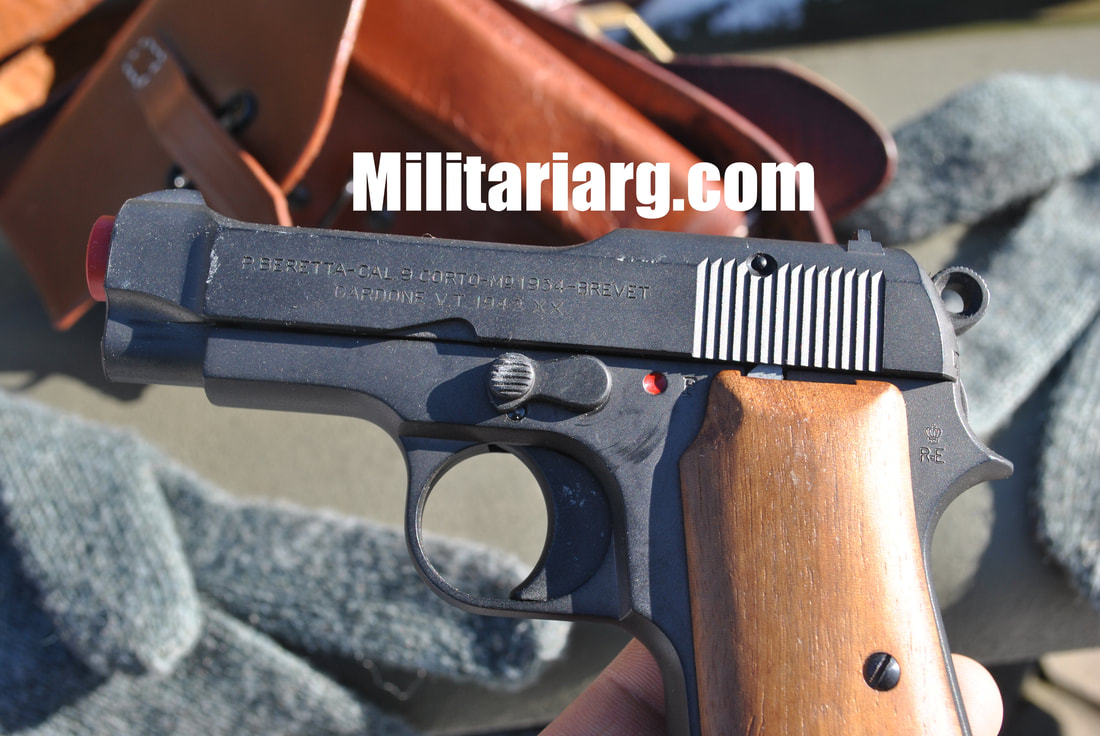
Beretta M1934 Airsoft Tanaka and Valenki Boots.
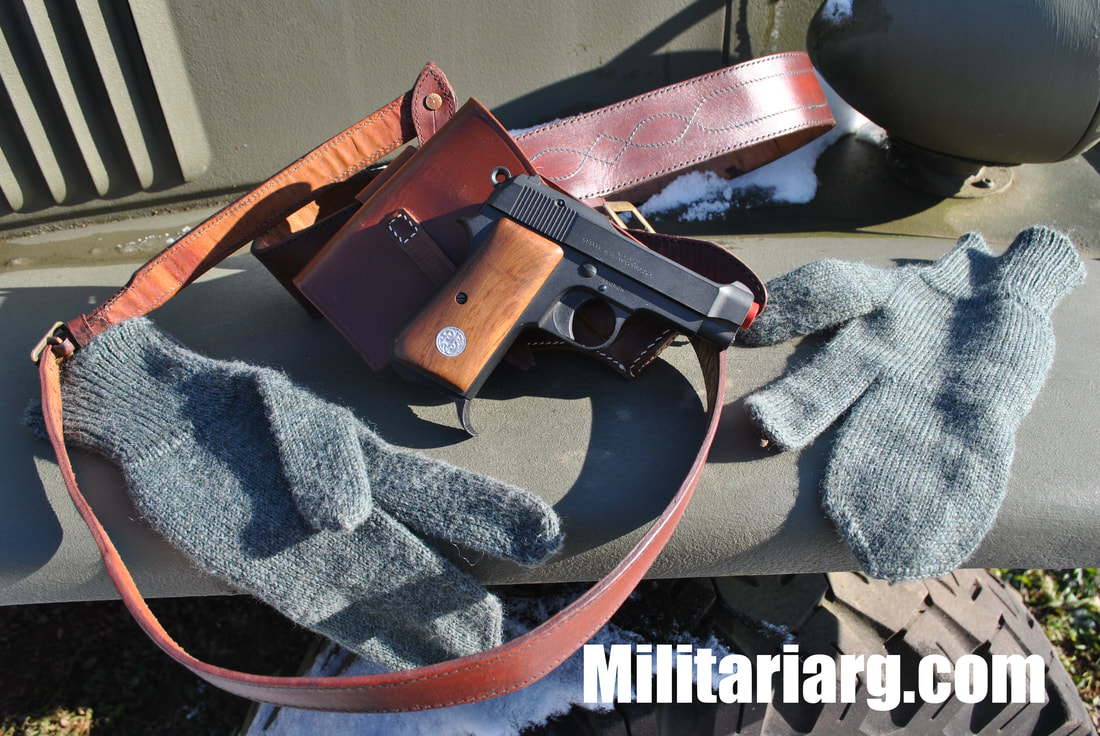
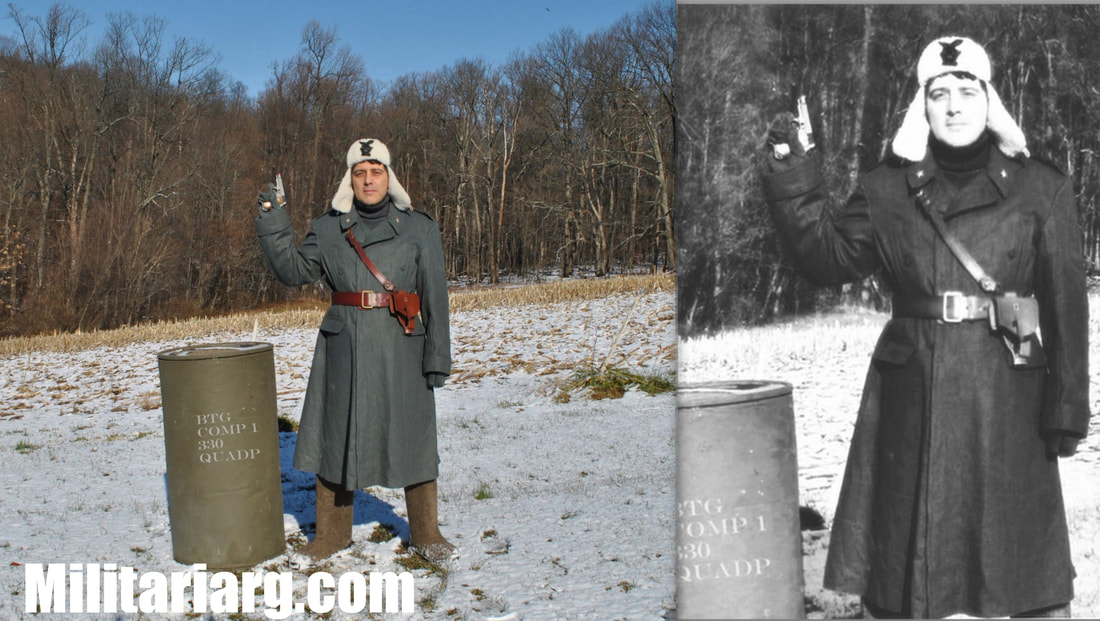
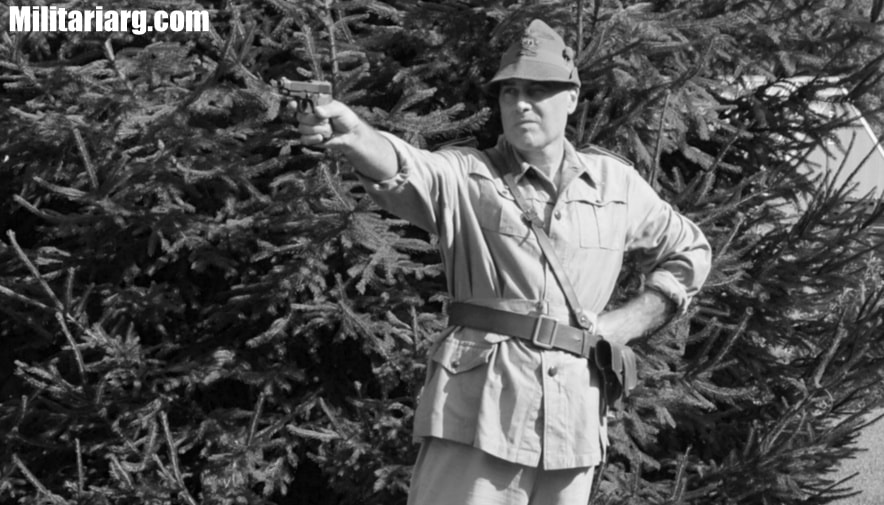
​The M1934 became the primary sidearm for officers and NCOs of the Italian Royal Army during the Russian campaign and all other theaters of WWII. It was also issued to the MVSN (Blackshirts).
The pistol was renowned for its durability and reliability in difficult conditions, including the extreme cold of the Eastern Front, often performing better than the larger, more complex Breda Mod. 30 machine gun.
It remained in official service with Italian police and military for decades after the war.
Beretta produced a very similar version, the M1935, chambered in 7.65x17mm (.32 ACP), which was primarily issued to the 
Picture
​The Beretta M1934 was the standard service pistol of the Italian Royal Army, Navy, and Air Force throughout the Second World War and remained in service with Italian police forces for decades afterward. It is a compact, reliable, and well-regarded semi-automatic pistol.

Development: Beretta had been producing pistols for the Italian military since World War I (specifically the M1915 and M1923). The M1934 evolved from these earlier designs, primarily based on the Model 1931, optimizing the size for easier carrying without significantly reducing firepower.

It fired the 9x17mm Short cartridge, better known internationally as .380 ACP. The Italian military designated this round as 9mm Corto. Simple and reliable straight blowback action, which was possible due to the relatively low power of the .380 ACP cartridge.8-round single-stack magazine.
Picture
​The pistol was highly praised for its natural feel, excellent balance, and compact size. The large oval cutout in the slide to expose the barrel was a signature Beretta feature that aided cooling and extraction.
It included a frame-mounted thumb safety that also acted as a slide catch. A later addition was a loaded chamber indicator pin.

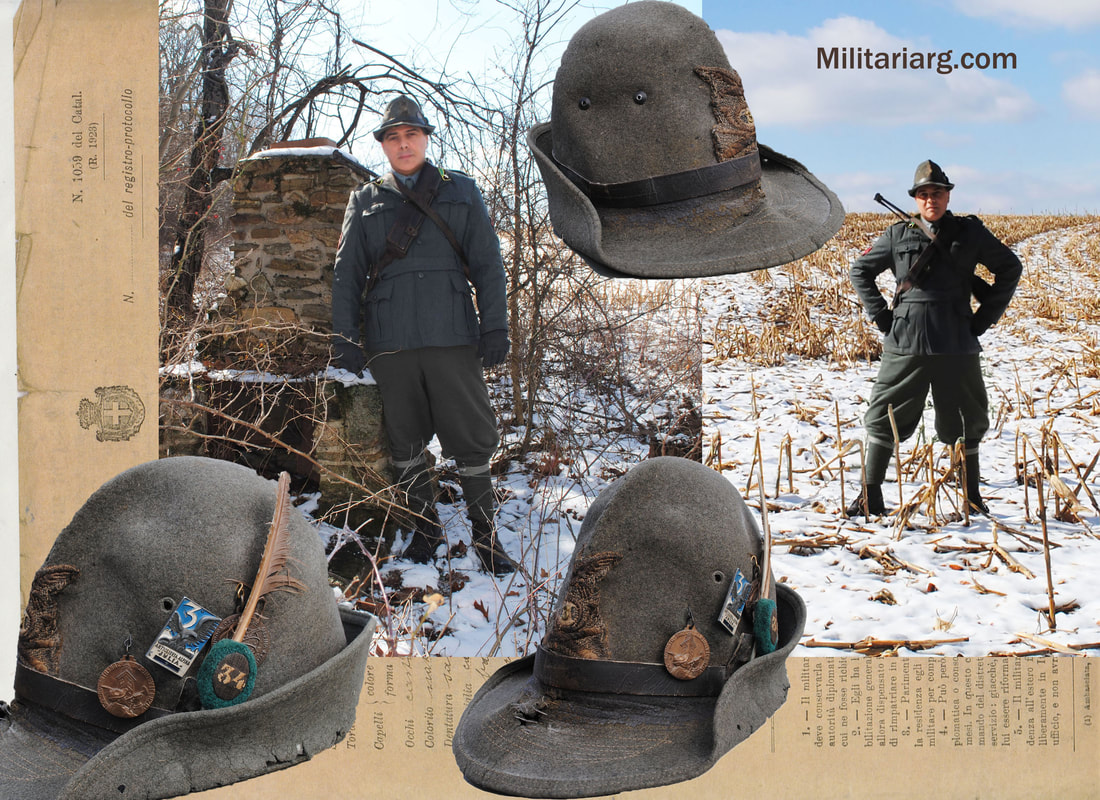
​3º  Reggimento Artiglieria Alpina - Divisione Julia. Batteria 34^ obice 75/13 M15
Picture
3º  Reggimento Artiglieria Alpina - Divisione Julia. Batteria 34^ obice 75/13 M15.
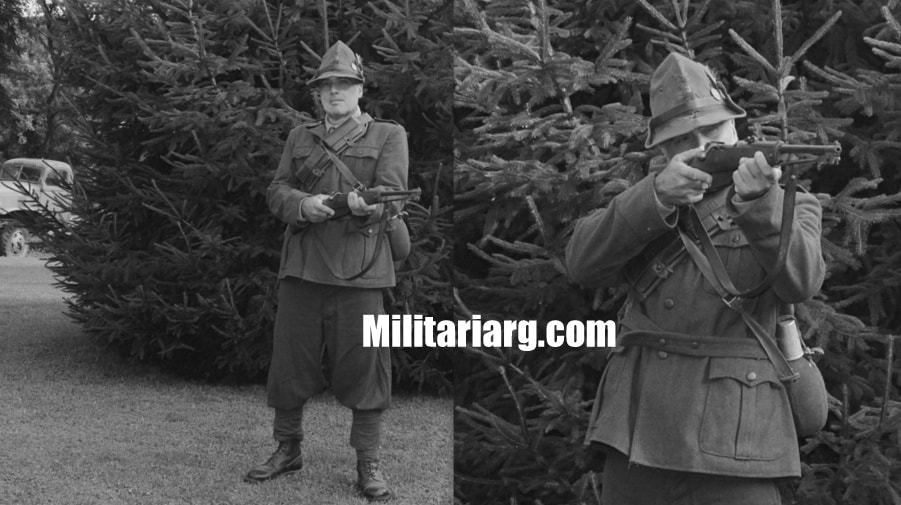
The 3º Reggimento Artiglieria Alpina (3rd Alpine Artillery Regiment) was part of the historical 3ª Divisione Alpina "Julia", one of the major units that fought with valor and suffered tremendous losses during World War II. The 34^ Batteria was an organic unit within this regiment.

Organization of the 34^ Batteria
The 34th Battery was not an independent battery for the duration of the conflict.
Initially, it was part of the "Val Piave" Alpine Artillery Group, mobilized in 1939.
With the temporary disbandment of the "Val Piave" Group in October 1940, the 34th Battery was reassigned to the "Udine" Group of the 3rd Alpine Artillery Regiment in March 1941, remaining with them for subsequent campaigns.

The Campaigns of the Julia Division and the 34th Battery
The 3rd Alpine Division "Julia", and with it the 3rd Alpine Artillery Regiment and the 34th Battery, participated in two main operational theaters during the war:

Greek-Albanian Front (1940-1941): The "Julia" Division was among the first Italian units engaged on the difficult Balkan front. They fought in extreme conditions on the slopes of the Pindus mountains and the valleys of the Aliakmon, Vjosa, and Sarandaporos rivers, facing Greek resistance on impassable terrain and in adverse weather conditions. The 34th Battery, within the "Udine" Group, took part in these harsh clashes, contributing to the awarding of a Gold Medal for Military Valor to the regiment's flag.

Eastern Front (USSR) (1942-1943): After returning to Italy and a brief reorganization, the regiment and division were sent to the Soviet Union as part of the 8th Army (ARMIR).

The "Julia" was deployed along the Don River.
During the Soviet Operation Little Saturn in December 1942 and January 1943, the division was overwhelmed by the massive Soviet offensive. The units of the 3rd Alpine Artillery, including the 34th Battery, found themselves involved in the dramatic retreat in the freezing cold of the Russian steppe, suffering immense casualties.

The few survivors of the 3rd Alpine Artillery Regiment returned to Italy in the spring of 1943. The regiment was still in the process of reorganization near Udine when, following the armistice of September 8, 1943, it was officially disbanded on September 12.

The history of the 34th Battery is intrinsically linked to the sacrifice and valor of the "Julia" Division, a symbol of the tenacity of the Italian Alpini in World War II.

Picture
​The Moschetto Modello 91 per Truppe Speciali (M91 TS), or "Carbine for Special Troops," was a compact, bolt-action carbine variant of the standard Italian M1891 Carcano rifle. It was developed to provide a handier, shorter weapon for military personnel who needed a rifle for defense but were encumbered by the long infantry version.
Picture
It was chambered for the standard 6.5x52mm Carcano cartridge and used the same reliable bolt-action mechanism and six-round en-bloc clip feeding system as the full-size rifle.
Compact Size: It had a barrel length of approximately 17 inches and an overall length of just over three feet, making it much handier than the long infantry rifle.

Early models of the T.S. carbine had unique transverse bayonet lugs and specific slings, but during and after World War I, many were modified to use standard rifle bayonet lugs and side-mounted sling swivels to simplify logistics.
Picture
​The M91 TS was formally adopted in late 1897, following the 1893 adoption of the similar Moschetto Modello 1891 (cavalry carbine, which had a folding bayonet).

"Special Troops": The term "Special Troops" did not mean special forces in the modern sense; it referred to support units such as artillery crews, engineers, signalmen, naval personnel, and later, motorized troops, who found a full-length rifle cumbersome in their roles. Unlike the cavalry carbine with its permanently attached folding bayonet, the M91 TS was designed to use a standard, detachable M91 rifle bayonet, offering greater utility and less logistical complication.
Picture
​WWI and WWII Use: The M91 TS saw extensive service in both World War I and World War II. During the Second World War, the carbine variants became the most common and economical Carcano pattern to produce and were widely distributed, often to Alpini and Bersaglieri troops, as the limitations of the long rifle in modern, mobile warfare became clear.

Post-War: The M91 TS carbines remained in service with Italian police forces for decades after the war due to their handy size.

Picture
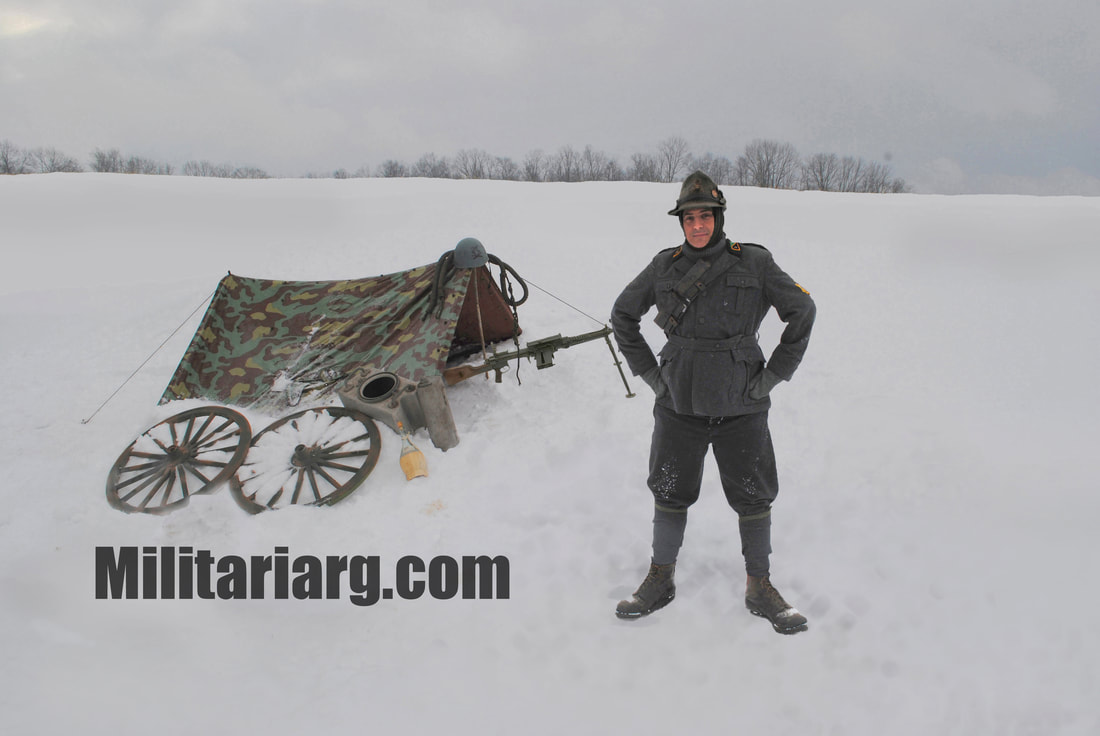
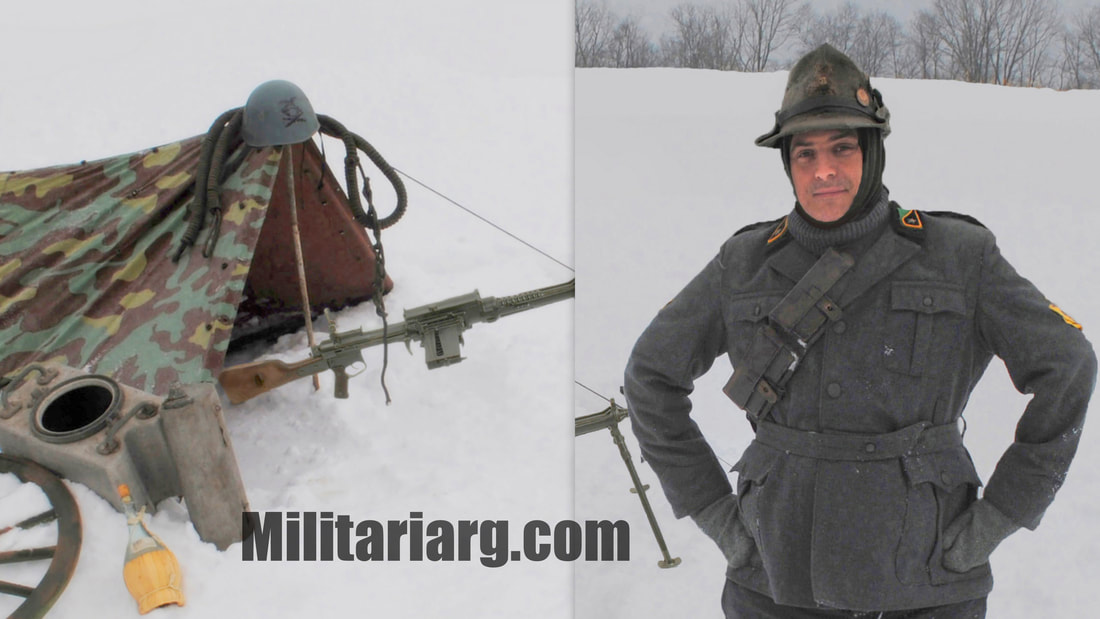
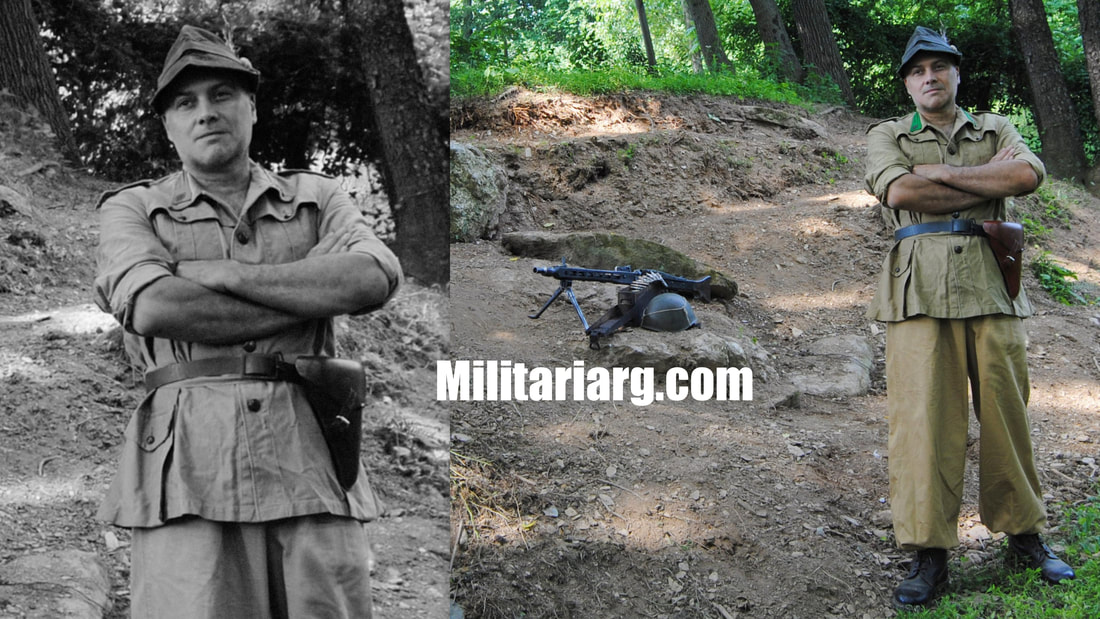
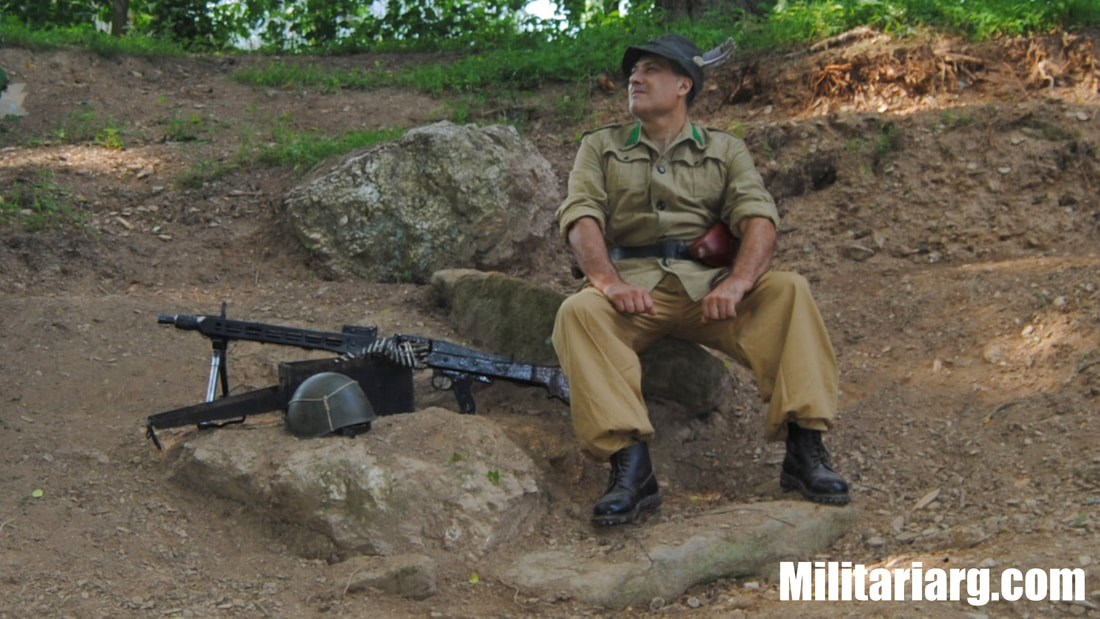
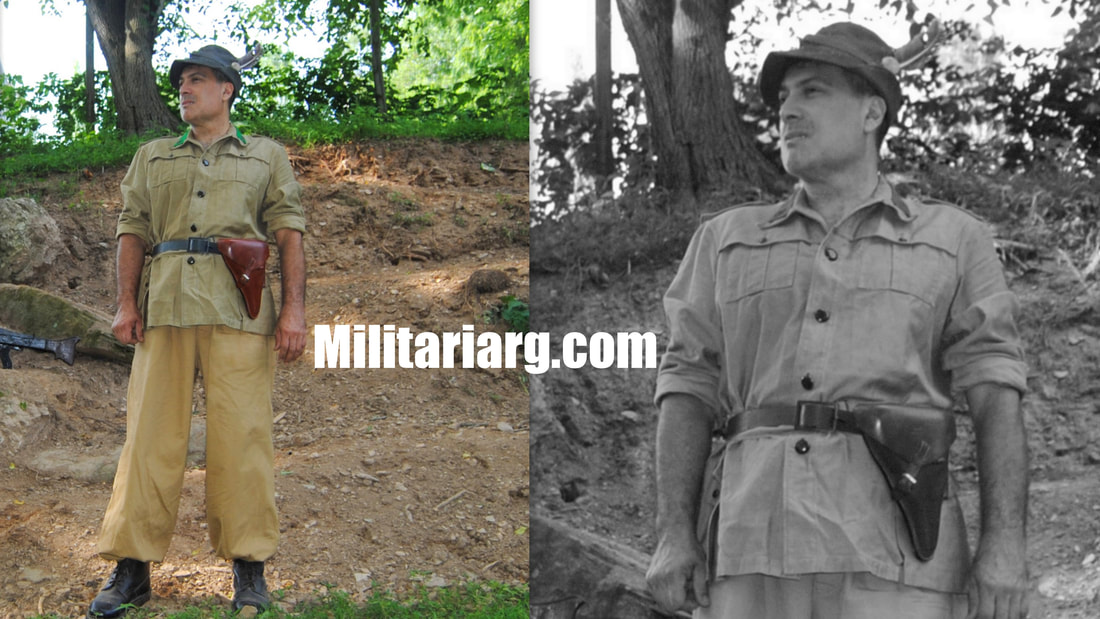
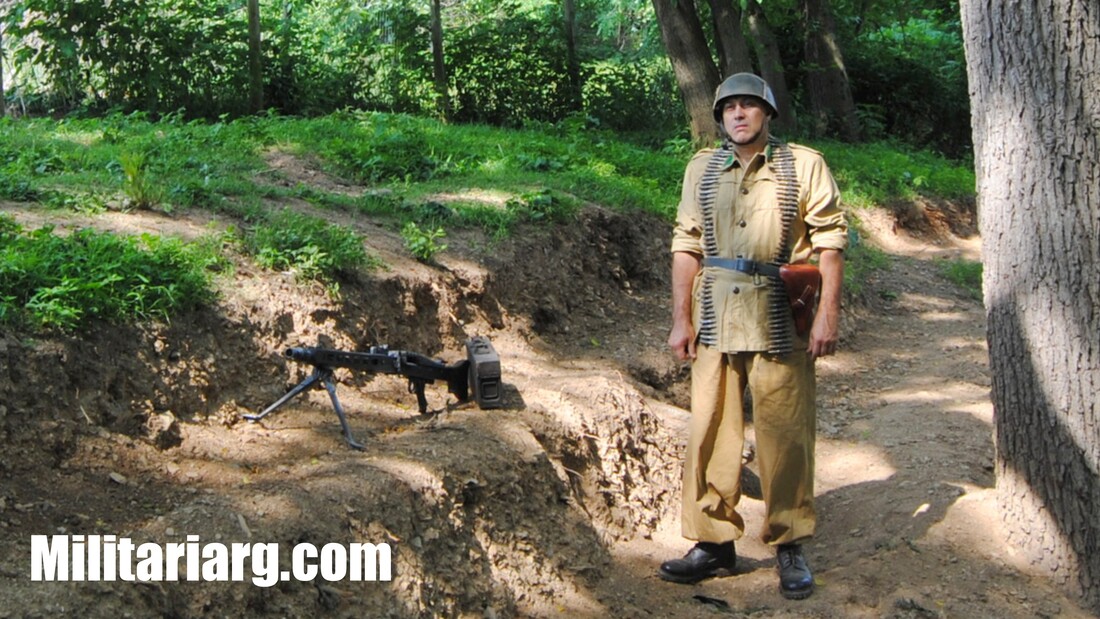
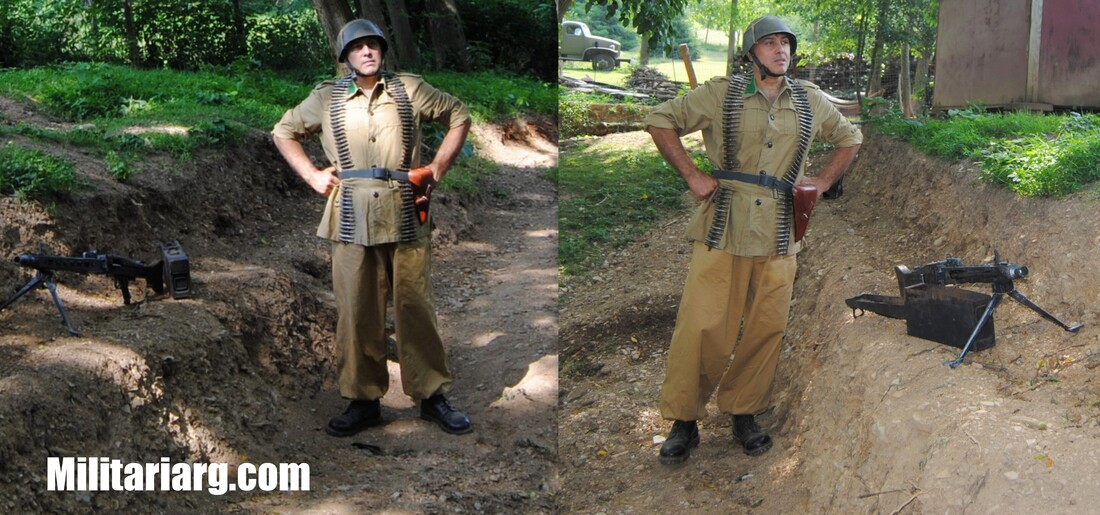
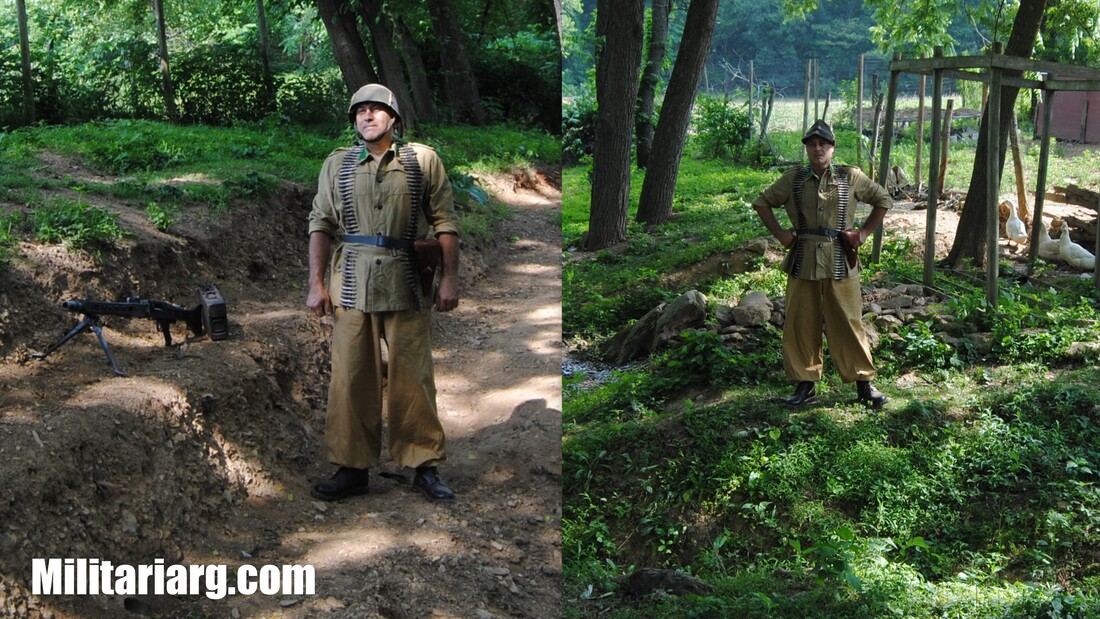
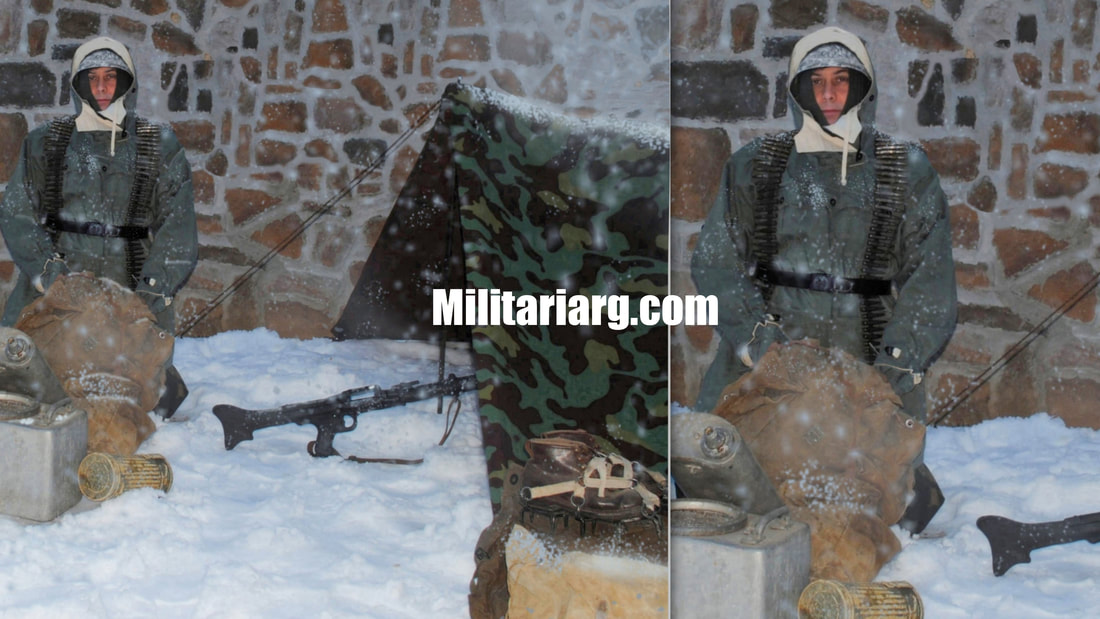
 Mitragliatrice Breda Mod. 30 and telo mimetico M29.
Picture
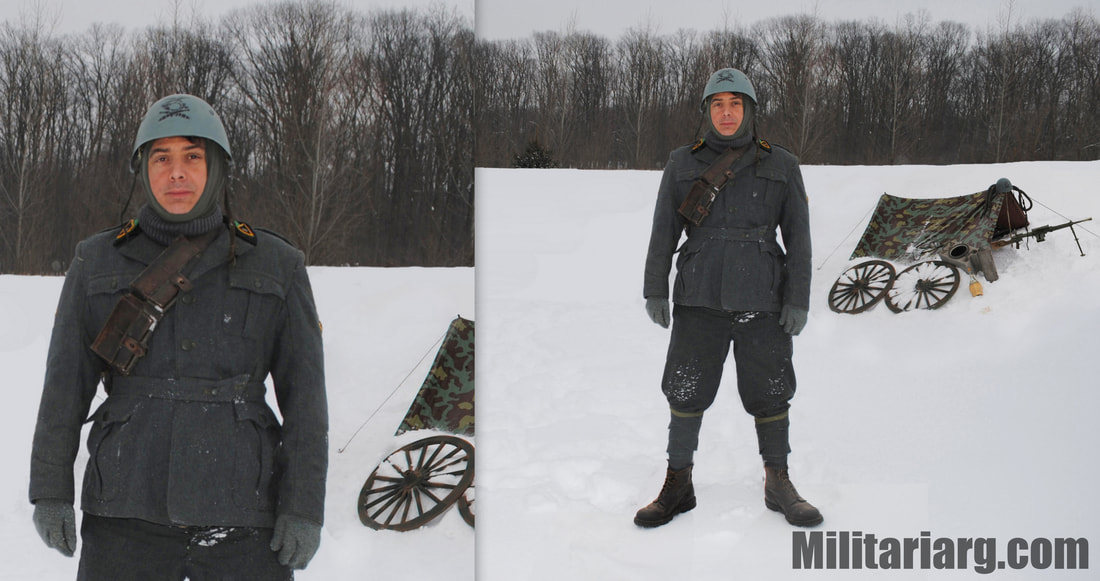
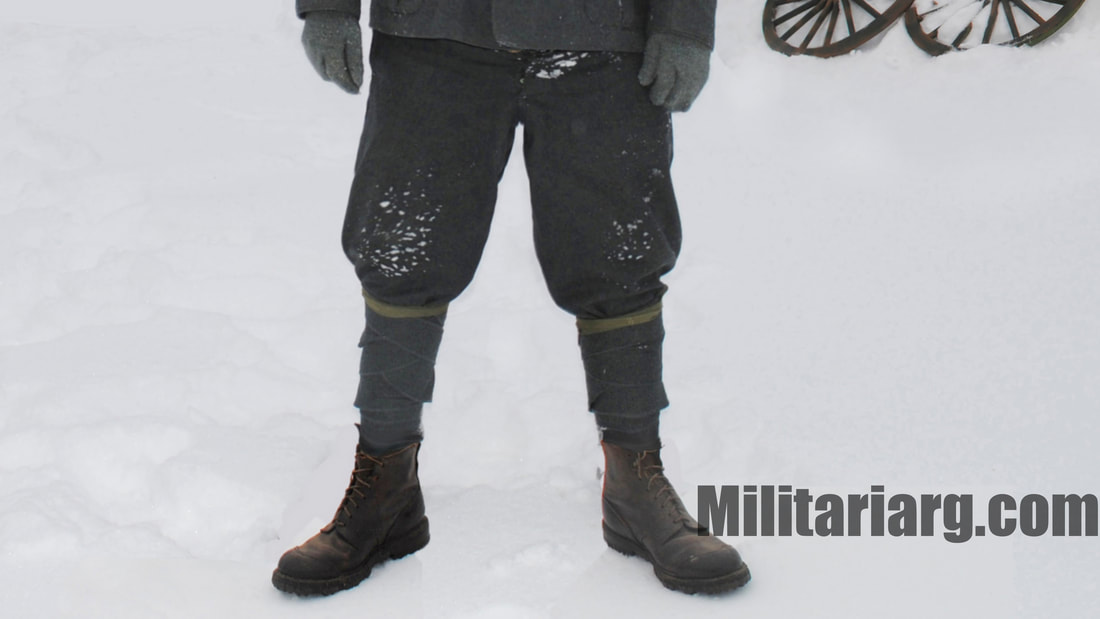
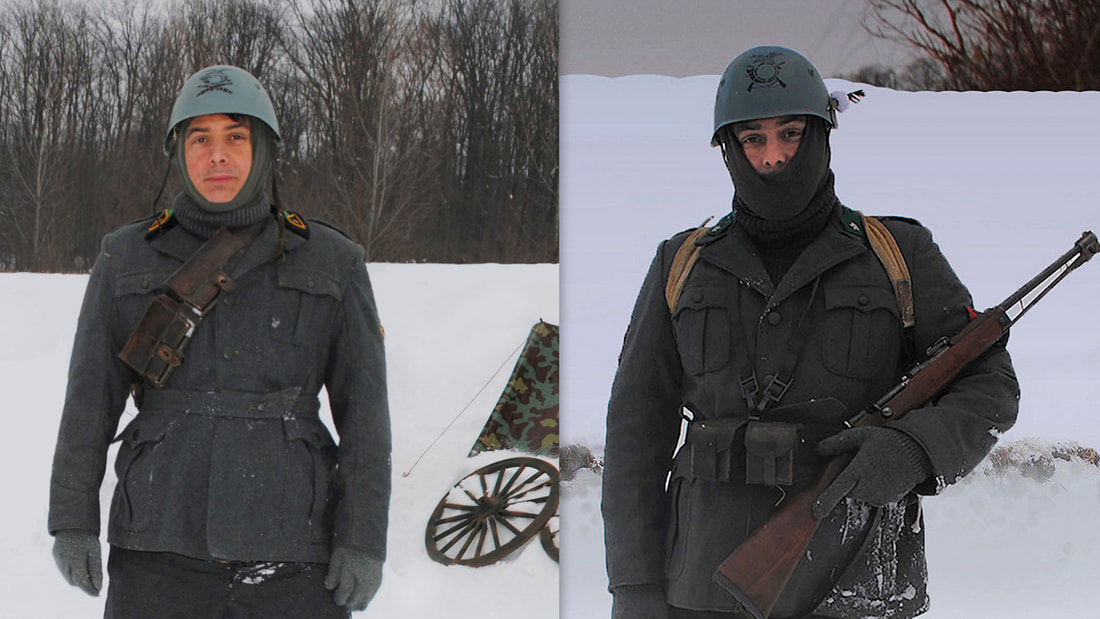
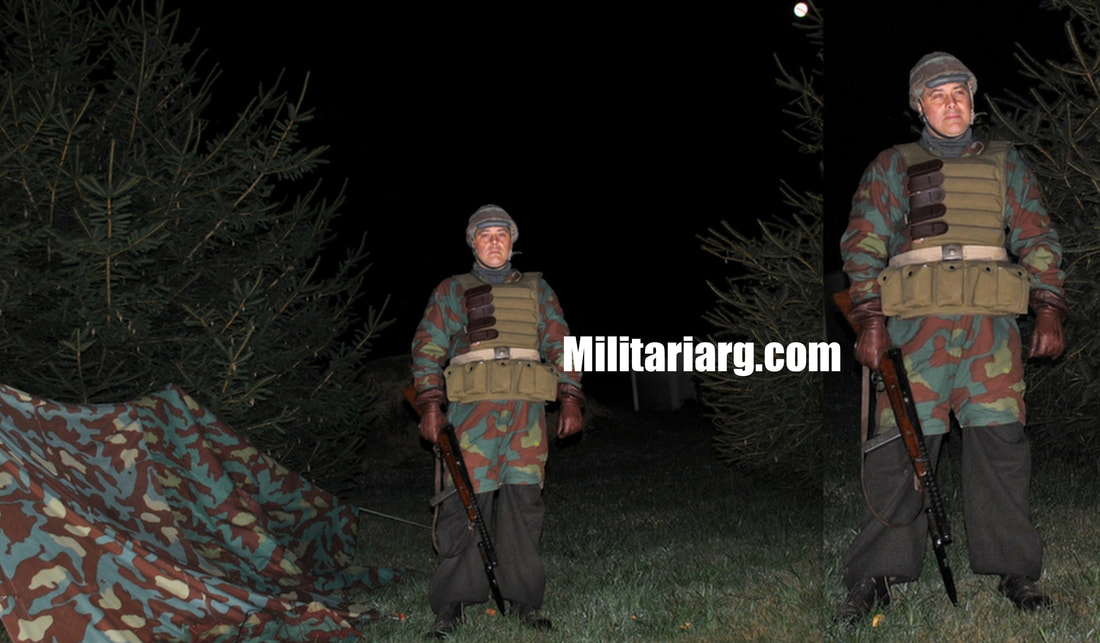
Left: Italian jacket model 1934 (Artiglieria Alpina giacca modello 1934 - Gruppo Conegliano - Comando Gruppo - Fronte Greco). Right: Italian jacket model 1940 (Fanteria Alpina, ​8° Rgt Alpini (Btg. Gemona - Fronte Russo).

The Battle of Nikolayevka was a critical engagement on January 26, 1943, during World War II's Eastern Front, in which the Italian 8th Army's Alpini Corps successfully broke out of a Soviet encirclement. This hard-won tactical victory allowed tens of thousands of Axis soldiers to continue their desperate retreat towards safety.

The Retreat and Battle

Faced with total destruction, the approximately 40,000 encircled Axis troops began a harrowing march through brutal winter conditions (temperatures as low as -40°C) towards the new German defensive lines. 

On the morning of January 26, 1943, the spearhead of the column, the battle-hardened Tridentina division, reached the village of Nikolayevka (now Livenka, Russia), only to find it heavily defended by a Soviet division.
 
The initial attack stalled. As the sun began to set, and faced with the certainty that another night in the open would mean death for many of the frostbitten and exhausted soldiers, General Luigi Reverberi, commander of the Tridentina division, led a final, desperate human-wave assault. Yelling "Tridentina, Avanti!" ("Tridentina, Forward!"), the general mounted one of the last few remaining armored vehicles and spurred his men forward in house-to-house combat. 
Aftermath

The ferocity of the final assault broke the Soviet lines, forcing the Russian forces to abandon the village and allowing the remnants of the Italian Corps to pass through the gap and continue their retreat. On February 1, the survivors reached Axis lines, having marched hundreds of kilometers through enemy territory. 

The cost was immense. Of the 57,000 men in the Alpine Corps at the start of the retreat, over 34,000 were killed in action and over 9,400 were wounded. The Cuneense division was essentially destroyed, and only a fraction of the Julia and Tridentina divisions survived. The battle is a major point of reference and commemoration for the Alpini and has become a symbol of their fighting spirit and sacrifice.

Picture
3º  Reggimento Artiglieria Alpina.
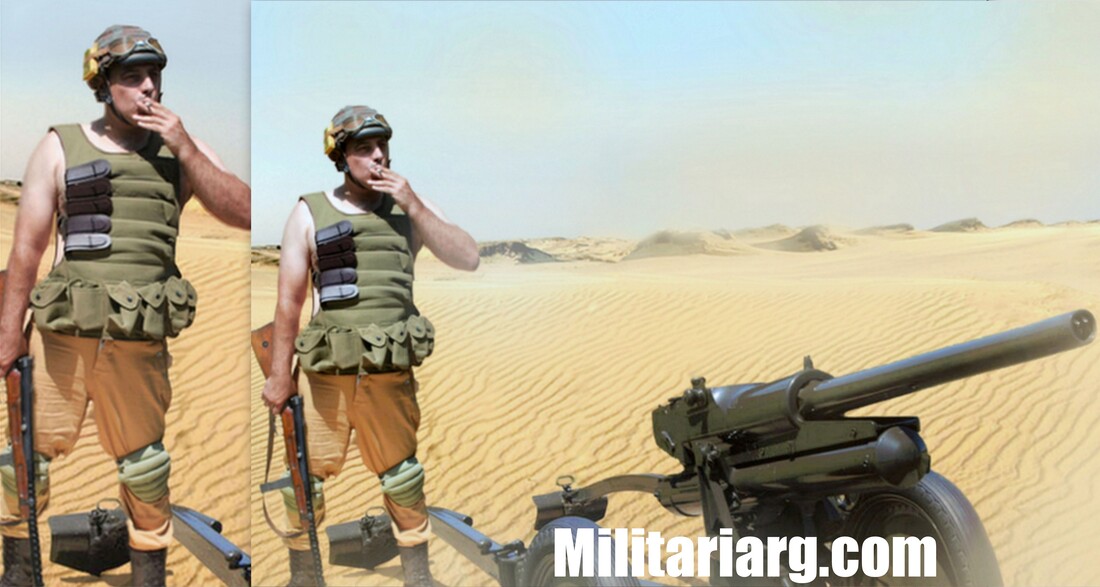
The Obice da 75/13 Modello 15 was the Italian designation for the Austro-Hungarian Škoda 7.5 cm Gebirgskanone M. 15 (mountain gun). It became a primary piece of artillery for the Italian Army's Alpini mountain troops, serving extensively in both World War I and World War II. 

The gun was designed and built by the renowned Škoda Works in Pilsen to meet the Austro-Hungarian Army's need for a light, effective mountain howitzer.

Large numbers of these guns were captured by Italian forces during battles in the Alps during World War I. After the war, additional pieces were acquired as war reparations.

Impressed by its performance, superior ballistics, and suitability for the mountainous terrain compared to their own lighter Cannone da 65/17 modello 13, the Italian Royal Army officially adopted the weapon, designating it "Obice da 75/13". The designation 75/13 refers to its 75mm caliber and a barrel length of 13 calibers. 

The howitzer's main strength was its adaptability to rugged terrain:

The gun could be quickly broken down into six to seven manageable loads (the heaviest weighing around 150 kg) for transport by mule teams or even manhandled by the Alpini across treacherous mountain paths.

It featured a high maximum elevation angle of 50 degrees, allowing it to deliver high-trajectory, plunging fire into mountain valleys and behind cover.

It fired a 6.3 kg (14 lb) high-explosive shell, and eventually utilized "effeto pronto" (shaped charge) ammunition, giving it a limited anti-tank capability in WWII. 

WWII Service
Despite its WWI origins, the Obice da 75/13 remained the backbone of Italian mountain artillery when World War II broke out. 

Alpini Mainstay: 
It was the standard equipment for the Alpini divisions in the Greek-Albanian campaign, North Africa, and the Eastern Front in Russia.

Italy planned to replace it with the more modern Obice da 75/18 modello 34, but production difficulties meant the older Škoda gun remained in widespread use until Italy's armistice in 1943.

Continued Use: The Germans designated captured guns as the 7.5 cm GebK 259(i) and used them after Italy changed sides. The reliable gun even remained in service with the Italian Army well into the 1950s.

Eastern Front. 9th Alpini Regiment. Battalion Vicenza e L'Aquila.
Picture
The 9th Alpini Regiment, which included the "Vicenza" and "L'Aquila" battalions, was part of the 3rd Alpine Division "Julia" and served on the Eastern Front (Soviet Union) during World War II, where it was virtually destroyed in the catastrophic winter of 1942–1943. 

The 9th Alpini Regiment and its Battalions

Formation: The 9th Alpini Regiment was formed in 1921. In 1935, it formed the "L'Aquila" battalion with personnel drawn from the "Vicenza" and "Bassano" battalions, the latter of which was later transferred.

Recruitment: The "L'Aquila" battalion was unique among Alpini units because its soldiers were recruited from the Abruzzo region in central Italy, rather than the Alps of northern Italy, a testament to the region's mountainous terrain and hardy people. The "Vicenza" battalion drew recruits from the Veneto region. 
Picture
Eastern Front Deployment and Catastrophe

The "Julia" Division was transferred to the Eastern Front in the summer of 1942 as part of the Italian 8th Army (ARMIR), a decision that proved disastrous as mountain troops trained and equipped for Alpine warfare were deployed on the flat, open plains of the Don River. 

Role on the Don: The regiment was tasked with holding a sector of the front along the River Don. Inadequate equipment (especially anti-tank weapons and winter clothing) and thinly-held lines made the positions vulnerable to Soviet mechanized forces.

Operation Little Saturn: In December 1942, the Soviet offensive crushed the Italian lines. The 9th Alpini Regiment, along with the rest of the "Julia" Division, was encircled and forced into a brutal retreat through the Russian winter.

Annihilation of the Battalions: The fighting during the retreat was savage, with units battling freezing temperatures, a lack of supplies, and continuous Soviet attacks.
 
The "L'Aquila" battalion was particularly hard hit. By the end of the breakout, only three officers and 159 Alpini out of over 1,500 men returned.
Picture
​The regiment suffered immense casualties overall, losing over 2,700 men killed in Russia, including the regimental commander, Colonel Fausto Lavizzari. 

The survivors were repatriated in the spring of 1943. The 9th Alpini Regiment was in the process of rebuilding when the Armistice of Cassibile was announced on September 8, 1943, leading to its disbandment by German forces. 
For its bravery and sacrifice, the 9th Alpini Regiment was awarded a second Gold Medal of Military Valor for its service on the Eastern Front (the first was for the Greek-Albanian campaign). The "L'Aquila" battalion's story of resilience is a poignant example of the immense human cost of the campaign.

Picture
Picture
Regio Esercito Italiano: Lieutenant Tenente. 4° Mountain Engineer Battalion - IV Battaglione Misto ​della 4ª Divisione alpina “Cuneense".
Picture
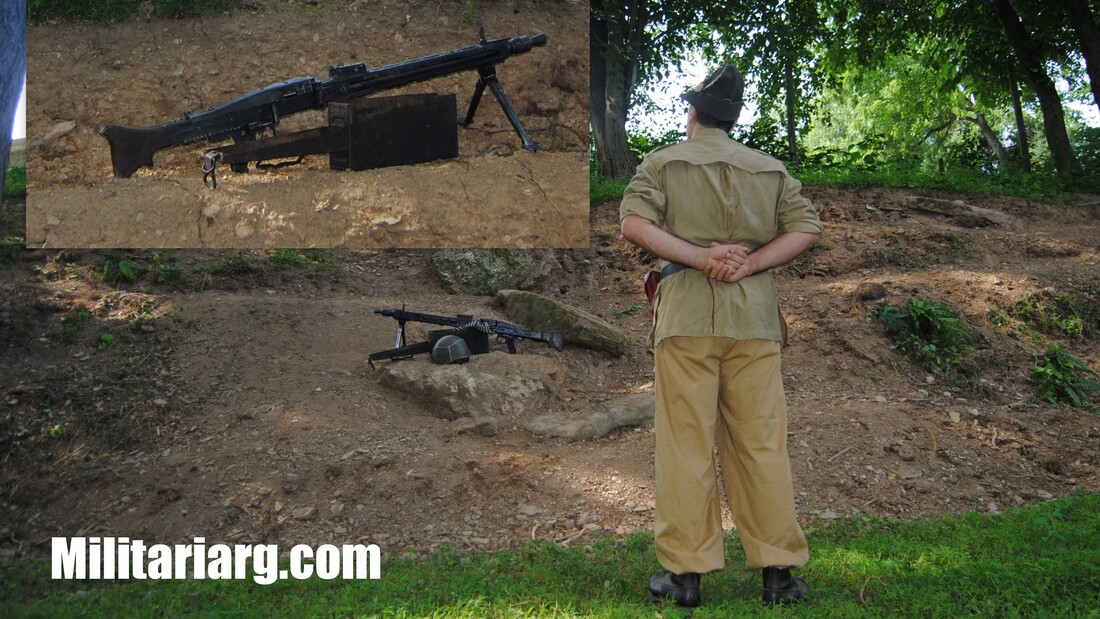
This is a barrel of the M37 Italian HMG. The standard Italian heavy machine gun of World War II was the Breda Modello 37, a robust and reliable weapon that saw service on all fronts and remained in use with the Italian military for decades after the war.
Picture
Picture
Picture
Picture
Picture
Picture
Picture

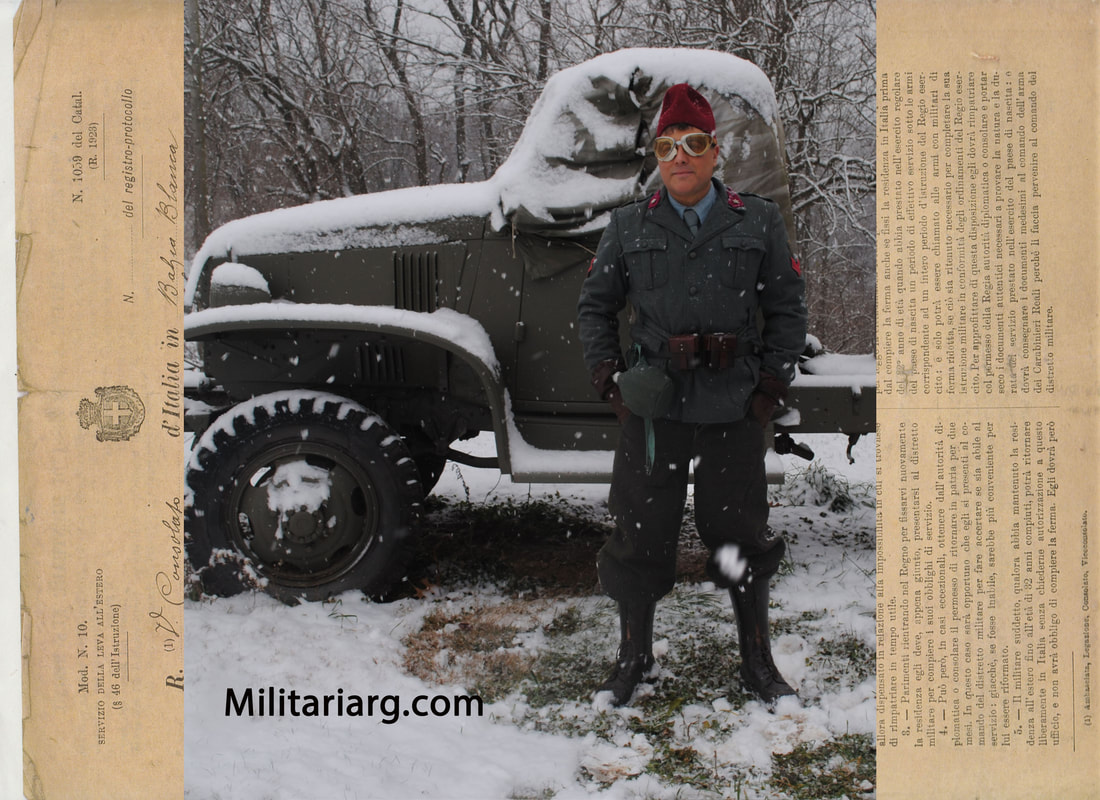
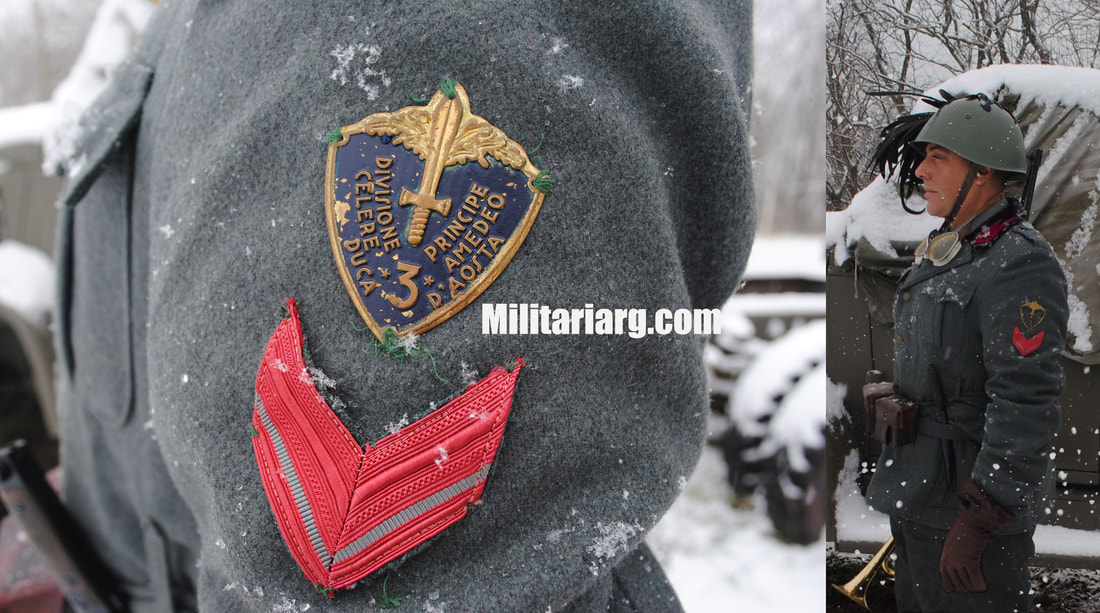
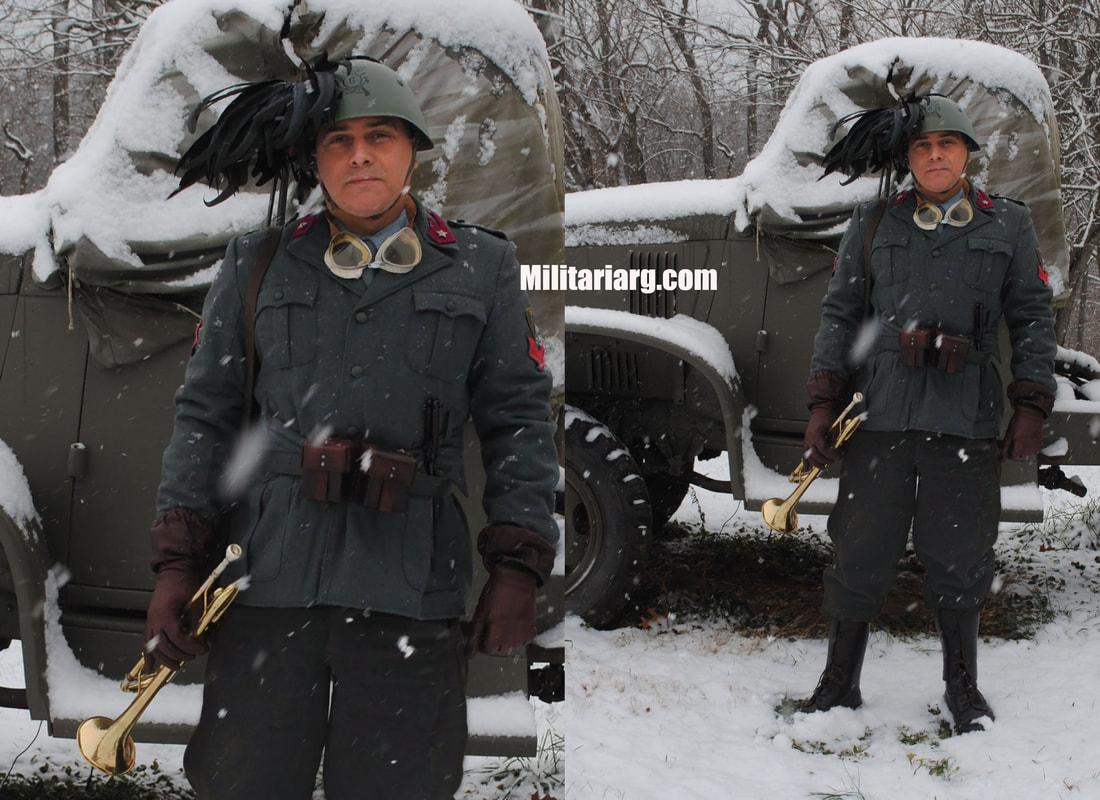
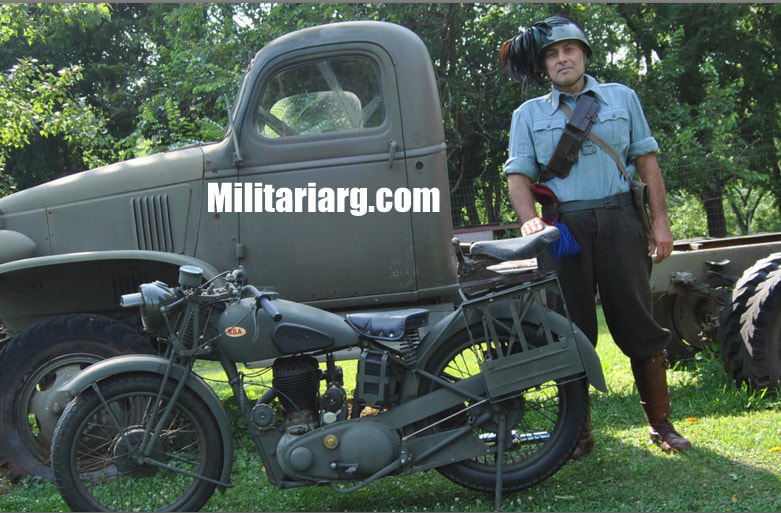
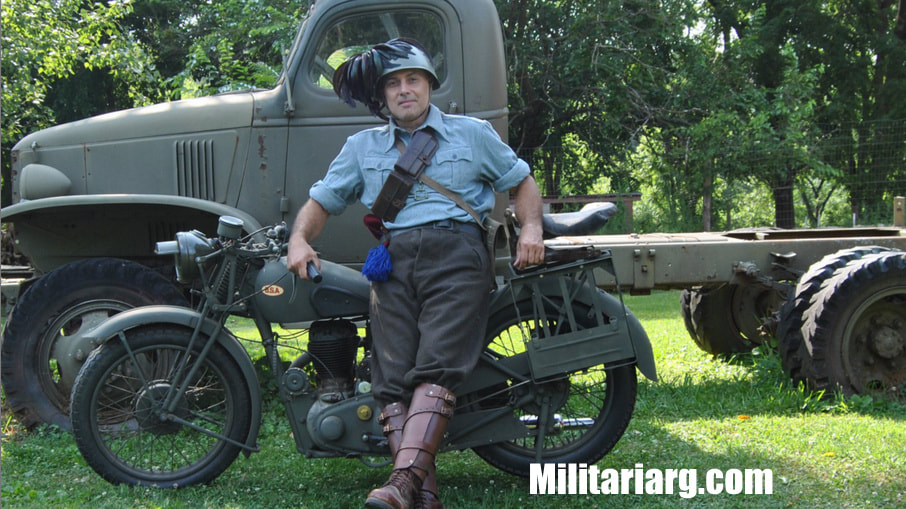
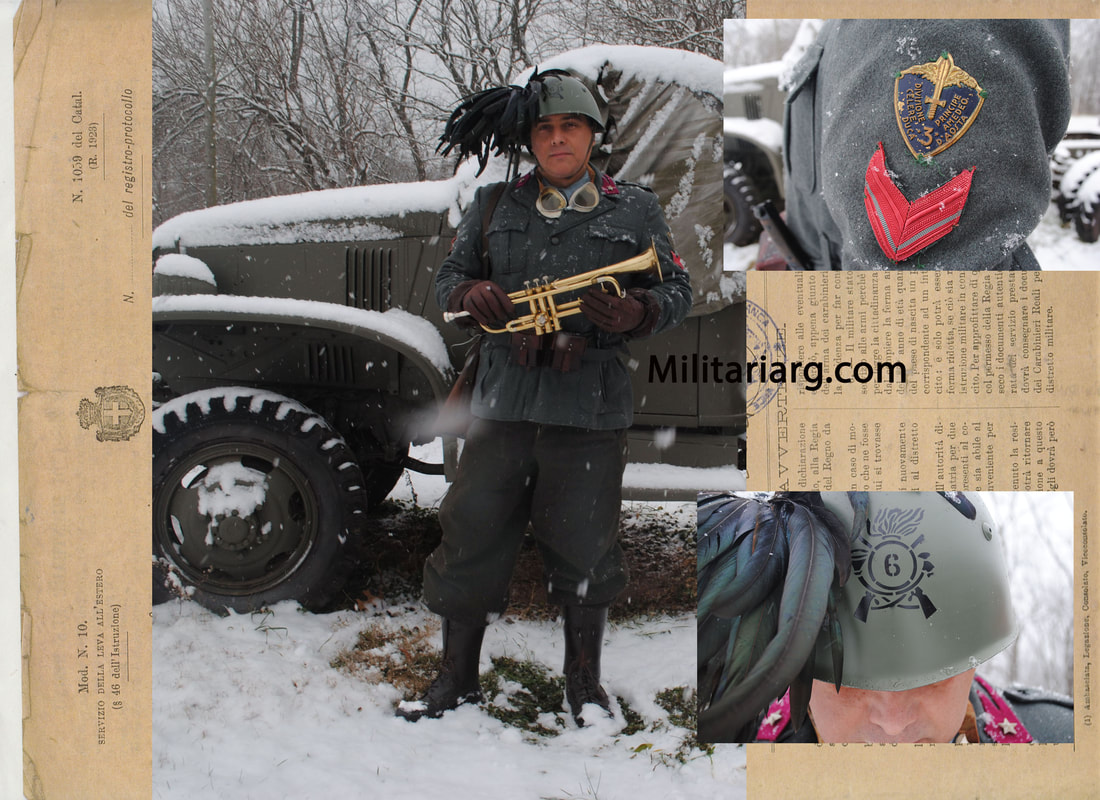
6th Bersaglieri Regiment from the 3nd  Division Principe Amedeo D'Aosta. Caporale Maggiore. Divisione Celere.
Picture
​The 6th Bersaglieri Regiment was a highly decorated unit attached to the 3rd Cavalry Division "Principe Amedeo D'Aosta", a Divisione Celere (Fast Division). This regiment played a significant and tragic role on the Eastern Front during World War II.
Picture
The Italian Army's "Celere" divisions were intended to be mobile warfare units, lightly equipped and designed for rapid deployment, using a combination of cavalry, Bersaglieri motorized/bicycle infantry, and fast artillery.
​The 3rd "Principe Amedeo D'Aosta" was considered one of the best Italian divisions sent to Russia.
Picture
​The 3rd Cavalry Division "Principe Amedeo D'Aosta" and the 6th Bersaglieri Regiment were vital components of the Italian 8th Army (ARMIR), which operated in the general vicinity of the Stalingrad campaign but did not get trapped inside the German-held city pocket itself.
Picture
​The 6th Bersaglieri Regiment achieved its key military success in October 1941 by capturing the industrial city of Stalino (modern Donetsk) and nearby Gorlovka in the Donets Basin. This was a significant strategic victory and earned them a Bronze Medal for Military Valor.

Picture
This same BSA M20 model was used by both the Regio Esercito and the Wehrmacht in Greece. It is likely that motorcycles captured in Greece have been transferred to the Eastern Front, but I have not yet found a photo either in the CSIR, or in the ARMIR,
Picture
Picture

Fronte Greco Albanese

Picture
​The Italian Alpini mountain troops played a pivotal and brutal role in the Greek-Albanian Front (Greco-Italian War, 1940-1941). Initially part of the failed Italian invasion, they soon found themselves engaged in savage defensive combat in extreme weather conditions against a determined Greek counteroffensive. 
Picture
​Four of Italy's six Alpini divisions saw action in this theater: the "Julia", "Tridentina", "Pusteria", and "Cuneense". 

Initial Advance and Halt: The war began on October 28, 1940. The 3rd Alpine Division "Julia" was one of the spearhead units advancing through the Pindus mountains with the objective of capturing the strategic Metsovon pass. However, fierce Greek resistance, poor Italian logistics, driving rain, and rapidly worsening weather conditions quickly halted the Italian advance.
Picture
​Greek Counteroffensive: By mid-November, the Greeks launched a major counterattack, pushing the Italians back into Albania. The Alpini were often left unsupported and became surrounded.

Savage Mountain Warfare: The fighting devolved into brutal, World War I-style combat in freezing rain, snow, and fog at altitudes often exceeding 1,500 meters (about 4,900 feet). The Alpini, while specialist mountain troops, often used obsolete equipment and faced the same logistical collapse as other Italian divisions. Supplies were carried on mules or by hand over miles of treacherous terrain.
Defensive Stands: The "Julia" division suffered tremendous losses, at one point reduced to a single understrength regiment, during desperate fighting around the Pindus massif and the Hani Bubesit area. Another major engagement occurred when the 2nd Alpine Division "Tridentina" was transferred to Albania in November 1940 to reinforce the crumbling front, where its 5th Alpini Regiment fought in the upper Devoll valley and suffered heavy casualties during the Greek Christmas counter-offensive. 
Picture
​The front stabilized in early 1941, resulting in a bloody stalemate until the German invasion of Greece in April 1941 finally sealed the fate of the Greek army. 
The Alpini divisions, despite the overall failure of the campaign, earned a reputation for tenacity and sacrifice: 

The 5th Alpini Regiment (Tridentina Division) was awarded a Gold Medal of Military Valor for its conduct.

The "Julia" Division's story of immense loss and valor became the subject of a famous Alpini song, "Sul ponte di Perati". 

The Greek-Albanian campaign highlighted the Alpini's endurance in the face of impossible conditions, a resilience that would be tested even more severely on the Eastern Front a year later.
Picture

2nd Infantry Division Sforzesca - Fronte Russo 2ª Divisione di fanteria "Sforzesca". Breda 30
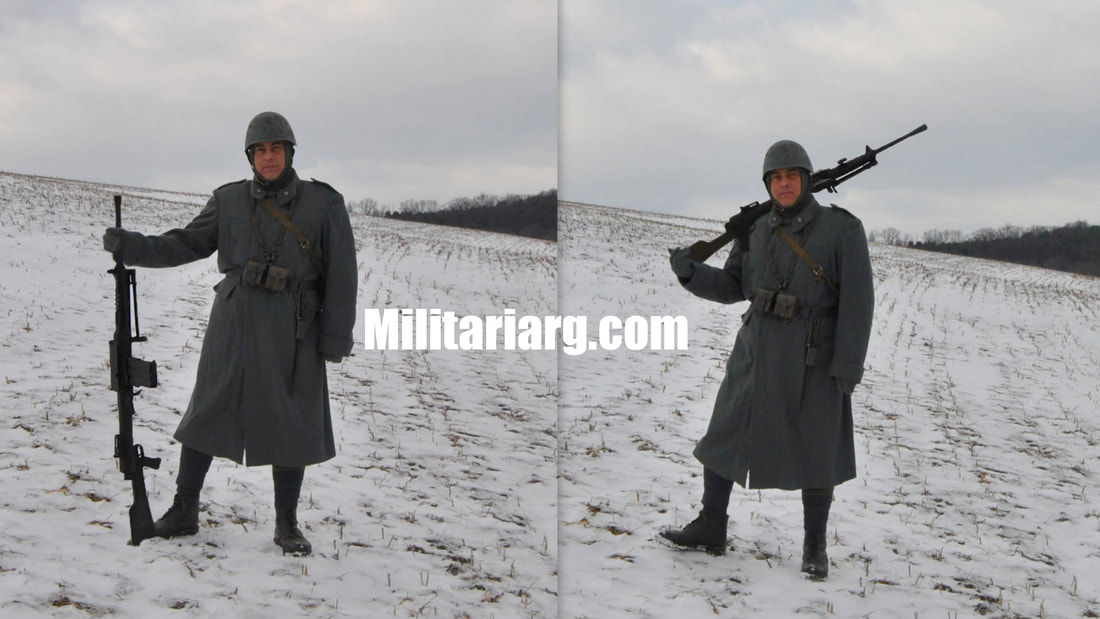
​The 2nd Infantry Division "Sforzesca" was a unit of the Italian Royal Army during World War II, best known for its service and virtual annihilation on the Eastern Front. It was classified as a mountain infantry division, meaning its artillery was moved by pack mules rather than towed by horses, though it was not an elite Alpini division.
Picture
​Invasion of France (1940): Mobilized in June 1940, the division participated in the Italian invasion of France, encountering heavy resistance and making modest advances before the armistice.

Greco-Italian War (1941): In January 1941, the "Sforzesca" was sent to Albania to reinforce the failing Italian front, engaging in heavy defensive fighting until the German intervention in April 1941. It then performed occupation duties in Greece until mid-1941.
Picture
Eastern Front (1942-1943): In June 1942, the division was transferred to the Soviet Union as part of the Italian 8th Army (ARMIR).

Don River Battles: The division was deployed along the River Don and, in August 1942, successfully fought off major Soviet attacks in the "First Defensive Battle of the Don," particularly around the Serafimovich bridgehead.

Operation Little Saturn: In November-December 1942, the Soviet counteroffensive began. The "Sforzesca" division was placed on a thinly-held sector of the front and was soon attacked by overwhelming Soviet tank forces. Conflicting German orders led to the division being caught in the open while advancing when it should have been retreating, resulting in its catastrophic destruction.
Picture
Annihilation: The remnants of the division were encircled and fought a desperate battle. Out of the approximately 10,000 men deployed, the division lost 65% of its personnel. The few survivors were repatriated in March 1943. 

Re-formation and Final Disbandment
In June 1943, the "Sforzesca" division was reformed in Italy by renaming the 157th Infantry Division "Novara" and was assigned anti-partisan duties near the border with Yugoslavia. After the Italian armistice on September 8, 1943, the remnants surrendered to German forces and were disbanded.​

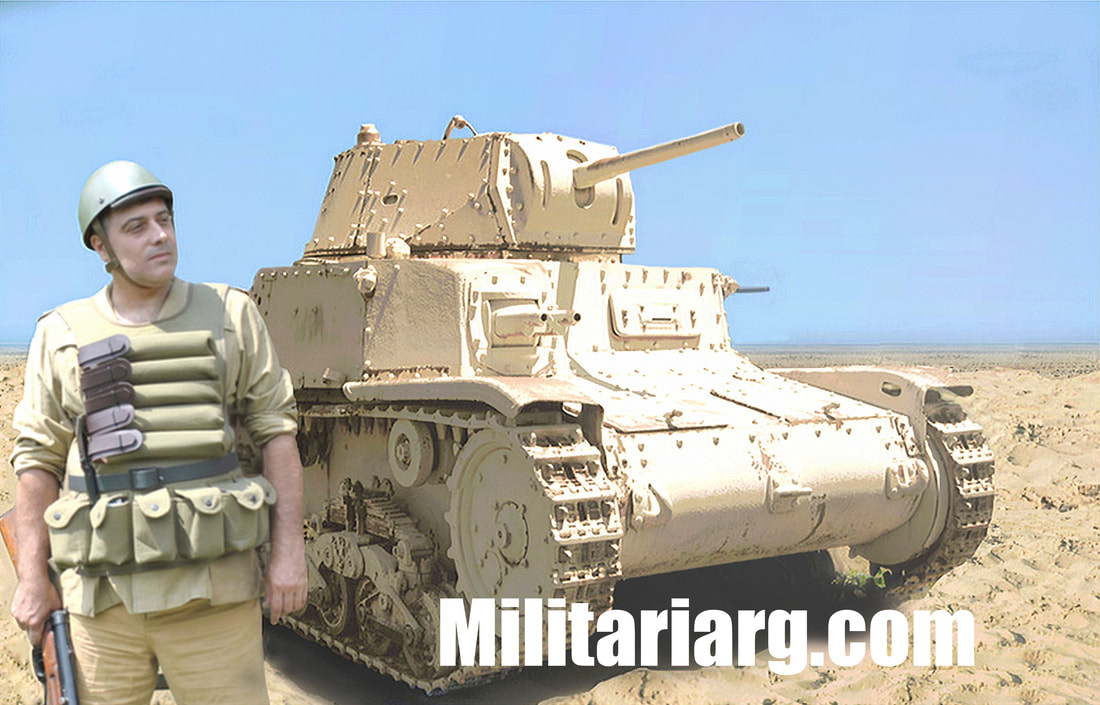
WW2 Italian 131th Armoured Division (Divisione Corazatta "Centauro". Yugoslavia, Albanian Greece, North Africa, Tunisia.
Picture
​Early Campaigns (1939–1941)

Formed in April 1939 from the 1st Armoured Brigade, the "Centauro" (named after the mythological centaur) participated in the following operations: 

Invasion of Albania (1939): The division took part in the initial occupation of Albania, equipped with obsolete L3/33 and L3/35 tankettes.

Greco-Italian War (1940–1941): The "Centauro" was deployed to the Greek front, where it encountered heavy Greek resistance and suffered significant losses, particularly at the Battle of Klisura Pass.

Invasion of Yugoslavia (1941): The division performed well during the rapid invasion of Yugoslavia in April 1941, breaking through enemy lines and advancing to Kotor before being recalled to Italy for restructuring. 

North African and Tunisian Campaigns (1942–1943) 
In August 1942, the "Centauro" was sent to Libya to reinforce Axis forces following the defeat at the Second Battle of El Alamein. 

Retreat into Tunisia: The division's units arrived during the Axis retreat across Libya to the final defensive lines in Tunisia. The transfer was chaotic, and the division was never fully deployed as a single organic unit in North Africa; many of its new M13/40 tanks and self-propelled guns were lost in transit or immediately reassigned to other depleted divisions like the "Ariete".

Battle of El Agheila: The "Centauro" engaged British forces during rearguard actions near El Agheila in December 1942.

Battle of Kasserine Pass: In February 1943, operating alongside German forces, the "Centauro" played a significant role in the rout of inexperienced American forces at the Kasserine Pass, overrunning U.S. positions along Highway 13.

Battle of El Guettar: In March 1943, the U.S. II Corps counterattacked the "Centauro" division at the Battle of El Guettar. The division fought valiantly for twelve days but was severely decimated in the fighting. 

Final Days
By April 1943, due to unsustainable losses, the remaining personnel and equipment of the "Centauro" were assigned to the 16th Infantry Division "Pistoia". The 131st Armoured Division "Centauro" was officially declared lost due to wartime events on April 18, 1943, a month before Axis forces in Tunisia finally surrendered on May 13, 1943.

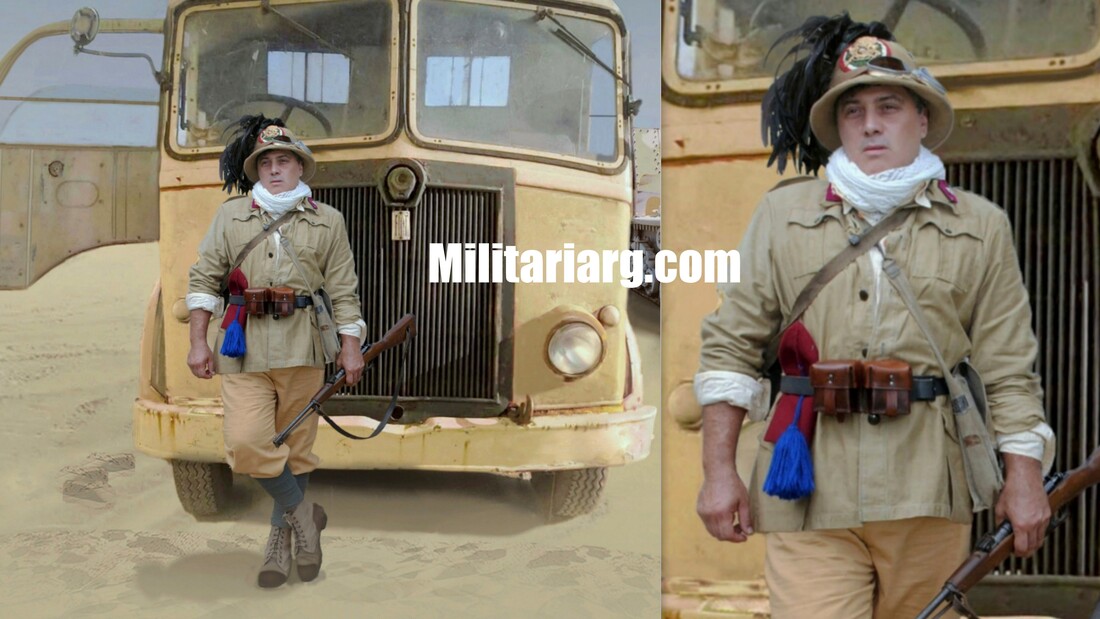
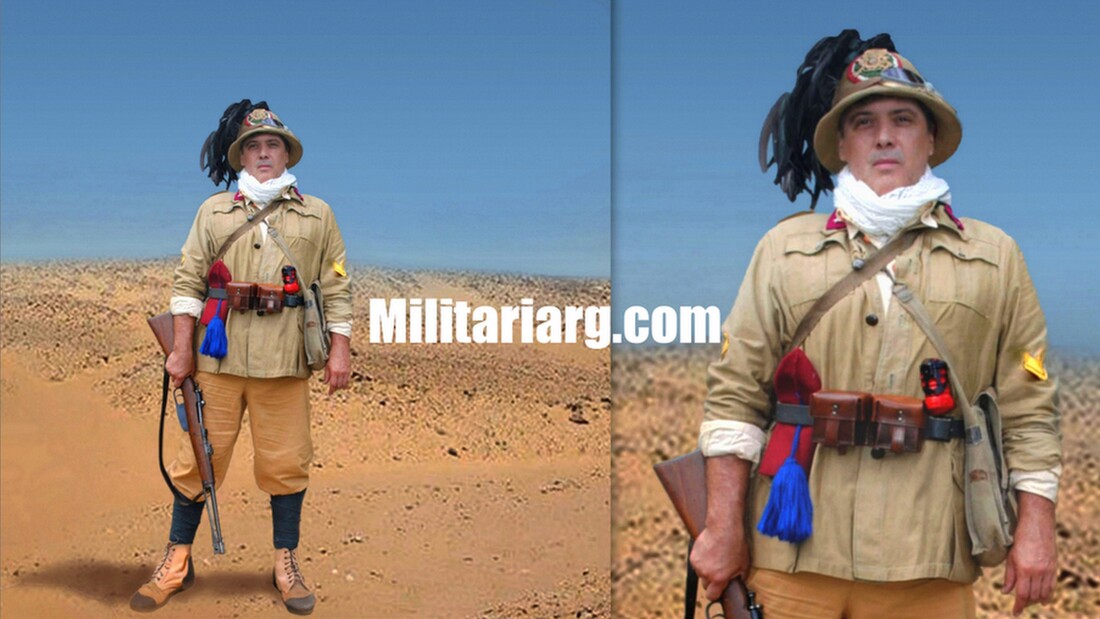
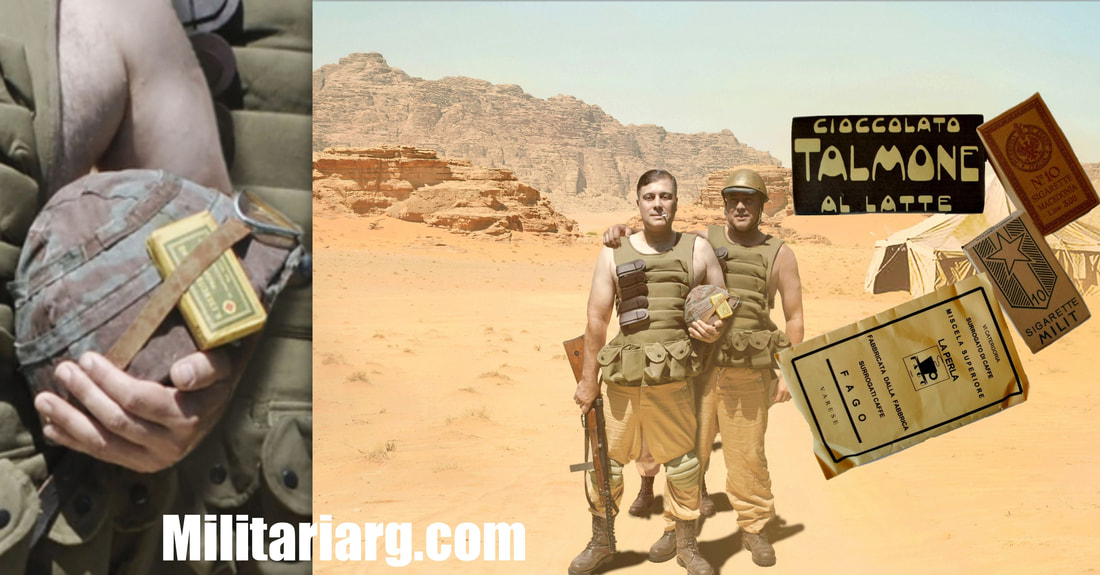
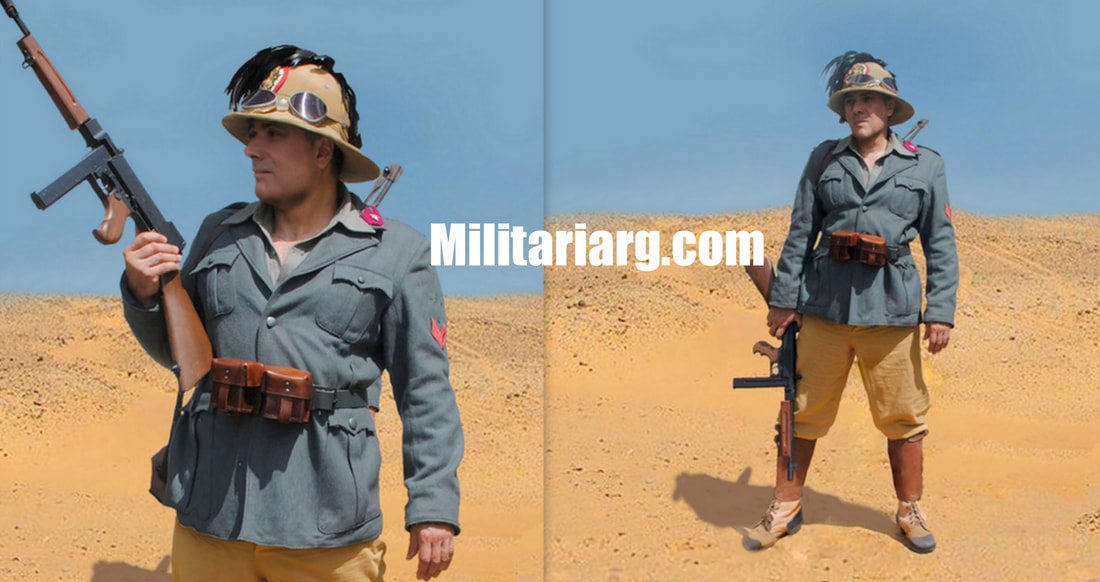
WW2 North Africa - Bersaglieri Motorizzato with captured Thompsons SMG
Picture
​The Italian Royal Army in North Africa during World War II primarily used a mix of
light tanks, tankettes, self-propelled guns, armored cars, and a variety of medium and heavy trucks. 
Armored Fighting Vehicles

L3/33 and L3/35 Tankettes: These two-man tankettes, armed with machine guns, were the most numerous Italian armored vehicles at the start of the war but were quickly found to be obsolete and vulnerable in combat against most Allied armored vehicles.

M11/39 Medium Tank: An early "medium" tank design that featured its main 37mm gun in the hull, with machine guns in the turret. Around 80 were sent to North Africa, where they initially performed well against light British tanks but were later outclassed.

M13/40 and M14/41 Medium Tanks: These were the workhorses of the Italian armored divisions in the desert and the most widely produced Italian tanks of the war.

The M13/40 featured a 47mm main gun that could engage early British cruiser tanks effectively, though it struggled against the heavily armored Matilda II.

The M14/41 was a slightly improved version with a more powerful engine and better air filters designed for desert operations.

Semovente 75/18 Self-Propelled Gun: To supplement the deficiencies of their tanks, the Italians utilized the Semovente 75/18, which mounted a powerful 75mm howitzer on an M13/40 or M14/41 chassis. This vehicle proved to be one of their most effective armored assets in North Africa.

Autoblinda AB 41 Armored Car: This was a reliable and efficient armored car, often used for reconnaissance. It was armed with a 20mm Breda cannon and was a valuable vehicle in the fluid desert warfare environment.

Camionetta Desertica SPA-Viberti AS42 "Sahariana": A highly mobile, unarmored long-range patrol vehicle created to counter British LRDG units. It was heavily armed, often with a 20mm Breda cannon, though it entered service late in the North African campaign.
​Transport and Utility Vehicles (Trucks)

Logistics in the vast desert theater depended heavily on a variety of trucks, many of which were reliable but lacked the all-wheel drive capabilities of Allied or some German counterparts. 

Fiat 626NM: The most widely used medium truck of the Italian Royal Army in all theaters, including North Africa.
Lancia 3Ro: A very reliable heavy-duty truck, considered one of the best Italian transport vehicles, used extensively for moving supplies and towing artillery. It was also adapted to mount anti-aircraft and field guns, such as the Cannone da 90/53.
Fiat-SPA 38R: A common light lorry that served widely in the desert campaign.
SPA Dovunque 35: This all-wheel-drive (6x4) light truck was specifically designed for difficult terrain and was more capable in the desert sand than standard two-wheel-drive vehicles.
Autocannoni: Various trucks were improvised as self-propelled anti-aircraft or anti-tank platforms, often mounting a 20mm Breda cannon or, less commonly, a 90mm anti-aircraft gun on the flatbed
Picture
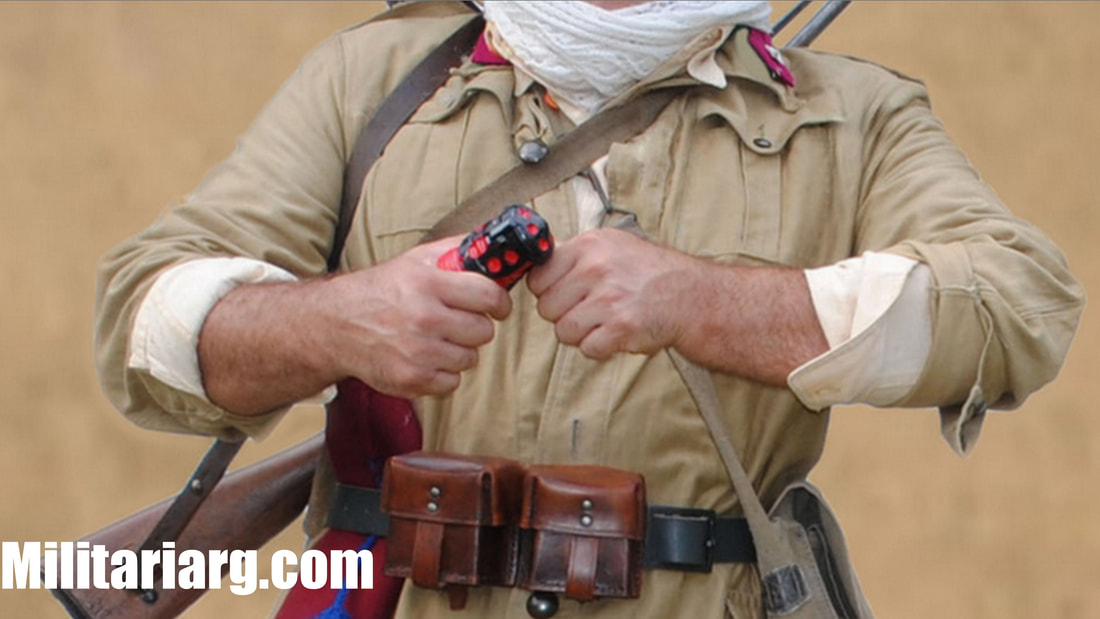
M35 BREDA, resin replica.
The grenade body was made of pressed aluminum and painted bright red (the Italian color code for high explosives), earning it the nickname "Red Devil" from British and Commonwealth troops in the North African Campaign.
The Breda Modello 35 was an Italian-made, impact-fuzed hand grenade that served as a standard issue weapon for the Royal Italian Army during World War II. It was one of three main "Model 35" type grenades (along with the SRCM Mod. 35 and the OTO Mod. 35) used by Italian forces.​

Picture
Italian Bersaglieri in North Africa used captured Thompson submachine guns, though their standard issue weapon was the excellent Beretta M1938. While the Bersaglieri were issued the highly regarded Beretta Model 38, captured Allied weapons were commonly utilized by all Axis forces when available, especially given the rapid, fluid nature of desert warfare and frequent supply shortages on both sides

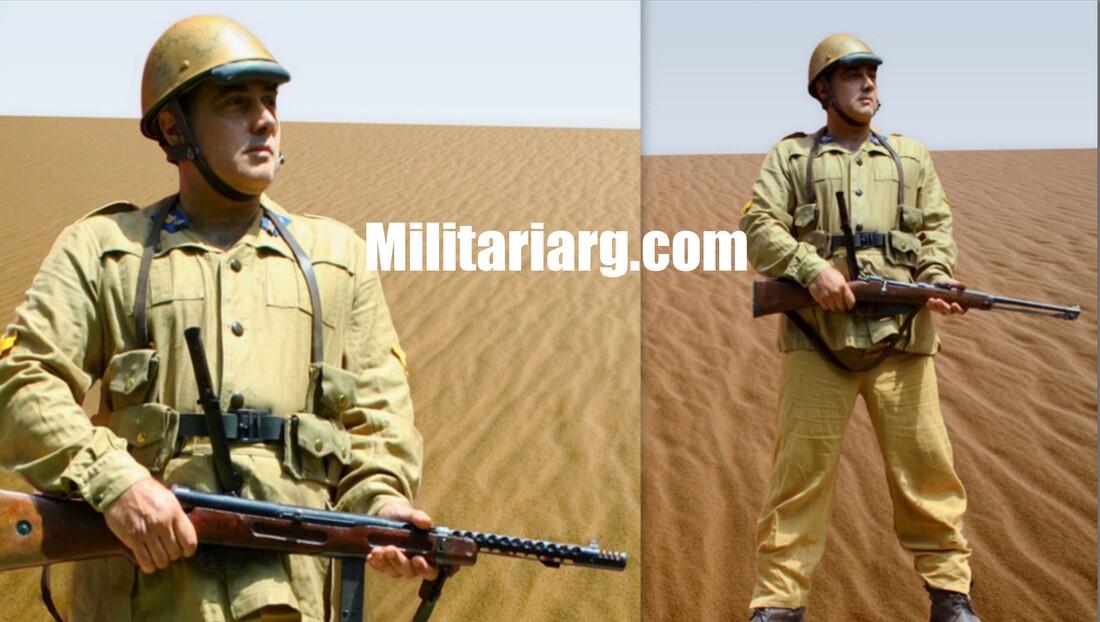
1942 Seconda Battaglia di El Alamein (Impression). 185ª Divisione Paracadutisti Folgore. Second Battle of El Alamein. 185th Paratrooper Division Folgore.
Picture
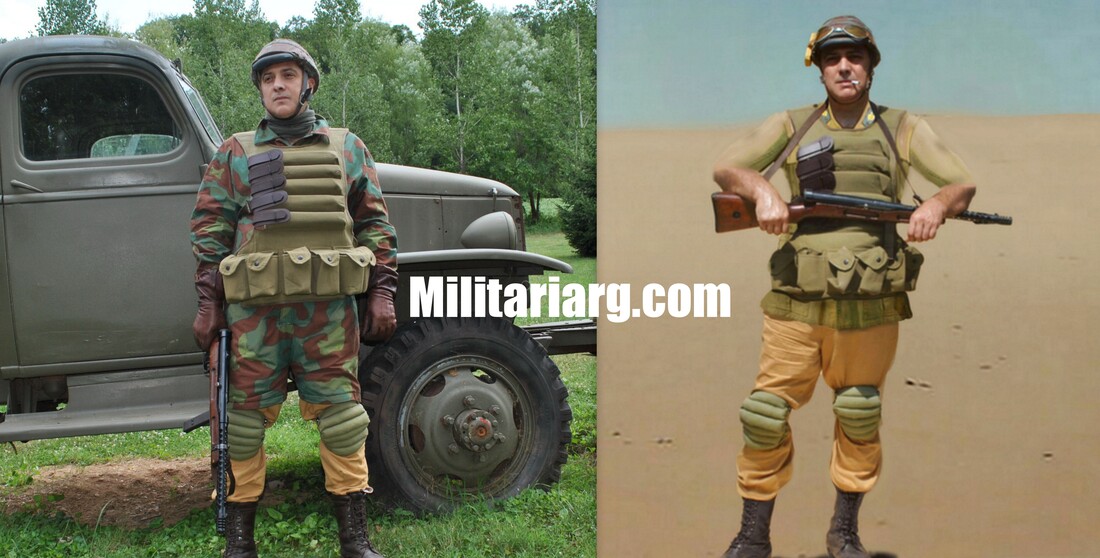
MAB 38 Moschetto Automatico Beretta Modello 1938. Moschetto 91 Modello Cavalleria. 1908 Pattern Ammo Pouches. 1941-42 Italian Paratrooper Helmet; Elmo da paracadutista Seconda Guerra.
Picture
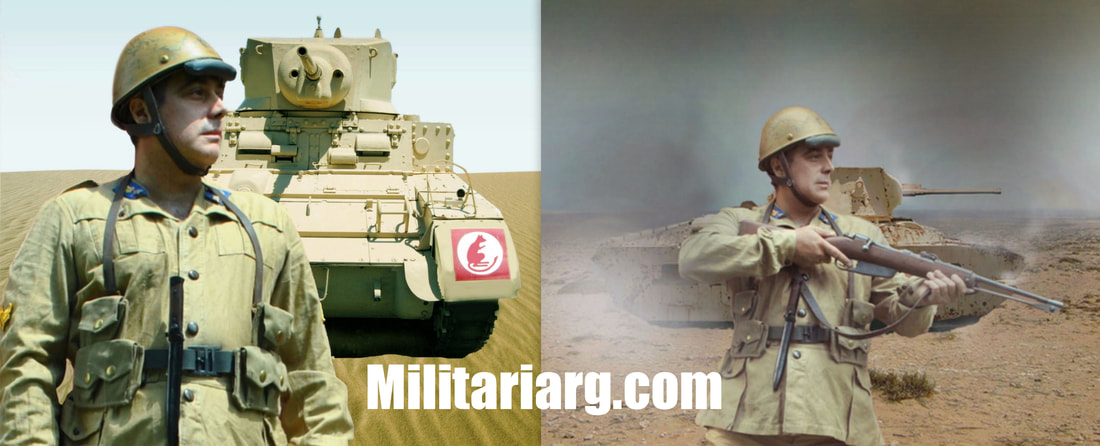
​The Italian 185th Infantry Division "Folgore" (meaning "Lightning"), an elite paratrooper unit, earned legendary status for its fierce and ultimately sacrificial defense during the Second Battle of El Alamein in late 1942. 

Originally trained for the planned airborne invasion of Malta (Operation Hercules), the Folgore division was instead deployed to North Africa as standard infantry in July 1942 because the invasion was cancelled. They were positioned on the extreme southern flank of the Axis line, in a desert sector between the Qattara Depression and the El Alamein line. 

The "Folgore" held a vast 15 km front with around 5,000 men, a position considered a secondary front by both sides initially. Crucially, as an airborne unit, they lacked sufficient heavy weapons, motorized transport, and especially modern anti-tank guns, relying on obsolete 47mm anti-tank guns, mines, and Molotov cocktails. 
Picture
The Battle of El Alamein

During the main British offensive (Operation Lightfoot), the Folgore division bore the brunt of repeated attacks by four Allied divisions, including the veteran British 7th Armoured Division. 

"Hunter-Killer" Tactics: Lacking effective anti-tank weapons, the Folgore developed a desperate but effective tactic: allowing British tanks to penetrate their minefields and forward positions, then ambushing them at close range from concealed dugouts with satchel charges, grenades, and petrol bombs. Their war diary claimed 31 tanks were destroyed in a single day using these methods.

Resilience and Respect: The paratroopers repelled multiple concentrated attacks over several days, surprising Allied commanders with their tenacity. Even the German Afrika Korps war diary noted that the Italian unit "fought well and inflicted heavy losses on the enemy." 
Picture
Italian Beretta MAB 38 "Samurai Vest" Ammo Pouches.
Picture
​Annihilation and Legacy

By early November 1942, the main British breakthrough in the north forced a general Axis retreat. The Folgore, having no transport, was left as the rearguard and forced to walk across the desert without water or supplies. 

"Folgore!" to the Last: When finally surrounded by motorized British forces on November 6, 1942, the few remaining survivors, having run out of ammunition, destroyed their weapons and surrendered, reportedly refusing to raise a white flag. Out of the approximately 5,000 men deployed, only about 300-600 survived capture or death.
Picture
​Honors: In recognition of their exceptional bravery, the British commander granted them the "honours of war" upon their surrender. All three regiments of the Folgore division were awarded Italy's highest military honor, the Gold Medal for Military Valor, for their sacrifice. British Prime Minister Winston Churchill later famously paid tribute to them as the "Lions of the Folgore."

Picture
Picture
Italian M29 camo pattern jump smock (Post-War).
Picture
Picture

1th Battalion 1th Regiment Folgore Divisione Paracadutisti Nembo RSI
Picture
The 184th Infantry Division "Nembo" ("Lightning/Nimbus") was the second Italian paratrooper division formed during World War II. Its history is unique due to the Italian armistice, which caused the division to split, with elements fighting on both sides of the conflict. 

The division was formed in late 1942, drawing core personnel from the 185th Paratroopers Regiment of the already-deployed "Folgore" division.

​Initial Deployments:
One regiment of the "Nembo" was deployed to Tunisia in North Africa, where it was destroyed in combat against Allied forces.

Another regiment was sent to Yugoslavia for anti-partisan operations.

The bulk of the division was transferred to the island of Sardinia in June 1943 to defend against a potential Allied invasion. 

The Armistice and Division Split
The armistice of September 8, 1943, between Italy and the Allies caused the "Nembo" division to fracture. 

Italian Co-belligerent Army: The majority of the division, primarily the 183rd and 184th Paratrooper Regiments, remained loyal to the King and joined the Italian Co-belligerent Army, fighting alongside the Allies.

German Alignment: A significant portion of the division, including the XII Paratroopers Battalion, sided with the retreating Germans and formed the nucleus of the German 4th Parachute Division (4. Fallschirmjäger Division). 

Service after the Split
Fighting alongside the Allies

The pro-Allied "Nembo" personnel were transferred from Sardinia to mainland Italy in May 1944. They joined the Italian Liberation Corps and fought against their former Axis allies (including their former comrades in the German 4th Parachute Division) during the Italian Campaign. 

They participated in the Battle of Ancona and later were used to form the "Folgore" Combat Group, which fought in heavy fighting at Tossignano and the crucial Battle of Case Grizzano in April 1945, opening the way for the liberation of Bologna. 

Fighting with the Axis
The elements of the "Nembo" that sided with the Germans fought at the Anzio beachhead and were among the last Italo-German units to surrender at the end of the war in May 1945.

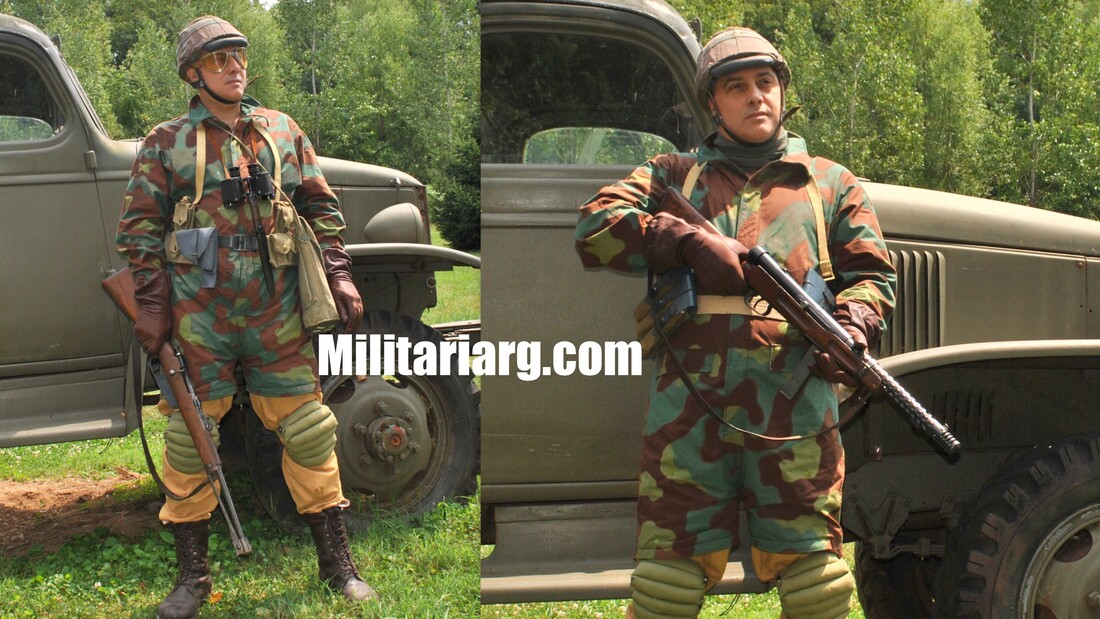
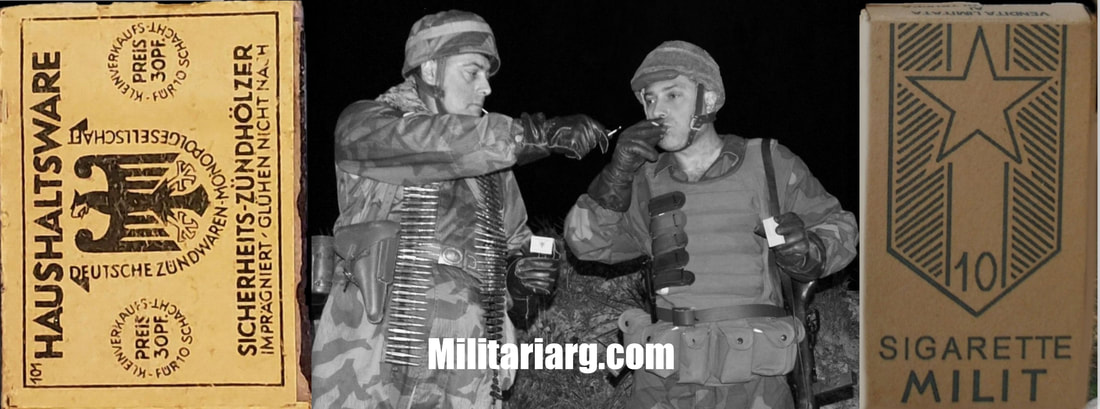
Italian Royal Navy Paratroopers - Paracadutisti Nuotatori Regia Marina - X Decima MAS RSI, Battaglione San Marco.
Picture
​Before the armistice, the Italian Royal Navy (Regia Marina) trained its own paratroopers for specific roles, primarily for the San Marco Battalion and for special operations.

San Marco Battalion: This was the elite marine infantry unit of the Royal Navy. While they were not primarily paratroopers, some elements received airborne training. Their main role was the defense of naval bases and amphibious operations. Their history was divided after 1943.

Paracadutisti Nuotatori (Para-Swimmers/Assault Swimmers): The Royal Navy developed the concept of personnel capable of combining paratrooper training with swimmer (frogman/assault diver) training. This personnel was intended for special sabotage missions. They were precursors to modern naval special operations forces.

Xª Flottiglia MAS and RSI (After the Armistice)
After the armistice, most of the specialized Royal Navy personnel remaining in Northern Italy continued to fight alongside the Germans under the aegis of the Italian Social Republic (RSI), converging into the famous Xª Flottiglia MAS (10th Light Flotilla).

Xª Flottiglia MAS: Led by Commander Junio Valerio Borghese, the Xª MAS became a de facto independent force, fighting both on the maritime front with its nuotatori (assault swimmers using SLC manned torpedoes) and on the ground front with several marine infantry battalions.

Role of Paratroopers in the Xª MAS: Although the Xª MAS was famous for its nuotatori, it also included personnel with paratrooper training. These soldiers were often employed in ground battalions that fought the Allies and partisans in Northern Italy.

The "San Marco" in the RSI: A significant portion of the personnel from the old San Marco Battalion joined the San Marco Regiment of the National Republican Navy (the RSI navy), which was essentially the ground component of the Xª MAS. These soldiers, while maintaining the name and traditions, fought as line infantry on the Senio front against the Allies, suffering extremely heavy casualties.


The "Paracadutisti Nuotatori" training was a high specialization of the Royal Navy. After 1943, these specialists found themselves on opposing sides:

Those remaining in the North ended up serving in the Xª MAS of the RSI.
Those in the South joined the Co-belligerent Royal Navy alongside the Allies.

The history of these units reflects the tragic division of Italy during the civil war that followed the armistice.

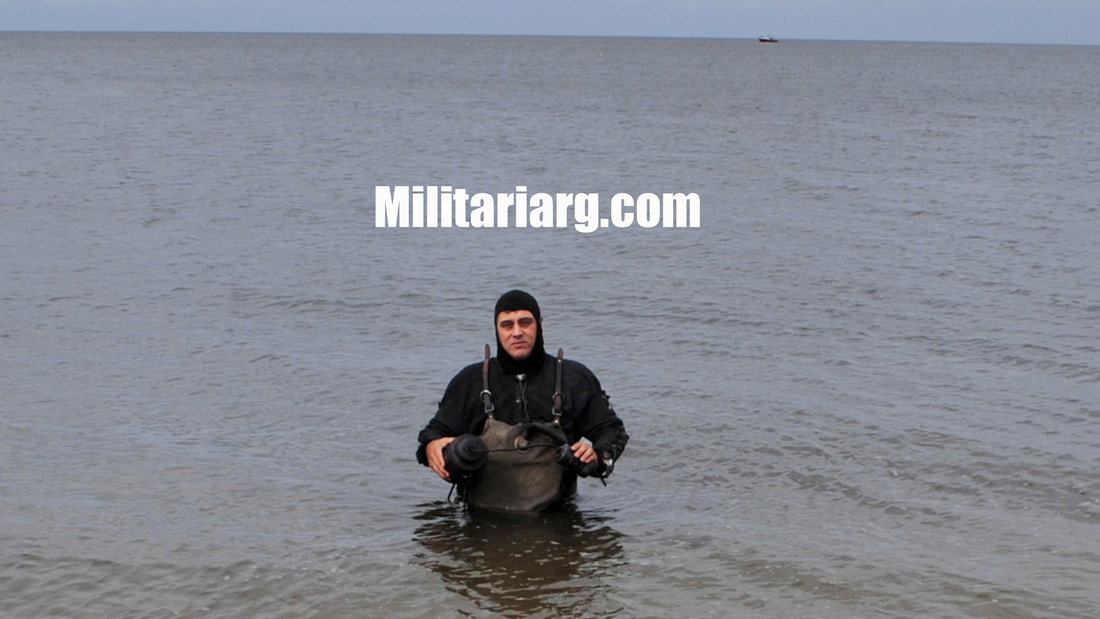
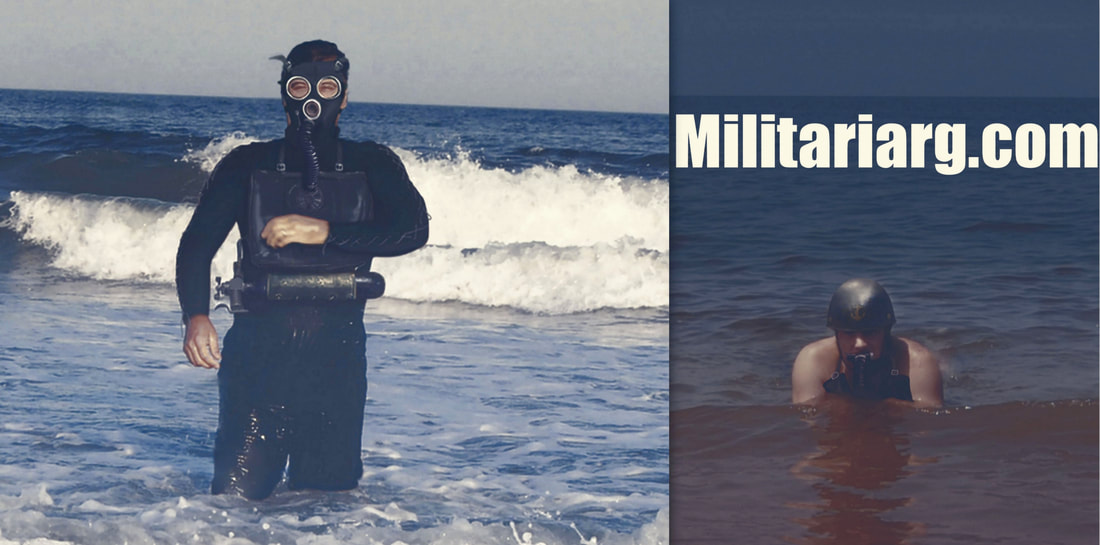
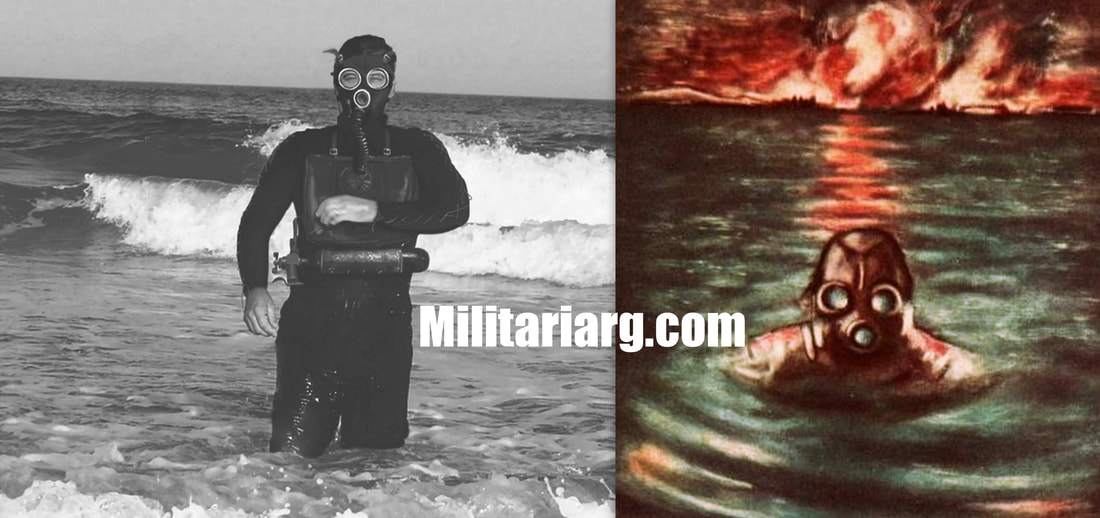
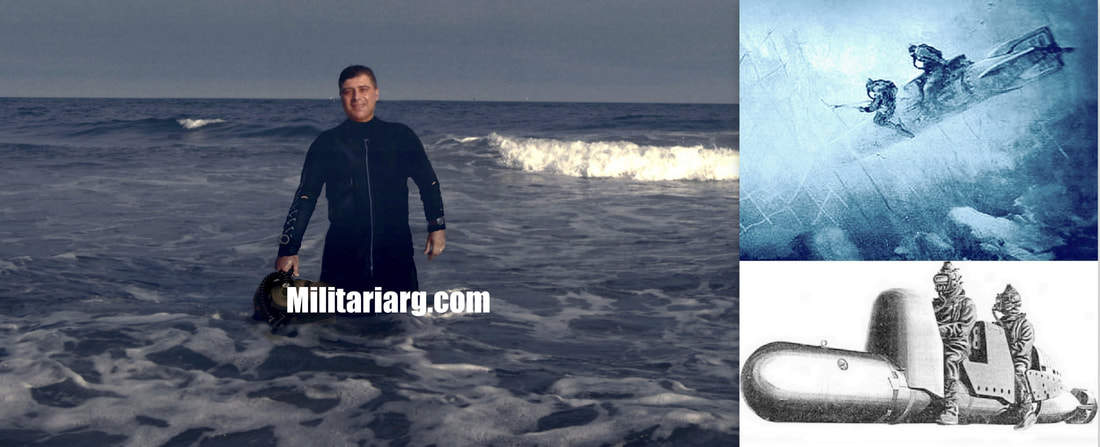
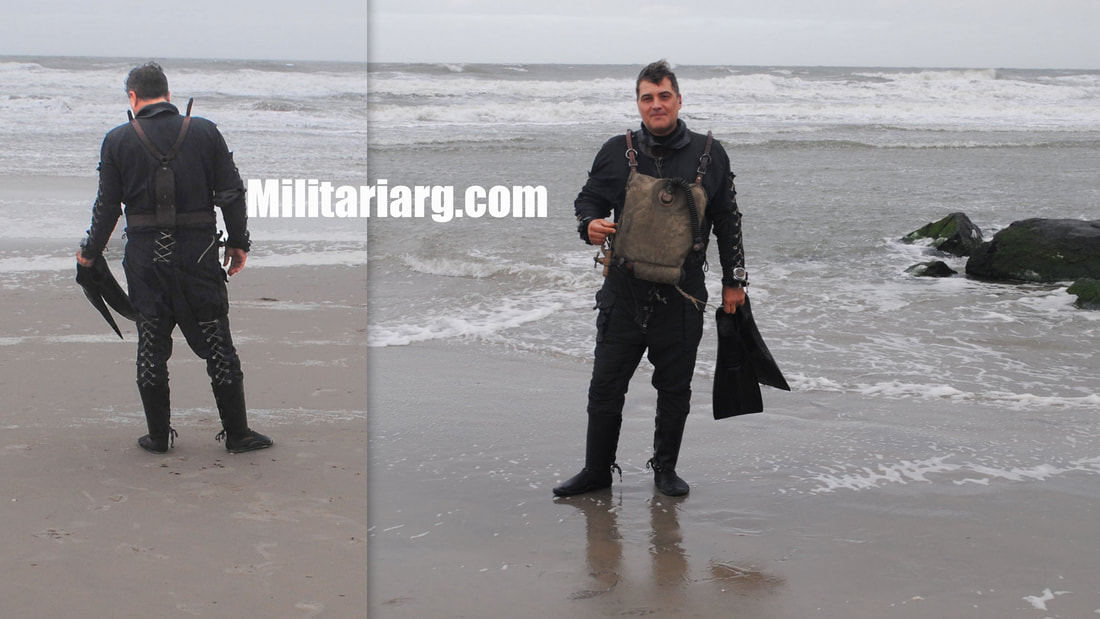
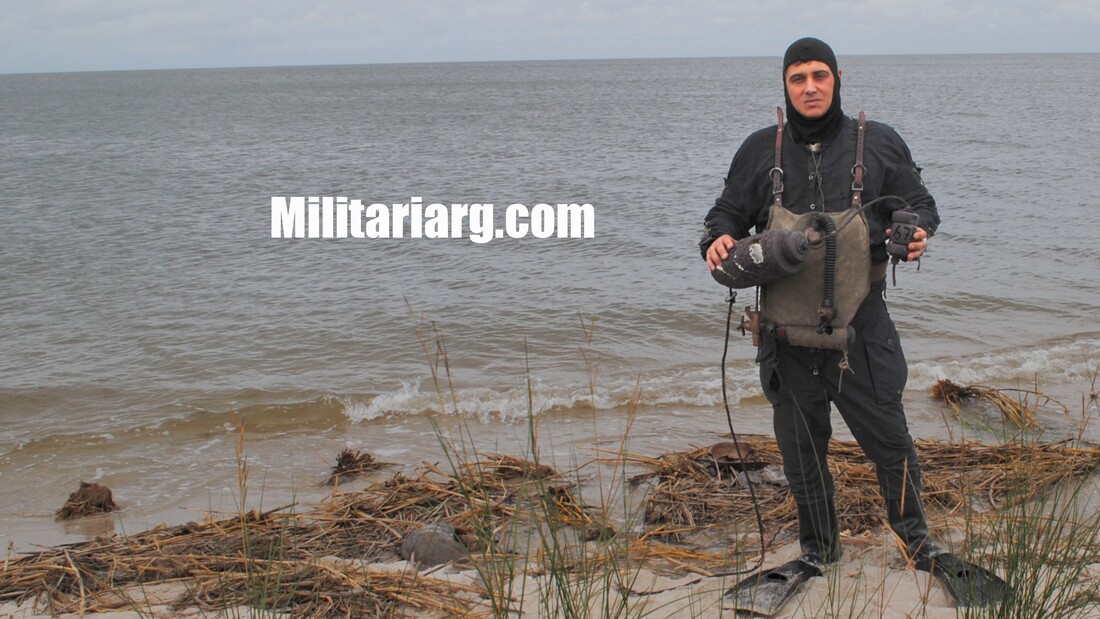
Decima X Mas Frogmen. Gruppo Gamma Uomini Rana.
Picture
Picture
WWII Pirelli Aro a Piccola Autonomia - Belloni suit Wolk outfit - (Italian Uomo Gamma - Kampschwimmer). The photos above are a recreation of the German frogmen in WWII, however they used the same equipment as the Italian frogmen, as they were trained by the Italian Decima Mas (X-Mas).
Picture
Picture
Picture
Picture

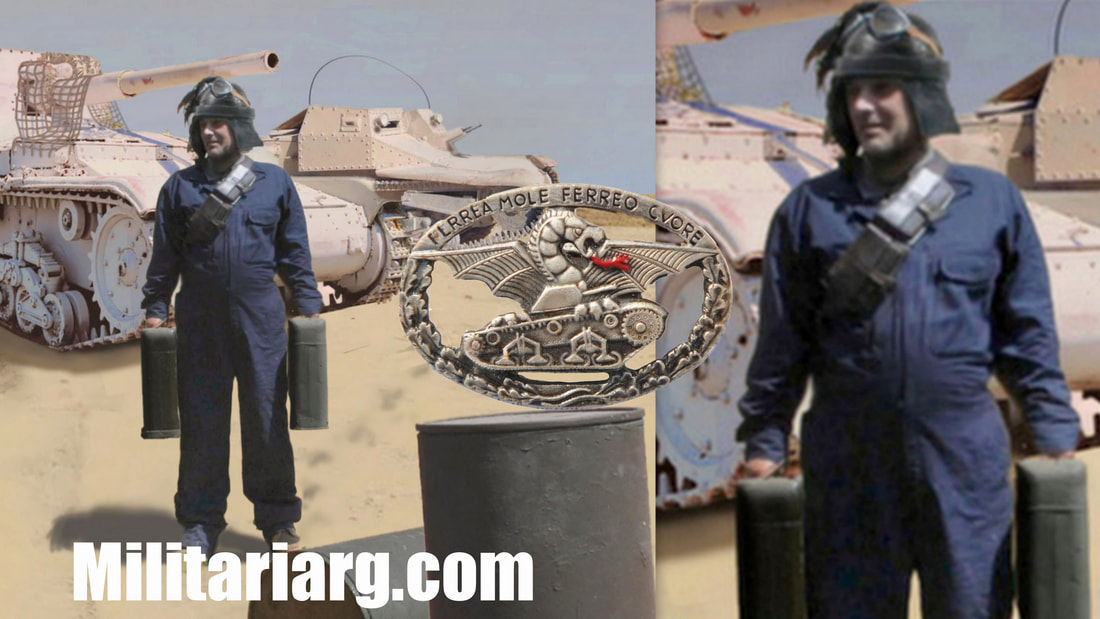
Div. Ariete. Bersaglieri Corazzati
Picture
The 132nd Armoured Division "Ariete" was the Italian Royal Army's second armored division, formed in 1939, and became one of the most famous Italian units of World War II for its tenacious fighting record in the North African Campaign. 

The "Ariete" (Italian for "Ram") fought alongside the German Afrika Korps from early 1941 until its destruction in late 1942. 

Initial Deployment: The division deployed to Libya in early 1941 to reinforce Axis forces after initial Italian defeats against British Operation Compass. It was initially equipped with light L3 tankettes and a few M11/39 medium tanks, later receiving the more capable M13/40 and M14/41 medium tanks.

Siege of Tobruk and Operation Crusader: The "Ariete" participated in the Siege of Tobruk in 1941 and was heavily involved in Operation Crusader, where it successfully repulsed a British armored attack at Bir el Gubi. Despite significant losses, its tenacity earned respect from both allies and enemies.

Battle of Gazala: In May 1942, the division played a crucial role in the Battle of Gazala. The "Ariete" overran the British 3rd Indian Motor Brigade and repelled British armored counterattacks in the "Cauldron" battles, making a positive contribution to Axis success in the region. 

Second Battle of El Alamein and Annihilation
The "Ariete" division's most famous and final stand came during the Second Battle of El Alamein in October/November 1942. 

Defensive Role: At El Alamein, the division was held in reserve and later used to cover the retreat of the entire Axis army when the British breakthrough occurred.

Last Stand: On November 4, 1942, the remnants of the "Ariete", down to its last few dozen tanks and self-propelled guns (including the effective Semovente 75/18), were surrounded by overwhelming British armored forces.

Final Message: The division fought until its last tank was destroyed, sending a final radio message to Rommel's headquarters: "ARIETE tanks keep fighting!".

The division was officially declared lost due to wartime events on December 8, 1942. Its heroic sacrifice in covering the Axis retreat became a symbol of Italian military honor and bravery in North Africa. 

The division was later reformed in Italy in 1943, but that unit was disbanded after the Italian armistice. The name "Ariete" lives on today in the Italian Army's modern 132nd Armored Brigade "Ariete".

84th Inf Regt "Divisione Venezia"

Picture
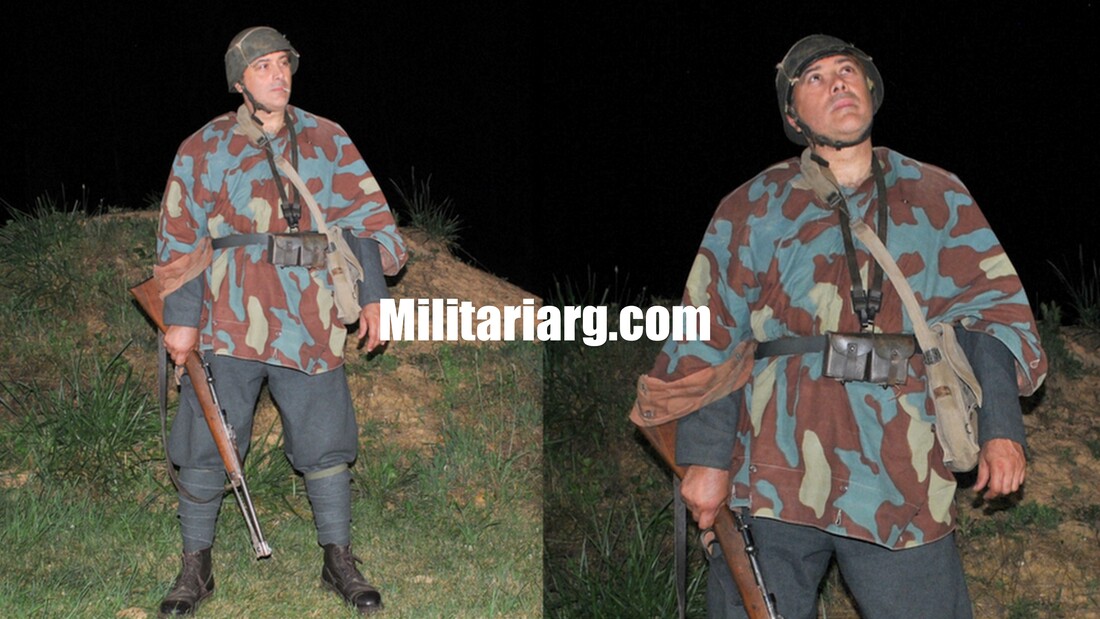
M29 Italian poncho shelter telo mimetico.

The 84th Infantry Regiment "Venezia" was a unit of the Italian Royal Army's 19th Infantry Division "Venezia" during World War II, primarily known for its service in the Greco-Italian War and, most notably, for its decision to join the Yugoslav Partisans after the Italian armistice in 1943. 

​Formation and Early Service: The regiment was established on November 1, 1884. Before WWII, it participated in the Italo-Turkish War (1911-1912), World War I, and the invasion of Albania in 1939.

Greco-Italian War (1940-1941): When Italy entered WWII in June 1940, the "Venezia" division was patrolling the Albanian-Yugoslav border. It was quickly involved in heavy fighting against the Greek Army in Albania, facing determined resistance and harsh conditions. The division was pushed back but later participated in the Italian and German spring offensive that led to the capture of Korçë.

Occupation of Yugoslavia: Following the Axis victory in the Balkans, the "Venezia" division was stationed in Yugoslavia for anti-partisan duty in Montenegro. This occupation role lasted for over two years, a period marked by complex local dynamics and ongoing insurgency. 

The Armistice and the "Garibaldi" Division
The regiment's history took a unique turn after the Armistice of Cassibile between Italy and the Allies was announced on September 8, 1943. 

Resistance to Germans: When German forces attempted to disarm the Italian units, the 19th Division "Venezia", along with elements of other Italian divisions like the "Taurinense" and "Puglie", resisted German demands to surrender.

Joining the Partisans: Under the command of General Giacomo Dalmazzo, the division's command began negotiations with the Yugoslav National Liberation Army (Tito's Partisans). By October 10, 1943, the "Venezia" formally entered the Partisan 2nd Corps.

Division "Garibaldi": On December 1, 1943, the "Venezia" and surviving elements of the "Taurinense" were officially merged to form the Division "Garibaldi". This new Italian unit then fought alongside the Yugoslav Partisans against German forces and Chetniks until the end of the war. 

For its conduct, loyalty, and bravery after the armistice, the 84th Infantry Regiment, through the flag of the "Garibaldi" Division, was highly decorated. The regiment was eventually disbanded in 1943 but was reactivated in the Italian Army later in the post-war era.

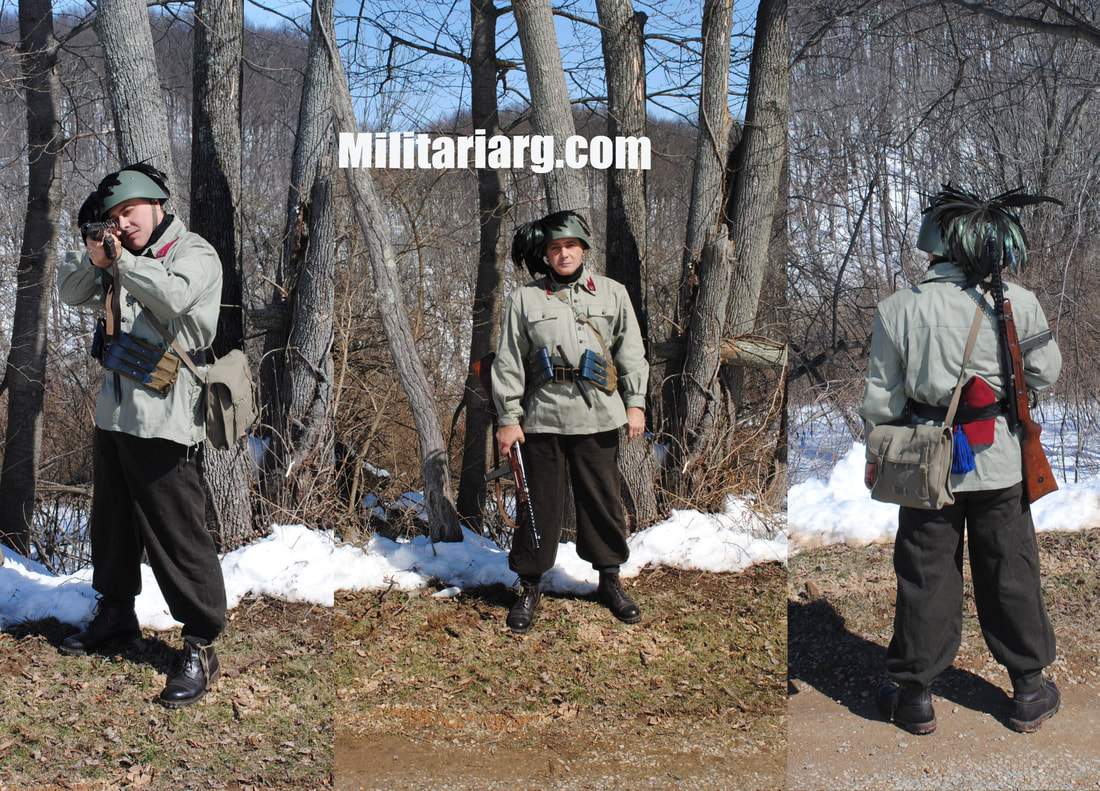
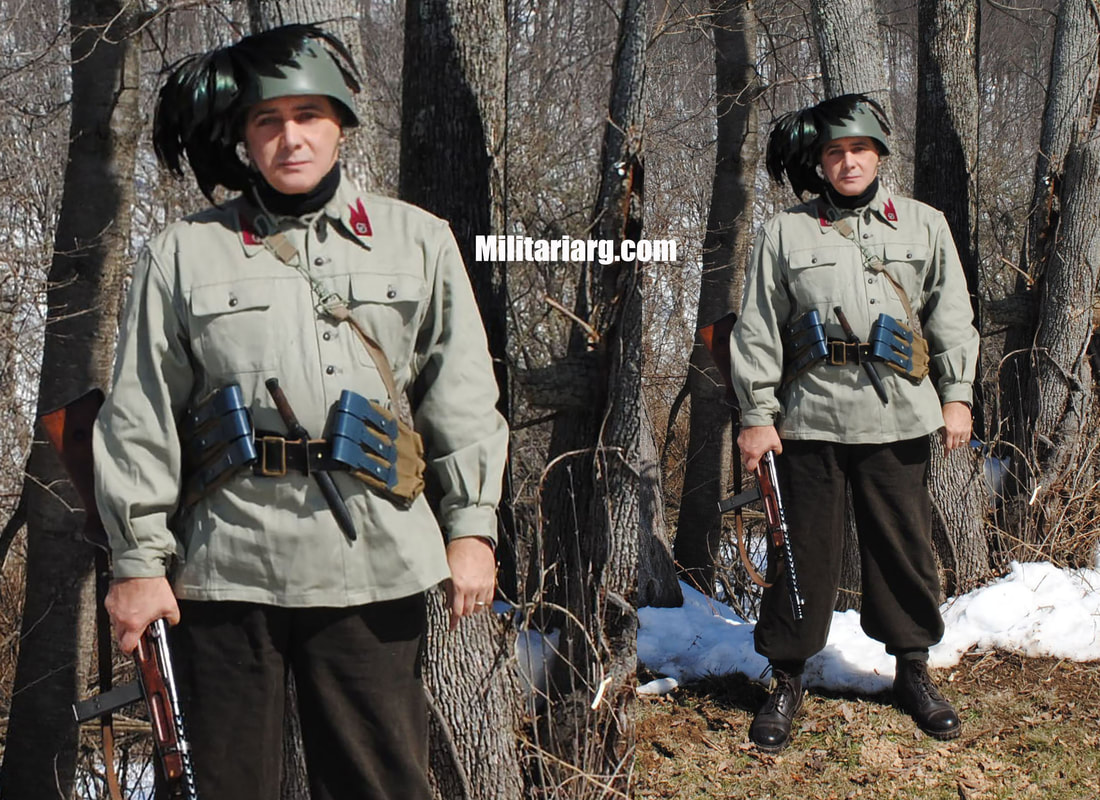
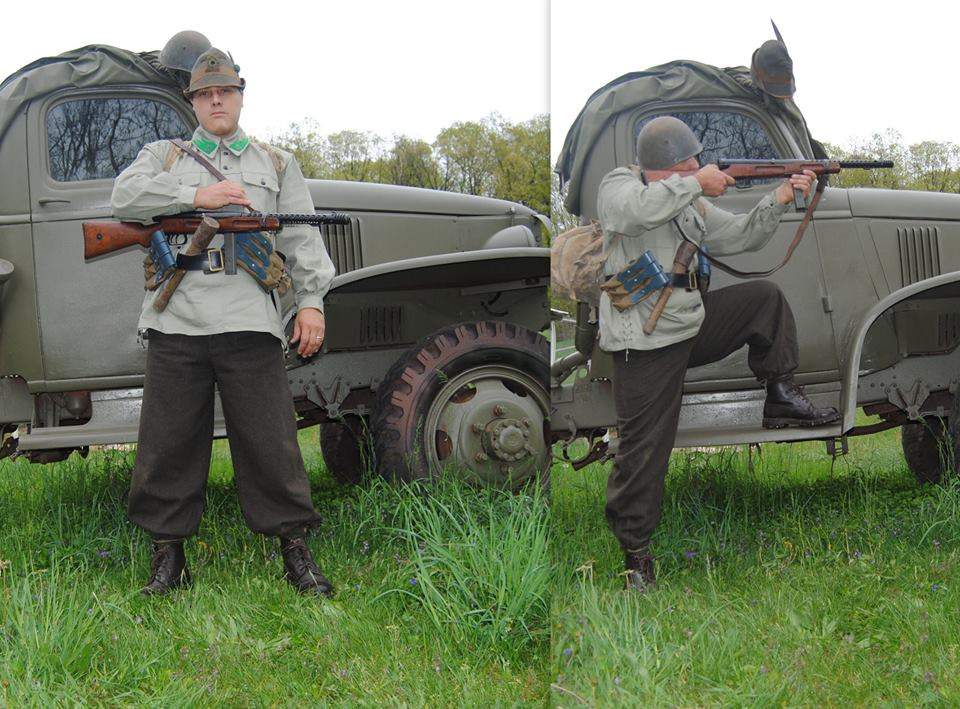
Italian RSI era 1943/45: Alpini Divisione Monterosa - Bersaglieri RSI.
Picture
​The 4th Alpine Division "Monterosa" was one of four divisions raised by the army of the Italian Social Republic (RSI), Mussolini's fascist state in Northern Italy, which continued the war alongside Nazi Germany after the 1943 armistice. 
Formation and Training
Picture
​Recruitment: The division was officially raised on January 1, 1944, in Pavia. Its ranks were filled by a mix of Italian soldiers captured by the Germans after the armistice who swore allegiance to the RSI (about 16%) and new conscripts from Northern Italy (about 84%).
Picture
​German Training: The approximately 20,000 men were sent to Germany for rigorous training at the German camps of Munzingen and Heuberg from late 1943 to mid-1944. They were equipped with German weaponry.

Morale Issues: Although the training was intensive, the division suffered from high desertion rates, particularly when deployed to Italy, as many soldiers were unwilling conscripts. 
Picture
Upon returning to Italy in July 1944, the "Monterosa" became part of the "Army Group Liguria" under Marshal Rodolfo Graziani. The division was mainly deployed in defensive roles and anti-partisan operations. 

Anti-Partisan Duties: From July to October 1944, the division was stationed in the Liguria region, engaged in protecting supply lines and conducting anti-partisan offensives.
Picture
The Gothic Line and Operation Winter Storm: In late 1944, the division was moved to the western sector of the Gothic Line. It played a major role in the successful Axis "Operation Winter Storm" (Wintergewitter) in December 1944, a limited offensive in the Apennine Mountains where Italian and German units mauled an American infantry division and improved their defensive positions in the Garfagnana region.
Picture
​Fighting in the Alps: In February 1945, the bulk of the division was transferred to the French-Italian border in the Piedmont Alps, where it fought against French regular and partisan forces in the Second Battle of the Alps until the end of the war. 
Picture
Picture
Surrender
The units of the "Monterosa" division on the Gothic Line surrendered to the Brazilian Expeditionary Force (FEB) in late April 1945. Other elements resisted until May 1945 in the Alps, eventually surrendering to American troops. The division was officially disbanded on April 28, 1945.

Picture

Picture
​The Division "Monterosa" of the Italian Social Republic (RSI) was largely equipped with a mix of German standard infantry weapons and older Italian artillery, as well as some domestically produced armored vehicles. The division was well-equipped on paper, receiving substantial materiel during its formation in Germany. 
Picture
​Weapons

The division's infantry used a mix of German and Italian small arms:

Rifles: The primary service rifle was the German Mauser Karabiner 98k (K98k). Some German G41 semi-automatic rifles were also supplied.
Machine Guns: The division utilized German MG 42 machine guns as its primary light/medium machine gun. The Italian Breda Modello 37 heavy machine gun was also used for sustained fire positions.
Submachine Guns: While details are limited, the Beretta M1938 SMG was the standard Italian SMG and may have been used alongside German MP40s.

Anti-Tank Weapons:
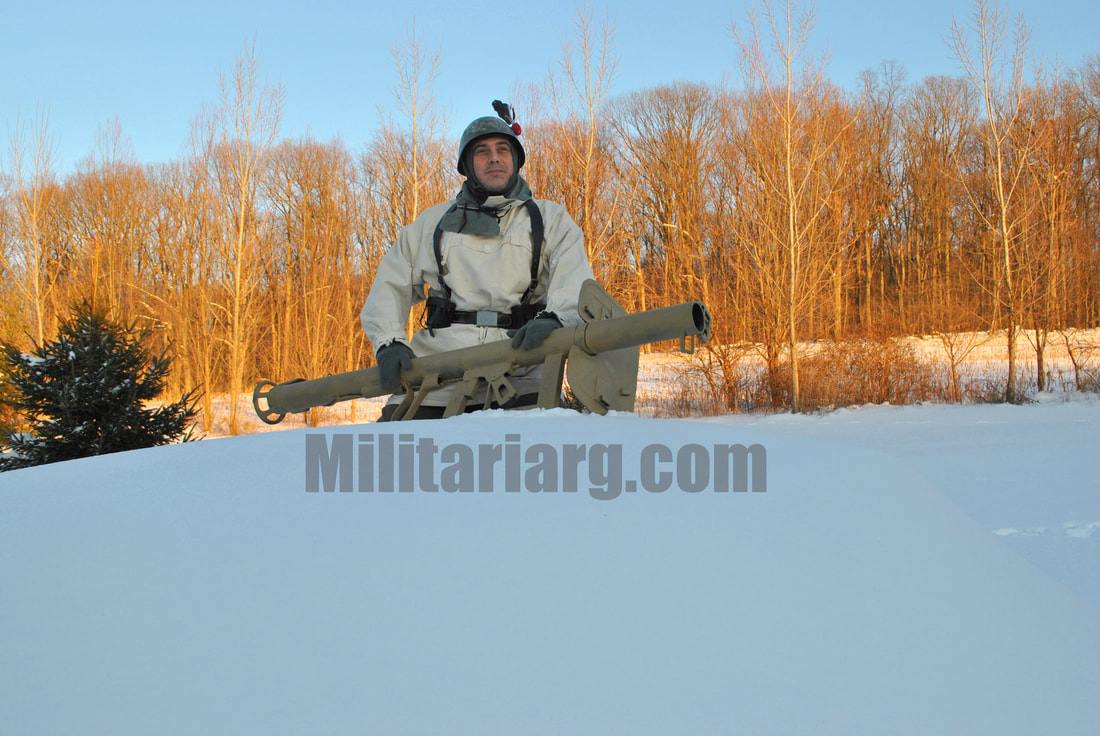
German Panzerschreck rocket launchers were supplied.
Disposable Panzerfaust single-shot anti-tank weapons were widely distributed.
Towed anti-tank guns included the German 7.5 cm PaK 40.
Some Italian Semovente 47/32 self-propelled anti-tank guns were also available. 

Artillery
The artillery regiment was equipped with a combination of Italian mountain guns (which were obsolete but effective in a mountain environment) and some German pieces: 

Mountain Guns: The Italian Obice da 75/13 mountain howitzer was the mainstay of the divisional artillery and could be broken down into pack loads for transport by mules. The Cannone da 65/17 was also used.
Field Artillery: Older Italian Obice da 100/17 howitzers were used, alongside some German-supplied guns including 105mm and 150mm pieces.
Mortars: Italian 81mm Mortaio da 81/14 Modello 35 were used.
Anti-aircraft: Italian Cannone-Mitragliera da 20/65 Mod. 35 anti-aircraft guns, sometimes mounted on trucks, provided AA defense. 

Tanks and Vehicles
The "Monterosa" was primarily an Alpine (mountain) infantry division, not an armored division, so it did not have an integral tank regiment. However, it had attached armored support units and various transport vehicles: 

Armored Cars: The division used the Italian Autoblinda AB 41 and the Autoblinda Lancia Lince (a localized version of the British Daimler Dingo armored car) for reconnaissance.

Tanks: The division did not have its own tanks, but was supported by the attached Armored Group "Leonessa", which used a variety of older Italian medium tanks, including the M13/40, M14/41, and M15/42. A few of the heavier (but still medium by Allied standards) P26/40 tanks were also available to the group.
Self-propelled Guns: The Semovente 47/32 was used in an anti-tank role.

Transport Vehicles: The division relied on Italian trucks for transport, including the reliable Lancia 3Ro and Fiat 626 medium trucks, as well as the all-terrain SPA Dovunque 35 supply trucks

Bersaglieri RSI

Picture
​The Bersaglieri of the Italian Social Republic (RSI) continued the traditions and service of their elite corps after the armistice of September 8, 1943. They were a significant and combat-effective component of the fascist armed forces that fought alongside Nazi Germany until the end of the war.

With the creation of the RSI Armed Forces, many former Bersaglieri who were in Northern Italy or who had been captured by the Germans were enlisted into new regiments.
Picture
German-Trained Divisions: The main RSI Bersaglieri regiments were incorporated into the four infantry divisions that were sent to Germany for standard German training and equipment:

1ª Divisione Fanteria "Italia" (1st Infantry Division "Italia"): This division included a Bersaglieri regiment that took part in operations on the Italian front, particularly in the Tuscan-Emilian Apennines.
Picture
Autonomous Battalions: In addition to the divisions, numerous autonomous battalions or regiments were formed that operated under the direct command of the National Republican Army (ENR) or sometimes directly under German command (Wehrmacht/SS).

The RSI Bersaglieri maintained their reputation as elite and highly motivated troops.

Anti-Partisan Duties: They were widely used in counter-guerrilla and anti-partisan operations in Northern Italy, often fighting brutally. Their mobility and aggressiveness made them suitable for these operations.

Southern Front: The Bersaglieri from the "Italia" Division and other autonomous regiments were deployed on the Gothic Line and other fronts against the Allies (including their former comrades from the Italian Co-belligerent Army and Italian partisans). They fought strenuously in the last, desperate phases of the war in Italy, suffering significant losses.
Picture
​Vehicles and Armament

Similar to the "Monterosa" Division, the RSI Bersaglieri were equipped with a mix of German and Italian weapons:

Vehicles: They used a variety of Italian trucks, including the Fiat 626 and Lancia 3Ro, as well as German vehicles.

Armament: German Mauser K98k rifles, MG 42 machine guns, and their beloved and highly effective Beretta M1938 SMGs (unlike regular troops who sometimes used German MP40s).

The history of the RSI Bersaglieri is controversial because of their political affiliation, but from a purely military standpoint, they were among the most effective and dedicated units of the National Republican Army.
Picture
I Battaglione Bersaglieri Volontari "Benito Mussolini" 

This specific battalion was an autonomous, highly politicized, and dedicated RSI unit that operated primarily on the sensitive Italian-Yugoslav border region (the "Giulia" Front) rather than deep within Yugoslavia itself. 

Its main task was border defense and rigorous anti-partisan warfare against Tito's Yugoslav partisans and regular forces, who were advancing towards the Italian cities of Trieste, Udine, and Venezia.

The battalion was active on the northeastern frontier of Italy, in areas that are today part of Slovenia, such as the Val di Baccia.

The unit was involved in fierce and brutal fighting in this sector, known for its harsh conditions and extreme violence. The battalion was later renamed the XV Battaglione Bersaglieri Difesa Costiera (15th Coastal Defense Bersaglieri Battalion).

The unit had a reputation for aggressive tactics and high morale, driven by strong fascist ideology. Accounts suggest the fighting was particularly savage in this theater, with severe reprisals on both sides. 

This confirms that while the main Bersaglieri regiments were within the regular RSI army divisions, this specific autonomous volunteer battalion used Mussolini's name directly and operated on the Yugoslav frontier*.

*​The region in question was known as Venezia Giulia, which encompassed cities like Trieste, Gorizia, and parts of present-day Slovenia and Croatia (including the Baccia Valley where the battalion fought). This area had been annexed by Italy after World War I.

Picture
This page is dedicated to the memory of:
Luigi Bini 6th Bersaglieri Regiment. (3ª Divisione Celere "Principe Amedeo Duca d'Aosta") - Apiro 1914 - Kameskovo (Russia) 1943.
Edgardo Mignoni 8th Bersaglieri Regiment - Rivarolo 1929 - Borovnica 1945 (Former Yugoslavia).
Gerolamo Mignoni 29th Regiment Pisa - Rivarolo Fuori Mantova 1844 - Ferrara 1866 - Italian Third Inependence War.

Powered by Create your own unique website with customizable templates.