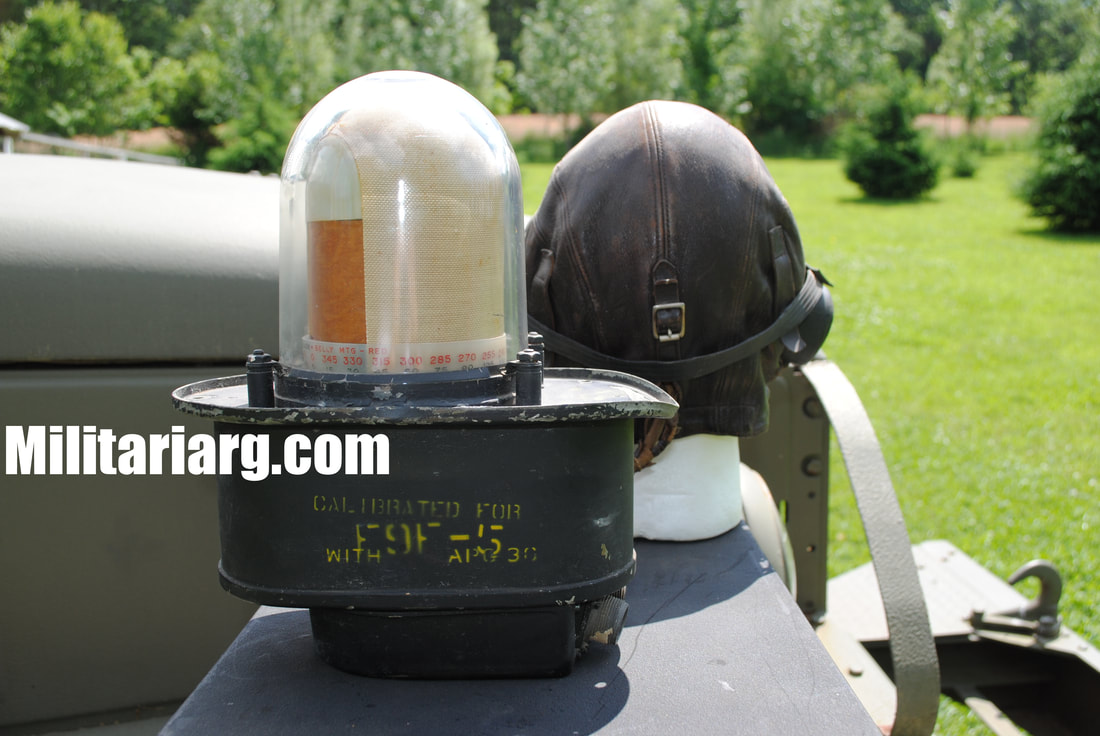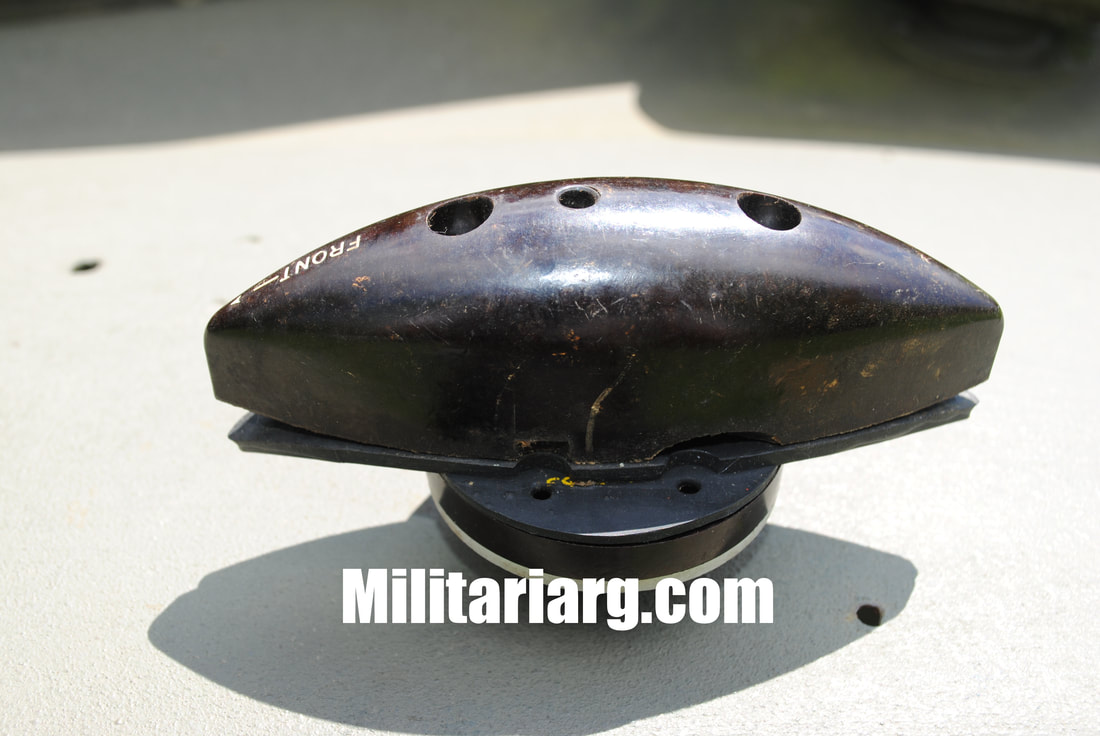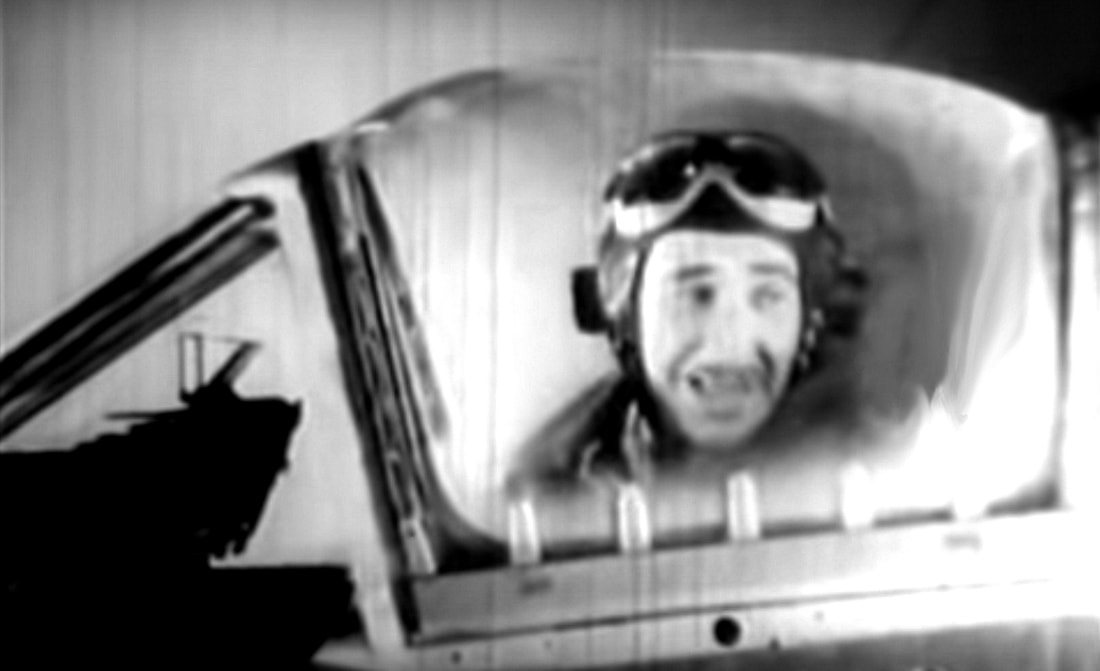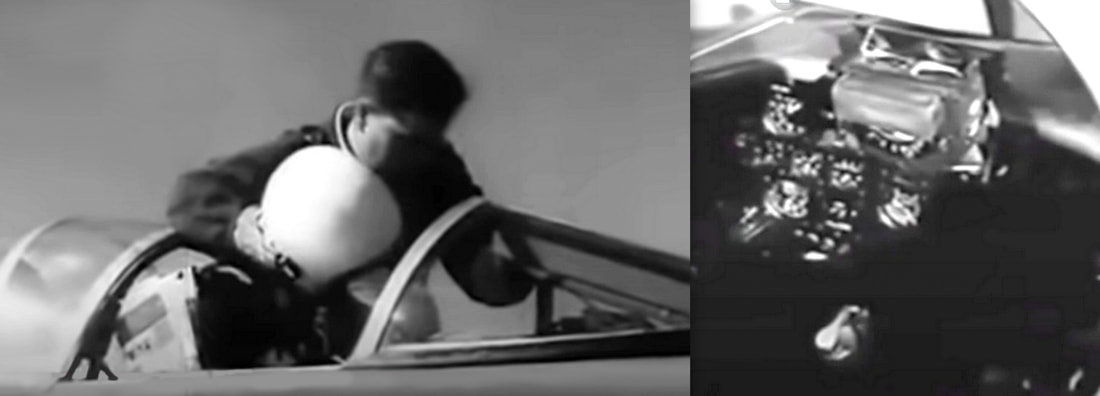
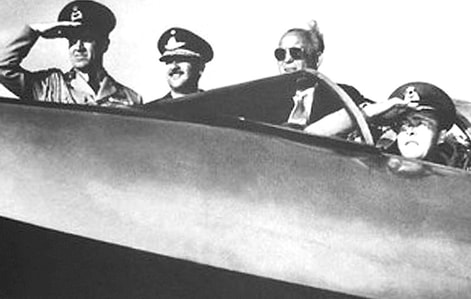
This is an interesting screenshot from a video of the Pulqui II in 1951. You can see the cockpit with a Ferranti type gun sight and the face curtain handle of the headrest ejection seat of the Martin-Baker's system type Mk.1. This technology was only a couple of years in development and production in the UK. It probably came with the purchase of a hundred Gloster Meteors Mk.4. The Pulqui had certain equipment from these planes, such as oxygen tanks. Inside the plane, Professor Kurt Tank was about to put on the early hard shell helmet in preparation for flying the plane. This was during the visit of Prince Bernhard of Holland who was interested in the plane.
In the bottom photo is Prince Bernhard in the pilot seat. Kurt Tank is beside him with the sunglasses.
The FMA IAe 33 Pulqui II cockpit was equipped with typical analog flight instruments for its era, including a notable British-origin Ferranti type gun sight. The avionics were a standard array of communication and navigation electronics available in the late 1940s and early 1950s, primarily sourced from British and Argentine suppliers.
Cockpit Electronics
The FMA IAe 33 Pulqui II, a contemporary of the North American F-86 Sabre and the Mikoyan-Gurevich MiG-15, featured technology that was considered advanced for the time, although it did not incorporate the "glass cockpit" digital displays common in modern aircraft.
Gun Sight: The cockpit was fitted with a Ferranti type gun sight.
Ejection Seat Mechanism: The aircraft incorporated a Martin-Baker Mk. 1 ejection seat system, which included a face curtain handle for initiation. This was cutting-edge safety technology developed in the UK only a couple of years prior.
Instrumentation: The main panel consisted of conventional, mechanical gauges for airspeed, altitude, vertical speed, and engine performance, typical of military jets from that period.
Proposed Radar: While the prototypes used a standard instrument panel, an "all-weather" version that included radar was considered during the project's development, although it was never implemented.
Other Systems: The cockpit managed standard electronic systems for communication, navigation, and engine monitoring, which would have been basic by today's standards.
Origin of Components
The components had a mixed origin, reflecting Argentina's post-war effort to develop an indigenous aviation industry by utilizing expertise and equipment from various international sources.
British Influence: Key components were sourced from the United Kingdom. This included the powerful Rolls-Royce Nene II turbojet engine, the Martin-Baker ejection seat system, and oxygen tanks. The Ferranti gun sight was also of British origin.
German Design Heritage: The aircraft's overall design stemmed from the work of German aeronautical engineer Kurt Tank and his team, who moved to Argentina after World War II. The design was a development of his unrealized Focke-Wulf Ta 183 Huckebein project. However, the electronics and avionics themselves were not directly German wartime technology but rather contemporary international systems integrated into the German-designed airframe.
Argentine Manufacturing: The aircraft itself was designed and built by the Fábrica Militar de Aviones (FMA) in Argentina, which integrated the foreign components into the final product.
Cockpit Electronics
The FMA IAe 33 Pulqui II, a contemporary of the North American F-86 Sabre and the Mikoyan-Gurevich MiG-15, featured technology that was considered advanced for the time, although it did not incorporate the "glass cockpit" digital displays common in modern aircraft.
Gun Sight: The cockpit was fitted with a Ferranti type gun sight.
Ejection Seat Mechanism: The aircraft incorporated a Martin-Baker Mk. 1 ejection seat system, which included a face curtain handle for initiation. This was cutting-edge safety technology developed in the UK only a couple of years prior.
Instrumentation: The main panel consisted of conventional, mechanical gauges for airspeed, altitude, vertical speed, and engine performance, typical of military jets from that period.
Proposed Radar: While the prototypes used a standard instrument panel, an "all-weather" version that included radar was considered during the project's development, although it was never implemented.
Other Systems: The cockpit managed standard electronic systems for communication, navigation, and engine monitoring, which would have been basic by today's standards.
Origin of Components
The components had a mixed origin, reflecting Argentina's post-war effort to develop an indigenous aviation industry by utilizing expertise and equipment from various international sources.
British Influence: Key components were sourced from the United Kingdom. This included the powerful Rolls-Royce Nene II turbojet engine, the Martin-Baker ejection seat system, and oxygen tanks. The Ferranti gun sight was also of British origin.
German Design Heritage: The aircraft's overall design stemmed from the work of German aeronautical engineer Kurt Tank and his team, who moved to Argentina after World War II. The design was a development of his unrealized Focke-Wulf Ta 183 Huckebein project. However, the electronics and avionics themselves were not directly German wartime technology but rather contemporary international systems integrated into the German-designed airframe.
Argentine Manufacturing: The aircraft itself was designed and built by the Fábrica Militar de Aviones (FMA) in Argentina, which integrated the foreign components into the final product.
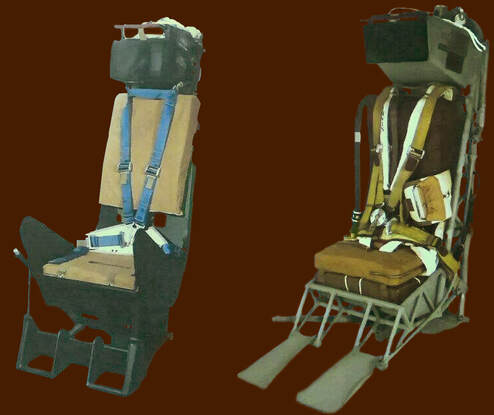
Martin-Baker Ejection Seat Pre-Mk.1 and Pre-Production Mk.1 from an old Martin-Baker Catalog.
The Martin-Baker Pre-Mk. 1 and Pre-Production Mk. 1 ejection seats were the original developmental models used to prove the concept of catapult ejection in the late 1940s, leading to the world's first successful operational ejection in 1949.
Pre-Mk. 1 Ejection Seat
The Pre-Mk. 1 was the initial design used for the first ground and flight tests.
Structure: It consisted of a basic tubular structure with an integral bucket and headbox.
Activation: The pilot initiated ejection by pulling a face curtain handle, which provided face protection against windblast and fired the ejection gun.
Ejection Gun: A two-cartridge explosive-powered ejection gun propelled the seat out of the cockpit.
Stabilization & Parachute: A large headbox contained a drogue parachute for stabilization, which was deployed by a static line that fired a drogue gun as the seat cleared the aircraft. The pilot then manually separated from the seat and pulled their parachute ripcord.
Testing: Test subject Bernard Lynch performed the first static test in January 1945 and the first in-flight ejection in July 1946 using this design.
Pre-Production Mk. 1 Ejection Seat
This version was a redesign of the Pre-Mk. 1 to allow for production on a quantity basis and incorporated lessons learned from early tests.
Design Improvements: The design was perfected, particularly the drogue stowage and deployment mechanisms, to cure "teething troubles".
Operational Sequence: The sequence remained manual: canopy jettison (if fitted), pulling the face screen handle to fire the main gun, and then manual separation from the seat to deploy the main parachute at a safe altitude.
First Operational Use: The first emergency operational ejection using a pre-series Mk. 1 seat saved the life of test pilot Jo Lancaster on May 30, 1949.
Features:
Ejection Gun: Two-cartridge, 60 ft/sec velocity.
Drogue: A 24-inch or 22-inch diameter drogue deployed via static line to stabilize the descent.
Leg Restraints: Integral thigh guards and footrests were added to prevent leg flail.
Barostatic Time-Release Unit: Not included in these early models.
These seats were subsequently standardized by the authorities for all new service jet aircraft like the Gloster Meteor, Armstrong Whitworth AW.52, and de Havilland Vampire
The Martin-Baker Pre-Mk. 1 and Pre-Production Mk. 1 ejection seats were the original developmental models used to prove the concept of catapult ejection in the late 1940s, leading to the world's first successful operational ejection in 1949.
Pre-Mk. 1 Ejection Seat
The Pre-Mk. 1 was the initial design used for the first ground and flight tests.
Structure: It consisted of a basic tubular structure with an integral bucket and headbox.
Activation: The pilot initiated ejection by pulling a face curtain handle, which provided face protection against windblast and fired the ejection gun.
Ejection Gun: A two-cartridge explosive-powered ejection gun propelled the seat out of the cockpit.
Stabilization & Parachute: A large headbox contained a drogue parachute for stabilization, which was deployed by a static line that fired a drogue gun as the seat cleared the aircraft. The pilot then manually separated from the seat and pulled their parachute ripcord.
Testing: Test subject Bernard Lynch performed the first static test in January 1945 and the first in-flight ejection in July 1946 using this design.
Pre-Production Mk. 1 Ejection Seat
This version was a redesign of the Pre-Mk. 1 to allow for production on a quantity basis and incorporated lessons learned from early tests.
Design Improvements: The design was perfected, particularly the drogue stowage and deployment mechanisms, to cure "teething troubles".
Operational Sequence: The sequence remained manual: canopy jettison (if fitted), pulling the face screen handle to fire the main gun, and then manual separation from the seat to deploy the main parachute at a safe altitude.
First Operational Use: The first emergency operational ejection using a pre-series Mk. 1 seat saved the life of test pilot Jo Lancaster on May 30, 1949.
Features:
Ejection Gun: Two-cartridge, 60 ft/sec velocity.
Drogue: A 24-inch or 22-inch diameter drogue deployed via static line to stabilize the descent.
Leg Restraints: Integral thigh guards and footrests were added to prevent leg flail.
Barostatic Time-Release Unit: Not included in these early models.
These seats were subsequently standardized by the authorities for all new service jet aircraft like the Gloster Meteor, Armstrong Whitworth AW.52, and de Havilland Vampire
The Gloster Meteor F.4s that arrived in Argentina starting in 1947 did not have ejection seats.
This created a dangerous paradox for the Argentine Air Force: they were flying the most advanced jet technology in South America, but with the same "bail-out" safety of a WWII Spitfire.
The Early Series Gap: The first production Meteors (Mk. I through F.4) were designed before ejection seats were standardized. Pilots had to manually jettison the canopy and jump out, a process that was nearly impossible at jet speeds due to high G-forces and the risk of hitting the high T-tail. It wasn't until the F.8 variant (introduced in 1949/1950) that the Martin-Baker Mk.1 ejection seat became standard equipment. Because Argentina purchased its 100 F.4s in May 1947, they missed the "ejection seat revolution" by just a few years.
This created a dangerous paradox for the Argentine Air Force: they were flying the most advanced jet technology in South America, but with the same "bail-out" safety of a WWII Spitfire.
The Early Series Gap: The first production Meteors (Mk. I through F.4) were designed before ejection seats were standardized. Pilots had to manually jettison the canopy and jump out, a process that was nearly impossible at jet speeds due to high G-forces and the risk of hitting the high T-tail. It wasn't until the F.8 variant (introduced in 1949/1950) that the Martin-Baker Mk.1 ejection seat became standard equipment. Because Argentina purchased its 100 F.4s in May 1947, they missed the "ejection seat revolution" by just a few years.
AN/ARN-6 Radio Compass. It was airborne navigation equipment from WWII in the 50s, used in the first jets such Gloster, Meteors, F-86 Sabre, and many others. Below are photos of the primary components of the set.
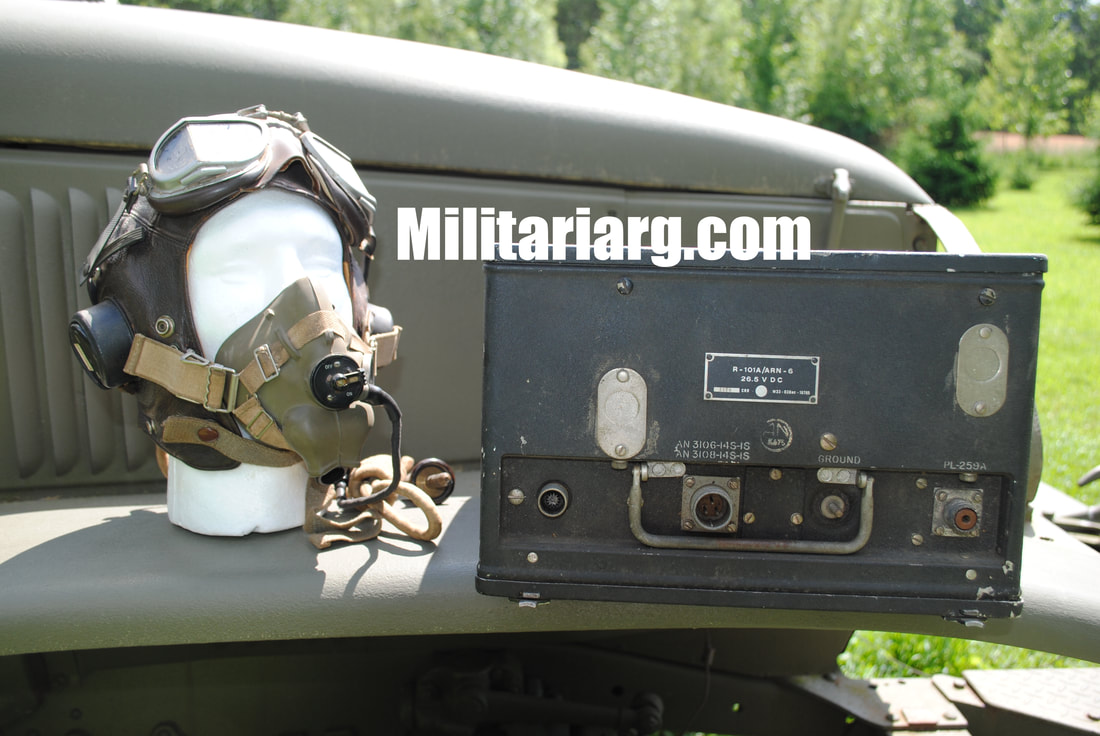
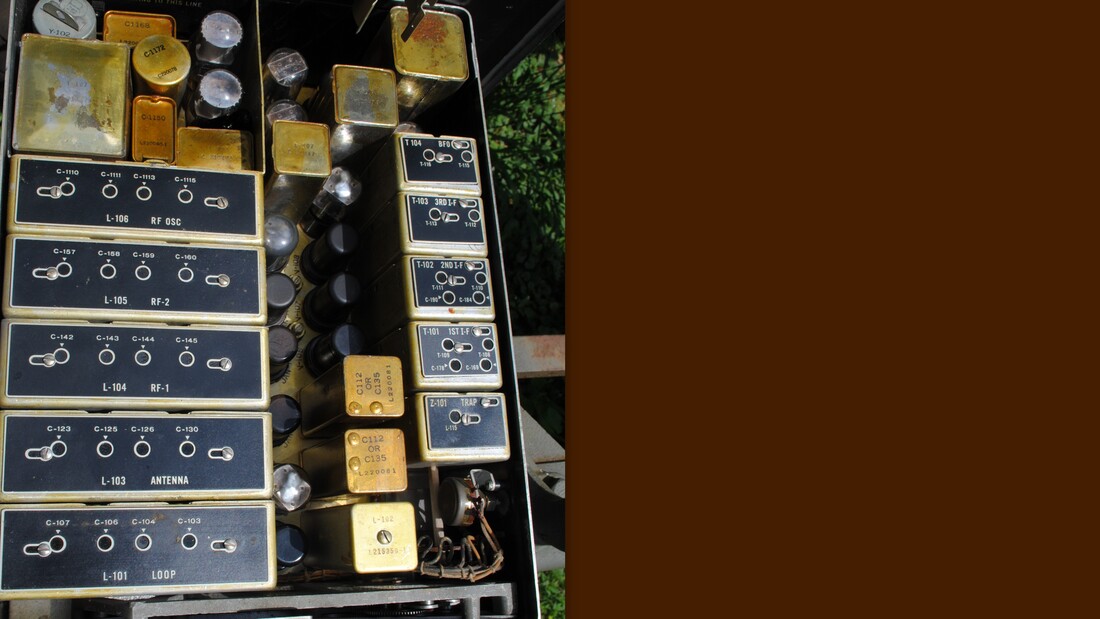
R-101A/ARN-6 Radio Compass. Receiver Transmitter. The R-101A/ARN-6 is the primary receiver unit of the AN/ARN-6 Radio Compass System (Automatic Direction Finder), a standard airborne navigation system in use from World War II through the 1970s. This component is solely a receiver and does not have transmitting capabilities.
AS-313B/ARN-6 Antenna Loop. The AS-313B/ARN-6 is a crucial component of the AN/ARN-6 Radio Compass Set (Automatic Direction Finder), serving as the motorized, directional loop antenna assembly used in many post-WWII aircraft like the F-86 Sabre and F-51 Mustang.
CU-65/ARN-6 Antenna. The CU-65/ARN-6 is not an antenna itself, but a Coupling Unit used as part of the AN/ARN-6 Radio Compass Set. It functions as a matching circuit for the system's "sense" antenna.
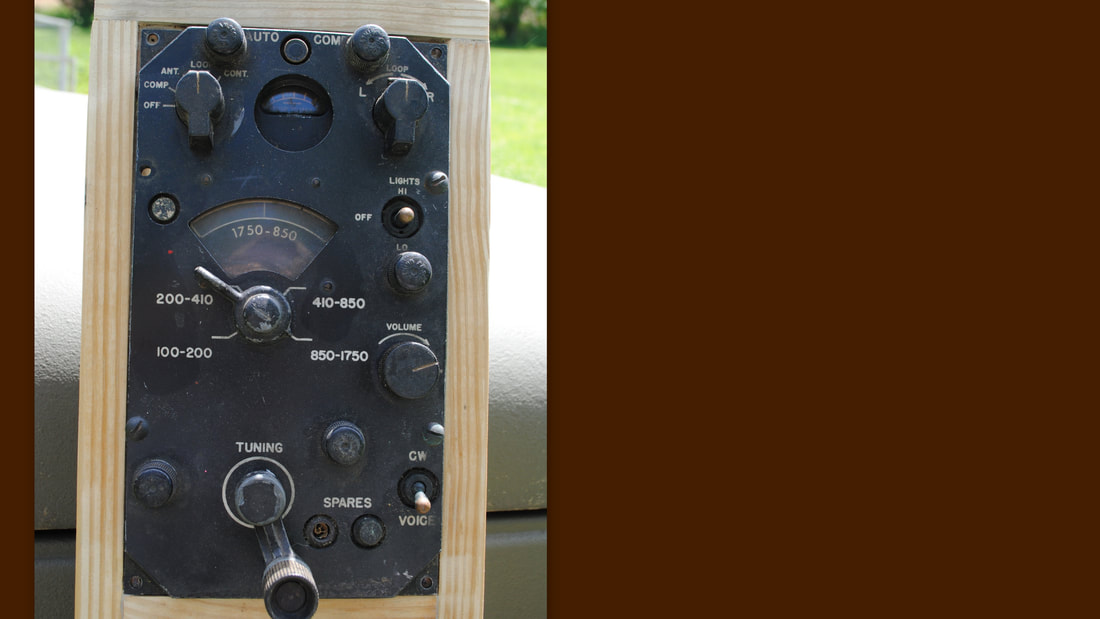
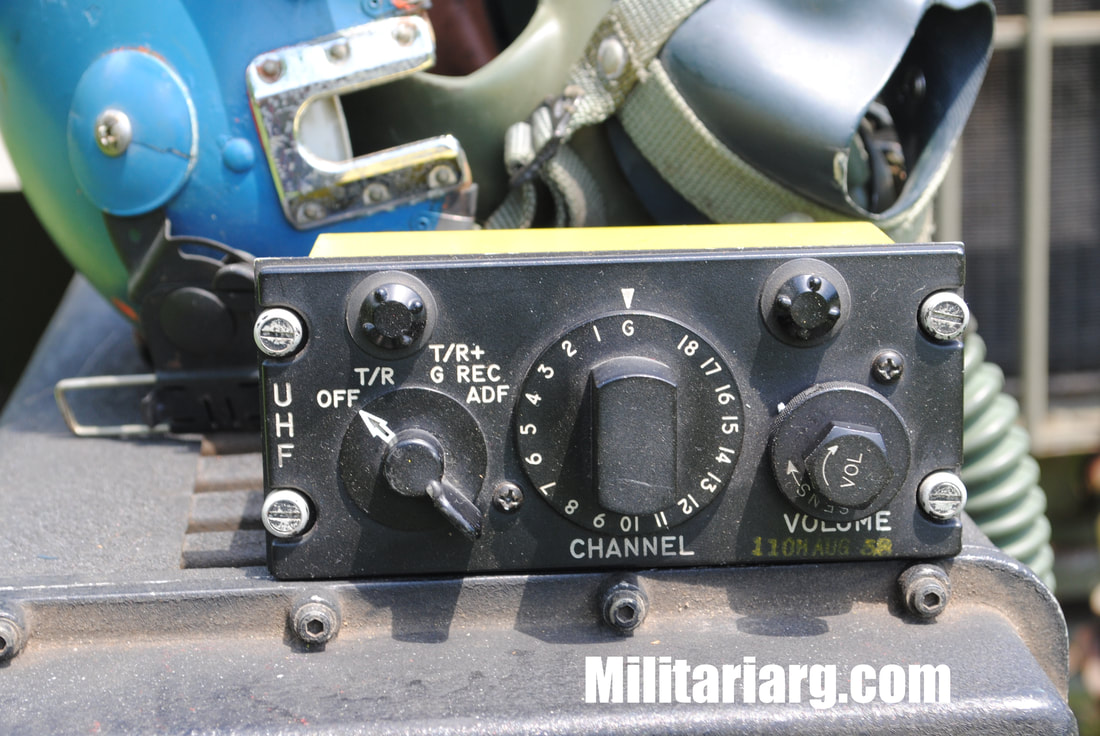
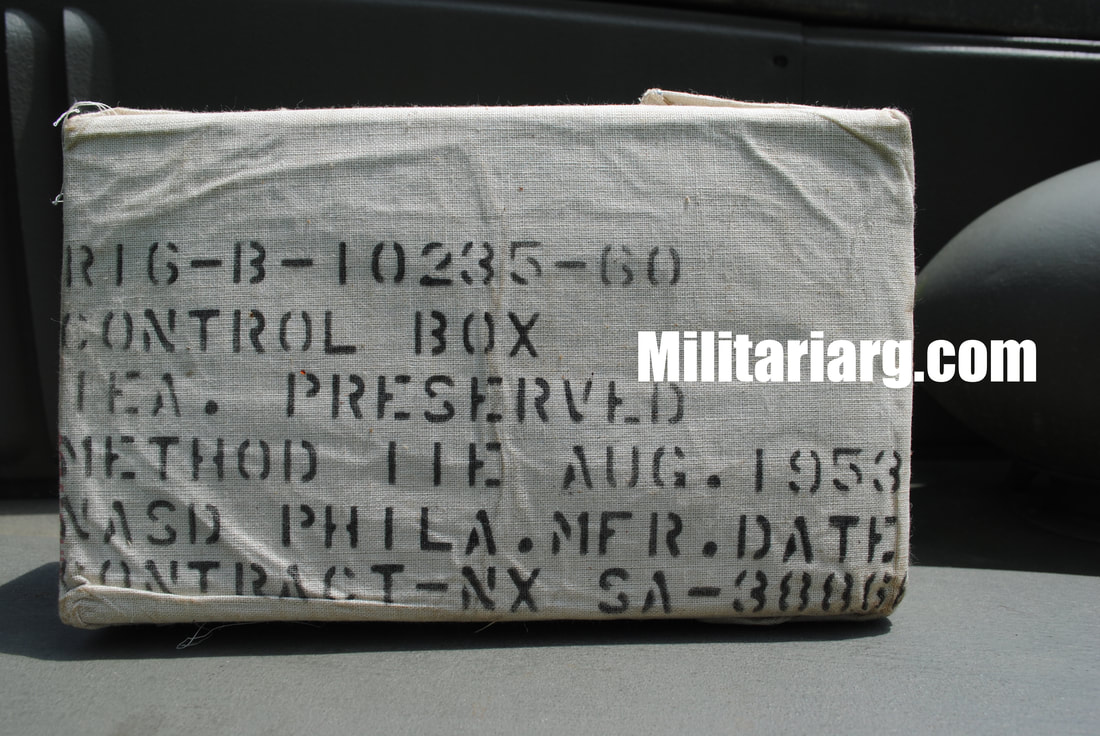
Control Box C-149/ARN-6.
The Control Box C-149/ARN-6 is the tuning and volume control unit for the AN/ARN-6 Radio Compass Set (also known as the SCR-269), a widely used military aircraft Automatic Direction Finder (ADF) system during WWII and into the Korean War. This system was standard equipment on numerous aircraft, including the B-17, P-51, F6F Hellcat, and B-29.
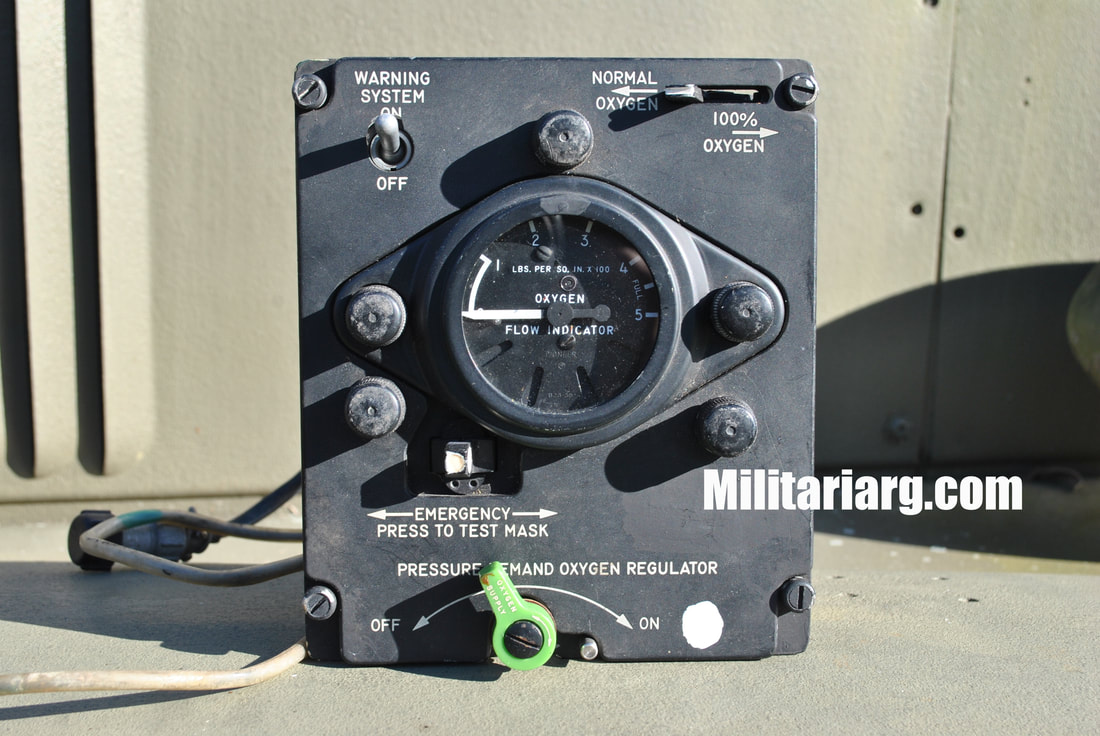
Diluter Demand Oxygen Regulator
Korean War F-86 Sabre. Bendix Aviation Corporation. Eclipse-Pioneer Division Teterboro N.J.
A diluter demand oxygen regulator is an aviation life-support instrument that supplies oxygen to a crew member only when they inhale, conserving the oxygen supply. These regulators are typically designed for use at altitudes up to 40,000 feet and automatically mix cabin air with oxygen, or supply 100% oxygen at higher altitudes.
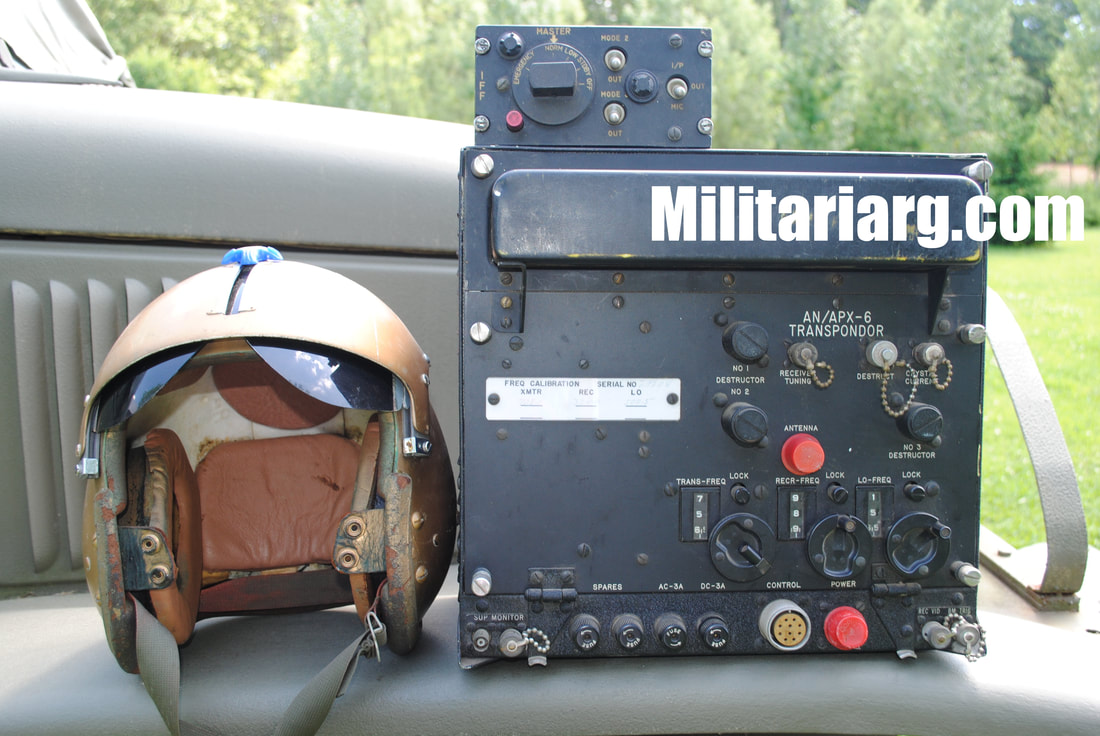
AN/APX-6
WWII/50s RT-82/APX-6 Transpondor.
The RT-82/APX-6 Transponder is the main receiver-transmitter unit for the AN/APX-6 Identification Friend or Foe (IFF) system, widely used by U.S. and allied military forces (including the RCAF as the APX-6A) during and immediately after World War II, continuing into the 1950s. This unit was crucial for differentiating friendly aircraft from enemy targets on radar screens.
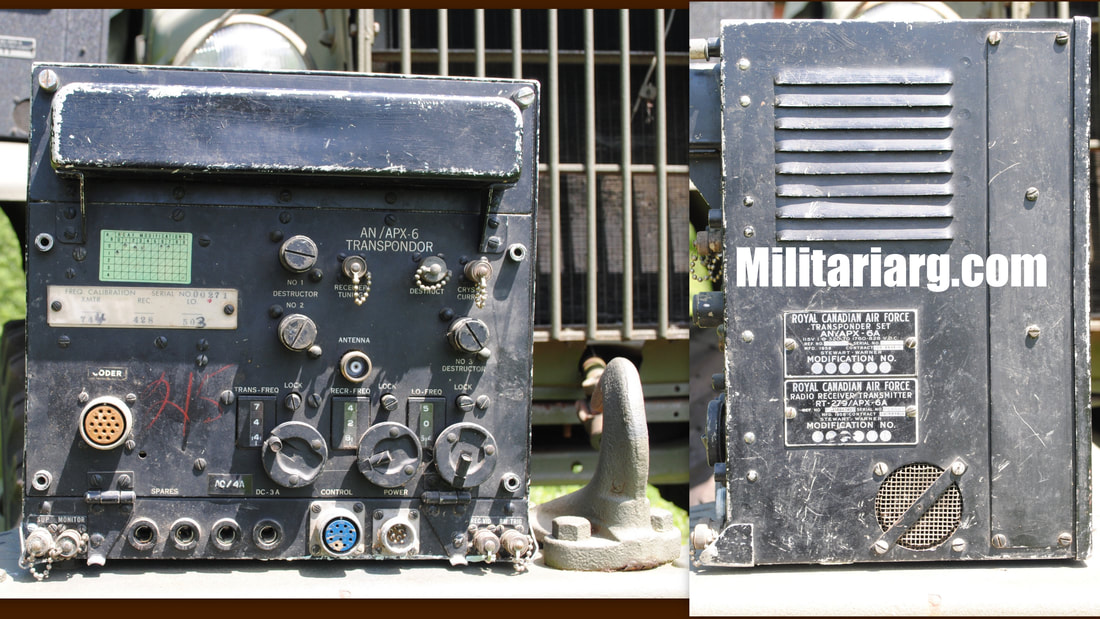
RCAF APX-6A Transpondor. The AN/APX-6A Transponder was an Identification Friend or Foe (IFF) system used by the Royal Canadian Air Force and other allied forces during the post-WWII and early Cold War eras. It provided a means for aircraft to be automatically identified by friendly ground and airborne radar systems.
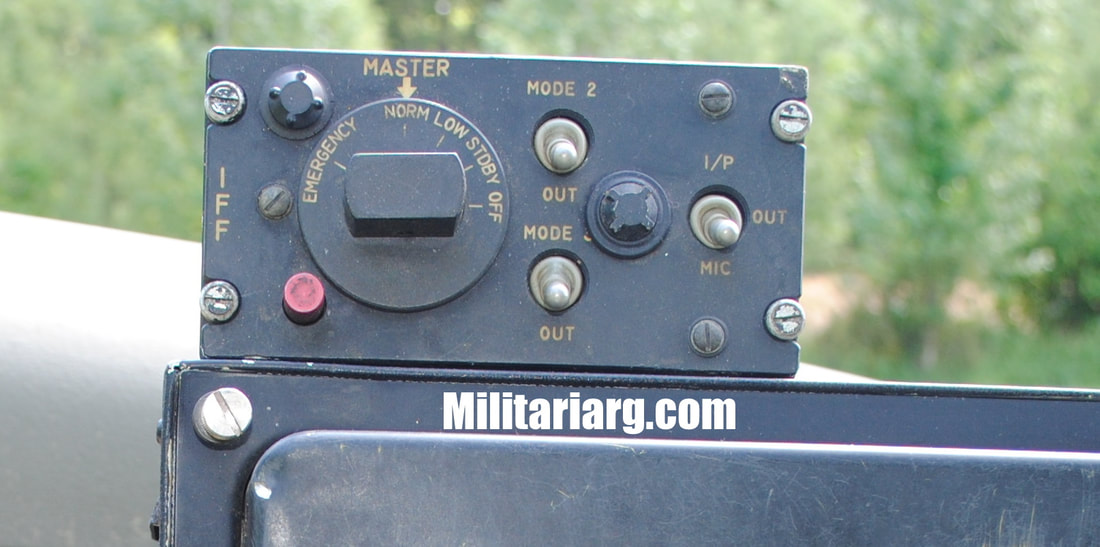
IFF control APX-6 F-86 Sabre, F9 Cougar. The AN/APX-6 was an early post-WWII Identification Friend or Foe (IFF) transponder system used widely by the U.S. Navy and Air Force, preceding the AN/APX-25. The control unit for this system is typically the C-1158/APX.
AN/APX-25 - SIF control, F-86 Sabre, F9 Cougar.
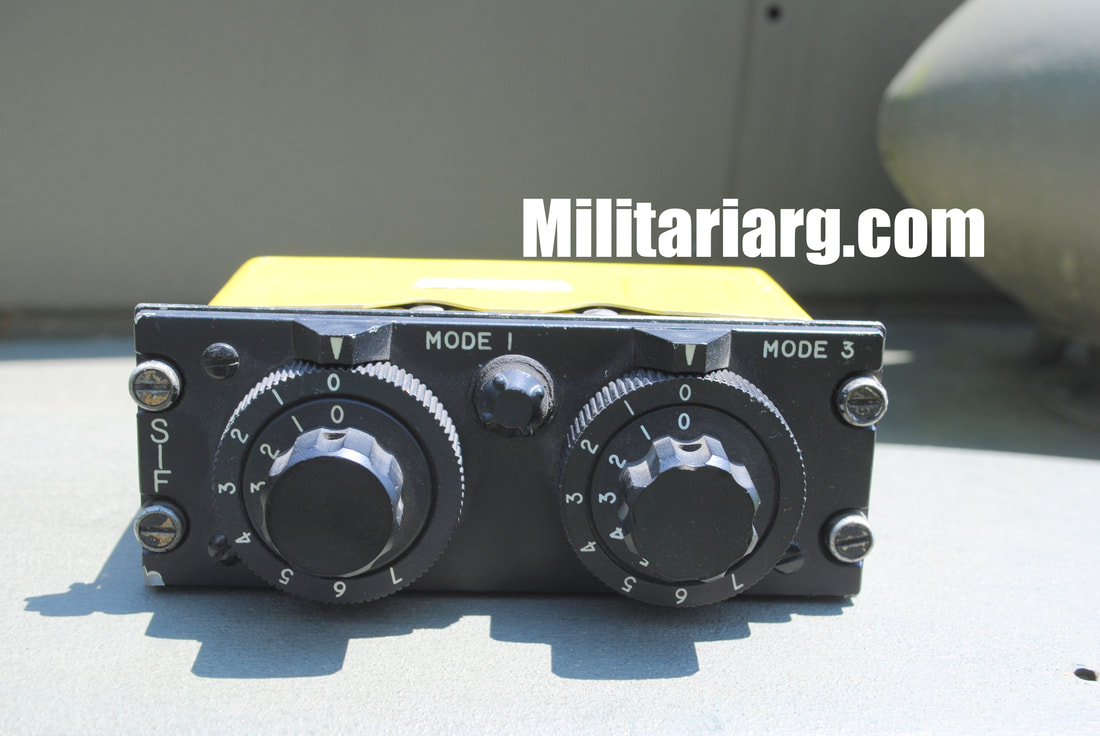
The AN/APX-25 is an Identification Friend or Foe (IFF) transponder system used in post-WWII U.S. military aircraft, with control provided by units such as the C-1128/APX-25 and C-1158/APX. This system was notable for adding the Selective Identification Feature (SIF) capability, which is the military equivalent of a civilian "squawk" code.
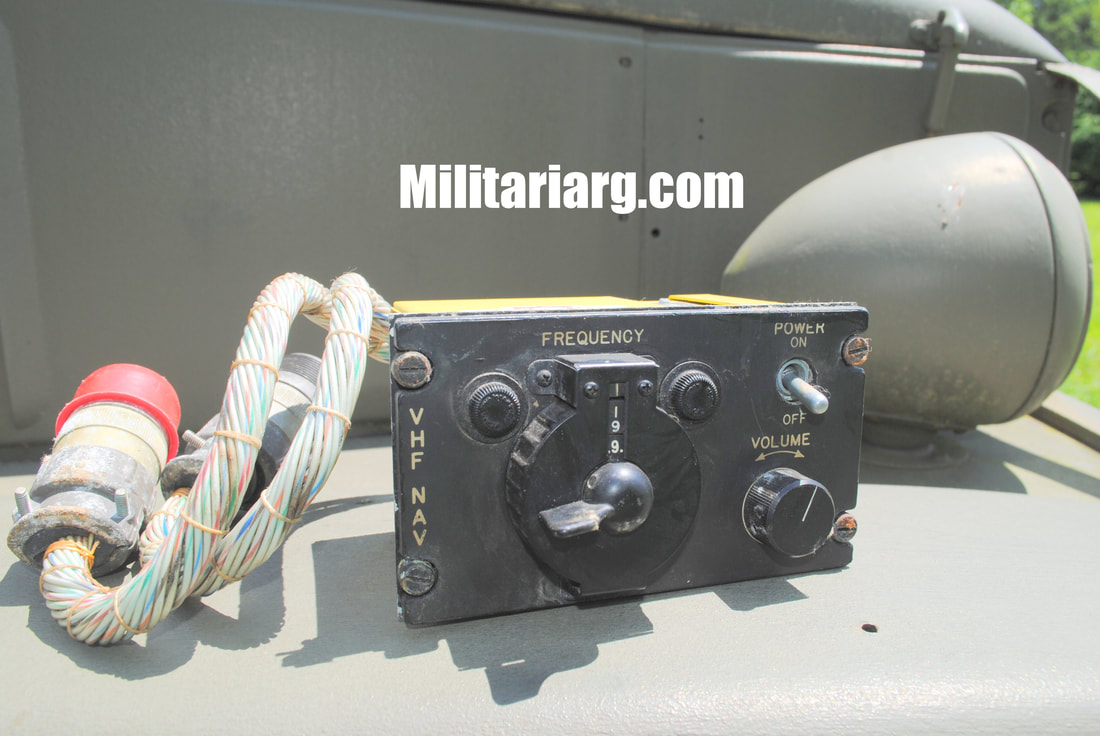
1950s. ARN-21 VHF NAV control. The AN/ARN-21 radio navigation system, used extensively in 1950s military aircraft, utilized several control panel models, with the most common being the C-866/ARN-21 and later models like the C-3844/ARN-21. This system was for the Tactical Air Navigation (TACAN) system, not VHF navigation in the typical VOR/ILS sense.
RT-178/ARC-27 UHF Radio Transceiver. It was the most-used radio from the end of WWII until the 70s. It was used in the F-86 Sable, A4 Skyhawk, among others.
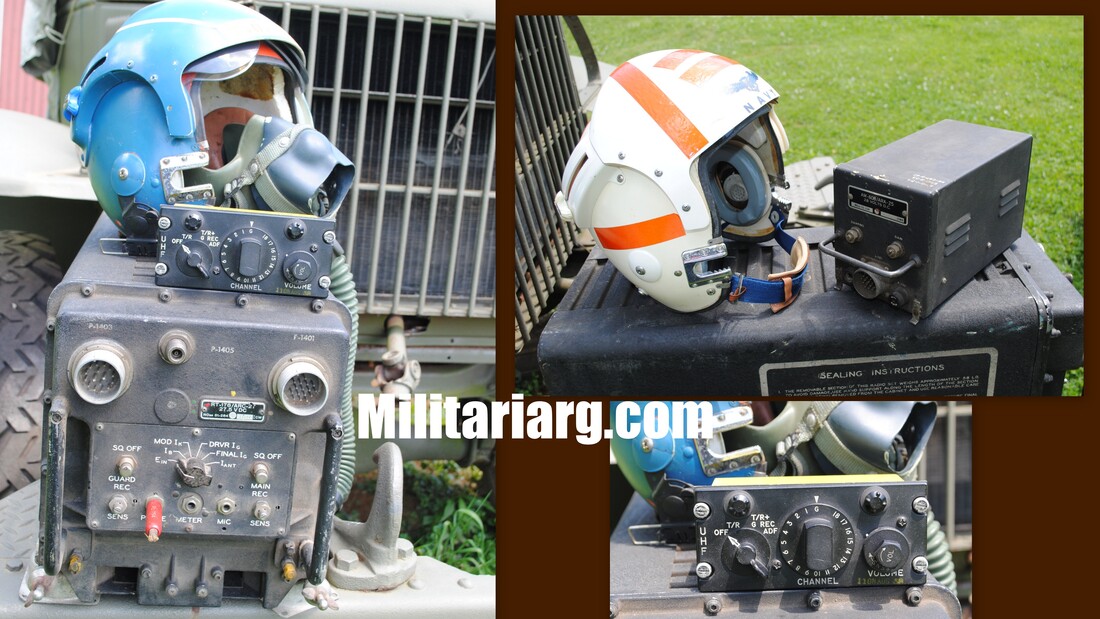
The RT-178/ARC-27 is the main Receiver-Transmitter unit of the AN/ARC-27 UHF Radio Set, a standard airborne communication system for U.S. military aircraft of the Korean and early Vietnam War eras. The units are available as surplus items for collectors and restorers.
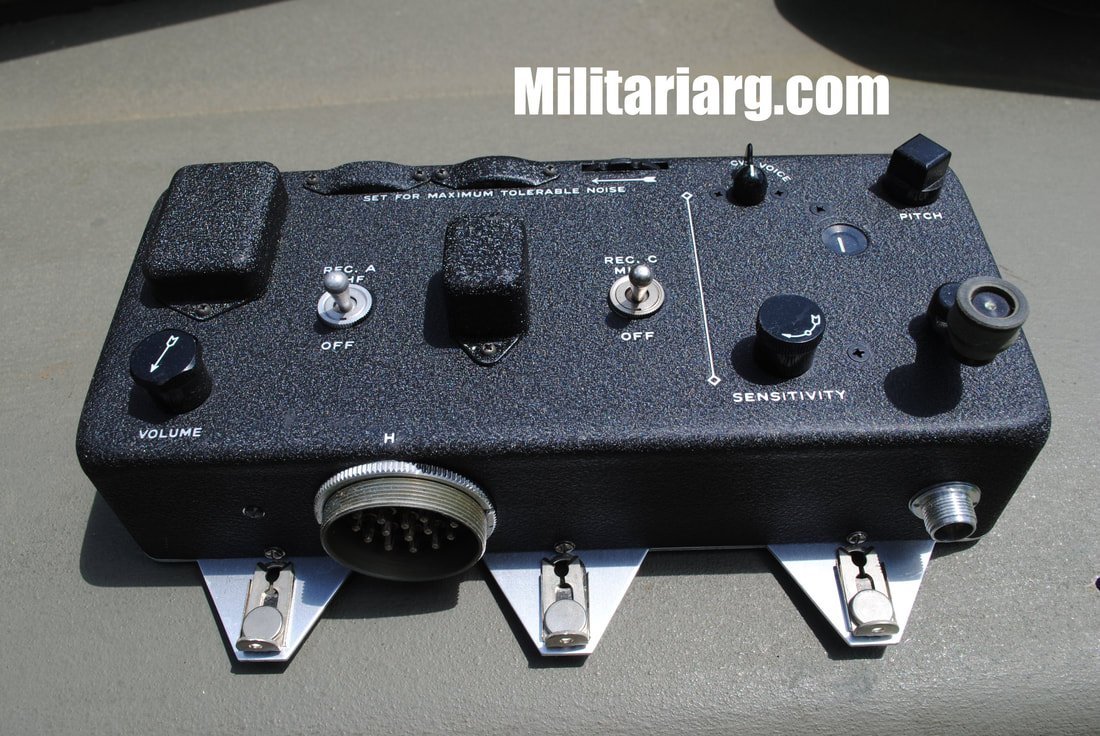
Control Box C-628A/ARC-27. Unlike many other vintage control boxes, this did not come from a junk yard. It was taken from a Lockheed T-33 USAF jet when a newer unit was installed.
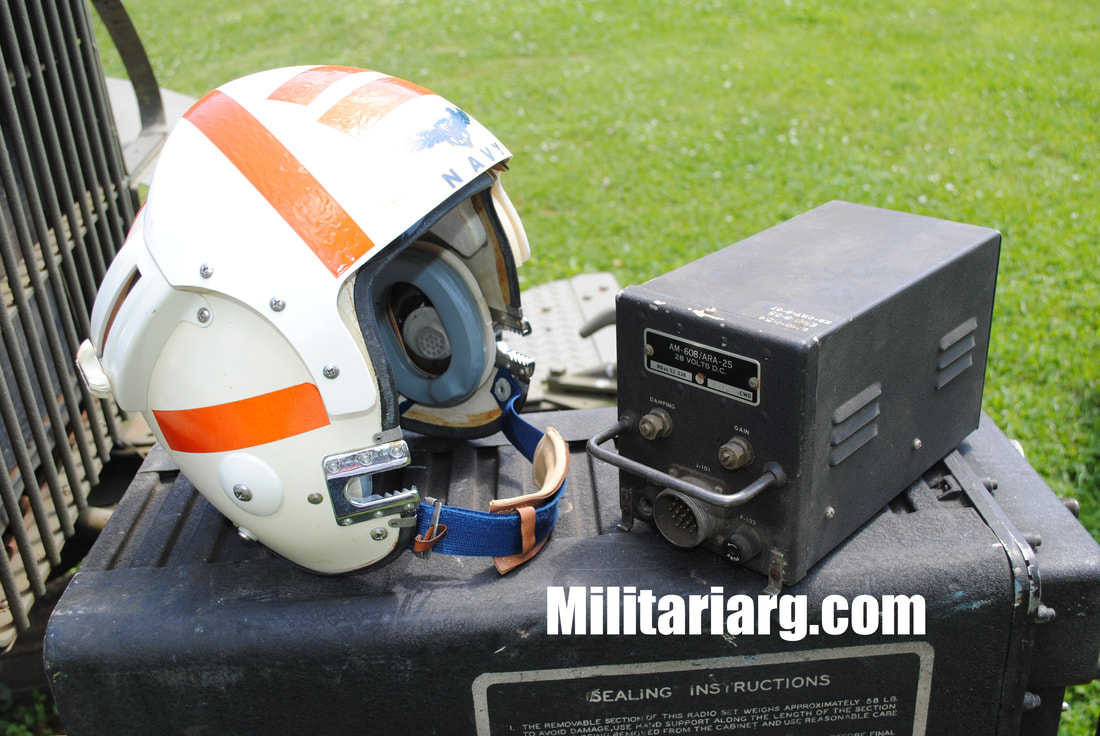
The Control Box C-628A/ARC-27 is the primary cockpit control head for the AN/ARC-27 UHF Radio Set, a standard communication system in U.S. military aircraft of the Korean and Vietnam War eras, such as the F-86 Sabre and A-4 Skyhawk.
AM-608 control amplifier for UHF ARC-27 Radio. The AM-608 control amplifier is a specific component of the vintage AN/ARC-27 UHF Radio Set, which was widely used in aircraft like the F-86 Sabre and the A-4 Skyhawk. This unit serves to amplify the audio and control signals for the radio system.
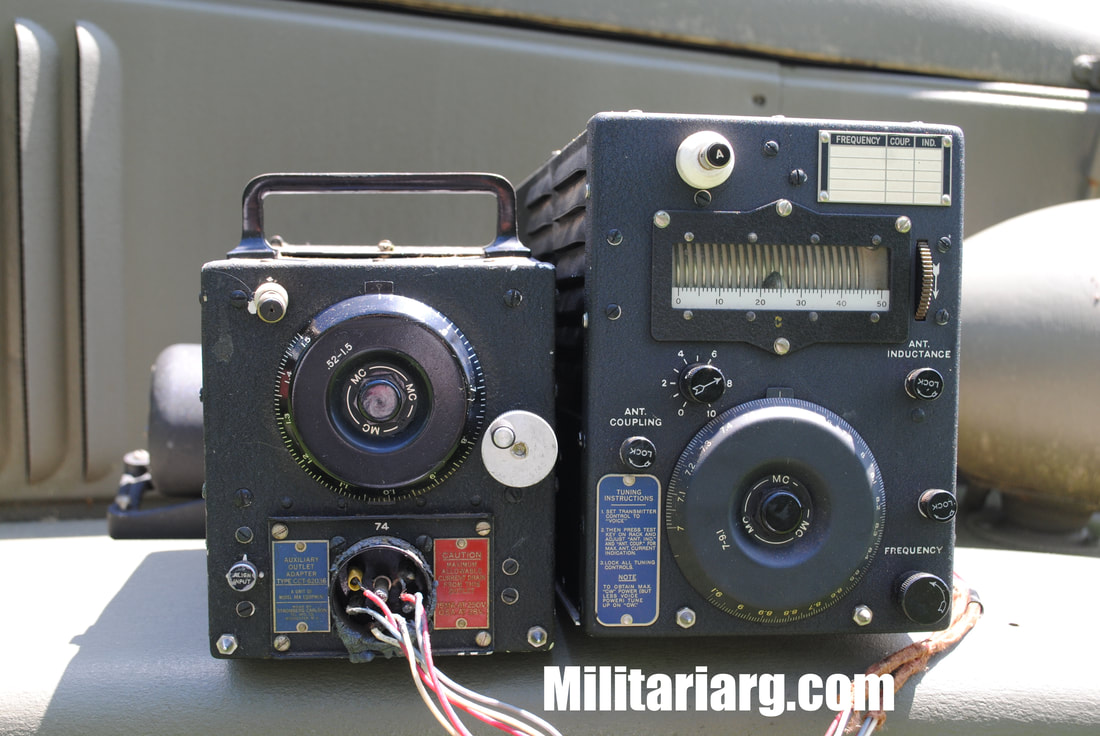
ARC-5 Radio Set.
Receiver and transmitter from the US Navy in WWII. Similar sets were used in the other military branches, with the same outward appearance but different internal components.
The AN/ARC-5 Radio Set, also known as the "Command Set," was the standard modular high-frequency (HF) and very high-frequency (VHF) radio system used in U.S. Navy and Army Air Forces aircraft during and after World War II. The system consists of separate, interchangeable receivers, transmitters, and control boxes, all of which are available as surplus components.
HS-33 Headset USAAF:
The HS-33 Headset was a crucial piece of communication gear for U.S. Army Air Forces (USAAF) bomber and fighter crews during World War II and into the Korean War era. It was a "low impedance" headset used to provide clear audio in high-noise environments.
H-79/AIC Headset (Roanwell Corp)
The H-79/AIC headset by the Roanwell Corporation is a vintage, double-sided military aviation headset with a boom microphone, primarily used in high-noise environments in various aircraft. It was often supplied with the M-33 or M-33A microphone element. Displays relative bearing to a non-directional beacon as part of the AN/ARN-6 radio compass system.
Used with the AN/ARN-6 military aircraft radio direction finder system.
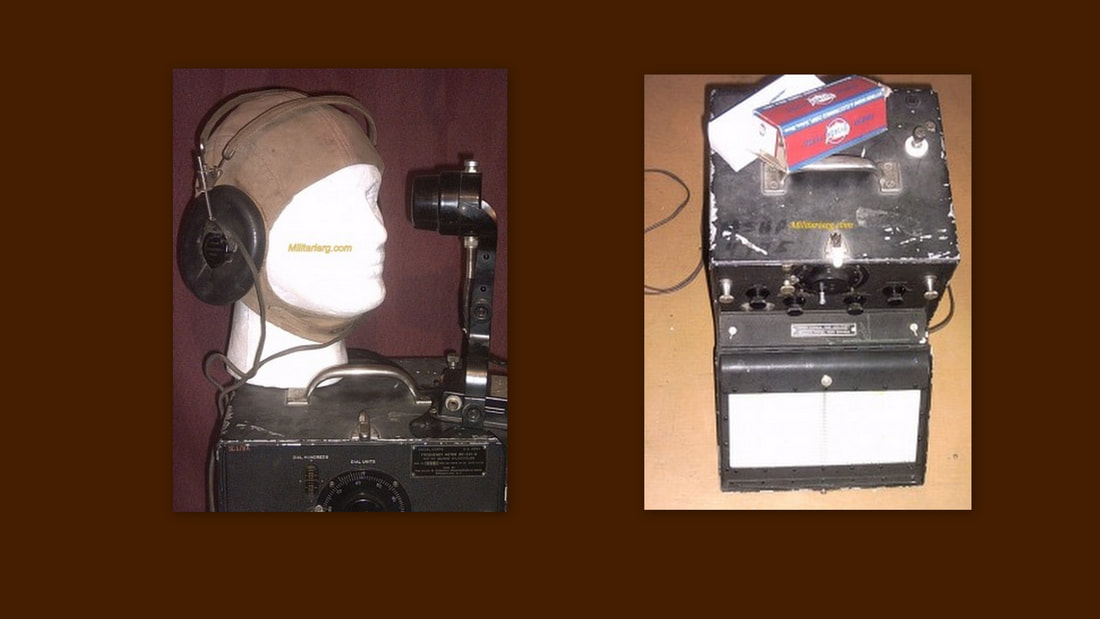
BC 221-M Frequency Meter Unit:
The BC-221-M Frequency Meter Unit is a vintage heterodyne frequency meter and signal generator developed for the U.S. Army Signal Corps during World War II. Manufactured primarily by Bendix Aviation Corporation, it was crucial for accurately calibrating military radio transmitters and receivers in the field.
This equipment allowed for simple, accurate, portable frequency callibration in labs and in the field. It was used for everything from aircraft radio tranmitters to radio receivers in the range of 125 to 20,000 kcs. It uses Hytron radio tubes which were made by Hytron Radio & Electronics of Salem, Mass (manufacturers of radio tubes since 1921). The headset is from the WWII era and has "TRIMM COMMERCIAL INC" over "Libertyville, IL, USA". It is quite possible that the Soviets copied this model in their USSR CH4-1. The CH4-1 looks very similar to the US SCR-211 but operationally it is more like the BC-221.
C-38/ARC-5 Radio Control (Grumman F6F Hellcat). WWII NOS:
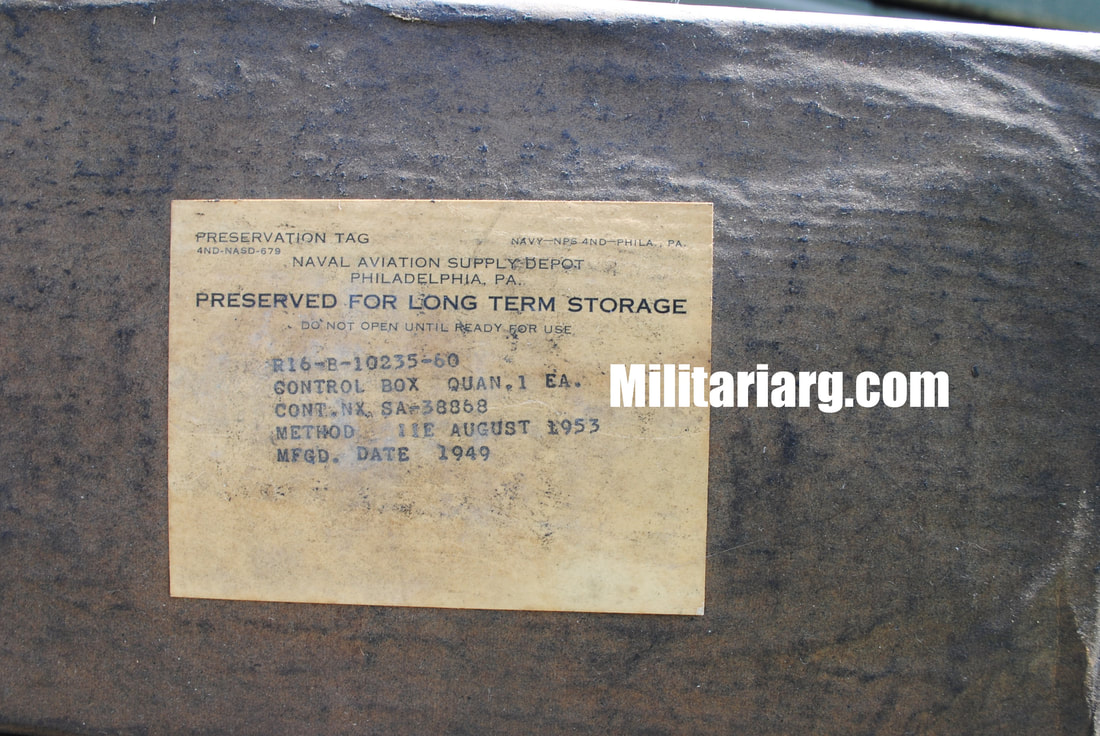
The C-38/ARC-5 radio control box is part of the AN/ARC-5 Command Set, the standard WWII U.S. Navy aircraft radio system used extensively in the Grumman F6F Hellcat, F4U Corsair, and other aircraft. It is typically a simple control panel with volume controls for multiple receivers rather than frequency tuning capabilities, as the main radio units were remotely mounted.
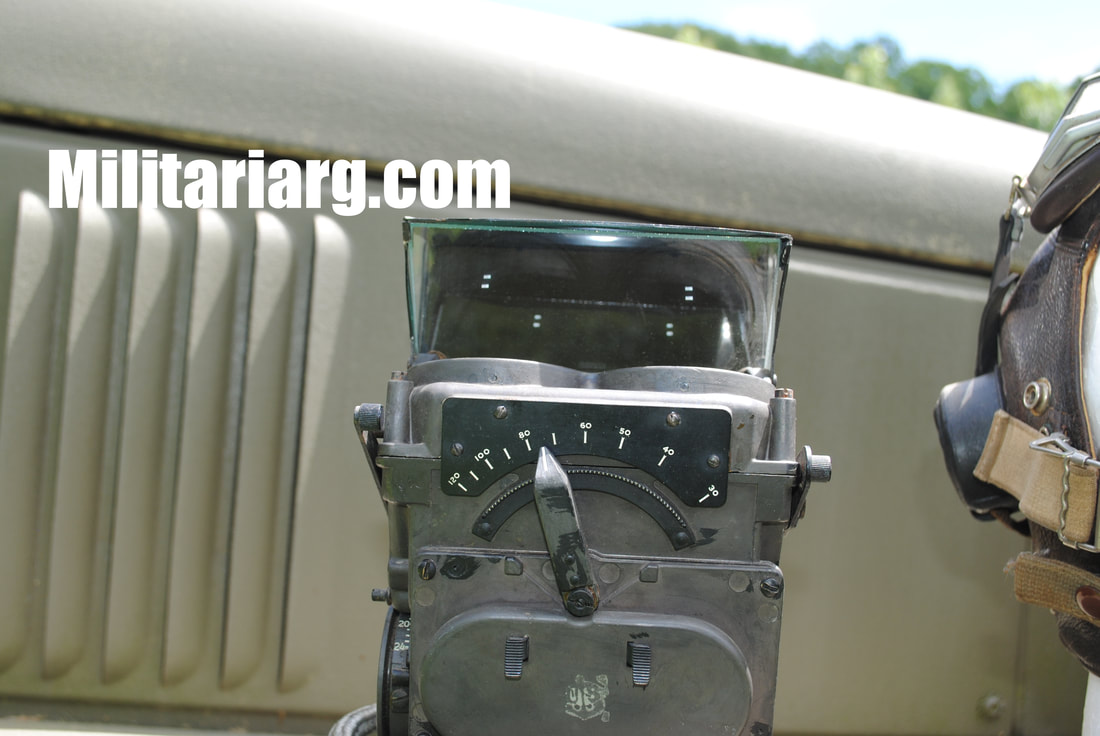
WWII Ferranti Type. US Navy Mk.18 Gun Sight. This Giro Type Sight was copied by the US navy for planes during the Korean War.
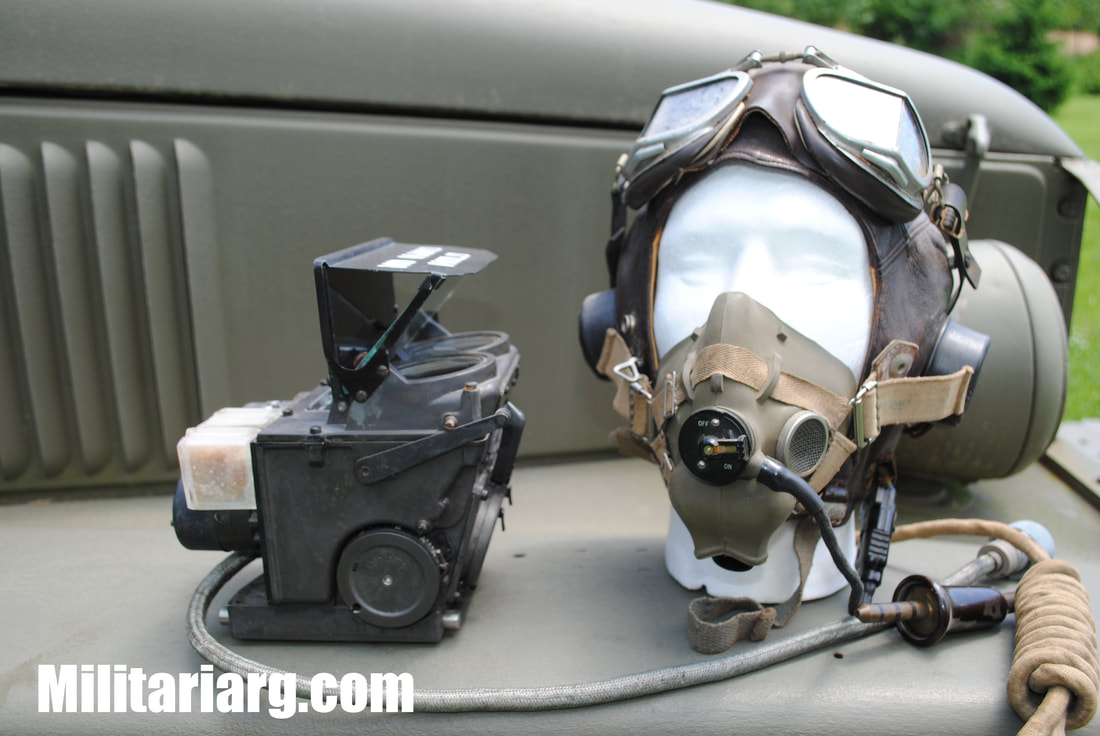
The US Navy Mk.18 Gun Sight is a direct American duplicate of the British Ferranti Mark II Gyro Gun Sight (GGS), licensed and produced under reverse lend-lease. Developed during WWII, this "computing" sight uses an internal spinning gyroscope to automatically calculate the necessary "lead" (deflection) required to hit a moving target.
Here you can see the Ferranti Sight. The photo is from a 1951 Argentine movie. The plane is a Gloster Meteor.
F-86 Sabre and F-104 Throttle and Control Stick
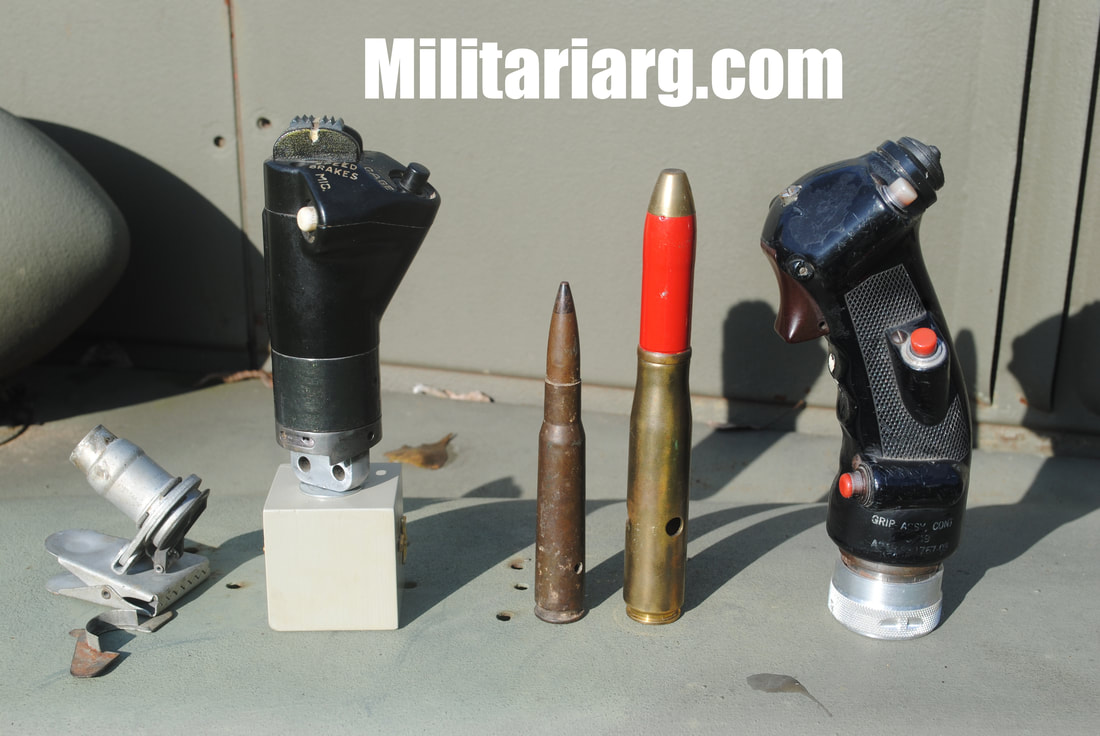
Original F-86 Sabre and F-104 Starfighter throttles and control sticks are vintage aircraft parts primarily available from aviation surplus retailers and online marketplaces. The F-86 often utilized the B-8 or a similar stick grip, while the F-104 also used the B-8 style grip in some versions. The throttle quadrants for both aircraft are unique to their design, with some commonality in specific components across Canadian-built versions.
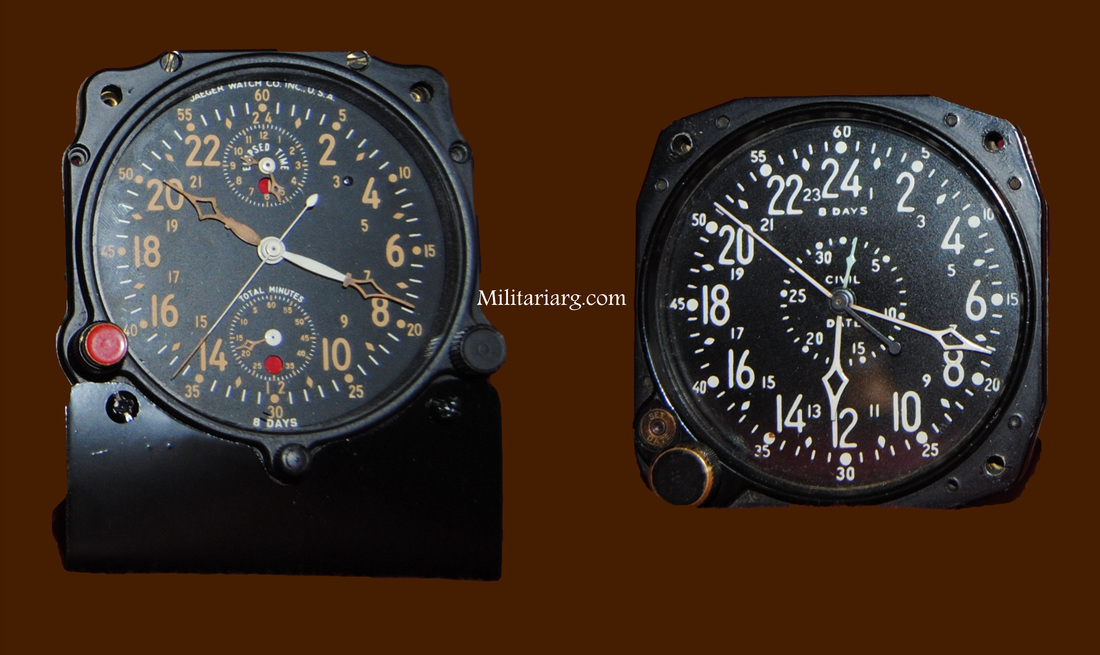
Left: USN Jaeger LeCoultre clock with red knob used in many aircraft in WWII. Right: Waltham clock (USN Corsair Fighter among others).
The USN Jaeger LeCoultre clock with the red knob is likely a Chronoflite Elapsed Time Clock, commonly referred to by its military specification numbers, such as the Type A-10 (for the US Army Air Corps) or the R88-C-570-10 or 88-C-565 (for the US Navy, or USN).
The Waltham aircraft clock used in the F4U Corsair and other U.S. Navy aircraft during WWII is the Waltham 8-day Civil Date Indicator Aeronaval (CDIA) clock. This mechanical instrument was a staple in many US military aircraft of the era.
The USN Jaeger LeCoultre clock with the red knob is likely a Chronoflite Elapsed Time Clock, commonly referred to by its military specification numbers, such as the Type A-10 (for the US Army Air Corps) or the R88-C-570-10 or 88-C-565 (for the US Navy, or USN).
The Waltham aircraft clock used in the F4U Corsair and other U.S. Navy aircraft during WWII is the Waltham 8-day Civil Date Indicator Aeronaval (CDIA) clock. This mechanical instrument was a staple in many US military aircraft of the era.
Korean War Instrument Panel Control Indicators (F-84 Thunderjet - F-86 Sabre, F9F Panther - B-47 Stratojet - F100 Super Sabre - F-104 Starfighter and others)
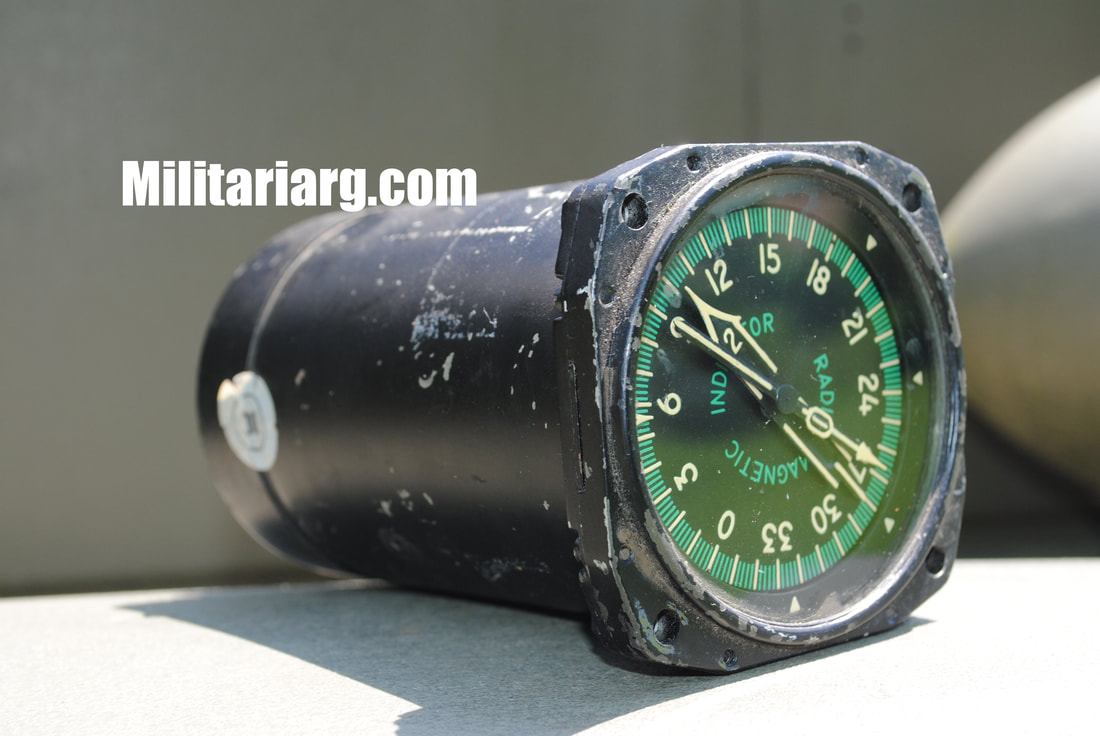
ID-250 / ARN. Republic F-84F Thunderstreak and RF-84F Thunderflash , North American F-86F , F-86H Sabre and F-86D/K/L Sabre Dog , F-100C /D/F Super Sabre as well as in T-33 .
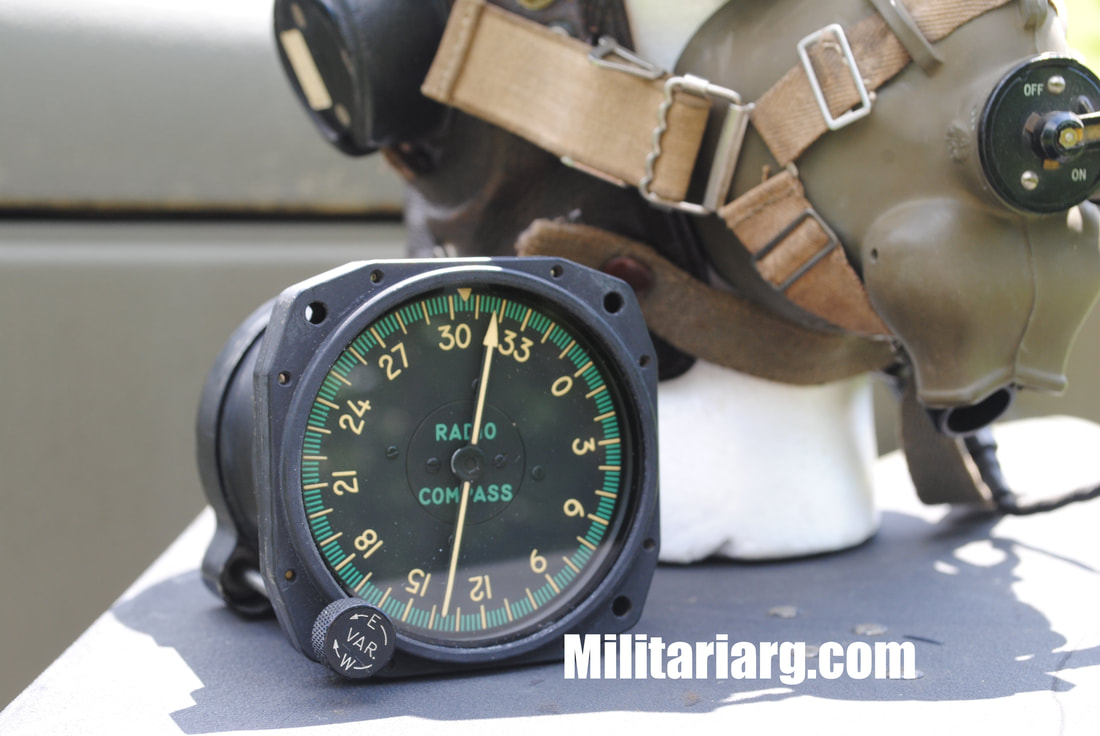
The ID-91B/ARN-6 is a radio compass indicator used in military aircraft Automatic Direction Finder (ADF) systems, primarily manufactured by the Kearfott Company and Lear Siegler. It displays the relative bearing to non-directional beacons (NDB).
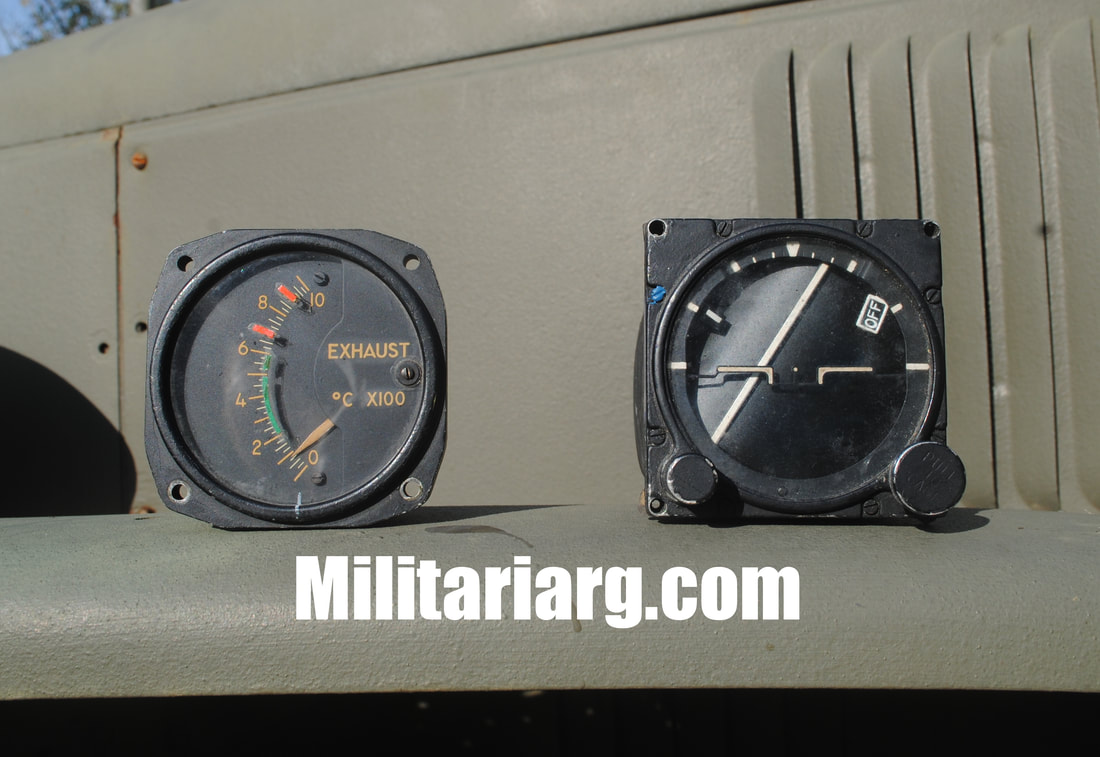
Lewis Engine Co Exhaust Temp Thermocouple indicator and Bendix Eclipse Pioneer Attitude Gyro Horizon Indicator.
The Lewis Engineering Company produces various exhaust temperature thermocouple indicators for aircraft, commonly referred to as EGT gauges. These indicators are typically sold as surplus or used aviation parts under specific part numbers like 152BL714A or 76B700.
Bendix Eclipse Pioneer produced several models of Attitude Gyro Horizon Indicators, also known as artificial horizons, which are essential flight instruments in aircraft. These vintage parts are available from aviation surplus retailers and online marketplaces.
The Lewis Engineering Company produces various exhaust temperature thermocouple indicators for aircraft, commonly referred to as EGT gauges. These indicators are typically sold as surplus or used aviation parts under specific part numbers like 152BL714A or 76B700.
Bendix Eclipse Pioneer produced several models of Attitude Gyro Horizon Indicators, also known as artificial horizons, which are essential flight instruments in aircraft. These vintage parts are available from aviation surplus retailers and online marketplaces.
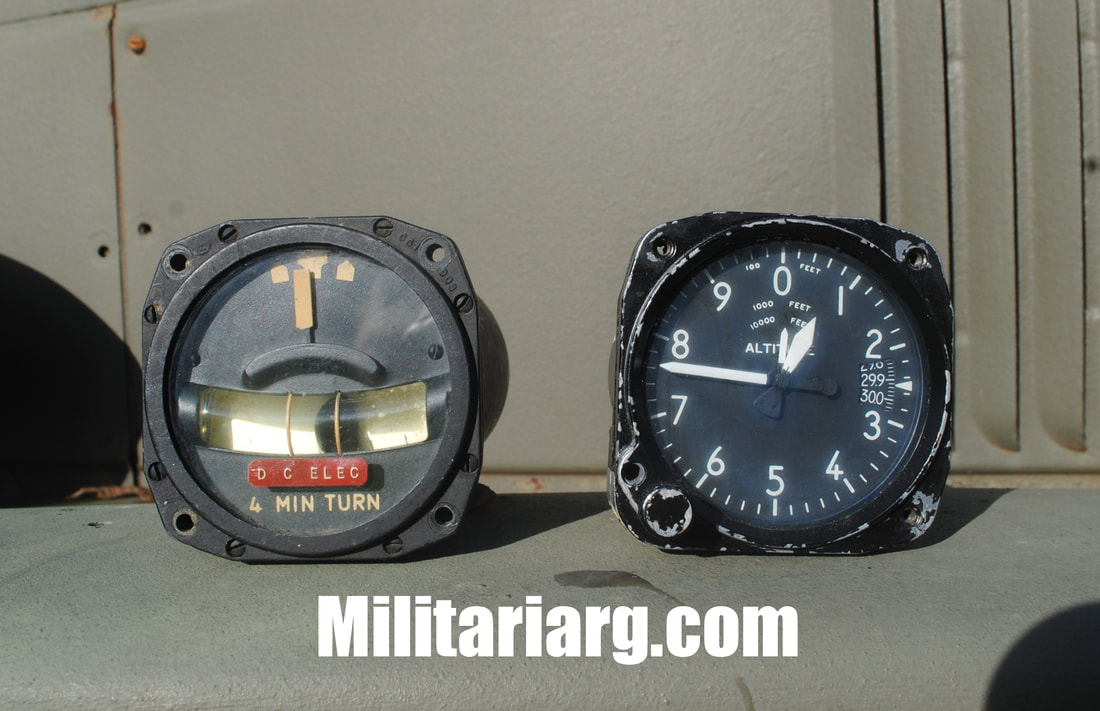
Turn and Slip Indicator RC 4 Minute DC Electric and Kollsman Altitude Indicator.
The RC-4 4 Minute Turn and Slip Indicator is a vintage, direct current (DC) electric aircraft instrument, most notably manufactured by R.C. Allen Business Machines and used to indicate the aircraft's rate of turn and coordination during flight. The "4 minute" designation signifies that the hash marks on the indicator correspond to a half-standard rate turn, or a full 360-degree turn in four minutes.
Kollsman produced a variety of altitude indicators, more commonly known as altimeters, which are pressure-sensitive instruments that measure height above sea level for aviation applications. These are available in many models, ranging from vintage mechanical gauges to more modern servo-assisted units.
The RC-4 4 Minute Turn and Slip Indicator is a vintage, direct current (DC) electric aircraft instrument, most notably manufactured by R.C. Allen Business Machines and used to indicate the aircraft's rate of turn and coordination during flight. The "4 minute" designation signifies that the hash marks on the indicator correspond to a half-standard rate turn, or a full 360-degree turn in four minutes.
Kollsman produced a variety of altitude indicators, more commonly known as altimeters, which are pressure-sensitive instruments that measure height above sea level for aviation applications. These are available in many models, ranging from vintage mechanical gauges to more modern servo-assisted units.
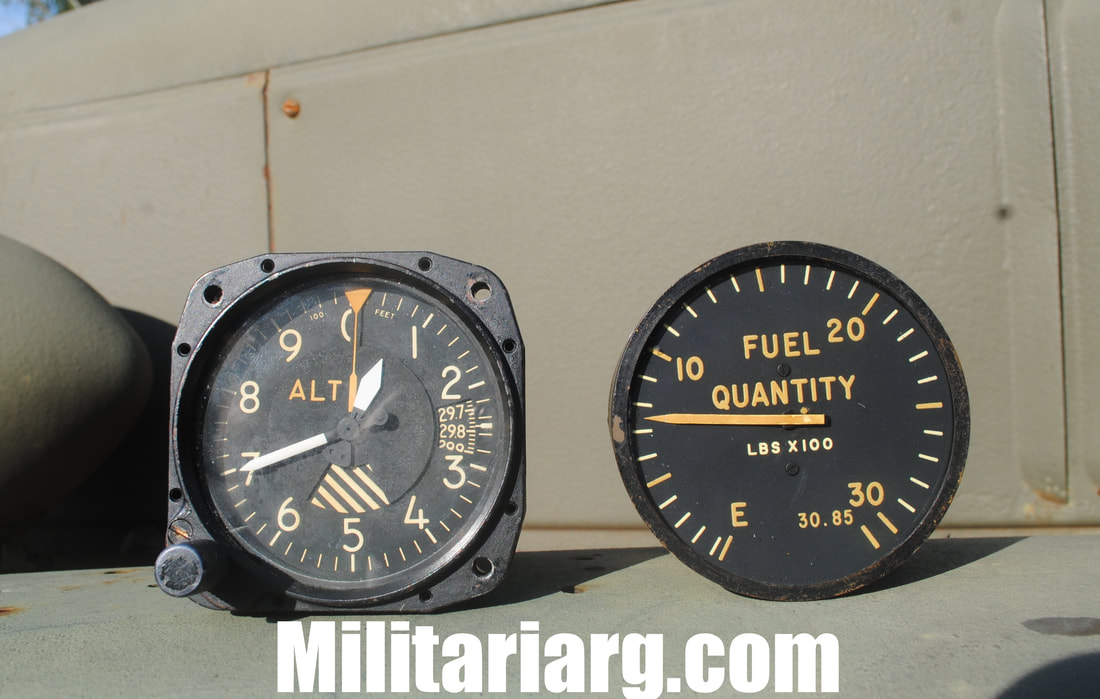
Altimeter Pressure and The Liquidometer Corp Fuel Quantity Indicator.
Aviation altimeters are essentially highly sensitive pressure gauges that measure atmospheric pressure to display altitude in feet or meters. They are available in both analog and digital formats, ranging from simple, non-certified gauges to advanced, certified (TSO'd) units used in commercial and general aviation aircraft.
The Liquidometer Corp Fuel Quantity Indicator is a brand of aircraft instrument that displays the amount of fuel remaining in the tanks, utilizing various technologies such as capacitance or float systems. These indicators are widely used in both general and military aviation aircraft, available in many different part numbers to fit specific aircraft models and power systems.
Aviation altimeters are essentially highly sensitive pressure gauges that measure atmospheric pressure to display altitude in feet or meters. They are available in both analog and digital formats, ranging from simple, non-certified gauges to advanced, certified (TSO'd) units used in commercial and general aviation aircraft.
The Liquidometer Corp Fuel Quantity Indicator is a brand of aircraft instrument that displays the amount of fuel remaining in the tanks, utilizing various technologies such as capacitance or float systems. These indicators are widely used in both general and military aviation aircraft, available in many different part numbers to fit specific aircraft models and power systems.
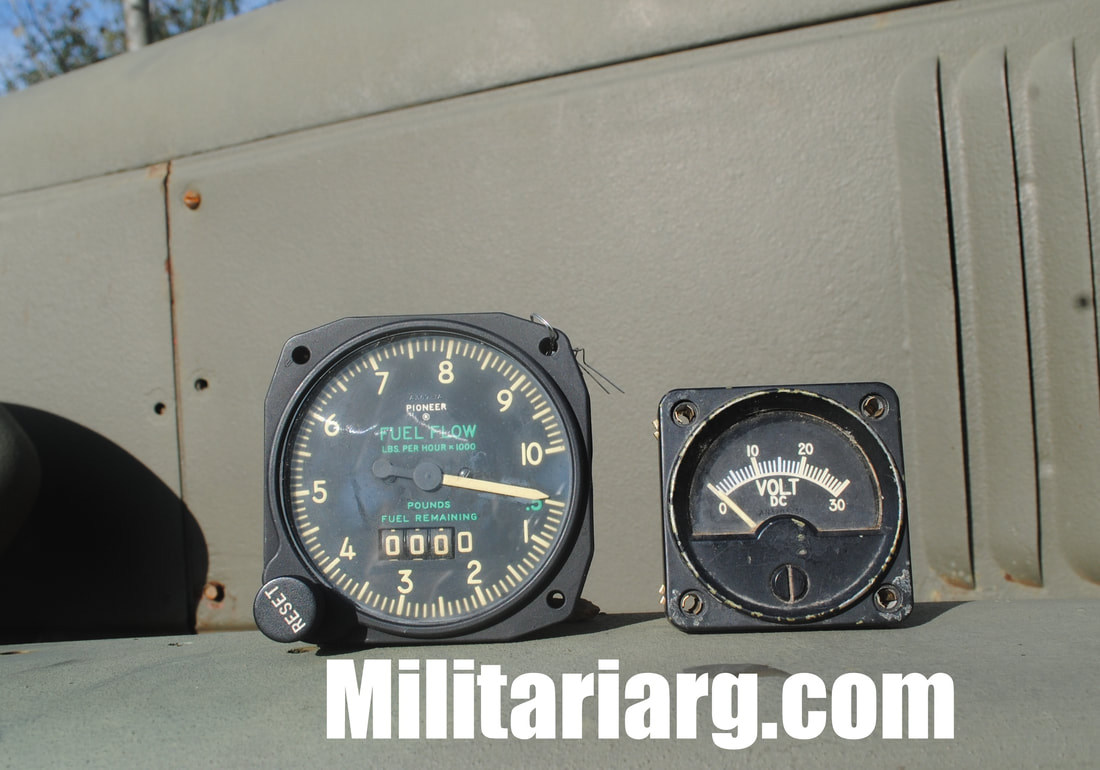
Fuel Flow Meter Pioneer and Volt Meter Indicator.
Bendix Eclipse Pioneer, often referred to simply as Pioneer, manufactured several models of fuel flow indicators for aviation use, which were designed to monitor the rate of fuel consumption in aircraft engines. These vintage analog gauges typically work in conjunction with a separate fuel flow transmitter unit.
Aviation volt meter indicators (voltmeters) are essential instruments used to monitor the health of an aircraft's electrical system, including battery voltage and alternator output. They are available in both analog and digital formats, with certified (TSO'd/PMA'd) and non-certified options depending on the aircraft's needs
Bendix Eclipse Pioneer, often referred to simply as Pioneer, manufactured several models of fuel flow indicators for aviation use, which were designed to monitor the rate of fuel consumption in aircraft engines. These vintage analog gauges typically work in conjunction with a separate fuel flow transmitter unit.
Aviation volt meter indicators (voltmeters) are essential instruments used to monitor the health of an aircraft's electrical system, including battery voltage and alternator output. They are available in both analog and digital formats, with certified (TSO'd/PMA'd) and non-certified options depending on the aircraft's needs
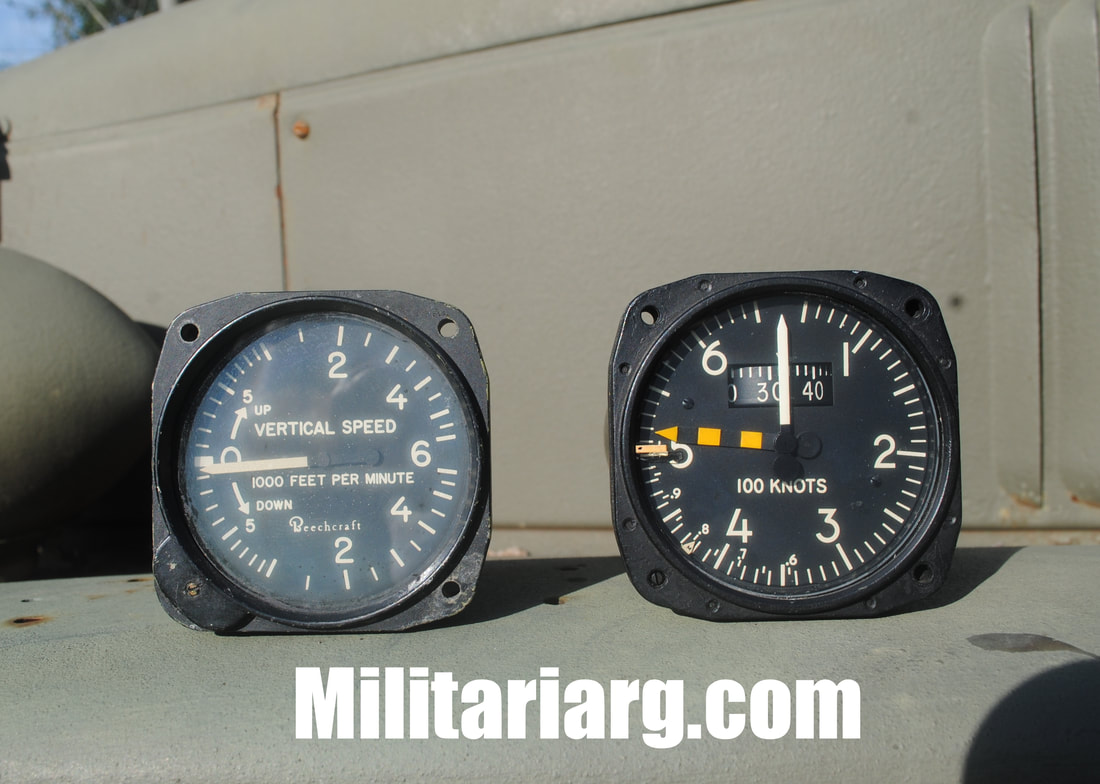
Beechcraft C-45 Type VSI Rate of Climb Vertical Speed Gauge and 100 Knots Sperry Type L7A/C Pitot Static AirSpeed Indicator.
The Beechcraft C-45 Type VSI Rate of Climb Vertical Speed Gauge is a classic aviation instrument that indicates the aircraft's rate of climb or descent in feet per minute (FPM). These gauges were part of the standard cockpit instrumentation for the Beechcraft C-45 Expeditor (military version of the Model 18).
The Sperry Type L7A/C Pitot Static Airspeed Indicator is an aviation instrument used in various military and commercial aircraft, typically manufactured by Kollsman for Sperry systems. The specific range of 0-100 knots appears to be a user-specified requirement for a particular application, as the standard L-7A indicator usually has a much wider range (e.g., 0-650 knots).
The Beechcraft C-45 Type VSI Rate of Climb Vertical Speed Gauge is a classic aviation instrument that indicates the aircraft's rate of climb or descent in feet per minute (FPM). These gauges were part of the standard cockpit instrumentation for the Beechcraft C-45 Expeditor (military version of the Model 18).
The Sperry Type L7A/C Pitot Static Airspeed Indicator is an aviation instrument used in various military and commercial aircraft, typically manufactured by Kollsman for Sperry systems. The specific range of 0-100 knots appears to be a user-specified requirement for a particular application, as the standard L-7A indicator usually has a much wider range (e.g., 0-650 knots).
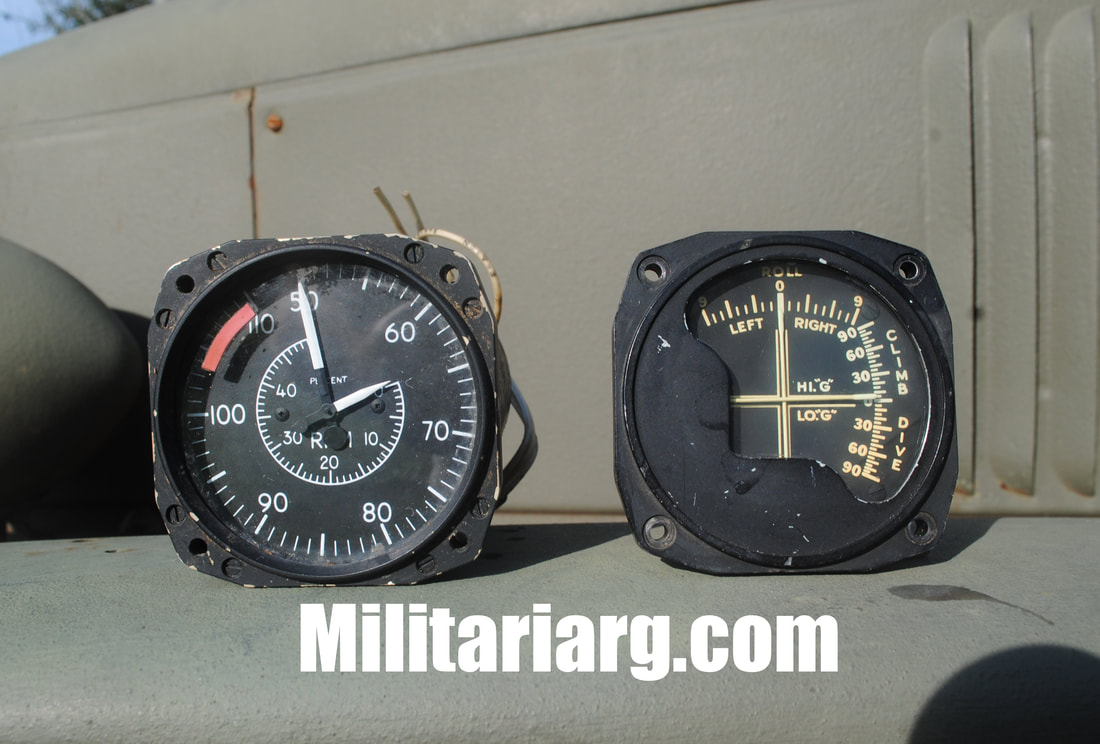
Electrical Tachometer Indicator 8DJ82CAE AMETEK and F-100 Super Sabre Climb Dive Indicator.
The AMETEK 8DJ82CAE electrical tachometer indicator is an aviation instrument used to display engine rotational speed in revolutions per minute (RPM). It is an electrical gauge that receives signals from a magnetic sensor on the engine to provide an accurate reading.
A Climb Dive Indicator is an informal or older name for the aviation instrument formally known as a Vertical Speed Indicator (VSI) or Rate of Climb and Descent Indicator (RCDI). This instrument displays the aircraft's rate of climb or descent, typically in feet per minute (FPM).
The AMETEK 8DJ82CAE electrical tachometer indicator is an aviation instrument used to display engine rotational speed in revolutions per minute (RPM). It is an electrical gauge that receives signals from a magnetic sensor on the engine to provide an accurate reading.
A Climb Dive Indicator is an informal or older name for the aviation instrument formally known as a Vertical Speed Indicator (VSI) or Rate of Climb and Descent Indicator (RCDI). This instrument displays the aircraft's rate of climb or descent, typically in feet per minute (FPM).
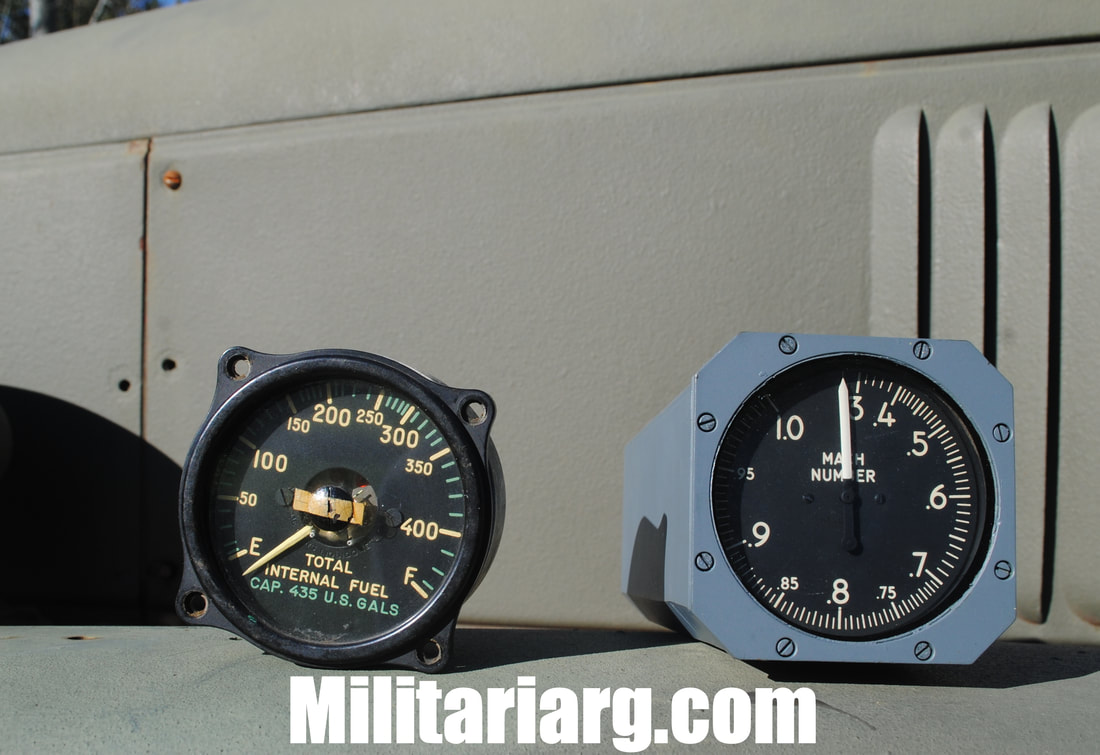
USAF F-86 Sabre Fuel Gauge Indicator and Kollsman Machmeter.
A fuel gauge indicator for aviation is an instrument that displays the amount of fuel in the tanks, which is a critical safety instrument that works in conjunction with a fuel sending unit inside the tank. They are available in various analog and digital formats, with both certified (TSO'd/PMA'd) and non-certified options.
Kollsman manufactured various machmeters (or Mach speed indicators) designed for high-performance aircraft to indicate the Mach number, which is the ratio of the aircraft's true airspeed to the local speed of sound. These instruments were critical for safe high-altitude, high-speed flight and are available as surplus items.
A fuel gauge indicator for aviation is an instrument that displays the amount of fuel in the tanks, which is a critical safety instrument that works in conjunction with a fuel sending unit inside the tank. They are available in various analog and digital formats, with both certified (TSO'd/PMA'd) and non-certified options.
Kollsman manufactured various machmeters (or Mach speed indicators) designed for high-performance aircraft to indicate the Mach number, which is the ratio of the aircraft's true airspeed to the local speed of sound. These instruments were critical for safe high-altitude, high-speed flight and are available as surplus items.
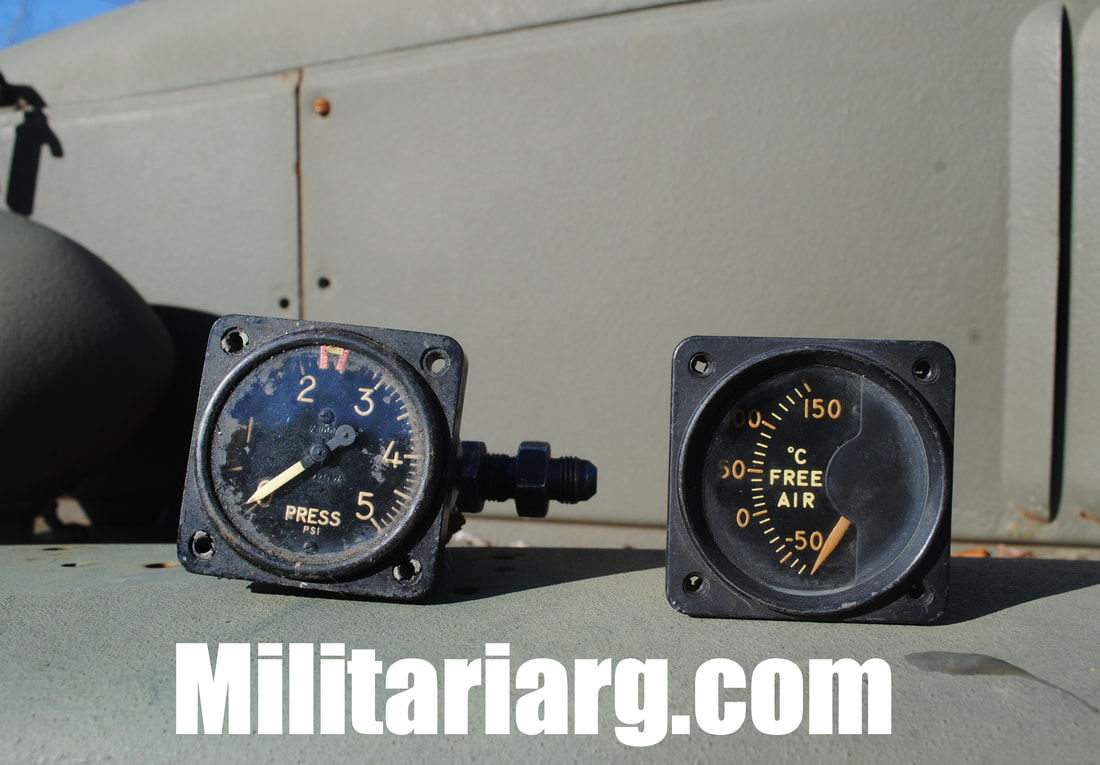
F-104 Starfighter Pressure Gauge Hydraulic Hatch and Free Air Temp by Lewis Eng. Co.
A hydraulic hatch pressure gauge is a rugged pressure gauge, typically liquid-filled (glycerin) for durability against vibration and shock, which is used to monitor the pressure within the hydraulic system that operates a hatch mechanism.
The Free Air Temperature (FAT) indicators manufactured by the Lewis Engineering Company are electrical resistance thermometers used in aircraft to monitor external ambient air temperature. These instruments are typically vintage or surplus and are often found in "as-removed" condition for restoration or experimental use.
A hydraulic hatch pressure gauge is a rugged pressure gauge, typically liquid-filled (glycerin) for durability against vibration and shock, which is used to monitor the pressure within the hydraulic system that operates a hatch mechanism.
The Free Air Temperature (FAT) indicators manufactured by the Lewis Engineering Company are electrical resistance thermometers used in aircraft to monitor external ambient air temperature. These instruments are typically vintage or surplus and are often found in "as-removed" condition for restoration or experimental use.
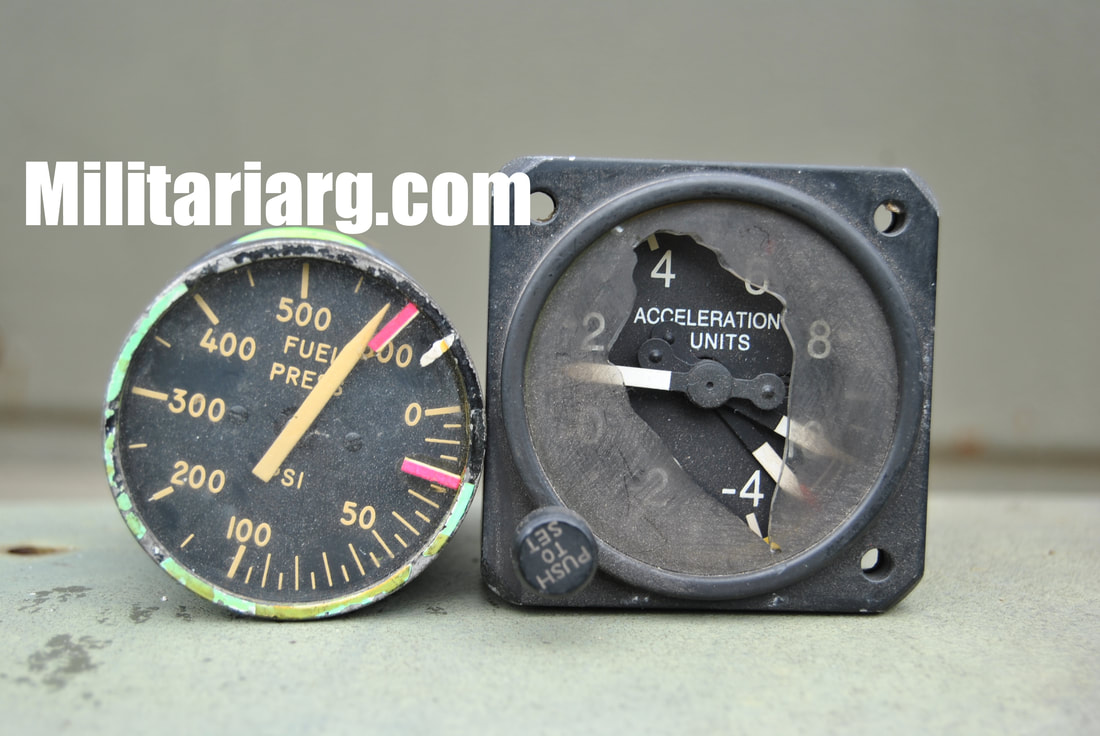
Bendix Fuel Pressure and Falcon Aircraft Acceleration Units Indicator.
Bendix Aviation Corporation and its Eclipse Pioneer Division produced numerous models of fuel pressure indicators for various military and civilian aircraft. These instruments are designed to monitor fuel pressure within the engine system, usually in pounds per square inch (PSI).
An Acceleration Units Indicator, commonly known as a G-Meter or Accelerometer, is an instrument that measures the instantaneous load factor (G-force) acting on an aircraft along its vertical axis. These are vital in aerobatic, military, and high-performance aircraft to prevent structural overstress.
Bendix Aviation Corporation and its Eclipse Pioneer Division produced numerous models of fuel pressure indicators for various military and civilian aircraft. These instruments are designed to monitor fuel pressure within the engine system, usually in pounds per square inch (PSI).
An Acceleration Units Indicator, commonly known as a G-Meter or Accelerometer, is an instrument that measures the instantaneous load factor (G-force) acting on an aircraft along its vertical axis. These are vital in aerobatic, military, and high-performance aircraft to prevent structural overstress.
Korean War Era, Early Jet, Nose Tire Gear. B.F Goodrich Co.

B.F. Goodrich Co. (now part of Michelin) manufactures a wide variety of nose wheel tires and wheel assemblies for aircraft, designed to handle the specific loads and stresses of ground operations. The exact part needed depends on the aircraft make and model, as different planes use different sizes and types.
B.F. Goodrich Co. was a primary supplier of aircraft tires and wheel assemblies for numerous U.S. military jets during the Korean War Era (early 1950s), notably for frontline fighters like the F-86 Sabrejet and the F-84 Thunderjet. The specific part you need will depend on the exact aircraft model. B.F. Goodrich developed advanced tires during this period, featuring new nylon laminate and "Dimple Tread" designs to resist tread separation caused by high-speed operations