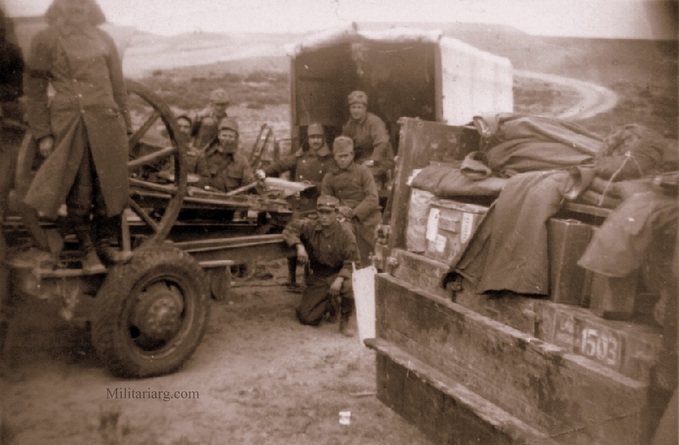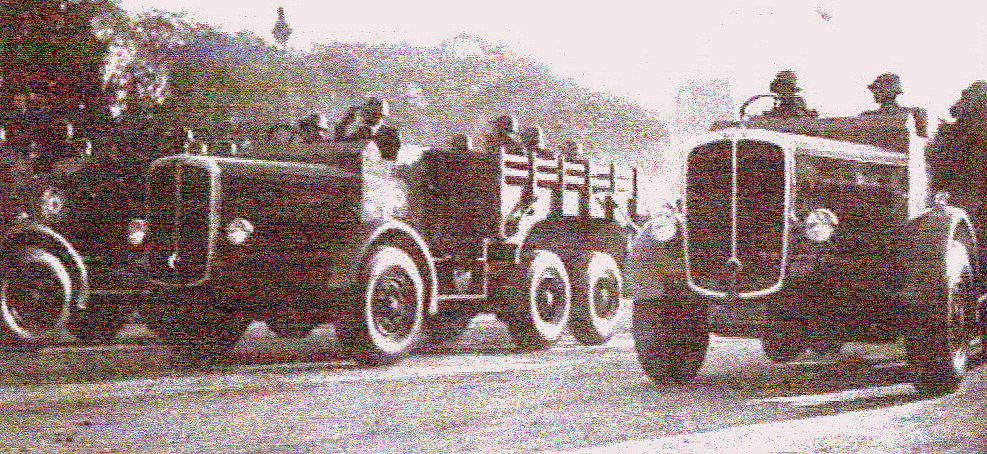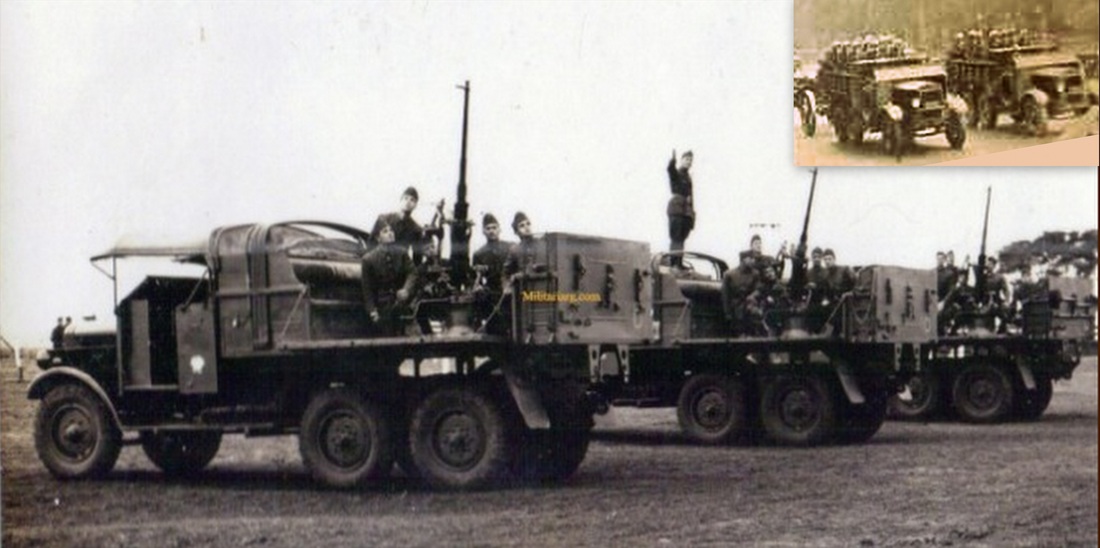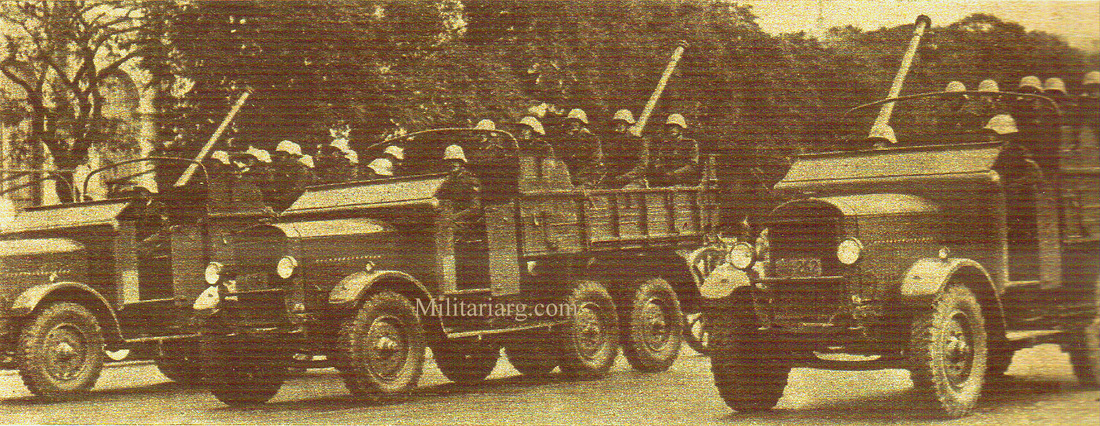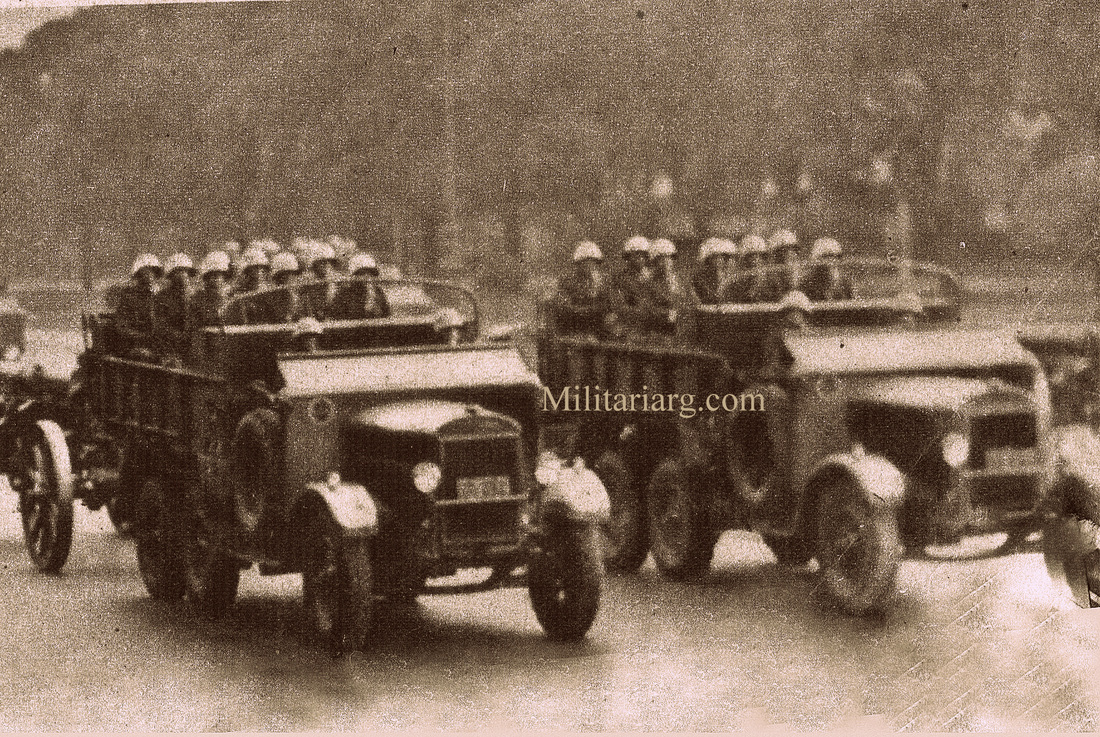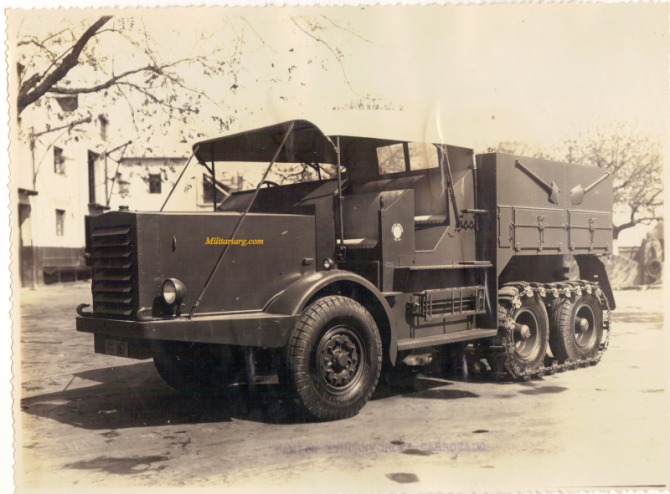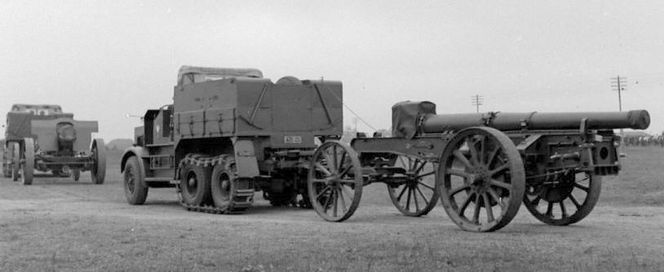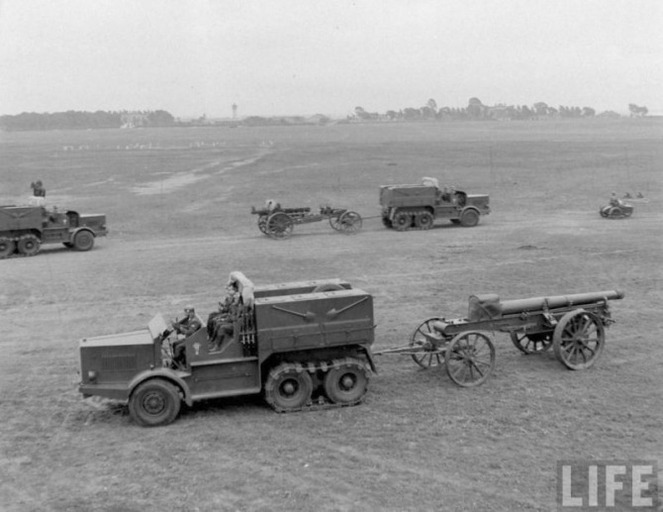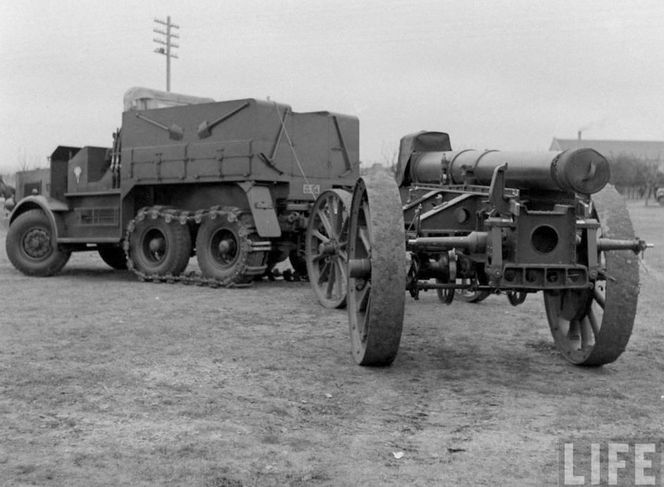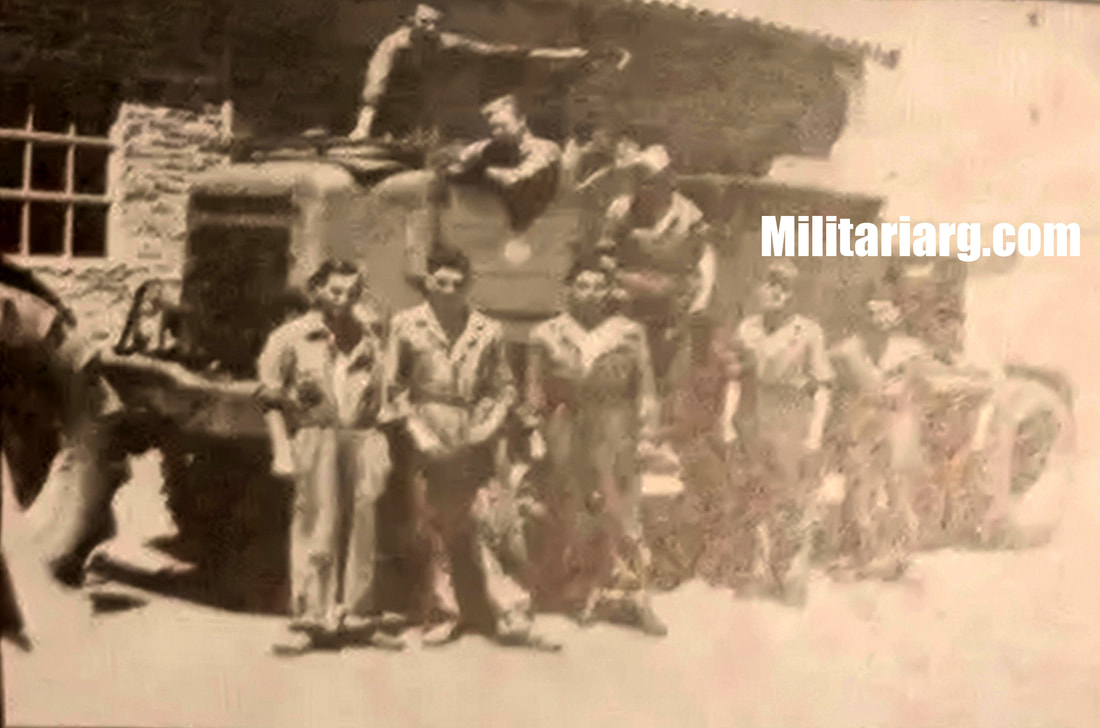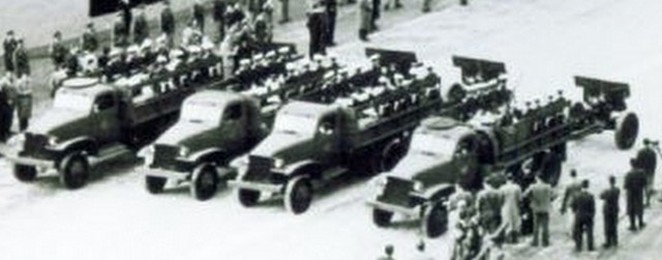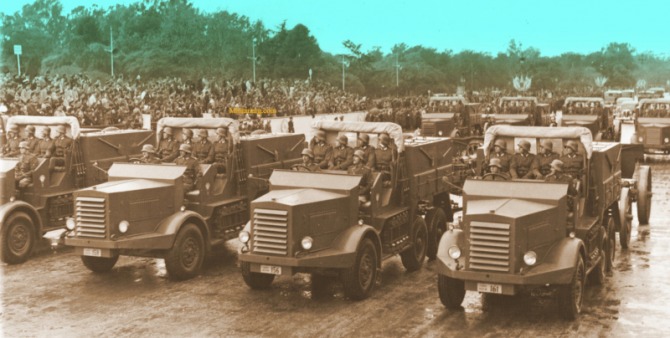
1920/30s Crossley 20 (Staff) and 25 (Armored), Renault 10 cv . Citroen Kegresse P17, P19 half-track. FWD 3B.
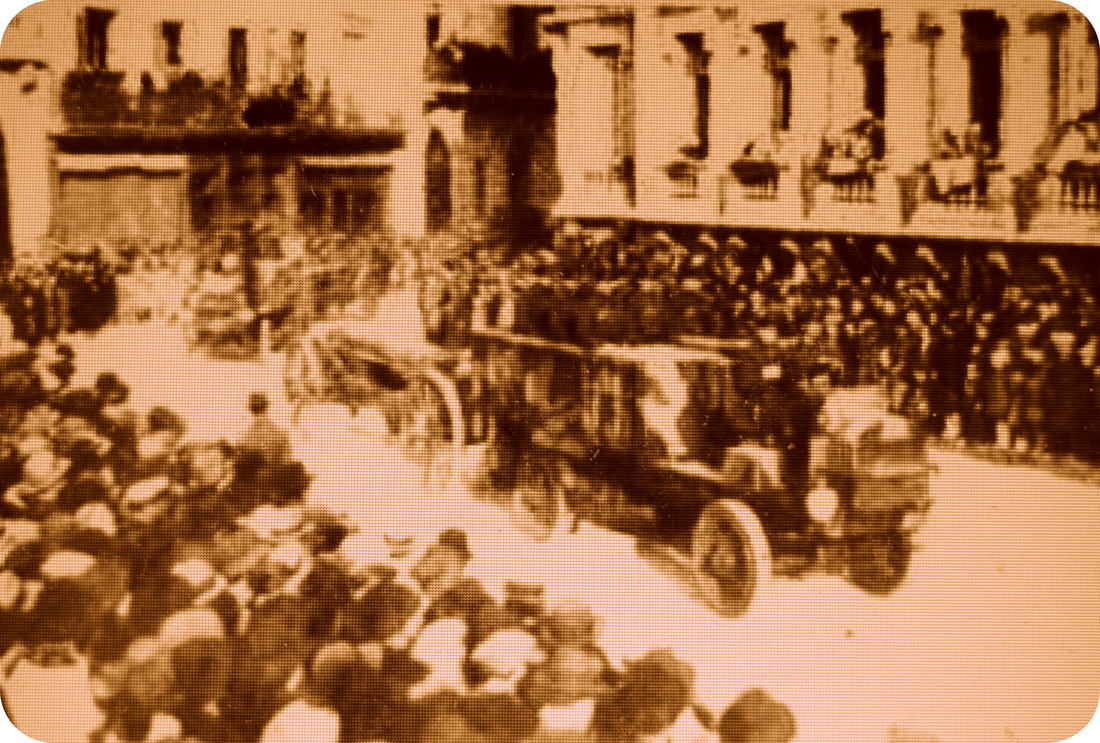
Crossley 20/25 HP Command/Staff car and FWD B3 Lorry. In addition to armored cars, the Argentine Army utilized. Crossley 20/25 HP and 25/30 HP commercial-style vehicles in the 1920s, primarily as staff cars and light transport.
The Argentine Army operated both the Renault 10 CV "Chevaux-Vapeur" (Steam Horses) during the 1920s as part of their early mechanization strategy. In the 1920s and 30s, the Argentine Army was a pioneer in South America for testing "halftrack" technology, importing both the Citroën-Kégresse and the Renault 12 HP (12 cwt) for evaluation in the rugged terrain of the Chaco and the Andes..
The "Sahara" Connection.. These were based on the vehicles Renault used to cross the Sahara Desert. They featured dual rear wheels on two axles (six wheels total) to increase the "footprint" on soft ground. They were technically 6x4 vehicles, although they were often called "six-wheelers.
The standard Renault 10 CV was typically sold as a saloon or a "Torpedo" touring car for civilian or standard military staff use on established roads. It was usually an open touring car with low sides, minimal or no B-pillars, and a folding or detachable soft top. The difference is that "4-Wheeled Torpedo" refers to the body style of the car, while "6-Wheeled Sahara" was the informal name for a heavily modified off-road chassis designed for expeditions. The "Sahara" model could actually have a "torpedo" body on it.
Renault 6-wheeled and the Citroen Kegresse (Half-track), both were originally based on civilian class cars (Renault 10cv type Kz "Torpedo" and the Citroen type B2 10HP), that were heavily modified to compete in a prestigious "race" to cross the Sahara Desert in the early 1920s.
The standard Renault 10 CV was typically sold as a saloon or a "Torpedo" touring car for civilian or standard military staff use on established roads. It was usually an open touring car with low sides, minimal or no B-pillars, and a folding or detachable soft top. The difference is that "4-Wheeled Torpedo" refers to the body style of the car, while "6-Wheeled Sahara" was the informal name for a heavily modified off-road chassis designed for expeditions. The "Sahara" model could actually have a "torpedo" body on it.
Renault 6-wheeled and the Citroen Kegresse (Half-track), both were originally based on civilian class cars (Renault 10cv type Kz "Torpedo" and the Citroen type B2 10HP), that were heavily modified to compete in a prestigious "race" to cross the Sahara Desert in the early 1920s.
Argentine Service. The Army bought a small batch of these in the late 1920s for reconnaissance and light transport.
Ezeiza/Palomar Tests.
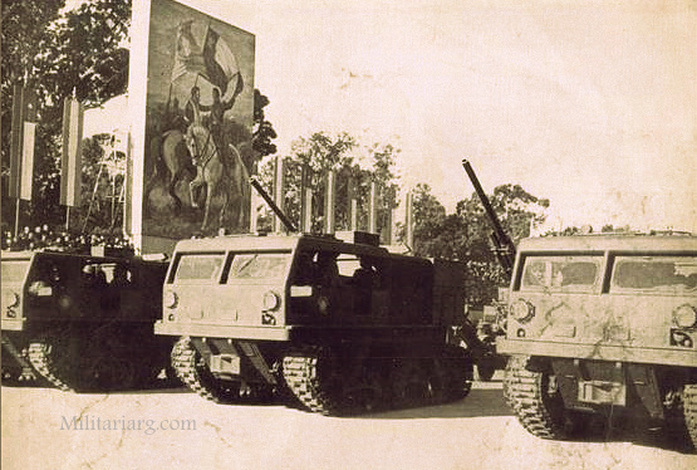
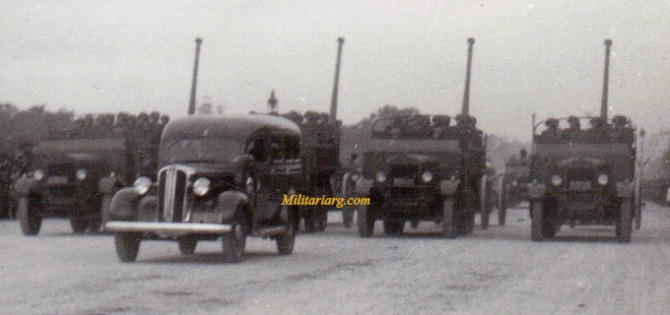
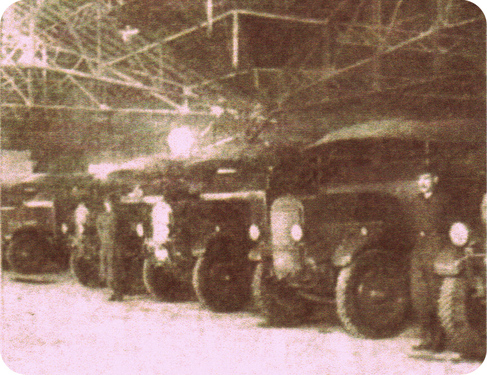
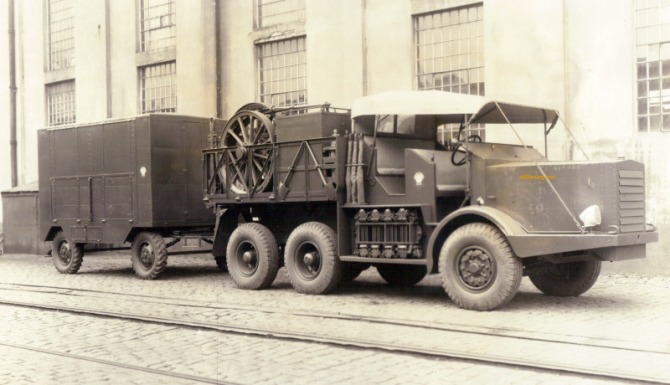
The specialized, enclosed "box" or "house" bodies to function as mobile wireless/radio stations or telephone exchange centers. Although the French made these vehicles, they were used by the UK and possibly the camo scheme was British two colors or three colors (Brown, Green and Dark Yellow) . These three colors were continued as a tradition in future models for Argentina. In the 1931 parade you can see Citroen Kegresse 1925 and commercial Morris, among other models.
Citroen Kegresse M1925/27 B2 half-track.
This type of French commercial Kegresse truck were aquired by the US between 1917 and 1931 with the goal of mechanizing the campaign artillery and studying future fabrication of half-track series that would be used in WWII by the US and UK. Later, towards the end of the 1940s and beginning of the 1950s, they were surplus aquired by Argentina in large quantities in order to mechanize all of their forces, who still depended on horses for much of their traction.
Citroën-Kégresse. Argentina imported the Citroën-Kégresse P7T and P17 models during the late 1920s.
Argentina operated several models, moving from early 4-cylinder (P17) versions to more powerful 6-cylinder (P19) variants as they modernized their forces.
These used the famous rubber-and-canvas track system designed by Adolphe Kégresse. They were tested as artillery tractors for the Krupp 75mm mountain guns. The Army was particularly interested in their ability to navigate the sandy soils of northern Argentina where wheeled trucks would sink. While highly capable, the rubber tracks were prone to wear and difficult to replace locally, leading the Army to eventually look toward the more "mechanical" American halftracks later on.
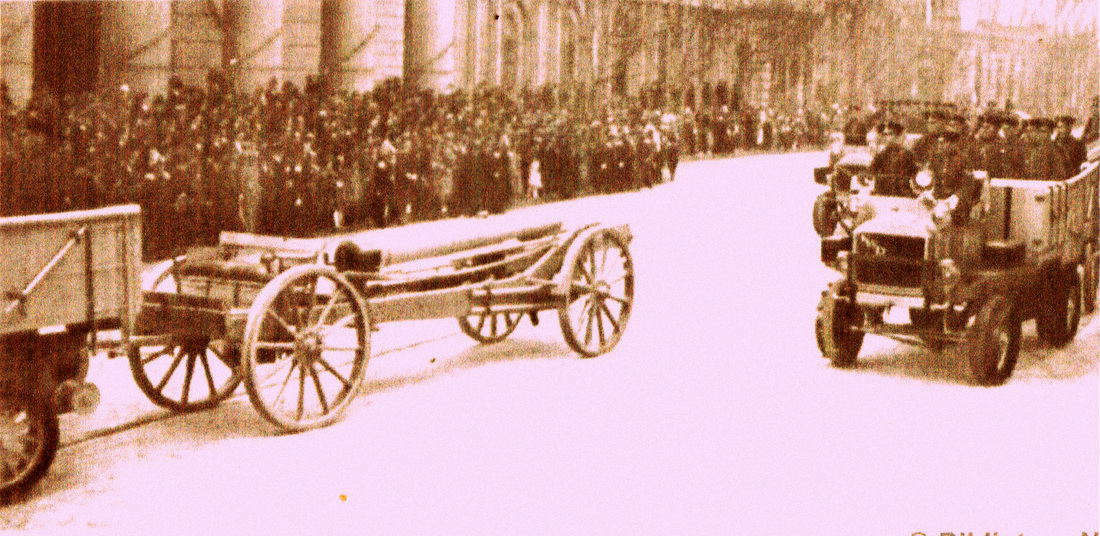
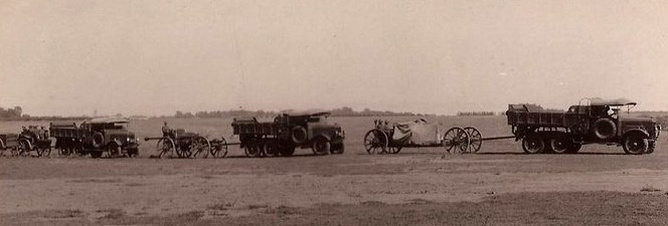
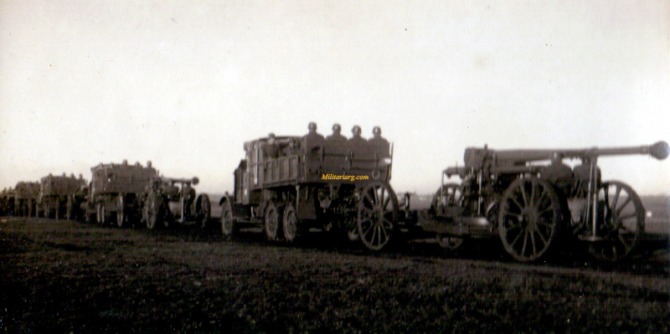
US and UK FWD Model B, 3 ton Lorry 1916/18, Artillery Supply Truck with Krupp 130mm L26 M1902.
US FWD Artullery supply truck and Model B3 ton Lorry. Photo: Caras y Caretas.
Argentine Cinema (Nash Quad M18). Photo: IMCDB
FWD Model B 3-Ton.
FWD Model B3 ton with 130mm Krupp.
130mm Krupp with Model B3-ton FWD M16/17. Caras y Caretas 1926.
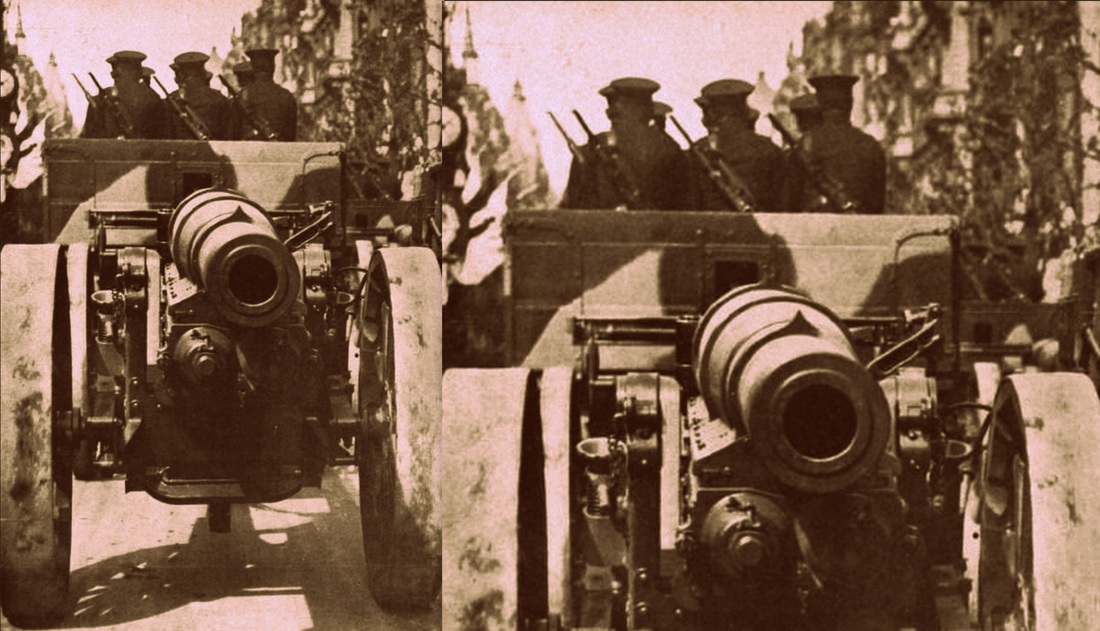
FWD Ordenance B3 1916/17 and 130mm Krupp L/26 M1902 (1.3 cm L/26 Feld Haubitze 02. The Argentine Army officially designated and used the Krupp 130mm L/26 Modelo 1902 as heavy gun, rather than a howitzer.
|
FWD Artillery Supply 1917-18. Argentne Army.
The FWD Model B 3-ton truck was widely used by Allied forces in World War I and was primarily used as a motorized lorry and artillery tractor for medium to heavy guns. FWD Model B as an Artillery Tractor The Four Wheel Drive Auto Company (FWD) Model B 3-ton truck was one of the first mass-produced military vehicles with four-wheel drive, and over 14,000 were delivered to the U.S. Army and around 3,000 to the British Army during WWI. |
Primary Role in British Service. In the British Army, the Model B was used primarily as a tractor for towing heavy artillery, such as the 6-inch and 8-inch howitzers.
US Army Role. The U.S. Army Ordnance Department used the FWD Model B to transport ammunition, but the vehicles were also involved in towing artillery pieces.
Performance. The four-wheel drive design provided superior traction compared to conventional rear-wheel-drive trucks, which was crucial for moving heavy loads through the muddy and damaged terrain of WWI battlefields.
Specifications of the FWD Model B
Data Details
Weight 3.1 tons
Engine 4-cylinder Wisconsin T-head engine, ~36 hp
Drivetrain Full-time four-wheel drive
Top Speed ~16 mph (on solid rubber tires)
While the FWD Model B was a wheeled vehicle, it effectively functioned as a motorized artillery tractor in its military application, complementing tracked tractors like those made by the Holt Manufacturing Co. for heavy hauling.
US Army Role. The U.S. Army Ordnance Department used the FWD Model B to transport ammunition, but the vehicles were also involved in towing artillery pieces.
Performance. The four-wheel drive design provided superior traction compared to conventional rear-wheel-drive trucks, which was crucial for moving heavy loads through the muddy and damaged terrain of WWI battlefields.
Specifications of the FWD Model B
Data Details
Weight 3.1 tons
Engine 4-cylinder Wisconsin T-head engine, ~36 hp
Drivetrain Full-time four-wheel drive
Top Speed ~16 mph (on solid rubber tires)
While the FWD Model B was a wheeled vehicle, it effectively functioned as a motorized artillery tractor in its military application, complementing tracked tractors like those made by the Holt Manufacturing Co. for heavy hauling.
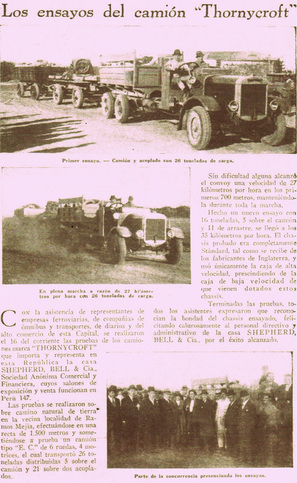
Comercial Thornycroft Trucks Test. 1929 Caras y Caretas Magazine.
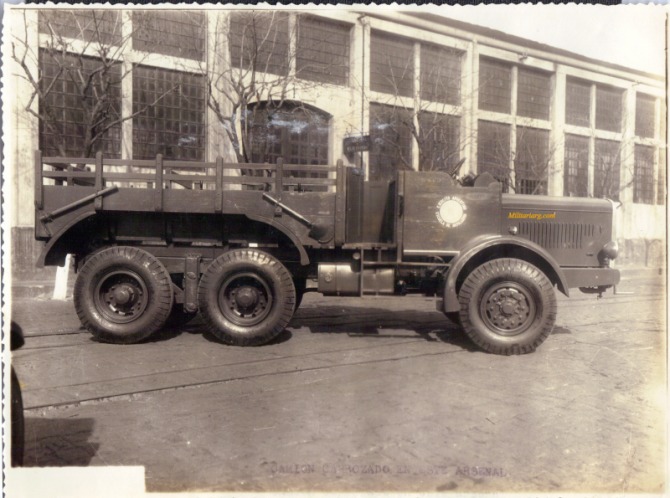
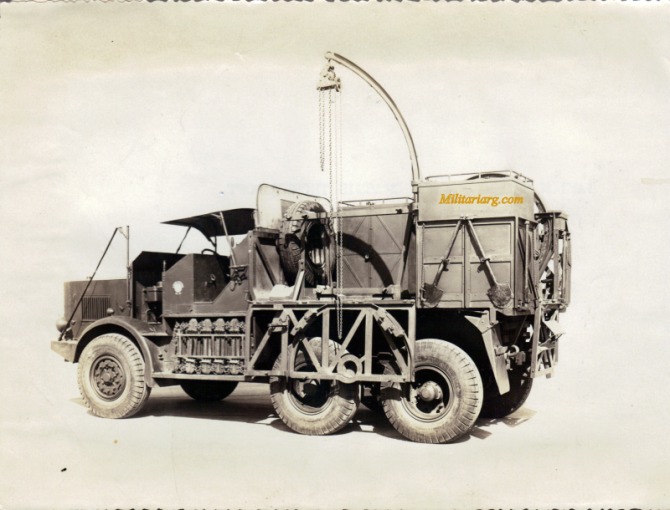
Interesting image which shows the Thornycroft before being modified at Arsenal Esteban de Luca. Photo: Caras y Caretas.
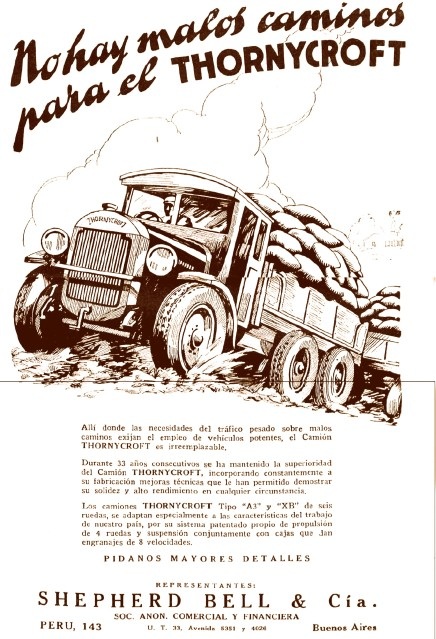
Thornycroft Wheeled, Amazon, Tartar and Type "A3", Artillery Tractor.
Thornycroft was a United Kingdom-based vehicle manufacturer which built coaches, buses, and trucks from 1896 until 1977. Thornycroft started out with steam vans and lorries. John Isaac Thornycroft, the naval engineer, built his first steam lorry in 1896. Their first petrol vehicle was in 1902 and the company completed the move into internal combustion engine power in 1907. Thereafter the vehicle building firm and the marine side (later to become Vosper Thornycroft) were separate companies.
From 1931, Thornycroft used names for their vehicle range - descriptive and colourful ones. In 1948, the company name was changed to Transport Equipment (Thornycroft) Ltd to prevent confusion with the shipbuilding Thornycroft company. The company was well-known for providing fire engine chassis, with multi-axle drive for uses such as airports.
Thornycroft "Tartar"
Thornycroft Tartar 6x4.
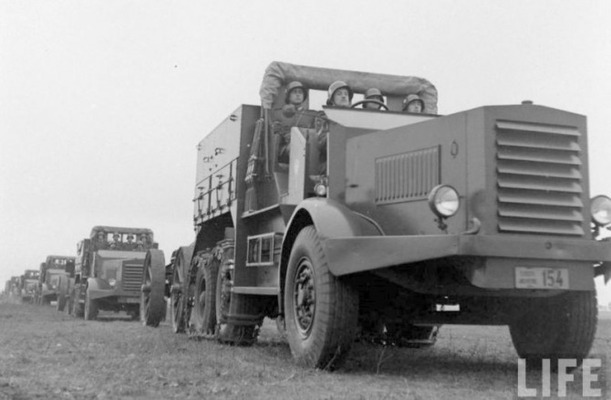
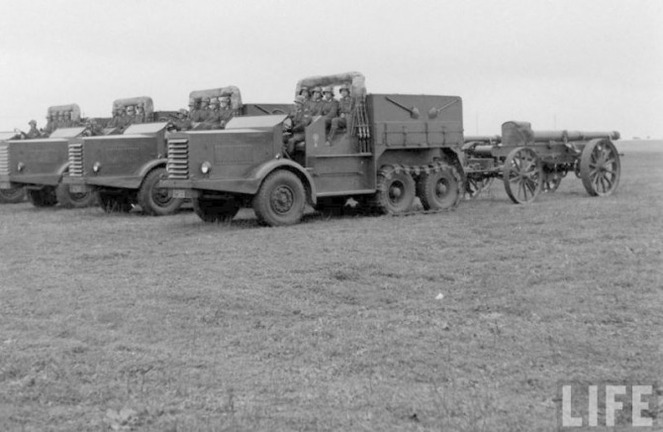
Thornycrofts "Tartar" pulling Czech Skoda Flak 76.5mm model 28/L.
Dodge pickup 1936 and Thornycrofts "Tartar" pulling Czech Skoda Flak 76.5mm model 28/L.
Artillery School. Caras y Caretas 1937.
Thornycroft "Amazon"
Thornycroft Amazon. Associated Press Photo. 7/17/42.
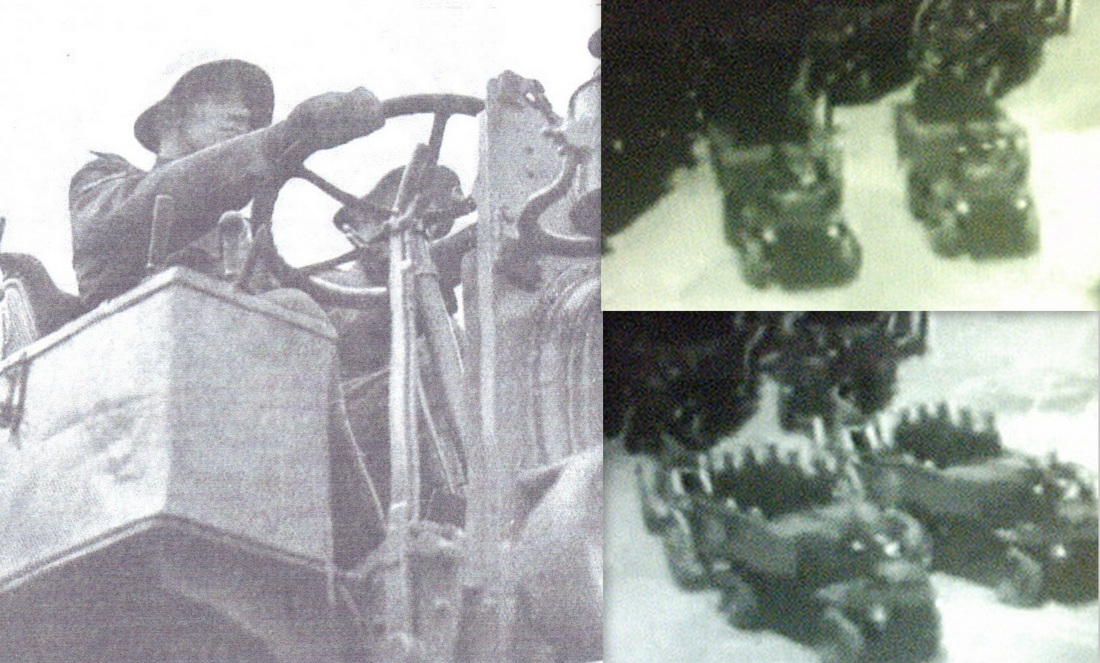
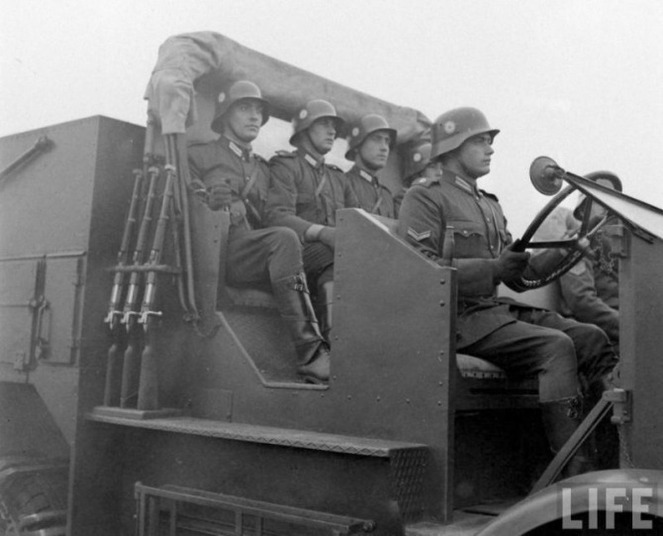
Interesting photo where you can see 1909 Mauser carabines w/ cover on the side of vehicle. There are also what appear to be 155 mm cannon wheels in the rear. The vehicle may have been taking supplies or replacement parts.
Thornycroft "Amazon" Half -Tracks
Thornycroft 6x6 "Amazon" trucks/half-tracks w/schneider 155mm m29.
The three custodians travel in the rear. Observe the 1909 Mauser carbines on the side (w/o cover). The driver and head of the truck ride in front with HAFDASA 45 ACP caliber (adopted by Argentina in 1938).
1939 HAFDASA 6 x 6 artillery prime mover.
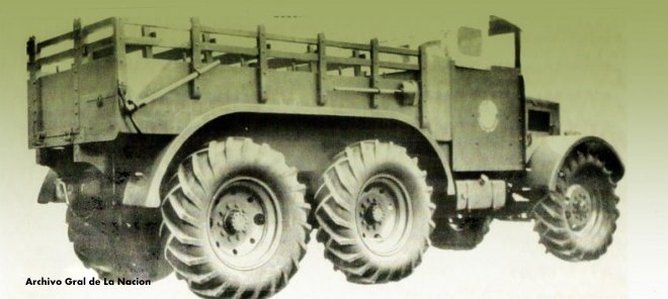
HAFDASA (Hispano Argentina Fabrica de Automobiles), 6x6 artillery prime mover (1939-42), powered by a 150 HAFDASA diesel engine. Photo: AGN.
Before the influx of U.S. surplus, Argentina experimented with 6x6 prime movers built by Hispano-Argentina, though these were mostly replaced by the more capable tracked M4 and M5 series by the mid-50s.
4x4 HAFDASA 95 HP diesel artillery tractor "Criollo Chico".
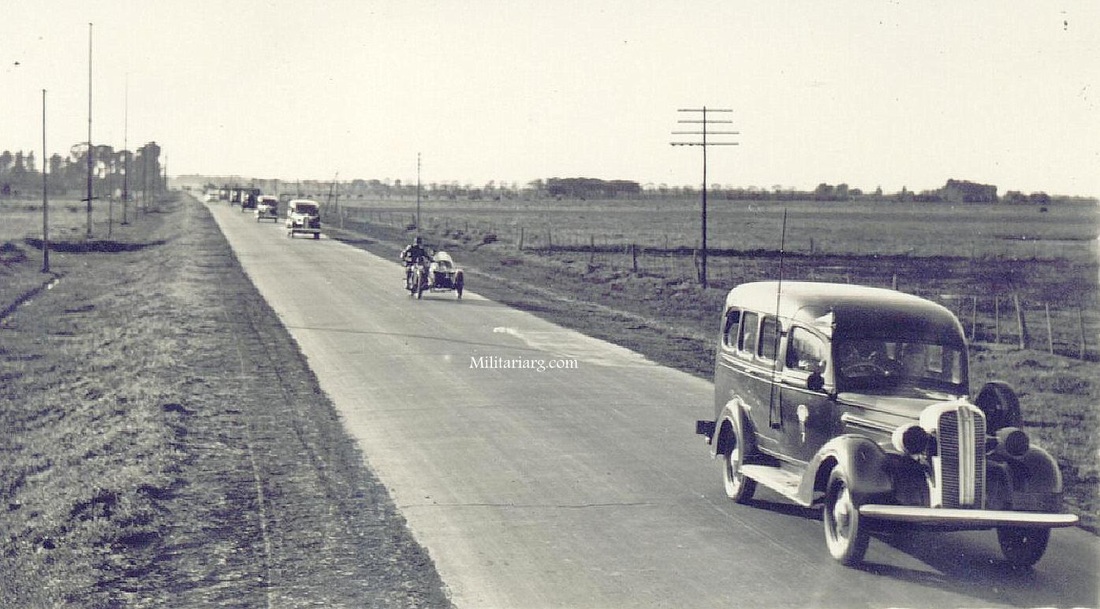
Artillery equipment other vehicles (NO Prime Movers), trailers.
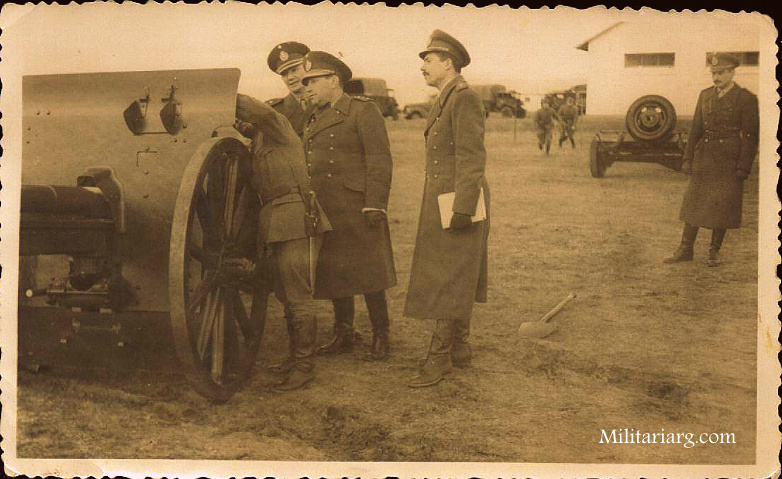
75mm L30 M1905/6 Krupp.
D.A.R.M.A ( Dispositivo Auxiliar de Rodamiento para el Material de Artillería
The "Tractor de Artillería a Orugas Yacaré" (Yacaré Tracked Artillery Tractor)
The "Yacaré" was an indigenous Argentine armored artillery tractor developed during World War II in response to an arms embargo that prevented the country from acquiring foreign military equipment.
Yacaré armored tractor. Built in Argentina during WW2, based ...
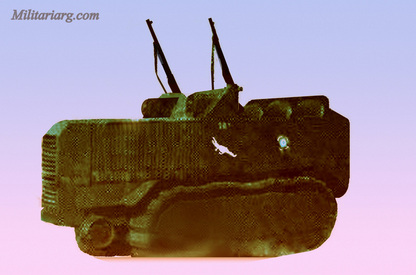
Deprived of Lend-Lease equipment due to its neutral stance during the war, Argentina was forced to develop its own military hardware. The "Tractor de Artillería a Orugas Yacaré" (Yacaré Tracked Artillery Tractor), named after the South American alligator, was designed by Colonel Alfredo Baisi, who also designed Argentina's first medium tank, the Nahuel DL 43.
Base Vehicle. The design was based on acquired commercial wheeled tractors from the Argentine branch of International Harvester Company (models W-30 and W-9), which were modified by military engineers at the Esteban de Luca Arsenals.
Modifications. Due to wartime rubber shortages, the original rubber tires were replaced with caterpillar tracks. The engines were reportedly modified to increase speed and maneuverability. The body was armored and featured a painted image of an alligator on each side.
Specifications and Armament
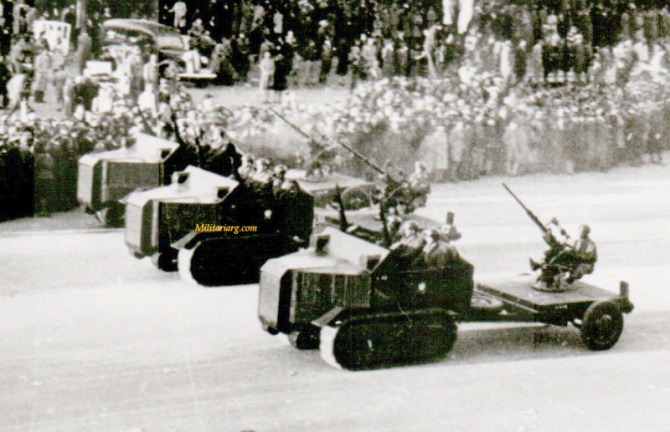
The primary function was to serve as a prime mover, towing anti-aircraft and field artillery pieces such as Oerlikon 20 mm L/70 anti-aircraft guns and 105 mm howitzers.
The Yacaré was equipped with defensive armament for its crew of three: a pair of Madsen 7.65 mm machine guns were mounted in the front, and in some configurations, an additional 20mm anti-aircraft machine gun was placed on a towed trailer.
Production began around 1944. A limited number of prototypes and early production units were built, but the exact quantity is not known.
The Yacaré was publicly displayed at a military exposition on June 4, 1944. Like other indigenous Argentine prototypes of the era, such as the Vinchuca infantry assault vehicle, none of the Yacarés have survived.
Yacaré armored tractor. Built in Argentina during WW2, based ...
Deprived of Lend-Lease equipment due to its neutral stance during the war, Argentina was forced to develop its own military hardware. The "Tractor de Artillería a Orugas Yacaré" (Yacaré Tracked Artillery Tractor), named after the South American alligator, was designed by Colonel Alfredo Baisi, who also designed Argentina's first medium tank, the Nahuel DL 43.
Base Vehicle. The design was based on acquired commercial wheeled tractors from the Argentine branch of International Harvester Company (models W-30 and W-9), which were modified by military engineers at the Esteban de Luca Arsenals.
Modifications. Due to wartime rubber shortages, the original rubber tires were replaced with caterpillar tracks. The engines were reportedly modified to increase speed and maneuverability. The body was armored and featured a painted image of an alligator on each side.
Specifications and Armament
The primary function was to serve as a prime mover, towing anti-aircraft and field artillery pieces such as Oerlikon 20 mm L/70 anti-aircraft guns and 105 mm howitzers.
The Yacaré was equipped with defensive armament for its crew of three: a pair of Madsen 7.65 mm machine guns were mounted in the front, and in some configurations, an additional 20mm anti-aircraft machine gun was placed on a towed trailer.
Production began around 1944. A limited number of prototypes and early production units were built, but the exact quantity is not known.
The Yacaré was publicly displayed at a military exposition on June 4, 1944. Like other indigenous Argentine prototypes of the era, such as the Vinchuca infantry assault vehicle, none of the Yacarés have survived.
Above is the armored tractor Yacare (Alligator in the local indigenous language). It was a tractor meant to push anti-air artillery. The design was based on regular tractors but modified by the military (1944 D4 Caterpillar?). You cannot see it well in the photos but the body had a picture of an alligator on each side. In this photo we see it with an Oerlikon Model 1920 20 mm L 70 A.A gun. Like the Nahuel, there are no more in existence. An infantry assault vehicle existed called the Vinchuca which was designed by Coloner Alfredo Baisi (designer of the Yacare and the Nahuel). They were based on commercial tractors bought from England which were then modified in Esteban de Luca. It had a machine gun next to the driver and seats behind for the troops. Amazingly, no photos exist of this. Many thanks to Mariano Nicolas Gonzales Lacroix for providing this information.
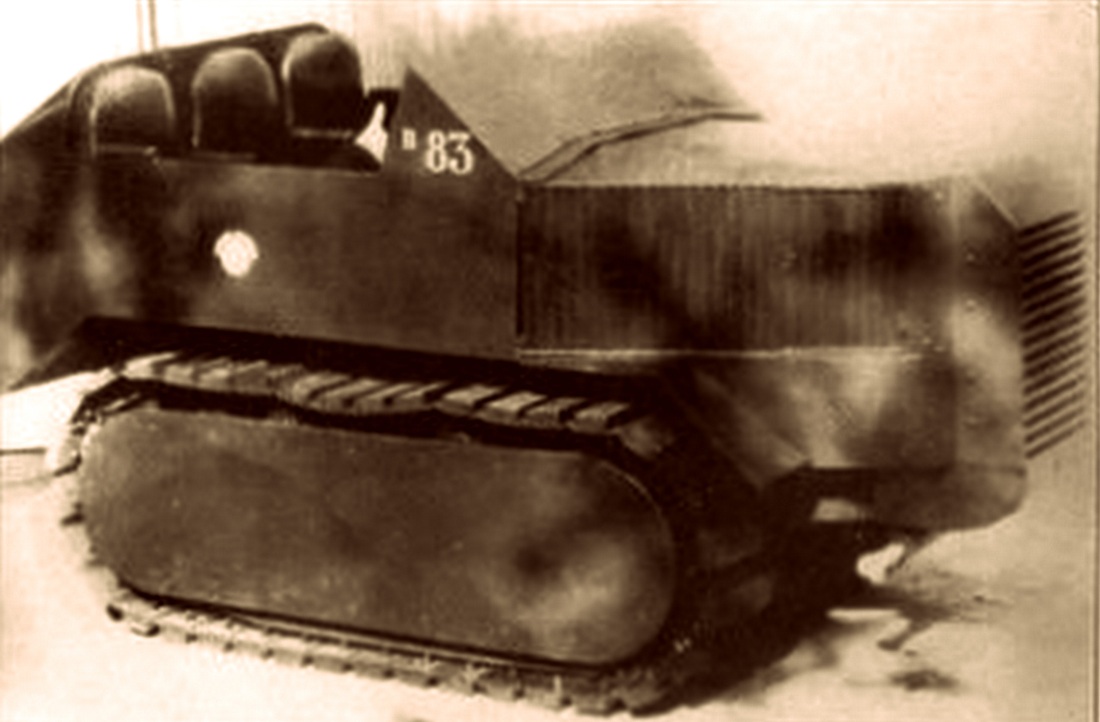
Yacaré (Alligator): While not technically a "high speed" tractor in the American sense, this was an indigenous Argentine armored tractor developed by Alfredo Baisi in 1944. It was based on International Harvester W9 and Caterpillar D4 components and was modified to tow anti-aircraft and field artillery during the transition into the 1950s
Industrial "High Speed" Tractors (Post-1952)
Under the Perón administration, the push for agricultural mechanization led to the local production of tractors that shared some DNA with military needs:
Pampa Tractor: Introduced in 1952, the Pampa was a reverse-engineered German Lanz Bulldog. While meant for farming, its simplified maintenance and ability to run on multiple fuels made it a staple utility vehicle in rural military zones.
Industrial "High Speed" Tractors (Post-1952)
Under the Perón administration, the push for agricultural mechanization led to the local production of tractors that shared some DNA with military needs:
Pampa Tractor: Introduced in 1952, the Pampa was a reverse-engineered German Lanz Bulldog. While meant for farming, its simplified maintenance and ability to run on multiple fuels made it a staple utility vehicle in rural military zones.
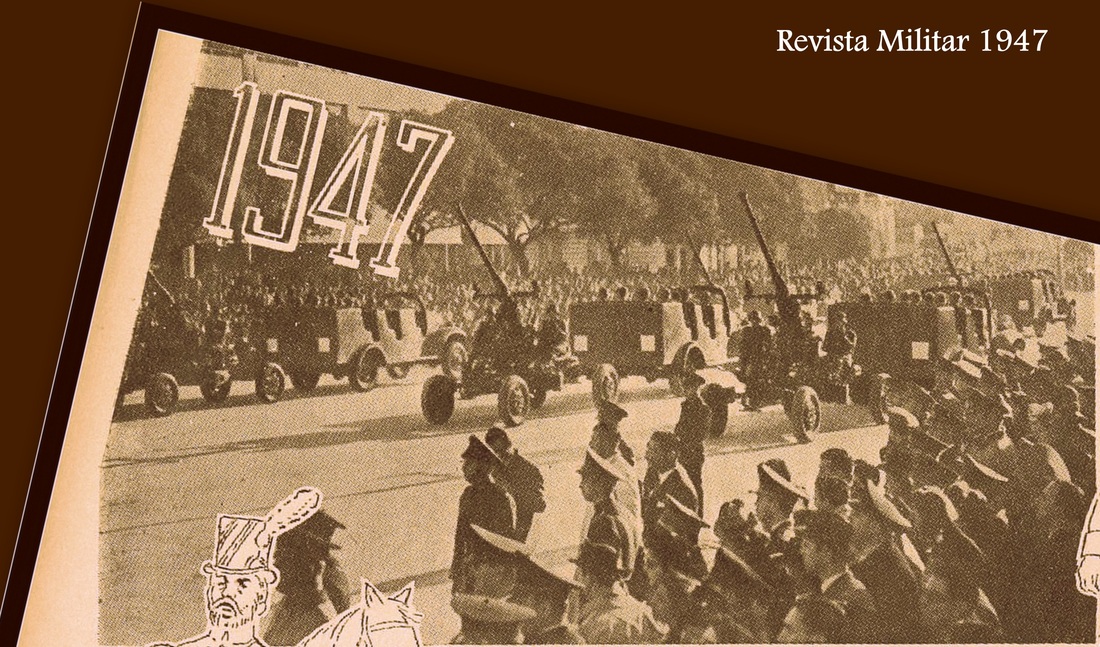
Photo: 1947. In the photo a "Carryall" type vehicle towning the Bofors 40mm AA, but it is not a WC53. The standard Dodge WC Command Car had a very specific "bathtub" style body that only contained two rows of seats for 5–6 passengers. However, the Argentine Army was famous for locally modifying its large fleet of surplus WWII Dodges to fit specific artillery crew needs. This could be one of the military-modified commercial chassis with three rows of seats for an open cab body.
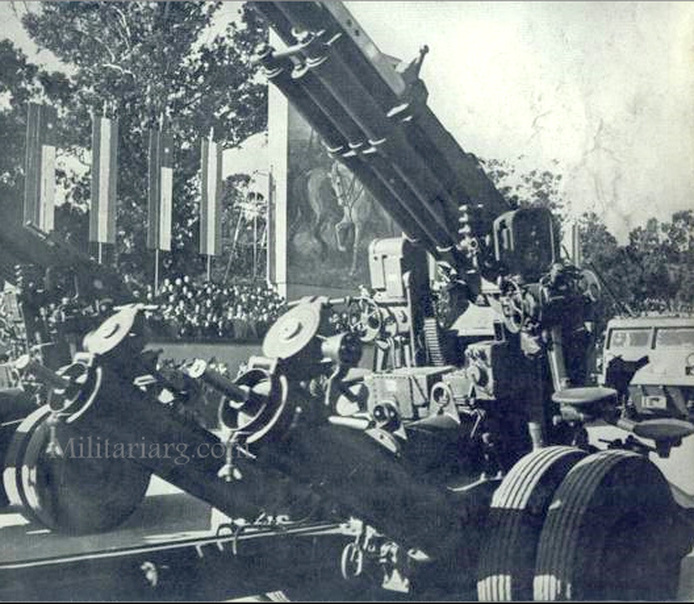
M4 (18-ton, M2 light tank chassis) M5 (13-ton, M3 Stuart light tank suspension) High Speed Tractors (HST).
M6 High Speed Tractor (38-ton): The largest in the series, the M6 was used for Argentina's heaviest towed loads, such as the 240mm howitzer. It featured twin Waukesha engines and could haul up to 60,000 lbs.
US M4 (High Speed Tractor), Prime Mover, used to tow M1A1 90mm AA guns. At the same time, in the US, they were equipped with 90 mm or 3 inch ammunition.
Tucker SNO-CAT.
In the mid-1960s, the Argentine Army followed the success of international polar explorers by adopting the
Tucker Sno-Cat for its most ambitious Antarctic mission: Operación 90.
Operación 90 (1965)
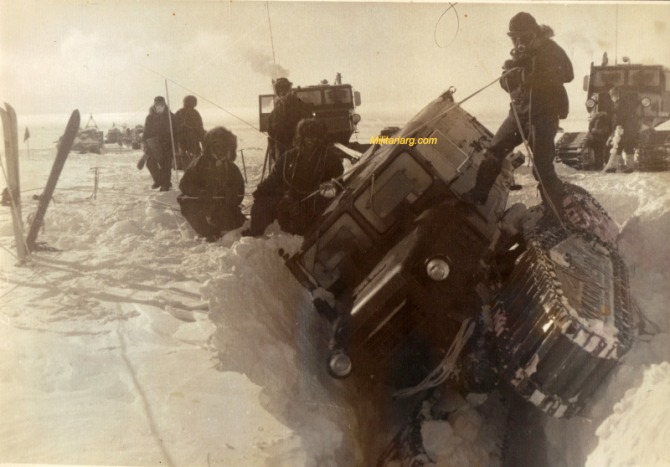
This was the first Argentine land expedition to reach the Geographic South Pole. Led by Colonel Jorge Edgar Leal, the mission relied heavily on a fleet of Tucker Sno-Cats to navigate the treacherous 2,900 km journey from Base Belgrano to the Pole and back.
Leal’s team utilized six Tucker Sno-Cat vehicles. These were likely the Model 743 "Freighter" variant, renowned for its four independent articulated tracks that provided superior flotation on soft snow and better stability when crossing crevasses.
The South Pole Meeting: On December 10, 1965, the Argentine team reached the South Pole, where they were famously met by a radar operator from the US Amundsen–Scott Station. The US commander later provided spare parts and workshop access to help repair the battered Sno-Cats for their return journey.
Tucker Sno-Cat for its most ambitious Antarctic mission: Operación 90.
Operación 90 (1965)
This was the first Argentine land expedition to reach the Geographic South Pole. Led by Colonel Jorge Edgar Leal, the mission relied heavily on a fleet of Tucker Sno-Cats to navigate the treacherous 2,900 km journey from Base Belgrano to the Pole and back.
Leal’s team utilized six Tucker Sno-Cat vehicles. These were likely the Model 743 "Freighter" variant, renowned for its four independent articulated tracks that provided superior flotation on soft snow and better stability when crossing crevasses.
The South Pole Meeting: On December 10, 1965, the Argentine team reached the South Pole, where they were famously met by a radar operator from the US Amundsen–Scott Station. The US commander later provided spare parts and workshop access to help repair the battered Sno-Cats for their return journey.
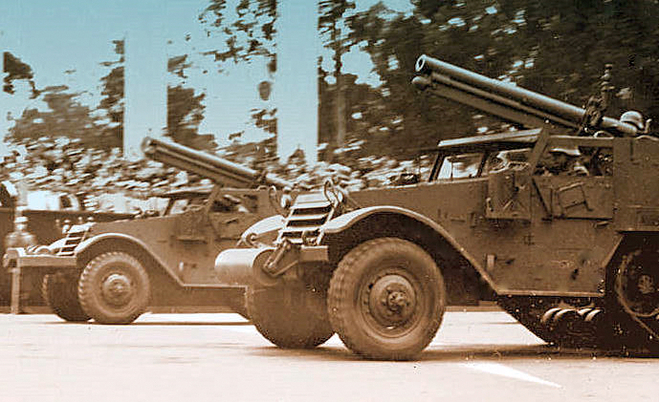
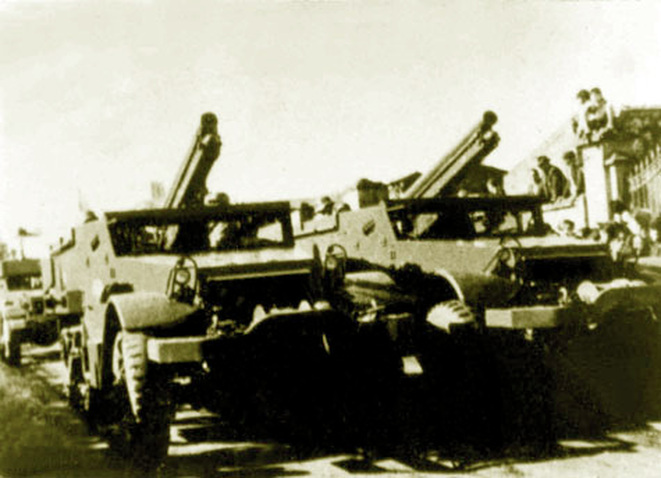
75mm Half-track Variants
75mm field guns on M9 half-tracks (and other surplus chassis) after World War II to create low-cost self-propelled artillery units.
Krupp 75mm L.30 mod. 1909: Argentina mounted these aging but reliable German field guns on the back of M9 half-tracks. These were essentially "portee" style conversions where the original gun, including its carriage and shield, was secured to the rear deck.
Bofors 75mm L.40 mod. 1935: Some half-tracks were also fitted with the more modern Swedish Bofors 75mm gun.
Standard M3 GMC. While Argentina focused on local conversions, they also acquired original US-made M3 Gun Motor Carriages (GMC), which featured a purpose-built mount for the French-designed M1897A4 75mm gun.
These vehicles were part of a massive acquisition of surplus British and American equipment in the late 1940s, including Sherman tanks and Universal Carriers. Because Argentina had a surplus of both older 75mm artillery and newer motorized chassis, they combined them to motorize their Artillery and Cavalry units.
Similar 75mm mounts were tested or used on Crusader and Valentine tank hulls, as well as the T16 Universal Carrier.
These vehicles served for decades and were eventually superseded by more modern platforms like the TAM series in the late 1970s.
Bofors 75mm L.40 mod. 1935: Some half-tracks were also fitted with the more modern Swedish Bofors 75mm gun.
Standard M3 GMC. While Argentina focused on local conversions, they also acquired original US-made M3 Gun Motor Carriages (GMC), which featured a purpose-built mount for the French-designed M1897A4 75mm gun.
These vehicles were part of a massive acquisition of surplus British and American equipment in the late 1940s, including Sherman tanks and Universal Carriers. Because Argentina had a surplus of both older 75mm artillery and newer motorized chassis, they combined them to motorize their Artillery and Cavalry units.
Similar 75mm mounts were tested or used on Crusader and Valentine tank hulls, as well as the T16 Universal Carrier.
These vehicles served for decades and were eventually superseded by more modern platforms like the TAM series in the late 1970s.
The "Argentine Ontos" Prototype
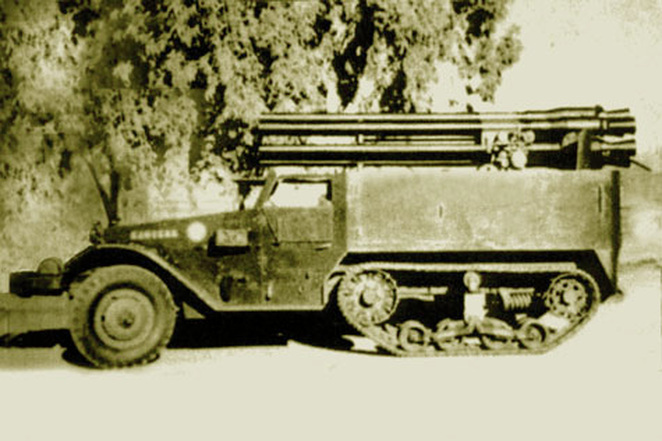
During the late 1960s and 1970s, the Argentine Army performed several conversions using their fleet of International Harvester M5 and M9 Half-tracks to carry the domestic 105mm FM Czekalski (Model 1968) recoilless rifle.
The most famous (and experimental) version was inspired by the American M50 Ontos.
A single half-track was fitted with a massive pedestal mount carrying six 105mm Czekalski rifles. It was designed to provide a massive "shotgun" blast of anti-tank fire that could be reloaded under armor or behind cover.
Much like the T16 carrier version, this was deemed too top-heavy and impractical for mass production, remaining an experimental prototype.
The most famous (and experimental) version was inspired by the American M50 Ontos.
A single half-track was fitted with a massive pedestal mount carrying six 105mm Czekalski rifles. It was designed to provide a massive "shotgun" blast of anti-tank fire that could be reloaded under armor or behind cover.
Much like the T16 carrier version, this was deemed too top-heavy and impractical for mass production, remaining an experimental prototype.
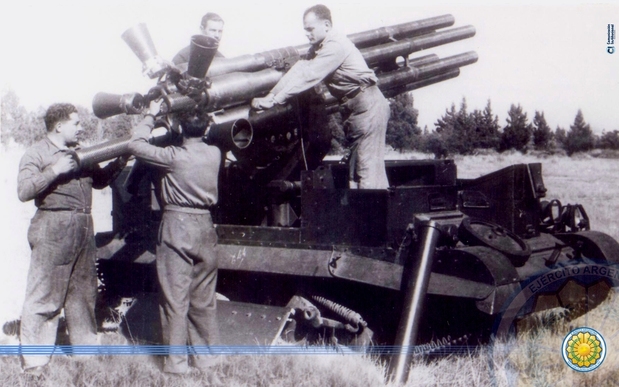
Testing the 105mm Czekalski recoilless rifle on the T16 Universal Carrier (often referred to as the "Bren Carrier") during the late 1960s or early 1970s.
Six-Gun Prototype. This experiment was Argentina’s attempt to replicate the firepower of the U.S. M50 Ontos. A single T16 carrier was fitted with a six-Model 1968 recoilless gun mount. A similar prototype was also tested using an IHC M5 or M9 half-track chassis.
These tests were aimed at developing a lightweight, high-firepower "tank destroyer" or self-propelled artillery piece for the Argentine Army.
Transition to Single-Gun Mounts (1977–1978)
While the six-gun T16 never entered mass production, the experience led to a more practical conversion. Between 1977 and 1978, during the border crisis with Chile (Operation Soberanía), the Army converted numerous T16 carriers and half-tracks into self-propelled guns by mounting a single 105mm Czekalski on each.
Six-Gun Prototype. This experiment was Argentina’s attempt to replicate the firepower of the U.S. M50 Ontos. A single T16 carrier was fitted with a six-Model 1968 recoilless gun mount. A similar prototype was also tested using an IHC M5 or M9 half-track chassis.
These tests were aimed at developing a lightweight, high-firepower "tank destroyer" or self-propelled artillery piece for the Argentine Army.
Transition to Single-Gun Mounts (1977–1978)
While the six-gun T16 never entered mass production, the experience led to a more practical conversion. Between 1977 and 1978, during the border crisis with Chile (Operation Soberanía), the Army converted numerous T16 carriers and half-tracks into self-propelled guns by mounting a single 105mm Czekalski on each.
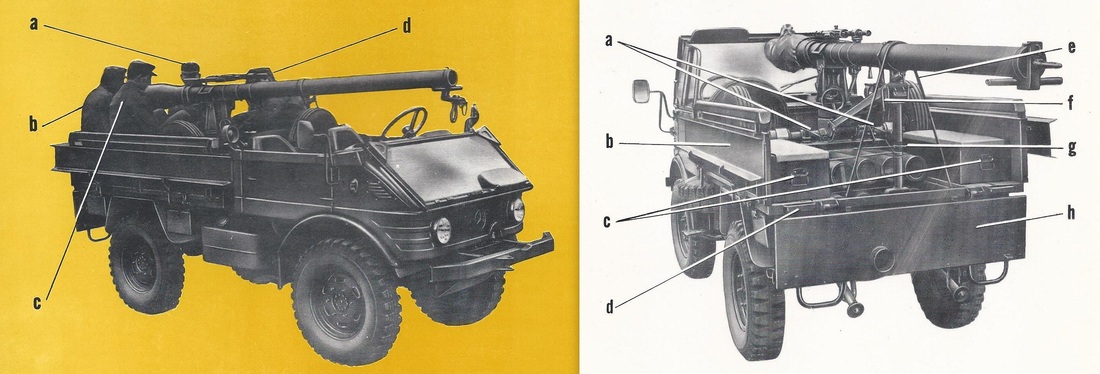
105mm Czekalski (Model 1968) recoilless rifle on Mercedes-Benz Unimog trucks, primarily using them as high-mobility fire support vehicles.
The rifle was typically pintle-mounted on the cargo bed of the Unimog 416 or 421. This allowed for a full 360-degree field of fire, though the rear backblast required the cab to be cleared of personnel before firing.
These mobile units were designed for rapid anti-tank defense and infantry support in rugged terrain where heavier armored vehicles could not easily maneuver.
The weapon could be fired from the vehicle for "shoot-and-scoot" tactics or quickly dismounted onto its own two-wheel carriage for static defense.
Deployment in the South Atlantic War (1982)
While Argentine Unimog 416s were the main transport workhorses on the islands, most 105mm Czekalski guns captured by British forces were found in static, ground-based positions around key defensive heights like Mount Longdon and Wireless Ridge.
Due to the soft peat bogs, the Unimog-mounted versions were mostly restricted to roads. Consequently, many units were dismounted and emplaced manually to provide direct and indirect fire against British paratroopers (3 PARA) during the final battles for Port Stanley.
The rifle was typically pintle-mounted on the cargo bed of the Unimog 416 or 421. This allowed for a full 360-degree field of fire, though the rear backblast required the cab to be cleared of personnel before firing.
These mobile units were designed for rapid anti-tank defense and infantry support in rugged terrain where heavier armored vehicles could not easily maneuver.
The weapon could be fired from the vehicle for "shoot-and-scoot" tactics or quickly dismounted onto its own two-wheel carriage for static defense.
Deployment in the South Atlantic War (1982)
While Argentine Unimog 416s were the main transport workhorses on the islands, most 105mm Czekalski guns captured by British forces were found in static, ground-based positions around key defensive heights like Mount Longdon and Wireless Ridge.
Due to the soft peat bogs, the Unimog-mounted versions were mostly restricted to roads. Consequently, many units were dismounted and emplaced manually to provide direct and indirect fire against British paratroopers (3 PARA) during the final battles for Port Stanley.
Autocar tractor 4x4 5-6 ton model U8144T. Bat Maintenance Villa Martelli 1954
The Argentine Army utilized the Autocar U8144T (and the similar White 444T) as heavy tractor units, largely acquired through the U.S. Military Assistance Program (PAM) during the Cold War era.
These were heavy 5-to-6 ton 4×4 trucks originally produced in the United States during World War II. Argentina received them as surplus alongside other American heavy equipment.
In Argentine service, they were primarily used as artillery tractors to tow heavy pieces such as the CITER 155mm L33 howitzer and for hauling large logistical semi-trailers.
Known for their distinctive "cab-over-engine" (COE) design, these tractors were prized for their high torque and ability to haul heavy loads in severe-duty vocational applications.
These were heavy 5-to-6 ton 4×4 trucks originally produced in the United States during World War II. Argentina received them as surplus alongside other American heavy equipment.
In Argentine service, they were primarily used as artillery tractors to tow heavy pieces such as the CITER 155mm L33 howitzer and for hauling large logistical semi-trailers.
Known for their distinctive "cab-over-engine" (COE) design, these tractors were prized for their high torque and ability to haul heavy loads in severe-duty vocational applications.
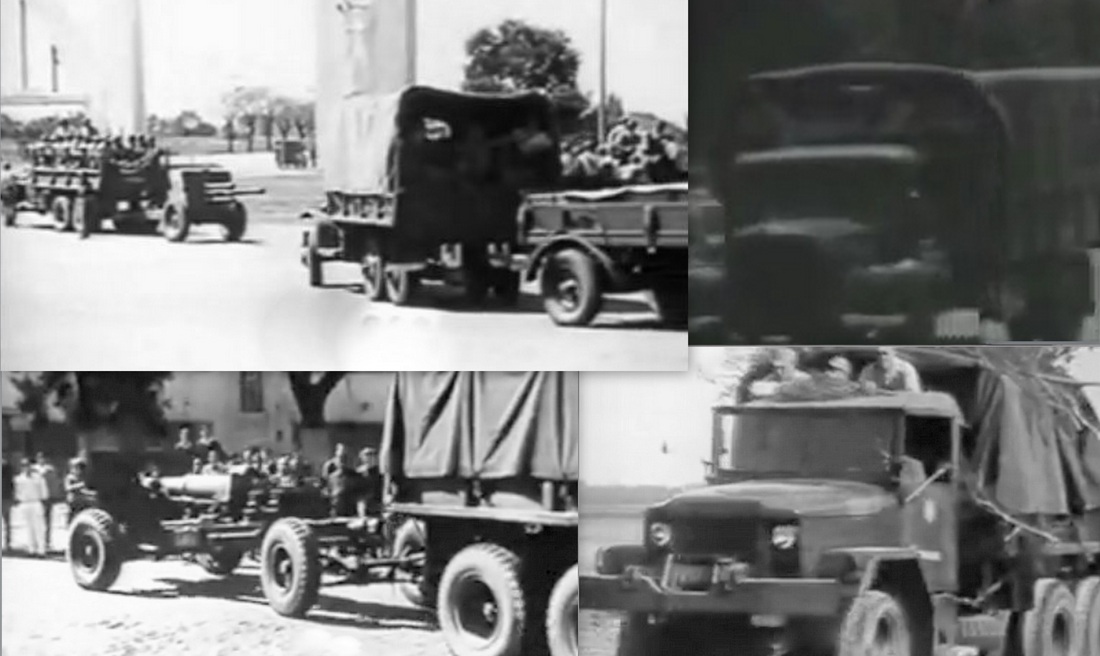
Screenshots from videos during the inter-military clashes in the 60s. Upgrade 75mm bofors, 155mm schneiders, CCKW (IAPI) M35 (PAM Aid) and Mercedes Benz L311/312.
GMC CCKW 353 with M-36/M-37 Ring Mount. Photo from the National Archives of Argentina.
The primary difference between the GMC CCKW 352 and the 353 is the length of the wheelbase and their intended roles in the military "machine."
The CCKW 352 is the short wheelbase (SWB) version, measuring 145 inches (368 cm).
Built specifically as an artillery prime mover for towing 75mm and 105mm weapons. Its compact frame allowed for better maneuverability in rugged terrain.
The CCKW 353 is the long wheelbase (LWB) version, measuring 164 inches (417 cm).
The standard general-purpose cargo truck and personnel transport. It was the "workhorse" of the famed Red Ball Express supply chain. On the 353, the fuel tank is on the right side of the frame, and the spare wheels are typically mounted on the left side of the frame.
The primary difference between the GMC CCKW 352 and the 353 is the length of the wheelbase and their intended roles in the military "machine."
The CCKW 352 is the short wheelbase (SWB) version, measuring 145 inches (368 cm).
Built specifically as an artillery prime mover for towing 75mm and 105mm weapons. Its compact frame allowed for better maneuverability in rugged terrain.
The CCKW 353 is the long wheelbase (LWB) version, measuring 164 inches (417 cm).
The standard general-purpose cargo truck and personnel transport. It was the "workhorse" of the famed Red Ball Express supply chain. On the 353, the fuel tank is on the right side of the frame, and the spare wheels are typically mounted on the left side of the frame.
South Atlantic War 1982
The Mercedes-Benz Unimog 416 was the primary prime mover for the OTO Melara Mod 56 105mm pack howitzers. Because the OTO Melara was designed to be broken down into 12 loads, it was often "thrown away" (abandoned) by crews when the Unimogs could no longer traverse the peat bogs or when they ran out of fuel.
The heavier REO M35 (and similar Autocar/White tractors) were the only wheeled vehicles capable of towing the massive CITER 155mm L33 guns. However, the weight of the CITER (over 8 tons) made it impossible for the REOs to move them once they left the few paved roads around Port Stanley. When the British began their final assault on Sapper Hill and Wireless Ridge, these heavy guns were often left behind as the tractors could not extract them from the mud.