Switzerland maintained a consistent policy of armed neutrality throughout World War I, World War II, and the Cold War. This doctrine meant the country was ready to defend itself fiercely against any invasion but chose not to align with any military power or engage in foreign conflicts.
World War I (1914–1918)
Switzerland successfully maintained its neutrality, although it faced significant challenges.
Mobilization: The Swiss Army fully mobilized, stationing up to 250,000 men along its borders to deter potential aggressors from cutting through its territory.
Challenges: The war exposed linguistic and political rifts within Switzerland, as German-speaking Swiss often sympathized with the Central Powers, while French and Italian-speaking Swiss favored the Allies. The government worked hard to manage these internal tensions and preserve national unity.
Humanitarian Role: Switzerland served as a haven for refugees and a crucial location for the Red Cross and other humanitarian efforts.
World War II (1939–1945)
Switzerland again remained neutral, but this period was its most precarious, caught between the Axis powers who completely surrounded it by 1942.
The "National Redoubt": The Swiss military strategy involved massive mobilization and the construction of the "National Redoubt," a series of fortifications deep in the Alps. The plan was that if the Germans invaded, the Swiss Army would retreat into the mountains and use guerrilla tactics to make occupation too costly for Hitler.
Deterrence and Compromise: Switzerland was essentially an armed porcupine. Hitler planned to invade (Operation Tannenbaum), but the strategic cost outweighed the benefits. Switzerland was forced to make economic concessions to Nazi Germany, including trading war materiel and banking gold looted by the Nazis, while simultaneously serving as a vital center for the Red Cross and a place of refuge for some refugees (though many were turned away).
Airspace Violations: The Swiss Air Force engaged both Allied and Axis aircraft that violated its airspace, shooting down German planes during the Battle of France in 1940 and engaging Allied bombers later in the war.
Cold War (1947–1991)
Swiss neutrality remained the bedrock of its foreign policy, though it leaned ideologically toward the West.
Armed Neutrality as the Cornerstone: Switzerland maintained universal male conscription and a large, highly trained militia army designed for rapid mobilization to deter a potential Soviet invasion of Western Europe through Swiss territory.
Total Defense Concept: The Swiss military built a massive network of bunkers, air raid shelters (enough for the entire population), and the infrastructure to destroy every major bridge, tunnel, and road pass in the Alps in the event of an invasion.
International Isolation (Self-imposed): To preserve its absolute neutrality, Switzerland remained outside major international bodies during the Cold War. It did not join NATO, the UN (until 2002), or the European Economic Community. It was a founding member of the European Free Trade Association (EFTA) and the OSCE but avoided political alliances.
Readiness: The Swiss Air Force maintained a high state of readiness, practicing intercepting potential Soviet bombers passing through its airspace. The military's entire purpose was national defense and deterrence without political alignment.
World War I (1914–1918)
Switzerland successfully maintained its neutrality, although it faced significant challenges.
Mobilization: The Swiss Army fully mobilized, stationing up to 250,000 men along its borders to deter potential aggressors from cutting through its territory.
Challenges: The war exposed linguistic and political rifts within Switzerland, as German-speaking Swiss often sympathized with the Central Powers, while French and Italian-speaking Swiss favored the Allies. The government worked hard to manage these internal tensions and preserve national unity.
Humanitarian Role: Switzerland served as a haven for refugees and a crucial location for the Red Cross and other humanitarian efforts.
World War II (1939–1945)
Switzerland again remained neutral, but this period was its most precarious, caught between the Axis powers who completely surrounded it by 1942.
The "National Redoubt": The Swiss military strategy involved massive mobilization and the construction of the "National Redoubt," a series of fortifications deep in the Alps. The plan was that if the Germans invaded, the Swiss Army would retreat into the mountains and use guerrilla tactics to make occupation too costly for Hitler.
Deterrence and Compromise: Switzerland was essentially an armed porcupine. Hitler planned to invade (Operation Tannenbaum), but the strategic cost outweighed the benefits. Switzerland was forced to make economic concessions to Nazi Germany, including trading war materiel and banking gold looted by the Nazis, while simultaneously serving as a vital center for the Red Cross and a place of refuge for some refugees (though many were turned away).
Airspace Violations: The Swiss Air Force engaged both Allied and Axis aircraft that violated its airspace, shooting down German planes during the Battle of France in 1940 and engaging Allied bombers later in the war.
Cold War (1947–1991)
Swiss neutrality remained the bedrock of its foreign policy, though it leaned ideologically toward the West.
Armed Neutrality as the Cornerstone: Switzerland maintained universal male conscription and a large, highly trained militia army designed for rapid mobilization to deter a potential Soviet invasion of Western Europe through Swiss territory.
Total Defense Concept: The Swiss military built a massive network of bunkers, air raid shelters (enough for the entire population), and the infrastructure to destroy every major bridge, tunnel, and road pass in the Alps in the event of an invasion.
International Isolation (Self-imposed): To preserve its absolute neutrality, Switzerland remained outside major international bodies during the Cold War. It did not join NATO, the UN (until 2002), or the European Economic Community. It was a founding member of the European Free Trade Association (EFTA) and the OSCE but avoided political alliances.
Readiness: The Swiss Air Force maintained a high state of readiness, practicing intercepting potential Soviet bombers passing through its airspace. The military's entire purpose was national defense and deterrence without political alignment.
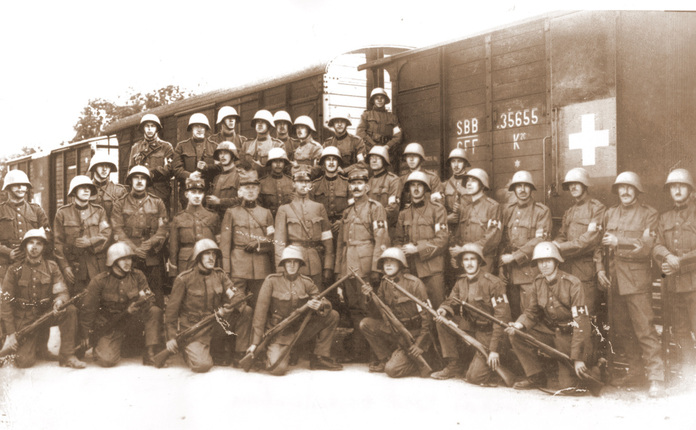
SBB - Mounted/unmounted ammo pouches, K-II rifles, sleeve collar, ranks and distinctions armband.
The Swiss Army during World War II was well-equipped for a defensive, militia-based force, relying heavily on high-quality, domestically produced small arms and effective anti-tank weapons, while possessing limited armored vehicles.
Weapons
The Swiss used high-quality, precise weaponry, much of it designed and manufactured in Switzerland.
Rifles: The standard-issue rifle was the Karabiner Modell 1931 (K31), a highly accurate, straight-pull bolt-action carbine chambered in 7.5x55mm Swiss (GP 11). It is widely considered one of the finest military rifles of its era, known for superb craftsmanship.
Submachine Guns: The Swiss used a variety of submachine guns, notably the Hispano-Suiza MP 43/44, a licensed version of the Finnish Suomi KP/-31.
Machine Guns: The primary machine guns included the MG 11 (a water-cooled Maxim derivative) and the Furrer Lmg 25 light machine gun.
Anti-Tank Weapons: The Swiss developed highly effective anti-tank weaponry, most notably the Solothurn S-18/1000 and S-18/1100 20 mm anti-tank rifles, which were powerful enough to take on early war armor. They also used the 24mm Tankbüchse 41 anti-tank rifle.
Artillery
Swiss artillery was a mix of older designs and more modern Swedish Bofors guns.
Field Artillery: Common pieces included the Krupp 7.5 cm Model 1903 and the Bofors 75 mm Model 1934 field guns.
Anti-Aircraft Artillery: The Swiss made extensive use of the domestically designed 20 mm Oerlikon anti-aircraft gun, which was also widely exported and used by both Allied and Axis forces during the war.
Heavy Artillery: They had older, heavier howitzers like the 10.5 cm howitzer M1946 (a Swiss version of the Bofors 10.5 cm howitzer m/40).
Tanks and Vehicles
The Swiss Army was not a heavily mechanized force and had very few tanks. Their strategy prioritized mountain defense and speed over heavy armor.
Tanks: The primary tank in Swiss service was the Panzer 39 (a Swiss-modified version of the Czechoslovakian LT vz. 38 light tank), of which only 24 were acquired and entered service in 1939. They also possessed a handful of older Renault FT and Vickers Carden Loyd light tanks for training purposes.
Armored Cars and Other Vehicles: The Swiss used some domestic armored cars like the Mowag Piranha (later in the Cold War) but during WW2 their primary light armored vehicles were British-built Universal Carriers (Bren Gun Carriers), which remained in service until the 1960s. Most army transport was unarmored or horse-drawn.
Weapons
The Swiss used high-quality, precise weaponry, much of it designed and manufactured in Switzerland.
Rifles: The standard-issue rifle was the Karabiner Modell 1931 (K31), a highly accurate, straight-pull bolt-action carbine chambered in 7.5x55mm Swiss (GP 11). It is widely considered one of the finest military rifles of its era, known for superb craftsmanship.
Submachine Guns: The Swiss used a variety of submachine guns, notably the Hispano-Suiza MP 43/44, a licensed version of the Finnish Suomi KP/-31.
Machine Guns: The primary machine guns included the MG 11 (a water-cooled Maxim derivative) and the Furrer Lmg 25 light machine gun.
Anti-Tank Weapons: The Swiss developed highly effective anti-tank weaponry, most notably the Solothurn S-18/1000 and S-18/1100 20 mm anti-tank rifles, which were powerful enough to take on early war armor. They also used the 24mm Tankbüchse 41 anti-tank rifle.
Artillery
Swiss artillery was a mix of older designs and more modern Swedish Bofors guns.
Field Artillery: Common pieces included the Krupp 7.5 cm Model 1903 and the Bofors 75 mm Model 1934 field guns.
Anti-Aircraft Artillery: The Swiss made extensive use of the domestically designed 20 mm Oerlikon anti-aircraft gun, which was also widely exported and used by both Allied and Axis forces during the war.
Heavy Artillery: They had older, heavier howitzers like the 10.5 cm howitzer M1946 (a Swiss version of the Bofors 10.5 cm howitzer m/40).
Tanks and Vehicles
The Swiss Army was not a heavily mechanized force and had very few tanks. Their strategy prioritized mountain defense and speed over heavy armor.
Tanks: The primary tank in Swiss service was the Panzer 39 (a Swiss-modified version of the Czechoslovakian LT vz. 38 light tank), of which only 24 were acquired and entered service in 1939. They also possessed a handful of older Renault FT and Vickers Carden Loyd light tanks for training purposes.
Armored Cars and Other Vehicles: The Swiss used some domestic armored cars like the Mowag Piranha (later in the Cold War) but during WW2 their primary light armored vehicles were British-built Universal Carriers (Bren Gun Carriers), which remained in service until the 1960s. Most army transport was unarmored or horse-drawn.
M18 Swiss Helmet.
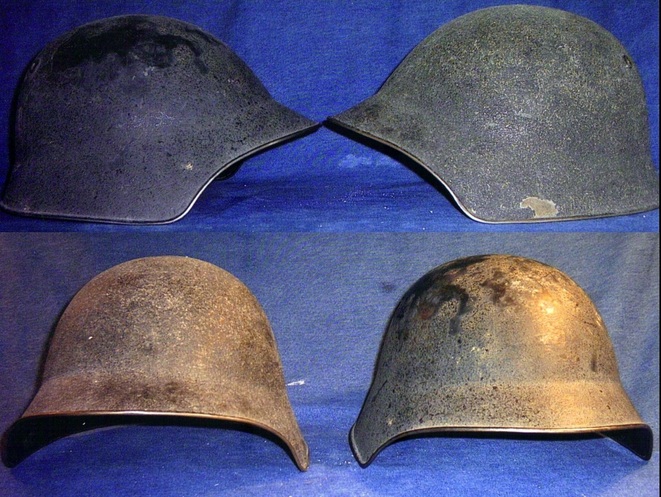
The Swiss M18 helmet (also known as the M1918) is a manganese steel combat helmet used by Switzerland from 1924 until its replacement in 1971. It is easily recognized by its deep "coal scuttle" shape and two ventilation holes at the rear of the crown.
Original M18s were painted a smooth gray-green. In 1943, almost all were recalled and repainted in a matte black textured finish mixed with sawdust to reduce reflection.
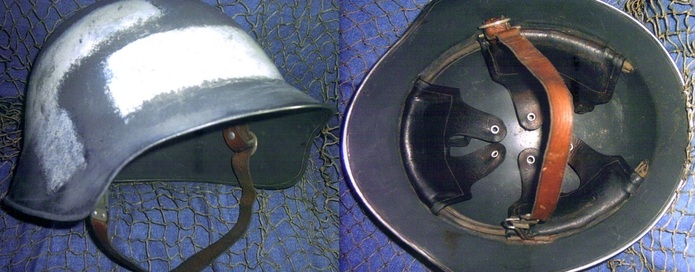
The original M18 featured a full-circle leather liner band with three pads. The updated M18/40 and M18/43 variants used a "horseshoe" or 3/4 circle liner band that did not go all the way around the back.
Unlike German helmets which have side vents, the Swiss M18 has two distinctive vent holes located toward the rear.
Often marked on the rear inner shell or the underside of the liner pads with "A" (small, for heads under 58cm) or "B" (large, for 59cm and above).
Major Variants
M18 (Original): Deepest side skirts; smooth gray-green paint; full circular liner.
M18/40: Slightly shallower skirt to improve vision while shooting; introduced the 3/4 circle liner.
M18/63: Final modernization with a slightly lower visor and updated liner system.
Civil Defense: Painted bright fluorescent yellow for rescue and firefighting services
Original M18s were painted a smooth gray-green. In 1943, almost all were recalled and repainted in a matte black textured finish mixed with sawdust to reduce reflection.
The original M18 featured a full-circle leather liner band with three pads. The updated M18/40 and M18/43 variants used a "horseshoe" or 3/4 circle liner band that did not go all the way around the back.
Unlike German helmets which have side vents, the Swiss M18 has two distinctive vent holes located toward the rear.
Often marked on the rear inner shell or the underside of the liner pads with "A" (small, for heads under 58cm) or "B" (large, for 59cm and above).
Major Variants
M18 (Original): Deepest side skirts; smooth gray-green paint; full circular liner.
M18/40: Slightly shallower skirt to improve vision while shooting; introduced the 3/4 circle liner.
M18/63: Final modernization with a slightly lower visor and updated liner system.
Civil Defense: Painted bright fluorescent yellow for rescue and firefighting services
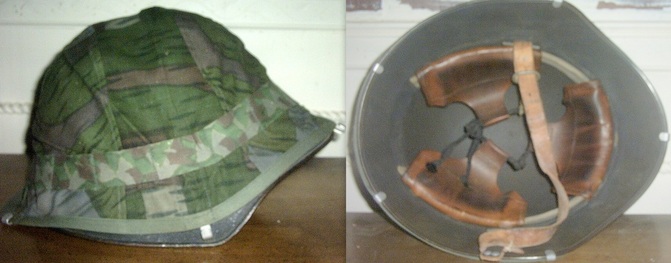
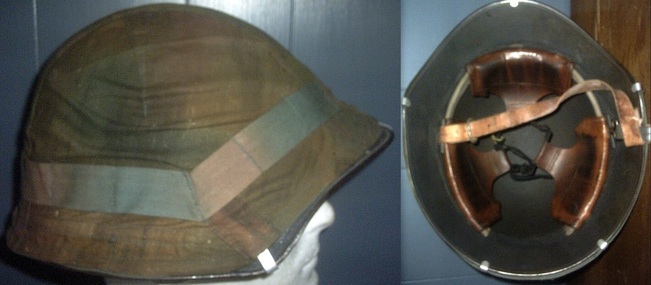
Left: M18.. Right: M18/40.
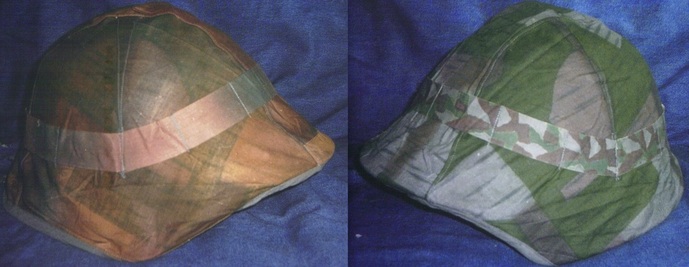
M18 Swiss reversible cover, camouflage pattern, (Zeltbahn M31).
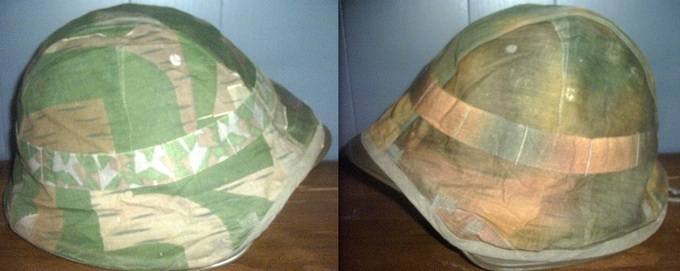
M18 Swiss Helmet with Snow Camo.
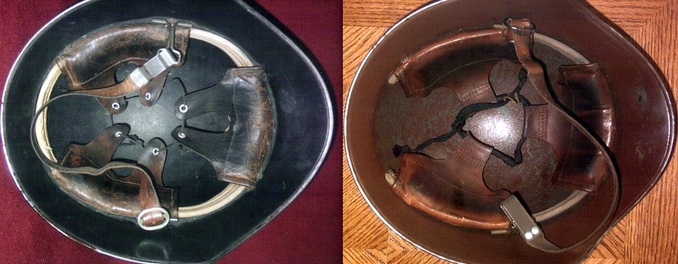
Left: M18/40 Liner. Right: M18/63 Liner.
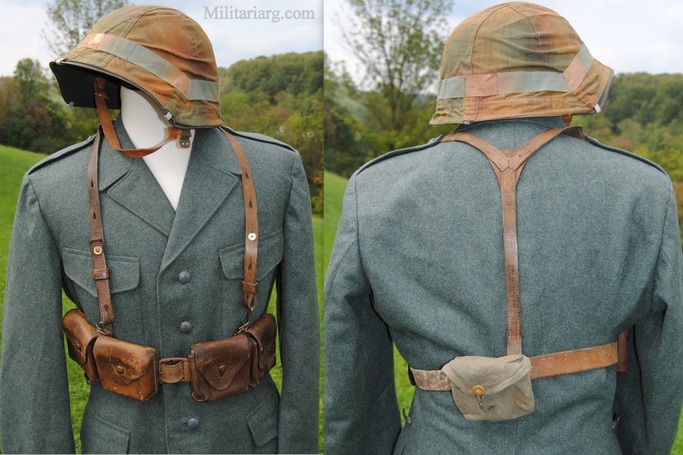
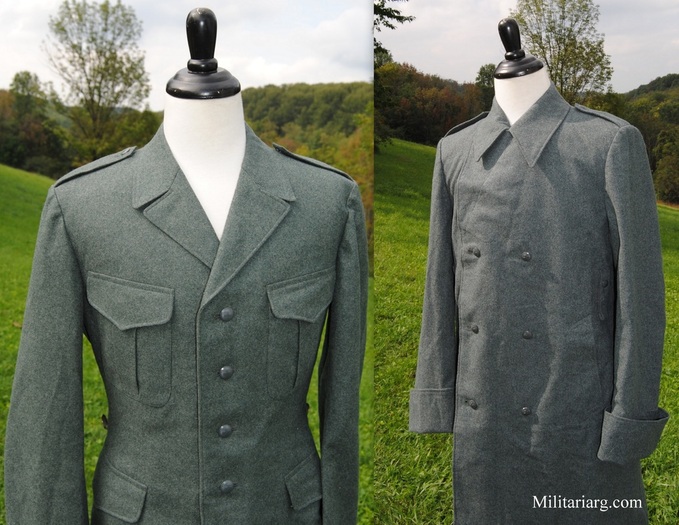
Swiss Army Uniform.
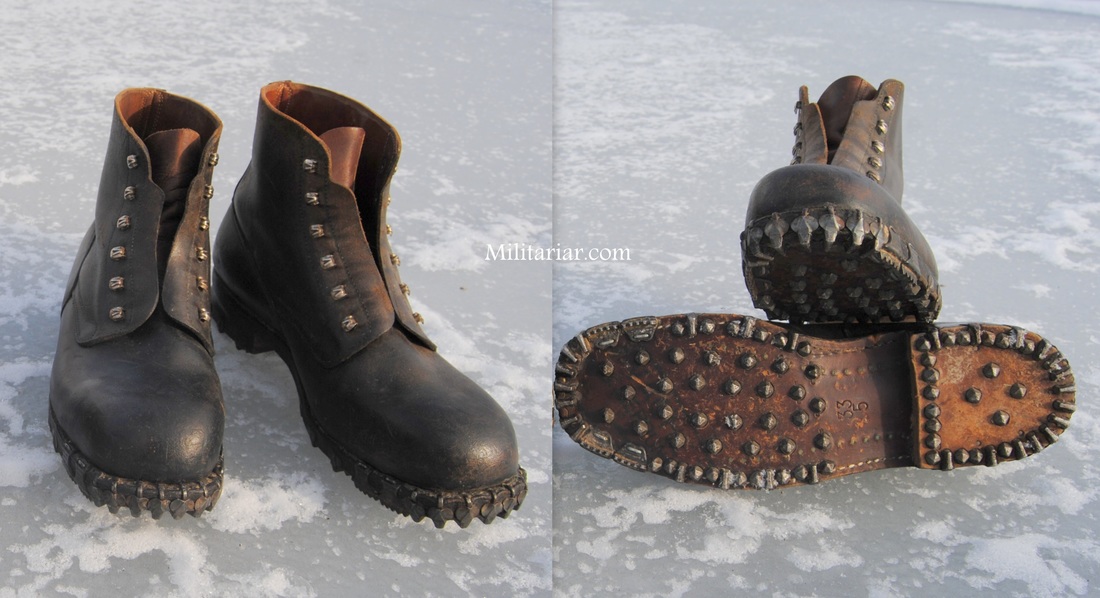
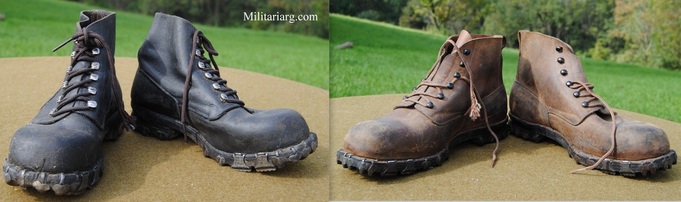
Alpine Swiss Mountain Boots in black and brown, (Made by "Dierauer"
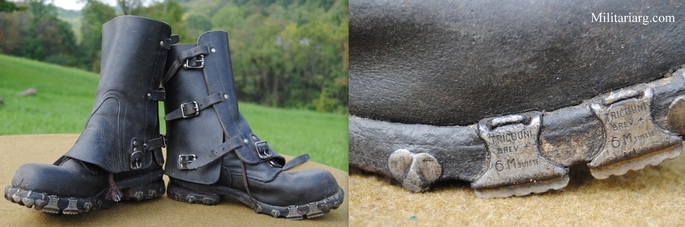
Swiss Snow Leather Gaiters. Side cleats marked: "TRICOUNI 8 REV + 6M SUISSE".
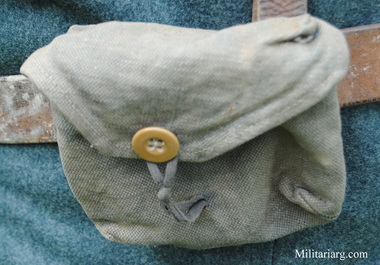
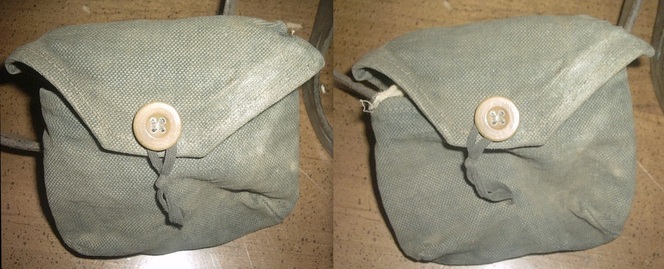
Canvas ammo pouch with cleaning kit.
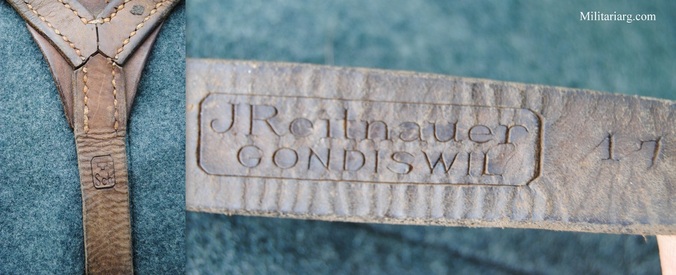
The strap has "J Reitnauer CONDISWIL" AND "17".
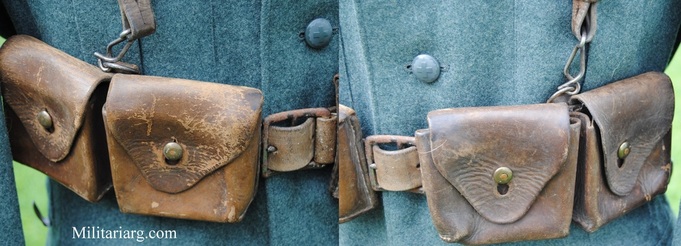
Swiss Schmidt Rubin Ammo Pouches. Marked ""RUD JORDI SATTLER AZIWIL" ; "A K M" and
"ARNOLD WORPE SELLIER".
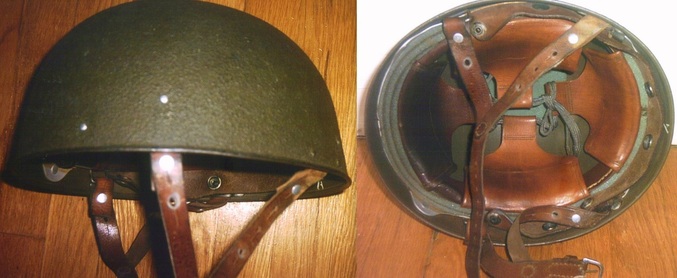
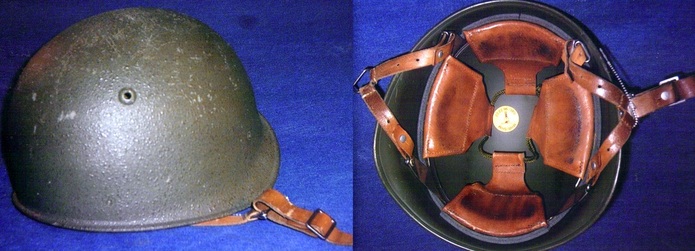
M48/62 Schutzhelme
The Swiss Schutzhelme M48/62 is a unique steel helmet based on the British dispatch rider design from World War II, primarily used by special Swiss units like tank crews, paratroopers, and dispatch riders from the early 1960s onward.
In 1948, Switzerland imported surplus British helmets (AT Mk-II, RAC Mk-II, and DR Mk-I) and designated them the M48. In 1955, the Swiss decided to manufacture their own version domestically, based on the British design, which were finally issued in 1962, creating the M48/62 designation.
The helmet shell is a single piece of steel, similar in shape to the British models, but Swiss-made ones can sometimes be identified by the specific number of rivets used to attach the liner and chin strap system.
The M48/62 utilized a modern Swiss-made liner consisting of four leather flaps held by an aluminum frame, which improved comfort and stability over older systems. The liner system allowed for a neck protector to be attached for motorcyclists.
Helmets were initially delivered in a matte dark gray color and later transitioned to a matte olive green color after 1971.
They were used by specific roles within the Swiss Army until the introduction of the M71 helmet in the mid-1970s.
In 1948, Switzerland imported surplus British helmets (AT Mk-II, RAC Mk-II, and DR Mk-I) and designated them the M48. In 1955, the Swiss decided to manufacture their own version domestically, based on the British design, which were finally issued in 1962, creating the M48/62 designation.
The helmet shell is a single piece of steel, similar in shape to the British models, but Swiss-made ones can sometimes be identified by the specific number of rivets used to attach the liner and chin strap system.
The M48/62 utilized a modern Swiss-made liner consisting of four leather flaps held by an aluminum frame, which improved comfort and stability over older systems. The liner system allowed for a neck protector to be attached for motorcyclists.
Helmets were initially delivered in a matte dark gray color and later transitioned to a matte olive green color after 1971.
They were used by specific roles within the Swiss Army until the introduction of the M71 helmet in the mid-1970s.
M71/79 Swiss Helmet
The Swiss M71/79 helmet refers to the updated production of the standard M71 steel combat helmet. While the "M71" designation covers the overall model introduced in 1971, the "79" suffix specifically denotes the later manufacturing batches (often stamped BT 79) or helmets that include a characteristic gear attachment feature.
Back Hook/D-Ring. The most distinct feature of the updated M71/79 series is a small folding D-ring or hook riveted to the rear of the helmet shell. This was designed to allow soldiers to clip the helmet onto their gear or backpack when not in use.
Shell Design. It maintains the hemispherical shape with prominent side flares and is made from 1.15mm steel. The exterior is finished in a matte, dark olive-green paint with a cork-textured finish to reduce glare.
Liner and Strap. Features a four-pad leather liner system adjustable with a drawstring and a four-point chinstrap with a simple hook-and-catch clasp.
Back Hook/D-Ring. The most distinct feature of the updated M71/79 series is a small folding D-ring or hook riveted to the rear of the helmet shell. This was designed to allow soldiers to clip the helmet onto their gear or backpack when not in use.
Shell Design. It maintains the hemispherical shape with prominent side flares and is made from 1.15mm steel. The exterior is finished in a matte, dark olive-green paint with a cork-textured finish to reduce glare.
Liner and Strap. Features a four-pad leather liner system adjustable with a drawstring and a four-point chinstrap with a simple hook-and-catch clasp.
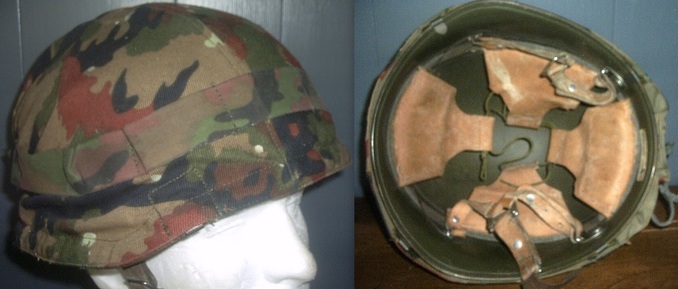
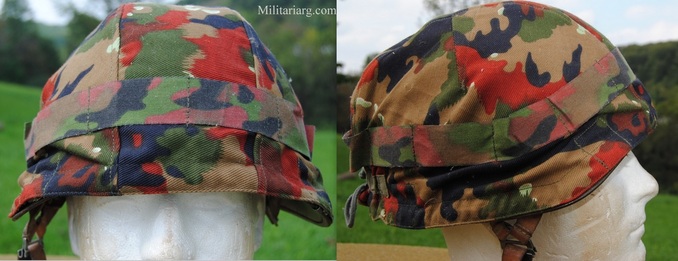
Swiss Helmet M71/79 often found with the TAZ 83 "Alpenflage" (or "Pizza Camo") cover, which includes integrated fabric loops for adding natural foliage.
Alpenfage Camo
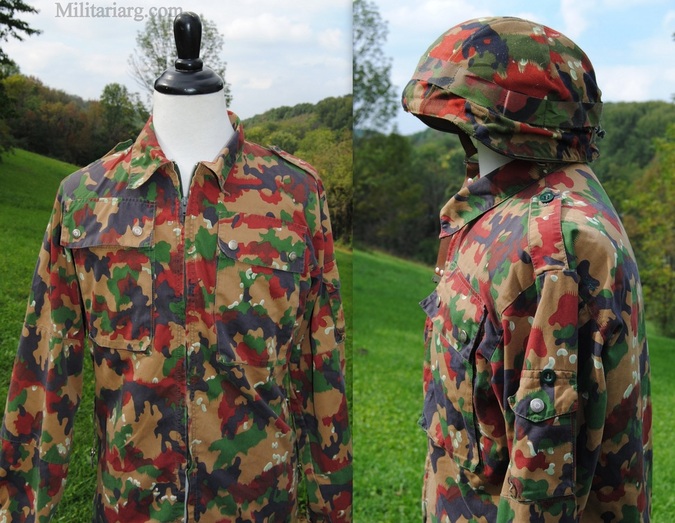
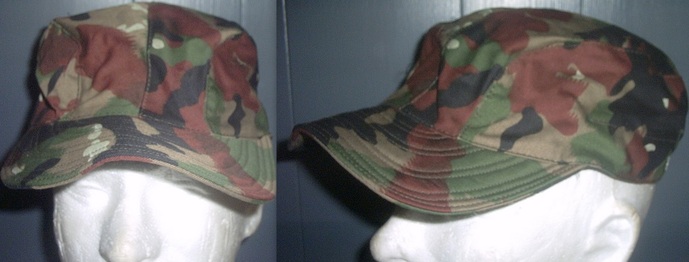
Alpenflage (officially TAZ 83 or Tarnanzug 83) is a distinctive six-color camouflage pattern used by the Swiss Armed Forces from the 1950s until the early 1990s. Known for its bold use of red, it was specifically designed to blend into the unique light and vegetation of the Swiss Alpine landscape.
The pattern consists of tan, white flecks, light green, reddish-brown, black, and a prominent bright red.
While red seems counterintuitive for camouflage, it effectively mimics red lichen on rocks and the russet tones of autumn beech and larch forests in the Alps. At a distance, atmospheric scattering helps these colors blend into a neutral brown.
Due to its colorful appearance, it is often called "Pizza Camo" by Americans or "Fruit Pajamas" by Swiss soldiers.
The design is heavily inspired by the WWII German Leibermuster pattern, which was the first to use light-absorbing dyes to defeat early night-vision devices.
Major Gear and Variants
TAZ 57 (M70): The early version, often featuring "heavy" uniforms with massive storage capacity, including integrated rucksacks and sniper veils.
TAZ 83 (M83): A lightweight modernization introduced in the 1980s, featuring simpler field jackets and trousers without the bulky integrated rucksacks.
Helmet Covers: Specifically designed for the M71/79 helmet, these covers feature drawstring attachments and fabric loops for inserting natural foliage.
The pattern consists of tan, white flecks, light green, reddish-brown, black, and a prominent bright red.
While red seems counterintuitive for camouflage, it effectively mimics red lichen on rocks and the russet tones of autumn beech and larch forests in the Alps. At a distance, atmospheric scattering helps these colors blend into a neutral brown.
Due to its colorful appearance, it is often called "Pizza Camo" by Americans or "Fruit Pajamas" by Swiss soldiers.
The design is heavily inspired by the WWII German Leibermuster pattern, which was the first to use light-absorbing dyes to defeat early night-vision devices.
Major Gear and Variants
TAZ 57 (M70): The early version, often featuring "heavy" uniforms with massive storage capacity, including integrated rucksacks and sniper veils.
TAZ 83 (M83): A lightweight modernization introduced in the 1980s, featuring simpler field jackets and trousers without the bulky integrated rucksacks.
Helmet Covers: Specifically designed for the M71/79 helmet, these covers feature drawstring attachments and fabric loops for inserting natural foliage.
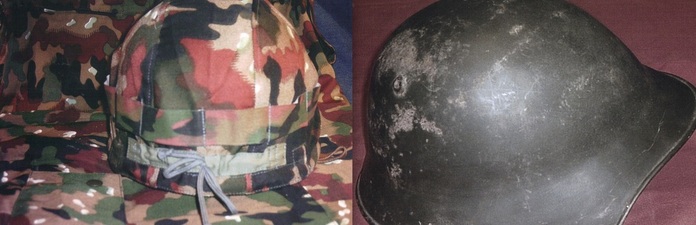
left: M71 Helmet with "Alpenflage-leibermuster Camouflage". Right: Very early M18 Helmet.
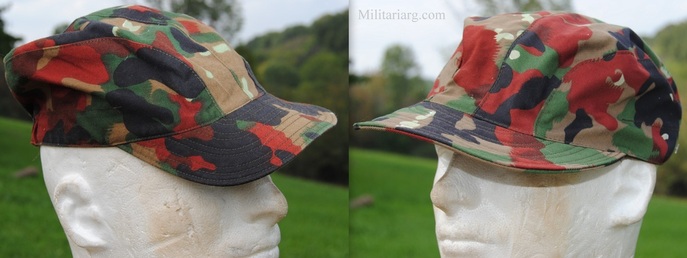
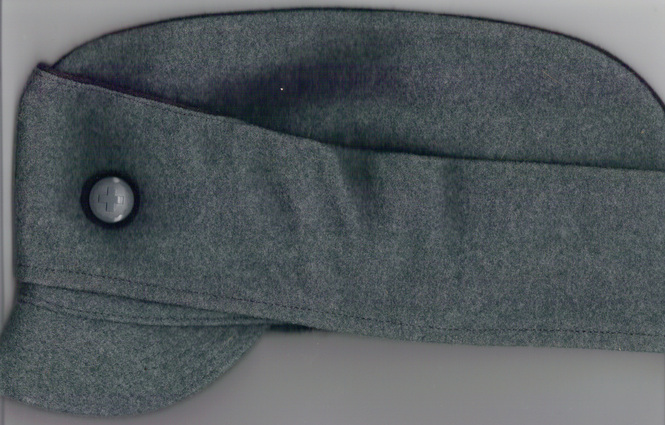
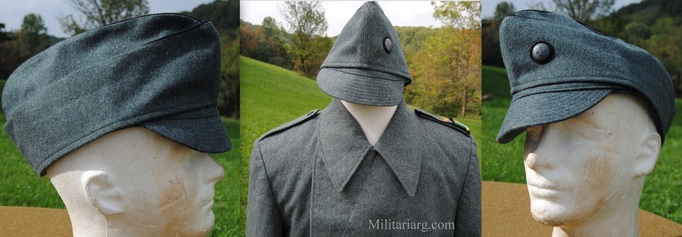
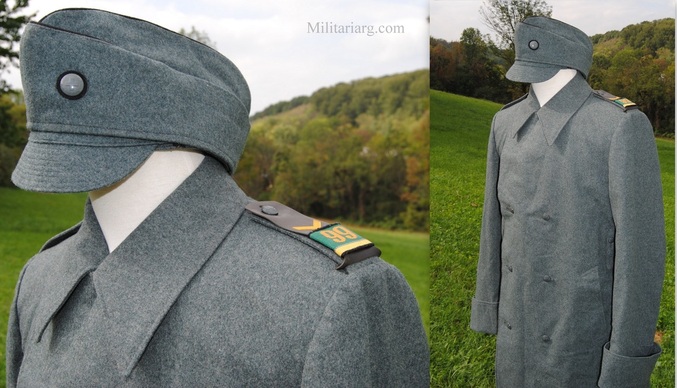
Swiss Camo Cap.
The Swiss Army during the Cold War relied heavily on a policy of armed neutrality, maintaining a large militia force equipped with a blend of robust, domestically designed and produced equipment, alongside imported tanks and artillery.
Weapons
Swiss small arms were known for their quality and precision, often developed domestically.
Rifles: The primary service rifle for much of the Cold War was the Sturmgewehr 57 (Stgw 57), or SIG SG 510. This was a highly regarded and accurate 7.5x55mm battle rifle with an integrated bipod. In the late 1980s, this began to be replaced by the lighter Sturmgewehr 90 (Stgw 90), or SIG SG 550, a 5.56x45mm assault rifle.
Pistols: The Pistole 49 (SIG Sauer P210) was a high-quality, precision sidearm, later supplemented by the Pistole 75 (SIG Sauer P220).
Machine Guns: The MG 51 was the standard general-purpose machine gun, a domestically developed 7.5mm weapon that evolved from World War II-era designs.
Anti-Tank Weapons: The army used shoulder-launched systems like the M72 LAW and later acquired the Panzerfaust 3 shoulder-launched recoilless weapon toward the end of the Cold War.
Artillery
The Swiss utilized a combination of robust WWI-era towed artillery and modern self-propelled systems.
Towed Artillery: Older systems, including some from the WWI era, remained in use in static defensive positions.
Self-Propelled Howitzers: The Swiss Army purchased 577 American M109 self-propelled howitzers (designated Panzerhaubitze 66 in Swiss service). These were heavily modified and upgraded domestically over time (e.g., KAWEST program), extending their range and capabilities.
Mortars: The Minenwerferpanzer 64 was an M106A1 mortar carrier carrying a 120mm mortar.
Tanks and Vehicles
Switzerland's armored forces were a mix of imported, second-hand tanks and indigenous designs.
Main Battle Tanks (MBTs):
Centurion: Switzerland purchased 312 British Centurion tanks between 1955 and 1961 (designated Panzer 55 and Panzer 57), which were then upgraded with Swiss equipment, including the British L7 105mm gun.
Panzer 61 & 68: The Swiss also developed and produced their own indigenous MBTs. The Panzer 61 was standardized in the 1960s, and the improved Panzer 68 became the primary domestic tank until the late 1980s.
Leopard 2: In the late 1980s, the Swiss adopted the German Leopard 2A4, produced under license as the Panzer 87, to replace the older Centurions and Pz 61s.
Armored Personnel Carriers (APCs):
M113: The U.S.-made M113 APC was purchased in large quantities (designated Schützenpanzer 63 in Swiss service) and became the standard tracked APC.
MOWAG Piranha: The Swiss company MOWAG developed the highly successful Piranha family of wheeled armored vehicles, which entered Swiss service and was exported worldwide.
Other Vehicles: The army used British Universal Carriers early on and developed a variety of engineering and recovery vehicles based on their tank chassis.
Weapons
Swiss small arms were known for their quality and precision, often developed domestically.
Rifles: The primary service rifle for much of the Cold War was the Sturmgewehr 57 (Stgw 57), or SIG SG 510. This was a highly regarded and accurate 7.5x55mm battle rifle with an integrated bipod. In the late 1980s, this began to be replaced by the lighter Sturmgewehr 90 (Stgw 90), or SIG SG 550, a 5.56x45mm assault rifle.
Pistols: The Pistole 49 (SIG Sauer P210) was a high-quality, precision sidearm, later supplemented by the Pistole 75 (SIG Sauer P220).
Machine Guns: The MG 51 was the standard general-purpose machine gun, a domestically developed 7.5mm weapon that evolved from World War II-era designs.
Anti-Tank Weapons: The army used shoulder-launched systems like the M72 LAW and later acquired the Panzerfaust 3 shoulder-launched recoilless weapon toward the end of the Cold War.
Artillery
The Swiss utilized a combination of robust WWI-era towed artillery and modern self-propelled systems.
Towed Artillery: Older systems, including some from the WWI era, remained in use in static defensive positions.
Self-Propelled Howitzers: The Swiss Army purchased 577 American M109 self-propelled howitzers (designated Panzerhaubitze 66 in Swiss service). These were heavily modified and upgraded domestically over time (e.g., KAWEST program), extending their range and capabilities.
Mortars: The Minenwerferpanzer 64 was an M106A1 mortar carrier carrying a 120mm mortar.
Tanks and Vehicles
Switzerland's armored forces were a mix of imported, second-hand tanks and indigenous designs.
Main Battle Tanks (MBTs):
Centurion: Switzerland purchased 312 British Centurion tanks between 1955 and 1961 (designated Panzer 55 and Panzer 57), which were then upgraded with Swiss equipment, including the British L7 105mm gun.
Panzer 61 & 68: The Swiss also developed and produced their own indigenous MBTs. The Panzer 61 was standardized in the 1960s, and the improved Panzer 68 became the primary domestic tank until the late 1980s.
Leopard 2: In the late 1980s, the Swiss adopted the German Leopard 2A4, produced under license as the Panzer 87, to replace the older Centurions and Pz 61s.
Armored Personnel Carriers (APCs):
M113: The U.S.-made M113 APC was purchased in large quantities (designated Schützenpanzer 63 in Swiss service) and became the standard tracked APC.
MOWAG Piranha: The Swiss company MOWAG developed the highly successful Piranha family of wheeled armored vehicles, which entered Swiss service and was exported worldwide.
Other Vehicles: The army used British Universal Carriers early on and developed a variety of engineering and recovery vehicles based on their tank chassis.
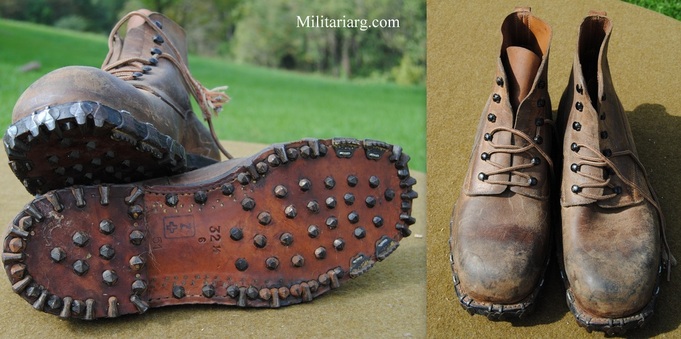
The high quality of classic Swiss mountain boots
The high quality of classic Swiss mountain boots (known as Bergschuhe in German-speaking Switzerland) stemmed from traditional, robust construction methods and the use of specialized metal traction plates and hobnails, invented and refined by Swiss craftsmen.
The unique design focused on durability and maximum grip on alpine terrain (rock, ice, and hard snow) before the invention of modern rubber Vibram soles in 1937.
The boots were constructed from thick, high-quality full-grain leather, often "rough-side out" and heavily treated with dubbin for waterproofing and longevity. Many high-end boots used a sturdy welt construction (like the Norwegian Welt) that allowed for multiple resoles, ensuring the boots lasted for decades.
The primary structure of the sole was built from multiple layers of dense, vegetable-tanned leather, providing structural integrity and shock absorption.
The most distinctive feature was the sole fortification with metal, which provided "performance at any cost" traction.
The unique design focused on durability and maximum grip on alpine terrain (rock, ice, and hard snow) before the invention of modern rubber Vibram soles in 1937.
The boots were constructed from thick, high-quality full-grain leather, often "rough-side out" and heavily treated with dubbin for waterproofing and longevity. Many high-end boots used a sturdy welt construction (like the Norwegian Welt) that allowed for multiple resoles, ensuring the boots lasted for decades.
The primary structure of the sole was built from multiple layers of dense, vegetable-tanned leather, providing structural integrity and shock absorption.
The most distinctive feature was the sole fortification with metal, which provided "performance at any cost" traction.
Invented in 1912 by Swiss jeweler and alpinist Félix-Valentin Genecand (alias "Tricouni"), these were revolutionary. Unlike round hobnails, Tricouni nails were hardened steel cleats with multiple sharp, serrated edges that bit into various surfaces, working like miniature crampons.
These round, flat-topped metal studs were driven into the sole in a specific pattern, particularly in the center of the sole, to enhance durability and grip on soft ground or snow.
Horseshoe-shaped metal plates were often attached to the heel and toe to prevent wear on the leather edges, a practice common in military footwear.
For serious ice climbing or glacier crossings, the boots were designed to be compatible with external crampons—metal frames with large spikes that strapped or clamped onto the sole when extreme traction was needed.
These round, flat-topped metal studs were driven into the sole in a specific pattern, particularly in the center of the sole, to enhance durability and grip on soft ground or snow.
Horseshoe-shaped metal plates were often attached to the heel and toe to prevent wear on the leather edges, a practice common in military footwear.
For serious ice climbing or glacier crossings, the boots were designed to be compatible with external crampons—metal frames with large spikes that strapped or clamped onto the sole when extreme traction was needed.