Sweden was not a Socialist country in the traditional sense of state ownership of the means od production. Instead, it followed a model of social democracy, which combined a strong market economy with an extensive welfare state and high levels of public services. Sweden maintained a strict policy of non-alignment during the entire duration of the Cold War.Its official stance was "non-alignment in peace, aiming for neutrality in war." This policy was seen as crucial for maintaining its independence and preventing it from becoming a battlefield between the Eastern Bloc (Soviet Union) and the Western Bloc (NATO).
Sweden maintained a consistent policy of neutrality during both World War I and World War II and a stance of non-alignment during the Cold War. As a result of this historical posture, Sweden is not currently a member of NATO, although it has applied to join the alliance.
World War I (1914-1918)
Sweden maintained strict neutrality during World War I.
Stance: Sweden avoided direct military conflict but the war did affect its trade and politics.
Challenges: The country faced blockades from both the United Kingdom and Germany, causing food shortages and economic strain. The sinking of Swedish ships by German U-boats led to diplomatic tension.
Political Impact: The war heightened internal political tensions, leading to democratic reforms in the immediate post-war years.
World War II (1939-1945)
Sweden again maintained a policy of neutrality during World War II, often referred to as "benevolent neutrality."
Stance: Sweden avoided invasion, unlike its Scandinavian neighbors Norway and Denmark.
Concessions: Sweden made concessions to both sides to maintain its neutrality.
To Germany: Sweden allowed the German Wehrmacht to transport troops and materiel through its territory (e.g., the Permittenttrafik) and was a major supplier of vital iron ore.
To the Allies: As the war turned, Sweden increasingly favored the Allies, eventually providing training facilities for Danish and Norwegian "police troops" and offering refuge to Jews from Denmark.
Humanitarian Efforts: Sweden became an important haven for refugees during the war.
Cold War
Sweden continued its policy of non-alignment throughout the Cold War, balancing between the Western and Eastern blocs.
Stance: The official policy was "non-alignment in peace, aiming for neutrality in war." This stance involved maintaining a strong and expensive defense force to deter any potential invasion (particularly from the Soviet Union).
Defense Industry: Sweden developed a powerful domestic arms industry (e.g., Saab, Bofors) to ensure self-sufficiency in defense.
Covert Ties: While officially non-aligned, Sweden secretly had a great deal of military cooperation with NATO countries, particularly the United States and the United Kingdom, fearing Soviet expansionism.
NATO
Sweden is not a member of the North Atlantic Treaty Organization (NATO), but this is currently changing.
Long-Standing Policy: Sweden maintained its non-alignment and neutrality after the Cold War ended.
Post-Invasion Shift: Following Russia's full-scale invasion of Ukraine in February 2022, Sweden—along with neighboring Finland—fundamentally shifted its long-standing security policy.
Membership Application: In May 2022, Sweden formally applied to join NATO. Finland joined in April 2023.
Current Status: As of early 2024, Sweden is in the final stages of its accession process, pending final ratification by all existing member states, and expects to become a full member soon.
World War I (1914-1918)
Sweden maintained strict neutrality during World War I.
Stance: Sweden avoided direct military conflict but the war did affect its trade and politics.
Challenges: The country faced blockades from both the United Kingdom and Germany, causing food shortages and economic strain. The sinking of Swedish ships by German U-boats led to diplomatic tension.
Political Impact: The war heightened internal political tensions, leading to democratic reforms in the immediate post-war years.
World War II (1939-1945)
Sweden again maintained a policy of neutrality during World War II, often referred to as "benevolent neutrality."
Stance: Sweden avoided invasion, unlike its Scandinavian neighbors Norway and Denmark.
Concessions: Sweden made concessions to both sides to maintain its neutrality.
To Germany: Sweden allowed the German Wehrmacht to transport troops and materiel through its territory (e.g., the Permittenttrafik) and was a major supplier of vital iron ore.
To the Allies: As the war turned, Sweden increasingly favored the Allies, eventually providing training facilities for Danish and Norwegian "police troops" and offering refuge to Jews from Denmark.
Humanitarian Efforts: Sweden became an important haven for refugees during the war.
Cold War
Sweden continued its policy of non-alignment throughout the Cold War, balancing between the Western and Eastern blocs.
Stance: The official policy was "non-alignment in peace, aiming for neutrality in war." This stance involved maintaining a strong and expensive defense force to deter any potential invasion (particularly from the Soviet Union).
Defense Industry: Sweden developed a powerful domestic arms industry (e.g., Saab, Bofors) to ensure self-sufficiency in defense.
Covert Ties: While officially non-aligned, Sweden secretly had a great deal of military cooperation with NATO countries, particularly the United States and the United Kingdom, fearing Soviet expansionism.
NATO
Sweden is not a member of the North Atlantic Treaty Organization (NATO), but this is currently changing.
Long-Standing Policy: Sweden maintained its non-alignment and neutrality after the Cold War ended.
Post-Invasion Shift: Following Russia's full-scale invasion of Ukraine in February 2022, Sweden—along with neighboring Finland—fundamentally shifted its long-standing security policy.
Membership Application: In May 2022, Sweden formally applied to join NATO. Finland joined in April 2023.
Current Status: As of early 2024, Sweden is in the final stages of its accession process, pending final ratification by all existing member states, and expects to become a full member soon.
Cold War
Sweden's Cold War military posture of armed neutrality meant it developed and produced the majority of its own high-quality equipment, from unique tanks to advanced aircraft, while also importing certain key systems from Western allies.
Weapons
Swedish small arms were high quality, domestically produced designs known for their reliability.
Rifles: The primary service rifle through much of the Cold War was the Automatkarbin 4 (Ak 4), a license-built version of the German Heckler & Koch G3 battle rifle. This was later supplemented in the 1980s by the Automatkarbin 5 (Ak 5), a Swedish-modified version of the Belgian FN FNC, chambered in 5.56mm NATO.
Submachine Guns: The domestically designed Kulsprutepistol m/45 (or Carl Gustaf M/45) was the standard SMG and widely used, proving very reliable.
Machine Guns: The Belgian FN MAG was adopted as the Kulspruta m/58 (Ksp 58) as the standard general-purpose machine gun.
Anti-Tank Weapons: The domestically produced Carl Gustaf 84mm recoilless rifle (designated Granatgevär m/48, or Grg m/48) was a primary anti-tank weapon for infantry and remains in service worldwide.
Artillery
Swedish artillery was notable for its innovative and powerful domestic designs developed by Bofors.
Self-Propelled Artillery: The most remarkable was the Bandkanon 1C (Bkan 1C), a self-propelled 155mm gun capable of firing an astonishing 14 rounds in under 48 seconds.
Towed Howitzers: The Haubits FH77 was a domestically designed 155mm towed field howitzer.
Infantry Support: Various towed field guns and mortars were used, including 120mm mortars.
Tanks and Vehicles
Sweden's armored vehicles combined British imports with unique, innovative domestic designs to suit the country's terrain and defensive doctrine.
Main Battle Tanks (MBTs):
Centurion: Sweden imported 350 British Centurion tanks from the 1950s onwards, which formed the staple of its armored forces for decades, designated Stridsvagn 81 and various other Strv models.
Stridsvagn 103 (S-Tank): A highly innovative, unique turretless main battle tank designed and built in Sweden. The main Bofors 105mm gun was fixed in the hull, with aiming achieved through a hydropneumatic suspension system. It was designed to be crewed by three people, with redundant controls allowing any crew member to drive and fire the tank.
Armored Personnel Carriers (APCs) & IFVs:
Pansarbandvagn 302 (Pbv 302): A domestically produced tracked APC widely used by the Swedish Army.
Infanterikanonvagn 91 (Ikv 91): A light, highly mobile infantry support vehicle/tank destroyer armed with a 90mm gun.
Utility Vehicles: Sweden excelled at producing specialized vehicles for its terrain, including the articulated tracked all-terrain vehicles Bv 202 and its successor Bv 206, which were used for transport in snow and difficult terrain.
Sweden's Cold War military posture of armed neutrality meant it developed and produced the majority of its own high-quality equipment, from unique tanks to advanced aircraft, while also importing certain key systems from Western allies.
Weapons
Swedish small arms were high quality, domestically produced designs known for their reliability.
Rifles: The primary service rifle through much of the Cold War was the Automatkarbin 4 (Ak 4), a license-built version of the German Heckler & Koch G3 battle rifle. This was later supplemented in the 1980s by the Automatkarbin 5 (Ak 5), a Swedish-modified version of the Belgian FN FNC, chambered in 5.56mm NATO.
Submachine Guns: The domestically designed Kulsprutepistol m/45 (or Carl Gustaf M/45) was the standard SMG and widely used, proving very reliable.
Machine Guns: The Belgian FN MAG was adopted as the Kulspruta m/58 (Ksp 58) as the standard general-purpose machine gun.
Anti-Tank Weapons: The domestically produced Carl Gustaf 84mm recoilless rifle (designated Granatgevär m/48, or Grg m/48) was a primary anti-tank weapon for infantry and remains in service worldwide.
Artillery
Swedish artillery was notable for its innovative and powerful domestic designs developed by Bofors.
Self-Propelled Artillery: The most remarkable was the Bandkanon 1C (Bkan 1C), a self-propelled 155mm gun capable of firing an astonishing 14 rounds in under 48 seconds.
Towed Howitzers: The Haubits FH77 was a domestically designed 155mm towed field howitzer.
Infantry Support: Various towed field guns and mortars were used, including 120mm mortars.
Tanks and Vehicles
Sweden's armored vehicles combined British imports with unique, innovative domestic designs to suit the country's terrain and defensive doctrine.
Main Battle Tanks (MBTs):
Centurion: Sweden imported 350 British Centurion tanks from the 1950s onwards, which formed the staple of its armored forces for decades, designated Stridsvagn 81 and various other Strv models.
Stridsvagn 103 (S-Tank): A highly innovative, unique turretless main battle tank designed and built in Sweden. The main Bofors 105mm gun was fixed in the hull, with aiming achieved through a hydropneumatic suspension system. It was designed to be crewed by three people, with redundant controls allowing any crew member to drive and fire the tank.
Armored Personnel Carriers (APCs) & IFVs:
Pansarbandvagn 302 (Pbv 302): A domestically produced tracked APC widely used by the Swedish Army.
Infanterikanonvagn 91 (Ikv 91): A light, highly mobile infantry support vehicle/tank destroyer armed with a 90mm gun.
Utility Vehicles: Sweden excelled at producing specialized vehicles for its terrain, including the articulated tracked all-terrain vehicles Bv 202 and its successor Bv 206, which were used for transport in snow and difficult terrain.
WW1
Sweden maintained a policy of armed neutrality during World War I and did not engage in combat. Its military was equipped with domestically produced weapons and artillery designs, many influenced by German and Austro-Hungarian technology. Sweden did not possess any tanks during the war.
Weapons
Swedish small arms were high quality for the era and domestically produced by Carl Gustafs stads Gevärsfaktori.
Rifles: The primary infantry weapon was the 6.5×55mm Swedish Mauser rifle, including the Gevär m/96 rifle and the shorter Karbin m/94. These were highly accurate and reliable bolt-action rifles.
Pistols: The standard sidearm was the 7.65mm FN Model 1903, produced under license in Sweden as the Pistol m/07.
Machine Guns: The Swedish Army had a limited number of machine guns compared to the major powers by 1918. It used older designs like the Kulspruta m/14, a localized version of the Schwarzlose machine gun.
Artillery
Swedish artillery incorporated a mix of modern Bofors-produced designs and older models. The Bofors company was a major arms manufacturer at the time.
Field Artillery:
7.5 cm Kanon m/02: The primary field gun, a Bofors design.
10.5 cm Haubits m/10: A Bofors 105mm howitzer used for medium artillery support.
8.4 cm Kanon m/86 or m/94: Older field guns still in service with reserve divisions in 1914.
Siege Artillery: The army also had siege artillery regiments equipped with 15 cm howitzers and 12 cm cannons for fortress defense.
Tanks
Sweden did not operate any tanks during World War I, but in the postwar, Swedish military attachés observed captured British tanks in Germany. In the early 1920s, Sweden acquired a single French Renault FT-17 for testing and ten disassembled German LK II tanks (secretly imported as "tractors and sheet metal work" due to Versailles Treaty restrictions) which were designated the Stridsvagn m/21.
Sweden maintained a policy of armed neutrality during World War I and did not engage in combat. Its military was equipped with domestically produced weapons and artillery designs, many influenced by German and Austro-Hungarian technology. Sweden did not possess any tanks during the war.
Weapons
Swedish small arms were high quality for the era and domestically produced by Carl Gustafs stads Gevärsfaktori.
Rifles: The primary infantry weapon was the 6.5×55mm Swedish Mauser rifle, including the Gevär m/96 rifle and the shorter Karbin m/94. These were highly accurate and reliable bolt-action rifles.
Pistols: The standard sidearm was the 7.65mm FN Model 1903, produced under license in Sweden as the Pistol m/07.
Machine Guns: The Swedish Army had a limited number of machine guns compared to the major powers by 1918. It used older designs like the Kulspruta m/14, a localized version of the Schwarzlose machine gun.
Artillery
Swedish artillery incorporated a mix of modern Bofors-produced designs and older models. The Bofors company was a major arms manufacturer at the time.
Field Artillery:
7.5 cm Kanon m/02: The primary field gun, a Bofors design.
10.5 cm Haubits m/10: A Bofors 105mm howitzer used for medium artillery support.
8.4 cm Kanon m/86 or m/94: Older field guns still in service with reserve divisions in 1914.
Siege Artillery: The army also had siege artillery regiments equipped with 15 cm howitzers and 12 cm cannons for fortress defense.
Tanks
Sweden did not operate any tanks during World War I, but in the postwar, Swedish military attachés observed captured British tanks in Germany. In the early 1920s, Sweden acquired a single French Renault FT-17 for testing and ten disassembled German LK II tanks (secretly imported as "tractors and sheet metal work" due to Versailles Treaty restrictions) which were designated the Stridsvagn m/21.
WW2
During World War II, the Swedish Army was equipped primarily with domestically produced and often highly modern weaponry for a neutral nation, relying heavily on companies like Bofors and Landsverk.
Weapons
Rifles: The standard infantry rifle was the bolt-action Gevär m/96 in 6.5x55mm. A shorter version, the Gevär m/38, was also produced, and a semi-automatic rifle, the Automatgevär m/42 (Ag m/42), was introduced later in the war (1942).
Pistols: The main service pistol was the Pistol m/40, a license-built version of the Finnish Lahti L-35.
Submachine Guns: The Swedish Army used the Kulsprutepistol m/37 (a licensed Finnish Suomi KP/-31) and later the domestically designed Kpist m/45 (which entered service just after the war in 1945).
Machine Guns:
Light/Medium: The Kulsprutegevär m/37 (a licensed M1918 BAR) and the modern, air-cooled Kulspruta m/42, a license-built and modified M1919 Browning, were primary machine guns.
Heavy: The water-cooled Kulspruta m/36 (based on the Browning M1917) was used for tripod and anti-aircraft mounts.
Anti-tank Weapons: The Swedish-designed Bofors 37 mm anti-tank gun was the standard light anti-tank weapon. A heavier 20 mm anti-tank rifle (pansarvärnsgevär m/42) and license-built Bazookas (Raketgevär 46) were also introduced later in the conflict.
Vehicles and Tanks
Sweden's armored force expanded significantly during the war, moving from imported designs to robust domestic production.
Light Tanks: The Landsverk L-60 was an advanced light tank, produced in several variants (Strv m/38, m/39, m/40).
Medium Tanks: The Stridsvagn m/41 was a license-built, upgraded version of the Czech Panzer 38(t). This was followed by the domestically developed Stridsvagn m/42, Sweden's first medium tank, armed with a 75 mm main gun.
Armored Cars: The Swedish Army used the excellent Pansarbil m/39 "Lynx" and Pbil m/40, both domestically produced designs.
Personnel Carriers: The KP-bil, an armored personnel carrier manufactured by Scania-Vabis and Volvo, was introduced late in the war (1944).
Artillery
Swedish artillery was renowned for the quality of Bofors designs, which were widely exported.
Anti-Aircraft: The famous Bofors 40 mm anti-aircraft autocannon (Lvakan m/36) was one of the most effective and widely used AA guns of the war.
Field Artillery: The army used various field guns and howitzers, including the 10.5 cm Haubits m/40, a modern domestic design.
Self-Propelled Artillery: The Stormartillerivagn m/43 (Sav m/43), a self-propelled assault gun based on the Strv m/41 chassis and armed with a 75 mm gun (later a 105 mm howitzer), entered service late in the war.
During World War II, the Swedish Army was equipped primarily with domestically produced and often highly modern weaponry for a neutral nation, relying heavily on companies like Bofors and Landsverk.
Weapons
Rifles: The standard infantry rifle was the bolt-action Gevär m/96 in 6.5x55mm. A shorter version, the Gevär m/38, was also produced, and a semi-automatic rifle, the Automatgevär m/42 (Ag m/42), was introduced later in the war (1942).
Pistols: The main service pistol was the Pistol m/40, a license-built version of the Finnish Lahti L-35.
Submachine Guns: The Swedish Army used the Kulsprutepistol m/37 (a licensed Finnish Suomi KP/-31) and later the domestically designed Kpist m/45 (which entered service just after the war in 1945).
Machine Guns:
Light/Medium: The Kulsprutegevär m/37 (a licensed M1918 BAR) and the modern, air-cooled Kulspruta m/42, a license-built and modified M1919 Browning, were primary machine guns.
Heavy: The water-cooled Kulspruta m/36 (based on the Browning M1917) was used for tripod and anti-aircraft mounts.
Anti-tank Weapons: The Swedish-designed Bofors 37 mm anti-tank gun was the standard light anti-tank weapon. A heavier 20 mm anti-tank rifle (pansarvärnsgevär m/42) and license-built Bazookas (Raketgevär 46) were also introduced later in the conflict.
Vehicles and Tanks
Sweden's armored force expanded significantly during the war, moving from imported designs to robust domestic production.
Light Tanks: The Landsverk L-60 was an advanced light tank, produced in several variants (Strv m/38, m/39, m/40).
Medium Tanks: The Stridsvagn m/41 was a license-built, upgraded version of the Czech Panzer 38(t). This was followed by the domestically developed Stridsvagn m/42, Sweden's first medium tank, armed with a 75 mm main gun.
Armored Cars: The Swedish Army used the excellent Pansarbil m/39 "Lynx" and Pbil m/40, both domestically produced designs.
Personnel Carriers: The KP-bil, an armored personnel carrier manufactured by Scania-Vabis and Volvo, was introduced late in the war (1944).
Artillery
Swedish artillery was renowned for the quality of Bofors designs, which were widely exported.
Anti-Aircraft: The famous Bofors 40 mm anti-aircraft autocannon (Lvakan m/36) was one of the most effective and widely used AA guns of the war.
Field Artillery: The army used various field guns and howitzers, including the 10.5 cm Haubits m/40, a modern domestic design.
Self-Propelled Artillery: The Stormartillerivagn m/43 (Sav m/43), a self-propelled assault gun based on the Strv m/41 chassis and armed with a 75 mm gun (later a 105 mm howitzer), entered service late in the war.
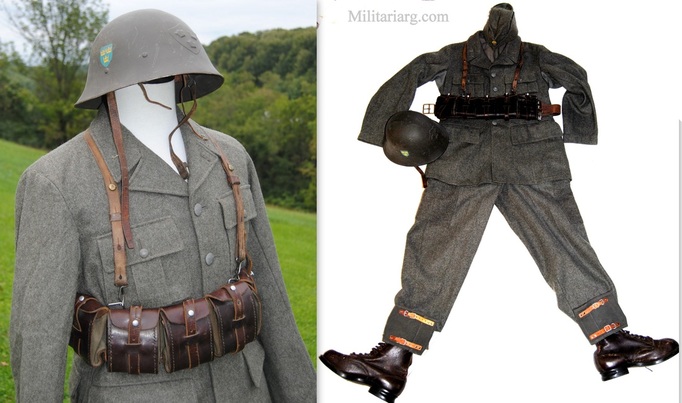
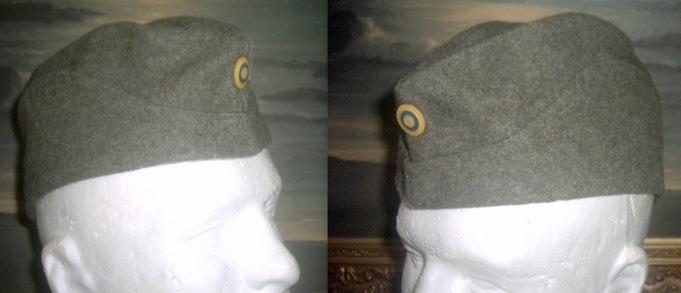
Swedish Overseas Garrison Cap with National Bicolor Cockade.
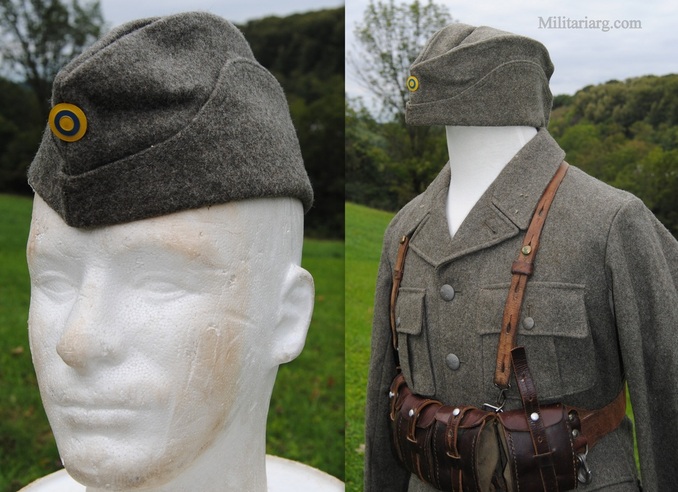
WWII Swedish Uniform.
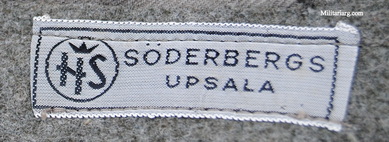
1945 Swedish Combat Jacket. Soderbergs UPSALA.
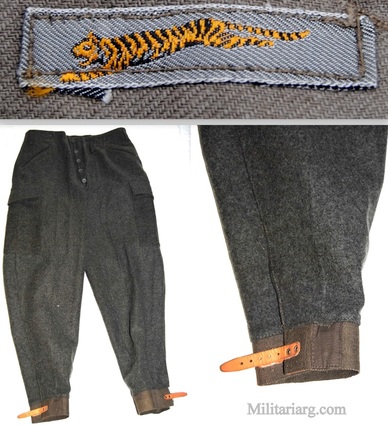
Swedish Combat Trousers. Dated 1944 "Tiger".
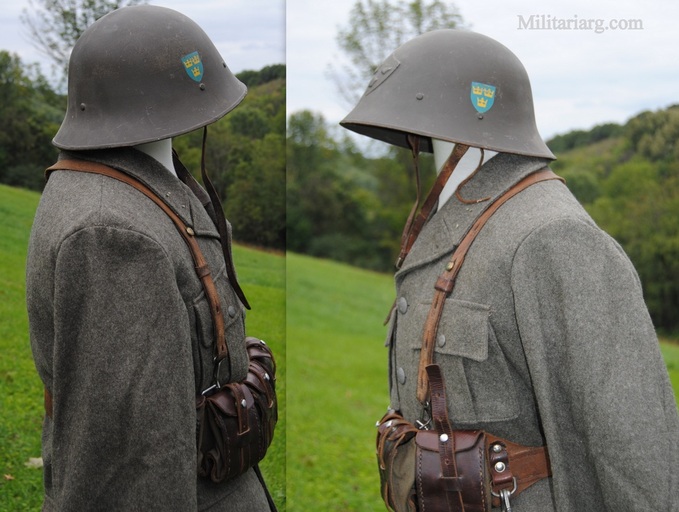
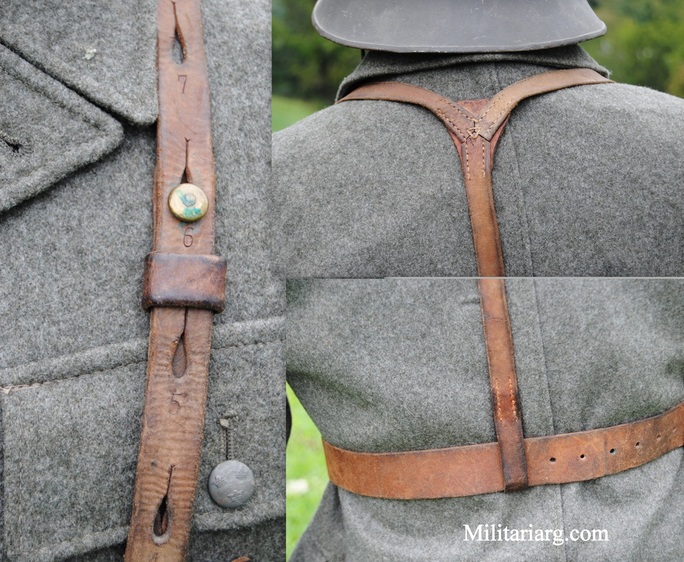
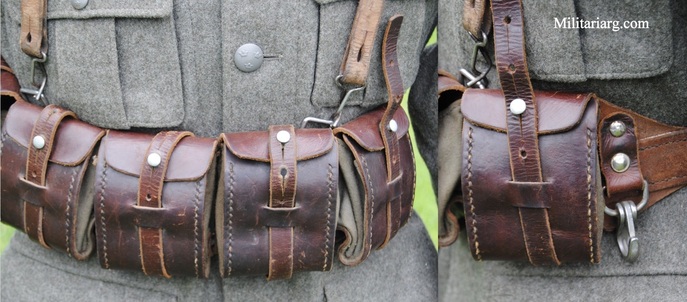
WWII Swedish Mauser 5-Pouch Ammo and suspenders.
Swedish M39 uniform (Enhetsuniform m/39) - WW2
The Swedish M39 uniform (Enhetsuniform m/39) was the primary field uniform for the Swedish Army during World War II. Introduced just after the outbreak of the war, it replaced older high-collar designs with a more modern turn-down collar and was designed for mass production in anticipation of mobilization.
Vapenrock (Tunic/Jacket) m/39: Made from heavy gray-green or field-gray wool. The original WWII version typically featured four front pockets (two pleated breast pockets and two large hip pockets) and sometimes two large "butt pockets" on the posterior for extra gear.
Liner: Usually lined with gray cotton canvas, with canvas panels in the armpits to improve ease of movement.
Buttons: Standard metal buttons embossed with the "Three Crowns" (Tre Kronor) national emblem.
Pants m/39: Heavy gray wool trousers, often featuring attached leather or canvas ankle straps for tightening around boots.
Greatcoat m/39: A long, double-breasted wool overcoat designed to reach below the knees for extreme cold.
Modernization & Post-War Changes
Collectors frequently encounter the M39/58 variant. After WWII, the Swedish government retrofitted existing M39 stocks to match the newer M58 standards.
Vapenrock (Tunic/Jacket) m/39: Made from heavy gray-green or field-gray wool. The original WWII version typically featured four front pockets (two pleated breast pockets and two large hip pockets) and sometimes two large "butt pockets" on the posterior for extra gear.
Liner: Usually lined with gray cotton canvas, with canvas panels in the armpits to improve ease of movement.
Buttons: Standard metal buttons embossed with the "Three Crowns" (Tre Kronor) national emblem.
Pants m/39: Heavy gray wool trousers, often featuring attached leather or canvas ankle straps for tightening around boots.
Greatcoat m/39: A long, double-breasted wool overcoat designed to reach below the knees for extreme cold.
Modernization & Post-War Changes
Collectors frequently encounter the M39/58 variant. After WWII, the Swedish government retrofitted existing M39 stocks to match the newer M58 standards.
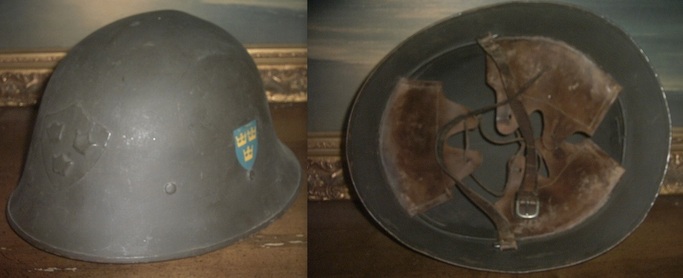
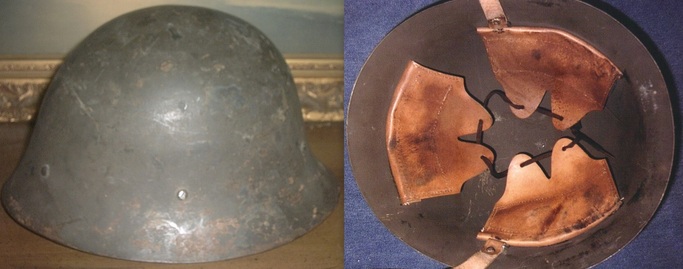
M21/18 Swedish Helmet
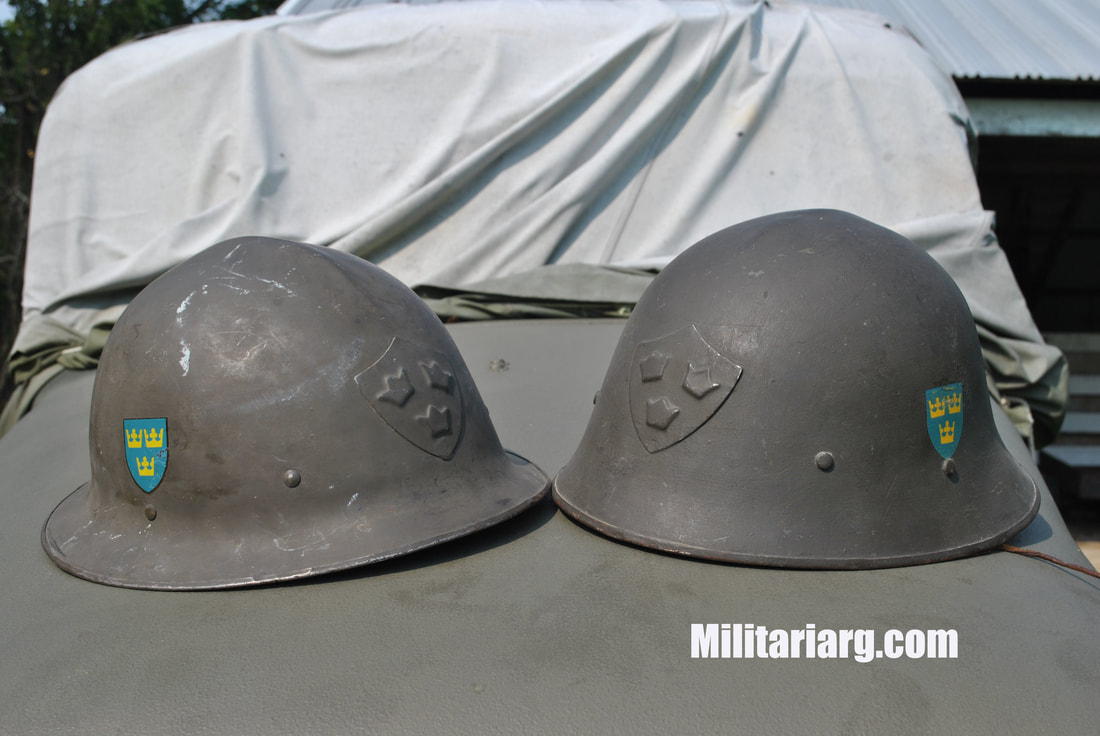
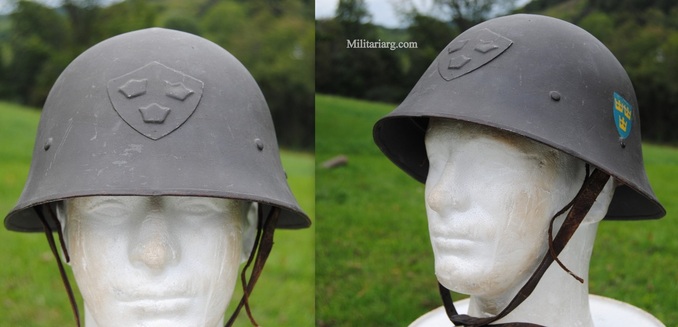
The Swedish M21/18 helmet (Hjälm m/21-18) was the second and more common version of the M21, introduced with a narrower brim and a less pronounced crest than the initial M21-16 variant. It was manufactured from the early 1920s to the late 1930s and remained in service through World War II and beyond.
The M21-18 was a simplification of the M21-16, likely to improve mass production and comfort. Both helmets were based on designs from 1916 and 1918.
It retained the distinctive shield-shaped "Tre Kronor" (Three Crowns) emblem on the front and had the same three-pad leather These helmets were issued to the Swedish Army and home guard and were often refurbished in the 1940s, with additional "Tre Kronor" decals applied to the sides. They served for decades until being gradually replaced by newer models like the M37.
The M21-18 can sometimes be confused with the later M26 helmet, which has a similar shape but lacks the rim and the front crest plate.
The M21-18 was a simplification of the M21-16, likely to improve mass production and comfort. Both helmets were based on designs from 1916 and 1918.
It retained the distinctive shield-shaped "Tre Kronor" (Three Crowns) emblem on the front and had the same three-pad leather These helmets were issued to the Swedish Army and home guard and were often refurbished in the 1940s, with additional "Tre Kronor" decals applied to the sides. They served for decades until being gradually replaced by newer models like the M37.
The M21-18 can sometimes be confused with the later M26 helmet, which has a similar shape but lacks the rim and the front crest plate.
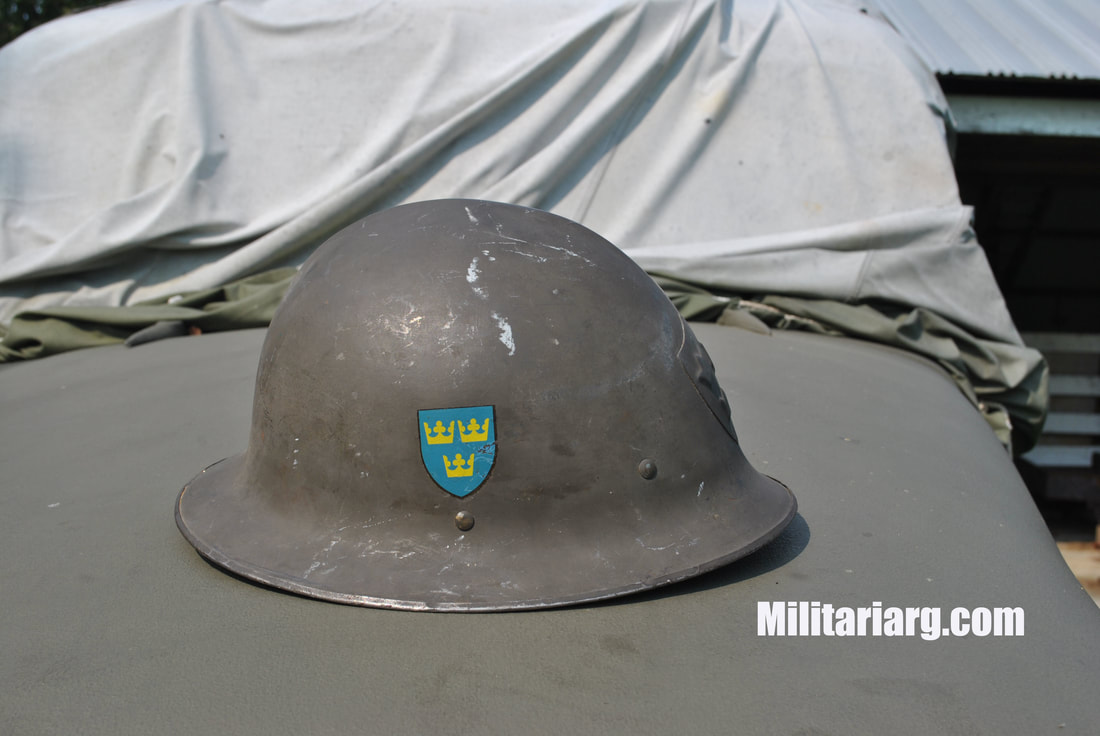
M21/18 re-shoot with a new photo camera.
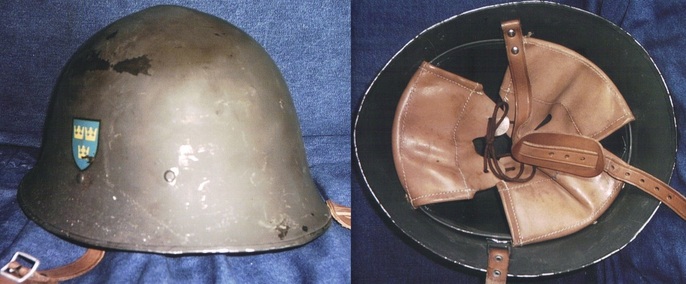
M26 Swedish Helmet
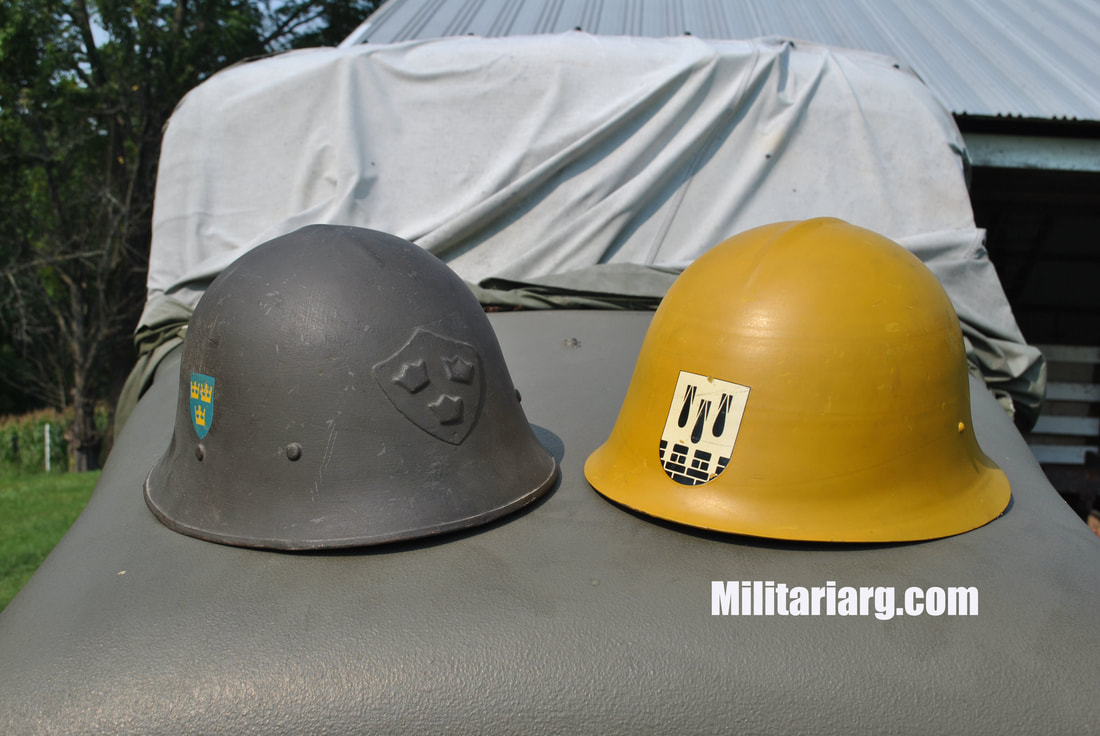
The Swedish M26 helmet was a simplified, cost-effective steel helmet adopted in 1926 that served the Swedish military and later the Civil Defense for many decades. It is identifiable by its raw, unrolled edge and the absence of a front crest or badge on the shell itself.
The M26 was developed to replace the more complex M21 helmet, which was found to be heavy and expensive to produce.
The key design changes were the removal of the front metal crest and a switch from a rolled edge to a simple, raw edge around the rim.
It was made from a durable chromium-nickel steel alloy, making it springy and effective while being lighter than its predecessor.
The helmet used a three-pad leather liner system riveted directly to the shell, doing away with the separate liner band of the M21 model.
While the helmet shell was plain, many examples used by the army or civil defense were later marked with painted "Tre Kronor" (Three Crowns) decals on the sides in the 1940s.
It was the standard military helmet until the introduction of the M37, after which it was widely reissued to the Swedish Civil Defense.
Norwegian Connection:
M26 helmets were also used by Norwegian police troops training in Sweden during World War II.
In the 1960s, many M26 shells were modernized with a new, more comfortable canvas webbing liner system (the M26/65 variant).
The M26 was developed to replace the more complex M21 helmet, which was found to be heavy and expensive to produce.
The key design changes were the removal of the front metal crest and a switch from a rolled edge to a simple, raw edge around the rim.
It was made from a durable chromium-nickel steel alloy, making it springy and effective while being lighter than its predecessor.
The helmet used a three-pad leather liner system riveted directly to the shell, doing away with the separate liner band of the M21 model.
While the helmet shell was plain, many examples used by the army or civil defense were later marked with painted "Tre Kronor" (Three Crowns) decals on the sides in the 1940s.
It was the standard military helmet until the introduction of the M37, after which it was widely reissued to the Swedish Civil Defense.
Norwegian Connection:
M26 helmets were also used by Norwegian police troops training in Sweden during World War II.
In the 1960s, many M26 shells were modernized with a new, more comfortable canvas webbing liner system (the M26/65 variant).
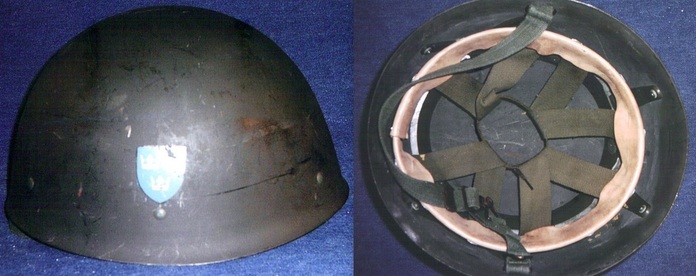
M37 Swedish Helmet
The Swedish M37 helmet (Hjälm m/37) is a military steel helmet used by Swedish armed forces from the late 1930s until it was phased out in the early 2000s. It is available for purchase from various online military surplus retailers.
The M37 helmet has a distinct, simple, and low-profile hemispherical design without a rounded brim, which was considered innovative and effective for deflecting shrapnel and projectiles. It was made from springy steel which helped it bounce off impacts.
Introduced in 1937, it was designed for mass production to supplement earlier, more expensive models. Sweden, though neutral during World War II, supplied these helmets to Finland as war aid during the Winter War.
The original design featured a three-pad leather liner system and a simple chinstrap. In the mid-1960s, the helmet was modernized with a webbed cross-suspension liner, leather sweatband, and an improved canvas chinstrap, leading to the designation M37-65.
The M37 helmet has a distinct, simple, and low-profile hemispherical design without a rounded brim, which was considered innovative and effective for deflecting shrapnel and projectiles. It was made from springy steel which helped it bounce off impacts.
Introduced in 1937, it was designed for mass production to supplement earlier, more expensive models. Sweden, though neutral during World War II, supplied these helmets to Finland as war aid during the Winter War.
The original design featured a three-pad leather liner system and a simple chinstrap. In the mid-1960s, the helmet was modernized with a webbed cross-suspension liner, leather sweatband, and an improved canvas chinstrap, leading to the designation M37-65.
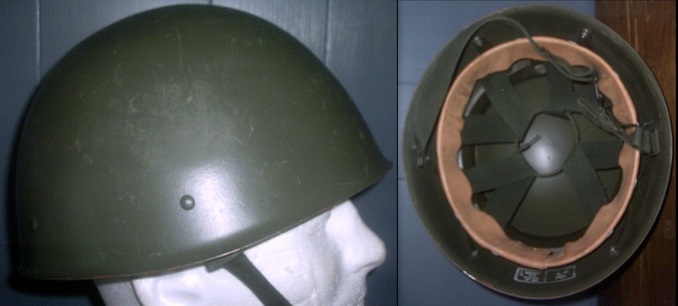
M37/65 Swedish Helmet
The original design featured a three-pad leather liner system and a simple chinstrap. In the mid-1960s, the helmet was modernized with a webbed cross-suspension liner, leather sweatband, and an improved canvas chinstrap, leading to the designation M37/65.
The primary purpose of the modernization was to replace the original, less stable three-pad leather liner from the 1930s with a more comfortable and stable suspension system.
The updated liner featured a webbed cross-suspension (similar to the U.S. M1 helmet style) with a leather sweatband.
A canvas chinstrap with a quick-release mechanism was introduced, replacing the older simple leather strap.
Helmets were often repainted from the original grey to green during this period, though many retained the distinctive "Tre Kronor" (Three Crowns) national emblem decal.
The primary purpose of the modernization was to replace the original, less stable three-pad leather liner from the 1930s with a more comfortable and stable suspension system.
The updated liner featured a webbed cross-suspension (similar to the U.S. M1 helmet style) with a leather sweatband.
A canvas chinstrap with a quick-release mechanism was introduced, replacing the older simple leather strap.
Helmets were often repainted from the original grey to green during this period, though many retained the distinctive "Tre Kronor" (Three Crowns) national emblem decal.
Swedish Helmet M37/65.
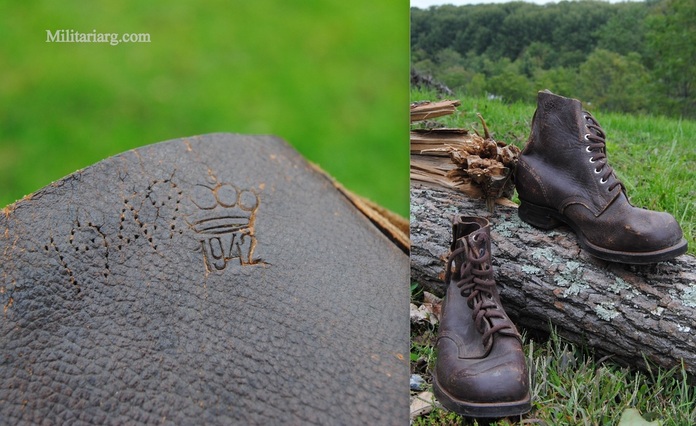
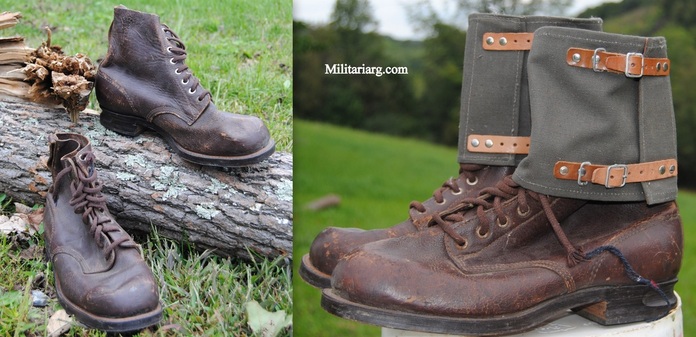
Swedish Boots and Gaiters (German Wehrmacht M43 Style).
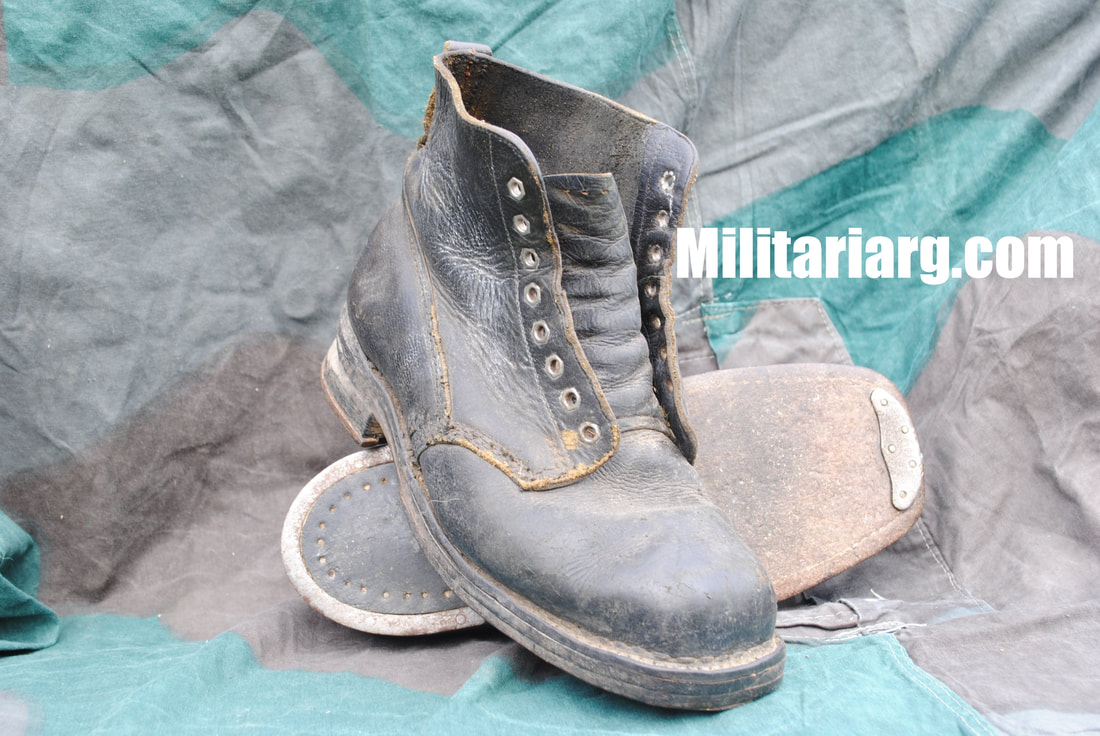
Swedish Army Ski Boots. WW2 or Post. Swedish zeltbahan quartershelter four color pattern camo.
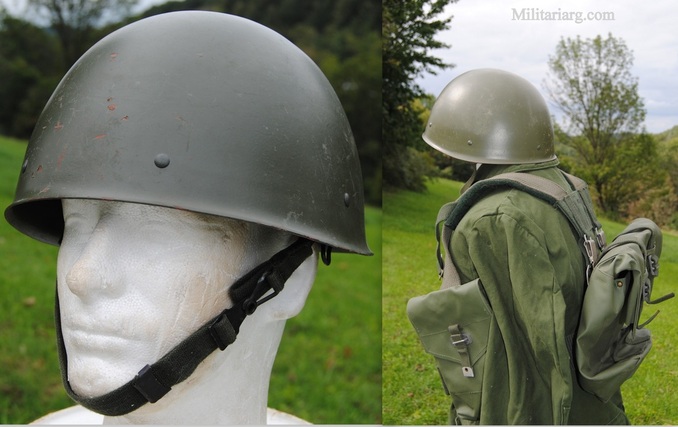
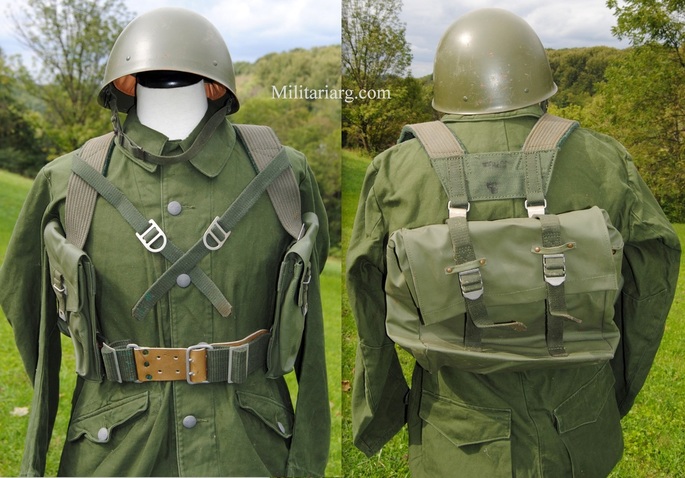
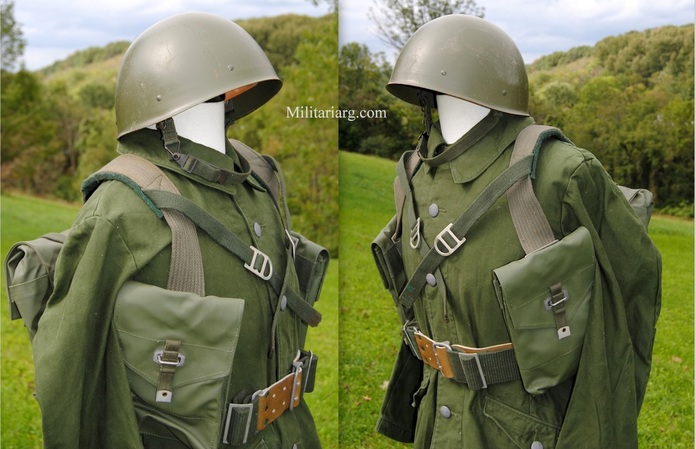
M59 Swedish Combat Uniform and 1980s gear.
Swedish Helmet M21-16
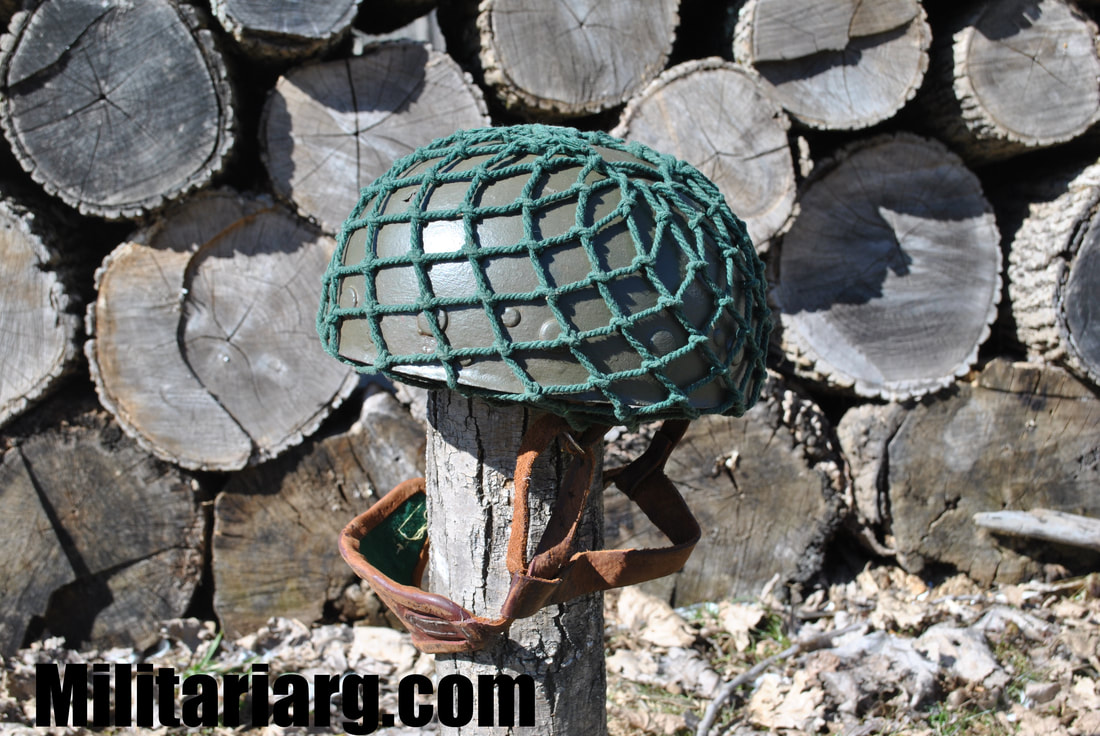
The Swedish M21-16 helmet
was the first version of the Model 1921 steel helmet, characterized by a wider brim and a more pronounced crest than the later M21-18 variant. It was developed from a 1916 design, but production began around 1923 and it was produced in smaller numbers than its successor.
The helmet was made of durable, thick (2.25 mm) steel and weighed about 1200 grams (approximately 2.6 lbs).
It has an "upside-down boat" shape with a small, rolled rim and a distinctive crest along the top.
A shield-shaped metal emblem with a relief image of the Swedish three crowns (Tre Kronor) was soldered to the front.
The original liner system consisted of three double leather straps, attached to an aluminum hoop with three rivets. Small bags filled with horsehair were inside the leather straps for padding.
The chinstrap was made of two leather halves connected by a rectangular clasp.
A unique characteristic of Swedish steel helmets, including the M21-16, is the absence of ventilation holes.
The M21-16 served from the early 1920s through World War II and beyond, alongside other Swedish helmet models. Many were repainted and refurbished in the 1940s, sometimes with additional decals applied to the sides.
This specific variant (M21-16) is less common than the M21-18 or M26 models due to its short production run before being replaced by the M21-18, which featured a narrower brim and less pronounced crest.
was the first version of the Model 1921 steel helmet, characterized by a wider brim and a more pronounced crest than the later M21-18 variant. It was developed from a 1916 design, but production began around 1923 and it was produced in smaller numbers than its successor.
The helmet was made of durable, thick (2.25 mm) steel and weighed about 1200 grams (approximately 2.6 lbs).
It has an "upside-down boat" shape with a small, rolled rim and a distinctive crest along the top.
A shield-shaped metal emblem with a relief image of the Swedish three crowns (Tre Kronor) was soldered to the front.
The original liner system consisted of three double leather straps, attached to an aluminum hoop with three rivets. Small bags filled with horsehair were inside the leather straps for padding.
The chinstrap was made of two leather halves connected by a rectangular clasp.
A unique characteristic of Swedish steel helmets, including the M21-16, is the absence of ventilation holes.
The M21-16 served from the early 1920s through World War II and beyond, alongside other Swedish helmet models. Many were repainted and refurbished in the 1940s, sometimes with additional decals applied to the sides.
This specific variant (M21-16) is less common than the M21-18 or M26 models due to its short production run before being replaced by the M21-18, which featured a narrower brim and less pronounced crest.
Left: Swedish M21-16 helmet. Right: Swedish M21-18 helmet.
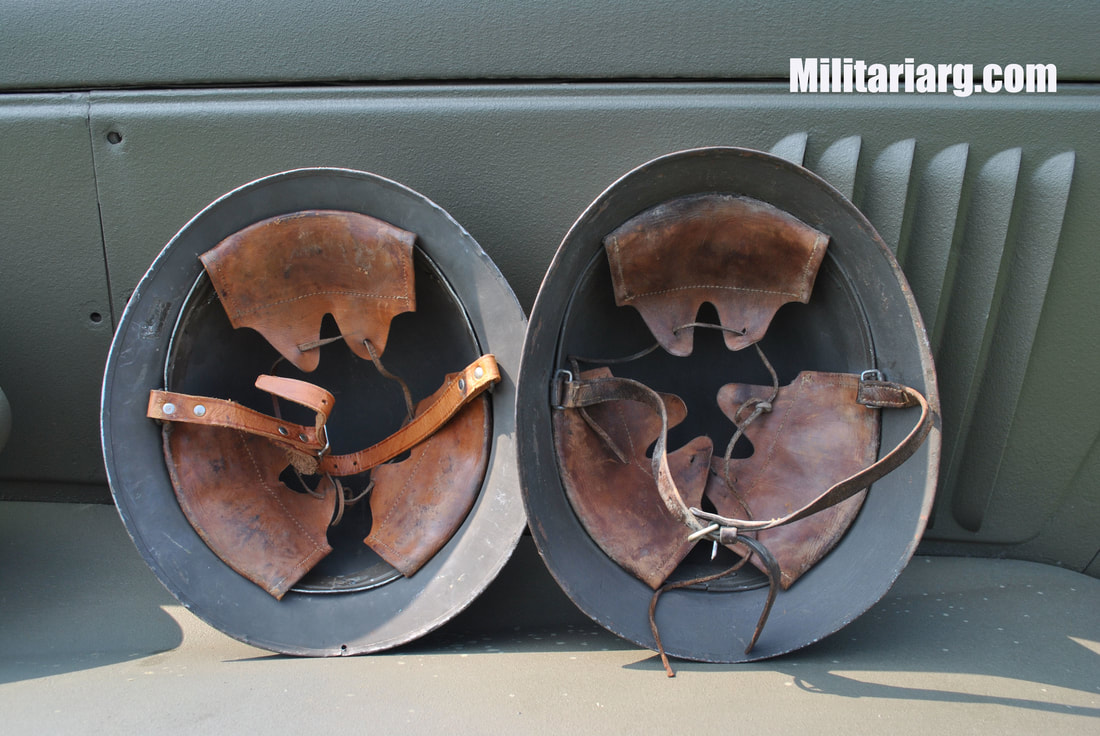
Left: Swedish M21-18 helmet. Right: Norwegian M31 Helmet.