Infantry Support Weapons: Grenades, Mortars, Light Cannons and Heavy Machine Guns
The Nahuel DL-43 was designated as a Carro de Combate Medio (Medium Tank). Technically and doctrinally, the Nahuel was intended to be a Battle Tank for armored cavalry, but its actual capabilities limited it to an Infantry Support role. Its primary doctrinal purpose was to keep Argentina’s Armored Cavalry trained in modern maneuver warfare during WWII, as a neutral Argentina was under an arms embargo and could not import modern tanks.
It was designed to counter the growing armored strength of neighbors like Brazil, who were receiving hundreds of American tanks via Lend-Lease.
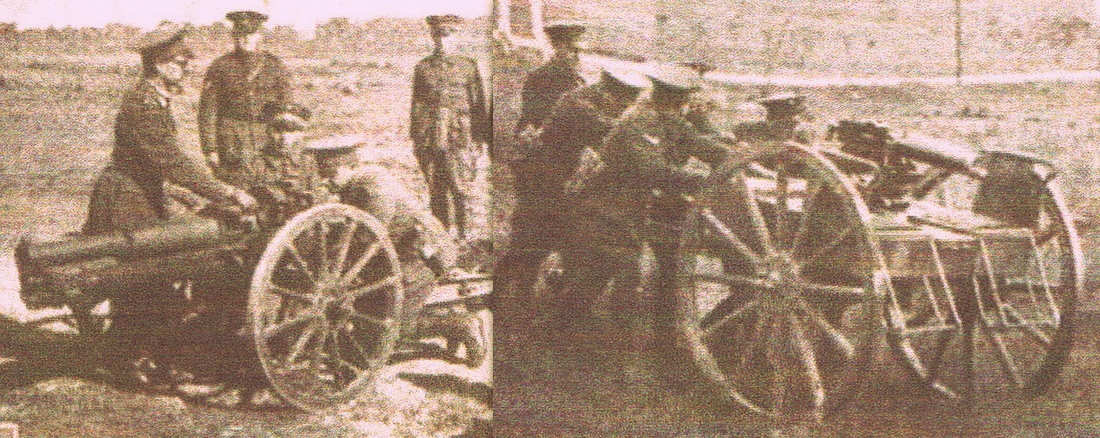
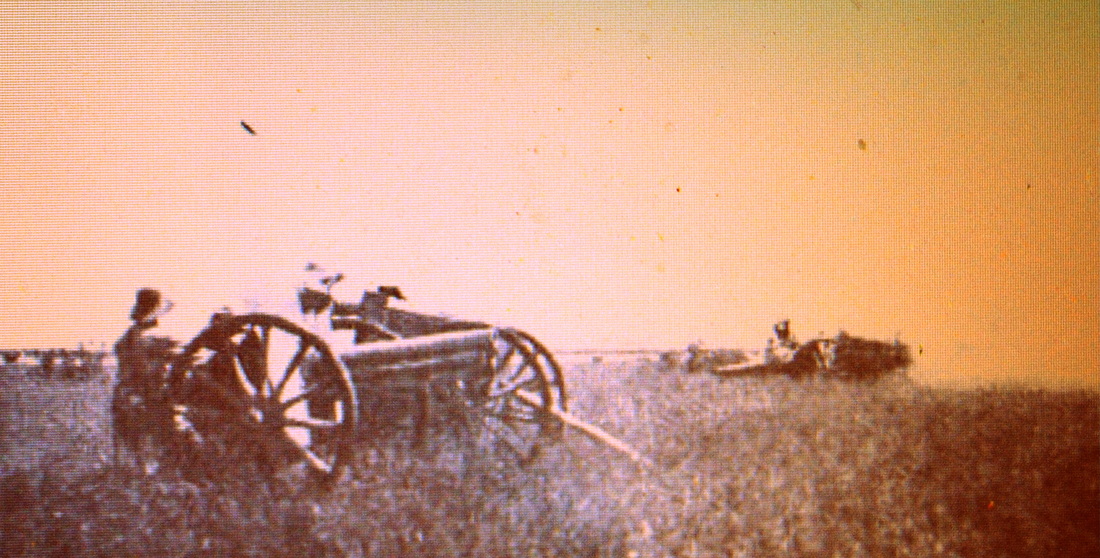
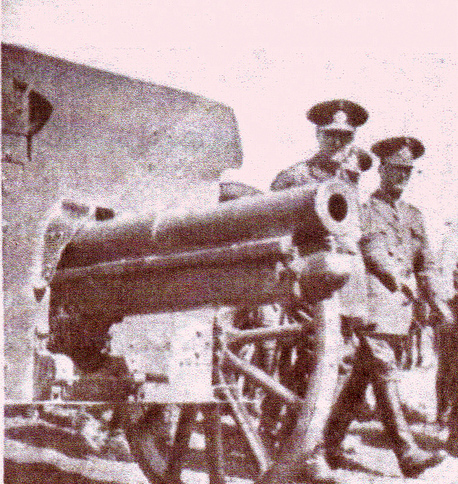
Tactical Limitation (Support Role): Because of the lack of armor-piercing (AP) ammunition, the tank was restricted to an infantry support role. Its 75mm Krupp Model 1909 field gun was an obsolete low-velocity weapon only capable of firing High Explosive (HE) artillery shells, making it ineffective against other modern tanks at long range.
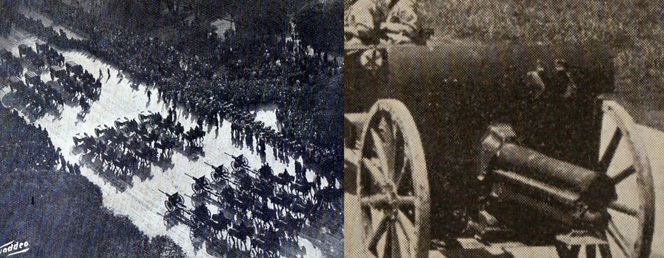
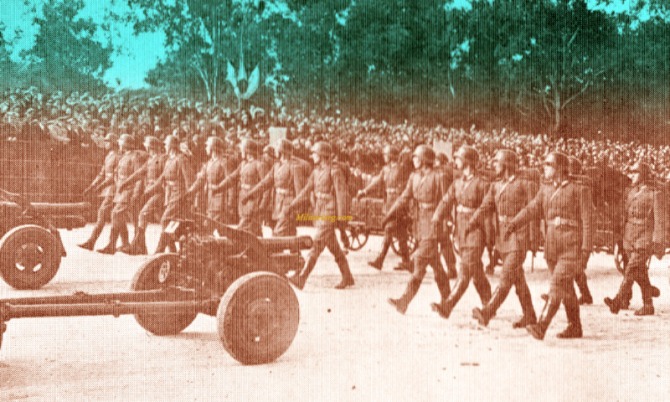
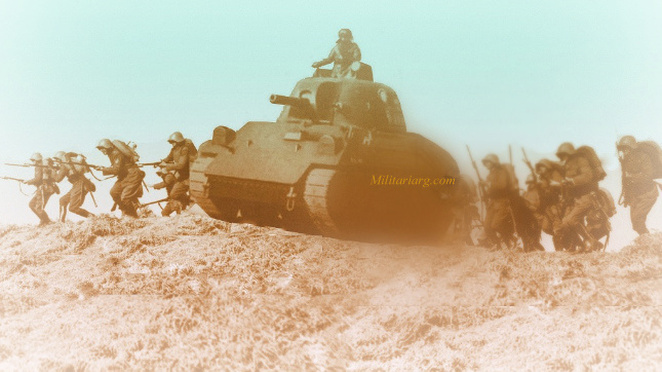
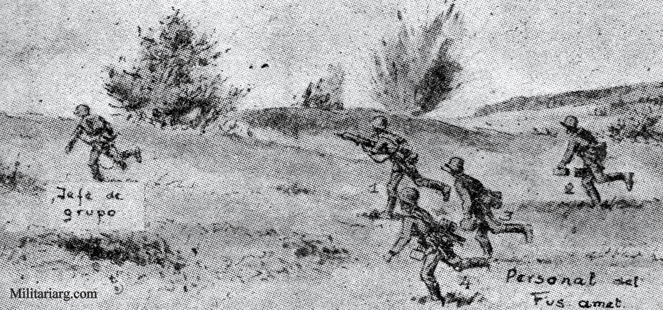
The photo above is assembled using two original photos to show the infantry support character.
It was designed to counter the growing armored strength of neighbors like Brazil, who were receiving hundreds of American tanks via Lend-Lease.
Tactical Limitation (Support Role): Because of the lack of armor-piercing (AP) ammunition, the tank was restricted to an infantry support role. Its 75mm Krupp Model 1909 field gun was an obsolete low-velocity weapon only capable of firing High Explosive (HE) artillery shells, making it ineffective against other modern tanks at long range.
The photo above is assembled using two original photos to show the infantry support character.
1893 Revolution
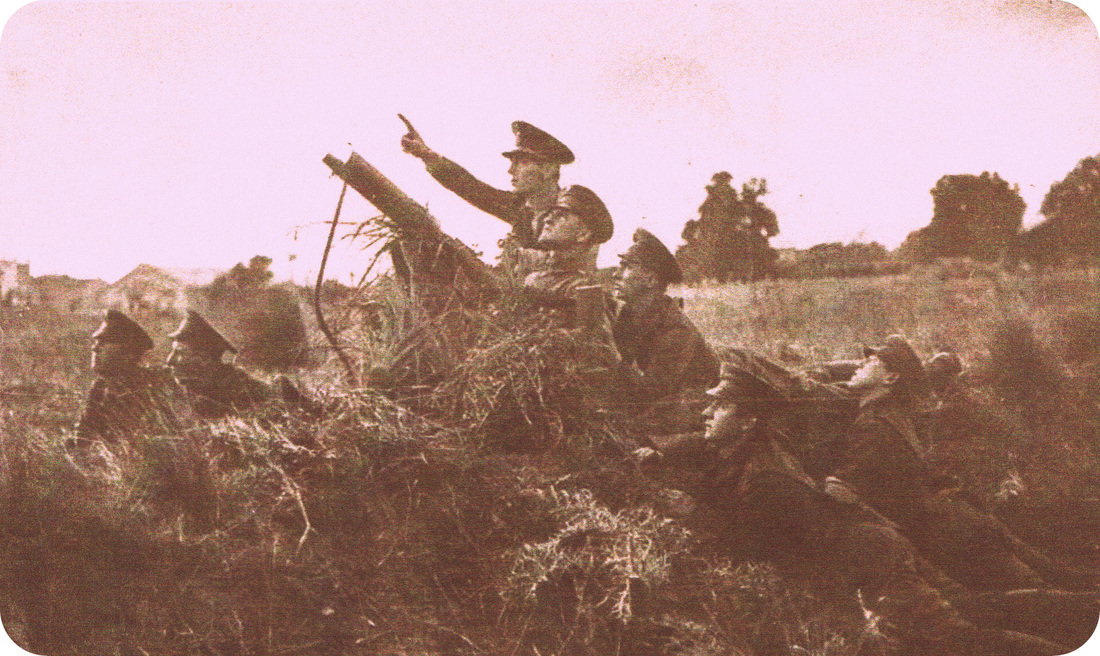
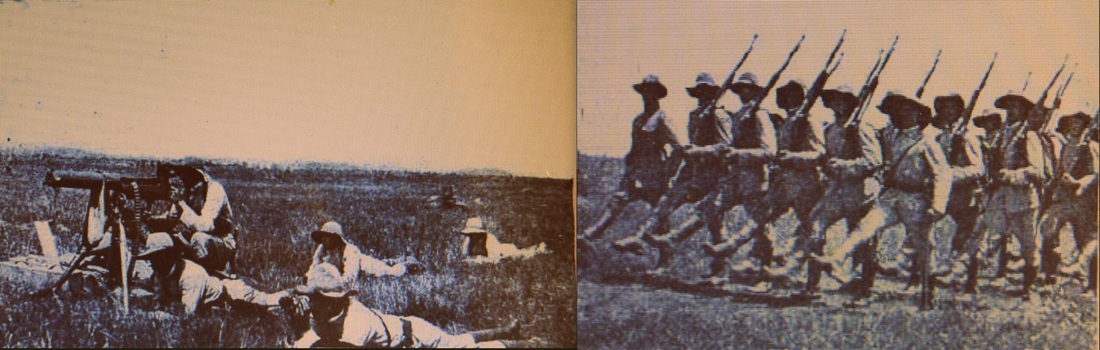
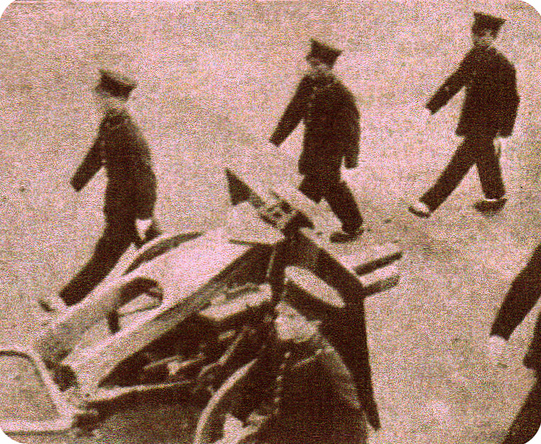
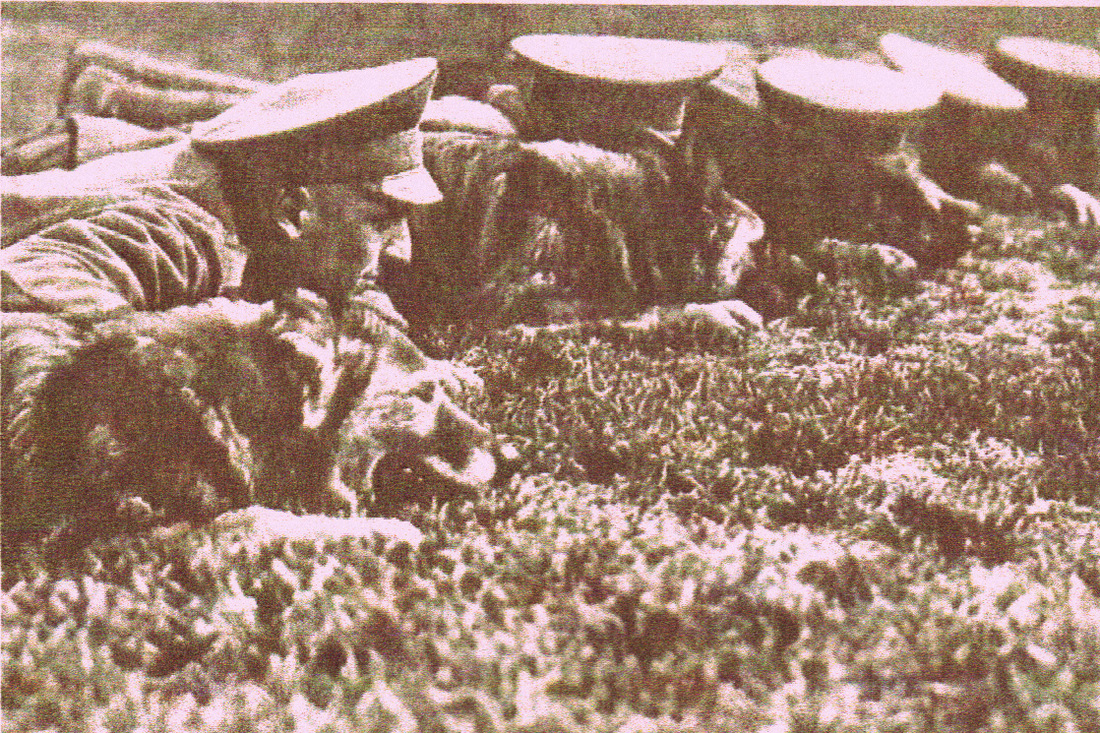
This photograph depicts revolutionaries during the Argentine Revolution of 1893, an armed insurrection against the government of Luis Sáenz Peña. The men are identified as revolutionaries by their white berets (boinas blancas), a traditional symbol of the Radical Civic Union (UCR) during this era.
The weaponry you see is a mix of contemporary rapid-fire technology and older "light" support pieces.
The central weapon is a Gatling gun, a hand-cranked, multi-barrel machine gun invented in 1861. These were used for rapid fire, capable of reaching roughly 350 rounds per minute. By 1890, they were often being replaced by lighter machine guns but remained formidable in defensive positions.
Those "toy-sized" muzzle-loading (avancarga) cannons are likely cañoncitos de alarma (alarm cannons) or esmeriles that were common in the Argentine frontier.
The weaponry you see is a mix of contemporary rapid-fire technology and older "light" support pieces.
The central weapon is a Gatling gun, a hand-cranked, multi-barrel machine gun invented in 1861. These were used for rapid fire, capable of reaching roughly 350 rounds per minute. By 1890, they were often being replaced by lighter machine guns but remained formidable in defensive positions.
Those "toy-sized" muzzle-loading (avancarga) cannons are likely cañoncitos de alarma (alarm cannons) or esmeriles that were common in the Argentine frontier.
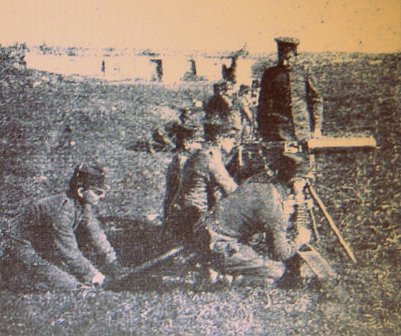
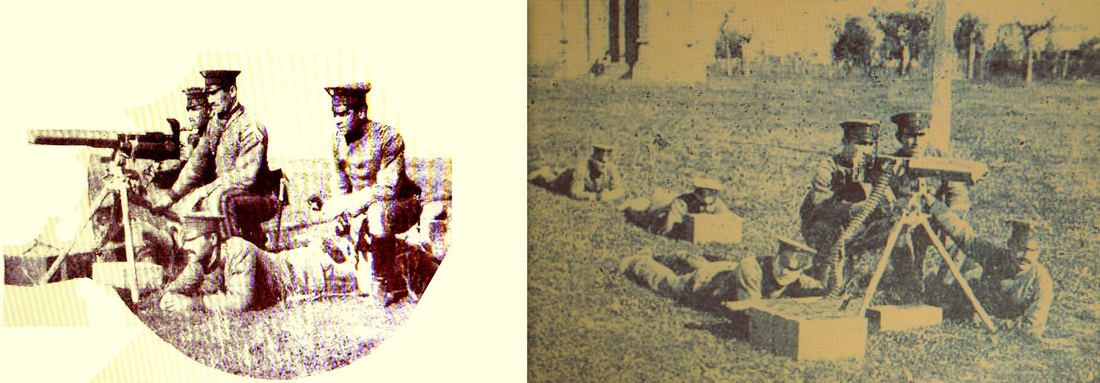
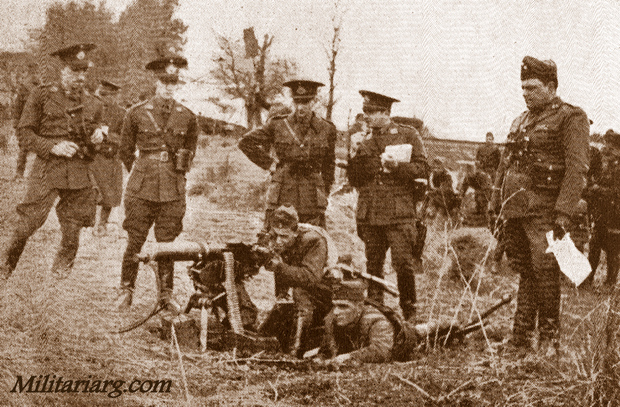
The image shows the Colt-Browning M1895, famously nicknamed the "Potato Digger" due to its unique gas-operated lever that swings in an arc under the barrel. This specific example is the M1895/1914 export variant, chambered in 7mm Mauser (7x57mm).
Maxim Model 1895
Water cooled machine guns. Maxim Model 1895.
Argentina was an early adopter of the Maxim machine gun, purchasing its first batch of Model 1895 water-cooled guns in 1895. These weapons are now considered some of the finest surviving examples of early Maxim "World Standard" designs due to their extensive use of brass and high-quality craftsmanship.
The First Order (1895): The Argentine Navy Purchasing Commission ordered 50 guns from the Maxim Nordenfelt Guns and Ammunition Company in England. These were serialized 1–50 and bore the year 1895 on their fusee spring covers.
Subsequent Orders: In 1898, a second order for 130 guns (serial numbers 51–180) was placed with DWM (Deutsche Waffen und Munitionsfabriken) in Germany. A final 20 guns followed in 1902.
Aesthetic & Construction: The guns are famous for their "steampunk" appearance, featuring brass water jackets, brass feed blocks, and walnut rollers. Later DWM models (serial numbers 181–200) eventually transitioned to steel water jackets.
Ammunition & Sights: Originally chambered for the round-nose 7.65×53mm Belgian Mauser (Model 1891). In 1909, they were retrofitted for the newer high-speed Spitzer round, requiring a shorter rear sight and a restamped data plate reading "1909" instead of "1891".
Service Life & Legacy
Military to Police: These Maxims remained in frontline Argentine military service until 1929. After being replaced by lighter machine guns, they were transferred to police units, where they served until 1956.
Collector Market: In 1960, 91 of these guns were sold to InterArms. Today, the approximately 55 guns in the U.S. collector market represent the largest and most complete group of surviving early Maxim machine guns in the world.
Argentina was an early adopter of the Maxim machine gun, purchasing its first batch of Model 1895 water-cooled guns in 1895. These weapons are now considered some of the finest surviving examples of early Maxim "World Standard" designs due to their extensive use of brass and high-quality craftsmanship.
The First Order (1895): The Argentine Navy Purchasing Commission ordered 50 guns from the Maxim Nordenfelt Guns and Ammunition Company in England. These were serialized 1–50 and bore the year 1895 on their fusee spring covers.
Subsequent Orders: In 1898, a second order for 130 guns (serial numbers 51–180) was placed with DWM (Deutsche Waffen und Munitionsfabriken) in Germany. A final 20 guns followed in 1902.
Aesthetic & Construction: The guns are famous for their "steampunk" appearance, featuring brass water jackets, brass feed blocks, and walnut rollers. Later DWM models (serial numbers 181–200) eventually transitioned to steel water jackets.
Ammunition & Sights: Originally chambered for the round-nose 7.65×53mm Belgian Mauser (Model 1891). In 1909, they were retrofitted for the newer high-speed Spitzer round, requiring a shorter rear sight and a restamped data plate reading "1909" instead of "1891".
Service Life & Legacy
Military to Police: These Maxims remained in frontline Argentine military service until 1929. After being replaced by lighter machine guns, they were transferred to police units, where they served until 1956.
Collector Market: In 1960, 91 of these guns were sold to InterArms. Today, the approximately 55 guns in the U.S. collector market represent the largest and most complete group of surviving early Maxim machine guns in the world.
Colt Model 1917 (Argentina Model 28) and MG38 Water-Cooled HMG
The Colt 1917 supplied under the 1928 contract.
Colt M1917 Browning HMG: Argentina acquired M1917 water-cooled heavy machine guns manufactured by Colt.
The weapons acquired around 1928 were officially given the Argentine designation of Modelo 1928 or M28.
Usage and Characteristics
Type: Both designations refer to the same water-cooled heavy machine gun, designed for static defense due to its weight and cooling system.
Caliber: They were initially chambered for the standard Argentine 7.65×53mm Mauser cartridge.
Replacement: Although they were very reliable, over time they were replaced in frontline infantry roles by the air-cooled M1919 machine gun and ultimately by the FN MAG 58, which was manufactured under license in Argentina.
Colt M1917 Browning HMG: Argentina acquired M1917 water-cooled heavy machine guns manufactured by Colt.
The weapons acquired around 1928 were officially given the Argentine designation of Modelo 1928 or M28.
Usage and Characteristics
Type: Both designations refer to the same water-cooled heavy machine gun, designed for static defense due to its weight and cooling system.
Caliber: They were initially chambered for the standard Argentine 7.65×53mm Mauser cartridge.
Replacement: Although they were very reliable, over time they were replaced in frontline infantry roles by the air-cooled M1919 machine gun and ultimately by the FN MAG 58, which was manufactured under license in Argentina.
Belt-fed water-cooled Heavy Machine Gun Colt-Browning M1917 (Argentine contract 1928), with Colt M35 Tripod.
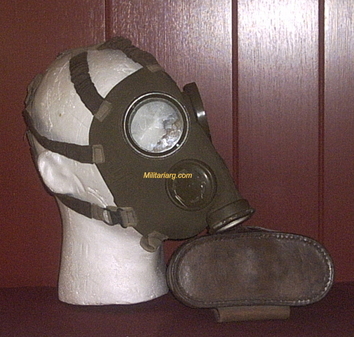
M36 Pirelli gas mask type US Army M1A1/2 Kops, Tisson style, (without cannister box and filter), from 1936, Argentine Industry.
During Malvinas Campaign, Argentina used the US Army/USMC Mask Field M-17 series (The M17 series includes three types of masks, the M17, M17A1 and M17A2 Chemical-Biological)), with M1956 carrier and protective cover (Argentine Army); The USN Navy, ND Mark IV Gas Mask, (Argentine Navy and Marines Infantry); The FAA/AAF Argentine Air Force, (Some Finnish or Israeli Model ?, Chinese MF 14?), type QBN - MSA Full-Face Respirator, Gas-Mask and cannister box. 1990s, US M-40 Gas Mask ?
Colt-Browning M1917 A.A with m37 mount. When it was adopted by the Argentine military in 1928, it received the official Argentine designation of the Model 1928 (M-1928).
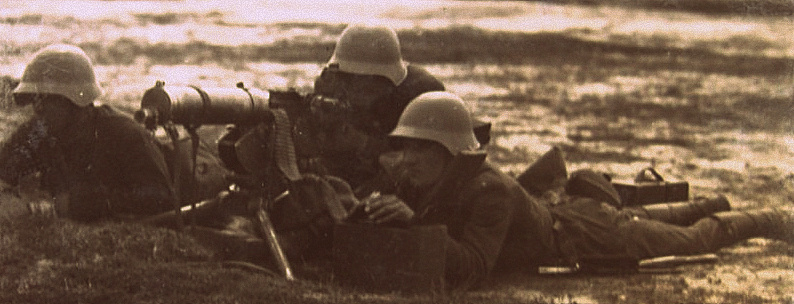
In 1928, Argentina was in the middle of a massive military modernization program following the end of World War I. The "M28" or "Modelo 1928" designation was applied to a wide range of equipment purchased during this specific procurement cycle, primarily from Colt (USA) and Schneider (France).
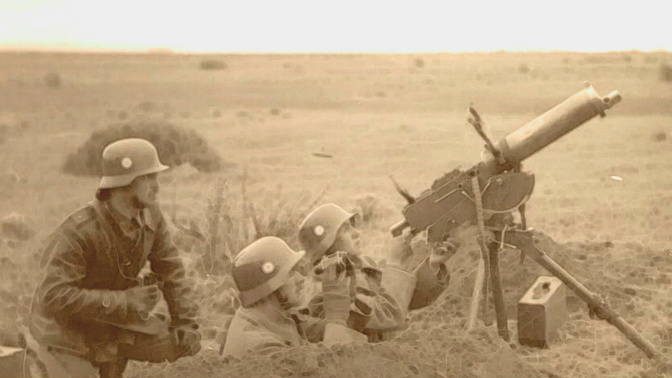
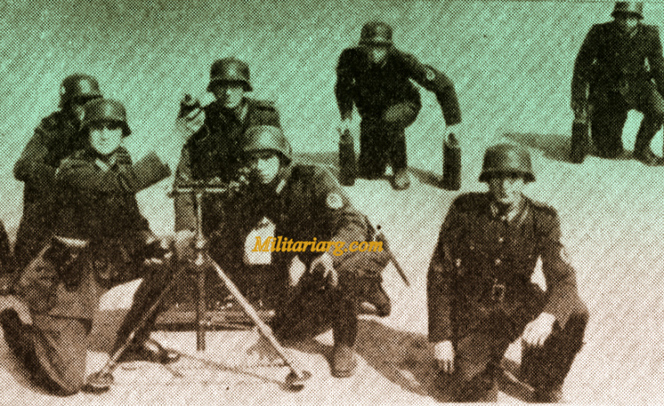
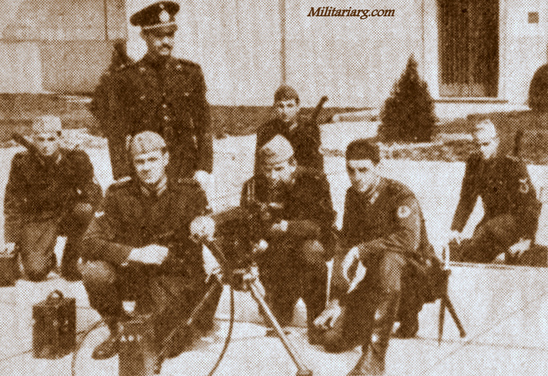
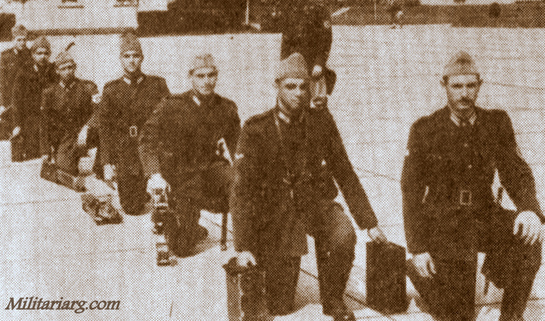
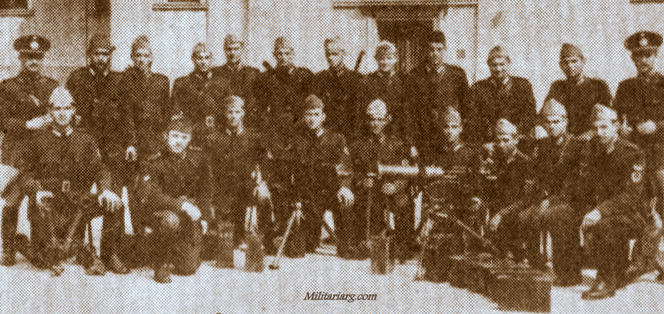
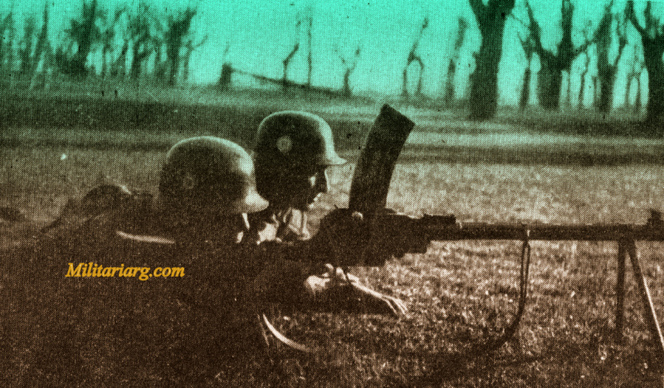
Three-man M1928 machine gun team. Gunner, Assistant Gunner and Ammunition Carrier.
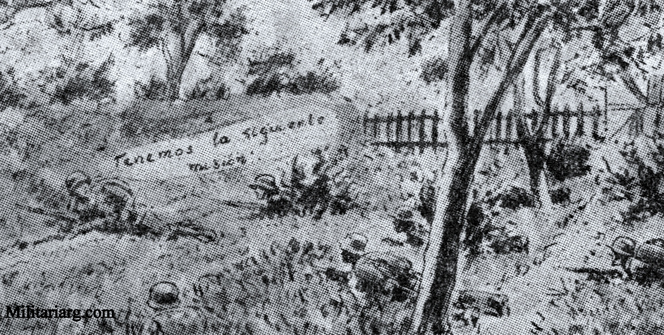
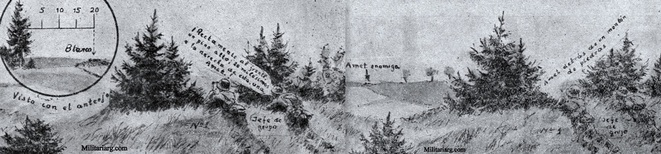
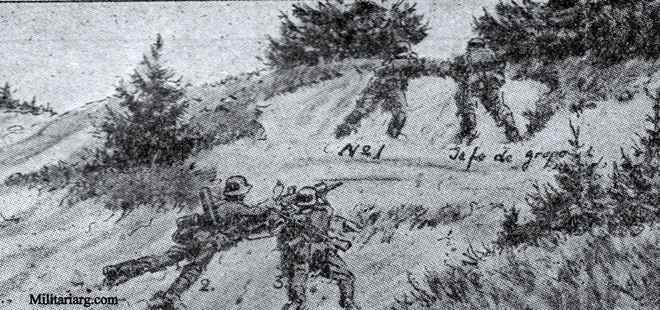
Argentine NCO Magazine. "Revista del Suboficial de 1940s".
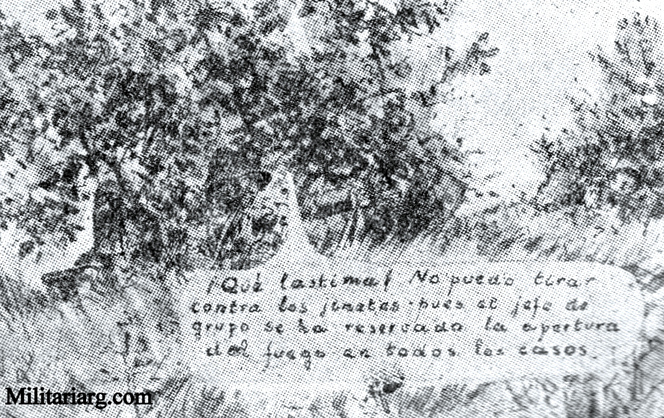
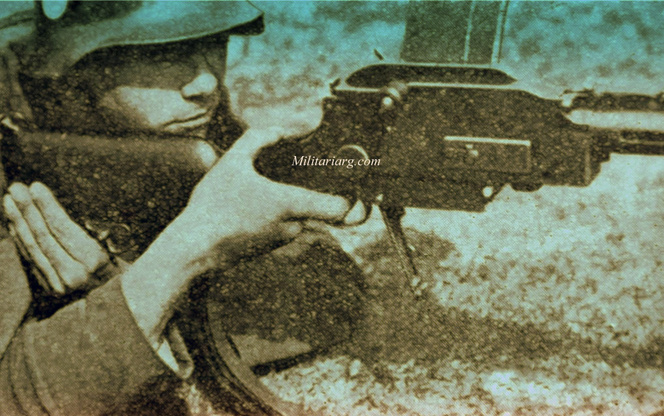
Argentine, NCO Magazine "Revista del suboficial 1940s".
War Dogs
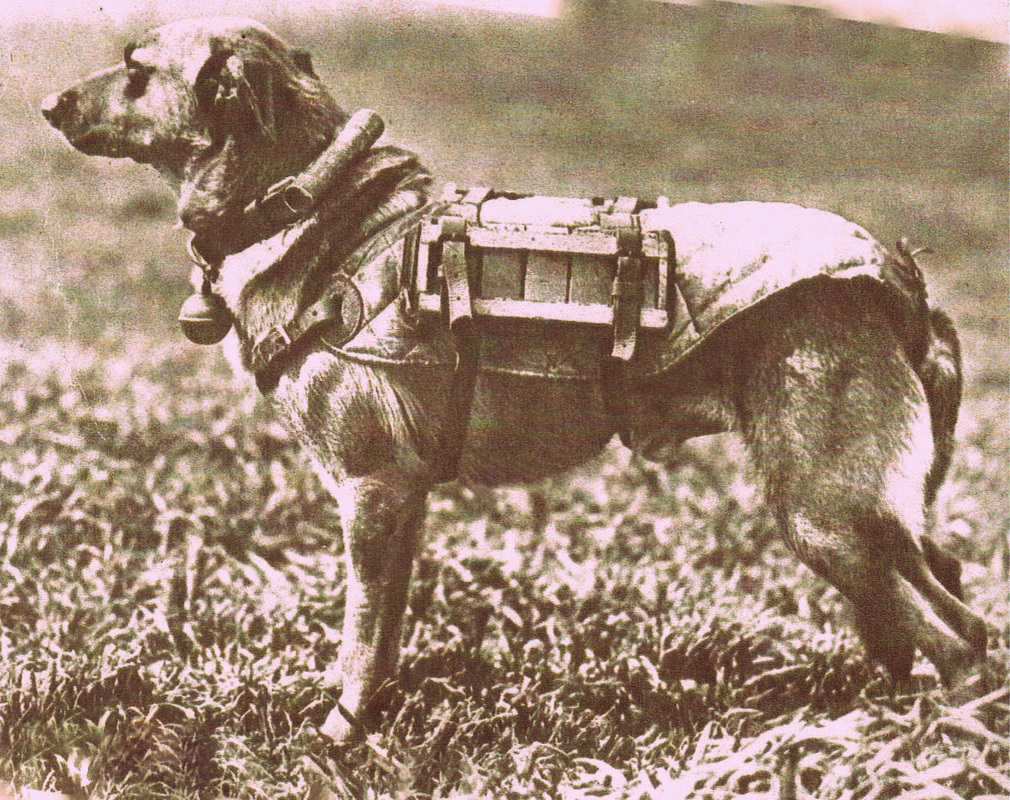
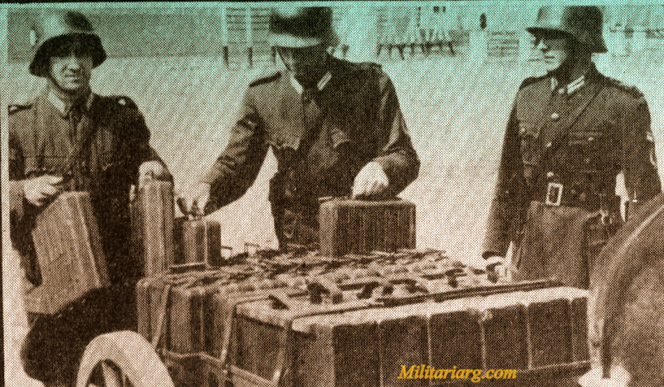
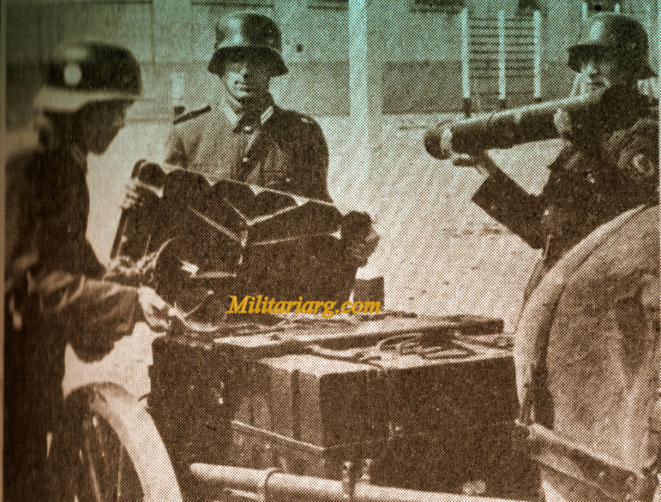
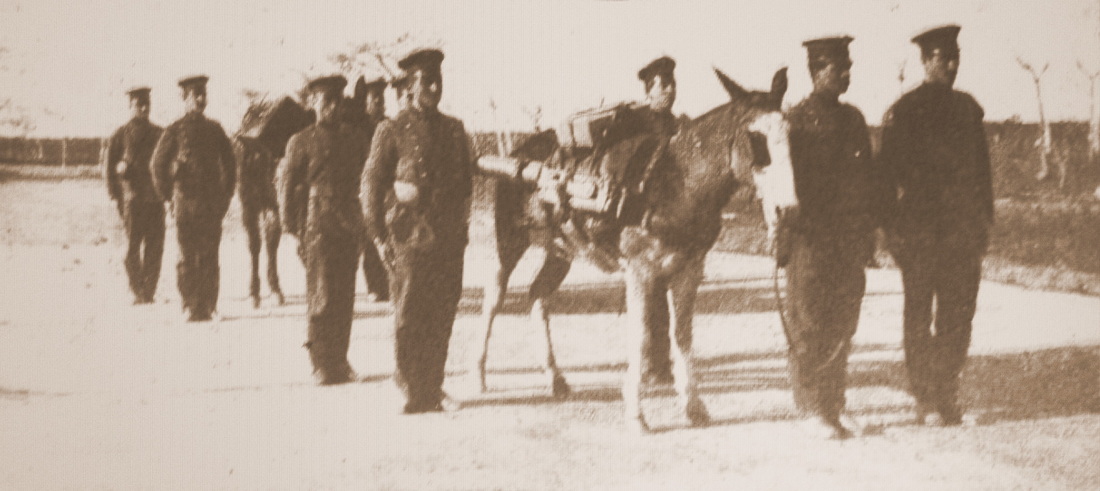
War Dog carrying rifle ammunition boxes for the advanced lines. Note the Egg Hand Grenade below thc collar and the tubular mail canister. Photo: Caras y Caretas 1935.
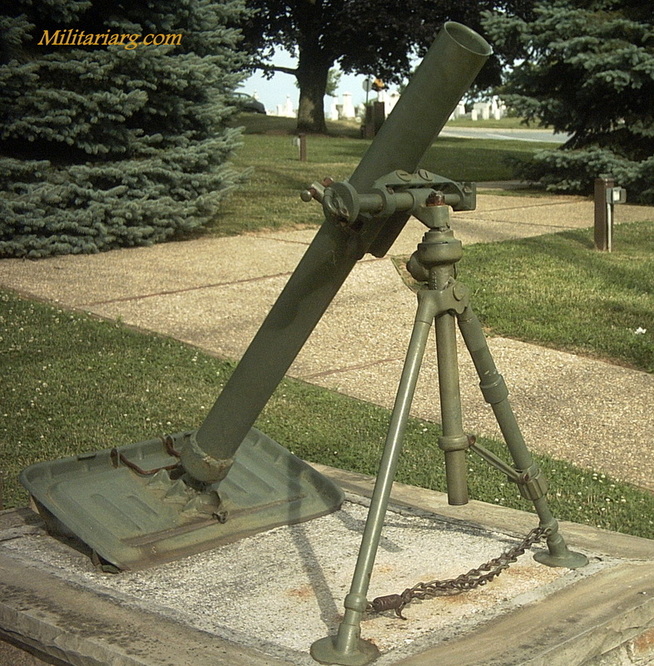
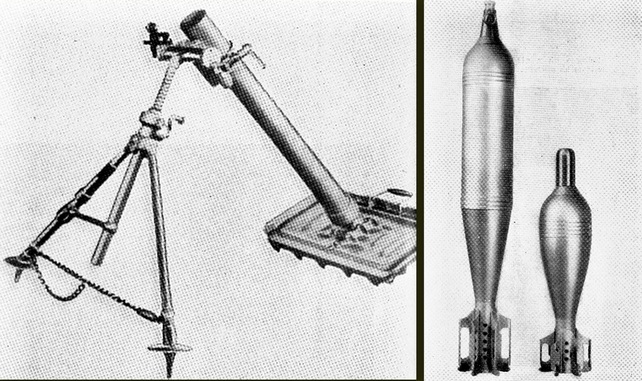
81 mm. Brandt Mortar.
An 81mm Brandt type mortar, with illuminating type shell. The mortar designed by Edgar Brandt became a model for many countries, including the US and Russia. The modern mortar continues to be based on this advanced model.
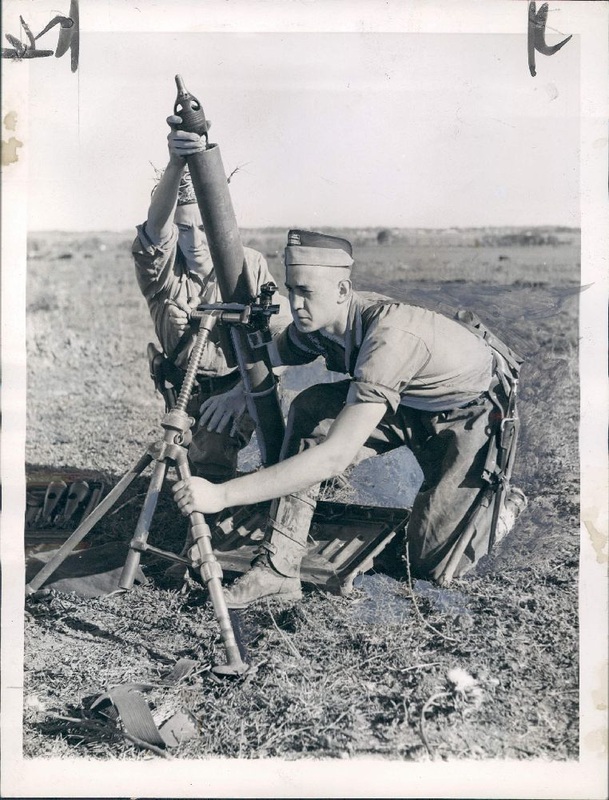
1940s. Photo: UPI/AP
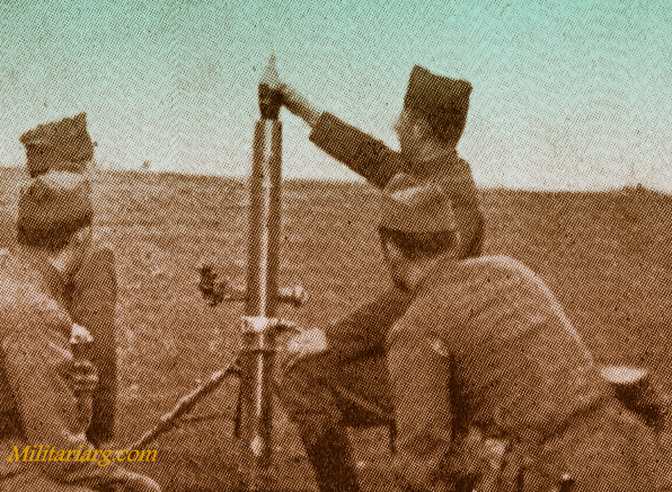
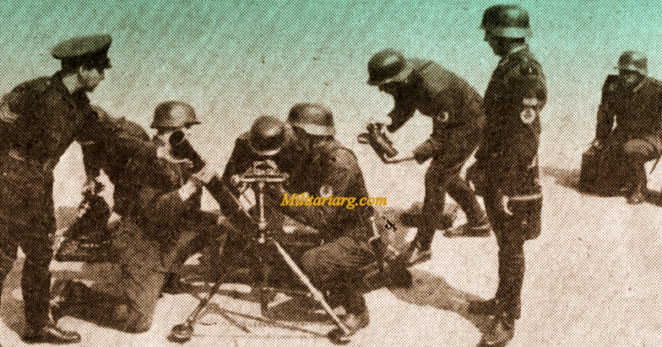
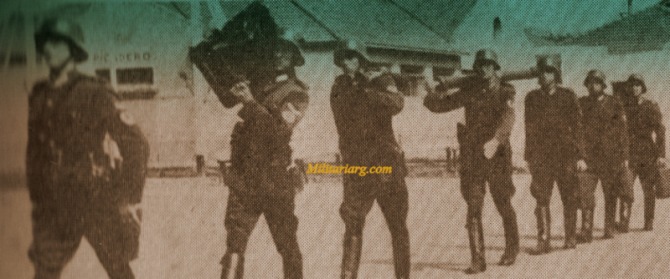
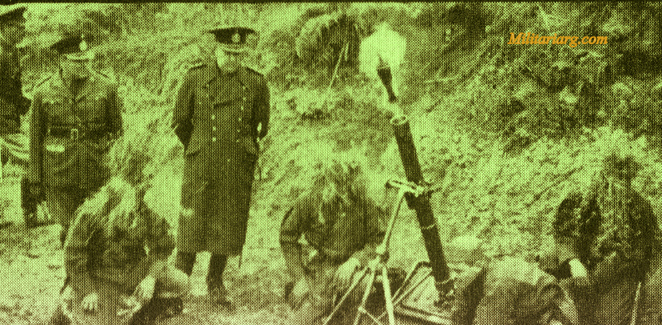
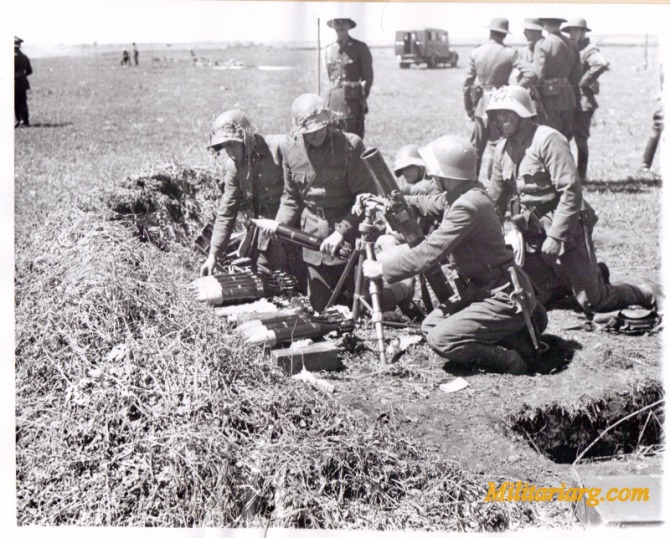
81mm mortar, type Brandt. 6th Regiment Infantry of Mercedes (1939).
In the 1940s, the Argentine Army primarily used the 81mm Brandt mortar, following the global standard established by French designer Edgar Brandt. These weapons were often produced domestically or modified under the local military industry's expansion.
Brandt Model 1927/31 (Mle 27/31): Argentina adopted this French-designed mortar, which became the standard for most modern armies in the WWII era.
DGFM 81mm "M1 Type": Produced by the Argentine state-owned company Fabricaciones Militares (DGFM), founded in 1941 to reduce dependence on foreign imports during the war. These were local versions of the American M1 81mm mortar, which itself was a licensed copy of the original Brandt design.
Deployment: These were typically deployed at the battalion level to provide indirect fire support for infantry and armored units.
In the 1940s, the Argentine Army primarily used the 81mm Brandt mortar, following the global standard established by French designer Edgar Brandt. These weapons were often produced domestically or modified under the local military industry's expansion.
Brandt Model 1927/31 (Mle 27/31): Argentina adopted this French-designed mortar, which became the standard for most modern armies in the WWII era.
DGFM 81mm "M1 Type": Produced by the Argentine state-owned company Fabricaciones Militares (DGFM), founded in 1941 to reduce dependence on foreign imports during the war. These were local versions of the American M1 81mm mortar, which itself was a licensed copy of the original Brandt design.
Deployment: These were typically deployed at the battalion level to provide indirect fire support for infantry and armored units.
DGFM 81 mm M1 type mortar w/ illuminating and high-explosive shell.
US M1 81mm Mortar and M1 Mount. The M1-81mm is the American version of the Stokes-Brandt.
1st Infantry Patricios Regiment.
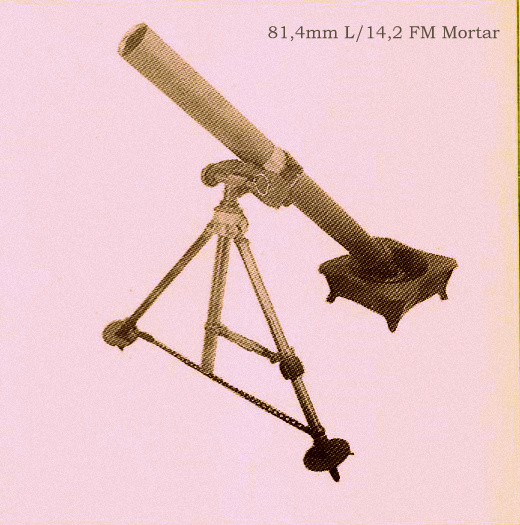
81,4mm FM Mortar.
Argentine-produced version of the classic Brandt-style 81mm mortar. Manufactured by Fabricaciones Militares (FM) at their Rio Tercero or Fray Luis Beltrán facilities, the "L/14.2" designation refers to its barrel length in calibers (approx. 115.5 cm), which is a standard configuration for medium-weight infantry mortars.
The "81.4mm" caliber is technically the standard for most "81mm" mortars to allow for the windage gap required for muzzle-loading smoothbore projectiles.
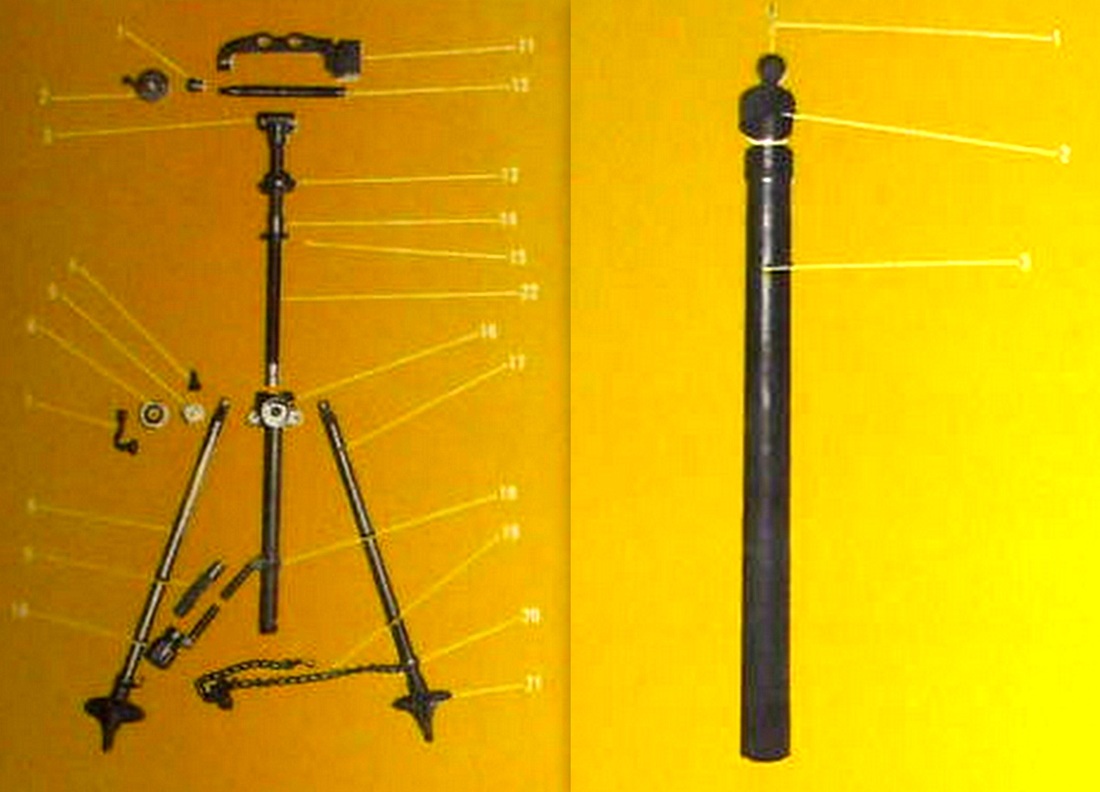
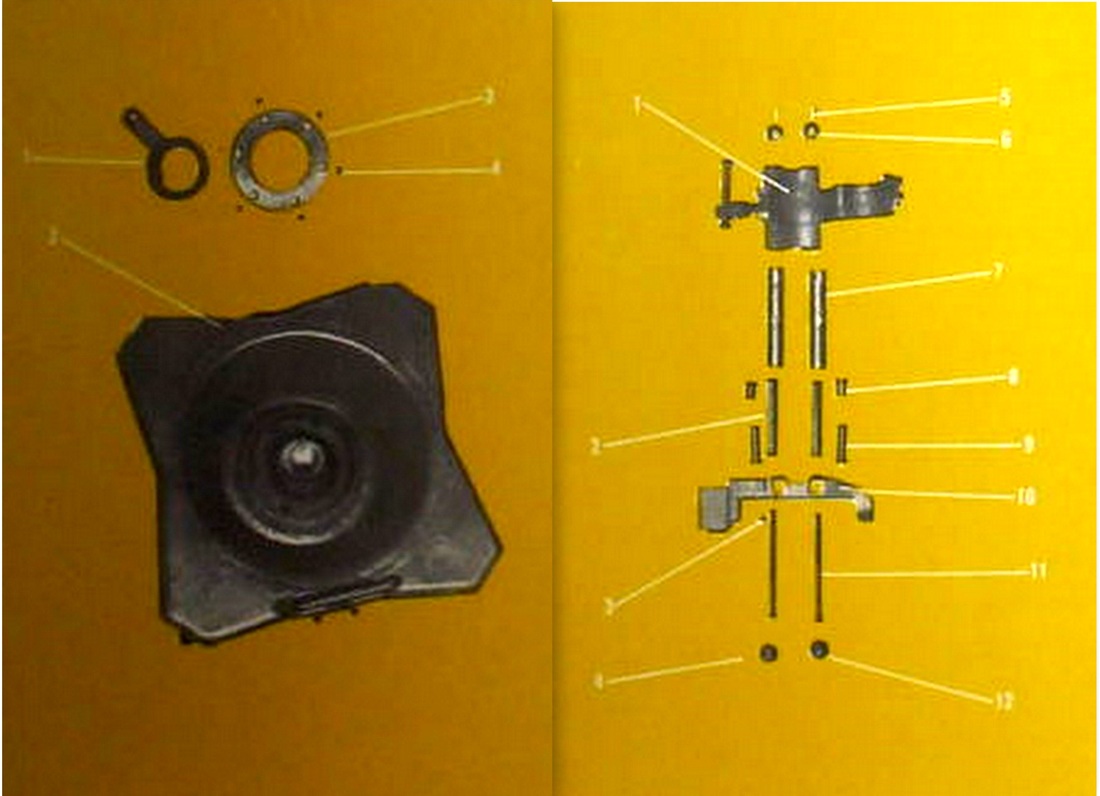
Like the French Brandt Mle 27/31, it consists of three main parts:
Tube (Barrel): L/14.2 length (~1155mm).
Bipod: Features the standard screw-type elevating and traversing mechanisms.
Baseplate: Typically circular or rectangular for stabilizing the weapon during high-angle fire.
Role: It serves as the primary indirect fire support at the infantry battalion level, bridging the gap between small-unit 60mm mortars and heavy 120mm mortars.
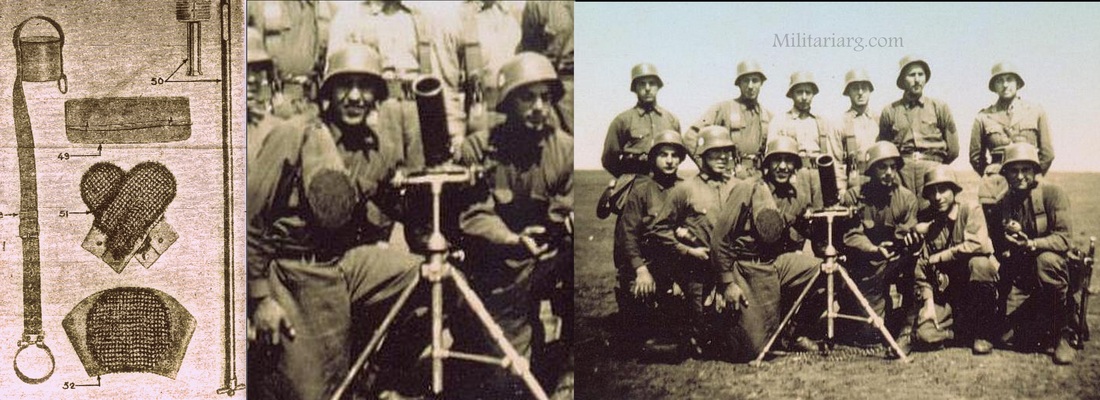
The Special Leather Transport Straps
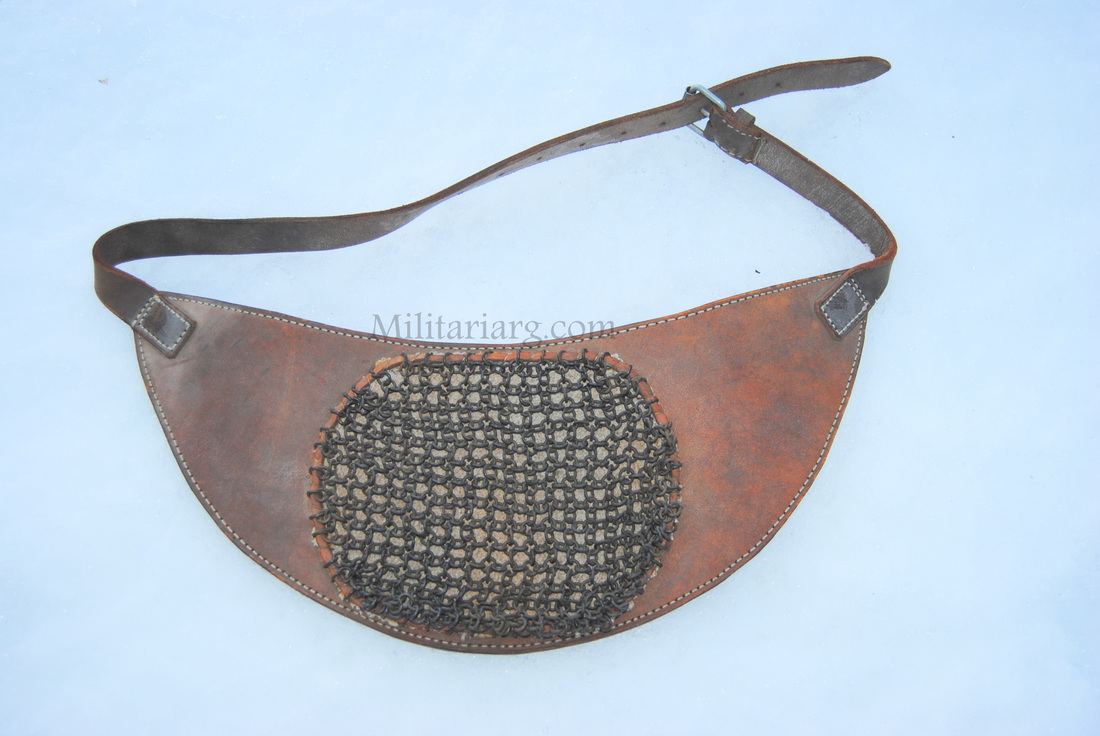
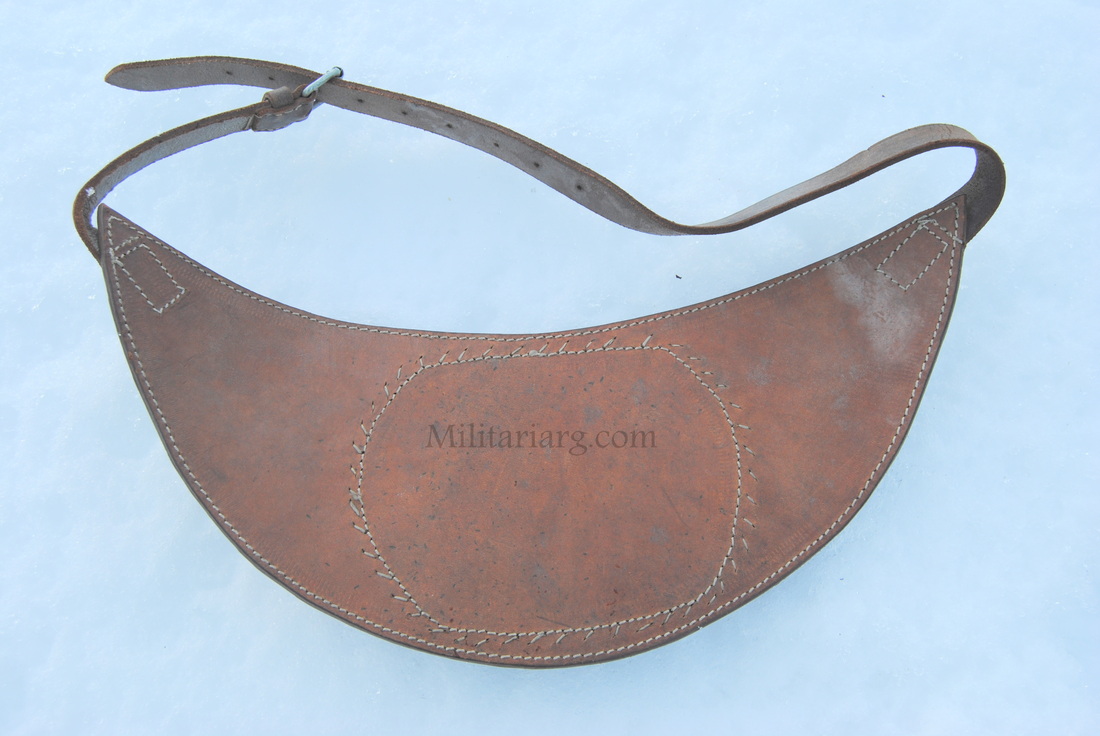
Special leather strap Arnés de Transporte (Transport Harness) used for manpacking the mortar in rugged terrain:
Argentine military production in the mid-20th century utilized high-quality domestic leather for these harnesses. Unlike US or European canvas equivalents, the Argentine versions often featured thick, wide leather shoulder pads and heavy-duty buckles to manage the intense weight of the baseplate (~15-20 kg) and barrel (~20 kg).
The "Cruceta": A specific leather cross-strap assembly helped distribute the weight across the soldier's back, preventing the metal components from shifting during movement in the Andes or the Pampas.
Mule Interoperability: These same leather straps often featured hardware that allowed them to be quickly detached from a soldier and hooked into a mule pack-saddle (albardón), a necessity for Argentine mountain and cavalry regiments.
Like the French Brandt Mle 27/31, it consists of three main parts:
Tube (Barrel): L/14.2 length (~1155mm).
Bipod: Features the standard screw-type elevating and traversing mechanisms.
Baseplate: Typically circular or rectangular for stabilizing the weapon during high-angle fire.
Role: It serves as the primary indirect fire support at the infantry battalion level, bridging the gap between small-unit 60mm mortars and heavy 120mm mortars.
The Special Leather Transport Straps
Special leather strap Arnés de Transporte (Transport Harness) used for manpacking the mortar in rugged terrain:
Argentine military production in the mid-20th century utilized high-quality domestic leather for these harnesses. Unlike US or European canvas equivalents, the Argentine versions often featured thick, wide leather shoulder pads and heavy-duty buckles to manage the intense weight of the baseplate (~15-20 kg) and barrel (~20 kg).
The "Cruceta": A specific leather cross-strap assembly helped distribute the weight across the soldier's back, preventing the metal components from shifting during movement in the Andes or the Pampas.
Mule Interoperability: These same leather straps often featured hardware that allowed them to be quickly detached from a soldier and hooked into a mule pack-saddle (albardón), a necessity for Argentine mountain and cavalry regiments.
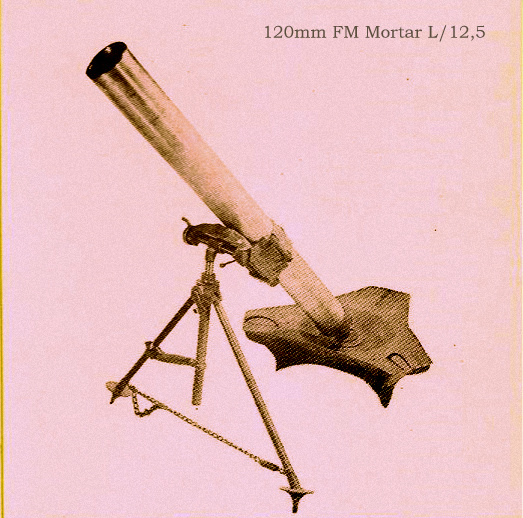
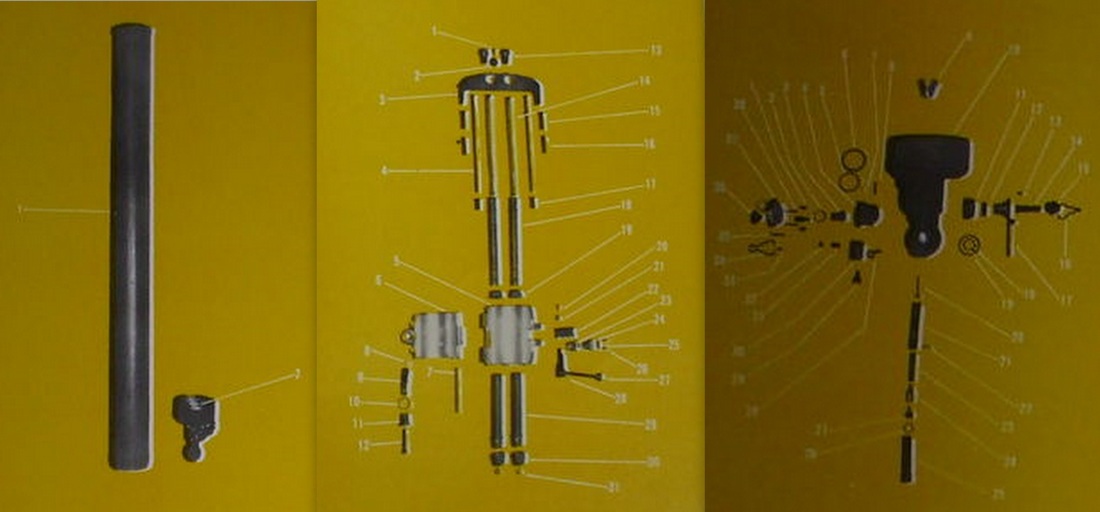
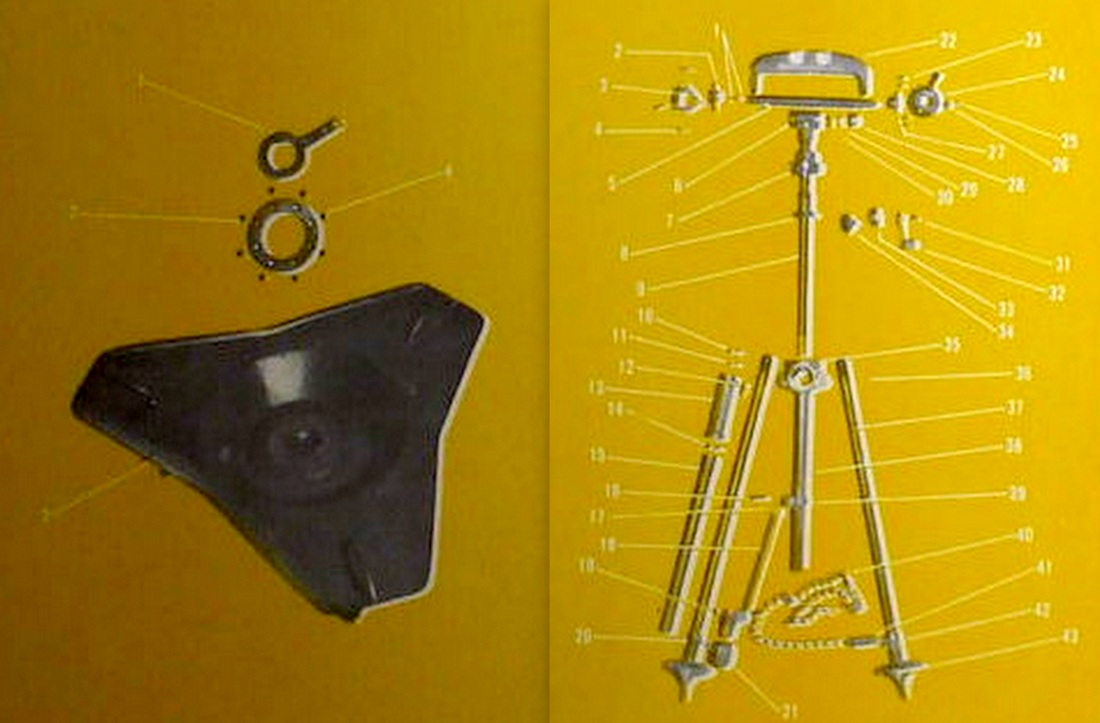
120mm FM Mortar.
Argentina's primary 120mm mortar systems are characterized by a transition from imported French designs to domestically produced variants. These heavy mortars serve as the standard indirect fire support for battalion-level and armored units.
Primary 120mm Mortar Systems
FM-120 (FMK-2): A domestically produced 120mm heavy mortar manufactured by Fabricaciones Militares (DGFM). It is the standard heavy mortar for the Argentine Army, with approximately 330 units in service as of recent reports.
Brandt MO-120-AM50: An early Cold War-era French smoothbore mortar that was widely adopted by Argentina. It is a towed system often used by mechanized infantry.
Brandt MO-120-RT (RT-61): A more advanced French 120mm rifled mortar used for greater range and precision. Argentina utilized these during the 1982 Falklands War, and they remain in limited service or influenced local development.
FM-120 (FMK-2): A domestically produced 120mm heavy mortar manufactured by Fabricaciones Militares (DGFM). It is the standard heavy mortar for the Argentine Army, with approximately 330 units in service as of recent reports.
Brandt MO-120-AM50: An early Cold War-era French smoothbore mortar that was widely adopted by Argentina. It is a towed system often used by mechanized infantry.
Brandt MO-120-RT (RT-61): A more advanced French 120mm rifled mortar used for greater range and precision. Argentina utilized these during the 1982 Falklands War, and they remain in limited service or influenced local development.
Self-Propelled Variants
Argentina utilizes 120mm mortars integrated into armored vehicles for high mobility:
TAM VCTM (Vehículo de Combate Transporte de Mortero): A specialized variant of the TAM (Tanque Argentino Mediano) chassis. It carries an internal AM-50 120mm mortar, offering a range of approximately 9,500 meters and a rate of fire of 8 to 12 rounds per minute.
M106 Mortar Carrier: A variant of the American M113 APC used by Argentina's mechanized regiments. Originally designed for the 4.2-inch (107mm) mortar, Argentine M106s have been upgraded to carry 120mm Thomson-Brandt AM-50 mortars.
Technical Specifications (FM-120 / AM-50)
Range: Approximately 6.6 km for standard shells and up to 9.5 km for assisted projectiles or when used in specific vehicle mounts.
Rate of Fire: Maximum of 12–18 rounds per minute; sustained rate is roughly 4–8 rounds per minute.
Transport: Towed via a two-wheeled carriage by light trucks or manpacked in sections (barrel, baseplate, and bipod) for short distances.
Crew: Typically requires a 5-man team for ground operations.
Argentina utilizes 120mm mortars integrated into armored vehicles for high mobility:
TAM VCTM (Vehículo de Combate Transporte de Mortero): A specialized variant of the TAM (Tanque Argentino Mediano) chassis. It carries an internal AM-50 120mm mortar, offering a range of approximately 9,500 meters and a rate of fire of 8 to 12 rounds per minute.
M106 Mortar Carrier: A variant of the American M113 APC used by Argentina's mechanized regiments. Originally designed for the 4.2-inch (107mm) mortar, Argentine M106s have been upgraded to carry 120mm Thomson-Brandt AM-50 mortars.
Technical Specifications (FM-120 / AM-50)
Range: Approximately 6.6 km for standard shells and up to 9.5 km for assisted projectiles or when used in specific vehicle mounts.
Rate of Fire: Maximum of 12–18 rounds per minute; sustained rate is roughly 4–8 rounds per minute.
Transport: Towed via a two-wheeled carriage by light trucks or manpacked in sections (barrel, baseplate, and bipod) for short distances.
Crew: Typically requires a 5-man team for ground operations.
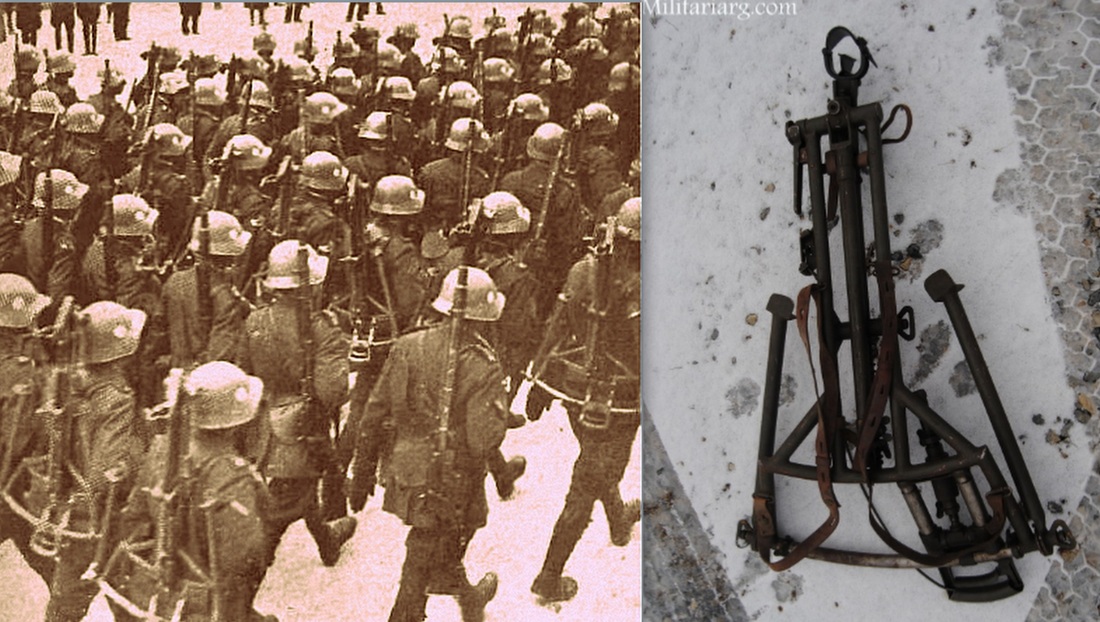
Carrying straps or leather and Canvas "Cureñas": For the Argentine Army of this era, the transport assemblies (often called arneses or cureñas de transporte) typically consisted of a heavy canvas or wood-frame backboard with thick leather shoulder straps and load-securing straps.
This same model was seen in use on the Italian alpini, shortly before the WW2.
Anti-personnel Grenades
Argentine made Model 24 Stielhandgranate "Stick Grenades" and Hand Grenedes Lafitte, Bossone (?), FM-1, Oramil PO-1, FMK-1/FMK-2, Expal EA M-5, M67 fragmentation grenade and defensive smoke, etc .
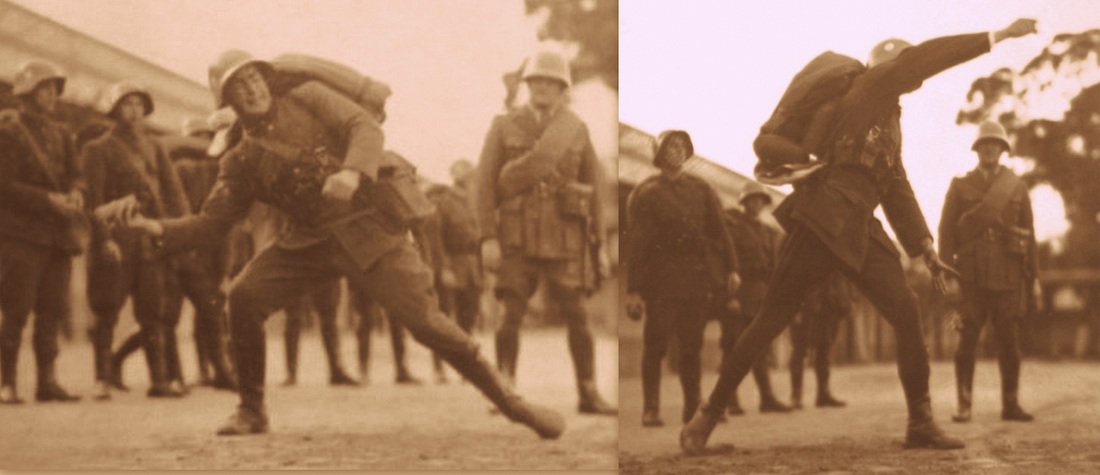
Possibly training with offensive FM-1 grenades.
FM-1 Hand Grenade. Photo IMA USA.
FM-1 (Fabricaciones Militares Model 1) was an offensive hand grenade developed immediately following World War II in 1945. It served as a primary infantry weapon for Argentine forces throughout the 1950s and remained in production until 1965.
Key Characteristics of the FM-1
Offensive (concussive) grenade, designed to rely on blast effect rather than heavy fragmentation, allowing the thrower to remain in the open without cover.
Design: It typically featured a cylindrical or slightly tapered body, distinct from the "pineapple"* fragmentation styles like the American Mk 2 used during the same era.
*Argentine FM-1 hand grenade shares a strong visual similarity with the Italian Breda Mod. 35. This resemblance is due to the cylindrical, often red-painted, aluminum body design common to several offensive-type grenades of that era.
Both grenades fall into the category of lightweight, offensive hand grenades designed for concussion/blast effect rather than heavy fragmentation.
Manufacturer: Produced by Fabricaciones Militares (FM), the state-owned Argentine arms manufacturer.
Service History: While developed in the mid-1940s, it was the standard issue throughout the 1950s before being gradually supplemented or replaced by the FMK series (like the FMK-1 and FMK-2) which saw action in later conflicts such as the Malvinas (Falklands) War.
The 1950s period in Argentina saw significant indigenous arms development, including the Ballester-Molina pistol and early production of licensed FN FAL rifles, making the FM-1 part of a broader push for military self-sufficiency.
FM-1 (Fabricaciones Militares Model 1) was an offensive hand grenade developed immediately following World War II in 1945. It served as a primary infantry weapon for Argentine forces throughout the 1950s and remained in production until 1965.
Key Characteristics of the FM-1
Offensive (concussive) grenade, designed to rely on blast effect rather than heavy fragmentation, allowing the thrower to remain in the open without cover.
Design: It typically featured a cylindrical or slightly tapered body, distinct from the "pineapple"* fragmentation styles like the American Mk 2 used during the same era.
*Argentine FM-1 hand grenade shares a strong visual similarity with the Italian Breda Mod. 35. This resemblance is due to the cylindrical, often red-painted, aluminum body design common to several offensive-type grenades of that era.
Both grenades fall into the category of lightweight, offensive hand grenades designed for concussion/blast effect rather than heavy fragmentation.
Manufacturer: Produced by Fabricaciones Militares (FM), the state-owned Argentine arms manufacturer.
Service History: While developed in the mid-1940s, it was the standard issue throughout the 1950s before being gradually supplemented or replaced by the FMK series (like the FMK-1 and FMK-2) which saw action in later conflicts such as the Malvinas (Falklands) War.
The 1950s period in Argentina saw significant indigenous arms development, including the Ballester-Molina pistol and early production of licensed FN FAL rifles, making the FM-1 part of a broader push for military self-sufficiency.
1946. 6th Infantry.
1936 Argentine Army Manual.
4th Infantry Regiment and School, 75mm mountain gun and Browning M1917 HMG.
Section of Maxim-Nordenfelt machine gun in 1916. Caras y Caretas.
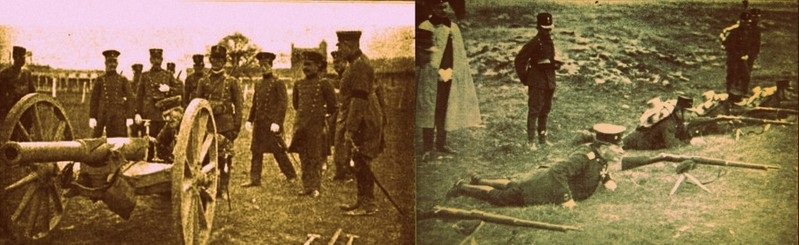
Campo de Mayo 1910. The General Van der Goltz* was invited to attend the exercises. :Left: 75mm mountain gun (Krupp), Field Gun. Foto: Caras y Caretas.
* In my opinion, the one who is on the ground in front of a rifle in Campo de Mayo in 1910, could be the Lt Col Fritz (Friedrich) Von der Goltz, (1873 - 1945), the son of the famous general Colmar von der Goltz. Fritze was instrumental in facilitating the purchase of German military equipment, including Mauser rifles and Krupp artillery, which were core components of Argentina's modernization program.
Juan Domingo Perón was a deep student of Prussian military thought, and his 1944 speech at the University of La Plata is the definitive proof of Colmar von der Goltz’s influence on Argentine political history.
The "Nation in Arms" and Peronism In that famous speech, Perón directly channeled Von der Goltz’s concept of Das Volk in Waffen (The Nation in Arms). This wasn't just a military strategy for him; it was the blueprint for his entire political philosophy.
Total War & Total State: Perón argued that modern war was no longer just between armies, but between entire nations. Therefore, a country’s industry, labor force, and schools had to be unified under a single national objective—the core of Peronist "Organized Community".
Industrial Sovereignty: This doctrine is exactly why Perón pushed for projects like the Nahuel tank, the Patria machine gun, and the Pulqui jet fighter. He believed a "Nation in Arms" could not be dependent on foreign powers for its defense.
Military-Civilian Integration: Von der Goltz’s theory bridged the gap between the barracks and the factory. Perón used this to justify the military's role in overseeing national industry and social welfare. The Prussian Connection Perón had served as a military attaché in Italy and was a professor of military history. He viewed Von der Goltz not just as a tactician, but as a "sociologist of war."
By the time he gave the La Plata speech, he was already the Minister of War, and he was using Prussian theory to prepare the Argentine public for a new era where the state and the people were one and the same.
The "Nation in Arms" and Peronism In that famous speech, Perón directly channeled Von der Goltz’s concept of Das Volk in Waffen (The Nation in Arms). This wasn't just a military strategy for him; it was the blueprint for his entire political philosophy.
Total War & Total State: Perón argued that modern war was no longer just between armies, but between entire nations. Therefore, a country’s industry, labor force, and schools had to be unified under a single national objective—the core of Peronist "Organized Community".
Industrial Sovereignty: This doctrine is exactly why Perón pushed for projects like the Nahuel tank, the Patria machine gun, and the Pulqui jet fighter. He believed a "Nation in Arms" could not be dependent on foreign powers for its defense.
Military-Civilian Integration: Von der Goltz’s theory bridged the gap between the barracks and the factory. Perón used this to justify the military's role in overseeing national industry and social welfare. The Prussian Connection Perón had served as a military attaché in Italy and was a professor of military history. He viewed Von der Goltz not just as a tactician, but as a "sociologist of war."
By the time he gave the La Plata speech, he was already the Minister of War, and he was using Prussian theory to prepare the Argentine public for a new era where the state and the people were one and the same.
That classic "Prussian-style" education at the Colegio Militar de la Nación (where Perón graduated in 1913) was the forge for his future ideology. His personal library (It is also likely that he has read Marx.) and his later lectures at the Superior War College (Escuela Superior de Guerra) confirm he didn't just read these authors; he "Argentinized" them.
Plutarch (Parallel Lives): From Plutarch, Perón adopted the idea of the "Great Man" and the importance of leadership charisma. He famously used Plutarch’s biographies to study the virtues and vices of historical leaders, which influenced his own "conductor" (leader) persona.
Napoleon Bonaparte: Perón was obsessed with Napoleonic strategic maneuver. He admired Napoleon's ability to codify laws and centralize the state while leading an army. He often cited Napoleon when discussing the need for unity of command in both war and politics.
Perón recognized that Napoleon’s greatest strength wasn't just his battlefield tactics, but the Continental System and the total mobilization of the French economy to support his Grande Armée. Perón adapted this into his own doctrine of Economic Sovereignty. He used the state to seize the "strategic heights" of the economy—railways, central banking, and foreign trade (via the IAPI)—much like a General seizing high ground on a map. Peron applied military strategy to the economic game, the "economy of forces".
Carl von Clausewitz: Perón viewed Clausewitz's On War as the ultimate manual. He focused on the "Trinity" (the government, the army, and the people). His 1944 speech was essentially a modern interpretation of Clausewitz’s famous dictum: "War is the continuation of politics by other means."
Perón took these classical and Prussian influences and synthesized them into his own doctrine of Conducción Política (Political Leadership).
Plutarch (Parallel Lives): From Plutarch, Perón adopted the idea of the "Great Man" and the importance of leadership charisma. He famously used Plutarch’s biographies to study the virtues and vices of historical leaders, which influenced his own "conductor" (leader) persona.
Napoleon Bonaparte: Perón was obsessed with Napoleonic strategic maneuver. He admired Napoleon's ability to codify laws and centralize the state while leading an army. He often cited Napoleon when discussing the need for unity of command in both war and politics.
Perón recognized that Napoleon’s greatest strength wasn't just his battlefield tactics, but the Continental System and the total mobilization of the French economy to support his Grande Armée. Perón adapted this into his own doctrine of Economic Sovereignty. He used the state to seize the "strategic heights" of the economy—railways, central banking, and foreign trade (via the IAPI)—much like a General seizing high ground on a map. Peron applied military strategy to the economic game, the "economy of forces".
Carl von Clausewitz: Perón viewed Clausewitz's On War as the ultimate manual. He focused on the "Trinity" (the government, the army, and the people). His 1944 speech was essentially a modern interpretation of Clausewitz’s famous dictum: "War is the continuation of politics by other means."
Perón took these classical and Prussian influences and synthesized them into his own doctrine of Conducción Política (Political Leadership).
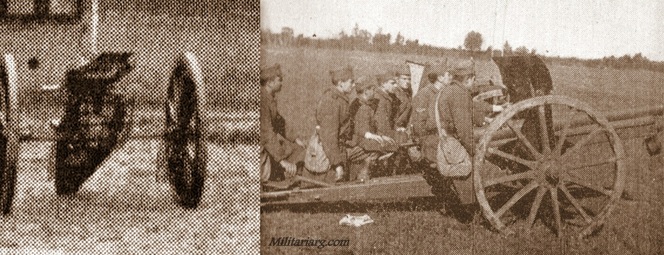
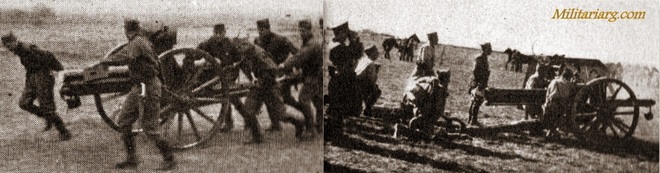
A battery of Krupp 75-mm cannons. Light or Assault Artillery, infantry support guns. Patricios Regiment, 1944.
Krupp 75mm “infantry guns,” ranging from 37mm to 75mm caliber.
1909 Krupp
75mm during maneuvers in Entre Rios. 1938, Caras y Caretas.
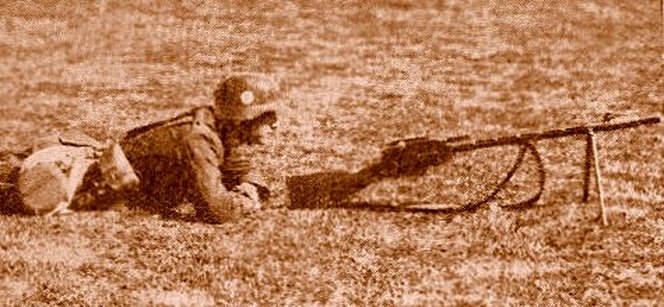
Water-cooled Heavy Machine Gun Colt-Browning M1917 (Argentine contract 1928). Patricios Regiment 1944.
6th Regiment Infantry of Mercedes (1939)
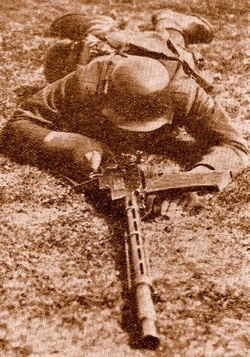
Madsen M1926/M48 Light Machine Gun (LMG). Patricios Regiment 1944.
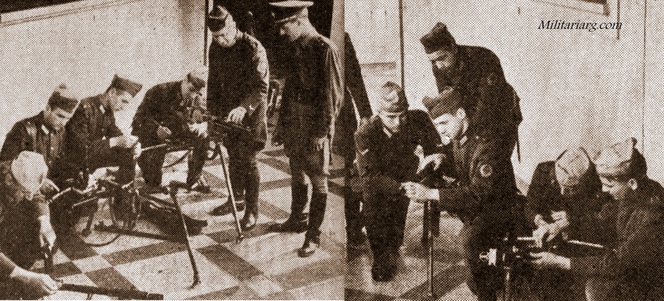
Madsen machine gun, 7.65x53mm Mauser and rangefinder camera.
While the Madsen was a small weapon by technical definition, was the definitive "squad automatic support" weapon of its era. As the world’s first mass-produced light machine gun, it filled a critical gap between the standard infantry rifle and heavy, tripod-mounted machine guns like the Maxim. Like the mg42 among others, the Madsen was considered a light weapon, but when mounted on a tripod they move into the category of heavy weapons.
Leather equipment for transporting the Madsen machine gun.
1944. 6th Infantry Regiment. Gral Viamonte. DGFM 81 mm Mortar
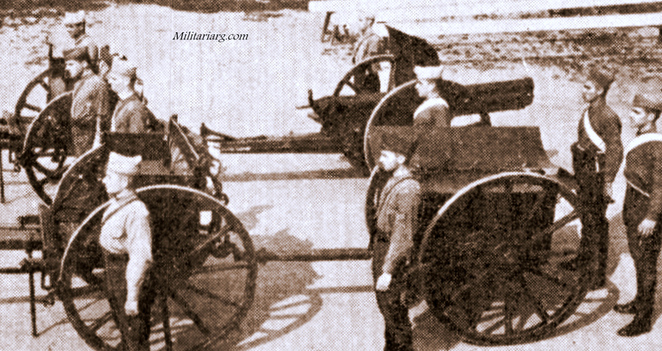
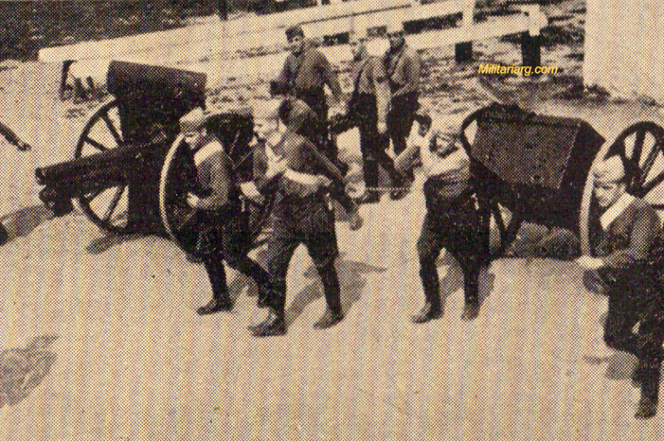
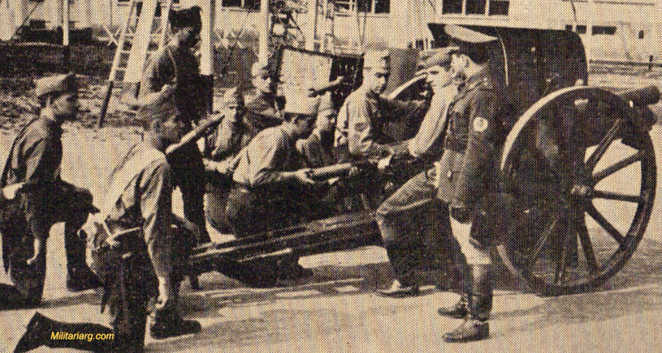
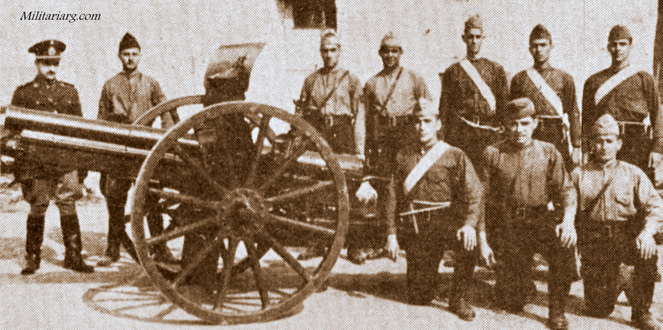
75mm L30 Krupp 1909.
1944. 6th Infantry Regiment. Gral Viamonte.
75mm Krupp L30 gun. Modelo Argentino.
The transition from the German Krupp systems to the French Schneider systems in Argentina was not a sudden replacement but a gradual integration that began with the major modernization cycle of 1928. Rather than a one-for-one swap, the Argentine Army operated both systems side-by-side for decades, often within the same units.
The Argentine Army utilized the Krupp 75mm L/30 Model 1909 primarily as a divisional field gun, which became a de facto infantry support weapon as it aged.
Field Artillery Role (Primary): The Model 1909 was initially purchased as the standard, modern field artillery piece for the Argentine Army's horse-drawn artillery units. It was intended for indirect fire at range and general battlefield engagement.
Infantry Support Role (Secondary/Later): As newer and more modern Bofors 75mm and 105mm guns were acquired in the mid-1930s, the older Model 1909 Krupps shifted roles.
Mountain and Naval Use: Lighter-barrelled Krupp 75mm models (like the L/13 M1898 mountain gun) were used by specialized mountain troops and naval landing parties as specific, man-portable infantry support arms.
Improvised Self-Propelled Gun: In the mid-1940s, the Argentine Army went so far as to mount the obsolete short-barrelled 75mm Krupp field gun onto modified British Crusader tank chassis, explicitly for use as infantry support vehicles and tank destroyers.
Field Artillery Role (Primary): The Model 1909 was initially purchased as the standard, modern field artillery piece for the Argentine Army's horse-drawn artillery units. It was intended for indirect fire at range and general battlefield engagement.
Infantry Support Role (Secondary/Later): As newer and more modern Bofors 75mm and 105mm guns were acquired in the mid-1930s, the older Model 1909 Krupps shifted roles.
Mountain and Naval Use: Lighter-barrelled Krupp 75mm models (like the L/13 M1898 mountain gun) were used by specialized mountain troops and naval landing parties as specific, man-portable infantry support arms.
Improvised Self-Propelled Gun: In the mid-1940s, the Argentine Army went so far as to mount the obsolete short-barrelled 75mm Krupp field gun onto modified British Crusader tank chassis, explicitly for use as infantry support vehicles and tank destroyers.
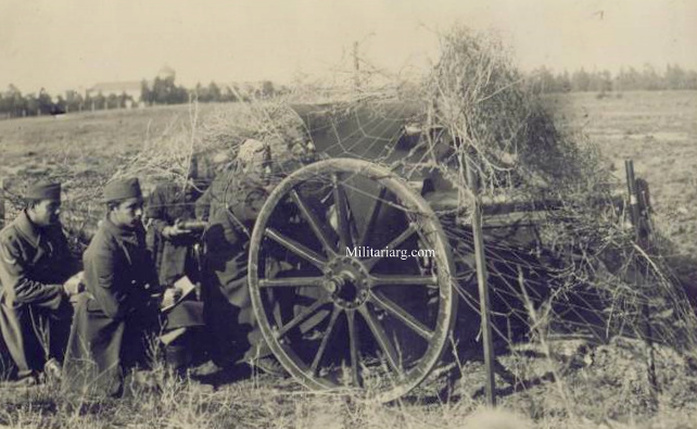
75mm Schneider M1928 L18.6 QF Mountain Gun. This was a direct derivative of the original Mle 1919 design. Schneider Mle 1919, were specialized, rapid-fire artillery designed for pack animal transport
With the carriage folded toward the shield when the gun is linked to its limber, a two-wheeled axle and ammunition carrier for transport by a horse team.
Also, several Krupp artillery pieces featured specific design elements to facilitate transport, which could include a folding lower shield or a multi-part carriage for disassembly, depending on the model.
1935. Photo: Caras y Caretas.
With the carriage folded toward the shield when the gun is linked to its limber, a two-wheeled axle and ammunition carrier for transport by a horse team.
Also, several Krupp artillery pieces featured specific design elements to facilitate transport, which could include a folding lower shield or a multi-part carriage for disassembly, depending on the model.
1935. Photo: Caras y Caretas.
Gatling Machine-gun Model 1865.
Argentina acquired at least one Gatling through Domingo Faustino Sarmiento in the 1860s.
This purchase occurred during the War of the Triple Alliance, a major South American conflict that highlighted the need for modern weaponry. Argentina was among the very first countries outside the United States to adopt the new rapid-fire technology.
In April 1867, the Argentine Army purchased a Gatling gun. The acquisition was made by the Interior Minister Domingo F. Sarmiento, acting under instructions from President Bartolomé Mitre.
The specific model purchased was likely the Model 1865 or a slightly later variant built to the 1865 design specifications (sometimes referred to as the Model 1866 by the U.S. Army). The 1865 model was the first reliable version designed around the modern metallic cartridge, capable of firing around 350 rounds per minute.
Argentina acquired at least one Gatling through Domingo Faustino Sarmiento in the 1860s.
This purchase occurred during the War of the Triple Alliance, a major South American conflict that highlighted the need for modern weaponry. Argentina was among the very first countries outside the United States to adopt the new rapid-fire technology.
In April 1867, the Argentine Army purchased a Gatling gun. The acquisition was made by the Interior Minister Domingo F. Sarmiento, acting under instructions from President Bartolomé Mitre.
The specific model purchased was likely the Model 1865 or a slightly later variant built to the 1865 design specifications (sometimes referred to as the Model 1866 by the U.S. Army). The 1865 model was the first reliable version designed around the modern metallic cartridge, capable of firing around 350 rounds per minute.
Nordenfelt Gun multiple barrel machine gun.
They were adopted primarily for naval use in the late 19th century and were purchased as components of the Maxim-Nordenfelt merger company later on.
Army Service: The Army primarily used Gatling guns earlier in the 1870s, but likely acquired Nordenfelt pattern guns later in the century. Photos published in 1933 showed Maxim-Nordenfelt guns still in use by the 4th Infantry Regiment for training and school purposes.
Maxim-Nordenfelt Company: In 1888, the Nordenfelt company merged with the Maxim Gun Company to form the Maxim Nordenfelt Guns and Ammunition Company. When Argentina placed its first major order for modern, fully automatic machine guns in 1895, they ordered 50 water-cooled Maxims from this combined entity. These guns bore the "Maxim Nordenfelt Guns and Ammunition Company Limited" inscription on the mechanism cover.
The use of both the hand-cranked Gatling, the manually-operated multiple-barrel Nordenfelt, and the early recoil-operated Maxim demonstrates Argentina's push to adopt cutting-edge rapid-fire technology throughout the late 1800s and early 1900s.
Naval Service: The Argentine Navy (Armada Nacional) was a significant user of the Nordenfelt system. Specific ships incorporated these as anti-torpedo boat defenses.
The torpedo ram ARA Maipú (commissioned 1881) was armed with four 11mm Nordenfelt machine guns.
The cruiser ARA Patagonia was also equipped with 11mm Nordenfelt machine guns.
Smaller second-class torpedo boats also mounted single 11mm Nordenfelt guns.
They were adopted primarily for naval use in the late 19th century and were purchased as components of the Maxim-Nordenfelt merger company later on.
Army Service: The Army primarily used Gatling guns earlier in the 1870s, but likely acquired Nordenfelt pattern guns later in the century. Photos published in 1933 showed Maxim-Nordenfelt guns still in use by the 4th Infantry Regiment for training and school purposes.
Maxim-Nordenfelt Company: In 1888, the Nordenfelt company merged with the Maxim Gun Company to form the Maxim Nordenfelt Guns and Ammunition Company. When Argentina placed its first major order for modern, fully automatic machine guns in 1895, they ordered 50 water-cooled Maxims from this combined entity. These guns bore the "Maxim Nordenfelt Guns and Ammunition Company Limited" inscription on the mechanism cover.
The use of both the hand-cranked Gatling, the manually-operated multiple-barrel Nordenfelt, and the early recoil-operated Maxim demonstrates Argentina's push to adopt cutting-edge rapid-fire technology throughout the late 1800s and early 1900s.
Naval Service: The Argentine Navy (Armada Nacional) was a significant user of the Nordenfelt system. Specific ships incorporated these as anti-torpedo boat defenses.
The torpedo ram ARA Maipú (commissioned 1881) was armed with four 11mm Nordenfelt machine guns.
The cruiser ARA Patagonia was also equipped with 11mm Nordenfelt machine guns.
Smaller second-class torpedo boats also mounted single 11mm Nordenfelt guns.
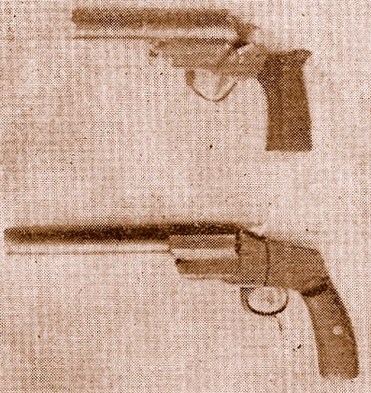
Flare Pistols & Signal Pistols
DGFM and HAFDASA. Source: "Las armas modernas de la infanteria by Julio Guzman. 1953".
HAFDASA manufactured a heavy-duty signal pistol characterized by:
Design: These were often based on the large-caliber (typically 25mm or 36.5mm) break-action systems common in the post-WWII era.Much like their Ballester-Molina pistols, they utilized high-quality steel and distinct vertical serrations on the grips, making them recognizable even as utility tools.
DGFM produced signal pistols primarily through the FMAP "Domingo Matheu" factory.
The "Corona" Model: While some were direct copies of international designs (like the German Leuchtpistole), DGFM produced localized versions intended for the Navy (Armada Argentina) and Air Force.
Markings: These typically bear the "D.G.F.M. - (F.M.A.P.)" stamp on the frame, often accompanied by the Argentine crest.
HAFDASA manufactured a heavy-duty signal pistol characterized by:
Design: These were often based on the large-caliber (typically 25mm or 36.5mm) break-action systems common in the post-WWII era.Much like their Ballester-Molina pistols, they utilized high-quality steel and distinct vertical serrations on the grips, making them recognizable even as utility tools.
DGFM produced signal pistols primarily through the FMAP "Domingo Matheu" factory.
The "Corona" Model: While some were direct copies of international designs (like the German Leuchtpistole), DGFM produced localized versions intended for the Navy (Armada Argentina) and Air Force.
Markings: These typically bear the "D.G.F.M. - (F.M.A.P.)" stamp on the frame, often accompanied by the Argentine crest.
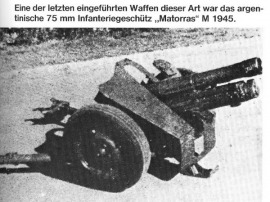
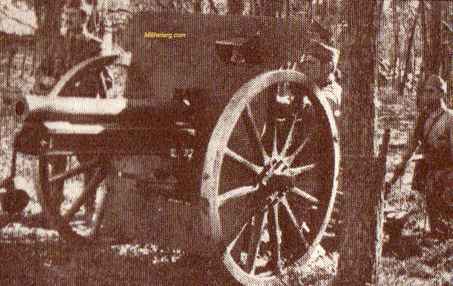
"Matorras" 75mm. L/13 Mod. 1945. DGFM.
Above is a light gun that the infantry could carry on their own without the need for assistance from the organic divisional artillery. It is also an arm that could be used by mountain troops and paratroopers. The Matorras 75mm (7.5cm) was possibly based on the German 7.5cm Infantry Gun IG18. This gun was based on a barrel tube of an old 75mm L/13 C/98 mountain gun (Krupp) modified with Maxim-Nodenfelt breech system..
Until then, the infantry used the old Krupp L/30, model 1909, as a support weapon. The Matorras was so light for the infantry support role.
Matorras 75mm L/13 represents a fascinating chapter of Argentine "industrial recycling" that differentiates it from the standard Krupp and Schneider imports.
While the Krupp M1909 used the Welin interrupted screw and earlier Krupps used a sliding block, the Matorras variant was a domestic Argentine modification created at the Fábrica Militar Río Tercero around 1945. It was not a new gun but a conversion. The Argentine Army took old Krupp M1895 mountain gun barrels that were in storage and remounted them on a new, modern carriage.
These specific 75mm donor barrels C/98 L/13 mountain gun had already been retrofitted in Argentine arsenals with the Maxim-Nordenfelt eccentric screw breech. Unlike the Welin system, where the screw is withdrawn and swung away, the Nordenfelt breech is an eccentric screw. It rotates around an axis to open a hole that aligns with the bore for loading, then rotates back to seal it.
This system was famously used on the French 75mm Mle 1897 ("Soixante-Quinze"). It allowed for an extremely high rate of fire because the breech block never actually leaves the breech; it just rotates "out of the way".
The Argentine Krupp 1909 (championed by Ricchieri) was an anomaly: it used a Welin-type interrupted screw rather than the standard Krupp wedge. While it was more advanced than a "bagged charge" muzzle-loader, it was still considered slightly slower to operate than the French Nordenfelt system because the block had to be moved more extensively to clear the breech.
Until then, the infantry used the old Krupp L/30, model 1909, as a support weapon. The Matorras was so light for the infantry support role.
Matorras 75mm L/13 represents a fascinating chapter of Argentine "industrial recycling" that differentiates it from the standard Krupp and Schneider imports.
While the Krupp M1909 used the Welin interrupted screw and earlier Krupps used a sliding block, the Matorras variant was a domestic Argentine modification created at the Fábrica Militar Río Tercero around 1945. It was not a new gun but a conversion. The Argentine Army took old Krupp M1895 mountain gun barrels that were in storage and remounted them on a new, modern carriage.
These specific 75mm donor barrels C/98 L/13 mountain gun had already been retrofitted in Argentine arsenals with the Maxim-Nordenfelt eccentric screw breech. Unlike the Welin system, where the screw is withdrawn and swung away, the Nordenfelt breech is an eccentric screw. It rotates around an axis to open a hole that aligns with the bore for loading, then rotates back to seal it.
This system was famously used on the French 75mm Mle 1897 ("Soixante-Quinze"). It allowed for an extremely high rate of fire because the breech block never actually leaves the breech; it just rotates "out of the way".
The Argentine Krupp 1909 (championed by Ricchieri) was an anomaly: it used a Welin-type interrupted screw rather than the standard Krupp wedge. While it was more advanced than a "bagged charge" muzzle-loader, it was still considered slightly slower to operate than the French Nordenfelt system because the block had to be moved more extensively to clear the breech.
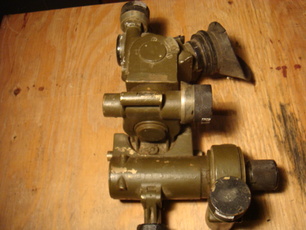
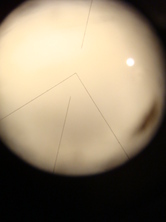
"Nedinsco, Carl Zeiss"
http://www.rubags.com/german-sniper-scope-nedinsco-carl-zeiss-kar-98-mauser.html
M9 and M9A1 2.36" Rocket Launcher (Bazooka)
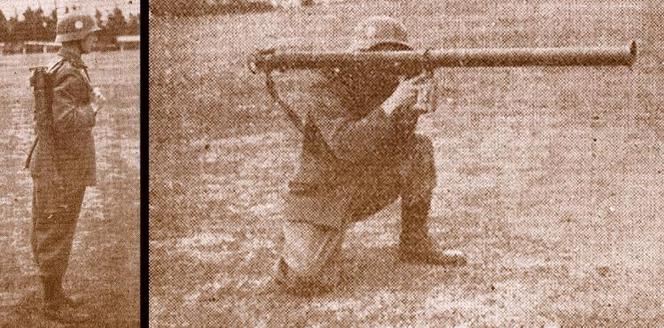
M9 and M9A1 "Bazooka" (2.36-inch / 60mm) were the primary infantry anti-tank rocket launchers used by the United States during the latter half of World War II and the Korean War. In the Argentine Army, these weapons were adopted as part of a post-war modernization effort to replace older anti-tank rifles and early P.A.P.I. systems.
DGFM Flamethrower
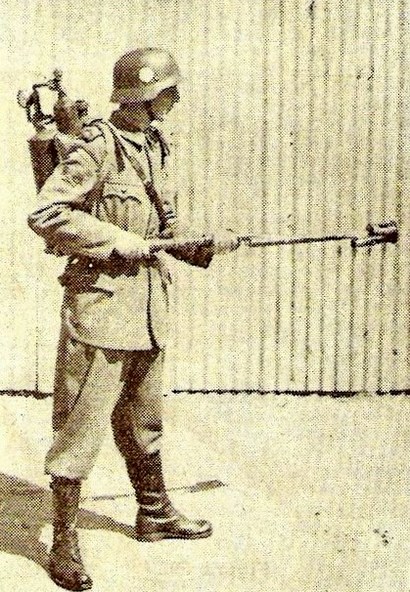
DGFM. Backpack-type flamethrower.
Argentina manufactured its own backpack-type flamethrower known simply as the
"DGFM flamethrower" (named after the state manufacturer, Dirección General de Fabricaciones Militares).
The weapon was produced in Argentina by DGFM (Fabricaciones Militares), an organization established to supply the Argentine military with domestically made equipment. Photos from the 1940s show Argentine soldiers using this type of equipment during military maneuvers. Its design was likely influenced by standard European models of the era, given Argentina's military procurement history (e.g., German or French designs).
It featured the standard backpack design with fuel tanks and a separate propellant tank, connected by a hose to a wand and ignition system.This weapon was a standard piece of equipment for specialized Argentine infantry units throughout the mid-20th century, used for neutralizing entrenched enemy positions or bunkers, similar to the American M1 or M2 flamethrowers.
Argentina manufactured its own backpack-type flamethrower known simply as the
"DGFM flamethrower" (named after the state manufacturer, Dirección General de Fabricaciones Militares).
The weapon was produced in Argentina by DGFM (Fabricaciones Militares), an organization established to supply the Argentine military with domestically made equipment. Photos from the 1940s show Argentine soldiers using this type of equipment during military maneuvers. Its design was likely influenced by standard European models of the era, given Argentina's military procurement history (e.g., German or French designs).
It featured the standard backpack design with fuel tanks and a separate propellant tank, connected by a hose to a wand and ignition system.This weapon was a standard piece of equipment for specialized Argentine infantry units throughout the mid-20th century, used for neutralizing entrenched enemy positions or bunkers, similar to the American M1 or M2 flamethrowers.
Rocket-propelled grenade
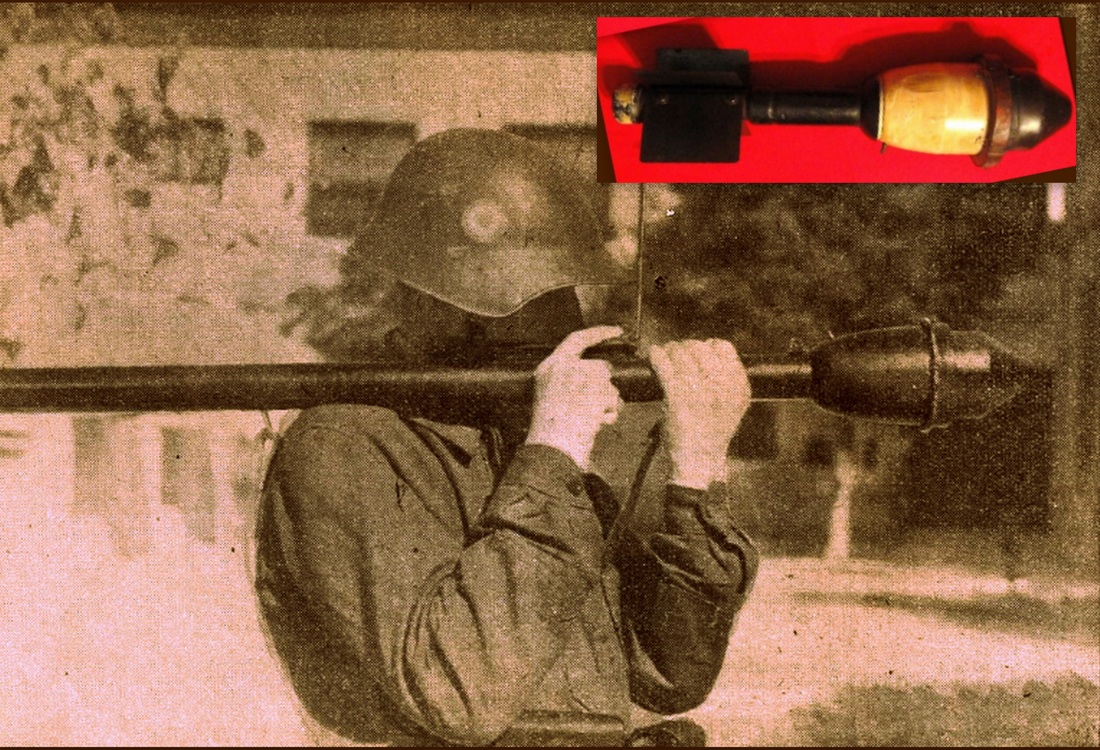
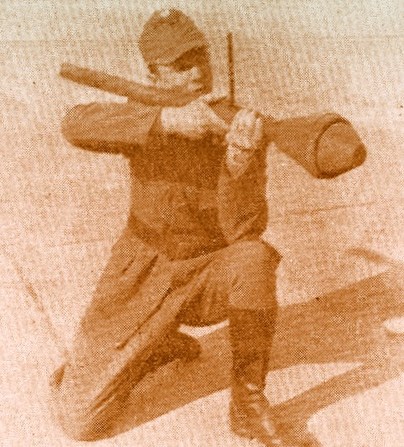
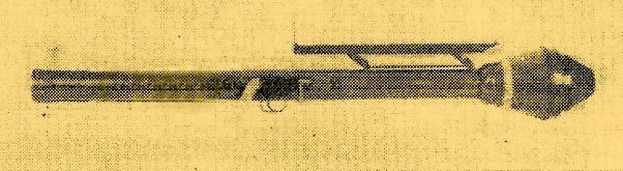
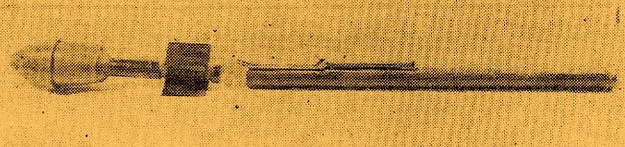
P.A.P.I. (Proyectil Antitanque para Infantería) was an Argentine-made anti-tank weapon developed by Fabricaciones Militares (DGFM) in the post-WWII era. While often referred to as a rocket-propelled grenade (RPG), it was technically a locally adapted version of the German Panzerfaust and Swedish Bofors M46 designs.
Following WWII, Argentina tested various captured German Panzerfausts and Swedish M46 models. The P.A.P.I. emerged as an improved "Argentine Panzerfaust," designed for better ergonomics and reliability.
Length: Approximately 1.07 meters (tube length of 850 mm).
Weight: Around 4.49 kg (total system), with a 2.17 kg projectile.
Penetration: Capable of piercing up to 207 mm (over 8 inches) of armor plate.
Range: It had a very short tactical range of approximately 80 meters.
Production and Service: DGFM produced over 4,000 units. The weapon was used by both the Argentine Army and the Marine Infantry (Infantería de Marina).
It remained in active service until the late 1960s, coexisting for a time with the American-made M9 Bazooka before being succeeded by more modern systems like the 105mm Czekalski and Instalaza launchers.
Weight: Around 4.49 kg (total system), with a 2.17 kg projectile.
Penetration: Capable of piercing up to 207 mm (over 8 inches) of armor plate.
Range: It had a very short tactical range of approximately 80 meters.
Production and Service: DGFM produced over 4,000 units. The weapon was used by both the Argentine Army and the Marine Infantry (Infantería de Marina).
It remained in active service until the late 1960s, coexisting for a time with the American-made M9 Bazooka before being succeeded by more modern systems like the 105mm Czekalski and Instalaza launchers.
Panzer-Kott M46 Bofors.
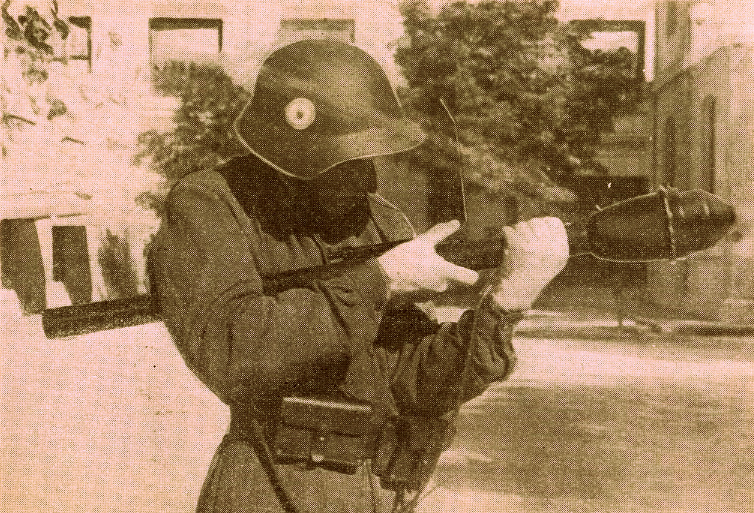
P.A.P.I (Proyectil antitanque para infanteria), DGFM. Rocket-propelled grenade.
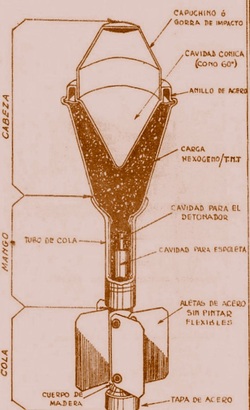
Source: Julio S. Guzmán, Las Armas Modernas de Infantería, Abril de 1953
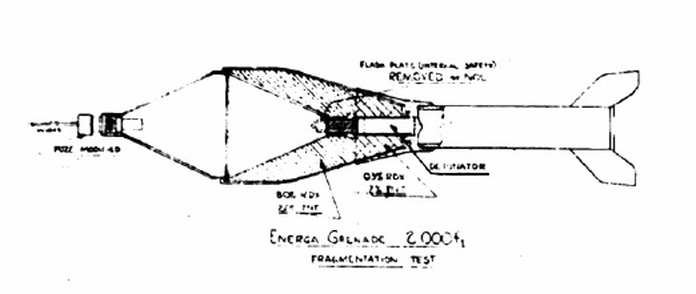
The Energa anti-tank rifle grenade is a rifle-launched anti-tank grenade that is propelled by a ballistite-filled blank cartridge. The name Energa comes from the firm in Liechtenstein that designed it, the Anstalt für die ENtwicklung von ERfindungen und Gewerblichen Anwendungen, based in Vaduz
P.D.E.F 40mm Double-Effect Fragmentation Projectile (Proyectil Doble Efecto de Fragmentación).
P.A.F 62mm Anti-Tank Fragmentation Projectile (Proyectil Antitanque de Fragmentación), Smoke, flares and ttaining (Blu), grenades.
Version of the hand grenade FMK2. It was projected from the mouth of the cannon of the 7.62mmx51 FAL with a special cartridge without a FMK-LGR projectile. The rifle has a "G" Grenade selector, in the gas-cylinder plug.
P.A.F 62mm Anti-Tank Fragmentation Projectile (Proyectil Antitanque de Fragmentación), Smoke, flares and ttaining (Blu), grenades.
Version of the hand grenade FMK2. It was projected from the mouth of the cannon of the 7.62mmx51 FAL with a special cartridge without a FMK-LGR projectile. The rifle has a "G" Grenade selector, in the gas-cylinder plug.
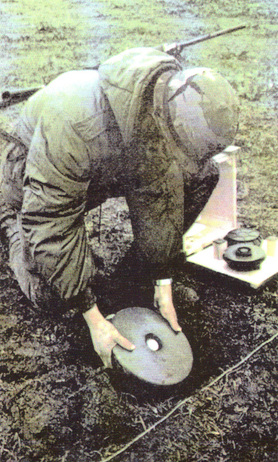
C3B AT Mine, (Spain). Argentina used a large variety of AT/AP mines from various origins, such Italian SB33 small metal blast AP, SB81 plastic cased AT, Spanish Anti-tank C3B and Anti-personnel P4B. Argentine DGFM: FMK1; FMK3 Fiberglass, FMK5 Metal Anti-Tank Blast Mine, Like the FMK-3 mine it uses a FMK-1 anti-personnel mine as a trigger. Israeli N4 AP and N6 AT,. US M1 Anti-Tank. Like on many other battlegrounds, the remaining mines in Malvinas are still a very real problem. During the war it is possible that the Royal Air Force used the BL755 cluster bomb on the minefields for breaching and cleaning.
Mine detectors: AN/PSS-11 (?); AN-19/2 Austrian Schiebel, (AN/PS-12). Before 1980s, the technology was new to Argentina. In the 1940s, gardening tools and techniques were the norm to remove mines as well as knives and bayonets. They also used old broom handles with nails at the end. The mine detector (Polish Mark-I), was an invention of Polish lieutenant Jozef Kosacki. His design was used by the British at El Alamein.
Soviet/Warsaw Pact weapons used by the Argentine Forces
Name: 9K32 Strela-2
NATO reporting name: SA-7 Grail
Type :Man portable surface-to-air missile launcher
Place of origin Soviet Union
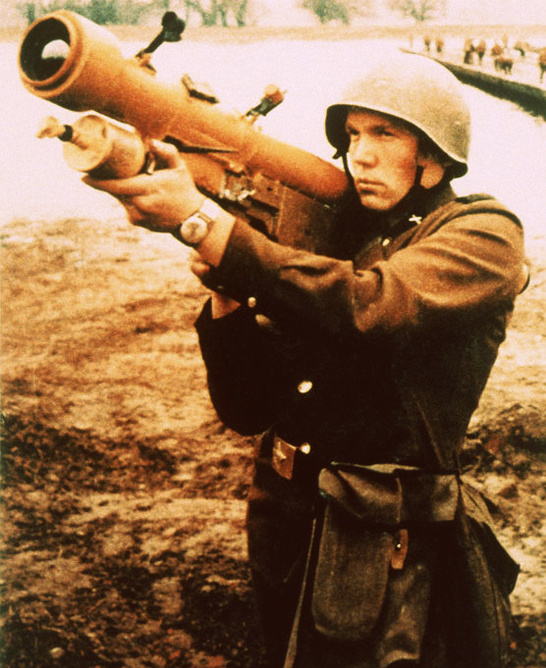
NATO reporting name: SA-7 Grail
Type :Man portable surface-to-air missile launcher
Place of origin Soviet Union
Cold War-era propaganda. Soviet SA-7 Grail surface-to-air missile.
The 9K32 “Strela-2” (Russian 9К32 “Cтрела-2” — arrow; NATO reporting name SA-7 Grail) is a man-portable, shoulder-fired, low-altitude surface-to-air missile system with a high explosive warhead and passive infrared homing guidance. Broadly comparable to the US Army FIM-43 Redeye, it was the first generation of Soviet man portable SAMs, entering service in 1968, with series production starting in 1970.
Described by one expert as being "the premier Russian export line",the Strela and its variants have seen widespread use in nearly every regional conflict since 1968.
During Malvinas War:
A handful of missiles were fired, but no kills were scored. War Machine Encyclopedia gives no launch recorded, but several missiles were captured, probably they came from Libya. (Actually they came from Perú)
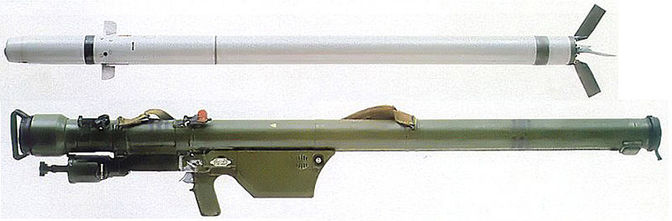
The 9K32 “Strela-2” (Russian 9К32 “Cтрела-2” — arrow; NATO reporting name SA-7 Grail) is a man-portable, shoulder-fired, low-altitude surface-to-air missile system with a high explosive warhead and passive infrared homing guidance. Broadly comparable to the US Army FIM-43 Redeye, it was the first generation of Soviet man portable SAMs, entering service in 1968, with series production starting in 1970.
Described by one expert as being "the premier Russian export line",the Strela and its variants have seen widespread use in nearly every regional conflict since 1968.
During Malvinas War:
A handful of missiles were fired, but no kills were scored. War Machine Encyclopedia gives no launch recorded, but several missiles were captured, probably they came from Libya. (Actually they came from Perú)
KBM Kolomna 9K32 Strela-2 missile and canister
Source: Wikipedia
Source: Wikipedia
Malvinas Campaign
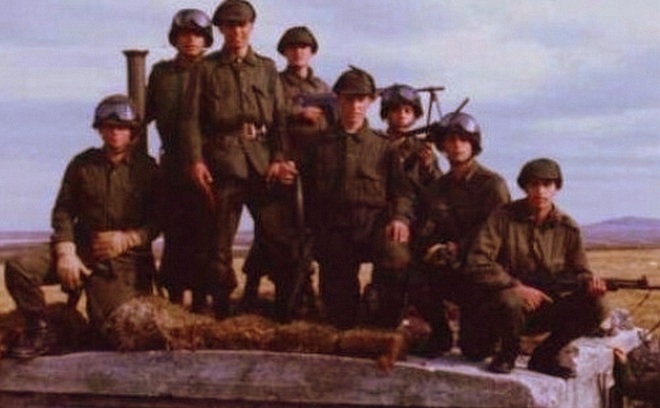
M20A1/A1B1 "Super Bazooka".
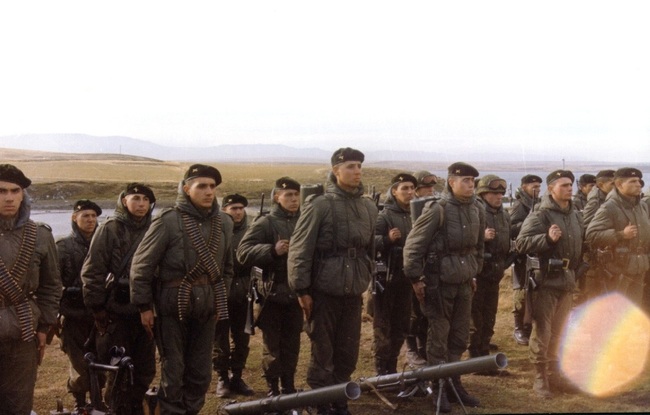
The M20 "Super Bazooka" is the official U.S. military designation for the 88.9 mm (3.5-inch) caliber anti-tank rocket launcher developed during World War II and used extensively in the Korean War. It was an improved and enlarged version of the original 60mm M1 "Bazooka".
M20A1/A1B1 "Super Bazooka" Overview
The "Super Bazooka" corrected the shortcomings of the early M1 and M9 models.
Increased Caliber: The jump from 60mm to 88.9mm allowed for a much larger, more effective HEAT (High-Explosive Anti-Tank) warhead capable of penetrating heavier armor encountered in WWII and the Korean War.
Performance: It had a maximum effective range of around 150 to 200 yards against tanks, with a maximum range for area targets of around 800 yards.
Weight & Construction: The M20A1 weighed around 14 pounds (6.3 kg), making it a portable, two-man operated weapon.
The A1 and A1B1 Variants
The main difference between the models was the material and construction:
M20: The original WWII model, made of heavy steel.
M20A1: An improved post-WWII version featuring minor modifications to the trigger and safety mechanisms.
M20A1B1: A lighter version introduced later, primarily made of aluminum alloy to reduce weight, often incorporating a folding rear stock for easier transport.
Service in Argentina
Argentina was a prominent user of the M20 "Super Bazooka" through U.S. military aid programs and international sales.
Standard Infantry Weapon: The M20A1 and A1B1 served as standard anti-tank weapons in the Argentine Army well into the 1970s and 1980s.
Replacement: The M20 was eventually superseded in Argentine service by the Spanish-made Instalaza M-65 (an M20 derivative with modern enhancements) and later by modern, one-shot disposable systems like the Instalaza C-90.
The M20 "Super Bazooka" is the official U.S. military designation for the 88.9 mm (3.5-inch) caliber anti-tank rocket launcher developed during World War II and used extensively in the Korean War. It was an improved and enlarged version of the original 60mm M1 "Bazooka".
M20A1/A1B1 "Super Bazooka" Overview
The "Super Bazooka" corrected the shortcomings of the early M1 and M9 models.
Increased Caliber: The jump from 60mm to 88.9mm allowed for a much larger, more effective HEAT (High-Explosive Anti-Tank) warhead capable of penetrating heavier armor encountered in WWII and the Korean War.
Performance: It had a maximum effective range of around 150 to 200 yards against tanks, with a maximum range for area targets of around 800 yards.
Weight & Construction: The M20A1 weighed around 14 pounds (6.3 kg), making it a portable, two-man operated weapon.
The A1 and A1B1 Variants
The main difference between the models was the material and construction:
M20: The original WWII model, made of heavy steel.
M20A1: An improved post-WWII version featuring minor modifications to the trigger and safety mechanisms.
M20A1B1: A lighter version introduced later, primarily made of aluminum alloy to reduce weight, often incorporating a folding rear stock for easier transport.
Service in Argentina
Argentina was a prominent user of the M20 "Super Bazooka" through U.S. military aid programs and international sales.
Standard Infantry Weapon: The M20A1 and A1B1 served as standard anti-tank weapons in the Argentine Army well into the 1970s and 1980s.
Replacement: The M20 was eventually superseded in Argentine service by the Spanish-made Instalaza M-65 (an M20 derivative with modern enhancements) and later by modern, one-shot disposable systems like the Instalaza C-90.
Instalazas 88.9mm M-65.
The Instalaza 88.9mm M-65 is a Spanish-made rocket launcher, an improved variant of the U.S. M20 "Super Bazooka" anti-tank weapon system. It saw extensive service in the Spanish Army and was also fielded by the Argentine Army.
The M-65 was a reusable, two-piece metal tube weapon derived from the U.S. M20 "Super Bazooka" design. It required a crew of two to operate effectively and carry the ammunition. It was the standard weapon for many decades.
Characteristics
Weapon Type: Man-portable, shoulder-fired anti-tank rocket launcher.
Caliber: 88.9 mm (3.5 inch), the same as the U.S. "Super Bazooka".
Design: A derivative of the American M20, the M65 was updated by the Spanish company Instalaza with an improved ignition system and a distinctive blast shield for the operator's face.
Weight: The functional system weighed approximately 6 kilograms (13.2 pounds).
Ammunition: It fired various rocket types, including high-explosive anti-tank (HEAT) rounds, dual-purpose rounds, and smoke shells.
Service in Argentina
The Instalaza M-65 served with the Argentine Army as a standard infantry anti-tank weapon:
Falklands War (1982): Reports indicate that the Argentine Army fielded the M-65 launchers during the conflict.
Mechanized Units: It was a standard weapon for mechanized infantry, with soldiers carrying the M-65 in both M113 APCs and the locally produced TAM VCTM vehicles.
Longevity: The weapon remained in service with Argentine units well into the 1990s before being gradually replaced by more modern systems like the C-90 series (also made by Instalaza).
The M-65 was a reliable and improved version of the successful M20 design, providing infantry with essential protection against armored threats.
The Instalaza 88.9mm M-65 is a Spanish-made rocket launcher, an improved variant of the U.S. M20 "Super Bazooka" anti-tank weapon system. It saw extensive service in the Spanish Army and was also fielded by the Argentine Army.
The M-65 was a reusable, two-piece metal tube weapon derived from the U.S. M20 "Super Bazooka" design. It required a crew of two to operate effectively and carry the ammunition. It was the standard weapon for many decades.
Characteristics
Weapon Type: Man-portable, shoulder-fired anti-tank rocket launcher.
Caliber: 88.9 mm (3.5 inch), the same as the U.S. "Super Bazooka".
Design: A derivative of the American M20, the M65 was updated by the Spanish company Instalaza with an improved ignition system and a distinctive blast shield for the operator's face.
Weight: The functional system weighed approximately 6 kilograms (13.2 pounds).
Ammunition: It fired various rocket types, including high-explosive anti-tank (HEAT) rounds, dual-purpose rounds, and smoke shells.
Service in Argentina
The Instalaza M-65 served with the Argentine Army as a standard infantry anti-tank weapon:
Falklands War (1982): Reports indicate that the Argentine Army fielded the M-65 launchers during the conflict.
Mechanized Units: It was a standard weapon for mechanized infantry, with soldiers carrying the M-65 in both M113 APCs and the locally produced TAM VCTM vehicles.
Longevity: The weapon remained in service with Argentine units well into the 1990s before being gradually replaced by more modern systems like the C-90 series (also made by Instalaza).
The M-65 was a reliable and improved version of the successful M20 design, providing infantry with essential protection against armored threats.
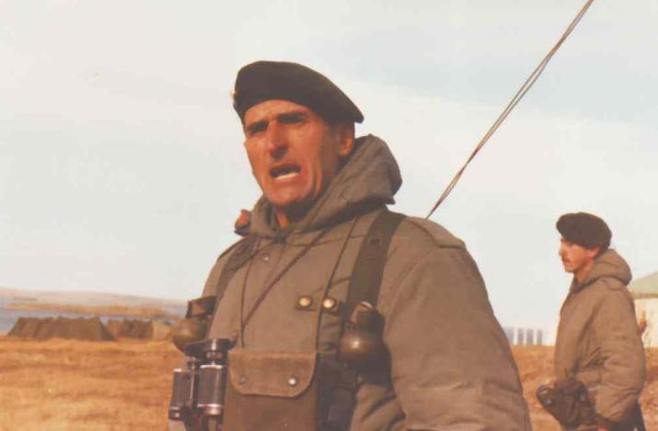
The 25th Infantry Regiment (RI 25) is a unit of the Argentine Army based at Sarmiento, Chubut, Argentina. This regiment fought during Malvinas War. He wore the FMK1 Hand Grenades. Argentina also used the FMK 2 GME, M67 fragmentation hand grenade, M16 Smoke Hand Grenade, EXPAL EA M-5, US M69.
Above photo, Lieutenant Colonel Mohamed Ali Seineldin during Malvinas war.
It is widely documented that the Colonel was heavily influenced by the ideas and actions of earlier military figures such as Juan Domingo Perón, Enrique Mosconi, Pablo Ricchieri, Agustin Pedro Justo, and Manuel Savio.
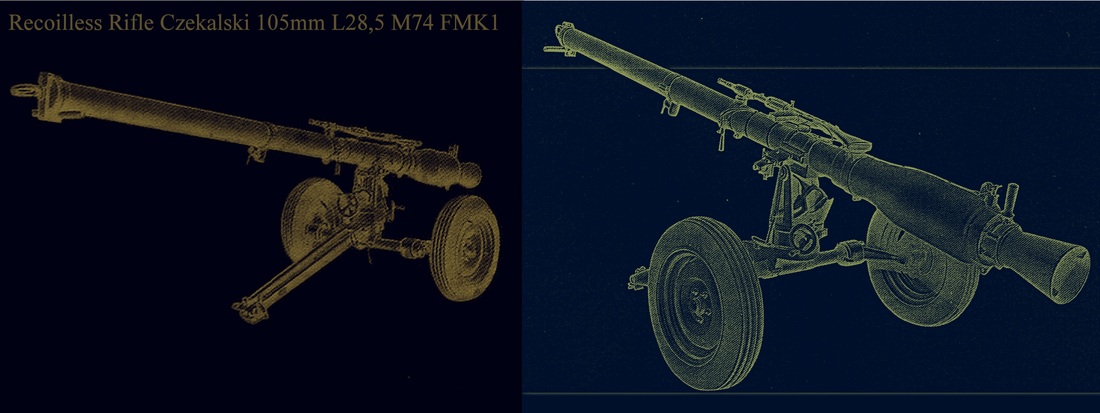
The 105mm Czekalski recoilless rifle (often referred to simply as the FM Czekalski 105 mm or Model 1968 recoilless gun) is an Argentine-developed and manufactured anti-tank weapon. It was produced by the state-owned company Fabricaciones Militares (FM).
Development and Design
The weapon was developed in the 1960s and entered service with the Argentine Army in 1968. The design is reportedly inspired by the American M40 106mm recoilless rifle (which is technically 105mm), but features several key differences:
The Czekalski is significantly heavier than the M40 and uses a distinct, heavier two-wheeled carriage. This extra weight was likely intended to improve stability and potentially allow for a higher sustained rate of fire compared to lighter designs.
While designed for anti-tank engagements, its features (like a high sustained fire rate) also made it suitable for indirect shelling of enemy positions.
A 7.62mm spotting rifle (often a variant of the FN FAL) is fitted to help the gunner adjust fire by observing where tracer rounds hit before firing the main gun.
As a recoilless rifle, it expels gases to the rear to counteract the recoil force, requiring a 40-meter clear backblast area when firing.
Development and Design
The weapon was developed in the 1960s and entered service with the Argentine Army in 1968. The design is reportedly inspired by the American M40 106mm recoilless rifle (which is technically 105mm), but features several key differences:
The Czekalski is significantly heavier than the M40 and uses a distinct, heavier two-wheeled carriage. This extra weight was likely intended to improve stability and potentially allow for a higher sustained rate of fire compared to lighter designs.
While designed for anti-tank engagements, its features (like a high sustained fire rate) also made it suitable for indirect shelling of enemy positions.
A 7.62mm spotting rifle (often a variant of the FN FAL) is fitted to help the gunner adjust fire by observing where tracer rounds hit before firing the main gun.
As a recoilless rifle, it expels gases to the rear to counteract the recoil force, requiring a 40-meter clear backblast area when firing.
Vehicle Mounts
Argentina leveraged its domestic 105mm FM Czekalski (Model 1968) recoilless rifle to create several mobile fire-support platforms by mounting it on various wheeled and tracked vehicles.
M113 APC: A common field modification in the 1970s involved mounting a single Czekalski 105mm gun on the roof of the M113, often used by Mechanized Infantry Regiments for direct fire support.
M3/M5/M9 Half-tracks: These WWII-era veterans remained in Argentine service for decades and were frequently fitted with a single 105mm recoilless gun to serve as cheap, self-propelled anti-tank platforms.
Mercedes-Benz Unimog: Similar to the jeeps, Unimogs were occasionally fitted with these guns for high-mobility roles in mountain and rugged terrain.
Experimental & Specialized Variants
Argentine military conducted notable experiments with the T16 Universal Carrier as a mobile platform for their domestic 105mm Model 1968 recoilless rifle.
The "Argentine Ontos": In the late 1960s, Argentina experimented with creating a "tank destroyer" similar to the American M50 Ontos. This prototype involved mounting six 105mm recoilless rifles on a single chassis either a Bren Carrier or an IHC M5/M9 Half-track.
"La Máquina del Infierno" (The Hell Machine): While not a recoilless rifle, a similar field improvisation during the South Atlantic War involved mounting LAU-3/69 aircraft rocket pods on a trailer or weapon carriage for use as ground-based saturation fire.
Operational Deployment
During the Malvinas/Flaklands War, these guns were primarily used in static ground positions or on trailers around key defensive heights like Mount Longdon and Wireless Ridge, where they provided both direct anti-tank fire and indirect bombardment.
The Model 1968 has been a standard anti-tank weapon for the Argentine military for decades, with 150 units still operational as of the early 2000s. It was used as a ground-mounted weapon and also integrated onto vehicles, notably the TAM VCTM (a variant of the Argentine medium tank) and the M113 armored personnel carrier.
It has seen extensive service in various units of the Argentine Army, including the Mechanized Infantry Regiments in Patagonia. The Czekalski 105mm represents a significant piece of indigenous Argentine military design and manufacturing history.
M113 APC: A common field modification in the 1970s involved mounting a single Czekalski 105mm gun on the roof of the M113, often used by Mechanized Infantry Regiments for direct fire support.
M3/M5/M9 Half-tracks: These WWII-era veterans remained in Argentine service for decades and were frequently fitted with a single 105mm recoilless gun to serve as cheap, self-propelled anti-tank platforms.
Mercedes-Benz Unimog: Similar to the jeeps, Unimogs were occasionally fitted with these guns for high-mobility roles in mountain and rugged terrain.
Experimental & Specialized Variants
Argentine military conducted notable experiments with the T16 Universal Carrier as a mobile platform for their domestic 105mm Model 1968 recoilless rifle.
The "Argentine Ontos": In the late 1960s, Argentina experimented with creating a "tank destroyer" similar to the American M50 Ontos. This prototype involved mounting six 105mm recoilless rifles on a single chassis either a Bren Carrier or an IHC M5/M9 Half-track.
"La Máquina del Infierno" (The Hell Machine): While not a recoilless rifle, a similar field improvisation during the South Atlantic War involved mounting LAU-3/69 aircraft rocket pods on a trailer or weapon carriage for use as ground-based saturation fire.
Operational Deployment
During the Malvinas/Flaklands War, these guns were primarily used in static ground positions or on trailers around key defensive heights like Mount Longdon and Wireless Ridge, where they provided both direct anti-tank fire and indirect bombardment.
The Model 1968 has been a standard anti-tank weapon for the Argentine military for decades, with 150 units still operational as of the early 2000s. It was used as a ground-mounted weapon and also integrated onto vehicles, notably the TAM VCTM (a variant of the Argentine medium tank) and the M113 armored personnel carrier.
It has seen extensive service in various units of the Argentine Army, including the Mechanized Infantry Regiments in Patagonia. The Czekalski 105mm represents a significant piece of indigenous Argentine military design and manufacturing history.
Browning M2 .50 Cal HMG
The Browning M2 .50 caliber heavy machine gun has been and remains in service with the Argentine Armed Forces for many decades. The M2 (often referred to in Argentina as the 12.70 mm machine gun) is a standard piece of equipment for both the Argentine Army and Navy/Marines.
It has been widely used as a vehicle weapon, notably mounted on Argentine Army M113 armored personnel carriers.
It also serves in the standard infantry support role, typically mounted on an M3 tripod.
The M2 Browning was used extensively by Argentine forces during the South Atlantic War. It proved to be a highly effective and "deadly" weapon in ground battles, such as the Battle of Mount Longdon. Several were captured by British forces during the war.
Like many NATO and allied countries, Argentina has found the M2 design to be enduringly effective, and the weapon system remains in service today.
It has been widely used as a vehicle weapon, notably mounted on Argentine Army M113 armored personnel carriers.
It also serves in the standard infantry support role, typically mounted on an M3 tripod.
The M2 Browning was used extensively by Argentine forces during the South Atlantic War. It proved to be a highly effective and "deadly" weapon in ground battles, such as the Battle of Mount Longdon. Several were captured by British forces during the war.
Like many NATO and allied countries, Argentina has found the M2 design to be enduringly effective, and the weapon system remains in service today.
This is a heavy machine gun designed by John Browning almost at the end of the first world war. It is also known as Ma Deuce and Fifty-cal. This machine gun has been used in diverse roles such as infantry support weapon, mounted in vehicles, anti-aircraft, naval, aircraft, etc in numerous countries. It has participated during the 20th century in its wars (WWI, WWII, Korea, Vietnam, Malvinas and the Gulf War. In Argentina it is known as the (12.7mm) 12.7x99mm Browning M2 HB machine gun. According to Enzo Coria, Argentine veteran of the Marine Infantry and operator of this gun in the Malvinas War, the 12.7 had between 1000 and 1500 meters of effectivity, 1800 meters of maximum range (2200 yards). The rate of fire is between 450 and 500 shots per minute.
The M2 Browning .50 caliber played a pivotal, and at times controversial, role during the South Atlantic War. Both sides utilized the weapon, but their methods and the resulting impact differed significantly.
Argentina utilized the M2 primarily in fixed, defensive infantry positions and for point air defense.
Defensive Positions: Well-dug-in Argentine Marines and infantry used the M2 as a "deadly" suppression weapon.
The Battle of Mount Longdon: This was the most famous instance of M2 usage during the war. Argentine machine gun nests posed a severe threat to the advancing 3rd Battalion, Parachute Regiment (3 PARA).
Posthumous Victoria Cross: Sergeant Ian McKay of 3 PARA was awarded a posthumous Victoria Cross for his actions on Mount Longdon, where he single-handedly charged and knocked out an Argentine .50 cal position that was pinning down his unit.
Equipment: Many of these weapons were mounted on Argentine-made M63 mounts or sustained-fire mounts.
The British relationship with the M2 was more situational, as it was not their primary standard-issue infantry machine gun at the time.
Limited Initial Issue: Some units, such as the Scots Guards, were issued M2s from stores as they prepared for the expedition.
Local Air Defense: GPMGs (7.62mm) and M2s were often positioned to provide local air defense at beachheads like San Carlos.
Captured Weapons: One of the most notable British uses involved turning captured Argentine M2s back against their original owners. British troops found the heavy .50 cal rounds more effective than their own 7.62mm SLR rifles for suppressing distant Argentine bunkers.
Maritime Role: The Royal Navy used M2s mounted on ships for close-in protection against Argentine air strikes
Argentina utilized the M2 primarily in fixed, defensive infantry positions and for point air defense.
Defensive Positions: Well-dug-in Argentine Marines and infantry used the M2 as a "deadly" suppression weapon.
The Battle of Mount Longdon: This was the most famous instance of M2 usage during the war. Argentine machine gun nests posed a severe threat to the advancing 3rd Battalion, Parachute Regiment (3 PARA).
Posthumous Victoria Cross: Sergeant Ian McKay of 3 PARA was awarded a posthumous Victoria Cross for his actions on Mount Longdon, where he single-handedly charged and knocked out an Argentine .50 cal position that was pinning down his unit.
Equipment: Many of these weapons were mounted on Argentine-made M63 mounts or sustained-fire mounts.
The British relationship with the M2 was more situational, as it was not their primary standard-issue infantry machine gun at the time.
Limited Initial Issue: Some units, such as the Scots Guards, were issued M2s from stores as they prepared for the expedition.
Local Air Defense: GPMGs (7.62mm) and M2s were often positioned to provide local air defense at beachheads like San Carlos.
Captured Weapons: One of the most notable British uses involved turning captured Argentine M2s back against their original owners. British troops found the heavy .50 cal rounds more effective than their own 7.62mm SLR rifles for suppressing distant Argentine bunkers.
Maritime Role: The Royal Navy used M2s mounted on ships for close-in protection against Argentine air strikes
Browning M2 .50 Caliber Heavy machine Gun Replica
In 1917, General John J. Pershing requested a heavy machine gun for the American Expeditionary Forces (AEF) to combat newly developed German armored aircraft and tanks.
John Browning scaled up his existing .30 caliber M1917 water-cooled design to accommodate a massive new round.
Winchester collaborated to develop the .50 BMG (Browning Machine Gun) cartridge, which was inspired by the German 13mm anti-tank rifle round.
John Browning scaled up his existing .30 caliber M1917 water-cooled design to accommodate a massive new round.
Winchester collaborated to develop the .50 BMG (Browning Machine Gun) cartridge, which was inspired by the German 13mm anti-tank rifle round.
The first prototypes were test-fired in November 1918, just before the Armistice ending WWI. It was officially adopted in 1921 as the M1921, which was initially water-cooled.
After John Browning’s death in 1926, Colt and U.S. Army Ordnance refined the design.
In 1933, a new universal receiver was introduced, allowing a single gun to be configured into seven different types (aircraft, water-cooled, ground mount, etc.) by swapping barrels and jackets. This version was designated the M2.
To eliminate the heavy, bulky water-cooling jacket for infantry use, a thicker, air-cooled heavy barrel was introduced, creating the standard M2HB variant still in use today.
In 1933, a new universal receiver was introduced, allowing a single gun to be configured into seven different types (aircraft, water-cooled, ground mount, etc.) by swapping barrels and jackets. This version was designated the M2.
To eliminate the heavy, bulky water-cooling jacket for infantry use, a thicker, air-cooled heavy barrel was introduced, creating the standard M2HB variant still in use today.