Militariarg.com
  • Home
  • Army
  • Aviation
  • Navy
  • Uniforms and Badges
  • Arms and Weapons
  • Equipment
  • Vehicles
  • Operational and Organizational Structure, Security Forces, Transportation, Books, Models and More.
  • Argentine Confederation Era. 1829 - 1852.
  • From 1852 to 1910 (French fashion)
  • Bunker 1982: South Atlantic War Militaria
  • International Militaria
  • Argentina WWII Era (Neutral) Reenactment Impression
  • Links ~ Enlaces
Picture
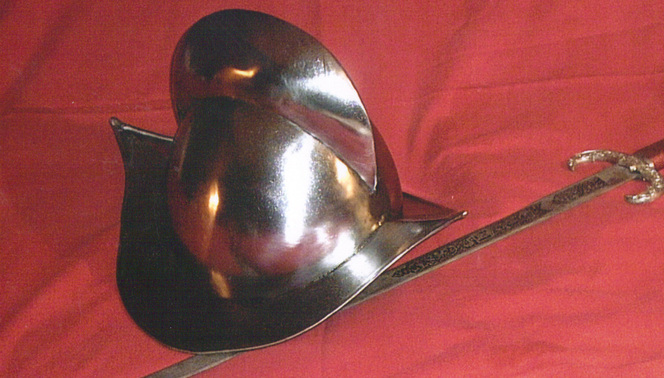
XVI 16th century. Spanish Morion Helmet. Replica.

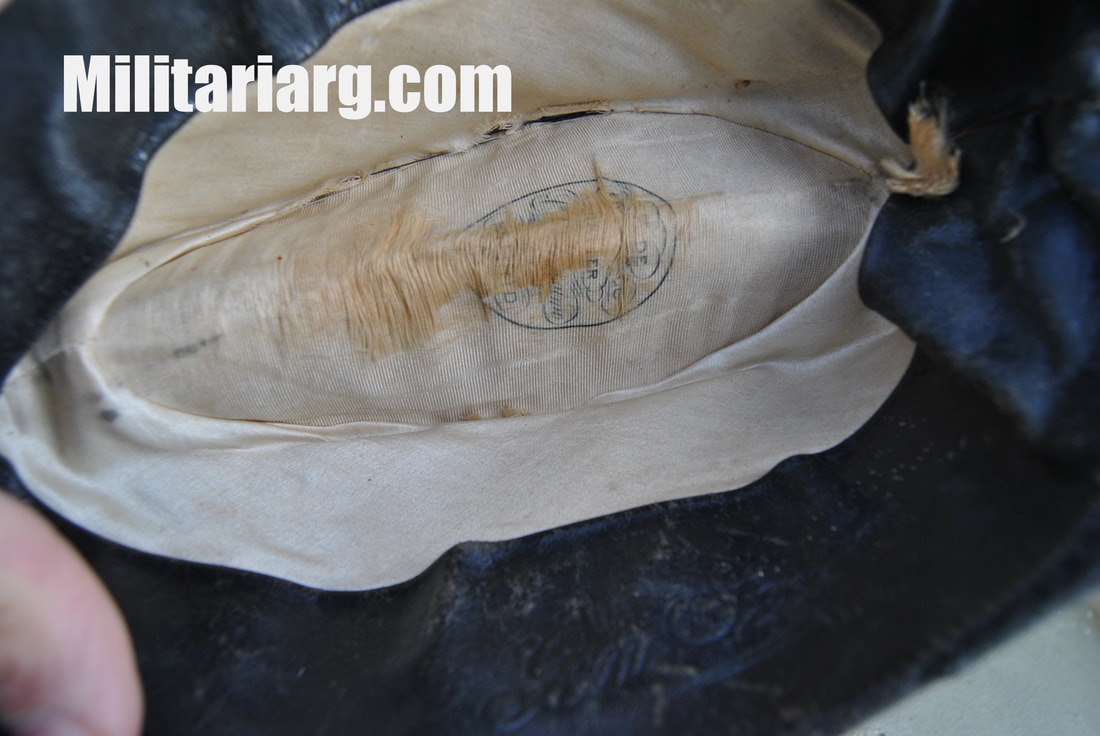
Spanish Diplomatic Bicorne Hat. Alfonso XII era.
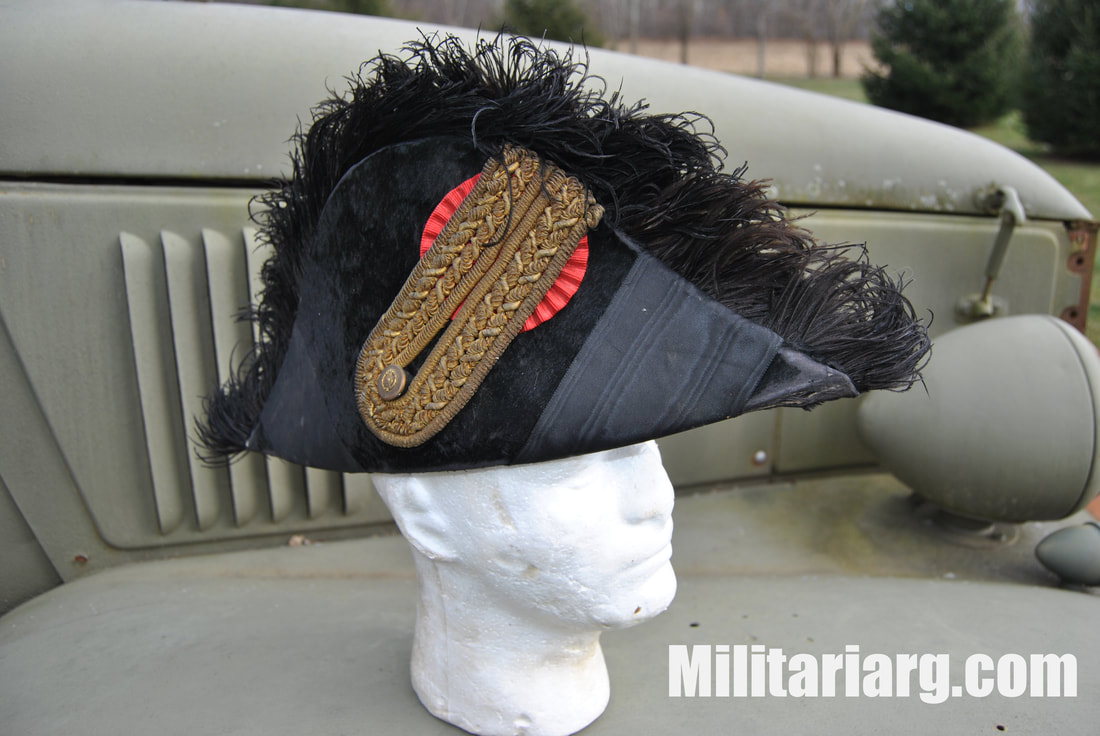
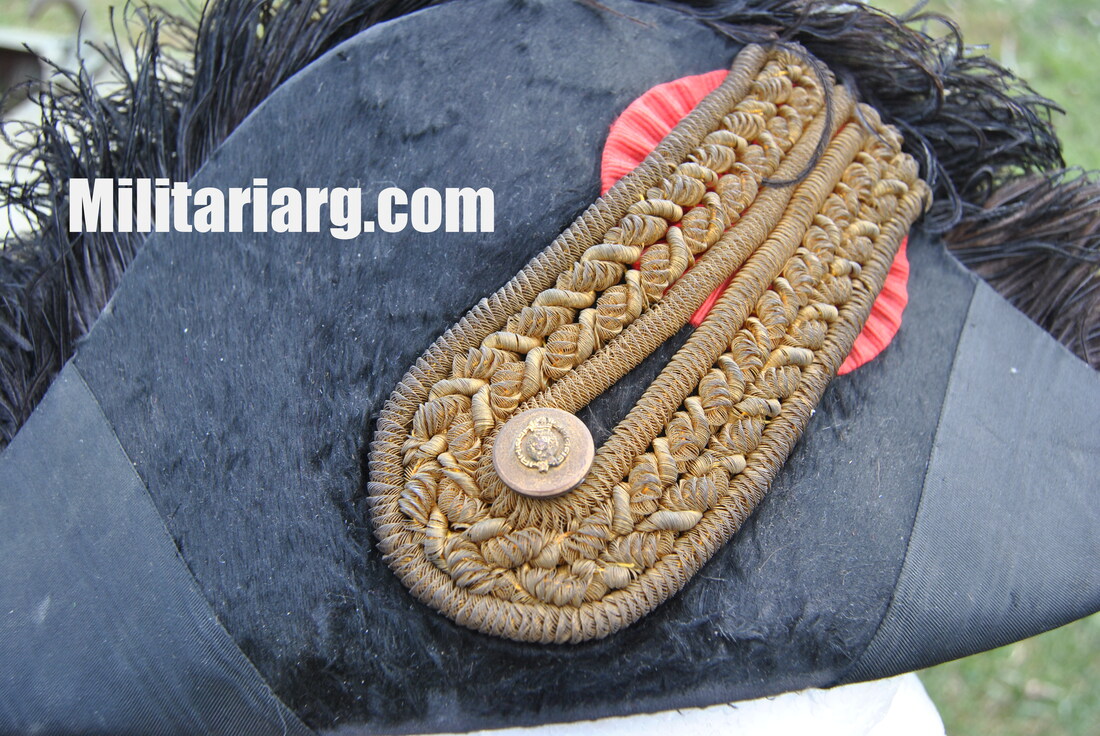
​​The era of King Alfonso XII (reigned December 29, 1874 – November 25, 1885) marked the beginning of the Bourbon Restoration in Spain, a period of significant political stabilization and economic recovery after decades of turmoil. His reign, though short, laid the foundations for a stable constitutional monarchy.
Picture
 1. The Bourbon Restoration and Political Stability
Alfonso XII's reign began after a military coup (pronunciamiento) ended the chaotic First Spanish Republic. His primary objective, guided by his Prime Minister Antonio Cánovas del Castillo, was to restore order and establish a stable liberal, though not fully democratic, regime. 

Constitution of 1876: This constitution established the framework of the new constitutional monarchy and remained in effect until 1923. It vested significant power in the Crown while also creating a legislative body (Cortes).

Turnismo (Alternation System):
The era was characterized by an orchestrated, peaceful alternation of power between two main parties: the Conservative Party (led by Cánovas) and the Liberal Party (led by Práxedes Mateo Sagasta). This system marginalized genuine opposition groups, but it brought an end to the frequent military coups and political instability that had plagued Spain previously. 
Picture
2. "The Peacemaker" (El Pacificador)
Alfonso XII earned his nickname for successfully concluding major internal conflicts that had destabilized Spain for years: 

Third Carlist War: He led efforts that successfully ended the civil war in 1876.

Ten Years' War in Cuba: His government negotiated the Pact of Zanjón in 1878, which effectively ended the conflict in the Spanish colony of Cuba, temporarily resolving a major colonial crisis. 
Picture
​3. Economic and Social Recovery
The political stability fostered a period of modest economic growth and socio-economic recuperation. 

Infrastructure Growth:
There was significant expansion of the railway network and foreign investment in the country.

Agricultural Boom: Spain's agricultural sector, particularly wine exports, benefited from the phylloxera plague that devastated French vineyards at the time.

Social Inequality: Despite growth in coastal industrial regions, Spain remained largely agrarian, with a wealthy elite and a large, poor working class, which contributed to the rise of socialist and anarchist movements. 

4. The King's Early Death
Alfonso XII died young, at the age of 27, from tuberculosis in November 1885. He was succeeded by his posthumously born son, Alfonso XIII, with his second wife, Maria Christina of Austria, serving as regent during the lengthy minority.

Alfonzo XIII era

The era of King Alfonso XIII (reigned 1886–1931; personal rule from 1902) was a tumultuous period that saw the final collapse of Spain's constitutional monarchy and the eventual establishment of the Second Spanish Republic. Born a king after his father's death, his reign was marked by political instability, military setbacks, and a slide into dictatorship. 
Key Features of the Era

Loss of the Last Colonies: The defining event during his mother's regency (until 1902) was the Spanish-American War of 1898, in which Spain lost its last significant colonial possessions: Cuba, Puerto Rico, Guam, and the Philippines. This national humiliation intensified domestic political crises.

Turnismo System Collapse: After Alfonso assumed personal rule in 1902, the established system of power rotation between the Conservative and Liberal parties (turnismo) began to break down. The King often intervened in politics, which led to frequent changes of government (33 cabinets between 1902 and 1923) and further discredited the parliamentary system.

Neutrality in WWI and Humanitarian Work: Spain remained neutral during World War I. Alfonso XIII earned Nobel Peace Prize nominations for his humanitarian efforts, establishing the Oficina Pro Cautivos (Office for Prisoners) to assist over 200,000 prisoners of war and civilians across Europe.

Rif War and the Annual Disaster: Spain's ongoing colonial conflicts in North Africa (the Rif War) were a constant drain on resources and national morale. The catastrophic Spanish military defeat at the Battle of Annual in 1921 led to public outcry and a crisis that further destabilized the government.

Dictatorship of Primo de Rivera: Facing increasing political chaos, the King supported General Miguel Primo de Rivera's military coup in September 1923, which established a seven-year dictatorship. While this brought short-term order and some infrastructure development, it fatally tied the fate of the monarchy to an authoritarian regime.

Downfall of the Monarchy: After Primo de Rivera's resignation in January 1930, the attempt to return to constitutional rule failed. Municipal elections in April 1931 resulted in an overwhelming victory for republican candidates in urban areas. To avoid a civil war, Alfonso XIII voluntarily went into exile, leading to the proclamation of the Second Spanish Republic.

The Spanish Civil War (1936-1939) ​

This civil war was a brutal domestic conflict between the democratically elected, left-leaning Republican government and right-wing Nationalist rebels led by General Francisco Franco. It is often described as a "dress rehearsal" for World War II due to the involvement of foreign powers and the testing of new military technology and tactics.

Republicans (Loyalists): Were loyal to the existing government, a "Popular Front" coalition of socialists, anarchists, communists, and regional separatists (Basque and Catalan nationalists). They were primarily based in urban and industrial areas. The Soviet Union supplied the Republicans with arms and military advisors, and approximately 35,000 to 40,000 volunteers from 52 countries formed the International Brigades to fight against fascism. 

Nationalists (Rebels): Were an alliance of fascist-oriented Falangists, monarchists, conservatives, the Catholic Church, and most of the military leadership. They were united by their opposition to the Republic and aimed to establish a traditional, authoritarian state. Nazi Germany and Fascist Italy provided substantial military aid, including aircraft (Legion Condor), tanks, and soldiers.

The Nationalists gradually gained control of the country, capturing Barcelona in January 1939 and Madrid in March 1939. Franco declared victory on April 1, 1939. Franco established a right-wing military dictatorship that suppressed political opposition, censored the press, and repressed regional identities. His rule lasted until his death in November 1975.


The Spanish Army during the WWII era (roughly 1939-1945) relied on a diverse mix of domestic, captured, and imported equipment, much of which was leftover from the Spanish Civil War (1936-1939). Its arsenal was a collection of German, Italian, French, British, and Soviet-designed arms. 

Weapons
The primary service rifle was of German design, produced domestically. 

Rifles: The main rifle was the Mauser Model 1893 and the locally-produced Spanish M43 Mauser (a variant of the Karabiner 98k). The army also had a variety of older models, including the Gewehr 98 and various carbines.
Pistols: Common sidearms included Spanish-made pistols like the Astra 400 and Star Model 14, alongside foreign models such as the Beretta Model 1934 and the Mauser C96.

Submachine Guns: Spain used the German-designed Erma EMP, which was also copied and produced locally as the MP41/44, as well as the British STEN Mk II and various other models from the Civil War era.
Machine Guns: The army used a mixture of light and heavy machine guns, including the French Hotchkiss Mle 1914, the German MG08, the Czech ZB vz. 26, and the domestically produced ALFA M44. 

Artillery
The Spanish artillery was largely comprised of older designs, some dating back to World War I. 

Field and Mountain Artillery: Standard pieces included the French 75mm 75/28 Schneider 1906 field gun and the 105mm 105/22 Vickers 1922 light howitzer.
Anti-aircraft: The army had access to various anti-aircraft guns, including the German 88 mm Flak 18 and 2 cm Flak 30/38, as well as the Swedish 40mm Bofors.
Anti-tank: Anti-tank capabilities were provided by the German 37 mm Pak 35/36. 

Tanks and Vehicles

Spain's armored forces were a mix of lightweight vehicles from Italy, Germany, and the Soviet Union (captured during the Civil War), supplemented by a small number of new German tanks acquired during WWII. 

Light Tanks/Tankettes: The most numerous armored vehicles at the start of the era were the Italian L3/33 and L3/35 tankettes, the German Panzer I, and the captured Soviet T-26 light tanks.
Medium Tanks: Spain acquired 20 German Panzer IV Ausf. H medium tanks and 10 Sturmgeschütz III assault guns in late 1943 to modernize its forces.
Armored Cars and Transport: Armored transport was minimal, consisting of some locally designed armored cars (like the Bilbao model) and a few M3A1 half-tracks. Transport primarily relied on a variety of military trucks.

State of Spain ( Estado Español )

​Franco's Spain was not an official belligerent country during World War II. It never formally declared war on any nation or officially joined the Axis powers.Instead, Francisco Franco adopted a policy that shifted depending on the war's progress:

"Strict Neutrality" (1939 and post-1943): At the start of the war and again when the Axis began losing, Spain maintained official neutrality.
"Non-Belligerence" (1940–1943): For a significant period, Spain operated under a status of "non-belligerence," which meant practical, though unofficial, support for the Axis side.

During the period of non-belligerence, Spain provided assistance to Germany, notably by sending a division of volunteers—the "Blue Division"—to fight alongside German forces on the Eastern Front against the Soviet Union. Spain also supplied vital war materials like tungsten to Germany and allowed German U-boats to refuel in its ports.
Picture
After World War II, Francisco Franco's regime survived but faced severe international diplomatic and economic isolation due to its ties to the defeated Axis powers. The situation changed in the early Cold War when Western powers, particularly the United States, began to view Franco's staunch anti-communism as a strategic asset.

Post-WW2 Isolation (1945-1950)

Diplomatic Condemnation: Spain was excluded from the newly formed United Nations (UN) at its founding in 1945. A UN General Assembly resolution in December 1946 condemned the regime, describing it as a fascist government imposed by force with the help of Nazi Germany and Fascist Italy, and recommended that all UN member states recall their ambassadors from Madrid.

Spain was deliberately excluded from the US-led Marshall Plan for European reconstruction. This, combined with the country still recovering from its own civil war, led to a period of chronic economic depression and food shortages.

Franco utilized the international isolation to his advantage domestically, framing the UN condemnation as an affront to Spanish sovereignty, which temporarily rallied nationalist support. To appease the Western powers, he also took cosmetic measures such as banning the Roman salute and downplaying the more overt fascist elements of his ruling party, the Falange. 

During the period of international isolation following World War II, particularly in the late 1940s and 1950s, Franco's Spain was forced to rely heavily on self-sufficiency (autarky) for its industrial and military needs. Due to the lack of foreign imports and investment, Spain developed its own domestic defense industry, manufacturing weapons and vehicles that were often based on pre-war designs or reverse-engineered models, many of which had German or Italian origins from the Civil War era. 
​Spain produced variants of German designs, such as copies of the German MP 40 submachine gun (produced as the Star Model Z-45) and CETME rifles.The national aircraft company Hispano Aviación manufactured aircraft under license or via domestic designs. A notable example is the Hispano Aviación HA-1112 fighter, a licensed version of the German Messerschmitt Bf 109, which was famous for its use in the 1969 film Battle of Britain. Also Spain produced locally manufactured armored vehicles and trucks, often with limited technological advancement compared to international standards at the time.The Spanish naval industry also built destroyers, frigates, and submarines, largely based on outdated foreign designs.
​
Some Army Vehicles: Pegaso 3050 and 3055 Trucks (6x6), The Pegaso 3500 (a prototype from the 1960s) was a large, heavy, 6x6 armored personnel carrier that, while not mass-produced, was a developmental step.The successful Pegaso BMR-600 (Blindado Medio sobre Ruedas – Medium Armored Vehicle on Wheels) was also a 6x6 armored personnel carrier that entered production shortly after Franco's death in 1979 and became a mainstay of the Spanish military.
Shift During the Cold War (1950s)

The emergence of the Cold War fundamentally changed Spain's international standing. Western powers prioritized containing the spread of communism over promoting democracy in Spain. The US, seeing Spain as a critical anti-communist ally and a strategic location for military bases, began warming relations.

Spain signed a bilateral agreement with the United States, receiving significant economic and military aid in exchange for allowing the US to establish naval and air bases on Spanish soil.

The diplomatic isolation officially ended when Spain was admitted into the United Nations as a full member in December 1955, due to U.S. support and a shift in the global political climate. Franco remained in power as dictator until his death in 1975, at which point the country began its peaceful transition to a democratic constitutional monarchy under King Juan Carlos I.

Franco's regime, officially known as the State of Spain ( Estado Español ), lasted for nearly 40 years, from April 1, 1939, until the dictator Francisco Franco's death on November 20, 1975.
Cold War

The Spanish Army's Cold War arsenal was largely dominated by US-supplied equipment as a result of the 1953 Madrid Pact, alongside some indigenous Spanish and other European designs. Key items included American M47 and M48 Patton tanks, various M-series artillery pieces, and the locally manufactured AMX-30E main battle tank. 

Armored Fighting Vehicles 

The bulk of Spain's heavy armor during the Cold War came from the United States, with a significant modernization effort after joining NATO in the later years. 

Main Battle Tanks (MBTs):
M47 Patton: Spain received 411 M47s between 1953 and 1970, which formed the backbone of their armored forces for many years.
M48 Patton: A total of 54 M48s were also delivered.
AMX-30E: In the late Cold War period, Spain adopted a domestically manufactured version of the French AMX-30, designated the AMX-30E, which became its primary MBT.
Light Tanks: The Spanish Army used the M24 Chaffee and M41 Walker Bulldog light tanks.
Armored Personnel Carriers (APCs) & Utility Vehicles:
M113: Spain received 171 M113-based vehicles, which were widely used for personnel transport and as the basis for various other specialized vehicles.
BMR: A line of indigenous Spanish wheeled APCs that came into service later in the period.
M3 half-track: Over 166 M-series half-tracks were supplied by the US in the early Cold War years. 

Artillery
The Spanish Army utilized a range of self-propelled and towed artillery pieces, primarily of American origin. 

Self-propelled Guns:
M37 105 mm Howitzer Motor Carriage.
M108 howitzer: A 105 mm self-propelled howitzer.
M107 self-propelled gun: A large 175 mm self-propelled gun.
M110 howitzer: An 8-inch (203 mm) self-propelled howitzer.
Multiple Rocket Launchers (MLRS):
Teruel MLRS: This was a Spanish-designed 140 mm system, developed in the early 1980s and mounted on a Pegas 6x6 truck chassis. 

Other Equipment

Engineering Vehicles: The Spanish Army used the M74 recovery vehicle and the M578 light recovery vehicle.
Small Arms: The primary service rifles transitioned from the Spanish Mauser M1893/M1916 to the domestically designed CETME rifle series in the later Cold War period.

Picture
The CETME rifle was a direct, post-World War II evolution of the German StG 45(M) prototype , leveraging the work of the same German engineers. The key shared technology was the innovative roller-delayed blowback operating system, designed to simplify manufacturing . The Model As were the developmental prototypes using the7.92×41mm CETME cartridge. The CETME rifle was highly influential and militarily successful and together with his direct descendant, the Heckler & Koch G3, were exported to numerous countries around the world.
Between 1946 and 47, Argentina also studied the STG 44 and made a couple of prototypes with 7.92x33mm Kurz cartridge7.92x33mm. However, this country preferred to adopt the FN Fal of Belgium, which it would manufacture under license.

1958. Ifni War - Operation Écouvillon

The primary military operation during the Ifni War was a joint Franco-Spanish offensive launched in February 1958 known as
Operation Écouvillon (also called Operation Ouragan or Operation Teide).

This operation aimed to suppress the Moroccan Army of Liberation and secure Spanish dominance over the northern Sahara territories. It involved a coordinated air and ground campaign that ultimately broke the back of the Moroccan resistance in the open desert, forcing them to retreat and bringing an end to major hostilities in the region. 

Approximately 9,000 Spanish and 5,000 French troops participated.
The combined forces utilized around 200 aircraft (150 in the air fleet) for bombing and reconnaissance missions, which was crucial in the desert terrain.

Spanish forces drove the Moroccans from the area around Edchera and advanced toward Tafurdat and Smara on February 10, 1958.
A coordinated Spanish and French push on February 21, 1958, destroyed major concentrations of the Saharan Liberation Army, effectively crushing the rebellion in the Spanish Sahara. 

While Operation Écouvillon was the decisive military action that ended the war, the Moroccan Army of Liberation also conducted several significant attacks and operations, most notably the initial surprise attacks in November 1957 which led to the Siege of Sidi Ifni, the capital of the enclave. The Spanish garrison at Sidi Ifni held out against the siege, supplied by sea until the war ended.
Picture
Spanish soldiers during the Ifni War 1957 with M43 Mauser rifles and MP41/44 Spanish SMG. Ifni or "Forgotten War" was a short conflict fought between Spanish forces (later aided by French forces) and  the Moroccan Army of Liberation. The conflict stemmed from Morocco's claim over Spanish colonial territories after gaining independence from France and Spain in 1956.
​Photo: Wikipedia.

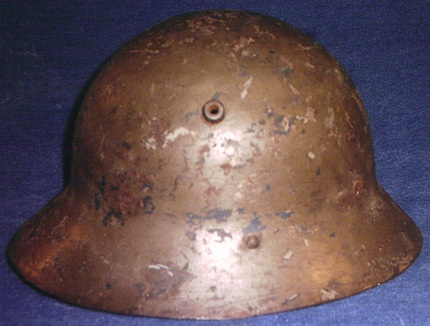
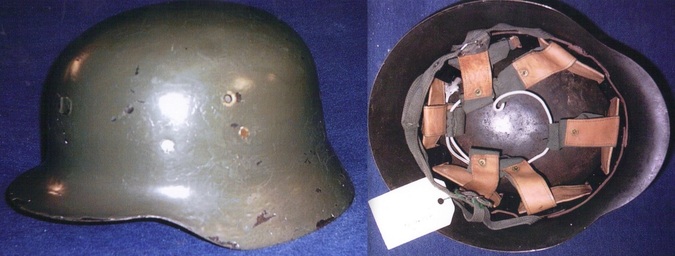
M30 Czech Helmet

Picture
Numerous helmet models were used during the Spanish Civil War (1936–1939) due to a need to equip rapidly raised forces and the involvement of foreign powers supplying equipment to both sides. 
The Spanish military had two primary domestic helmet models in service or limited production at the outbreak of the war, the M21, M26 and M34 "Eibar" and the M35 for armored crews (Italian model). 
Foreign models: German M35 stahlhelm, Italian M33, Czech M30 (in the photo above), French Adrian M15 and M26. Soviet Ssh36.
Picture
Czechoslovak M30 (Spanish Civil War). ​The Czechoslovak M30 (or Vz.30) is another helmet with a direct lineage to the German-style design, though it was produced in Czechoslovakia rather than by Vickers.
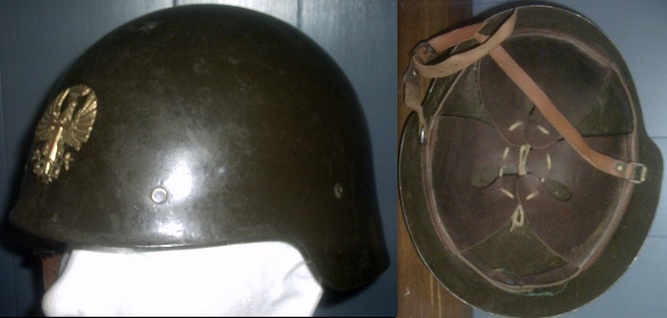

​During the Spanish Civil War, it was primarily used by Republican forces, particularly the International Brigades, after the Spanish Republican government purchased nearly the entire existing stock from Czechoslovakia. 

The M30 was manufactured in Czechoslovakian factories (such as those that previously produced Austro-Hungarian M17s) by modifying existing WWI-era presses, it was an export-driven design that the Czechoslovak military ultimately rejected for its own use in favor of the Vz.32 "Egg" helmet.
The M30 is often described as a "cheap version" of its WWI predecessors it was considered bulky and expensive to produce correctly, and its design was largely erratic.

The "Lugs"
Like the German M16 the M30 featured two prominent side lugs. However, on the M30, these were strictly for ventilation and were not reinforced to support a Stirnpanzer (armored brow plate).
A unique feature of the M30 in Spain was that it was frequently worn backward. Because the brim length was almost identical on both sides, Spanish soldiers often inadvertently wore the ventilation lugs facing the rear. 

Service in the Spanish Civil War

Nationalist. While mainly a Republican helmet, many were captured and reissued by Nationalist (Francoist) forces. These captured helmets were often repainted and fitted with Nationalist regimental emblems or the Spanish Eagle.
Most M30s found today are in poor condition due to heavy combat use, though a large cache was surplused in the 1970s and 80s.

Helmets Factories in Trubia and Eibar 

The Spanish Army used several domestically produced helmet models during the 20th century. Production was likely centralized in government-controlled arsenals.

National Arsenal of Artillery in Trubia: This arsenal was responsible for designing and producing military steel helmets, including the M1921, M1926, M1934, and M1942 models, used from the 1920s through the 1980s.
       
Eibar (Supposed production city): The M1934 helmet was also known as the "Eibar" for its supposed production in that city, indicating another potential production location.

Spanish helmets of the Civil War era were authentic military products manufactured by the state, but they are often described as "rustic" or "crude" due to their simple construction and visible manufacturing flaws. 
Unlike the precise, multi-step engineering used for German or British helmets, Spanish production at the National Arsenal of Artillery at Trubia relied on more basic methods that resulted in several "rustic" characteristics.

Early Spanish helmets like the M21 and M26 used distinctive hollow rivets to attach chinstraps. These were essentially basic industrial fasteners rather than the specialized hardware found on more advanced European helmets.
The liners consisted of three simple leather pads attached to a basic leather band. In the M38 "Eibar" model, the entire liner was held by a single rivet at the very top of the shell, a design choice often seen as a crude shortcut for faster production.

While the M21 and M26 were made of solid 1.1mm–1.2mm steel, the M38 "Eibar" * was manufactured with thinner, 1mm non-ballistic steel. This made them lighter but structurally weak earning them a reputation as "theatrical" or police only gear rather than true combat helmets.

*The M38 "Eibar" is often considered the most "aesthetic" of the Spanish series because it perfected the silhouette of the earlier M26, but it was a classic case of style over substance.


Many helmets were delivered in a basic "grey-cement" paint. During the war, they were often crudely hand-painted by soldiers in khaki, black, or brown to suit the immediate environment. 

Civil War Authenticity vs. Postwar Refurbishment

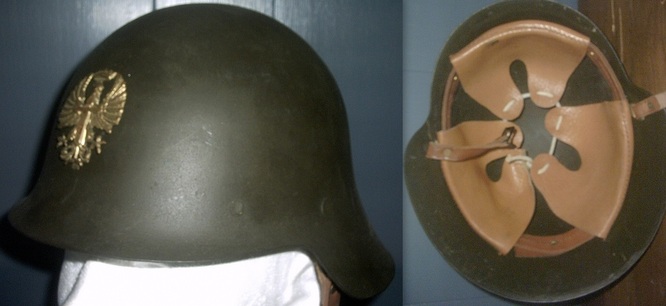
A "pure" authentic Spanish helmet from the Civil War era is rare. These original versions lack the frontal bracket used for badges and feature the original hollow rivets and grey paint. The "Franco" Refurbishment: In 1943, almost all surviving M21, M26, and M38 helmets were withdrawn and modernized. They were repainted dark green, the hollow rivets were replaced with solid ones, and a brass bracket was soldered to the front for the Spanish Army eagle badge. 

While they were genuine military equipment, their "rustic" nature reflects the industrial constraints and urgent wartime needs of Spain during the 1920s and 30s.

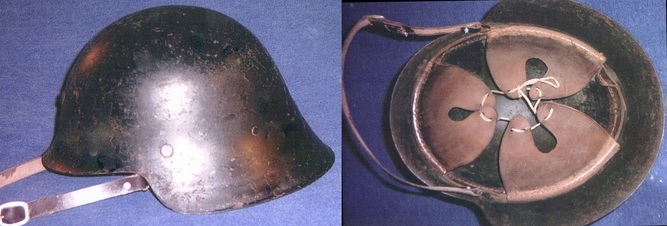
M21 Spanish Helmet

Picture
The Spanish M1921 helmet, also known as the M21 or colloquially as "Sin ala" ("Without Wing" or "Without Brim") due to its straight sides, was Spain's first domestically produced helmet. Developed at the National Arsenal of Artillery at Trubia, it was produced in very small numbers (only around 12,000 units) and saw limited use, most notably during the Spanish Civil War.  
Design Origin. The M21's design was an indigenous Spanish effort, though its form shares a general resemblance to the German Stahlhelm and French Adrian helmets of the era. Its distinct vertical sides were a unique feature that made it easily identifiable from its successor.

Production began in 1926, not 1921, despite its designation. The exact reason for the M1921 designation is unknown. It was made from solid 1.1mm steel, offering good protection for the time.
The M21 was never formally adopted as standard issue. It was produced alongside the M1926 model (which had a flared brim and was called "Con ala", meaning "With Wing") and was superseded by the M26, which became the standard Spanish Army helmet.

The helmet featured a liner system with three leather pads on a leather band, affixed by seven rivets. Pre-Civil War models had a distinctive hollow rivet on the side to attach the chinstrap.

Original, pre-Civil War helmets were painted grey. Many surviving examples were later refurbished in 1943, repainted a darker green, and had a small bracket added to the front for the Francoist army insignia (an eagle emblem).
Due to the small number produced, the M21 is a highly sought-after collector's item, especially those in their original grey paint and with the pre-war hollow chinstrap rivets. 

Use in the Spanish Civil War
Despite not being officially adopted, the outbreak of the Spanish Civil War created an urgent need for any available head protection. The small stock of M21 helmets was issued to both Republican and Nationalist forces. They were used alongside many other types of imported helmets, including French Adrian, Italian M33, and Czechoslovak M30 helmets. 

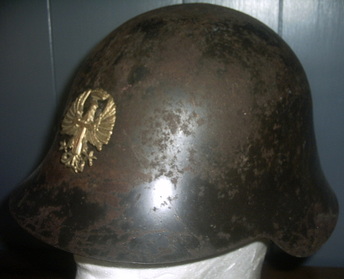
M26 Spanish Helmet

Picture
The Spanish M1926 helmet, also known as the M26 or "Con ala" ("With Brim"), was a Spanish-made steel combat helmet that became the standard issue for the Spanish Army from its official adoption in 1930 until it was replaced by the M42 in 1942. It was a common sight during the Spanish Civil War, used by both Republican and Nationalist forces. 
Developed and manufactured domestically at the National Arsenal of Artillery at Trubia (Oviedo), Spain, starting in 1926.The design was influenced by the German M1916 helmet, with a prominent skirt providing protection to the sides and back, and a raised visor. The main difference from its predecessor, the M1921 Sin ala, was the addition of a pronounced flared brim or "wing" around the edge, which improved protection. It was made from steel and had acceptable ballistic characteristics for its time, though it was noted to have poor ventilation.
Picture
The interior featured a three-pad leather liner system (similar to the German M16 style) attached by several rivets. Pre-Civil War models are identifiable by their original grey paint and distinctive hollow side rivets for the chinstrap.

Post-War Modification
After the Spanish Civil War, around 1943, most M26 helmets were refurbished. This involved repainting them a dark green, replacing the hollow rivets with solid dome-shaped ones, and adding a small bracket to the front for the new Francoist army eagle insignia.
Original, unmodified pre-Civil War M26 helmets in their factory grey paint and with the hollow rivets are considered rare and highly sought-after by collectors today. 

Spanish Civil War
Due to the chaotic nature of the conflict, both the earlier M21 and the standard M26 were worn by soldiers on both sides, alongside numerous imported helmets (French Adrian, Italian M33, etc.). Helmets were often repainted in various colors, including black or brown, depending on the forces using them.

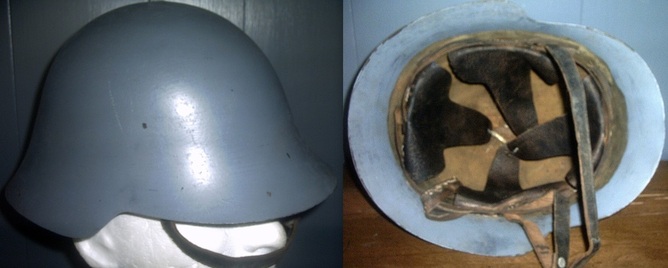
M38 Spanish Helmet

Picture
M38 helmet, often referred to as the "Eibar" helmet, was a variation of the Spanish M26 helmet intended for paramilitary police forces, not the regular army.


​It gained its "Eibar" nickname due to the Nationalist victory in the city during the Spanish Civil War, though it was primarily manufactured at the National Arsenal of Artillery at Trubia, Spain.

The M38 was designed for the Guardia de Asalto de la República (Republican Assault Guard), a police force meant for street fighting and riot control, not front-line combat. It was made from thinner steel (1mm thick) than the M26, making it lighter but providing worse ballistic protection.
Picture
Unlike the M26, which used seven rivets around the sides, the M38's liner assembly was attached by a single hollow rivet at the very top of the shell. The liner itself featured four smaller leather pads instead of the M26's three.
It strongly resembles the M26, but is slightly longer and has a more flared brim.
Despite its intended police use and inferior quality, the M38 was pressed into service by both Republican and Nationalist forces during the Spanish Civil War due to the desperate need for helmets.
Post-War: Like other Spanish helmets, many M38s were refurbished in 1943, repainted green, and fitted with the Francoist eagle emblem.

The Yugoslav post-war M59 (and later M59/85) helmets, often referred to by collectors as the NE44, were heavily inspired by the profile of the Spanish M34/M38 "Eibar". While they were not direct copies of the Spanish helmet, they shared the same distinctive "cut down" or "rimless" aesthetic. 

The M59's shape was inspired by the Spanish M34/M38. It featured a similar dome and a shortened, flat skirt that lacked the heavy flare of the German Stahlhelm.
Before the M59 was introduced, the Yugoslav People's Army (YPA) actually took captured German M35/M40/M42 helmets and manually cut off the flared sides. Many Yugoslav Partisans were veterans of the Spanish Civil War (the "Spanish Volunteers" or Španski borci). These veterans brought back firsthand experience with Spanish gear, including the M34/M38, which likely influenced the later domestic design.

M42 Spanish "Z" Helmets

Picture
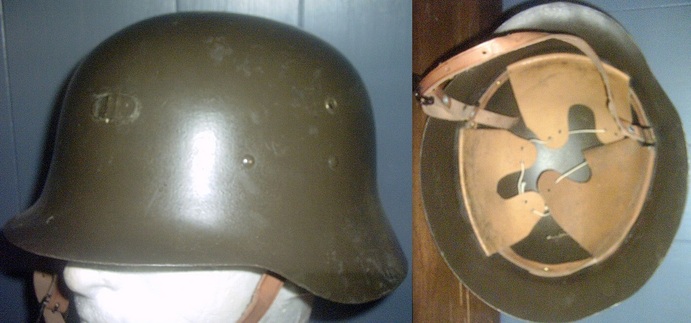
Spanish Helmet Z M42 Model.
Picture
Spanish Helmet Z M42/79 Model.

Picture
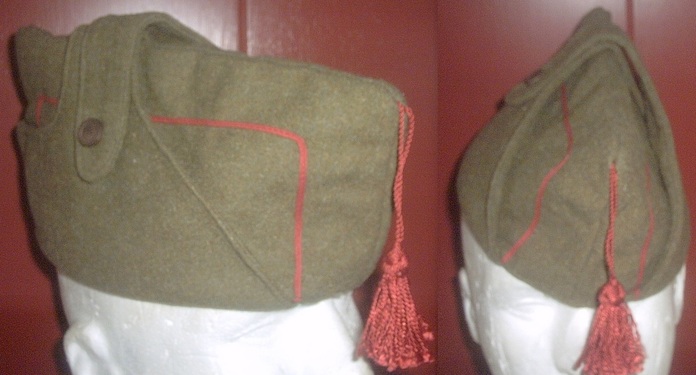
The traditional Spanish Legion overseas cap is known as the chapiri or garrison cap, a distinctive side cap with a red tassel descending from the peak. It is highly sought after by collectors, especially those from the WWII era.
The chapiri is the most iconic headwear associated with the Spanish Legion (La Legión). 

It is an olive green or brown wool side cap featuring fold-down side panels and a bright red tassel and piping.
Original military-issue caps generally have the Legion's emblem (often the arquebus, crossbow, and pike logo) on the front, sometimes with a crown above it depending on the era.
Different eras and forces used slight variations. For example, some WWII-era "Fascist Foreign Legion" caps had specific markings or were part of the Condor Legion's specialized uniform.

M33 Italian Pre-War Helmet (​Photographed with my old camera)

Picture

The same M33 Pre-War Italian Helmet. (Photographed with my new camera)

Picture
This was my first helmet in my collection. This hull was pre WW2, but from the Spanish Civil War and continued in service in Spain. Many photos of helmets in my collection were taken with an old digital camera. Little by little I will try to take the photos again with my new camera. The difference in quality is really striking.​
Picture
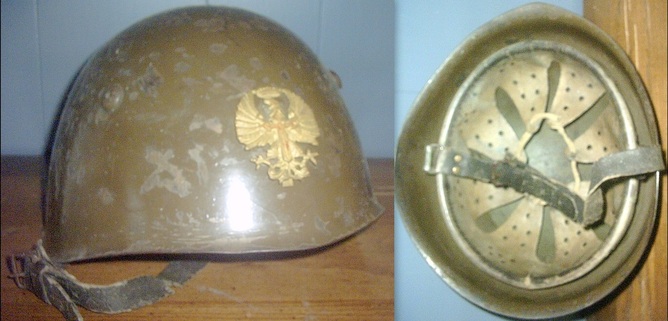
The shell was marked with the letter "B" from the Bassano del Grappa factory and its batch number was 52, a very low number, one of the first M33s made. Its liner size was 56 liner. Its type of rivets were of the first type and its paint was gloss olive green. On the inside of the shell it is painted in the factory light green grey. The shell had an badge on its front. ​

M33 Wartime Italian Helmet

Picture
​Above my last M33 helmet that was in service in Spain. The mark on the shell is also "B" Bassano del Grappa and its batch number is 120, which is high for an Italian M33 because it would have been produced during WW2, meaning that Spain continued to receive helmets from Italy after the Civil War. Since wartime has been produced, rivets are of the second type. The helmet is painted with anti-reflective paint, Spanish olive green. In some spots you can see the dark green gray of the factory (Post 1940). Its liner is size 58, and its chinstrap was replaced by a Spanish-made one. It does not have a badge on the front
Picture
Picture
Picture
​Rivets of the second type. Wartime production.
Picture

Picture
Picture
Picture
Picture
Picture

Picture
Here's the trilogy: M21, M26 and M42 Spanish helmets.

Refurbished M26 Spanish Helmet

Picture
M26 and MZ Model Z 1942 M42-79 (80s)
Picture
Picture
Picture
Picture
Picture

Model Z 1942 M42 (80s)

Picture
Picture
Picture
Picture
Picture

Z-M42 and M42/79

Picture
​They have the same shell, only that the steel of the original model designed in 1942 has less thickness than the model modernized in the 70s. Among other differences such the liner and it's rivets, chinstrap and the aeration rivets in addition to the color.  
Picture
Picture
Picture
Picture
Picture
Picture
Picture

Recommended reading

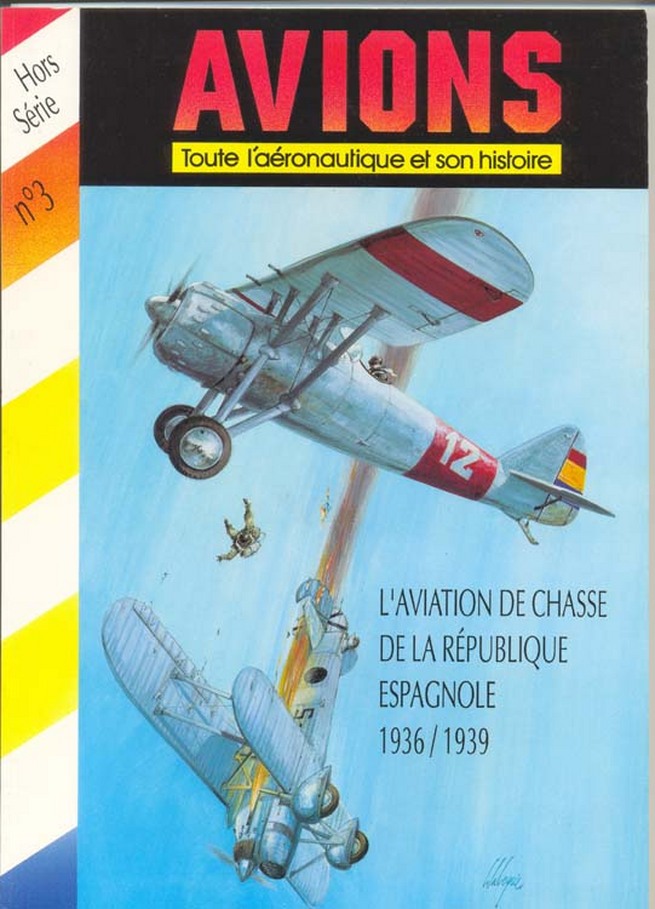
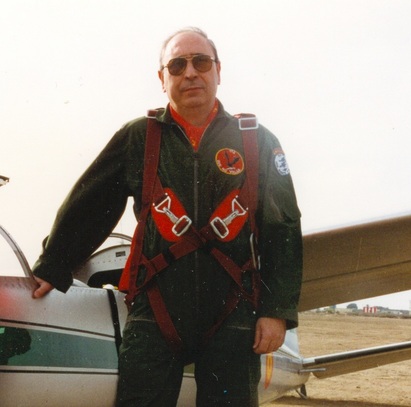
Fighters and Bombers of the Spanish Republic 1936-1939 by the Spanish aircraft historian Juan Arraez Cerdá.
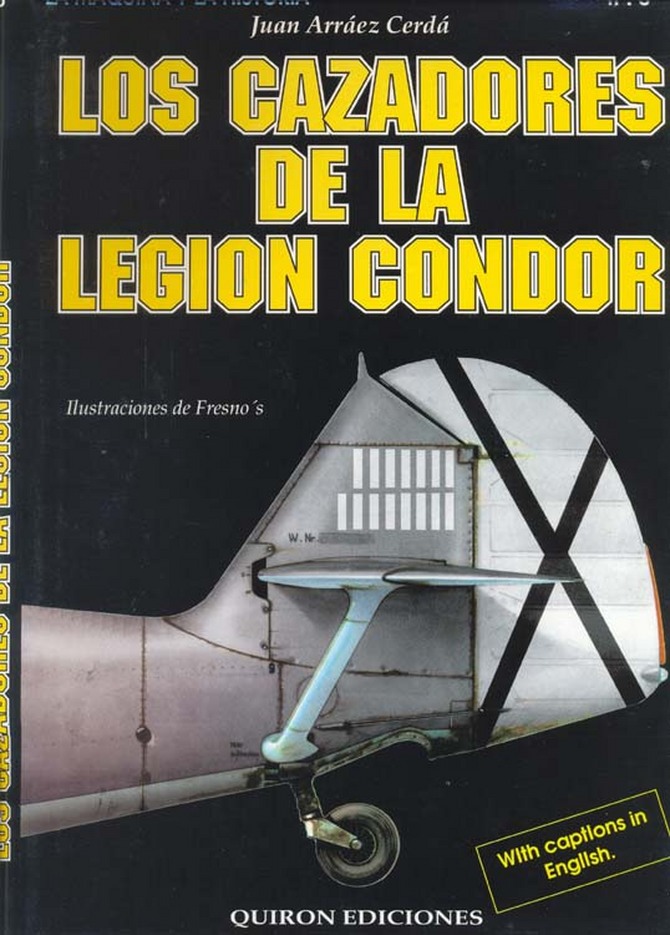
Picture
Picture
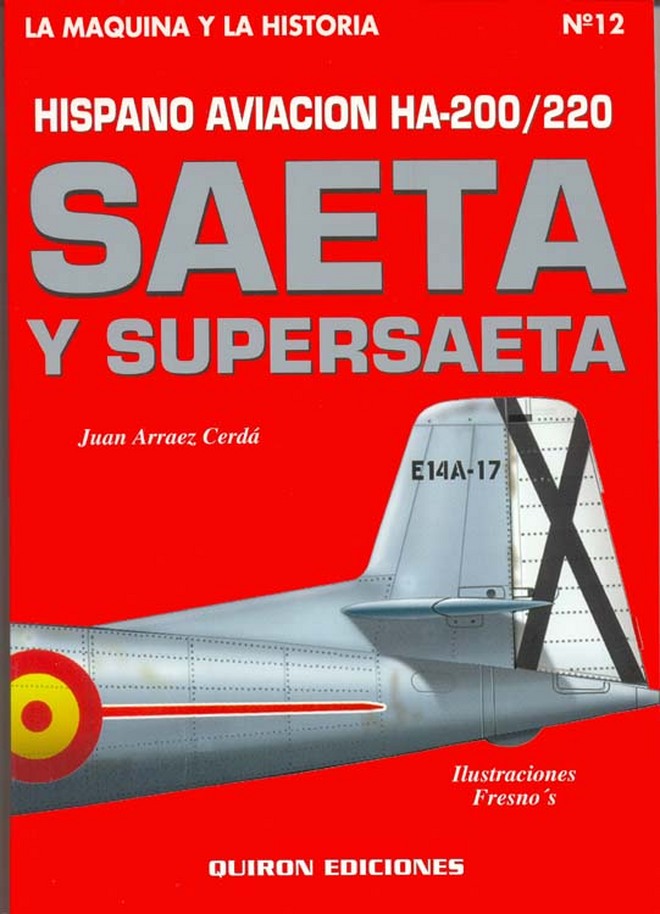
Hispano Aviación HA-200/220 Saeta/Supersaeta. The Hispano HA-200 Saeta was a 1950s Spanish two-seat advanced jet trainer produced by Hispano Aviación.
The HA-200 Saeta (Arrow) was the first Spanish turbojet aircraft. It was developed from the earlier piston-powered trainer the HA-100 Triana with the participation of Willy Messerschmitt. The HA-200 was a low-winged monoplane of all metal construction, with a tricycle undercarriage. It was powered by two Turboméca Marborés mounted side by-side in the forward fuselage and fed from an intake in the nose, exhausting from nozzles just aft of the wing trailing edge. The crew of two was accommodated in tandem in a pressurised cockpit, the first to be Spanish built and designed.

The prototype first flew on 12 August 1955, and the first production aircraft flew in October 1962. The HA-200A aircraft were delivered to the Spanish Air Force with the designation E.14. A single seat version (the HA-220) for the ground-attack role was developed and delivered to the Spanish Air Force with the designation C.10, first flying on 25 April 1970, remaining in service until the end of 1981.

The aircraft was built in Egypt under licence as the Helwan HA-200B Al-Kahira by the Helwan Air Works.

Variants:

HA-200R
Two prototype aircraft
HA-200A
Initial production version with, 30 built.
HA-200B
Ten pre-production aircraft with Turboméca Marboré IIA engines for delivery to Egypt, another 90 built under licence in Egypt.
HA-200D
Improved version for the Spanish Air Force with updated systems, 55 built.
HA-200E Super Saeta
HA-200D re-engined with Marbore VI engines, updated avionics and provision for air-to-ground rockets, 40 conversions.
HA-220
Ground attack version of the HA-200E for Spanish Air Force, 25 built.

Source: Wikipedia

Picture
Picture
Picture
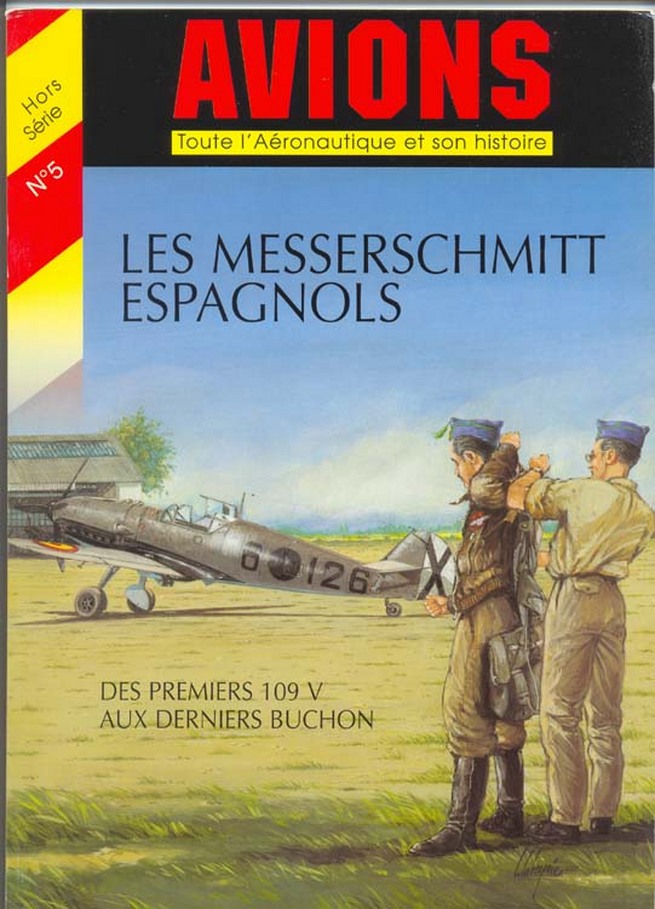
Spanish Messerchmitt.
Picture
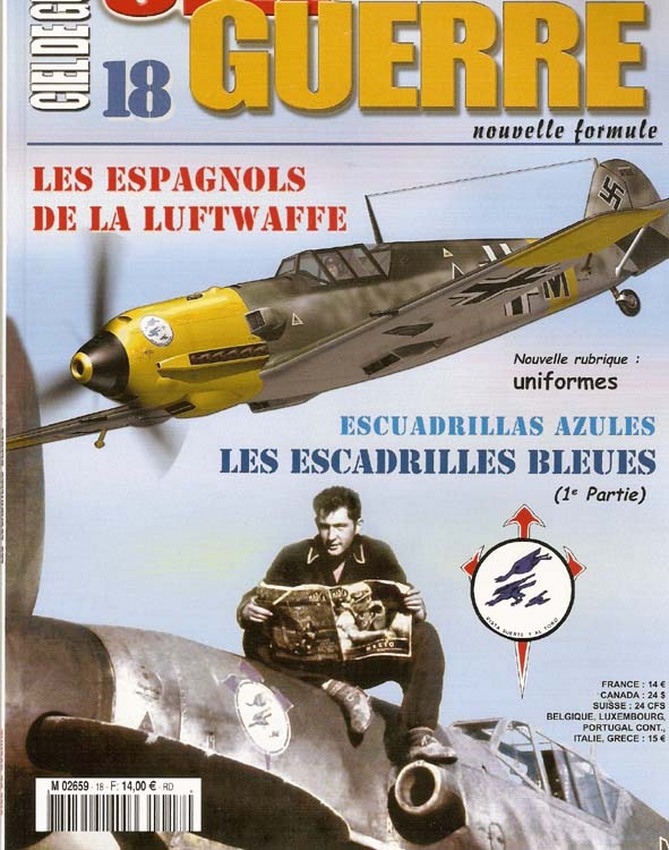
Escuadrillas Azules, 'Blue Squadrons', Spanish Volunteers in German Luftwaffe by the Spanish aircraft historian Juan Arraez Cerdá.
Picture

Powered by Create your own unique website with customizable templates.