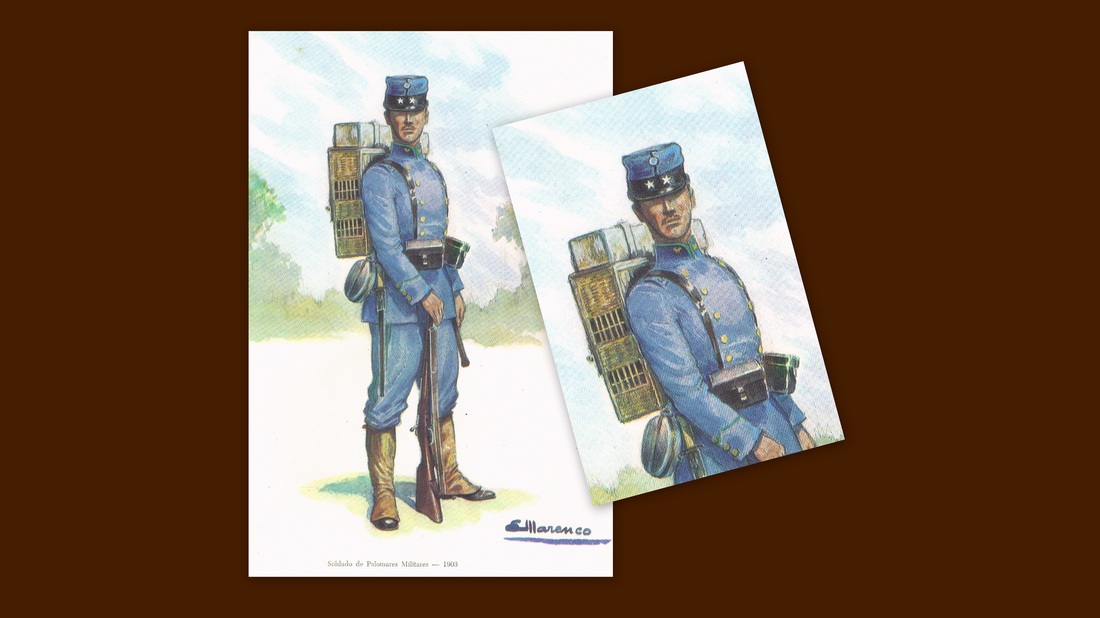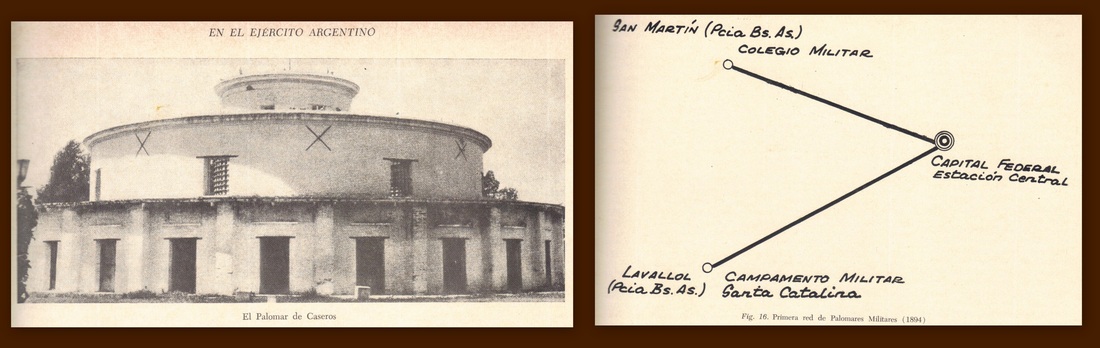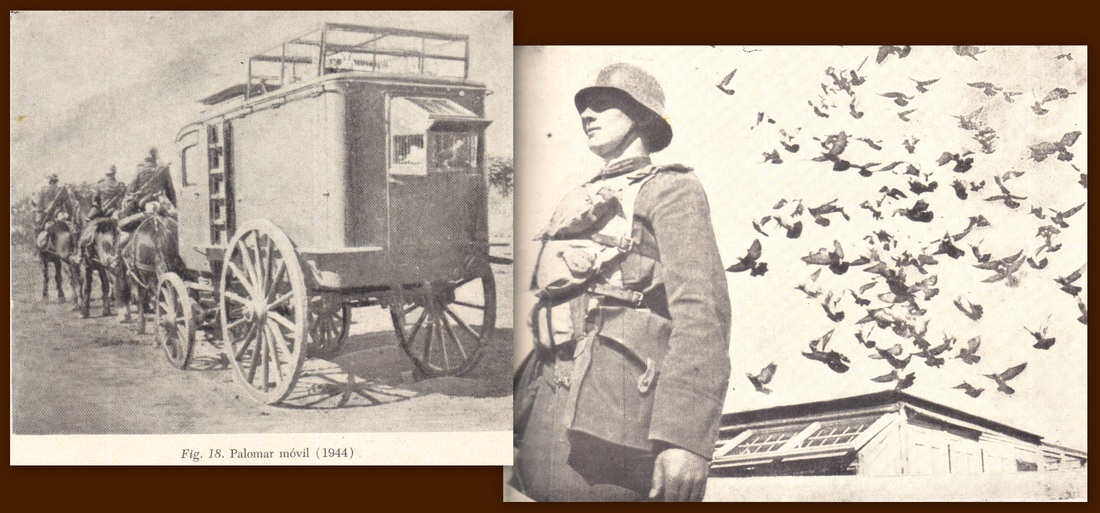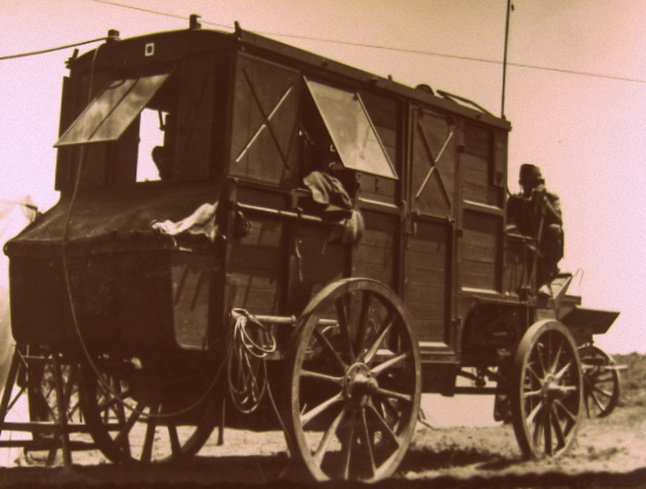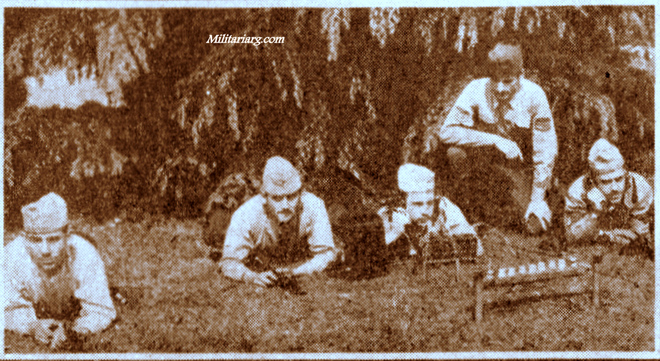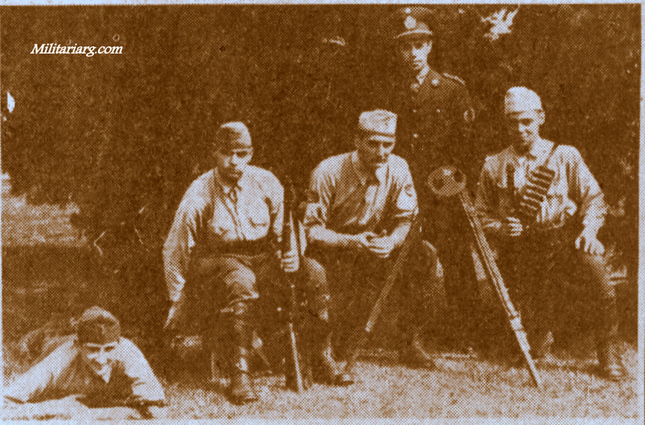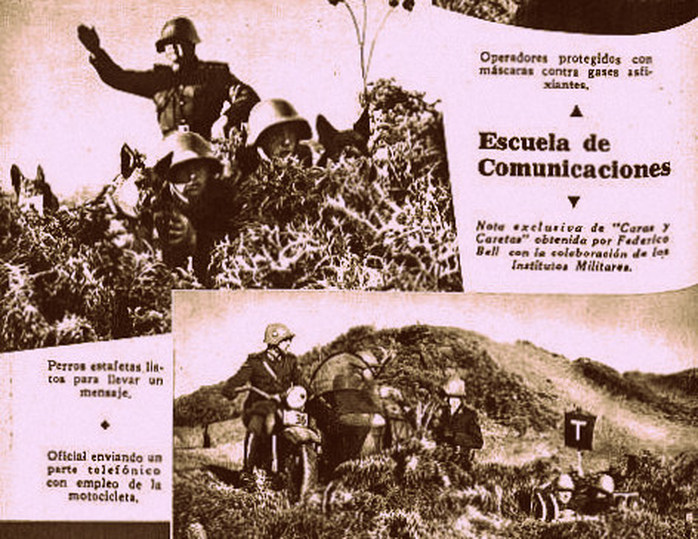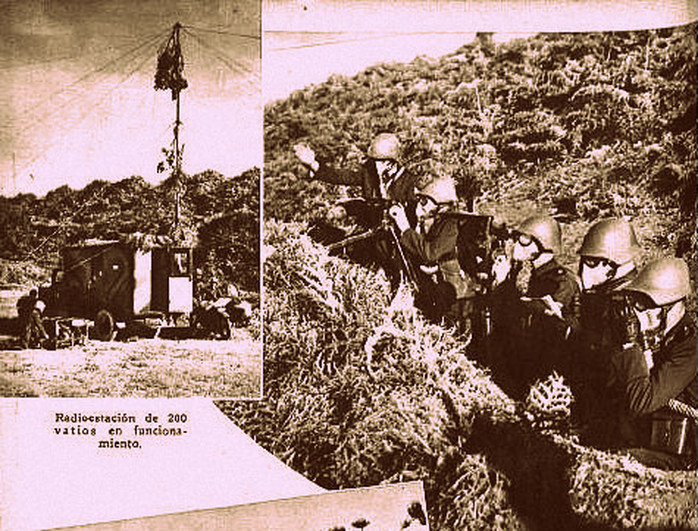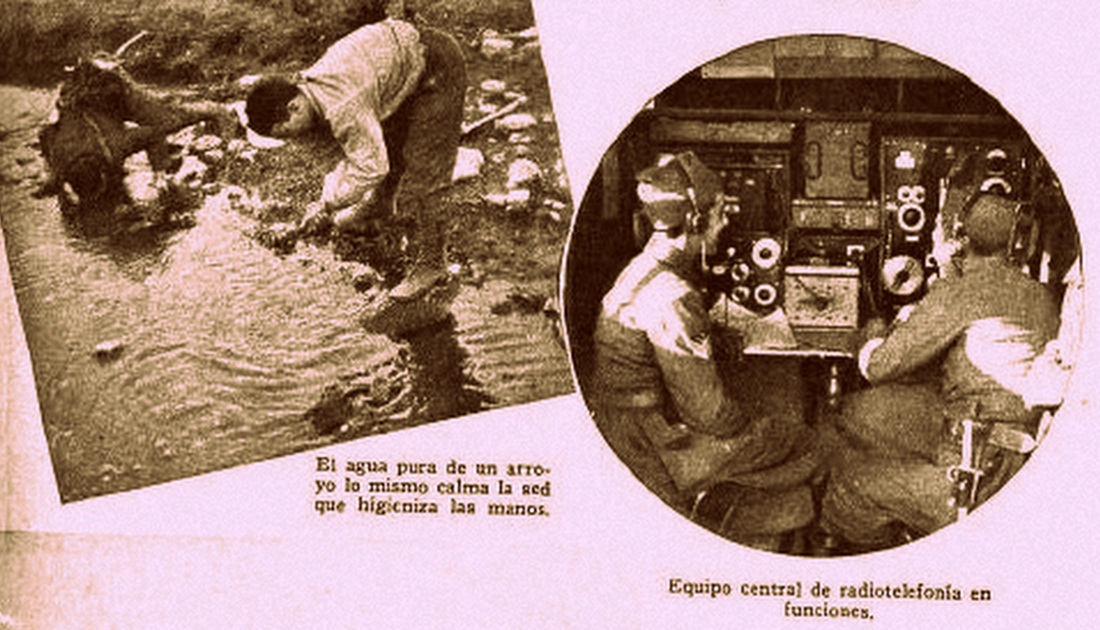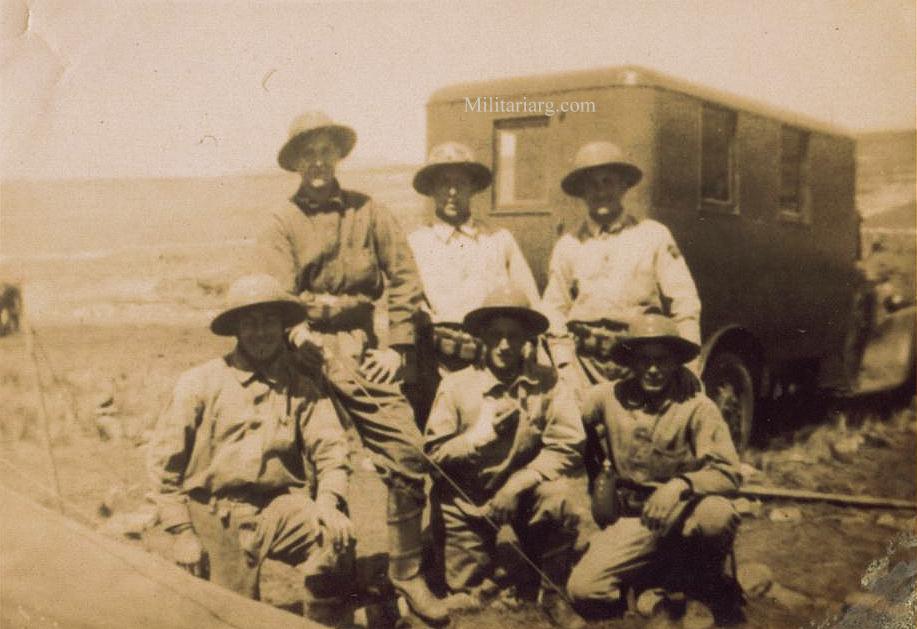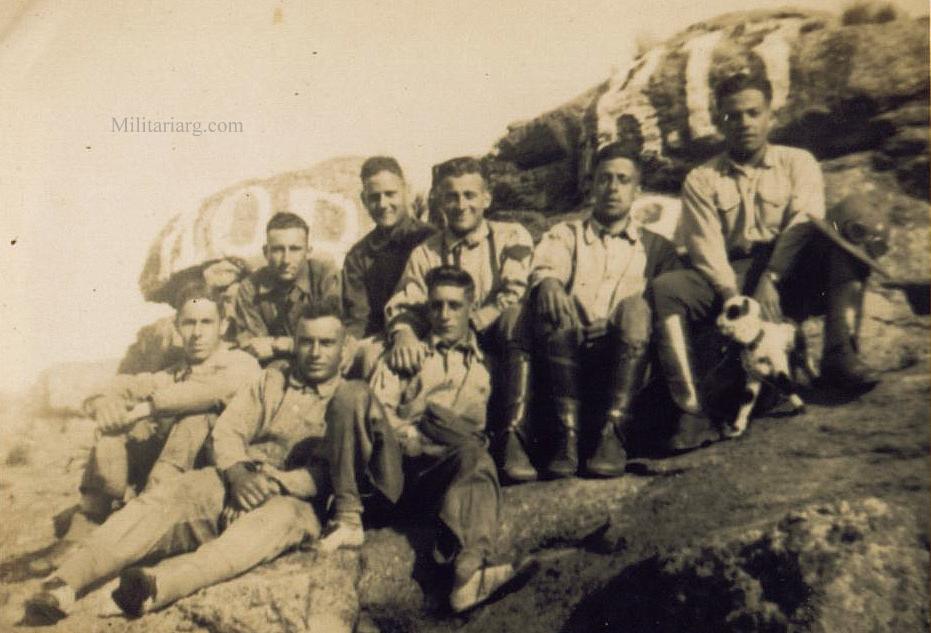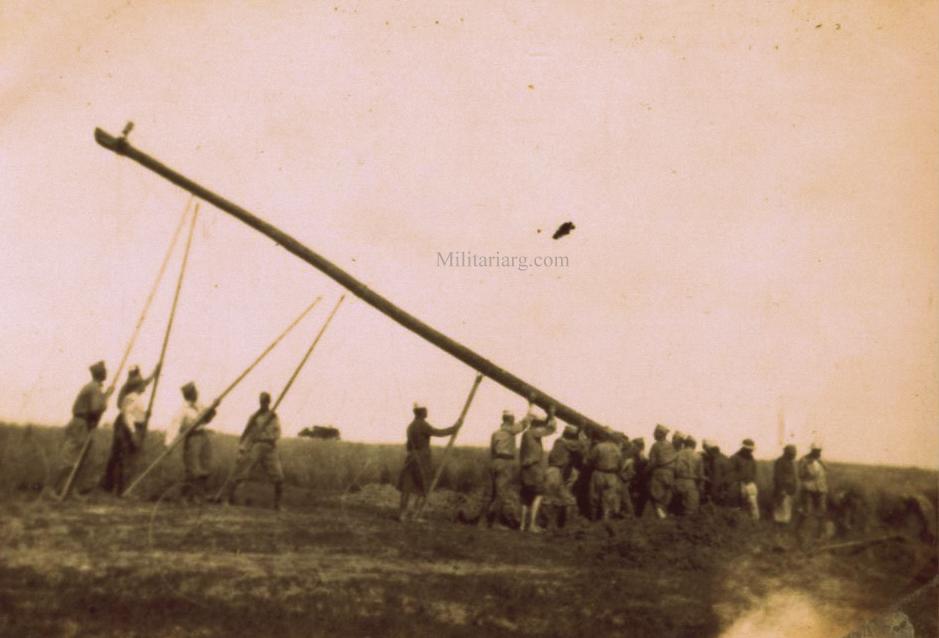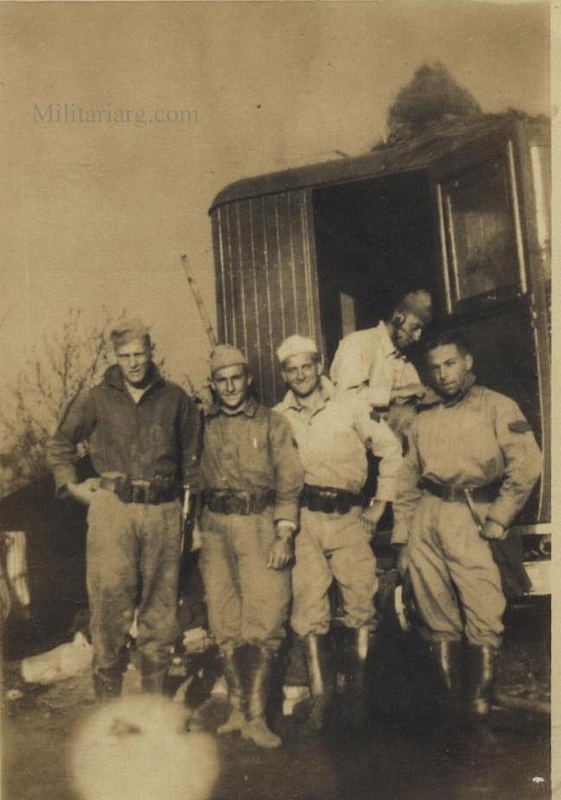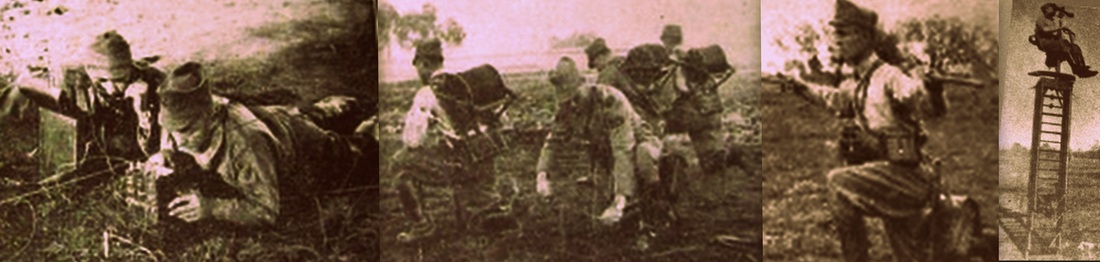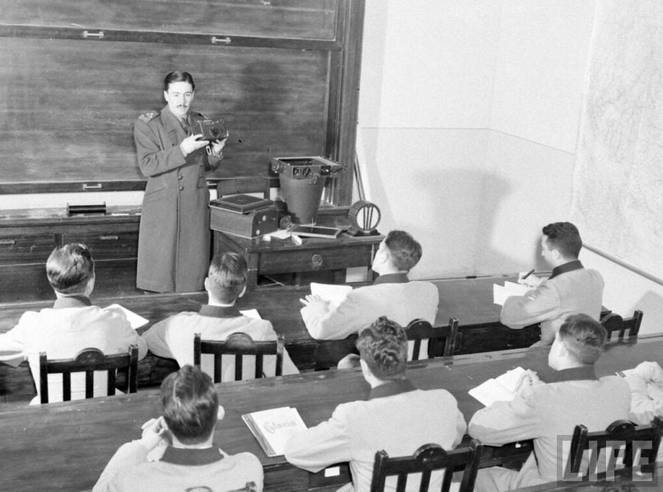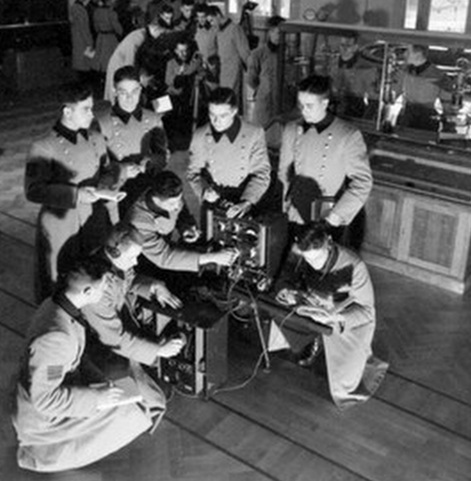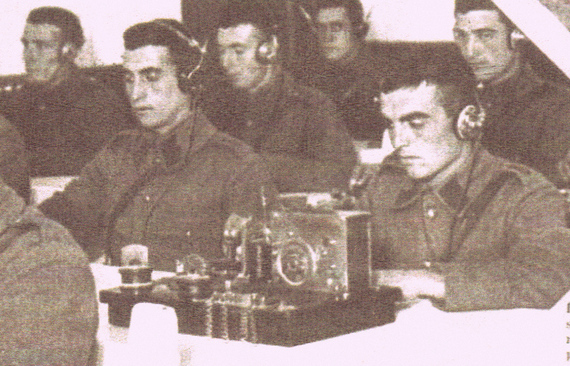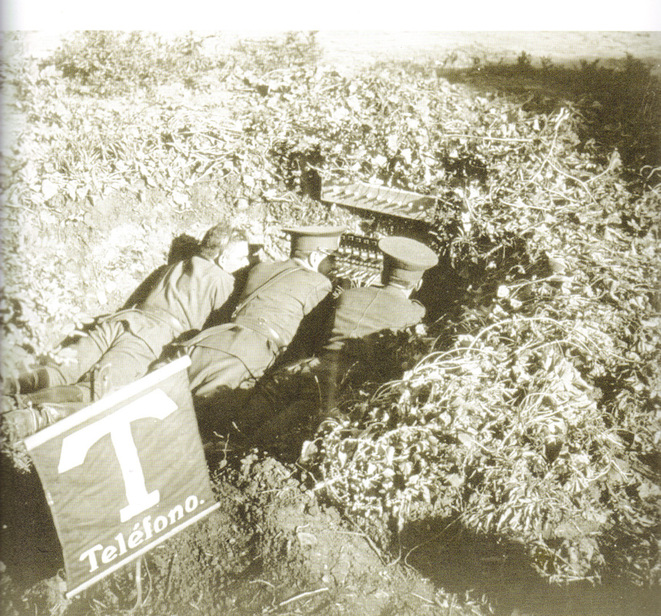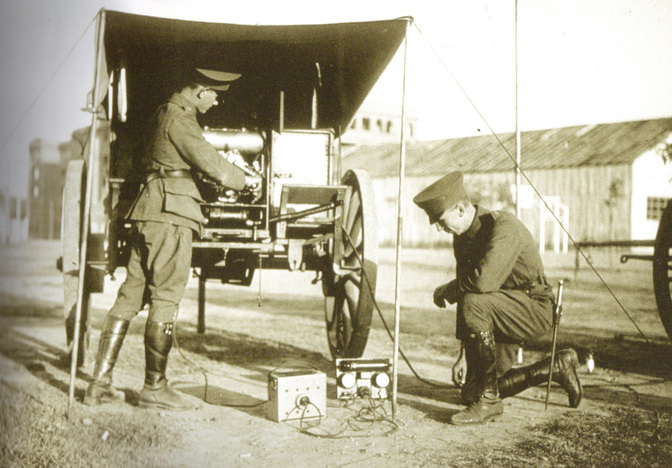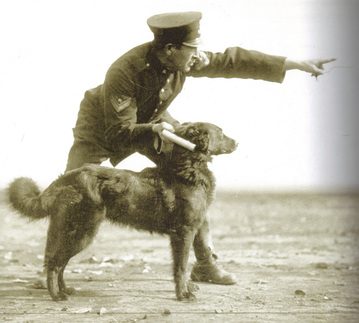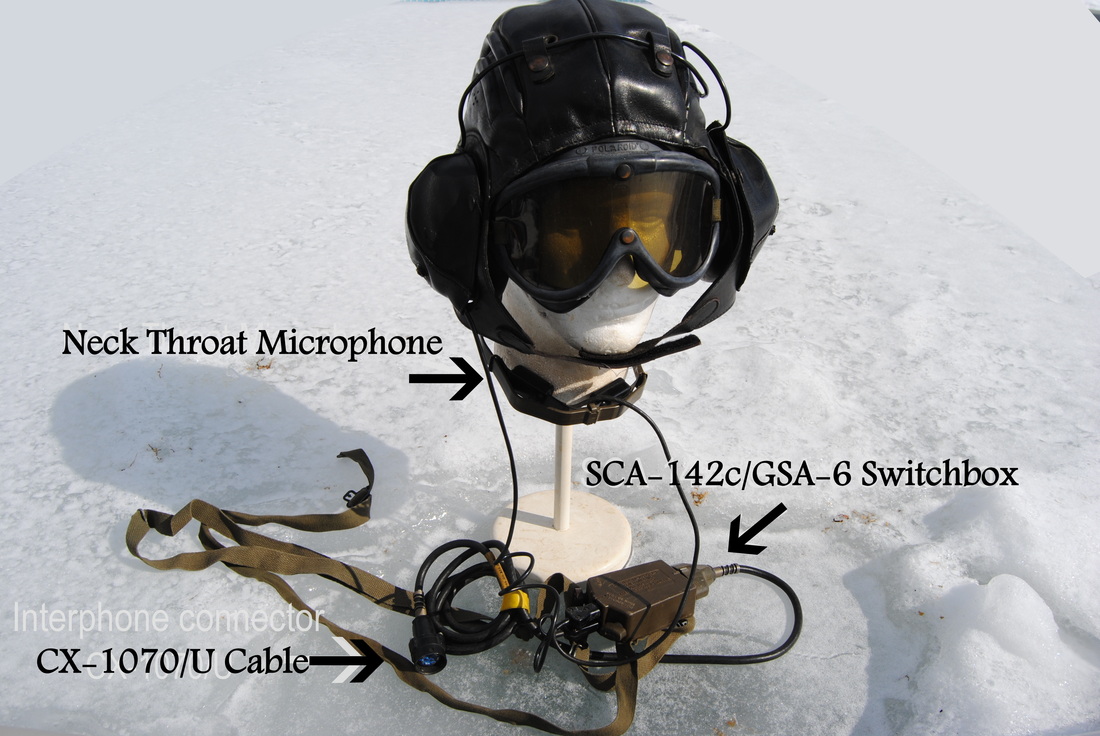
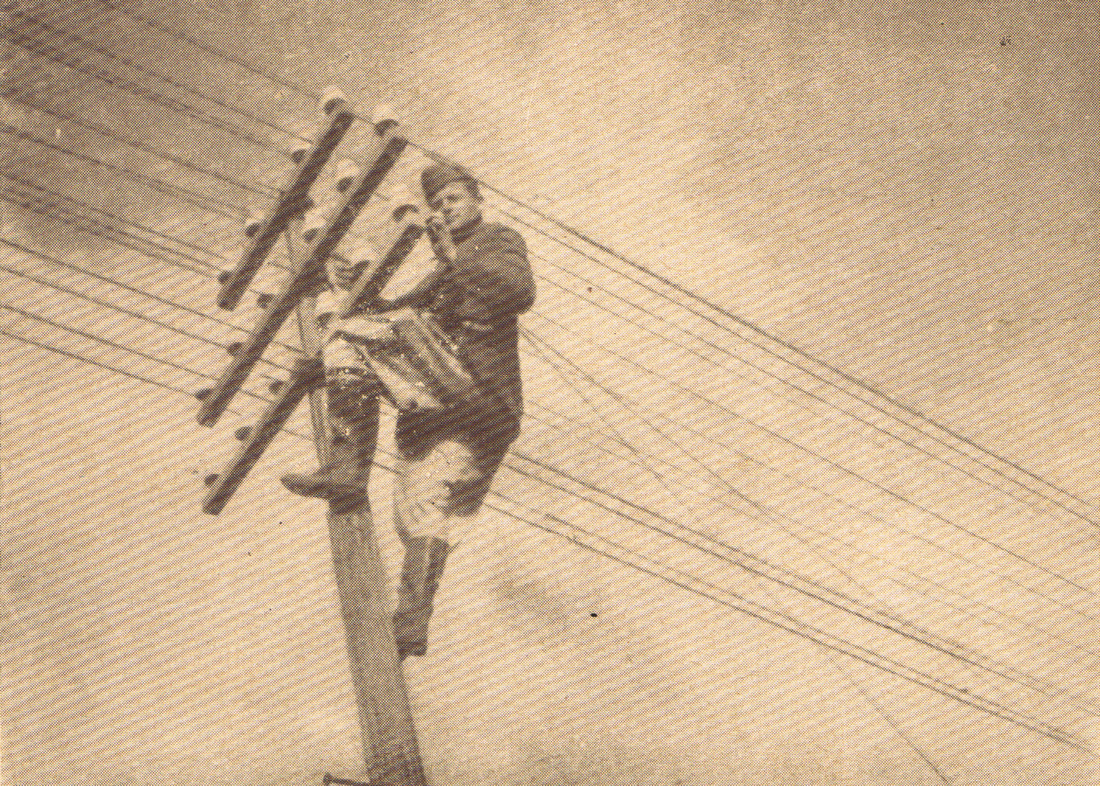
This page is dedicated to identifying electronic communication equipment from Argentina and anything else relevant to the Signal Corps. We invite comments and information because we are not as familiar with some of these.
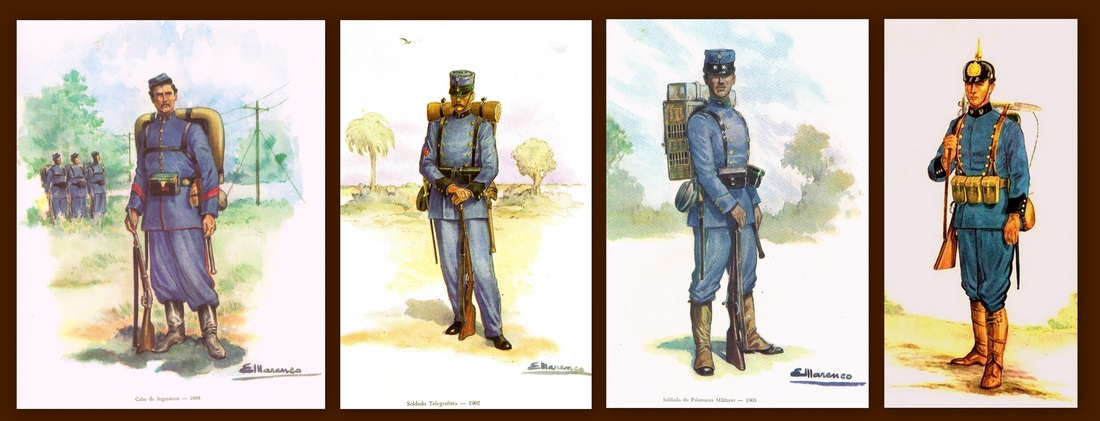
The Argentine Army's signal corps, known as the Arma de Comunicaciones (Communications Branch), has a history integrated with the development of the broader army, particularly evolving with technological advancements and playing a significant role in major national events and conflicts.
The professional Argentine Army itself traces its foundation to May 29, 1810, emerging from colonial militia units during the War of Independence. As military technology evolved, so did the need for specialized communication units.
Early 20th Century: The formal establishment and development of dedicated signal units likely occurred as modern communication technologies (telegraph, telephone, and later, radio) were integrated into military operations.
Mid-20th Century: The Agrupación de Comunicaciones 601 (601 Signals Grouping) was created on November 16, 1964. This grouping included the 601 Signals Battalion and the 601 Signals Maintenance Battalion. Late 20th Century: In 1986, the 601 Signals Grouping Headquarters settled in City Bell barracks.
Notable Actions and Conflicts
Operativo Independencia
Signal corps units were involved in the "Operativo Independencia," the counterinsurgency campaign launched by the military in the mid-1970s against left-wing guerrillas. During this period, the Batallón de Comunicaciones 601 was one of several units targeted for distraction during a major insurgent attack on the Batallón Depósito de Arsenales 601 in 1975.
Falklands/Malvinas War (1982)
In 1982, the Argentine Army did not utilize a formal carrier pigeon service for military communications in the South Atlantic War. By that time, the military relied on modern radio networks, satellite links, and tactical field telephones
The Argentine signal corps played a critical role in the Falklands War (Guerra de las Malvinas). The Compañía de Operaciones Electrónicas 602, a sub-unit of the 601 Signals Grouping, provided crucial intelligence information through electronic operations. This intelligence was instrumental in the targeting that led to the sinking of British ships, including the RFA Sir Galahad, the Atlantic Conveyor, and the HMS Sheffield.
However, the war highlighted challenges in intelligence and communications for the Argentine forces. A lack of effective pilot debriefings and poor dissemination of intelligence hindered their air operations. British forces, aided by intelligence and early warning radar assistance, were better able to optimize their defenses.
Operativo Independencia
Signal corps units were involved in the "Operativo Independencia," the counterinsurgency campaign launched by the military in the mid-1970s against left-wing guerrillas. During this period, the Batallón de Comunicaciones 601 was one of several units targeted for distraction during a major insurgent attack on the Batallón Depósito de Arsenales 601 in 1975.
Falklands/Malvinas War (1982)
In 1982, the Argentine Army did not utilize a formal carrier pigeon service for military communications in the South Atlantic War. By that time, the military relied on modern radio networks, satellite links, and tactical field telephones
The Argentine signal corps played a critical role in the Falklands War (Guerra de las Malvinas). The Compañía de Operaciones Electrónicas 602, a sub-unit of the 601 Signals Grouping, provided crucial intelligence information through electronic operations. This intelligence was instrumental in the targeting that led to the sinking of British ships, including the RFA Sir Galahad, the Atlantic Conveyor, and the HMS Sheffield.
However, the war highlighted challenges in intelligence and communications for the Argentine forces. A lack of effective pilot debriefings and poor dissemination of intelligence hindered their air operations. British forces, aided by intelligence and early warning radar assistance, were better able to optimize their defenses.
During the South Atlantic War, the "sabotage" of encrypted communications was a sophisticated intelligence operation that left the Argentine military vulnerable to British interceptions. This included both technical compromise of hardware and the use of disinformation.
The Crypto AG "Sabotage"
For decades, the CIA and West German intelligence (BND) secretly owned Crypto AG, a Swiss company that sold encryption machines to more than 120 countries, including Argentina. The spy agencies rigged these machines so they could easily break the codes used for secret messages.
Crypto AG was a primary provider of encryption equipment for the Argentine military during the 1970s and 1980s.
Intelligence Leak
During the 1982 war, the U.S. took advantage of Argentina's reliance on this compromised equipment to funnel intelligence to Britain.
When Argentina became suspicious that their technology had been hacked, a mathematics expert was dispatched to Buenos Aires to "bluff" them into believing their main products remained unbreakable. The ruse worked, and Argentina continued using the compromised equipment.
British intelligence successfully intercepted and decrypted high-level Argentine communications, providing critical advantages.
The 1982 disclosure by Labour MP Ted Rowlands is widely regarded as one of the most significant security blunders in British parliamentary history. During a debate in the House of Commons on April 3, 1982—just one day after the Argentine invasion Rowlands accidentally revealed that Britain had been reading Argentine diplomatic traffic for years.
The Disclosure
Rowlands, a former junior Foreign Office minister, stated: "As someone who lived with these telegrams for two years, I can tell the House that we were reading them for a very long time".
"First Malvinas, Then the Beagle". Pinochet.
During the 1982 Falklands War, the Pinochet regime provided "absolutely crucial" intelligence and logistical support to the
United Kingdom, a fact famously acknowledged later by Margaret Thatcher. Fearing that an Argentine victory would embolden the Galtieri junta to invade Chile next given the ongoing Beagle Channel dispute Pinochet approved "strategic cooperation" to ensure an Argentine defeat.
Chile allowed the British to use long-range radar facilities to monitor Argentine air bases, such as Comodoro Rivadavia. This provided the British Task Force with roughly one hour of early warning for incoming air attacks, allowing them to prepare defenses.
Signals Intelligence (SIGINT). The Chilean Naval Intelligence Staff monitored and decrypted Argentine codes and signals, sharing this "raw intercept data" directly with British commanders.
Electronic Surveillance: An RAF Nimrod R1 (electronic intelligence aircraft) operated from Chilean territory, sometimes disguised with Chilean Air Force markings, to gather signals reconnaissance.
British SAS teams used Chilean territory, specifically Punta Arenas, as a staging ground for reconnaissance and planned sabotage missions against Argentine mainland bases like Río Grande.
British C-130 Hercules transport planes and Canberra reconnaissance jets were repainted in Chilean Air Force colors to operate discreetly within the region.
The Chilean Navy conducted maneuvers in the south under strict radio silence to force the Argentine military to divert resources away from the Falklands to protect their own border.
This deep level of cooperation explains the controversial "debt of gratitude" Margaret Thatcher felt toward Pinochet, which later manifested in her staunch support for him during his 1998 arrest in London.
In exchange for this vital assistance, the British government provided several secret benefits to the Pinochet regime:
Chile received a squadron of Hawker Hunter jets and at least three Canberra bombers at a "very low cost".
Britain used its influence at the UN to neutralize or oppose investigations into human rights violations committed by the Chilean military regime. Britain reportedly gifted the Adelaide Island Antarctic base to Chile following the conflict.
During the 1982 Falklands War, the Pinochet regime provided "absolutely crucial" intelligence and logistical support to the
United Kingdom, a fact famously acknowledged later by Margaret Thatcher. Fearing that an Argentine victory would embolden the Galtieri junta to invade Chile next given the ongoing Beagle Channel dispute Pinochet approved "strategic cooperation" to ensure an Argentine defeat.
Chile allowed the British to use long-range radar facilities to monitor Argentine air bases, such as Comodoro Rivadavia. This provided the British Task Force with roughly one hour of early warning for incoming air attacks, allowing them to prepare defenses.
Signals Intelligence (SIGINT). The Chilean Naval Intelligence Staff monitored and decrypted Argentine codes and signals, sharing this "raw intercept data" directly with British commanders.
Electronic Surveillance: An RAF Nimrod R1 (electronic intelligence aircraft) operated from Chilean territory, sometimes disguised with Chilean Air Force markings, to gather signals reconnaissance.
British SAS teams used Chilean territory, specifically Punta Arenas, as a staging ground for reconnaissance and planned sabotage missions against Argentine mainland bases like Río Grande.
British C-130 Hercules transport planes and Canberra reconnaissance jets were repainted in Chilean Air Force colors to operate discreetly within the region.
The Chilean Navy conducted maneuvers in the south under strict radio silence to force the Argentine military to divert resources away from the Falklands to protect their own border.
This deep level of cooperation explains the controversial "debt of gratitude" Margaret Thatcher felt toward Pinochet, which later manifested in her staunch support for him during his 1998 arrest in London.
In exchange for this vital assistance, the British government provided several secret benefits to the Pinochet regime:
Chile received a squadron of Hawker Hunter jets and at least three Canberra bombers at a "very low cost".
Britain used its influence at the UN to neutralize or oppose investigations into human rights violations committed by the Chilean military regime. Britain reportedly gifted the Adelaide Island Antarctic base to Chile following the conflict.
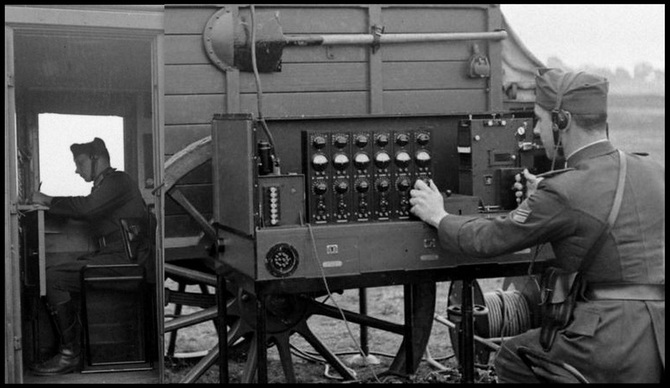
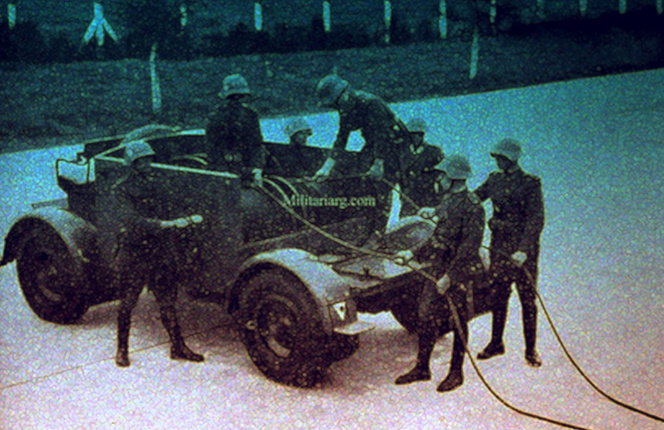
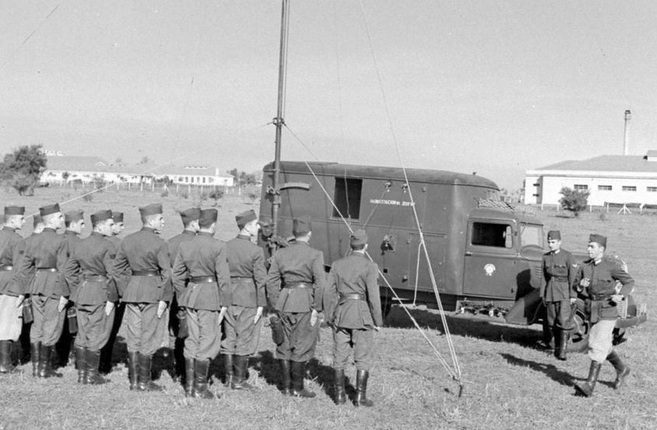
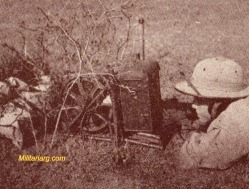
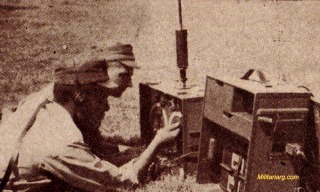
Radio Station Operator and telegraph battery wagon , Wireless set, circa 1940-44. LIFE Magazine.
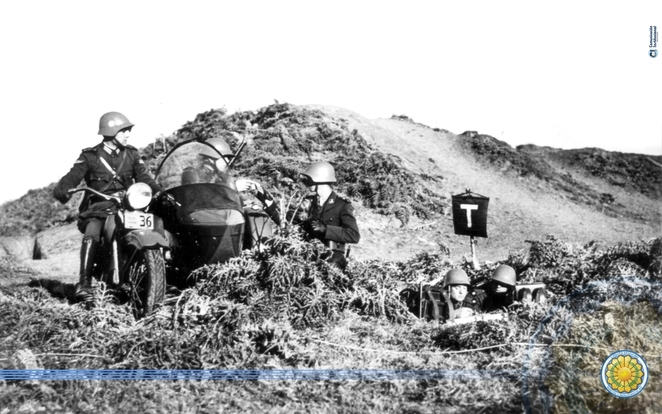
Radio Wagons
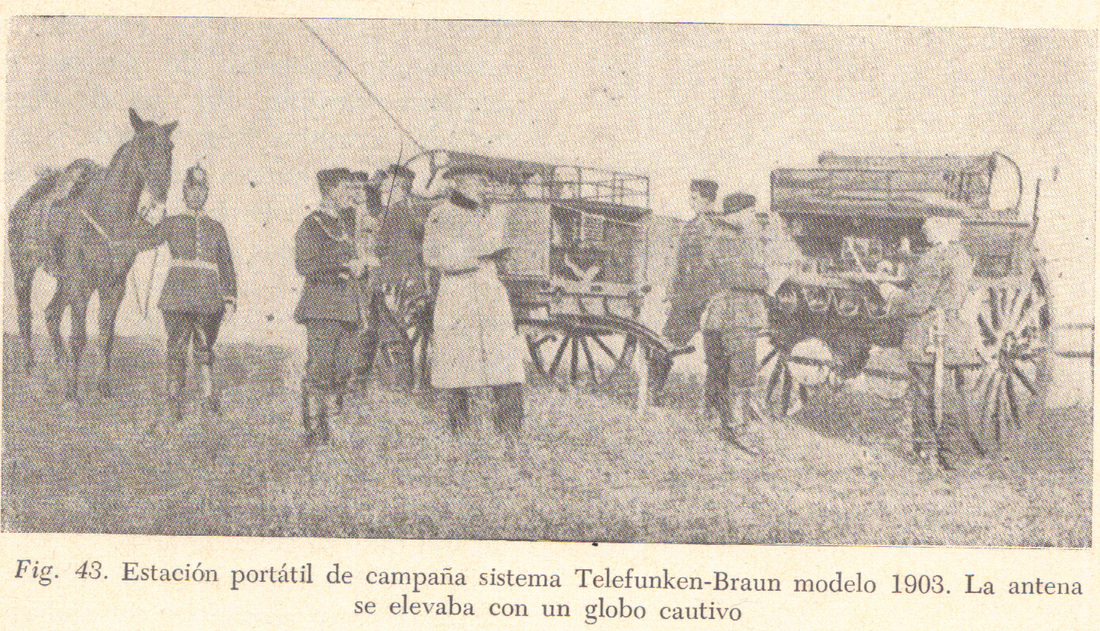
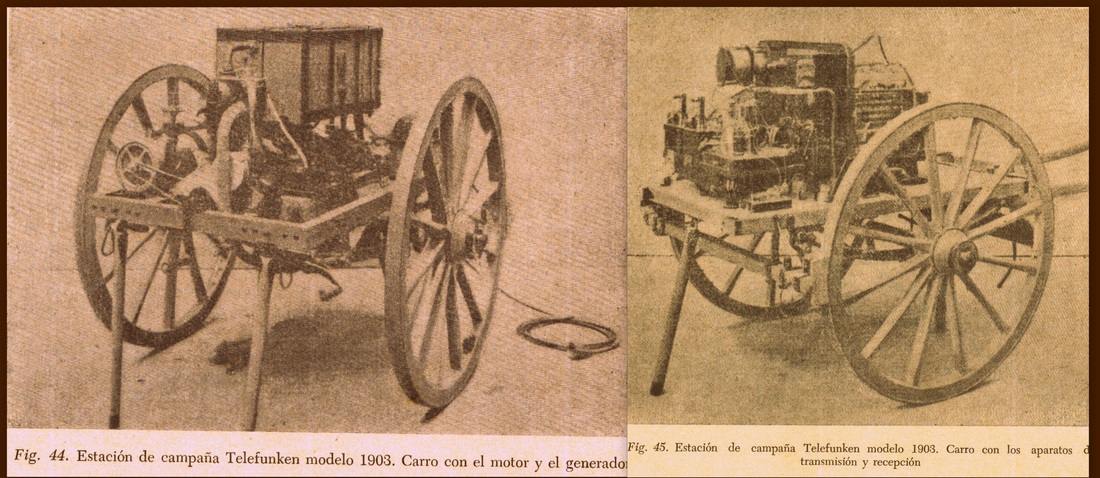
Telefunken and Braun (1903): The company Gesellschaft für drahtlose Telegrafen mbH (Telefunken) was founded in 1903 as a joint venture between Siemens and AEG to pool patents for wireless telegraphy. One of the key scientists involved was Karl Ferdinand Braun, who co-won the Nobel Prize for his work on crystal detectors and the "Braun tube" (cathode ray tube) which improved radio reception. However, this was about industrial and military technology,consumer product.Not consumer home radios. Early radios from that era (turn of the 20th century) typically used large, outdoor, fixed wire antennas, often suspended from masts, rather than balloons.
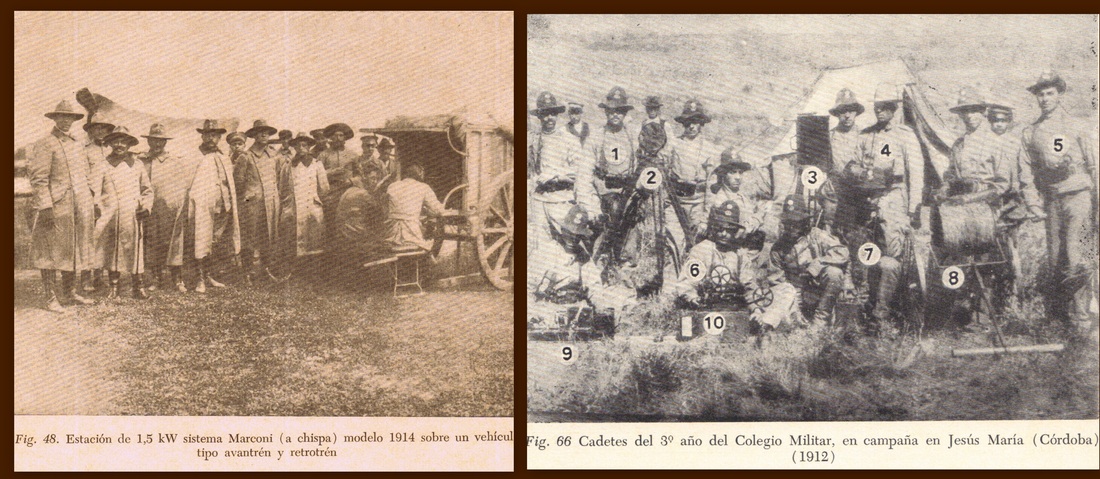
Marconi 1.5 kW "Pack" or "Wagon" Set, which was indeed used by the Argentine Army (Ejército Argentino) in the early 20th century. While it shared the same 1.5 kW power rating as the maritime sets used on ships like the Titanic, the Army version was a completely different engineering feat designed for mobility.
The "Marconi Cavalry/Infantry Wagon"
Because the Argentine territory is vast and, at that time, lacked a developed telegraph wire infrastructure in the interior, the Army purchased these mobile stations to maintain communication between command and moving columns.
The station was typically divided into two or three horse-drawn wagons:
Wagon 1 (The Power Plant): Contained a gasoline/petrol engine connected to a dynamo (generator) to create the electricity needed for the spark.
Wagon 2 (The Transmitter/Receiver): Contained the actual spark-gap transmitter, the Morse key, and the primitive "crystal" or "valve" receivers.
Wagon 3 (The Mast): Carried the collapsible antenna masts and the "earth" (ground) mats.
The Antenna: Since they didn't have ship masts, they used telescopic or sectional steel masts (often 20 to 30 meters high) that had to be manually erected every time the unit stopped to transmit.
The Horses: It took roughly 6 to 10 horses to pull the heavy equipment, depending on the terrain (Pampa vs. pre-Andean regions).
The "Marconi Cavalry/Infantry Wagon"
Because the Argentine territory is vast and, at that time, lacked a developed telegraph wire infrastructure in the interior, the Army purchased these mobile stations to maintain communication between command and moving columns.
The station was typically divided into two or three horse-drawn wagons:
Wagon 1 (The Power Plant): Contained a gasoline/petrol engine connected to a dynamo (generator) to create the electricity needed for the spark.
Wagon 2 (The Transmitter/Receiver): Contained the actual spark-gap transmitter, the Morse key, and the primitive "crystal" or "valve" receivers.
Wagon 3 (The Mast): Carried the collapsible antenna masts and the "earth" (ground) mats.
The Antenna: Since they didn't have ship masts, they used telescopic or sectional steel masts (often 20 to 30 meters high) that had to be manually erected every time the unit stopped to transmit.
The Horses: It took roughly 6 to 10 horses to pull the heavy equipment, depending on the terrain (Pampa vs. pre-Andean regions).
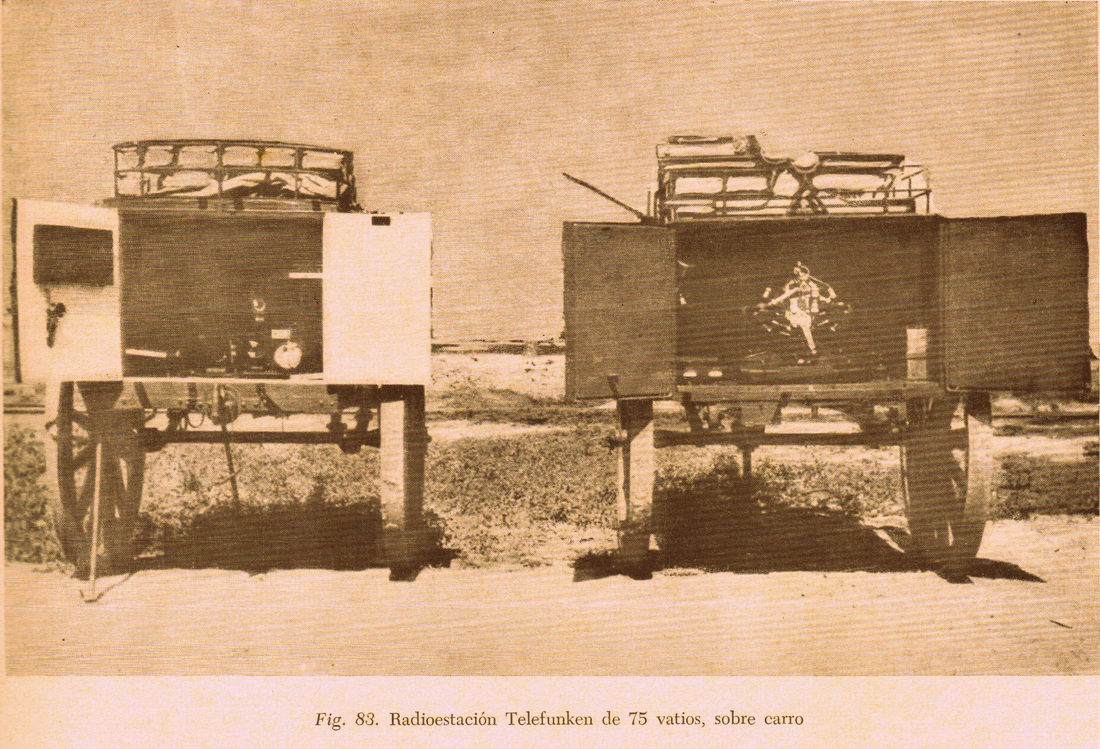
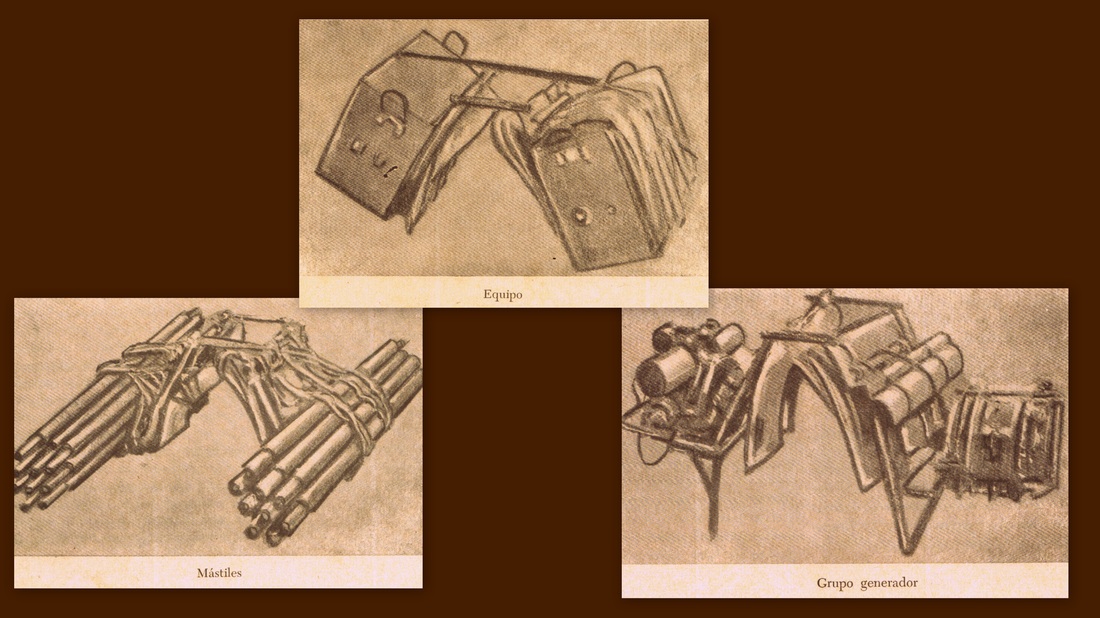
In the early 1900s, the Telefunken Mobile Wireless Station was a sophisticated, horse-drawn military system that provided the Argentine Army and other global forces with field-deployable long-range communication. These sets were developed by Karl Ferdinand Braun and his team, leading to practical implementations by 1903.
The standard Telefunken mobile unit was typically divided into two horse-drawn wagons to ensure it could be transported across difficult terrain.
The Equipment Wagon. This housed the primary transmitting and receiving hardware, including the spark-gap transmitter and a battery for immediate operation.
The Utility/Generator Wagon. This carried auxiliary supplies and the power plant.
Generator. The system relied on an AC generator to power the transmitter.
Versatility. The design allowed the two wagons to be separated; the station could remain operational using only the equipment wagon and its internal battery if necessary.
Technology. These early stations utilized quenched-spark gap transmitters (such as the Type D) and crystal receivers.
Power and Range. A typical high-power field set had an input of 1.5 kW, similar to the shipboard sets of the era.
Wavelengths. For example, the "Small Singing Spark Set" (Type G-Fuk 16) used wavelengths of 350, 450, and 550 meters, while its receiver could cover a broader range from 150 to 850 meters.
Antenna System. Unlike fixed ship masts, these field units utilized sectional or collapsible antenna masts that were carried on the wagons and erected manually upon reaching a destination.
Argentina was a major early adopter of this German technology. The Argentine Army heavily utilized these mobile Marconi and Telefunken horse-drawn stations to coordinate its forces across the vast Pampa and border regions where permanent telegraph wires did not exist. This reliance on German military hardware was part of a broader trend of German influence on Argentine military doctrine and equipment during the early 20th century.
The Equipment Wagon. This housed the primary transmitting and receiving hardware, including the spark-gap transmitter and a battery for immediate operation.
The Utility/Generator Wagon. This carried auxiliary supplies and the power plant.
Generator. The system relied on an AC generator to power the transmitter.
Versatility. The design allowed the two wagons to be separated; the station could remain operational using only the equipment wagon and its internal battery if necessary.
Technology. These early stations utilized quenched-spark gap transmitters (such as the Type D) and crystal receivers.
Power and Range. A typical high-power field set had an input of 1.5 kW, similar to the shipboard sets of the era.
Wavelengths. For example, the "Small Singing Spark Set" (Type G-Fuk 16) used wavelengths of 350, 450, and 550 meters, while its receiver could cover a broader range from 150 to 850 meters.
Antenna System. Unlike fixed ship masts, these field units utilized sectional or collapsible antenna masts that were carried on the wagons and erected manually upon reaching a destination.
Argentina was a major early adopter of this German technology. The Argentine Army heavily utilized these mobile Marconi and Telefunken horse-drawn stations to coordinate its forces across the vast Pampa and border regions where permanent telegraph wires did not exist. This reliance on German military hardware was part of a broader trend of German influence on Argentine military doctrine and equipment during the early 20th century.
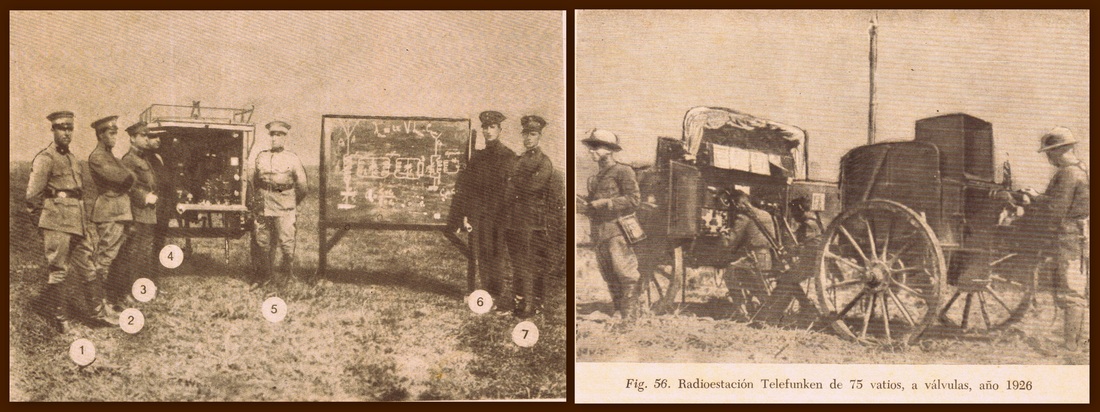
The "1926 Telefunken Radio Station" refers to a family of military field transmitters that began using vacuum tubes. The entire system was still transported by horse-drawn wagons to maximize mobility across varied terrain.
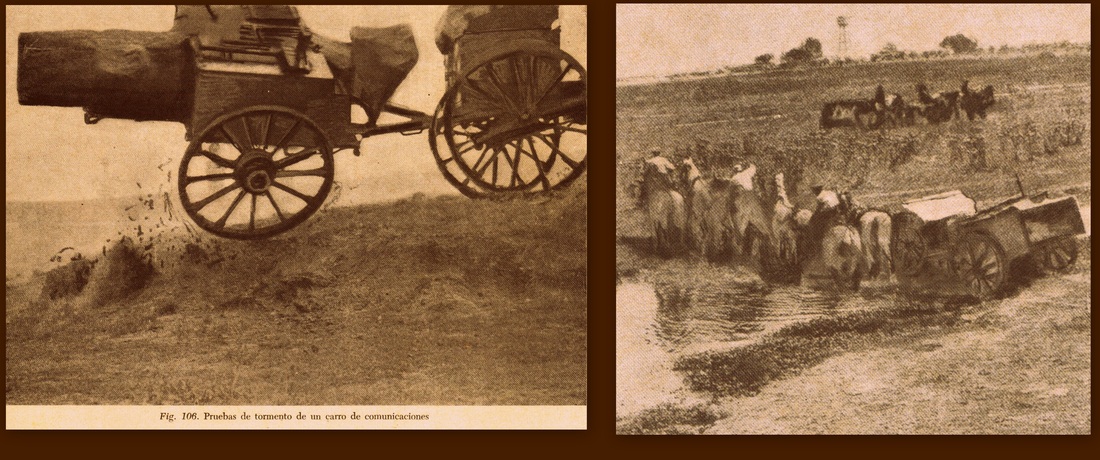
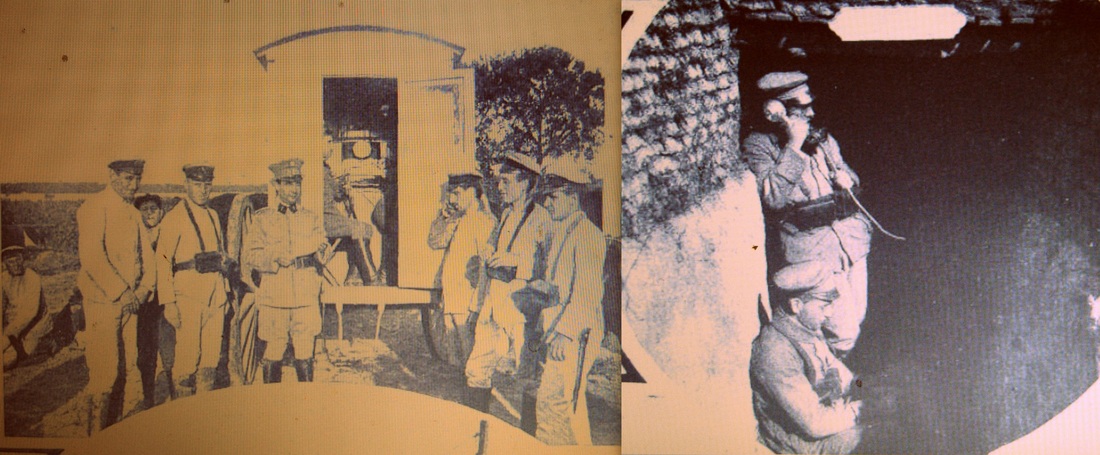
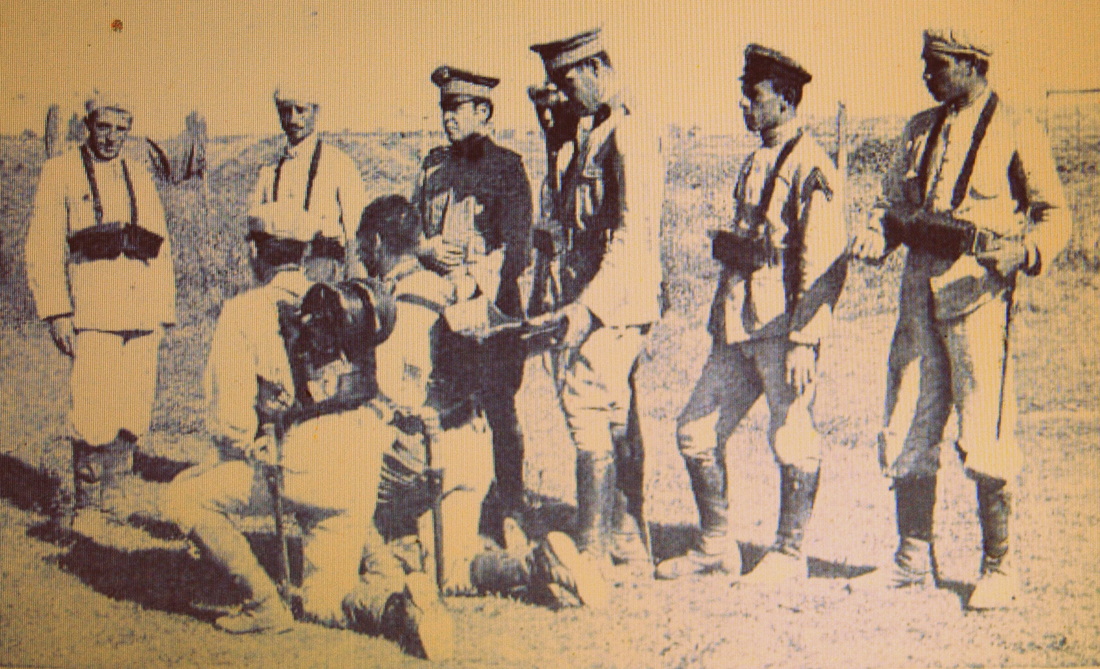
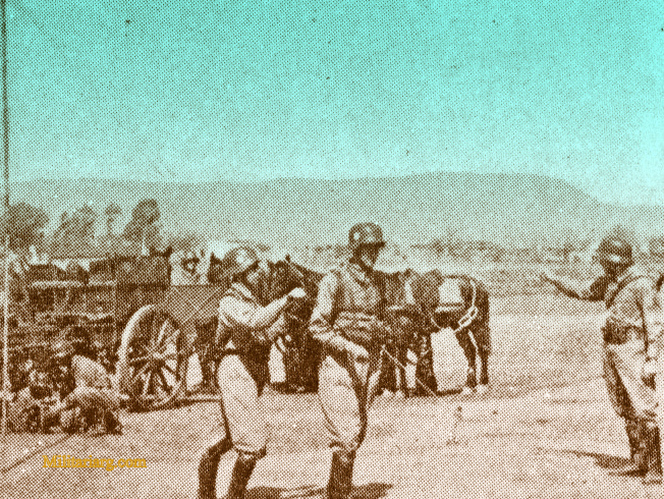
Signal Corps during maneuvers in 1916. Caras y Caretas.
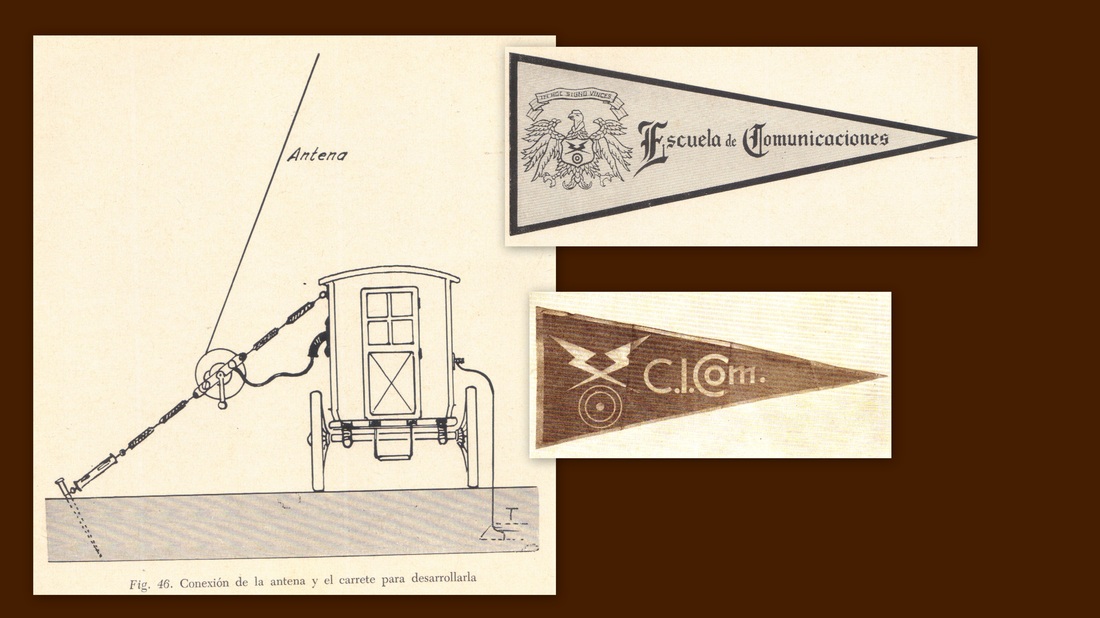
Telegraph section of Railroad Battalion.
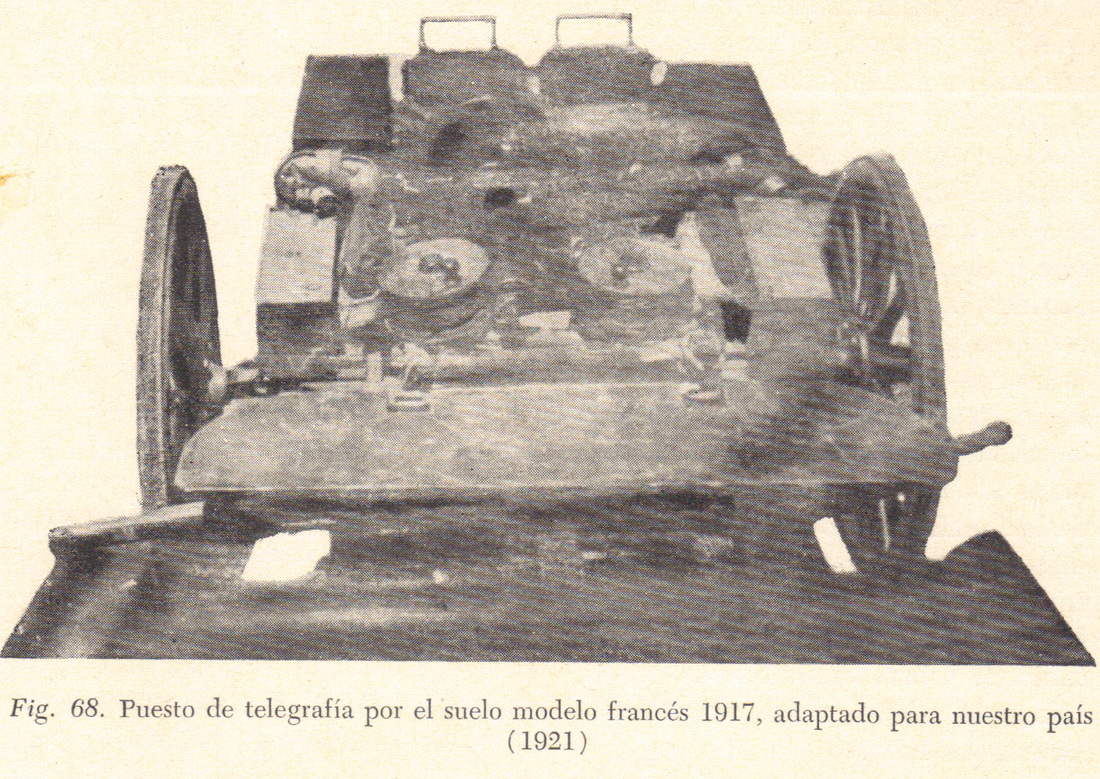
In 1921, the Argentine Army adapted the French Model 1917 Telegraph Wagon to serve its specific communication needs in the post-WWI era. This adaptation was part of a broader effort to modernize the Comunicaciones branch, which, at the time, relied on horse-drawn mobility to navigate the vast Argentine geography.
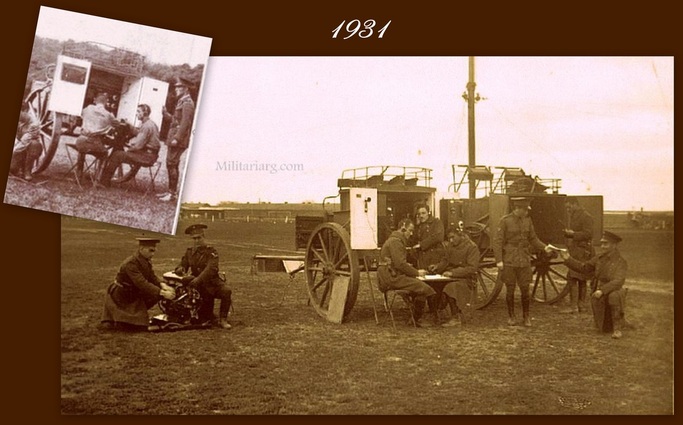
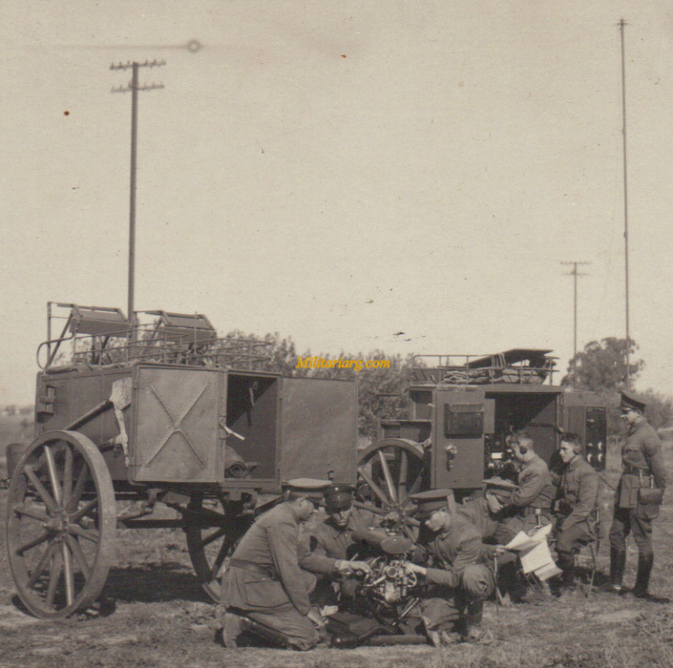
While technically a "telegraph wagon," by 1921–1925, these units were being re-equipped with vacuum-tube radio equipment. Specifically, records from the Comisión de Adquisiciones en el Extranjero (CAE) show that Argentina bought Telefunken 75-watt and 10-20 watt radio stations to install inside these vehicles, effectively turning them into mobile radiotelegraphy centers.
The 75-watt Telefunken radio station was a classic example of a "wagon station" configuration, specifically designed for mobile military field operations where independence from a fixed power grid was essential.
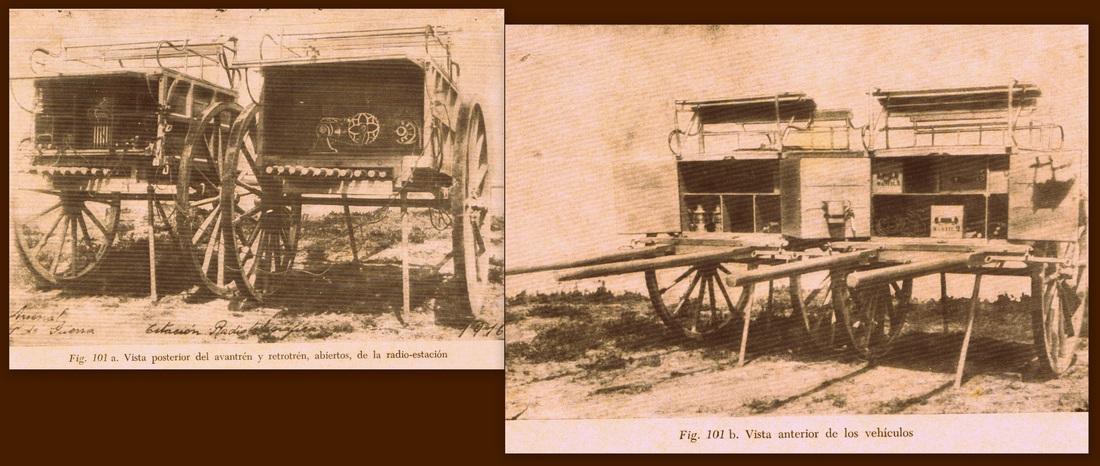
Wagon 1: The Radio (Transmitting & Receiving): This wagon contained the "brains" of the station. It housed the 75-watt valve (vacuum tube) transmitter, the receiver, the Morse keys, and the switchboards. By 1921, when the Argentine Army adapted these for the French Model 1917 carriages, this wagon was typically an enclosed "office" to protect the sensitive valves and the operator from dust and weather.
Wagon 2: The Generator (Power Plant): Because vacuum tubes required a steady and significant power supply that batteries of the time could not easily sustain, this second wagon carried a gasoline/petrol engine connected to a dynamo (generator). This wagon also carried auxiliary supplies, fuel, and the collapsible antenna masts.
Wagon 1: The Radio (Transmitting & Receiving): This wagon contained the "brains" of the station. It housed the 75-watt valve (vacuum tube) transmitter, the receiver, the Morse keys, and the switchboards. By 1921, when the Argentine Army adapted these for the French Model 1917 carriages, this wagon was typically an enclosed "office" to protect the sensitive valves and the operator from dust and weather.
Wagon 2: The Generator (Power Plant): Because vacuum tubes required a steady and significant power supply that batteries of the time could not easily sustain, this second wagon carried a gasoline/petrol engine connected to a dynamo (generator). This wagon also carried auxiliary supplies, fuel, and the collapsible antenna masts.
Avantren & Retrotren.
Radio-Wagons wireless outfit, W100 transceiver and receiver type A.
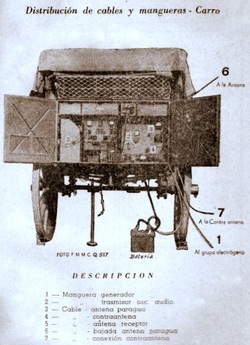
The equipment, including the W100 transceiver and Receiver Type A, was part of a mobile field communication system, primarily for telegraph or early voice radio transmission in the field, enabling communication during military operations or maneuvers.
It was a combined transmitter and receiver unit designed for radiotelegraphy (Morse code).
Power. These later valve-based systems typically operated with an output of around 75 watts, a significant reduction from the earlier 1.5 kW spark transmitters, but much more efficient and reliable for continuous wave (CW) transmission.
The "W" in the designation likely implies its use within the mobile "Wagon" system.
Receiver Type A: This was a dedicated receiving unit designed to accompany the W100 transceiver.
It was specifically designed for clear reception of the Morse code signals over long distances.
These receivers often used the new triode "Q" type valves for detection and amplification, providing a higher sensitivity than older crystal detectors. They featured variable tuning to receive signals across multiple wavelengths.
It allowed operators to "tune in" to distant stations while the main W100 transmitter was not actively transmitting.
Power. These later valve-based systems typically operated with an output of around 75 watts, a significant reduction from the earlier 1.5 kW spark transmitters, but much more efficient and reliable for continuous wave (CW) transmission.
The "W" in the designation likely implies its use within the mobile "Wagon" system.
Receiver Type A: This was a dedicated receiving unit designed to accompany the W100 transceiver.
It was specifically designed for clear reception of the Morse code signals over long distances.
These receivers often used the new triode "Q" type valves for detection and amplification, providing a higher sensitivity than older crystal detectors. They featured variable tuning to receive signals across multiple wavelengths.
It allowed operators to "tune in" to distant stations while the main W100 transmitter was not actively transmitting.
It has a battery charger (often referred to as an "accumulator charging set") as a core component of its mobile power plant.
Because the W100 transceiver and Receiver Type A relied on vacuum tubes (valves) which required a steady DC voltage, the system used a combination of a generator and rechargeable batteries (accumulators).
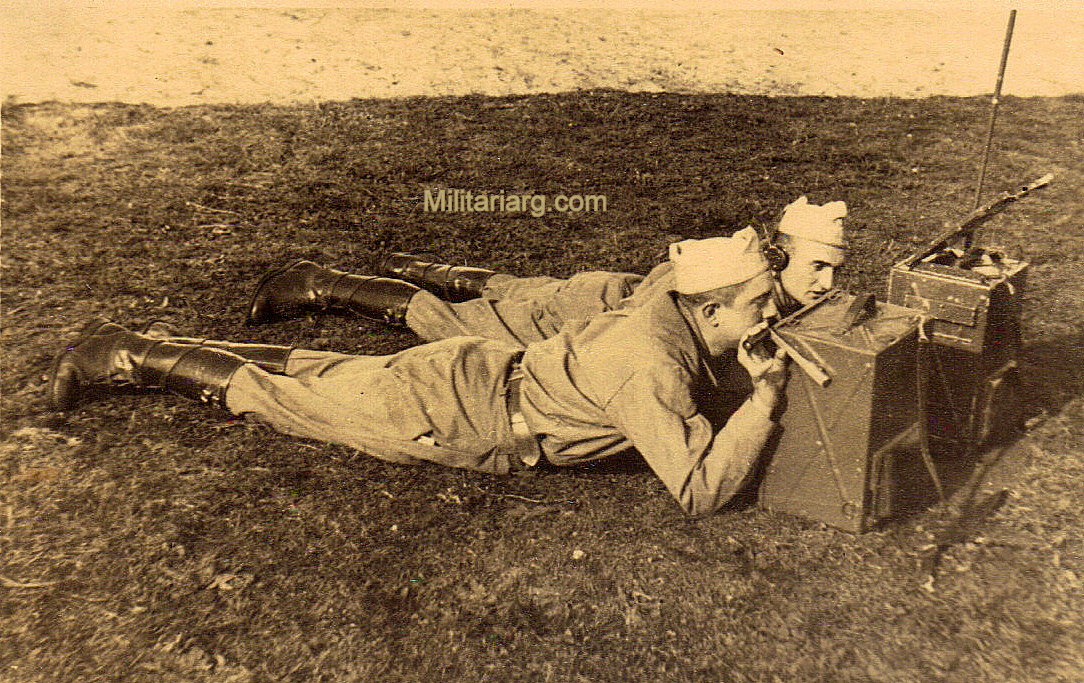
Radio equipment for Anti-Aircraft use
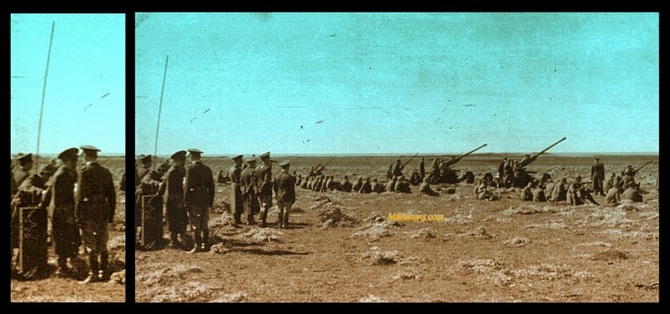
Transmitter/receiver TRD and 5w.
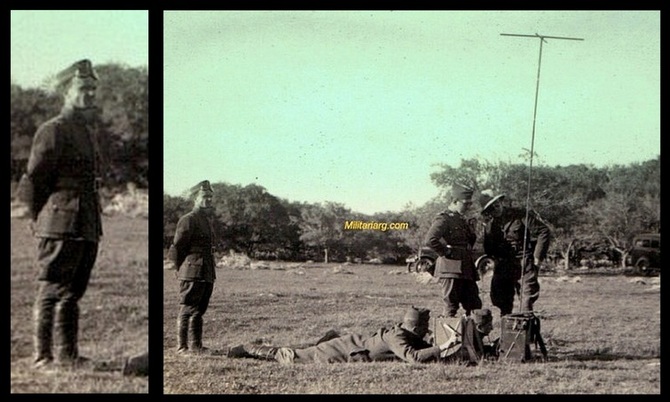
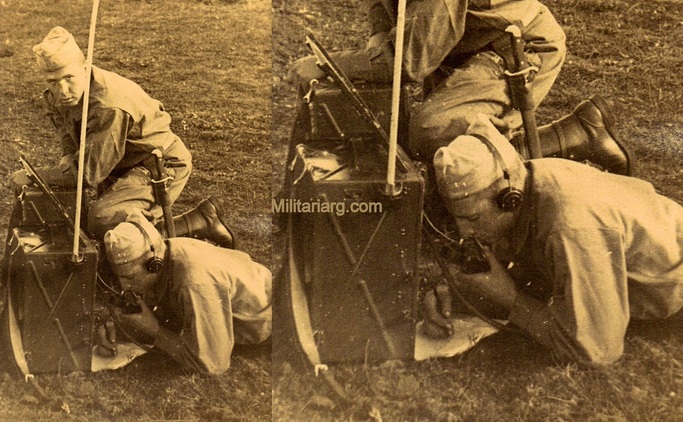
Two-man pack.
Fire-control systems.
A fire-control system is a number of components working together, usually a gun data computer, a director, and radar, which is designed to assist a weapon system in hitting its target. It performs the same task as a human gunner firing a weapon, but attempts to do so faster and more accurately.
Wikipedia
Wikipedia
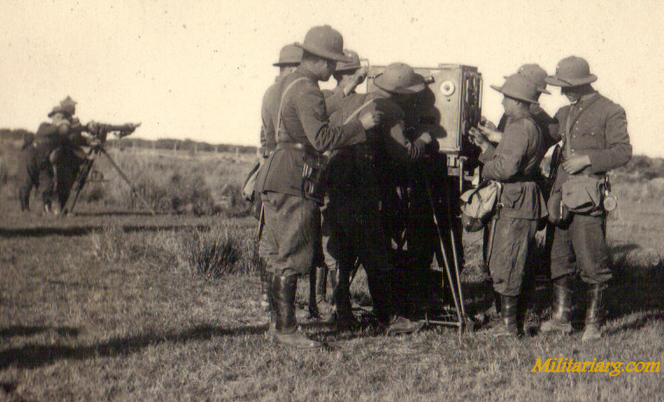
Vickers Predictor, gun director. Anti-Aircraft Regiment.
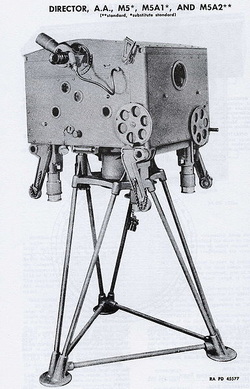
The Kerrison Predictor was one of the first fully automated anti-aircraft fire-control systems, an electromechanical analog computer used by the British Army during World War II, primarily with the Bofors 40 mm gun. It was designed to calculate the complex aiming solutions required to hit fast-moving, low-altitude aircraft.
Automated Aiming: The device automated the process of aiming an anti-aircraft gun. Gunners would input observed data, such as the target's speed and angle, using three main handwheels (for elevation, range, and azimuth).
Analog Computing: Inside, a complex system of over 1,000 precision parts and gears worked as a specialized analog computer to rapidly calculate the target's future position, taking into account the time of flight of the shell and the target's movement.
Output: The predictor would then provide an output that automatically laid the connected gun at the correct future position.
Usage and Impact
Role: The Kerrison Predictor was specifically designed for the demanding high-speed, low-altitude anti-aircraft role, a scenario where human reaction times and traditional iron sights were insufficient.
Limitations: Despite its effectiveness, the system was complex, heavy (over 500 lbs, even with aluminum parts), and required a large electrical generator, which made it difficult to use in mobile field units. As a result, they were mostly used in static emplacements.
Automated Aiming: The device automated the process of aiming an anti-aircraft gun. Gunners would input observed data, such as the target's speed and angle, using three main handwheels (for elevation, range, and azimuth).
Analog Computing: Inside, a complex system of over 1,000 precision parts and gears worked as a specialized analog computer to rapidly calculate the target's future position, taking into account the time of flight of the shell and the target's movement.
Output: The predictor would then provide an output that automatically laid the connected gun at the correct future position.
Usage and Impact
Role: The Kerrison Predictor was specifically designed for the demanding high-speed, low-altitude anti-aircraft role, a scenario where human reaction times and traditional iron sights were insufficient.
Limitations: Despite its effectiveness, the system was complex, heavy (over 500 lbs, even with aluminum parts), and required a large electrical generator, which made it difficult to use in mobile field units. As a result, they were mostly used in static emplacements.
Engineer Corps
Communication "Kabeltrommel" cable wire layer dispensing of the 4th Engineers Batallion from the San Roque Sierras in Cordoba.
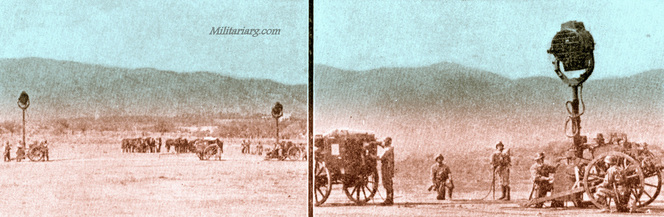
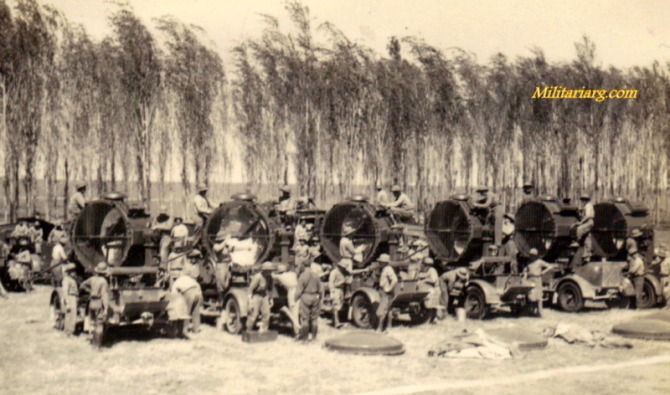
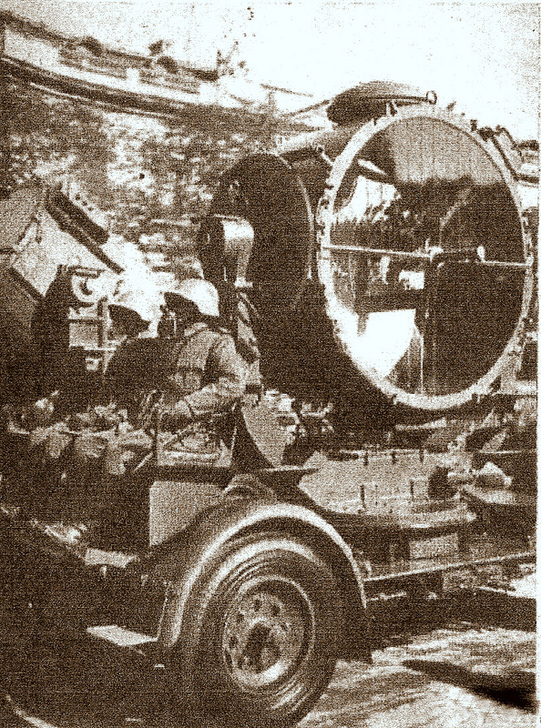
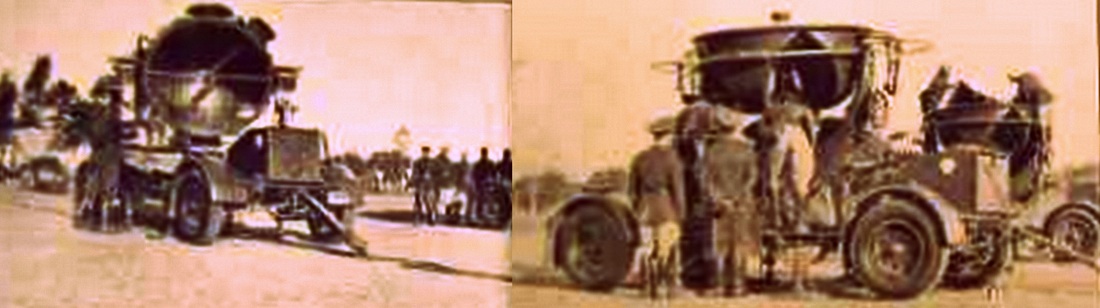
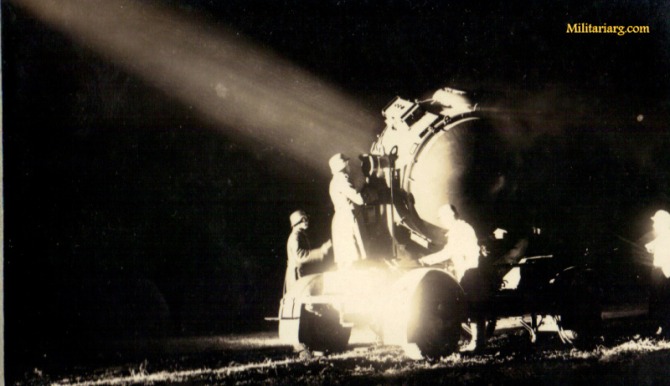
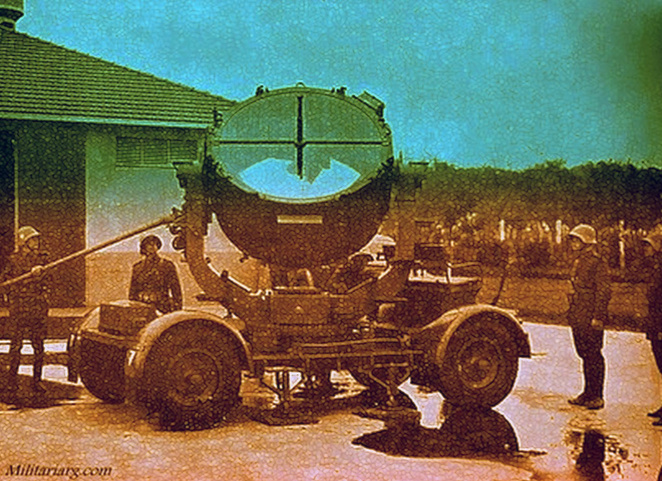
1945. Cordoba. 4th Engineers Batallion with reflectors mounted on old German obsertory wagon from the Franco-Prussian War Era, SXIX.
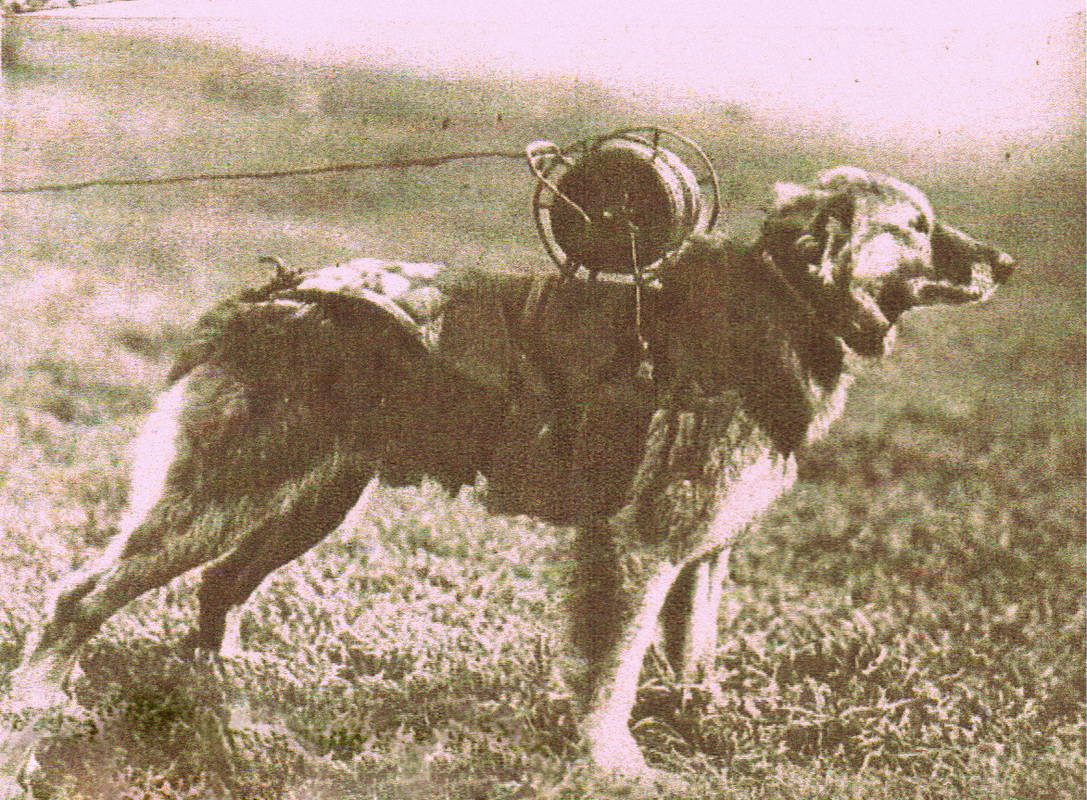
War Dog with cable wire reel layer dispensing. Photo Caras y Caretas 1935.
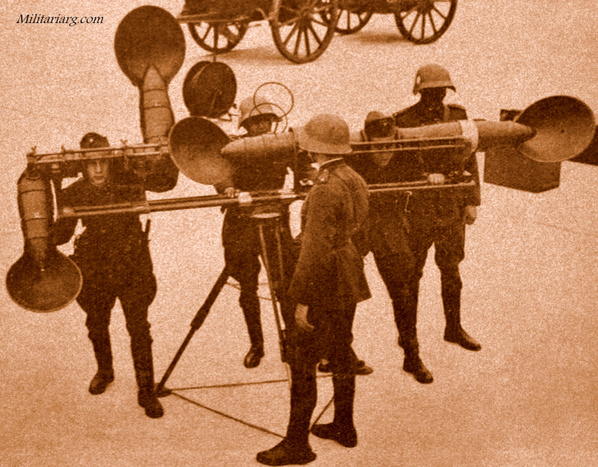
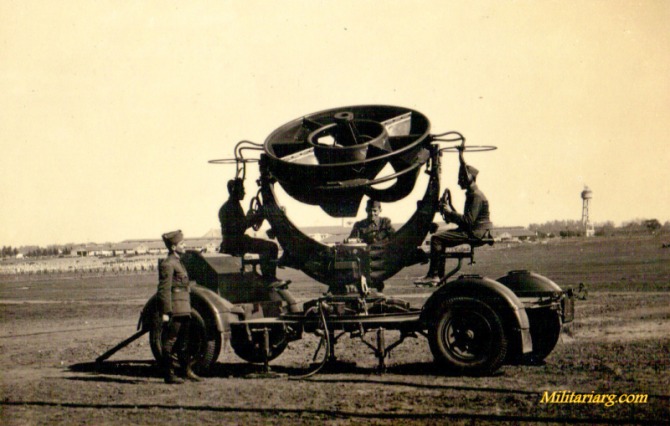
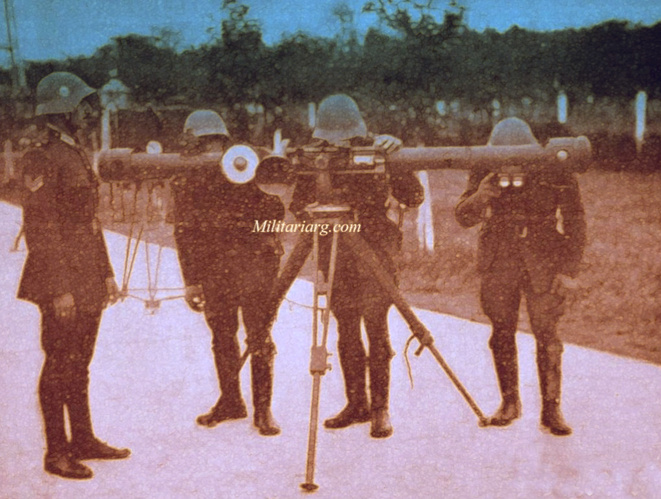
Acoustic listening device type Goerz. RH35 M28. Modelo Argentino.
Goerz, a renowned German-Austrian optical company, manufactured early acoustic listening devices (sound locators) used to detect enemy aircraft before the widespread adoption of radar. These devices, often referred to as "war tubas," were a crucial part of air defense during the interwar years and the early part of World War II.
The Goerz acoustic locator was a passive device that relied purely on acoustics to pinpoint the source of engine noise.
The system featured multiple large, horn-shaped or parabolic acoustic dishes mounted on a ground-based turntable or chassis.
Operators sat on the unit and used stethoscope-like tubes connected to the horns. By rotating the apparatus and adjusting the horns, they would balance the sound in their ears to determine both the horizontal direction (azimuth) and the vertical angle (elevation) of the approaching aircraft.
The position of the aircraft was tracked by equalizing the sound in each ear, and the resulting bearing information was mechanically transmitted to a prediction device, which helped guide anti-aircraft searchlights and guns.
While effective in early single-aircraft scenarios, the Goerz locators, like other acoustic devices, had limitations.
A known issue with the Goerz device was an "acoustic parallax" error, a systematic difference between the visual direction and the actual sound direction, especially with fast-moving aircraft. They performed poorly in noisy environments or bad weather conditions and were quickly overwhelmed by large formations of aircraft.
These limitations meant they were rapidly made obsolete by the superior, all-weather performance of radar technology during the war.
The Goerz acoustic locator was a passive device that relied purely on acoustics to pinpoint the source of engine noise.
The system featured multiple large, horn-shaped or parabolic acoustic dishes mounted on a ground-based turntable or chassis.
Operators sat on the unit and used stethoscope-like tubes connected to the horns. By rotating the apparatus and adjusting the horns, they would balance the sound in their ears to determine both the horizontal direction (azimuth) and the vertical angle (elevation) of the approaching aircraft.
The position of the aircraft was tracked by equalizing the sound in each ear, and the resulting bearing information was mechanically transmitted to a prediction device, which helped guide anti-aircraft searchlights and guns.
While effective in early single-aircraft scenarios, the Goerz locators, like other acoustic devices, had limitations.
A known issue with the Goerz device was an "acoustic parallax" error, a systematic difference between the visual direction and the actual sound direction, especially with fast-moving aircraft. They performed poorly in noisy environments or bad weather conditions and were quickly overwhelmed by large formations of aircraft.
These limitations meant they were rapidly made obsolete by the superior, all-weather performance of radar technology during the war.
1944. Patricios Regiment. Signal Corps.
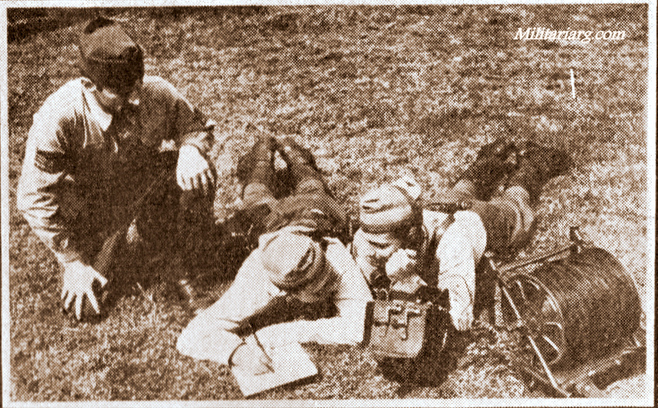
Signal Troops from The Patricios Regiment. Note the soldier on the right, hi have a HAFDASA signal pistol holster-bandolier.
According to Malvinas War Veterans (VGM) from the Patricios Regiment, during the War, the Patricios Regiment had used the old HAFDASA Signal Pistol M36.
Source M. Font, VGM and "The Falklands War Then and Now" by Gordon Ramsey
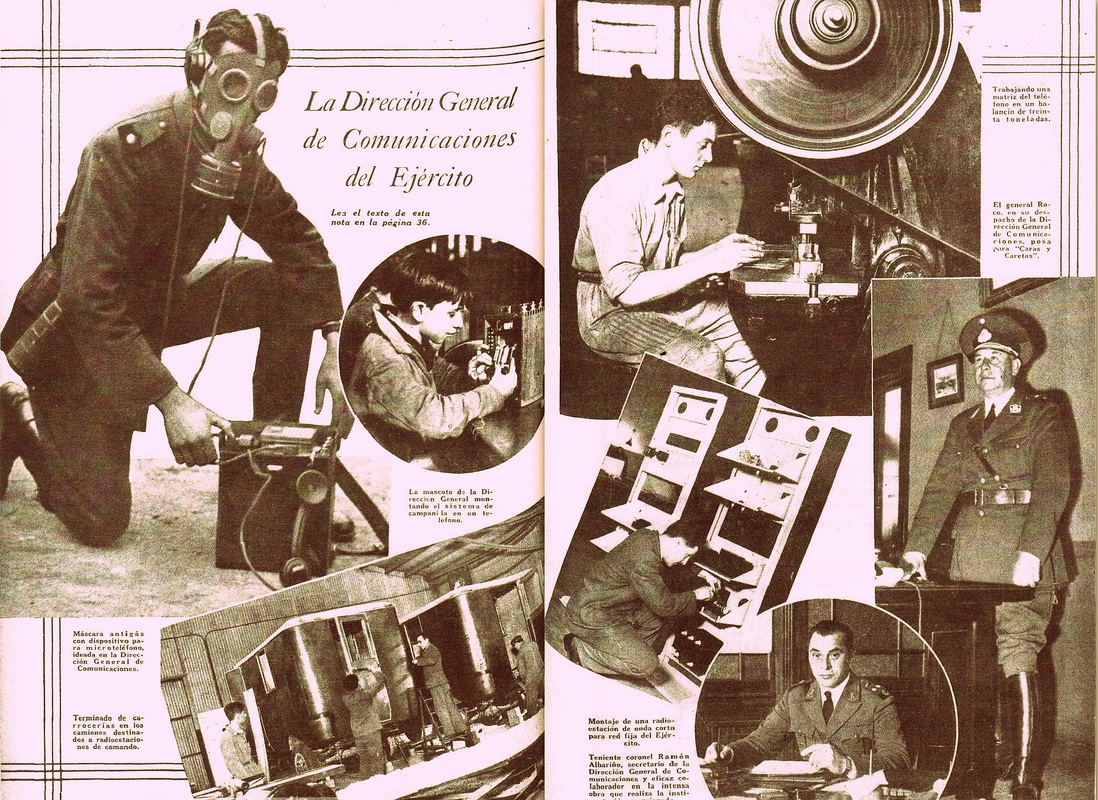
Caras y Caretas 1936.
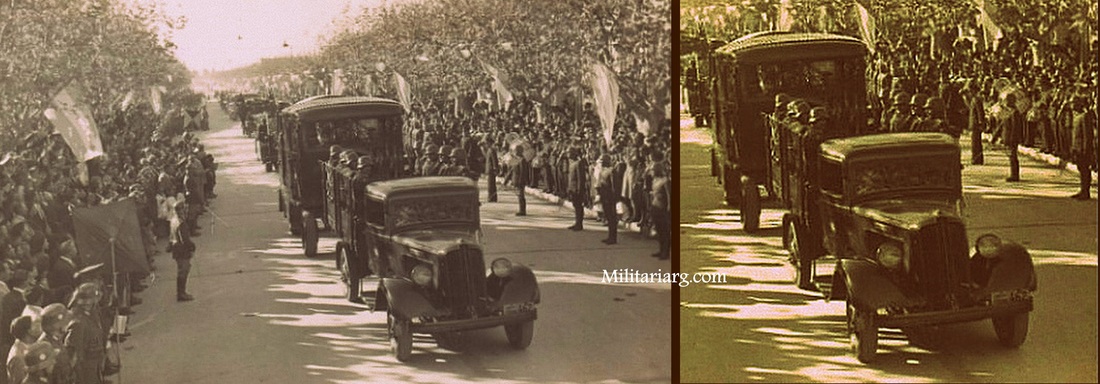
Source; Caras y Caretas.
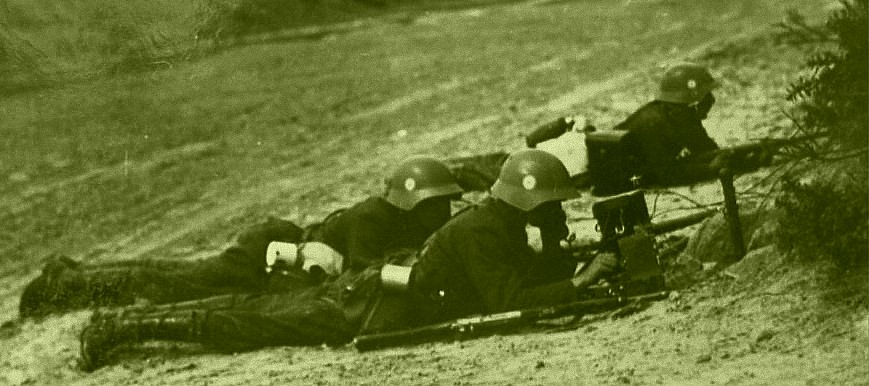
6Th Infantry Regiment 1944. Gral Viamonte.
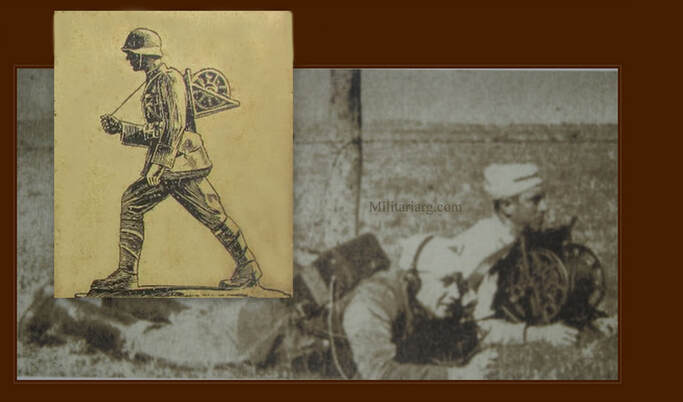
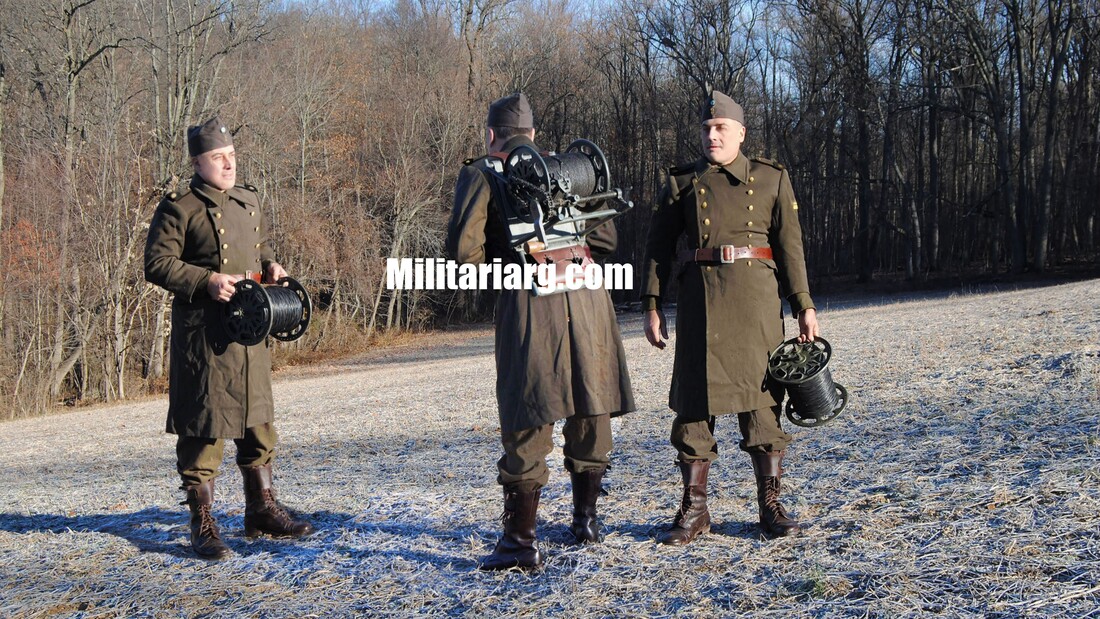
Kabeltrommel: Reel Backpack cable layer. Photo Reenactment Arma de Comunicaciones Ejercito Argentino 1945-50s.
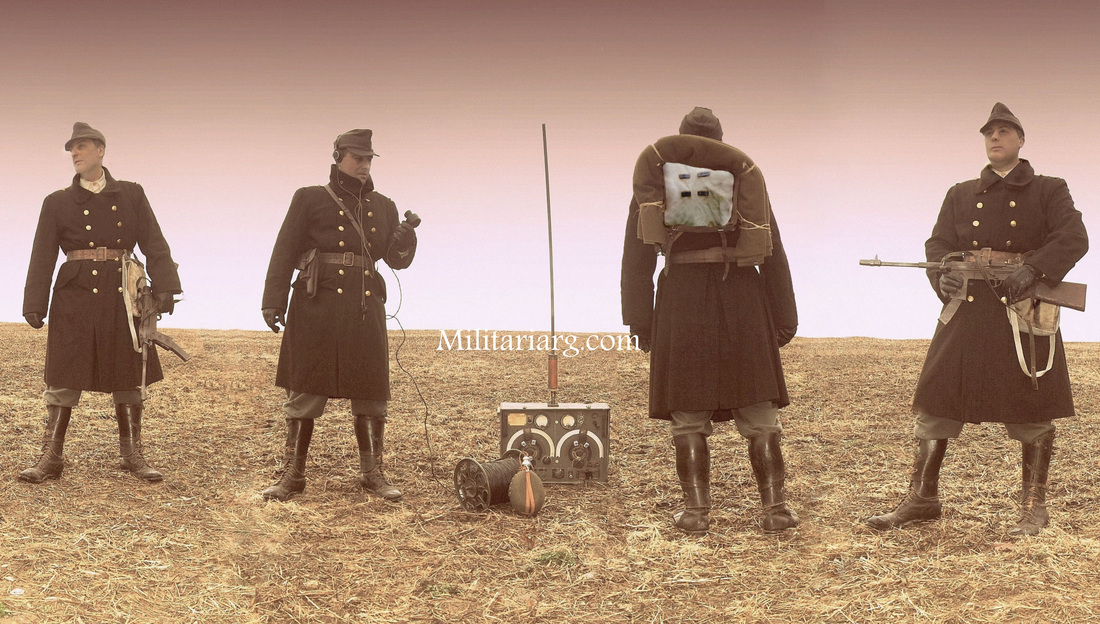
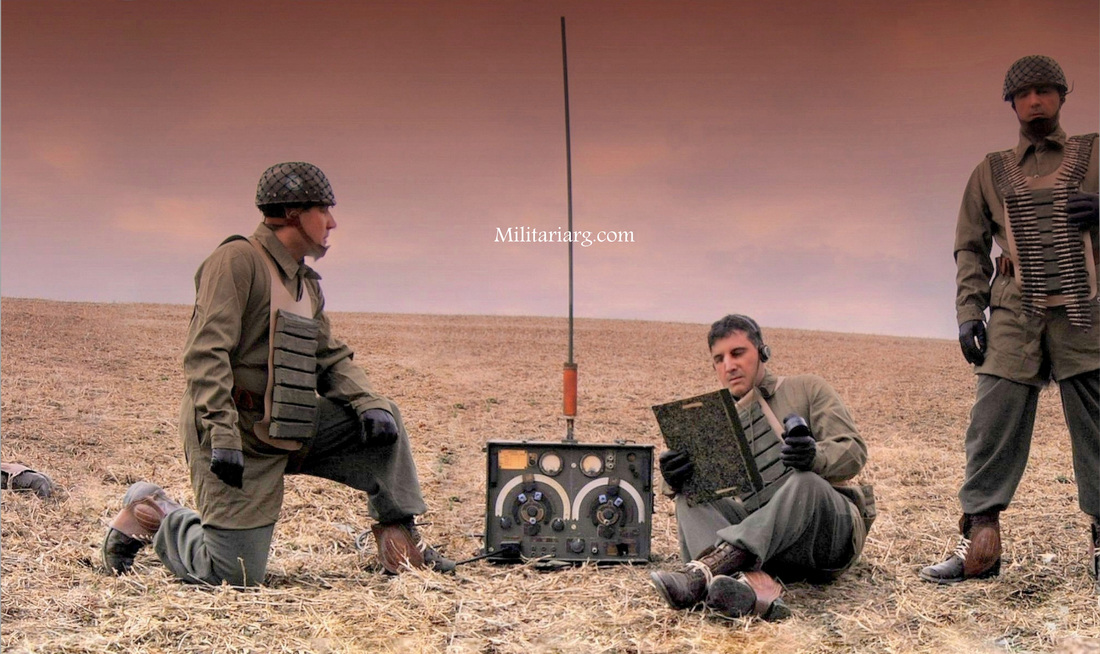
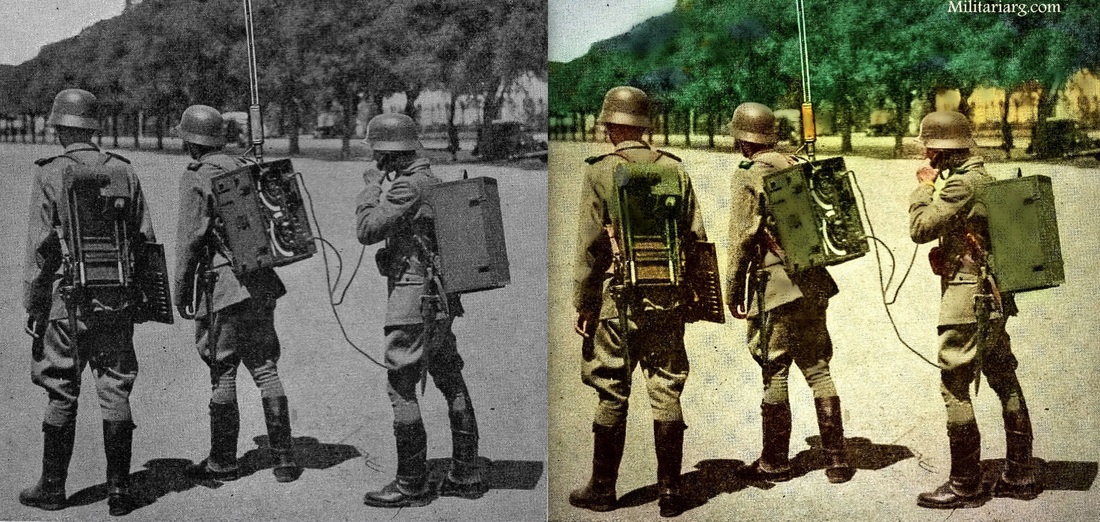
Radio Backpacks
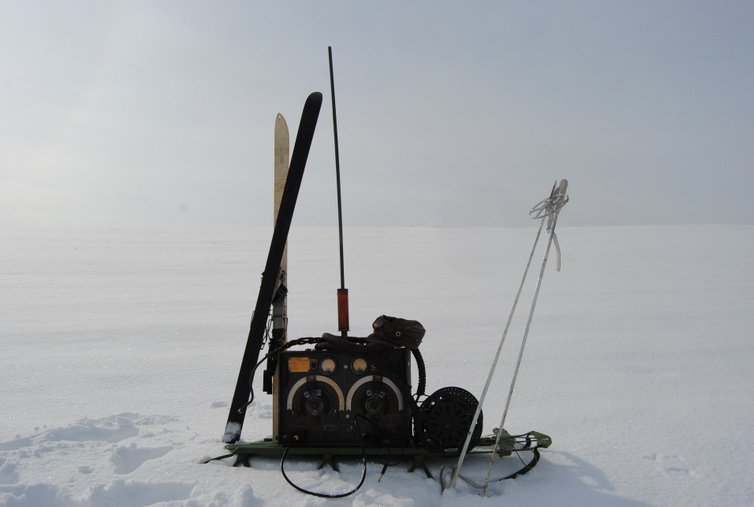
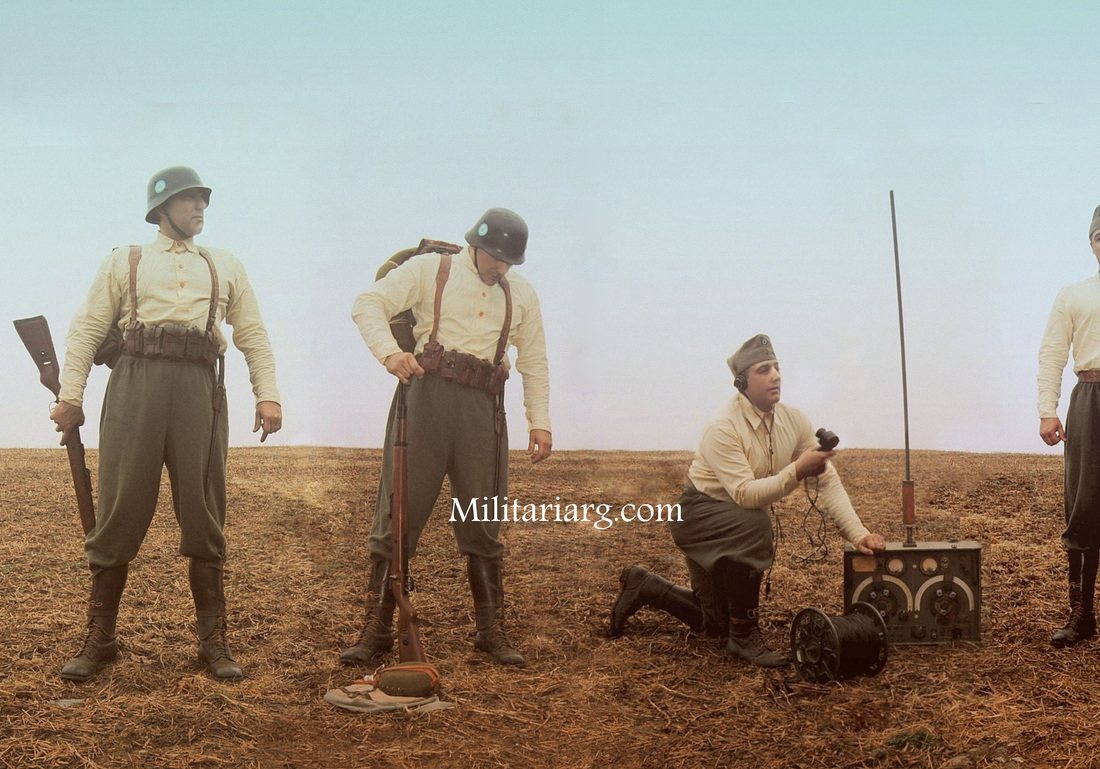
Pack TRD.
Photo reenactment:
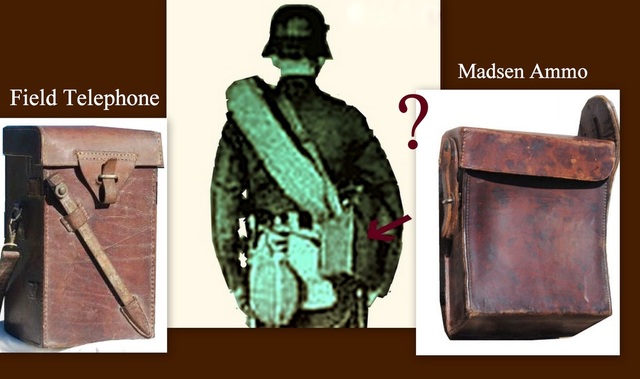
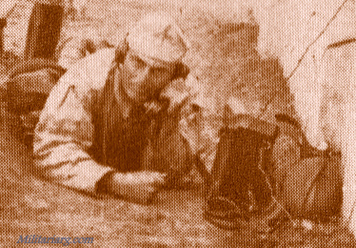
Madsen Ammo Leather Case or DGFM Type T.T.A, Mod 5 field telephone, (Argentine version of the U.S EE-8 ), in leather case. made by F.M.M.C BsAs. (?)
Cavalry Equipment
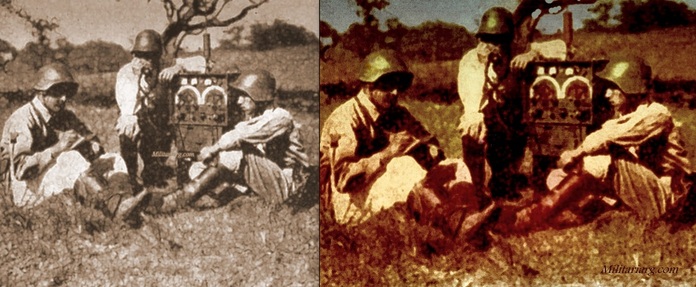
RCA-TRD Mod 1, is a combined transmitter and receiver. From 11th Cavalry Regiment (1946)
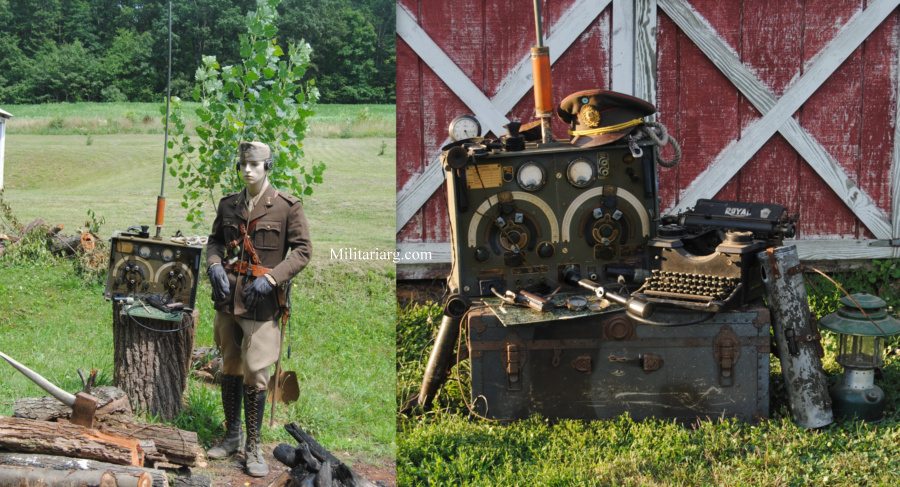
Manufacturer: RCA (Radio Corporation of America), a major producer of military and civilian radio equipment during the mid-20th century.
User: Ejercito Argentino (Argentine Army).
Function: A two-way radio used for tactical communication.
User: Ejercito Argentino (Argentine Army).
Function: A two-way radio used for tactical communication.
Field/Heavy Artilley Equipment
Headset types
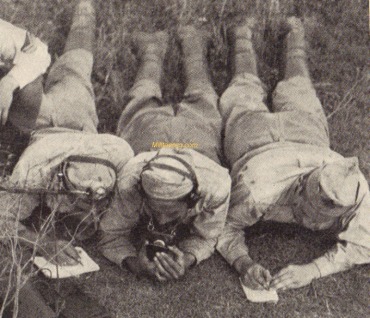
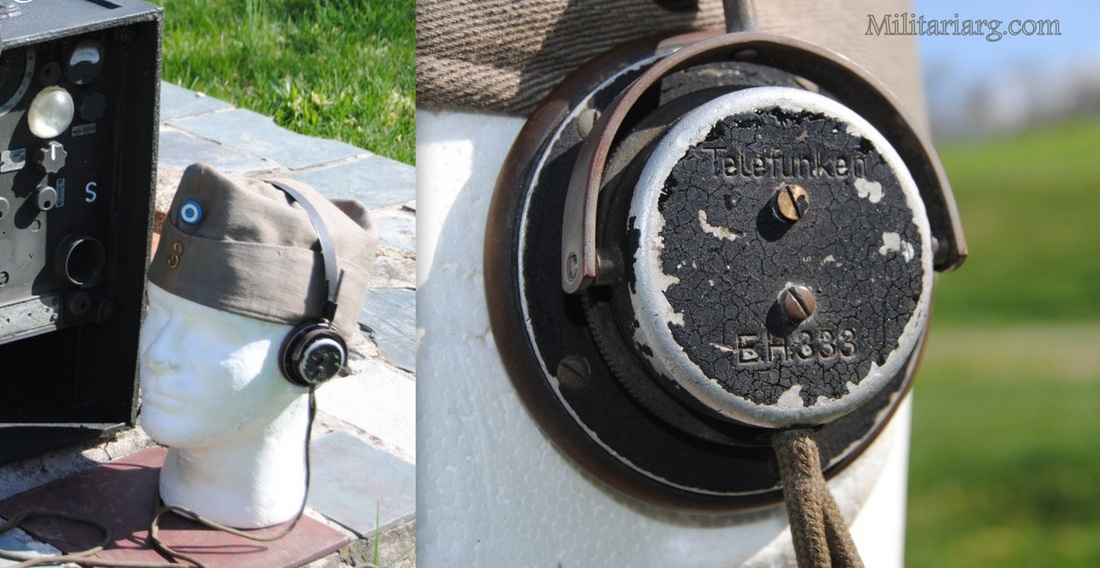
Several different headsets used by radio operators from the artillery. Photo from the Military Yearbook from Sgt. Cabral 1945.
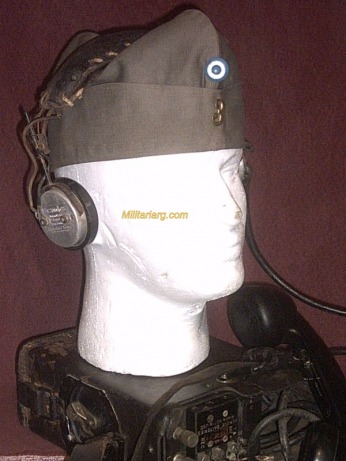
US EE1 Field Telephone.
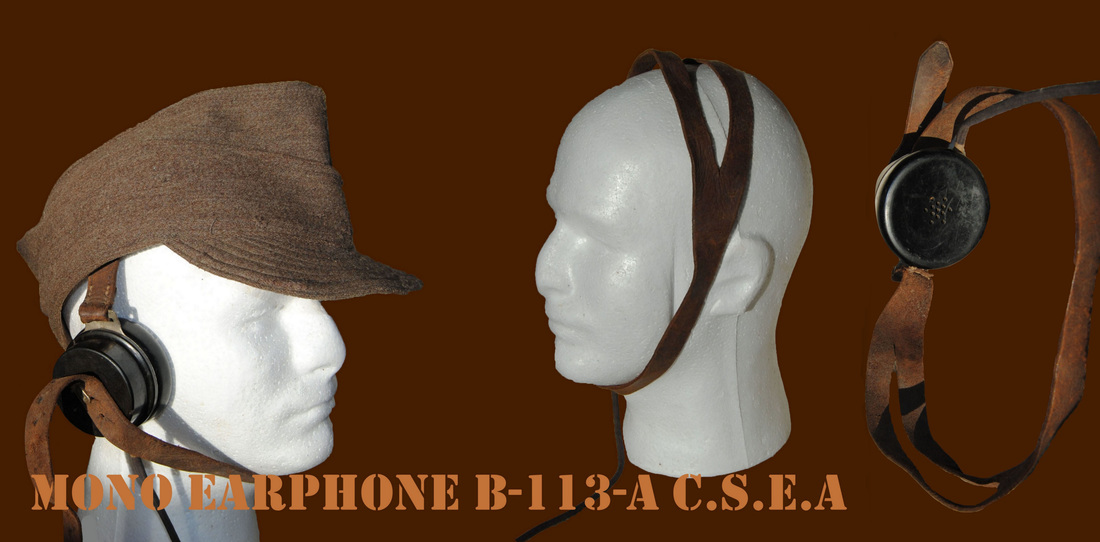
FLAK type (Possibily used by the Marine Corps), Single Earphone Headset made by Standard Electric of Argentina.
Meteorological instruments for Field Artillery use.
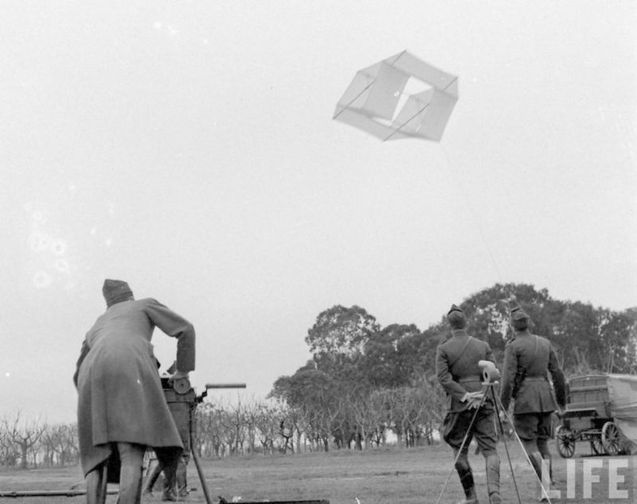
Meteorology School in the Signal Corps. Circa 1944.
Before and during the early part of the 20th century, weather stations and militaries used large box kites to gather atmospheric data. These kites were equipped with instruments called meteorographs.
This practice was common until the 1920s and 1930s when it was largely superseded by the invention of the more reliable radio meteorograph, or radiosonde, which used a balloon instead of a kite.
Meteorological Weather balloon sondes.
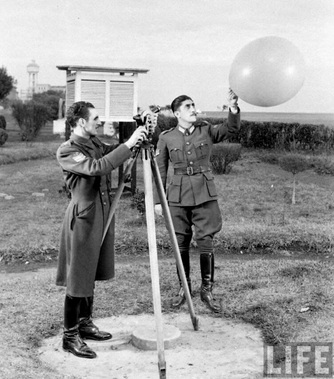
A weather or sounding balloon is a balloon (specifically a type of high altitude balloon) which carries instruments aloft to send back information on atmospheric pressure, temperature, humidity and wind speed aloft by means of a small, expendable measuring device called a radiosonde. To obtain wind data, they can be tracked by radar, radio direction finding, or navigation systems (such as the satellite based Global Positioning System also known as a GPS).
Wikipedia
Wikipedia
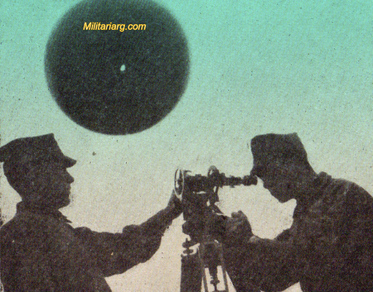
Surveyor's level for meteorological work.
Meteorological weather balloon sondes, more accurately called radiosondes, are small, expendable instrument packages carried into the upper atmosphere by large, gas-filled balloons to collect crucial weather data.
Purpose and Data Collection
Radiosondes are the primary source of upper-air data used to create detailed vertical profiles (soundings) of the atmosphere.
Wind speed and direction at various altitudes directly affected the trajectory of long-range artillery shells. Meteorological data from radiosondes was processed manually into formats used by fire-control centers to improve shooting accuracy.
Purpose and Data Collection
Radiosondes are the primary source of upper-air data used to create detailed vertical profiles (soundings) of the atmosphere.
Wind speed and direction at various altitudes directly affected the trajectory of long-range artillery shells. Meteorological data from radiosondes was processed manually into formats used by fire-control centers to improve shooting accuracy.
Acoustic Signal guns
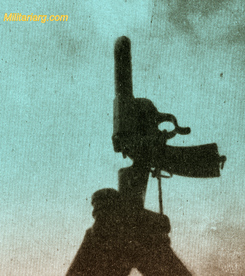
Acoustic. Signal gun and mount.
"acoustic signal guns" were not a distinct class of device; the term likely refers to the use of
signal flare pistols to fire sound cartridges in addition to the more common colored light and smoke signals. These were used in conjunction with "sound locators" for detecting aircraft.
Acoustic Cartridges: Alongside the more common pyrotechnic flares for illumination or colored light signals, militaries also developed and used cartridges designed specifically to produce a loud bang or whistle as an audible signal for communication.
Usage: These sound signals were pre-arranged for specific commands or alerts when visual signals might be obscured by terrain, smoke, or darkness, or when radio silence was necessary. They could be used for immediate, localized communication that didn't require visual line-of-sight like a heliograph or light signal.
Acoustic Locators ("War Tubas")
Separately, but related to the "acoustic" aspect of the query, the term "guns" might also be a misinterpretation of the large acoustic detection devices used before the widespread adoption of radar.
Sound Detection: These were passive listening devices, often resembling large horns or "war tubas," used to detect the sound of approaching aircraft engines and provide a bearing.
Artillery Sound Ranging: A related technique was "artillery sound ranging," which used a network of microphones and stopwatches to pinpoint the location of enemy artillery by measuring the time it took for the sound of their firing to reach different listening posts.
In summary, the "gun" aspect refers to the standard flare pistols that could fire sound cartridges, and the "acoustic" aspect relates more broadly to the various sound-based detection methods used during the era.
signal flare pistols to fire sound cartridges in addition to the more common colored light and smoke signals. These were used in conjunction with "sound locators" for detecting aircraft.
Acoustic Cartridges: Alongside the more common pyrotechnic flares for illumination or colored light signals, militaries also developed and used cartridges designed specifically to produce a loud bang or whistle as an audible signal for communication.
Usage: These sound signals were pre-arranged for specific commands or alerts when visual signals might be obscured by terrain, smoke, or darkness, or when radio silence was necessary. They could be used for immediate, localized communication that didn't require visual line-of-sight like a heliograph or light signal.
Acoustic Locators ("War Tubas")
Separately, but related to the "acoustic" aspect of the query, the term "guns" might also be a misinterpretation of the large acoustic detection devices used before the widespread adoption of radar.
Sound Detection: These were passive listening devices, often resembling large horns or "war tubas," used to detect the sound of approaching aircraft engines and provide a bearing.
Artillery Sound Ranging: A related technique was "artillery sound ranging," which used a network of microphones and stopwatches to pinpoint the location of enemy artillery by measuring the time it took for the sound of their firing to reach different listening posts.
In summary, the "gun" aspect refers to the standard flare pistols that could fire sound cartridges, and the "acoustic" aspect relates more broadly to the various sound-based detection methods used during the era.
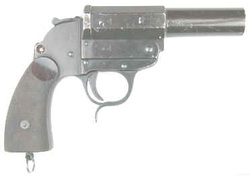
Walther break action, single shot signal pistol by Carl Walther Waffenfabrik.
http://www.diggerhistory.info/pages-weapons/signal-pistols.htm
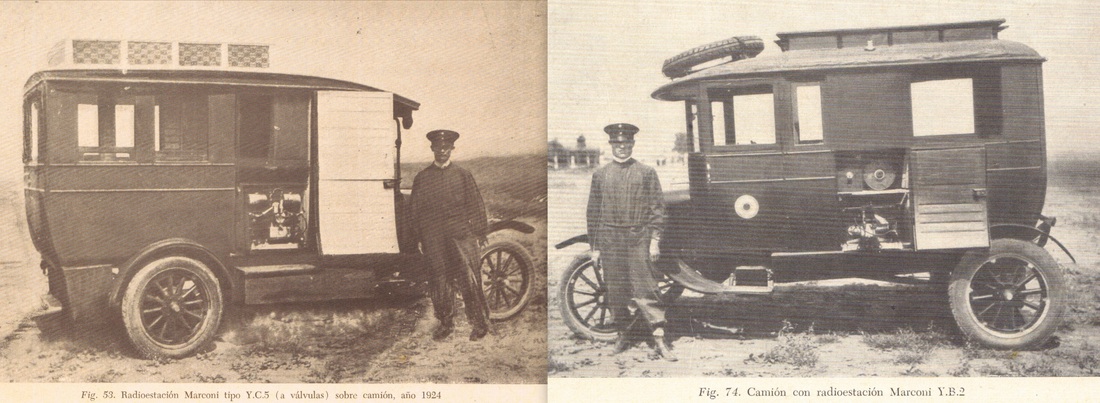
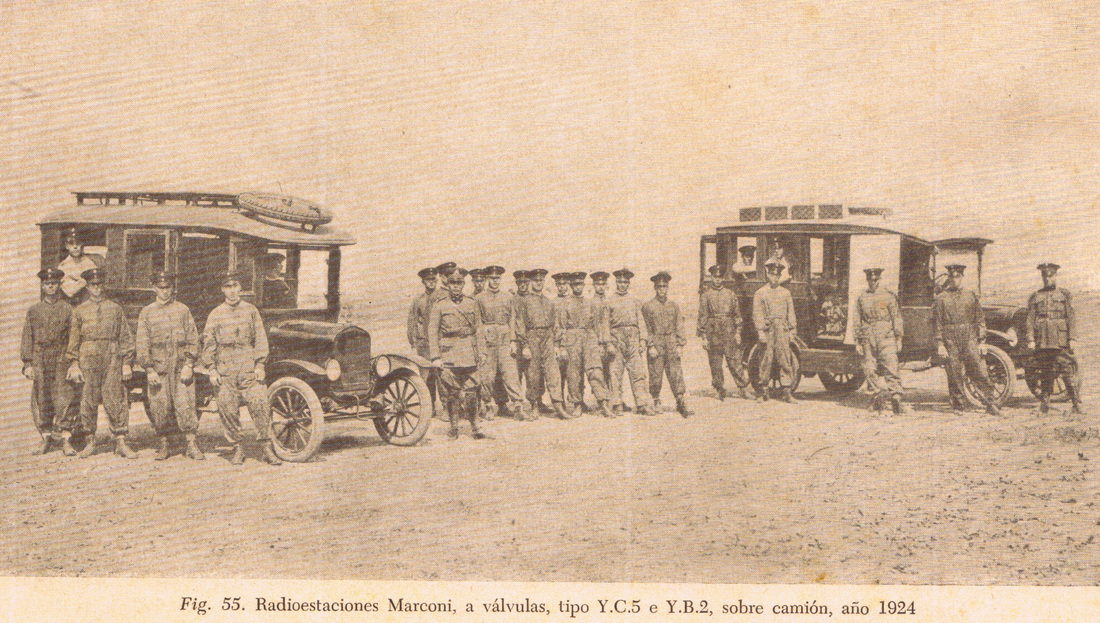
1920s, Radio Stations Marconi on Ford TT trucks.
Marconi’s naming convention designated the "Y" series as military/mobile field stations. While both the Y.C.5 and Y.B.2 were portable valve-based (vacuum tube) sets, they were designed for different tactical roles and power requirements. The primary difference lies in their power output and intended range.
Y.Y.2: 100 Watts. Short-to-medium range tactical with wavelength range, typically 600–1,200 meters.
Y.C.5: 500 Watts. Long-range strategic/colonial, range 400-2,000+.
It was a high-performance portable radio station designed for military and colonial administrative use, particularly in challenging environments like tropical regions.
The manufacturer officially guaranteed a range of 600 miles, though this was often practically estimated at roughly 300 miles under harsh tropical conditions. It was designed specifically as a portable set, making it suitable for field deployment or remote networks.
In Africa, it was famously recommended for use in Uganda to establish inter-communication networks with the Sudan.
Marconi’s naming convention designated the "Y" series as military/mobile field stations. While both the Y.C.5 and Y.B.2 were portable valve-based (vacuum tube) sets, they were designed for different tactical roles and power requirements. The primary difference lies in their power output and intended range.
Y.Y.2: 100 Watts. Short-to-medium range tactical with wavelength range, typically 600–1,200 meters.
Y.C.5: 500 Watts. Long-range strategic/colonial, range 400-2,000+.
It was a high-performance portable radio station designed for military and colonial administrative use, particularly in challenging environments like tropical regions.
The manufacturer officially guaranteed a range of 600 miles, though this was often practically estimated at roughly 300 miles under harsh tropical conditions. It was designed specifically as a portable set, making it suitable for field deployment or remote networks.
In Africa, it was famously recommended for use in Uganda to establish inter-communication networks with the Sudan.
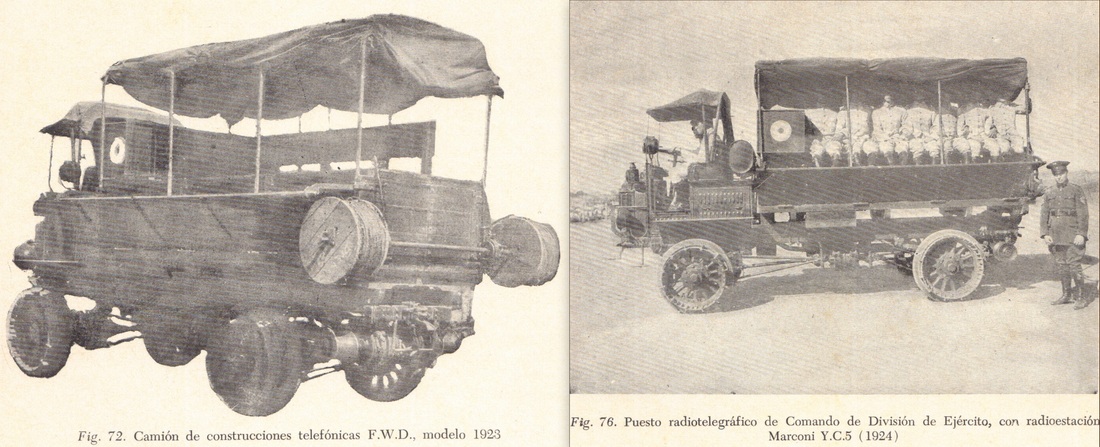
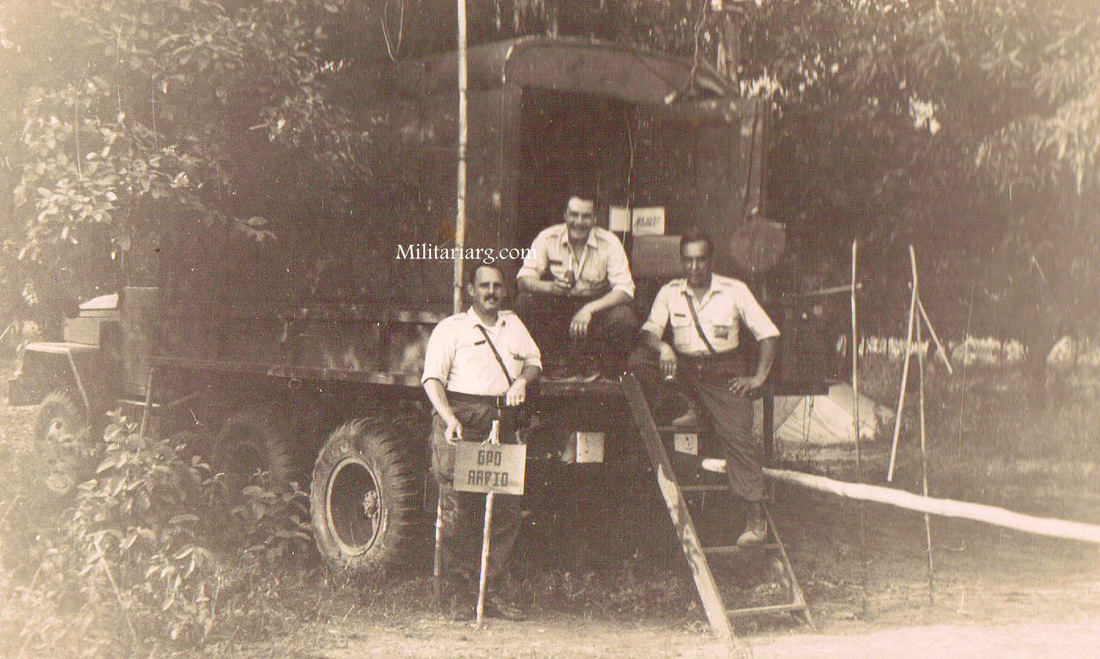
Radiotelegraph post and cable drums on FWD truck.
Marconi Y.C.5 could be used with telegraphy, as it was specifically designed for CW (Continuous Wave) telegraphy, which was the standard for long-range wireless communication in the 1920s.
While it was a wireless station, its primary "telegraph" function was sending and receiving Morse Code signals rather than connecting to physical wired telegraph lines.
Marconi Y.C.5 could be used with telegraphy, as it was specifically designed for CW (Continuous Wave) telegraphy, which was the standard for long-range wireless communication in the 1920s.
While it was a wireless station, its primary "telegraph" function was sending and receiving Morse Code signals rather than connecting to physical wired telegraph lines.
The Army utilized the Citroën-Kégresse P4T half-track as a mobile signals and radio station.This specific setup, often referred to as the SFR station, was a high-tech mobile communication unit for its time.
This half-track provided the all-terrain mobility needed to deploy radio equipment in remote areas. It was an evolution of the K1 Type B2 used in the famous Sahara crossings.The Albis was a specialized signals trailer that housed the primary transmitter and power supply equipment. When paired with the Kégresse, it formed a complete, self-contained long-range radio station.
Telefunken provided heavy fixed installations and some field sets. It was a direct competitor to French and British manufacturers for Argentine government contracts
This half-track provided the all-terrain mobility needed to deploy radio equipment in remote areas. It was an evolution of the K1 Type B2 used in the famous Sahara crossings.The Albis was a specialized signals trailer that housed the primary transmitter and power supply equipment. When paired with the Kégresse, it formed a complete, self-contained long-range radio station.
Telefunken provided heavy fixed installations and some field sets. It was a direct competitor to French and British manufacturers for Argentine government contracts
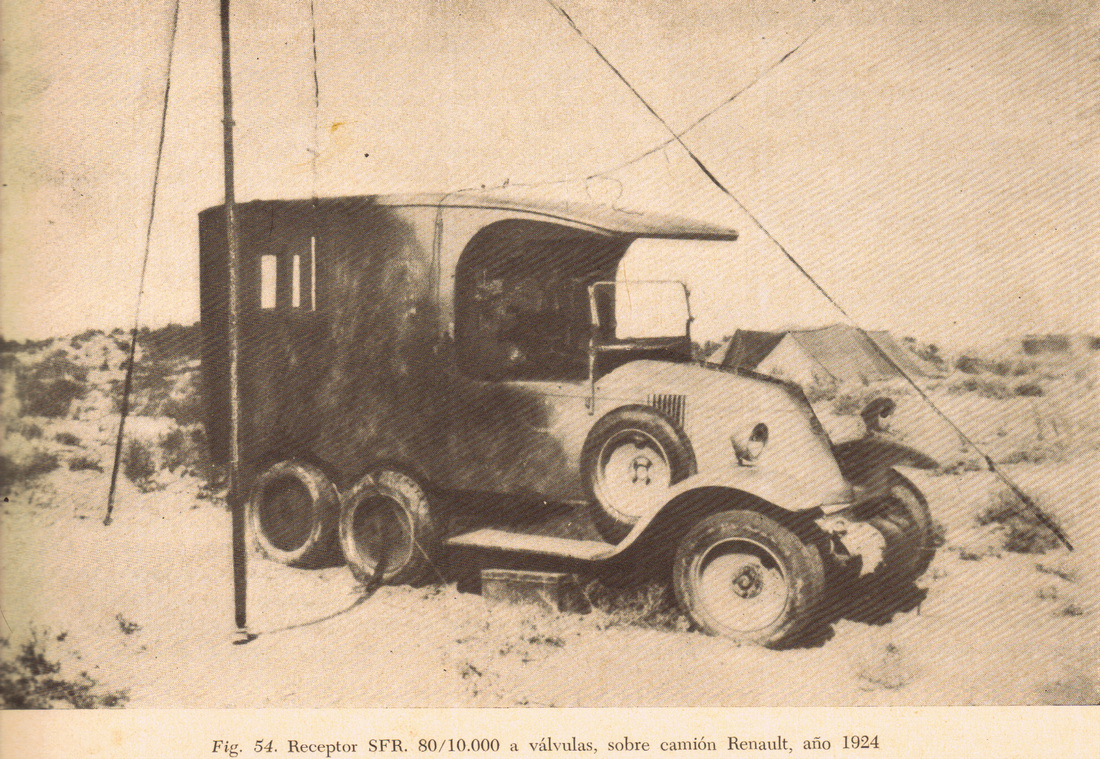
1924. SFR Receiver 80/10,000 valves on Renault 10cv truck.
The SFR Receiver 80/10,000 used between three and seven valves (vacuum tubes), consistent with sophisticated radio receivers of the 1920s. The exact number of valves would depend on the specific version and configuration of the receiver, which was produced by the French company Société Française Radioélectrique (SFR). Receivers of this era often used triode valves such as the UV-200 or similar models
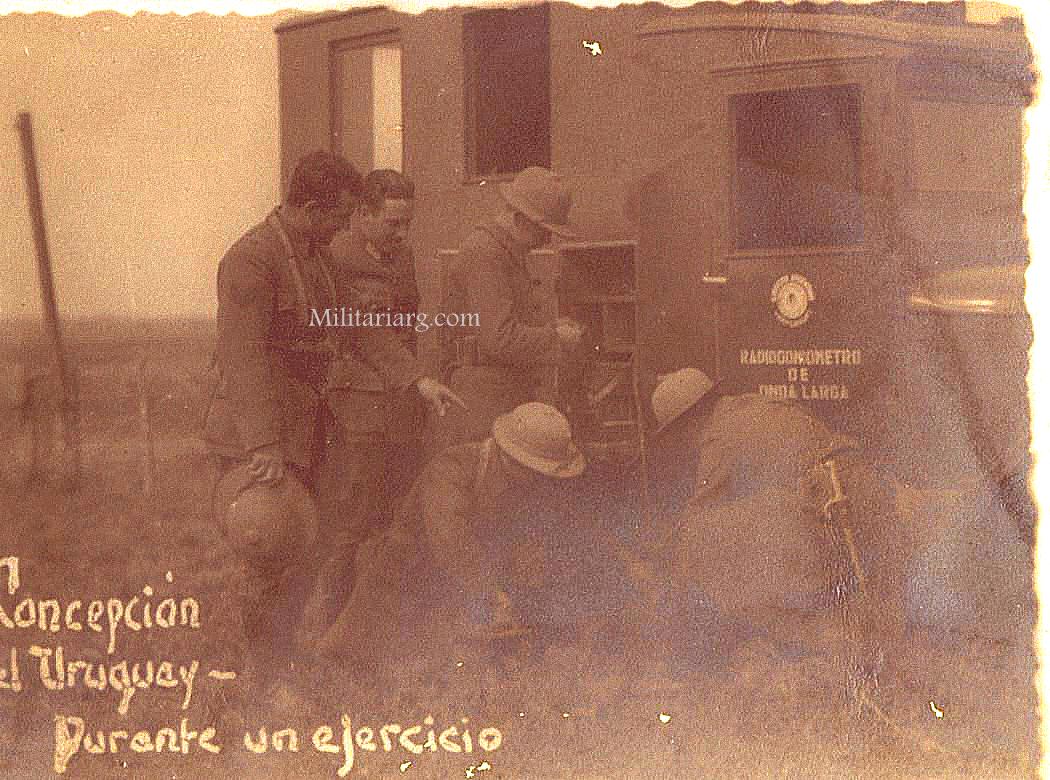
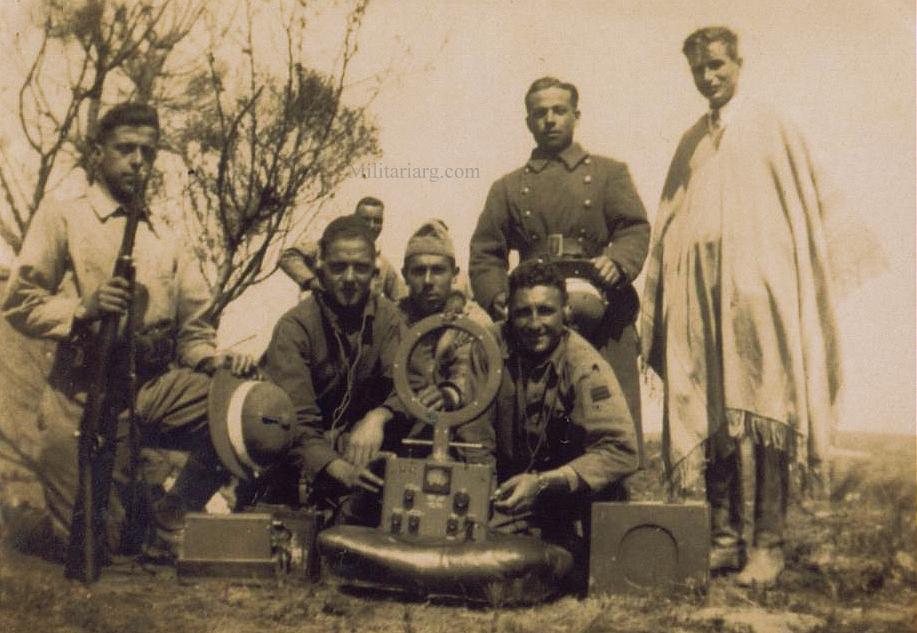
Radio direction finder or Radio Goniometro
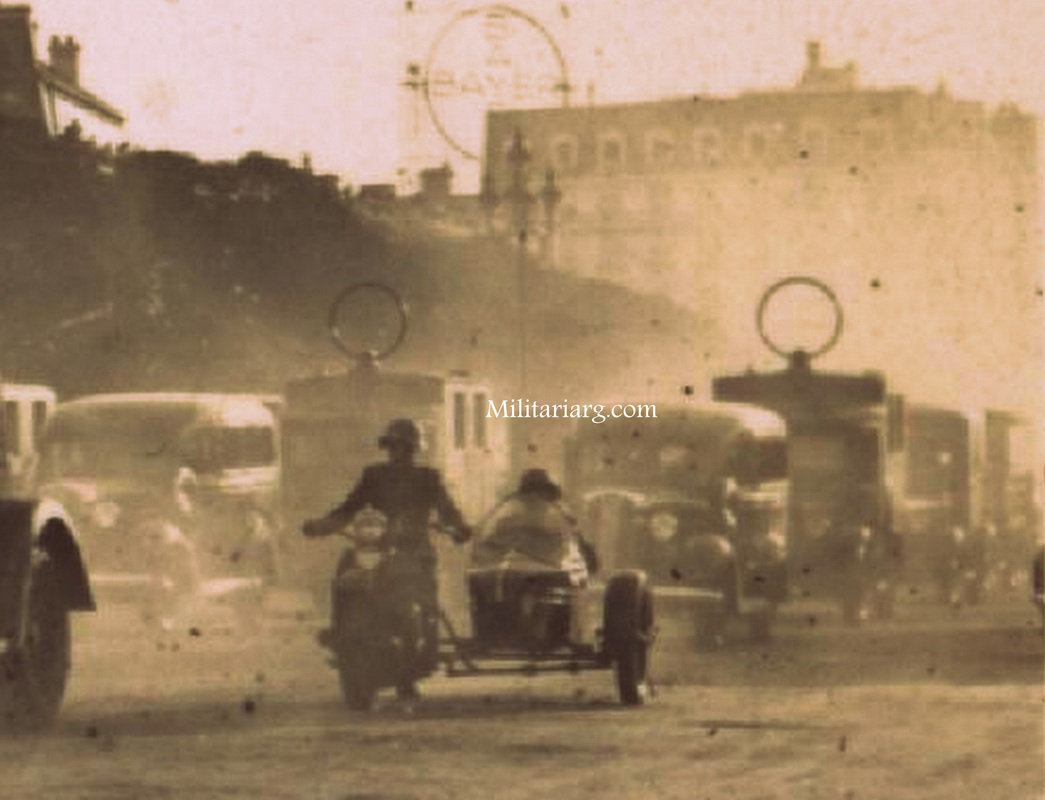
1939, it shows a loop-type, manually directional antenna, which is a kind of folded dipole or halo.
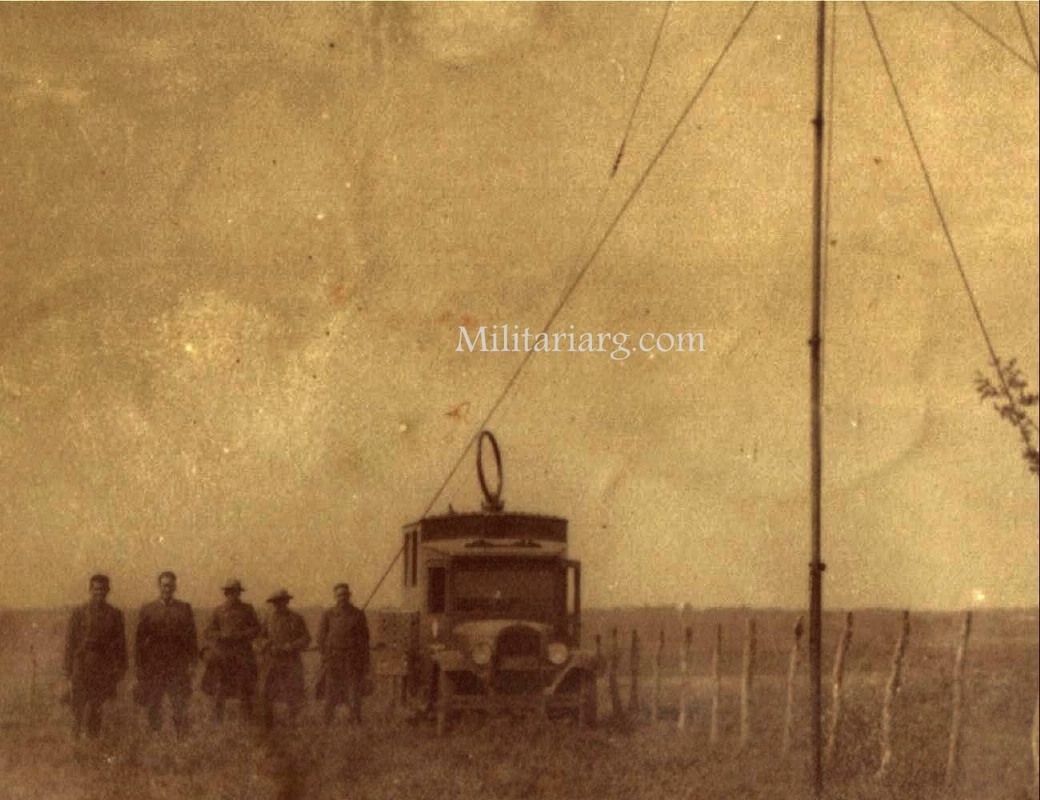
In the 1930s, the Argentine Army utilized specialized radio direction finders (RDF), also known as radiogoniómetros, mounted on mobile radio stations to locate clandestine or enemy transmissions.
A prominent piece of technology used during this era was the Telefunken P57N Short Wave Radiogoniometro. While based on German designs, there is evidence that the Argentine military produced their own local versions of this equipment.
Antenna Design.These units were characterized by a visible loop-type, manually directional antenna mounted on the roof of a vehicle. This circular loop acted as a rotatable aerial used to determine the direction of a radio signal by finding the point where the signal intensity was strongest or sharply nullified.
Mobile Platforms.These RDF sets were typically installed in the rear compartments of specialized communications trucks, such as those provided by Telefunken or adapted from other tactical vehicle chassis.
These stations were critical for signals intelligence, allowing the Argentine Signal Corps to triangulate the position of transmitters in the field.
The provided image shows a military convoy featuring these loop antennas prominently on the roofs of the communication trucks, likely during a parade or field maneuver in the late 1930s
In the 1930s, the Argentine Army utilized specialized radio direction finders (RDF), also known as radiogoniómetros, mounted on mobile radio stations to locate clandestine or enemy transmissions.
A prominent piece of technology used during this era was the Telefunken P57N Short Wave Radiogoniometro. While based on German designs, there is evidence that the Argentine military produced their own local versions of this equipment.
Antenna Design.These units were characterized by a visible loop-type, manually directional antenna mounted on the roof of a vehicle. This circular loop acted as a rotatable aerial used to determine the direction of a radio signal by finding the point where the signal intensity was strongest or sharply nullified.
Mobile Platforms.These RDF sets were typically installed in the rear compartments of specialized communications trucks, such as those provided by Telefunken or adapted from other tactical vehicle chassis.
These stations were critical for signals intelligence, allowing the Argentine Signal Corps to triangulate the position of transmitters in the field.
The provided image shows a military convoy featuring these loop antennas prominently on the roofs of the communication trucks, likely during a parade or field maneuver in the late 1930s
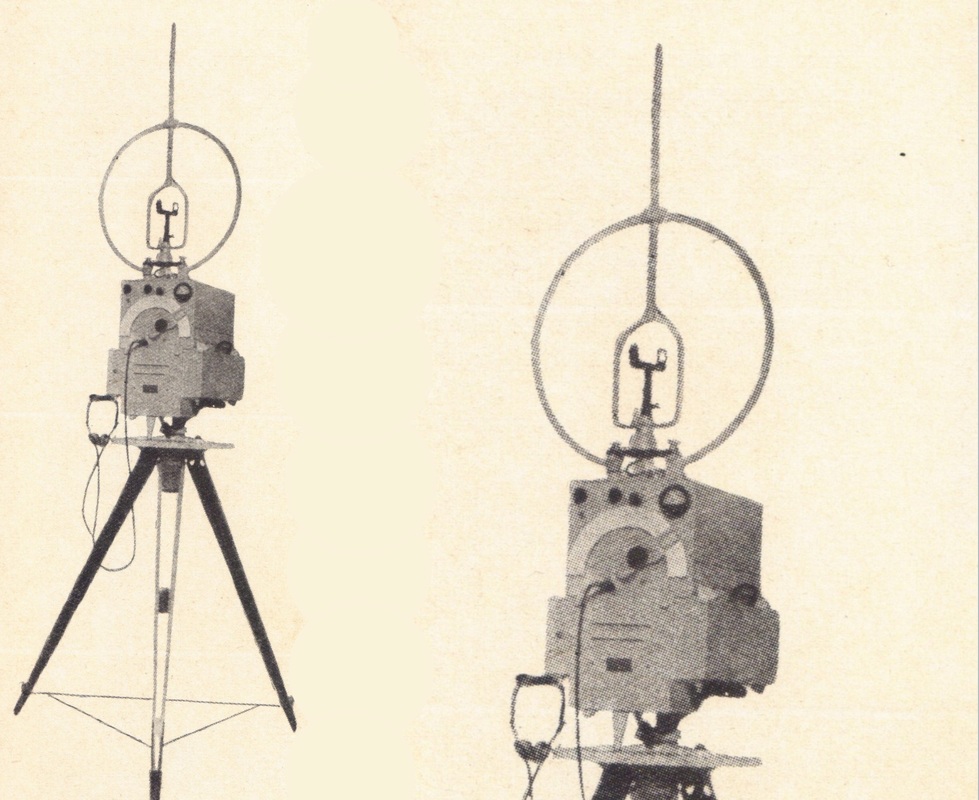
Short Wave Radiogoniometro Type Telefunken P57N .
The Short Wave Radiogoniometro Type Telefunken P57N
was a portable, high-frequency (HF) radio direction finder developed by Telefunken in Berlin during the 1930s for the German police (Reichspolizei) and later used by militaries like the Swiss Army.
The P57N was designed for the precise localization of shortwave radio transmitters, a crucial task for intelligence gathering and security operations during the pre-WWII and Cold War eras.
Principle: It operated as a single-conversion superheterodyne receiver with an intermediate frequency (IF) of 970 kHz.
Frequency Range: The device covered a frequency range of 3 to 20 MHz, utilizing three different plug-in coil sets to switch between ranges (3-6 MHz, 6-12 MHz, and 12-20 MHz).
Antenna System: It employed a loop-type directional antenna, which was typically mounted on a tripod for stability and manually rotated to find the direction of the radio signal's source. The operator would listen for a null (the weakest signal point) to determine the bearing to the transmitter.
Operation Modes: It supported A1 (Morse code with beat frequency oscillator), A2, and AM (A3) operation modes.
Portability: The entire system, including the receiver, coil inserts, and two wooden tripods (one for the DF unit, one for a compass), was housed in a large transit case, making it transportable though heavy (the case alone weighed 76.5 kg).
Power Supply: It was powered by a 4.8 V NiFe accumulator for the heaters and a 150 V plate battery.
Military and Investigative Use
The P57N was a key component of early signals intelligence (SIGINT) operations. By taking bearings from two or more P57N locations, operators could use triangulation to determine the precise location of an unknown or clandestine (spy) radio station. The Swiss Army acquired 26 such systems, which were manufactured under license by Telefunken Zürich - Albiswerk from 1935 to 1942.
The Short Wave Radiogoniometro Type Telefunken P57N
was a portable, high-frequency (HF) radio direction finder developed by Telefunken in Berlin during the 1930s for the German police (Reichspolizei) and later used by militaries like the Swiss Army.
The P57N was designed for the precise localization of shortwave radio transmitters, a crucial task for intelligence gathering and security operations during the pre-WWII and Cold War eras.
Principle: It operated as a single-conversion superheterodyne receiver with an intermediate frequency (IF) of 970 kHz.
Frequency Range: The device covered a frequency range of 3 to 20 MHz, utilizing three different plug-in coil sets to switch between ranges (3-6 MHz, 6-12 MHz, and 12-20 MHz).
Antenna System: It employed a loop-type directional antenna, which was typically mounted on a tripod for stability and manually rotated to find the direction of the radio signal's source. The operator would listen for a null (the weakest signal point) to determine the bearing to the transmitter.
Operation Modes: It supported A1 (Morse code with beat frequency oscillator), A2, and AM (A3) operation modes.
Portability: The entire system, including the receiver, coil inserts, and two wooden tripods (one for the DF unit, one for a compass), was housed in a large transit case, making it transportable though heavy (the case alone weighed 76.5 kg).
Power Supply: It was powered by a 4.8 V NiFe accumulator for the heaters and a 150 V plate battery.
Military and Investigative Use
The P57N was a key component of early signals intelligence (SIGINT) operations. By taking bearings from two or more P57N locations, operators could use triangulation to determine the precise location of an unknown or clandestine (spy) radio station. The Swiss Army acquired 26 such systems, which were manufactured under license by Telefunken Zürich - Albiswerk from 1935 to 1942.
Radio direction finder with the antenna type loop. The large loop is the directional antenna, which is rotated to find the bearing of a radio signal.The operator would use the controls on the receiver to tune in a signal and then rotate the loop until the signal disappeared (a "null") to determine the direction of the source
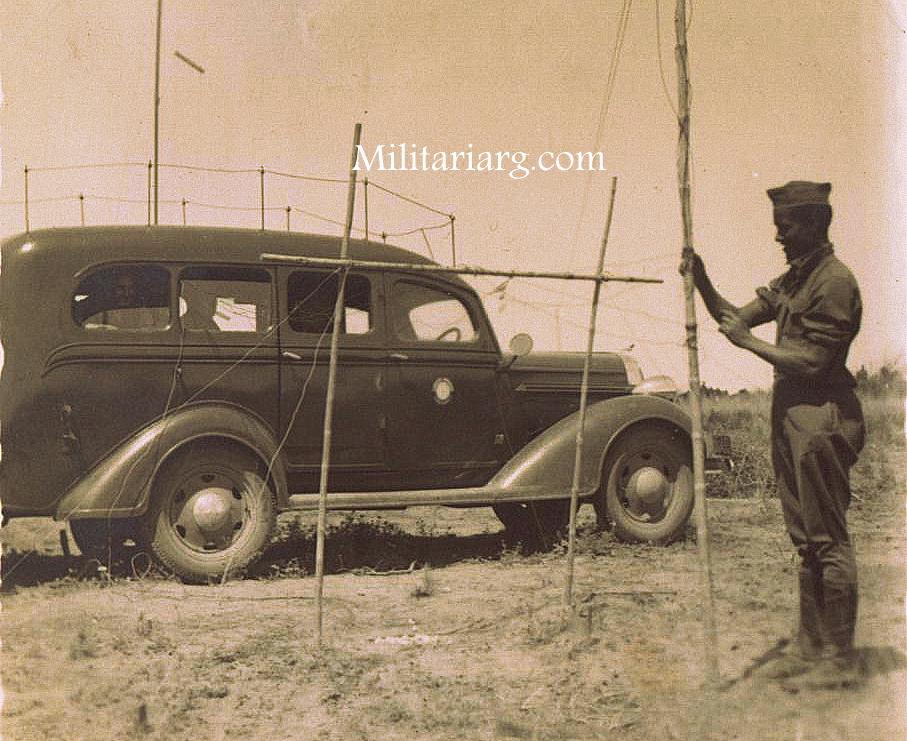
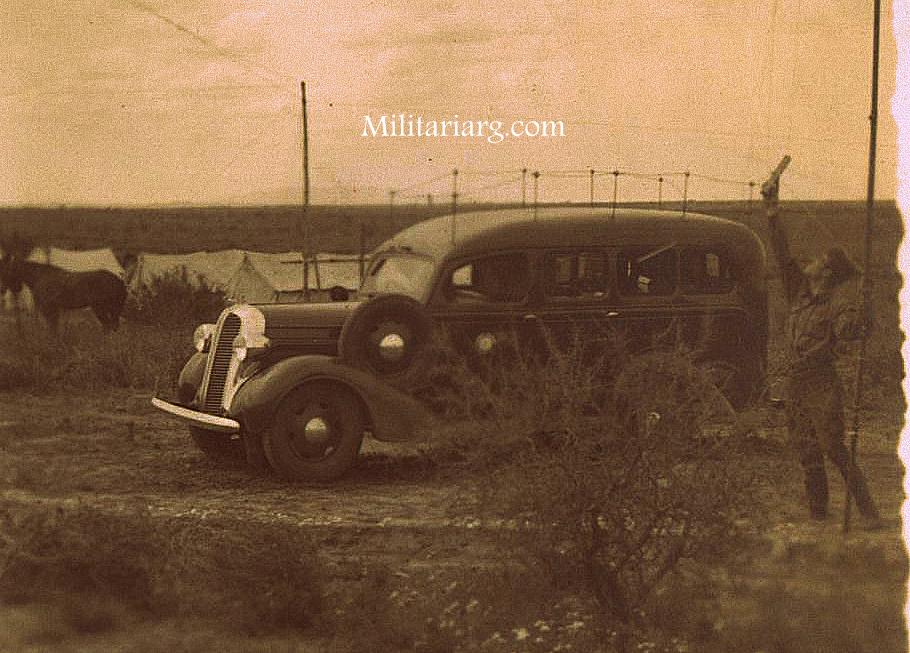
Artillery radio trucks developed from a Dodge commercial station wagon model
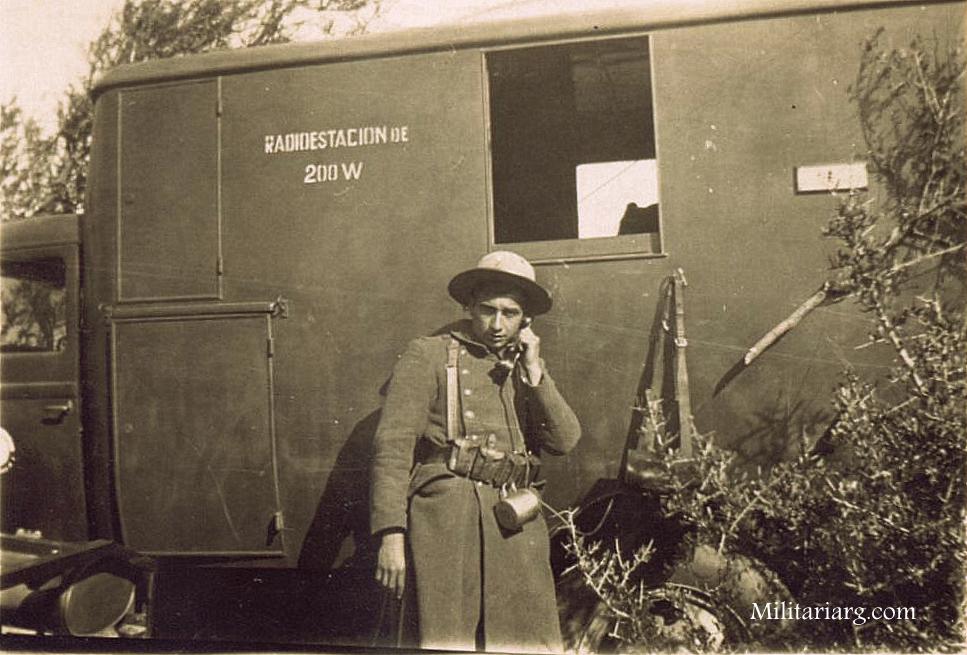
1940s. LIFE photo archive
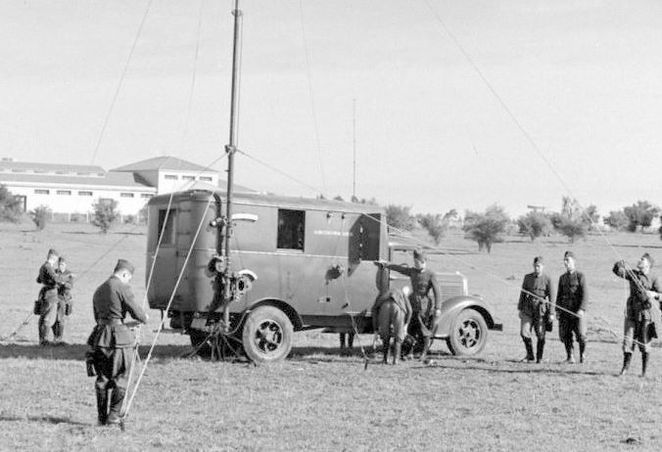
LIFE photo archive
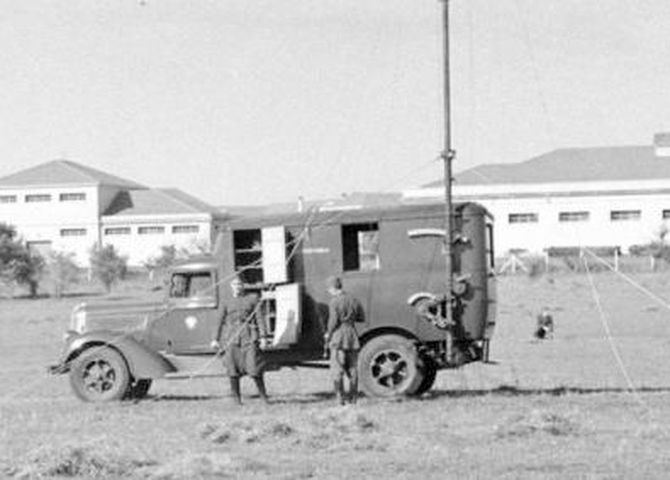
LIFE photo archive
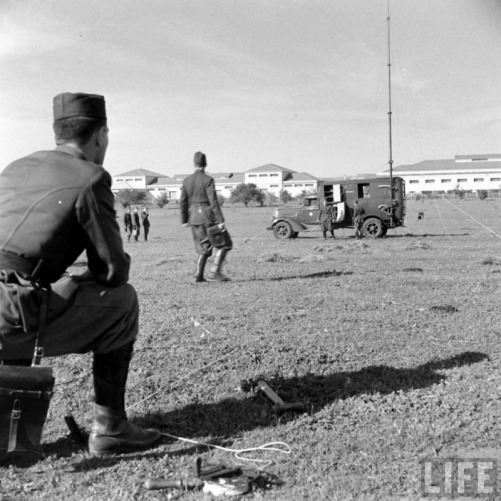
Artillery School, May Field 1945/48
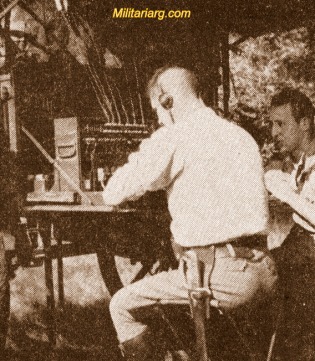
Transmission Line, Antenna.
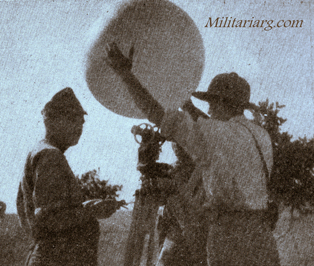
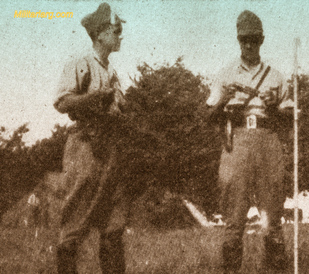
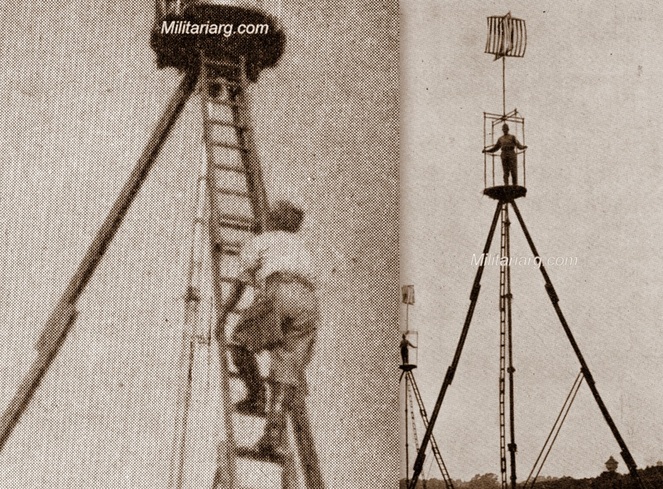
Mobile observation tower, used by the military or similar organizations for observation, signaling, or fire spotting. It is a large, tripod-based structure with an elevated platform.
The primary function of such a tower would be to elevate an observer (seen in the right image) above the terrain to provide an extended field of view, critical for battlefield surveillance, spotting artillery impacts, or detecting wildfires.
The object at the top of the tower on the left and the person on the right appear to be using or positioned near equipment for observation or communication, such as large binoculars or a basic signaling device.
The primary function of such a tower would be to elevate an observer (seen in the right image) above the terrain to provide an extended field of view, critical for battlefield surveillance, spotting artillery impacts, or detecting wildfires.
The object at the top of the tower on the left and the person on the right appear to be using or positioned near equipment for observation or communication, such as large binoculars or a basic signaling device.
Photo LIFE Magazine.
Caras y Caretas 1933.
Air Force Equipment
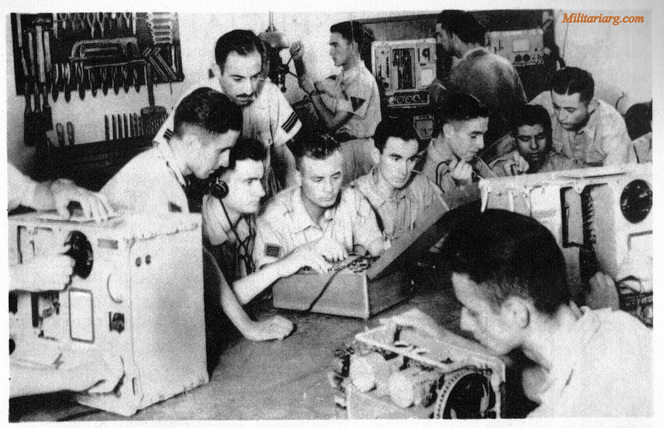
NCOs from the Air Force train with the radio. Practing with FuG V transmitter/receiver radio electronic equpment from the old Ju 52 Junkers. Photo is from "La Aeronautica Nacional al servicio del pais, 1948".
In the 1940s, the Argentine Air Force (FAA) and its predecessors utilized German-designed radio equipment primarily because of the extensive use of aircraft like the Focke-Wulf Fw 44 Stieglitz and Junkers Ju 52, which were equipped with original Luftwaffe-standard communication sets. While the FuG 5 (VHF transceiver) is most famous as the standard radio for German Panzer units, its aeronautical equivalent and related sets were prevalent in Argentine aviation during this era.
Focke-Wulf Fw 44 "Stieglitz".
Argentina produced this trainer under license during the 1940s. These aircraft typically used low-power German radio sets for instructor-to-student or airfield communication.
Junkers Ju 52.
The FAA and the Argentine Navy operated the Ju 52/3m "Tante Ju," a tri-motor transport that originally came equipped with German long-range and short-range radio racks, including the FuG series.
Following WWII, German designer Kurt Tank moved to Argentina to develop the IAe 33 Pulqui II jet. While the project began in the late 1940s, it marked the transition from WWII era German electronics to more modern systems.
In the 1940s, the Argentine Air Force (FAA) and its predecessors utilized German-designed radio equipment primarily because of the extensive use of aircraft like the Focke-Wulf Fw 44 Stieglitz and Junkers Ju 52, which were equipped with original Luftwaffe-standard communication sets. While the FuG 5 (VHF transceiver) is most famous as the standard radio for German Panzer units, its aeronautical equivalent and related sets were prevalent in Argentine aviation during this era.
Focke-Wulf Fw 44 "Stieglitz".
Argentina produced this trainer under license during the 1940s. These aircraft typically used low-power German radio sets for instructor-to-student or airfield communication.
Junkers Ju 52.
The FAA and the Argentine Navy operated the Ju 52/3m "Tante Ju," a tri-motor transport that originally came equipped with German long-range and short-range radio racks, including the FuG series.
Following WWII, German designer Kurt Tank moved to Argentina to develop the IAe 33 Pulqui II jet. While the project began in the late 1940s, it marked the transition from WWII era German electronics to more modern systems.
Soldados 1848-1927/Editorial Fundacion Soldados
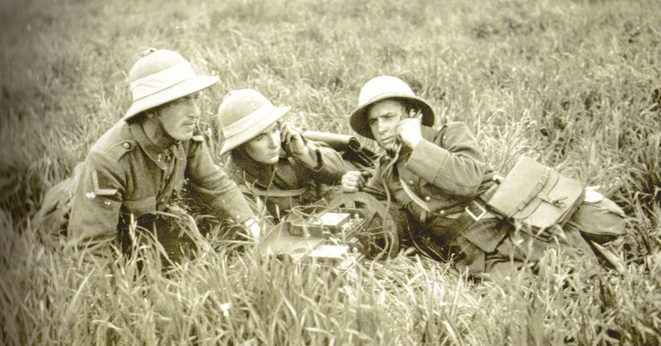
Telefunken 75v.
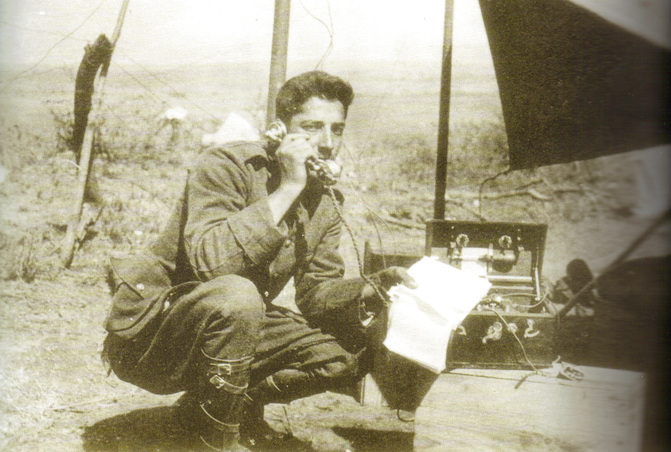
Communication Equipment Made in Argentina or Used by Argentina.
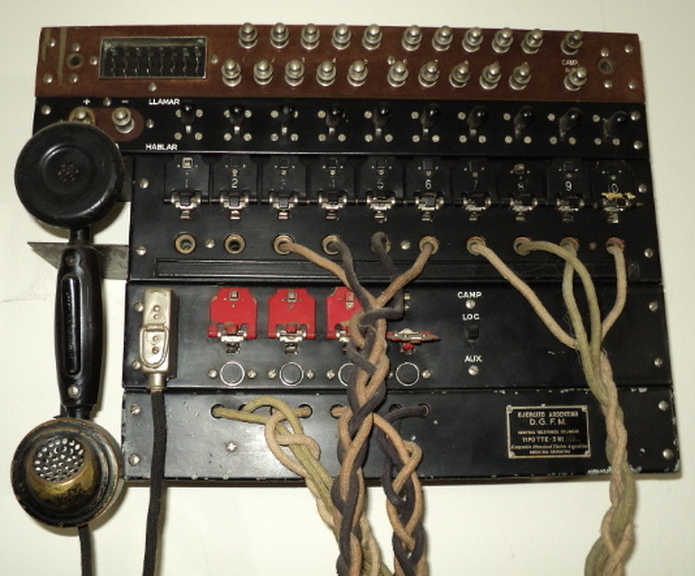
D.G.F.M TTE-5 Central/10 lines.
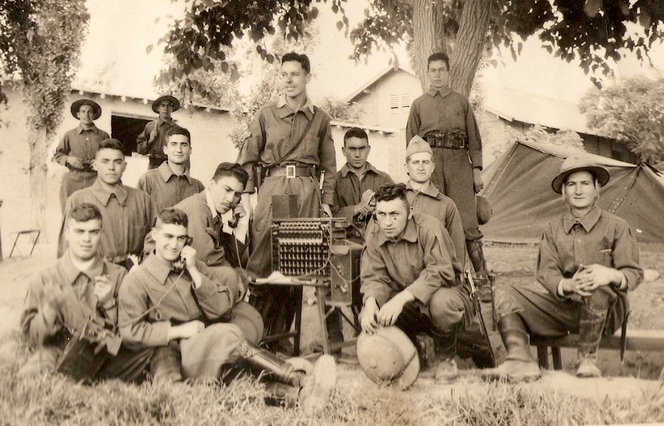
The DGFM TTE-5 Central/10 lines is an Argentine-produced field telephone switchboard used by the Argentine military. It was manufactured by the Dirección General de Fabricaciones Militares (DGFM).
Overview and Function
The TTE-5 Central/10 lines served as a portable, manual switchboard for establishing a local field telephone network.
It was designed to connect up to 10 field telephones (lines) to create a secure, local communication network within a military command post, forward operating base, or field position.
Incoming calls would activate a ringer unit, and the operator would use cords and plugs to physically connect the callers, similar to historical manual switchboards. The remote field phones would use a hand crank to generate a signal for ringing the central unit.
Relation to Other Equipment
The TTE-5 Central/10 lines was part of a broader family of Argentine communication equipment.It typically operated with the DGFM Type T.T.A, Mod 5 field telephone, which itself was an Argentine-made version of the classic U.S. Army EE-8 field telephone.
System Integration. It was one component in the Argentine military's signal corps inventory, which also included British Wireless Set No. 19 variants and U.S. radios like the RT-196/PRC-6.
Overview and Function
The TTE-5 Central/10 lines served as a portable, manual switchboard for establishing a local field telephone network.
It was designed to connect up to 10 field telephones (lines) to create a secure, local communication network within a military command post, forward operating base, or field position.
Incoming calls would activate a ringer unit, and the operator would use cords and plugs to physically connect the callers, similar to historical manual switchboards. The remote field phones would use a hand crank to generate a signal for ringing the central unit.
Relation to Other Equipment
The TTE-5 Central/10 lines was part of a broader family of Argentine communication equipment.It typically operated with the DGFM Type T.T.A, Mod 5 field telephone, which itself was an Argentine-made version of the classic U.S. Army EE-8 field telephone.
System Integration. It was one component in the Argentine military's signal corps inventory, which also included British Wireless Set No. 19 variants and U.S. radios like the RT-196/PRC-6.
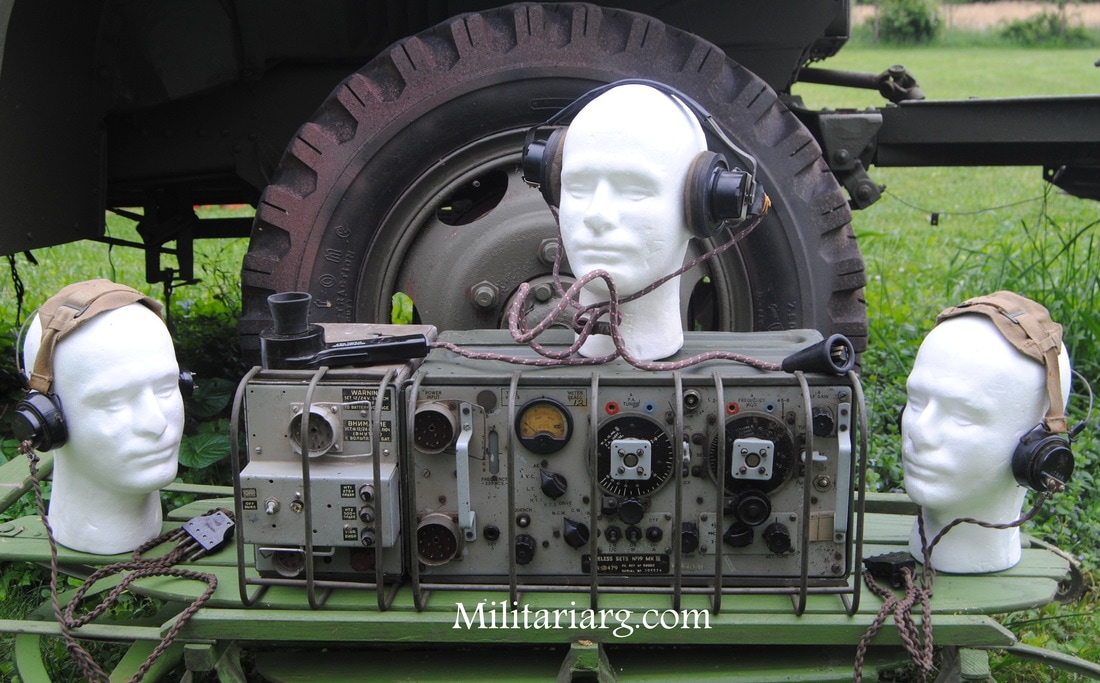
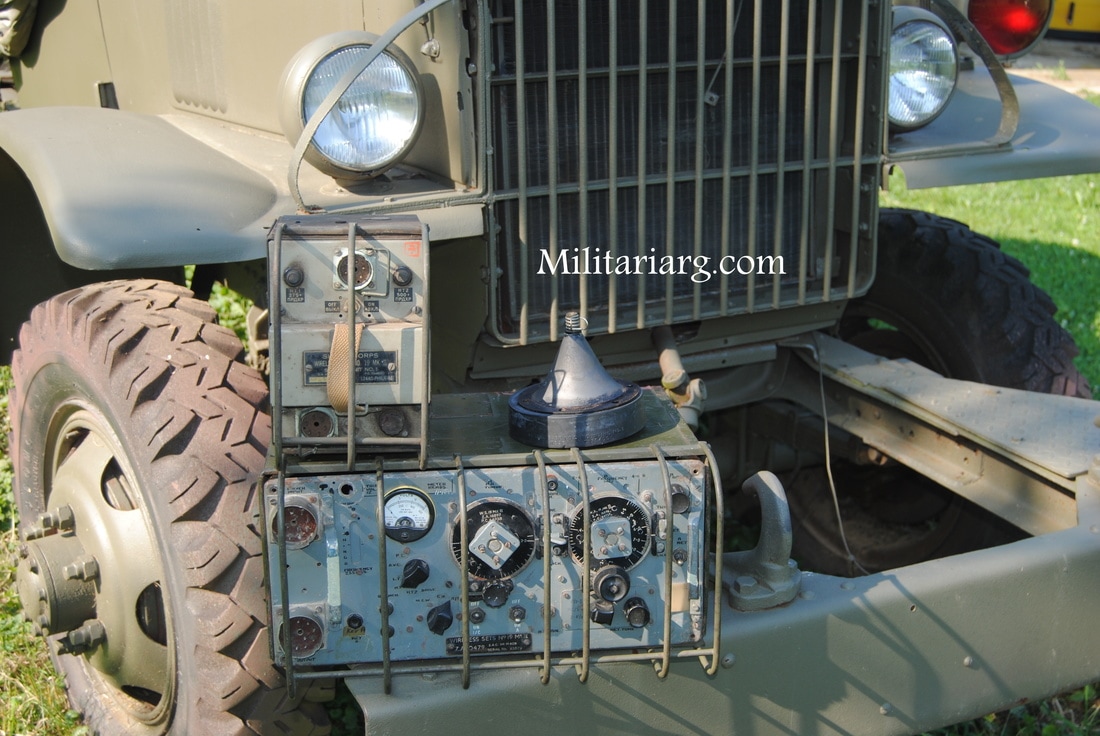
The Wireless Set No. 19 Mark III (WS-19 MkIII) was an iconic British-designed, widely produced mobile radio transceiver used by the Allied forces during World War II, primarily in armoured fighting vehicles (AFVs) such as tanks and command cars.
The WS-19 MkIII was a single unit containing three distinct communication systems:
A Set (HF): A high-frequency (HF) transceiver providing longer-range communication (up to 50 miles) within a squadron or regiment. It operated in two switchable frequency ranges from 2 to 8 MHz and supported amplitude modulation (AM) for speech and continuous wave (CW) or modulated continuous wave (MCW) for Morse code.
B Set (VHF): A very high-frequency (VHF) transceiver for short-range, line-of-sight communication (up to about 1 mile) between tanks in a troop. This section operated in the 229-241 MHz range and was often removed in post-war overhauls due to unreliability in field use.
Intercom (IC): An audio amplifier providing internal communication between the crew members inside the noisy vehicle.
The WS-19 MkIII was a single unit containing three distinct communication systems:
A Set (HF): A high-frequency (HF) transceiver providing longer-range communication (up to 50 miles) within a squadron or regiment. It operated in two switchable frequency ranges from 2 to 8 MHz and supported amplitude modulation (AM) for speech and continuous wave (CW) or modulated continuous wave (MCW) for Morse code.
B Set (VHF): A very high-frequency (VHF) transceiver for short-range, line-of-sight communication (up to about 1 mile) between tanks in a troop. This section operated in the 229-241 MHz range and was often removed in post-war overhauls due to unreliability in field use.
Intercom (IC): An audio amplifier providing internal communication between the crew members inside the noisy vehicle.
WS-19 MKII and Aerial base No 8 f/ British M4 Sherman Tank, Soviet T-34 and DL43 Nahuel.
Also this equipment was used as a standard communication system in the Argentine Nahuel DL-43 tank, though primarily as a post-war upgrade.
Original Equipment (1944): The initial 12 units produced between 1943 and 1944 were equipped with a domestic Argentine radio called the TRC-1. This unit was based on the German Telefunken 5WS transmitter and Torn Eb receiver, reflecting Argentina’s developed local electronics industry at the time.
Post-War Upgrade (1947). During an overhaul of all surviving Nahuel tanks in 1947, the TRC-1 sets were replaced with the more modern British WS-19. This upgrade was part of a broader modernization that also included new crew hatches, tool storage, and machine gun configurations.
Capabilities of the WS19 in the Tank
The Wireless Set No. 19 was a "three-in-one" system specifically designed for armored vehicles:
"A" Set: A high-frequency (HF) transceiver for long-range communication between the tank and its squadron or regimental headquarters.
"B" Set: A very-high-frequency (VHF) short-range radio for communication between individual tanks in a small group or troop (up to approximately 1,000 yards).
Intercommunication (IC): An internal audio system that allowed the five-man Nahuel crew (commander, gunner, loader, driver, and hull gunner) to talk to one another over the engine noise.
The adoption of the WS19 on the Nahuel coincided with Argentina's massive acquisition of surplus British Sherman and Firefly tanks in the late 1940s, which shared the same radio equipment and eventually rendered the indigenous Nahuel project redundant.
The Wireless Set No. 19 (WS19 Canadian made) also was used on the Soviet T-34 tank during World War II as part of the Lend-Lease program. These were manufactured primarily by Northern Electric and Canadian Marconi in Montreal. Under the Mutual Aid program (Canada's version of Lend-Lease), thousands were shipped directly to the USSR.
While early T-34 models suffered from a severe lack of radios, the Soviet Union imported thousands of WS19 units to equip their armored forces.
Also this equipment was used as a standard communication system in the Argentine Nahuel DL-43 tank, though primarily as a post-war upgrade.
Original Equipment (1944): The initial 12 units produced between 1943 and 1944 were equipped with a domestic Argentine radio called the TRC-1. This unit was based on the German Telefunken 5WS transmitter and Torn Eb receiver, reflecting Argentina’s developed local electronics industry at the time.
Post-War Upgrade (1947). During an overhaul of all surviving Nahuel tanks in 1947, the TRC-1 sets were replaced with the more modern British WS-19. This upgrade was part of a broader modernization that also included new crew hatches, tool storage, and machine gun configurations.
Capabilities of the WS19 in the Tank
The Wireless Set No. 19 was a "three-in-one" system specifically designed for armored vehicles:
"A" Set: A high-frequency (HF) transceiver for long-range communication between the tank and its squadron or regimental headquarters.
"B" Set: A very-high-frequency (VHF) short-range radio for communication between individual tanks in a small group or troop (up to approximately 1,000 yards).
Intercommunication (IC): An internal audio system that allowed the five-man Nahuel crew (commander, gunner, loader, driver, and hull gunner) to talk to one another over the engine noise.
The adoption of the WS19 on the Nahuel coincided with Argentina's massive acquisition of surplus British Sherman and Firefly tanks in the late 1940s, which shared the same radio equipment and eventually rendered the indigenous Nahuel project redundant.
The Wireless Set No. 19 (WS19 Canadian made) also was used on the Soviet T-34 tank during World War II as part of the Lend-Lease program. These were manufactured primarily by Northern Electric and Canadian Marconi in Montreal. Under the Mutual Aid program (Canada's version of Lend-Lease), thousands were shipped directly to the USSR.
While early T-34 models suffered from a severe lack of radios, the Soviet Union imported thousands of WS19 units to equip their armored forces.
WALKIE TALKIE RT-196/PRC-6 (portable radio transceiver) that was developed by Raytheon following World War II and used extensively during the Korean War era and through the Vietnam War.
The AN/PRC-6 was a significant technological advance over its amplitude modulation (AM) predecessor, the SCR-536, by utilizing the superior VHF/FM mode for tactical communications. It was a standard issue to U.S. forces and used extensively in conflicts from the Korean War through the Vietnam War. Due to its prevalence and robust design, it was also used by many NATO nations and manufactured under license in countries like France and Germany.
Today, these radios are popular collector's items and are sometimes modified by amateur radio enthusiasts to operate on the 6-meter amateur band, often using modern custom power supplies due to the unavailability of the original batteries.
The AN/PRC-6 was a significant technological advance over its amplitude modulation (AM) predecessor, the SCR-536, by utilizing the superior VHF/FM mode for tactical communications. It was a standard issue to U.S. forces and used extensively in conflicts from the Korean War through the Vietnam War. Due to its prevalence and robust design, it was also used by many NATO nations and manufactured under license in countries like France and Germany.
Today, these radios are popular collector's items and are sometimes modified by amateur radio enthusiasts to operate on the 6-meter amateur band, often using modern custom power supplies due to the unavailability of the original batteries.
PRC - 3000
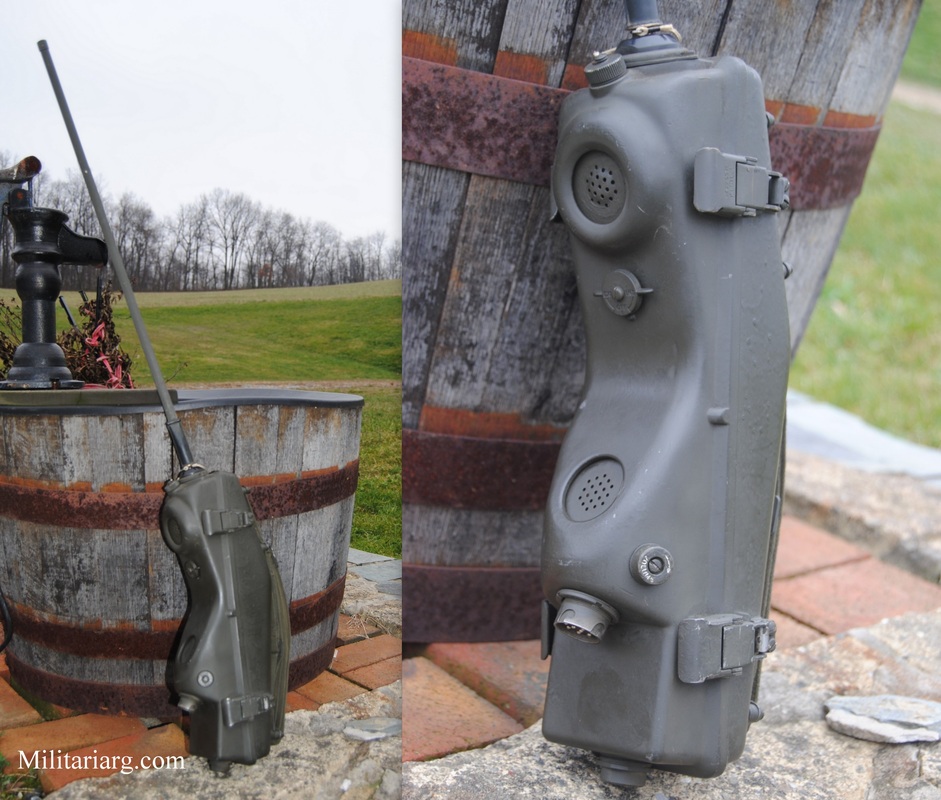
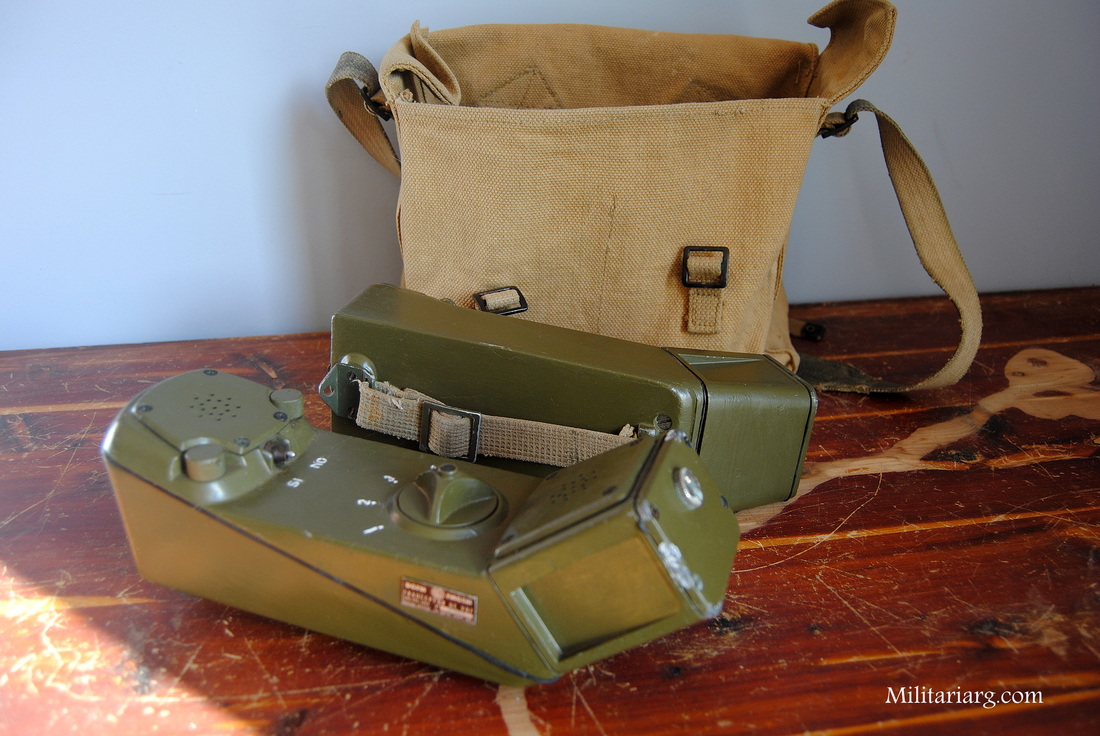
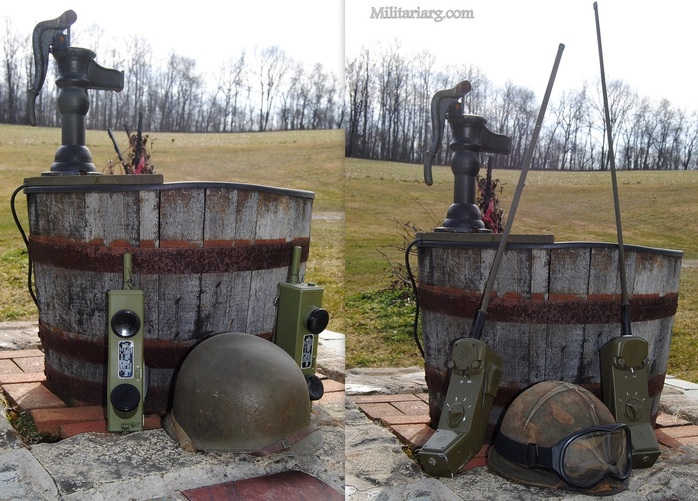
This radio was brought from England. They came in a P37 bag. It may have been captured from battle and taken back as a souvenir. They were made in the mid-1970s to be used for fewer troops. Their reach is 3km.
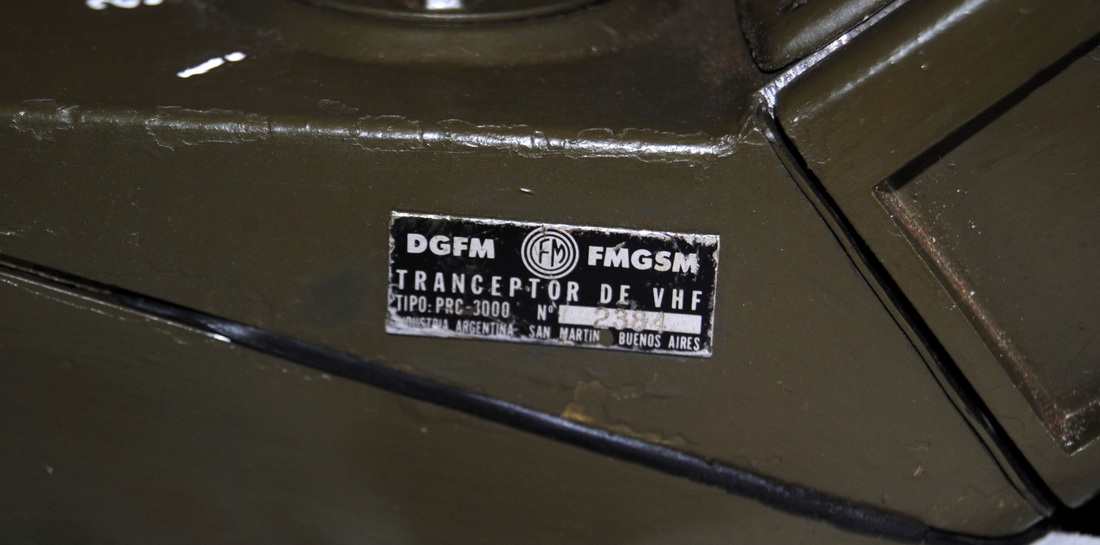
The PRC-3000 was a hand-held military radio that was used by the Argentine Army and produced in Argentina by DGFM San Martin. It was developed in the mid-1970s and used in conflicts like the Falklands War (Malvinas).
General Information
The PRC-3000 was a Dutch-designed radio, but production included a version manufactured in Argentina with "IND ARGENTINA" stamped inside its battery housing. It was a common piece of equipment for the Argentine Army.
It was a portable, hand-held VHF radio designed for personal communication among a smaller number of troops.
The estimated operational range was approximately 3 km.
General Information
The PRC-3000 was a Dutch-designed radio, but production included a version manufactured in Argentina with "IND ARGENTINA" stamped inside its battery housing. It was a common piece of equipment for the Argentine Army.
It was a portable, hand-held VHF radio designed for personal communication among a smaller number of troops.
The estimated operational range was approximately 3 km.
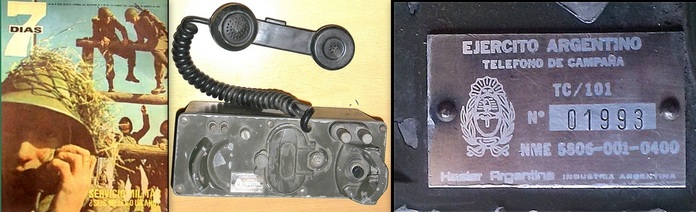
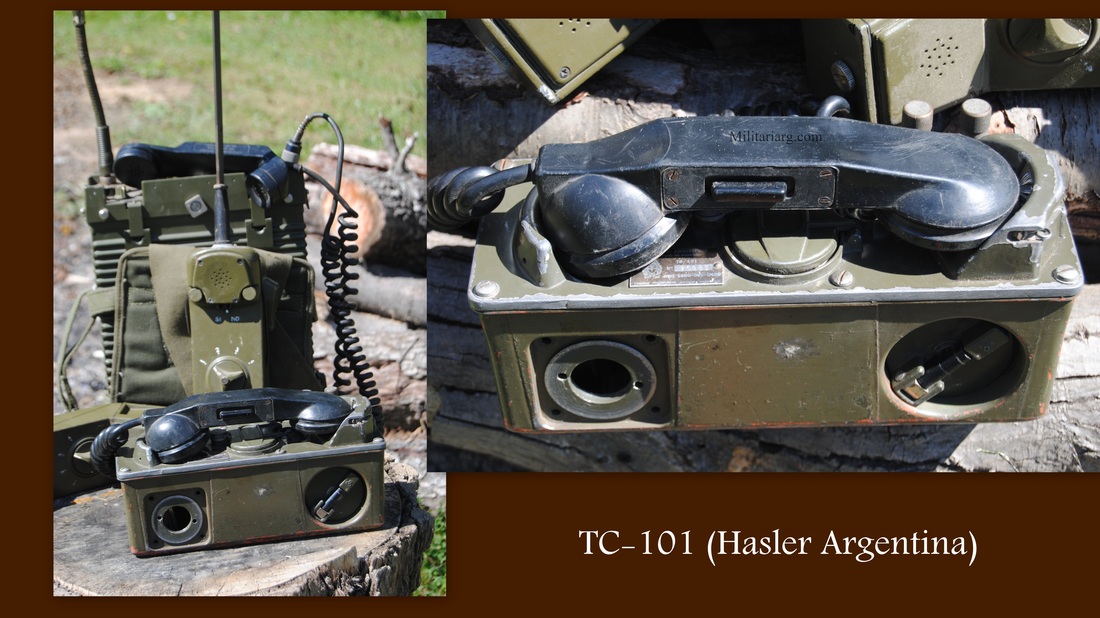
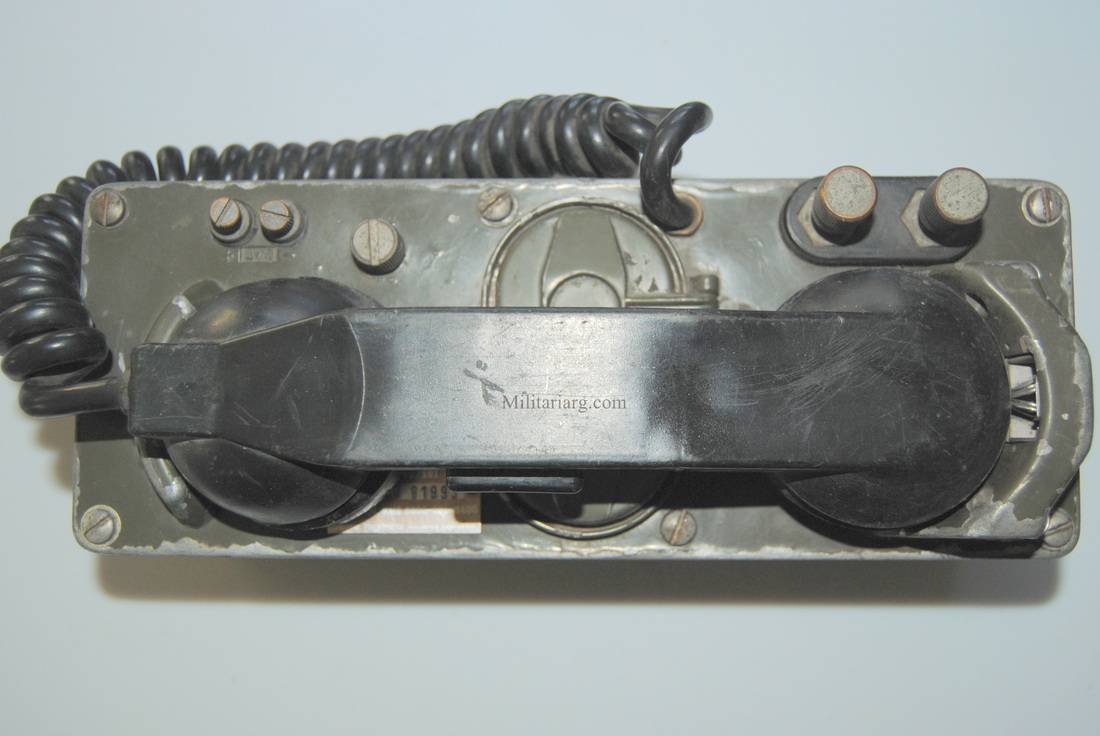
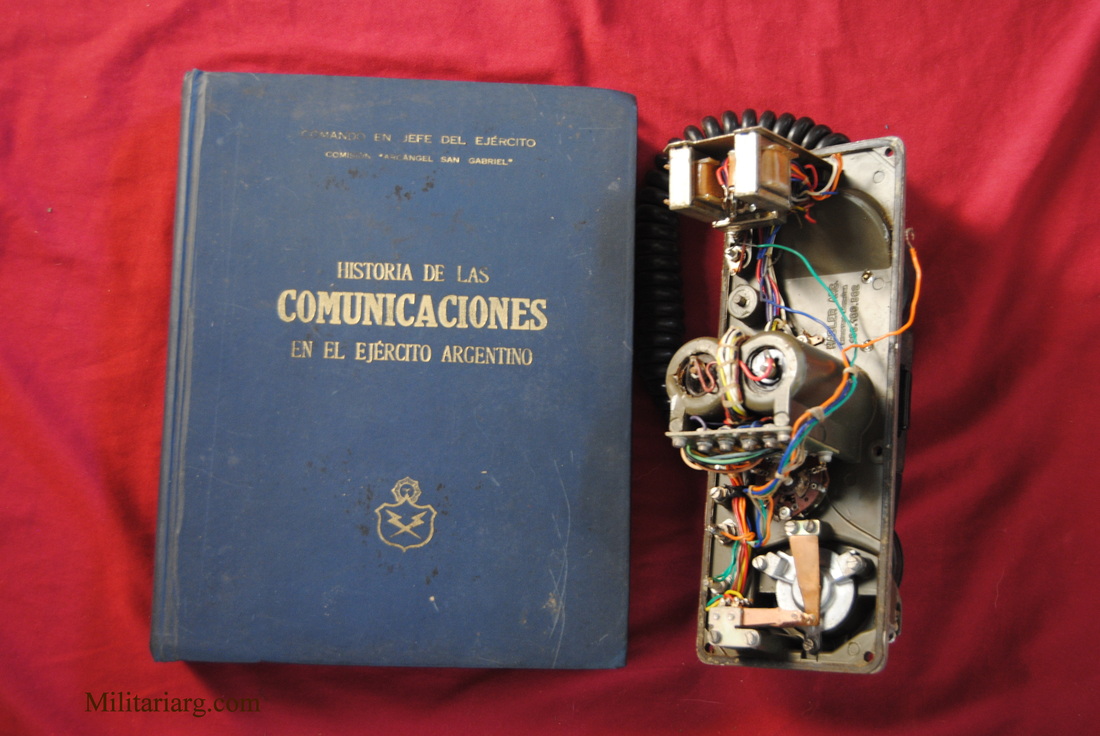
TELEFONO DE CAMPAÑA TC 101. TC-101 Field Telephone.
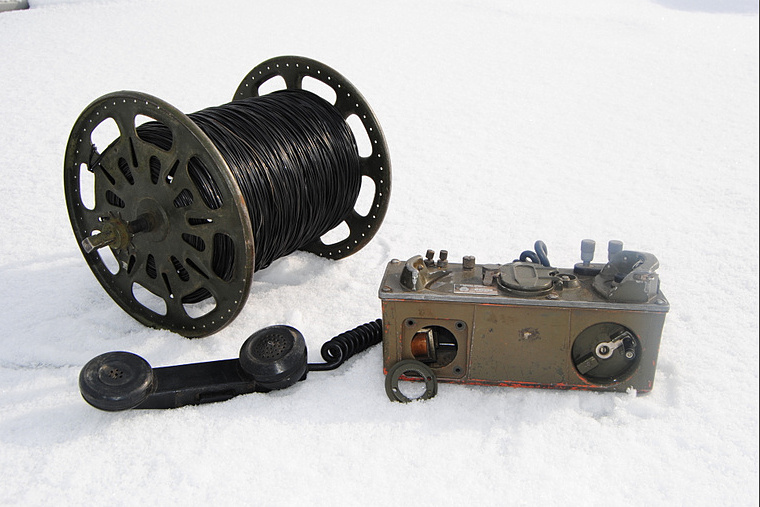
The TC-101 is a portable field telephone manufactured in Argentina and used extensively by the Argentine Army (Ejército Argentino), most notably during the Falklands War (Malvinas) in 1982. The TC-101 was only as good as the copper wire connecting it, which created significant tactical challenges for the Argentine Signal Corps (Compañía de Comunicaciones) during operations.
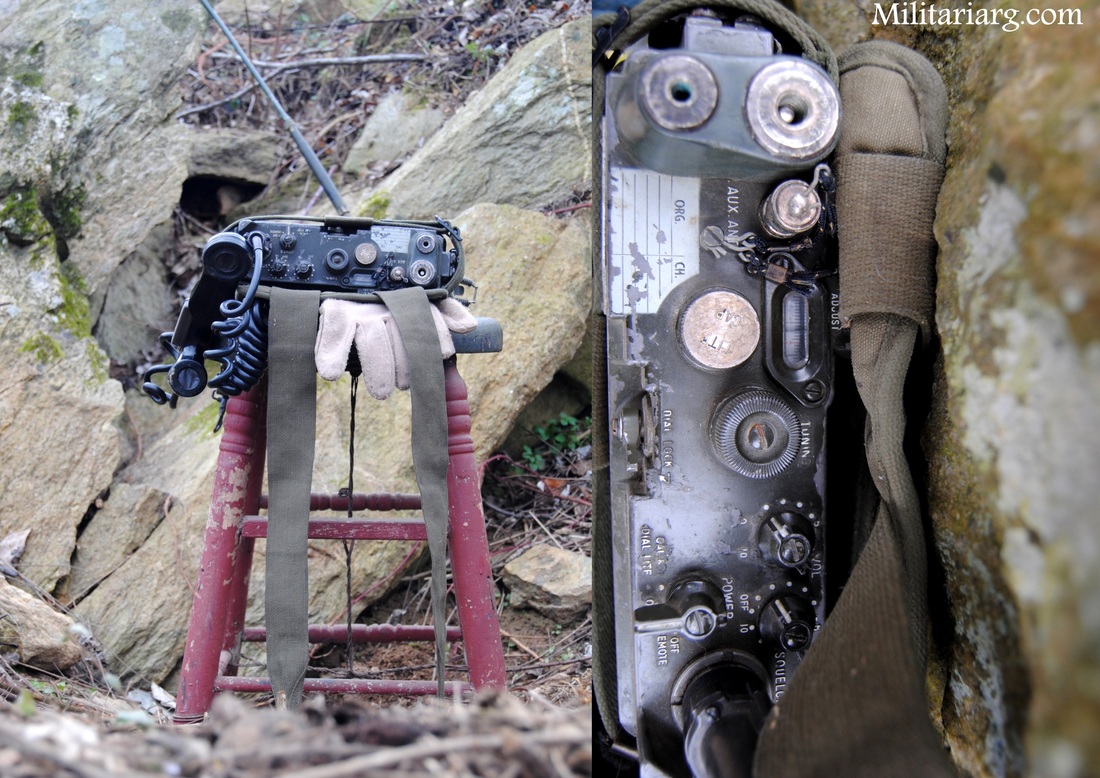
AN-PRC-10
The AN/PRC-10 was a U.S. military portable, FM voice-only "manpack" radio introduced in 1951, primarily used as a squad radio for infantry command and control during the Korean War and early Vietnam War.
Key Features and Specifications
The AN/PRC-10 operates in the VHF band from 38.0 to 54.9 MHz and is continuously tunable via a single dial. It uses Frequency Modulation (FM) voice transmission.
The circuitry uses 16 miniature vacuum tubes, making it a "tube" radio that was later replaced by the solid-state AN/PRC-25.
The transmitter power output is approximately 0.9 watts.The planning range for communication is about 5 miles, though this can vary from 3 to 12 miles depending on terrain and the type of antenna used (either a 3-foot short or 10-foot long antenna). It is powered by a specialized BA-279/U dry battery, which supplied multiple voltages (1.5V, 6V, 67.5V, and 135V). An amplifier-power supply (AM-598/U) was available for vehicle installation.
The total weight, including the battery and carrying harness, is approximately twelve kilograms on the back.
Historical Context
The AN/PRC-10 was part of a family of three related radios that shared an identical design but covered different frequency bands:
AN/PRC-8: Used by armored units (20.0 to 27.9 MHz).
AN/PRC-9: Used by artillery units (27.0 to 38.9 MHz).
AN/PRC-10: Used by infantry units (38.0 to 54.9 MHz).
The AN/PRC-10 was a U.S. military portable, FM voice-only "manpack" radio introduced in 1951, primarily used as a squad radio for infantry command and control during the Korean War and early Vietnam War.
Key Features and Specifications
The AN/PRC-10 operates in the VHF band from 38.0 to 54.9 MHz and is continuously tunable via a single dial. It uses Frequency Modulation (FM) voice transmission.
The circuitry uses 16 miniature vacuum tubes, making it a "tube" radio that was later replaced by the solid-state AN/PRC-25.
The transmitter power output is approximately 0.9 watts.The planning range for communication is about 5 miles, though this can vary from 3 to 12 miles depending on terrain and the type of antenna used (either a 3-foot short or 10-foot long antenna). It is powered by a specialized BA-279/U dry battery, which supplied multiple voltages (1.5V, 6V, 67.5V, and 135V). An amplifier-power supply (AM-598/U) was available for vehicle installation.
The total weight, including the battery and carrying harness, is approximately twelve kilograms on the back.
Historical Context
The AN/PRC-10 was part of a family of three related radios that shared an identical design but covered different frequency bands:
AN/PRC-8: Used by armored units (20.0 to 27.9 MHz).
AN/PRC-9: Used by artillery units (27.0 to 38.9 MHz).
AN/PRC-10: Used by infantry units (38.0 to 54.9 MHz).
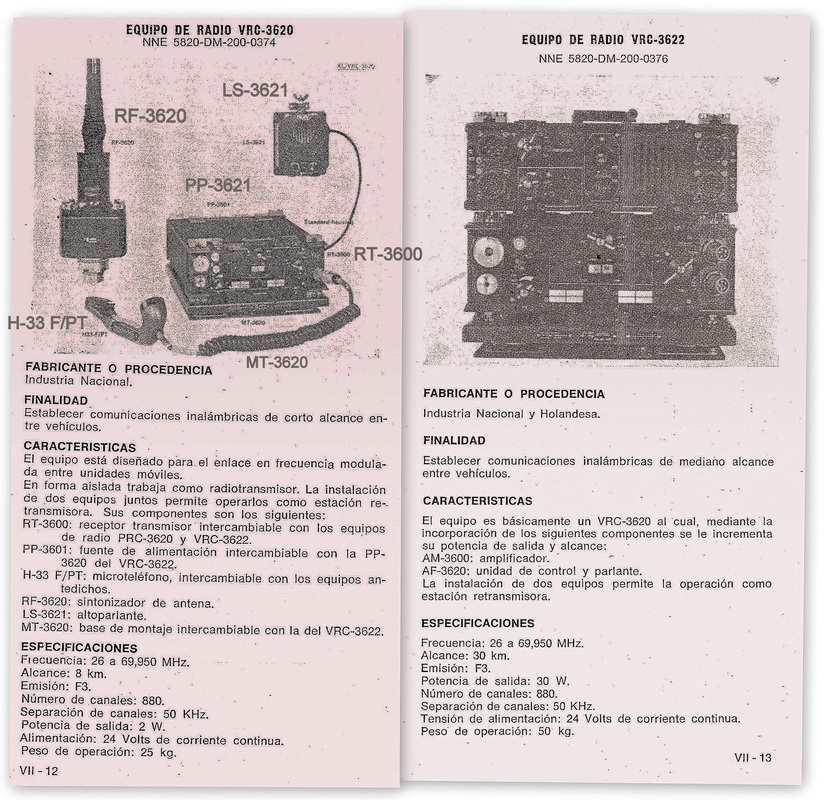
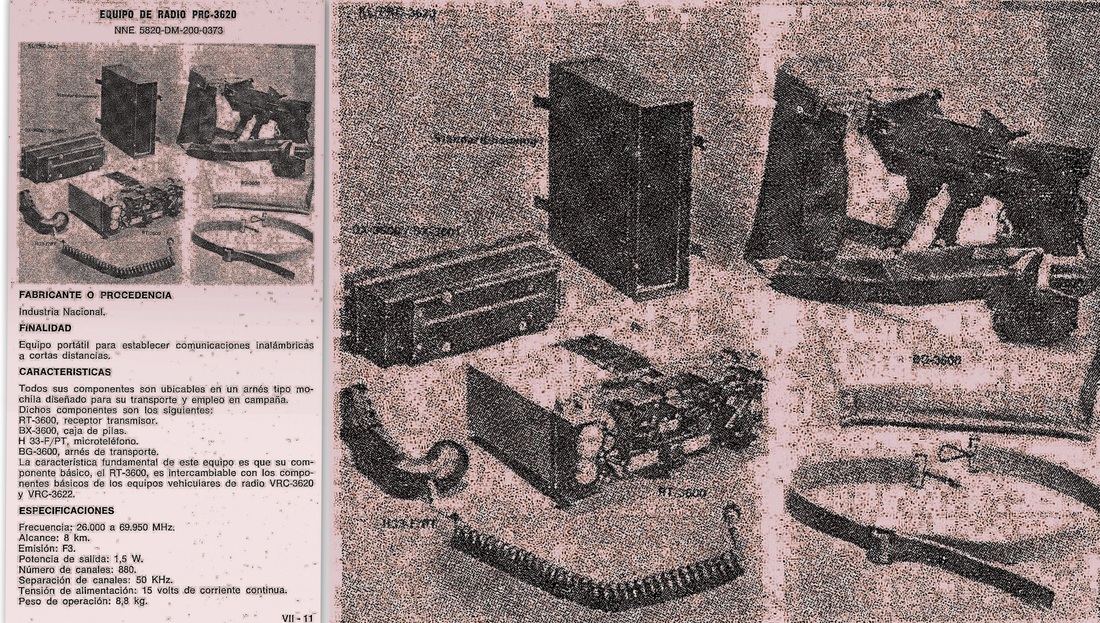
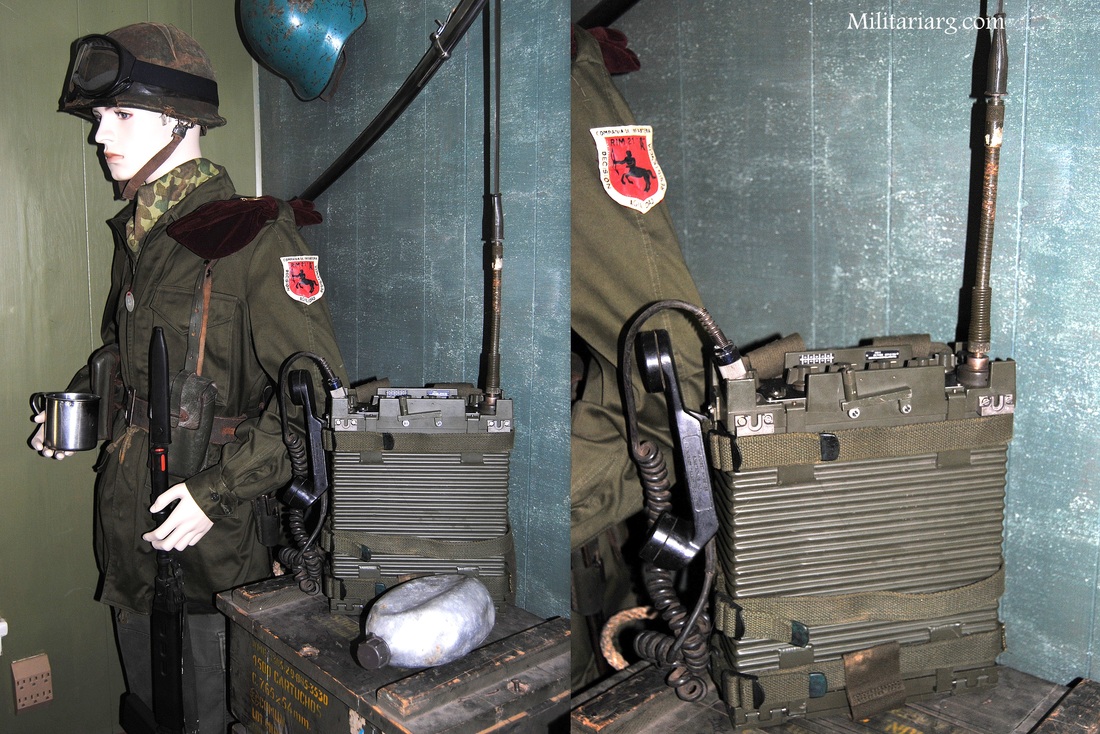
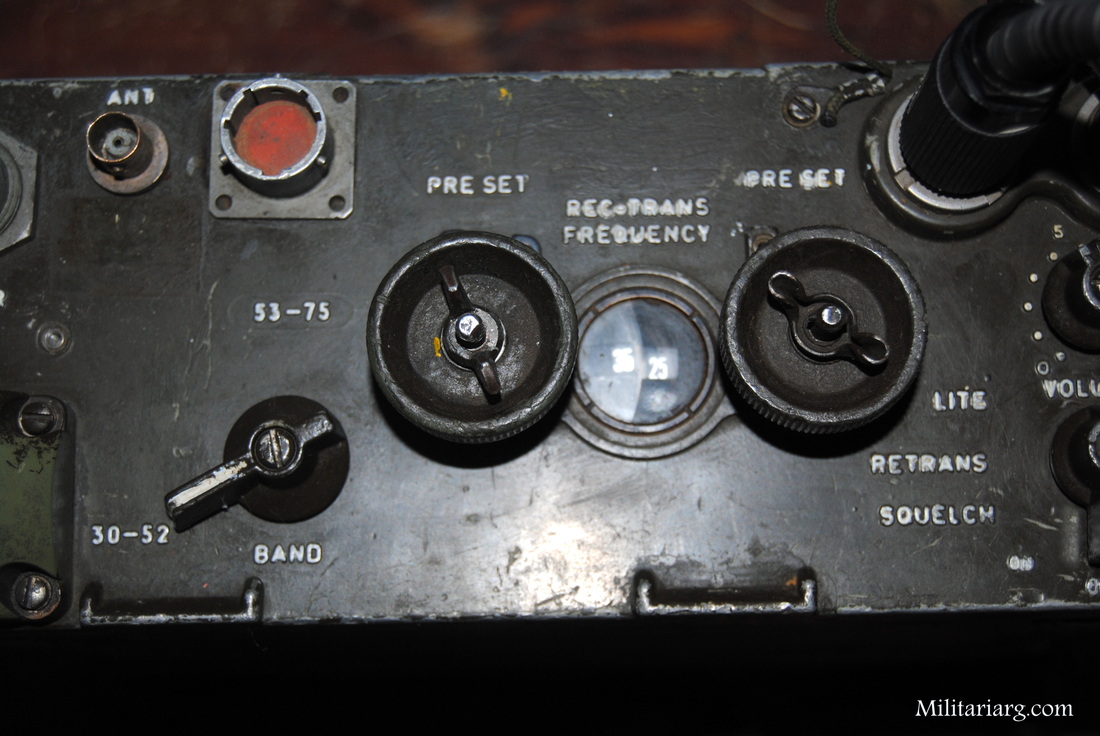
VRC3620/3622
PRC-3620. Old Army Manual.
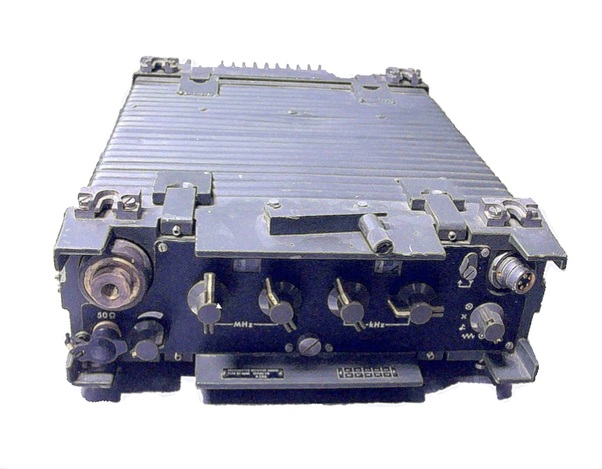
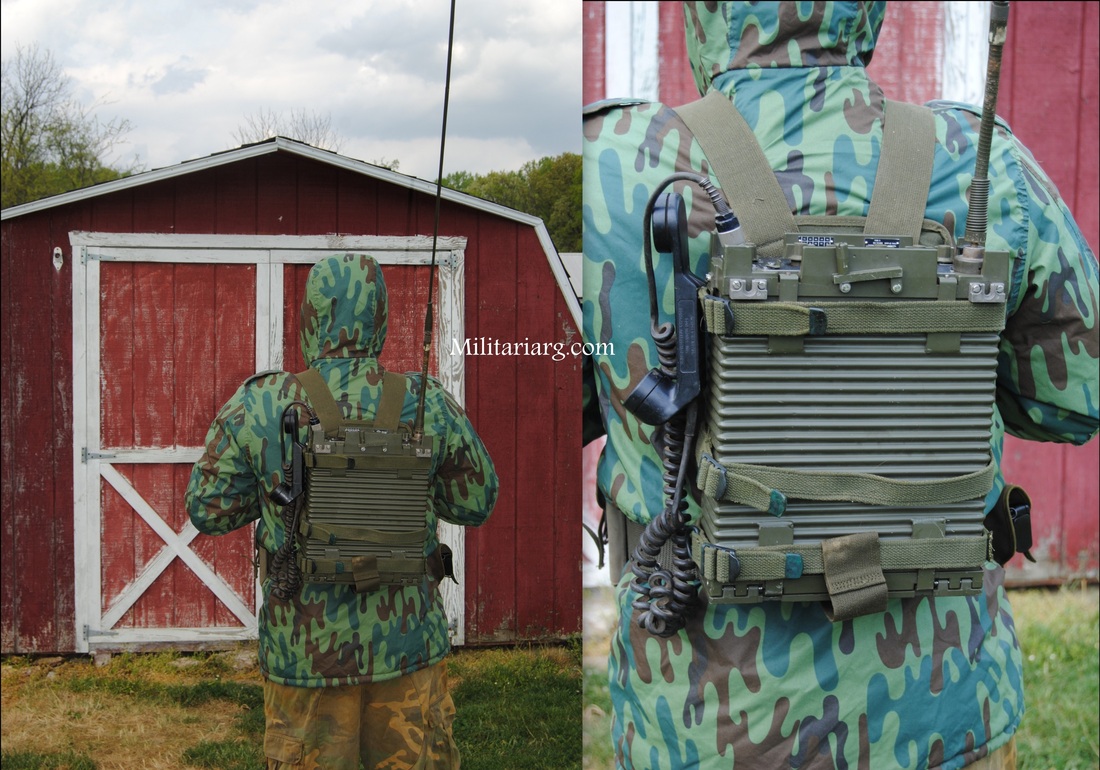
The Philips RT-4600 is a modular, frequency-modulated (FM) VHF military radio transceiver that was primarily introduced into the Dutch Army in the mid-1980s as the successor to the earlier RT-3600 model.
Manufacturer: Philips Telecommunications Industry (PTI), later Signaal (Thales).
Frequency Range: 30.000 to 75.975 MHz.
Modulation: FM (Frequency Modulation).
Channels: 1840 channels with either 25 kHz or 50 kHz channel spacing.
Power Output: Selectable power output of 2, 10, or 30 Watts, offering a wide coverage range of a minimum of 40 km (25 miles) on the highest setting.
Compatibility: Designed to be compatible with NATO and US VHF FM radio systems.
Power Supply: The standalone RT-4600 unit typically runs on 12V DC, but when configured as a vehicle radio set (VRC-4622), it uses a 24V system with an external power supply unit.
The strength of the RT-4600 system lay in its modular design, which allowed it to be configured for various roles:
Manufacturer: Philips Telecommunications Industry (PTI), later Signaal (Thales).
Frequency Range: 30.000 to 75.975 MHz.
Modulation: FM (Frequency Modulation).
Channels: 1840 channels with either 25 kHz or 50 kHz channel spacing.
Power Output: Selectable power output of 2, 10, or 30 Watts, offering a wide coverage range of a minimum of 40 km (25 miles) on the highest setting.
Compatibility: Designed to be compatible with NATO and US VHF FM radio systems.
Power Supply: The standalone RT-4600 unit typically runs on 12V DC, but when configured as a vehicle radio set (VRC-4622), it uses a 24V system with an external power supply unit.
The strength of the RT-4600 system lay in its modular design, which allowed it to be configured for various roles:
Manpack Radio: By adding a battery box (BX-4600) and carrying harness (BG-4600), the core transceiver could be used as a portable backpack radio for infantry use.
Vehicle Radio (VRC-4622): When combined with the AF-4620 amplifier/loudspeaker unit and a mounting base, it formed the VRC-4622 vehicle radio set.
Data Transmission: The radio included a separate mode specifically for digital data transmission.
Remote Operation: It could be operated remotely via a 2-wire field telephone line of up to 3 km using a remote control set.
The RT-4600 was a robust system designed for high reliability in severe combat and environmental conditions, remaining in service until it was replaced by the FM-9000 in the early 2000s.
Vehicle Radio (VRC-4622): When combined with the AF-4620 amplifier/loudspeaker unit and a mounting base, it formed the VRC-4622 vehicle radio set.
Data Transmission: The radio included a separate mode specifically for digital data transmission.
Remote Operation: It could be operated remotely via a 2-wire field telephone line of up to 3 km using a remote control set.
The RT-4600 was a robust system designed for high reliability in severe combat and environmental conditions, remaining in service until it was replaced by the FM-9000 in the early 2000s.
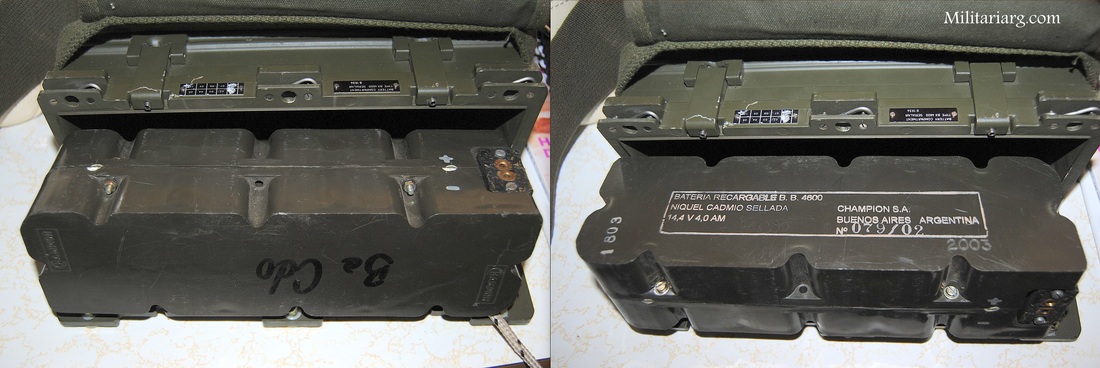
BX-4600 Battery Box.
AN/PRC-25/77 Backpacks Radios.
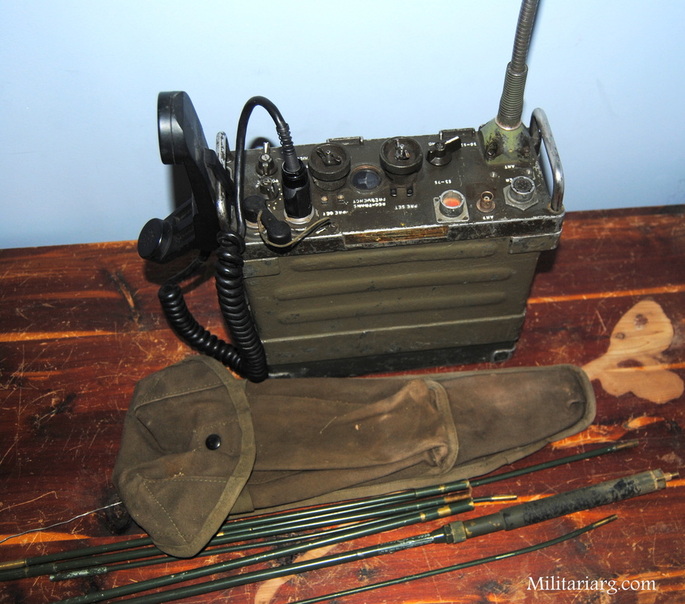
RT-2841 - PRC-77T
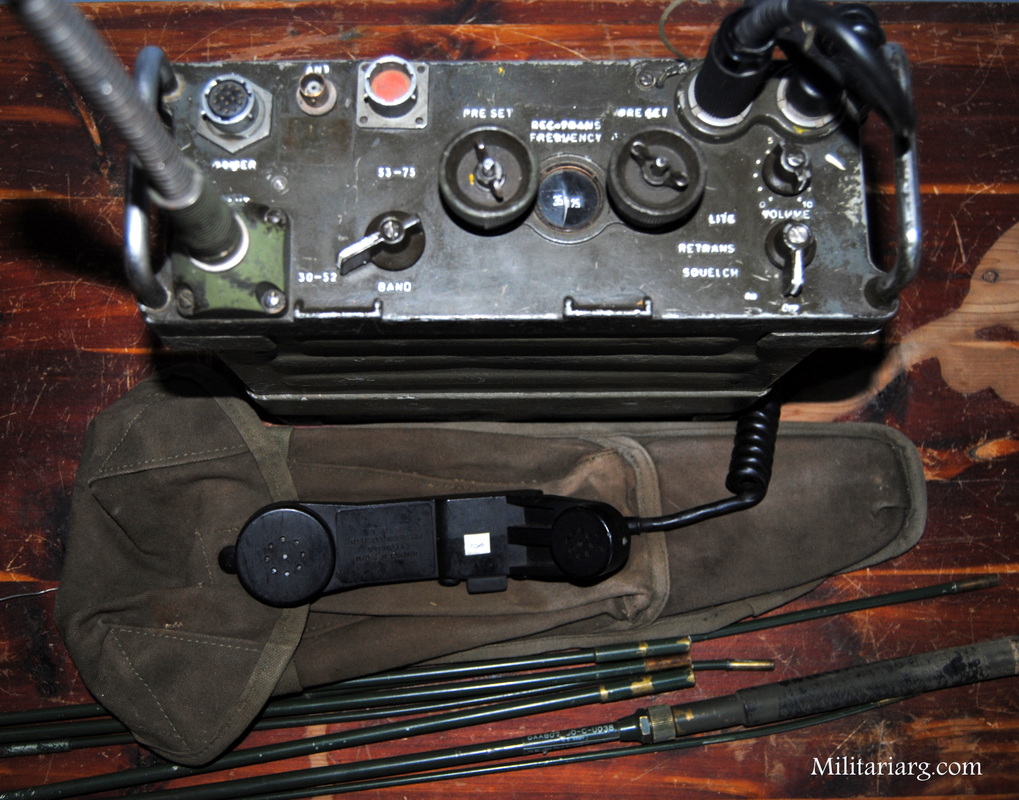
RT-841/PRC-77
The AN/PRC-25 and AN/PRC-77 are iconic, highly influential backpack-portable, frequency-modulated (FM) military radios that became the standard for U.S. and NATO forces, primarily during the Vietnam War and subsequent decades. They shared a common design and accessories but differed in their internal technology.
Both radios were built to be rugged, reliable, and backward compatible, forming the backbone of tactical communication for decades.
Frequency Range: Both operated in the standard military VHF FM band of 30 to 75.95 MHz, using 920 selectable channels at 50 kHz spacing.
Modulation: Frequency Modulation (FM), which provided clear voice communication resistant to static.
Power Output: A modest 2 watts, providing a range of 3-5 miles (up to 10 miles with the long-range antenna and suitable terrain).
Portability: Designed as manpack radios, weighing approximately 23 pounds (10.4 kg) with the standard battery and attached handset. They were carried in a canvas backpack frame.
Accessories: Used the same standard batteries (BA-4386/U and later rechargeable variants), handsets (H-189/GR), and antennas (short whip, long whip, and a directional "tape measure" antenna).
AN/PRC-25 (RT-505/PRC-25)
Often nicknamed the "Prick-25" by troops, this was the original design introduced in 1962 and saw extensive use throughout the Vietnam War.
Technology: The PRC-25 was entirely built using solid-state transistors, a significant departure from the vacuum tube technology of its predecessor, the PRC-10.
Functionality: It was the first radio to introduce the "skip" or "squelch" function, making it easier for operators to listen only when a signal was present.
Status: It was rugged and reliable, but its solid-state design was not optimized for modern secure voice communications devices (KY-38 VINSON encryption units).
AN/PRC-77 (RT-841/PRC-77)
The AN/PRC-77 was the replacement model, introduced shortly after the PRC-25 in the late 1960s. It looked identical to the PRC-25 externally and used all the same accessories.
Technology: The key difference was its use of integrated circuits (ICs) instead of individual transistors.
Functionality: The use of ICs provided improved performance and allowed the radio to interface with external secure voice encryption devices like the KY-38 and later KY-57. This secure capability was the primary reason for its development and widespread adoption.
Status: The PRC-77 eventually replaced the PRC-25 entirely and remained standard issue for U.S. forces until it was replaced by the SINCGARS (Single Channel Ground and Airborne Radio System) in the 1990s.
Both radios were built to be rugged, reliable, and backward compatible, forming the backbone of tactical communication for decades.
Frequency Range: Both operated in the standard military VHF FM band of 30 to 75.95 MHz, using 920 selectable channels at 50 kHz spacing.
Modulation: Frequency Modulation (FM), which provided clear voice communication resistant to static.
Power Output: A modest 2 watts, providing a range of 3-5 miles (up to 10 miles with the long-range antenna and suitable terrain).
Portability: Designed as manpack radios, weighing approximately 23 pounds (10.4 kg) with the standard battery and attached handset. They were carried in a canvas backpack frame.
Accessories: Used the same standard batteries (BA-4386/U and later rechargeable variants), handsets (H-189/GR), and antennas (short whip, long whip, and a directional "tape measure" antenna).
AN/PRC-25 (RT-505/PRC-25)
Often nicknamed the "Prick-25" by troops, this was the original design introduced in 1962 and saw extensive use throughout the Vietnam War.
Technology: The PRC-25 was entirely built using solid-state transistors, a significant departure from the vacuum tube technology of its predecessor, the PRC-10.
Functionality: It was the first radio to introduce the "skip" or "squelch" function, making it easier for operators to listen only when a signal was present.
Status: It was rugged and reliable, but its solid-state design was not optimized for modern secure voice communications devices (KY-38 VINSON encryption units).
AN/PRC-77 (RT-841/PRC-77)
The AN/PRC-77 was the replacement model, introduced shortly after the PRC-25 in the late 1960s. It looked identical to the PRC-25 externally and used all the same accessories.
Technology: The key difference was its use of integrated circuits (ICs) instead of individual transistors.
Functionality: The use of ICs provided improved performance and allowed the radio to interface with external secure voice encryption devices like the KY-38 and later KY-57. This secure capability was the primary reason for its development and widespread adoption.
Status: The PRC-77 eventually replaced the PRC-25 entirely and remained standard issue for U.S. forces until it was replaced by the SINCGARS (Single Channel Ground and Airborne Radio System) in the 1990s.