Militariarg.com
  • Home
  • Army
  • Aviation
  • Navy
  • Uniforms and Badges
  • Arms and Weapons
  • Equipment
  • Vehicles
  • Operational and Organizational Structure, Security Forces, Transportation, Books, Models and More.
  • Argentine Confederation Era. 1829 - 1852.
  • From 1852 to 1910 (French fashion)
  • Bunker 1982: South Atlantic War Militaria
  • International Militaria
  • Argentina WWII Era (Neutral) Reenactment Impression
  • Links ~ Enlaces
Picture
The Romanian Army during World War I entered the conflict in August 1916 with a mixture of older German and Austro-Hungarian-designed weapons and artillery, which were largely obsolete by contemporary Western Front standards. After suffering heavy defeats, the army was reorganized by a French Military Mission in 1917 and re-equipped with modern French and British arms.
 
Weapons
The Romanian infantry suffered from a wide variety of weapon types and a shortage of ammunition, creating significant logistical challenges. 

Rifles: The primary service rifle was the Gewehr M.1893 Romanian Mannlicher, a bolt-action rifle chambered in 6.5x53mmR. After being re-equipped by the Allies, Romanian troops also used French Berthier rifles and limited numbers of Russian Mosin-Nagant rifles.
Pistols/Revolvers: A mix of sidearms were used, including the Austro-Hungarian Steyr M1912 and the Spanish-made MLE 1915 revolver acquired in an emergency.
Machine Guns: The army initially had very few machine guns, including the German Maxim M1909 and the Austrian Schwarzlose MG 07/12. Post-1917, French Hotchkiss and British Vickers machine guns were supplied to standardize equipment with Allied forces. 

Picture
Tunul de câmp Krupp, cal. 75 mm, L/30 md. 1904 (Model 1904). It has a full-sized protective gun shield. In contrast, cavalry or horse artillery variants were often modified to be lighter, sometimes featuring smaller wheels or folded shields to increase mobility.
The crew are wearing pre-war Romanian uniforms, characterized by their dark-blue color. These styles were still commonly seen during the 1916 campaigns.
​
While based on the same 75mm L/30 platform as the Turkish M1903, the Romanian version had several distinct features. 
The most notable difference was the sighting system. Instead of the standard German-supplied sights used on the Turkish models, the Romanians used the locally made Ghenea-Korodi sight, which was considered more sophisticated.
It served as the mainstay for Romanian field artillery throughout World War I, equipping all infantry division artillery regiments.
Romania also utilized the Model 1908, a lighter version of the L/30 gun intended for horse artillery batteries. 

Caliber: 75 mm
Barrel Length: 2.25 meters (L/30)
Muzzle Velocity: 500 m/s
Max Range: 6,400 meters (later increased to 8,000 meters) 

​Artillery
Romania's initial artillery was mostly older German Krupp designs that were not quick-firing. The 1917 French Military Mission aimed to standardize the artillery with modern French calibers. 

Field Artillery: Initial field guns were German Krupp 75mm and 87mm models. After the reorganization, the highly effective French 75mm field gun (Puteaux) became a standard piece, although deliveries were delayed by Russian authorities.
Heavy Artillery: The initial heavy artillery was largely made up of fortress guns from various manufacturers, including Krupp and Hotchkiss, which were dismounted and mounted on Romanian-made field carriages. Later in the war, the Romanian Army received French 155mm Saint Chamond Model 1915 and 155mm Schneider Model 1917 heavy howitzers.
Mountain Guns: Italian Cannone da 65/17 modello 13 mountain guns were delivered in 1917 for use as infantry support guns in the challenging terrain. 

Tanks and Vehicles
Tanks: The Romanian Army did not possess tanks during World War I.
Armored Cars: In 1915, an experimental armored car was designed and built at the CFR workshops in Bucharest using a truck chassis, though only a few prototypes were made.
Transport: The army relied almost entirely on animal-drawn transport (horses and mules), suffering massive casualties in transport animals throughout the war.
Picture
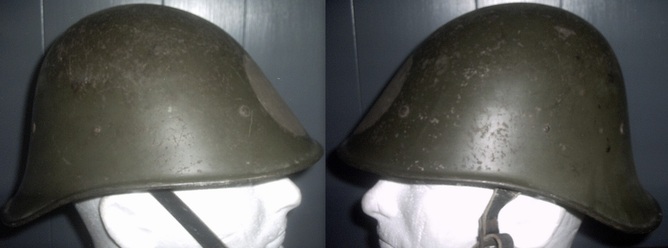
The Romanian M39 helmet (Cască model 1939) was the standard issue helmet for the Romanian Army throughout World War II and was a direct copy of the Dutch Model 1934 helmet. It was manufactured in the Netherlands for Romania. 

The helmet was designed based on the Dutch M34, manufactured by the Dutch firm Vereenigde Blikfabrieken (Verblifa). Romania placed a large order in 1938 and deliveries began in 1939.
It has a unique, smooth, rounded profile with a slightly flared skirt that many find distinctive and aesthetically different from other WWII helmets. The helmet was typically painted in various shades of olive drab or khaki green. The liner was a leather system, similar to the Dutch design, though later production runs (designated M39/42) used German M31-style liners.
Early examples featured an egg-shaped metal badge on the front with the crowned monogram of King Carol II (two "C"s under a crown). After the King's abdication in September 1940, the use of this front badge was officially discontinued, though many remained on existing helmets in the field. 
The M39 was widely used by Romanian soldiers on the Eastern Front, including during the Battle of Stalingrad.
The helmet remained in Romanian service in the postwar.
Picture
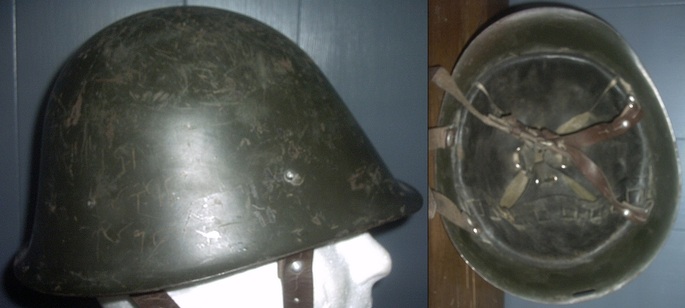
The Romanian M73 helmet (Cască model 1973) was a standard steel combat helmet used by the Army of the Socialist Republic of Romania from the mid-1970s until it was phased out by modern ballistic helmets in the 2000s. Its design was influenced by the need to operate independently from the USSR and deliberately moved away from the Soviet SSh-40 helmet that was used previously. 
The M73's shape is a direct descendant of the Romanian M39/Dutch M34 helmet, which Romania used during WWII.
It features a deep-dome, rounded steel pot construction with distinctive slanted areas designed to deflect impacts. Compared to the M39, the M73 has a smaller, less flared skirt and a raw edge instead of a rolled one.
It is constructed from steel and painted olive drab. The interior features leather padding and an adjustable 4-point leather chin strap with a unique double D-ring closure.
Some early versions had a spot for a brass badge on the front, while later versions (sometimes called the M73/80) were manufactured without the badge loop. 

M73 Romanian Helmet

Picture
 The M73 was born during the leadership in Romania of Nicolae Ceaușescu, who accentuated the distance between Bucharest and Moscow that began in the 50s with the Sino-Soviet Split. While Romania, like the rest of the Eastern European countries, had come under the control of the Soviet Union and was part of the Warsaw Military Pact, Bucharest sought some independence from Moscow to equip its military.

In 1968, this country refused to participate with the Warsaw Pact in the invasion of Czechoslovakia. Bucharest's foreign policy allowed for free interaction with both the United States and China. Despite having pursued an independent foreign policy, Romanian socialism ended tragically in 1989 after a popular revolution. Romania would later become a NATO country.
Picture
​Prior to the start of WW2, the Kingdom of Romania had begun to receive large quantities of Dutch 1934 model helmets that would become known in Romania as the M39. While the M39 was used during WW2 alongside the French M15 Adrian, the M39 was the most popular and on which the M73 was based.

In the post-war period, the Romanian M73 would be the evolution of the Dutch Model 34 with details such as shell shape but compact, same type of liner, neck guard straps and the housing or hole at the rear of the shell used for attaching the helmet to a belt or backpack. The M73 has the particularity that batch numbers and production years are marked on the shell on the outer back. The chinstrap is Y-shape inspired by the East German M56.


Photo: Eastern Front. Romanian soldiers in WW2. 

The Romanian Army during World War II began the war with a mixture of older domestic, French, and Czechoslovakian equipment. As they fought alongside the Axis powers against the Soviet Union (1941-1944), they received German and Italian equipment. After changing sides in August 1944, the army was reorganized with Soviet equipment.
 
Weapons
The Romanian infantry relied on diverse sources for their small arms. 

Rifles: The standard rifle was the Czechoslovakian ZB vz. 24 Mauser, produced under license in Romania as the ZBFG 24. The older French Lebel and Berthier rifles were also still in service, particularly with second-line units.
Pistols: Various pistols were used, including the domestic Steyr M1912 and the German P08 Luger.
Submachine Guns: German MP 34 and MP 40 submachine guns were widely used, particularly by special forces and security forces.
Machine Guns: The army utilized Czechoslovakian ZB vz. 30 light machine guns and various heavy machine guns from the WWI era, supplemented by German MG 34s later in the war. 

Artillery
Romania developed a strong domestic arms industry and produced anti-tank guns and field artillery. 

Anti-Tank Guns: Romania produced its own effective anti-tank gun, the Astra 75 mm anti-tank gun (based on the German Pak 97/38 design). German 5 cm Pak 38 and 7.5 cm Pak 40 anti-tank guns were also supplied later in the war.
Field Artillery: The army relied on WWI-era French and German designs, including the 75mm field gun (Puteaux) and the 100mm Škoda howitzer.
Anti-Aircraft: The reliable Swedish Bofors 40 mm anti-aircraft gun was licensed and produced in Romania. 

Tanks and Vehicles
Romania had a mix of French, Czechoslovakian, and German armor, often capturing and modifying enemy vehicles throughout the war. 

Light Tanks: The Renault R-35 and Škoda LT vz. 35 (R-2 in Romanian service) were the primary light tanks at the start of the war.
Medium Tanks: German Panzer III and Panzer IV medium tanks were supplied later in the war to bolster armored divisions.
Domestically Modified Vehicles: Romanian ingenuity led to several notable modified vehicles:
TACAM R-2: A modified R-2 tank chassis mounting a captured Soviet 76mm ZIS-3 gun.
TACAM T-60: A modified captured Soviet T-60 light tank chassis mounting a captured Soviet 76mm ZIS-3 gun.
Mareșal: A unique, domestic design for a light tank destroyer, only a few prototypes were built, but it heavily influenced the German Hetzer design.
Vehicles: The army was largely motorized, but logistical shortcomings meant reliance on horse-drawn transport continued throughout the war, particularly in the Eastern Front mud. The Ford V8 was produced domestically under license and was a common truck used by the Romanian Army.
Picture
Picture
Picture
Picture
Picture
Picture
Picture
Picture
Picture
Picture
Picture
Picture
Picture
Picture
Picture

The Romanian Army (Armata Republicii Socialiste România, and later the post-communist Romanian Armed Forces) during the Cold War was a member of the Warsaw Pact but maintained a unique position, pursuing a degree of independence in its foreign policy and military production. It used standard Soviet equipment, much of which was produced under license domestically, alongside indigenous Romanian designs and a unique blend of imported technology later on.
 
Weapons
Romania produced the Soviet Kalashnikov rifle design under license but developed many unique domestic variants and accessories. 

Rifles: The standard service rifle was the PM md. 63 (Puşcă Mitralieră model 1963), the Romanian license-built version of the AKM assault rifle. The PA md. 86 (Puşcă Automată model 1986), a domestic design chambered in 5.45x39mm, was introduced in the late 1980s.
Pistols: The Pistol Carpati Md. 1974 was a domestic design based on the Walther PP, and the Soviet Makarov PM was also in service.
Submachine Guns: The PM md. 63 was used in a shorter configuration, but specific submachine guns were less common than assault rifles.
Machine Guns:
PM md. 64: The Romanian license-built version of the RPK light machine gun.
Cugir Mitralieră md. 66 (PKM): The Soviet general-purpose machine gun produced under license.
Anti-Tank Weapons: The standard shoulder-fired weapon was the Soviet RPG-7 rocket-propelled grenade launcher. 

Artillery
Romania's arms industry had a significant capacity and produced several artillery pieces under license or with indigenous modifications. 

Towed Artillery: The inventory included Soviet 122 mm howitzer M30 and D-30 systems, and the 152 mm howitzer-gun D-20, many produced domestically.
Self-Propelled Artillery: The Model 1989 (D-20M) was a domestically modified version of the D-20.
Multiple Rocket Launchers (MRLs): The Soviet BM-21 Grad was in service, alongside the domestic APR-21 and later APR-40 variants. 

Tanks and Vehicles
While Romania started with Soviet tanks, it moved towards greater self-sufficiency by upgrading T-55s and developing its own experimental main battle tank. 

Main Battle Tanks (MBTs):
T-34/85: These World War II-era tanks were used in the immediate post-war era and for training into the 1970s.
T-55: The primary tank of the Romanian Army throughout the height of the Cold War. In the 1980s, the domestically upgraded TR-580 and TR-85 (Tanc Românesc) entered service, featuring local components, a more powerful engine, and thicker armor.
TR-125: A domestic experimental development of the Soviet T-72, produced in small numbers.
Armored Personnel Carriers (APCs) & IFVs:
BMP-1: Soviet-designed infantry fighting vehicles were used by mechanized units.
TAB-71 and TAB-77: Domestically produced 8x8 wheeled APCs based on Soviet BTR-60 technology, with several Romanian modifications and variants.
Utility Vehicles: Romania produced several domestic utility and light utility vehicles, including the ARO series, for military use, alongside Soviet trucks.

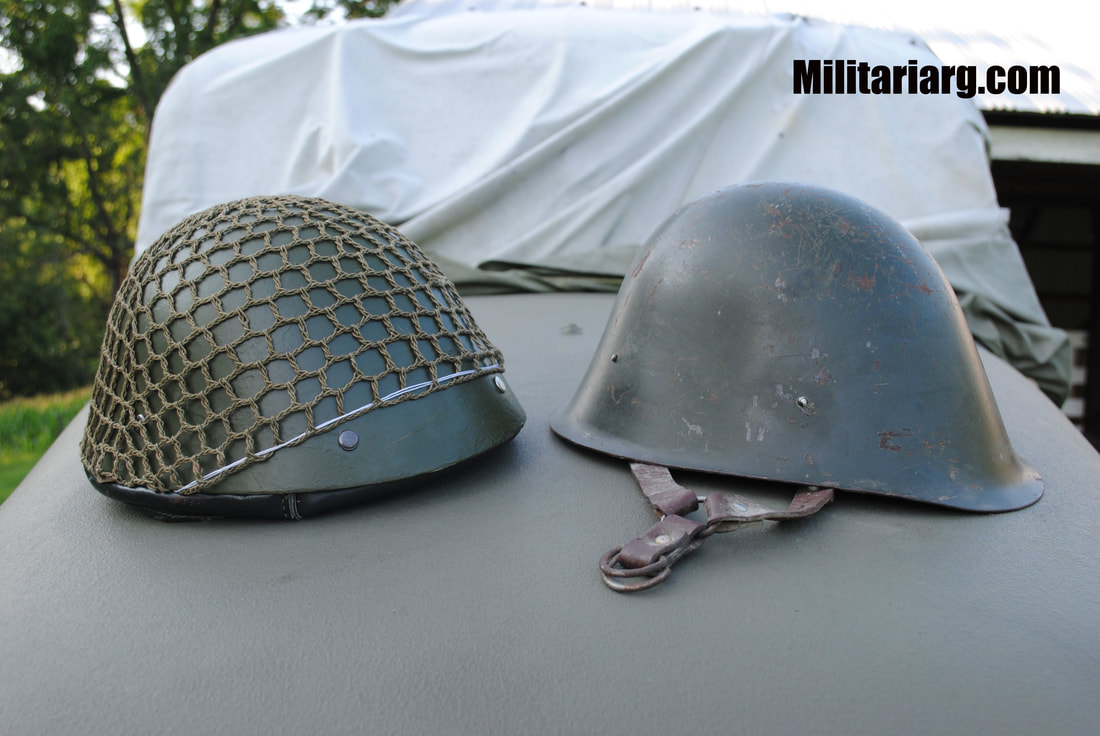
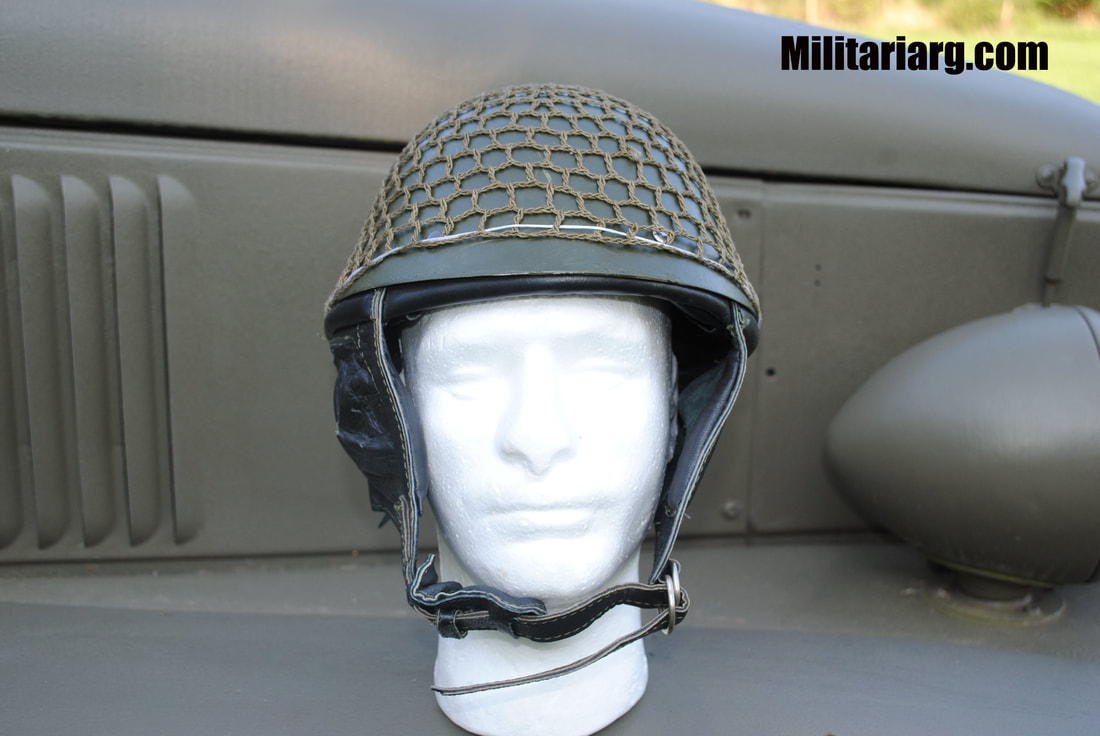
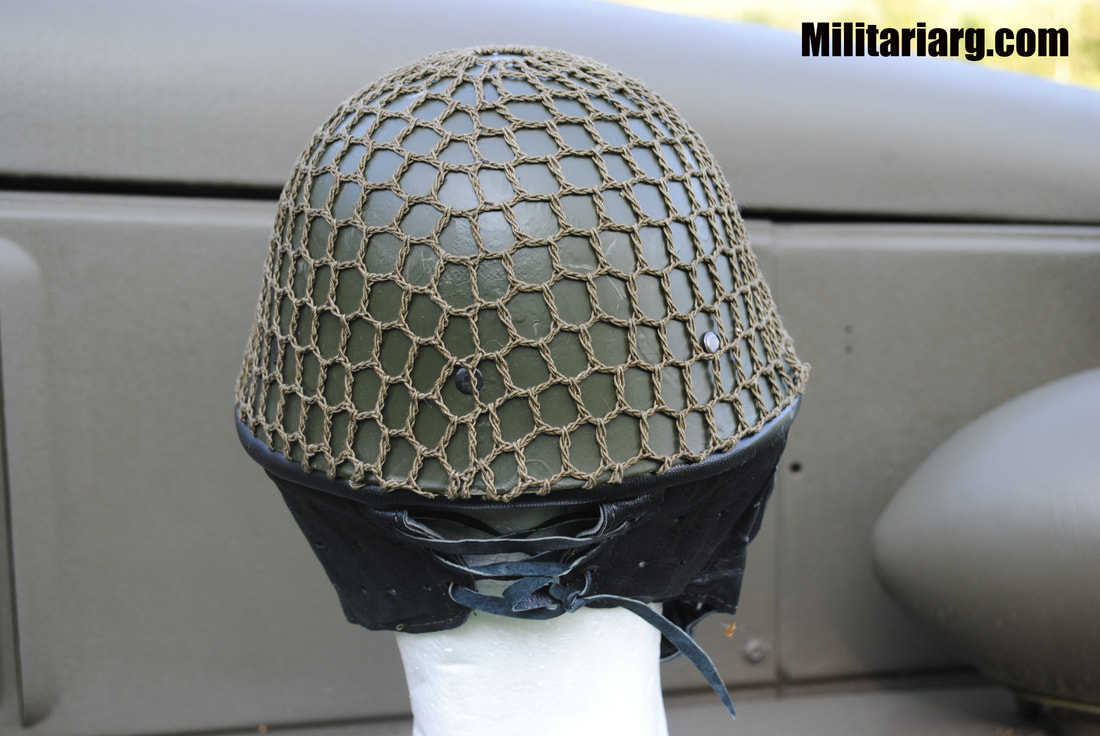
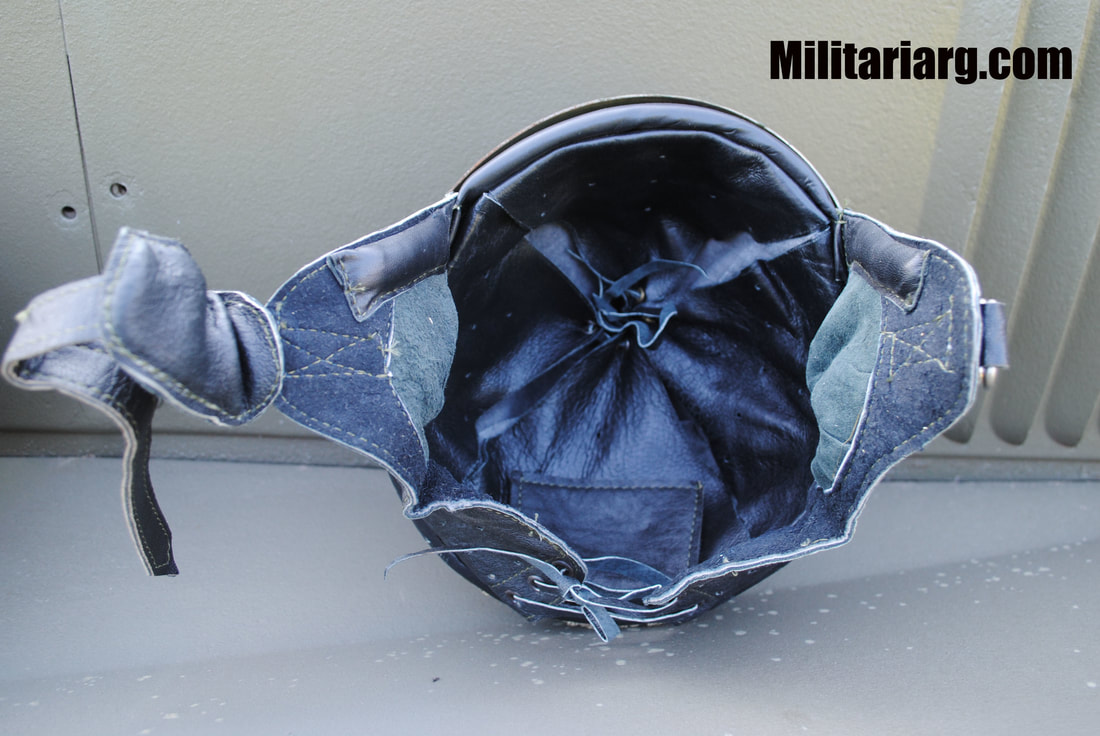
2nd Pattern M73 Romanian Paratrooper Airborne Jump Helmet
​This is the second pattern of the Romanian paratrooper helmet. It is an M73 shell cut down. The first pattern was a standard M73 shell with leather sides to protect ears and the neck.
Picture
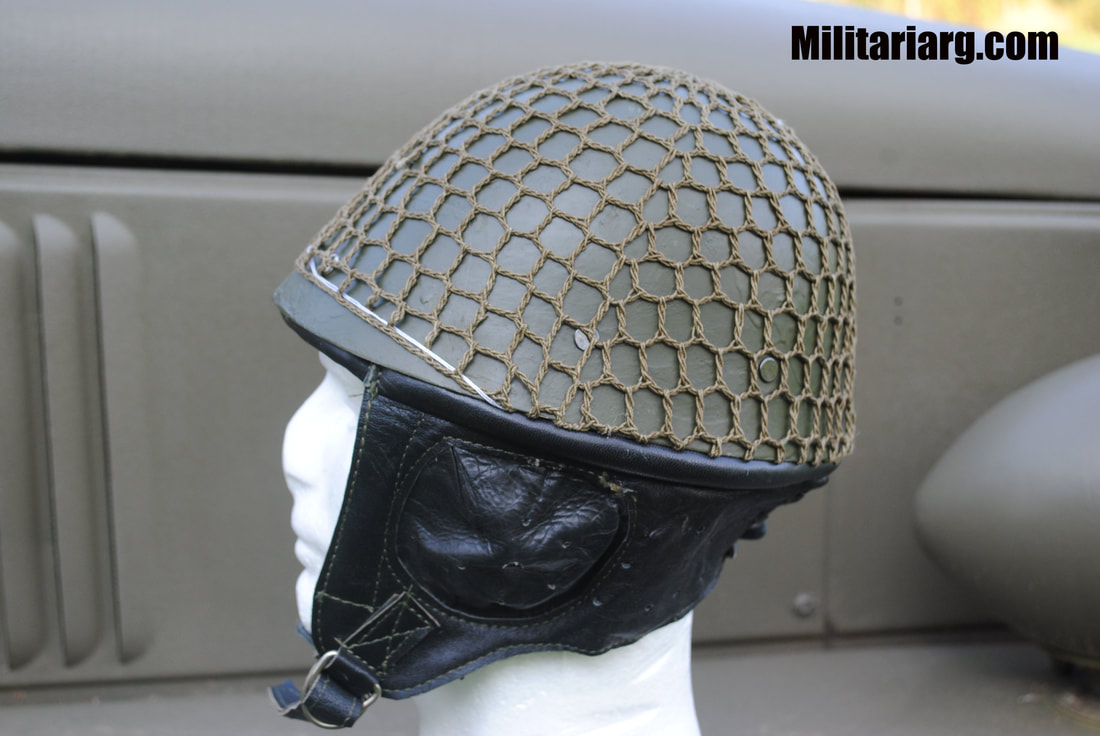
The Romanian M73 Paratrooper helmet, officially designated the Cască model 1973 trupe parașutiste, is a distinctive variant of the standard M73 infantry helmet. It was specifically designed for Romanian airborne and special forces units.
Picture
​These helmets were typically painted in a standard olive drab green. The M73 Paratrooper helmet is relatively rare compared to the standard infantry model and is highly sought after by military helmet collectors due to its unique, almost "space-age" appearance resulting from the cut-down shell and integrated leather components.
Picture
The main distinguishing feature is the radical modification of the standard M73 infantry shell. The flared skirt/rim found around the nape of the neck and the sides of the standard M73 was completely cut away up to the row of liner rivets. This was done to accommodate parachuting equipment, allow for better peripheral vision, and facilitate the use of communications gear.To provide better protection and comfort for airborne operations, the standard, simple M73 liner was upgraded. It incorporated additional internal padding and shock absorption features.
Picture
The helmet featured thick, integrated leather or canvas ear and neck flaps/guards. These were designed to protect the paratrooper during landings and jumps, and often had integrated pockets to hold standard communication headphones or earpieces. 
Picture
The chinstrap was often a more secure and complex 4-point system than the standard infantry helmet, designed to keep the helmet firmly in place during high-impact jumps.

Powered by Create your own unique website with customizable templates.