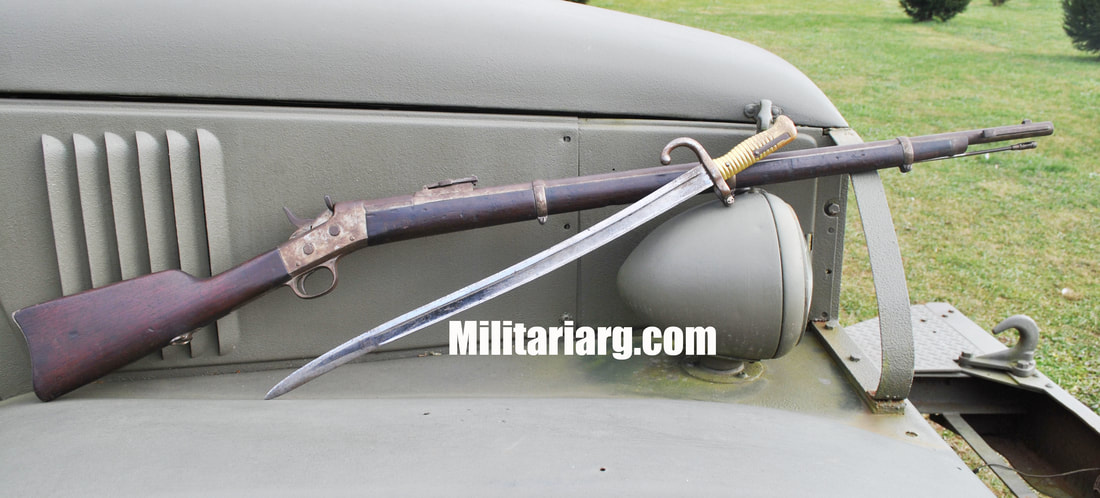
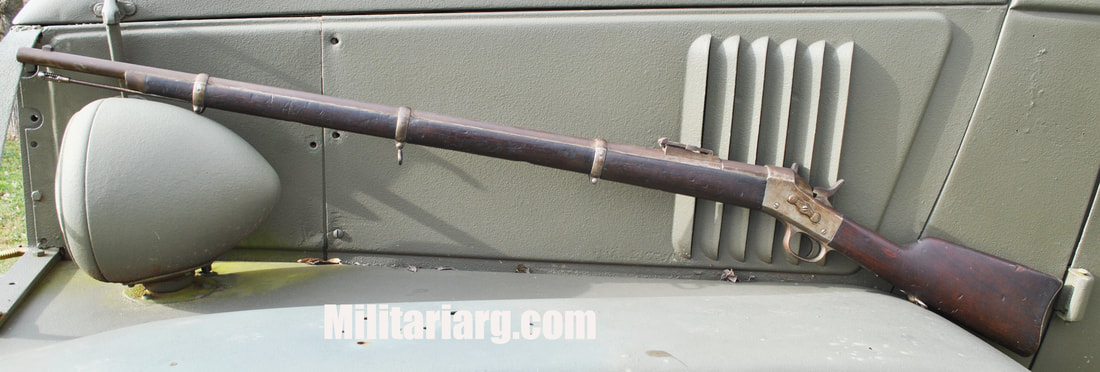
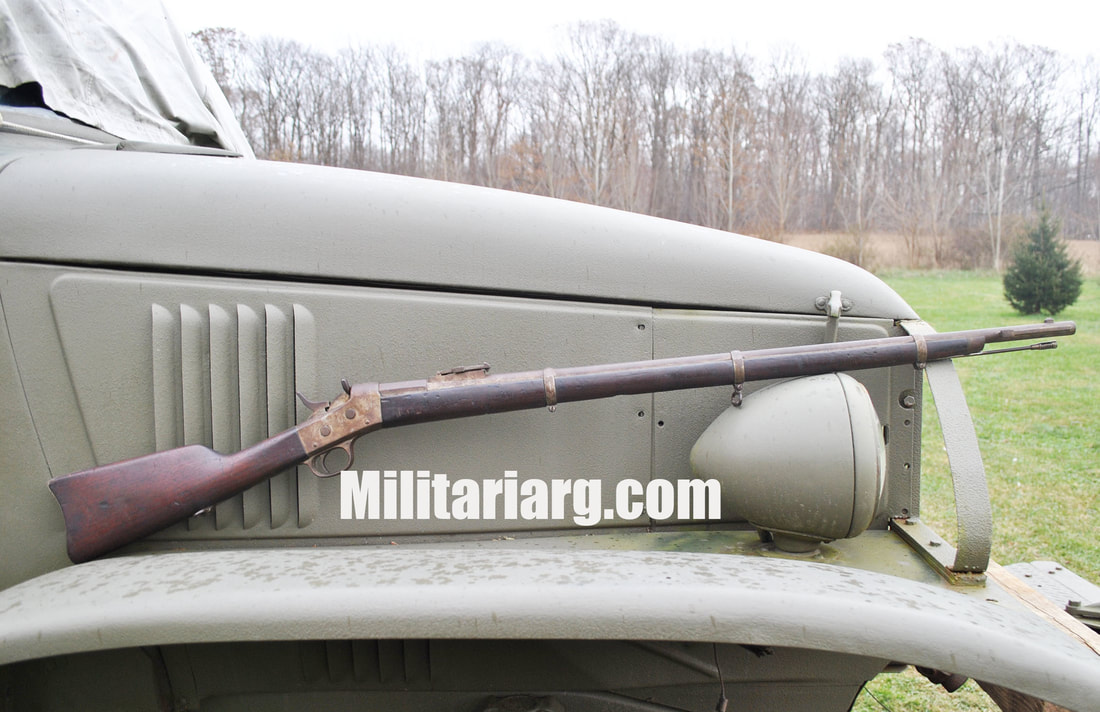
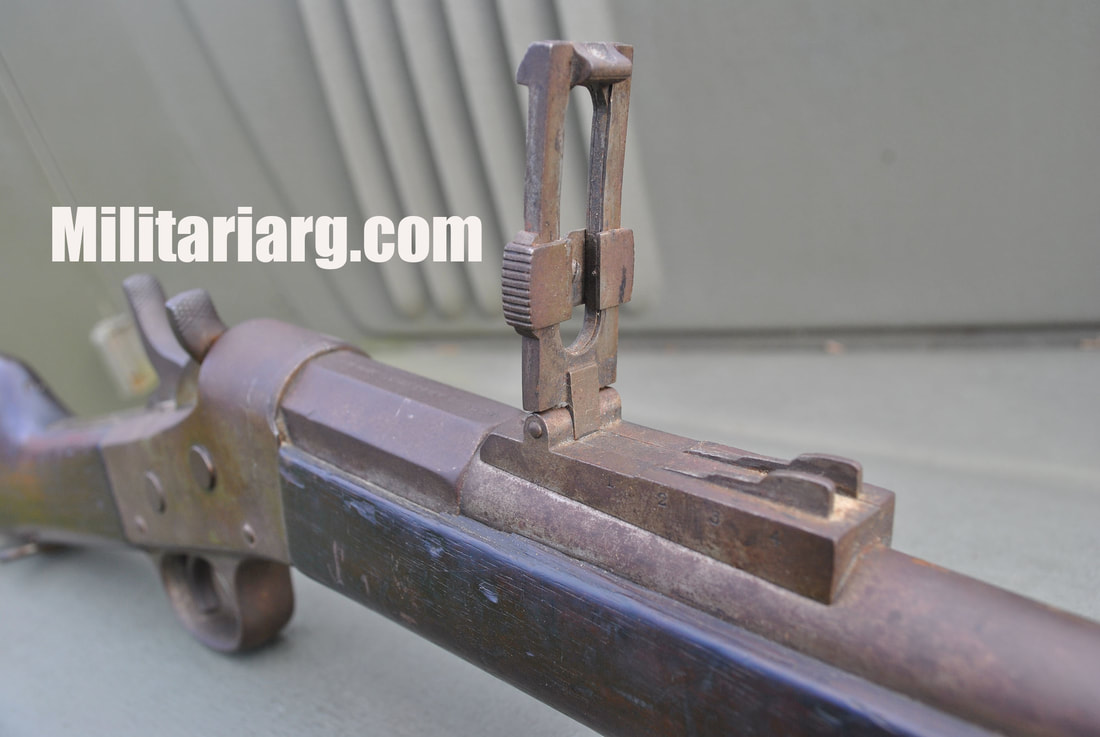
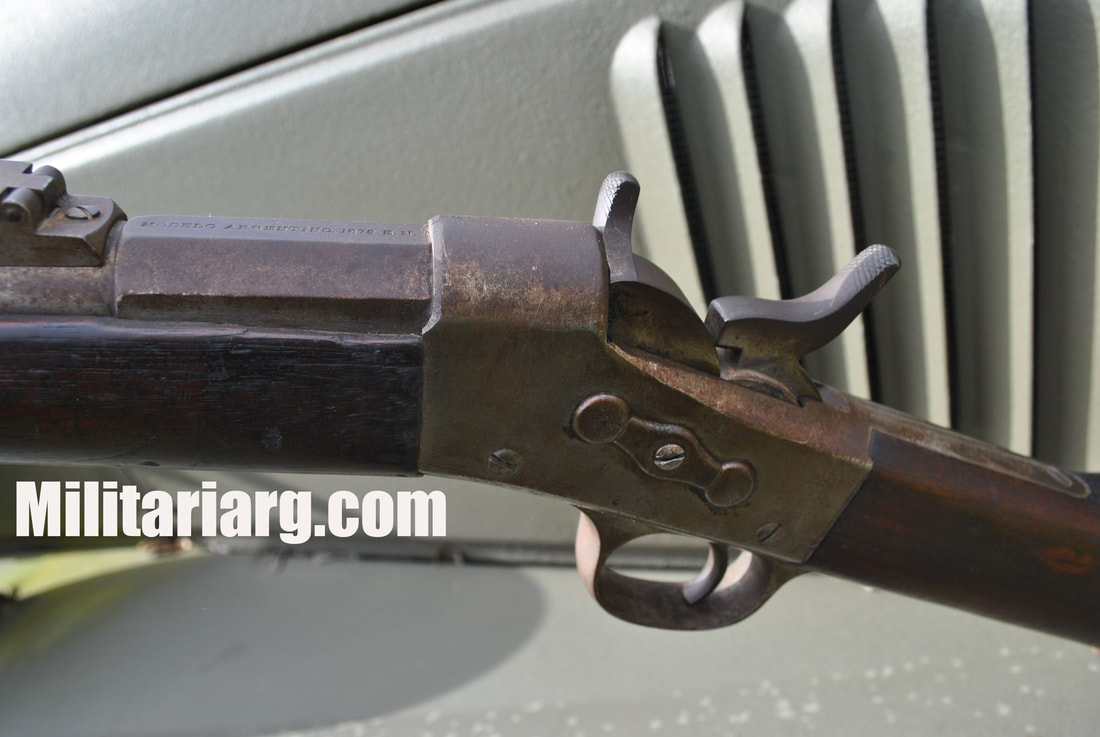
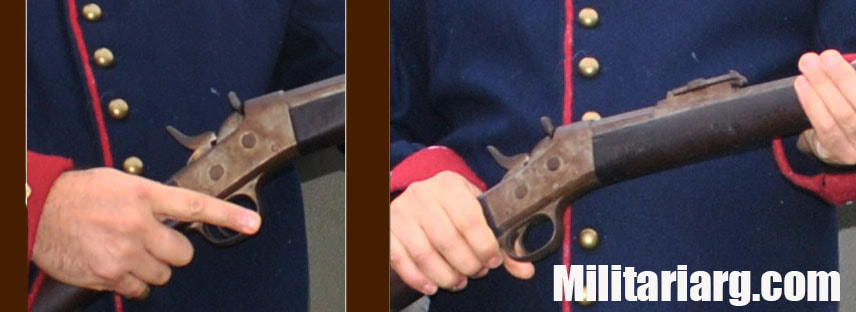
Remington Rolling Block Model 1879 "Argentino" (also known as the "Remington Patria" in Argentina) was a single-shot, breech-loading rifle specifically manufactured for the Argentine military. The rifles were manufactured by the Remington Arms Company in the United States, with production running from 1879 to around 1882.
The rifle was chambered for the .43 Spanish cartridge (11.15x57mmR).
Action: It utilized the robust and reliable rolling-block action designed by John Rider, prized for its simplicity and strength.
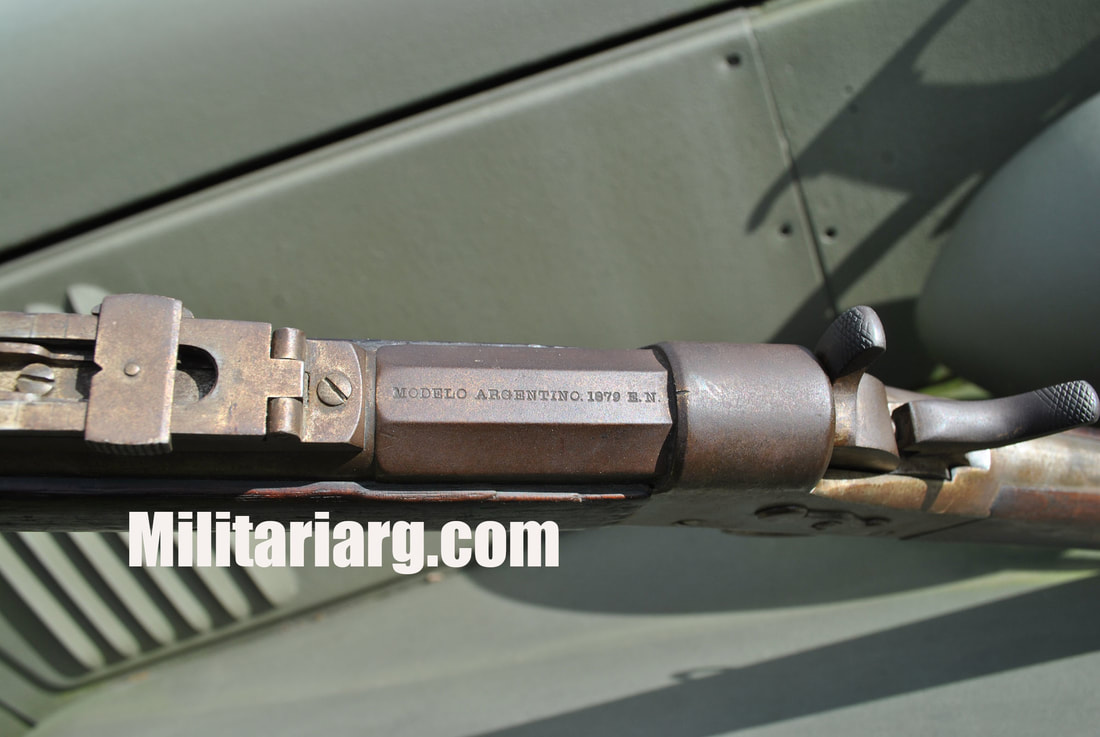
The adoption of this rifle was part of Argentina's efforts to modernize its military and replace outdated muzzleloaders following a period of civil conflict. It became the first standard national weapon for the Argentine Army (Ejército Nacional, denoted by "E.N." on the receiver markings).
The rifle was chambered for the .43 Spanish cartridge (11.15x57mmR).
Action: It utilized the robust and reliable rolling-block action designed by John Rider, prized for its simplicity and strength.
The adoption of this rifle was part of Argentina's efforts to modernize its military and replace outdated muzzleloaders following a period of civil conflict. It became the first standard national weapon for the Argentine Army (Ejército Nacional, denoted by "E.N." on the receiver markings).
Rifles featured "MODELO ARGENTINO 1879 E.N." stamped on the barrel's octagonal breech section (knoxform), along with standard Remington patent markings on the tang.
Service Life: The Model 1879 served as the standard-issue weapon until it was gradually replaced by the more modern, repeating Model 1891 Mauser rifle in the early 1890s.
Variants: Both infantry rifles (approx. 36-inch barrel) and shorter saddle-ring carbines were produced. Many of these surplus rifles were later arsenal-refurbished by Argentina and sold to the US civilian market in the mid-20th century.