Militariarg.com
  • Home
  • Army
  • Aviation
  • Navy
  • Uniforms and Badges
  • Arms and Weapons
  • Equipment
  • Vehicles
  • Operational and Organizational Structure, Security Forces, Transportation, Books, Models and More.
  • Argentine Confederation Era. 1829 - 1852.
  • From 1852 to 1910 (French fashion)
  • Bunker 1982: South Atlantic War Militaria
  • International Militaria
  • Argentina WWII Era (Neutral) Reenactment Impression
  • Links ~ Enlaces
Picture
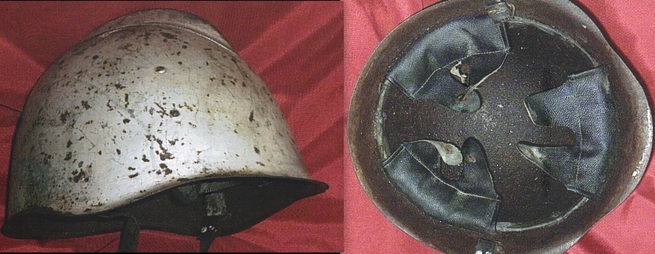
WZ31 "Salamander" finish.
​Poland's existence as an independent state during World War I (1914-1918) was brief, starting only at the very end of the war in November 1918. Therefore, a unified Polish Army did not fight in WWI.
Instead, Polish forces were formed from a mix of units that had served in the armies of the partition powers (Russia, Germany, Austria-Hungary), volunteer formations, and a specific "Blue Army" formed in France. Their equipment was extremely diverse. 

Weapons
The newly formed Polish Army after 1918 inherited a vast and complicated array of small arms, leading to logistical issues. The main types were consolidated as much as possible. 

Rifles: The most common rifles were those captured or inherited from the former occupying powers:
Russian Mosin-Nagant M1891
German Gewehr 98 and Gewehr 88 variants
Austro-Hungarian Mannlicher M1895
French Lebel M1886/93 and Berthier rifles, supplied to the "Blue Army" and other units through Allied aid.
Pistols: A wide variety of revolvers and pistols from Germany, Austria-Hungary, Belgium, and Russia were in service. The Russian Nagant M1895 revolver was the unofficial standard sidearm initially.
Machine Guns:
Maxim machine guns: German MG08 and Russian M1910 variants were common.
French Hotchkiss Mle 1914 and British Lewis guns were also in service. 

Artillery
Polish artillery units were similarly equipped with captured or donated pieces from various nations. 

Field Artillery: Common field guns included the French 75mm field gun (Schneider-Canet), the Russian 87mm M1877, and German and Austro-Hungarian pieces like the 100mm Škoda howitzer wz. 1914.
Logistics Nightmare: The diversity of calibers and models made supply and maintenance a constant challenge. 

Tanks
The Polish Army did not have tanks during World War I itself. 
However, a significant number of tanks were acquired right at the end of the war and in the immediate aftermath, playing a crucial role in the subsequent Polish-Ukrainian and Polish-Soviet Wars (1918-1921). 

First Tanks: General Józef Haller's "Blue Army," formed in France, was equipped with 120 French Renault FT-17 light tanks, which returned to Poland with the army in 1919. The 1st Tank Regiment was one of the largest tank units in the world at that time.
Vehicles: A few captured German armored cars were also used in the Greater Poland Uprising of 1918
Picture
Picture
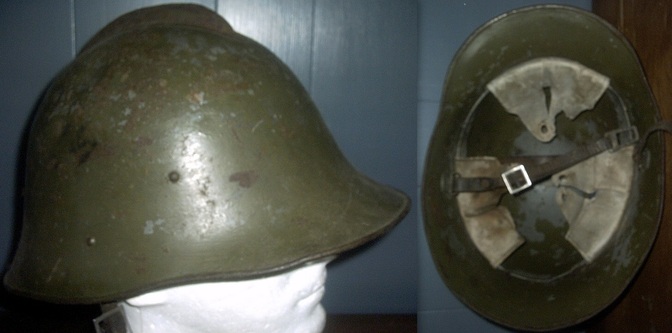
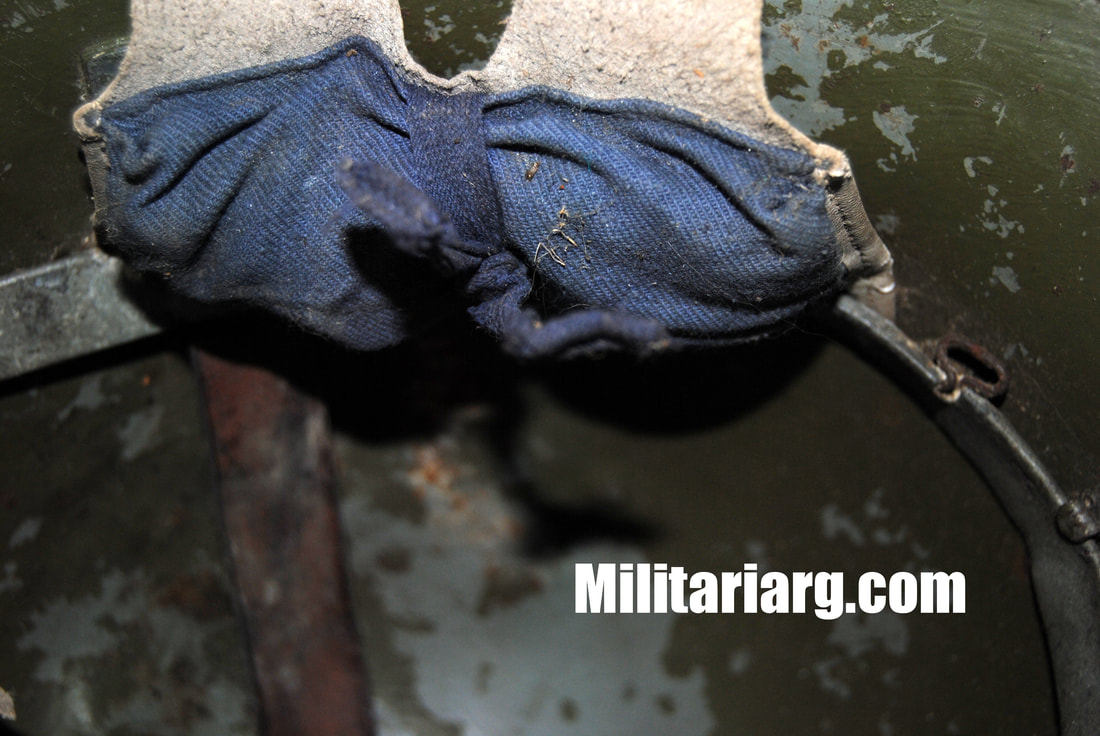
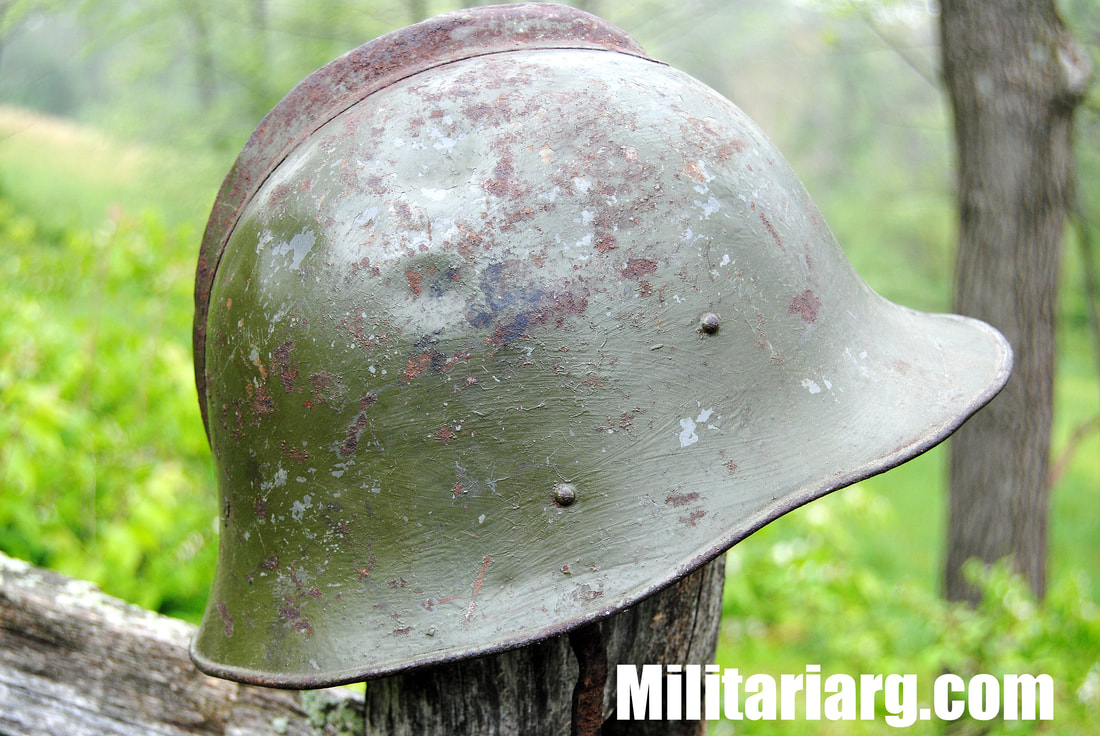
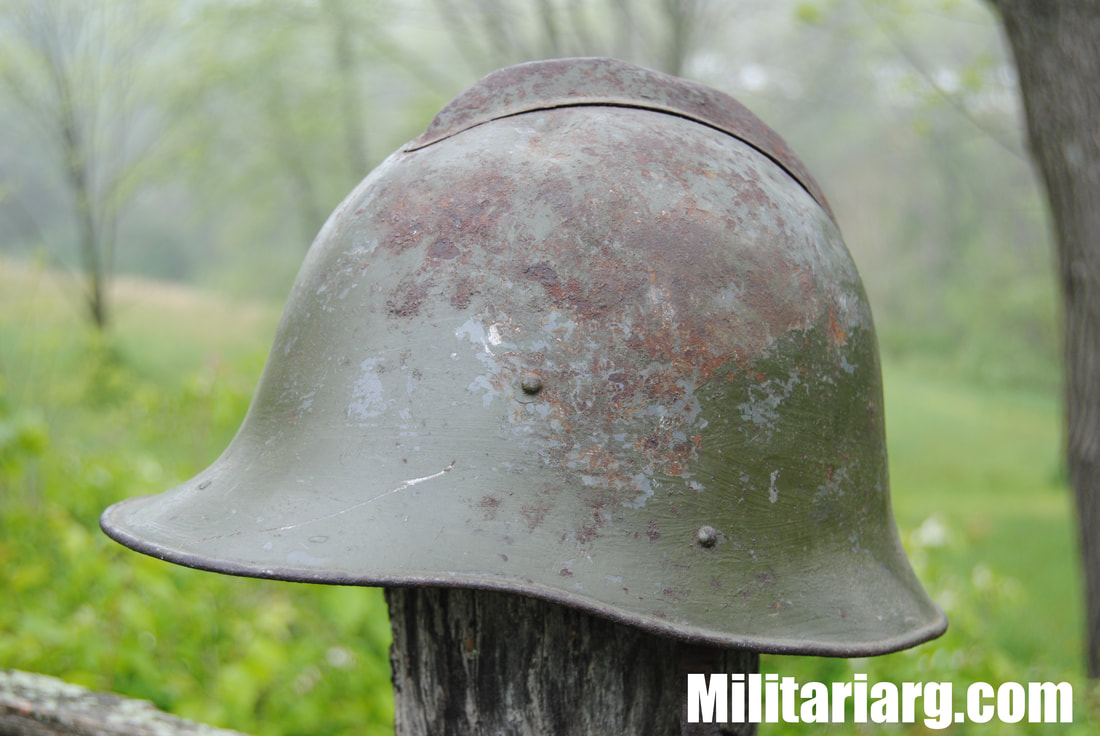
Polish Helmet WZ31. (No "Salamandra finish"). Reissued postwar period.
The Wz. 31 (Hełm wzór 31) was the iconic combat helmet of the Polish Army during the invasion of Poland in 1939. It is widely considered one of the most advanced and effective helmet designs of the pre-WWII era.
It was a deep, one-piece steel pressing with a flared rim and a slight "peak" at the front. The design offered excellent coverage of the ears and neck without the weight of the German Stahlhelm.
Liner. It utilized a three-pad leather liner system, similar to the German M31 liner, but with specific Polish modifications.

The Polish Army during World War II fought during the 1939 German and Soviet invasions using domestically developed equipment. After the country was overrun, Polish forces were re-formed in exile in France and Britain, as well as later in the Soviet Union (Berling's Army). These various Polish contingents used a mix of Polish pre-war designs, British, French, and Soviet equipment.
 
Weapons
The pre-war Polish Army used domestic variants of proven European designs. 

Rifles: The standard pre-war rifle was the Karabin wz. 98a (K98a), a Polish-made version of the German Gewehr 98 Mauser rifle. Polish troops in exile later used British Lee-Enfield rifles or Soviet Mosin-Nagant rifles, depending on where they served.
Pistols: The highly regarded Pistolet wz. 35 "Vis" (Radom) was the standard Polish sidearm. Many were captured and used by German forces.
Submachine Guns: Poland developed its own SMG, the Mors submachine gun (wz. 39), which saw limited use in 1939. Later in the war, the British STEN and Soviet PPSh-41 were widely used by Polish resistance (Home Army, or Armia Krajowa) and forces in exile.
Machine Guns:
Ckm wz. 30: A Polish license-built version of the U.S. Browning M1917 heavy machine gun.
Karabin maszynowy wz. 28: The standard light machine gun, a license-built version of the highly successful BAR (Browning Automatic Rifle). 

Artillery
Polish artillery was mostly domestic designs with an emphasis on anti-tank capabilities. 

Anti-Tank Guns: The Bofors 37 mm anti-tank gun (Armata przeciwpancerna wz. 36) was built under Swedish license and was a very effective weapon in 1939, capable of destroying early German Panzer I, II, and III tanks.
Field Artillery: The army used domestically produced field guns and howitzers, notably the Schneider 75 mm Mle 1897 (wz. 97) and the Škoda 100 mm howitzer (wz. 14/19).
Anti-Aircraft: The Poles used the excellent Swedish Bofors 40 mm gun (wz. 36) for anti-aircraft defense. 

Tanks and Vehicles
The Polish Army’s armored forces were characterized by innovative light tanks and reconnaissance vehicles, but lacked heavier designs. 

Light Tanks:
7TP: The 7TP was the primary pre-war Polish light tank. It was modern for its time, armed with the Bofors 37mm anti-tank gun. The 7TP was superior to the German Panzer I and II and the Soviet T-26 it faced.
Renault FT-17: WWI-era French tanks still formed a large part of the inventory but were completely obsolete.
Reconnaissance & Tankettes:
TKS and TK-3: These Polish-designed tankettes were small, tracked reconnaissance vehicles that were used extensively in 1939. A few were up-gunned with a 20mm cannon and proved highly effective in ambushes against German armor.
Armoured Cars: The Samochód pancerny wz. 34 was a domestically produced armored car used for reconnaissance and policing.
Vehicles: The Polish Army used a variety of domestic and imported trucks and transport vehicles.

​Later Polish forces fighting under Allied command (e.g., General Maczek's 1st Armoured Division) used British and U.S. tanks like the Sherman Firefly and Cromwell, while those fighting with the Soviets used T-34 tanks.

Picture

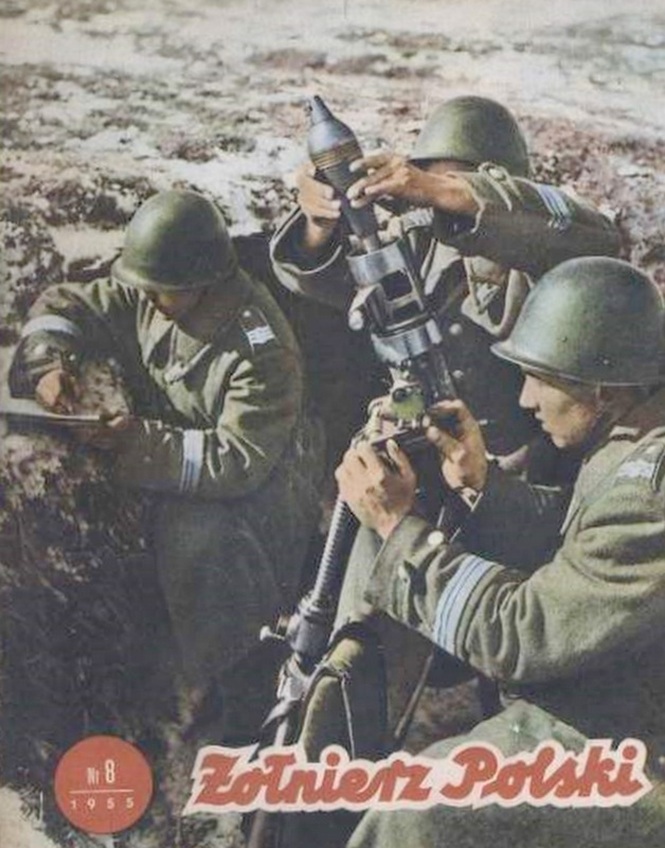
The Polish People's Army (LWP, and later the Polish Armed Forces) during the Cold War was a major component of the Warsaw Pact and relied almost entirely on Soviet-designed equipment, much of which was produced domestically in state factories under Soviet license. 

Weapons
Poland produced the Soviet Kalashnikov rifle design under license, adapting it to its own production methods.

Rifles: The standard service rifle was the PMK (Pistolet maszynowy Kałasznikowa), the Polish license-built version of the AK-47, later updated to the PMKS and kbk AKM variants (Polish AKM).
Pistols: The standard sidearm was the P-64 (9mm Makarov), a domestically designed pistol, supplemented by the larger P-83 Wanad in the 1980s.
Submachine Guns: The Polish Army used submachine guns like the PM-63 RAK, a domestically designed and produced machine pistol.
Machine Guns:
PK/PKM: Soviet-designed general-purpose machine guns, produced under license.
DSzK and KPVT: Heavy machine guns used on vehicles and in anti-aircraft roles.
Anti-Tank Weapons: The standard RPG was the Soviet RPG-7, produced in large numbers for Polish and export use.

Artillery
Polish artillery featured both Soviet systems and a number of domestic modifications, including the Beryl M59 recoilless rifle and the M-63 multiple rocket launcher.

Towed Artillery: The inventory included Soviet 122 mm howitzer D-30 and 152 mm howitzer-gun D-20 systems.
Self-Propelled Artillery: The Polish Army used Soviet systems like the 2S1 Gvozdika 122mm self-propelled howitzer.
Multiple Rocket Launchers (MRLs): The Soviet BM-21 Grad was a staple, but Poland also produced the WR-40 Langusta, a modernized version on a new domestic chassis after the Cold War ended.

Tanks and Vehicles
Poland had a significant heavy industry and produced T-55 and T-72 tanks under license, becoming a major supplier for the Eastern Bloc and export markets.

Main Battle Tanks (MBTs):
T-34/85: Used extensively in the immediate post-war era and for training into the 1970s.
T-54/T-55: Produced under license in massive numbers in Poland, these formed the backbone of the armored forces throughout the height of the Cold War.
T-72: Poland also produced the T-72M/M1 under license in the late Cold War period.
Armored Personnel Carriers (APCs) & IFVs:
BMP-1: The Soviet-designed IFV was used by mechanized units.
OT-64 SKOT: A high-quality, domestically produced 8x8 amphibious armored personnel carrier, jointly developed with Czechoslovakia.

Utility Vehicles: Polish transport relied heavily on domestic trucks like the Star 266 and Soviet vehicles like the ZIL-131.

Picture
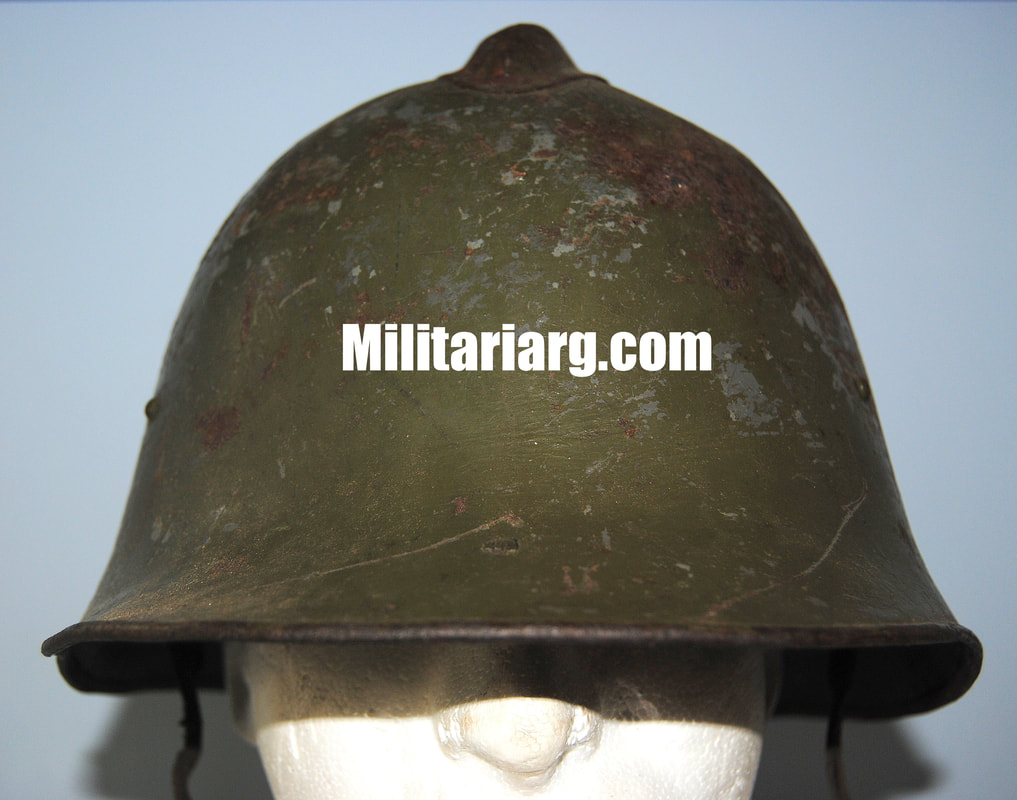
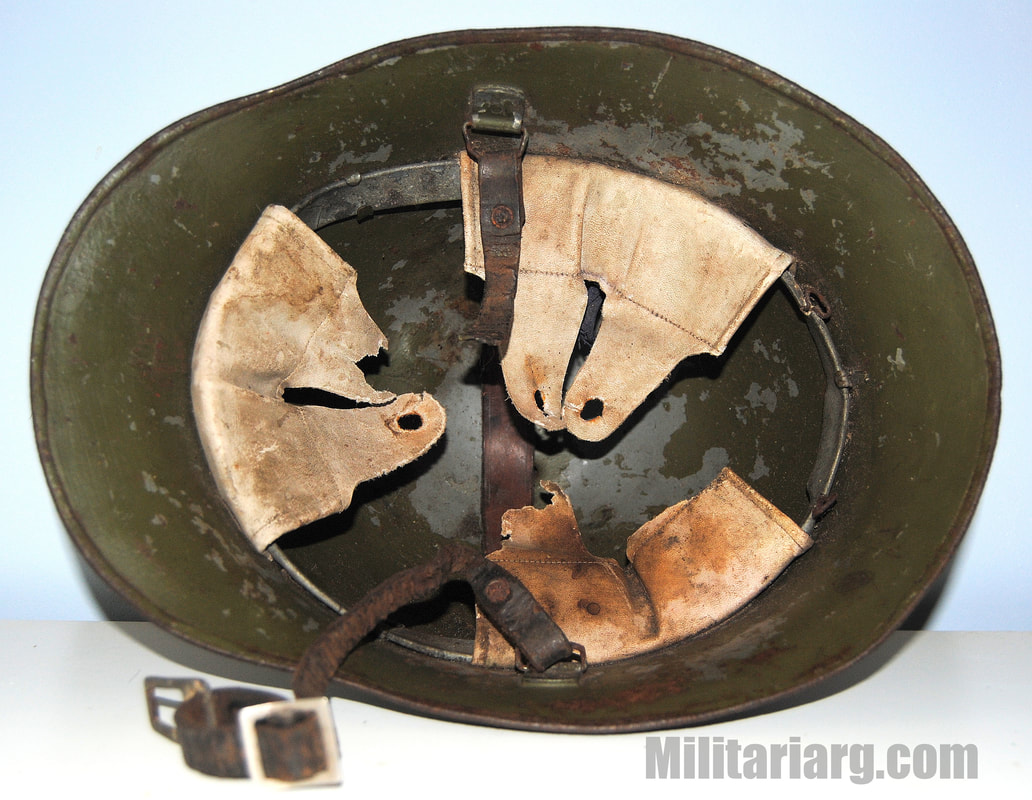
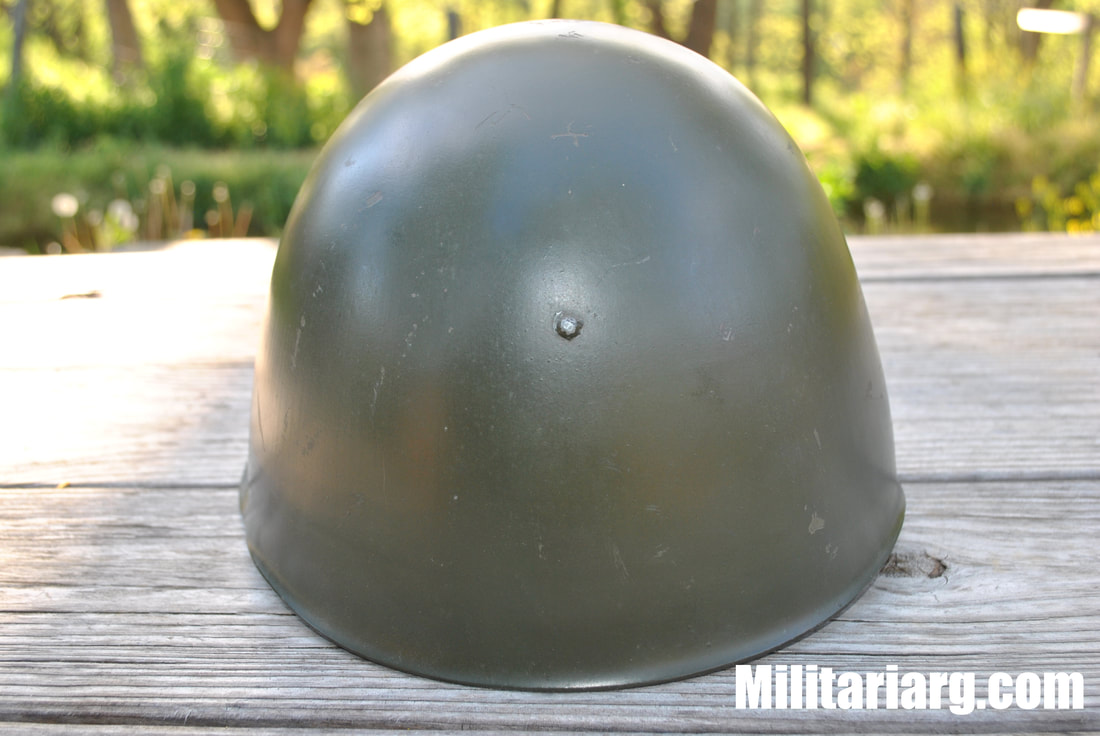
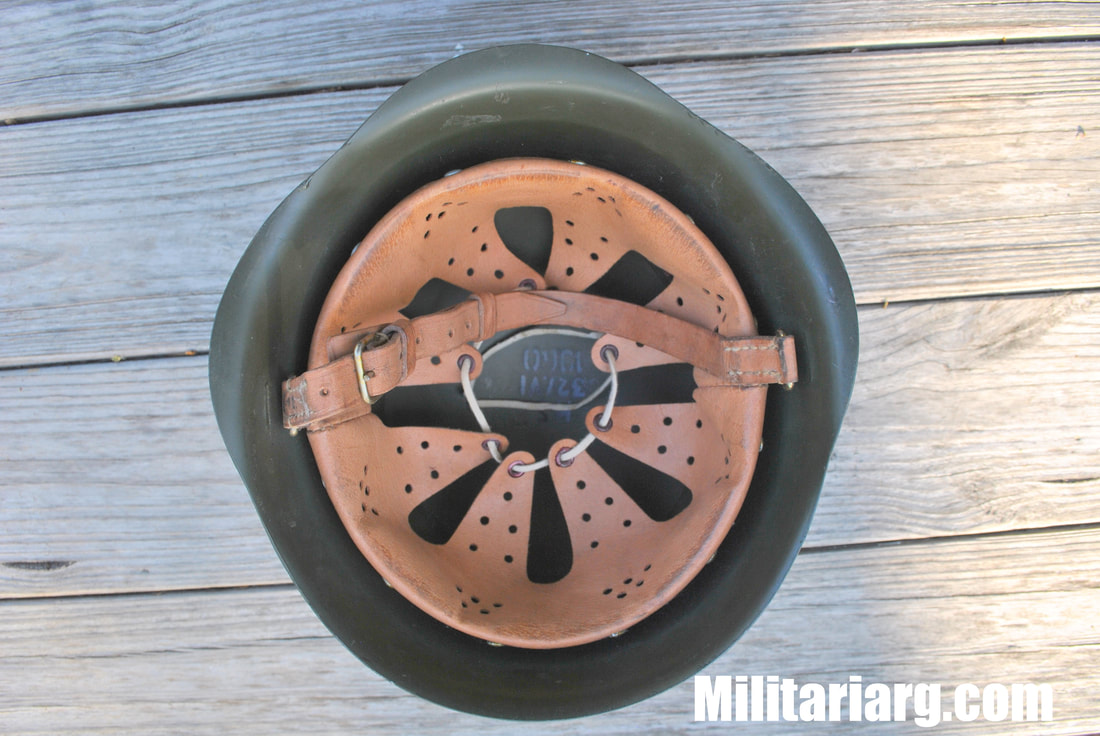
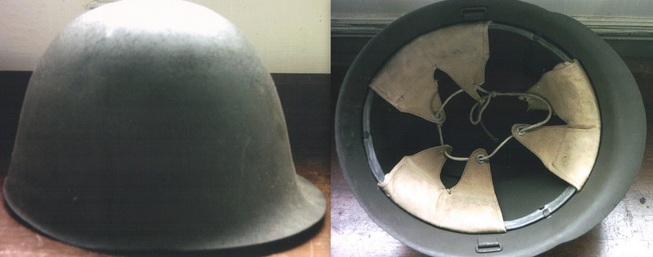
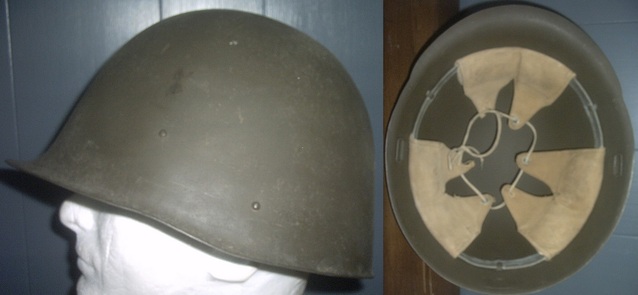
The Wz. 31/50 (Hełm wzór 31/50) is the postwar version of the 1939 Polish Wz. 31. After World War II, the Polish People's Army lacked enough Soviet-style helmets and decided to reissue surplus pre-war shells.

These use original shells produced by the Huta Ludwików steelworks in Kielce. Many were pre-war examples stripped of old paint, while others were unfinished shells found in factory storage after the war.
The unique "Salamandra" textured cork paint of the 1939 model was removed. Wz. 31/50 helmets are finished with smooth paint: khaki for the military or blue for civil defense.
​
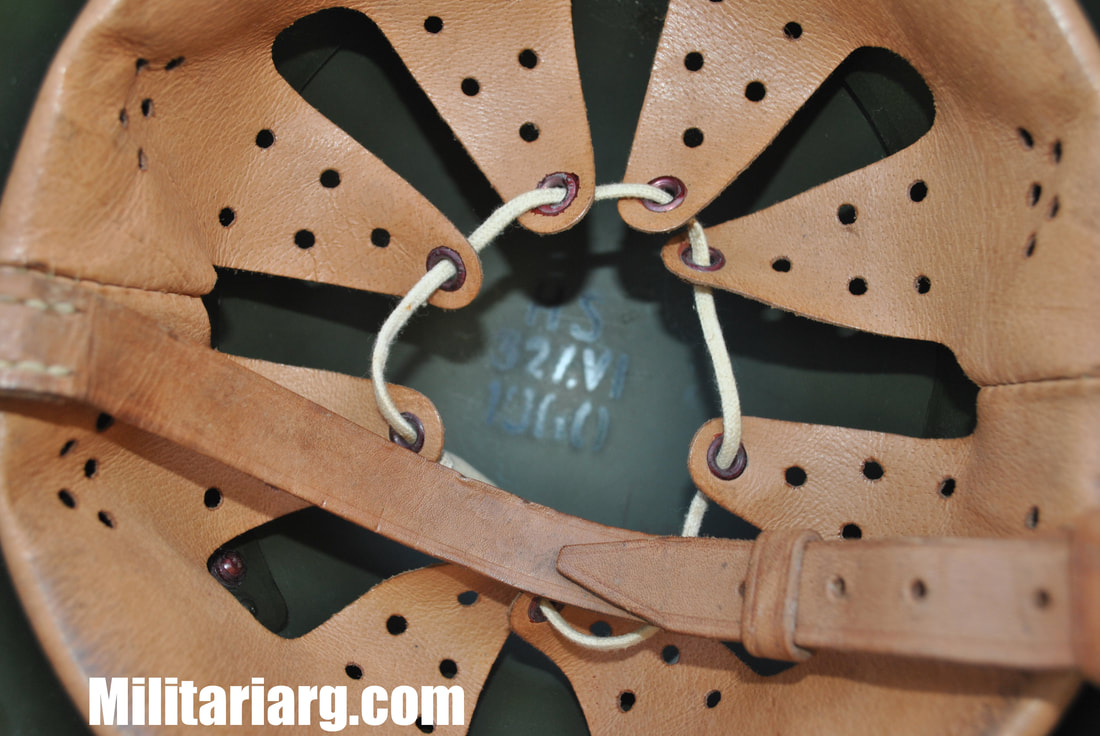
The pre-war three-pad liner was replaced with a new system that became standard for the later Wz. 50 helmet. Some versions also used modified German M1935 or Wz. 50 liners.
Because of the new liner, these helmets often feature additional rivets visible on the exterior that were not present on the 1939 model. They typically lack the single technical inspection rivet found on the rear of pre-war shells. 
The Wz. 31/50 was issued to military colleges, paramilitary groups, and Civil Defense units. While officially "phased out" by the 1960s in favor of the Wz. 50 and Wz. 67, refurbished examples have been found with date stamps as late as 1966, indicating they remained in training or reserve roles for decades.
Picture
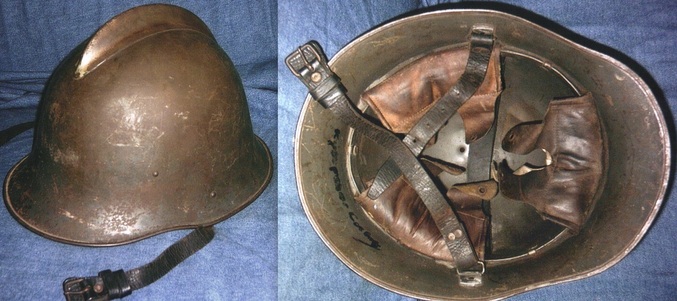
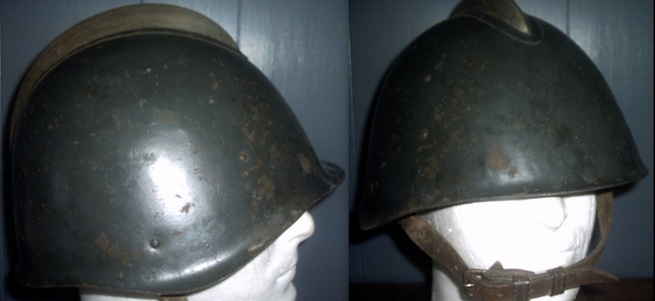
Polish Helmet WZ 35. Ludwikow Kielce factory.
The Polish Wz. 35 helmet was a specialized steel helmet manufactured primarily at the Huta Ludwików factory in Kielce for non-combat and civil defense roles. 
While the Polish military used the iconic Wz. 31 for frontline troops, the Wz. 35 was designed for the Fire Service (Straż Pożarna) and Air Defense (Obrona Przeciwlotnicza - OPL). 

The Crest (Grzebień). Its most distinguishing feature is a prominent steel comb or ridge running along the top of the shell. This was designed to provide extra structural strength and protect the wearer from falling rubble.
The shell shape was heavily based on the earlier Wz. 28 helmet, but updated with the top crest.
Color. Factory-standard examples were typically painted in a blue-gray color for civil defense and air raid wardens, though some were finished in khaki for specific military support units like medical services.
Liner. It utilized a three-pad leather liner system attached to a metal band, often featuring small internal pockets that could be filled with material to adjust the fit. 
Picture
WZ-35 Helm. This model is none other than the WZ-28, but with a crest on the top.

Manufacturing at Huta Ludwików
The Ludwików factory in Kielce was the primary producer of this model. 
Markings. Original helmets often feature a metal plate welded or soldered to the inside of the neck guard embossed with the manufacturer name "LUDWIKÓW KIELCE" and the year of production (e.g., 1937 or 1939).
Materials. These were made from standard steel plate rather than the high-grade nickel-chrome-molybdenum alloy used for the frontline Wz. 31 helmets. 

In some historical contexts, "Wz. 35" also refers to the highly secret Polish anti-tank rifle (kb ppanc wz. 35), also known as the "Uruguay" or "Ur" rifle.
Picture
Picture
Picture
Picture
Picture
Picture

Picture
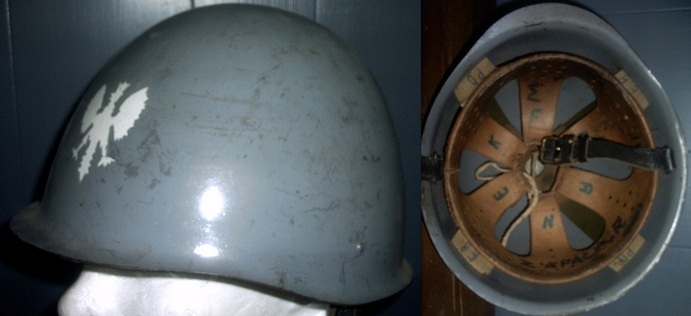
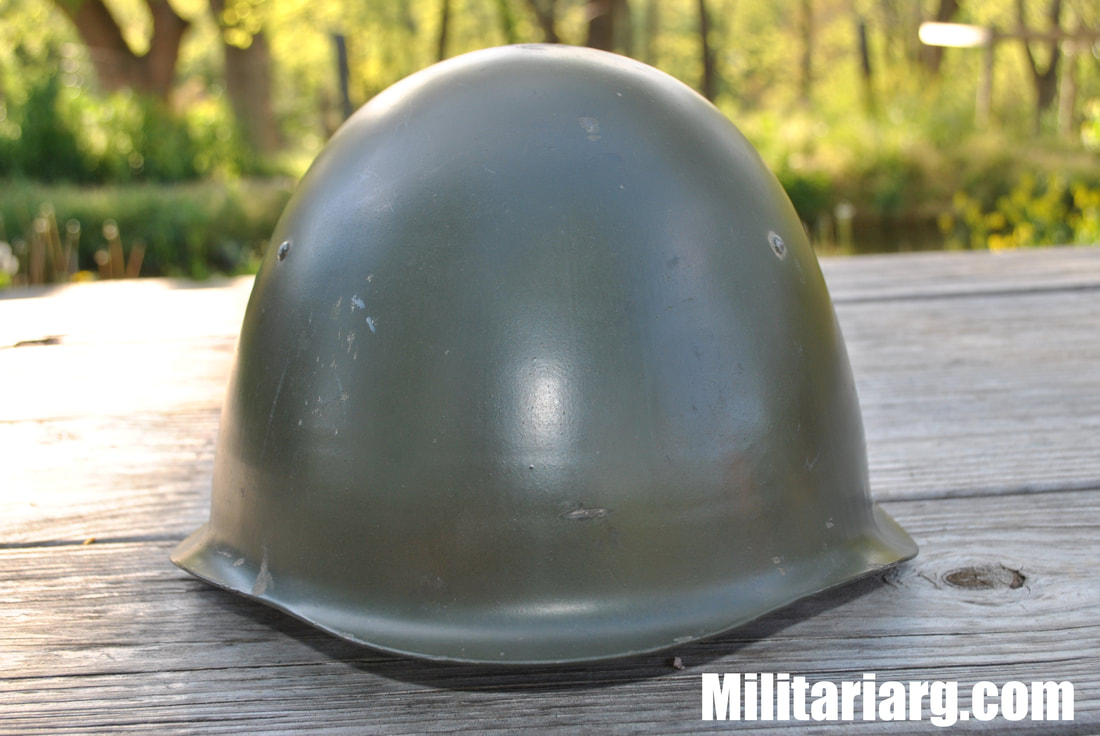
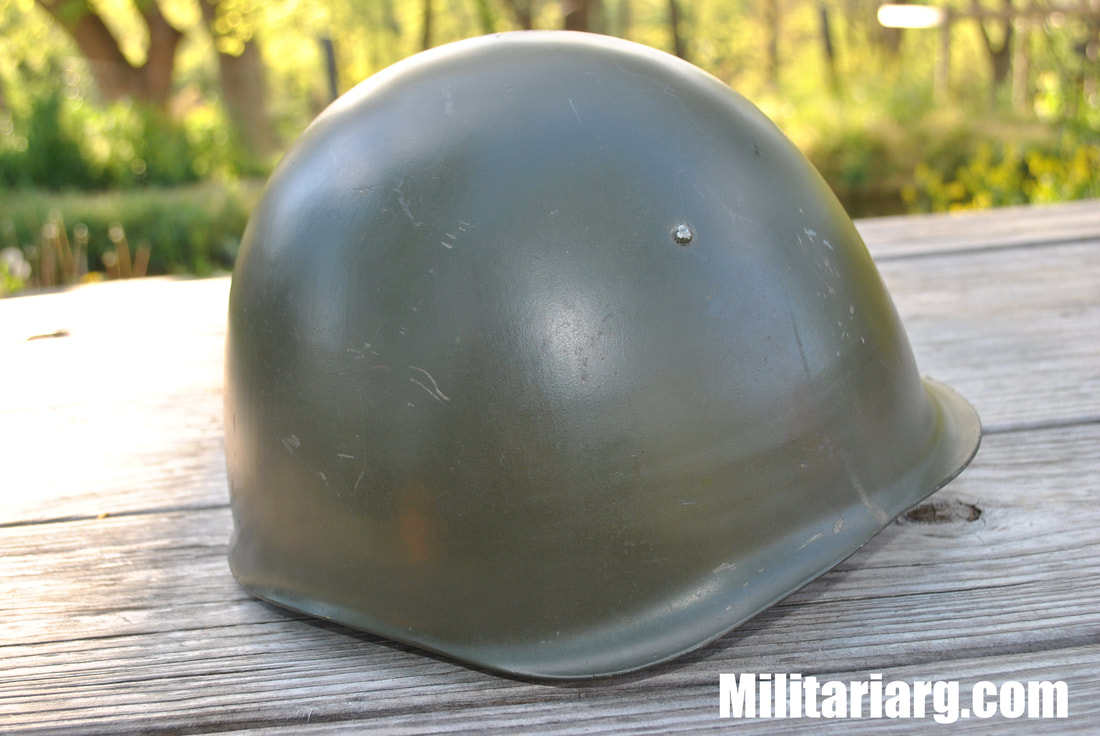
Polish Helmet WZ 50 Civil Defense. The Polish Wz. 50 Civil Defense helmet (Powszechna Samoobrona) is a specialized variant of the standard Wz. 50 combat helmet, which itself was a Polish-produced clone of the Soviet SSh-40. 
While the military version was standard olive drab or khaki, the Civil Defense (CD) versions are easily identified by their distinct colors and markings. Most Civil Defense units used shells painted in blue-gray or a distinct medium blue. Other colors like white were occasionally used for specific internal services.
Decals. Civil Defense helmets frequently feature a stenciled or decaled white eagle (often without a crown, consistent with the communist era) or the "OC" symbol (Obrona Cywilna).
Crest Variant. A specific, rare variant for Civil Defense featured a prominent steel crest welded to the top of the shell, intended for extra protection against falling debris in urban environments. 
Picture
WZ 50. Polish Helmet. ​Civil defense.
Picture
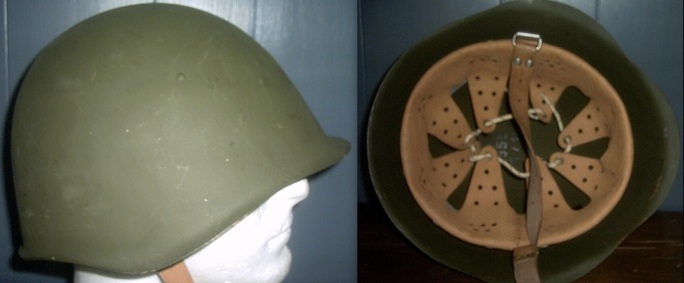
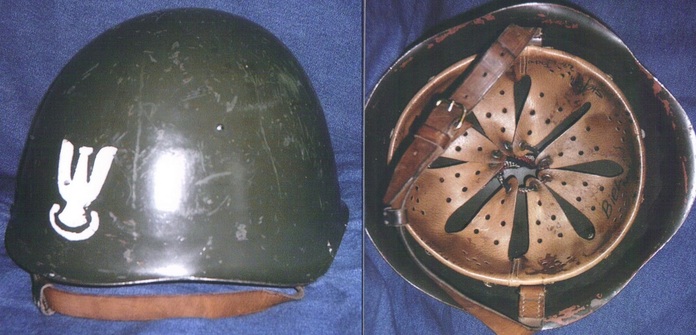
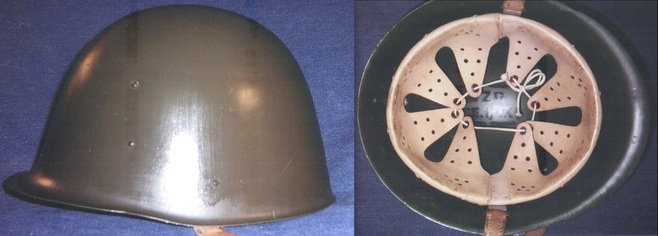
The Wz50  retained the standard 1.4 mm thick steel shell of the SSh-40 pattern.Unlike the Soviet SSh-40, which used a cloth pad system, the Polish Wz. 50 used a leather liner system influenced by the Italian M33 helmet. This liner consists of a springy steel hoop with leather tongues attached. These were primarily manufactured between 1950 and 1955 at factories such as the Kieleckie Zakłady Wyrobów Metalowych (KZWMet, formerly Ludwików). 

As the military transitioned to the Wz. 67 helmet in the late 1960s, thousands of surplus Wz. 50 helmets were transferred to Civil Defense and industrial guard units. They remained in storage and use with Polish reserve and civil defense organizations well into the 1980s and 90s.
Picture
 WZ50 Polish helmet with Army badge, insignia..
Picture
Wz 67 Polish Helmet "MO", which stands for Milicja Obywatelska (Citizen's Militia). 
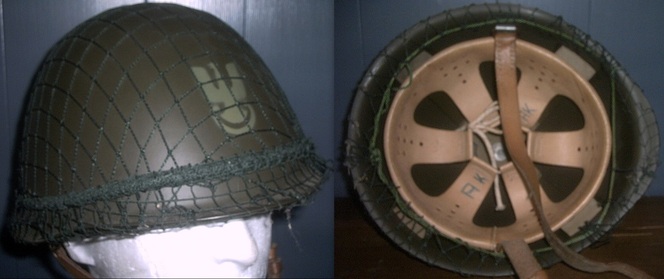
The Wz. 67 helmet (Hełm wzór 67) was the standard steel combat helmet of the Polish People's Army, introduced in 1967 to replace the older Wz. 50 model. It remained in widespread service until the 1990s and is still used by rear-line and training units today. 
Picture
The WZ67 design represents a distinctly Polish evolution, combining elements of earlier models rather than being a direct Soviet copy. The shape refers back to the pre-war Wz. 31 helmet, with a deep bowl and slightly marked peak, providing a unique profile that distinguished it from other Warsaw Pact nations' helmets. It featured a slightly straighter, unrolled edge compared to some earlier designs.
The helmet shell is pressed from a special steel sheet with a thickness of 1.4 mm.
The liner was a leather system attached to a metal ring, secured by a single screw at the top of the helmet. This allowed for easy removal or adjustment and facilitated wearing the helmet over a fur hat in winter. The leather was often a unique, soft, grainy Polish leather.
The chinstrap was also made of leather and attached directly to the shell, featuring a metal buckle.
Military versions were painted olive green and often featured a stenciled or decaled white eagle emblem on the front.
Picture
WZ 67 Polish Army Helmet. NOS condition.

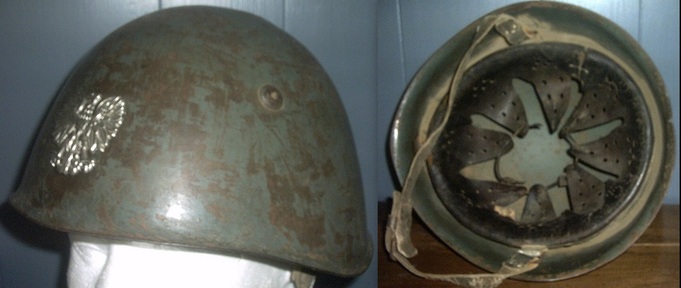
WZ50 Polish Helmet. This is one of the most interesting helmet designs of the Cold War. It has the shape of the Soviet shell but with the copy of the Italian M33 liner.
Picture
Picture
Picture
Picture
Picture
The Polish Wz. 50 helmet features an internal system based on the Italian M33 liner primarily because of the design's perceived technical superiority and practical manufacturing advantages. 
Many historians and gear enthusiasts consider the Italian M33 liner the "gold standard" of steel helmet internals for that era.
​The similarity is so high that many of the internal components, including the springy hoop and leather liner elements, are virtually identical to those found in the original Italian M33. 
While the Wz. 50 shell was a clone of the Soviet SSh-40, Poland opted for the Italian-style internal fittings for several specific reasons.
The core of the Italian M33 system is a springy steel hoop attached to the shell via three brackets. This creates a space between the wearer's head and the steel shell, providing significantly better protection against shock and concussion than the simpler pad system used in Soviet helmets. The leather "tongue" system (usually eight tongues) and the spring-mounted band allowed the helmet to sit more securely and comfortably on the head, even during heavy movement.

Picture
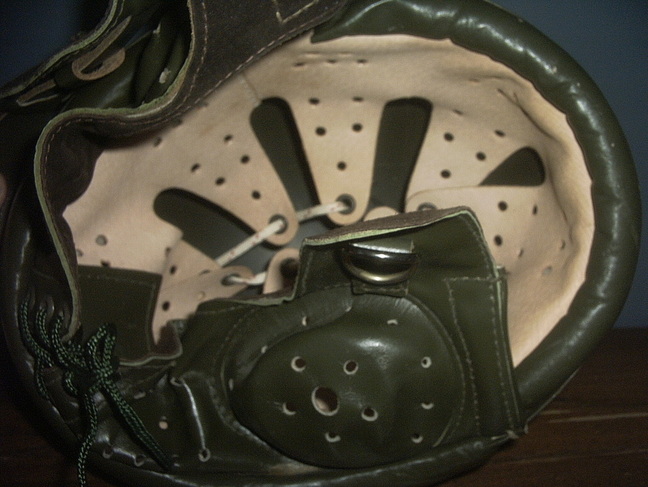
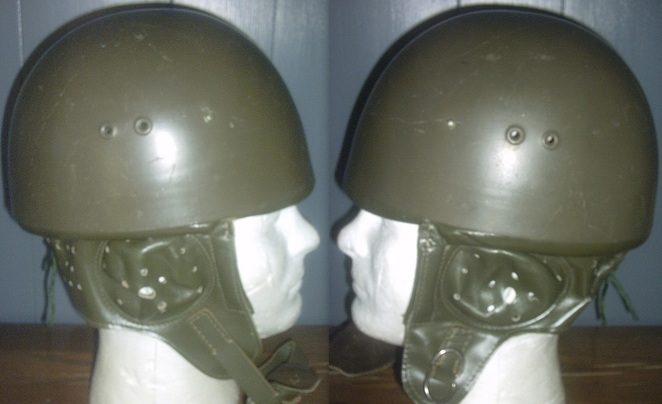
Hełm wzór 63  is not simply a cut-down Wz. 50, but a distinct design created from scratch to meet the specific requirements of the Polish airborne forces. While they share a similar aesthetic (round, deep bowl) and even borrowed elements of the internal liner philosophy (Italian M33-style leather pads), the Wz. 63 shell was engineered with a different profile. 
The Polish Wz. 63 paratrooper helmet is a unique Polish-designed steel helmet that was the standard issue for airborne and special forces units from 1963 onwards, and unlike other Warsaw Pact nations, Poland opted for a steel helmet rather than a plastic or cloth one.
Picture
The helmet has the shape of a deep, oval bowl with no visor or nape, designed for optimal comfort and stability during jumps and movement. It is constructed of steel and painted with a smooth, khaki green varnish.
The liner is a hybrid system. It uses a fascia almost identical to the Wz. 50, which is based on the Italian M33 system, but with an additional foam pad for enhanced shock absorption.
The WZ63 features a full-coverage leather "pilot cap" (similar to a short motorcycle helmet liner) with an eight-tongue system for comfort and stability. Early models had a brown leather liner, which changed to dark green from 1965. Its liner includes pockets on the sides designed to hold headphones for communications.
The chinstrap is a sturdy leather system with a large chin cup and a two-ring friction buckle, designed to keep the helmet firmly in place during high-impact situations.
There are two ventilation holes on each side of the helmet shell. 

The Wz. 63 was a very popular and successful design that was also exported to other countries, most notably East Germany (where it was used by special forces and police) and Iraq.

Picture
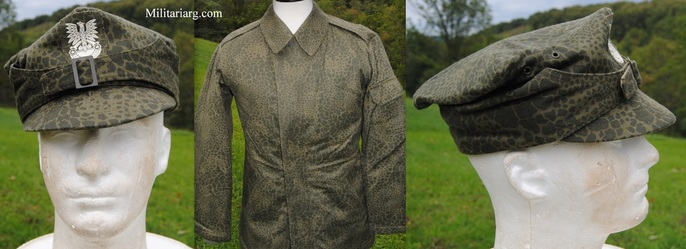
Czapka Polish cap and coat, MORO camouflage pattern.

Powered by Create your own unique website with customizable templates.