Militariarg.com
  • Home
  • Army
  • Aviation
  • Navy
  • Uniforms and Badges
  • Arms and Weapons
  • Equipment
  • Vehicles
  • Operational and Organizational Structure, Security Forces, Transportation, Books, Models and More.
  • Argentine Confederation Era. 1829 - 1852.
  • From 1852 to 1910 (French fashion)
  • Bunker 1982: South Atlantic War Militaria
  • International Militaria
  • Argentina WWII Era (Neutral) Reenactment Impression
  • Links ~ Enlaces
Picture
Colt M/29 machine gun and M31 helmets.

Norway maintained strict neutrality during World War I and mobilized its forces solely for border protection to ensure national sovereignty. Its military was equipped with a mix of domestically produced and European designss. 

Weapons
Norwegian small arms were high-quality, domestic designs produced by the Kongsberg Våpenfabrikk state factory. 

Rifles: The standard infantry weapon was the Norwegian-designed Krag–Jørgensen bolt-action rifle, primarily the Gevær m/1894 rifle and the shorter Karbin m/1912 variant. It was chambered for the 6.5x55mm Swedish Mauser cartridge.
Pistols: The standard sidearm was the Pistol M.1914, which was Norway's licensed production of the American Colt M1911 pistol.
Machine Guns: The army utilized the German Maxim machine gun (MG08 model) for heavy use, often produced locally, and had the Danish Madsen machine gun in its inventory. 

Artillery
Norwegian artillery was considered standard for the era but was of small caliber compared to the major powers involved in the conflict. 

Field Artillery: The primary field gun was the Ehrhardt 7.5 cm Model 1901, a modern, quick-firing Bofors design produced under license in Norway.
Heavy Artillery: The army also had battalions of heavy artillery, although details on the specific models are less detailed in available records.
Mortars: Mortars were available in limited numbers, with only two typically assigned per battalion. 

Tanks and Vehicles
The Norwegian Army did not have any tanks during World War I. 

Vehicles: The infantry moved by foot, and the artillery was primarily horse-drawn. The supply trains used a combination of horse-drawn and some motorized transport. The first interest in armored vehicles did not emerge until the 1930s, and the country acquired only one single light tank (the Landsverk L-120 chassis) before the German invasion in 1940. 

The Norwegian Army in World War II was largely equipped with early 20th-century and WWI-era weaponry, a reflection of its long-standing neutrality and limited military budget.
 
Weapons

Rifles: The standard service rifle was the Krag–Jørgensen M1894, a reliable but dated bolt-action rifle chambered in 6.5x55mm.
Pistols: The standard sidearm was the Colt Kongsberg M1914, a licensed Norwegian production of the American Colt M1911.
Machine Guns:
Madsen M14 and M29: These Danish-designed machine guns served as the primary light machine guns (LMGs).
Colt M/29: This was a heavy machine gun, a licensed version of the U.S. Browning M1917, used in both infantry and anti-aircraft roles.
Resistance Weapons: During the occupation, the Norwegian resistance used a mix of captured German weapons (like the Mauser Karabiner 98k and MP 40 submachine guns) and Allied arms (such as the British Sten gun and U.S. M1 Carbine) parachuted in as military aid. 

Artillery
The Norwegian field artillery was a mix of WWI designs.

Field Guns: The main piece was the Ehrhardt 7.5 cm Model 1901 field gun.
Howitzers: Units also used the Kongsberg 12 cm field howitzer M32.
Coastal Artillery: Coastal fortifications, such as the Oscarborg Fortress (famous for sinking the German cruiser Blücher), used a variety of older, large-caliber guns, including 28 cm (11-inch) Krupp guns and old Austro-Hungarian torpedoes. 

Tanks and Vehicles
The Norwegian Army in 1940 was severely lacking in armored fighting vehicles and mechanization. Most transport was still horse-drawn. 

Tanks: Norway possessed only one functional tank at the time of the invasion: a single Swedish-built Landsverk L-120 light tank chassis known as the "Rikstanken," which was used for training purposes only.
Armored Cars: They had a small number of domestically produced armored cars, such as the Panserbil M-23.
German Armored Vehicles (post-invasion): After the German occupation, captured German vehicles such as the Panzer III and StuG III assault guns were later used by the Norwegian Army following the war, but were not part of the initial defense.

Norway maintained a consistent policy of neutrality until it was forcibly drawn into World War II. Its role evolved significantly, leading to its fundamental alignment with the West and NATO during the Cold War.
 
World War I (1914–1918)

Norway declared itself strictly neutral during World War I, like its Scandinavian neighbors Sweden and Denmark. However, its neutrality was repeatedly violated, particularly due to its heavy reliance on a large merchant navy.

"Neutral Ally": While officially neutral, Norway was pressured by Great Britain to reduce trade with Germany, eventually becoming described by some as a "neutral ally" of the Entente powers.

Shipping Losses: The Norwegian merchant fleet suffered heavily from German U-boat attacks. Over 2,000 Norwegian sailors were killed and nearly half of its fleet was sunk during the war. 

World War II (1939–1945)
Norway again attempted to declare neutrality at the outbreak of World War II. This was shattered by the German invasion. 

German Invasion (April 9, 1940): Germany launched Operation Weserübung, invading Norway to secure crucial iron ore supply routes from Sweden and establish naval bases.

Resistance: Norwegian forces, aided by British, French, and Polish expeditionary forces, resisted for two months, capturing German heavy cruiser Blücher and briefly retaking Narvik, but were eventually forced to capitulate in June 1940.

Government-in-Exile: King Haakon VII and the government fled to London, where they formed a government-in-exile. The Norwegian merchant navy and the "Little Norway" air force training camps in Canada provided vital support to the Allied war effort.

Occupation and Quislings: Norway was occupied for five years under a Nazi-controlled regime led by Vidkun Quisling, who became a symbol of collaboration. A strong and extensive resistance movement worked internally against the occupiers. 

Cold War
The experience of the German occupation ended Norway's long-standing tradition of neutrality. 

Founding of NATO: Norway was a founding member of NATO in 1949. The alliance provided the security guarantee the nation sought against the Soviet Union, with which it shared a small land border in the far north.

Base Policy: To balance its NATO commitment with not provoking the Soviets unnecessarily, Norway established a self-imposed "base policy": it banned the permanent stationing of foreign troops or nuclear weapons on Norwegian soil during peacetime.

Strategic Northern Flank: Norway served as NATO's critical northern flank, a key area for surveillance of Soviet naval activities in the Barents Sea and the North Atlantic.

Military Development: The Norwegian Armed Forces were modernized and built up under NATO doctrine, focusing on mobile defense in difficult Arctic terrain, with heavy support from Allied reinforcements planned in case of war.

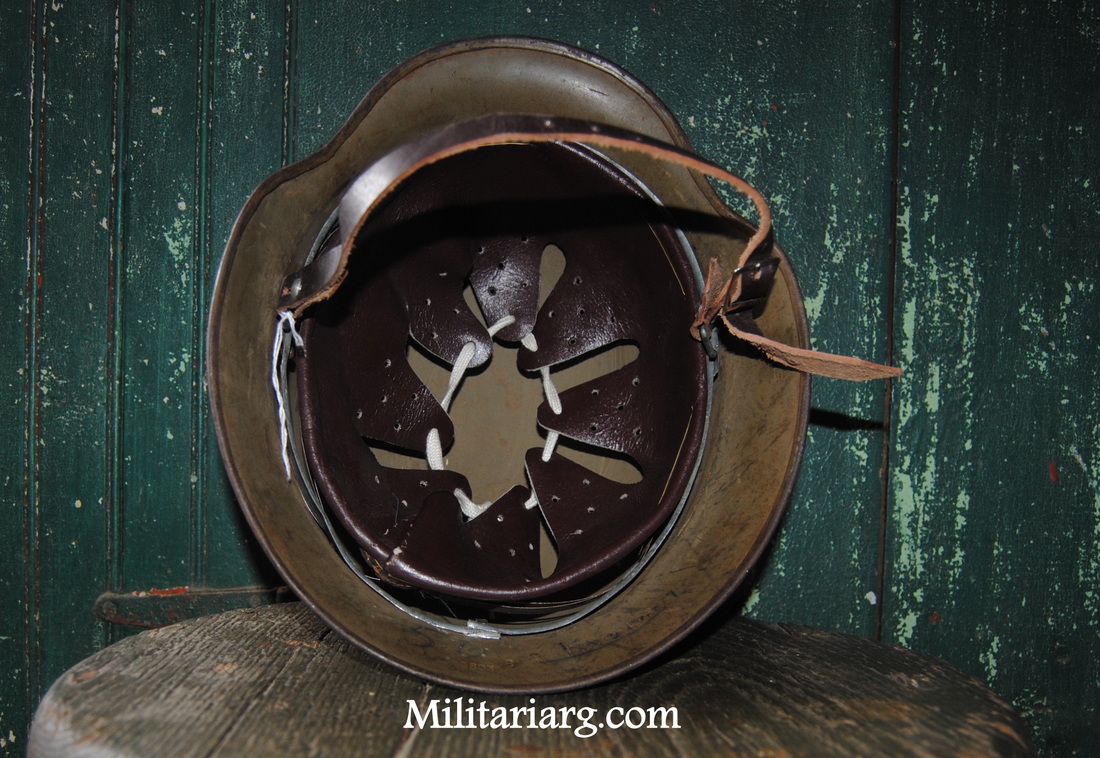
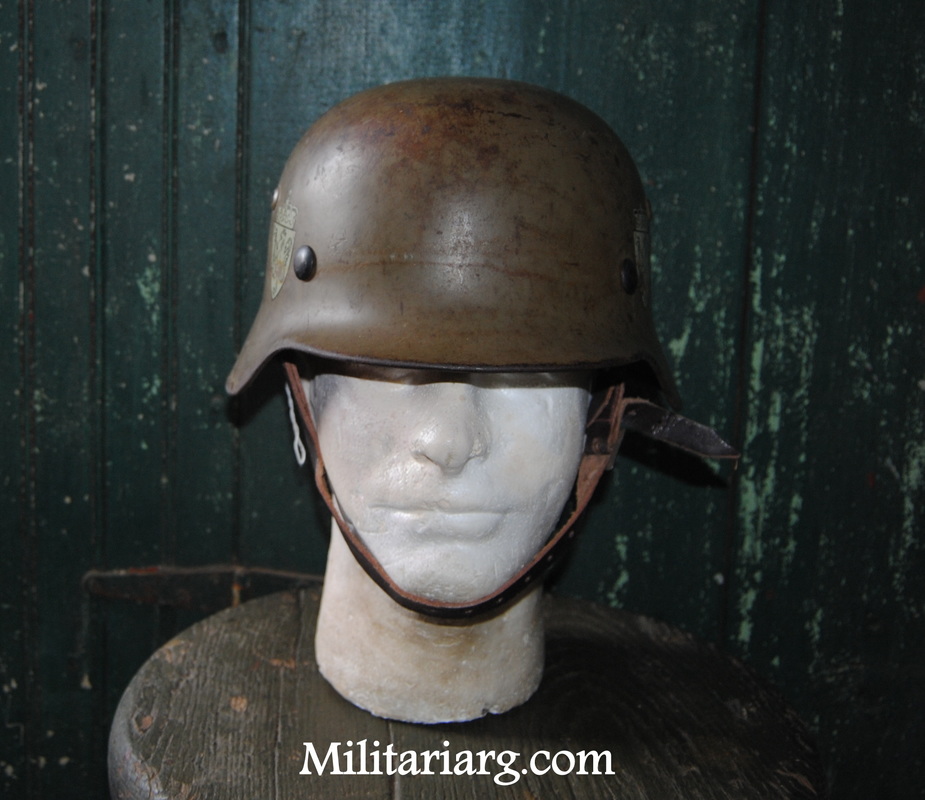
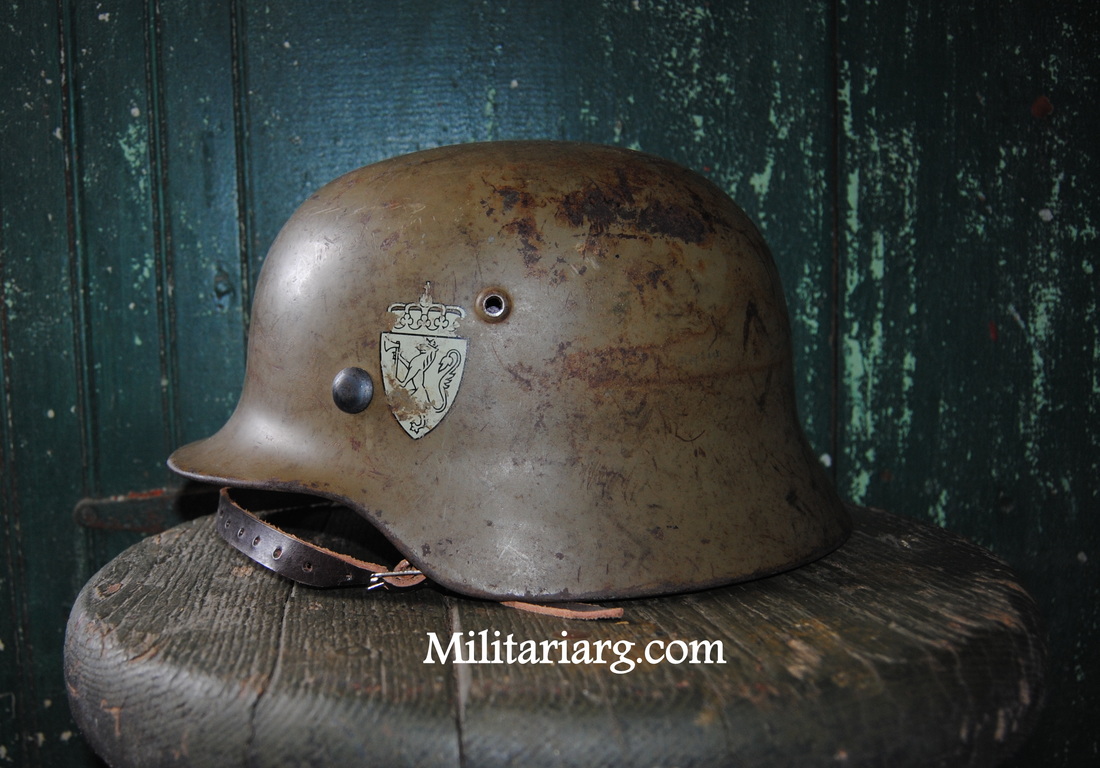
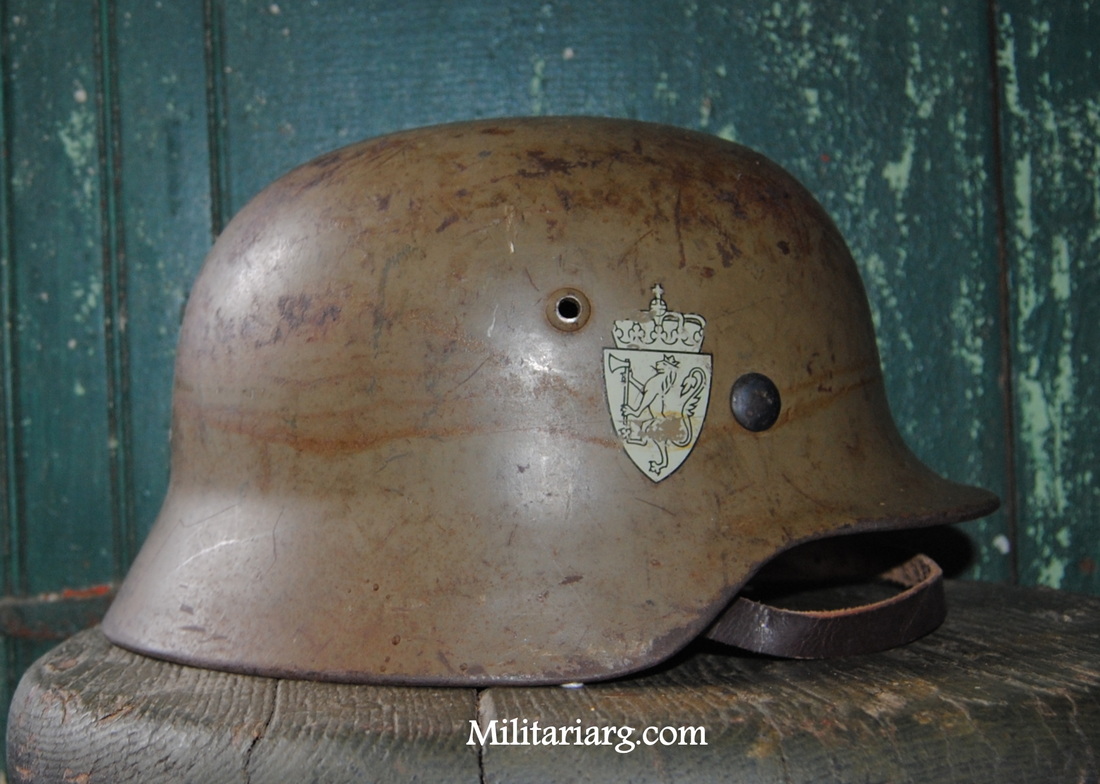
M35 Reissued and Refurbished German helmet

Picture
Norwegian WWII M35 German Helmet (ET 64) Reissue. The helmet was refurbished, with new leather liner and paint.
Picture
Picture
Picture
Picture
The Norwegian-reissued German shells (M35, M40, and M42) actually saw a much longer and more prominent "second life" than the original Norwegian M31.
Norway wanted the comfort of the American M1 but had thousands of superior German steel shells. Their solution was ingenious; They used a plastic/fiberglass "cradle" (often a light tan or green) that mimicked the internal suspension of a U.S. M1 liner. A thick, reddish-brown leather sweatband was clipped to this plastic frame.To fit this American-style system into a German shell, they had to drill three new holes into the steel. This is the easiest way to spot a Norwegian reissue: the original German rivet holes are empty, and three new, larger rivets hold the plastic liner in place.

Norwegian M58 

Picture
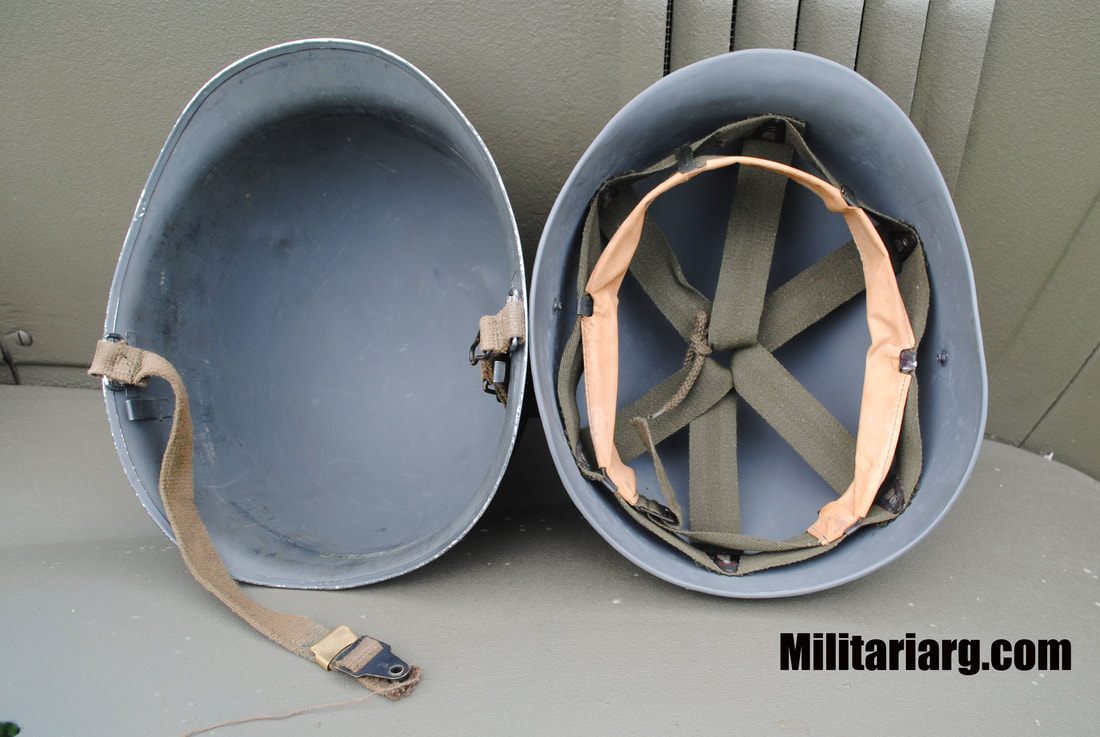
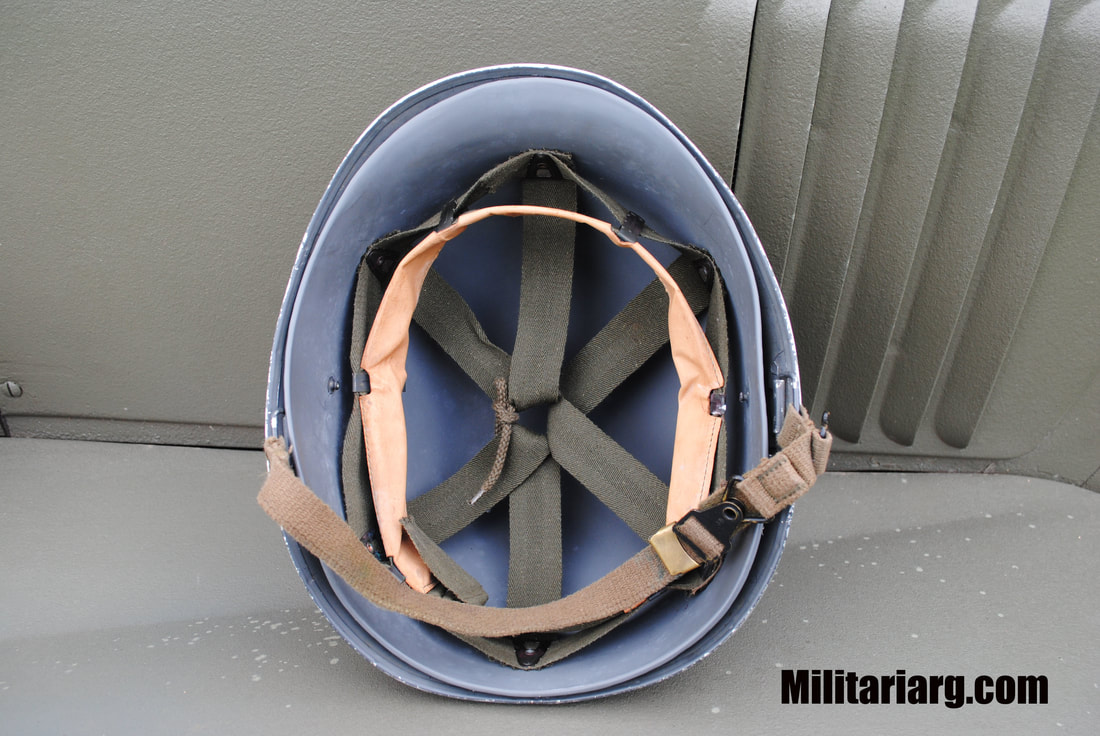
Left: Austrian M75 Shell. Right: Danish M48 liner.
Picture
The Norwegian M58 helmet is a Cold War-era clone of the American M1 helmet. Adopted in the late 1950s, it replaced the variety of surplus headgear primarily British MkIIs and reissued German Stahlhelms that Norway had used since the end of WWII.
While it looks nearly identical to the U.S. "steel pot," the M58 has distinct European production roots. 
Most M58 steel shells were manufactured in Austria by the company Ulbrichts Witwe Schwanenstadt.
The inner adjustable liners were typically made in Denmark by DKI. Unlike the US resin-fiber liners, Norwegian ones are made of a thick, olive-drab plastic.
A common Norwegian practice was to tuck hessian (burlap) strips or scrim under a helmet net to reduce gloss and provide camouflage.

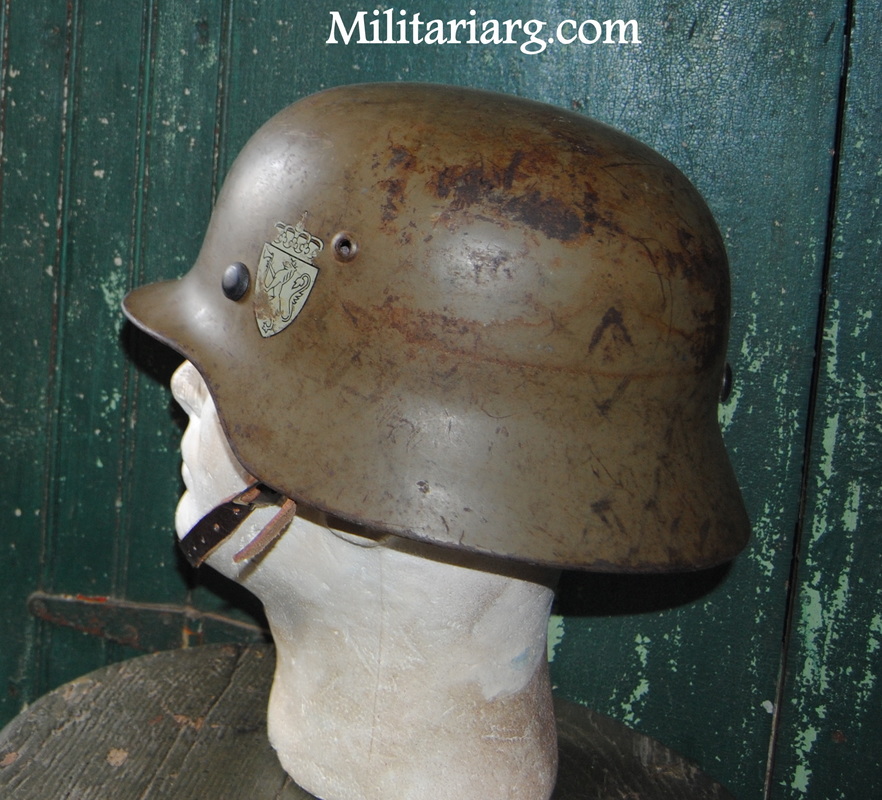
Norwegian M31 "Baltic" Helmet (Hjalmar) with crest.

Picture
Picture
Picture
Picture
Picture
Picture
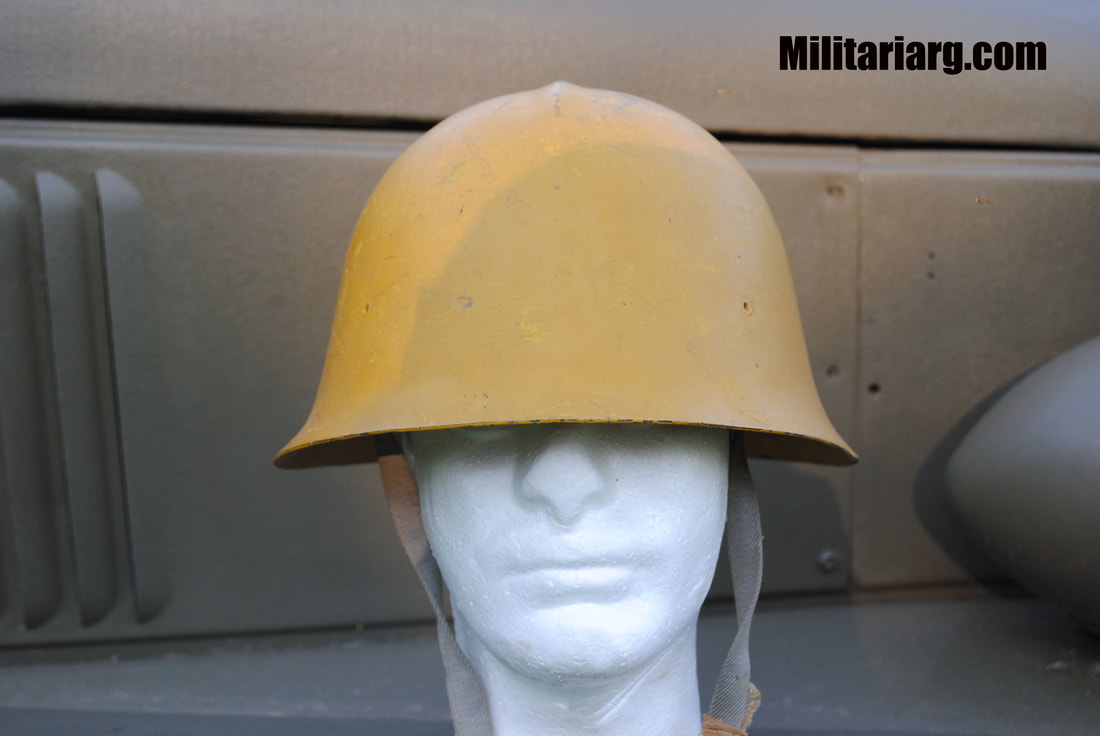
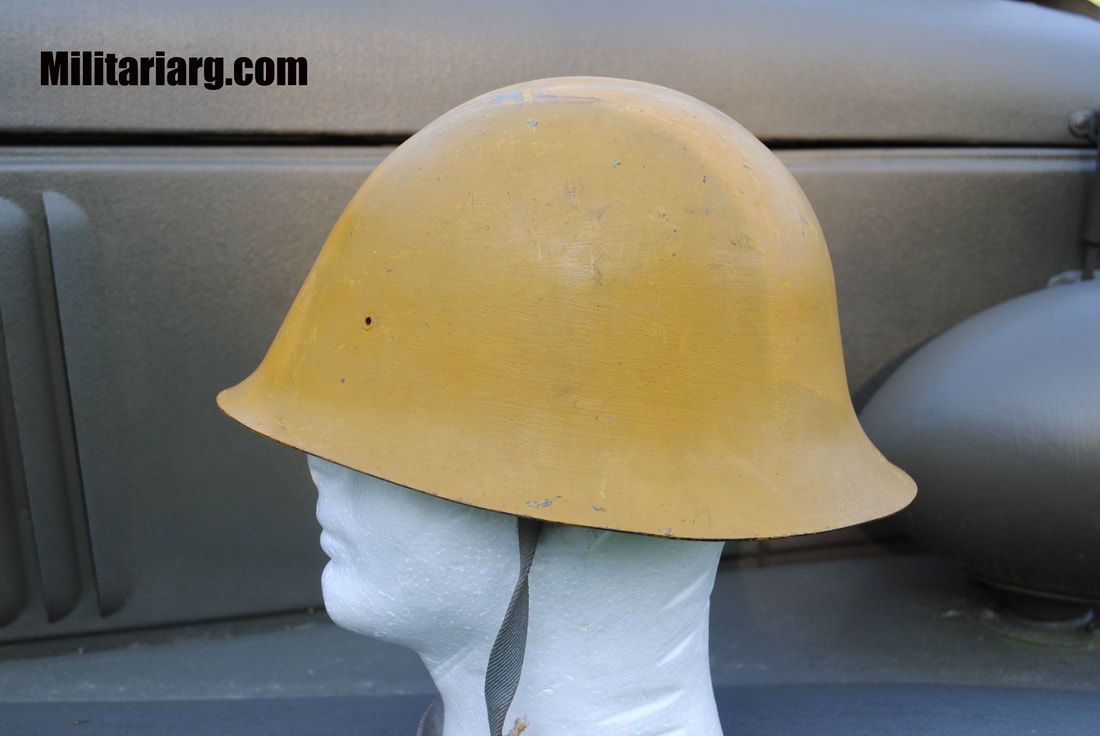
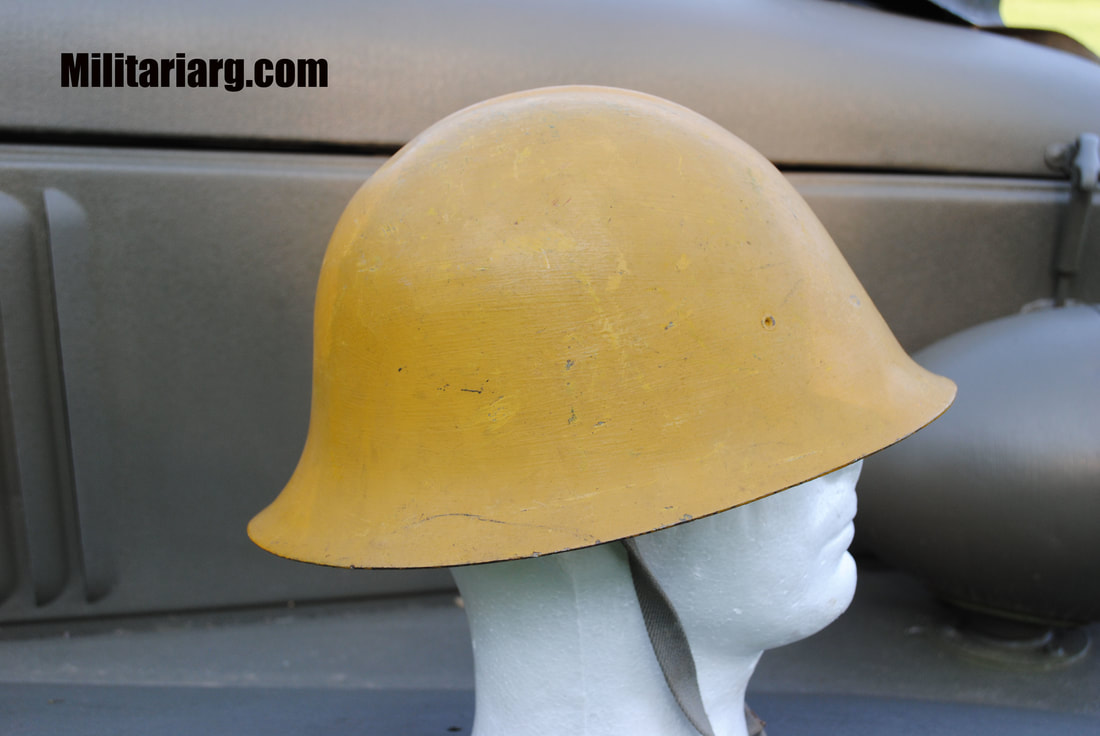
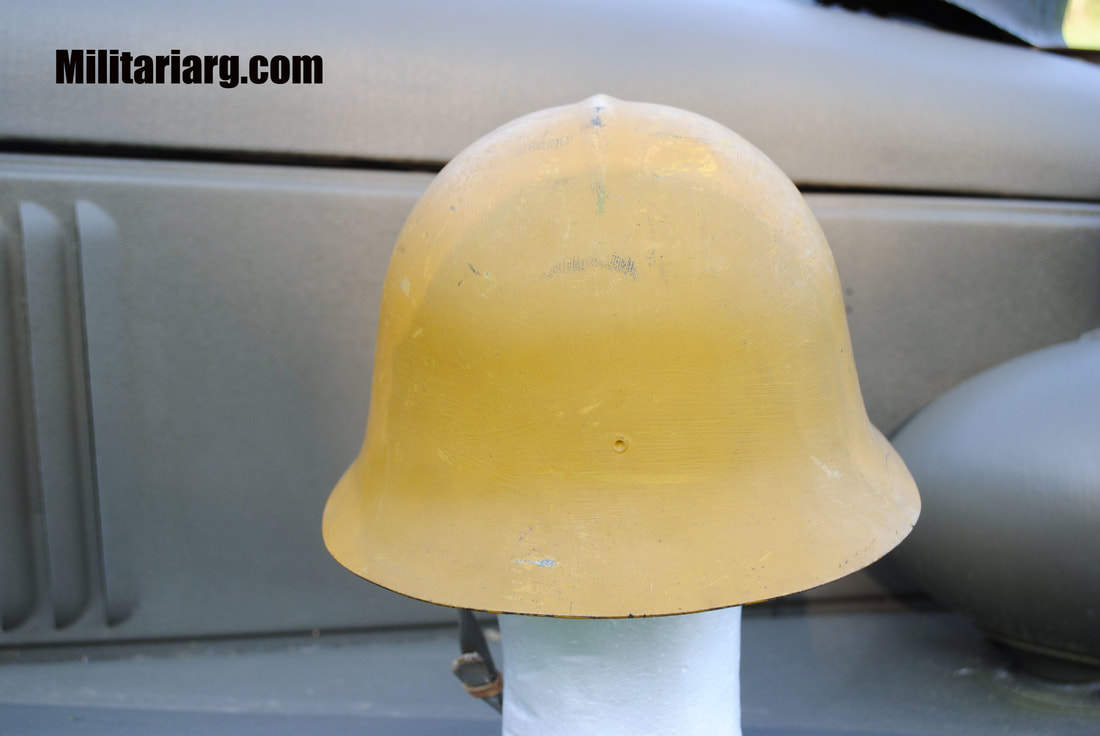
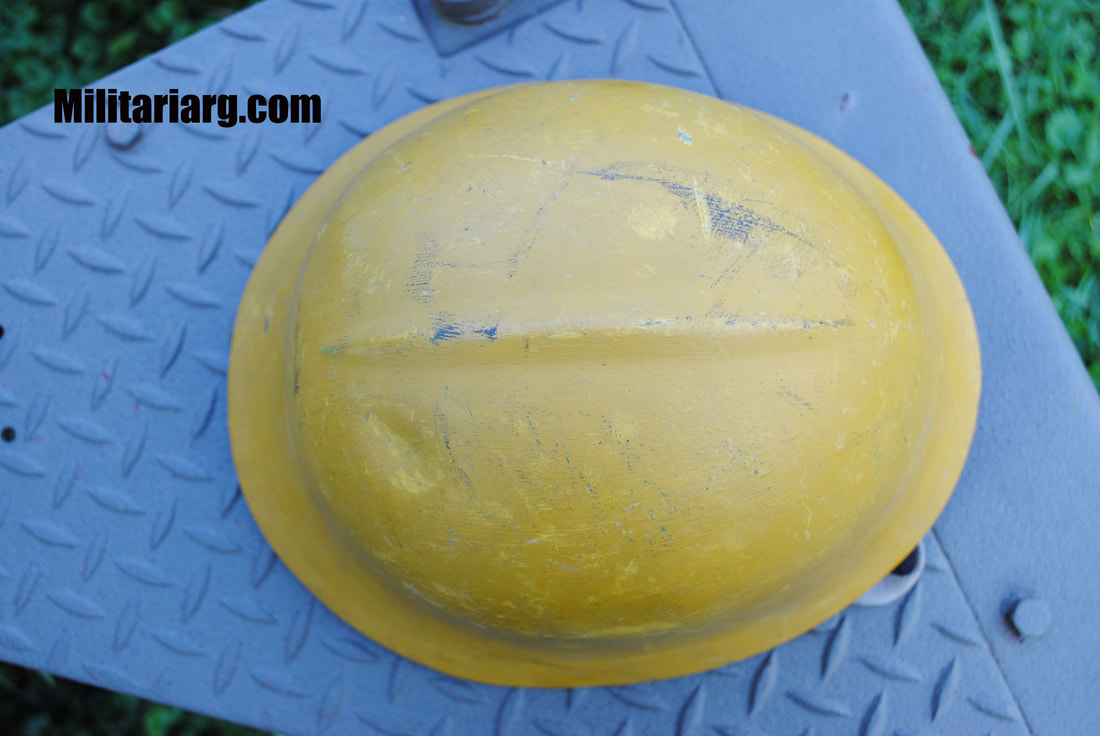
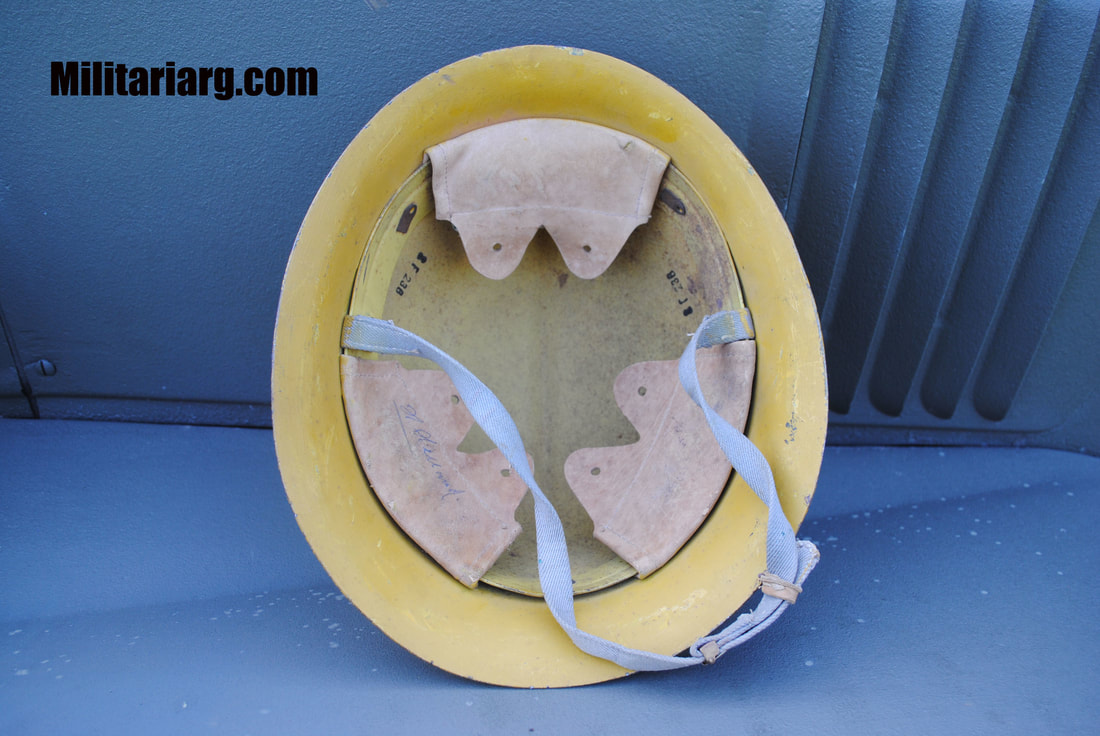
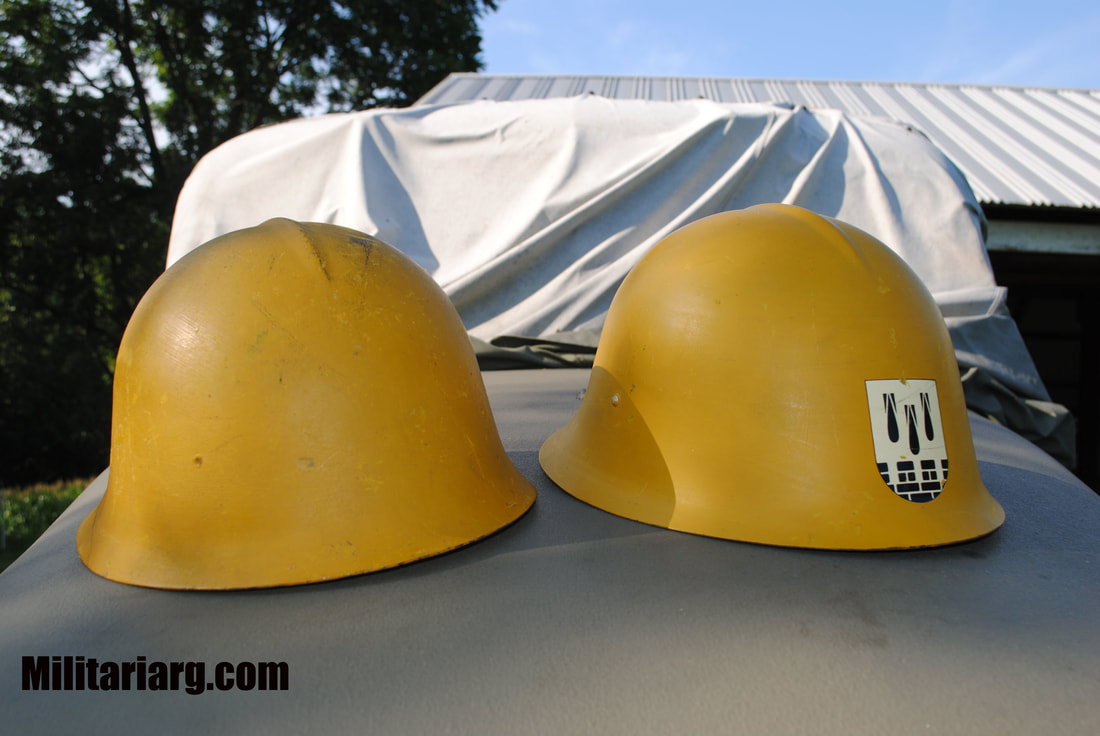
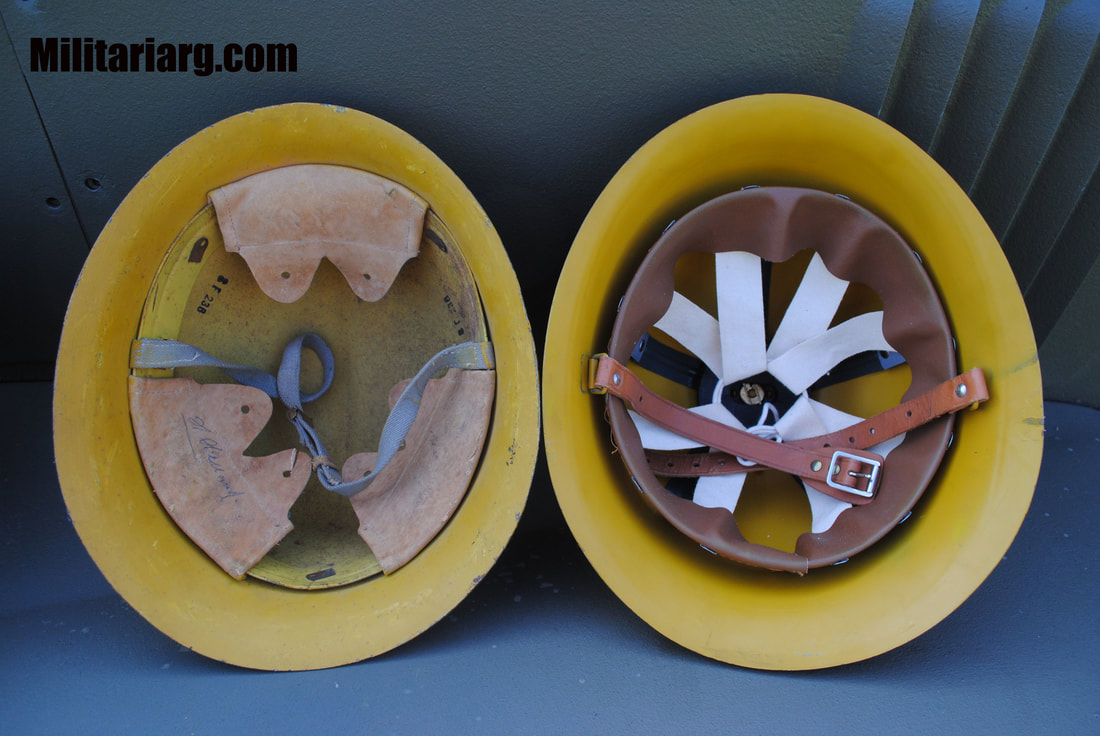
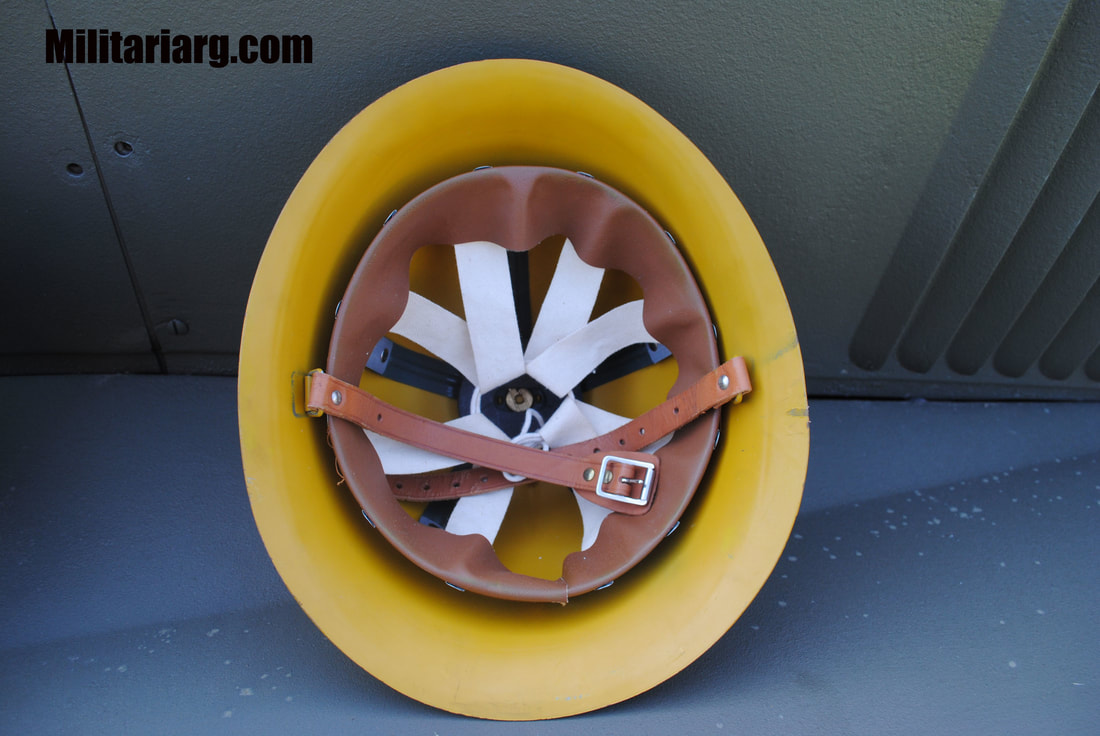
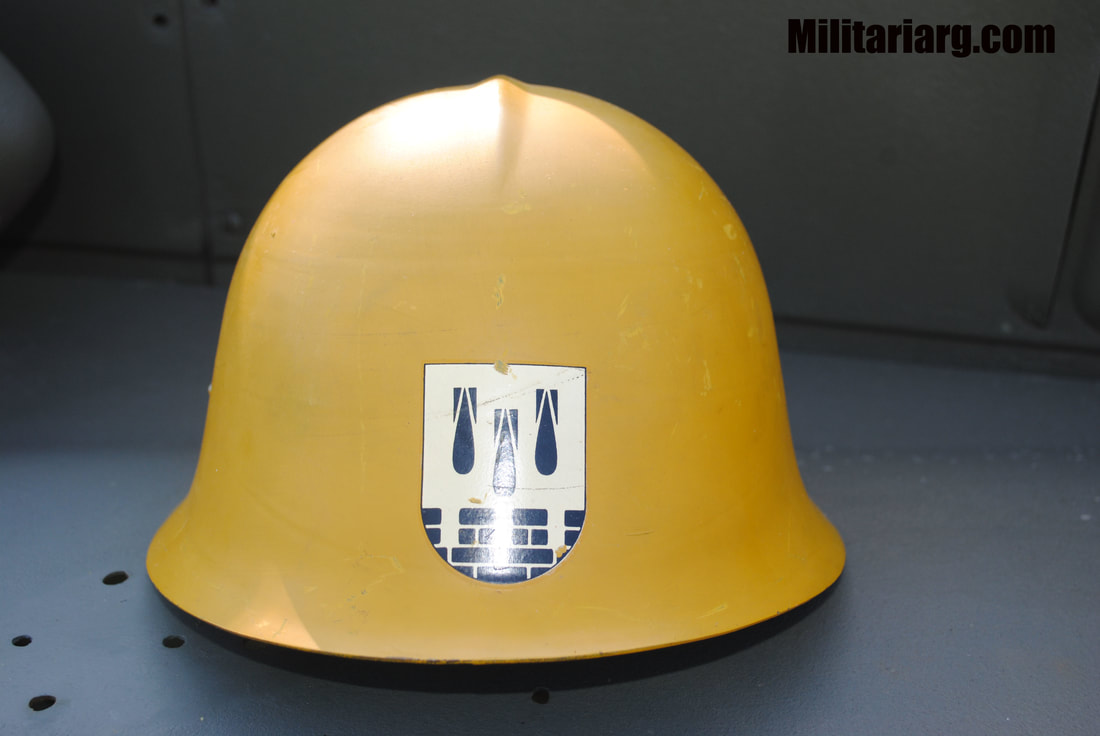
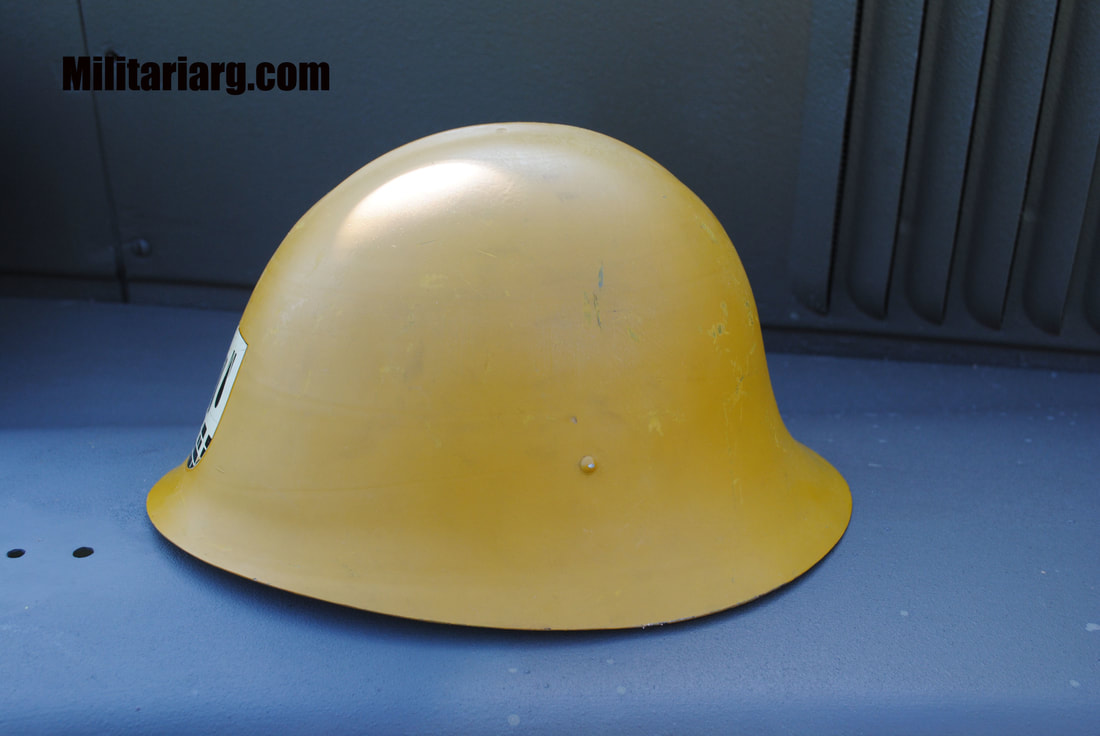
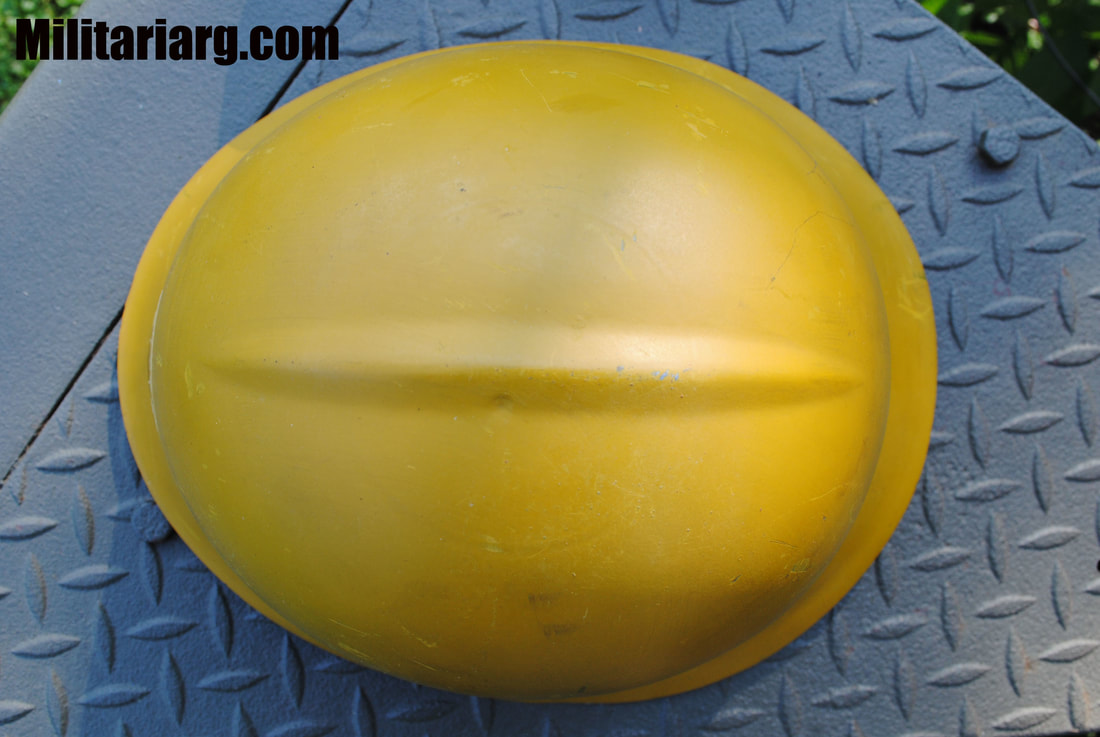
M31 Civil Defense.
​The Norwegian M31 helmet, often referred to as the "Baltic Helmet" (Baltik Hjalmar), was the standard headgear for the Norwegian Army during the German invasion in 1940. 
The design was based on the Swedish M26 helmet. But it is easily identified by a pronounced steel crest or comb on the top of the shell, which the Swedish original lacked.
Original military versions often featured a metal oval badge on the front embossed with the Norwegian Lion.
Initially imported from Sweden, it was later manufactured domestically in Norway by the Raufoss Ammunisjonsfabrikker company. 

World War II Service

1940 Invasion: It was the primary helmet worn by Norwegian troops resisting the German invasion.
Occupation Reissue. During the German occupation (1940–1945), many M31s were seized and reissued to the Nasjonal Samling Politi (the collaborationist police under the Quisling regime). These versions often replaced the lion badge with the "Sun Cross" decals of the collaborationist party. 

The "M31" Postwar Confusion
In collector circles, the term "M31" is frequently used for two different things regarding Norway:

The M31 Helmet: The indigenous pre-war "Baltic" shell described above.
The M31 Liner: This refers to the German Model 1931 liner system. After WWII, Norway refurbished thousands of captured German Stahlhelms (M35, M40, M42) by installing these M31-pattern liners, which they often dyed a distinctive red-brown color for preservation. 

Norwegian M31/56 Helmet Upgrade

Picture
Picture
Picture
Picture
Picture
Picture
​Norwegian M31/56 (or M31/57) upgrade. 
After WWII, Norway had a surplus of their pre-war M31 "Baltic" shells but found the original liners outdated. To modernize them for the Cold War, they implemented a unique hybrid liner system that is very distinctive to collectors.
This is the original pre-war Norwegian M31 shell with the prominent top crest (comb). Instead of the old leather or metal band attaching directly to the shell, Norway used a plastic or resin-impregnated fiber suspension. This was heavily influenced by the U.S. M1 helmet liner design. Attached to that plastic/fiber frame was a leather sweatband and a "cradle" of leather or webbing straps, often dyed a reddish-brown color.
This upgrade was meant to make the helmet more stable and comfortable, similar to the American M1 system, while reusing the existing Norwegian steel stocks.

The German Fallschirmjäger (paratrooper) units conducted pioneering and significant operations in Norway during the initial invasion, primarily aimed at seizing key airfields and strategic locations to secure German control.

Operation Weserübung (April 1940)

The invasion of Norway was the first time in history that a major military operation utilized integrated sea, air, and airborne forces in an assault phase. The Fallschirmjäger were used to achieve rapid surprise and capture critical infrastructure before Norwegian ground forces could mobilize. 


Sola Airfield, Stavanger: On April 9, 1940, a company of Fallschirmjäger conducted the world's first opposed combat parachute landing to capture the Sola airfield. The airport was Norway's most modern and vital for establishing air superiority over southern Norway and the North Sea. Despite initial Norwegian resistance, the paratroopers quickly secured the airfield, allowing for the immediate air-landing of thousands of follow-up ground troops and supplies.
Fornebu Airport, Oslo: Simultaneously, a Fallschirmjäger company targeted the airport near Oslo. Although initial landings were delayed by fog, the paratroopers successfully secured Fornebu, which was key to the quick capture of the Norwegian capital.

Attempt to Capture the Royal Family: On April 10, a small group of Fallschirmjäger attempted to capture the Norwegian Royal Family and government at the Midtskogen resort near Oslo, but the attack was repulsed by Norwegian guards.

Battle of Dombås: This was the most significant inland operation and the Fallschirmjäger's first defeat of the war. On April 14, 1940, a company was dropped near the vital railroad junction of Dombås to block the main north-south road and rail lines, preventing Norwegian mobilization and the arrival of Allied reinforcements. The paratroopers were scattered due to weather and engaged by the Norwegian Army. After five days of fighting, the isolated German force was surrounded and forced to surrender.
Picture
​
Narvik: In the far north, after initial naval landings, Fallschirmjäger were also flown into improvised airfields near Narvik
 to reinforce the beleaguered German mountain troops (Gebirgsjäger) fighting Allied (British, French, and Polish) and Norwegian forces. 

After the initial campaign, the Fallschirmjäger were primarily used as ground infantry units throughout the rest of the war.
Powered by Create your own unique website with customizable templates.