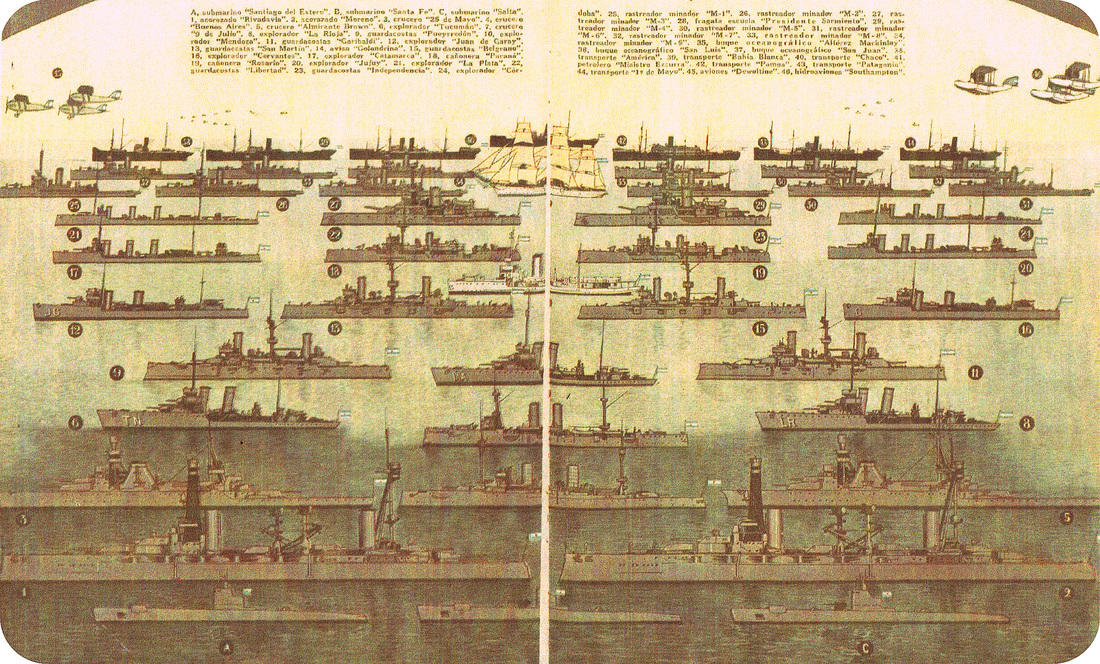
Argentine Navy in 1939:
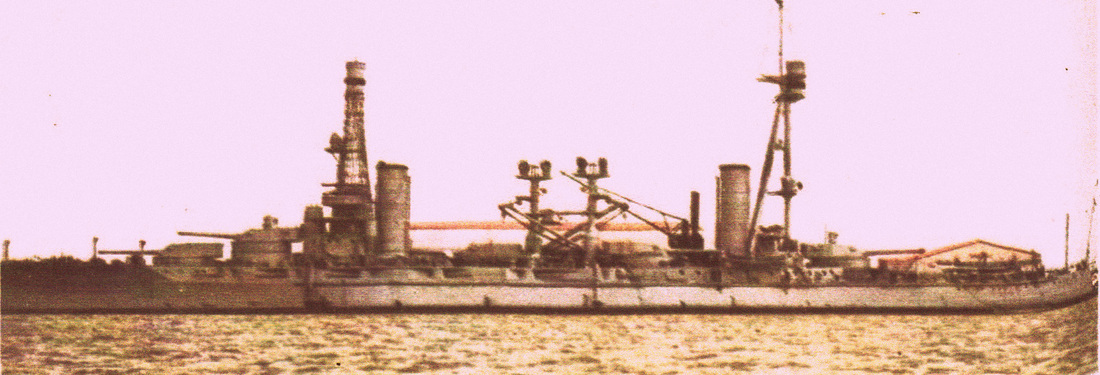
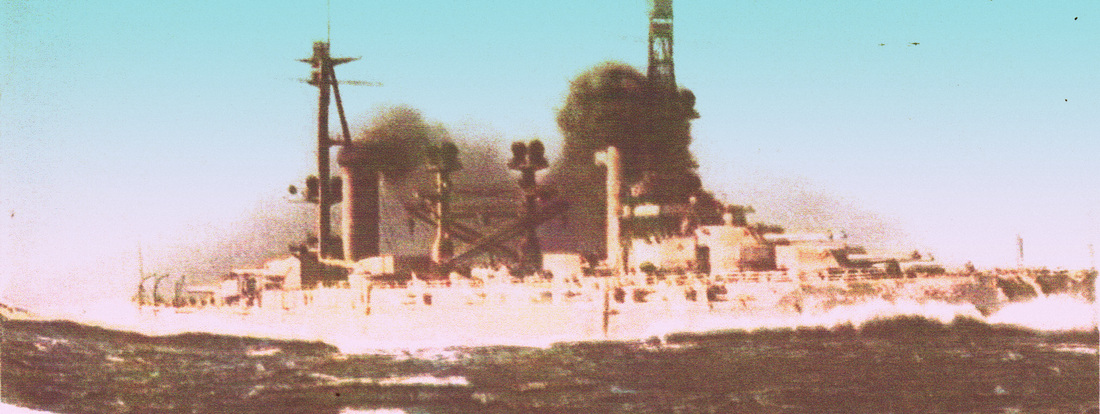
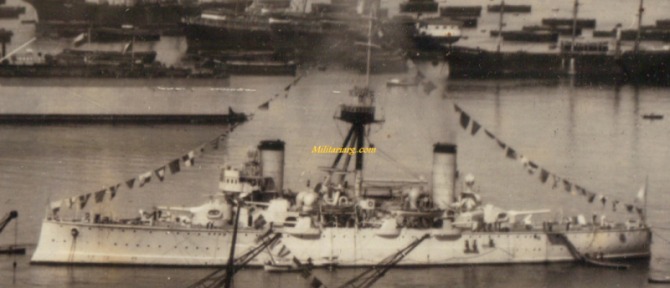
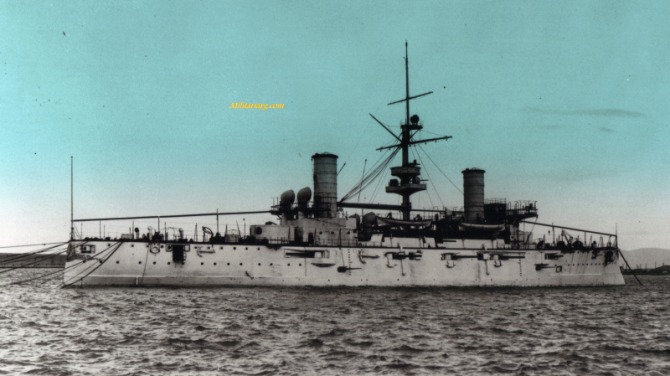
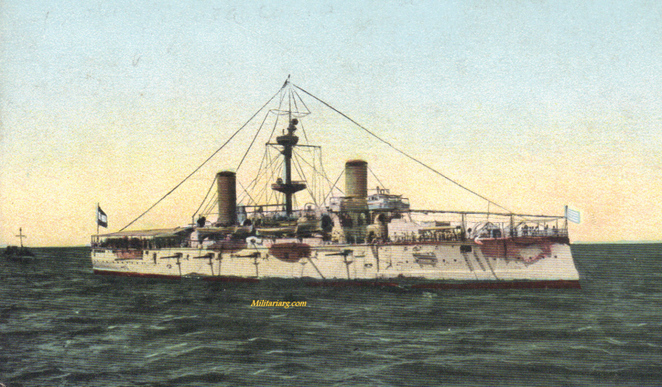
Battleship ARA Moreno (27.720 Ton)
|
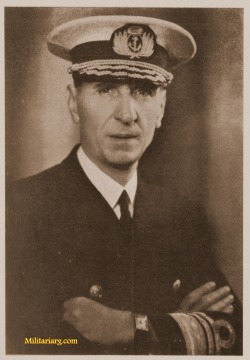
1939. Navy Minister. Vice Admiral Leon S. Scasso. (Admiral of the Fleet)
|
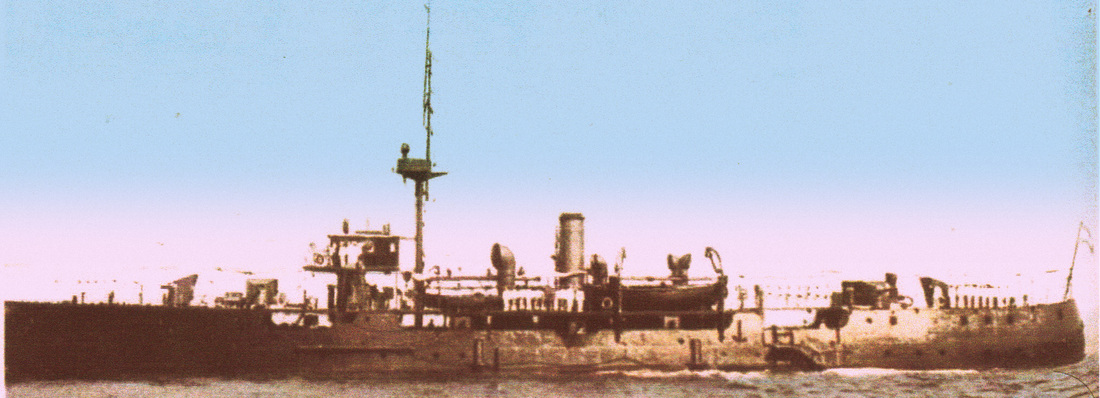
Gunboat ARA Independencia (2.595 Ton)
|
Rivadavia Class Battleships (A.R.A Rivadavia and Moreno)
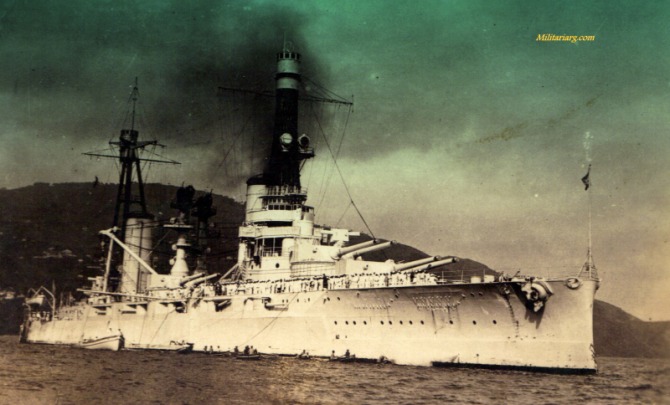
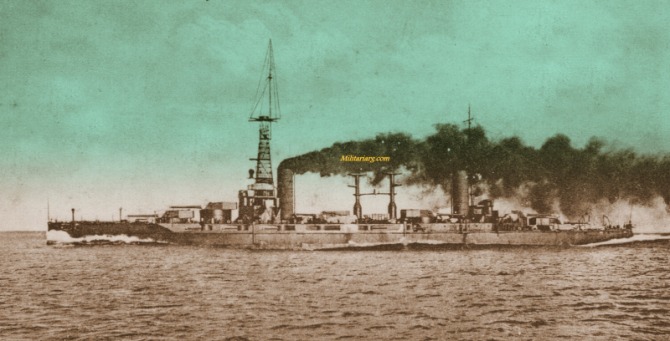
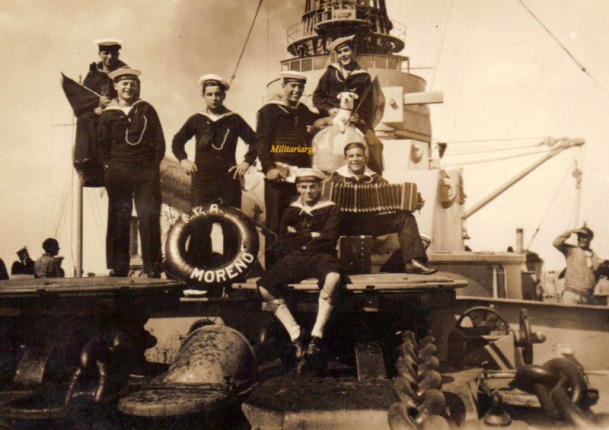
A.R.A Moreno.
Postcard from the 1930s from the Battleship Moreno.
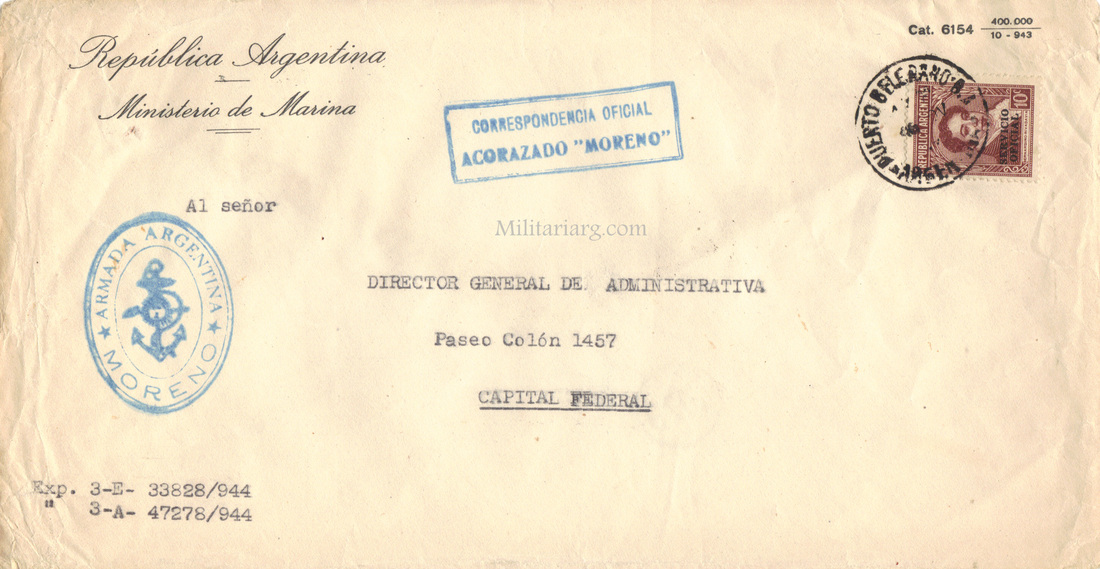
During the 1930s, the ARA Moreno was a cornerstone of the Argentine Navy, serving primarily in diplomatic and training capacities rather than active combat, as Argentina remained neutral through much of the era.
The decade was defined by "goodwill" visits to foreign nations.
In October 1933, Moreno escorted Argentine President Agustín Pedro Justo to Rio de Janeiro, Brazil. The arrival was marked by massive celebrations, including an escort by Brazilian warplanes and a 95-foot imitation of the Arc de Triomphe.
Moreno represented Argentina at the Spithead Coronation Review for King George VI in May 1937. Following this, the ship visited German ports like Wilhelmshaven and Bremen before returning home.
The ship spent the early 1930s (1930–1933) in the reserve fleet before being reactivated for its diplomatic duties.
The Moreno was a Rivadavia-class dreadnought battleship.
Built in the U.S. by Fore River Shipbuilding Company to counter Brazil's naval expansion.
By the 1930s, it had already undergone a major refit (completed in 1926) that replaced its original coal-fired boilers with oil-burning ones and added a new tripod mast.
It carried twelve 12-inch (305 mm) guns in six twin turrets, along with secondary batteries of 6-inch and 4-inch guns.
While the ship never fired its guns in anger, it remained the "jewel of the Argentine Navy" until it was eventually sold for scrap in the late 1950s.
The decade was defined by "goodwill" visits to foreign nations.
In October 1933, Moreno escorted Argentine President Agustín Pedro Justo to Rio de Janeiro, Brazil. The arrival was marked by massive celebrations, including an escort by Brazilian warplanes and a 95-foot imitation of the Arc de Triomphe.
Moreno represented Argentina at the Spithead Coronation Review for King George VI in May 1937. Following this, the ship visited German ports like Wilhelmshaven and Bremen before returning home.
The ship spent the early 1930s (1930–1933) in the reserve fleet before being reactivated for its diplomatic duties.
The Moreno was a Rivadavia-class dreadnought battleship.
Built in the U.S. by Fore River Shipbuilding Company to counter Brazil's naval expansion.
By the 1930s, it had already undergone a major refit (completed in 1926) that replaced its original coal-fired boilers with oil-burning ones and added a new tripod mast.
It carried twelve 12-inch (305 mm) guns in six twin turrets, along with secondary batteries of 6-inch and 4-inch guns.
While the ship never fired its guns in anger, it remained the "jewel of the Argentine Navy" until it was eventually sold for scrap in the late 1950s.
Dreadnought Battleship ARA Moreno (Rivadavia class battleship). Builder: New York, shipbuilding Camden, New Jersey. Laid down 9 July 1910. Launched 23 September 1911. Acquired March 1915. Fate Sold to Japan for scrapping in 1956.
Rivadavia-class battleship, which consisted of two vessels: the ARA Rivadavia and the ARA Moreno.
ARA Rivadavia. Caras y Caretas 1932.
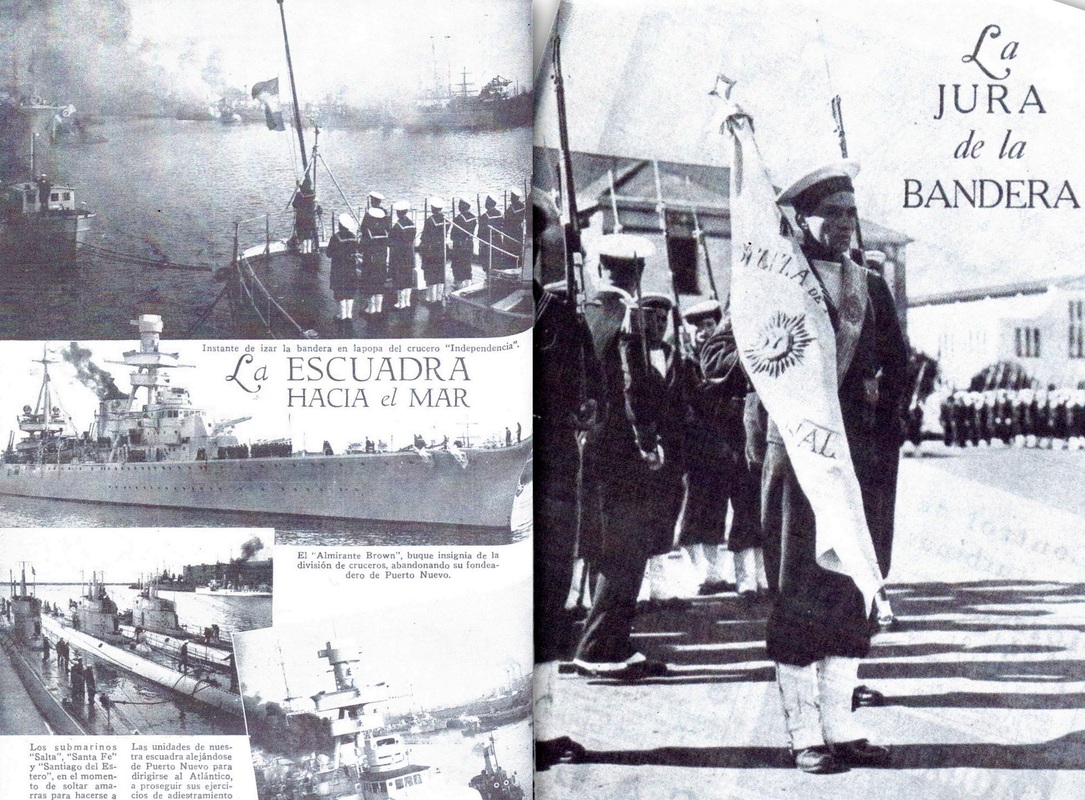
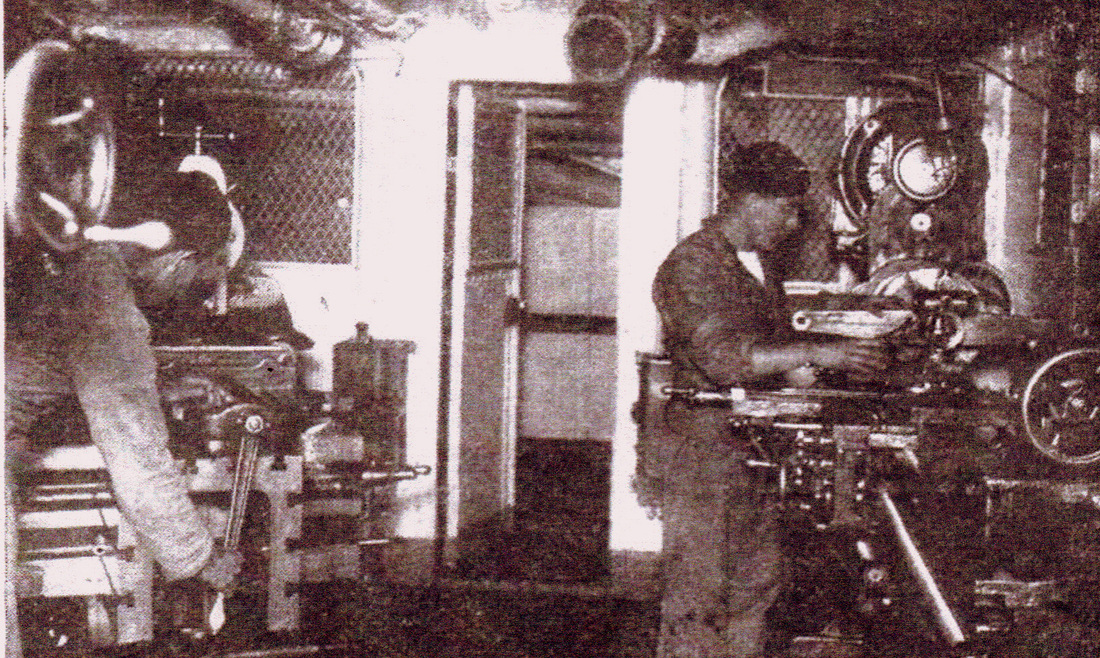
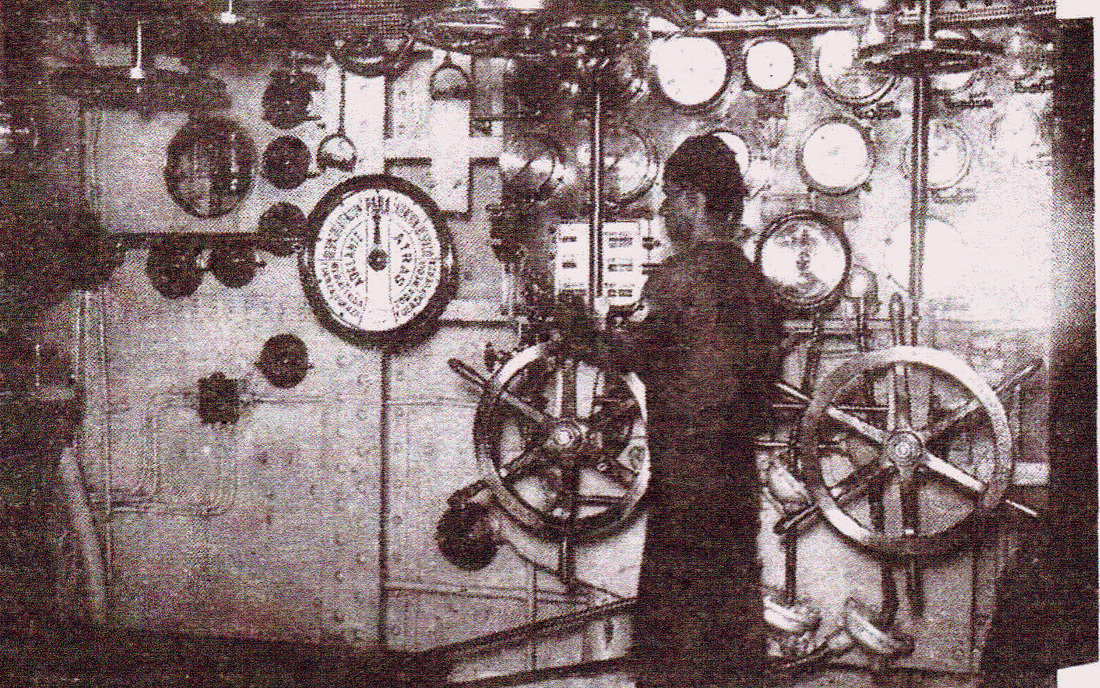
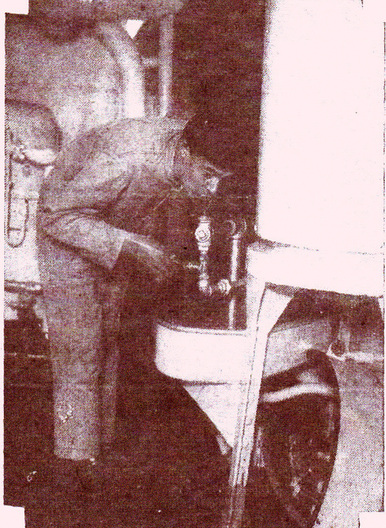
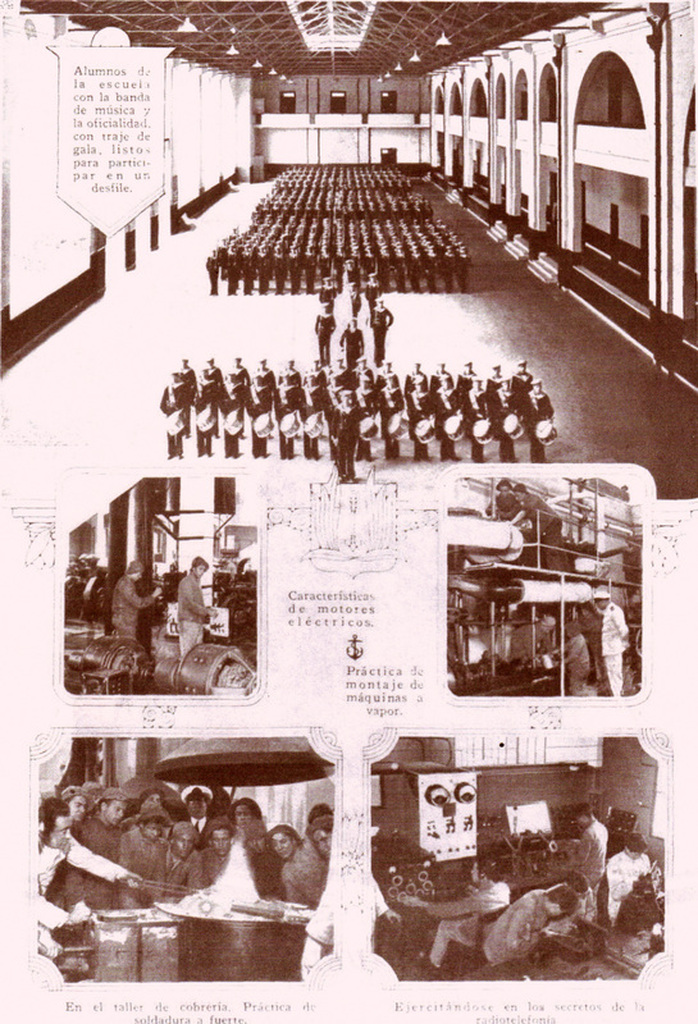
Naval Mechanic School.
Taller service, Turning.
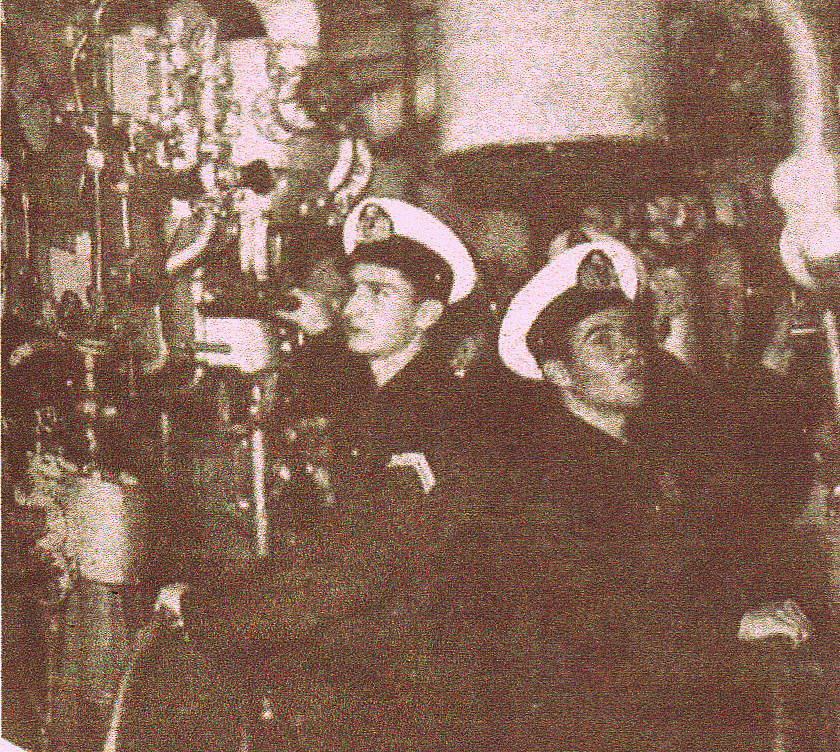
Main Turbines.
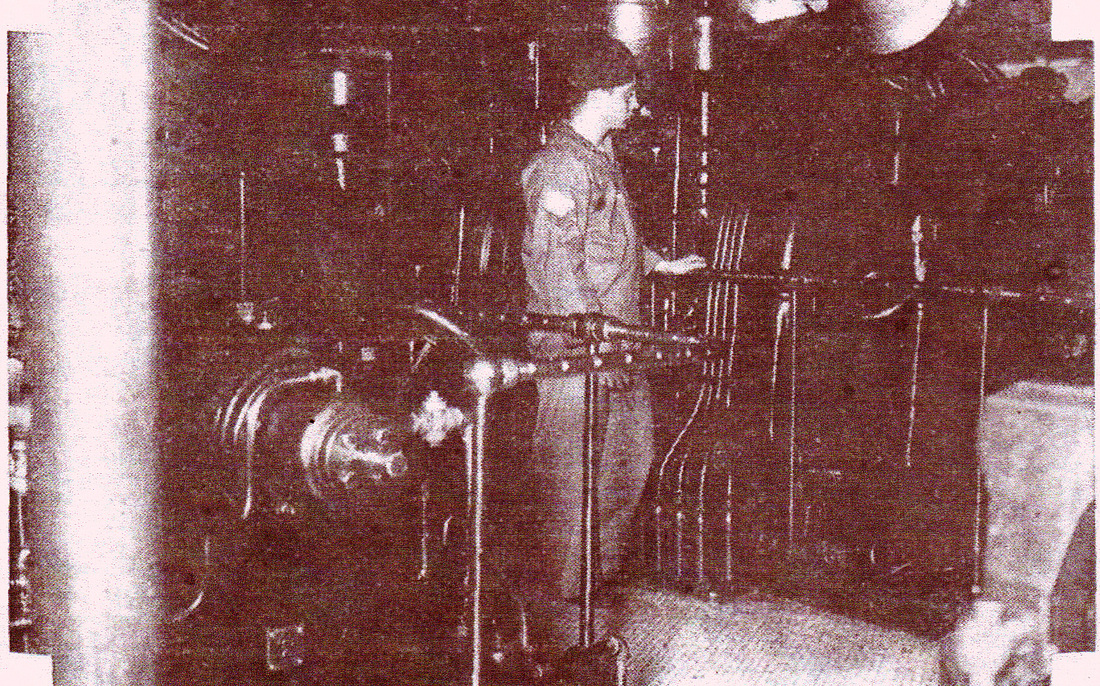
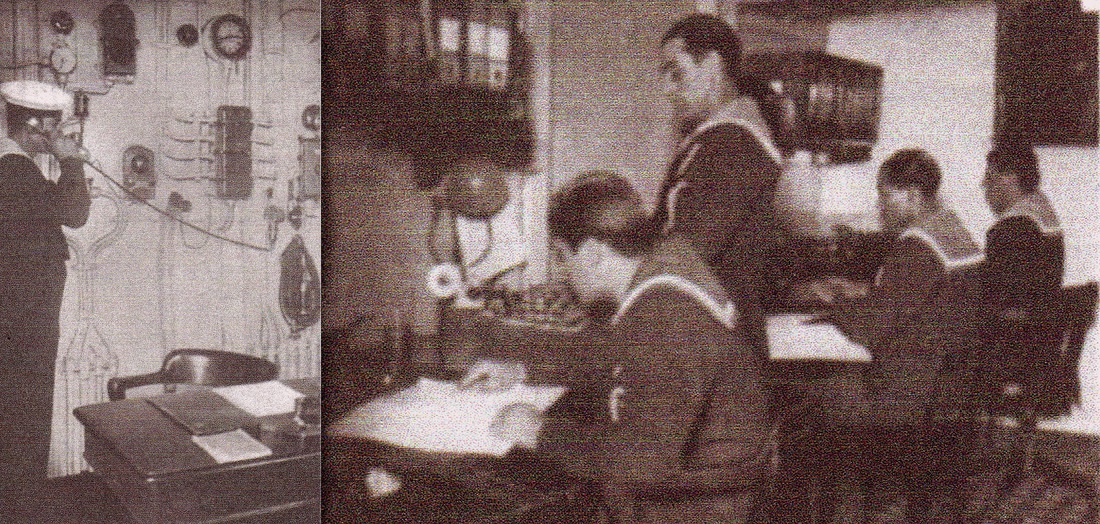
The ARA Moreno consisted of 60 km of cables in the electric generator and distributor of power..
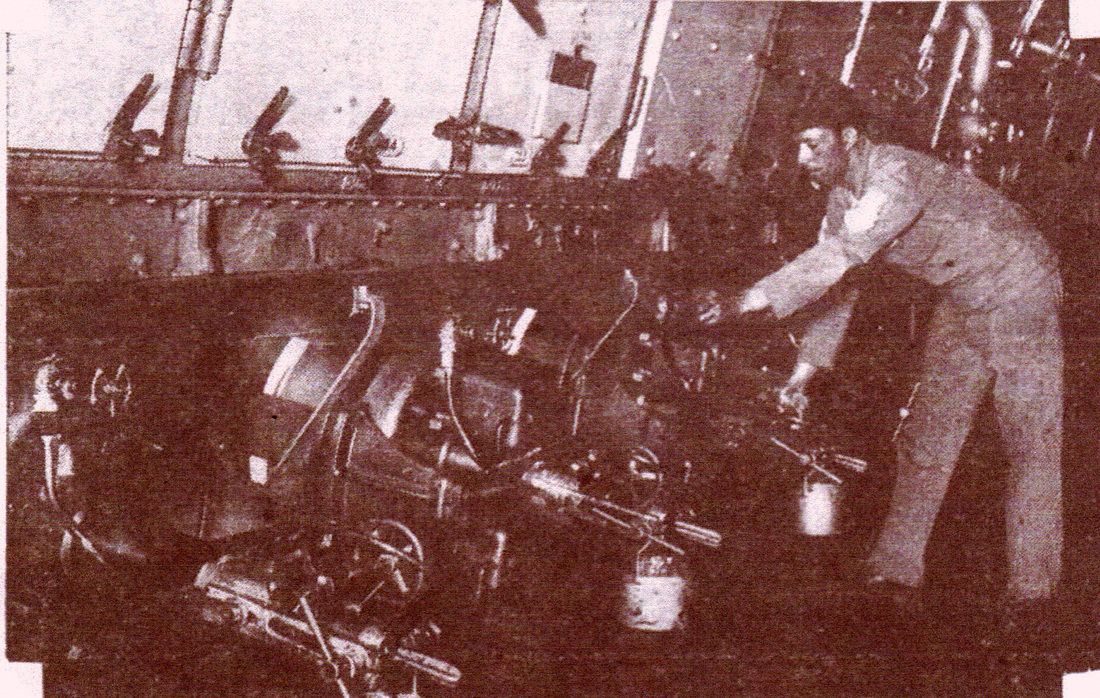
"Dreadnought" Rivadavia, 45.000 HP, oil burners section.
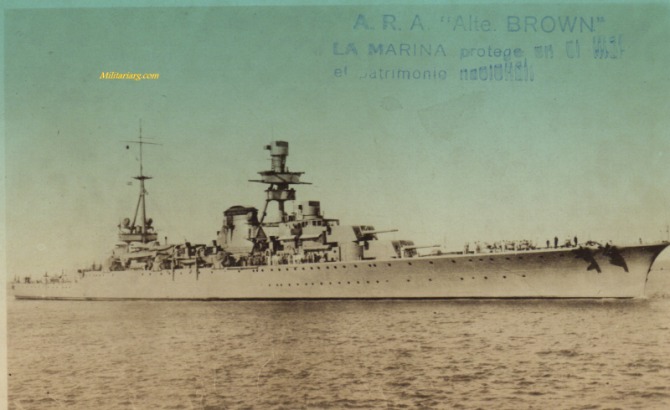
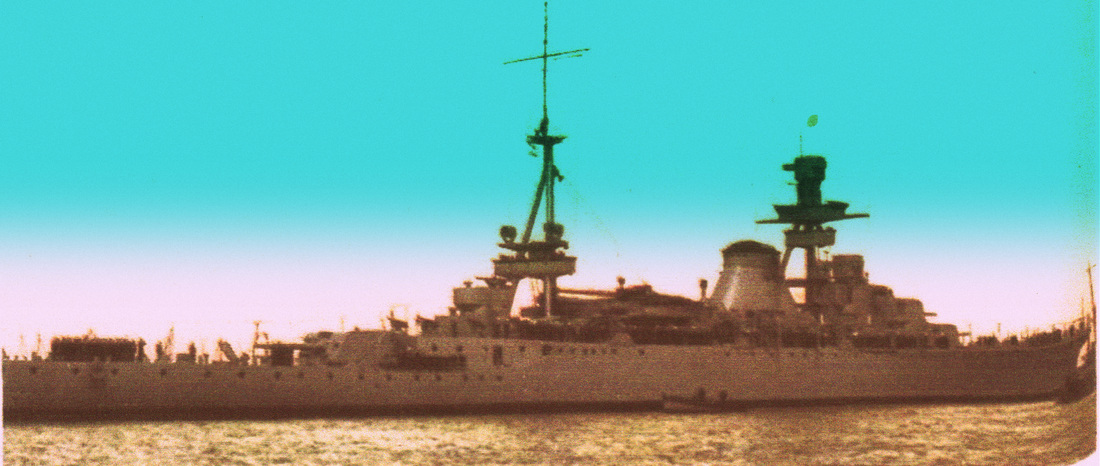
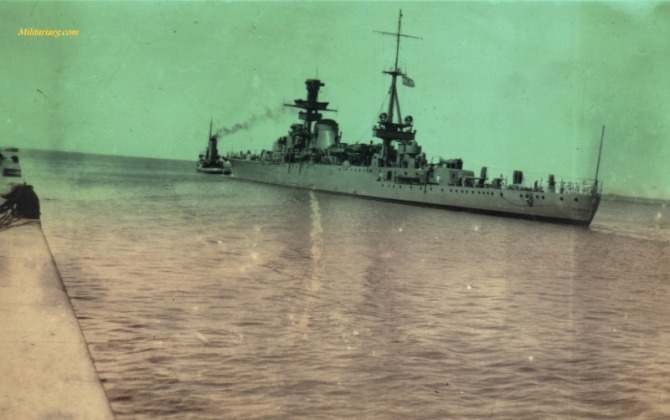
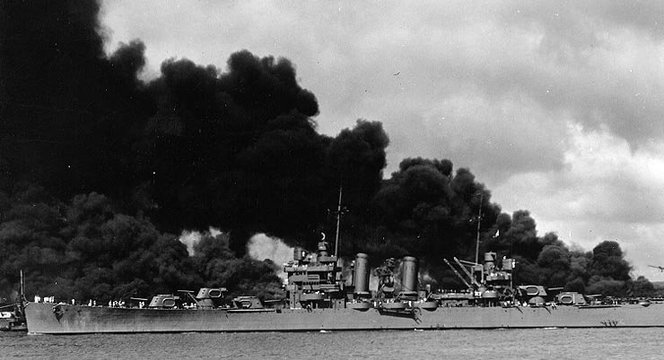
Veinticinco de Mayo-class Heavy Cruisers (1930s–1960)
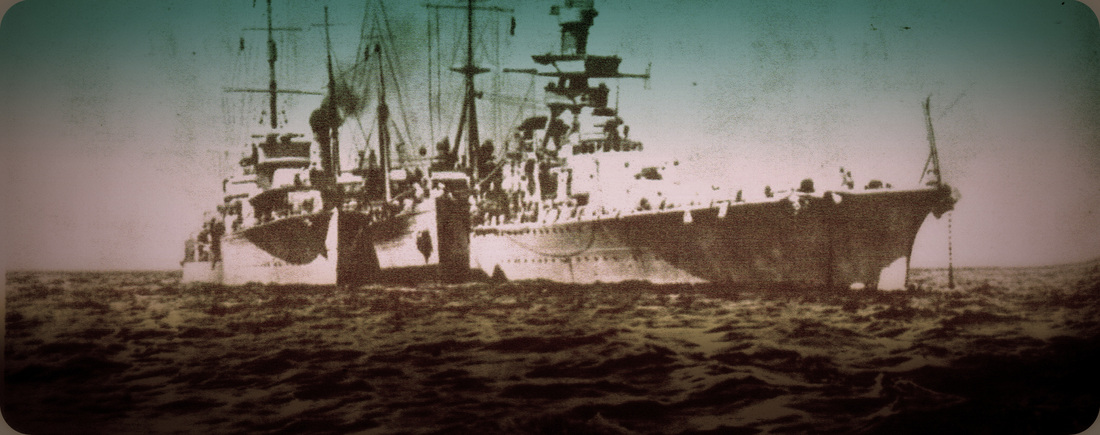
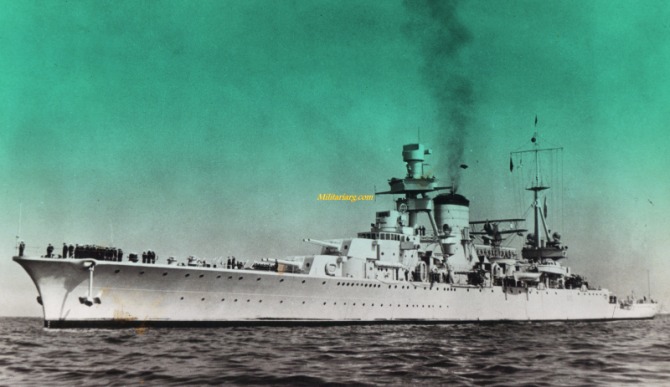
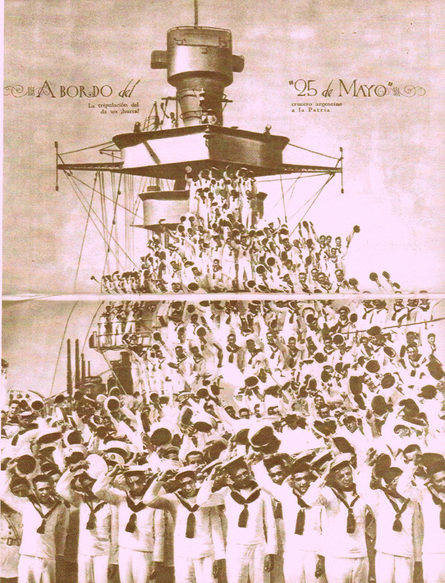
25 de Mayo heavy cruiser commissioned into the Argentine Navy in 1931. Builders OTO.
A.R.A 25 de Mayo.
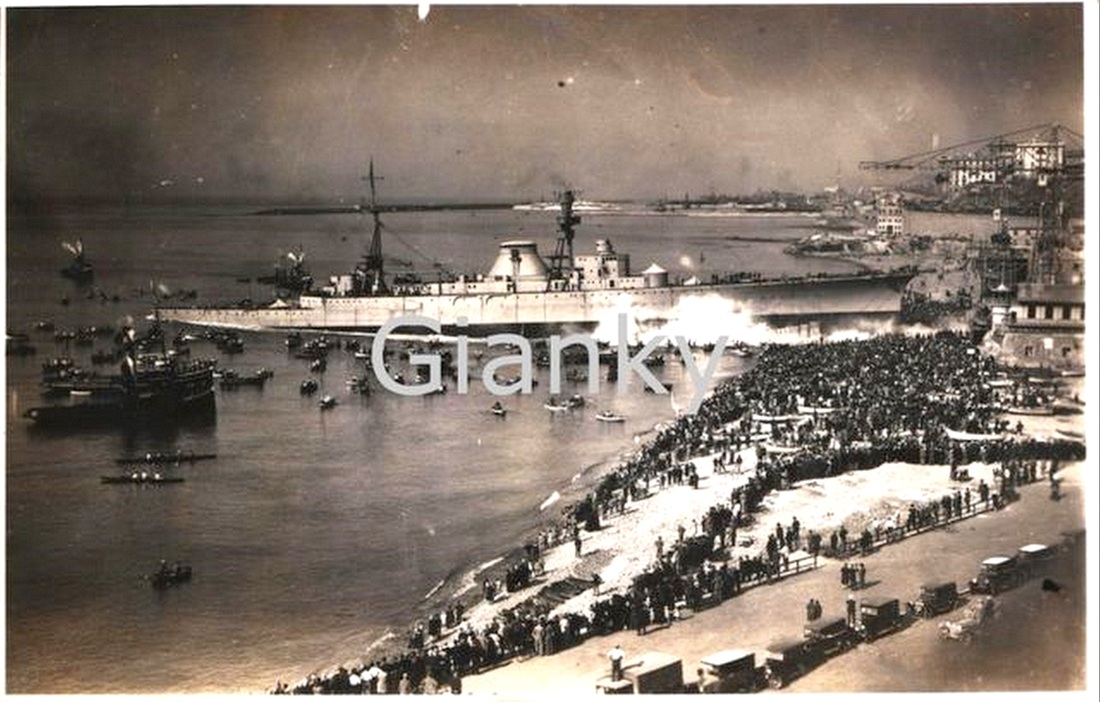
Admiral Brown launch-unedited photo. Many thanks to Gian Carlo Moreschi for sharing this with us.
A.R.A "25 de Mayo" and A.R.A "Almirante Brown". Photo: Caras y Caretas 1936.
These two ships were built in Italy and served as the centerpieces of the Argentine fleet during the mid-20th century.
ARA Almirante Brown (C-1): The lead ship of the class, commissioned in 1931. It was a "heavy" cruiser design based on the Italian Trento class but uniquely armed with 7.5-inch (190 mm) guns.
ARA Veinticinco de Mayo (C-2): Commissioned alongside its sister in 1931, it shared the same sleek Italian design and unusual armament.
Fate: Both cruisers were decommissioned around 1960–1961 and eventually scrapped in Italy.
These two ships were built in Italy and served as the centerpieces of the Argentine fleet during the mid-20th century.
ARA Almirante Brown (C-1): The lead ship of the class, commissioned in 1931. It was a "heavy" cruiser design based on the Italian Trento class but uniquely armed with 7.5-inch (190 mm) guns.
ARA Veinticinco de Mayo (C-2): Commissioned alongside its sister in 1931, it shared the same sleek Italian design and unusual armament.
Fate: Both cruisers were decommissioned around 1960–1961 and eventually scrapped in Italy.
Almirante Brown C-1 (25 de Mayo class), Heavy cruiser. Built by OTO (Odero Terni Orlando), Genova Foce, Fôxe in Genoese dialect . Laid down 27 November 1927. Launched in 1929 (28 September). Commissioned 18 July 1931.
ARA Admiral Brown. Caras y Caretas 1932.
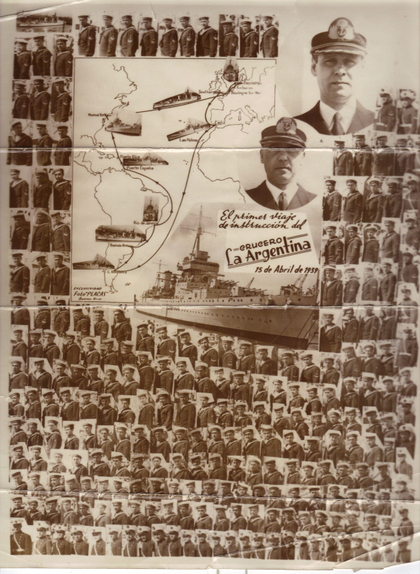
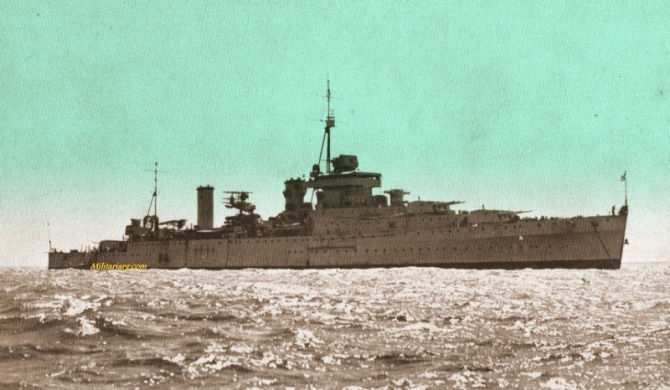
ARA La Argentina (C-3): A specialized light cruiser and training ship.
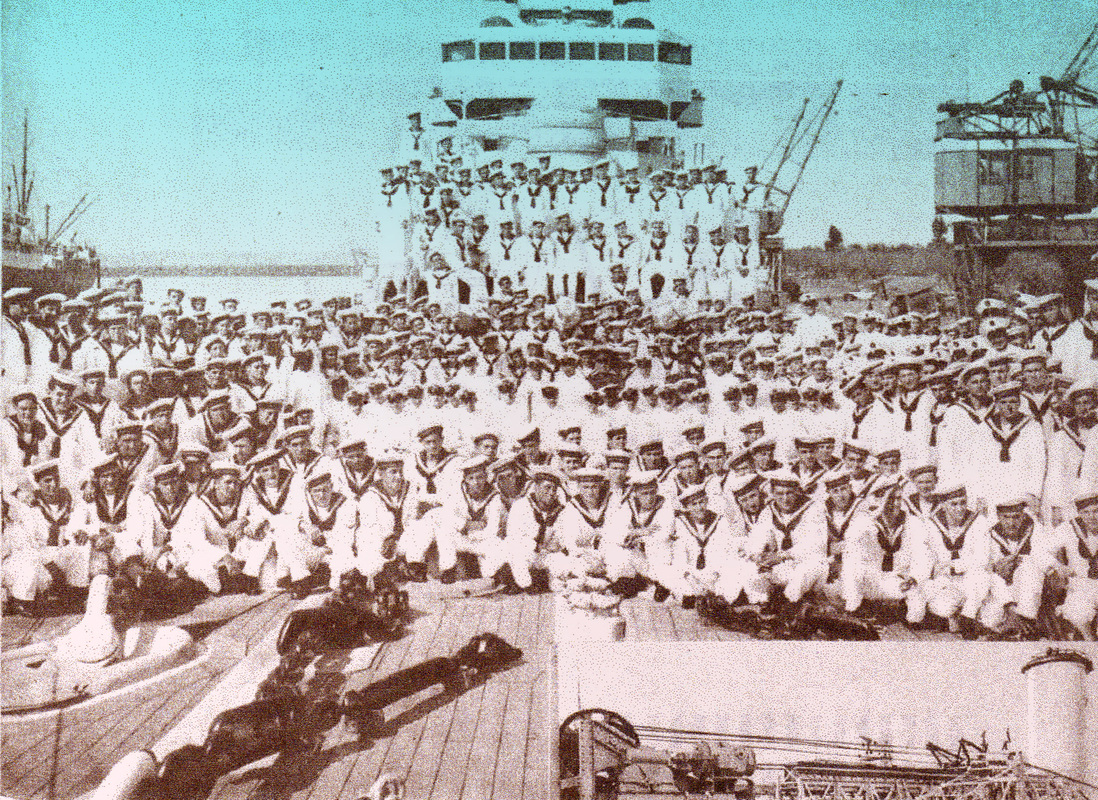
ARA La Argentina (Training naval cadets), class and type light cruiser. Builder Vickers-Armstrongs, Barrow in Furness. Laid down 11 January 1936. Launched 16 March 1937. Completed 31 January 1939. Acquired February 1939. Commissioned 12 April 1939. Decommissioned 1972. Scrapped 1974.
|
In the 1940s, ARA La Argentina, ARA Veinticinco de Mayo, and ARA Almirante Brown formed the core of the Argentine Navy's cruiser fleet. While much of the world was at war, these ships primarily performed neutrality patrols in the South Atlantic to safeguard Argentine interests.
During this decade, all three were serving as active-duty cruisers with the following roles: ARA La Argentina (C-3): A specialized light cruiser and training ship. 1940s Status: Following its 1939 commissioning, it was quickly integrated into the active squadron to maintain neutrality. Role: While designed for training 60 cadets, it was a fully combat-capable vessel with nine 6-inch guns. Technology: It was one of the first in the fleet to receive modern upgrades, including a Marconi radar installation in 1946. |
1939. "Caras y Caretas".
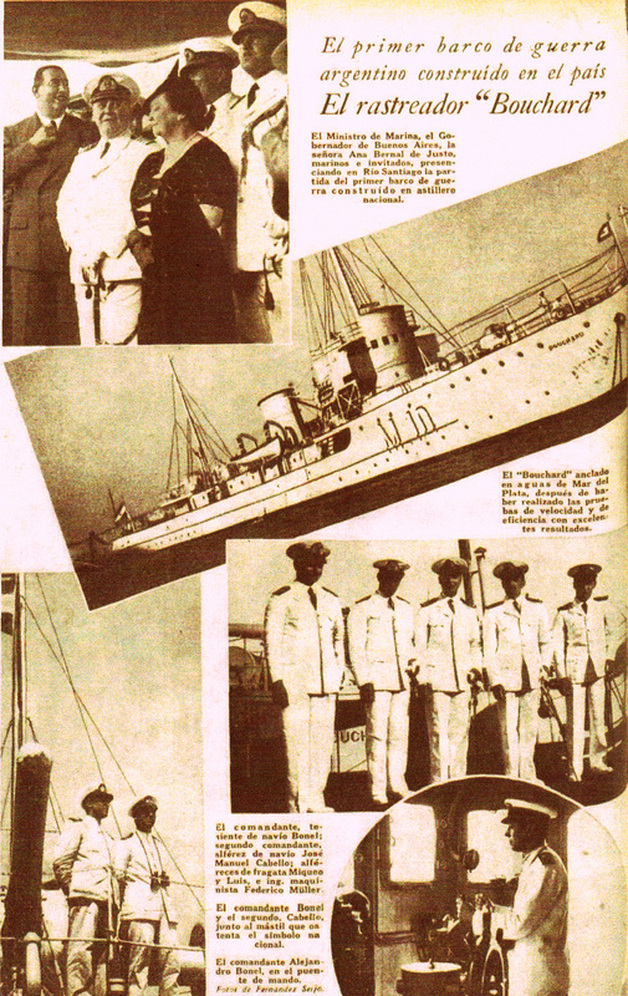
Bouchard Class (The first warship built in Argentina)
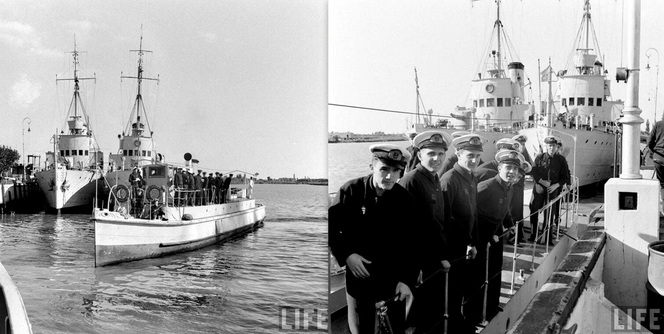
1941 - LIFE Magazine. Bouchard class. The image is indeed part of a historical collection from 1941
LIFE magazine assignment covering the Argentine Navy (Armada de la República Argentina).
Built between 1936 and 1939, they were based on a German Bathurst-class design but modernized with diesel engines. While designated as minesweepers, they primarily served as patrol and escort craft.
LIFE magazine assignment covering the Argentine Navy (Armada de la República Argentina).
Built between 1936 and 1939, they were based on a German Bathurst-class design but modernized with diesel engines. While designated as minesweepers, they primarily served as patrol and escort craft.
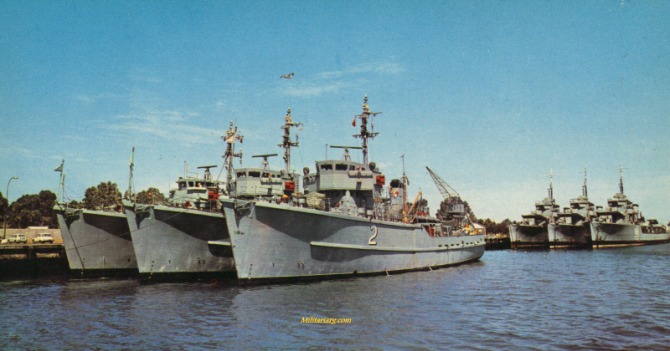
The two warships in the background are Bouchard-class minesweepers. These vessels are historically significant as they were the first relatively large warships to be both designed and built in Argentina (at the Río Santiago, Hansen & Puccini, and Sánchez & Cía shipyards).
1941 - LIFE Magazine. Bouchard Class.
1936-37. Rastreador Bouchard. Arsenal de la Base Naval de Río Santiago (Astilleros). Caras y Caretas.
A.R.A Bouchard (M-7) Launched 1936. Transferred to Paraguay in 1964 (A.R.P Nanawa P-02)
A.R.A Drummond (M-2) Launched 1936. Discarded in 1964.
A.R.A Granville (M-4) Launched 1937. Discarded in 1967.
A.R.A Parker (M-11) Launched 1937. Discarded in 1963.
A.R.A Spiro (M-13) Launched 1937. Discarded in 1962.
A.R.A Robinson (M-3) Launched 1938. Discarded in 1967.
A.R.A Seaver (M-12) Launched 1938. Transferred to Paraguay in 1967 (A.R.P Capitan Meza P-03)
A.R.A Py (M-10) Launched 1938. Discarded in 1967. Tranferred to Paraguay (A.R.P Teniente Fariña P-4)
A.R.A Fournier (M5) Launcheed 1939. Sank in the Straits of Magellan on 22 September 1949.
A.R.A Drummond (M-2) Launched 1936. Discarded in 1964.
A.R.A Granville (M-4) Launched 1937. Discarded in 1967.
A.R.A Parker (M-11) Launched 1937. Discarded in 1963.
A.R.A Spiro (M-13) Launched 1937. Discarded in 1962.
A.R.A Robinson (M-3) Launched 1938. Discarded in 1967.
A.R.A Seaver (M-12) Launched 1938. Transferred to Paraguay in 1967 (A.R.P Capitan Meza P-03)
A.R.A Py (M-10) Launched 1938. Discarded in 1967. Tranferred to Paraguay (A.R.P Teniente Fariña P-4)
A.R.A Fournier (M5) Launcheed 1939. Sank in the Straits of Magellan on 22 September 1949.
The ARA Fournier (M-5), was a Bouchard-class minesweeper of the Argentine Navy. These minesweepers served from 1940 and were designed and built in Argentina for coastal and riverine service, though they also operated in the South Atlantic.
General specifications for the Bouchard-class minesweepers include a displacement of 450 long tons (standard), a length of 59 meters (193 ft 7 in), and a beam of 7.3 meters (23 ft 11 in). They were powered by two diesel engines, providing a speed of 15 knots (28 km/h; 17 mph) and a range of 3,000 nautical miles at 10 knots. The armament typically consisted of two 99 mm guns, one twin 40 mm anti-aircraft mount, and two 7.65 mm machine guns.
The ARA Fournier sank during a severe gale in 1949 while attempting to navigate the Magellan Straits. This incident resulted in significant loss of life.
General specifications for the Bouchard-class minesweepers include a displacement of 450 long tons (standard), a length of 59 meters (193 ft 7 in), and a beam of 7.3 meters (23 ft 11 in). They were powered by two diesel engines, providing a speed of 15 knots (28 km/h; 17 mph) and a range of 3,000 nautical miles at 10 knots. The armament typically consisted of two 99 mm guns, one twin 40 mm anti-aircraft mount, and two 7.65 mm machine guns.
The ARA Fournier sank during a severe gale in 1949 while attempting to navigate the Magellan Straits. This incident resulted in significant loss of life.
|
The approximate coordinates for the sinking of the ARA Fournier (M-5) are 54°10′26″S 70°57′21″W.
The vessel, a Bouchard-class minesweeper, sank on September 22, 1949, in the Magellan Strait. The tragedy occurred near Punta Cono (Cone Point), approximately 60 nautical miles south of Punta Arenas, Chile, while the ship was navigating from Río Gallegos to Ushuaia during a severe storm. |
Initially believed to have struck a rock, experts later concluded the ship capsized in a northwesterly gale due to instability in open seas. All 77 crew members on board perished, making it the Argentine Navy's worst peacetime disaster until the loss of the ARA San Juan in 2017.Only nine bodies were ever recovered, found in areas such as Caleta Zig-Zag and near the mouth of Canal Gabriel.
President Juan Domingo Perón's response to the ARA Fournier disaster was one of deep national mourning and personal tribute to the crew, while navigating the diplomatic tensions with Chile over the ship's location.
Perón declared three days of national mourning following the confirmation of the ship's loss, with the Argentine flag flown at half-mast across the country.
On October 12, 1949, Perón and his wife, Evita, personally waited at the Port of Buenos Aires to receive the remains of the nine recovered sailors. The coffins, covered in Argentine flags, were brought back by the frigate Heroína.
The "Secret" Homenage
Due to the diplomatic dispute over the ship's unauthorized passage through Chilean waters, the Chilean government declined an official invitation to the funeral. To bypass this, Perón's government held a separate ceremony at the Argentine Embassy in Santiago, where they decorated the Chilean crews who had assisted in the search and rescue efforts.
Perón framed the tragedy as a sacrifice by "heroes who remained under the sea, watching over southern waters". The incident was utilized to solidify national identity and the importance of the Navy in protecting Argentine sovereignty, despite the ship technically sinking in Chilean territory.
The incident occurred in September 1949, a critical moment when Perón was pushing for a continental integration plan (often referred to as the ABC Pact: Argentina, Brazil, and Chile). Perón and Ibáñez (who would become Chilean president in 1952 but was already a close ally in 1949) envisioned a unified economic and political bloc that would guarantee "political sovereignty, social justice, and economic independence" for the region.
President Juan Domingo Perón's response to the ARA Fournier disaster was one of deep national mourning and personal tribute to the crew, while navigating the diplomatic tensions with Chile over the ship's location.
Perón declared three days of national mourning following the confirmation of the ship's loss, with the Argentine flag flown at half-mast across the country.
On October 12, 1949, Perón and his wife, Evita, personally waited at the Port of Buenos Aires to receive the remains of the nine recovered sailors. The coffins, covered in Argentine flags, were brought back by the frigate Heroína.
The "Secret" Homenage
Due to the diplomatic dispute over the ship's unauthorized passage through Chilean waters, the Chilean government declined an official invitation to the funeral. To bypass this, Perón's government held a separate ceremony at the Argentine Embassy in Santiago, where they decorated the Chilean crews who had assisted in the search and rescue efforts.
Perón framed the tragedy as a sacrifice by "heroes who remained under the sea, watching over southern waters". The incident was utilized to solidify national identity and the importance of the Navy in protecting Argentine sovereignty, despite the ship technically sinking in Chilean territory.
The incident occurred in September 1949, a critical moment when Perón was pushing for a continental integration plan (often referred to as the ABC Pact: Argentina, Brazil, and Chile). Perón and Ibáñez (who would become Chilean president in 1952 but was already a close ally in 1949) envisioned a unified economic and political bloc that would guarantee "political sovereignty, social justice, and economic independence" for the region.
The last Bouchard class
A.R.P Nanawa (P-02) - Ex - A.R.A Bouchard (M-7). Photo: ABC news Paraguay.
2018 Bouchard Class (Argentine Industry) for Sell:
In January 2018, the Paraguayan Navy announced a public auction for two decommissioned warships, the ARP Nanawa (P-02) and the ARP Teniente Fariña (P-04), with a base price of 242 million Guaraníes each. In January 2018, 242 million Paraguayan Guaraníes (PYG) was equivalent to approximately $43,300 to $43,400 US Dollars (USD).
For the price of a mid-range SUV or a luxury sedan, the Paraguayan state auctioned off a piece of naval history weighing roughly 450 to 500 tons. The base price of $43,300 USD was calculated based on the weight of the steel and non-ferrous metals (like bronze and copper) remaining in the hull. In 2018, international scrap steel prices were fluctuating, and once you subtracted the high cost of dismantling a 50-meter warship and transporting the metal, the profit margins for the buyer were slim.
There is no public record of the Argentine government expressing interest in buying back the A.R.A Bouchard (M-7).
But the purchase of the Super Étendard Modernisé junk, (because they never flew in Argentina), was finalized in 2018 (March).
ARP Nanawa (ex-ARA Bouchard M-7): Initially designated as M-1 and finally as P-02. ARP Capitán Meza (ex-ARA Seaver M-12): Initially designated as M-2 and finally as P-03. Unlike the Nanawa and Teniente Fariña, which were famously auctioned for scrap in 2018, the P-03 Capitán Meza was decommissioned earlier. It was largely stripped of its equipment and has spent years in a state of advanced deterioration at the Sajonia Naval Base in Asunción.
2018 Bouchard Class (Argentine Industry) for Sell:
In January 2018, the Paraguayan Navy announced a public auction for two decommissioned warships, the ARP Nanawa (P-02) and the ARP Teniente Fariña (P-04), with a base price of 242 million Guaraníes each. In January 2018, 242 million Paraguayan Guaraníes (PYG) was equivalent to approximately $43,300 to $43,400 US Dollars (USD).
For the price of a mid-range SUV or a luxury sedan, the Paraguayan state auctioned off a piece of naval history weighing roughly 450 to 500 tons. The base price of $43,300 USD was calculated based on the weight of the steel and non-ferrous metals (like bronze and copper) remaining in the hull. In 2018, international scrap steel prices were fluctuating, and once you subtracted the high cost of dismantling a 50-meter warship and transporting the metal, the profit margins for the buyer were slim.
There is no public record of the Argentine government expressing interest in buying back the A.R.A Bouchard (M-7).
But the purchase of the Super Étendard Modernisé junk, (because they never flew in Argentina), was finalized in 2018 (March).
ARP Nanawa (ex-ARA Bouchard M-7): Initially designated as M-1 and finally as P-02. ARP Capitán Meza (ex-ARA Seaver M-12): Initially designated as M-2 and finally as P-03. Unlike the Nanawa and Teniente Fariña, which were famously auctioned for scrap in 2018, the P-03 Capitán Meza was decommissioned earlier. It was largely stripped of its equipment and has spent years in a state of advanced deterioration at the Sajonia Naval Base in Asunción.
The Nanawa (P-2) is currently 88 years old, having been launched on March 20, 1936. It will officially reach its centenary in 2036. There is no single global database that tracks the exact number of century-old ships currently afloat, but the
Historic Naval Ship Association recognizes 164 ships preserved as floating museums. While this list includes many 20th-century vessels, several notable "century ships" (those over 100 years old) remain afloat and, in some cases, active today.
For the Nanawa (P-2) and the entire Bouchard class is a significant source of historical and industrial pride.
The Bouchard-class minesweepers were the first relatively large warships designed and built entirely in Argentina.
Historic Naval Ship Association recognizes 164 ships preserved as floating museums. While this list includes many 20th-century vessels, several notable "century ships" (those over 100 years old) remain afloat and, in some cases, active today.
For the Nanawa (P-2) and the entire Bouchard class is a significant source of historical and industrial pride.
The Bouchard-class minesweepers were the first relatively large warships designed and built entirely in Argentina.
Astilleros Rio Santiago Argentina 1939 - Asunción, Paraguay 2022: A.R.P Teniente Fariña (River Gunboat P-04), ex A.R.A Comodoro Py (Minesweeper M-10). Photo: GettyImages.
Then at least three Bouchard classes were transferred to the Paraguayan Navy which already had two powerful Humaitá-class gunboats (ARP P-1 Paraguay and ARP P-2 Humaita), manufactured in 1930sm in the Cantieri navali Odero (Sestri Ponente, Genoa) Kingdom of Italy. At this time these ships were the most powerful riverine vessels in the world.
|
Bouchard-class of minesweepers (and later the OPV Bouchard / P-51) was named in his honor to recognize him as one of the founding fathers of the Argentine Navy.
|
Admiral Hippolyte Bouchard (1780–1837) was a French-born sailor who became a prominent naval hero and privateer for the independence of Argentina, Chile, and Peru. He is most famously known as "California's only pirate" due to his 1818 raids on Spanish colonial settlements, where he briefly raised the Argentine flag over Monterey.
Bouchard arrived in Buenos Aires in 1809 and joined the independence movement. He fought in the Battle of San Lorenzo (1813) under José de San Martín, capturing a Spanish flag and earning Argentine citizenship. Circumnavigation (1817–1819): Commanding the frigate La Argentina, he became the first Argentine to sail around the world. During this two-year voyage, he: Blockaded Manila in the Philippines, disrupting Spanish trade. Signed a treaty in Hawaii with King Kamehameha I, which some historians consider the first international recognition of Argentine independence. Hippolyte Bouchard recruited a significant number of Native Hawaiian sailors, often referred to as Kānaka Maoli, during his stop in the Sandwich Islands (Hawaii) in 1818. |
Raid on California (1818): Bouchard led an attack on Monterey, the capital of Spanish Alta California, occupying it for six days. He later raided Mission San Juan Capistrano and various ranches along the coast.
Peruvian Navy: After his world tour, he joined the campaign to liberate Peru and eventually became an Admiral and commander of the Peruvian Navy in 1829.
In Argentina, Bouchard is revered as a patriot with numerous streets, schools, and even naval vessels (such as the ARA Hipólito Bouchard) named in his honor. Conversely, Spanish historical records often portray him as a ruthless pirate. He retired to a sugar estate in Peru, where he was murdered by his own servants on January 4, 1837.
Central America and the Caribbean
In 1818, Bouchard attacked Spanish royalist strongholds along the Pacific coast of Central America (such as El Realejo in Nicaragua), flying the Argentine flag. Simultaneously, Louis-Michel Aury established a base on the islands of Providencia and Santa Catalina, also under Argentine colors, proclaiming them the first independent Central American state.
To the local insurgents, these blue and white colors became synonymous with the successful independence movements in South America and the fight against Spanish rule.
The Federal Republic: In 1823, when the United Provinces of Central America (later the Federal Republic of Central America) was formed, its first president, Manuel José Arce, chose a blue-white-blue horizontal triband explicitly modeled after the Argentine flag to honor the "liberating" fleet.
When the Federal Republic dissolved in 1838, its constituent states retained the basic design and colors, leading to the modern visual similarities to the original Argentine Flag. Recent scientific analysis supports the theory that the original blue in the Argentine flag was significantly darker than the light "sky blue" used today.Chemical and spectroscopic studies of the Macha flags (believed to be the oldest surviving examples from 1812–1813) found they were dyed with indigo, resulting in a deep blue or ultramarine shade. Another early banner from 1814, found in Tucumán, was found to have originally featured a darker blue, possibly as deep as lapis lazuli.
The consensus among historians is that the flags of several Central American countries were directly influenced by the Argentine flag. This influence is attributed to the presence of privateers and naval officers, most notably Hippolyte Bouchard and Louis-Michel Aury, who operated in Central American waters under the blue and white colors of the United Provinces of the Río de la Plata (modern-day Argentina).
Heroes for the Americas, Pirates for Spain
At the time of the War of Independence, the nascent Argentina (then the United Provinces of the Río de la Plata) lacked a formal navy and possessed almost no warships of its own. To project power at sea, the revolutionary government relied on a "cosmopolitan" force of international mercenaries and privateers. (Hyppolite Bouchard, Lord Thomas Cochrane, Commodore Jonas Halstead Coe, William Brown, Giuseppe Garibaldi, Admiral John Pascoe Grenfell, Peter Corney, Captain George O'Brien, Jean Baptiste Thorne, etc).
(While Cochrane himself was in the Mediterranean during the 1814 Chesapeake campaign, his cousin Sir Alexander Cochrane was the Admiral who directed the bombardment of Fort McHenry and the burning of Washington. The family "brand" was synonymous with using naval supremacy to choke off a nation's internal waterways).
The historical privateer system is essentially the spiritual ancestor of the modern Flag of Convenience (FOC) system.
Just as the nascent Argentine government "outsourced" its naval power to foreign captains like Bouchard and others to avoid the massive cost of building a national fleet, modern shipping companies and nations use "open registries" to bypass the overhead of national maritime laws.
The "Flags of Convenience" Controversy
Today, countries like Panama, Liberia, and the Marshall Islands dominate the global merchant fleet for the same reasons Argentina used Bouchard: it provides an immediate "presence" on the high seas without the state having to invest in the industrial infrastructure of a national merchant marine.
Under President Carlos Menem, the dismantling of the state-owned shipping giant ELMA (Empresa Líneas Marítimas Argentinas) essentially ended Argentina's status as a major maritime power. In 1991, as part of a sweeping privatization program, Menem declared ELMA "subject to privatization". When buyers failed to materialize for the entire company, it was broken up and its vessels were sold off or scrapped.
This left Argentina with a massive export economy but almost no national ships to carry its primary goods (grain, meat, and hydrocarbons).
To maintain trade, Argentina began "renting" space on foreign-flagged vessels. This created a scenario where the country paid billions in annual "freight drain" to foreign companies
During this period, much of Argentina’s cargo moved on ships flying Flags of Convenience (FOC). These registries are chosen by shipowners specifically to bypass strict labor, safety, and tax laws.
Labor Conditions
Ships registered in certain FOC jurisdictions during the 1990s were often outside the reach of international labor unions like the ITF. Reports from that era frequently cited "substandard" vessels where crews faced extreme conditions, including lack of medical care, withheld wages, and extreme disciplinary measures that would be illegal in Argentina.
The Irony. Just as Admiral Bouchard used "flags of convenience" (privateer patents) to build a fleet from nothing, Menem used them to dissolve a fleet that had taken decades to build, effectively returning Argentina to a state of maritime "renter" rather than "Owner".
(While Cochrane himself was in the Mediterranean during the 1814 Chesapeake campaign, his cousin Sir Alexander Cochrane was the Admiral who directed the bombardment of Fort McHenry and the burning of Washington. The family "brand" was synonymous with using naval supremacy to choke off a nation's internal waterways).
The historical privateer system is essentially the spiritual ancestor of the modern Flag of Convenience (FOC) system.
Just as the nascent Argentine government "outsourced" its naval power to foreign captains like Bouchard and others to avoid the massive cost of building a national fleet, modern shipping companies and nations use "open registries" to bypass the overhead of national maritime laws.
The "Flags of Convenience" Controversy
Today, countries like Panama, Liberia, and the Marshall Islands dominate the global merchant fleet for the same reasons Argentina used Bouchard: it provides an immediate "presence" on the high seas without the state having to invest in the industrial infrastructure of a national merchant marine.
Under President Carlos Menem, the dismantling of the state-owned shipping giant ELMA (Empresa Líneas Marítimas Argentinas) essentially ended Argentina's status as a major maritime power. In 1991, as part of a sweeping privatization program, Menem declared ELMA "subject to privatization". When buyers failed to materialize for the entire company, it was broken up and its vessels were sold off or scrapped.
This left Argentina with a massive export economy but almost no national ships to carry its primary goods (grain, meat, and hydrocarbons).
To maintain trade, Argentina began "renting" space on foreign-flagged vessels. This created a scenario where the country paid billions in annual "freight drain" to foreign companies
During this period, much of Argentina’s cargo moved on ships flying Flags of Convenience (FOC). These registries are chosen by shipowners specifically to bypass strict labor, safety, and tax laws.
Labor Conditions
Ships registered in certain FOC jurisdictions during the 1990s were often outside the reach of international labor unions like the ITF. Reports from that era frequently cited "substandard" vessels where crews faced extreme conditions, including lack of medical care, withheld wages, and extreme disciplinary measures that would be illegal in Argentina.
The Irony. Just as Admiral Bouchard used "flags of convenience" (privateer patents) to build a fleet from nothing, Menem used them to dissolve a fleet that had taken decades to build, effectively returning Argentina to a state of maritime "renter" rather than "Owner".
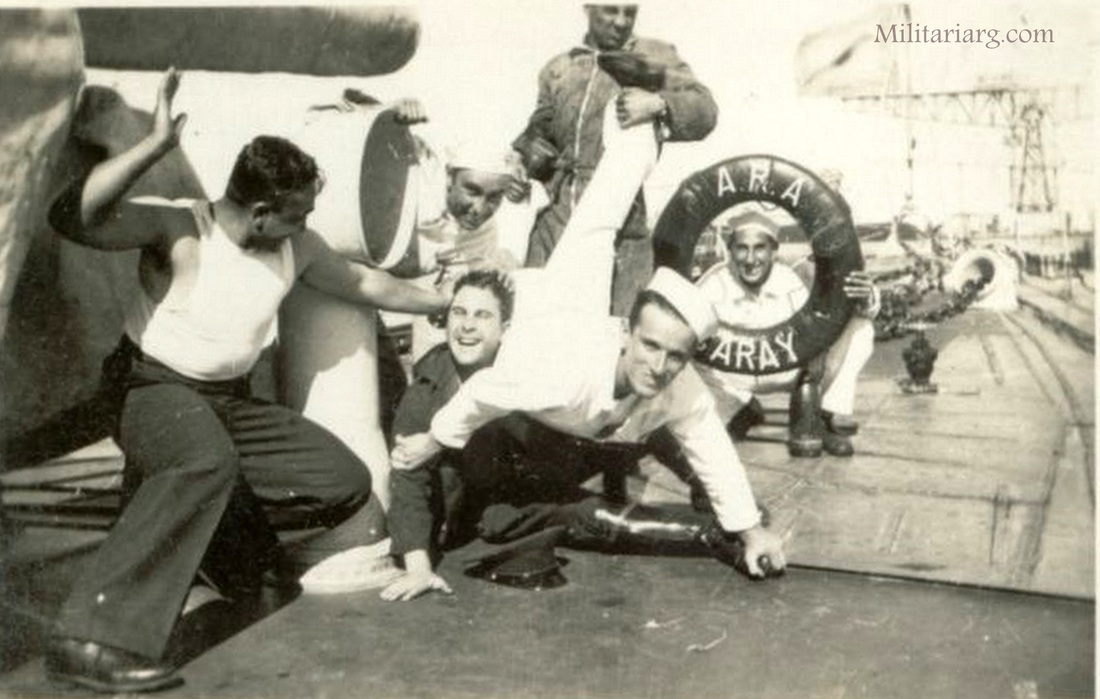
Torpedo Boat A.R.A Garay
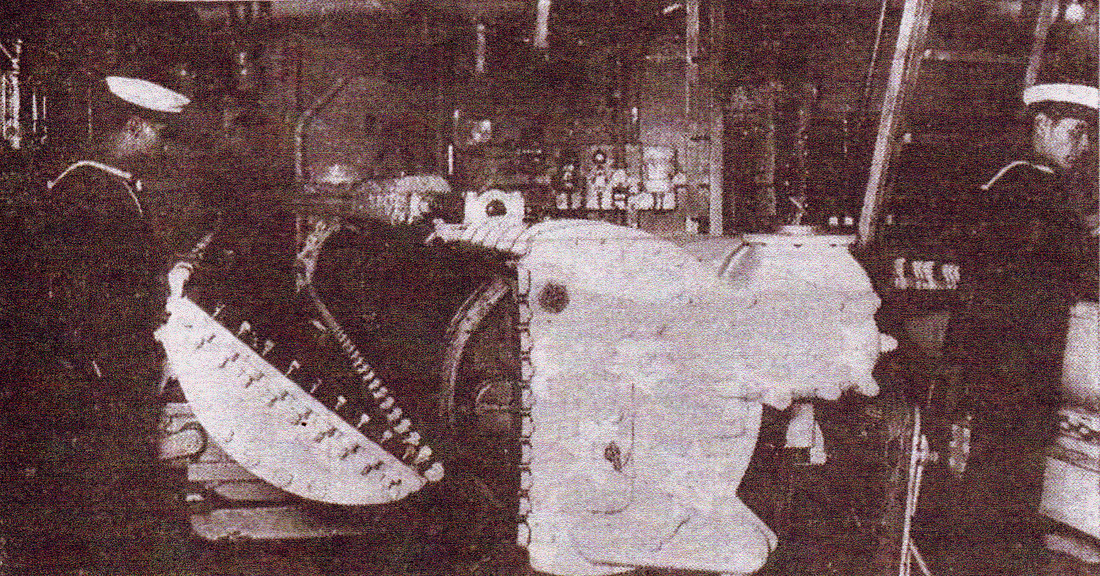
Torpedo room.
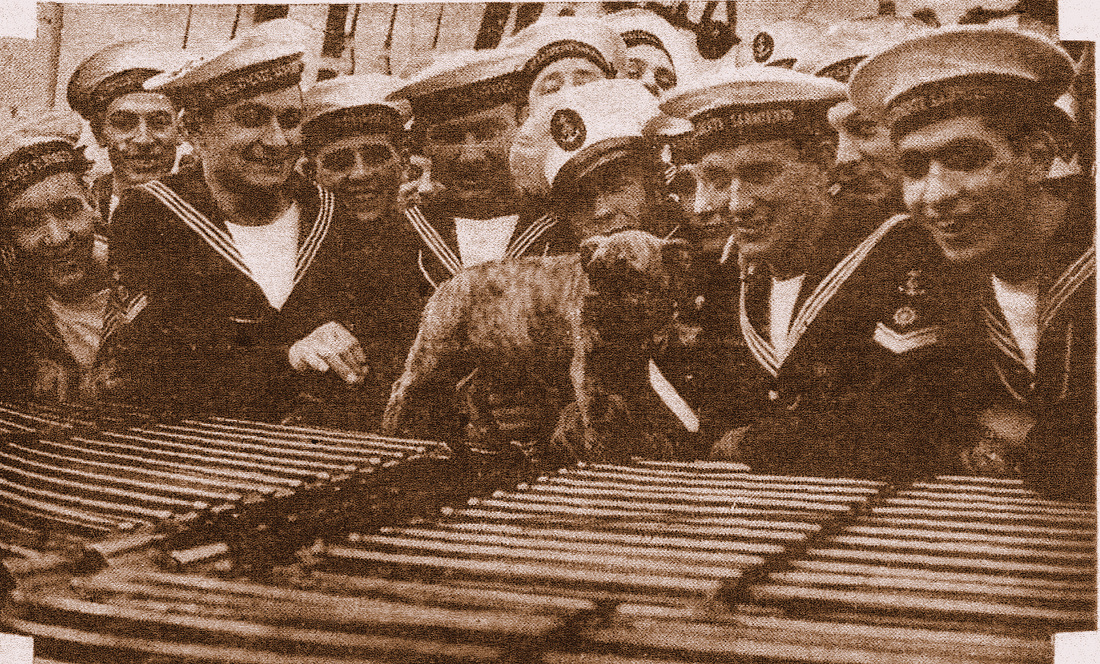
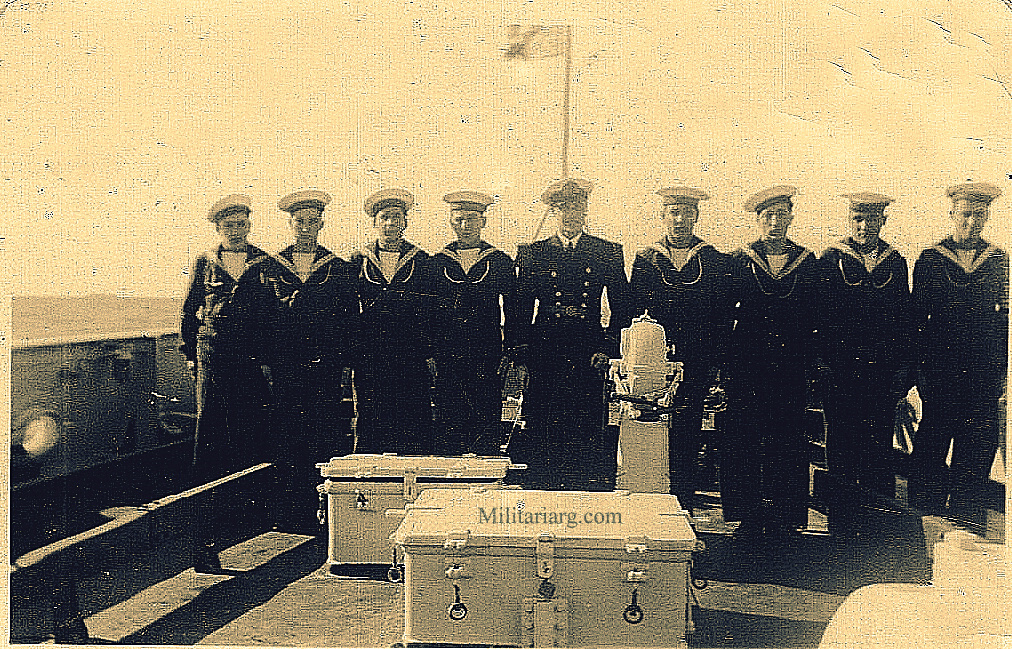
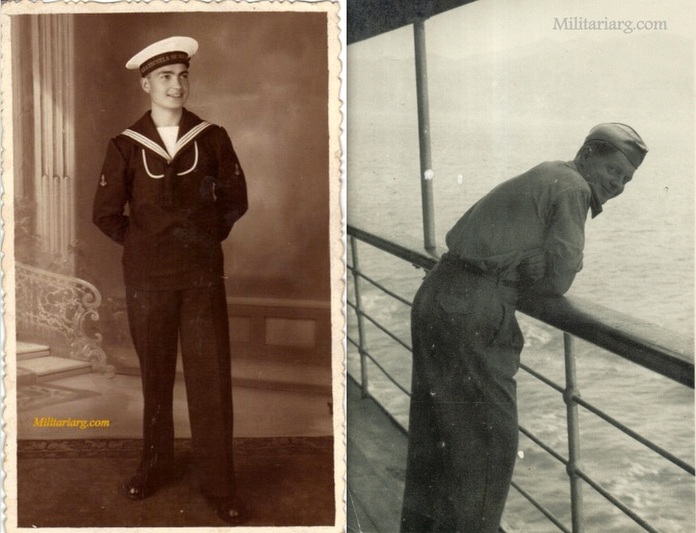
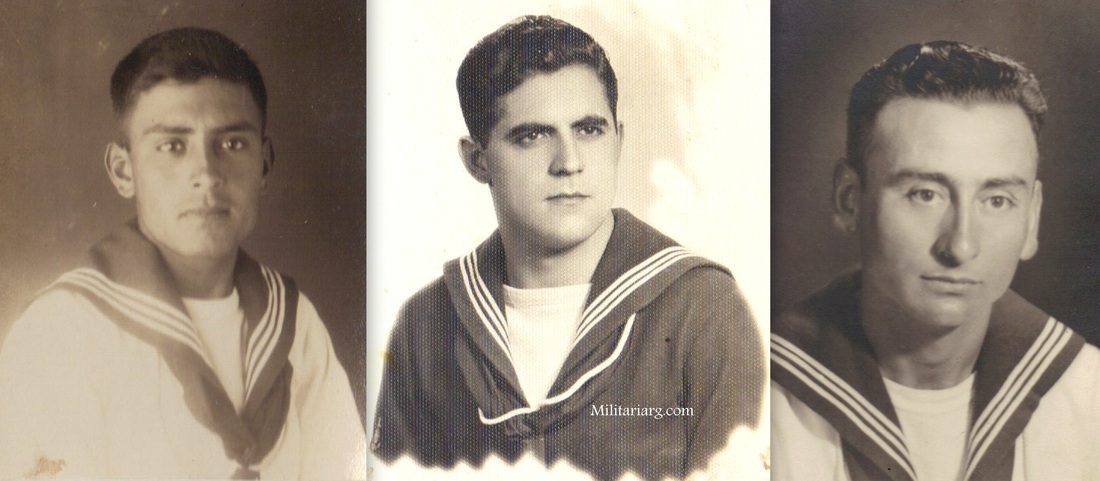
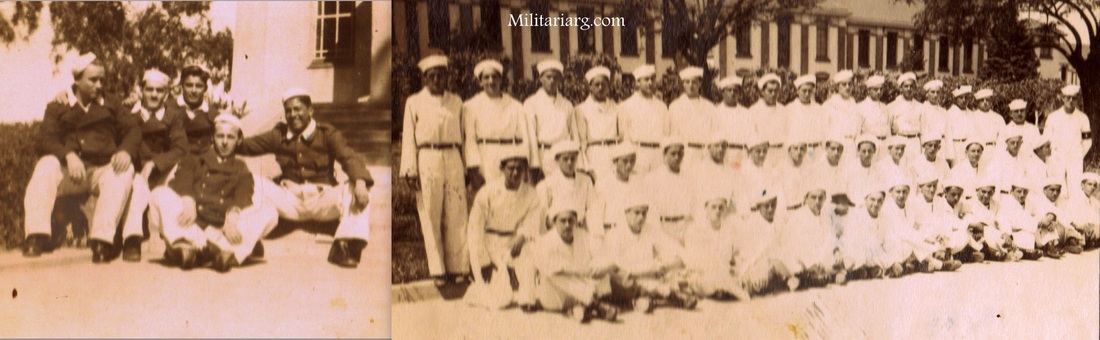
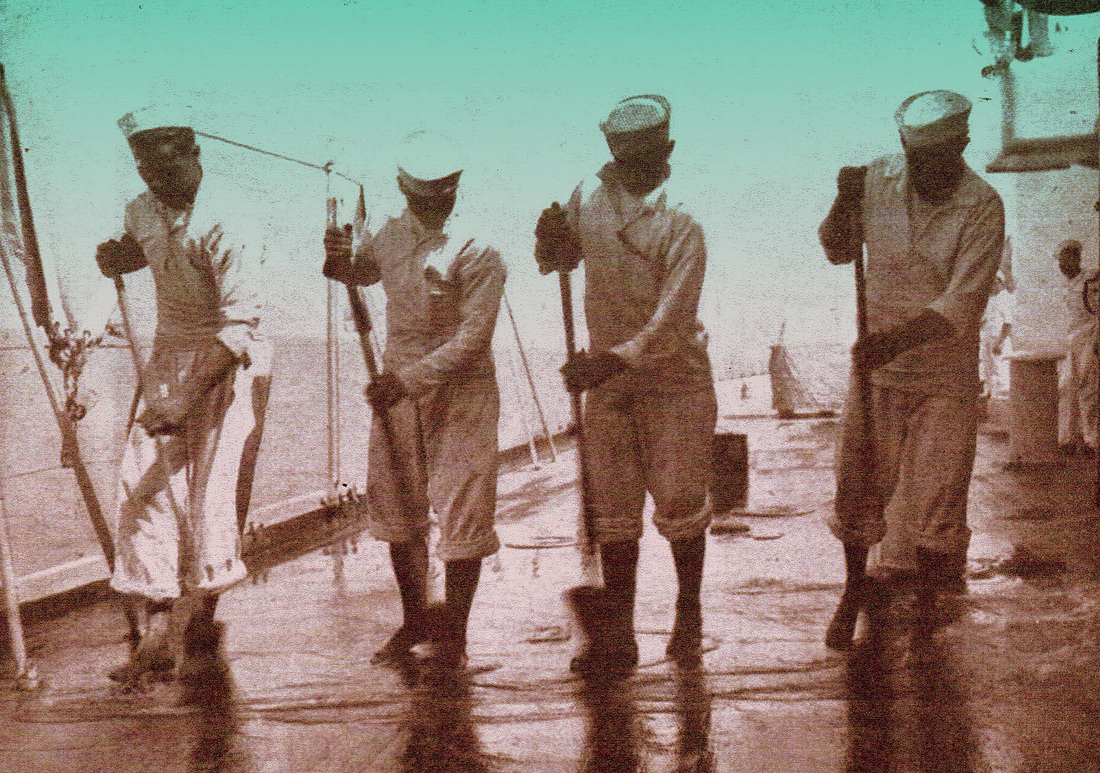
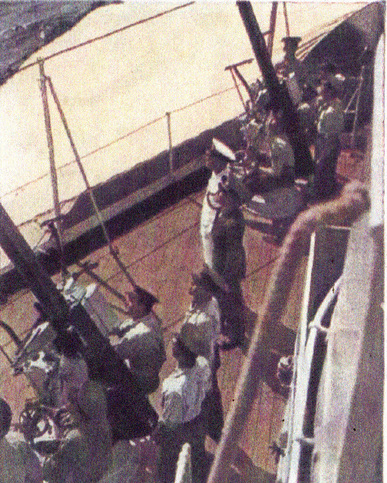
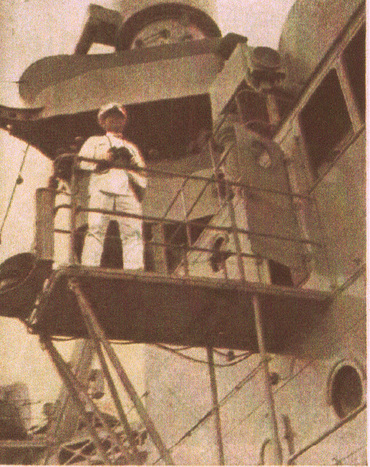
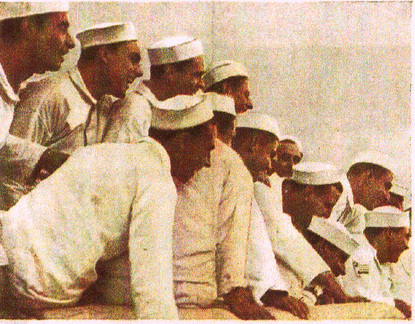
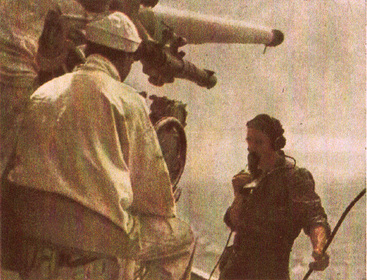
Variety of photos of sailors and ships of the Argentine Navy.
ARA GENERAL BELGRANO
Naval Mechanic School 1931. Caras y Caretas.
|
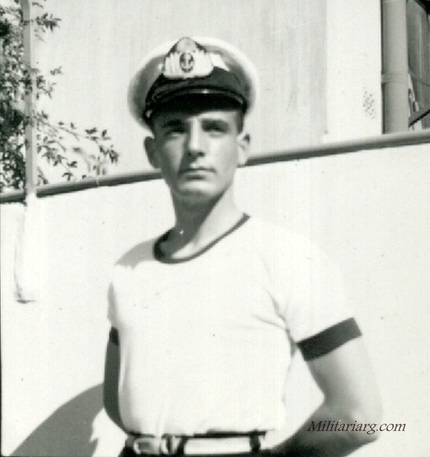
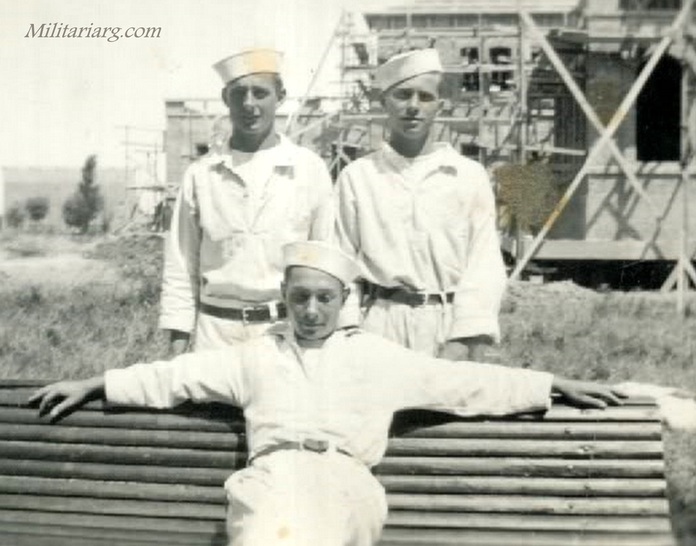
Left: This photo is of a naval cadet in a visor hat and shirt in the pure British style (Royal Navy).
|
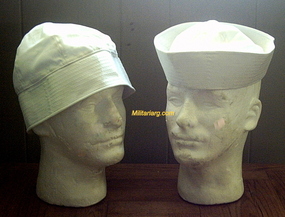
Fatigue Enlisted Uniforms from 1950s, US Style. Starting in 1950 the Argentines used the American naval style. Many surplusAmerican ships and airplanes were incorporated. The Donald Duck cap is still used for parades and excursions.
|
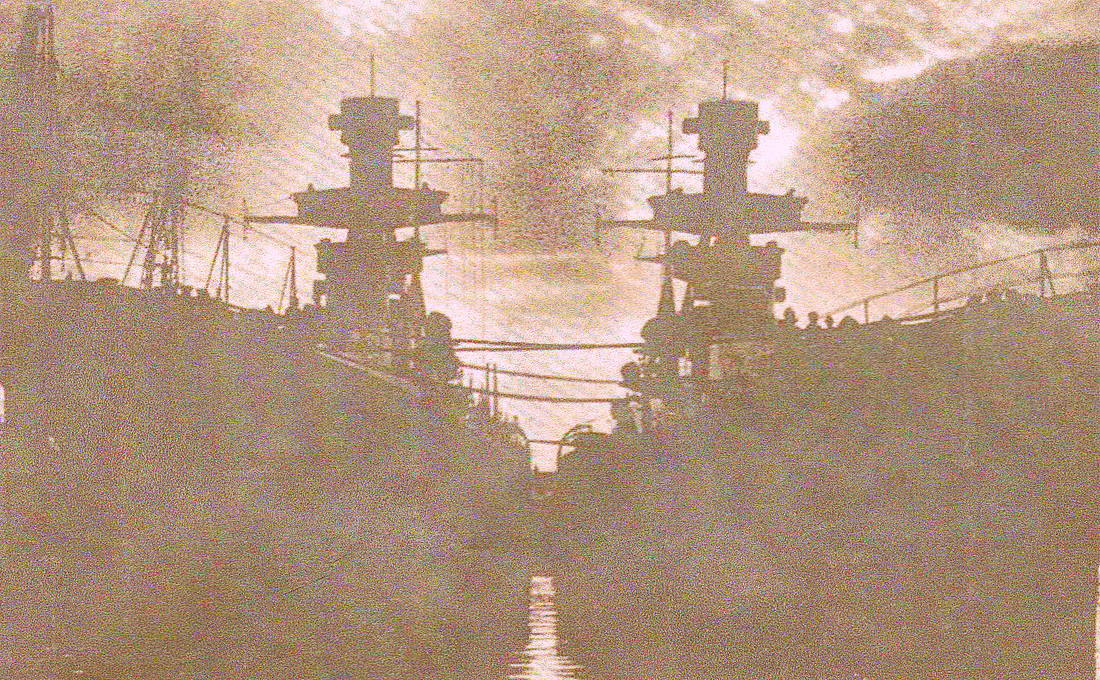
Cararas y Caretas 1933.
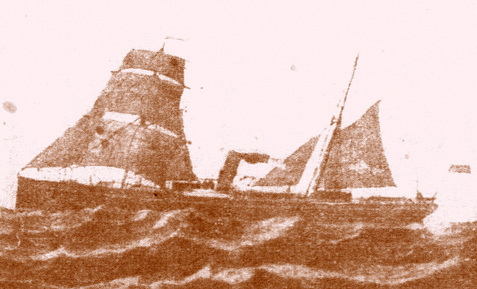
1942. The Sinking of the Río Tercero
The SS Río Tercero was an Argentine steam merchant ship sunk by a German U-boat during World War II (not WWI) off the coast of North America. Sunk on June 22, 1942, approximately 120 miles off New York/New Jersey.
While sailing unescorted as a neutral vessel from New York to Buenos Aires, it was hit by a torpedo from the German submarine U-202, commanded by Hans-Heinz Linder.
The torpedo strike caused a boiler explosion that killed five crew members; the remaining survivors were later rescued by the USS SC-503.
Germany claimed the ship lacked visible neutrality markings. The sinking caused a major diplomatic rift, leading Argentina to deliver a formal protest to Berlin, which eventually resulted in Germany acknowledging responsibility and offering compensation.
Built in England in 1912 as the Eboe, it was later sold to Italy and renamed Fortunstella. In 1940, the ship was interned at Necochea and seized by Argentina in 1941, becoming part of the State Merchant Fleet (Flota Mercante del Estado) under the name Río Tercero. At the time of its loss, it was carrying 3,500 tons of general cargo, including coal and mail.
While sailing unescorted as a neutral vessel from New York to Buenos Aires, it was hit by a torpedo from the German submarine U-202, commanded by Hans-Heinz Linder.
The torpedo strike caused a boiler explosion that killed five crew members; the remaining survivors were later rescued by the USS SC-503.
Germany claimed the ship lacked visible neutrality markings. The sinking caused a major diplomatic rift, leading Argentina to deliver a formal protest to Berlin, which eventually resulted in Germany acknowledging responsibility and offering compensation.
Built in England in 1912 as the Eboe, it was later sold to Italy and renamed Fortunstella. In 1940, the ship was interned at Necochea and seized by Argentina in 1941, becoming part of the State Merchant Fleet (Flota Mercante del Estado) under the name Río Tercero. At the time of its loss, it was carrying 3,500 tons of general cargo, including coal and mail.
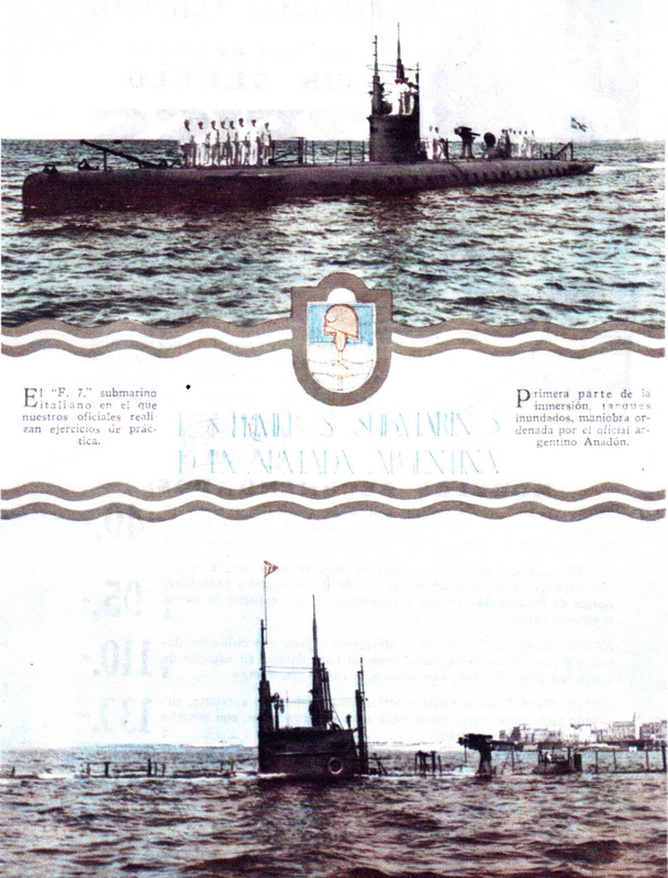
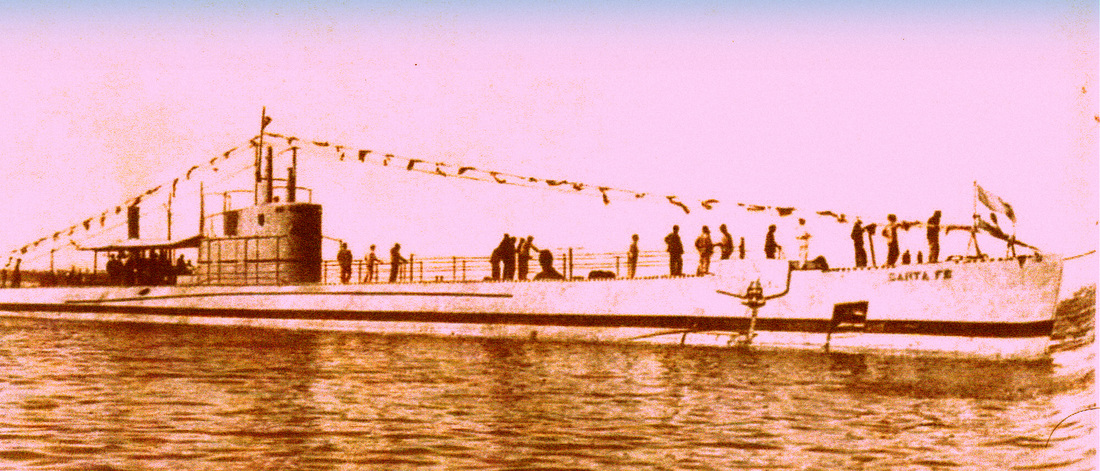
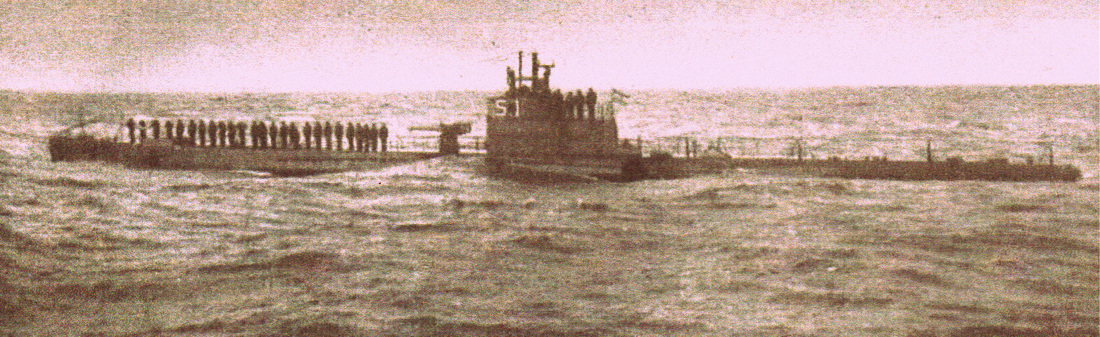
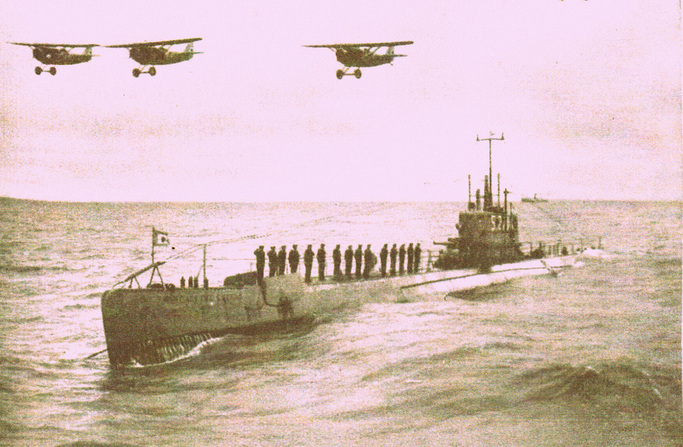
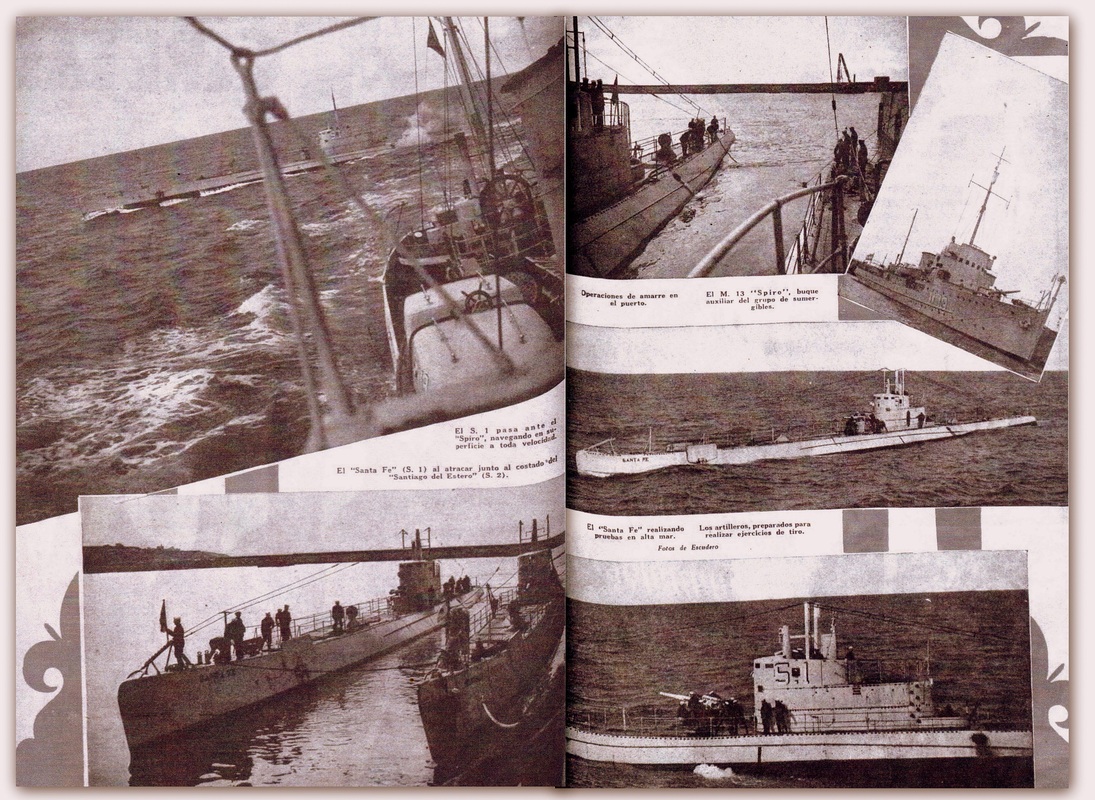
Fleet of Submarines
1929. Caras y Caretas Magazine.
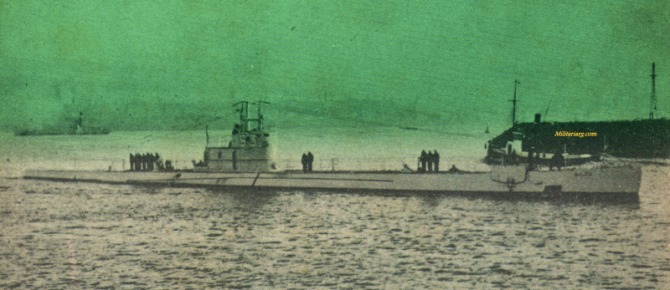
Submarine Salta.
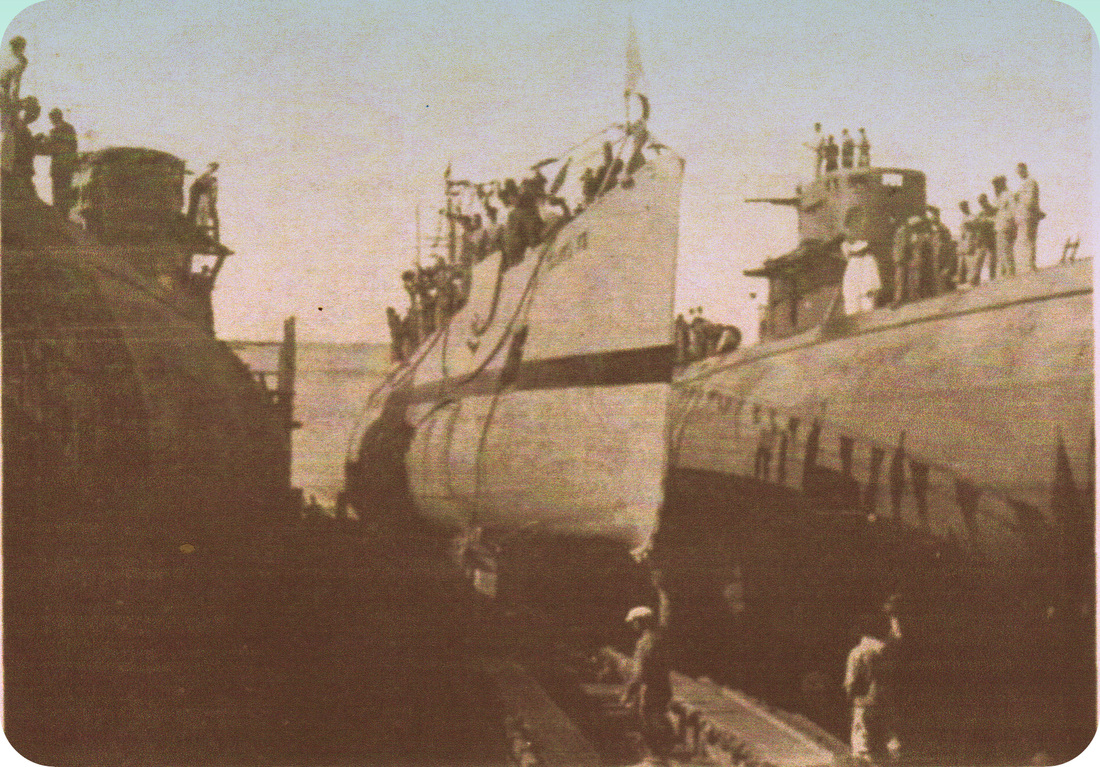
"Tarantinos" Submarines.
Argentine SS Salta. Santa Fe, Santiago del Estero.
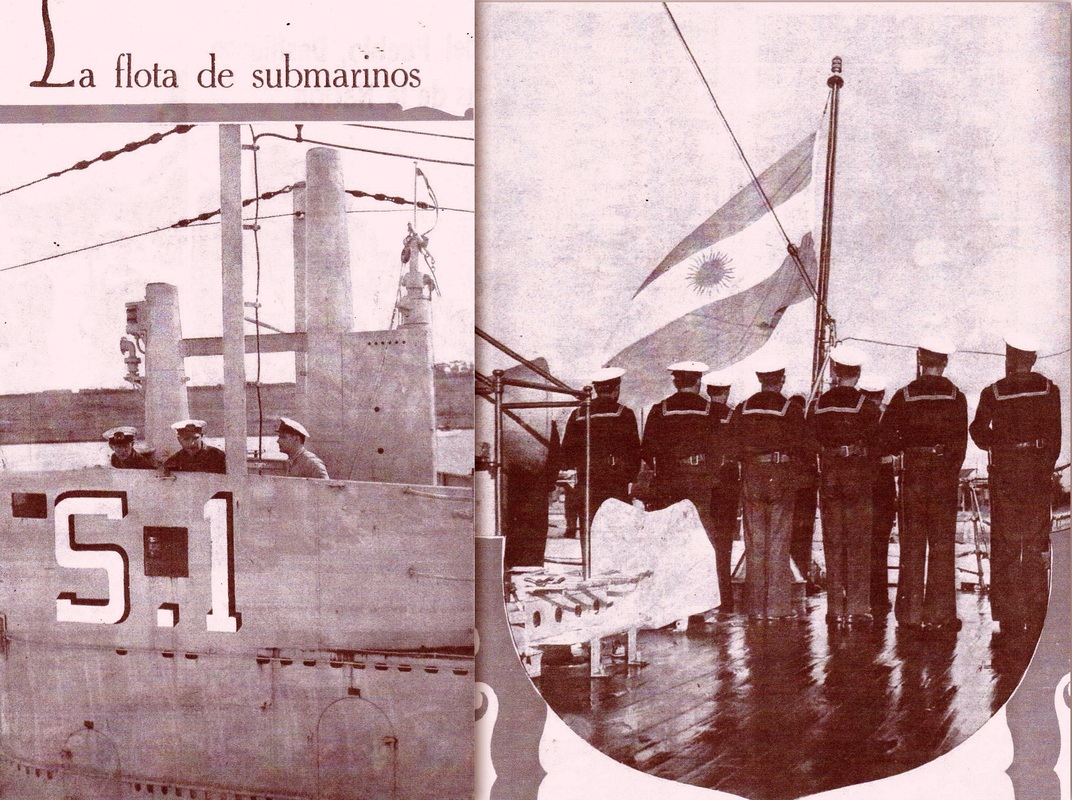
S1 Santa Fe.
S2 Submarine Santiago del Estero and Dewontine.
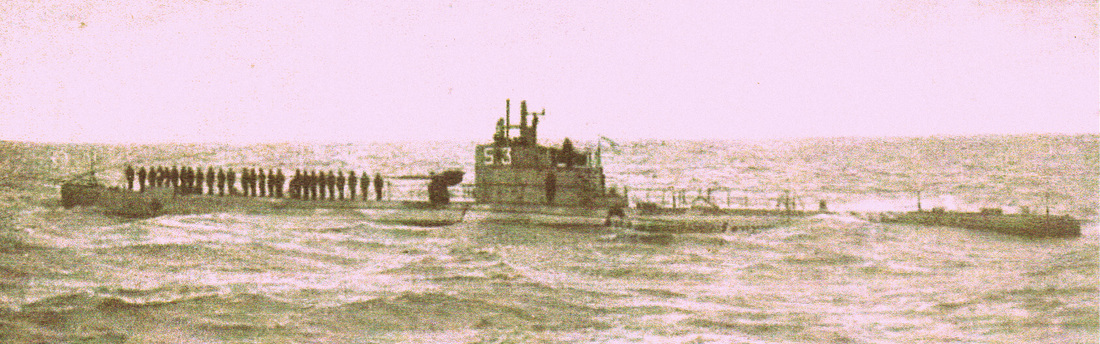
One of the Italian-built "Tarantino" submarines had a unique fate involving a private owner and a final resting place near a beach in Mar del Plata.
The ARA Santiago del Estero (S-2) was one of the three original Santa Fe-class submarines nicknamed "Tarantinos."
After being decommissioned in 1959, it was not immediately scrapped like its sister ships. Instead, it was sold to a private individual probably for tourist purposes, but the submarine was expensive to maintain, especially over the years. S-3 was sunk near mar del Plata, the submarine ran aground or began to sink in the shallow waters.
IMO the abandoned "Tarantino" is the real-world source of some Nazi U-boat myths in Mar del Plata. Not many Argentines know about their own country's naval history and hear more about German boats.
The ARA Santiago del Estero (S-2) was one of the three original Santa Fe-class submarines nicknamed "Tarantinos."
After being decommissioned in 1959, it was not immediately scrapped like its sister ships. Instead, it was sold to a private individual probably for tourist purposes, but the submarine was expensive to maintain, especially over the years. S-3 was sunk near mar del Plata, the submarine ran aground or began to sink in the shallow waters.
IMO the abandoned "Tarantino" is the real-world source of some Nazi U-boat myths in Mar del Plata. Not many Argentines know about their own country's naval history and hear more about German boats.
S-3 Submarine Salta.
Argentine Submarines. "Caras y Caretas" 1938.
US Balao-Class Submarines
In Argentina, the Balao-class submarines were the backbone of the underwater force for over two decades, acquired from the United States in two distinct waves. These WWII-era veterans were modernized under the GUPPY program (Greater Underwater Propulsion Power) before their transfer.
Argentina operated four of these submarines, though they reused the same two names:
First Wave (1960–1971):
ARA Santa Fe (S-11): Formerly the USS Macabi (SS-375).
ARA Santiago del Estero (S-12): Formerly the USS Lamprey (SS-372). Both were retired in 1971 to serve as spare parts for the second wave.
Second Wave (1971–1982):
ARA Santa Fe (S-21): Formerly the USS Catfish (SS-339). This is the famous vessel captured and scuttled in the Falklands.
ARA Santiago del Estero (S-22): Formerly the USS Chivo (SS-341). It was a GUPPY IA variant and was discarded in 1981 due to its poor material condition.
Argentina operated four of these submarines, though they reused the same two names:
First Wave (1960–1971):
ARA Santa Fe (S-11): Formerly the USS Macabi (SS-375).
ARA Santiago del Estero (S-12): Formerly the USS Lamprey (SS-372). Both were retired in 1971 to serve as spare parts for the second wave.
Second Wave (1971–1982):
ARA Santa Fe (S-21): Formerly the USS Catfish (SS-339). This is the famous vessel captured and scuttled in the Falklands.
ARA Santiago del Estero (S-22): Formerly the USS Chivo (SS-341). It was a GUPPY IA variant and was discarded in 1981 due to its poor material condition.
Image from the South Atlantic War showing the surrender of Argentine forces (Captain Astiz) on South Georgia Island on April 26, 1982. Because he was a high-profile "villain" the British press focused heavily on him, often overshadowing the technical surrender of the submarine captain. The British military widely publicized this image to demonstrate an early victory in the conflict. Because it was so polished and "perfect" for the news, some critics at the time suggested it was a "propaganda operation".
Capture of the ARA Santa Fe (S-21)
The ARA Santa Fe (S-21) was an Argentine Balao-class submarine (formerly the WWII-era USS Catfish) that played a pivotal role in the early stages of the 1982 Falklands War. It was the first major naval vessel lost by Argentina during the conflict.
The Attack at South Georgia (April 25, 1982)
After successfully reinforcing the Argentine garrison at Grytviken with marines and supplies, the Santa Fe was detected while departing on the surface.
A British Wessex helicopter from HMS Antrim initiated the attack with depth charges, followed by HMS Plymouth and HMS Brilliant launching Wasp and Lynx helicopters.The submarine was struck by AS-12 anti-ship missiles, depth charges, and heavy machine-gun fire. While the fiberglass sail allowed some missiles to pass through without detonating, the structural and internal damage was severe enough to prevent it from submerging.
The crew managed to limp back to the jetty at King Edward Point, where they abandoned the vessel and surrendered to British forces.
The Attack at South Georgia (April 25, 1982)
After successfully reinforcing the Argentine garrison at Grytviken with marines and supplies, the Santa Fe was detected while departing on the surface.
A British Wessex helicopter from HMS Antrim initiated the attack with depth charges, followed by HMS Plymouth and HMS Brilliant launching Wasp and Lynx helicopters.The submarine was struck by AS-12 anti-ship missiles, depth charges, and heavy machine-gun fire. While the fiberglass sail allowed some missiles to pass through without detonating, the structural and internal damage was severe enough to prevent it from submerging.
The crew managed to limp back to the jetty at King Edward Point, where they abandoned the vessel and surrendered to British forces.
On April 26, 1982, the British ordered the Argentine submarine to be moved from the main pier at Grytviken to a safer location to prevent it from sinking and blocking the harbor. A small Argentine crew, including Petty Officer Félix Artuso, was assigned to operate the vessel under the guard of British Royal Marines.
During the maneuver, the submarine began to list (tilt). Artuso reached for a set of levers to blow air into the ballast tanks to stabilize the boat. The British guard, who had been briefed to prevent any attempt to scuttle (intentionally sink) the submarine, misunderstood Artuso's sudden movement. Believing Artuso was trying to sabotage the vessel, the guard shot and killed him instantly.
It was later confirmed that Artuso was simply trying to keep the submarine level. He was buried with full military honors at the Grytviken Cemetery on South Georgia.
During the maneuver, the submarine began to list (tilt). Artuso reached for a set of levers to blow air into the ballast tanks to stabilize the boat. The British guard, who had been briefed to prevent any attempt to scuttle (intentionally sink) the submarine, misunderstood Artuso's sudden movement. Believing Artuso was trying to sabotage the vessel, the guard shot and killed him instantly.
It was later confirmed that Artuso was simply trying to keep the submarine level. He was buried with full military honors at the Grytviken Cemetery on South Georgia.
In July 1982, it was towed to Moraine Fjord, where it partially sank near the pier.To clear the anchorage and remove hazardous materials (batteries and oil), the British Ministry of Defence launched Operation Okehampton in early 1985.
On February 20, 1985, the Santa Fe was towed approximately 12 miles out to deep water and scuttled. Its wreck now lies at the approximate coordinates 54°08′S 36°19′W.
Type 209, Diesel-Electric Submarine ARA San Luis
The ARA San Luis (S-32), a German-built Type 209 diesel-electric submarine, is legendary for being the only Argentine vessel to actively oppose the British Task Force for weeks after the sinking of the General Belgrano. Despite having an inexperienced crew and a failed fire-control computer, it successfully evaded the entire Royal Navy anti-submarine warfare (ASW) suite for 39 days.
The "Silent" War Patrol (April – May 1982)
The San Luis operated with such stealth that the Royal Navy was forced to expend over 50 torpedoes and hundreds of depth charges chasing "ghost" contacts, none of which were the actual submarine.
Attack 1 (May 1)
Detected the frigates HMS Brilliant and HMS Yarmouth. It fired an SST-4 torpedo, but the guidance wire snapped. The British counter-attacked for 20 hours with depth charges and a torpedo; the San Luis escaped by sitting silently on the seabed.
Attack 2 (May 8)
Fired a Mark 37 torpedo at what it believed was a British submarine after hearing an underwater contact. An explosion was heard, but it is now widely believed the torpedo hit a whale.
Attack 3 (May 11)
Came within 5,000 yards of the frigates HMS Alacrity and HMS Arrow. It fired another SST-4, which again suffered a wire break. Some reports suggest the torpedo actually hit the Arrow's towed decoy but failed to detonate.
Why the Torpedoes Failed?
Post-war investigations by German and Dutch engineers revealed a simple but catastrophic error: an Argentine technician had inadvertently reversed the polarity of the power cables.
The torpedo gyros spun backward, causing them to "tumble" upon launch and lose their heading. The ship's fire-control computer had broken down just eight days into the patrol, forcing the crew to calculate all firing solutions manually.
The San Luis returned to Puerto Belgrano on May 19, 1982, for repairs but never returned to the war. It was officially struck from the Navy list in 1997 after an aborted overhaul. As of early 2026, its hull remains stored at the Tandanor (Domecq Garcia) Shipyard in Buenos Aires.
After returning as a hero in 1982, the submarine was sent to the Manuel Domecq García Shipyard (now part of Tandanor) in 1985 for a planned "Mid-Life Upgrade" (MLU).
(1985–2024)
The hull was cut in half to replace the engines and batteries.
Due to the economic crises of the 80s and 90s and a lack of political will, the work was halted. The San Luis remained bisected and rusting inside the shipyard for nearly 40 years.
Cannibalization: Over the decades, it was stripped of functional parts to maintain its sister ship, the ARA Salta (S-31).
Final Decision: After years of veterans' groups begging to turn it into a museum, the Navy finally determined the hull was structurally unsound. In early 2024, it was officially confirmed that the San Luis would be sold for scrap.
The "Silent Hunter" of the South Atlantic, which survived 50 British torpedoes, couldn't survive the bureaucracy and neglect of the shipyard. Its steel is now being cut up and sold by the ton, essentially erased from history.
The "Silent" War Patrol (April – May 1982)
The San Luis operated with such stealth that the Royal Navy was forced to expend over 50 torpedoes and hundreds of depth charges chasing "ghost" contacts, none of which were the actual submarine.
Attack 1 (May 1)
Detected the frigates HMS Brilliant and HMS Yarmouth. It fired an SST-4 torpedo, but the guidance wire snapped. The British counter-attacked for 20 hours with depth charges and a torpedo; the San Luis escaped by sitting silently on the seabed.
Attack 2 (May 8)
Fired a Mark 37 torpedo at what it believed was a British submarine after hearing an underwater contact. An explosion was heard, but it is now widely believed the torpedo hit a whale.
Attack 3 (May 11)
Came within 5,000 yards of the frigates HMS Alacrity and HMS Arrow. It fired another SST-4, which again suffered a wire break. Some reports suggest the torpedo actually hit the Arrow's towed decoy but failed to detonate.
Why the Torpedoes Failed?
Post-war investigations by German and Dutch engineers revealed a simple but catastrophic error: an Argentine technician had inadvertently reversed the polarity of the power cables.
The torpedo gyros spun backward, causing them to "tumble" upon launch and lose their heading. The ship's fire-control computer had broken down just eight days into the patrol, forcing the crew to calculate all firing solutions manually.
The San Luis returned to Puerto Belgrano on May 19, 1982, for repairs but never returned to the war. It was officially struck from the Navy list in 1997 after an aborted overhaul. As of early 2026, its hull remains stored at the Tandanor (Domecq Garcia) Shipyard in Buenos Aires.
After returning as a hero in 1982, the submarine was sent to the Manuel Domecq García Shipyard (now part of Tandanor) in 1985 for a planned "Mid-Life Upgrade" (MLU).
(1985–2024)
The hull was cut in half to replace the engines and batteries.
Due to the economic crises of the 80s and 90s and a lack of political will, the work was halted. The San Luis remained bisected and rusting inside the shipyard for nearly 40 years.
Cannibalization: Over the decades, it was stripped of functional parts to maintain its sister ship, the ARA Salta (S-31).
Final Decision: After years of veterans' groups begging to turn it into a museum, the Navy finally determined the hull was structurally unsound. In early 2024, it was officially confirmed that the San Luis would be sold for scrap.
The "Silent Hunter" of the South Atlantic, which survived 50 British torpedoes, couldn't survive the bureaucracy and neglect of the shipyard. Its steel is now being cut up and sold by the ton, essentially erased from history.
Nuclear-Powered Submarine Suspected Atomic Weapons and Condor II Missiles
Nuclear-powered submarine during 1976–1981 (Civic-military dictatorship, Juntas or National Reorganization Process).
The story of the Argentine nuclear submarine is a fascinating piece of Cold War history that remained largely confidential during its peak in the late 1970s. While most of the world focused on Argentina's conventional naval buildup, a parallel project aimed to create a nuclear propulsion system for its new fleet.
In 1977, the National Reorganization Process ordered six TR-1700 class submarines from the West German firm Thyssen Nordseewerke. These were massive, fast diesel-electric boats designed with a "stealthy" hydrodynamic hull and large internal volume specifically to allow for the eventual installation of a nuclear reactor.
The "Pocket" Reactor
While the hulls were being built, Argentine scientists at CNEA (National Atomic Energy Commission) and INVAP began work on the CAREM reactor in the early 1980s. It was designed as a Small Modular Reactor (SMR) compact enough to fit inside the TR-1700’s hull.
The plan primarily revolved around the acquisition of TR-1700 class submarines from West Germany and the development of an indigenous naval reactor.
In the late 1970s, the Argentine Navy ordered six TR-1700 diesel-electric submarines from Thyssen Nordseewerke. These vessels were designed with advanced hydrotechnology usually found in nuclear submarines, making them suitable candidates for future nuclear propulsion.
The project aimed to replace the conventional engines with a compact nuclear reactor. This led to the development of the CAREM (Central Argentina de Elementos Modulares), a small modular reactor (SMR) originally designed by Siemens in the 1970s and later advanced by the Argentine company INVAP.
Admiral Emilio Massera, a key member of the ruling junta, was a major proponent of the nuclear program and encouraged heavy spending on nuclear research and infrastructure.
The program was largely a "prestige race" with Brazil, which also had a secret military nuclear program (the Parallel Program). Both countries refused to sign the global Non-Proliferation Treaty (NPT) for decades, viewing it as a tool of "technological colonialism" by the North.
Declassified documents from Western intelligence services were convinced Argentina's nuclear ambitions including the submarine project were a smokescreen for developing atomic weapons. Western intelligence was indeed intensely reactive, but the submarine was just one piece of a much larger "nuclear puzzle" that deeply alarmed the U.S. and its allies.
The project was officially abandoned after the South Atlantic War but what followed was the Condor II Missile Project..
Most historians and declassified reports suggest that while the junta built the infrastructure for a bomb (the enrichment and the missile), they never actually assembled a functional nuclear device before the regime collapsed after the South Atlantic War. The program was eventually dismantled and placed under civilian oversight by President Raúl Alfonsín in 1983.
The story of the Argentine nuclear submarine is a fascinating piece of Cold War history that remained largely confidential during its peak in the late 1970s. While most of the world focused on Argentina's conventional naval buildup, a parallel project aimed to create a nuclear propulsion system for its new fleet.
In 1977, the National Reorganization Process ordered six TR-1700 class submarines from the West German firm Thyssen Nordseewerke. These were massive, fast diesel-electric boats designed with a "stealthy" hydrodynamic hull and large internal volume specifically to allow for the eventual installation of a nuclear reactor.
The "Pocket" Reactor
While the hulls were being built, Argentine scientists at CNEA (National Atomic Energy Commission) and INVAP began work on the CAREM reactor in the early 1980s. It was designed as a Small Modular Reactor (SMR) compact enough to fit inside the TR-1700’s hull.
The plan primarily revolved around the acquisition of TR-1700 class submarines from West Germany and the development of an indigenous naval reactor.
In the late 1970s, the Argentine Navy ordered six TR-1700 diesel-electric submarines from Thyssen Nordseewerke. These vessels were designed with advanced hydrotechnology usually found in nuclear submarines, making them suitable candidates for future nuclear propulsion.
The project aimed to replace the conventional engines with a compact nuclear reactor. This led to the development of the CAREM (Central Argentina de Elementos Modulares), a small modular reactor (SMR) originally designed by Siemens in the 1970s and later advanced by the Argentine company INVAP.
Admiral Emilio Massera, a key member of the ruling junta, was a major proponent of the nuclear program and encouraged heavy spending on nuclear research and infrastructure.
The program was largely a "prestige race" with Brazil, which also had a secret military nuclear program (the Parallel Program). Both countries refused to sign the global Non-Proliferation Treaty (NPT) for decades, viewing it as a tool of "technological colonialism" by the North.
Declassified documents from Western intelligence services were convinced Argentina's nuclear ambitions including the submarine project were a smokescreen for developing atomic weapons. Western intelligence was indeed intensely reactive, but the submarine was just one piece of a much larger "nuclear puzzle" that deeply alarmed the U.S. and its allies.
The project was officially abandoned after the South Atlantic War but what followed was the Condor II Missile Project..
Most historians and declassified reports suggest that while the junta built the infrastructure for a bomb (the enrichment and the missile), they never actually assembled a functional nuclear device before the regime collapsed after the South Atlantic War. The program was eventually dismantled and placed under civilian oversight by President Raúl Alfonsín in 1983.
Submarine TR-1700
Photograph of the catalogue of the TR-1700 type submarine of the Ministro Manuel Domecq García S.A. Shipyard.
According to the catalogue:
Navigation. The main device of this system is a satellite navigator, installed on the control room.
Communications. The possible modes of operation are:
For HF equipment, USB, LSB, CW, AM and AFSK.
For UHF equipment: AM
For VHF equipment: FM.
The normal antennas for communication system are mounted atop a retractable mast, on wich are also mounted the main antenna for HF, and a combined antenna for VHF, UHF and IFF.
To complement this system, there is a teleprinter, a coder/decoder to work with FSK, a chronometer, a magnetic tape recorder, and provisions for a cypher machine.
For underwater communication an underwater telephone allows contact with other ships or divers provided with similar equipment.
Weapon system
The state of the art weapon control system assures excellent acquisition and tracking of targets with later launching and control of weapons against various simultaneous targets. All this gives the TR-1700 an excellent offensive power.
According to the catalogue:
Navigation. The main device of this system is a satellite navigator, installed on the control room.
Communications. The possible modes of operation are:
For HF equipment, USB, LSB, CW, AM and AFSK.
For UHF equipment: AM
For VHF equipment: FM.
The normal antennas for communication system are mounted atop a retractable mast, on wich are also mounted the main antenna for HF, and a combined antenna for VHF, UHF and IFF.
To complement this system, there is a teleprinter, a coder/decoder to work with FSK, a chronometer, a magnetic tape recorder, and provisions for a cypher machine.
For underwater communication an underwater telephone allows contact with other ships or divers provided with similar equipment.
Weapon system
The state of the art weapon control system assures excellent acquisition and tracking of targets with later launching and control of weapons against various simultaneous targets. All this gives the TR-1700 an excellent offensive power.
Detection:
The ship counts with radiogoniometer and a radar to be used in surface or periscope depth cruising.
For dived cruising there are three sonars:
A main multi-functional sonar, of compact desing.
A secondary sonar.
A telemetric passive sonar.
Girocompasses, logmeters, soundvelocity meter and echosounders, all contribute to the function of the navigation and detection systems. The crew's training is made with electronic equipments as the sonar information simulator and the pericospe'cs television circuits; The cavitation and superstructure noise detector is considered as an auxiliary system.
Armament
Six forward torpedos tubes, accept torpedos up to 533 mm in diameter. The system also permits usage of torpedos of smaller diameter and lenght.
Besides the six torpedos stored in the tubes, there is a capacity to store 16 large torpedoes or a great number of smaller lenght.
The reloading operation is made with a hydraulic system, while the embarcation of torpedoes takes place through a tube installed on top front of the submarine.
The ship counts with radiogoniometer and a radar to be used in surface or periscope depth cruising.
For dived cruising there are three sonars:
A main multi-functional sonar, of compact desing.
A secondary sonar.
A telemetric passive sonar.
Girocompasses, logmeters, soundvelocity meter and echosounders, all contribute to the function of the navigation and detection systems. The crew's training is made with electronic equipments as the sonar information simulator and the pericospe'cs television circuits; The cavitation and superstructure noise detector is considered as an auxiliary system.
Armament
Six forward torpedos tubes, accept torpedos up to 533 mm in diameter. The system also permits usage of torpedos of smaller diameter and lenght.
Besides the six torpedos stored in the tubes, there is a capacity to store 16 large torpedoes or a great number of smaller lenght.
The reloading operation is made with a hydraulic system, while the embarcation of torpedoes takes place through a tube installed on top front of the submarine.
The TR-1700 class represents the most advanced and largest conventional submarines ever built in Germany since WWII, specifically designed for the Argentine Navy's long-range needs in the South Atlantic.
ARA San Juan (S-42): Confirmed lost after imploding in November 2017. Its wreckage remains on the seabed at a depth of 907 meters.
ARA Santa Cruz (S-41): The only other completed vessel is inactive. A major mid-life modernization that began in 2016 was definitively cancelled in 2020.
Unfinished Units: Four additional TR-1700s were planned for domestic construction at the Domecq García shipyard (now part of Tandanor). Construction on ARA Santa Fe (S-43) (approx. 70% complete) and ARA Santiago del Estero (S-44) (approx. 30% complete) was suspended decades ago. Recently, key components like their electric motors have reportedly been sold for scrap.
ARA San Juan (S-42), a TR-1700 class diesel-electric vessel, disappeared in the South Atlantic on November 15, 2017. All 44 crew members aboard.
ARA San Juan (S-42): Confirmed lost after imploding in November 2017. Its wreckage remains on the seabed at a depth of 907 meters.
ARA Santa Cruz (S-41): The only other completed vessel is inactive. A major mid-life modernization that began in 2016 was definitively cancelled in 2020.
Unfinished Units: Four additional TR-1700s were planned for domestic construction at the Domecq García shipyard (now part of Tandanor). Construction on ARA Santa Fe (S-43) (approx. 70% complete) and ARA Santiago del Estero (S-44) (approx. 30% complete) was suspended decades ago. Recently, key components like their electric motors have reportedly been sold for scrap.
ARA San Juan (S-42), a TR-1700 class diesel-electric vessel, disappeared in the South Atlantic on November 15, 2017. All 44 crew members aboard.
The unfinished TR-1700s became "monuments to what could have been," used by successive governments to project an image of technological sovereignty that didn't match the reality of the budget. Almost every president since the 1980s visited the Domecq García shipyard (now part of Tandanor) to announce a "Plan for Naval Reactivation.
Caras y Caretas 28/03/1936
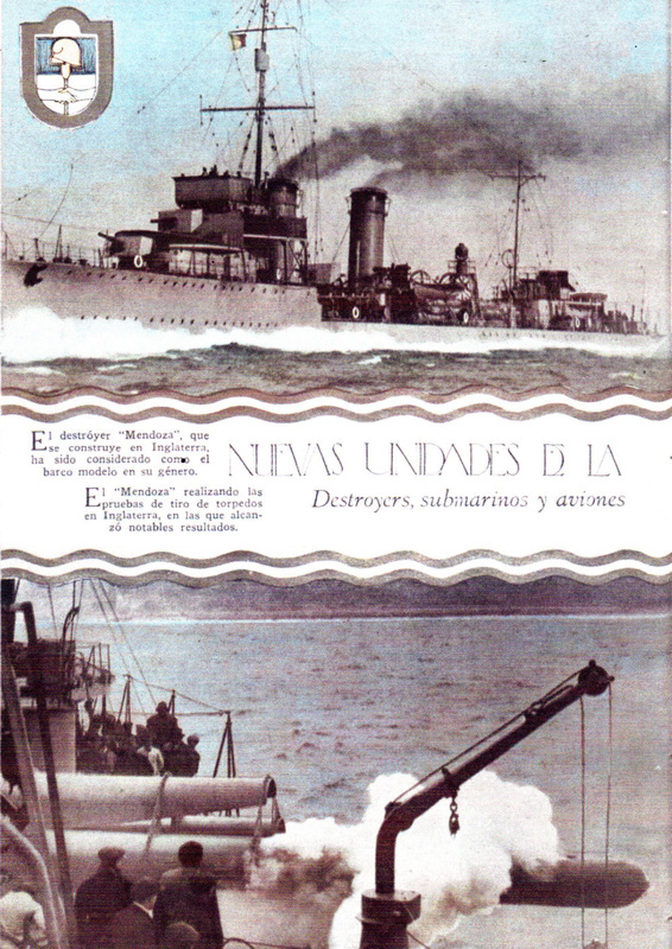
Mendoza Class-Destroyer
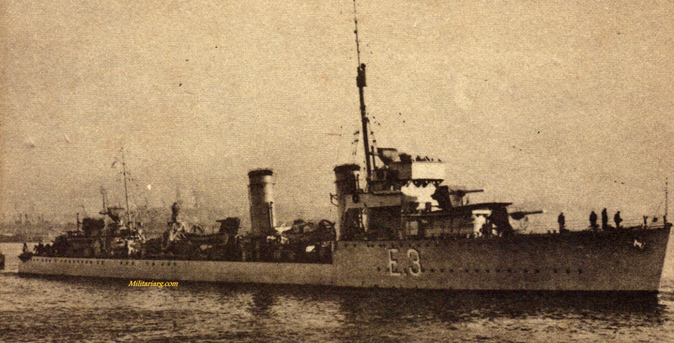
1929. ARA Mendoza. Caras y Caretas.
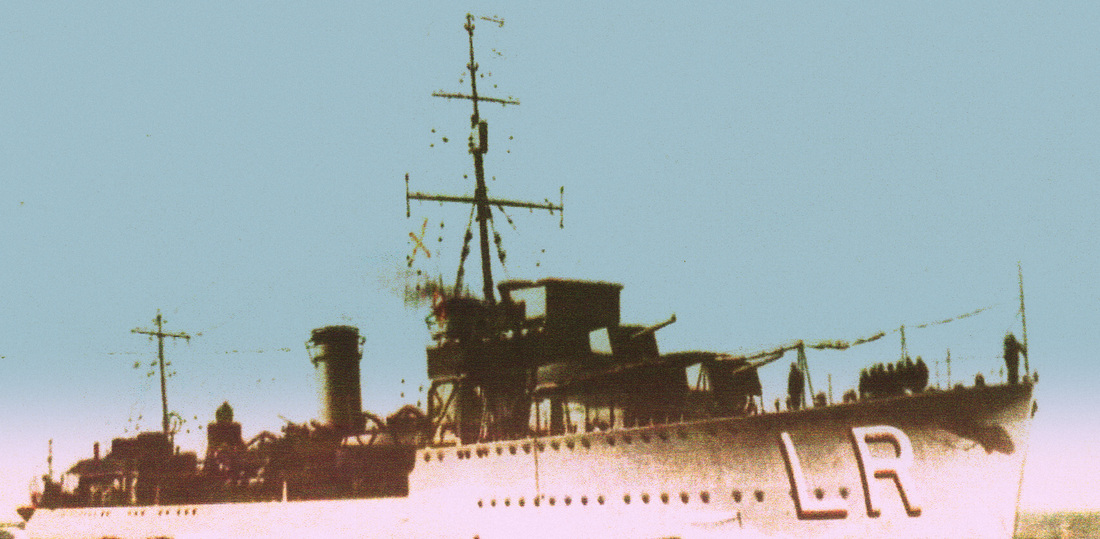
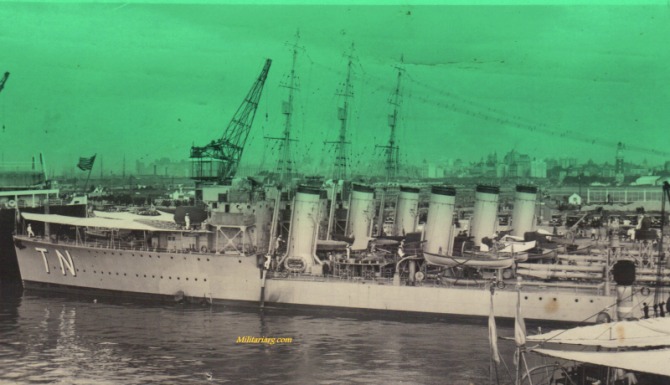
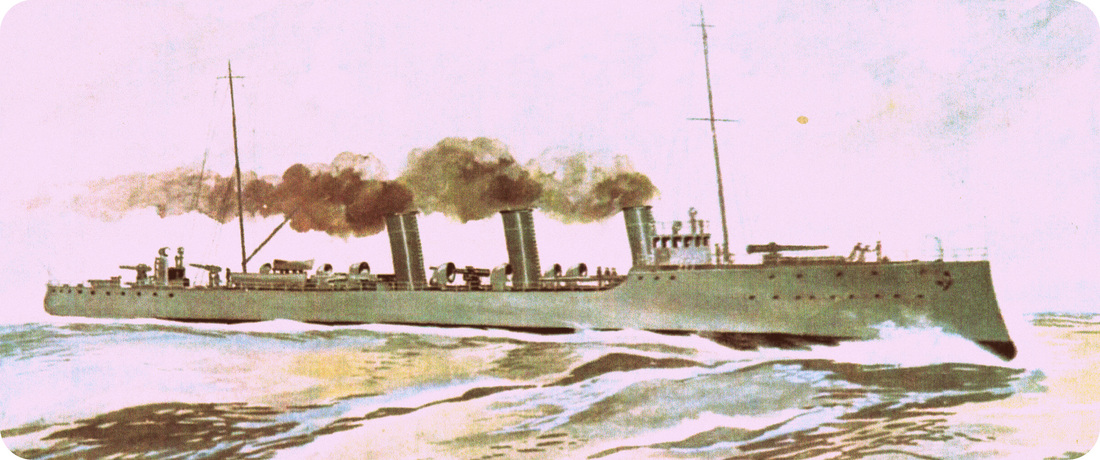
The Mendoza-class destroyers were a series of three warships built in the United Kingdom for the Argentine Navy in the late 1920s. They were based on the British Admiralty-type flotilla leader design from the end of World War I, specifically derived from the Scott class of 1916. The three vessels were all built by J. Samuel White & Co. in Cowes, England:
ARA Mendoza (E-3): Commissioned January 24, 1929.
ARA Tucuman (E-5): Commissioned May 3, 1929.
ARA La Rioja (E-4): Commissioned July 23, 1929.
These ships were famous for their exceptional speed. While designed for a maximum of 36 knots, all three exceeded this during sea trials.
Displacement: 1,595 tons standard; 2,154 tons full load.
Dimensions: 102.11 meters (335 ft) in length and 9.68 meters (31 ft 9 in) in beam.
Propulsion: 2 shaft Parsons geared steam turbines with 4 Yarrow boilers, producing 42,000 hp.
Armament:
5 × 4.7-inch (120mm) Vickers Mark IX guns in single shielded mounts.
1 × 3-inch (76mm) anti-aircraft (AA) gun.
2 × 2-pounder "pom-poms" for close-range AA.
6 × 21-inch (533mm) torpedo tubes in two triple mounts.
In 1952, the class was reclassified from Exploradores (destroyers) to Torpederos (destroyer escorts), changing their pennant numbers from "E" to "T". By 1958, they were converted into anti-aircraft escorts, replacing the original smaller AA guns and some main weaponry with 40 mm Bofors guns. The entire class was discarded in April 1962, replaced by modernized former U.S. Navy Fletcher-class vessels.
The Mendoza-class destroyers were a series of three warships built in the United Kingdom for the Argentine Navy in the late 1920s. They were based on the British Admiralty-type flotilla leader design from the end of World War I, specifically derived from the Scott class of 1916. The three vessels were all built by J. Samuel White & Co. in Cowes, England:
ARA Mendoza (E-3): Commissioned January 24, 1929.
ARA Tucuman (E-5): Commissioned May 3, 1929.
ARA La Rioja (E-4): Commissioned July 23, 1929.
These ships were famous for their exceptional speed. While designed for a maximum of 36 knots, all three exceeded this during sea trials.
Displacement: 1,595 tons standard; 2,154 tons full load.
Dimensions: 102.11 meters (335 ft) in length and 9.68 meters (31 ft 9 in) in beam.
Propulsion: 2 shaft Parsons geared steam turbines with 4 Yarrow boilers, producing 42,000 hp.
Armament:
5 × 4.7-inch (120mm) Vickers Mark IX guns in single shielded mounts.
1 × 3-inch (76mm) anti-aircraft (AA) gun.
2 × 2-pounder "pom-poms" for close-range AA.
6 × 21-inch (533mm) torpedo tubes in two triple mounts.
In 1952, the class was reclassified from Exploradores (destroyers) to Torpederos (destroyer escorts), changing their pennant numbers from "E" to "T". By 1958, they were converted into anti-aircraft escorts, replacing the original smaller AA guns and some main weaponry with 40 mm Bofors guns. The entire class was discarded in April 1962, replaced by modernized former U.S. Navy Fletcher-class vessels.
ARA La Rioja (1929)
Type: Mendoza-class Destroyer
Propulsion: 42,000 hp steam turbines
Speed: 39.4 knots (record-breaking at the time)
Origin: J. Samuel White, Isle of Wight, UK
Armament: 5 × 4.7-inch guns, torpedo tubes
Type: Mendoza-class Destroyer
Propulsion: 42,000 hp steam turbines
Speed: 39.4 knots (record-breaking at the time)
Origin: J. Samuel White, Isle of Wight, UK
Armament: 5 × 4.7-inch guns, torpedo tubes
Torpedo boats ARA Tucuman (TN), ARA Mendoza (MA), ARA La Rioja (LR).
ARA Cordoba.
ARA Rosario.
ARA Pueyrredon (1942), was a Garibaldi-class armoured cruiser. The ship was buil in Italy. Launched 27 July 1898, was stricken on 2 August 1954. (Wikipedia).
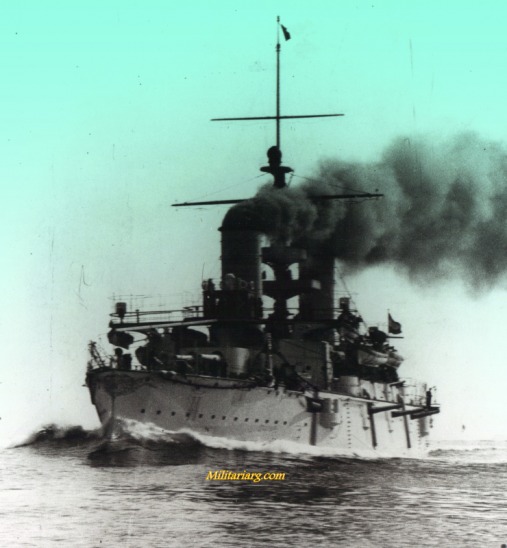
ARA San Martin was a Garibaldi class armoured cruiser of the Argentine Navy. The ship was built in Italy and is considered part of the Italian Giuseppe Garibaldi class (Garibaldi, General Belgrano, Pueyrredon and San Martin). The ship was launched on 25 May 1896 and served the Argentine Navy until she was stricken on 18 December 1935. (Wikipedia)
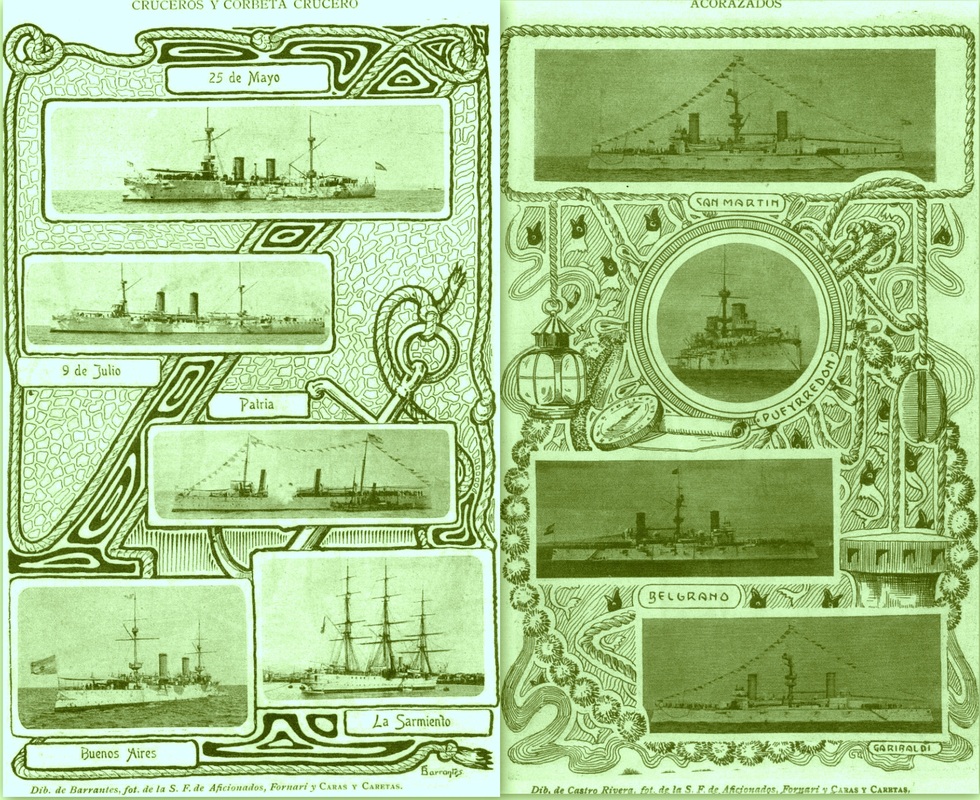
1900s. Photos: Caras y Caretas.
ARA Garibaldi was the lead ship of her class of armoured cruiser for the Argentine Navy. Launched 27 May 1895 and served the Argentine Navy until 1934.
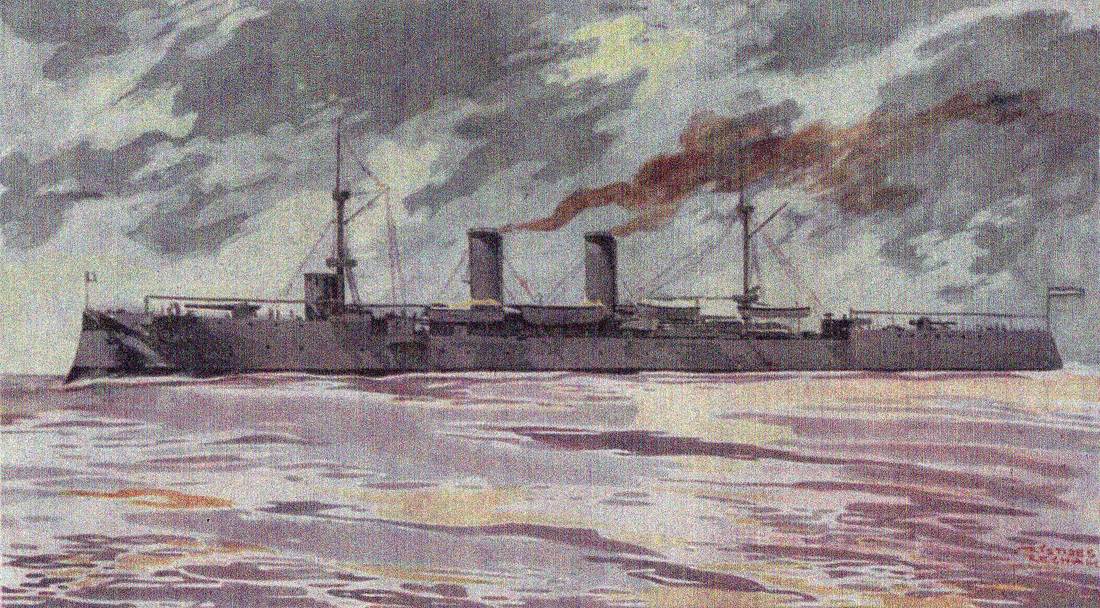
1930. Cruiser 9 de Julio.
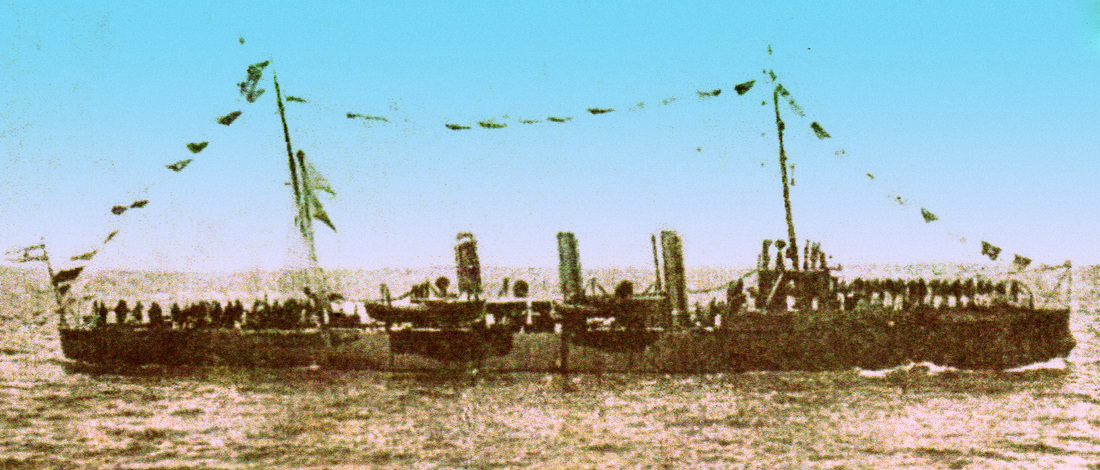
ARA Espora.
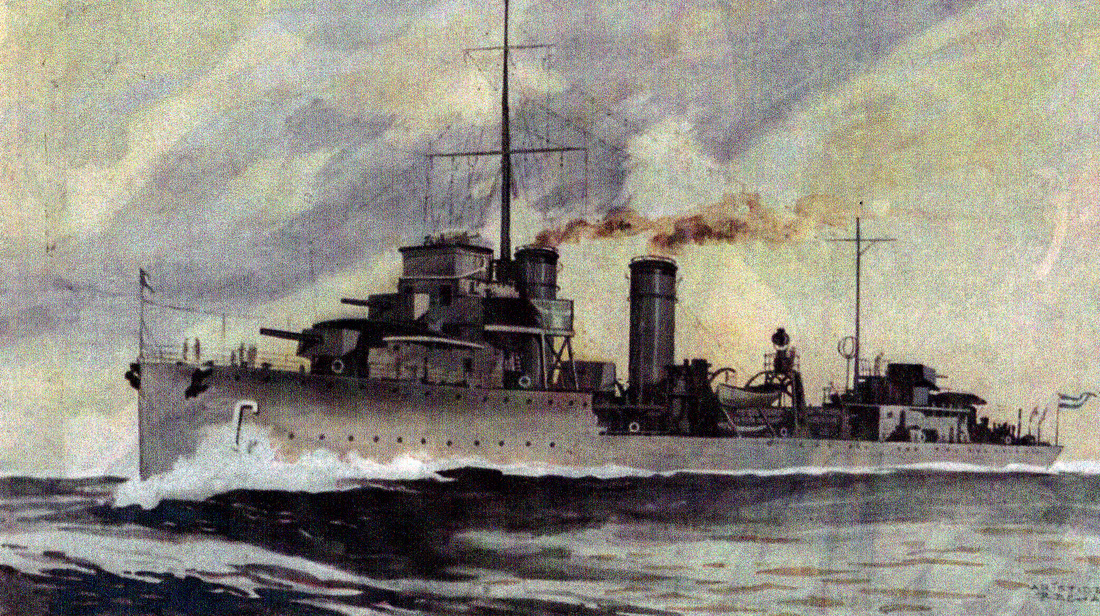
1930. Explorador Cervantes.
The ARA Villarino, a ship of profound historical importance to Argentina. While the Correo (1852) was a pioneer of screw-propulsion, the Villarino is most famous for its role in repatriating the remains of General José de San Martín.
Repatriation of San Martín (1880)
In its inaugural voyage, the Villarino was tasked with the solemn mission of bringing the remains of the "Liberator" back from France to Buenos Aires. The ship arrived on May 28, 1880, fulfilling San Martín's final wish to rest in his homeland.
It served as the first regular transport for the Argentine Navy in the Patagonia region, linking Buenos Aires with southern ports for nearly 20 years.
Built nearly 30 years after the Correo, the Villarino represented further evolution in steam technology:
Builder: It was built in 1880 by the Laird Brothers shipyard in Birkenhead, United Kingdom.
Design: A wrought iron hull steamer, it was rigged as a brigantine-schooner with eight sails to complement its steam engine.
Dimensions: Approximately 56 meters in length and 9 meters in beam, with a displacement of 1,192 tons.
Armament: As a naval transport, it was equipped with two Armstrong 20-pounder cannons and two Hotchkiss rotary guns.
The Tragic End
On March 16, 1899, during its 101st voyage to the south, the Villarino was caught in a violent storm. It was wrecked against the rocks of Islas Blancas in Bahía Camarones, Chubut. Although the ship was a total loss, the entire crew was saved by the cruiser ARA 9 de Julio.
Today, the propeller (hélice) of the Villarino is displayed as a monument in Puerto Madryn, serving as a permanent memorial to the ship that brought San Martín home.
Repatriation of San Martín (1880)
In its inaugural voyage, the Villarino was tasked with the solemn mission of bringing the remains of the "Liberator" back from France to Buenos Aires. The ship arrived on May 28, 1880, fulfilling San Martín's final wish to rest in his homeland.
It served as the first regular transport for the Argentine Navy in the Patagonia region, linking Buenos Aires with southern ports for nearly 20 years.
Built nearly 30 years after the Correo, the Villarino represented further evolution in steam technology:
Builder: It was built in 1880 by the Laird Brothers shipyard in Birkenhead, United Kingdom.
Design: A wrought iron hull steamer, it was rigged as a brigantine-schooner with eight sails to complement its steam engine.
Dimensions: Approximately 56 meters in length and 9 meters in beam, with a displacement of 1,192 tons.
Armament: As a naval transport, it was equipped with two Armstrong 20-pounder cannons and two Hotchkiss rotary guns.
The Tragic End
On March 16, 1899, during its 101st voyage to the south, the Villarino was caught in a violent storm. It was wrecked against the rocks of Islas Blancas in Bahía Camarones, Chubut. Although the ship was a total loss, the entire crew was saved by the cruiser ARA 9 de Julio.
Today, the propeller (hélice) of the Villarino is displayed as a monument in Puerto Madryn, serving as a permanent memorial to the ship that brought San Martín home.
ARA Santisima Trinidad, The Holy Trinity (Industry - Sovereignte - Christianity)
ARA Santisima Trinidad. AFNE Rio Santiago 1974.
In 1975, leftist guerrilla group called "Montoneros", targeted the ARA Santísima Trinidad. They planted an explosive device, causing the ship to suffer severe damage and submerging it partially. The incident delayed the ship's construction and eventual commissioning by several years. Although it was repaired, the explosion was said to have left lasting issues, affecting the ship’s operational capabilities during the Beagle in 1978 and the Falklands War in 1982.
Former members of the Montoneros, who had previously engaged in operations against the ARA Santísima Trinidad, collaborated with the Navy to devise strategies for the operation, illustrating the blending of military and guerrilla tactics.
Asymmetric Warfare: The operation "Algeciras" included planned attacks on British naval vessels primarily stationed around Gibraltar and involved the use of various naval tactics, including the deployment of submarines and aerial assaults
The operation exemplified asymmetric warfare tactics, where Argentina attempted to counter a more technologically advanced naval fleet through guerrilla tactics and sabotage.
Operation Algeciras faced operational challenges, including intelligence failures and logistical constraints. In other words, it was a failure.
In 1975, leftist guerrilla group called "Montoneros", targeted the ARA Santísima Trinidad. They planted an explosive device, causing the ship to suffer severe damage and submerging it partially. The incident delayed the ship's construction and eventual commissioning by several years. Although it was repaired, the explosion was said to have left lasting issues, affecting the ship’s operational capabilities during the Beagle in 1978 and the Falklands War in 1982.
Former members of the Montoneros, who had previously engaged in operations against the ARA Santísima Trinidad, collaborated with the Navy to devise strategies for the operation, illustrating the blending of military and guerrilla tactics.
Asymmetric Warfare: The operation "Algeciras" included planned attacks on British naval vessels primarily stationed around Gibraltar and involved the use of various naval tactics, including the deployment of submarines and aerial assaults
The operation exemplified asymmetric warfare tactics, where Argentina attempted to counter a more technologically advanced naval fleet through guerrilla tactics and sabotage.
Operation Algeciras faced operational challenges, including intelligence failures and logistical constraints. In other words, it was a failure.
The abandonment and eventual scrapping of the ARA Santísima Trinidad (D-2) is often seen as a painful symbol of the decline of Argentina's naval power and national industry. Although its Christian name, "Santísima Trinidad" (Holy Trinity), has a profound significance in the claim of sovereignty over the Malvinas and the Argentine Sea, its destiny was driven by a combination of geopolitical, economic, and technical factors.
2007 - 2013. The satellite photo dramatically shows the state of one of the Argentine Navy ships (ARA Santisima Trinidad*), that sank in its docks.
Icebreaker A.R.A General San Martin (Q-4)
The First Icebreaker in Argentina's Antarctic presence relied on ARA General San Martín (Q-4)
The ship was ordered during the second presidency of Juan Domingo Perón in 1954. It was built by the Seebeck-Werft shipyard in Wesermünde, West Germany.
It was the first icebreaker in Latin America. Its arrival in 1954 allowed Argentina to establish permanent bases deep in the Weddell Sea, such as Belgrano I (1955).
For 25 years, it was the "workhorse" of the Argentine Antarctic Sector, performing rescues and scientific missions until it was decommissioned in 1982.
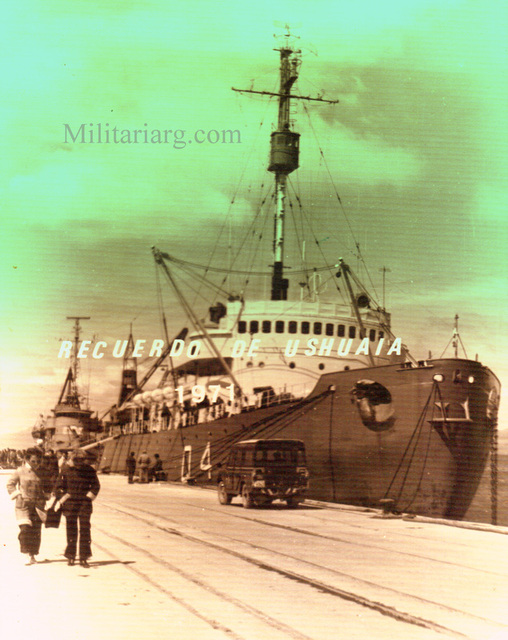
Photo: USHUAIA .Icebreaker ARA General San Martín (Q-4), It was made in Germany and incorporated in the mid-1950s. It was later replaced by the Q-5 Irizar. Note the Land Rover.
The ship was ordered during the second presidency of Juan Domingo Perón in 1954. It was built by the Seebeck-Werft shipyard in Wesermünde, West Germany.
It was the first icebreaker in Latin America. Its arrival in 1954 allowed Argentina to establish permanent bases deep in the Weddell Sea, such as Belgrano I (1955).
For 25 years, it was the "workhorse" of the Argentine Antarctic Sector, performing rescues and scientific missions until it was decommissioned in 1982.
Photo: USHUAIA .Icebreaker ARA General San Martín (Q-4), It was made in Germany and incorporated in the mid-1950s. It was later replaced by the Q-5 Irizar. Note the Land Rover.
The arrival of the ARA General San Martín in 1954 was indeed a turning point for Argentina’s presence in the South Atlantic, providing the logistical capability to reach the most remote areas of the Weddell Sea and sub-Antarctic islands. During the presidencies of Juan Domingo Perón, this sparked a period of strategic expansion, including attempts to purchase the Falklands (Malvinas) in 1953 and the establishment of several installations that were later dismantled by the British.
Argentine Bases in the South Atlantic Islands Perón’s administration and subsequent governments established several "scientific" and naval stations on islands that the UK considered its dependencies (South Georgia and the South Sandwich Islands).
Refugio Teniente Esquivel
(1955–1956): Established by the General San Martín on Thule Island (South Sandwich Islands) during the Perón era. It was a summer station intended to bolster sovereignty claims but was evacuated in 1956 due to volcanic activity.
Estación Científica Corbeta Uruguay
(1976–1982): Though established after Perón's death, this was the most significant "permanent" base on Thule Island. It was a secret naval station discovered by the British in late 1976. It remained active through the Falklands War until June 20, 1982, when British forces arrived to remove the personnel.
The Destruction (1982/1983): After the Argentine personnel were removed from Corbeta Uruguay, the British returned in December 1982 (and again in January 1983) to find the Argentine flag had been re-hoisted. To prevent any further re-occupation, the Royal Navy demolished the base with explosives, leaving only ruins.
Argentine Bases in the South Atlantic Islands Perón’s administration and subsequent governments established several "scientific" and naval stations on islands that the UK considered its dependencies (South Georgia and the South Sandwich Islands).
Refugio Teniente Esquivel
(1955–1956): Established by the General San Martín on Thule Island (South Sandwich Islands) during the Perón era. It was a summer station intended to bolster sovereignty claims but was evacuated in 1956 due to volcanic activity.
Estación Científica Corbeta Uruguay
(1976–1982): Though established after Perón's death, this was the most significant "permanent" base on Thule Island. It was a secret naval station discovered by the British in late 1976. It remained active through the Falklands War until June 20, 1982, when British forces arrived to remove the personnel.
The Destruction (1982/1983): After the Argentine personnel were removed from Corbeta Uruguay, the British returned in December 1982 (and again in January 1983) to find the Argentine flag had been re-hoisted. To prevent any further re-occupation, the Royal Navy demolished the base with explosives, leaving only ruins.
Icebreaker A.R.A Admiral Irizar (Q-5)
As the San Martín aged, the Navy required a more powerful, modern vessel. The contract was signed in 1975 under the government of Isabel Martínez de Perón.
It was built by the Wärtsilä Helsinki Shipyard in Finland, which was (and is) considered the world leader in icebreaker technology.
The ship was launched in 1978 and arrived in Buenos Aires on March 23, 1979, during the military dictatorship. It was significantly larger and more capable than its predecessor, featuring a flight deck for two heavy helicopters.
Role in the South Atlantic War (1982)
When the conflict broke out in April 1982, the Almirante Irízar was diverted from its polar duties for military operations:
Operation Rosario
The Irízar served as a transport and command ship. Its Sea King helicopters were used to land Buzos Tácticos (Tactical Divers) and infantry at the Port Stanley airfield and Mullet Creek.
Hospital Ship Conversion
In June 1982, as the conflict intensified, the vessel was formally declared a Hospital Ship under the International Committee of the Red Cross (ICRC). It was painted white with large red crosses to comply with the Geneva Convention.
Following the Argentine surrender on June 14, the Irízar was used to repatriate wounded soldiers and prisoners of war to the mainland.
It was built by the Wärtsilä Helsinki Shipyard in Finland, which was (and is) considered the world leader in icebreaker technology.
The ship was launched in 1978 and arrived in Buenos Aires on March 23, 1979, during the military dictatorship. It was significantly larger and more capable than its predecessor, featuring a flight deck for two heavy helicopters.
Role in the South Atlantic War (1982)
When the conflict broke out in April 1982, the Almirante Irízar was diverted from its polar duties for military operations:
Operation Rosario
The Irízar served as a transport and command ship. Its Sea King helicopters were used to land Buzos Tácticos (Tactical Divers) and infantry at the Port Stanley airfield and Mullet Creek.
Hospital Ship Conversion
In June 1982, as the conflict intensified, the vessel was formally declared a Hospital Ship under the International Committee of the Red Cross (ICRC). It was painted white with large red crosses to comply with the Geneva Convention.
Following the Argentine surrender on June 14, the Irízar was used to repatriate wounded soldiers and prisoners of war to the mainland.
2007. This icebreaker that caught fire is the ARA Almirante Irízar. The massive fire broke out on April 10, 2007. The ship was returning from its annual Antarctic summer campaign and was located approximately 140 miles (230 km) east of Puerto Madryn, Argentina.
The fire started in the auxiliary generator compartment and rapidly spread throughout the vessel.The crew was rescued by a Panamanian tanker (Scarlet Ibis) and an Uruguayan fishing vessel. There were no casualties or reported injuries.
The HMS Endurance and a Russian icebreaker to the rescue of the Argentine Antarctic bases.
Following the devastating fire on the ARA Almirante Irízar in April 2007, which left Argentina without its primary Antarctic logistics vessel, the British government officially offered the services of its own ice patrol ship to prevent a supply crisis at Argentine bases.
In April 2007, the UK offered to use HMS Endurance—the same Royal Navy icebreaker that had been at the center of the 1982 conflict's start to help supply Argentine Antarctic bases and support scientific missions. But the Argentine government had in mind to hire other countries for this task. The Russian icebreaker Vasily Golovnin for several summer campaigns, reportedly at a cost of roughly US$2 million per month; and The Dutch cargo vessel Timca was also hired for later campaigns.
The refusal of help nearly led to disaster for the most remote bases, such as Belgrano II, which is frequently ice-locked and requires a heavy icebreaker. At times, Argentina had to request emergency air-drops from Uruguayan C-130 Hercules aircraft to prevent bases from running out of food and fuel.
The Almirante Irízar eventually returned to service in 2017 after a complete modernization that cost approximately US$200 million.
In April 2007, the UK offered to use HMS Endurance—the same Royal Navy icebreaker that had been at the center of the 1982 conflict's start to help supply Argentine Antarctic bases and support scientific missions. But the Argentine government had in mind to hire other countries for this task. The Russian icebreaker Vasily Golovnin for several summer campaigns, reportedly at a cost of roughly US$2 million per month; and The Dutch cargo vessel Timca was also hired for later campaigns.
The refusal of help nearly led to disaster for the most remote bases, such as Belgrano II, which is frequently ice-locked and requires a heavy icebreaker. At times, Argentina had to request emergency air-drops from Uruguayan C-130 Hercules aircraft to prevent bases from running out of food and fuel.
The Almirante Irízar eventually returned to service in 2017 after a complete modernization that cost approximately US$200 million.
ARA Gral Belgrano
In 1949, the United States did indeed move to drastically reduce its naval fleet, a decision driven by fiscal austerity and a shift in nuclear strategy. This period, often called the "Revolt of the Admirals,". This trend of disarmament was abruptly reversed in June 1950 by the outbreak of the Korean War, which proved that conventional naval power—specifically aircraft carriers was still vital for global conflicts that did not involve immediate nuclear exchange
In 1951, Argentina purchased two Brooklyn-class light cruisers from the U.S. Navy.
ARA 17 de Octubre (formerly USS Phoenix): Named after the pivotal Peronist "Loyalty Day," this ship was later renamed ARA General Belgrano after Perón was deposed. It remained the fleet's flagship until it was famously sunk during the Falklands War.
ARA Nueve de Julio (formerly USS Boise): A sister ship to the 17 de Octubre, it provided Argentina with a level of naval firepower unmatched by its neighbors at the time.
In 1951, Argentina purchased two Brooklyn-class light cruisers from the U.S. Navy.
ARA 17 de Octubre (formerly USS Phoenix): Named after the pivotal Peronist "Loyalty Day," this ship was later renamed ARA General Belgrano after Perón was deposed. It remained the fleet's flagship until it was famously sunk during the Falklands War.
ARA Nueve de Julio (formerly USS Boise): A sister ship to the 17 de Octubre, it provided Argentina with a level of naval firepower unmatched by its neighbors at the time.
U.S. Navy Historical Center. It survived the Japanese attack on Pearl Harbor in 1941, and was decommissioned from the US Navy (USN) in July 1946. USS Phoenix was sold, with another of her class (USS Boise), to Argentina in October 1951, for $7.8 million. Phoenix was renamed 17 de Octubre after an important date for the political party of the then president Juan Perón. Perón was overthrown in 1955, and in 1956 the vessel was renamed General Belgrano (C-4)..
ARA General Belgrano. (C4) ex 17 de Octubre. Ex USS Phoenix CL46 (survivor of Pearl Harbor).
The sinking of the ARA General Belgrano on May 2, 1982, was the single deadliest event of the South Atlantic War and the first time a nuclear-powered submarine successfully engaged an enemy ship with torpedoes.
The Belgrano was intercepted by the British nuclear submarine HMS Conqueror (S48) approximately 230 nautical miles southwest of the Falkland Islands.
9 de Julio and Gral Belgrano.
D-21 ARA Espora, (Fletcher-class destroyer). Ex USS Dortch DD-670.
Minesweeper ships. Designed to detect and neutralize mines, as well as avoid the detonation of mines through its magnetic and accoustic signatures.
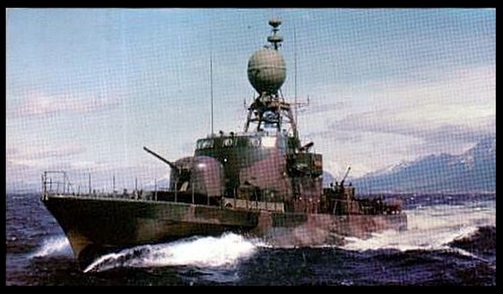
The Attack on the ARA Alférez Sobral (A-9)
On the night of May 3, 1982, the Sobral was searching for the crew of an Argentine Air Force Canberra bomber that had been shot down north of the islands. While on this mission, the ship was detected and attacked by two British Royal Navy Lynx helicopters from HMS Coventry and HMS Glasgow.
Two Sea Skua missiles struck the ship. The first hit a small boat on the deck, but the second struck the command bridge directly. This explosion instantly killed the ship's commander, Captain Sergio Raúl Gómez Roca, along with seven other crew members.
The Survivors Take Control. Despite being severely wounded in the leg by shrapnel, the Second Commander, Lieutenant Sergio Bazán, took command of the burning vessel.
Navigating Without Tools. The attack had destroyed the ship's bridge, radio, radar, and primary compass. Bazán and the surviving crew had to navigate a "blind" ship back to the mainland using only a small emergency landing compass and basic celestial navigation.
Return to Port. After a harrowing two-day journey through heavy seas and the threat of further attack, the Sobral successfully reached Puerto Deseado on May 5, 1982.
The Alférez Sobral survived the war and remained in service with the Argentine Navy for decades afterward.
ARA Alférez Sobral (A-9) was an 800-ton ocean-going tug from 1944, that was in service with the Argentine Navy from 1972, where the ship was classified as an aviso.
The ship had previously served in the US Navy as the fleet tug USS Salish (ATA-187). In Argentine service an aviso is a small naval vessel used for a number of auxiliary tasks, including tugging, laying buoys, and replenishing other ships, lighthouses and naval bases.
Two Sea Skua missiles struck the ship. The first hit a small boat on the deck, but the second struck the command bridge directly. This explosion instantly killed the ship's commander, Captain Sergio Raúl Gómez Roca, along with seven other crew members.
The Survivors Take Control. Despite being severely wounded in the leg by shrapnel, the Second Commander, Lieutenant Sergio Bazán, took command of the burning vessel.
Navigating Without Tools. The attack had destroyed the ship's bridge, radio, radar, and primary compass. Bazán and the surviving crew had to navigate a "blind" ship back to the mainland using only a small emergency landing compass and basic celestial navigation.
Return to Port. After a harrowing two-day journey through heavy seas and the threat of further attack, the Sobral successfully reached Puerto Deseado on May 5, 1982.
The Alférez Sobral survived the war and remained in service with the Argentine Navy for decades afterward.
ARA Alférez Sobral (A-9) was an 800-ton ocean-going tug from 1944, that was in service with the Argentine Navy from 1972, where the ship was classified as an aviso.
The ship had previously served in the US Navy as the fleet tug USS Salish (ATA-187). In Argentine service an aviso is a small naval vessel used for a number of auxiliary tasks, including tugging, laying buoys, and replenishing other ships, lighthouses and naval bases.
The Ara Indomita P-86 and Intrepida P-85
The ARA Indómita (P-86) and ARA Intrépida (P-85) represent a fascinating chapter in Argentine naval history, as they were the first Fast Attack Craft (Missile) in the fleet, marking a shift toward agile, high-speed coastal defense.
Ordered in the early 1970s, these sister ships are Lürssen TNC-45 designs, built by the renowned Lürssen Werft shipyard in Bremen, Germany. They were commissioned in 1974.
They were built for speed, capable of reaching 38 knots thanks to their four MTU diesel engines.
They were heavily armed for their size (approx. 45 meters long), featuring a 76mm OTO Melara rapid-fire gun on the bow, a 40mm Bofors on the stern, and two torpedo tubes.
Ordered in the early 1970s, these sister ships are Lürssen TNC-45 designs, built by the renowned Lürssen Werft shipyard in Bremen, Germany. They were commissioned in 1974.
They were built for speed, capable of reaching 38 knots thanks to their four MTU diesel engines.
They were heavily armed for their size (approx. 45 meters long), featuring a 76mm OTO Melara rapid-fire gun on the bow, a 40mm Bofors on the stern, and two torpedo tubes.
|
The Intrépida (P-85), class is a class of fast attack craft that was built by Lürssen for the Argentine Navy in the early 1970s. The ships are based on Lürssen's TNC 45 design.
Armament: 2 Aerospatiale Exocet MM 38; 1 OTO Melara 3 in (76 mm)/62 compact; 1 or 2 Bofors 40 mm/70; 2 Oerlikon 81 mm rocket launchers; 2 21 in (533 mm) torpedo launchers, AEG SST-4 torpedoes. |
Both ships were specifically assigned to the Beagle Channel area, based in Ushuaia as part of the "Agrupación Lanchas Rápidas."
Their shallow draft and high maneuverability made them perfect for navigating the narrow fjords and channels of Tierra del Fuego, where larger destroyers couldn't operate effectively.
Original 1974 Configuration: Fast Torpedo Boats. When they were delivered from Germany in 1974, they were strictly Fast Torpedo Boats. Their primary "heavy" strike weapon consisted of two 533mm torpedo tubes for AEG SST-4 wire-guided torpedoes. At that time, they did not carry missiles.
Their shallow draft and high maneuverability made them perfect for navigating the narrow fjords and channels of Tierra del Fuego, where larger destroyers couldn't operate effectively.
Original 1974 Configuration: Fast Torpedo Boats. When they were delivered from Germany in 1974, they were strictly Fast Torpedo Boats. Their primary "heavy" strike weapon consisted of two 533mm torpedo tubes for AEG SST-4 wire-guided torpedoes. At that time, they did not carry missiles.
1982 - South Atlantic War.
The Argentine Merchant Navy (Marina Mercante Argentina)
The Argentine Merchant Navy (Marina Mercante Argentina) played a critical role as "blockade runners" and supply transporters during the 1982 Falklands War. While the main surface fleet largely remained in port after the sinking of the ARA General Belgrano, merchant vessels continued to operate in the exclusion zone to deliver fuel, ammunition, and vehicles to the islands.
Some Merchant & Support Vessels
ARA Isla de los Estados Navy Transport Carried trucks, jet fuel, and ammunition. Sunk by HMS Alacrity (May 11).
Formosa ELMA (Cargo) Blockade runner; delivered military supplies. Survived (accidentally attacked by Arg. aircraft).
Río Carcarañá ELMA (Cargo) Transported fuel and supplies to Port King. Sunk by Sea Skua missiles (May 23).
Río Cincel ELMA (Cargo) Delivered initial heavy equipment and supplies. Survived (unloaded Apr 7–9).
Río de la Plata II ELMA (Cargo) Intelligence gathering (Spy ship). Survived; monitored British fleet movements.
Yehuín Geomater (Oil Tender) Coastal supply and logistics support. Captured (June 15); renamed Falkland Sound.
Bahía Buen Suceso Navy Transport Carried scrap workers to South Georgia. Captured; later scuttled for target practice.
Operational Roles
Large ELMA (Empresa Líneas Marítimas Argentinas) cargo ships attempted to pierce the British Total Exclusion Zone (TEZ) to keep the garrison at Port Stanley supplied before the final British assault.
Many civilian vessels were integrated into Task Group 40 (Amphibious Force) or operated independently as requisitioned tenders and tankers (e.g., Puerto Rosales).
Merchant and fishing vessels (like the trawler Narwal) were used as "spy ships" to track the British Task Force's position.
Small local vessels such as the Forrest, Monsunen, and Penelope were seized by the Argentine Navy for inter-island transport.
The Narwal was an Argentine stern fishing freezer trawler that became one of the most controversial non-military vessels involved in the 1982 Falklands War. While technically a civilian merchant ship, it was used by the Argentine Navy for intelligence gathering (ELINT) to monitor British Task Force movements.
Some Merchant & Support Vessels
ARA Isla de los Estados Navy Transport Carried trucks, jet fuel, and ammunition. Sunk by HMS Alacrity (May 11).
Formosa ELMA (Cargo) Blockade runner; delivered military supplies. Survived (accidentally attacked by Arg. aircraft).
Río Carcarañá ELMA (Cargo) Transported fuel and supplies to Port King. Sunk by Sea Skua missiles (May 23).
Río Cincel ELMA (Cargo) Delivered initial heavy equipment and supplies. Survived (unloaded Apr 7–9).
Río de la Plata II ELMA (Cargo) Intelligence gathering (Spy ship). Survived; monitored British fleet movements.
Yehuín Geomater (Oil Tender) Coastal supply and logistics support. Captured (June 15); renamed Falkland Sound.
Bahía Buen Suceso Navy Transport Carried scrap workers to South Georgia. Captured; later scuttled for target practice.
Operational Roles
Large ELMA (Empresa Líneas Marítimas Argentinas) cargo ships attempted to pierce the British Total Exclusion Zone (TEZ) to keep the garrison at Port Stanley supplied before the final British assault.
Many civilian vessels were integrated into Task Group 40 (Amphibious Force) or operated independently as requisitioned tenders and tankers (e.g., Puerto Rosales).
Merchant and fishing vessels (like the trawler Narwal) were used as "spy ships" to track the British Task Force's position.
Small local vessels such as the Forrest, Monsunen, and Penelope were seized by the Argentine Navy for inter-island transport.
The Narwal was an Argentine stern fishing freezer trawler that became one of the most controversial non-military vessels involved in the 1982 Falklands War. While technically a civilian merchant ship, it was used by the Argentine Navy for intelligence gathering (ELINT) to monitor British Task Force movements.
ARA Cabo San Antonio
Computerized Image:
The ELMA Río Carcarañá was an 8,500-ton Argentine cargo ship that played a vital logistics role during the 1982 South Atlantic War before being destroyed in May 1982. It successfully ran the British blockade early in the conflict to deliver essential heavy equipment and supplies to the Argentine garrison.
First Attack (May 16). While anchored in Port King (Lafonia), the ship was intercepted by two British Sea Harriers from the 800 Naval Air Squadron. It was strafed with 30mm cannons and hit by bombs, causing significant damage to the central hull and destroying survival equipment.
Captain Delfín Rodríguez ordered the crew to abandon the ship after it was deemed unseaworthy due to engine room flooding and extensive damage. All 40 crew members survived the attack and were later transferred to Fox Bay.
Final Sinking (May 23). After sitting abandoned for a week, the vessel was finally destroyed by Sea Skua missiles fired from a Westland Lynx helicopter (from HMS Antelope).
Left: Computarized Imagen:
ENCOTEL (Empresa Nacional de Correos y Telégrafos) was the Argentine state-owned postal and telecommunications company that played a critical role in maintaining the connection between the mainland and the islands during the 1982 conflict.
Postal Operations and Logistics
Immediately following the invasion on April 2, ENCOTEL established the Oficina Radiopostal Islas Malvinas in Puerto Argentino (Port Stanley). Two senior officials were dispatched to organize and lead the service.
ENCOTEL was the primary channel for thousands of letters between soldiers and their families. These letters were often the only source of morale for troops facing harsh conditions and supply shortages.
While ENCOTEL facilitated communication, the military junta monitored and sometimes censored correspondence to ensure it aligned with official narratives and did not leak sensitive tactical information.
Harbors and Supply Links
ENCOTEL’s ability to move mail and packages was severely restricted by the British Total Exclusion Zone and subsequent blockade.
Supply Transport. While ENCOTEL handled small parcels and official documents, larger logistical supplies were the responsibility of the merchant fleet (ELMA) and the Navy. Merchant ships like the Bahía Buen Suceso and Isla de los Estados were targeted by the British to sever these supply lines.
Air Link (LADE). Before and during the early stages of the war, the Argentine state airline LADE (Lineas Aéreas del Estado) worked alongside ENCOTEL to transport mail and light cargo via air, as the harbor became increasingly dangerous due to British naval activity.
Return of Soldiers. After the surrender on June 14, ENCOTEL’s direct operations on the islands ceased. Returning soldiers were often kept in isolation by the military government to prevent them from sharing their true experiences with the public.
The ELMA Río Carcarañá was an 8,500-ton Argentine cargo ship that played a vital logistics role during the 1982 South Atlantic War before being destroyed in May 1982. It successfully ran the British blockade early in the conflict to deliver essential heavy equipment and supplies to the Argentine garrison.
First Attack (May 16). While anchored in Port King (Lafonia), the ship was intercepted by two British Sea Harriers from the 800 Naval Air Squadron. It was strafed with 30mm cannons and hit by bombs, causing significant damage to the central hull and destroying survival equipment.
Captain Delfín Rodríguez ordered the crew to abandon the ship after it was deemed unseaworthy due to engine room flooding and extensive damage. All 40 crew members survived the attack and were later transferred to Fox Bay.
Final Sinking (May 23). After sitting abandoned for a week, the vessel was finally destroyed by Sea Skua missiles fired from a Westland Lynx helicopter (from HMS Antelope).
Left: Computarized Imagen:
ENCOTEL (Empresa Nacional de Correos y Telégrafos) was the Argentine state-owned postal and telecommunications company that played a critical role in maintaining the connection between the mainland and the islands during the 1982 conflict.
Postal Operations and Logistics
Immediately following the invasion on April 2, ENCOTEL established the Oficina Radiopostal Islas Malvinas in Puerto Argentino (Port Stanley). Two senior officials were dispatched to organize and lead the service.
ENCOTEL was the primary channel for thousands of letters between soldiers and their families. These letters were often the only source of morale for troops facing harsh conditions and supply shortages.
While ENCOTEL facilitated communication, the military junta monitored and sometimes censored correspondence to ensure it aligned with official narratives and did not leak sensitive tactical information.
Harbors and Supply Links
ENCOTEL’s ability to move mail and packages was severely restricted by the British Total Exclusion Zone and subsequent blockade.
Supply Transport. While ENCOTEL handled small parcels and official documents, larger logistical supplies were the responsibility of the merchant fleet (ELMA) and the Navy. Merchant ships like the Bahía Buen Suceso and Isla de los Estados were targeted by the British to sever these supply lines.
Air Link (LADE). Before and during the early stages of the war, the Argentine state airline LADE (Lineas Aéreas del Estado) worked alongside ENCOTEL to transport mail and light cargo via air, as the harbor became increasingly dangerous due to British naval activity.
Return of Soldiers. After the surrender on June 14, ENCOTEL’s direct operations on the islands ceased. Returning soldiers were often kept in isolation by the military government to prevent them from sharing their true experiences with the public.
Laird Brothers Birkenhead England, ARA Corbeta Uruguay (1872), and Type-42 AFNE Rio Santiafo ARA Santisima Trinidad.
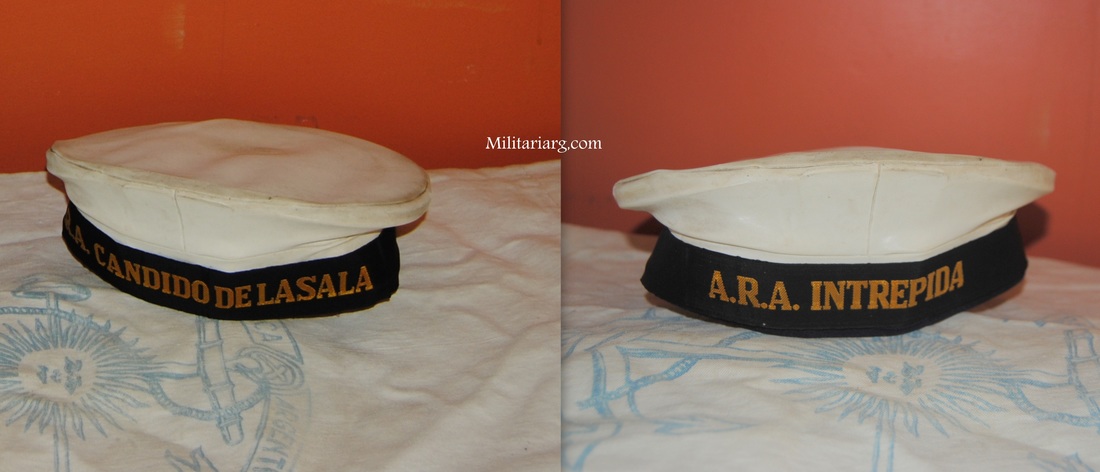
Landing Ship Dock (LSD), Ashland-Class ARA Candido de la Sala (Q-43) and ARA Intrepida (P85).
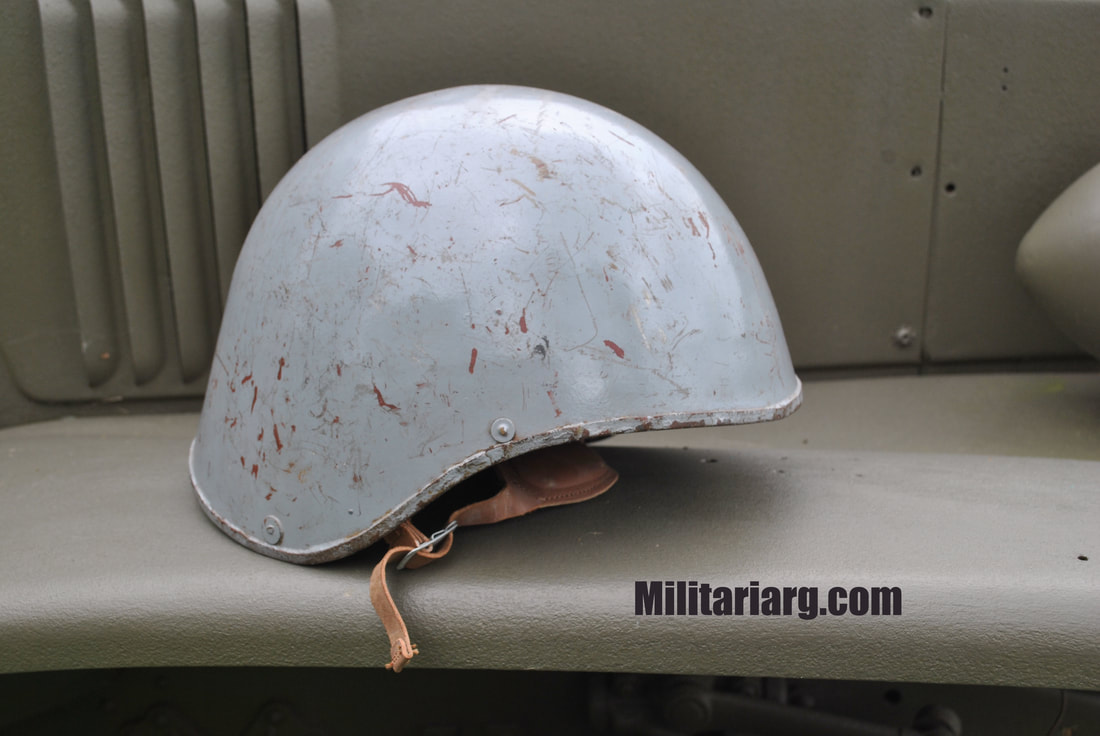
MK2 Argentine Navy Talker Helmet
All of these helmets were WW2 veterans with the US Navy.
The "Talker" System (Sound-Powered Phones)
These phones converted sound waves into electrical energy, meaning they worked even if the ship lost all power a critical feature during in 1982. Talker helmets were typically manufactured with a specific factory finish and then frequently repainted by hand using shipboard paint during their service. The shells were made of Hadfield Manganese steel, similar to standard M1 helmets, which naturally offered some resistance to corrosion. This one in the collection evidently has traces of anti-rust underneath the naval gray.
They arrived in Argentina along with the ships that Perón bought after the Naval reduction driven by President Harry S. Truman and his Secretary of Defense, Louis A. Johnson, who sought to slash military spending to fund domestic priorities.
(The administration moved toward "strategic nuclear bombing" by the Air Force as the primary defense pillar, viewing the Navy as increasingly obsolete in the atomic age).
Following the 1949 budget cuts and the 1951 Mutual Defense Assistance Act, the U.S. began selling off its recently mothballed fleet to South American allies to modernize their forces for Cold War defense. President Juan Domingo Perón secured the centerpiece of Argentina's 20th-century naval power: the Brooklyn-class light cruisers for approximately $4 million each (Bargain price).
Historically, Argentina aimed for a navy equal to the combined strength of Brazil and Chile. Because the U.S. sold two cruisers to each of those rivals simultaneously, the purchase was essential just to maintain regional parity.
These ships were a massive upgrade over the aging Argentine fleet, featuring advanced radar and heavy anti-aircraft capabilities from their WWII service.
Beyond the cruisers, Argentina also eventually acquired other surplus vessels from the same postwar reduction pool, including Balao-class submarines (like the USS Catfish which became the ARA Santa Fe) and several destroyers.
In 1951, when Perón purchased the Brooklyn-class cruisers (General Belgrano and Nueve de Julio), Argentina didn't just buy the ships; they bought the entire United States Navy combat ecosystem that had been standardized during the 1949 reductions.
This transition effectively "Americanized" the Argentine Navy, replacing older British and German gear with WWII-surplus US equipment.
WW2. US M1 Helmets
The Argentine crews get the iconic US M1 Helmet. During "General Quarters," every sailor on deck or in a gun turret wore the M1. It became the standard silhouette of the Argentine sailor through the South Atlantic War.
When the ARA General Belgrano was sunk, the crew was still using much of this 1949 era equipment. Photos of the survivors in lifeboats show them in M1 helmets and Kapok life jackets the exact same gear US sailors wore at Midway or Okinawa.
The "Talker" Variant
For sailors operating sound-powered phones (the "Talkers"), the US provided the M1944 (Mk. 2) "Talker" Helmet. This was a massive, oversized version of the M1 designed to fit over large communication headsets.
Argentina Navy before used the Mauser 1909 bolt-action rifle. The US transfer introduced semi-automatic firepower:
M1 Garand: Thousands were transferred to arm the Infante de Marina (Marines) and for shipboard security.
M1 Carbine: Preferred by officers and sailors in cramped spaces (like the engine rooms or the Belgrano's narrow corridors) due to its light weight.
M1911A1 Pistol: This became the sidearm of choice, often produced locally under license as the Sistema Colt 1927.
The "Talker" System (Sound-Powered Phones)
These phones converted sound waves into electrical energy, meaning they worked even if the ship lost all power a critical feature during in 1982. Talker helmets were typically manufactured with a specific factory finish and then frequently repainted by hand using shipboard paint during their service. The shells were made of Hadfield Manganese steel, similar to standard M1 helmets, which naturally offered some resistance to corrosion. This one in the collection evidently has traces of anti-rust underneath the naval gray.
They arrived in Argentina along with the ships that Perón bought after the Naval reduction driven by President Harry S. Truman and his Secretary of Defense, Louis A. Johnson, who sought to slash military spending to fund domestic priorities.
(The administration moved toward "strategic nuclear bombing" by the Air Force as the primary defense pillar, viewing the Navy as increasingly obsolete in the atomic age).
Following the 1949 budget cuts and the 1951 Mutual Defense Assistance Act, the U.S. began selling off its recently mothballed fleet to South American allies to modernize their forces for Cold War defense. President Juan Domingo Perón secured the centerpiece of Argentina's 20th-century naval power: the Brooklyn-class light cruisers for approximately $4 million each (Bargain price).
Historically, Argentina aimed for a navy equal to the combined strength of Brazil and Chile. Because the U.S. sold two cruisers to each of those rivals simultaneously, the purchase was essential just to maintain regional parity.
These ships were a massive upgrade over the aging Argentine fleet, featuring advanced radar and heavy anti-aircraft capabilities from their WWII service.
Beyond the cruisers, Argentina also eventually acquired other surplus vessels from the same postwar reduction pool, including Balao-class submarines (like the USS Catfish which became the ARA Santa Fe) and several destroyers.
In 1951, when Perón purchased the Brooklyn-class cruisers (General Belgrano and Nueve de Julio), Argentina didn't just buy the ships; they bought the entire United States Navy combat ecosystem that had been standardized during the 1949 reductions.
This transition effectively "Americanized" the Argentine Navy, replacing older British and German gear with WWII-surplus US equipment.
WW2. US M1 Helmets
The Argentine crews get the iconic US M1 Helmet. During "General Quarters," every sailor on deck or in a gun turret wore the M1. It became the standard silhouette of the Argentine sailor through the South Atlantic War.
When the ARA General Belgrano was sunk, the crew was still using much of this 1949 era equipment. Photos of the survivors in lifeboats show them in M1 helmets and Kapok life jackets the exact same gear US sailors wore at Midway or Okinawa.
The "Talker" Variant
For sailors operating sound-powered phones (the "Talkers"), the US provided the M1944 (Mk. 2) "Talker" Helmet. This was a massive, oversized version of the M1 designed to fit over large communication headsets.
Argentina Navy before used the Mauser 1909 bolt-action rifle. The US transfer introduced semi-automatic firepower:
M1 Garand: Thousands were transferred to arm the Infante de Marina (Marines) and for shipboard security.
M1 Carbine: Preferred by officers and sailors in cramped spaces (like the engine rooms or the Belgrano's narrow corridors) due to its light weight.
M1911A1 Pistol: This became the sidearm of choice, often produced locally under license as the Sistema Colt 1927.
WW2 and South-Atlantic-War Era; MK2 Argentine Navy Talker Helmet. These helmets and artillery were painted with the same paint as the ship's hull, because they were part of the ship.
Naval MK2 Gunner Talker Helmet. 1982 photo from the magazine "Siete Dias" and shows scene from the conflict in the South Atlantic (Malvinas War).
While the main 6-inch guns were the ship's "teeth," the US reduction provided the ultimate WWII defensive suite:
40mm Bofors (Quad and Twin mounts): The Belgrano was bristling with these.
20mm Oerlikon: Used for close-in defense.
While the main 6-inch guns were the ship's "teeth," the US reduction provided the ultimate WWII defensive suite:
40mm Bofors (Quad and Twin mounts): The Belgrano was bristling with these.
20mm Oerlikon: Used for close-in defense.
Argentine Navy. Port Visits (Worl Wide).
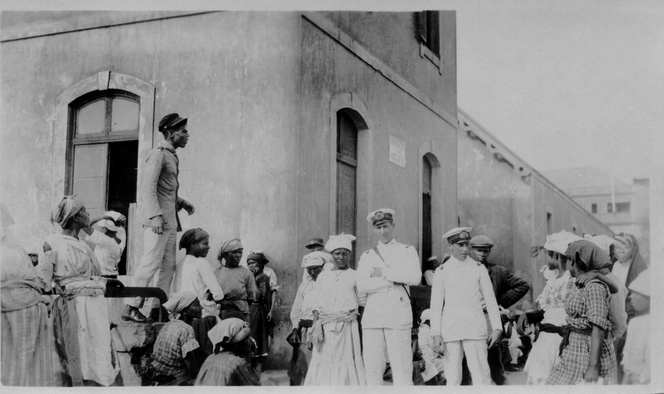
The Armada during the South Atlantic War 1982
The Argentine Navy (Armada de la República Argentina, ARA) was the primary architect of the invasion on April 2, 1982. While its surface fleet retreated early in the conflict, its naval aviation and submarine branches remained some of the most dangerous threats to the British Task Force.
Core Naval Components
Surface Fleet (Flota de Mar): Centered around the aircraft carrier ARA Veinticinco de Mayo and the cruiser ARA General Belgrano. It also included two Type 42 destroyers (clones of British ships) and three Drummond-class corvettes.
Naval Aviation (COAN): The most effective branch, operating Super Étendard jets armed with Exocet missiles and A-4Q Skyhawks.
Submarine Force: Operated the modern Type 209 ARA San Luis and the WWII-era ARA Santa Fe.
Operations & Turning Points
Operation Rosario (April 2): Successful amphibious landing at Port Stanley led by Marines (IMARA) and special forces.
Sinking of the ARA General Belgrano (May 2): Torpedoed by the nuclear submarine HMS Conqueror, resulting in 323 deaths—nearly half of all Argentine casualties.
Surface Fleet Withdrawal: Following the Belgrano sinking, the Argentine Navy ordered its surface ships back to coastal waters to avoid British submarines, effectively imposing a self-denial of the sea for the rest of the war.
The Exocet Attacks: Operating from the mainland, Naval Super Étendards sank HMS Sheffield (May 4) and the Atlantic Conveyor (May 25).
Naval Losses
Ships: 1 cruiser (Belgrano), 1 submarine (Santa Fe), 4 cargo vessels, 2 patrol boats, and 1 spy trawler (Narwal).
Personnel: Over 350 sailors and Marines killed in action.
Aircraft: 14 naval aircraft lost, including three A-4Q Skyhawks and one MB-339
The Argentine Navy (Armada de la República Argentina, ARA) was the primary architect of the invasion on April 2, 1982. While its surface fleet retreated early in the conflict, its naval aviation and submarine branches remained some of the most dangerous threats to the British Task Force.
Core Naval Components
Surface Fleet (Flota de Mar): Centered around the aircraft carrier ARA Veinticinco de Mayo and the cruiser ARA General Belgrano. It also included two Type 42 destroyers (clones of British ships) and three Drummond-class corvettes.
Naval Aviation (COAN): The most effective branch, operating Super Étendard jets armed with Exocet missiles and A-4Q Skyhawks.
Submarine Force: Operated the modern Type 209 ARA San Luis and the WWII-era ARA Santa Fe.
Operations & Turning Points
Operation Rosario (April 2): Successful amphibious landing at Port Stanley led by Marines (IMARA) and special forces.
Sinking of the ARA General Belgrano (May 2): Torpedoed by the nuclear submarine HMS Conqueror, resulting in 323 deaths—nearly half of all Argentine casualties.
Surface Fleet Withdrawal: Following the Belgrano sinking, the Argentine Navy ordered its surface ships back to coastal waters to avoid British submarines, effectively imposing a self-denial of the sea for the rest of the war.
The Exocet Attacks: Operating from the mainland, Naval Super Étendards sank HMS Sheffield (May 4) and the Atlantic Conveyor (May 25).
Naval Losses
Ships: 1 cruiser (Belgrano), 1 submarine (Santa Fe), 4 cargo vessels, 2 patrol boats, and 1 spy trawler (Narwal).
Personnel: Over 350 sailors and Marines killed in action.
Aircraft: 14 naval aircraft lost, including three A-4Q Skyhawks and one MB-339
"Operation Rubicon" - The Crypto AG Trap
During the 1982 Falklands War, Argentina’s encrypted communications were systematically compromised by British and U.S. intelligence, a secret that only fully emerged decades later through revelations about the Swiss company Crypto AG.
What Happened with the Encrypted Communications?
The Crypto AG Trap. The Argentine Navy relied heavily on encryption devices from Crypto AG, a Swiss firm secretly owned by the CIA and West German intelligence (BND) under "Operation Rubicon". These machines were intentionally "rigged" with vulnerabilities that allowed Western agencies to easily decode secret messages.
In April 1982, British MP Ted Rowlands accidentally revealed in Parliament that British intelligence was "listening" to Argentine communications. This alerted Argentina, leading them to change their ciphers more frequently and implement double-enciphering, which slowed down British decryption times to 12–24 hours but did not stop it entirely.
When Argentina became suspicious of their Crypto AG equipment, the company sent an expert, Kjell-Ove Widman, to Buenos Aires. He successfully bluffed the Argentine government into believing their primary product (the CAG 500) remained "unbreakable," ensuring they continued using the compromised tech.
Consequences for Argentina
Loss of Strategic Surprise. Intercepted plans allowed the Royal Navy to track the Argentine fleet, including identifying the carrier ARA Veinticinco de Mayo as a priority target.
Paralysis of the Navy
Following the sinking of the General Belgrano—an event influenced by British awareness of Argentine naval movements—the Argentine surface fleet retreated to territorial waters, effectively severing maritime communications with the islands.
Ironically, Argentina demanded Crypto AG "fix" their devices while insisting the company not tip off other Latin American neighbors. Argentina wanted to keep using the same vulnerabilities to spy on its own regional rivals.
The military failure, exacerbated by intelligence leaks, severely discredited the ruling junta, leading to its abdication and the restoration of civilian rule in 1983.
During the 1982 Falklands War, Argentina’s encrypted communications were systematically compromised by British and U.S. intelligence, a secret that only fully emerged decades later through revelations about the Swiss company Crypto AG.
What Happened with the Encrypted Communications?
The Crypto AG Trap. The Argentine Navy relied heavily on encryption devices from Crypto AG, a Swiss firm secretly owned by the CIA and West German intelligence (BND) under "Operation Rubicon". These machines were intentionally "rigged" with vulnerabilities that allowed Western agencies to easily decode secret messages.
In April 1982, British MP Ted Rowlands accidentally revealed in Parliament that British intelligence was "listening" to Argentine communications. This alerted Argentina, leading them to change their ciphers more frequently and implement double-enciphering, which slowed down British decryption times to 12–24 hours but did not stop it entirely.
When Argentina became suspicious of their Crypto AG equipment, the company sent an expert, Kjell-Ove Widman, to Buenos Aires. He successfully bluffed the Argentine government into believing their primary product (the CAG 500) remained "unbreakable," ensuring they continued using the compromised tech.
Consequences for Argentina
Loss of Strategic Surprise. Intercepted plans allowed the Royal Navy to track the Argentine fleet, including identifying the carrier ARA Veinticinco de Mayo as a priority target.
Paralysis of the Navy
Following the sinking of the General Belgrano—an event influenced by British awareness of Argentine naval movements—the Argentine surface fleet retreated to territorial waters, effectively severing maritime communications with the islands.
Ironically, Argentina demanded Crypto AG "fix" their devices while insisting the company not tip off other Latin American neighbors. Argentina wanted to keep using the same vulnerabilities to spy on its own regional rivals.
The military failure, exacerbated by intelligence leaks, severely discredited the ruling junta, leading to its abdication and the restoration of civilian rule in 1983.
Comments:
Gian Carlo Moreschi Wrote: There's a mistake. Heavy Cruise Almirante Brown was launched by OTO in Genova Foce, not Livorno.Thanks