Militariarg.com
  • Home
  • Army
  • Aviation
  • Navy
  • Uniforms and Badges
  • Arms and Weapons
  • Equipment
  • Vehicles
  • Operational and Organizational Structure, Security Forces, Transportation, Books, Models and More.
  • Argentine Confederation Era. 1829 - 1852.
  • From 1852 to 1910 (French fashion)
  • Bunker 1982: South Atlantic War Militaria
  • International Militaria
  • Argentina WWII Era (Neutral) Reenactment Impression
  • Links ~ Enlaces

Picture
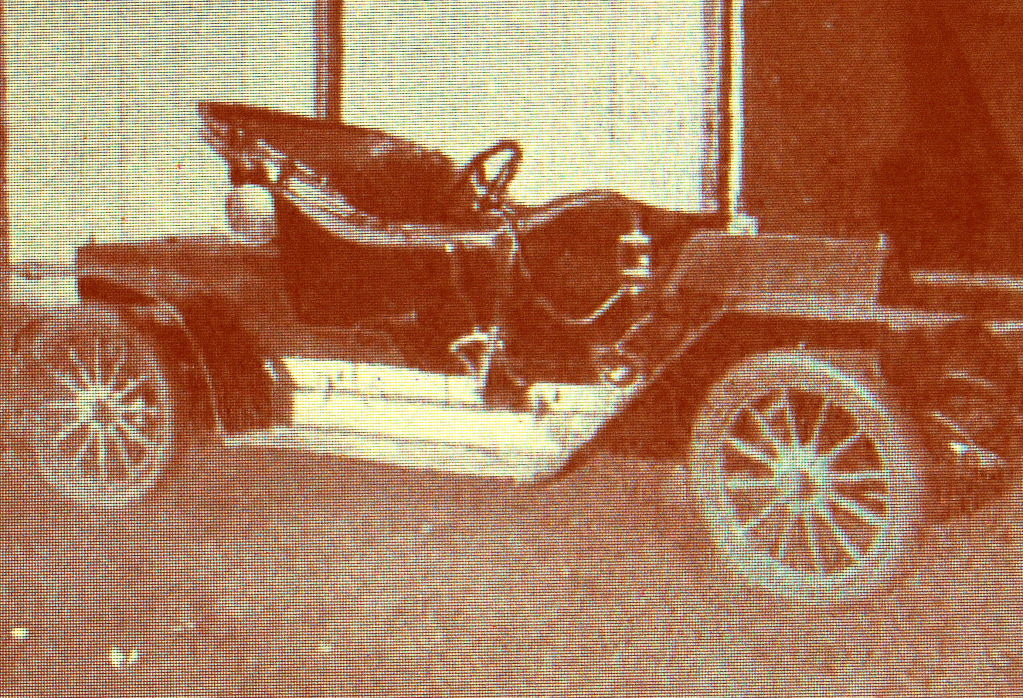
The "Anasagasti" automobile Model 1911, in service to assist pilots on the runway at the recently created Palomar Air Base.  Donated by Mr. Horacio Anasagasti.  Caras y Caretas 1913.

The Anasagasti, which holds the title of the first mass-produced car in Argentina. 
The 1911 Anasagasti was a prototype featuring a French 2.1-liter Ballot engine and a custom Argentine-built body. It made its debut in September 1911 during the Rosario-Córdoba-Rosario road race, where founder Horacio Anasagasti won his class under the pseudonym "Samurai". 

1911 Anasagasti:
Founded in 1909 in Buenos Aires; production began in earnest following the 1911 prototype.
Performance. The 1911 model produced roughly 12–15 horsepower and was known for its reliability in endurance races.
Racing Legacy: After its 1911 debut, the brand gained international fame by winning the 1,515 km Paris-Madrid race in 1912.

Production. 
Only about 50 units were ever built before the company closed in 1915 due to supply shortages during World War I.
Many of the original touring models ended their lives as taxis on the streets of Buenos Aires.

​Motorcycles and sidecars

Picture
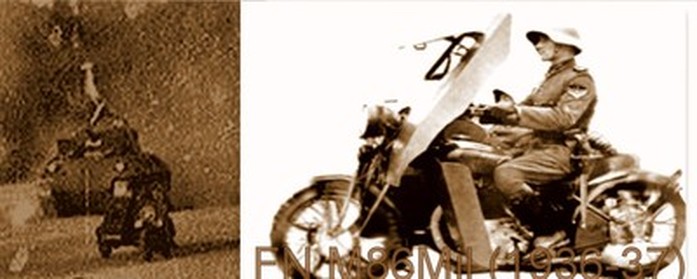
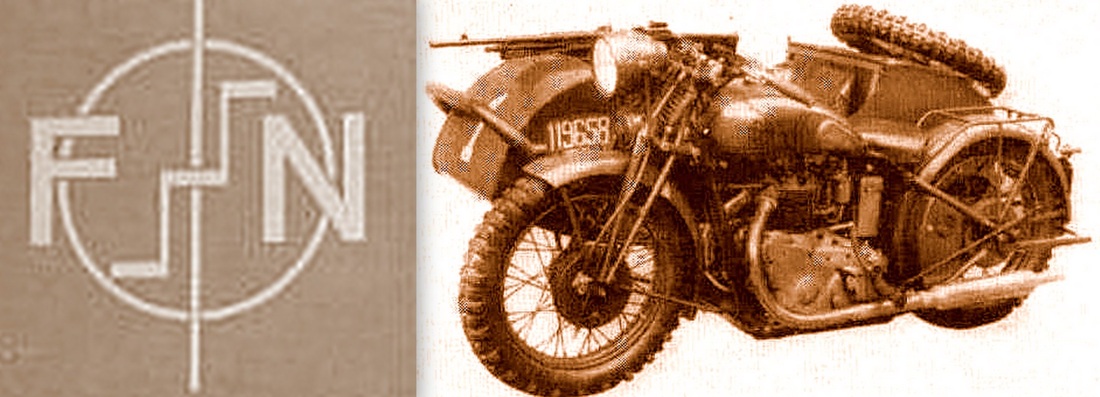
​FN M86 mil 1936, Armored Motorcycle.
Picture
Picture
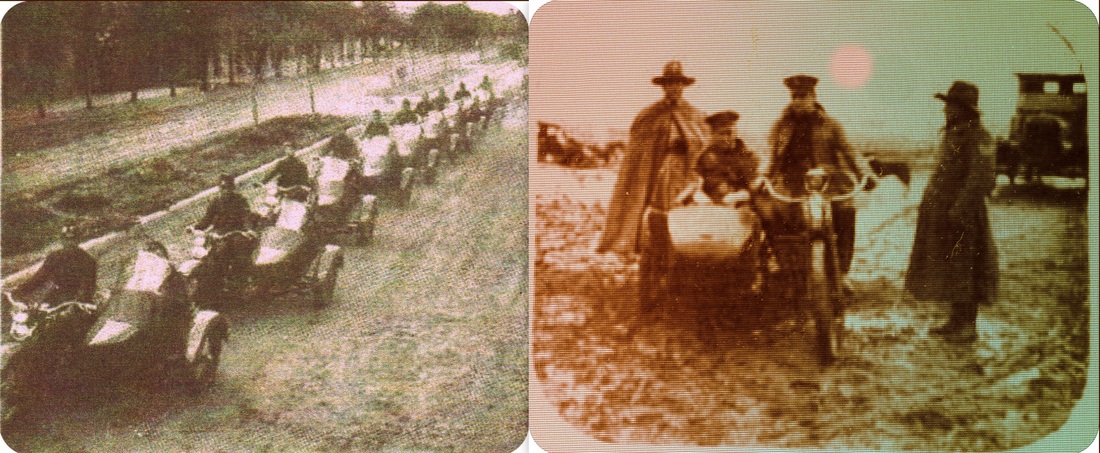
Photo: 1925. Caras y Caretas.

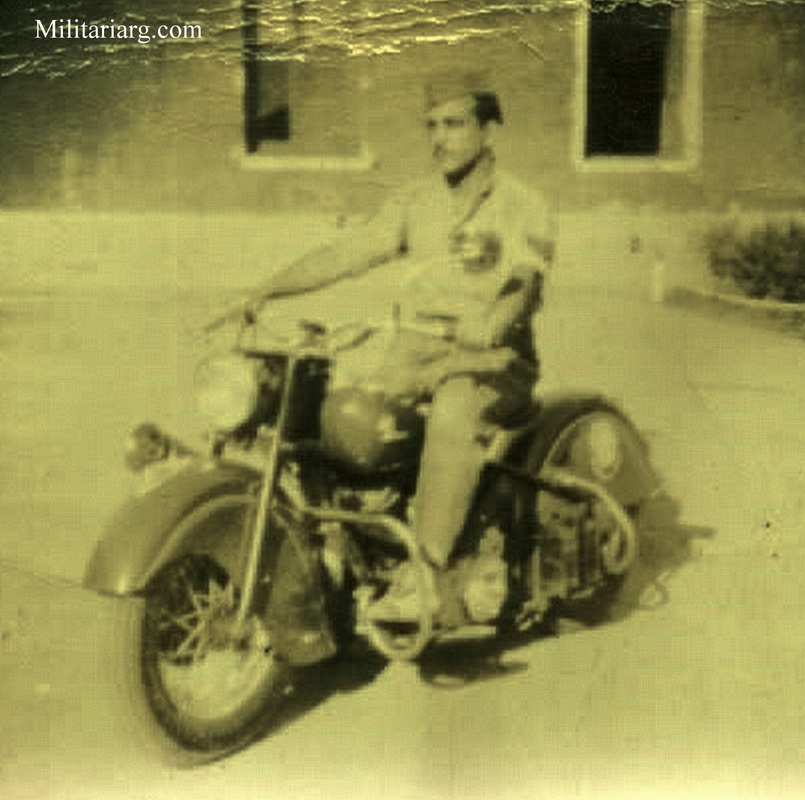
During the first half of the 20th century, the Argentine Army began motorizing its forces by largely importing American and European motorcycles for reconnaissance and dispatch duties.
Between 1900 and 1939, the Argentine military relied on these primary brands and models:

Harley-Davidson: The most prominent brand in Argentine service during this era. Models like the Harley-Davidson J Series (61 cubic inch F-head motor) were common after World War I. By the late 1930s, prototypes and early versions of what would become the WLA were being evaluated for military use.

Indian: Used alongside Harleys, particularly the Indian PowerPlus and later the Indian Scout. These were prized for their speed and reliability in the diverse Argentine terrain.

Triumph: Following their massive success as the "Trusty Triumph" in World War I, the Triumph Model H was imported to Argentina for dispatch rider roles.

Moto Guzzi: In the late 1930s, as Argentina maintained strong ties with Italy, models such as the Moto Guzzi GTS 500 and potentially early military variants like the Alce began appearing in Argentine inventories. 

Before 1914, most communication was handled by horse-mounted messengers. After 1918, motorcycles became the standard "Iron Horse" for the Argentine Army.
Sidecars. Many of these units, especially Harleys and Indians, were equipped with sidecars to carry machine guns or additional equipment.

Domestic Industry.
While the 1900–1939 period was dominated by imports, this era laid the groundwork for the later domestic production of brands like Siambretta and Tehuelche in the post-WWII years. 

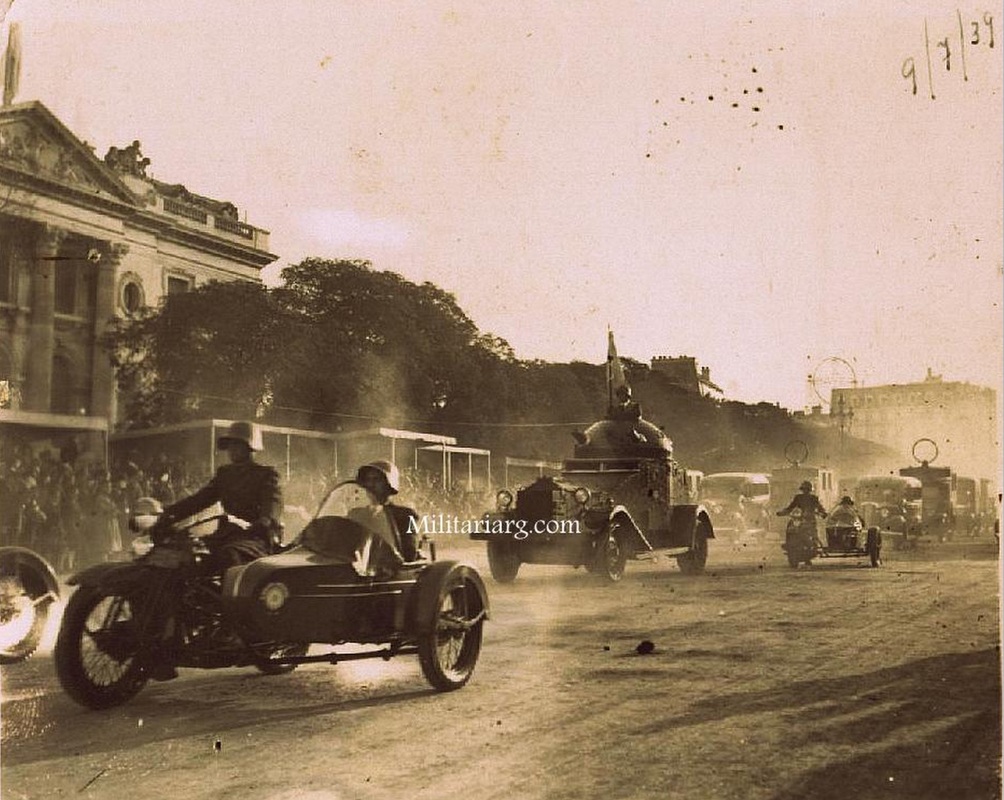
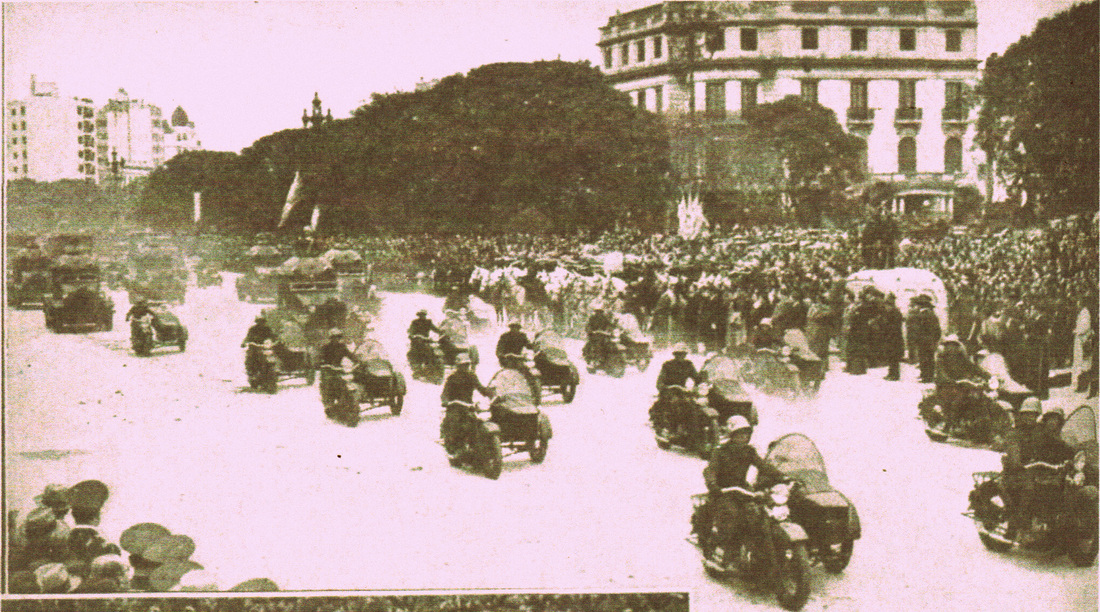
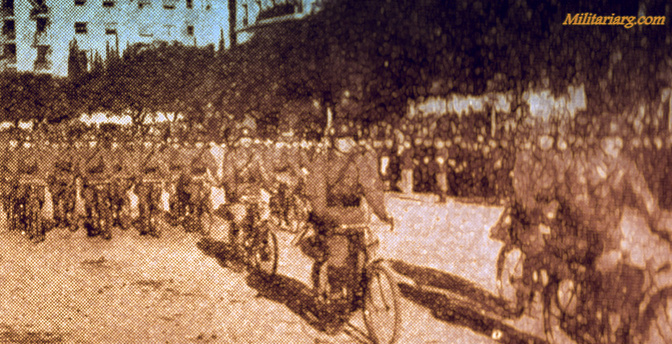
1930s. Parades.

Picture
Picture
Picture

Picture
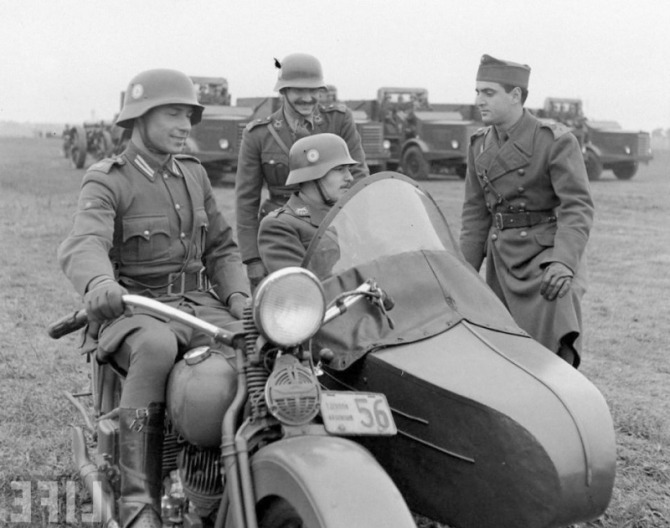
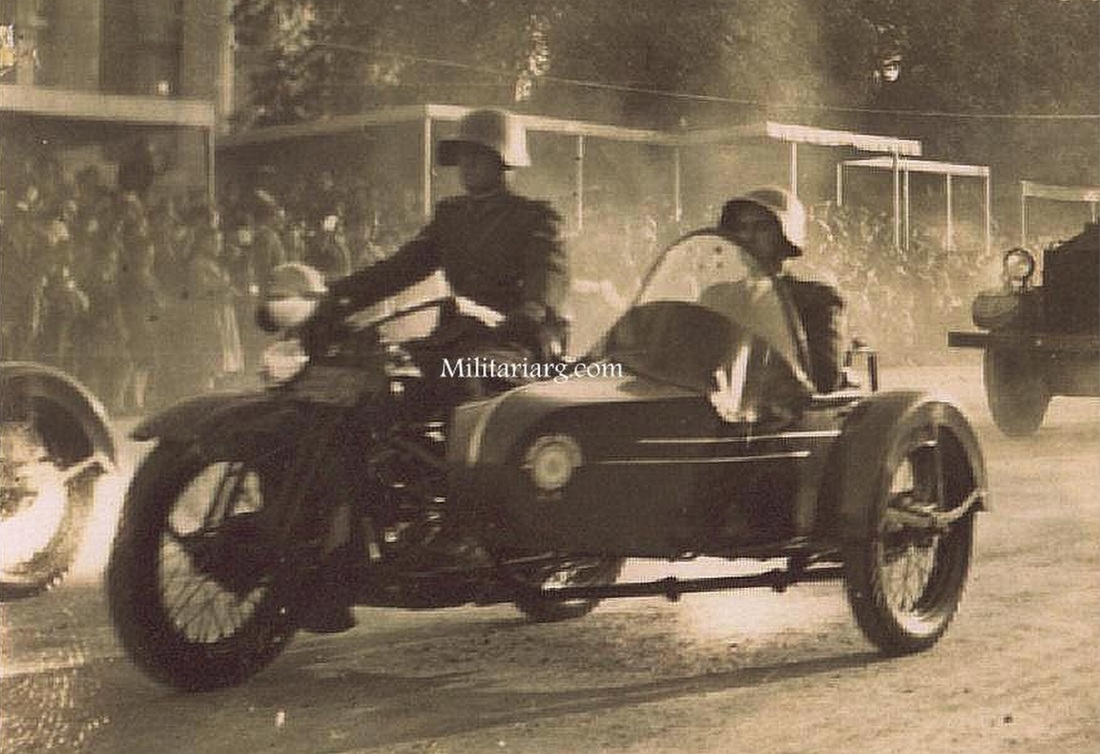
​1937. Harley Davidson sidecar (1930-1940) .The motorcycles were based on a civilian Harley Davidson powered by Harley's 74 cubic inch, max speed 55mph, for the installation of the sidekar. Photo Life.

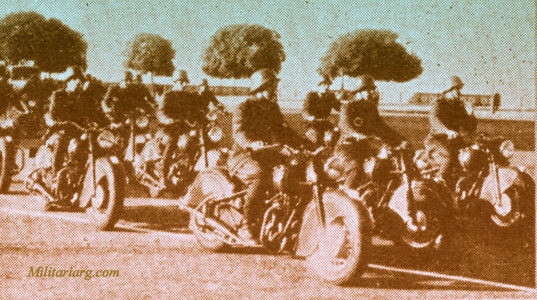
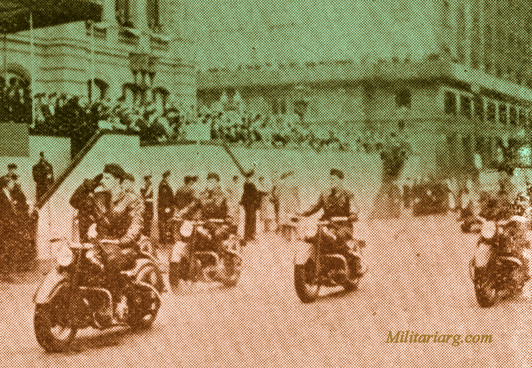
Seccion Motocicletas. Motorizados Buenos Aires 1954. Cap Pascual Di Candia.

Picture
​ Indian motorcycle Big Chief
Picture
​Indian motorcycles
Picture

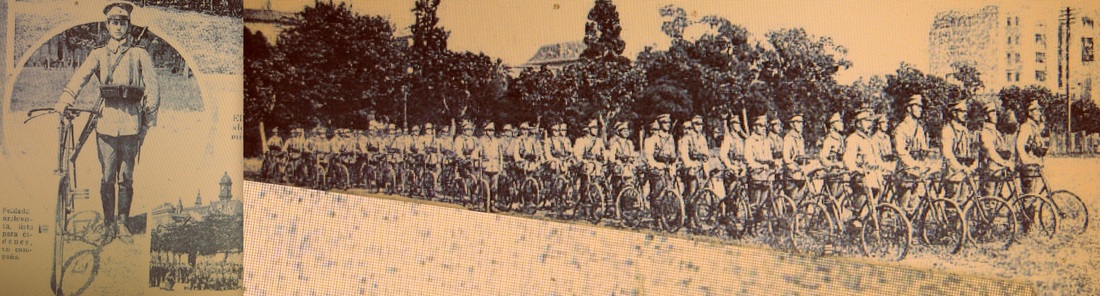
Army Cyclist Corps

Picture
​Archivist Cyclist in 1914. Caras y Caretas.
Picture
​1944 Cia archivist Cyclist

Vidal Tempo G-1200

German-built Tempo G1200 military vehicle or the commercial Tempo Matador trucks imported and serviced in the country. Both the military and commercial versions of the
Vidal Tempo were present in Argentina, though they served very different purposes at different times.

The Tempo G1200 (Military) 
The Tempo G1200 (manufactured by Vidal & Sohn Tempo-Werke) is one of the most unique military vehicles to ever serve in Argentina. The Tempo G1200 was specifically imported for the Argentine Army in the late 1930s. It was a high-tech reconnaissance vehicle featuring two engines (one at each end) and four-wheel steering. While the German military largely ignored it, it saw service in Argentina as a specialized all-terrain staff car.

Twin-Engine Design. It featured two independent 600cc two-stroke engines (one at the front and one at the rear), each driving its own axle.
Unique Capability. It was a "dual-control" vehicle with 4x4 drive and four-wheel steering. It also had free-rotating spare wheels mounted on the sides to prevent the vehicle from "high-centering" on rough terrain.

Argentine Presence
While the German Wehrmacht largely rejected the G1200 in favor of the VW Kübelwagen, dozens were exported to the Argentine Army in the late 1930s for evaluation as reconnaissance and staff cars. 

The Tempo Matador (Commercial)
Post-WWII, the Tempo brand (still under the Vidal family) became famous for the Tempo Matador. 

VW-Powered. Early models (1949–1951) used the same 25hp air-cooled engine as the Volkswagen Beetle.
Front-Wheel Drive. Unlike the rear-engine VW Transporter, the Matador was front-wheel drive, allowing for a much lower and flatter cargo floor.
These vehicles were used as small delivery vans and pickups. Because they shared parts with Volkswagens, they remained maintainable in Argentina long after production ceased, with specialty repair kits still appearing in the regional market. 
The company was founded in Hamburg in 1924 by Oscar Vidal. While it never established full-scale manufacturing plants in Argentina like it did in India (as Bajaj Tempo/Force Motors), its vehicles were a distinctive part of Argentina's mid-century military and urban landscapes.
Picture
Vidal Tempo G-1200. The tempo series off-road T-1200 (1935) and G-1200 (1936-43) were recognized vehicles of German fabrication.  They were also known as Vidal & Sohn Tempo-Werke GmbH manufactured in Hamburg. The company was founded by Oscar Vidal.  We found this photo and info on Wikipedia.  The 3 crowns on the tag appear to indicate that this auto is Swedish. The car is a German Vidal Tempo G 1200 4x4 four-wheels steering, 2cyl engines, 6-volt car battery.
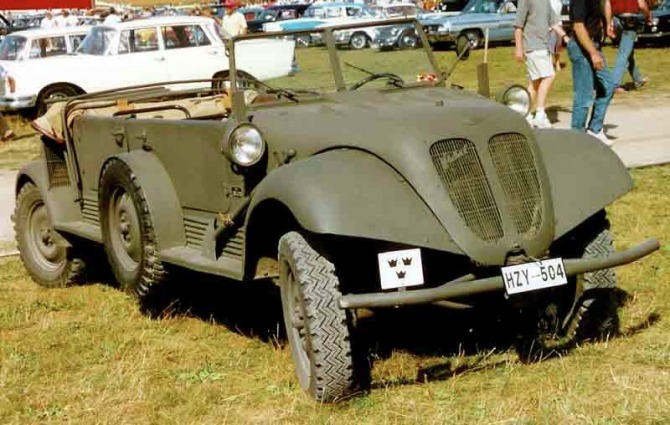
Much like other commercial prototypes at the end of the 1930s, like the Wanderer W23S militarized as an Kfz11, the Vidal Tempo has a military body but many similarities to the Wanderer, Kfz11/12. The general characteristics were 6 cylinders, flat floor, backseat, trunk, and canvas roof.  The beginning of standardization?

Ñandú 4x4
Picture
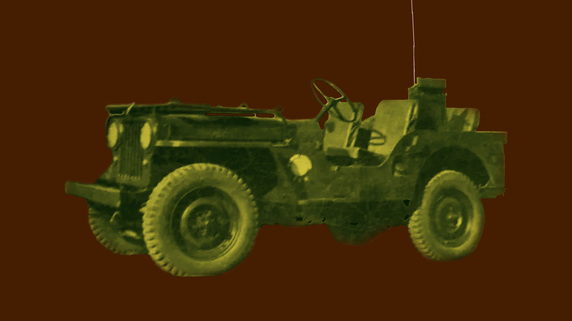
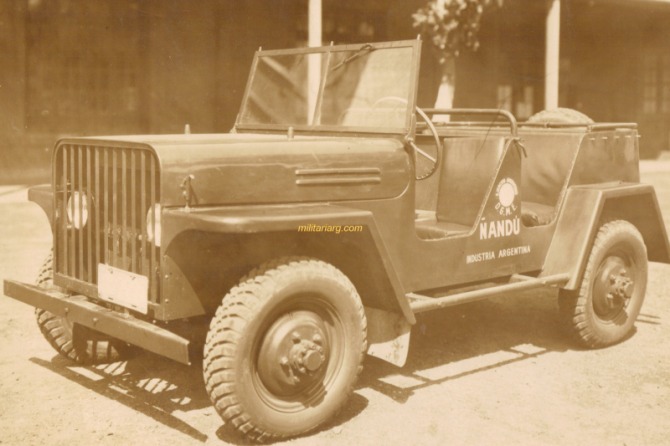
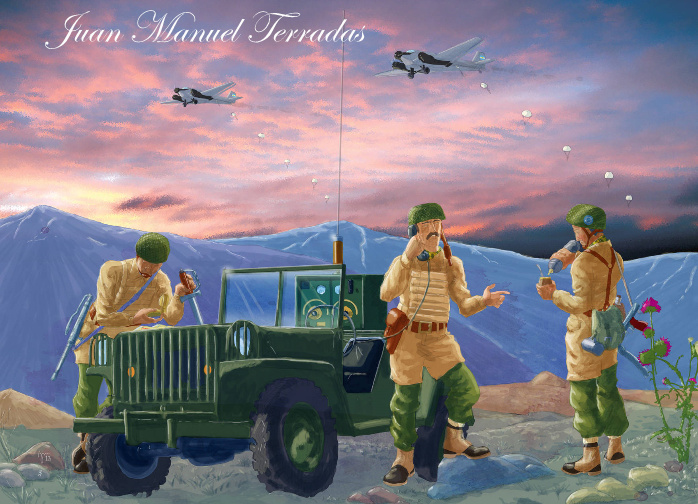
Nandu ("Ostrich") Four-wheel Drive command light Reconnaissance car Bantam-Jeep type, powered by 76hp HAFDASA engine. 
Picture
​The Ñandú (the South American "Ostrich") was the brainchild of Lt. Col. Alfredo Baisi at the Arsenal Esteban de Luca in 1943. It was a remarkably advanced effort for its time, designed to solve the problem of the U.S. refusing to sell Jeeps to Argentina due to the country's neutrality.

Technical Breakdown of the Ñandú

Project and construction were supervised by engineer Martín Reuter, working at the Esteban De Luca workshop.

The Engine: It was powered by a 76 hp HAFDASA (Hispano-Argentina Fábrica de Automóviles S.A.) 6-cylinder engine. This was a domestic adaptation of European designs, giving it a top speed of about 100 km/h.

The Chassis: It featured a 4x4 permanent drive system. Baisi designed it to be rugged enough for the diverse Argentine terrain, from the Pampas to the Andes.

The Armament: For its reconnaissance role, it could be equipped with a Madsen 7.62mm or Browning machine gun on a pedestal mount.

Production: Only four prototypes were ever completed.

Despite being a "Bantam-Jeep" peer, the project was killed by the end of WWII. Once the war ended, the U.S. began selling surplus Willys MB Jeeps at "scrap" prices. The Willys cost roughly 700 USD at the time, while the handcrafted Ñandú cost significantly more to produce locally.

Civilian cars

Picture
Picture
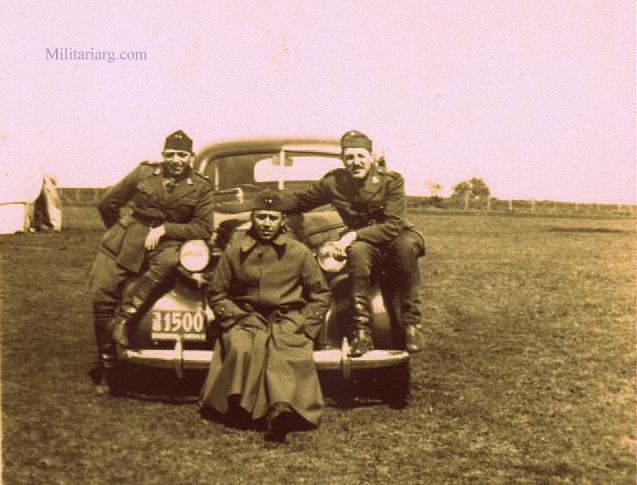
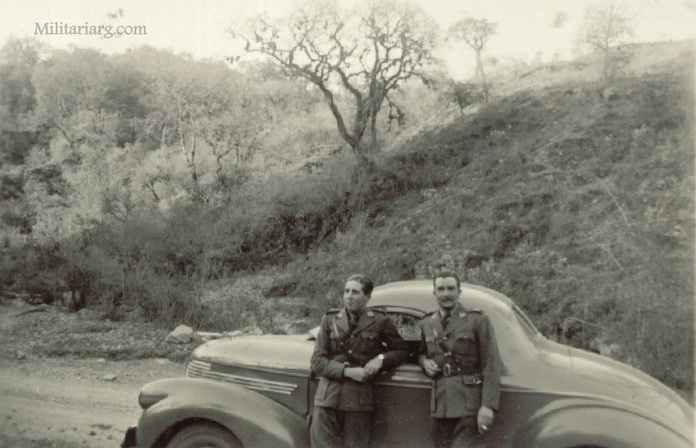
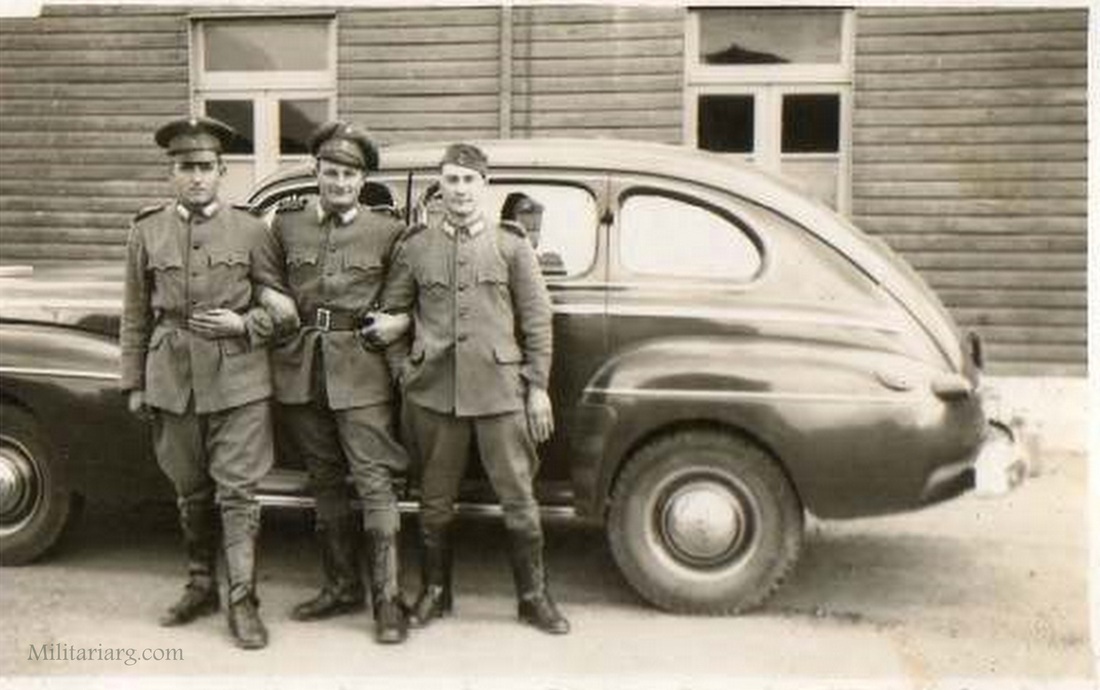
​Ford 37-38 or some Dodge Coupe, Military Car?
Picture

Picture

Modified Vehicles at the Esteban de Luca Arsenal
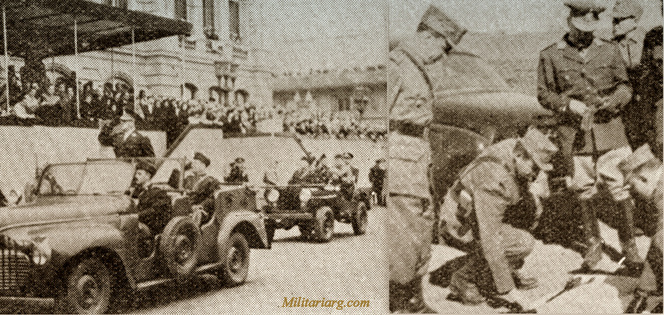
​Modified 1/2T Ford 42/47 Pickup. In the 1950s, the Argentine Army utilized modified command cars and light utility vehicles primarily based on Dodge and Ford chassis. While the transition toward domestic manufacturing (like the IKA Jeep) was underway, the military continued to adapt American designs to their specific operational needs.​
Picture
The Arsenal Esteban de Luca (located in the San Cristóbal neighborhood of Buenos Aires until 1964) was the cradle of Argentina's indigenous military vehicle industry. 
During the 1930s and 1940s, the Arsenal Esteban de Luca was a hub for "militarizing" common commercial machinery because Argentina was cut off from traditional arms markets.Beyond the purpose-built prototypes like the Nahuel tank, the Arsenal modified these specific commercial vehicles.

Faced with arms embargoes and World War II supply shortages, the Arsenal—under the direction of Colonel Alfredo Baisi—produced several famous "hybrid" and modified vehicles. 

​Nahuel DL-43 Tank: Argentina's most famous indigenous armored vehicle. It was a "Frankenstein" of available parts: it used an aircraft engine (FMA-Lorraine-Dietrich 12 Eb), a suspension inspired by the American M4 Sherman, and was initially armed with recycled Krupp 1909 75mm field guns.

Ñandú 4x4: Developed in 1943 when the U.S. refused to sell Jeeps to neutral Argentina. It featured a domestic HAFDASA 6-cylinder engine and a unique 4x4 permanent drive system designed by Baisi and engineer Martín Reuter.

Yacaré Armored Tractor: An International Harvester TD-18 commercial tractor converted into an armored prime mover for anti-aircraft guns. It featured custom steel plating and twin Browning machine guns.

Vinchuca Infantry Vehicle: A rare, modified tractor-based transport for troops, also designed by Baisi. It was based on commercial British tractors and modified within the Arsenal to carry machine guns and seats for soldiers.
    Crusader Artillery Tractors: In the late 1940s, the Arsenal modified surplus British Crusader tank chassis to act as self-propelled mounts for various field guns, including 75mm Krupp and 105mm howitzers. 

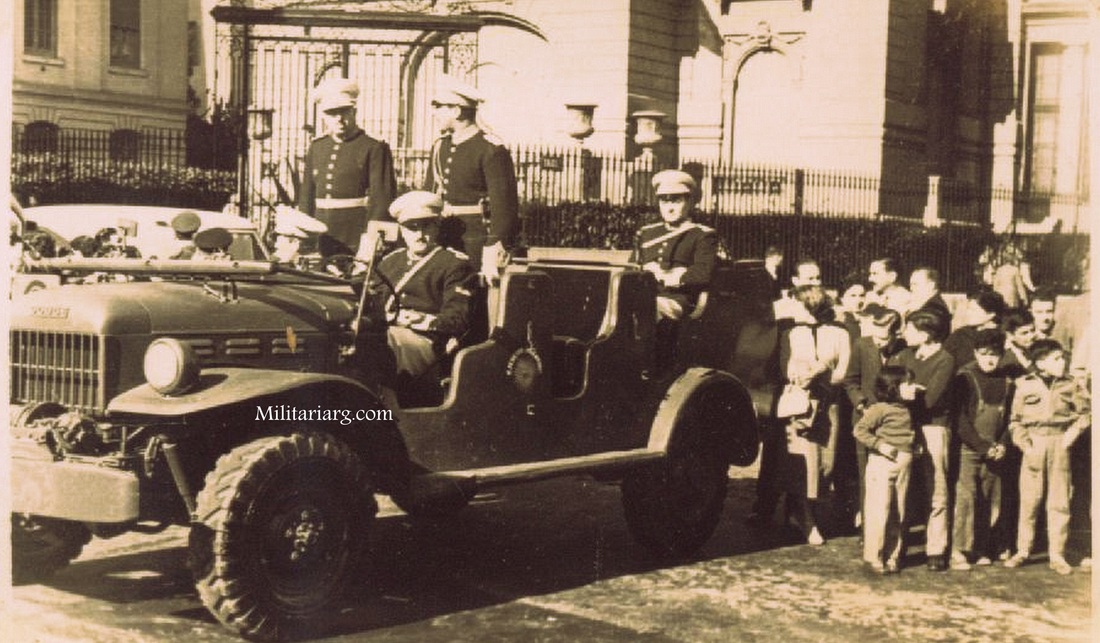
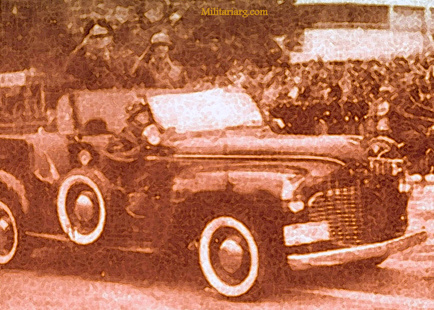
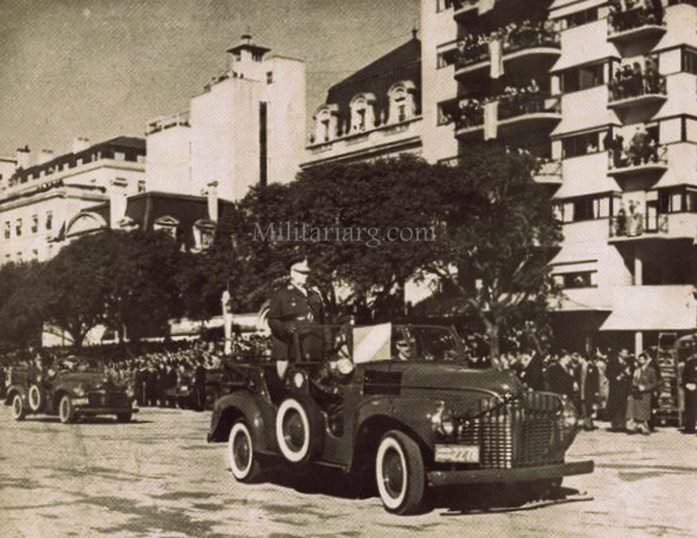
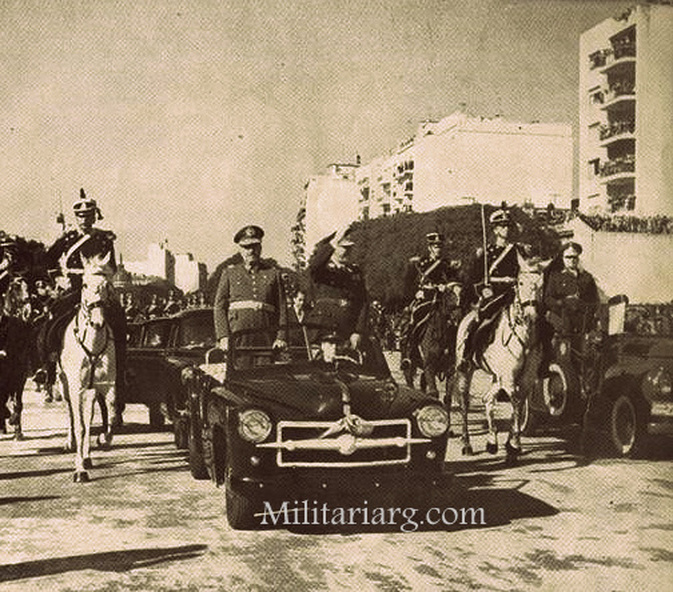
Peron's Era, Buick (And others) Command Staff Cars

Picture
Picture
Picture
Above 1940s Buick Command car.
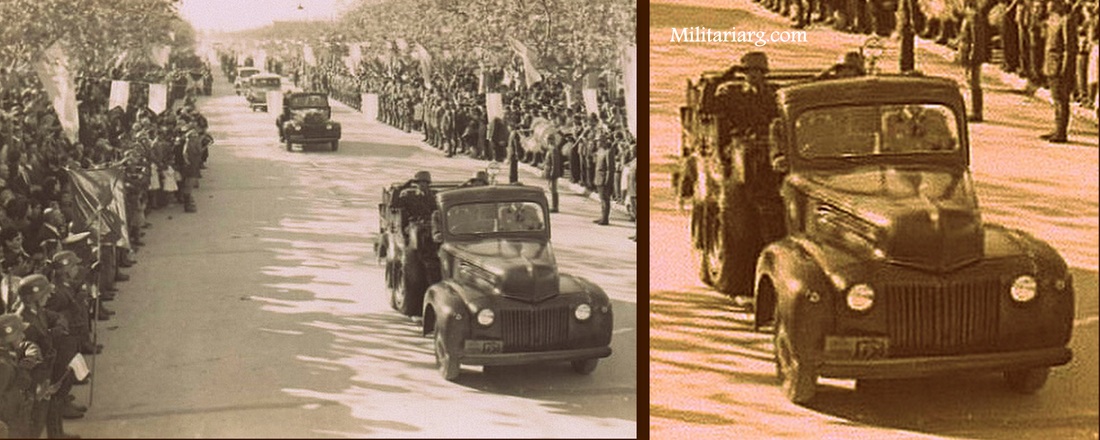
Right: Fiat 1400 or Justicialista Graciela? Photo: Regimiento "Motorizados Buenos Aires", 1954. "Recuerdo de mi vida militar".
Picture
Picture

INSTITEC Staff Command Car

Picture
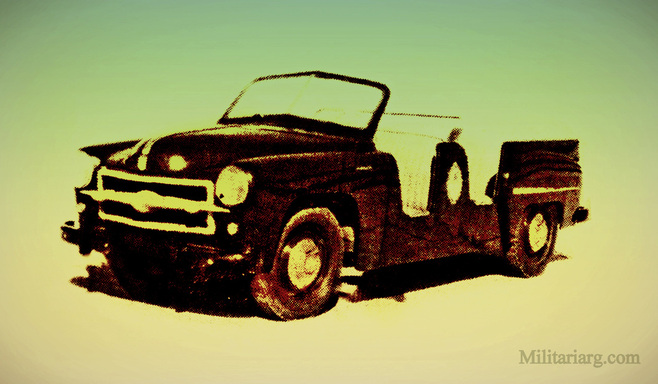
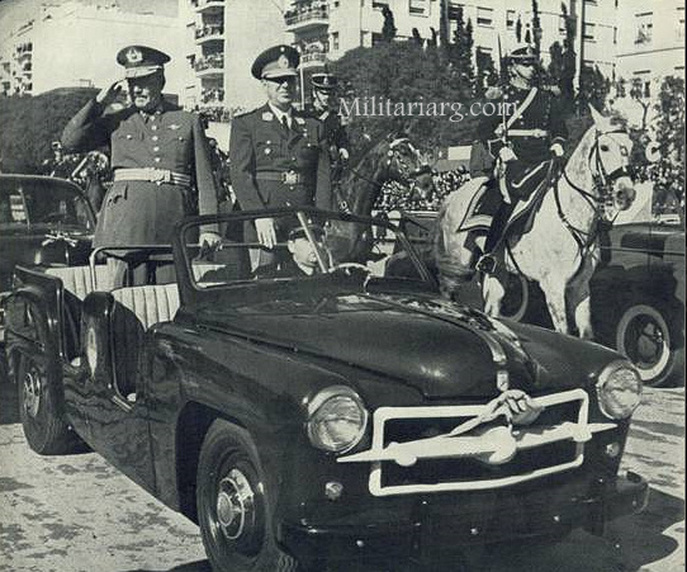
"A staff command version of the INSTITEC SEDAN with a collapsible canvas roof and cut-down sides was successfully tested during the 1953 maneuvers at Pampa de Olaen, but it not go into production". Source: Argentina's Fabrica Militar de Aviones 1927 - 1955.
Picture
​​The Institec Justicialista was the pride of Argentina’s state-owned industry, produced between 1952 and 1955 by IAME (Industrias Aeronáuticas y Mecánicas del Estado). It was a direct result of President Juan Perón’s push for a "100% Argentine" car.
The Models

The Sedan: A two-door, four-seater family car. It featured a very "European" look, heavily influenced by the German DKW (Auto Union).

The Technology: It was powered by a two-cylinder, two-stroke engine (roughly 700cc) producing about 23 HP. Like the Tempo vehicles you mentioned earlier, it was front-wheel drive, which was quite advanced for its time.

The "Institec" Name: This was the brand name used for the commercialized versions, while "Justicialista" was the model name representing the political movement of the era. 

The Porsche Connection: IAME engineers actually consulted with Ferdinand Porsche's team in Germany during the development of these vehicles, which is why the Justicialista Gran Sport (the fiberglass sports version) shares some visual DNA with early Porsche prototypes.
After the 1955 coup (Revolución Libertadora), the "Justicialista" name was scrubbed for political reasons. The sedan was rebranded as the Graciela, eventually using a three-cylinder Wartburg engine from East Germany.
    
the Institec line also included a furgón (van) and a pick-up version, which were widely used as light delivery vehicles across the country in the 1950s.
Picture

Land Rovers

Picture
Landrover MKI Series I
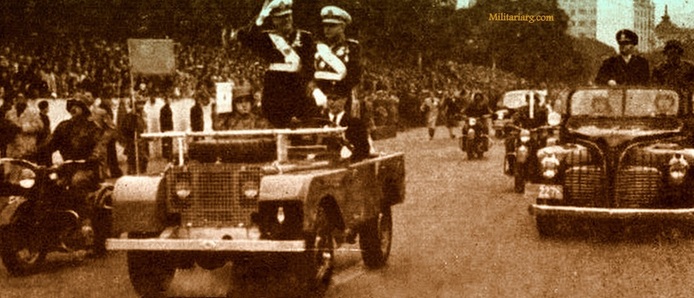
During Juan Domingo Perón’s first two terms (1946–1955), Argentina became a significant early market for the
Land Rover Series I (often referred to as the MKI), despite the administration's public emphasis on the American Willys Jeep and local industry.

​Competition with the Willys Jeep While Perón prioritized the Willys CJ-2A due to the sheer volume of post-war American surplus, the British Land Rover carved out a niche: 

The Land Rover was often viewed as a more "heavy-duty" alternative to the Jeep, featuring a sturdier fully box-welded frame and an unusual four-wheel-drive system with a freewheel unit that appealed to large estancia owners.
By the early 1950s, Land Rover successfully exported improved versions (86 and 107-inch wheelbases) to Argentina for use by government agencies and regional police forces. 

The Shift to Local Production
The presence of the Land Rover Series I in Argentina helped demonstrate the demand for rugged 4x4s, which Perón eventually sought to satisfy through local manufacturing:

IKA Jeep: By 1955, the government moved away from direct imports like the Land Rover to local production via Industrias Kaiser Argentina (IKA), which mass-produced the Jeep for the Argentine public.

Many of these 1948–1954 Land Rovers remained in service for decades in rural Argentina, often outlasting their contemporary Jeeps due to their aluminum construction.
Service in Argentine Antarctic Expeditions 
​
During the late 1940s and early 1950s, Argentina intensified its presence in Antarctica, establishing several permanent bases like Base San Martín (1951) and Base Esperanza (1952). 

Arrival on the Continent: Land Rover Series I vehicles were among the first motorized transport used at Argentine Antarctic bases. They were chosen for their non-rusting aluminum alloy bodies, which resisted the corrosive maritime and icy air far better than the steel-bodied Willys Jeeps.

The "Weasel" Comparison: While the Argentine Navy and Army often used the M29 Weasel for heavy snow travel, the Land Rovers were used for lighter utility work around the rocky shores of the Antarctic Peninsula and within base perimeters.

The 1951 Expedition: During the founding of Base San Martín led by Colonel Hernán Pujato, Land Rovers were used for transporting supplies from ships across the ice shelf to the construction sites.
Picture
​In 1951, General Hernán Pujato led the foundational expedition that established a permanent Argentine presence in the deep Antarctic, most notably founding Base San Martín—the first human settlement south of the Antarctic Circle. While Pujato relied heavily on the M29 Weasel and dog sleds for crossing deep snow, the Land Rover Series I was used for coastal logistics and base construction.

Dodge VC-1 Command Car

Picture
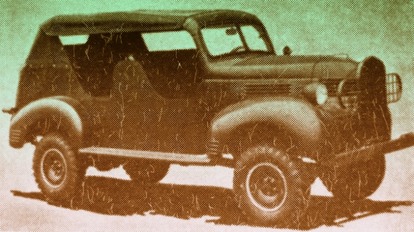
​The Dodge VC-1 was indeed the original "Command Car" of the early Dodge 4x4 family, and small numbers were officially supplied to Argentina around 1940.

Dodge Power Wagon. Modified command car.
Picture
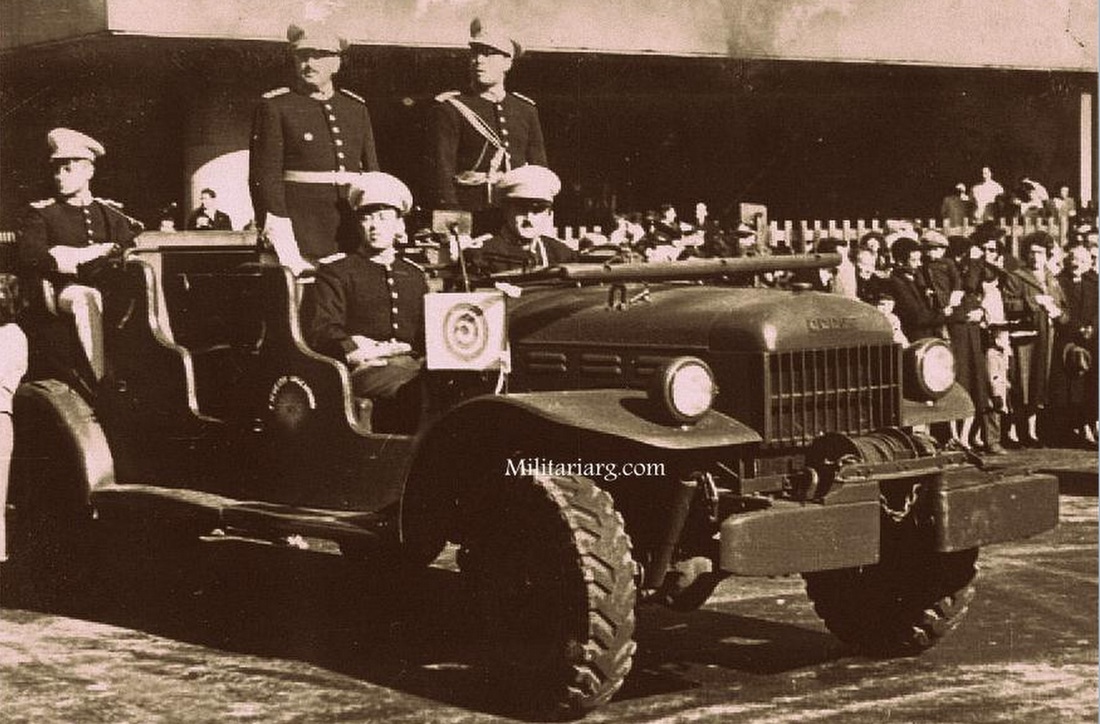
In the Argentine Army, there wasn't a standard factory "Command Car" designation for the Dodge Power Wagon in the same way there was for the WWII WC series (like the WC-56).Instead, the Argentine Army utilized locally modified versions of the Dodge M601 (the "Special Power Wagon") for command and personnel duties. 
Picture
These modified units were generally referred to as:

​M601 de Comando (Command M601):
These were standard M601 chassis modified with open-top "personnel carrier" bodies, often featuring a canvas top and folding windshield, mimicking the look of the old WWII command cars.
 
Vehículo de Enlace (Liaison Vehicle): This was the broader functional role assigned to these modified Power Wagons when used by high-ranking officers or for field communications.

Dodge "Special Power Wagon" (M601 and M615)

Dodge M601 was a 1-ton, 4x4 military truck distributed to allied nations, including Argentina, through the Military Defense Assistance Program. Unlike the purpose-built military M37 model, the M601 was a modified civilian Dodge Power Wagon (T137 series) designed as a more affordable, yet rugged, alternative. 

The M601 used a modified civilian chassis and body but incorporated military features such as an open cab with a canvas top, blackout lights, and towing hooks.
 Engine. The M601 saw various engines throughout its production life (1957-1978), including the 230, 251 flathead-six engines, and later the 225 slant-six engine.
 These robust trucks were actively deployed in the Argentine Army in various roles, including troop transport and general utility in rugged terrain, such as Patagonia. Many remained in service for decades.

​
Dodge M615 (The Ambulance)
The M615 was the dedicated military ambulance variant of this same series. 
It shared the M601/Power Wagon chassis but featured a panel-van style rear body equipped for medical evacuation.
 It typically used the same 230 cubic inch flathead 6-cylinder engine found in the early cargo versions.

Dodge WM300 (M601).  This version dified by the Argentine Army for various technical support roles, including use as a taller móvil (mobile workshop) for mechanical service in the field. 

Mechanical Service Variants
While the most famous "box" variant of this chassis was the M615 Ambulance, the Army adapted the M601 cargo chassis to serve as a support vehicle for frontline maintenance. These units featured a specialized enclosed box body or "shelter" mounted on the WM300/M601 1-ton chassis. They were equipped with workbenches, tool sets, and sometimes small generators or air compressors. In Argentine military slang, these Power Wagons were often called "Jeepones" (Big Jeeps) regardless of whether they carried a troop bed or a maintenance box.

Willys MB and Ford GPW

Picture
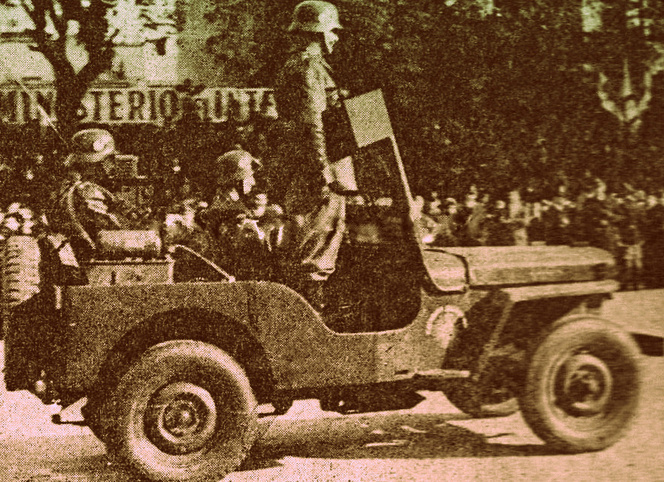
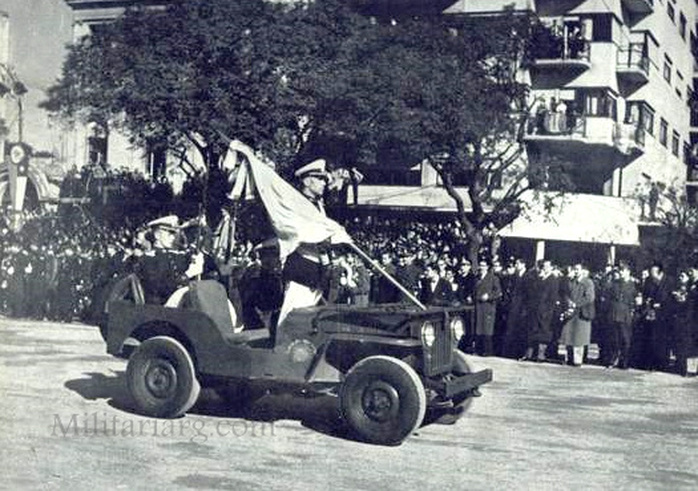
After 1945, Argentina imported large quantities of surplus Willys MB and Ford GPW jeeps from Europe and the United States. The "Ñandú" Project: Before these imports arrived, the Argentine Army attempted to build its own indigenous equivalent to the Jeep in 1943, called the "Ñandú". However, the project was cancelled because importing surplus Willys MBs from Belgium was significantly cheaper (approx. $700 per unit) than local production.

CJ2A

Picture
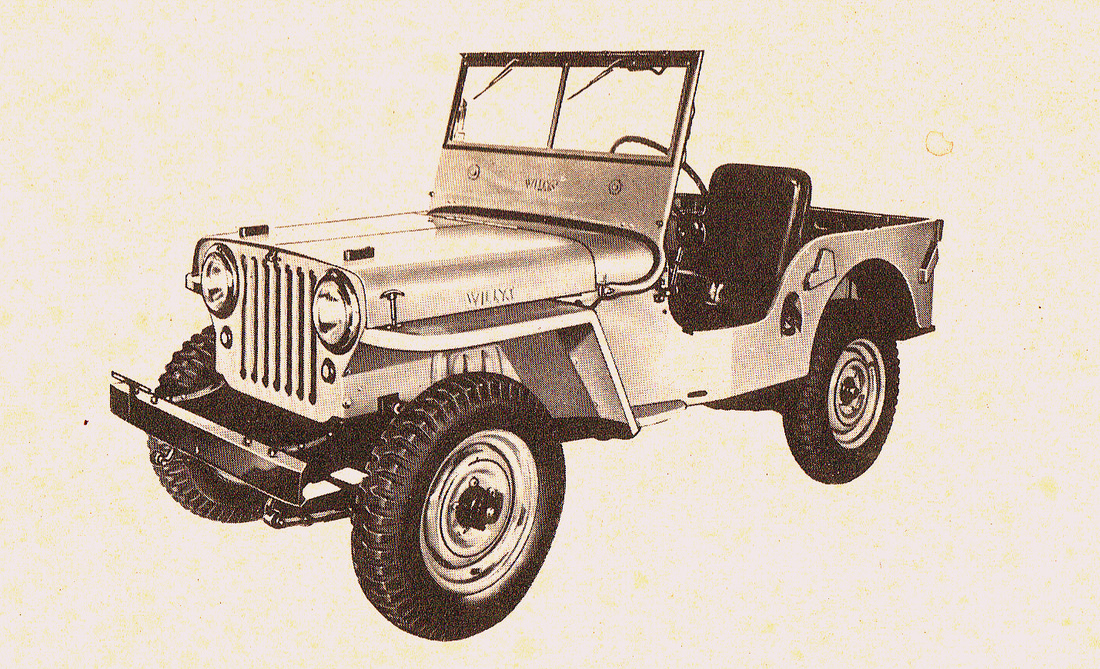
Model CJ-2A, (4WD), Universal Jeep. Year Mfgd 1945-49. Engine 4L. Split wind-shield. Has tailgate; 6 volt electrical system; Side mounted spare tire.
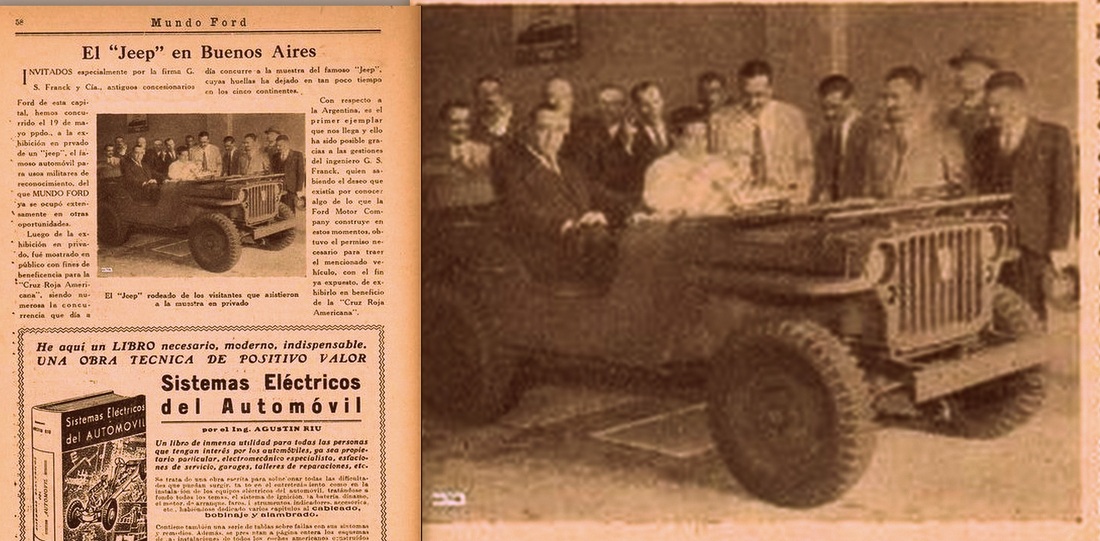
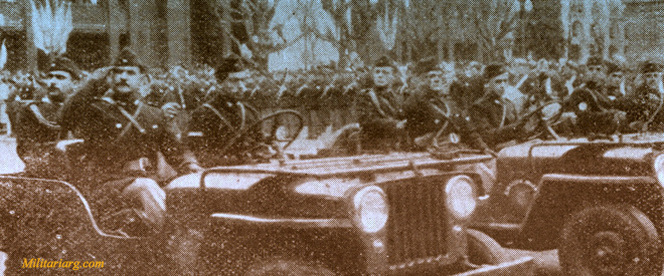
When Juan Domingo Perón came to power in 1946, he effectively "killed" Martin Reuter's Ñandú project by opting for the Willys CJ-2A, the civilian evolution of the wartime MB. 
Perón’s administration took advantage of the massive post-war surplus. While the Ñandú was a technical triumph, it was an economic impossibility. The US Department of State and private exporters began flooding the market with Jeeps. Argentina imported hundreds of Willys CJ-2As to rapidly motorize the Army and support the agricultural sector under the first Five-Year Plan.

Perón and the "Jeep" Culture

Military Motorization: The CJ-2A became the standard light utility vehicle for the Argentine Army, replacing horse-drawn carts in the infantry support roles you mentioned earlier.

The "Justicialista" Connection: Perón’s preference for the Willys eventually morphed into a desire for a "People's Car." When importing became difficult again in the early 50s, he tasked IAME (Industrias Aeronáuticas y Mecánicas del Estado) with creating the Rastrojero and the Insteciclo, which drew spiritual inspiration from the utility of the Jeep.

IKA (Industrias Kaiser Argentina): By 1955, Perón signed a deal with Henry J. Kaiser to manufacture Jeeps locally in Córdoba. This led to the legendary IKA Jeep, the direct descendant of those first Willys CJ-2As, which finally achieved Baisi's dream of a mass-produced Argentine 4x4. 

The Willys CJ-2A essentially served as the "bridge" between Baisi’s hand-built prototypes and the massive automotive industry Argentina developed in the 1950s.
Picture
Small reconnaissance vehicle called "Jeep." The origin of this nickname came from the oral contraction of the letters GP (for "General Purpose") which became "Jeep".
Picture
CJ2A
Picture
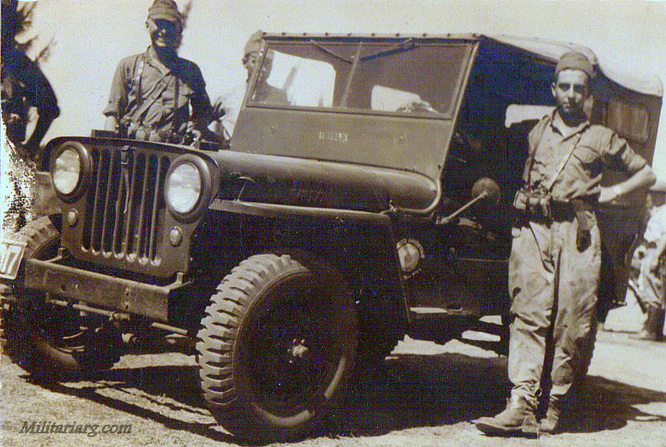
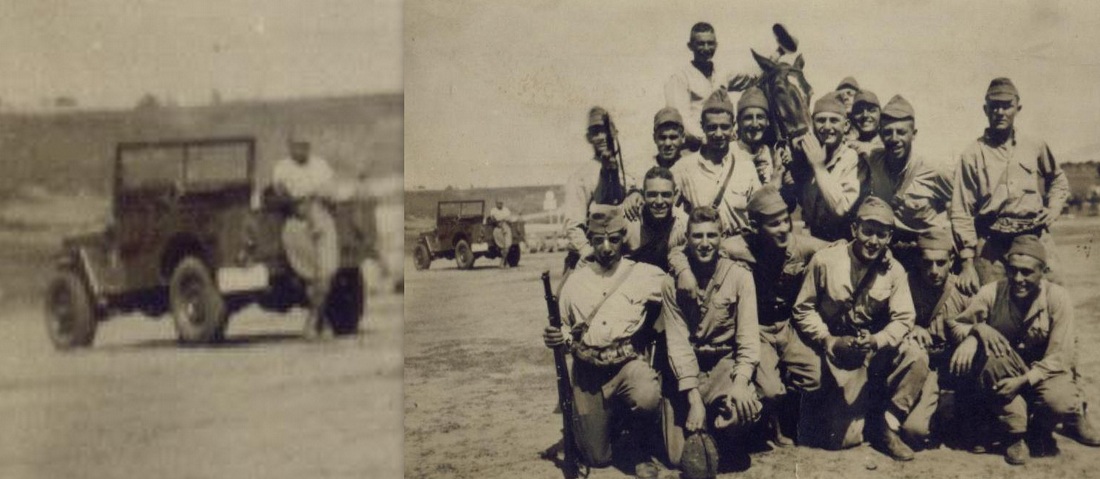
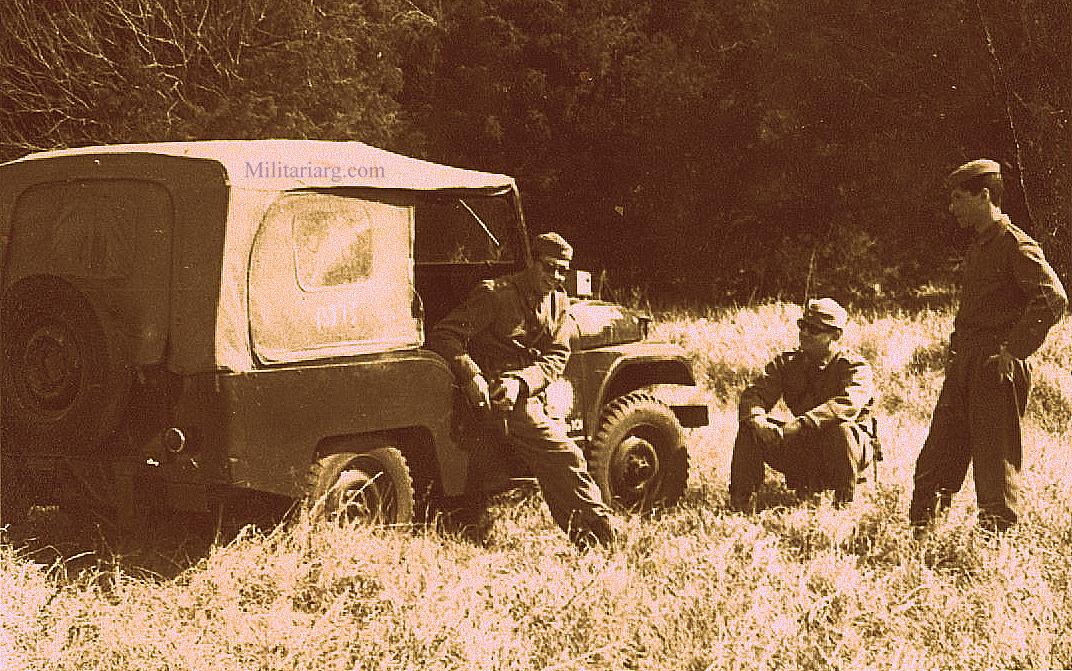
CJ2A Argentine Army.
Picture
Picture
Picture
Picture
​Paratroopers with CJ2A pushing recoiless rifles

IKA M101

Picture
The first Jeep produced by IKA (Industrias Kaiser Argentina) adopted by the Argentine Army was the Jeep IKA M101. 

IKA began manufacturing civilian Jeeps (the CJ-5) in 1956 at the Santa Isabel plant in Córdoba.
Military Adoption. Shortly after civilian production began, the Army commissioned a "militarized" version, which became the M101.
While based on the civilian CJ-5 (round fenders), it was built to military specs. It featured a reinforced chassis, heavy-duty suspension, and simplified "Spartan" interior.

The Engine. Unlike the American Willys/Kaiser models that used the Hurricane engine, the first Argentine IKA M101s were powered by the locally-made Willys-IKA 151 (2.5L) 4-cylinder engine, often called the "Continental 4." 

Identification of the Early M101
Grille. It had the classic 7-slot Jeep grille, but unlike the US military M38A1, the headlights were flush with the grille (civilian style) rather than recessed.
Electrical. These early units typically ran on 12-volt systems, though many were later modified with dual 12V/24V setups for radios. 

Before the IKA M101, the Army relied entirely on imported US surplus (Willys MB, CJ-2A/3A) or US-built military exports (M38). The M101 marked the beginning of Argentine-made tactical light vehicles.

IKA-Renault M101

​The IKA-Renault M101 of 1974 represents the final evolution of the locally produced Argentine Jeep before production shifted entirely under the Renault brand. By 1974, Industrias Kaiser Argentina was transitioning into Renault Argentina S.A., resulting in vehicles from this specific year often carrying "hybrid" branding. Starting in 1967, Renault took major control of the company, and the name changed to IKA-Renault S.A.

It was the exact same vehicle rebranded as ownership of the factory shifted from Kaiser to Renault.

Kaiser M605 (Tactical Utility)

The M605 was a militarized version of the Jeep CJ-5 (or occasionally the CJ-6), often produced for export or under military contracts by Kaiser Jeep. 
It served as a general-purpose utility and command vehicle, bridging the gap between the purely military M38A1 and civilian-style fleet vehicles.
​
Argentina incorporated these alongside standard M38A1s to modernize its light transport fleet during the 1960s. They were frequently seen in patrol, liaison, and light reconnaissance roles.
Like the M170, it typically utilized the Willys Hurricane F-head 4-cylinder engine, providing reliable performance in diverse Argentine terrain.

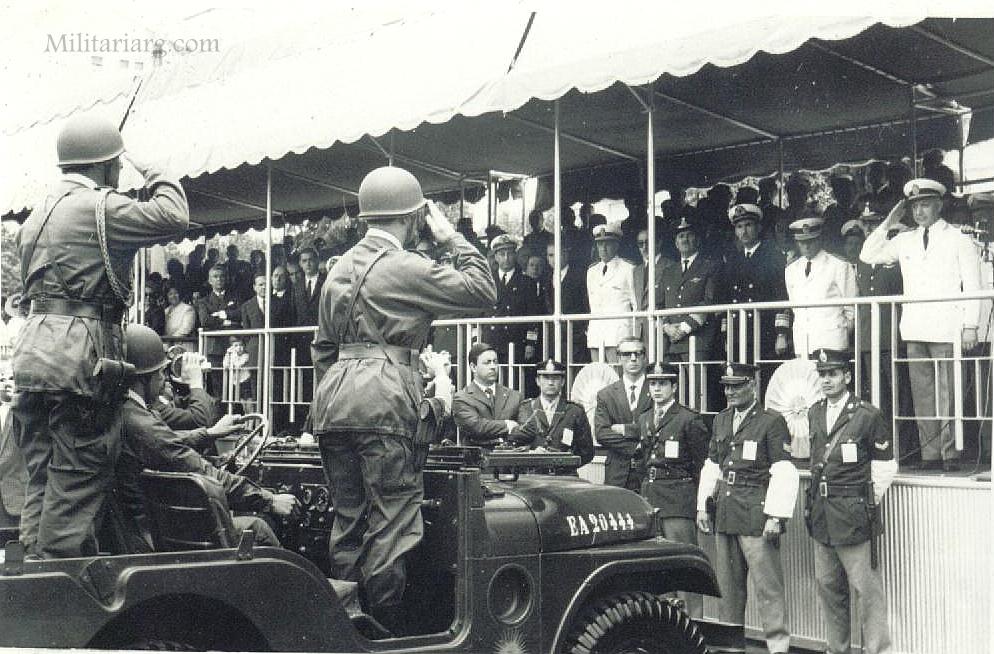
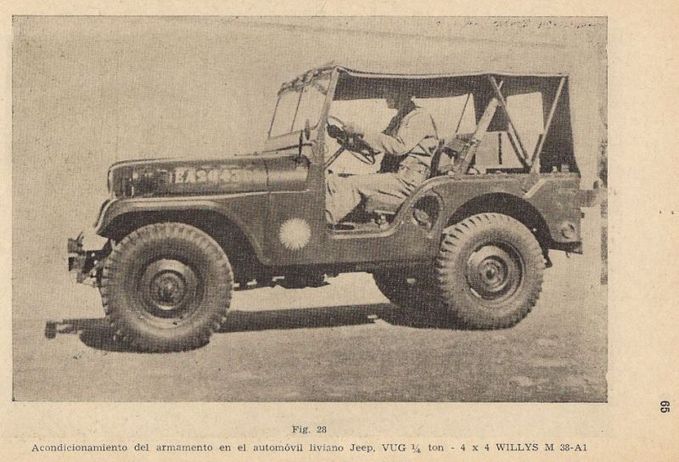
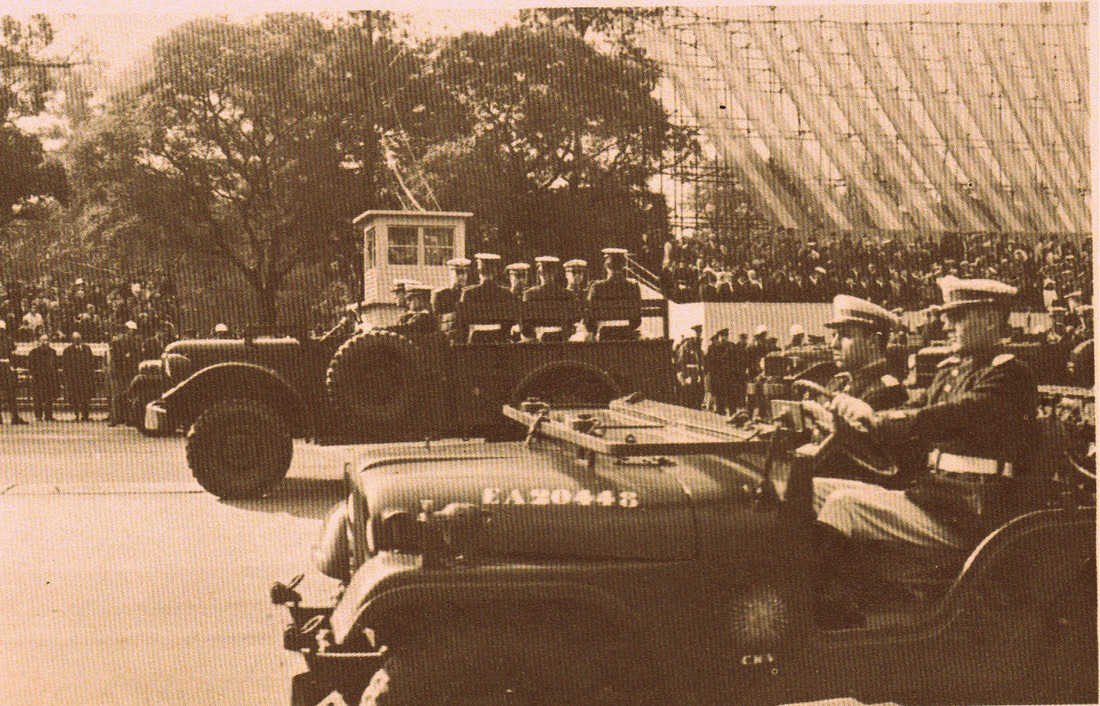
Willys M38A1

Picture
The Argentine Army utilized the Willys M38A1 (designated "MD" by Willys) and its variants as versatile light tactical vehicles starting in the early 1960s. ​Most units were incorporated into the Argentine Army around 1963.
Known for their ruggedness and 24-volt waterproof electrical systems, these vehicles were essential for communications, reconnaissance, and medical evacuation. 
Picture

"True Military" Group (M38A1 Chassis)

Willys M38A1 (Standard Utility): The core 1/4-ton 4x4 utility truck. Argentina acquired approximately 125 units in 1962–1963 for various frontline roles.

M38A1C (Recoilless Rifle Variant). A specialized version modified to carry the M40 106mm recoilless rifle. The windshield was typically notched or split to allow the weapon's barrel to rest during transport.
The M38A1C (the recoilless rifle variant of the Willys M38A1) was manufactured in the United States by Willys-Overland and later Willys Motors/Kaiser Jeep in Toledo, Ohio.Argentina acquired these vehicles from the U.S. as part of the PAM/MAP aid programs, but they also used their own locally developed recoilless rifle on various platforms. 

Willys Kaiser M170 (Frontline Ambulance). A long-wheelbase variant of the M38A1 (stretched by 20 inches). It was designed to carry up to three litter patients or six seated personnel. 

The names changed because Kaiser Motors bought Willys-Overland in 1953. Here is how that "name game" played out in the Argentine Army's motor pool:

.Technical Specifications
Engine: Willys Hurricane F-134 inline-four, 2.2L, producing approx. 72 hp.
Electrical System: 24-volt waterproof system (critical for fording operations).
Transmission: T90 3-speed manual with a 2-speed transfer case.
Dimensions: Standard wheelbase of 81 inches (M38A1) vs. 101 inches for the M170 variant.
​​
Picture
M38A1 and M37B1

The "Militarized Civilian" Group (M606 / CJ-5 Chassis)

These are not M38A1s. They are Jeep CJ-5s kaiser (Commercial Jeeps) painted OD green with military bolt-ons. They were cheaper for the Argentine Army to buy and maintain.

 Kaiser M606A2: A CJ-5 with heavy-duty springs, blackout lights, and a standard 12V system.

 Kaiser M606A3: A CJ-5 with the same heavy-duty kit but adds a 24V alternator specifically for radios (while the rest of the Jeep stays 12V).

How to tell them apart instantly:

 The Grill: The M38A1/M170 has headlights recessed behind the grill surface. The M606A2/A3 (CJ-5) has headlights that are flush or slightly raised on the grill Visual Guide.
 
The Fuel Filler: On an M38A1, the gas cap is a massive "dog dish" size on the driver's side. On the M606, it’s a small civilian-style cap.
 
The Battery: M38A1s have a battery box door on the cowl (in front of the windshield). M606s have the battery under the hood like a normal car.

In addition to the medical M170, the Argentine Army utilized the M606A2 and M606A3, which were specialized military export versions of the Willys/Kaiser Jeep CJ-5. Unlike the M38A1, these "A" series variants were built with heavy-duty civilian components rather than full military waterproof systems. 
These variants were introduced between 1965 and 1972 to upgrade the older M606 (CJ-3B) export models. 

Willys Kaiser M606

The Willys-Kaiser M606 was a vital bridge in the Argentine Army's light transport history. While it looked like a classic WWII Jeep, it was technically a militarized civilian CJ-3B (the "High Hood" Jeep). 

M606 (The High Hood) in Argentina 
Unlike the purpose-built military M38 series, the M606 was a commercial CJ-3B pulled off the assembly line and fitted with military options for export. 

Identification: Its most famous feature is the high hood, required to clear the taller F-Head "Hurricane" engine.
Argentine Presence: Argentina received significant quantities of US-built M606s in the 1960s via the Mutual Defense Assistance Program.

​Ford M151A1 MUTT.

The Argentine Army utilized the Ford M151A1 (and later the M151A2) as a primary light tactical vehicle, often referred to as the MUTT (Military Utility Tactical Truck). 
These vehicles began arriving in the late 1960s and early 1970s as part of a fleet modernization program to replace older WWII-era Willys and M38 Jeeps.
They were used extensively by airborne, infantry, and communications units due to their lightweight unibody construction, which made them ideal for air-transport or helicopter slinging. 

The M151A1 featured independent suspension on all four wheels with vertical coil springs. While this provided excellent off-road mobility, it was notoriously prone to rollovers during high-speed cornering on paved roads.

Argentina-Specific Fitment. In Argentine service, these were often equipped with PRC-77 radios or locally produced communications gear. Some were also modified as weapons carriers for machine guns or 106mm recoilless rifles. 

Comparison with the M151A2
While both served in Argentina, you can distinguish the M151A1 from the later A2 by these features:

Fenders: The M151A1 has flat front fenders with small, bullet-shaped turn signals mounted on top.
Windshield: It uses a two-piece split windshield, whereas the A2 has a single large piece of glass. 
Picture
​16" M151 MUTT rims and Jeep lateral door or fuel can straps.

1960s
​PAM (Programa de Asistencia Militar) or MAP (Military Assistance Program)

PAM (Programa de Asistencia Militar) or MAP (Military Assistance Program) provided a wide array of U.S. surplus and purpose-built export equipment to Argentina during the 1960s and 1970s. 
The most notable vehicles included in these assistance programs were:

Light & Utility Vehicles 

M151 MUTT: The successor to the WWII Jeep, these were provided in large numbers and served as the primary light utility vehicle for scouting and transport.
Dodge M601 cargo, and M615 ambulance. Unlike the standard U.S. military M37 and M43 trucks, the M601 (cargo) and M615 (ambulance) were developed by Dodge as "Special Power Wagons" specifically to fulfill the needs of the U.S. military assistance program. Based on the commercial Power Wagons chassis.
M35 series "Deuce and a Half": The standard 2.5-ton 6x6 cargo trucks, which became the backbone of Argentine military logistics.
M54 and M939 series: Heavier 5-ton 6x6 trucks used for transporting large equipment and supplies.
Ford F-100: While some were commercial purchases, many were integrated into the military fleet via aid-related acquisition frameworks. 

Armored Vehicles 

M113 Armored Personnel Carriers: One of the most significant deliveries under the program, with approximately 500 units in various versions (M113A1, M113A2).
M577 Command Post Carriers: Specialized variants of the M113 designed for mobile field headquarters.
M106 Mortar Carriers: M113 variants equipped with 120mm mortars.
M548 Cargo Carriers: Tracked, unarmored cargo vehicles based on the M113 chassis used for ammunition and supply transport in difficult terrain.

The Mercedes-Benz G230 (Geländewagen)

Picture
​4x4 Mercedes Benz 230G and field kitchen trailer.
The Mercedes-Benz G230 (Geländewagen) holds a prestigious and storied place in Argentine history, primarily as the first military user of the G-Class in the world. 

Military Legacy and the South Atlantic War
In 1981, the Argentine Army (Ejército Argentino) became the inaugural military force to adopt the G-Class, specifically the W461 model. 

During the conflict, Argentina deployed approximately 20 to 50 G-Class 4x4s to the islands.
They were highly regarded for their ability to navigate the treacherous peat bog roads where other vehicles struggled.

Following the Argentine surrender, around 20 units were captured by British forces. Some were repurposed by the Royal Air Force, while others are now part of private military collections in the UK.

Argentine Industrial Connection
While the G-Class itself was manufactured in Graz, Austria, Mercedes-Benz has a deep industrial root in Argentina: 

First Foreign Plant: Mercedes-Benz Argentina, established in 1951, was the company's first integrated production factory outside of Germany.

Local Assembly: While the G-Class was imported, the plant in González Catán famously assembled other iconic vehicles like the "La Pickup" (W115) and various trucks and buses used throughout the country. 

VW Wolskwagen Iltis

The Volkswagen Iltis (Type 183) was another important component of the Argentine Army's modernization, serving as a tactical light utility vehicle alongside the Pinzgauer.Like the Pinzgauer, the Iltis was part of Argentina's effort to acquire advanced European technology during the Plan Europa era. It was chosen for its ruggedness and superior off-road capability compared to the aging M151 "MUTTs."

South Atlantic War Deployment.
The Iltis was one of the few light jeeps deployed by Argentine ground forces to the islands in 1982. It served primarily in command and transport roles for infantry units.

Developed by Audi for the German military, the Iltis featured a sophisticated four-wheel-drive system that later became the engineering foundation for the famous Audi Quattro. 

Comparison to Other Vehicles

Versus the Jeep: While the older U.S.-sourced jeeps struggled with reliability, the Iltis featured a 1.7L 75hp engine and independent suspension that provided better handling in difficult conditions.
Versus the Pinzgauer: The Iltis was a smaller, more nimble scout vehicle, whereas the Pinzgauer was used for heavier tactical transport and specialized mountain roles.
Terrain Challenges: Despite its Dakar Rally-winning DNA, the Iltis still faced immense difficulty in the Falklands' deep peat bogs, which were often impassable for any wheeled vehicle.

During the implementation of Plan Europa (late 1960s), the Argentine Army conducted extensive field trials to evaluate modern European "hardware" for the challenging national geography. One of the most famous evaluation sites was the 8th Tank Regiment in Magdalena, Buenos Aires Province. 

The 1968 Vehicle Trials in Magdalena
The trials were designed to find a replacement for the aging, fuel-hungry American Jeeps and trucks from the PAM (US Aid) era. 

Fiat Campagnola: This Italian 4x4 was a central contender. It was highly regarded for its ruggedness and ability to be broken down for transport. The Army tested several units to evaluate them as standard light utility vehicles.

Land Rover 88: It is widely accepted in military circles that Land Rover Series IIA units were also tested alongside the Fiat. While the Army ultimately standardized on the Mercedes-Benz Unimog for medium transport, the Land Rover was a primary benchmark for off-road reliability in the 1960s.

The goal of these tests was to select vehicles that could be manufactured or assembled locally. This was the dream of industrial sovereignty—ensuring the Argentine military machine was powered by "software" (licensing and technology) that it controlled domestically.

Trailers Cargo, Ammunitions, Cable, Kitchens, Generators etc.
Picture
Picture
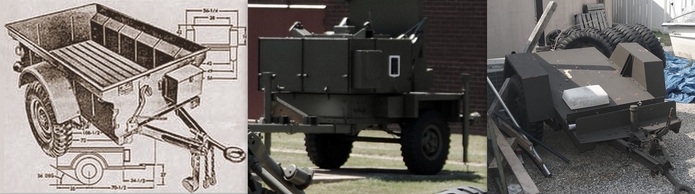
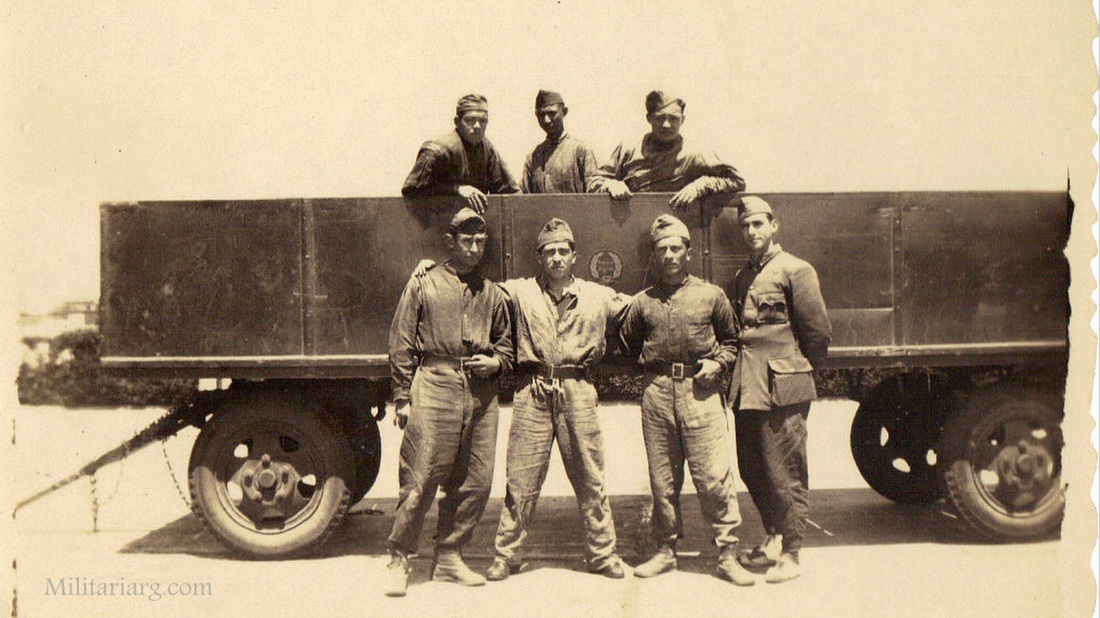
The following list tries to name the types of trailer used y Argentina.  Be advised that it may contain errors.
3/4 ton M101 and M101AR Jeep cargo trailers. M37, Reo, Mercedes Benz, etc
1/4 ton AR100, M100, (M38A1, M606, M151).
1 1/2 ton M104 cargo trailer, (M715 IKA) ?
1 1/2 ton M105 A1/2 ?
Civilian Jeep Trailers Bantam 3-TC ?
Airborne Dum Trailers?
Flatbed M716/762 Small Generator.
M10 ammo.
M416/ 26 (Jeep cargo trailers), trailer 1/4 ton (Canadians CDN M101?).
M762 trailer 3/4 ton.
MBT Willys, Bantam T-3.
AA, 250 gallons.
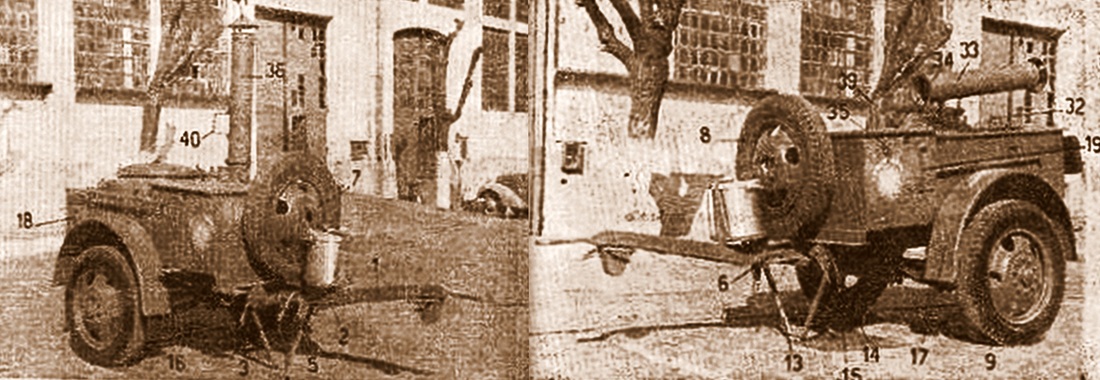
K38 Linesman. Circa M50 Radio/Cable Splicer 1/4 tons based on the German type Field Kitchen trailer?.
AR Field Kitchen, type Guslashkanone (Upgraded), Fogon, ARPA, Karcher. M105, M105A2 y M105AR. Unimog.
Citroën 3CV Furgón

Picture
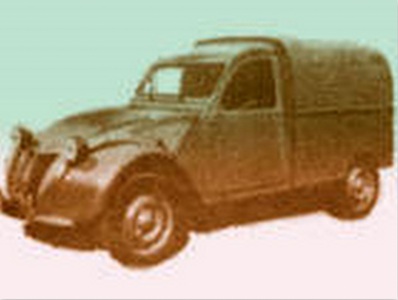
​The Citroën 2CV Furgoneta (specifically the 3CV version in Argentina) saw military use, its primary service with the Argentine Army occurred during the 1960s and 1970s. While the Bundeswehr (West German Federal Defense Forces) is better known for rugged tactical vehicles, it did indeed use the "old" Volkswagen Beetle (Type 1), though its role and variants differed significantly from the earlier WWII versions.
​
Citroën Argentina produced these vehicles between 1960 and 1979. The Army utilized both the passenger 3CV and the furgoneta (van) versions for light liaison, logistics, and medical support.. 

Picture
Picture

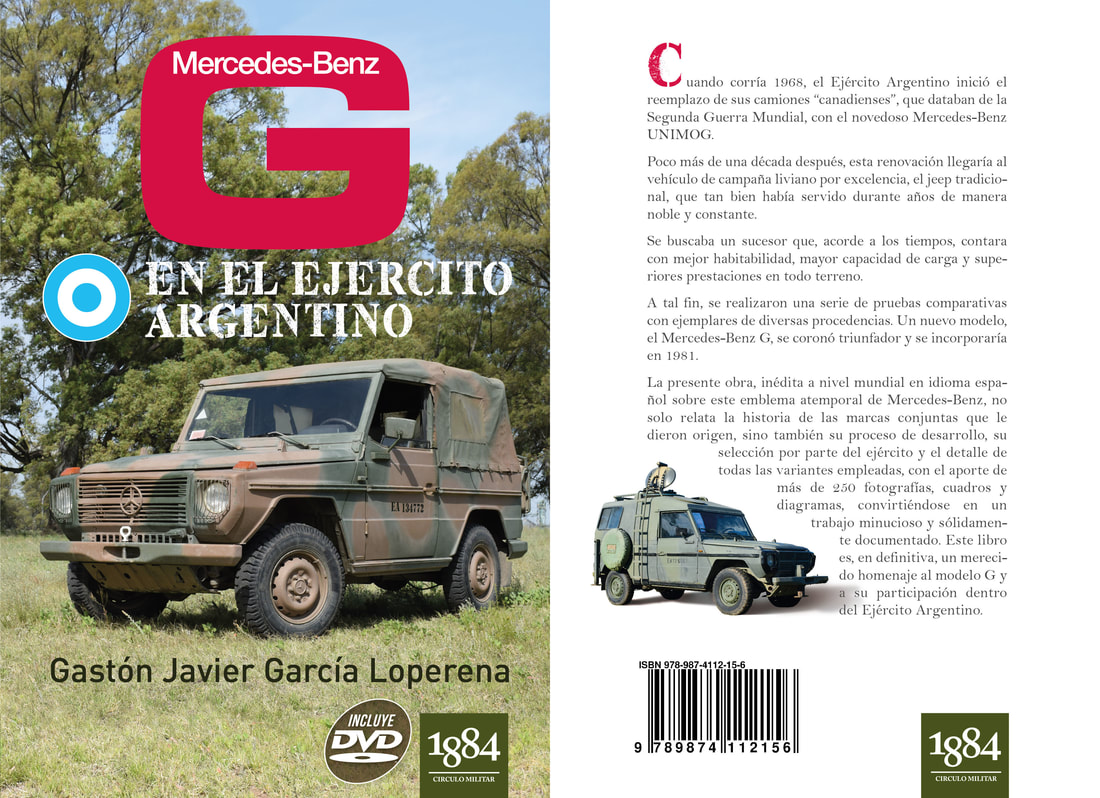
​New Book: El Mercedes-Benz G en el Ejercito Argentino" The Mercedes-Benz G in the Argentine Army by Gaston Garcia Loperena
Picture
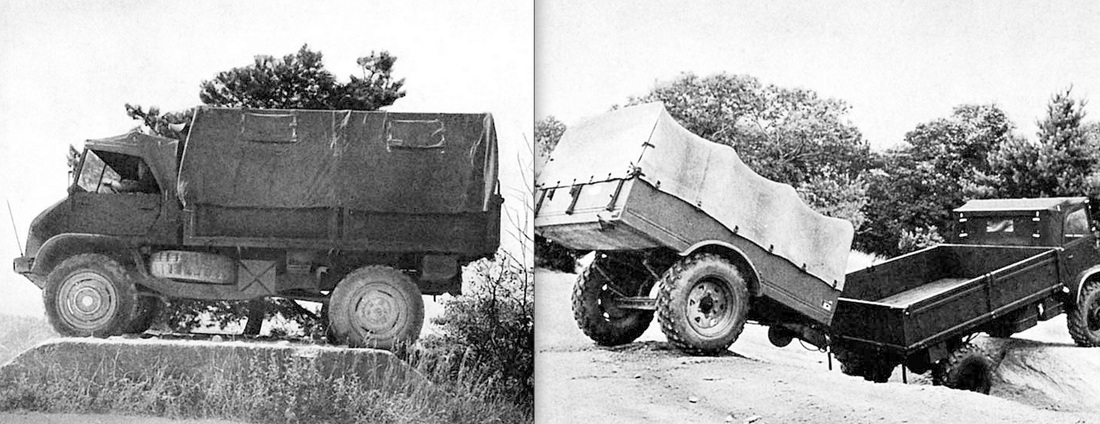
Around 1968, the Argentine Army started the replacement of its "Canadian" trucks dating from the Second World War, with the new Mercedes-Benz UNIMOG.
Little more than a decade later, this renewal led to a new lightweight vehicle, the traditional Jeep, which had served so well through the years in a noble and consistent manner. It looked for a successor that, according to the times, will have better habitability, greater load capacity and superior performance in all terrain.To this end, a series of comparative tests were carried out with samples from different origins. A new model, the Mercedes-Benz G, was crowned triumphant and would be incorporated in 1981.

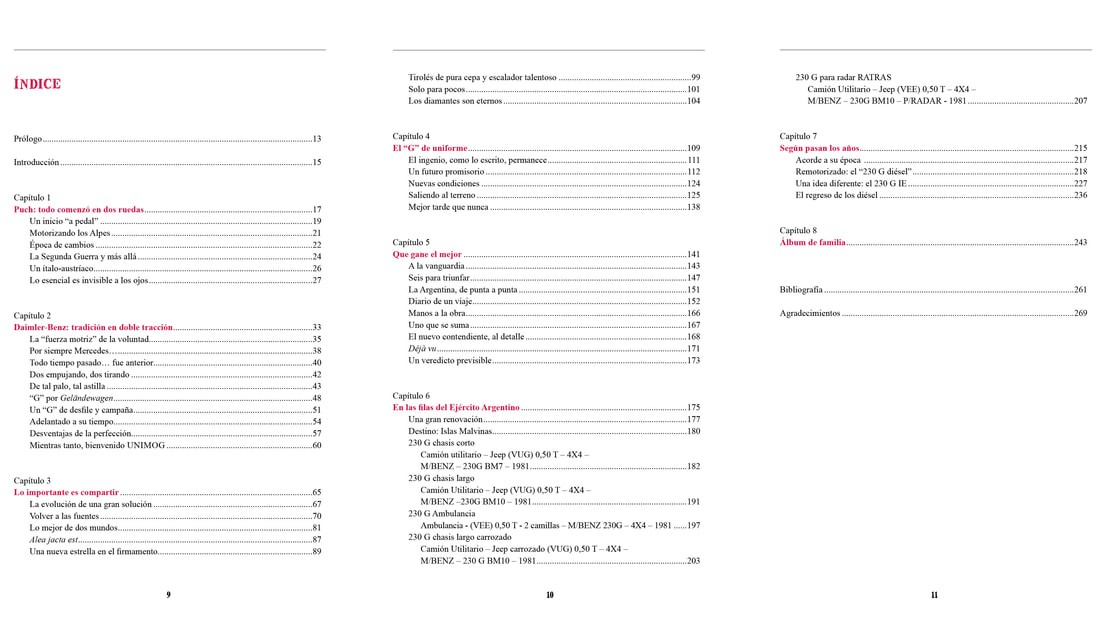
This work, unknown in most of the world, written in Spanish on this timeless emblem of Mercedes-Benz, not only tells the story of the joint marks that gave rise to it, but also its development process, its selection by the army and the details of all the variants used, with the contribution of more than 250 photographs, charts and diagrams.  It is a meticulous and solidly documented work. This book is, in short, a well-deserved tribute to the G model and its participation in the Army.
Picture
Powered by Create your own unique website with customizable templates.