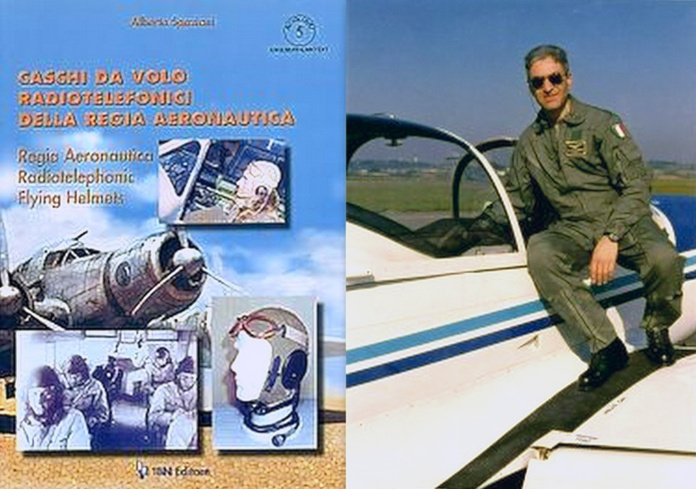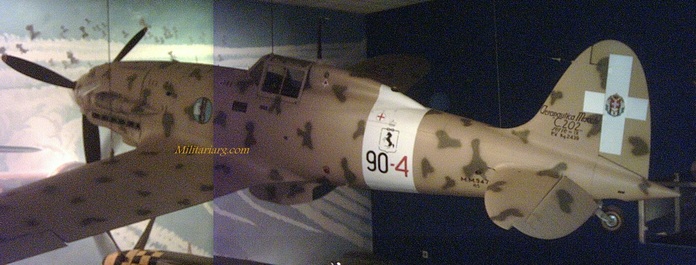
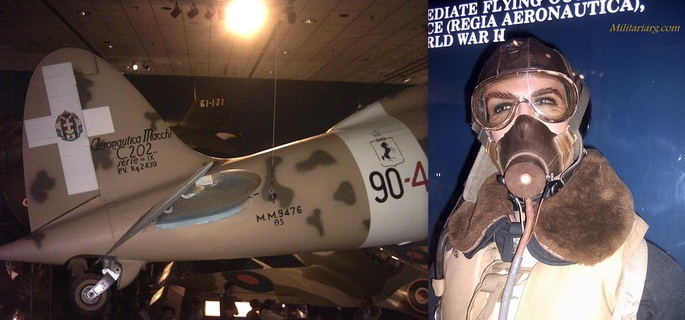
Macchi 202 "Folgore". It is one of only two remaining in the world. Right: Regia Aeronautica WWII Pilot Uniform. National Air and Space Museum.
Italian Flight Helmets Book: Caschi da volo radiotelefonici della regia aeronautica, (Radio-Tele-phone Flight Helmets) by Alberto Spaziani.
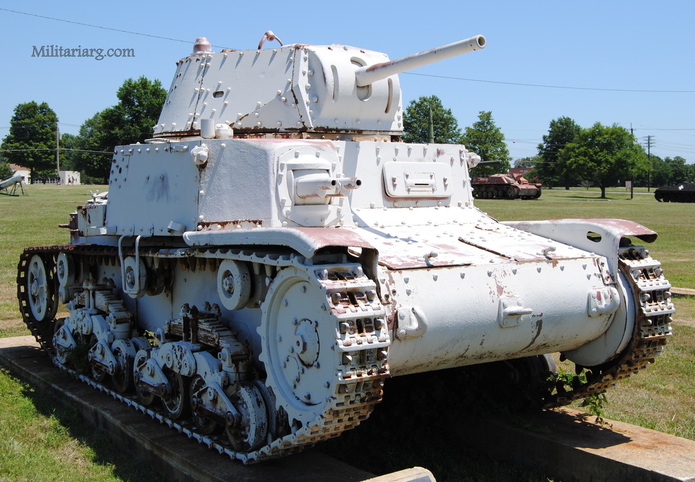
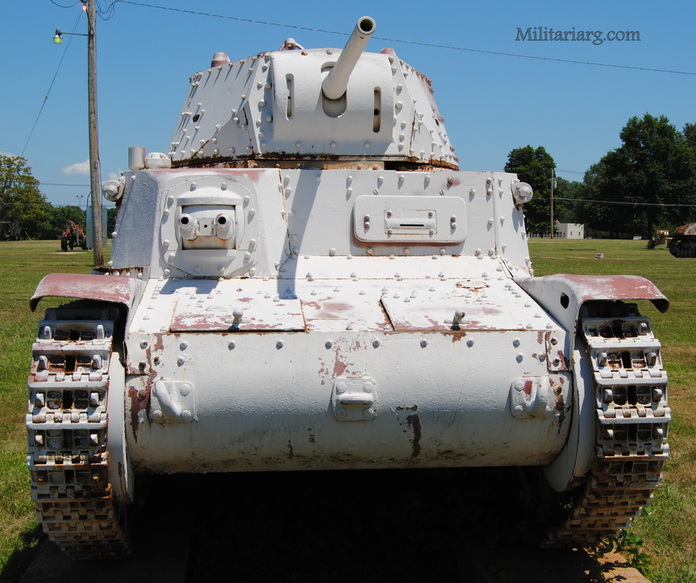
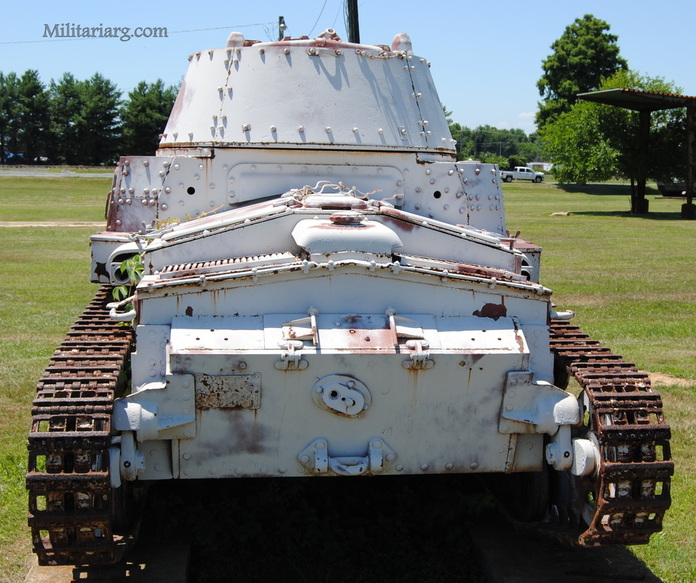
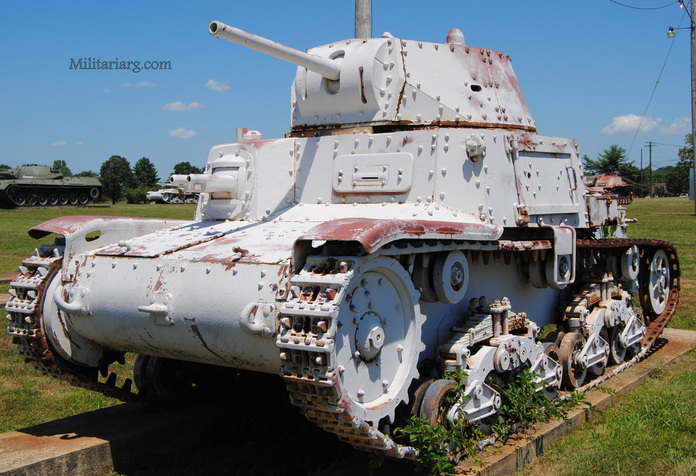
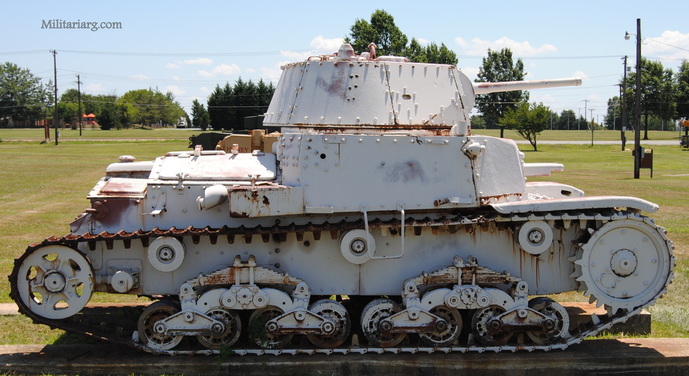
Carro Armato M13/40 (Medium Tank).
Initial production: 1940. 15 tons.
The Fiat-Ansaldo Company produced 785 M13/40's until production of an improved version was adopted in mid 1941. The M13/40 was considered the best of the italian. It had a crew of four and was armed with a 47mm gun, two 8mm Breda bow machineguns and a 8mm Breda coaxial machine-gun. After the occupation in September 1943 many served in German units until December 1944. She had a maximun road speed of 20mph. Aberdeen Museum.
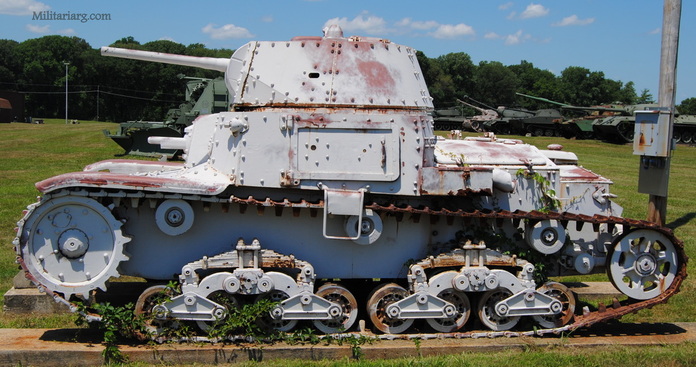
Suspension Leaf spring bogies
Italian Anti-Tank Gun 47/32 canonne da 47mm.
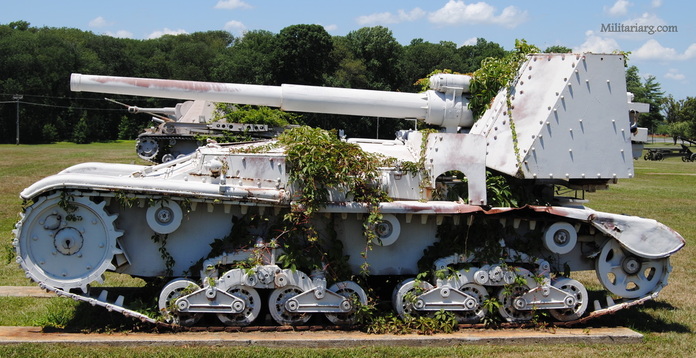
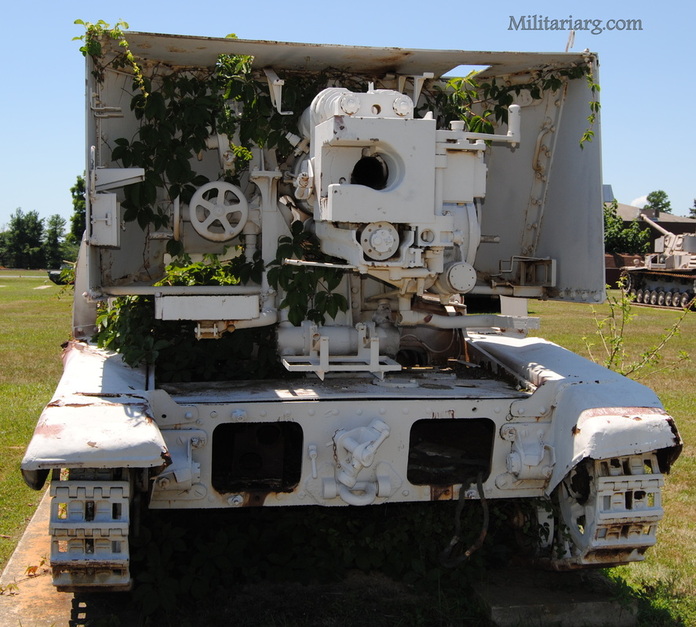
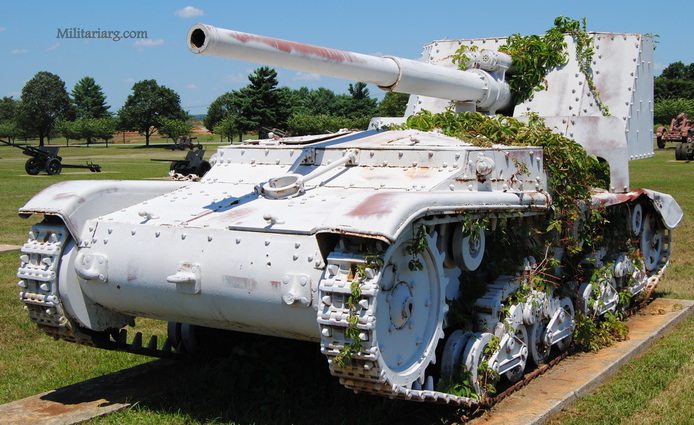
Semovente M41M da 90/53 (Self-Propelled 90mm Gun).
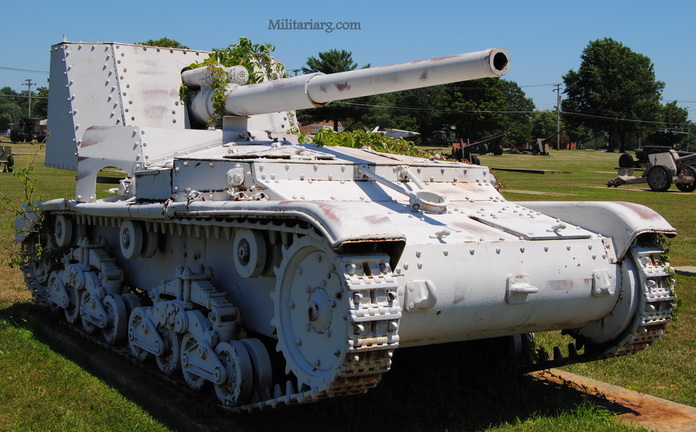
Initial production 1942.
Combat Weight: 17 tons.
The Italian a my sought a gun within its arsenal wich could destroy heavily armored Allied tanks.
An anti-aicraft gun, the 90/53 met that need. This 90mm, 53 caliber gun was a powerful as the dreaded German
88mm gun, wich also began as an anti-aicraft gun before its tank killing abilities were discovered . Mounted atop a Semovente M14/41 tank chassis, the 90/53 had a radius of action of 124 miles on roads and a top speed of 20 mph. The crew of four could traverse the gun 80 degrees to take on ground targets. The US Army captured this vehicle in Sicily. Aberdeen Museum.
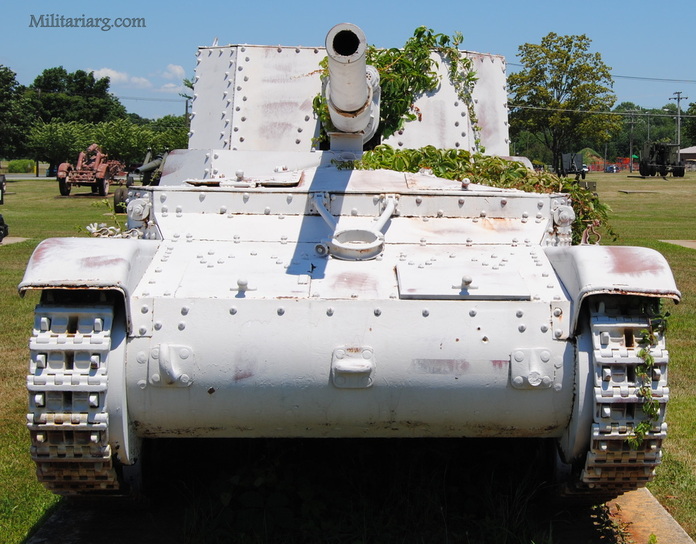
Combat Weight: 17 tons.
The Italian a my sought a gun within its arsenal wich could destroy heavily armored Allied tanks.
An anti-aicraft gun, the 90/53 met that need. This 90mm, 53 caliber gun was a powerful as the dreaded German
88mm gun, wich also began as an anti-aicraft gun before its tank killing abilities were discovered . Mounted atop a Semovente M14/41 tank chassis, the 90/53 had a radius of action of 124 miles on roads and a top speed of 20 mph. The crew of four could traverse the gun 80 degrees to take on ground targets. The US Army captured this vehicle in Sicily. Aberdeen Museum.
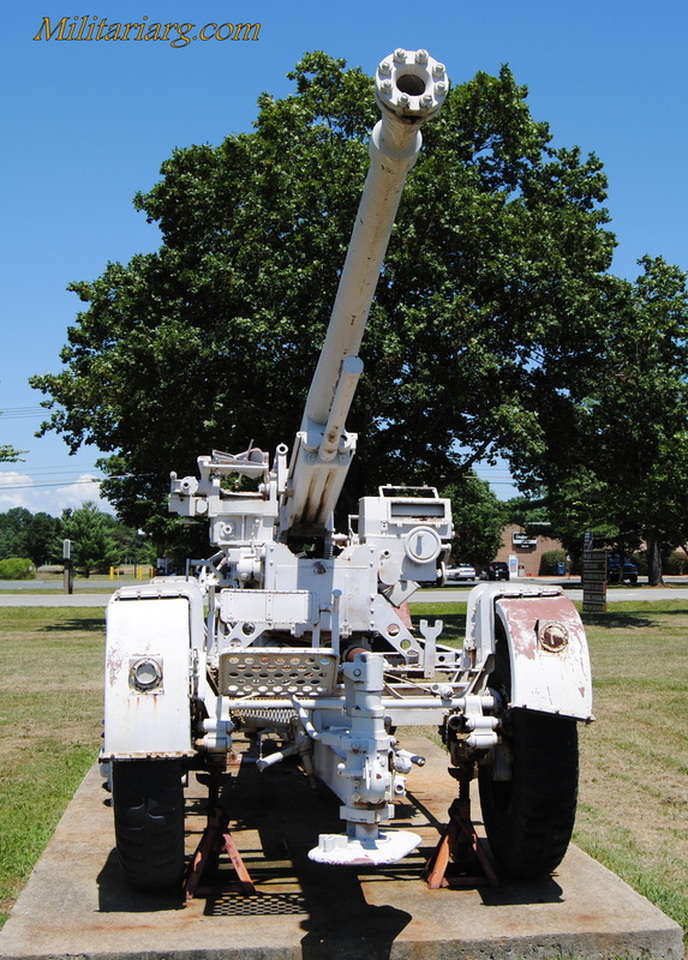
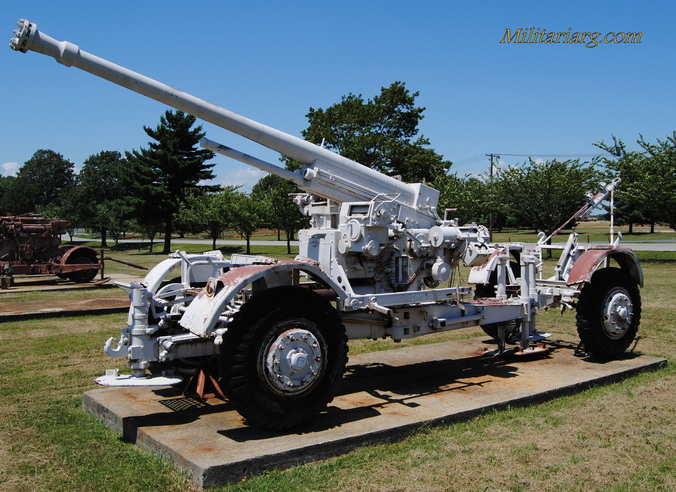
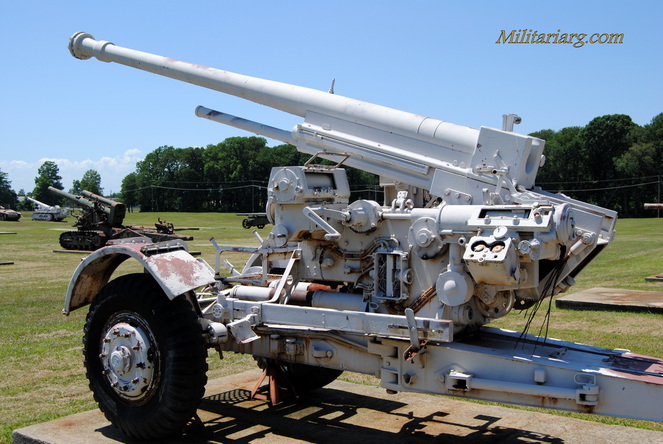
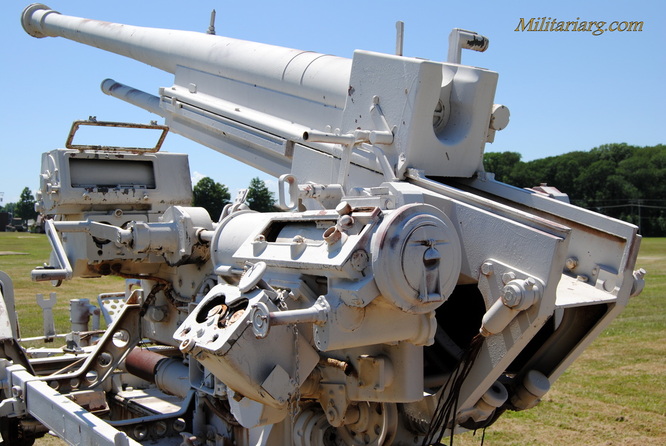
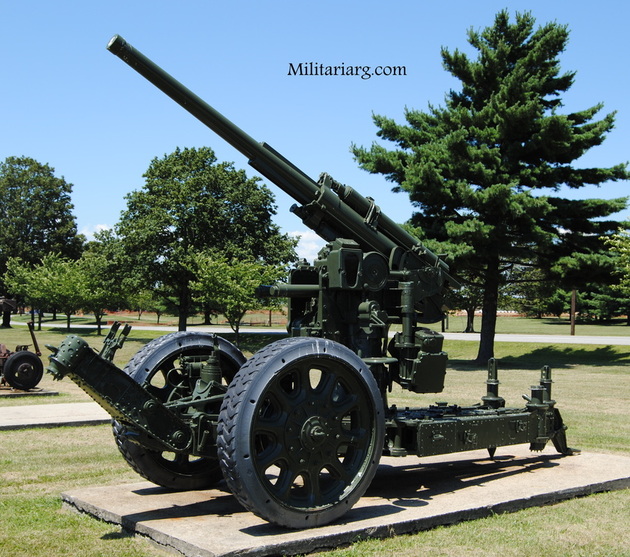
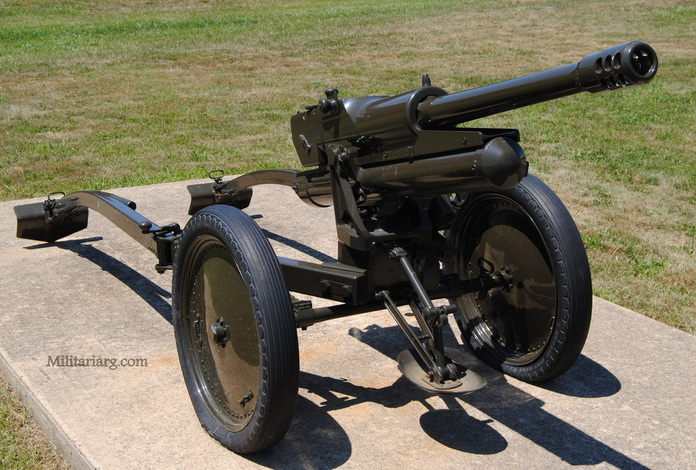
75 mm antiaircraft gun M37 Skoda (Italian Gun).
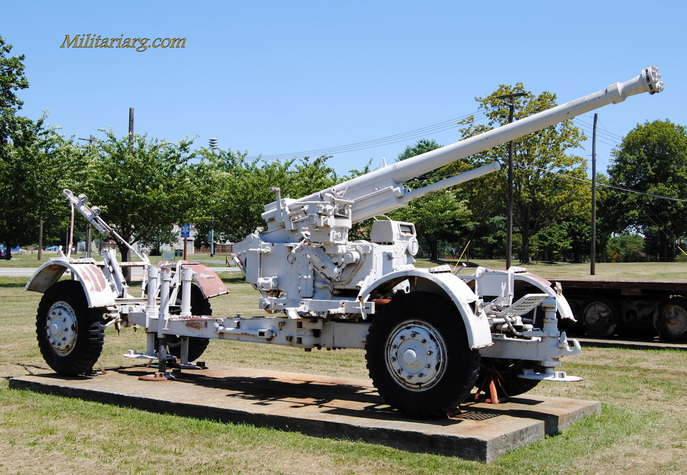
M34 75mm 46 caliber anti-aircraft gun
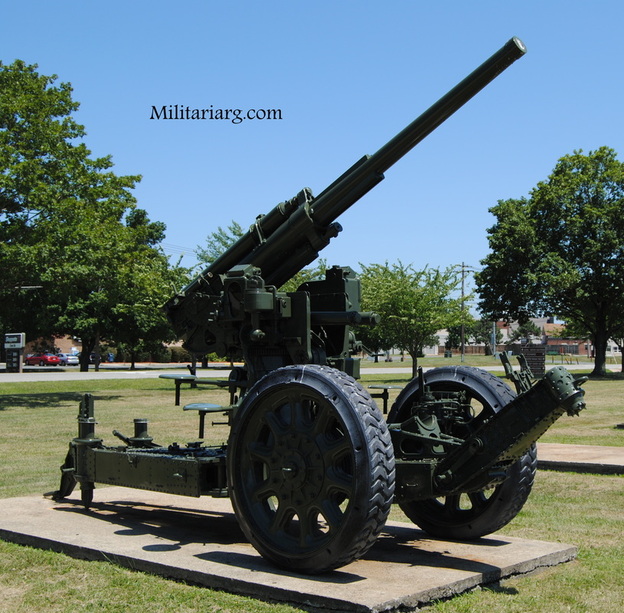
75mm L/30 (Cannone da 75/27 Modello 1906) 1903 Krupp
Italy adopted the Cannone da 75/27 modello 06 in 1906. This was a Krupp-designed field gun that was essentially an evolution of the 1903 "stock" export model.
The 1903 pattern was a generic export gun that Krupp modified slightly for various nations (e.g., Turkey and Romania used the 1903). Italy's 1906 model shared the same basic mechanical DNA, including the 30-caliber barrel and hydro-spring recoil system, but featured Italian-specific modifications like an interrupted screw breech instead of the 1903's horizontal sliding block.
Italy ordered 872 guns directly from Krupp starting in 1909 and subsequently built over 2,000 more under license through Italian firms like OTO and Ansaldo.
During World War II, Italy did use some genuine 1903-pattern guns that were captured from other nations. Specifically, Dutch 75mm M03 guns (designated Cannone da 75/27 P.B. (o) by the Italians) were used by Italian units in Greece and the Balkans after 1940.
While the Italian Cannone da 75/27 modello 06 was based on the Krupp design, historical records from the Australian War Memorial and Passion & Compassion 1418 indicate that Italy did obtain licenses for its production.
Contrary to the idea of it being an unlicensed copy, the Italian government and private firms engaged in formal agreements with Krupp.
In 1906, Italy ordered 872 guns directly from Krupp in Essen, Germany.
The Italian company OTO (Odero-Terni-Orlando) assembled at least 272 additional units using parts provided by Krupp under a formal license.
Full license-built production was carried out by major Italian firms including Ansaldo and Armstrong Pozzuoli.
The confusion regarding its status may stem from the fact that Krupp's Model 1903 was a "stock" commercial design sold to many nations with minor modifications. Italy's version, the Modello 06, was essentially the Krupp Model 1906, which was an iteration of that same 1903 pattern.
Comparison with the Model 1903
While very similar, the Italian licensed version had specific characteristics:
Breech System: It utilized a horizontal sliding-wedge breech (Krupp).
Carriage: It featured a box trail, gun shield, and later versions were modernized with pressed steel wheels and rubber tires for motor towing.
Because it was a sturdy, officially supported design, it remained in Italian service through World War II, where it was eventually designated by the Germans as the 7.5 cm Feldkanone 237(i).
The 1903 pattern was a generic export gun that Krupp modified slightly for various nations (e.g., Turkey and Romania used the 1903). Italy's 1906 model shared the same basic mechanical DNA, including the 30-caliber barrel and hydro-spring recoil system, but featured Italian-specific modifications like an interrupted screw breech instead of the 1903's horizontal sliding block.
Italy ordered 872 guns directly from Krupp starting in 1909 and subsequently built over 2,000 more under license through Italian firms like OTO and Ansaldo.
During World War II, Italy did use some genuine 1903-pattern guns that were captured from other nations. Specifically, Dutch 75mm M03 guns (designated Cannone da 75/27 P.B. (o) by the Italians) were used by Italian units in Greece and the Balkans after 1940.
While the Italian Cannone da 75/27 modello 06 was based on the Krupp design, historical records from the Australian War Memorial and Passion & Compassion 1418 indicate that Italy did obtain licenses for its production.
Contrary to the idea of it being an unlicensed copy, the Italian government and private firms engaged in formal agreements with Krupp.
In 1906, Italy ordered 872 guns directly from Krupp in Essen, Germany.
The Italian company OTO (Odero-Terni-Orlando) assembled at least 272 additional units using parts provided by Krupp under a formal license.
Full license-built production was carried out by major Italian firms including Ansaldo and Armstrong Pozzuoli.
The confusion regarding its status may stem from the fact that Krupp's Model 1903 was a "stock" commercial design sold to many nations with minor modifications. Italy's version, the Modello 06, was essentially the Krupp Model 1906, which was an iteration of that same 1903 pattern.
Comparison with the Model 1903
While very similar, the Italian licensed version had specific characteristics:
Breech System: It utilized a horizontal sliding-wedge breech (Krupp).
Carriage: It featured a box trail, gun shield, and later versions were modernized with pressed steel wheels and rubber tires for motor towing.
Because it was a sturdy, officially supported design, it remained in Italian service through World War II, where it was eventually designated by the Germans as the 7.5 cm Feldkanone 237(i).