Militariarg.com
  • Home
  • Army
  • Aviation
  • Navy
  • Uniforms and Badges
  • Arms and Weapons
  • Equipment
  • Vehicles
  • Operational and Organizational Structure, Security Forces, Transportation, Books, Models and More.
  • Argentine Confederation Era. 1829 - 1852.
  • From 1852 to 1910 (French fashion)
  • Bunker 1982: South Atlantic War Militaria
  • International Militaria
  • Argentina WWII Era (Neutral) Reenactment Impression
  • Links ~ Enlaces

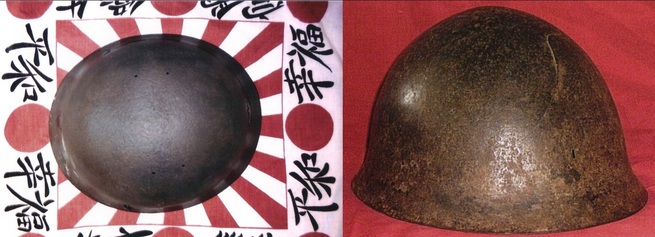
Type 90 Japanese Helmet

Picture
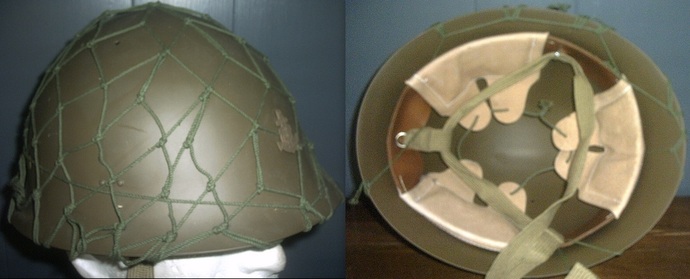
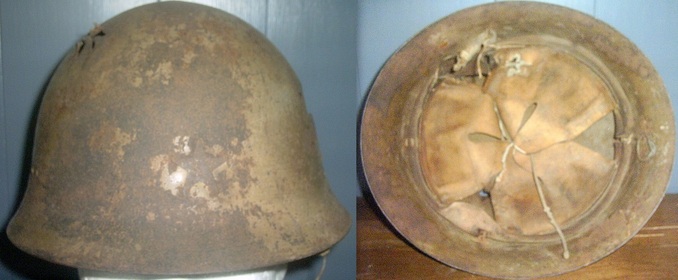
Japanese Helmet M30-32. Battlefield Relic.

The Japanese Type 90 helmet (tetsubo, or "iron hat") was the standard combat helmet used by all branches of the Imperial Japanese military throughout World War II. It was officially adopted in 1930 (Imperial year 2590, hence "Type 90") and is a highly sought-after collector's item. 


The helmet has an oval, domed shape with a short, flared rim running around the entire edge. It was made from a specific chrome-molybdenum steel alloy and was generally painted an ochre or brown color.

A key identifier of the Type 90 is the insignia affixed to the front:

Army (IJA): A five-pointed metal star (a common style, though some officer's versions were raised).


Navy (IJN): A metal badge featuring an anchor with a stylized chrysanthemum, or sometimes a yellow stenciled anchor on 
late-war models.
The liner consisted of three leather pads (often pigskin) attached to a leather band, with small pockets for additional padding material. The chin strap system was typically made of webbed cloth and attached via metal D-rings, designed to release under blast pressure.

Markings: Manufacturer stamps (like the "S" in a diamond for the Kobe Seiko arsenal) and size kanji ("大" for large or "小" for small) were typically stamped or painted on the rear interior rim. Soldiers' names were also often painted in the interior brim. 

Picture
WWII Japanese Navy Helmet. Replica.
Picture
Picture
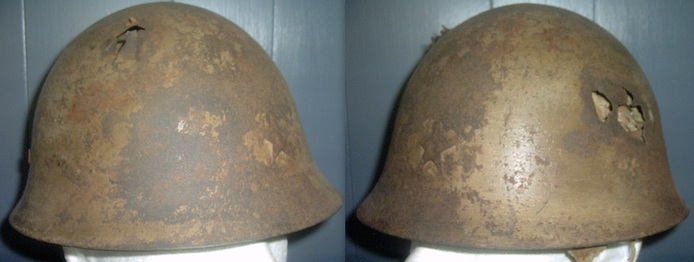
 Japanese Helmet with battle damage.

An original damaged Japanese Helmet shell refurbished with a repro set of type 90 liner, chinstrap, camouflage net and Imperial Japanese Army badge for display.

Picture
Picture
Picture
Picture
Picture
Picture
Picture
Picture
Picture

WW1

The Imperial Japanese Army during World War I used a combination of domestically designed and produced weapons and artillery, leveraging designs and experience gained from the recent Russo-Japanese War. Their equipment was modern for its era.
 
Weapons
The primary service rifle was a domestically developed bolt-action design known for its strength and reliability. 

Rifles: The Type 38 Arisaka (adopted in 1905) was the standard infantry rifle and widely used by Japanese forces during WWI. Chambered in the 6.5×50mmSR Arisaka cartridge, it was a robust and simple bolt-action rifle with a 5-round internal magazine. The older Type 30 Arisaka rifle was also in limited service.
Pistols: The Type 26 Revolver was the standard sidearm, a break-action revolver chambered in 9mm Japanese.
Machine Guns: Japanese forces relied heavily on the Type 3 heavy machine gun. 

Artillery
The Japanese used a range of artillery, including both field guns and heavy siege howitzers, many of which were used to great effect during the Siege of Tsingtao against German defenses. 

Field Artillery:
Type 38 75 mm Field Gun: This was the standard field gun of the Imperial Japanese Army, based on a 1905 German design purchased and built by Japan.
Type 31 75 mm Mountain Gun: Both field and mountain variants of this gun were used for mobile operations.
Type 41 75 mm Cavalry Gun: A lighter 75mm gun designed for mounted units.
Heavy and Siege Artillery:
Type 45 240 mm Howitzer: This siege gun was the first heavy howitzer entirely designed in Japan and was very effective against fortified positions.
28 cm Howitzer L/10: A massive, older siege howitzer (from the Russo-Japanese War era) was also deployed when needed against heavy fortifications. 

The Japanese also produced howitzers in 10 cm and 15 cm calibers (Type 38 and Type 4) to support their field armies.

WW2 

The Imperial Japanese Army (Imperial Japanese Army) during World War II was equipped primarily with domestically designed and manufactured weapons and vehicles. Due to industrial constraints and a doctrine that prioritized the needs of the Navy and Air Force, Japanese tanks and armored vehicles were generally lighter, less armored, and less heavily armed than their American and European counterparts


Weapons
The primary service rifles were robust and reliable bolt-action designs produced in several arsenals across Japan. 

Rifles: The standard infantry rifle was the Type 38 Arisaka (6.5mm). A later, more powerful version, the Type 99 Arisaka, chambered in 7.7mm Japanese, was introduced in 1939.
Pistols: The Type 14 Nambu was the standard semi-automatic pistol, though it was often considered unreliable. The older Type 26 Revolver was also still in use.
Machine Guns:
Type 96 light machine gun: The primary squad automatic weapon, a gas-operated design that used the same 6.5mm caliber as the Type 38 rifle.
Type 92 heavy machine gun: A formidable heavy machine gun, essentially a version of the French Hotchkiss Mle 1914, chambered in 7.7mm. 

Artillery
Compared to Western armies, Japanese field artillery tended to be lighter to assist with mobility in challenging terrain like jungles. 

Infantry Support: The Type 92 70 mm Infantry Gun was a crucial light field piece that could be broken down for transport. The Type 97 81mm mortar and the Type 89 50mm grenade discharger (nicknamed "knee mortar" by Allies) provided localized indirect fire support.
Field and Mountain Guns: The Type 38 75 mm Field Gun was a WWI-era workhorse. The Type 94 75 mm Mountain Gun was used extensively in Asia.
Anti-Tank: The Japanese had limited effective anti-tank weapons until later in the war. The Type 1 47 mm anti-tank gun was one of the better anti-tank cannons developed, but it was often too little, too late. 

Tanks and Vehicles
Japanese armored doctrine prioritized light, mobile tanks for infantry support and reconnaissance. Their infrastructure constraints, particularly narrow railway gauges, dictated that tanks could not exceed a certain width or weight. 

Light Tanks: 
The Type 95 Ha-Go was the most widely produced Japanese light tank, used in virtually every theater of the war.
Medium Tanks:
Type 97 Chi-Ha: The most common medium tank of the war, initially armed with a short 57mm gun.
Type 97 Shinhōtō Chi-Ha: An upgraded version with a more powerful high-velocity 47mm gun in a new turret was introduced to better counter Allied armor in 1942.
Tank Destroyers & Self-Propelled Guns: The Japanese developed various self-propelled guns based on tank chassis late in the war, such as the Type 1 Ho-Ni I (75mm gun) and the Type 4 Ho-Ro (150mm howitzer), which saw limited action.
Amphibious Tanks: The Navy developed specific amphibious tanks like the Type 2 Ka-Mi for island assaults.
Vehicles: Transport was often limited and relied on various truck designs, including copies of U.S. models.

Picture
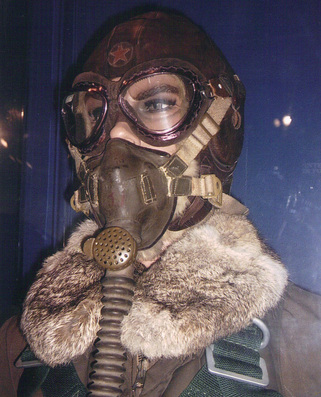
WWII Imperial Japanese Pilot in Uniform. National Air and Space Museum in Washington, DC.
Picture
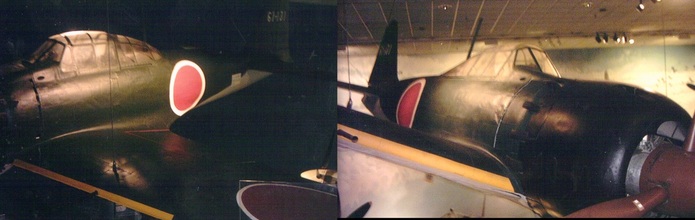
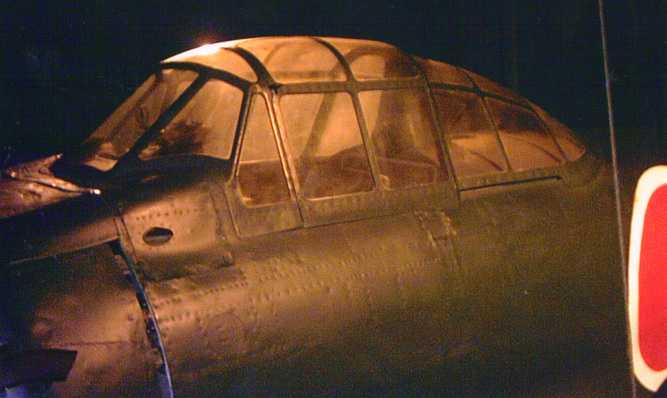
Japanese Mitsubishi A6M Zero
Picture

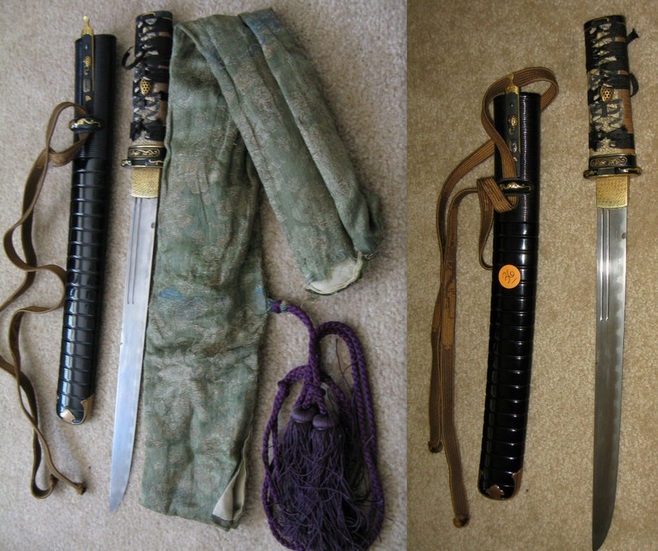
16Th Century Samurai Sword:

Picture
Samurai sword, steel, copper and lacquer, Japanese, the mass produced blade, “tanto”, dating from the mid to late 16th century of the “Mino school”, worn and unsigned, remounted in a copper mount with ray skin handle and cording, along with the utilitarian “kogai” (hairpin) and utility knife, in a black lacquered scabbard dating from the 1920’s- 30’s all housed in a worn and soiled green damask satin bag with cording.

Roger Barr Collection for sell on Ebay::
http://www.ebay.com/itm/300593033922?ssPageName=STRK:MESELX:IT&_trksid=p3984.m1555.l2649

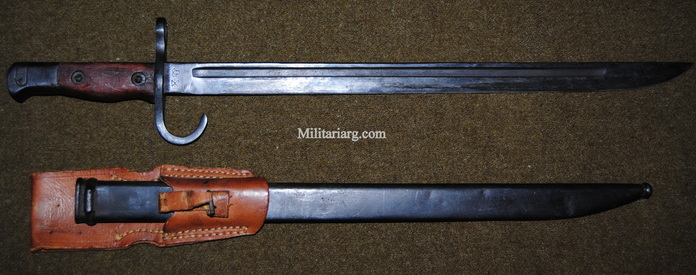
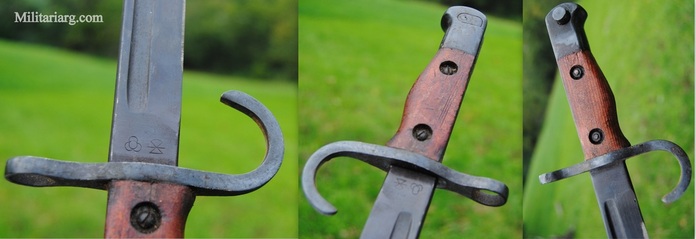
Arisaka Bayonet type 30, hooked quillon, (Unknown company under Kokura Arsenal supervision):

Recommended link: http://www.radix.net/~bbrown/japanese_markings.html
Picture
Picture
Picture
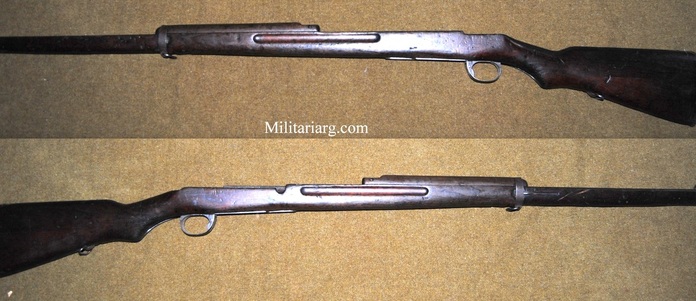
Arisaka Rifle Stock

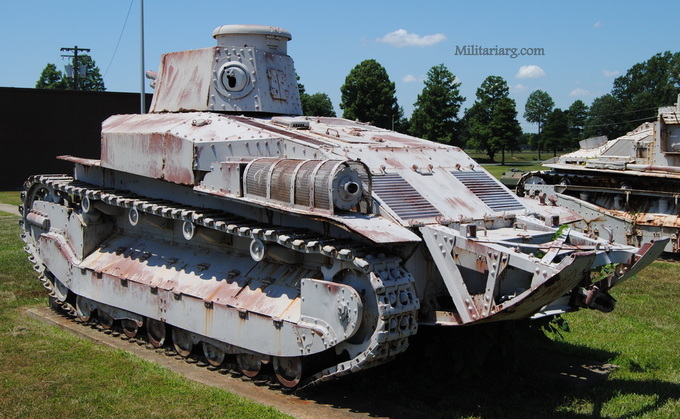
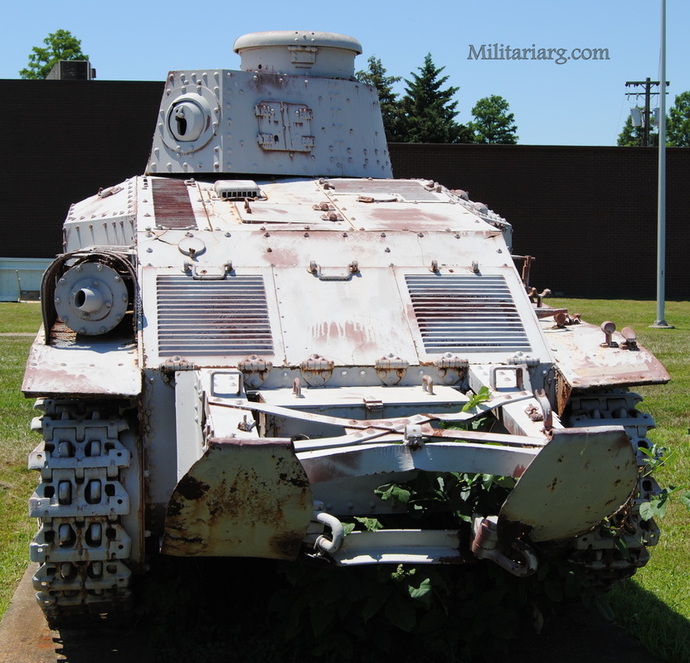
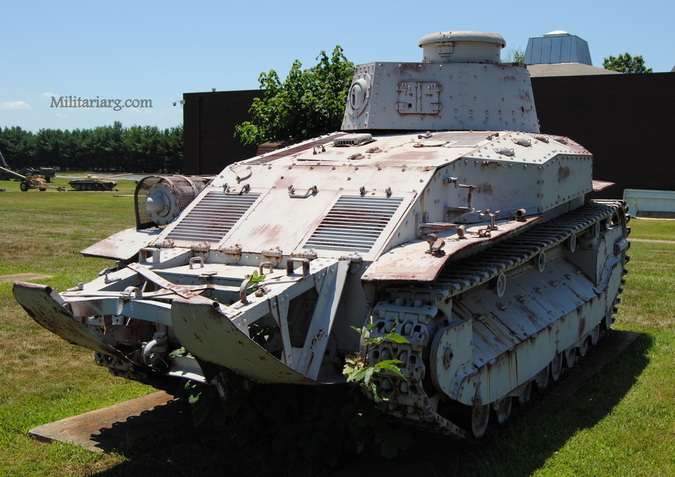
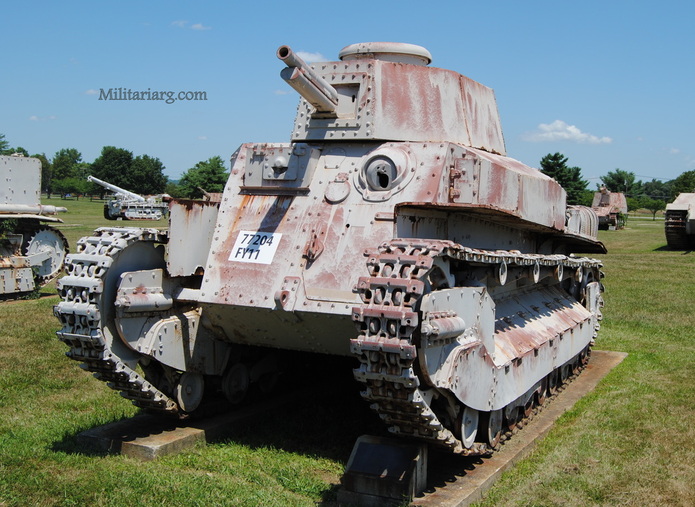
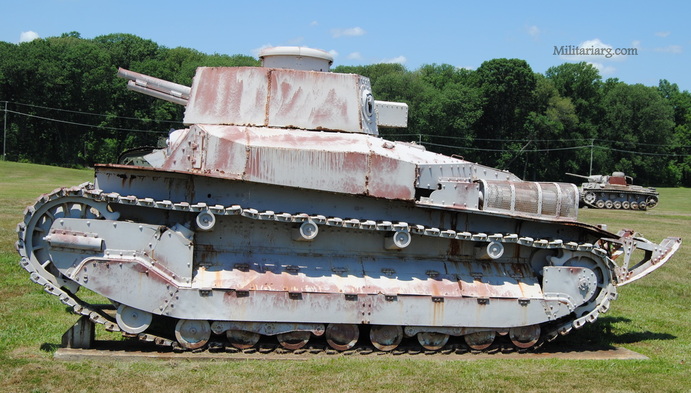
Chu Sensha, Shiki 94 medium Tank
Picture
Initial production: 1934
Combat weight: 15.4 tons
This vehicle was used extensively in China. This exemple was shipped back to Aberdeen Proving Ground from the Southwest Pacific Area. The Shiki was crewed by four and armed with one 57mm ype 90 gun and two 6.5mm type 91 machine guns. Top speed was 28 mph on the road. Aberdeen Museum.
Picture
Picture
Picture
Picture

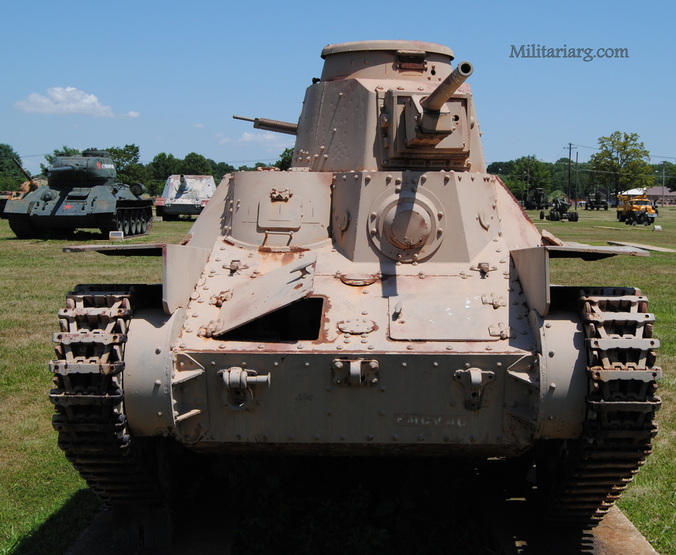
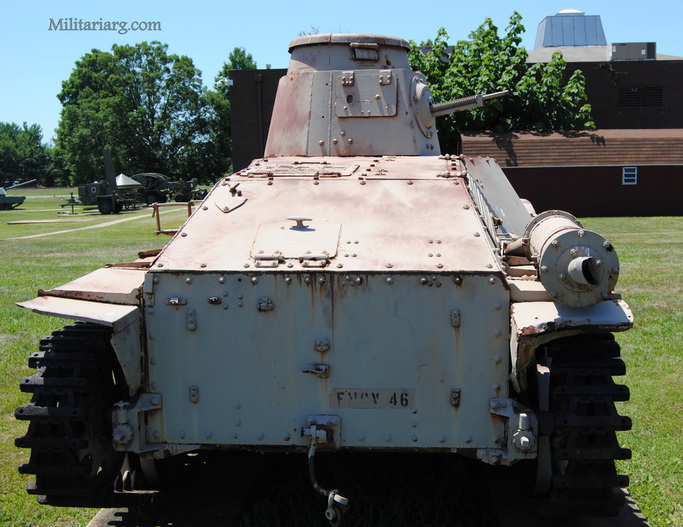
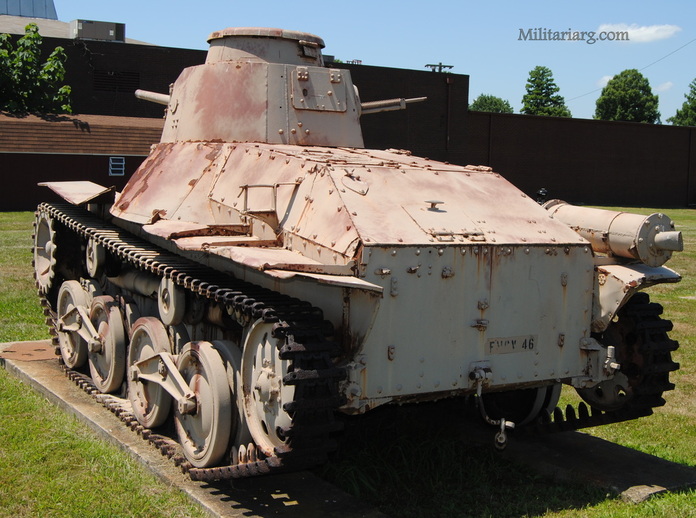
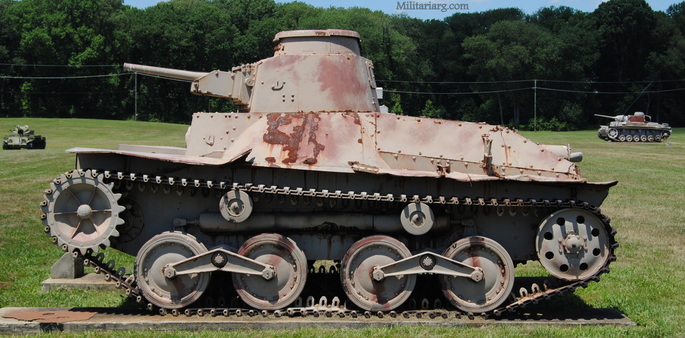
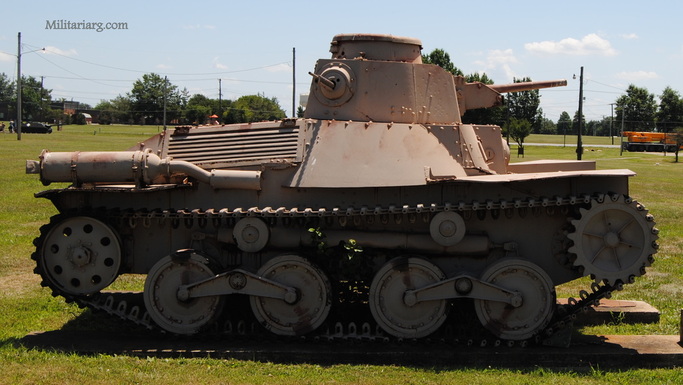
Type 94, Chu Sensha.

Picture
Initial production: 1935
Weight: 8.5 tons
This tank has a three-man crew with a 37mm main gun, and two 7.7mm machine guns. The US Army captured this tank on Attu in the aleutian Islands during WWII.
Picture
Picture
Picture
Picture

Type 38 Japanese 75mm L/31 Model 1905 Krupp

Picture
The Type 38 75mm Field Gun was a German-designed artillery piece adopted by the Imperial Japanese Army (IJA) in 1905, based on a licensed design from Krupp. It served as Japan's standard field gun through several major conflicts, including World War I and World War II, despite being largely obsolete by the 1940s. 

The Type 38 was a conventional field gun for its era, featuring a hydro-spring recoil system and a solid box trail. Its designation "Type 38" refers to its acceptance in the 38th year of Emperor Meiji's reign (1905). 
Caliber: 75 mm (2.95 in).
Barrel Length: 2.286 meters (7 ft 6 in), or L/31.
Weight: Approximately 947 kg (2,088 lb) in firing position.
Breech: Originally an interrupted screw type, though later improved versions used a horizontal sliding-wedge design to increase loading speed.
Elevation: -8° to +16° 30' for the original model.
Rate of Fire: Up to 15 rounds per minute for short bursts, with a continuous rate of about 4 rounds per minute.
Muzzle Velocity: 510 m/s (1,673 ft/s). 

Improved Type 38 Variant 
In the late 1920s, many units were upgraded to the Type 38 Improved (often called Type 38 Kai) to address range deficiencies. 

Range: Increased the maximum firing range from 8,350 meters to 11,600 meters.
Elevation: The carriage was modified with a hollow box trail, allowing elevation up to 43°.
Weight: Increased to approximately 1,135.7 kg (2,504 lb) due to carriage modifications. 

Combat History
Though Japan attempted to replace it with the more modern Type 90 75mm Field Gun in 1931, production shortages meant the Type 38 remained in frontline service until 1945. 
Widely used during the Second Sino-Japanese War and against Soviet forces in border conflicts like the Battle of Khalkhin Gol.
World War II
Encountered by Allied forces across the Pacific Theater, where it was often used in secondary roles or for island defense.
Capable of firing high-explosive (HE), armor-piercing (AP), shrapnel, incendiary, smoke, and gas shells. 
Powered by Create your own unique website with customizable templates.