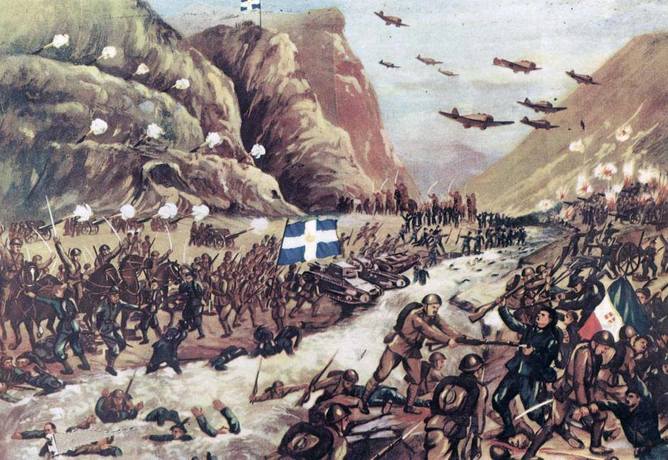
The Battle of Elaia–Kalamas (November 2–8, 1940) was a pivotal engagement during the initial stage of the Greco-Italian War in World War II. Despite being significantly outnumbered, local Greek forces under Major General Charalambos Katsimitros successfully halted a major Italian offensive along the Elaia–Kalamas river line in Epirus.
WW1
The Greek Army during World War I used a wide variety of equipment from its allies (primarily France and Britain), its own pre-war stocks, and captured weapons.
Weapons
The primary weapon was a highly regarded bolt-action rifle, but several other models were also in service, leading to logistical complexity.
Rifles: The primary service rifle was the Mannlicher–Schönauer Model 1903 and 1903/14, a reliable Austrian-made weapon that was considered the "national rifle" of Greece. As the war progressed and Allied support increased, Greek soldiers were also issued French Lebel M1886/93 and Berthier M1907/15 rifles. Older Gras M1874 rifles were also in extensive use.
Pistols/Revolvers: Sidearms included a variety of European models such as the Belgian-made Nagant M1895 revolver and the German-made Bergmann-Bayard M1903 and M1908 pistols.
Machine Guns: The army utilized French-supplied machine guns after joining the Allies on the Macedonian Front, including the Hotchkiss M1914 and the St. Étienne Mle 1907/16 medium machine guns.
Artillery
Greek artillery was modernized by a French Military Mission in 1917 and consisted of numerous French and some British systems, with a particular emphasis on mountain guns for the rugged terrain.
Field Artillery: The standard and most common field gun became the French 75mm M1897 field gun, acquired through Allied aid.
Mountain Artillery: Given the terrain of Macedonia and Epirus, mountain guns were critical. Key pieces included:
The French Schneider-Danglis 75mm M1906/09 (a Greek-designed and French-made gun)
The Schneider-Ducrest 65mm M1906
Heavy Artillery: For heavy support and siege duties, the Greek Army received British Ordnance BL 6-inch 30 cwt howitzers and French De Bange 120mm L M1878 heavy guns.
The Greek Army during World War I used a wide variety of equipment from its allies (primarily France and Britain), its own pre-war stocks, and captured weapons.
Weapons
The primary weapon was a highly regarded bolt-action rifle, but several other models were also in service, leading to logistical complexity.
Rifles: The primary service rifle was the Mannlicher–Schönauer Model 1903 and 1903/14, a reliable Austrian-made weapon that was considered the "national rifle" of Greece. As the war progressed and Allied support increased, Greek soldiers were also issued French Lebel M1886/93 and Berthier M1907/15 rifles. Older Gras M1874 rifles were also in extensive use.
Pistols/Revolvers: Sidearms included a variety of European models such as the Belgian-made Nagant M1895 revolver and the German-made Bergmann-Bayard M1903 and M1908 pistols.
Machine Guns: The army utilized French-supplied machine guns after joining the Allies on the Macedonian Front, including the Hotchkiss M1914 and the St. Étienne Mle 1907/16 medium machine guns.
Artillery
Greek artillery was modernized by a French Military Mission in 1917 and consisted of numerous French and some British systems, with a particular emphasis on mountain guns for the rugged terrain.
Field Artillery: The standard and most common field gun became the French 75mm M1897 field gun, acquired through Allied aid.
Mountain Artillery: Given the terrain of Macedonia and Epirus, mountain guns were critical. Key pieces included:
The French Schneider-Danglis 75mm M1906/09 (a Greek-designed and French-made gun)
The Schneider-Ducrest 65mm M1906
Heavy Artillery: For heavy support and siege duties, the Greek Army received British Ordnance BL 6-inch 30 cwt howitzers and French De Bange 120mm L M1878 heavy guns.
Schneider 105mm L12,4 Model 1919 mountain howitzer.
WW2
The Greek Army at the start of World War II was a light infantry force with a mix of obsolete equipment from various European nations, primarily from the WWI era. The army had a very limited amount of armored vehicles.
Weapons
The primary service rifle was of a reliable, high-quality design, but other weapons varied widely.
Rifles: The main rifle was the Mannlicher–Schönauer Y1903/14 rifle and carbine. Other older models like the French Gras M1874/14, Berthier M1916, and Lebel M1886/93 were also in use.
Sidearms: A variety of pistols were in service, including the Ruby pistol, FN Model 1922, and Colt M1907 Army Special.
Submachine Guns: Submachine guns were not standard issue in large numbers at the start of the war, but the British STEN Mk II and American Thompson M1928 were supplied later, during the German invasion and for resistance fighters.
Machine Guns: The primary light machine gun was the French Hotchkiss M1922 (8 mm), while heavier support was provided by the St. Étienne Mle 1907 and Hotchkiss Mle 1914 machine guns.
Artillery
Greek artillery units were equipped with a mix of French, German, and Czech guns, which created logistical challenges for spare parts and ammunition.
Field Artillery: Notable pieces included the French 75mm M1897 field gun, the Schneider 85mm M1927, and the Schneider 105mm M1925/27 field guns.
Mountain Artillery: Given Greece's mountainous terrain, mountain guns were crucial, including the Schneider-Danglis 75mm M1906/09 and the 65mm Schneider-Ducrest M1906.
Anti-aircraft: The army had access to various anti-aircraft guns, including German 88 mm Flak 18, 37 mm, and 20 mm guns.
Tanks and Vehicles
The Greek Army had very minimal armored forces, a consequence of limited funds and the country's rugged terrain.
Tanks/Tankettes: The entire inventory consisted of a few obsolete vehicles:
Renault FT-17: Eleven of these WWI-era light tanks were in service.
Vickers Mk. E: Two were acquired for trials in 1931.
Carden Loyd tankettes: A small number of these British tankettes were used.
Carro Armato L3: Approximately 40 of these Italian tankettes were captured during the Greco-Italian War and subsequently used by Greek forces.
Transport Vehicles: Transport was a major weakness; the army relied heavily on thousands of mules and horses, as motorized transport was extremely limited. Britain later supplied around 40 half-tracked APCs to form a mechanized regiment, but these were quickly destroyed during the German invasion.
The Greek Army at the start of World War II was a light infantry force with a mix of obsolete equipment from various European nations, primarily from the WWI era. The army had a very limited amount of armored vehicles.
Weapons
The primary service rifle was of a reliable, high-quality design, but other weapons varied widely.
Rifles: The main rifle was the Mannlicher–Schönauer Y1903/14 rifle and carbine. Other older models like the French Gras M1874/14, Berthier M1916, and Lebel M1886/93 were also in use.
Sidearms: A variety of pistols were in service, including the Ruby pistol, FN Model 1922, and Colt M1907 Army Special.
Submachine Guns: Submachine guns were not standard issue in large numbers at the start of the war, but the British STEN Mk II and American Thompson M1928 were supplied later, during the German invasion and for resistance fighters.
Machine Guns: The primary light machine gun was the French Hotchkiss M1922 (8 mm), while heavier support was provided by the St. Étienne Mle 1907 and Hotchkiss Mle 1914 machine guns.
Artillery
Greek artillery units were equipped with a mix of French, German, and Czech guns, which created logistical challenges for spare parts and ammunition.
Field Artillery: Notable pieces included the French 75mm M1897 field gun, the Schneider 85mm M1927, and the Schneider 105mm M1925/27 field guns.
Mountain Artillery: Given Greece's mountainous terrain, mountain guns were crucial, including the Schneider-Danglis 75mm M1906/09 and the 65mm Schneider-Ducrest M1906.
Anti-aircraft: The army had access to various anti-aircraft guns, including German 88 mm Flak 18, 37 mm, and 20 mm guns.
Tanks and Vehicles
The Greek Army had very minimal armored forces, a consequence of limited funds and the country's rugged terrain.
Tanks/Tankettes: The entire inventory consisted of a few obsolete vehicles:
Renault FT-17: Eleven of these WWI-era light tanks were in service.
Vickers Mk. E: Two were acquired for trials in 1931.
Carden Loyd tankettes: A small number of these British tankettes were used.
Carro Armato L3: Approximately 40 of these Italian tankettes were captured during the Greco-Italian War and subsequently used by Greek forces.
Transport Vehicles: Transport was a major weakness; the army relied heavily on thousands of mules and horses, as motorized transport was extremely limited. Britain later supplied around 40 half-tracked APCs to form a mechanized regiment, but these were quickly destroyed during the German invasion.
Greek Army in WWII Recreation
by Theodore Mavridopoulos
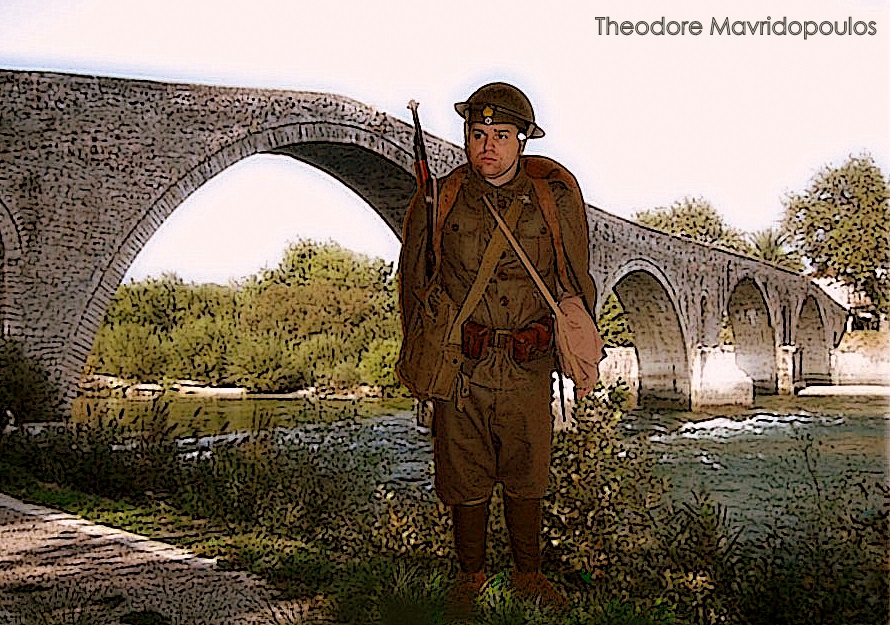
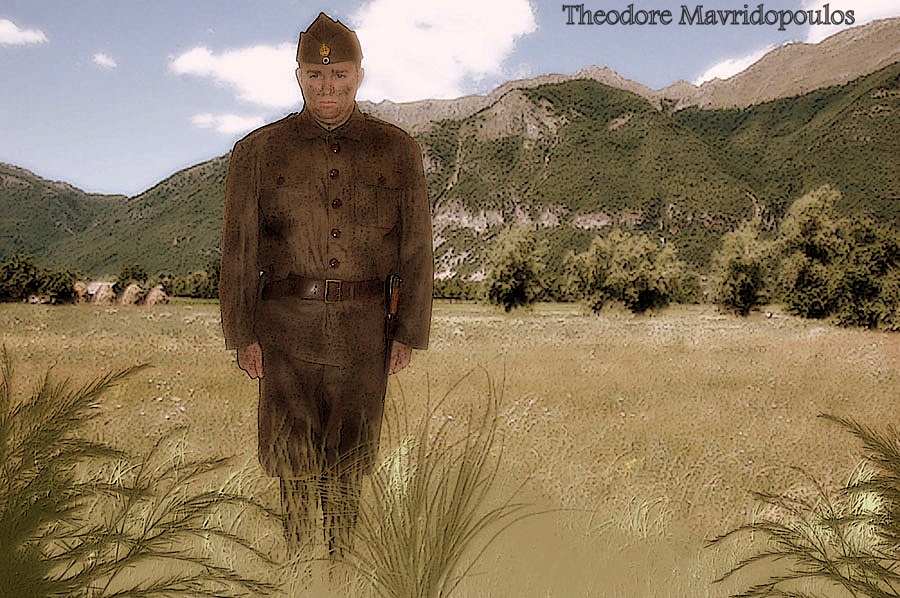
A Greek soldier with typical equipment from WWII. This soldier is using the YP 1909 (YP=YPODIGMA=MODEL) which was a Greek copy of the British P02 jacket from WWII. The leather equipment is totally Greek and armed with a Belgian Mauser. The Greek army utilized 3 different helmets. This soldier is using a British Mk 1 from WWI and his garrison cap under it.
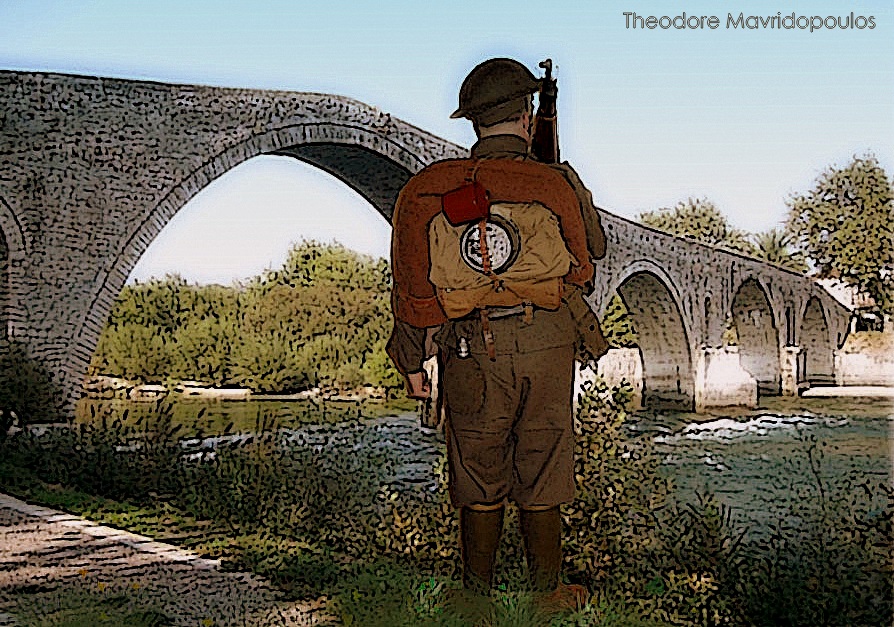
"Typical study of an otherwise battle fatigued, Greek private, ready for outdoors inspection, in 1940. The trooper wears the M1909 uniform that came with polished brick-brown metal buttons, and four pockets (two at chest and two in the waist). The jacket also bore two belt hangers at each side. The cap, is a hard copy of the French Bonne de police of W.W.I, and bears a cloth insignia that includes a roundel cockade with the national colors (blue and white), and the King’s crown in yellow / gold wire. This particular soldier wears the standard leather belt, a
bayonet frog, and a short Manlicher carbine bayonet on his left side."
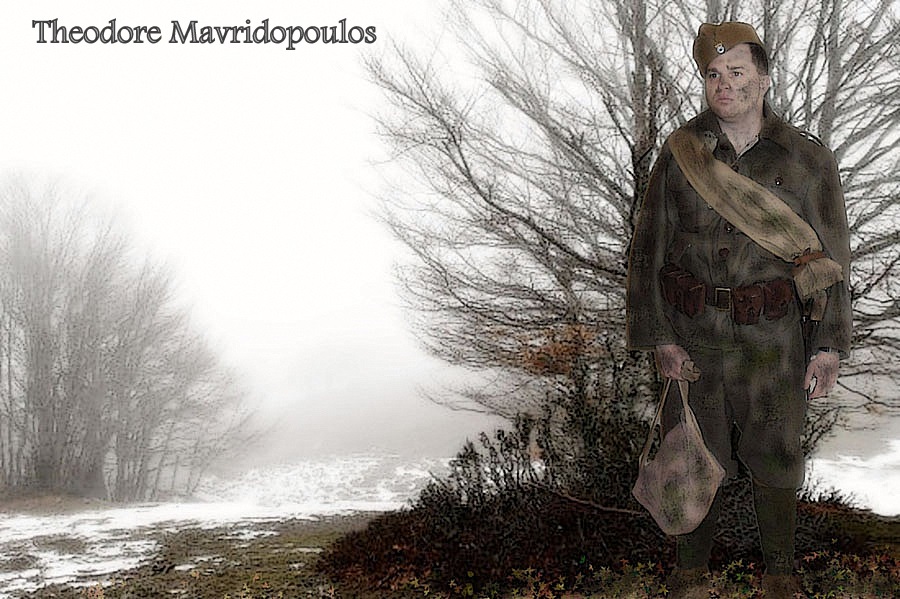
Many thanks to Theodore Mavridopoulos for his collaboration with us.
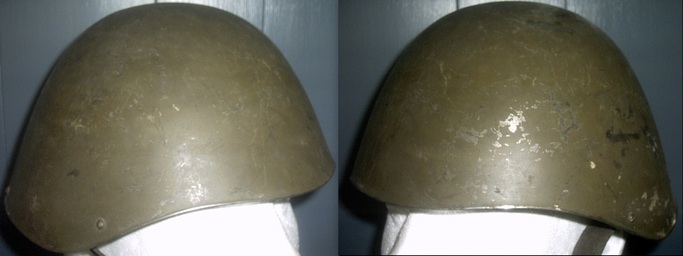
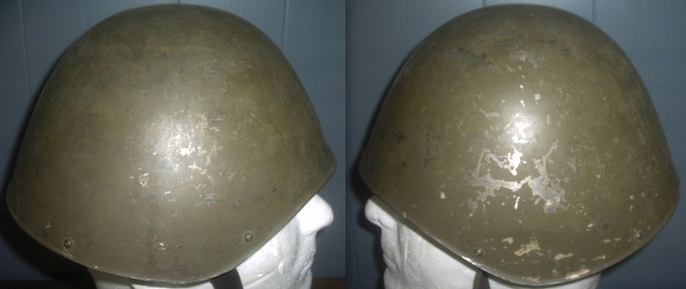
M34/39 Italian Greek Helmet.
For decades, the dominant belief was that Italy designed these shells as a prototype to replace their WWI-era Adrian helmets. When the Italian military rejected the design for being too thin (1.1 mm steel), they supposedly sold the bare shells to Greece just before WWII began. Recent research has sparked a significant debate in the collector community, with some sources claiming the M1934/39 was produced entirely in Greece at the Enamel and Metallurgy factory on the Greek island of Kea.
The confusion likely stems from the M34/39's design similarity to Italian prototypes from the same period. It is possible that Greece used a design inspired by or licensed from an Italian prototype but ultimately manufactured the helmets domestically on Kea.
The factory, owned by Athanasios Kostas, reportedly employed over 300 workers and was awarded a contract for 250,000 units in 1937 following a competition between six different companies
Regardless of the shell's origin, the liner and finishing are undisputed Greek contributions, featuring the unique "Greek Army" crown and cross stamps.
For decades, the dominant belief was that Italy designed these shells as a prototype to replace their WWI-era Adrian helmets. When the Italian military rejected the design for being too thin (1.1 mm steel), they supposedly sold the bare shells to Greece just before WWII began. Recent research has sparked a significant debate in the collector community, with some sources claiming the M1934/39 was produced entirely in Greece at the Enamel and Metallurgy factory on the Greek island of Kea.
The confusion likely stems from the M34/39's design similarity to Italian prototypes from the same period. It is possible that Greece used a design inspired by or licensed from an Italian prototype but ultimately manufactured the helmets domestically on Kea.
The factory, owned by Athanasios Kostas, reportedly employed over 300 workers and was awarded a contract for 250,000 units in 1937 following a competition between six different companies
Regardless of the shell's origin, the liner and finishing are undisputed Greek contributions, featuring the unique "Greek Army" crown and cross stamps.
Italian M33 vs Greek M34/39
These two helmets most likely met face to face on the Greek front.
The primary differences between the Italian M33 helmet and the Greek (and Bulgarian) M34/39 lie in the steel thickness, shell shape, and internal liner components.
The M33 was a more robust and protective helmet made of thicker steel, which is why the Italian Army selected it over the thinner prototypes that became the M34/39.
While the M34/39 shell design originated in Italy as a rejected prototype, the final product with the unique Greek-made liner and paint was a distinctly Hellenic piece of equipment.
The M33 has a slightly "fuller" appearance, while the M34/39 is noticeably shallower and less bulky.
The M33 was a more robust and protective helmet made of thicker steel, which is why the Italian Army selected it over the thinner prototypes that became the M34/39.
While the M34/39 shell design originated in Italy as a rejected prototype, the final product with the unique Greek-made liner and paint was a distinctly Hellenic piece of equipment.
The M33 has a slightly "fuller" appearance, while the M34/39 is noticeably shallower and less bulky.
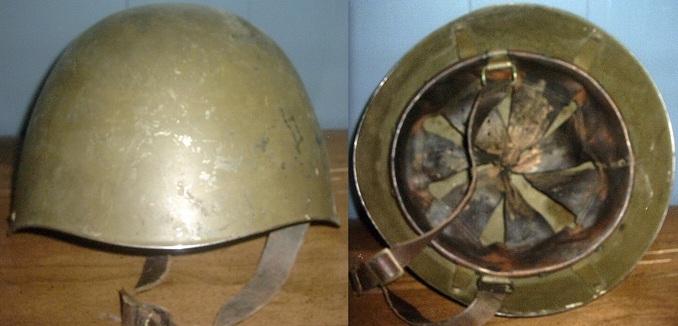
M33/34 Liner
Greek M34/39 Liner: Features seven leather "tongues" or pads. One tongue is specifically marked with the Greek Army stamp (crown and cross).
Bulgarian M36 Liner: Features multiple leather "tongues" that are part of the broader M36 design (Type A, B, or C).
The style is subtly different from the Greek tongues and often features Bulgarian factory stamps, such as "CA" (Sofia Arsenal).
The reason for the similarity is likely a shared design influence in the mid-1930s rather than direct copying or licensing between Greece and Bulgaria
Bulgarian M36 Liner: Features multiple leather "tongues" that are part of the broader M36 design (Type A, B, or C).
The style is subtly different from the Greek tongues and often features Bulgarian factory stamps, such as "CA" (Sofia Arsenal).
The reason for the similarity is likely a shared design influence in the mid-1930s rather than direct copying or licensing between Greece and Bulgaria
The mounting method and overall design philosophy of the Greek M34/39 and the Bulgarian M36 liners are very similar, using an internal suspension system with four attachment points. Both helmets use four internal suspension arms or brackets to secure the liner system to the steel shell. This is a departure from other systems like the German M31, which used rivets visible on the exterior.
The Greek Civil War (1946–1949)
It was the first major conflict of the Cold War and solidified Greece's alignment with the West. It was a brutal struggle between the Greek government, supported by the UK and US, and the communist-led Democratic Army of Greece (DSE), backed by neighbouring communist states.
The war originated from ideological divisions that emerged during the Axis occupation of Greece (1941–1944).
Left-Wing Forces: The National Liberation Front (EAM) and its military branch, the Greek People's Liberation Army (ELAS), were the dominant anti-Axis resistance groups. Led by the Communist Party of Greece (KKE), they controlled most of the Greek countryside and aimed to establish a communist government after liberation.
Government/Right-Wing Forces: The Greek government-in-exile returned to Athens with British support after the Axis withdrawal. They were backed by anti-communist resistance groups (like EDES) and sought to restore the monarchy and a pro-Western political system.
"Dekemvriana" (December 1944): Immediate post-occupation fighting broke out in Athens between ELAS and British/government forces. The British eventually forced the communists to sign the Treaty of Varkiza (February 1945), requiring ELAS to disarm. Widespread "White Terror" campaigns against leftists by government supporters and security forces caused many communists to go into hiding or flee to the mountains. When the KKE boycotted the March 1946 elections, full-scale civil war began. The communists formed the DSE to fight the government.
As Britain could no longer afford to support the Greek government, the US stepped in. President Harry S. Truman announced the Truman Doctrine, providing significant military and economic aid to the anti-communist forces, a decisive factor in the war's outcome.
A critical turning point occurred when Stalin expelled Josip Broz Tito from the Cominform. The Greek communists sided with Stalin, leading Tito to close the border with Yugoslavia to the DSE forces, cutting off their main supply lines and safe havens. Bolstered by US aid and unified command, the Greek National Army launched major offensives. The DSE, isolated and undersupplied, was defeated in the Grammos-Vitsi mountain battles. Hostilities effectively ended in October 1949 as the remaining DSE fighters fled into Albania.
The war left Greece economically ruined and politically fractured. The anti-communist victory ensured Greece joined NATO in 1952 and remained firmly in the Western bloc during the Cold War. A deep political polarization and legacy of bitterness persisted in Greek society for decades afterward.
It was the first major conflict of the Cold War and solidified Greece's alignment with the West. It was a brutal struggle between the Greek government, supported by the UK and US, and the communist-led Democratic Army of Greece (DSE), backed by neighbouring communist states.
The war originated from ideological divisions that emerged during the Axis occupation of Greece (1941–1944).
Left-Wing Forces: The National Liberation Front (EAM) and its military branch, the Greek People's Liberation Army (ELAS), were the dominant anti-Axis resistance groups. Led by the Communist Party of Greece (KKE), they controlled most of the Greek countryside and aimed to establish a communist government after liberation.
Government/Right-Wing Forces: The Greek government-in-exile returned to Athens with British support after the Axis withdrawal. They were backed by anti-communist resistance groups (like EDES) and sought to restore the monarchy and a pro-Western political system.
"Dekemvriana" (December 1944): Immediate post-occupation fighting broke out in Athens between ELAS and British/government forces. The British eventually forced the communists to sign the Treaty of Varkiza (February 1945), requiring ELAS to disarm. Widespread "White Terror" campaigns against leftists by government supporters and security forces caused many communists to go into hiding or flee to the mountains. When the KKE boycotted the March 1946 elections, full-scale civil war began. The communists formed the DSE to fight the government.
As Britain could no longer afford to support the Greek government, the US stepped in. President Harry S. Truman announced the Truman Doctrine, providing significant military and economic aid to the anti-communist forces, a decisive factor in the war's outcome.
A critical turning point occurred when Stalin expelled Josip Broz Tito from the Cominform. The Greek communists sided with Stalin, leading Tito to close the border with Yugoslavia to the DSE forces, cutting off their main supply lines and safe havens. Bolstered by US aid and unified command, the Greek National Army launched major offensives. The DSE, isolated and undersupplied, was defeated in the Grammos-Vitsi mountain battles. Hostilities effectively ended in October 1949 as the remaining DSE fighters fled into Albania.
The war left Greece economically ruined and politically fractured. The anti-communist victory ensured Greece joined NATO in 1952 and remained firmly in the Western bloc during the Cold War. A deep political polarization and legacy of bitterness persisted in Greek society for decades afterward.
The "Percentages Agreement"
Joseph Stalin essentially abandoned the Greek communists after World War II, largely adhering to a secret "percentages agreement" made with Winston Churchill in 1944 that placed Greece firmly within the British sphere of influence.
Stalin's actions and policies regarding Greece were driven by pragmatic geopolitical calculations rather than ideological solidarity:
In an October 1944 meeting in Moscow, Churchill proposed, and Stalin accepted, an informal agreement on spheres of influence in the Balkans. Greece was designated as 90% a British responsibility. Stalin stuck to this bargain, as he did not want to risk a conflict with the Western Allies over a country he had already conceded.
During the crucial "Dekemvriana" clashes in Athens in December 1944, when Greek communist resistance forces (EAM/ELAS) fought British troops for control of the capital, Stalin did not interfere or provide tangible assistance. Moscow even advised the Greek Communist Party (KKE) leadership to participate in the British-backed government and avoid conflict, a decision the KKE initially followed.
Stalin's primary strategic priority was consolidating Soviet control over Eastern European nations (like Romania and Bulgaria), where the Red Army had a physical presence. He did not want Western interference in those areas and honored his side of the agreement in Greece to maintain the peace.
The Tito-Stalin Split
When the Greek Civil War proper escalated after the war, much of the support for the communist guerrillas came from neighboring communist Yugoslavia and Albania, led by Josip Broz Tito. Stalin became wary of Tito's independent ambitions in the Balkans. After the Tito-Stalin split in 1948, Stalin actually ordered the Greek communists to cease fighting, as he concluded that a communist victory was impossible given the significant American and British support for the anti-communist
Joseph Stalin essentially abandoned the Greek communists after World War II, largely adhering to a secret "percentages agreement" made with Winston Churchill in 1944 that placed Greece firmly within the British sphere of influence.
Stalin's actions and policies regarding Greece were driven by pragmatic geopolitical calculations rather than ideological solidarity:
In an October 1944 meeting in Moscow, Churchill proposed, and Stalin accepted, an informal agreement on spheres of influence in the Balkans. Greece was designated as 90% a British responsibility. Stalin stuck to this bargain, as he did not want to risk a conflict with the Western Allies over a country he had already conceded.
During the crucial "Dekemvriana" clashes in Athens in December 1944, when Greek communist resistance forces (EAM/ELAS) fought British troops for control of the capital, Stalin did not interfere or provide tangible assistance. Moscow even advised the Greek Communist Party (KKE) leadership to participate in the British-backed government and avoid conflict, a decision the KKE initially followed.
Stalin's primary strategic priority was consolidating Soviet control over Eastern European nations (like Romania and Bulgaria), where the Red Army had a physical presence. He did not want Western interference in those areas and honored his side of the agreement in Greece to maintain the peace.
The Tito-Stalin Split
When the Greek Civil War proper escalated after the war, much of the support for the communist guerrillas came from neighboring communist Yugoslavia and Albania, led by Josip Broz Tito. Stalin became wary of Tito's independent ambitions in the Balkans. After the Tito-Stalin split in 1948, Stalin actually ordered the Greek communists to cease fighting, as he concluded that a communist victory was impossible given the significant American and British support for the anti-communist