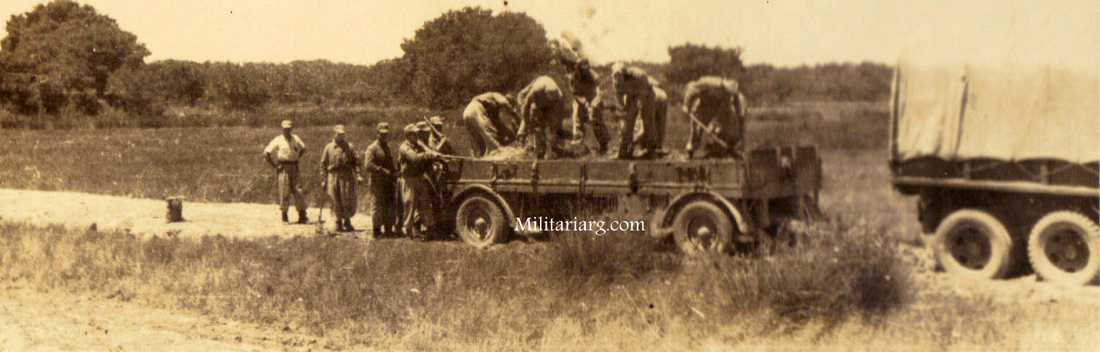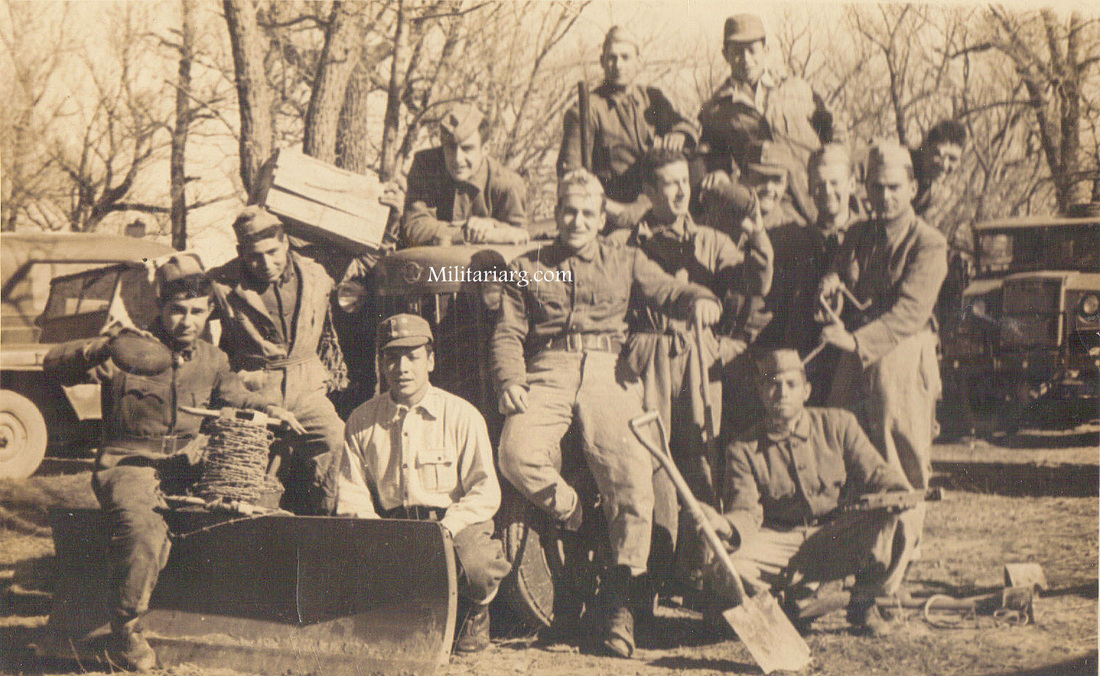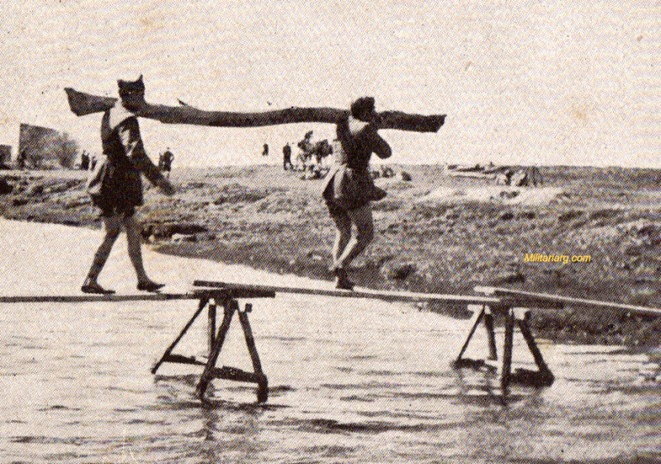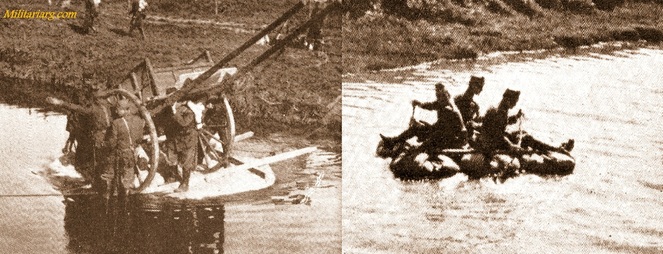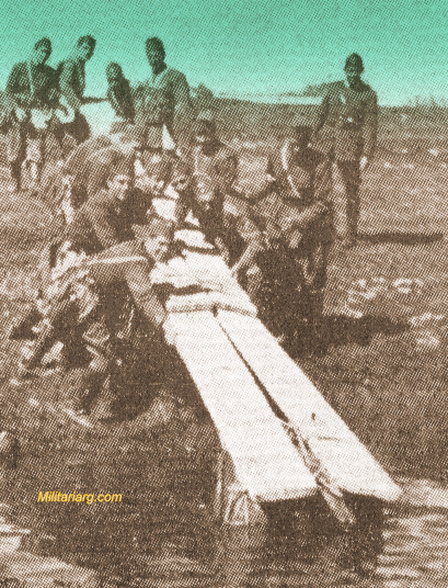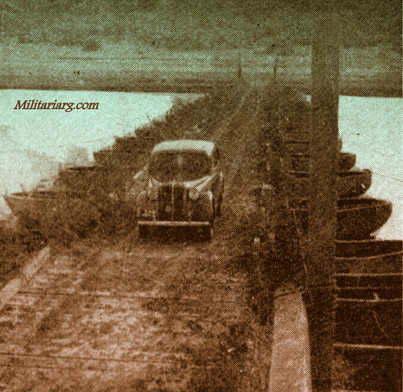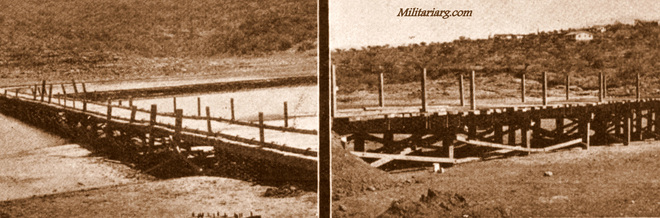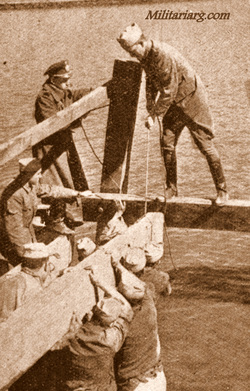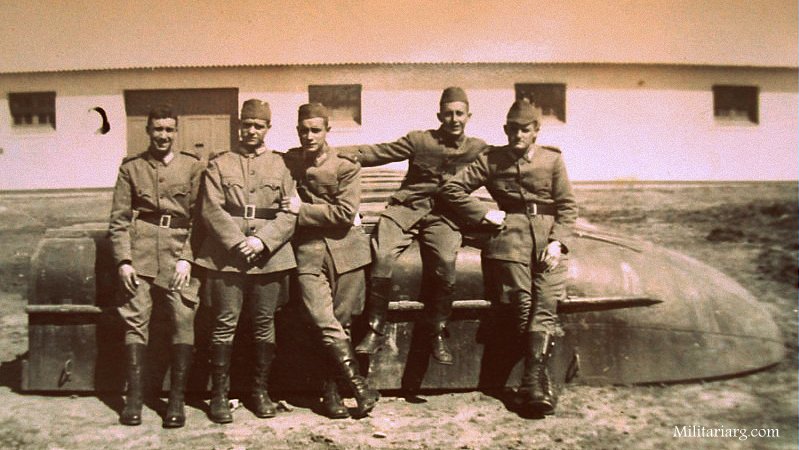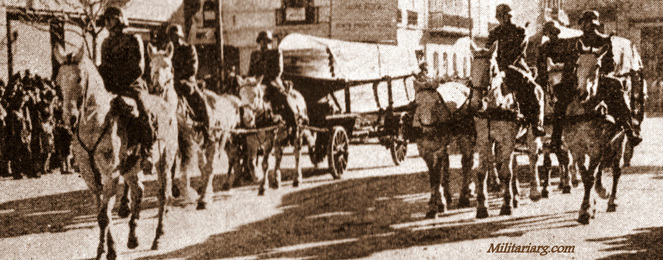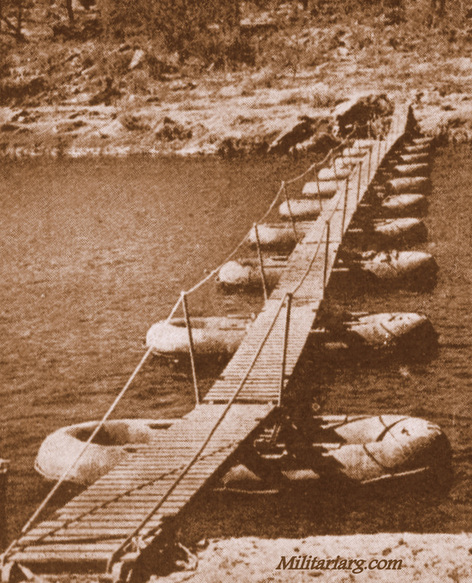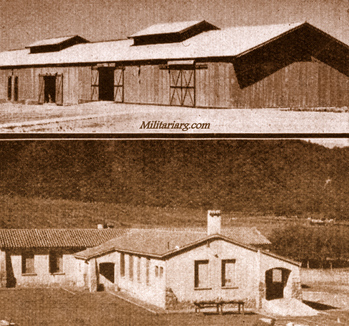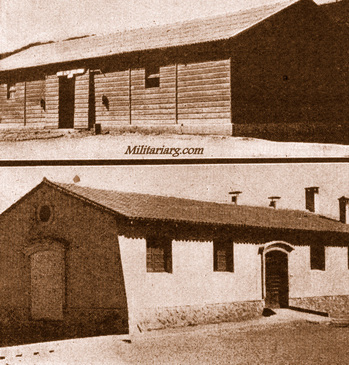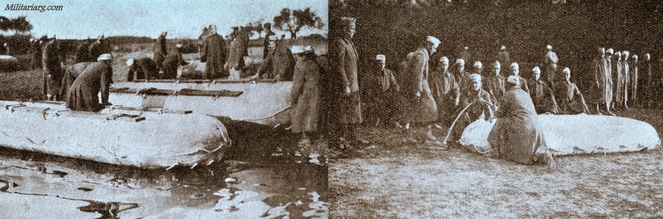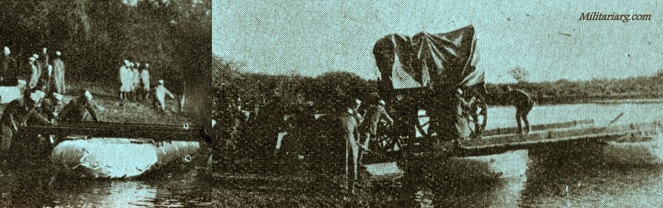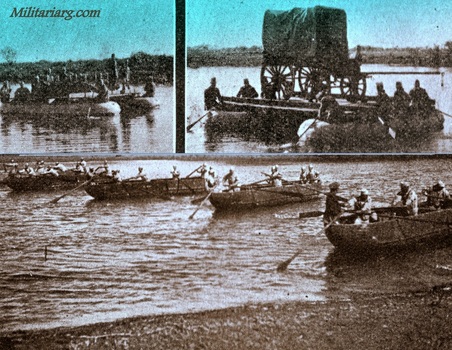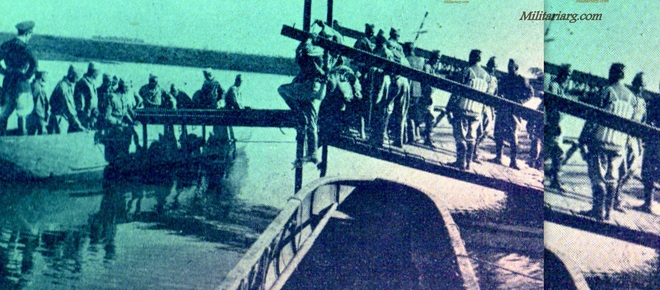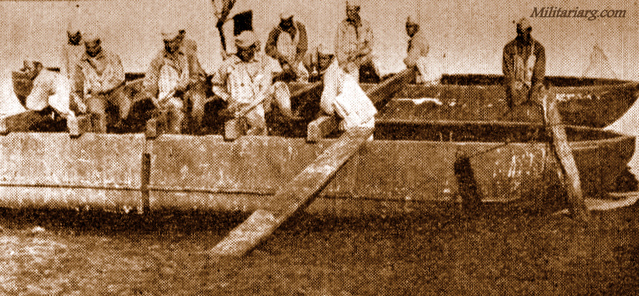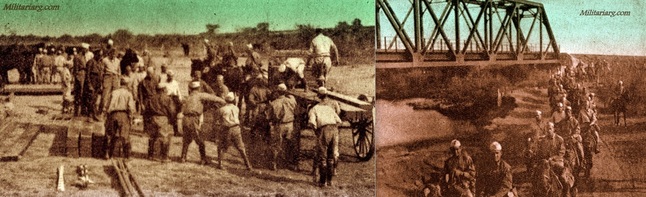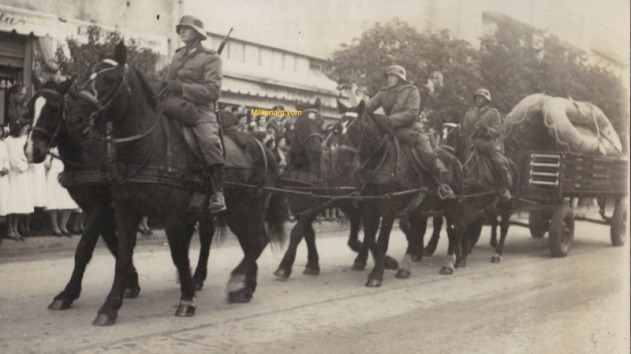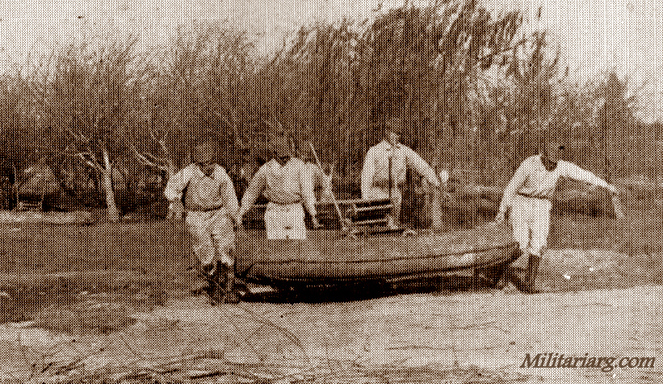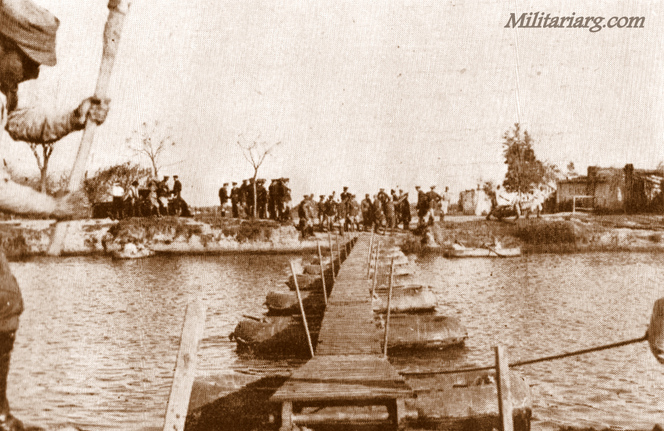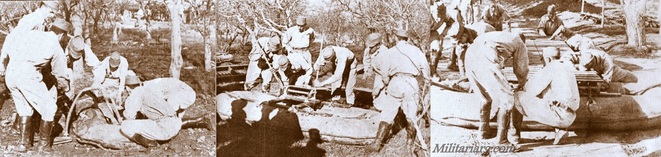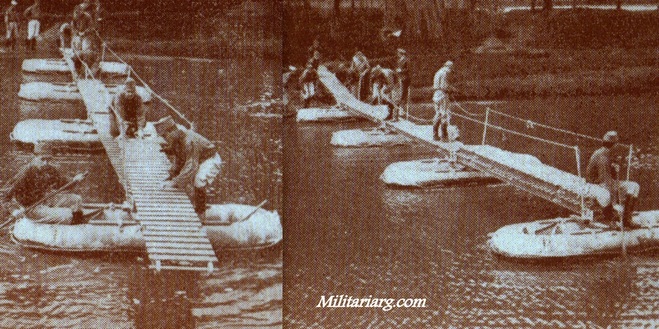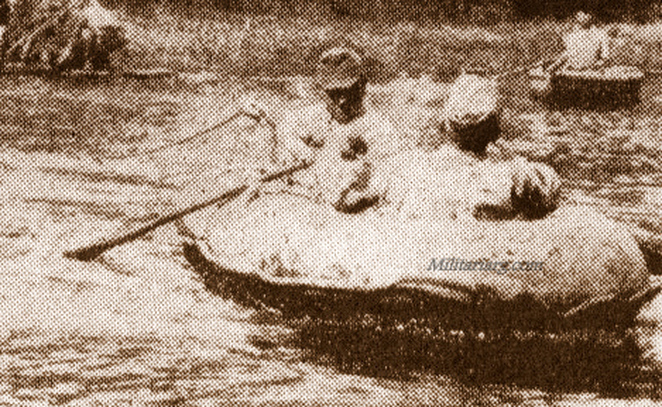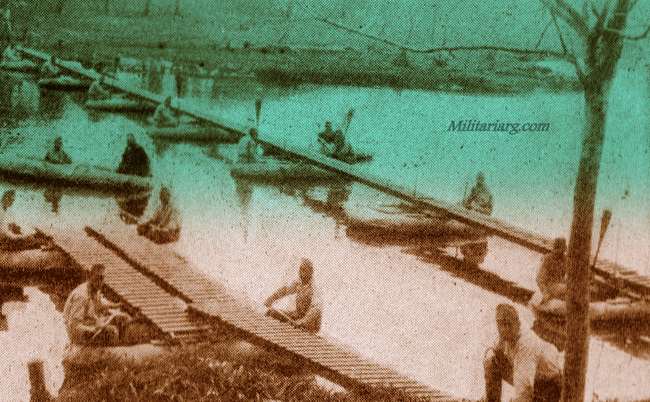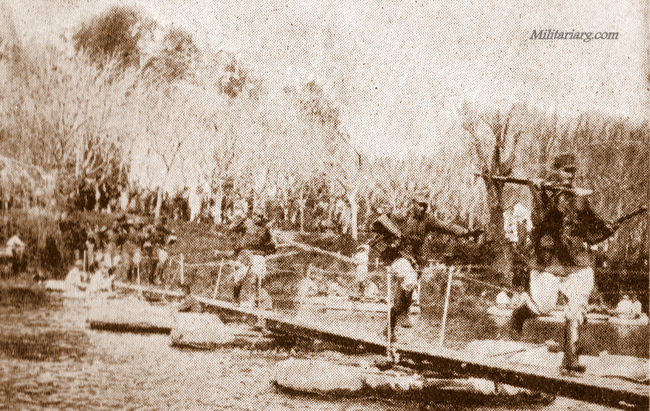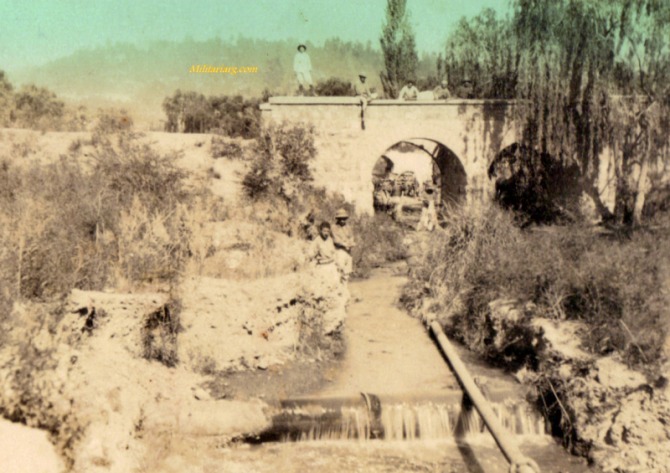
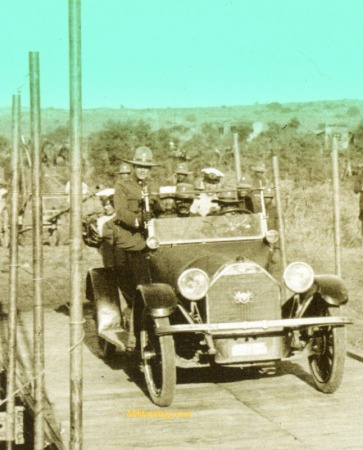
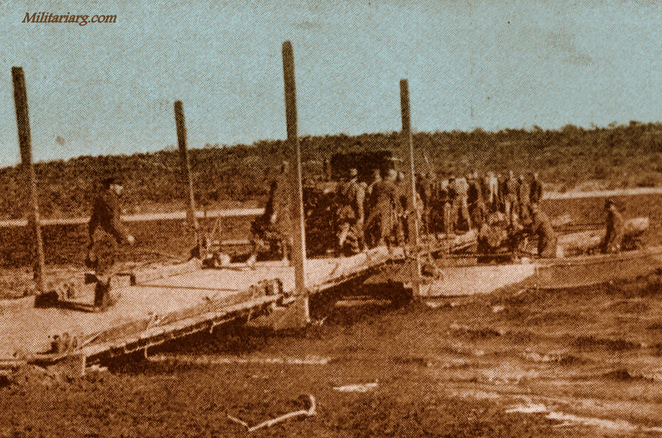
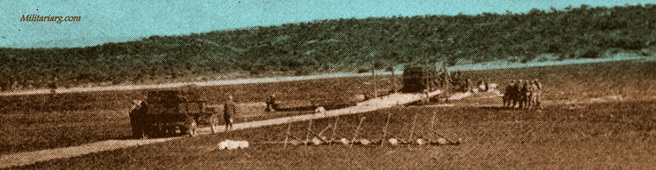
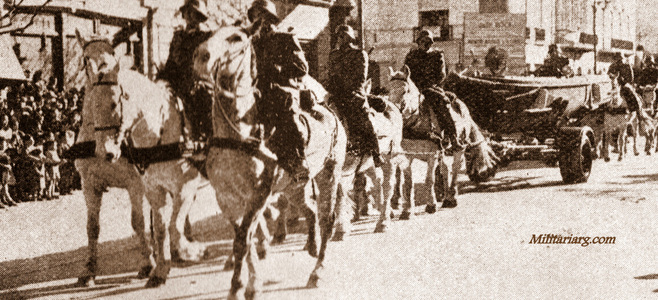
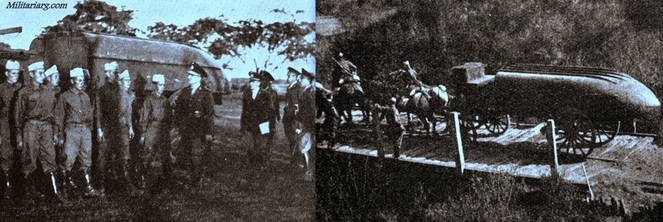
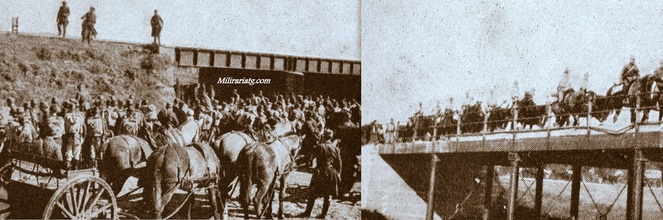
An automobile carrying authorities crossing a deck bridge designed in Argentina (built in Belgium). Although the stream is narrow it presents an obstacle to carts and vehicles trying to cross. Military bridges at the time were built with decks that could bear variable weights constructed on pontoons or trestles. The pontoons were used in wide and deep-water courses, but in this kind of obstacles trestles that supported with their ridge poles the deck constructed with wooden planks were used. Source: Soldados 1848-1927 by Miguel Angel Cuarterolo, Abel Alexander and Sergio Toyos
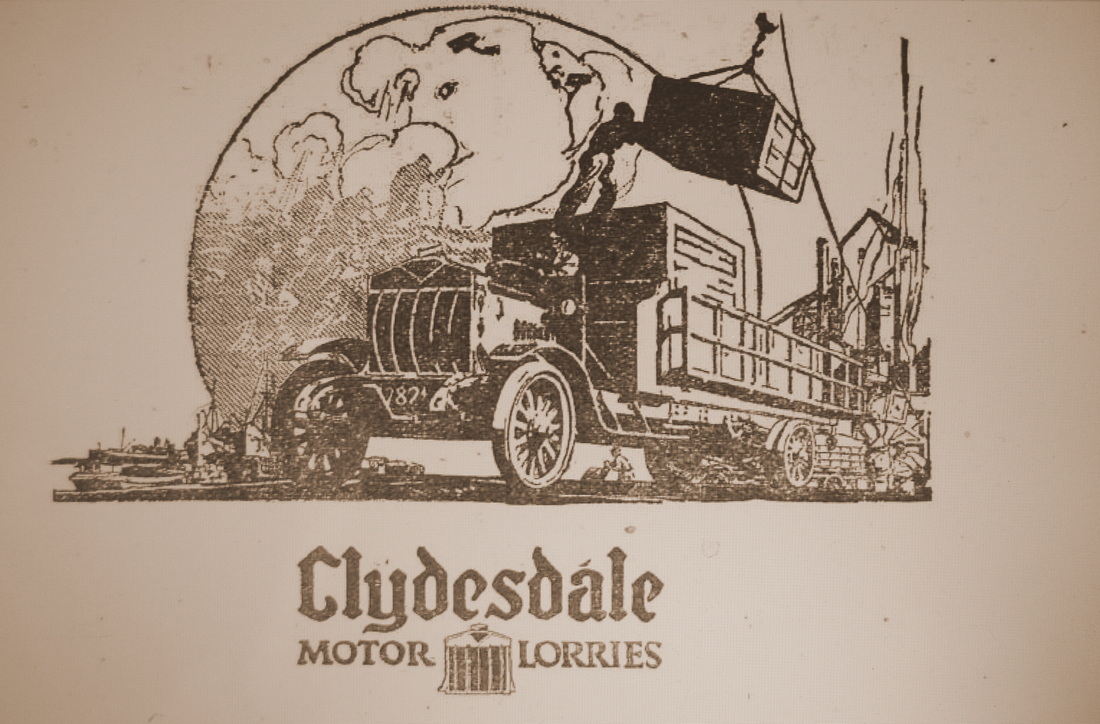
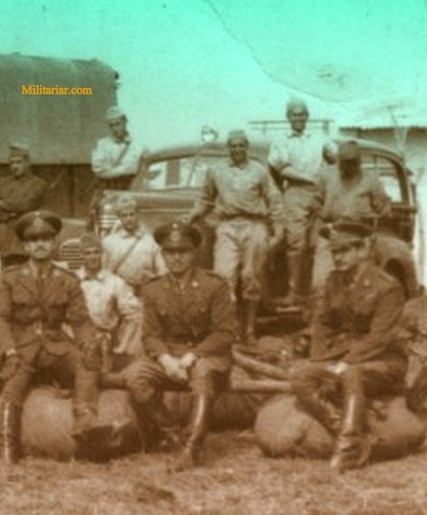
These trucks are veterans of WWI. They fought in the French Army as troop transport. In the post-war, they were taken to Argentina as surplus for the civil sector, as seen in the advertisement. The Argentine Army may have used them for the Engineer Corps.
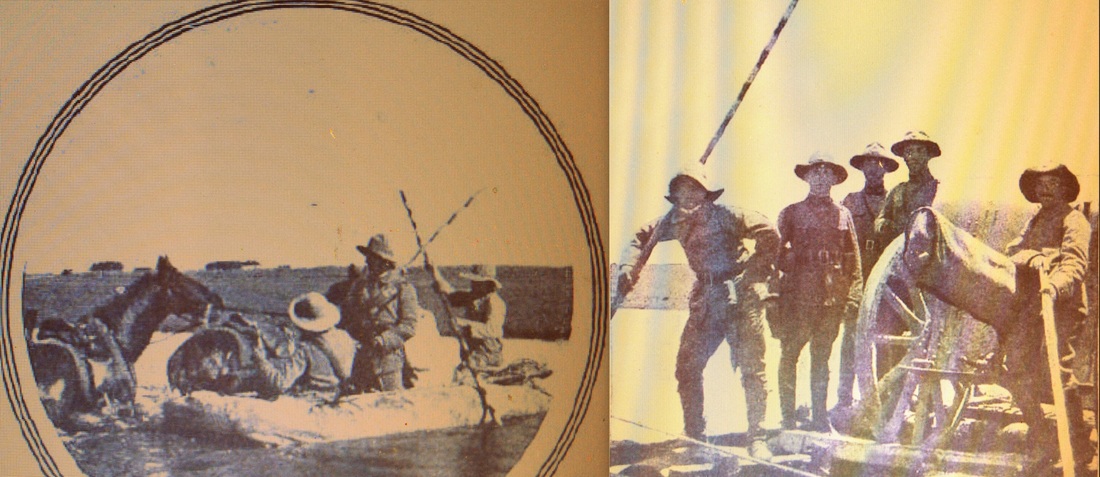
Photo: Caras y Caretas.
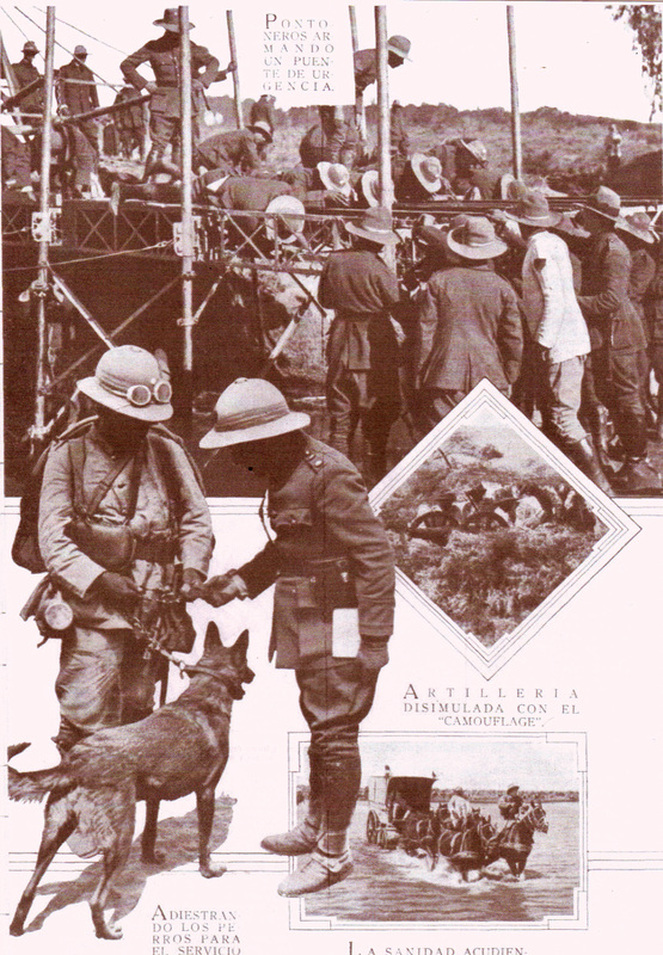
Caras y Caretas. 1930s.
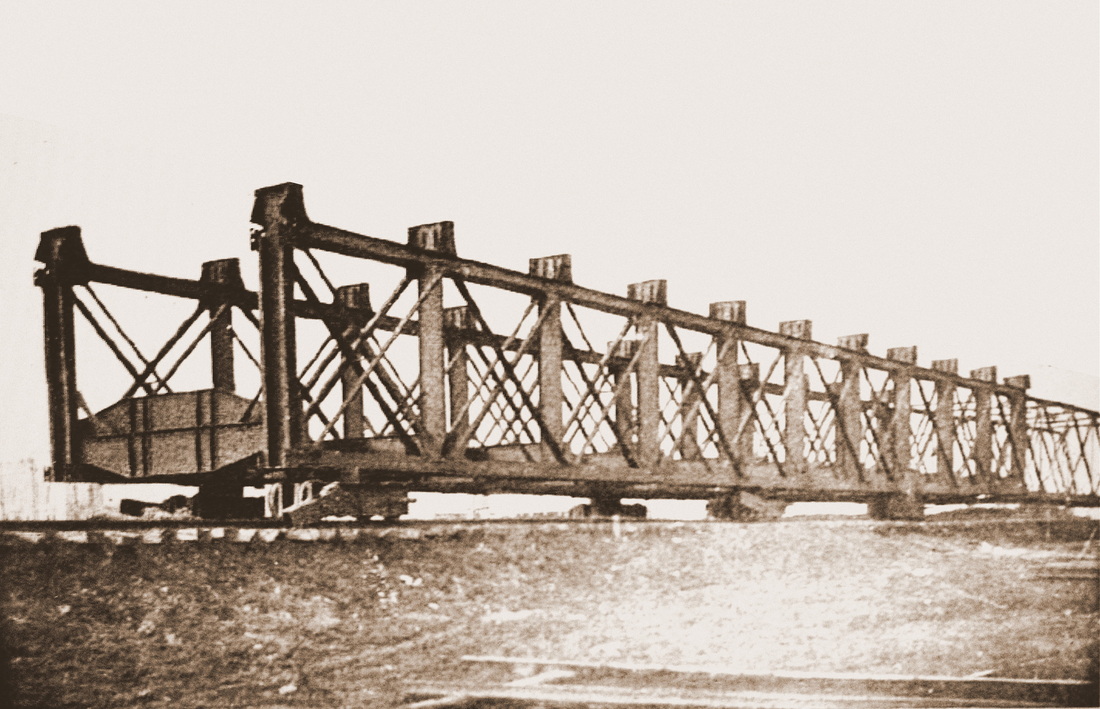
Bridge over railroad tracks. Circa 1912. Bridge 6Th battalion. "6to Batallón de Ingenieros Ferrocarrileros". Photo: Caras y Caretas.
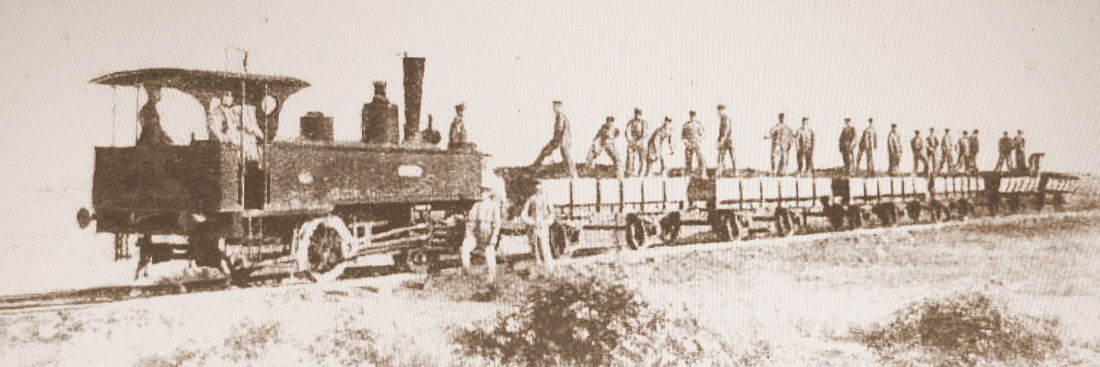
"Ingenieros Ferrocarrileros", building the railways between Palomar (today Colegio Militar de la Nacion) and the Base of Palomar in 1913. Caras y Caretas.
General Manuel Nicolás Aristóbulo Savio (1892–1948) was the visionary military engineer often called the "Father of Argentine Steel." Much like Mosconi was for oil, Savio was the central figure in Argentina's drive for industrial sovereignty through heavy metallurgy and mining.
The "Savio Plan" and SOMISA
National Metallurgy Plan: In 1947, during Juan Domingo Perón’s first presidency, Savio presented the Plan Siderúrgico Argentino (law 12.987), which aimed to make Argentina self-sufficient in steel production.
SOMISA: This plan established Sociedad Mixta Siderúrgica Argentina (SOMISA), a mixed-capital enterprise for steel production where Savio served as its first president.
Altos Hornos Zapla: Under his direction at Fabricaciones Militares, he inaugurated the first blast furnace in Zapla (Jujuy) on October 11, 1945, producing the first Argentine pig iron.
Military and Industrial Leadership
Fabricaciones Militares: Savio was the director of Dirección General de Fabricaciones Militares (DGFM), reorganizing it in 1941 to oversee arms production and mining prospecting for metals like iron and copper.
Technical Education: He founded the Escuela Superior Técnica in 1930 to train military personnel as engineers, embedding technical expertise directly into the armed forces.
Diversified Industry: Beyond steel, his tenure saw the creation of heavy chemical plants in Río Tercero and Tucumán, and he drafted early plans for domestic synthetic rubber production.
The "Savio Plan" and SOMISA
National Metallurgy Plan: In 1947, during Juan Domingo Perón’s first presidency, Savio presented the Plan Siderúrgico Argentino (law 12.987), which aimed to make Argentina self-sufficient in steel production.
SOMISA: This plan established Sociedad Mixta Siderúrgica Argentina (SOMISA), a mixed-capital enterprise for steel production where Savio served as its first president.
Altos Hornos Zapla: Under his direction at Fabricaciones Militares, he inaugurated the first blast furnace in Zapla (Jujuy) on October 11, 1945, producing the first Argentine pig iron.
Military and Industrial Leadership
Fabricaciones Militares: Savio was the director of Dirección General de Fabricaciones Militares (DGFM), reorganizing it in 1941 to oversee arms production and mining prospecting for metals like iron and copper.
Technical Education: He founded the Escuela Superior Técnica in 1930 to train military personnel as engineers, embedding technical expertise directly into the armed forces.
Diversified Industry: Beyond steel, his tenure saw the creation of heavy chemical plants in Río Tercero and Tucumán, and he drafted early plans for domestic synthetic rubber production.
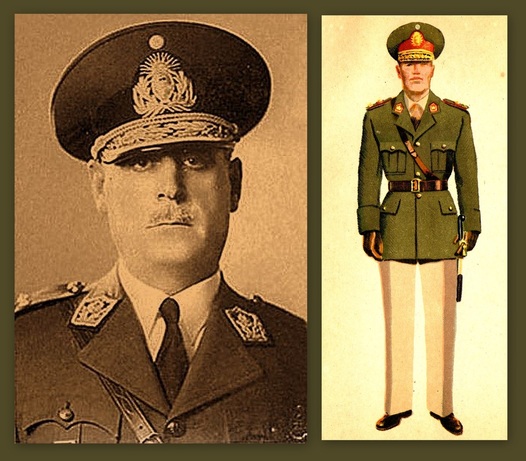
General Juan Pistarini with service uniform.
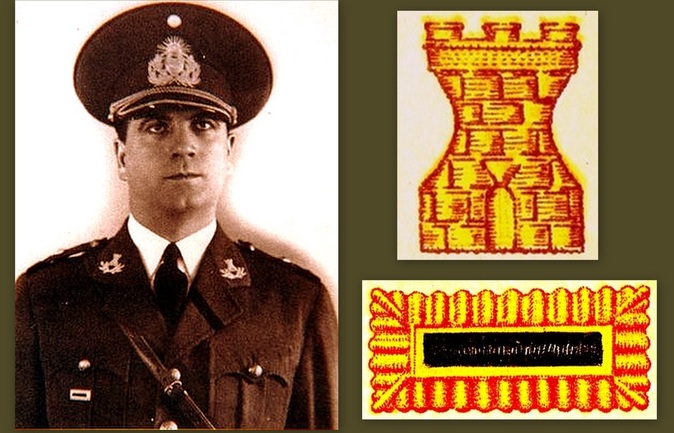
General Juan Pistarini (1882–1956) was a prominent military engineer and politician who served as the primary executor of Argentina’s massive infrastructure modernization during the mid-20th century.
Key Roles and Political Career
Minister of Public Works: He held this position across multiple administrations (1944–1952), most notably under Juan Domingo Perón.
Vice President: He served a brief term as Vice President of the Nation (1945–1946) under Edelmiro Farrell, following Perón’s temporary dismissal and arrest.
1943 Coup Participation: A key member of the GOU (United Officers' Group), his role in the June 4, 1943 revolution led to his initial command of the Campo de Mayo army training base.
Major Infrastructure Projects
Often called "El Hacedor" (The Doer), Pistarini oversaw the most ambitious public works agenda in Argentine history:
Ezeiza International Airport: Officially named Ministro Pistarini International Airport, it was inaugurated in 1949 and was the third-largest airport in the world at the time of its opening.
Housing and Schools: He administered the construction of over 650,000 housing units and 11,000 schools, utilizing the National Mortgage Bank to provide subsidized loans to new homeowners.
Parks and Urbanization: He spearheaded the creation of the Ezeiza Woods (planting two million trees) and the development of major seaside and mountain public vacation resorts for the working class.
Transport and Water: He oversaw the development of Argentina's first modern expressways, water treatment plants, and a modernized merchant marine.
Death in Custody
Following the 1955 military coup that overthrew Perón, Pistarini was stripped of his rank, had his property seized, and was imprisoned in Ushuaia. The harsh climate severely impacted his health; he died in a military hospital in Buenos Aires in 1956 while still in custody.
General Juan Pistarini (1882–1956) was a prominent military engineer and politician who served as the primary executor of Argentina’s massive infrastructure modernization during the mid-20th century.
Key Roles and Political Career
Minister of Public Works: He held this position across multiple administrations (1944–1952), most notably under Juan Domingo Perón.
Vice President: He served a brief term as Vice President of the Nation (1945–1946) under Edelmiro Farrell, following Perón’s temporary dismissal and arrest.
1943 Coup Participation: A key member of the GOU (United Officers' Group), his role in the June 4, 1943 revolution led to his initial command of the Campo de Mayo army training base.
Major Infrastructure Projects
Often called "El Hacedor" (The Doer), Pistarini oversaw the most ambitious public works agenda in Argentine history:
Ezeiza International Airport: Officially named Ministro Pistarini International Airport, it was inaugurated in 1949 and was the third-largest airport in the world at the time of its opening.
Housing and Schools: He administered the construction of over 650,000 housing units and 11,000 schools, utilizing the National Mortgage Bank to provide subsidized loans to new homeowners.
Parks and Urbanization: He spearheaded the creation of the Ezeiza Woods (planting two million trees) and the development of major seaside and mountain public vacation resorts for the working class.
Transport and Water: He oversaw the development of Argentina's first modern expressways, water treatment plants, and a modernized merchant marine.
Death in Custody
Following the 1955 military coup that overthrew Perón, Pistarini was stripped of his rank, had his property seized, and was imprisoned in Ushuaia. The harsh climate severely impacted his health; he died in a military hospital in Buenos Aires in 1956 while still in custody.
General Juan Jose Valle (Colonel uniform).
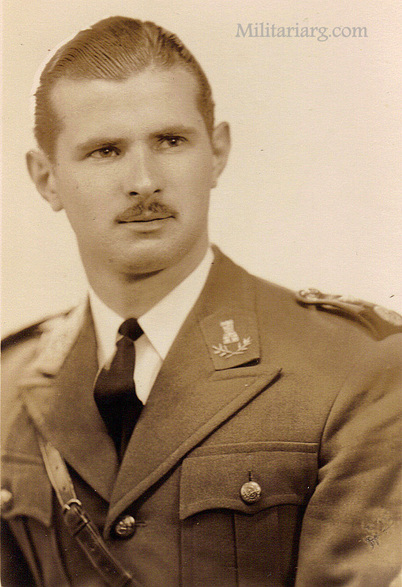
General Juan José Valle was a highly distinguished Military Engineer who specialized in communications and infrastructure before becoming the symbolic martyr of the Peronist resistance.
Military Education and Early Career
The Academy: He entered the Colegio Militar de la Nación in 1922, graduating as a Second Lieutenant in the Engineers branch in 1925.
Engineering Expertise: Valle was recognized as one of the Army's top technical minds. He graduated as a Military Engineer from the Escuela Superior Técnica, the same elite school founded by General Savio.
Infrastructure Roles: During the 1940s, he served in several technical commands, specializing in military communications and the modernization of the Army's engineering corps.
The Peronist Years (1946–1955)
Under the presidency of Juan Domingo Perón, Valle’s career accelerated due to his professional competence and loyalty to the constitutional order:
Promotions: He rose through the ranks rapidly, reaching the rank of Divisional General.
Inter-American Defense Board: He represented Argentina in Washington D.C. as a member of the Inter-American Defense Board, showcasing his status as a high-level strategic diplomat.
Command of the Engineers: By the early 1950s, he was a key leader within the General Staff, overseeing technical and engineering logistics for the entire force.
The 1955 Coup
During the Revolución Libertadora in September 1955, Valle remained loyal to the democratic government.
Forced Retirement: After Perón’s exile, the new military dictatorship under General Aramburu initiated a "purge" of loyalist officers. Valle was stripped of his active command and forced into compulsory retirement.
The Final Mission: June 1956
Valle did not view himself as a "rebel" but as a defender of the Constitution of 1949. His military training in clandestine communications allowed him to organize the June 9 uprising with other retired and active officers like General Raúl Tanco.
His execution on June 12, 1956, marked the first time in modern Argentine history that a General was executed by his own peers, a violation of military tradition that haunted the Army for decades.
Military Education and Early Career
The Academy: He entered the Colegio Militar de la Nación in 1922, graduating as a Second Lieutenant in the Engineers branch in 1925.
Engineering Expertise: Valle was recognized as one of the Army's top technical minds. He graduated as a Military Engineer from the Escuela Superior Técnica, the same elite school founded by General Savio.
Infrastructure Roles: During the 1940s, he served in several technical commands, specializing in military communications and the modernization of the Army's engineering corps.
The Peronist Years (1946–1955)
Under the presidency of Juan Domingo Perón, Valle’s career accelerated due to his professional competence and loyalty to the constitutional order:
Promotions: He rose through the ranks rapidly, reaching the rank of Divisional General.
Inter-American Defense Board: He represented Argentina in Washington D.C. as a member of the Inter-American Defense Board, showcasing his status as a high-level strategic diplomat.
Command of the Engineers: By the early 1950s, he was a key leader within the General Staff, overseeing technical and engineering logistics for the entire force.
The 1955 Coup
During the Revolución Libertadora in September 1955, Valle remained loyal to the democratic government.
Forced Retirement: After Perón’s exile, the new military dictatorship under General Aramburu initiated a "purge" of loyalist officers. Valle was stripped of his active command and forced into compulsory retirement.
The Final Mission: June 1956
Valle did not view himself as a "rebel" but as a defender of the Constitution of 1949. His military training in clandestine communications allowed him to organize the June 9 uprising with other retired and active officers like General Raúl Tanco.
His execution on June 12, 1956, marked the first time in modern Argentine history that a General was executed by his own peers, a violation of military tradition that haunted the Army for decades.
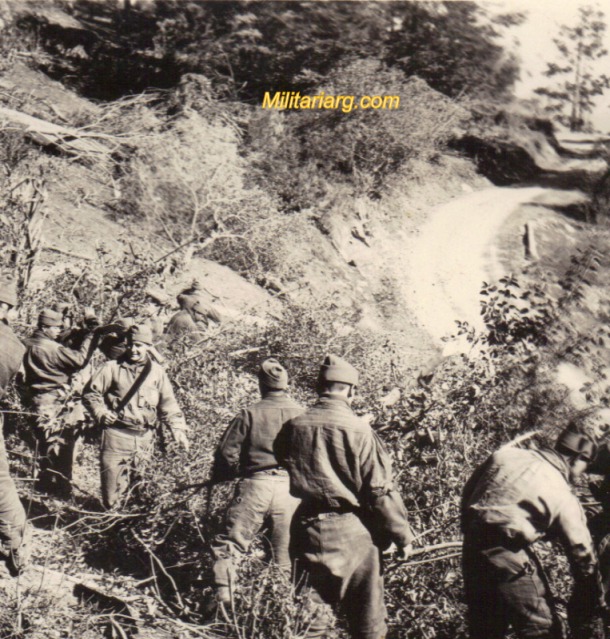
Army engineer soldiers in a mountainous zone.
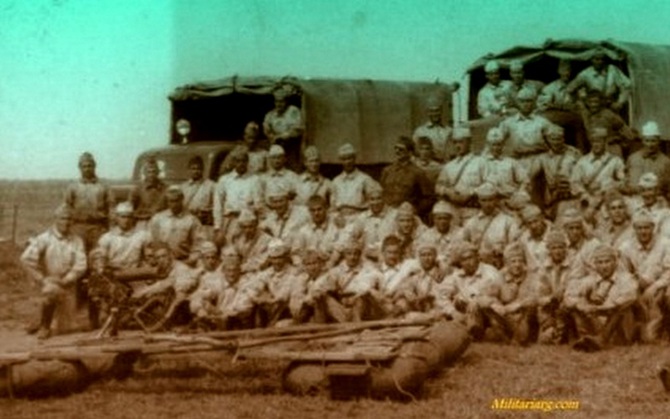
Photos of the engineers from the 6th Regiment of Mercedes in 1939.
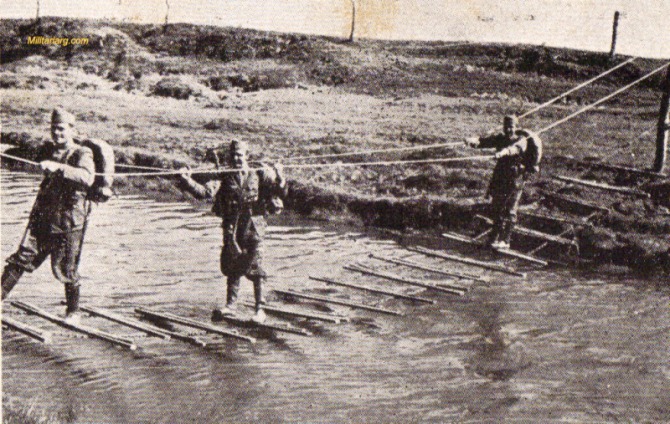
Mauser Engineers Carbine M1909
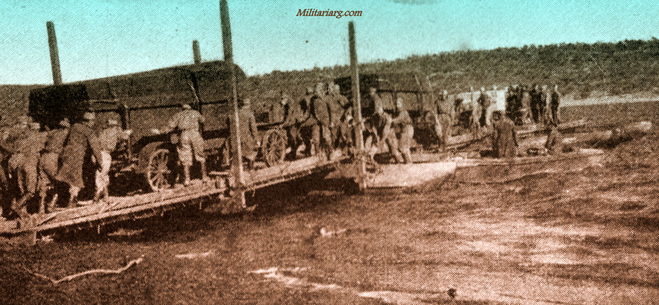
Nash Quad M18 Trucks.
Nash Quad Trucks.
ETM
4th detachment of Curuzu Cuatia (Province of Corrientes)
6Th Infantry Regiment. Gral Viamonte 1944
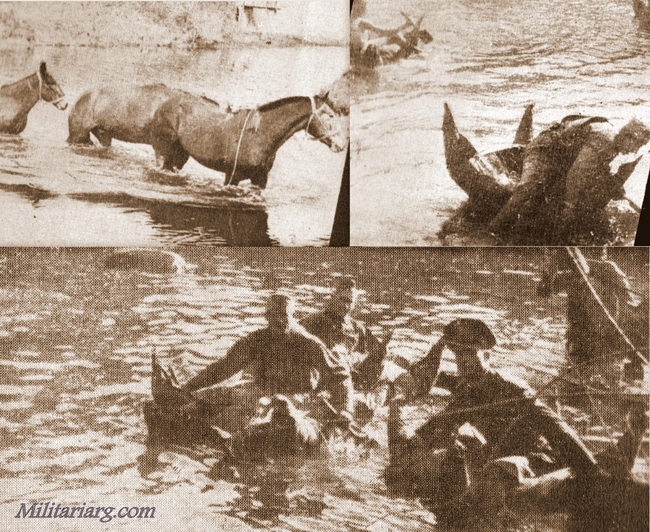
Sapeur Section. Infantry School 1947 (Campo de Mayo)
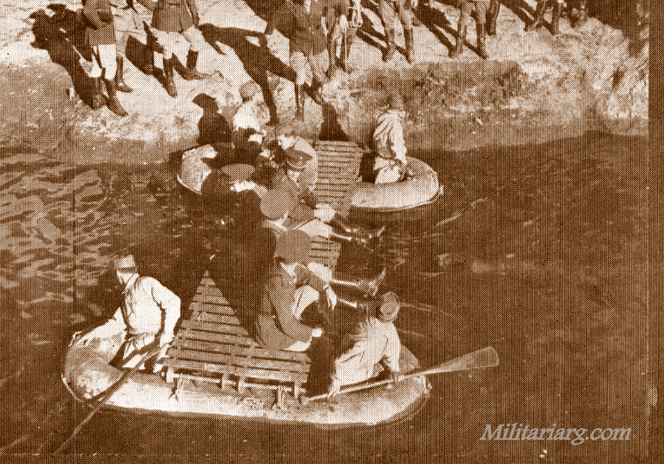
6th Infantry Regiment Gral Viamonte in 1946
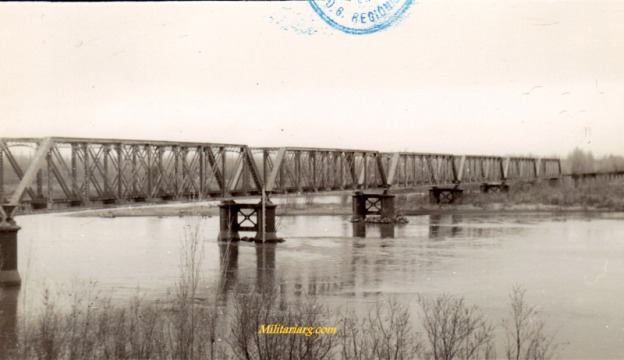
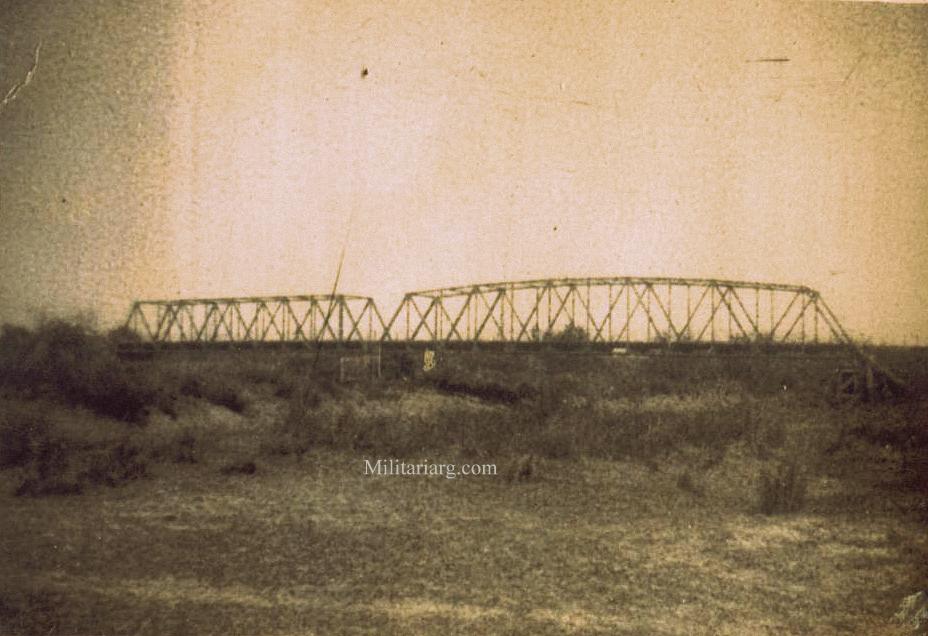
Rail bridge over the River Neuquen.
1950/51 DGFM MLC Heavy Bridge
In 1951, the Argentine Dirección General de Fabricaciones Militares (DGFM), under the leadership of General Manuel Savio's industrialization vision, developed a domestic heavy bridge capable of supporting heavy loads to facilitate the movement of armored units. This project was part of a broader effort to modernize Argentina's military infrastructure and defense industry following World War II, often utilizing foreign specialists and local engineering talent.
Key details regarding this engineering milestone include:
The bridge was specifically to accommodate the heavy equipment of the era, including tanks and specialized military transport.
Produced by DGFM (now known as Fabricaciones Militares Sociedad del Estado), which expanded from munitions into heavy metallurgy and mechanical engineering in the 1940s and 50s.
Key details regarding this engineering milestone include:
The bridge was specifically to accommodate the heavy equipment of the era, including tanks and specialized military transport.
Produced by DGFM (now known as Fabricaciones Militares Sociedad del Estado), which expanded from munitions into heavy metallurgy and mechanical engineering in the 1940s and 50s.
The Sherman's Weight: A standard M4 Sherman tank weighs approximately 30 to 33 tons (roughly 68,000+ lbs)
In the US Army during World War II, a bridge specifically rated for a Sherman tank was designated as Military Load Class
30 (MLC 30), but in this Argentine magazine says 18-ton class, it was probably a mistake by the publication.
The M2 Treadway Bridge, was the most common "heavy" portable bridge used by US Engineers to carry Shermans across rivers. It was a steel-track system supported by inflatable pontoons, specifically developed because earlier 25-ton ponton bridges were insufficient for the Sherman's 33-ton weight. In general the bridges are often labeled by their Military Load Class (MLC). An MLC 18 bridge is designed to safely carry an 18-ton wheeled vehicle at speed, so for a Sherman tank, a 18-ton rating is insufficient for normal safe crossing.
In my collection of military publications from 1944 to 1951, the American doctrine is predominant, if not the only one. The content referring to U.S. materials, techniques, and tactics in these publications covers 75%, leaving the rest for institutional matters of the Argentine Army. The conclusion drawn is that the Argentine Army adopted the U.S. doctrine at the same time that an invasion of U.S. equipment and vehicles entered the country as surplus after World War II .
Photos: Revista Militar Argentina 1951.
In the US Army during World War II, a bridge specifically rated for a Sherman tank was designated as Military Load Class
30 (MLC 30), but in this Argentine magazine says 18-ton class, it was probably a mistake by the publication.
The M2 Treadway Bridge, was the most common "heavy" portable bridge used by US Engineers to carry Shermans across rivers. It was a steel-track system supported by inflatable pontoons, specifically developed because earlier 25-ton ponton bridges were insufficient for the Sherman's 33-ton weight. In general the bridges are often labeled by their Military Load Class (MLC). An MLC 18 bridge is designed to safely carry an 18-ton wheeled vehicle at speed, so for a Sherman tank, a 18-ton rating is insufficient for normal safe crossing.
In my collection of military publications from 1944 to 1951, the American doctrine is predominant, if not the only one. The content referring to U.S. materials, techniques, and tactics in these publications covers 75%, leaving the rest for institutional matters of the Argentine Army. The conclusion drawn is that the Argentine Army adopted the U.S. doctrine at the same time that an invasion of U.S. equipment and vehicles entered the country as surplus after World War II .
Photos: Revista Militar Argentina 1951.
US 60-ton class (M4t6) bridge supported by 24-ton pneumatic pontoons (floaters). which was the standard for heavy armor like the Sherman in the post-WWII era.
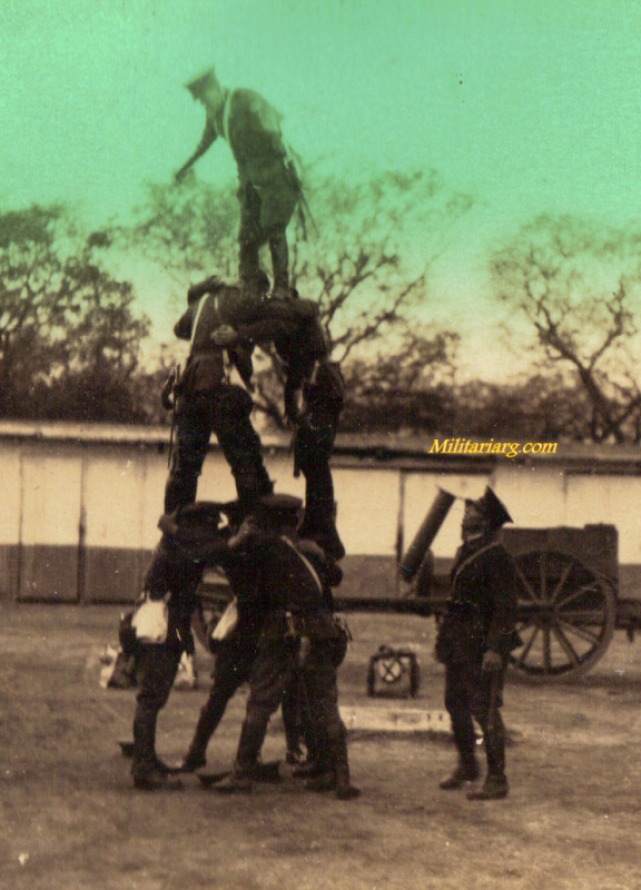
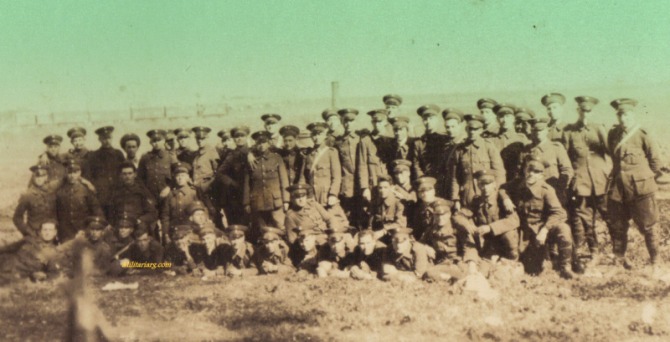
Manuevers of the Engineer Corps in 1916
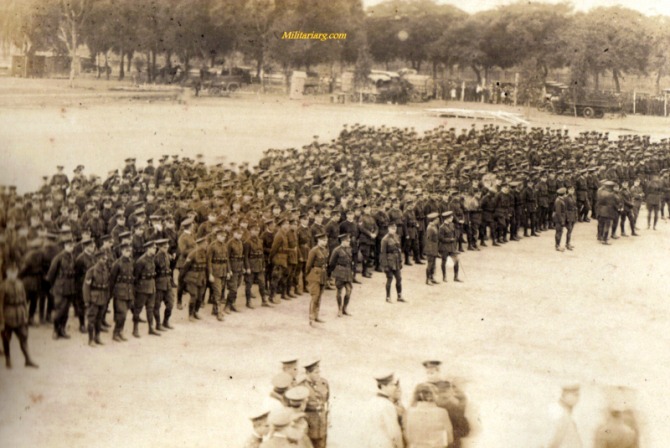
Observe the 1913-23 Model Uniform (British Style), and the commercial trucks in the background.
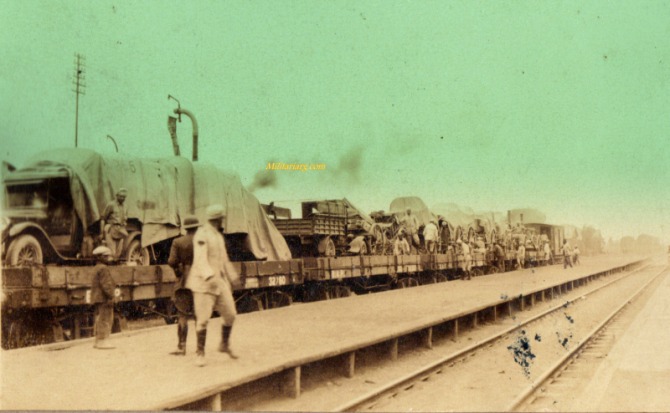
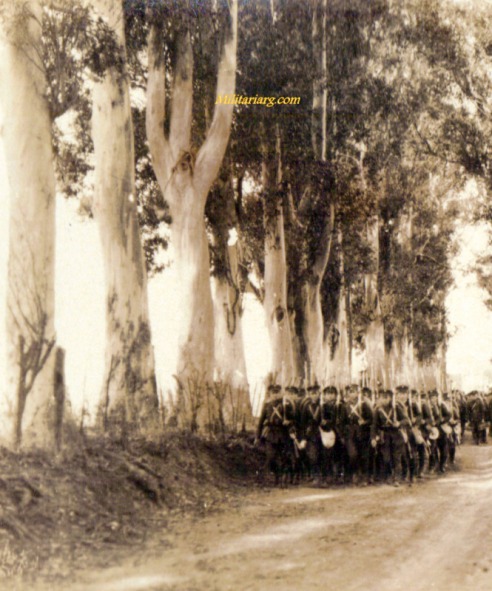
Engineer company in march. Observe the height of the trees along the road.
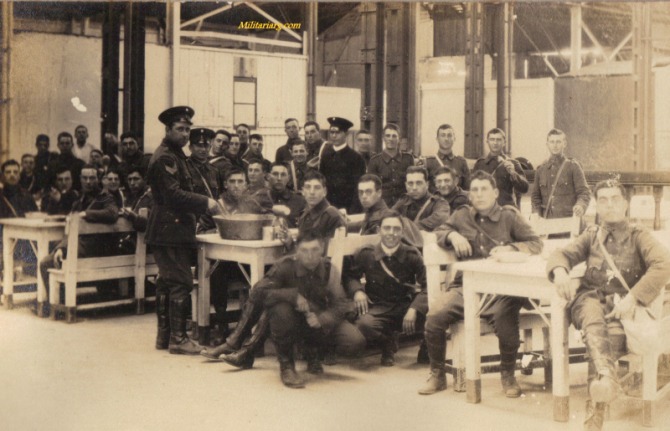
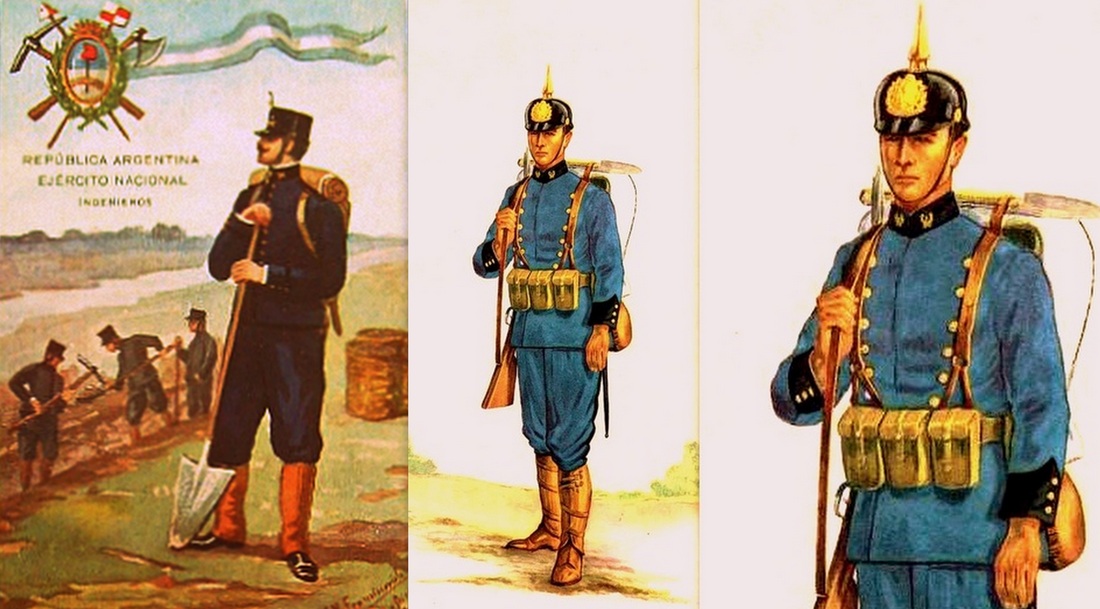
Engineer Corps 1911. Painting by Argentine artist Marenco
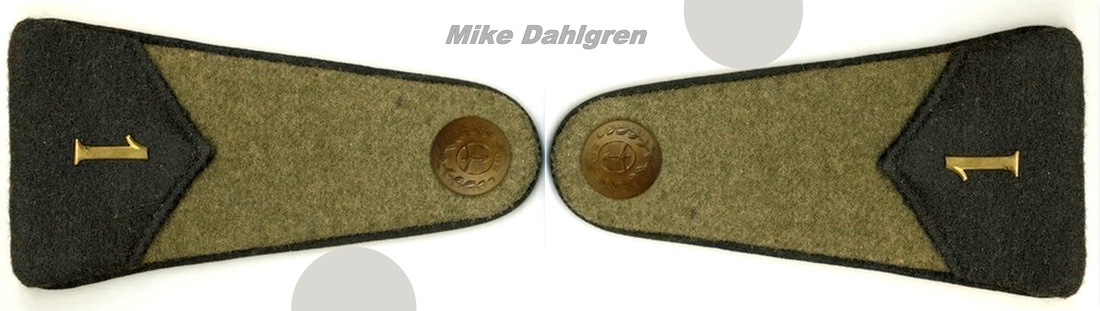
1940s. Original Army Engineer Corps (Pontoon-bridge sappers Brigade), Agrupacion zapadores pontoneros 1 "San Nicolas", Shoulder-Boards. Courtesy of Mike Dahlgren.