Militariarg.com
  • Home
  • Army
  • Aviation
  • Navy
  • Uniforms and Badges
  • Arms and Weapons
  • Equipment
  • Vehicles
  • Operational and Organizational Structure, Security Forces, Transportation, Books, Models and More.
  • Argentine Confederation Era. 1829 - 1852.
  • From 1852 to 1910 (French fashion)
  • Bunker 1982: South Atlantic War Militaria
  • International Militaria
  • Argentina WWII Era (Neutral) Reenactment Impression
  • Links ~ Enlaces
Picture
The Confederate States Army (CSA) utilized a mix of imported, captured, and domestically produced weapons and artillery during the American Civil War, relying heavily on the
British Pattern 1853 Enfield rifle-musket and the 12-pounder Napoleon cannon as its primary arms. 

Weapons

The Confederacy faced severe arms shortages and relied on blockade runners and captured Union arms throughout the war. 

Rifles/Muskets:
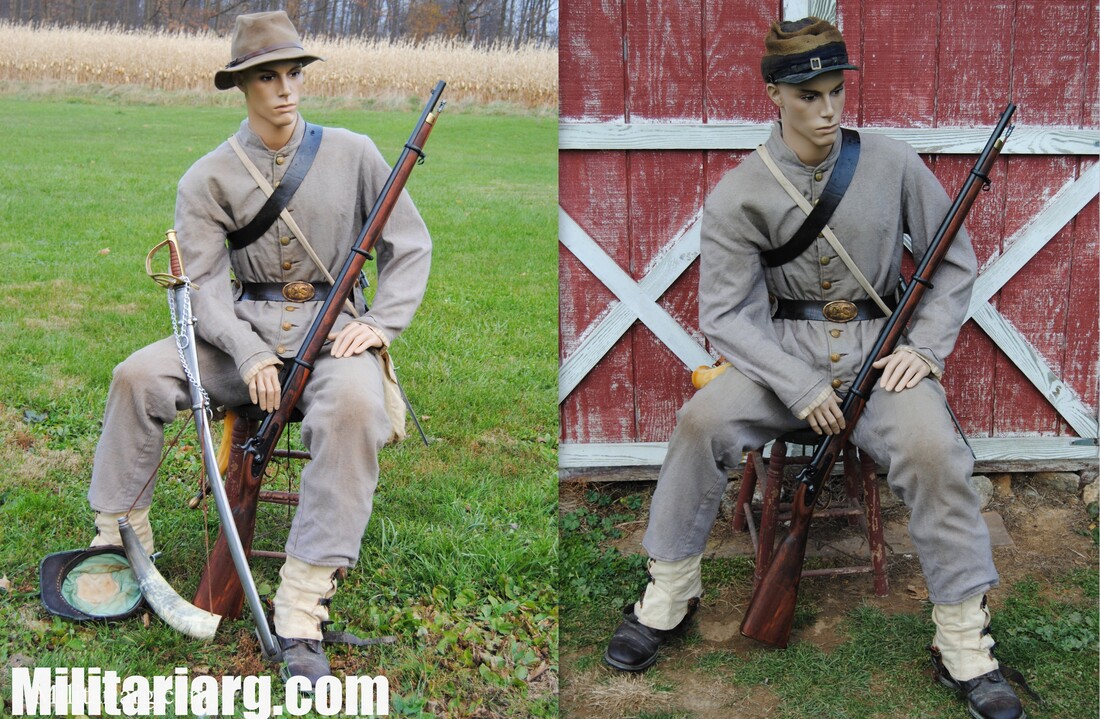
Pattern 1853 Enfield Rifle-Musket: The most common infantry weapon used by Confederate forces. Hundreds of thousands were imported from Britain and were prized for their accuracy and reliability.
Model 1861 Springfield Rifle-Musket: Large numbers of this standard Union weapon were captured on battlefields and reissued to Confederate troops.
Fayetteville and Richmond Rifles: The Confederacy established arsenals (at Fayetteville, NC, and Richmond, VA) using captured machinery from the U.S. arsenal at Harpers Ferry to produce copies of the Springfield and Enfield designs.
Other Imports: The Austrian Lorenz rifle-musket was also imported in large numbers.
Specialized Rifles: The British Whitworth rifle, an early precision weapon, was used by Confederate sharpshooters for high-accuracy, long-range shots.
Pistols/Sidearms:
Colt 1851 Navy Revolver: The most popular sidearm, often imported or copied domestically (e.g., Griswold & Gunnison, Leech & Rigdon).
LeMat Revolver: A unique Confederate-designed revolver featuring a nine-shot cylinder around a central, short shotgun barrel. 

Artillery
Confederate artillery sought standardization but often deployed mixed batteries of captured, imported, and locally made cannons due to material shortages, particularly copper for bronze. 

Field Artillery (Mobile Cannons):
M1857 12-pounder "Napoleon": Considered one of the best smoothbore field guns of the war, the Confederacy produced many domestic copies of this versatile weapon, which could fire solid shot, shell, and canister rounds effectively at close to medium ranges.
3-inch Ordnance Rifle: A durable and accurate wrought-iron rifled cannon. While many were captured from the Union, Confederate attempts to produce copies were less successful due to manufacturing difficulties.
Imported Rifles: The Confederacy imported British Blakely rifles of various calibers, which featured reinforcing bands around the breech.
Heavy and Coastal Artillery (Fixed Position Cannons):
Columbiads: Large, heavy iron smoothbore guns (8-inch and 10-inch) used in coastal and river fortifications, many of which were seized from U.S. armories early in the war.
Brooke Rifles: A domestically produced heavy rifled cannon designed by John Mercer Brooke, featuring wrought-iron bands for reinforcement. They saw extensive use in fortifications and naval service.
Picture
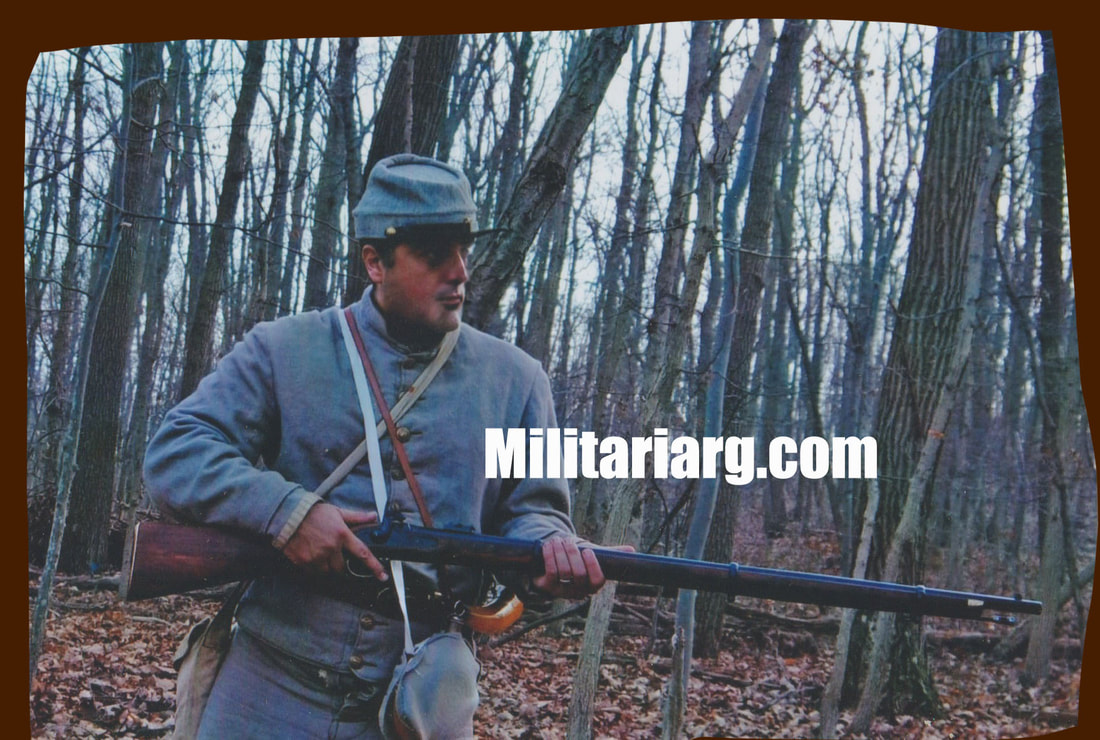
The British Pattern 1853 Enfield rifle-musket was the primary firearm of the Confederate Army during the American Civil War, and the second most common rifle used in the entire conflict after the Union's Model 1861 Springfield.
Picture
Significance in the ConfederacyDue to its limited industrial capacity, the Confederacy relied heavily on imported arms, with the Enfield being the weapon of choice.

Confederate purchasing agents, notably Major Caleb Huse, arranged for hundreds of thousands of Enfields to be acquired through private commercial sources in Britain and then smuggled through the Union naval blockade. Estimates suggest between 400,000 and 500,000 were successfully imported by the South.
Picture
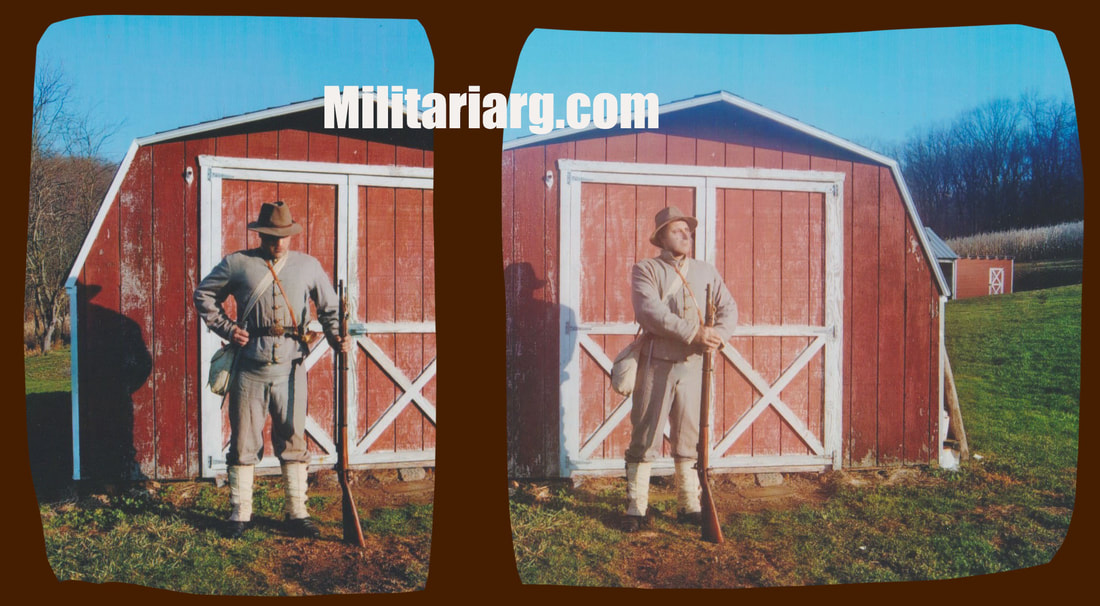
​The P-1853 Enfield saw service in virtually every major battle of the war. It is estimated that by the war's end, a significant majority of Confederate soldiers were armed with the Enfield, making it a defining weapon of the Southern forces.

Reputation: The rifle was considered accurate, well-made, and a highly effective weapon, often considered superior to the Springfield in terms of overall quality and finish.
Picture
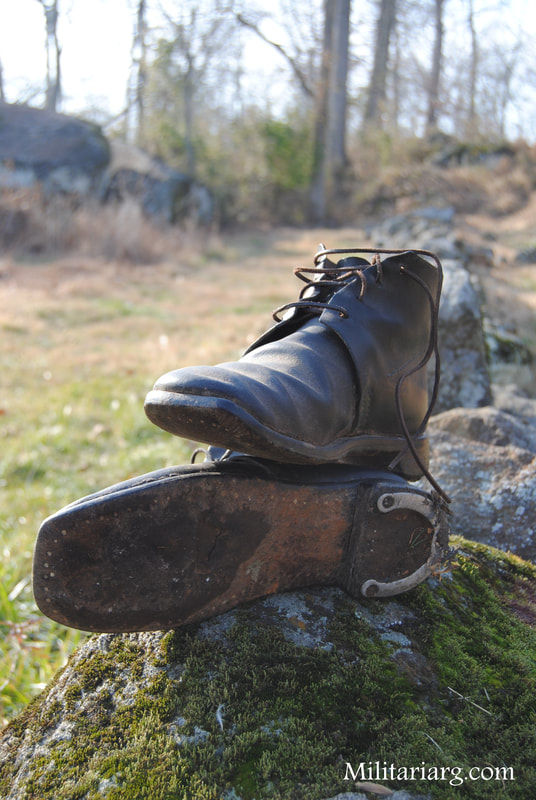
American Civil War Brogan Leather Shoes. 
The Brogans was the standard-issue, ankle-length leather shoe worn by soldiers in both the Union and Confederate armies during the American Civil War. It was a simple, durable, and mass-produced item crucial for the mobility of armies during the conflict.

Officially known as the M1851 Jefferson Bootee, the shoes were ankle-high, with a square toe and typically four eyelet holes for leather laces.
    
They were typically made of thick, high-quality leather. The most common type was made with the "rough side out" and then blackened with oil or polish for weatherproofing and appearance. Due to shortages later in the war, some Confederate shoes were issued in natural tan or russet brown leather. To facilitate rapid and cheap mass production, the soles were attached to the upper primarily using small wooden pegs (pegged soles) rather than stitching. Soles were also often fitted with metal hobnails and heel plates to reduce wear during long marches. To simplify manufacturing and issuing, most brogans were made on "straight lasts" (forms), meaning there was initially no difference between the left and right shoe. The leather was expected to conform to the wearer's foot over time, a process often associated with initial discomfort and blisters until broken in.

Importance: A continuous supply of new shoes was vital to keep an army moving; accounts from campaigns like Gettysburg frequently mention soldiers suffering or unable to march for want of shoes.
Powered by Create your own unique website with customizable templates.