Militariarg.com
  • Home
  • Army
  • Aviation
  • Navy
  • Uniforms and Badges
  • Arms and Weapons
  • Equipment
  • Vehicles
  • Operational and Organizational Structure, Security Forces, Transportation, Books, Models and More.
  • Argentine Confederation Era. 1829 - 1852.
  • From 1852 to 1910 (French fashion)
  • Bunker 1982: South Atlantic War Militaria
  • International Militaria
  • Argentina WWII Era (Neutral) Reenactment Impression
  • Links ~ Enlaces
Picture
The " Coastal Artillery" (or the Artillería de la Costa) in Argentine history primarily refers to the coastal defense batteries established during the 19th century to protect the Río de la Plata and its tributaries from foreign naval incursions.
While the term is often associated with the heroic defense led by Colonel Gerónimo Costa at Martín García (1838) or The Battle of Vuelta de Obligado (1845), it also refers to a broader strategic system of "fixed artillery" that played a decisive role in Argentina's struggle for sovereignty.

The coastal batteries of the Martin Garcia Island

The battery history of Martín García Island is defined by its strategic "gateway" position at the mouth of the Paraná and Uruguay rivers. Over two centuries, its fortifications evolved from colonial mud-and-brick works into heavy industrial artillery positions. 

1814: Independence Wars: During the Battle of Martín García, the Spanish Royalists defended the island with a battery of two cannons. Admiral William Brown's victory here effectively ended Spanish naval dominance in the Río de la Plata.

1827: Cisplatine War: Argentine forces built Fort Constitución to deny the Brazilian Navy access to the Uruguay River. This fortification played a decisive role in the Battle of Juncal, preventing Brazilian reinforcements from reaching their fleet.

1838: The Defense of Costa: Colonel Gerónimo Costa commanded the island's batteries (including the Soliis and Carmen positions) against a heavy Anglo-French naval bombardment.

Late 19th Century: The "25 de Mayo" Batteries: Following the consolidation of the Argentine state, the island was modernized with more permanent artillery. These batteries were often equipped with Krupp and Armstrong guns, reflecting the shift toward the "Coastal Artillery".

20th Century: Transition to Marine Infantry: By the 1950s, the personnel manning these batteries were formally integrated into the Marine Infantry (IMARA). However, the island's military importance waned as technology shifted toward mobile missiles and the island was designated a National Historical Monument and nature reserve in 1983. 

The Batteries Today
Visitors can still see the remnants of these historical defenses, specifically the 25 de Mayo Gun Batteries, which remain as a testament to the island's role as a "cork" in the river system, Armstrong or Krupp cannons that were used during the late 1800s modernization.

From Coastal Artillery to IMARA

​
1947–1950 transition, where the traditional Coastal Artillery (Artillería de Costas) was formally integrated into the Navy to create the modern Marine Infantry (Infantería de Marina or IMARA).

Here is how that shift played out in the 1950s. The Institutional Merger (Law 13.011)
Before the late 1940s, coastal defense was a bit of a "hybrid." The Argentine Army often managed the heavy land-based batteries, while the Navy handled the ships.

Under the presidency of Juan Perón (a military strategist himself), it was decided that all land-based defenses protecting naval interests should be under a single command.
In 1947, the "Corps of Coastal Artillery" was officially merged with the "Battalions of Security" to form the Marine Infantry Corps. By the early 1950s, the term "Coastal Artillery" began to fade from official titles, replaced by "Marine Infantry."

The "Artillery of Costa" Legacy in the 1950s
Even though they were now "Marines," their primary job in the 1950s remained the operation of massive fixed cannons.
They manned the famous Krupp and Vickers batteries at Puerto Belgrano and the entrance to the Río de la Plata. These were the "descendants" of the cannons Gerónimo Costa would have dreamed of.
During the 1955 coup (Revolución Libertadora), these Marine Artillery units were critical. Because they controlled the heavy coastal guns, they could threaten or protect the fleet in harbor.

The Shift to Amphibious Warfare
The reason the name changed to "Marine Infantry" was a shift in doctrine:

WWII Influence
Argentina watched the U.S. Marines in the Pacific and realized that "Artillery of the Coast" was too static (defensive).
They wanted a force that could not only fire from the shore but also land on a shore. By the 1950s, the IMARA began acquiring LVT amphibious vehicles, moving away from being just "cannon operators" to becoming a mobile elite force.

The Marine Infantry (former Coastal Artillery) played a massive role in the 1955 overthrow of Perón

Picture
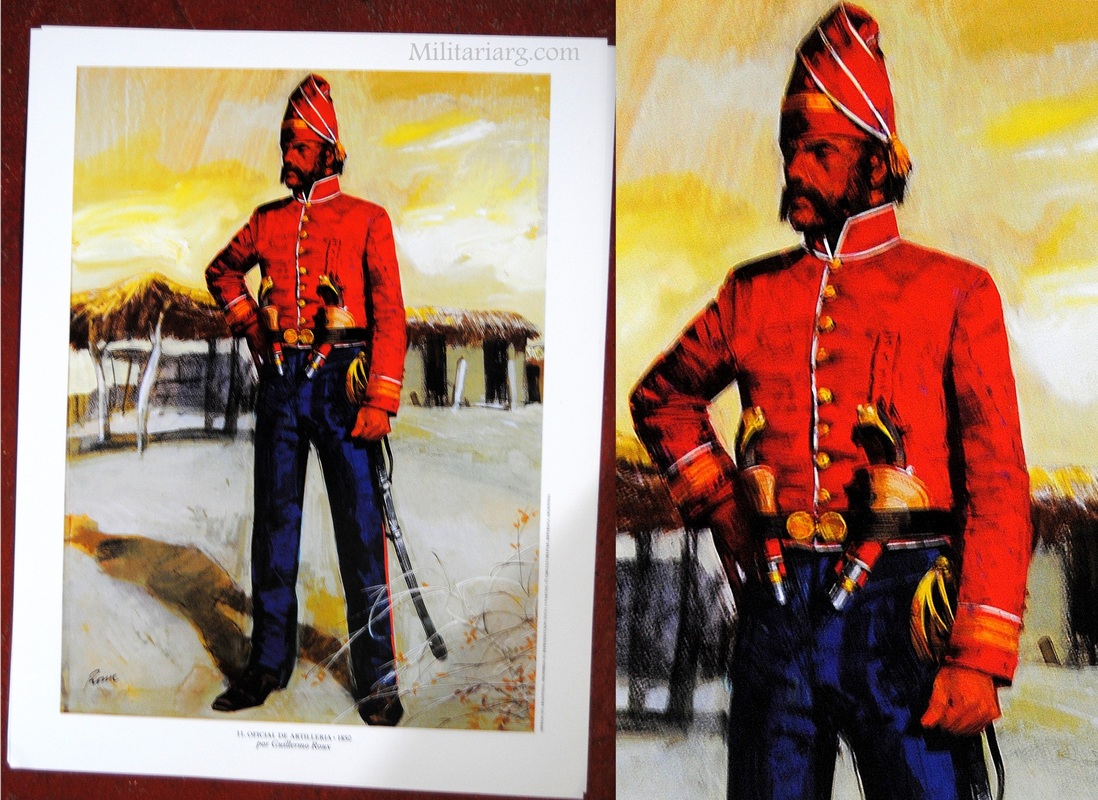
Argentine Confederation, Artillery Officer. Paint: Guillermo Roux.

1838. The Battle of Martin Garcia

​Colonel Gerónimo Costa is celebrated for his heroic defense of Martín García Island against a French naval assault on October 11, 1838, during the French blockade of the Río de la Plata. 

As part of France's attempt to force the government of Juan Manuel de Rosas to grant French citizens the same privileges as the British, a French squadron demanded the surrender of the strategic island. Costa, commanding only 100 men of the Patricios Regiment and limited artillery, rejected the ultimatum. He faced a force of roughly 400 invaders (250 French sailors and 150 Uruguayan "Colorado" allies) following a heavy day-long bombardment.
After two hours of intense combat, Costa was forced to surrender when his ammunition ran out. However, his resistance was so fierce that the French commander, Hipólito Daguenet, refused to treat him as a typical prisoner of war. 

A Rare Act of "Chivalry" 
In a famous historical gesture, Daguenet sent Costa and his surviving men back to Buenos Aires as free men. In a letter to Rosas, the French commander praised Costa’s "military talents" and "brave loyalty," stating that he released the prisoners out of respect for their incredible bravery. 

Costa’s defense became a cornerstone of Argentine Federalism and a symbol of national sovereignty against foreign intervention.

He continued to lead the Patricios Regiment and fought in several major conflicts of the Argentine Civil Wars, including the Battle of Caseros, until his execution following the Battle of Villamayor in 1856.

1845. Battle of Vuelta de Obligado

​The Battle of Vuelta de Obligado (November 20, 1845) is the supreme example of the "Artillery of the Coast" in action, serving as the spiritual foundation for what eventually became the Argentine Marine Infantry. 

The Strategic "Trap"
General Lucio Mansilla chose a narrow bend in the Paraná River where the current was strong and the banks were high cliffs. He utilized a "combined arms" defense that was revolutionary for the time. He stretched three massive iron chains across the river, supported by 24 small boats, to halt the progress of the Anglo-French fleet.

The Batteries: Four batteries were positioned on the cliffs to rain fire down on the stalled ships:
Restaurador (Commanded by Álvaro de Alzogaray)
General Brown (Commanded by Eduardo Brown, son of the Admiral)
General Mansilla (Commanded by Felipe Palacios)
Manuelita (Commanded by Juan Bautista Thorne) 

The Combat
Despite having only 35 low-caliber bronze cannons, the Argentine artillerymen held their ground for seven hours against the most advanced steamships of the era (including the HMS Firebrand and Gorgon), which possessed over 100 heavy iron guns and Congreve rockets. 

The men manning these guns were a mix of soldiers and sailors—the literal ancestors of the Coastal Artillery transition. Colonel Juan Bautista Thorne, despite being deafened by a nearby explosion and covered in blood, refused to stop firing his battery until the very end . 

While the Anglo-French fleet eventually broke the chains and landed to spike the cannons, the battle was a strategic victory for Argentina: 

Economic Failure
The European merchants realized that forcing a trade route by blood was too expensive.

Diplomatic Sovereignty
The resistance forced the world powers to recognize the Paraná as an internal Argentine river.

National Day of Sovereignty
November 20 is now a national holiday in Argentina to honor this specific stand. 
Just as Costa defended Martín García, Mansilla defended Obligado. Both battles cemented the idea that Argentine sovereignty began at the shoreline, a doctrine that led directly to the creation of the Marine Infantry in the 1940s to ensure those "Artillery of the Coast" positions were never abandoned again.

The "Criollo" and "Cristiano":

Picture
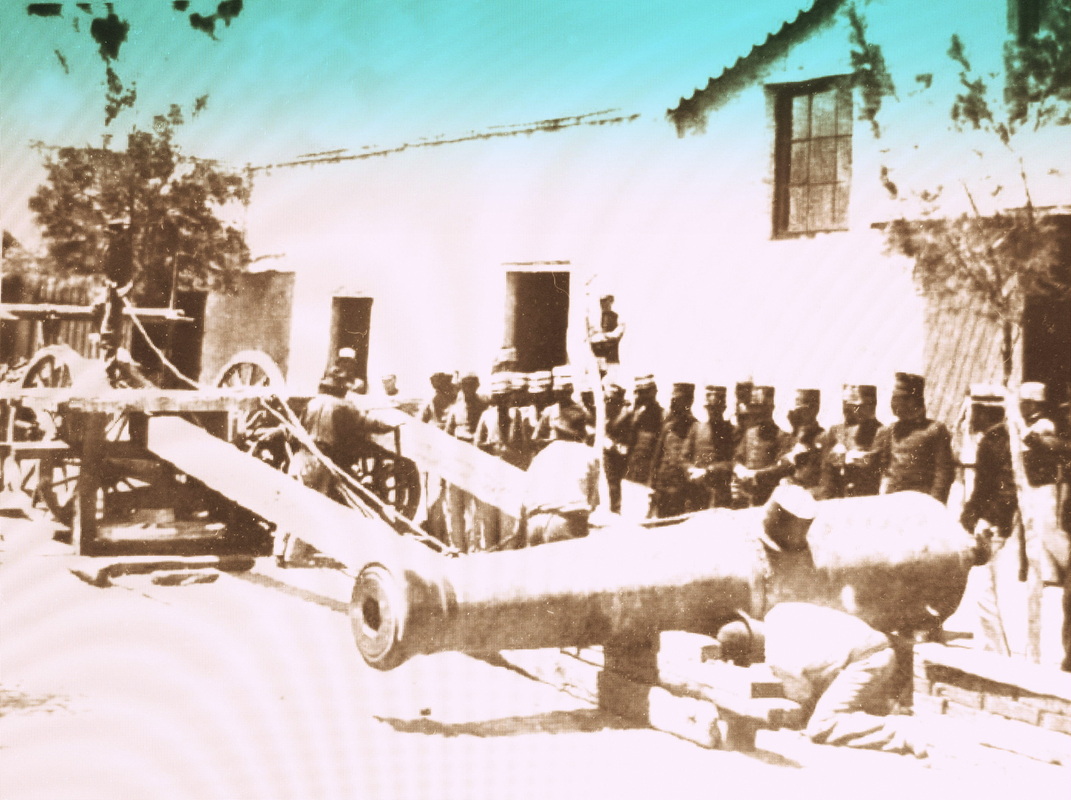
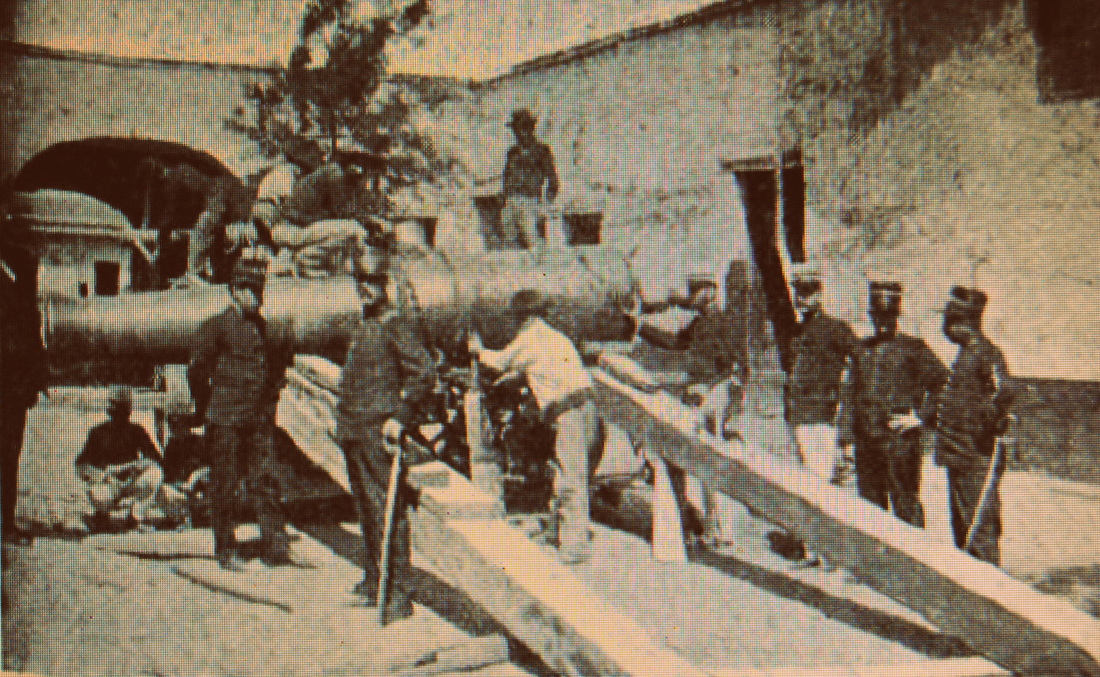
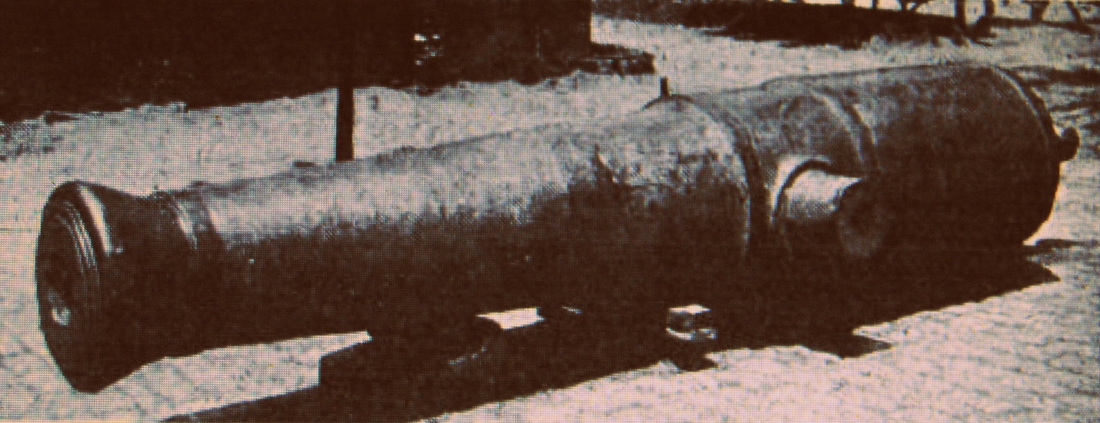
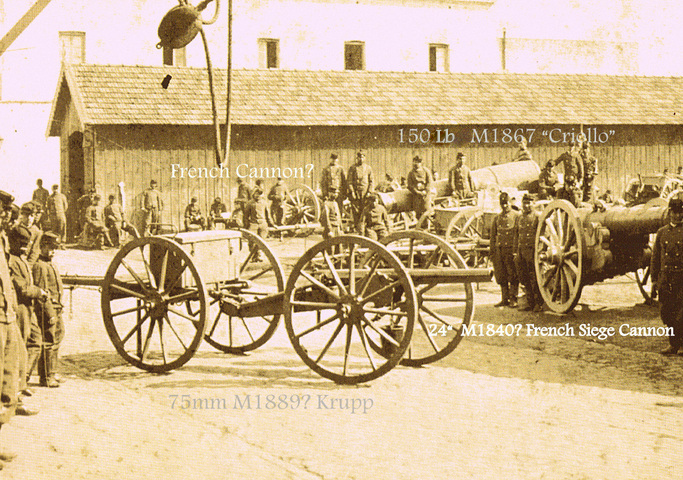
1902 "El Criollo" (5 tons of weight?), along with "El Cristiano", (Long, 12 tons ?), were 2 cannons captured by Argentina and Brazil respectively during the sad war of Paraguay, an effort and technological success for the Paraguayan people in their last hopes at not being conquered.  They were pieces of 150 lbs, 254mm, M1867 L?,  Breech-loading and rifled cannon for coastal artillery and fortress gun (Type 381mm Rodman?).  In the photo "El Criollo", is being transferred from the artillery park to the arsenals for metal smelting.  The aim was to convert it to Christ the Redeemor of the Andes.  "El Cristiano" captured by Brazil was possibly returned.  During the second presidency of Juan Peron they returned the captured loot to Paraguay.  Since "El Criollo" had not been smelted at the beginning of the XX century, it must have been returned at that time.  Photo: Caras y Caretas.
Picture
Picture
150mm M1867 (Ibicuy Arsenals) "Criollo" Breech-loading Weapon.
Picture

Royal Spanish/Independence/Argentine Confederation Era:

Field Artillery: 4, 6, 8, and 12 inches.
​
Naval Artillery: 2, 6, 8, 12, 12 L, 18, 18L, 24. Carronades of 20, 24 and 36 inches.


The following is a list of different calibers and artillery pieces in naval and Coastal Artillery use, from 1890 to 1945.  There may possibly be some errors or omissions that we will be correcting and completing until we reach the historical period of 1806-1982.

1852-1982:

4". 10", 16", 20" colisas of 30, 32".
18" Blakely
75mm M? (Krupp). 
75mm Amstrong.
75mm M1881 (Viejobueno)
80mm m1881 (Viejobueno) ?
100 mm, 10 cm Amstrong (?)
101.6mm L50 4" M1937 AA Vickers Amstrong.
102mm AA M1929 Otero Dermi.
120 mm, 12 cm Schneider-Canet Rapid Fire.
120 mm, 12 cm (12,4 ?), M1895/99 ? Amstrong, Rapid Fire.
120mm M1927 Vickers.
305mm M1910 Bethelem, (Rivadavia Class).
105mm M1944? Bofors AA.
150 mm, 15 cm Schneider-Canet, Rapid Fire.
150 mm, 15 cm Amstrong, Rapid Fire.
200 mm, 20 cm Amstrong, Rapid Fire
210 mm, 21 cm Amstrong
250mm Amstrong.
101mm M1912 Bethelem.
152mm M1912 Bethlehem.
152mm M1892 Amstrong.
152mm L50 6" M1908 Amstrong.
381mm L4.191 M1862 Rodman (Martin Garcia).*
254mm L? M? Parrotts (Martin Garcia).*
170mm M1874 Amstrong ?
177mm L? M? Armstrong. (Martin Garcia)*
240 mm, 24 cm L35 M1887 Krupp. (Puerto Belgrano)
280mm L11 M1899 Krupp Zarate or Ushuaia?

21" Torpedos

37 mm Maxim-Nordenfelt.
27/28 mm Maxim-Nordenfelt
37 mm Hotchkiss
47 mm Schneider-Canet
47 mm Hotchkiss 


Armstrong 7-inch 110-pounder

Picture
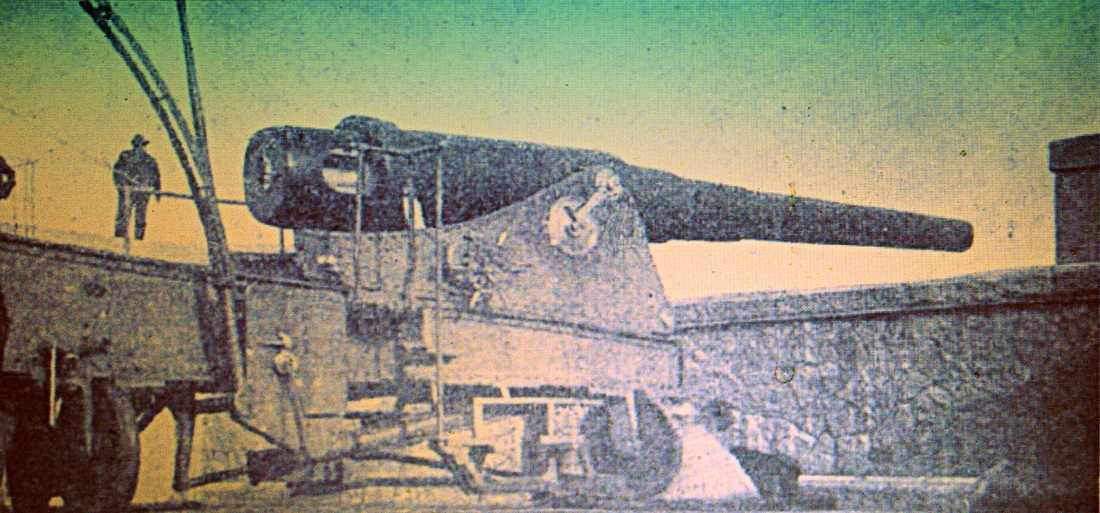
Amstrong Batteries from Martin Garcia Island. Those guns definitely have a "vintage" look because they date back to the mid-Victorian era. The specific model shown is the Armstrong 7-inch 110-pounder, which was designed and first entered service in 1861.

These are British-designed RML (Rifled Muzzle Loading) guns, specifically the 7-inch 110-pounder Armstrong. These Armstrong guns represent an earlier technological stage in the island's defenses. 

Armstrong Guns on Martín García

Design: Unlike the Krupp guns, these are muzzle-loaders, meaning they were loaded from the front of the barrel.
Mounting: They are shown on traversing platforms. These iron carriages allowed the heavy guns to be rotated horizontally to track ships moving through the strategic channels of the Río de la Plata.
Function: These 7-inch guns were primarily designed to fire 110 lb (approx. 50 kg) projectiles.
Historical Context: These batteries were often installed alongside Krupp and later Schneider/Armstrong "Quick-Firing" guns to create a multi-layered defense system capable of engaging everything from heavy ironclads to smaller, faster torpedo boats. 

The presence of both Krupp breech-loaders and Armstrong muzzle-loaders on Martín García illustrates the transition in military technology during the late 19th century, as the island was continuously fortified to maintain control over the river access.

These were large coastal artillery guns manufactured by the British company Armstrong, not modern electrical batteries. These were cannons used for defense, as seen in historical photos and military records. 
The term "battery" in this historical context refers to a fortified position or a set of heavy artillery pieces, specifically large-caliber cannons made by the company of Sir W.G. Armstrong & Co., a major British manufacturer of ordnance in the 19th and early 20th centuries.

Martín García Island, located in the Río de la Plata river between Argentina and Uruguay, was historically a strategically important military post. It was fortified with these Armstrong cannons for defensive purposes, as shown in historical images from the 1930s.

These guns, some of which were 100-ton guns also found in places like Malta and Gibraltar, were powerful muzzle-loading or breech-loading weapons designed for coastal defense. 

​Photos: Caras y Caretas

There is no evidence to suggest the manufacturing of modern electrical batteries on Martin Garcia Island, or the existence of a modern "Armstrong" brand of electrical batteries related to the island.

The Armstrong breech-loading system

The Armstrong breech-loading system, introduced in 1858–1859, represented the first major revolution in British artillery design in over 400 years. It combined rifled bores with a unique screw-breech mechanism to provide unprecedented accuracy and range compared to smoothbore muzzle-loaders. 

The Screw-Breech Mechanism
The system, often called the "Armstrong Screw," worked as follows:

The Vent-Piece: A vertical sliding steel block was dropped into a slot in the breech.
The Breech Screw: A large, hollow screw behind the vent-piece was tightened by hand using a weighted lever to press the block firmly against the chamber mouth.
Loading: The shell and powder were inserted through the hollow center of the breech screw itself while the vent-piece was raised.
Obturation: A conical copper ring on the face of the vent-piece expanded under pressure to create a gas-tight seal. 

The "Failure" and Reversion to Muzzle-Loading
Despite initial success in field guns (like the 12-pounder), the system struggled when scaled up to larger calibers like the 7-inch 110-pounder: 

Handling Issues: In heavy seas, the 136-pound vent-pieces were nearly impossible for naval crews to handle safely.
Mechanical Failure: If the screw wasn't tightened perfectly, the vent-piece could blow out, causing catastrophic injury to the crew.
Armor Penetration: The early breech-loaders lacked the muzzle velocity to penetrate the new wrought-iron armor being used on ironclad warships. 

Due to these flaws and the high cost of production, the British government officially abandoned breech-loading in 1864–1865, reverting to Rifled Muzzle-Loaders (RML) for the next 15 years. 

Return to Breech-Loading (1880s)

Armstrong returned to breech-loading in the 1880s with a completely different design: the Interrupted Screw breech. Unlike the manual 1850s version, these newer "BL" guns used the explosive force of firing to automatically seal the breech (the de Bange system), a principle still used in modern heavy artillery.
The 19th Century "Modern" Breakthroughs
Before Armstrong's 1858 design, several other inventors successfully tested modern breech-loading artillery:

Wahrendorff System (1837): Invented by Swedish baron Martin von Wahrendorff, this used a cylindrical breech plug secured by a horizontal wedge. It was adopted by the Swedish military in 1854.

Cavalli System (1845): Giovanni Cavalli, a Sardinian officer, tested a rifled breech-loader over a decade before Armstrong's design was finalized.

Early Krupp (1851): Alfred Krupp exhibited early steel breech-loading guns at the Great Exhibition in London, seven years before the British adopted the Armstrong system.

The Armstrong gun is historically significant because it was the first to be mass-produced and integrated into a major world power's (the British Empire's) standard arsenal as a complete system of rifled, built-up steel-and-iron guns.

Picture
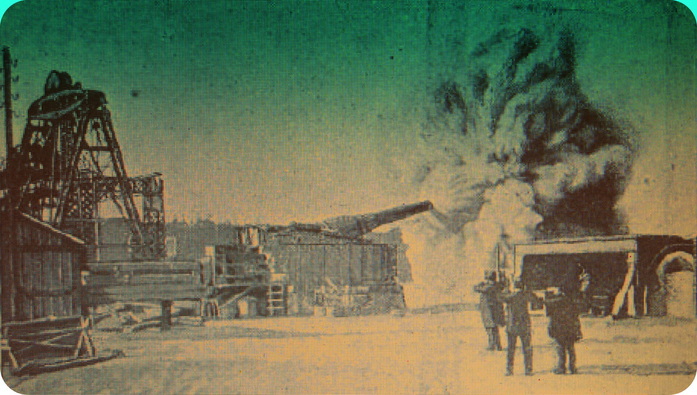
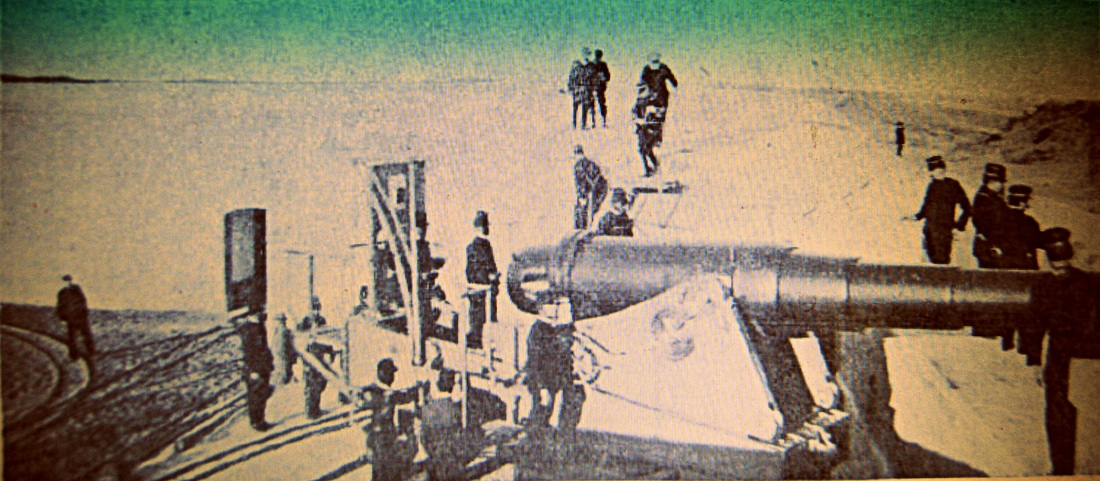
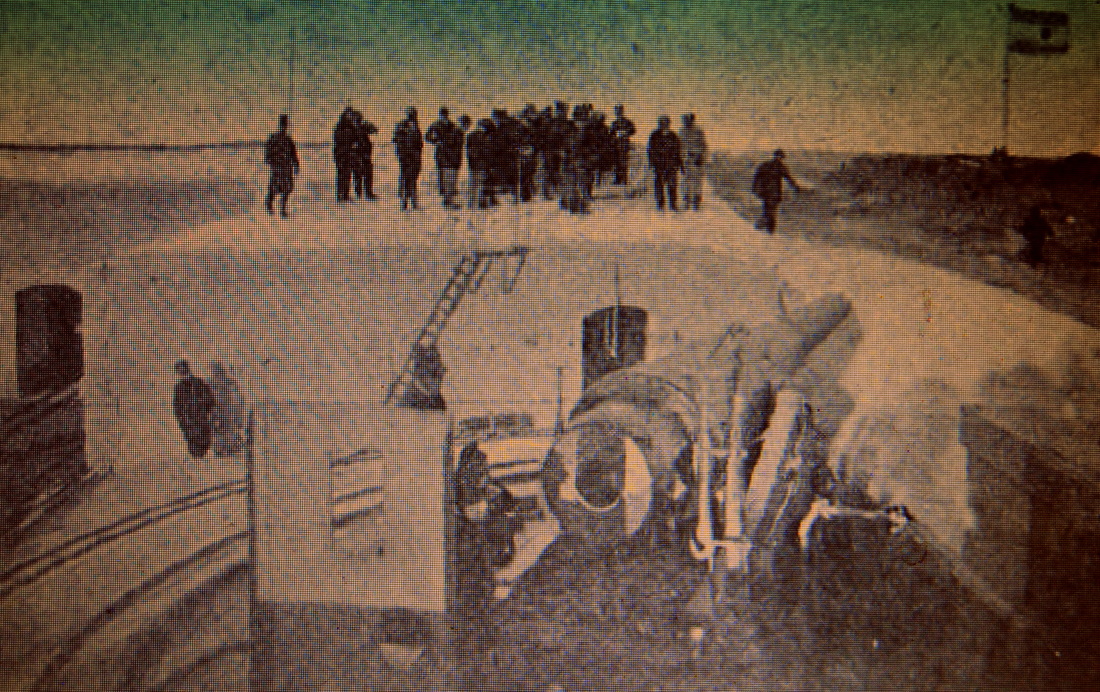
Polygon of Meppen. Germany 1900. Commission Argentina chaired by Colonel Ricchieri observed when a 24 cm Krupp opens fire in the direction of the sea. 
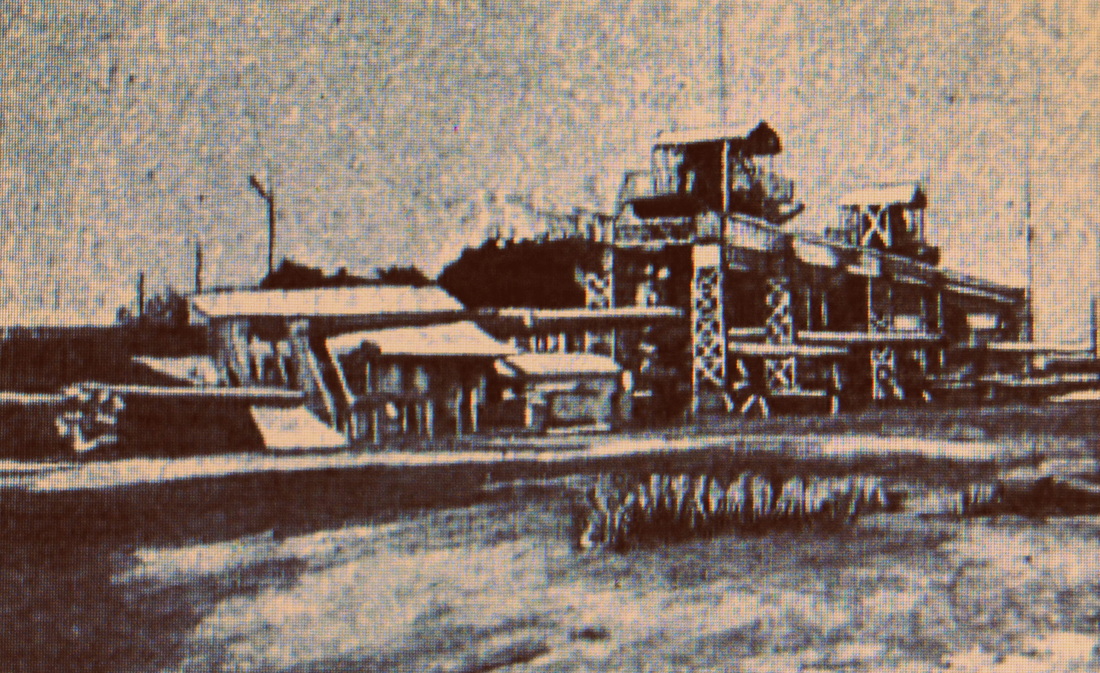
​This iconic image captures a historic moment at the Meppen Proving Grounds (the Polygono of Meppen), Krupp’s private testing site in Germany. The weapon shown is a 24 cm Mantel Ring Kanone (MRK), likely the L/25.5 prototype or a closely related heavy coastal variant.
Picture
Polygon of Messin.  This is where ship armor is tested.
Picture
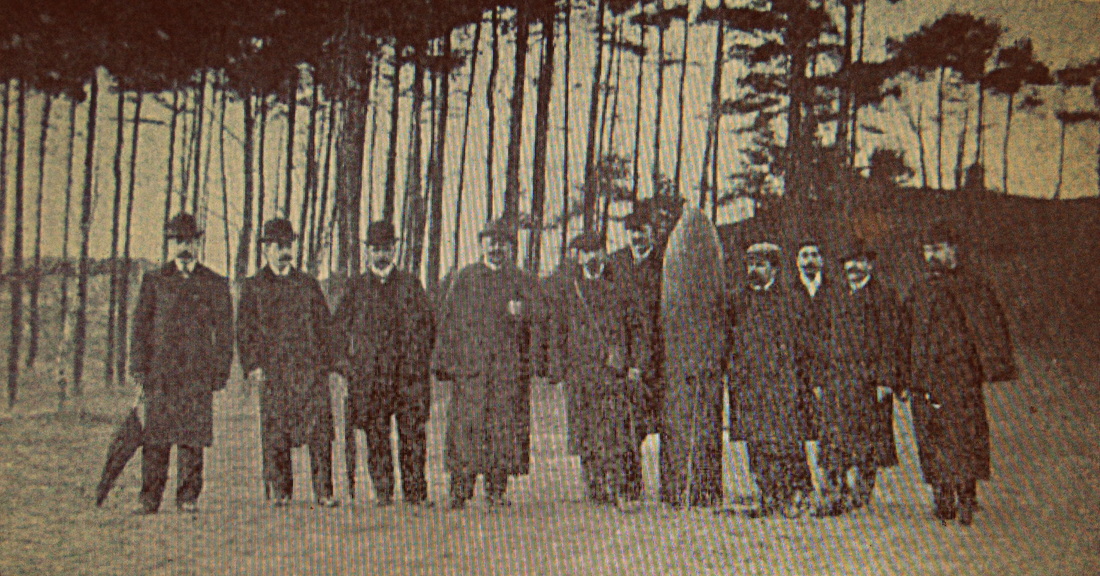
1899. Caras y Caretas.  The technical commission led by Richieri (standing to the left of bomb) in the Krupp factory.
​It successfully pierced 51 cm (20 inches) of wrought iron armor, proving it was more powerful than even the massive 32 cm (12.5 inch) British muzzle-loading guns of the time.This gun was a laboratory for "scientific gunpowder" discoveries. By using an enlarged chamber and specially packed charges, Krupp doubled the propellant weight (from 39 kg to 75-78 kg) without increasing peak pressure, achieving a muzzle velocity of over 570 m/s.

Krupp 24 cm, 240mm. Puerto Belgrano 1899. Caras y Caretas.
Picture
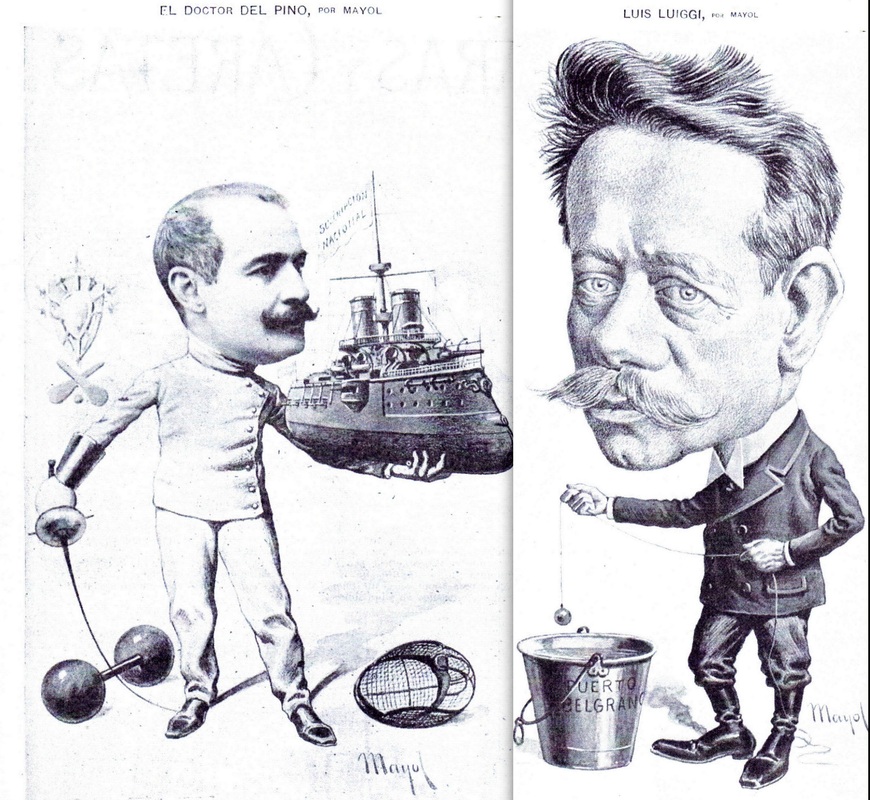
Puerto Belgrano, Argentina's largest naval base, was founded on November 30, 1896, under its original name, Puerto Militar. It was officially renamed Puerto Belgrano in 1923. 

Italy's involvement was central to the base's creation and the fleet.The base was designed and its construction was led by the renowned Italian engineer Luis Luiggi. His work included the creation of a massive dry dock and the overall urbanistic design of the military port.

The "Garibaldi" Class Cruisers
Around the time the base was founded, Argentina purchased four Giuseppe Garibaldi-class armored cruisers built in Italy. These ships formed the backbone of the fleet that called Puerto Belgrano home:

Garibaldi (commissioned 1895)
General Belgrano (built 1896)
General San Martín (built 1896)
Pueyrredón (built 1898)


Later Acquisitions in the 1930s. Italy built two additional heavy cruisers for Argentina: the Almirante Brown and the Veinticinco de Mayo.

During World War II, several Italian merchant ships were trapped in Argentine ports due to the conflict, with three the Victoria Veneto, Inez Corrado, and Amabilitas specifically tied up at nearby Bahía Blanca (the estuary where Puerto Belgrano is located).

Photo: Caras y Caretas 1898.

Picture
The 240 mm L/35 Krupp guns on Martín García Island were a critical component of Argentina’s late 19th-century coastal defense strategy. These massive "Fortress Guns" were part of a broader modernization program that included both naval and fixed land batteries. 

These guns were the 24 cm K L/35 (Krupp Mantel Ring Kanone), a high-performance built-up steel design.
They were mounted around 1888 to protect the strategic access to the Río de la Plata and the Paraná and Uruguay rivers.

The "25 de Mayo" Battery
On Martín García Island, these guns were part of the "Baterías 25 de Mayo", which served as the primary heavy defense for the island’s fortress. 

Specifications of the 240 mm L/35
The 24 cm L/35 was a significant step up from the older C/73 models.
Bore Diameter: Exactly 23.8 cm (9.37 inches), though officially classified as 24 cm.
Barrel Weight: Approximately 21,500 kg including the breech.
Breech System: It utilized the horizontal sliding-wedge block and, notably, was among the first large-caliber German guns to use brass cartridge cases for obturation rather than bagged charges.
Performance: It could fire a 160 kg (353 lb) armor-piercing projectile at a rate of roughly 2 rounds per minute. 
Picture
Martín García Island has long been a focal point of Argentine military history, serving as a prison for former presidents like Juan Perón and Hipólito Yrigoyen, as well as a vital naval outpost. The Krupp batteries were installed alongside other systems, such as Armstrong guns, to ensure control over the silty border waters shared with Uruguay. 
While these guns were nearly obsolete by the mid-20th century, their presence on the island remains a testament to the era when Krupp's steel dominated global coastal fortifications. ​
Picture
​The Krupp 240 mm (24 cm) coastal and fortress guns, including the L/35 models used at Martín García and Puerto Belgrano, utilized a cylindro-prismatic breech block.
Picture
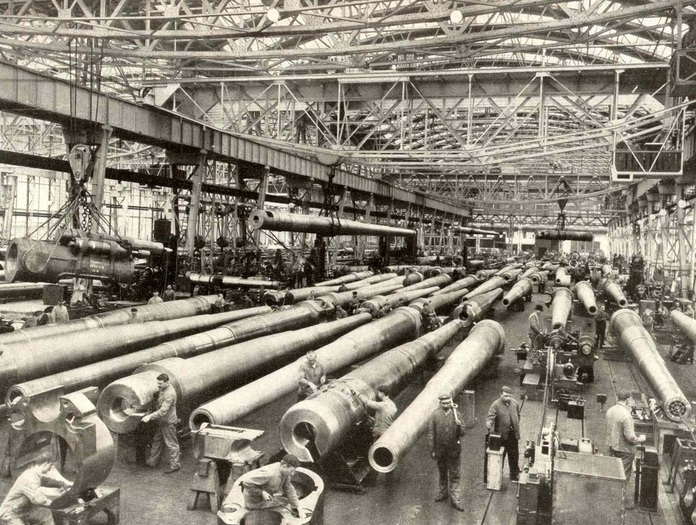
This image shows the interior of the Fried. Krupp AG factory in Essen, Germany, likely during the peak of naval rearmament (circa 1910–1914). It showcases the massive industrial scale required to produce the "built-up" steel guns.

Picture
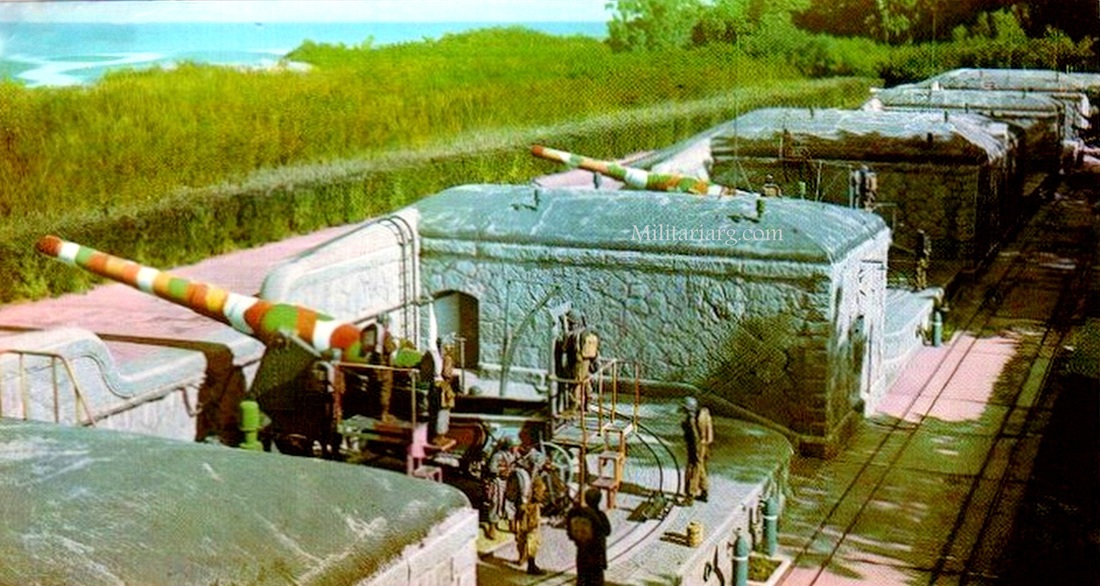
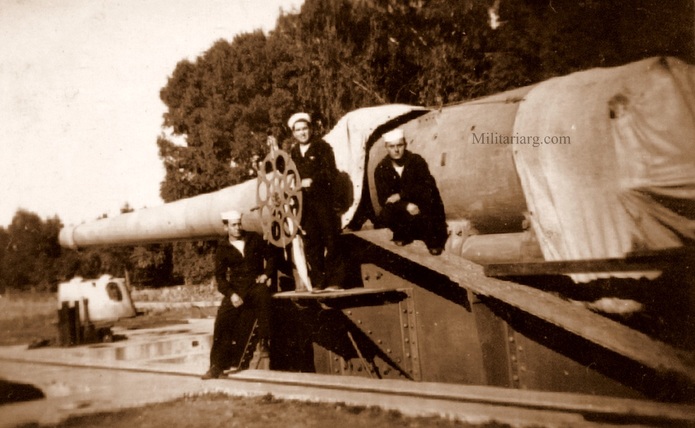
240 mm L/35 Krupp Fortress Gun. They were mounted around 1888 in order to protect coasts and islands. 
The Marines in the picture carrying the tornister type backpack (copy of the German style) and blanket, M1 Helmet from WWII era, borceguies in brown color, Mauser 1909 Carbine, ammo pouches and standard leather suspenders.
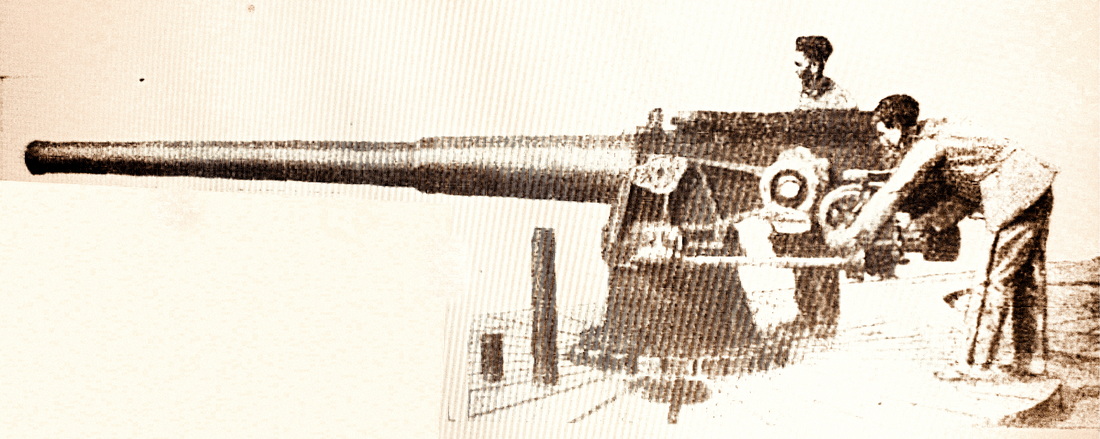
120 and 155mm Schneider-Canet

​In 1898, as part of its coastal defense modernization, Argentina acquired Schneider-Canet 155mm (15 cm) L/45 guns to protect its primary naval base at Puerto Belgrano. These pieces were part of a larger purchase that included 120mm (12 cm) Schneider-Canet quick-fire guns, both of which were among the most advanced coastal artillery of the era.
Picture
Schneider-Canet 12cm.
Picture
Schneider-Canet 15 cm.
​The Schneider-Canet breech system, particularly the version used on the 155mm (15 cm) L/45 coastal guns acquired by Argentina in 1898, was a masterpiece of French engineering designed for high-speed operation. It utilized an interrupted screw mechanism, but its "Canet" patent stood out for its unique single-motion operation.
It utilized an interrupted screw mechanism, but its "Canet" patent stood out for its unique single-motion operation. Unlike traditional screw breeches of the era that required three distinct movements (unlocking/rotating, withdrawing, and swinging open), the Schneider-Canet system integrated these into one fluid motion of a single lever.
Pulling the lever first rotated the screw to unlock it, then automatically pulled the block out and swung it to the side.
This made it significantly faster than the Krupp sliding-wedge systems used in heavy coastal artillery, which was critical for engaging moving naval targets.
Picture
Picture
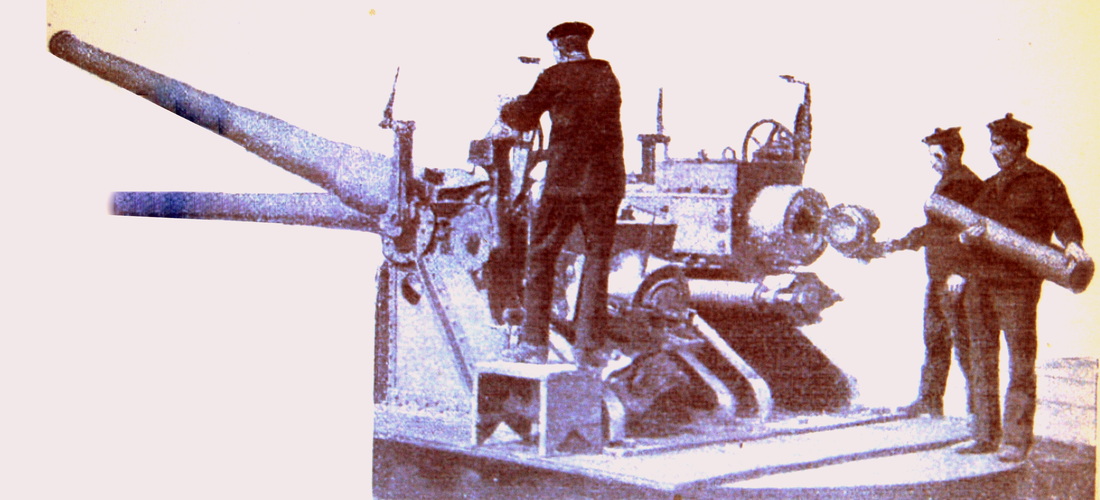
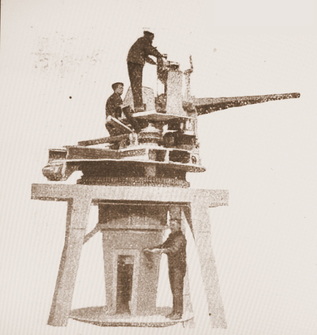
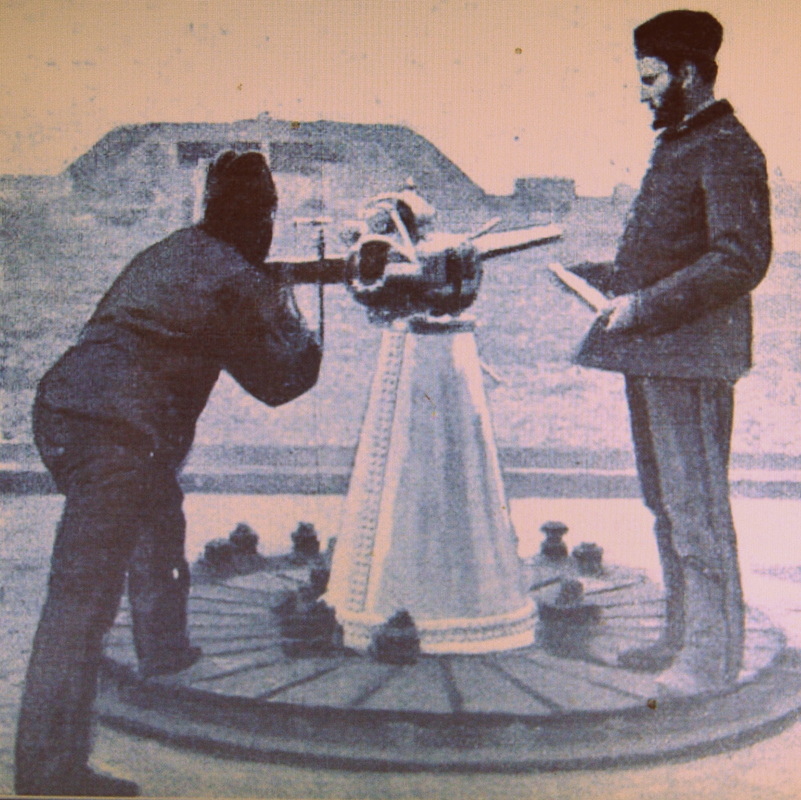
Tower to 12 cm Schneider electrically driven. Right: Schnieder-Canet rapid fire. On the right, a French ​37 mm Hotchkiss Revolving Cannon mounted on a naval pedestal or center pivot mount.
Picture
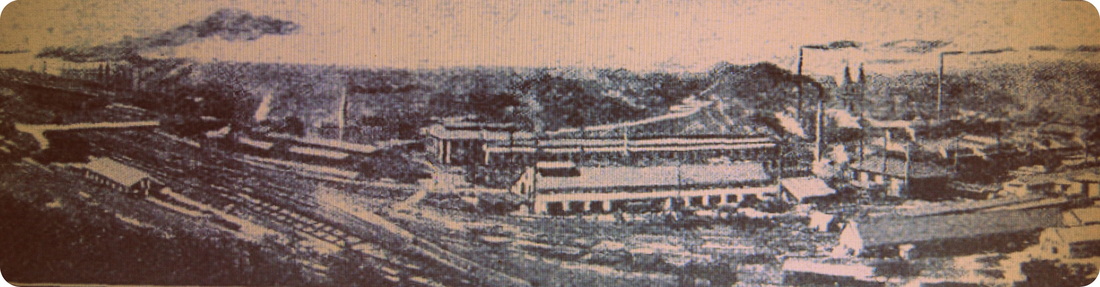
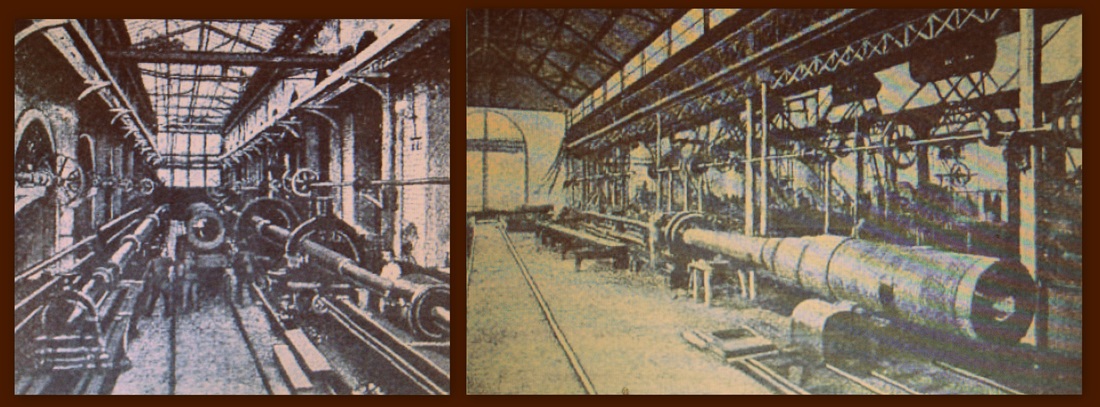
The images highlight the manufacturing of heavy "built-up" guns, which both Krupp and Schneider specialized in during the early 20th century. While Krupp dominated the German and Ottoman markets, Schneider was the primary competitor for French, Russian, and South American contracts. Photo: Shneider Smelting plants. Schneider-Creusot (Schneider et Cie) plants in France.​
Picture
Turnery drilling cannons at Schnieder plants. Caras y Caretas 1908.
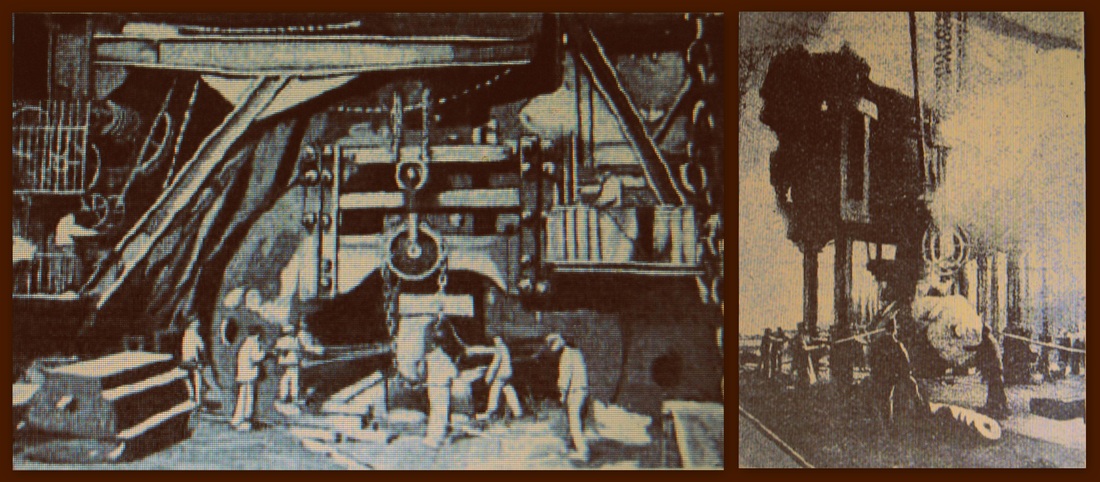
Picture
Giant hammer "Fritz" in Essen, by Krupp with 50 tons of pressure. This is one of 141 hammers in the plant.  Some sources indicate that this is not the biggest.  One had 150 tons of pressure according to one source and may have been the world's largest.  Right: Schneider hammer in Le Creusot.
​These guns were ordered from the French firm Schneider et Cie (specifically the Canet department) during a period of high tension with Chile. They were intended to complement the heavier 240mm Krupp fortress guns already in service.
The 155mm guns were typically mounted on electrically driven turrets or specialized Vavasseur-type mounts within coastal fortifications. These mounts used a top-carriage recoil system to return the gun to battery after firing.
The "Canet" designation refers to the designs of Gustave Canet, who specialized in high-velocity naval and coastal guns. These 155mm pieces were long-barreled (L/45), providing significantly greater range and flatter trajectories compared to the shorter 155mm howitzers used by the Argentine Army in later years. 

While these specific 1898 guns remained fixed coastal assets, they established a long-standing preference for the 155mm caliber in Argentina. This led to later acquisitions, such as the Obús Schneider 155mm L/15.05 Modelo 1928, which served for decades.

The knowledge gained from these French coastal systems eventually informed local Argentine production, culminating in modern heavy artillery like the Cañón 155 mm L/33 Modelo Argentino and the long-range CALA 30 L/45. 

Picture
"Estacion de experiencias de armas".
Picture
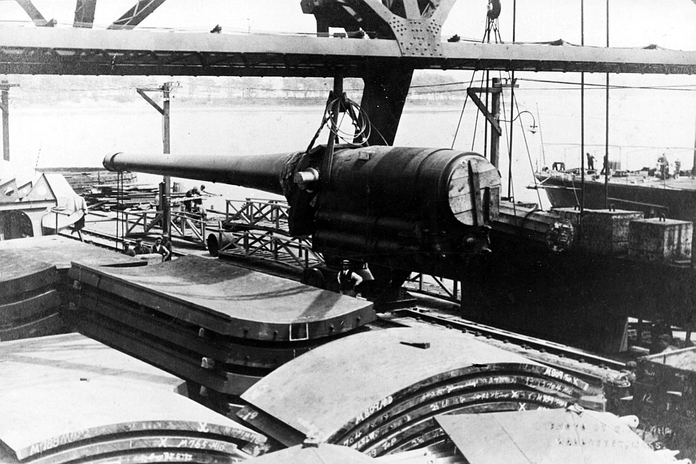
ARA Moreno 305mm. Bethleem Gun M10 12"/50 caliber gun 305mm, "Rivadavia Class Moreno, Dreadnought GunPhoto Wikipedia.
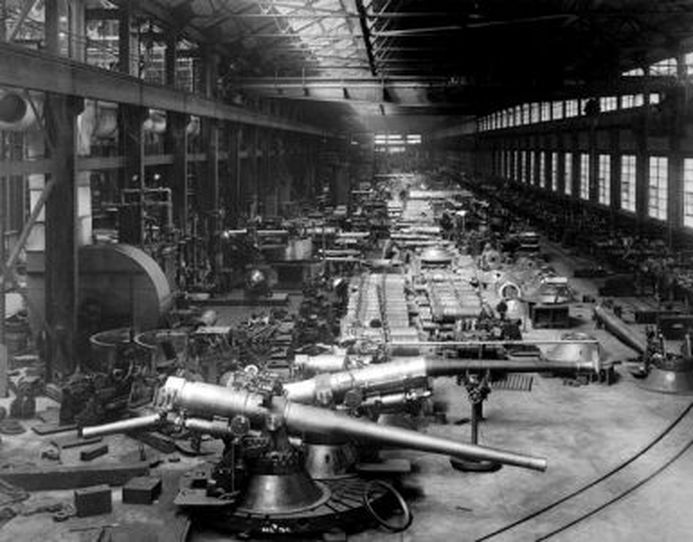
Picture
Large guns with their mounts in foreground immediately in the rear, slides or cradles for 10", 12" and 14" guns at the Bethlehem Steel Company,  1918. http://www.owensarchive.com/  
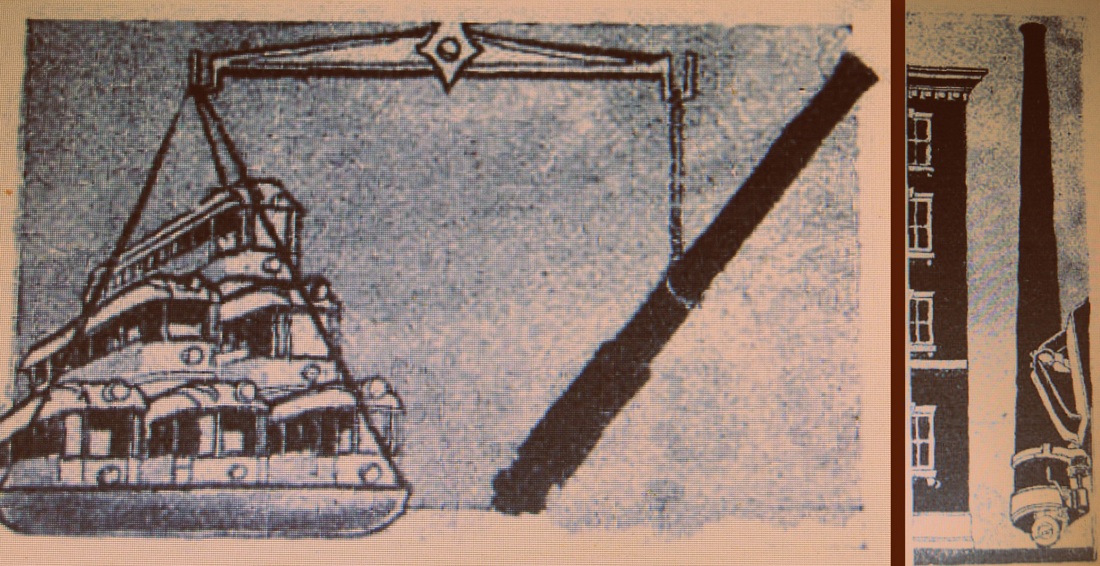
Picture
The 350mm was as heavy as six streetcars and as tall as a four story building.  Caras y Caretas 1910.
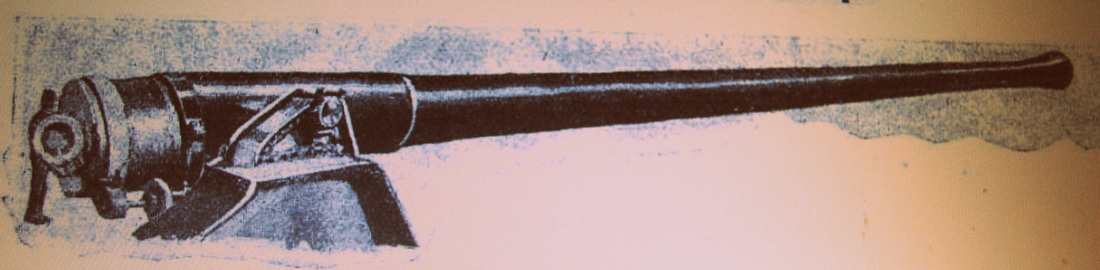
Picture
1910. 350 mm 35 cm naval Gun. Maybe a metal production of the Bethlehem Steel plant?
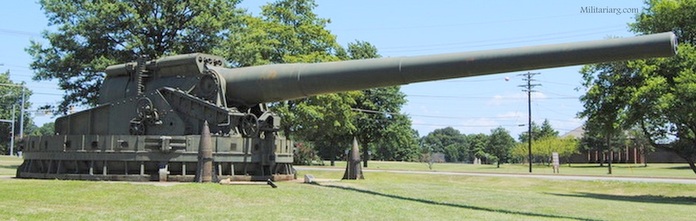
Picture
US 16 inches Coastal Defense Gun Watertown Arsenal, (Carriage M19) Bethlehem Steel, (Barrel). The remaining piece is at the US Army Ordnance Museum, Aberdeen Proving Ground. Maryland.
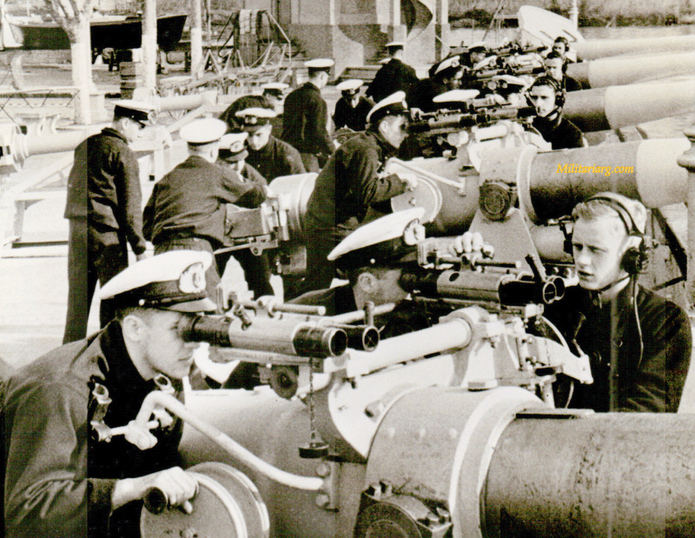
102mm (4-inch/50-caliber gun)

Picture
Photo: Caras y Caretas.
Picture
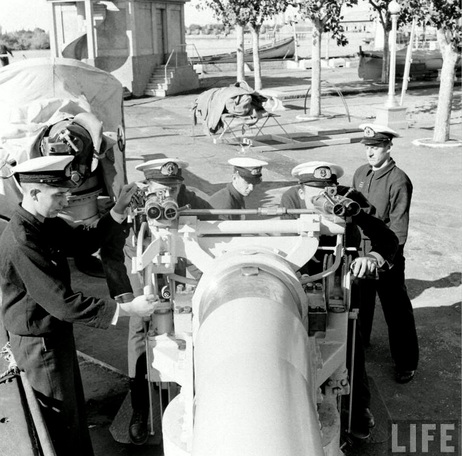
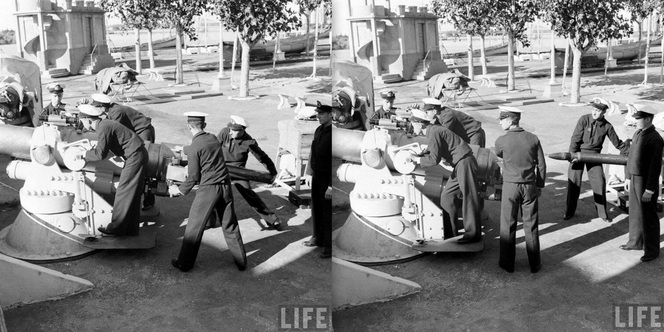
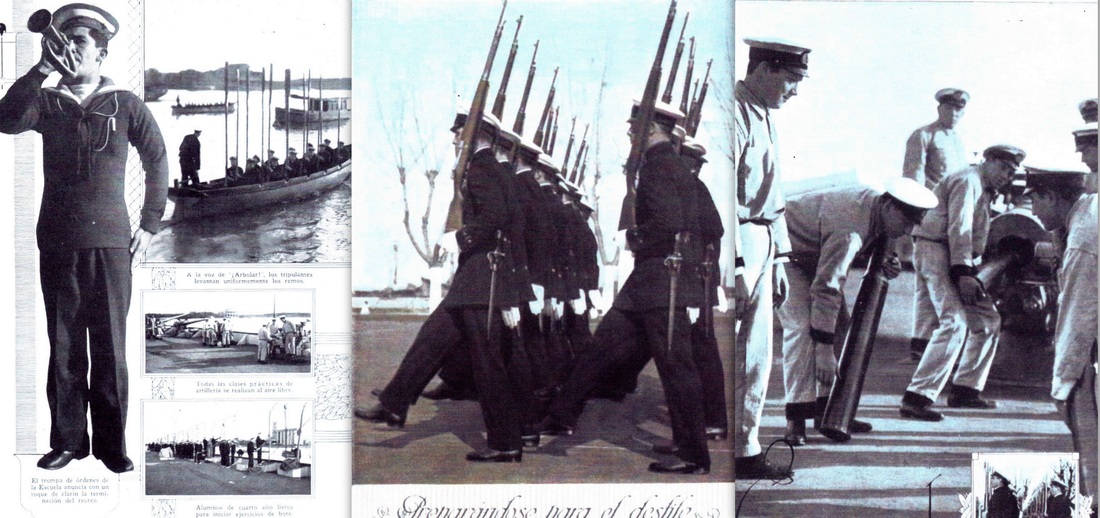
Argentine Navy students practicing on are indeed 102 mm (4-inch) caliber, the same secondary armament used on the battleship ARA Moreno and its sister ship ARA Rivadavia.
Picture
Picture
Picture
1942. Sight binocular.  

The back of the photo has the following typed on it: 
Credit March of Times. Release date wed. March 11th. "The Argentine Question". from international news photos slug (Argentine Navy). Our neighbor's Navy, far from puny:

Buenos Aires, Argentina.

Argentina has more than a token navy as this march of time camera shot well shows, some of the modern warships are pictured and below we see the cadets getting the most modern technical training in rangefinding and aiming. The position of Argentina in which she aligns herself as a friend of the democracies without completely breaking with the axis, puts her in a peculiar position. Knowing thet no nation can long postpone a choice and that she may someday come to grips with, the axis, she is keeping her navy and doughty army in fullest fighting trim. (E-3-10-42)
 

Picture
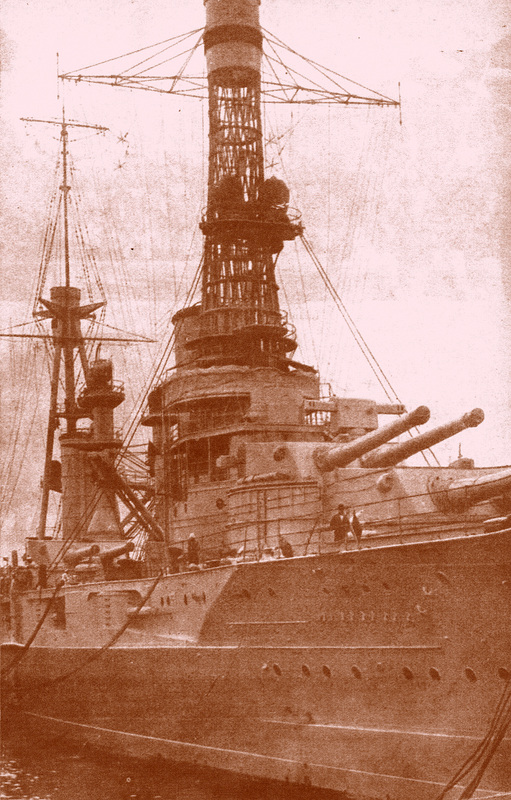
 305mm M1910 Bethelem, (Rivadavia Class).
Picture
ARA Moreno. 12 × 12-inch (305 mm)/50 caliber guns: Mounted in six twin turrets.
Two superfiring turrets fore, two superfiring turrets aft, and two "wing" turrets positioned en échelon (offset) amidships.
During the mid-20s modernization, the turrets were modified to double their rate of fire and increase their range from 12,000 meters to approximately 19,000 meters.
​12 × 6-inch (152 mm)/50 caliber guns: These were retained in casemates along the hull for defense against smaller surface vessels. 
2 × 21-inch (533 mm) torpedo tubes: Submerged tubes located on the broadside.   
4 × 3-inch (76 mm) anti-aircraft guns: Installed during the modernization to counter emerging aerial threats.*
4 × 3-pounder (47 mm) guns: Retained for light defense.*
Photo: Caras y Caretas.

Note: ​The discrepancy in sources regarding the armament of the ARA Moreno in the 1930s is due to the significant modernization the ship underwent in the mid-1920s. Both sets of figures are technically correct but refer to different periods of the ship's life.
Picture
1930s. Caras y Caretas.

Picture
152mm 6" L/50? M1908?. ARA La Argentina (Light-Cruiser). 1937.
Picture
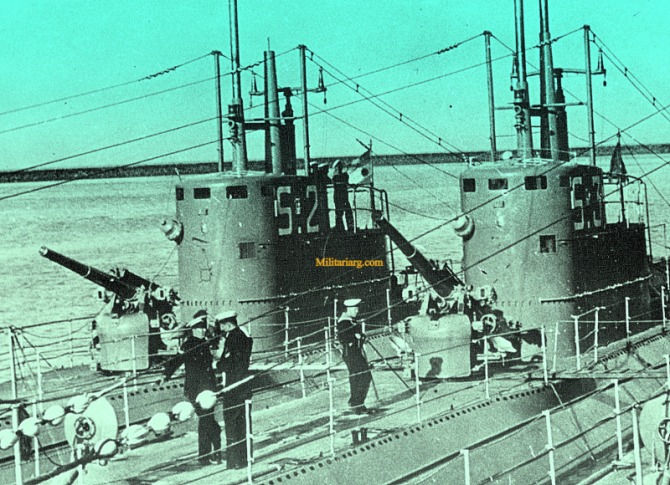
104/40 102/40 Odero-Terni gun. Argentine SS Salta. Santa Fe, Santiago del Estero.  This is an original photo of the submarine.
Picture
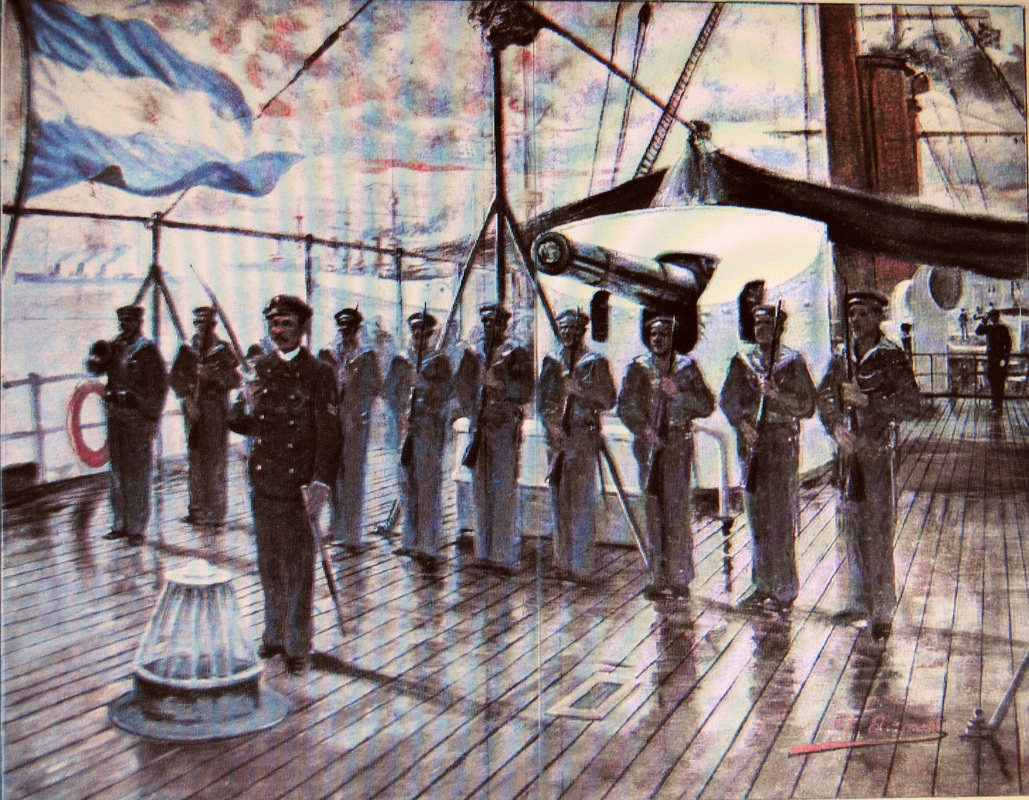
Photo: 1912.  The ships considered to be the seat of the "Escuela de Artillería", (Like el ARA 9 de Julio), counted on a diversity of cannons and calibers of 10, 12, 15, 20 and 21 centímeters.  Ships like the Cruiser ARA BsAS, had a 20 cm Amnstrong in its stern.  The majority of this type of ship were fabricated in the shipyards of England.
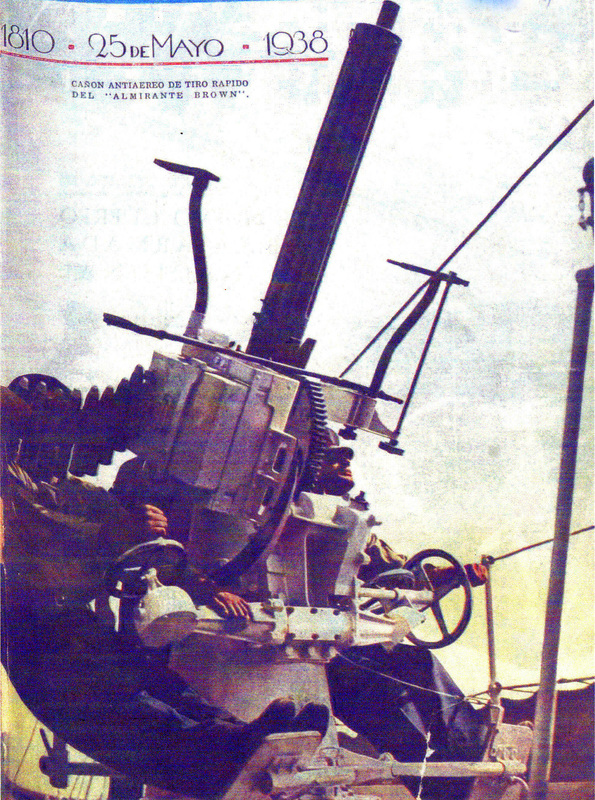
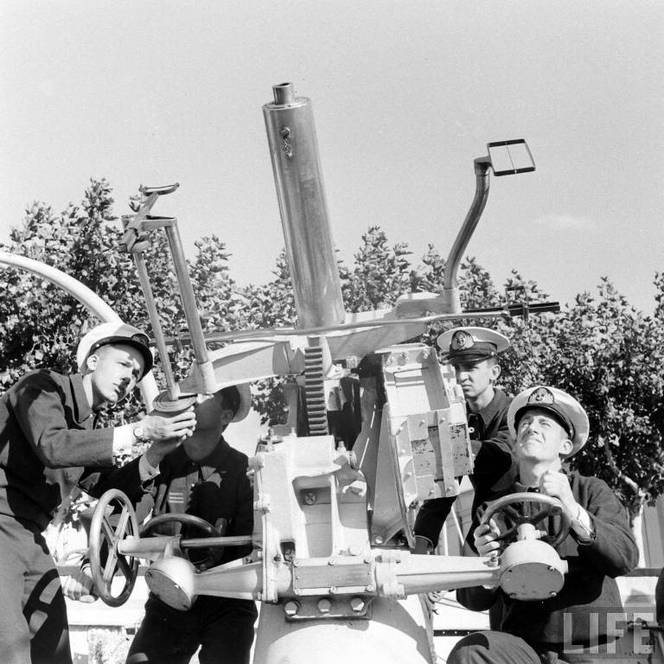
40mm "Pom-Pom" QF 2-pounder Mark II

Picture
ARA Admiral Brown. Vickers 40mm pompom AA Gun. "Caras y Caretas" 1938.
Picture
Vickers 40mm "pom-Pom"AA gun. Photo: Life 1937.
​
In the 1940s, the Argentine Navy utilized the Vickers 40mm "pom-pom" (officially the QF 2-pounder Mark II) as a primary light anti-aircraft weapon on several of its major surface vessels. These guns were often part of original British-built designs or purchased as part of modernization efforts during the interwar period. 
The most notable use of the Vickers 40mm pom-pom was on the Mendoza-class destroyers (ARA Mendoza, ARA La Rioja, and ARA Tucumán). Built in the late 1920s by J. Samuel White in the UK, these ships were originally equipped with two single-mount pom-poms. 

The Argentine variants were typically the water-cooled Mark II models. They were renowned for their distinctive rhythmic "pom-pom" sound and their ability to fire a high volume of 2-pound shells. These guns initially used 25-round fabric belts, which were later replaced in some service variants by 14-round steel-link belts to improve reliability.
While effective against slower biplanes of the 1930s, the Mark II's relatively low muzzle velocity (~590 m/s) and frequent jamming made it increasingly obsolete against faster WWII-era aircraft. 

By the late 1940s and early 1950s, the Argentine Navy followed global trends by phasing out the Vickers pom-poms in favor of the more reliable and higher-velocity 40mm Bofors. 

The Mendoza-class destroyers underwent refits where the Vickers pom-poms were removed and replaced with dual-mounted Bofors guns.This transition was accelerated by the massive influx of U.S. surplus equipment after 1949, which standardized the Bofors as the primary 40mm platform across the fleet. 
Picture
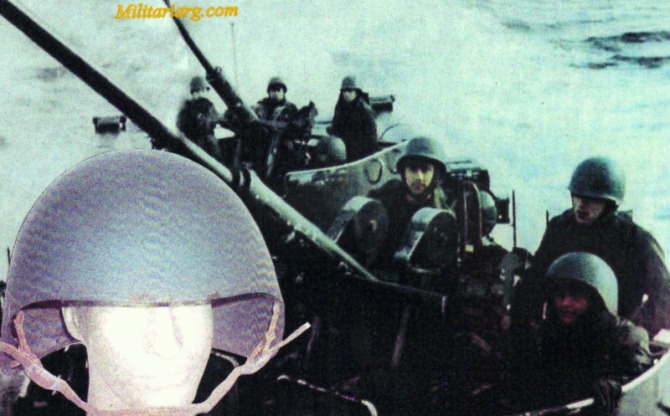
South Atlantic War 1982. For the Armada de la República Argentina (ARA) in 1982, the combination of 40mm Bofors single or twin and 20mm Oerlikon guns was indeed the standard "one-two punch" for short-to-medium range anti-aircraft defense.
​Photo: Background of the "Talker" helmet, "Siete Dias" magazine.
Powered by Create your own unique website with customizable templates.