|
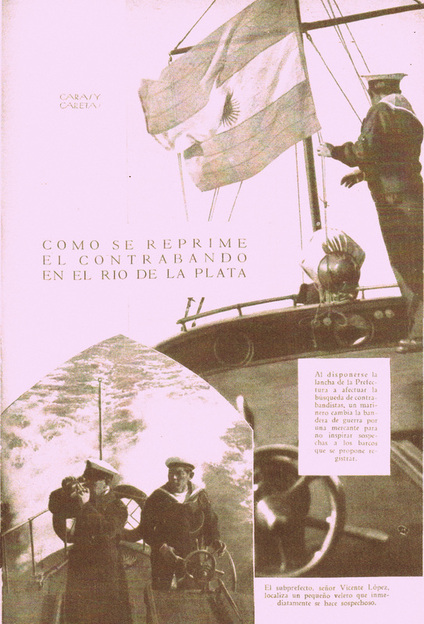
Image: Caras y Caretas 1935.
|
The Prefectura Naval Argentina (PNA), the nation's maritime security force, has a history spanning over two centuries. Before its reorganization following the Falklands War (1982), it evolved from a colonial port authority into a specialized force that played a distinct role in Argentina's 20th-century conflicts.
Founding and Early Evolution The PNA traces its birth to June 30, 1810, when the first autonomous government appointed Martín Jacobo Thompson as the first "Captain of Ports" (Capitán de Puertos). In the late 19th century, Senator Manuel Florencio Mantilla spearheaded the law that established the "National Maritime Prefecture". The institution officially adopted its current name, Prefectura Naval Argentina, in 1969. |
Relationship with the Navy
Historically, the PNA maintained a complex relationship with the Argentine Navy:
For most of the 20th century, the PNA was legally subordinated to the Argentine Navy.
Peronist Interlude
During the 1950s, under Juan Perón, there was a brief period where the PNA gained more autonomy before being reabsorbed into the Navy's command structure after the 1955 coup.
The South Atlantic War (1982)
The 1982 conflict was a defining moment for the PNA, as it deployed both sea and air assets to the islands:
Two patrol vessels were sent to the islands: the GC-82 Islas Malvinas and the GC-83 Río Iguazú.
Attacked by British Sea Harriers on May 22, 1982, while transporting howitzers. One crewman was killed, and the ship was beached to save its cargo for the defense of Goose Green.
GC-82 Islas Malvinas
Captured by the British at the end of the war and briefly operated by the Royal Navy as HMS Tiger Bay.
Air Service
The PNA deployed Short Skyvan transport aircraft and an Aérospatiale Puma helicopter. Both Skyvans were eventually destroyed during British bombardments or raids.
Post-1982 Transition
After the war and the return to democracy in 1983, the PNA's was eventually transferred out of the Navy's jurisdiction and placed under the civilian Ministry of Security, cementing its role as a federal security force rather than a military branch.
Historically, the PNA maintained a complex relationship with the Argentine Navy:
For most of the 20th century, the PNA was legally subordinated to the Argentine Navy.
Peronist Interlude
During the 1950s, under Juan Perón, there was a brief period where the PNA gained more autonomy before being reabsorbed into the Navy's command structure after the 1955 coup.
The South Atlantic War (1982)
The 1982 conflict was a defining moment for the PNA, as it deployed both sea and air assets to the islands:
Two patrol vessels were sent to the islands: the GC-82 Islas Malvinas and the GC-83 Río Iguazú.
Attacked by British Sea Harriers on May 22, 1982, while transporting howitzers. One crewman was killed, and the ship was beached to save its cargo for the defense of Goose Green.
GC-82 Islas Malvinas
Captured by the British at the end of the war and briefly operated by the Royal Navy as HMS Tiger Bay.
Air Service
The PNA deployed Short Skyvan transport aircraft and an Aérospatiale Puma helicopter. Both Skyvans were eventually destroyed during British bombardments or raids.
Post-1982 Transition
After the war and the return to democracy in 1983, the PNA's was eventually transferred out of the Navy's jurisdiction and placed under the civilian Ministry of Security, cementing its role as a federal security force rather than a military branch.
During the World War II era (roughly 1930s–1950s), the Prefectura Naval Argentina (PNA) operated a fleet focused on coastal surveillance, customs, and port security. Unlike the Navy's heavy cruisers and battleships, the PNA's fleet consisted primarily of smaller, specialized patrol vessels and various harbor craft.
WW2-Era Vessel Types in the Prefectura
Coastal Patrol Boats (Lanchas de Patrullaje)
The backbone of the PNA was a series of locally built and imported motor launches. These were often wooden-hulled or light steel vessels designed for riverine and near-shore work.
Avisos (Dispatch and Rescue Vessels)
These were multi-purpose ships used for lighthouse maintenance, search and rescue, and transporting personnel. Many were small tugs or former Navy auxiliaries.
Higgins PT Boats (Post-War Era)
While developed during WWII, many Higgins-type 78-foot PT boats were transferred to Argentina starting in 1948. The PNA and the Navy used these "Mosquito Boats" for high-speed coastal intercept missions in the South Atlantic and the Beagle Channel.
Bouchard-class Influence
While the Bouchard class was technically an Argentine Navy ship during the war, the PNA often worked alongside these minesweepers in coastal defense roles. Some of these ships were eventually decommissioned and their functions (though not always the hulls themselves) were absorbed into PNA-style patrol duties.
Former Foreign Commercial Ships
During the war, several European ships (Italian, German, Danish) were interned in Argentine ports. While the PNA didn't "own" these as warships, they were responsible for guarding and maintaining these vessels during Argentina's period of neutrality.
The Role Shift (1940s–1950s)
During this period, the PNA began integrating more aviation assets for maritime patrol, reflecting the global trend toward air-sea coordination seen in WWII. This included early amphibians and flying boats that could land in the Rio de la Plata.
In the 1940s and 50s, the PNA was heavily militarized and subordinated to the Navy. Its ships were often "hand-me-downs" from the Navy vessels that were too small for the blue water fleet but perfect for the PNA’s police and customs functions.
WW2-Era Vessel Types in the Prefectura
Coastal Patrol Boats (Lanchas de Patrullaje)
The backbone of the PNA was a series of locally built and imported motor launches. These were often wooden-hulled or light steel vessels designed for riverine and near-shore work.
Avisos (Dispatch and Rescue Vessels)
These were multi-purpose ships used for lighthouse maintenance, search and rescue, and transporting personnel. Many were small tugs or former Navy auxiliaries.
Higgins PT Boats (Post-War Era)
While developed during WWII, many Higgins-type 78-foot PT boats were transferred to Argentina starting in 1948. The PNA and the Navy used these "Mosquito Boats" for high-speed coastal intercept missions in the South Atlantic and the Beagle Channel.
Bouchard-class Influence
While the Bouchard class was technically an Argentine Navy ship during the war, the PNA often worked alongside these minesweepers in coastal defense roles. Some of these ships were eventually decommissioned and their functions (though not always the hulls themselves) were absorbed into PNA-style patrol duties.
Former Foreign Commercial Ships
During the war, several European ships (Italian, German, Danish) were interned in Argentine ports. While the PNA didn't "own" these as warships, they were responsible for guarding and maintaining these vessels during Argentina's period of neutrality.
The Role Shift (1940s–1950s)
During this period, the PNA began integrating more aviation assets for maritime patrol, reflecting the global trend toward air-sea coordination seen in WWII. This included early amphibians and flying boats that could land in the Rio de la Plata.
In the 1940s and 50s, the PNA was heavily militarized and subordinated to the Navy. Its ships were often "hand-me-downs" from the Navy vessels that were too small for the blue water fleet but perfect for the PNA’s police and customs functions.
The Prefectura Naval Argentina (PNA) aviation service officially began in the late 1940s. Before this, the force relied on the Argentine Navy for air support. Between its founding and the 1982 conflict, the PNA’s fleet consisted of specialized amphibious and transport aircraft suited for maritime patrol and search and rescue.
1940s–1950s: The Amphibious Era
Foundation (1946–1947)
The Aviation Service was formally created on September 7, 1947. The first pilots trained on Navy Boeing N2S Kaydet and North American SNJ Texan aircraft.
Grumman JRF-6B Goose: These were the PNA's first dedicated aircraft, with eight units acquired starting in 1947. They were used primarily for fishery control and search and rescue due to their ability to land on water.
Grumman G-44 Widgeon: A smaller amphibian used for coastal reconnaissance alongside the Goose.
1960s–1970s: Modernization and Expansion
Douglas C-47/DC-3: As in many world forces of the era, the "Dakota" became a staple for transport and logistics.
Hughes 369/500: Light helicopters were introduced in the late 1960s for coastal surveillance and liaison duties.
Short SC.7 Skyvan: In 1971, the PNA purchased five of these British-made light transports (PA-50 to PA-54). These became the most iconic fixed-wing aircraft of the force, though one (PA-51).
1982: Malvinas War Fleet
During the conflict, the PNA deployed its most modern assets to the islands:
Short Skyvan: Two units (PA-50 and PA-54) were based at Port Stanley and Pebble Island. Both were destroyed by British forces one during the SAS raid on Pebble Island and the other by naval shelling at the Stanley racecourse.
Aérospatiale SA-330 Puma: One PNA Puma was sent to the islands for transport and medical evacuation; it was eventually lost during the conflict.
Aircraft Designations
The naming convention for PNA aircraft changed with the institution's formal name:
PGM (1947–1950): Prefectura General Marítima.
PM (1950–1969): Prefectura Nacional Marítima.
PA (1969–Present): Prefectura Naval Argentina.
1940s–1950s: The Amphibious Era
Foundation (1946–1947)
The Aviation Service was formally created on September 7, 1947. The first pilots trained on Navy Boeing N2S Kaydet and North American SNJ Texan aircraft.
Grumman JRF-6B Goose: These were the PNA's first dedicated aircraft, with eight units acquired starting in 1947. They were used primarily for fishery control and search and rescue due to their ability to land on water.
Grumman G-44 Widgeon: A smaller amphibian used for coastal reconnaissance alongside the Goose.
1960s–1970s: Modernization and Expansion
Douglas C-47/DC-3: As in many world forces of the era, the "Dakota" became a staple for transport and logistics.
Hughes 369/500: Light helicopters were introduced in the late 1960s for coastal surveillance and liaison duties.
Short SC.7 Skyvan: In 1971, the PNA purchased five of these British-made light transports (PA-50 to PA-54). These became the most iconic fixed-wing aircraft of the force, though one (PA-51).
1982: Malvinas War Fleet
During the conflict, the PNA deployed its most modern assets to the islands:
Short Skyvan: Two units (PA-50 and PA-54) were based at Port Stanley and Pebble Island. Both were destroyed by British forces one during the SAS raid on Pebble Island and the other by naval shelling at the Stanley racecourse.
Aérospatiale SA-330 Puma: One PNA Puma was sent to the islands for transport and medical evacuation; it was eventually lost during the conflict.
Aircraft Designations
The naming convention for PNA aircraft changed with the institution's formal name:
PGM (1947–1950): Prefectura General Marítima.
PM (1950–1969): Prefectura Nacional Marítima.
PA (1969–Present): Prefectura Naval Argentina.
South Atlantic War 1982
In the 1982 South Atlantic War, the Prefectura Naval Argentina (PNA) played a vital and high-risk role, deploying both maritime and air assets directly to the islands.
Naval Operations
The PNA sent two 28-meter patrol vessels to the islands. These ships, designed for riverine and coastal police work, were outmatched by the open ocean and modern warships but performed critical logistics and patrol missions. Wikipedia
GC-83 Río Iguazú
On May 22, 1982, while transporting two 105mm howitzers to Darwin, she was attacked by two British Sea Harriers. Imperial War Museums
Heroic Defense
Gunner Julio Omar Benítez was killed while manning a 12.7mm machine gun, and Corporal José Raúl Ibáñez took his place, reportedly damaging or deterring one of the attacking aircraft.
The ship was intentionally beached to save its cargo; the howitzers were recovered and used in the Battle of Goose Green.
GC-82 Islas Malvinas: Based in Port Stanley, she performed reconnaissance and search and rescue missions throughout the war. She was captured by the British at the end of the conflict and briefly used by the Royal Navy as HMS Tiger Bay.
Air Operations The PNA Aviation Service operated under the "Malvinas Search and Rescue Center" but often performed combat logistics and reconnaissance. Alliance of Independent Nations Wiki
Short Skyvans (PA-50 and PA-54)
These British-built transport planes were used to ferry supplies, personnel, and medical evacuees between the islands.
Both Skyvans were destroyed on the ground by British forces one during the SAS raid on Pebble Island and the other by naval shelling at Stanley.
Aérospatiale Puma (PA-12)
Used for rapid transport and medical evacuation, it was eventually shot down or destroyed during the conflict.
In the 1982 South Atlantic War, the Prefectura Naval Argentina (PNA) played a vital and high-risk role, deploying both maritime and air assets directly to the islands.
Naval Operations
The PNA sent two 28-meter patrol vessels to the islands. These ships, designed for riverine and coastal police work, were outmatched by the open ocean and modern warships but performed critical logistics and patrol missions. Wikipedia
GC-83 Río Iguazú
On May 22, 1982, while transporting two 105mm howitzers to Darwin, she was attacked by two British Sea Harriers. Imperial War Museums
Heroic Defense
Gunner Julio Omar Benítez was killed while manning a 12.7mm machine gun, and Corporal José Raúl Ibáñez took his place, reportedly damaging or deterring one of the attacking aircraft.
The ship was intentionally beached to save its cargo; the howitzers were recovered and used in the Battle of Goose Green.
GC-82 Islas Malvinas: Based in Port Stanley, she performed reconnaissance and search and rescue missions throughout the war. She was captured by the British at the end of the conflict and briefly used by the Royal Navy as HMS Tiger Bay.
Air Operations The PNA Aviation Service operated under the "Malvinas Search and Rescue Center" but often performed combat logistics and reconnaissance. Alliance of Independent Nations Wiki
Short Skyvans (PA-50 and PA-54)
These British-built transport planes were used to ferry supplies, personnel, and medical evacuees between the islands.
Both Skyvans were destroyed on the ground by British forces one during the SAS raid on Pebble Island and the other by naval shelling at Stanley.
Aérospatiale Puma (PA-12)
Used for rapid transport and medical evacuation, it was eventually shot down or destroyed during the conflict.
The Agrupación Albatros (Albatross Group)
The Agrupación Albatros (Albatross Group) is the elite special operations unit of the Prefectura Naval Argentina (PNA). Its history from its inception through 1990 is marked by its transition from a tactical police unit to a combat-capable force involved in both international conflict and internal political uprisings.
Foundation and Early Years (1975–1981)
The unit was officially established on April 3, 1975, by executive order during the presidency of Isabel Perón.
It was designed as a high-risk tactical unit to handle scenarios beyond the capacity of standard maritime police, including counter-terrorism, anti-narcotics, and protecting critical port infrastructure.
Its early members received rigorous commando-style training, often influenced by the Argentine Navy's Amphibious Commandos and Army special forces.
The South Atlantic War (1982)
The Albatros Group saw significant combat deployment during the 1982 conflict with the United Kingdom.
Members were deployed to the islands to provide security for port facilities and conduct specialized reconnaissance.
They operated alongside other special forces, such as the Army's 601/602 Commando Companies and the Navy's Buzos Tácticos. They were notably equipped with camouflage uniforms and specialized gear that was otherwise rare among standard Argentine conscript units.
The war solidified the unit’s identity as a paramilitary "Intermediate Force," capable of operating in a traditional military theater.
The "Carapintada" Uprisings (1987–1990)
Following the return to democracy in 1983, the Albatros Group became embroiled in the Carapintada (Painted Faces) mutinies a series of military revolts.
Foundation and Early Years (1975–1981)
The unit was officially established on April 3, 1975, by executive order during the presidency of Isabel Perón.
It was designed as a high-risk tactical unit to handle scenarios beyond the capacity of standard maritime police, including counter-terrorism, anti-narcotics, and protecting critical port infrastructure.
Its early members received rigorous commando-style training, often influenced by the Argentine Navy's Amphibious Commandos and Army special forces.
The South Atlantic War (1982)
The Albatros Group saw significant combat deployment during the 1982 conflict with the United Kingdom.
Members were deployed to the islands to provide security for port facilities and conduct specialized reconnaissance.
They operated alongside other special forces, such as the Army's 601/602 Commando Companies and the Navy's Buzos Tácticos. They were notably equipped with camouflage uniforms and specialized gear that was otherwise rare among standard Argentine conscript units.
The war solidified the unit’s identity as a paramilitary "Intermediate Force," capable of operating in a traditional military theater.
The "Carapintada" Uprisings (1987–1990)
Following the return to democracy in 1983, the Albatros Group became embroiled in the Carapintada (Painted Faces) mutinies a series of military revolts.
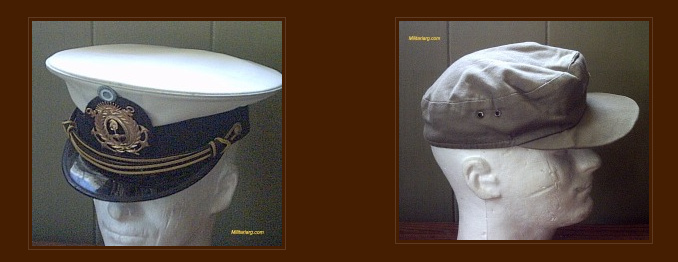
Left: Rare visor hat with shield from Coast Guard (Prefectura). Right: Hot weather cap from the Coast Guard circa 1970s.