Militariarg.com
  • Home
  • Army
  • Aviation
  • Navy
  • Uniforms and Badges
  • Arms and Weapons
  • Equipment
  • Vehicles
  • Operational and Organizational Structure, Security Forces, Transportation, Books, Models and More.
  • Argentine Confederation Era. 1829 - 1852.
  • From 1852 to 1910 (French fashion)
  • Bunker 1982: South Atlantic War Militaria
  • International Militaria
  • Argentina WWII Era (Neutral) Reenactment Impression
  • Links ~ Enlaces
Picture
Eight Route Army in Shanxi. Defense of Nanking Campaign. The Chinese began using a rare variety of foreign helmets that included attempts at prototypes of their own. The various armed factions in each region of China used M35 German helmets and its local version, also Japanese helmets M22 "Cherry blosson", type 90, British brodie helmets, US M1 and soviet helmets. Curiously, it was not until 1980 that a steel helmet began to be manufactured in number. This was the GK80 designed in the 60s.


Since the establishment of the People's Republic of China (PRC) in 1949, China has been involved in several major armed conflicts and numerous border skirmishes but he major was the Sino-Vietnamese War in 1979. 

Major Armed Conflicts (since 1949)

Chinese Civil War (1945–1950): While fighting had been intermittent since the late 1920s, the post-World War II phase culminated in the Communist Party's victory on mainland China and the retreat of the Nationalist government to Taiwan.

 Invasion of Tibet (1950): The People's Liberation Army (PLA) invaded and annexed Tibet, incorporating it into the PRC.

 Korean War (1950–1953): China entered the war as the People's Volunteer Army (PVA) to support North Korea against South Korea, the United States, and United Nations forces. The conflict ended in a ceasefire and an established Demilitarized Zone (DMZ) at the 38th parallel.

 Sino-Indian War (1962): A month-long conflict over disputed Himalayan borders resulted in a Chinese victory and a return to the pre-war status quo after a Chinese withdrawal.

 Vietnam War (1965–1969): China provided significant military and technical assistance to North Vietnam to support their fight against the U.S. and South Vietnamese forces.

 Sino-Soviet Border Conflict (1969): A series of intense, undeclared military clashes occurred along the Sino-Soviet border, most notably over Zhenbao (Damansky) Island.

 Battle of the Paracel Islands (1974): Chinese naval forces seized control of the Paracel Islands from South Vietnam in a single, notable naval engagement.

 Sino-Vietnamese War (1979): China launched a punitive invasion of northern Vietnam in response to Vietnam's invasion of Cambodia (which had ousted the Chinese-backed Khmer Rouge). Chinese forces captured several border cities before withdrawing. 

Other Notable Skirmishes and Crises

  Taiwan Strait Crises (1954–1955, 1958, 1995–1996): Military tensions and shelling of islands controlled by the Republic of China (Taiwan), involving U.S. intervention or strong warnings.


 Sino-Vietnamese Border Conflicts (1979–1990): A decade of intermittent border clashes and skirmishes following the 1979 war.

 Johnson South Reef Skirmish (1988):
A naval skirmish with Vietnam over control of a reef in the Spratly Islands.
 
China-India Skirmishes (2020–2021, 2022): Violent, non-lethal (in 2020) clashes along the disputed Line of Actual Control (LAC) in the Himalayas. 

Today, China primarily participates in UN peacekeeping and anti-piracy missions rather than full-scale wars.

 China Overseas Military Bases

China has established overseas military facilities, with its first official base in Djibouti (2017) for naval support, and a second "joint logistics and training center" at Ream Naval Base in Cambodia (opened April 2025), strategically located for South China Sea access, while also maintaining a presence in Tajikistan. China is expanding its overseas footprint, seeking access in countries like Pakistan, Sri Lanka, and Tanzania, often linked to its Belt and Road Initiative, aiming to project power and protect trade routes.
China has military bases, meaning it does not solely rely on soft power in its foreign and security policy. Beijing uses a multifaceted strategy that blends economic and soft power with a growing military presence abroad to protect its expanding global interests.But the Chinese military presence in the world is logistical in nature and supports the vital routes of its trade. China knows very well that the United States operates approximately 750 military bases across at least 80 countries worldwide. This includes over 120 formally designated air bases alongside other military installations and sites. These bases control the air and land spaces of the land, sea and air trade routes. 

​Faced with a tariff war, and economic blockades, it is likely that China will try to avoid maritime routes by taking advantage of its territorial extension and the strategic geography of partner countries such as Russia and India (BRICS). Recently, China and Iran have carried out approximately 1,000 kilometers (620 miles) of rail routes with Iran under its new silk road (Belt and Road Iniciative. 

The Shanghai Cooperation Organisation (SCO) and the Collective Security Treaty Organization (CSTO) are not the same, because the SCO itself does not have a unified, permanent military command structure or standing collective armed forces in the same way the CSTO (Collective Security Treaty Organization) or NATO does. 
​Moscow and Beijing are not formal military allies in the traditional sense, as they do not have a mutual defense treaty like the one that binds NATO members. However, their relationship has deepened into a comprehensive strategic partnership with extensive military, economic, and political coordination, leading many observers to describe it as an "alliance short of an alliance" or a de facto alliance. 

Picture
Picture
Picture
Since 1949, China's military, the People's Liberation Army (PLA), has used several helmet models, transitioning from repurposed World War II-era steel helmets (Japanese Type-90), and own designs such the GK80 steel helmet and some plastic lightweights, to modern aramid-fiber composite helmets QGF-02, and the current QGF-03.

Type 90 Helmet

Picture
​Beijing on Oct 1, 1949. The first grand parade of People's Liberation Army, was the first military ceremony after the founding of the People's Republic of China. The infantry wear type 49 uniform with Japanese type 90 with the front star badge painted in red and VZ26 LMG. The Japanese helmets were used in China's war with Vietnam in 1979.  
Picture
Picture
Picture
Picture
Picture
Chinese soldiers, with Type 90 helmets, M55 uniform and Type 54 SMG.
​The Chinese version of the Soviet PPS-43 is officially designated as theType 54 submachine gun. It is often colloquially referred to as the "Chinese PPS-43" or mistakenly associated with the PPSh-41 ("Pepesha") because it replaced the earlier Chinese PPSh clone, the Type 50.

Picture
This is the overseas cap called in China "Boat cap" that was part of the Chinese Model 1955 uniform. It was a summer headgear copied from the Soviet model "pilotka". Its design made it possible to improve vision. It could serve as a liner under a helmet among other uses. However, it was only used for three years, from 1956 to 59.
The reason why it was rejected in both the civilian and military spheres was because it was an item, which did not represent Chinese culture and tradition.
Picture
1959 - 1965. After the Type 55 "boat" cap was abandoned in 1959, the Chinese People's Liberation Army (PLA) returned to a peaked cap known as the Type 58 cap (also sometimes referred to as the Type 59 cap, as a minor variant).
​​This Type 58 peaked cap was the standard headwear for all PLA personnel during this period.
Picture
 From here on the "Yuvita" PLA type 65 uniform AKA "Mao" hat appears. 
The Type 65 uniform was introduced as part of the broader Cultural Revolution movement. This included the iconic soft, green "Yuvita" (Type 65) cap, which also featured a universal design for all personnel, further eliminating status distinctions. It is this latter cap that is most famously known as the "Mao" cap. 

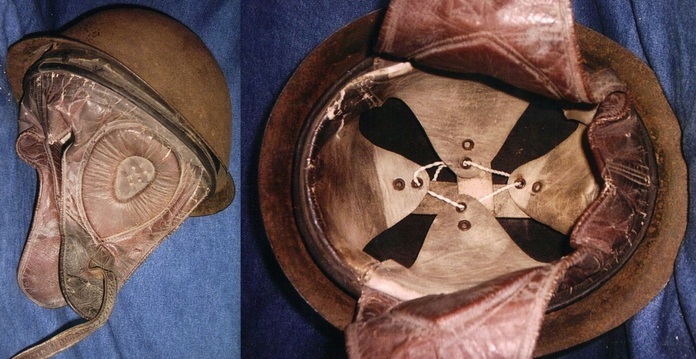
Type 56? Fiberglass Helmet

Picture
Photo from 1959. PLA soldiers with Type 56 carbine (SKS) and Type 58 uniform. The helmet in the parade may have been called "Type 56" as there were a family of small arms and related equipment adopted in 1956. ​
Picture
In this propaganda poster of the same event, you can see the detail of the liner rivets visibly exposed on the outside of the shell. A feature that its successor, the Type 69 (GK80) would not have. ​It is very likely that this mid-50s fiberglass helmet had a copy of the liner of the Japanese Type 90 helmet.

Type 56 designation:


Assault rifle: A licensed copy of the Soviet AK47.
Type 56 carbine: A licensed copy of the Soviet SKS.

Type 56-1: Variant with an under-folding metal stock.
Type 56-2: Improved version with a side-folding stock, introduced in 1980.
Type 56 - QBZ-56C. A compact carbine version with a short barrel and 20-round magazine, used primarily by the Chinese Navy.
Type 56 Light Machine Gun, licensed copy of the Soviet RPD belt-fed light machine gun.
​The 7.62×39mm Cartridge: The Chinese production version of the Soviet M43 ammunition used by the Type 56 rifle, carbine, and LMG.
A recoiless rifle. Chinese version of the Soviet RG-82
An 14.5mm Anti-Aircraft Gun: A quadruple-barrel towed anti-aircraft system based on the Soviet ZPU-4.


Picture
1 October 1959.

Chinese PRC PLA Fiberglass Parade Lightweight Training Helmet

Picture
Picture
Picture
Picture
Picture

Picture
Picture

Picture
The GK80 (60s) together with its predecessor lightweight helmet (50s). The shapes are very similar. It seems that the inspiration was taken from the combination of the Japanese Typo 90 with the American M1 helmet. Was there an intention that the lightweight helmet was produced as a plastic liner for a steel helmet in the M1 style? 
In the 70s a version of this same lightweight shell appeared, but with the liner system of the Japanese Type 90. The most visible difference was in the liner and in the position of the rivets that held this up. seen in weapons training photos.

​This type-70 could have been the one in the photo below with the Manpad.


Picture
Type 56 helmet and Type 65 uniform.  HN-5 (Hongying 5) mandpad.

GK80 Steel Helmet

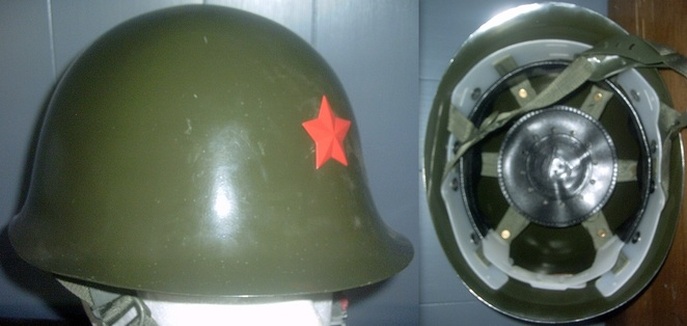
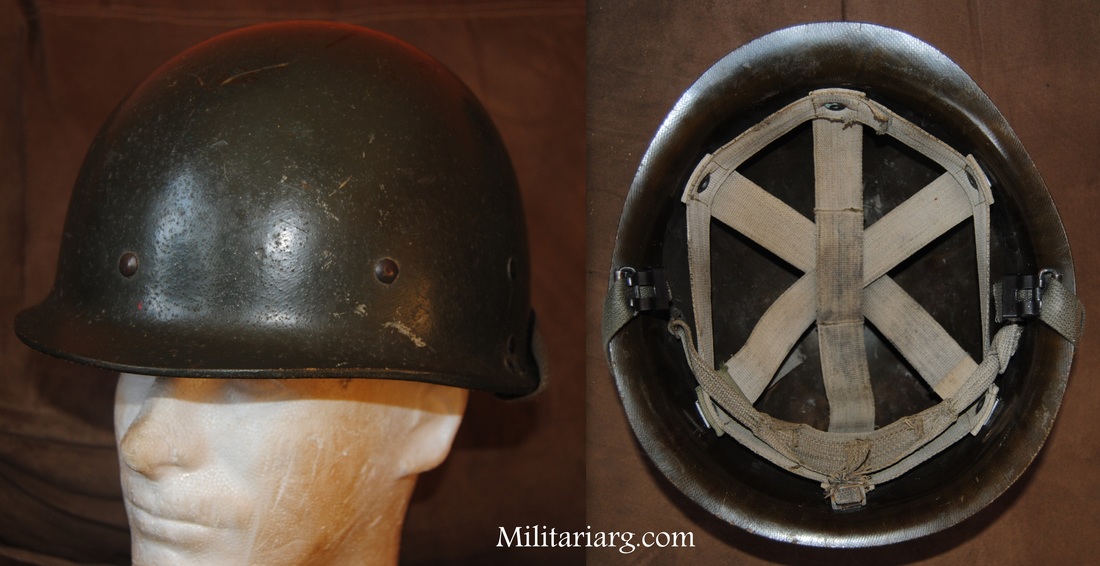
​This steel helmet with Type M1 Riddel liner system was produced by China towards the late 1960s as an aid helmet for the Socialist Republic of Albania during the Sino-Soviet Split. The design is based on a helmet photographed at the October 1, 1959 parade and which could have been one of the innovations of 1956. 

​After the experiences of the Sino-Vietnam War of 1979 (where China had to use Japanese Type 90 helmets), China began to manufacture in the 80s, the Type 69  to equip the PLA under the designation GK80 and GK80A (improved steel combat helmet). GK80 and GK80A are actually a single helmet model.

Albanian Type 69 (Chinese GK80)

Picture
Picture
Picture

 GK80A Steel Helmet

Picture

Picture
PLA soldiers with type 65 uniform and GK80A helmets.
Picture
Picture
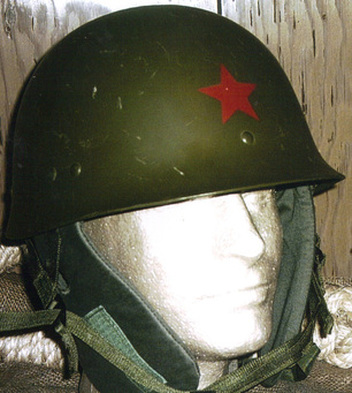
Chinese Paratrooper Plastic Helmet. GK82 without neck flap and with it.

Chinese Paratrooper Plastic Helmet. GK82.

The Chinese GK-82 Airborne Jump Helmet Paratrooper was designed for jump missions. Made of nylon with a non-ballistic design, this green helmet features a removable neck flap and adjustable liner for added comfort during wear. The helmet is adorned with a red star stencil. 
Picture
Picture
Picture
Picture
Picture
Picture
Picture
Picture

Posters from Chinese films about the Sino-Vietnamese War 1979. 
​

Picture
This war was in 1979, between communist China against the Socialist Republic of Vietnam in the context of the Sino-Soviet Split. The conflict originated in 1978 when Vietnam (supported by the Soviet Union) just after the war with the United States, decided to put an end to the tragic Maoist tyranny of Khemer Rouge (Pol Pot), who was an ally of China in Cambodia. In response to Vietnam's invasion of Cambodia, China invades northern Vietnam in a surprise offensive. Like the United States, China also did not have an easy time invading Vietnam, which quickly ends up withdrawing. Vietnam continued to occupy Cambodia until the fall of the Soviet Union.

Experimental and Other Kinds of Helmets:

Picture
Chinese GK80 type Tanker or Dispatch Rider Helmet.
Picture
 Chinese type GK 80A1 with plastic liner. ​This helmet may have been designed for parades as a light weight, but it passed into civilian defense service.
Picture
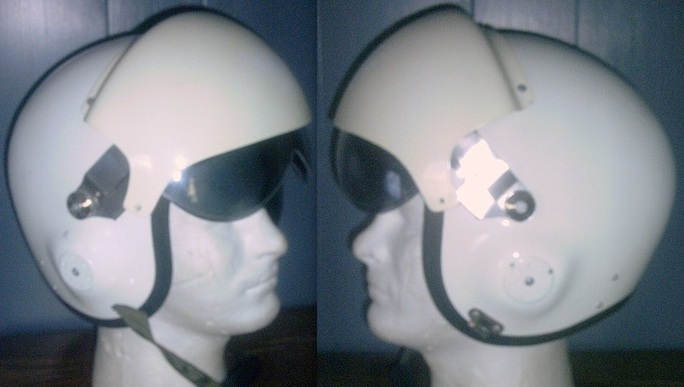
Type TK-2 Flight Helmet.
Picture
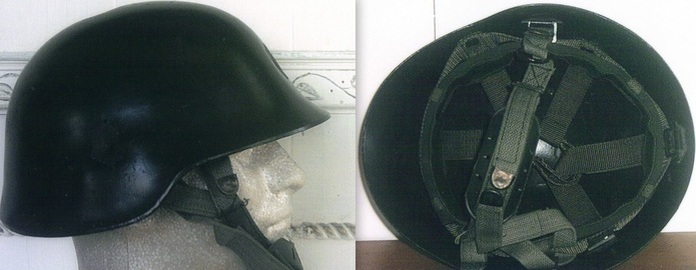
Type SWAT JK96 helmet. ​This specimen appears to have been ballistically tested. ​In my opinion, the criteria that was used to make these prototypes was not a PASGT design or clone, but rather an evolution of the GK80 but Fritz.
Picture
Chinese Experimental, JK96-2 (1996), heavy steel helmet. It was a thicker prototype to reinforce its ballistic properties, but this made it heavy, so it was more suitable for special police forces than for military use. The successor of this was called FK2000-4 (2000) light steel helmet, version of the "Fritz" Personnel Armor System for Ground Troops (PASGT) helmet, but made of steel instead of composite. ​These models were also made for export.
More info and images of these Chinese prototypes by clicking on the following photo
Picture
​According to the images, the FK2000 does seem to look more like a PASGT, but made of steel with a thickness comparable to standard helmets. Obviously the next prototype would be made of more modern material.​These prototypes open the hypothesis that China throughout history has developed many more models with greater or lesser perfection, something that Western collectors are unaware of as well as the confusion of their denominations.

Picture
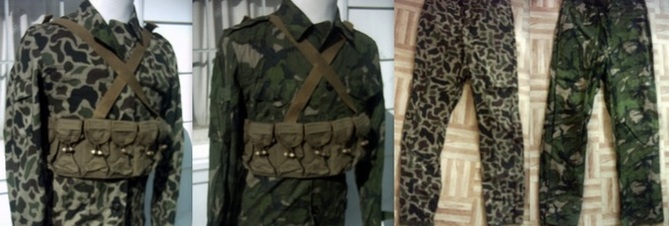
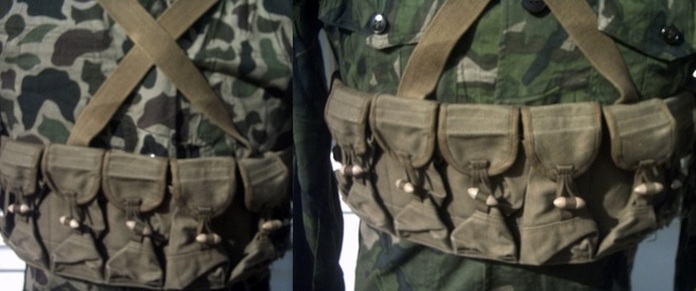
SKS Ammo 10-Pouch. ​The manequin camo uniform corresponds to Taiwan (ROC).
Picture
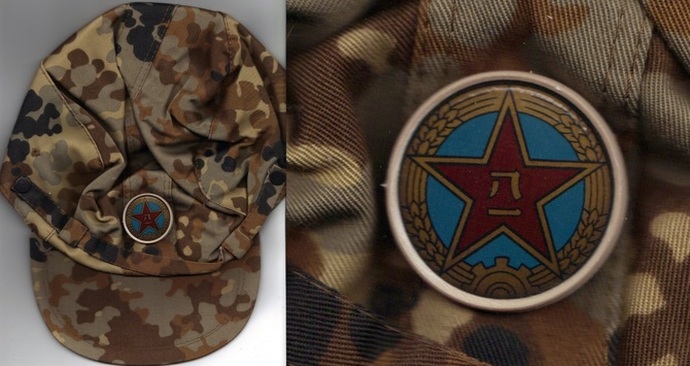
Chinese Army Enlisted Camo Cap.

DPRK (North Korea)

Picture
Soviet or DPRK made Ssh40 helmet. DPRK Type 58 assault rifle, licensed version of the AK47 kalashnikov type 3, featuring a milled receiver, wood or underfolding stocks, and distinctive NK markings..
Picture
Korea was a Japanese colony until the end of World War II in 1945. Following Japan's surrender, the peninsula was divided along the 38th parallel into two occupation zones: a Soviet-backed communist North and a U.S.-backed non-communist South. By 1949, both the U.S. and Soviet forces had withdrawn, leaving two rival states, the Democratic People's Republic of Korea (DPRK) in the north under Kim Il Sung and the Republic of Korea (ROK) in the south under Syngman Rhee, each claiming sovereignty over the entire peninsula. On June 25, 1950, with the backing of Joseph Stalin and Mao Zedong, the North Korean People's Army (KPA) launched a surprise, all-out invasion of the South to unify Korea under communist rule.

The Korean War (June 25, 1950 - July 27, 1953) was the first major armed conflict of the Cold War, a brutal proxy war that pitted North Korea (supported by China and the Soviet Union) against South Korea (supported by a United Nations coalition led by the United States). ​Notice that this war was one of the few, if not the only one where the UN itself went to war.
During the Korean War, the North Korean People's Army (KPA) was equipped almost entirely with Soviet-designed and supplied military hardware from the World War II era and beyond.

Weapons
Rifles: The Mosin-Nagant M1891/30 bolt-action rifle and carbine versions (M38, M44) were standard issue.
Submachine Guns: The PPSh-41 (Pistolet-Pulemyot Shpagina 41) was the most common submachine gun, along with the PPS-43, and Chinese copies were also widely used.
Pistols: The Tokarev TT-33 semi-automatic pistol was the standard sidearm.
Machine Guns:
Degtyaryova pakhotnyi (DP-28) and the modernized DPM/RP-46: These were used as the primary light machine guns.
Maxim M1910 and DShK 1938: These heavy machine guns were used for sustained fire and anti-aircraft roles.
Anti-Tank Weapons: The PTRS-41 anti-tank rifle was used, though outdated against U.S. medium armor, and they also used the RPG-43 anti-tank grenade and later, copies of the M20 Super Bazooka. 

Artillery
North Korean artillery mostly consisted of Soviet towed pieces. They also used multiple rocket launchers, which were highly effective and demoralizing against UN forces.

Field Guns and Howitzers:
ZiS-3 76 mm divisional gun: A versatile weapon used for both artillery and anti-tank roles.
M-30 122 mm howitzer: A standard Soviet howitzer used for general support.
A-19 122 mm gun and ML-20 152 mm gun-howitzer: Heavier pieces for long-range fire support.
Multiple Rocket Launchers: The Katyusha rocket launcher, a truck-mounted multiple rocket launcher, delivered powerful saturation bombardments.
Anti-Aircraft: The 37 mm 61-K M1939 automatic anti-aircraft gun and the large DShK 12.7 mm machine guns were widely deployed. 

Tanks and Vehicles
The North Korean armored force was built around Soviet medium tanks, which initially provided a significant advantage over the South Korean and early arriving U.S. forces, who initially had no tanks or only light tanks.

Tanks: The primary tank was the T-34-85 medium tank, a proven World War II design. These tanks were crucial to the initial rapid advance into South Korea.
Self-Propelled Guns: The SU-76M light self-propelled gun, which mounted a 76.2mm cannon on an open-topped chassis, was used for light artillery support and as an anti-tank weapon.

Vehicles: The army was not heavily mechanized and relied mostly on standard military trucks, but they did use the BA-64 armored car for reconnaissance and the BTR-40 armored personnel carrier on a limited basis. 

Fighters
The North Korean People's Air Force (KPAF) used a variety of Soviet propeller-driven aircraft early in the war, which were eventually replaced by highly effective jet fighters as the conflict progressed.

Propeller Fighters/Bombers:
Yakovlev Yak-9: The main piston-engine fighter used in the early stages.
Ilyushin Il-10: A ground-attack aircraft used as a light bomber.
Lavochkin La-9 and La-11: Piston-engine fighters used for patrol and early intercept missions.
Jet Fighters: The introduction of the Mikoyan-Gurevich MiG-15 in November 1950 drastically changed the air war. Flown initially by Soviet pilots (and later Chinese and North Korean pilots), the swept-wing MiG-15 outclassed the straight-winged U.S. jets like the F-80 Shooting Star and forced the U.S. to rush the superior F-86 Sabre to the conflict, leading to famous "MiG Alley" dogfights.

Vietnam

Picture
Viet Cong with MG-34 LMG and Vietnamese Army Pith helmets.
During the Indochina and Vietnam Wars, the Viet Cong and North Vietnamese forces used various ex-Wehrmacht (German Army during WWII) weapons such K98, MP40, Mg34, Walther P48 and Mauser C96 pistols, FG42 paratrooper rifles, 7.5 cm PaK 40 Anti-Tank Gun, 8.8 cm Flak 36/37 Anti-Aircraft Gun: Some of the legendary German "88" flak guns, captured by the Soviets, were provided to North Vietnam and used in their original role as anti-aircraft defense against U.S. jets.
These were acquired through two main sources: capturing them from the French Expeditionary Corps (which used German surplus after WWII) and receiving them as military aid from the Soviet Union and China, who had captured massive stockpiles in 1945
. 
Picture
Bofors 40mm Dual AA gun. Soviet type helmes and DDR German M56 helmets Vietnam War.
Picture
DDR Model 1956 German helmets and soviet bullet proof vest.. ZIL-157 6x6 truck 1958. Vietnam War.
Picture
Ssh40 Soviet helmets and radios.Sikorsky H-19 Chickasaw. Sino-Vietnamese War 1979.
Vietnam was involved in a long series of conflicts throughout the 20th century. Its geopolitical position and the context of the Cold War meant it frequently faced involvement from various foreign powers.
While the primary adversaries were France and the United States, several other nations participated with combat forces or were engaged in later border wars:
​
Japan (during a period of occupation and conflict within French Indochina during World War II)

France (First Indochina War, 1946-1954)

United States (Vietnam War, 1955-1975, a proxy war where the U.S. supported South Vietnam against North Vietnam)
South Korea, Australia, Thailand, New Zealand, and the Philippines (sent combat troops to support South Vietnam and the United States during the Vietnam War)

China (supported North Vietnam in the Vietnam War, but later fought the Sino-Vietnamese War in 1979 and subsequent border conflicts until 1991)

Cambodia (specifically the Khmer Rouge regime, leading to the Cambodian-Vietnamese War from 1977-1991, which Vietnam invaded to oust the regime)

Thailand (involved in border conflicts and also sent troops to South Vietnam during the Vietnam War) 

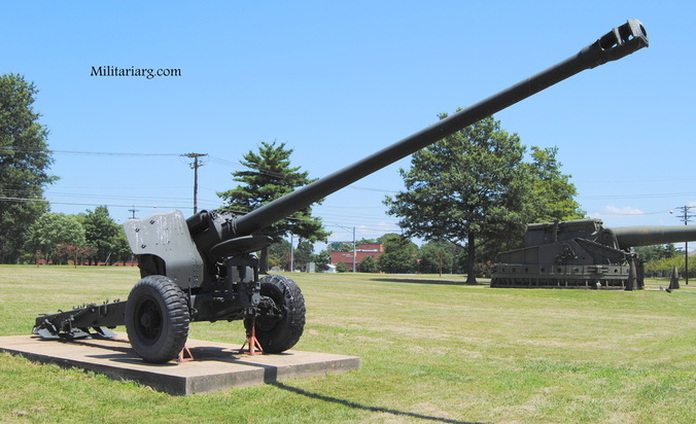
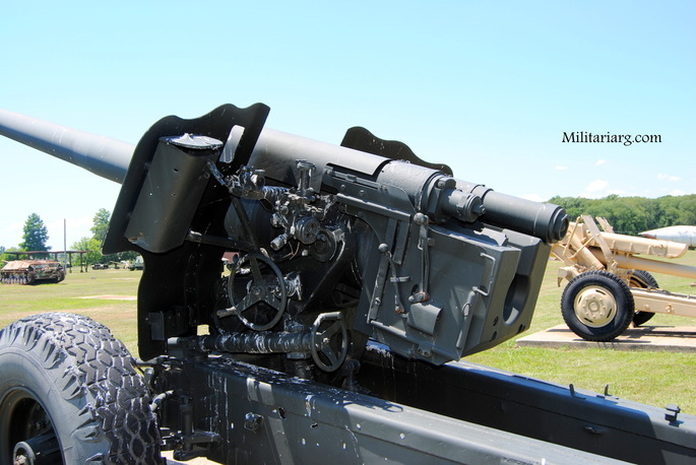
Type 59-1 (130 mm towed Soviet field gun M1954)

Picture
Picture

Picture
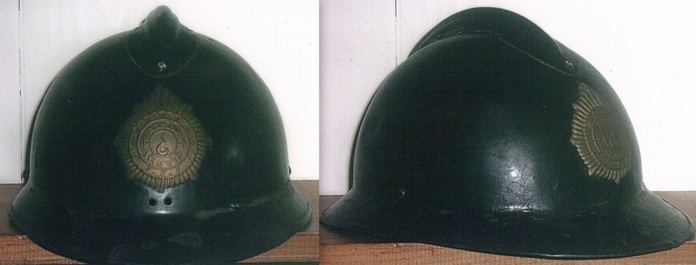
M26 (French), Siam Helmet. (Siam was the name of Thailand before 24 June 1939 and again from 8 September 1945 to 20 July 1949)
Taiwan

Picture
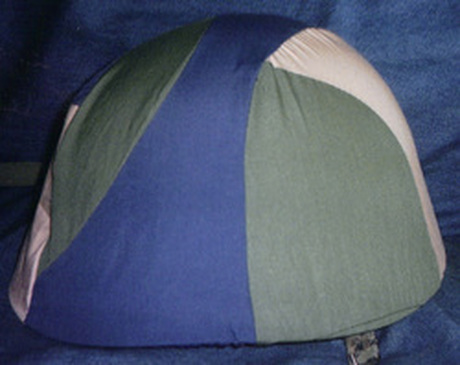
Taiwan National Army, M1 Helmet with cover.
Picture
Taiwan National Army. US 75mm M1A1 (M116) howitzer. 
Picture
1980s .Chinese Army reversable camouflage uniform adaptation of the WWII USMC Jungle camo and DPM type. The SKS Ammo 10-Pouch correspond to PRC China.
Picture
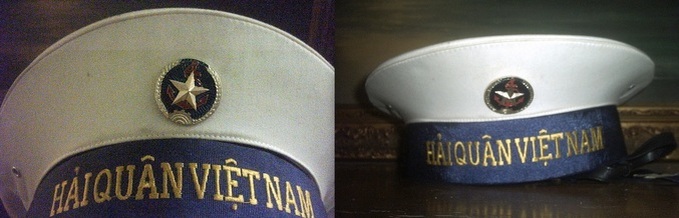
Vietnamese Sailor Hat.
Picture
South Korean M76 Corlon (Exported in many countries). ​This specimen was used by Iraq before 2003.

Powered by Create your own unique website with customizable templates.