Militariarg.com
  • Home
  • Army
  • Aviation
  • Navy
  • Uniforms and Badges
  • Arms and Weapons
  • Equipment
  • Vehicles
  • Operational and Organizational Structure, Security Forces, Transportation, Books, Models and More.
  • Argentine Confederation Era. 1829 - 1852.
  • From 1852 to 1910 (French fashion)
  • Bunker 1982: South Atlantic War Militaria
  • International Militaria
  • Argentina WWII Era (Neutral) Reenactment Impression
  • Links ~ Enlaces
Picture
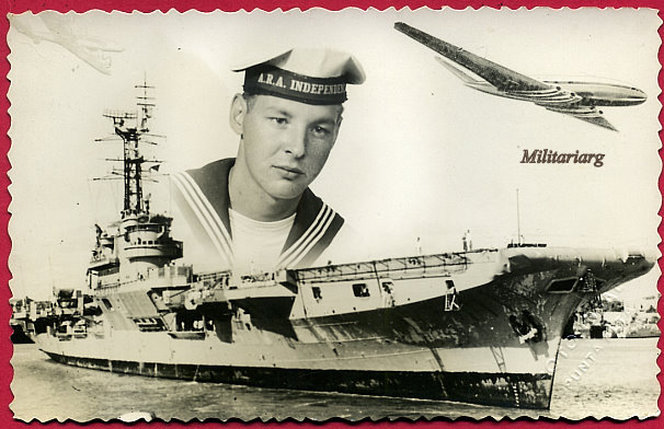
A.R.A Independencia
Picture
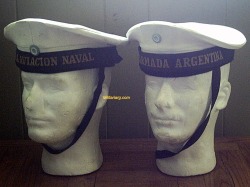
Donald Duck-style sailor caps.
Picture
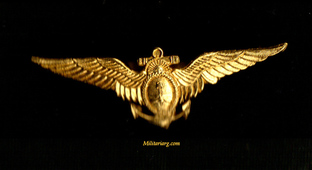
Naval Aviation Insignia.

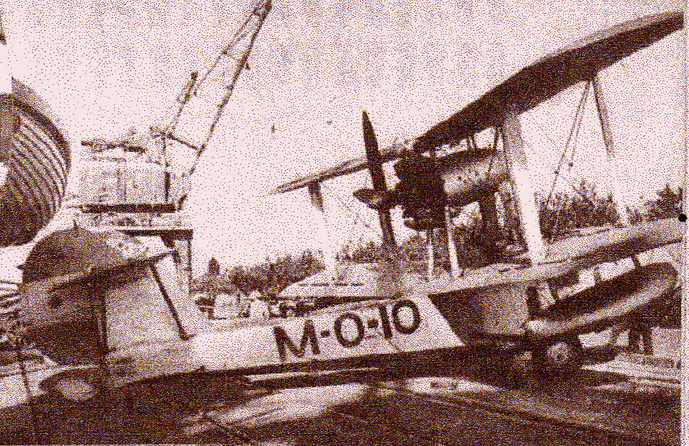
Supermarine Walrus MK.1

Picture
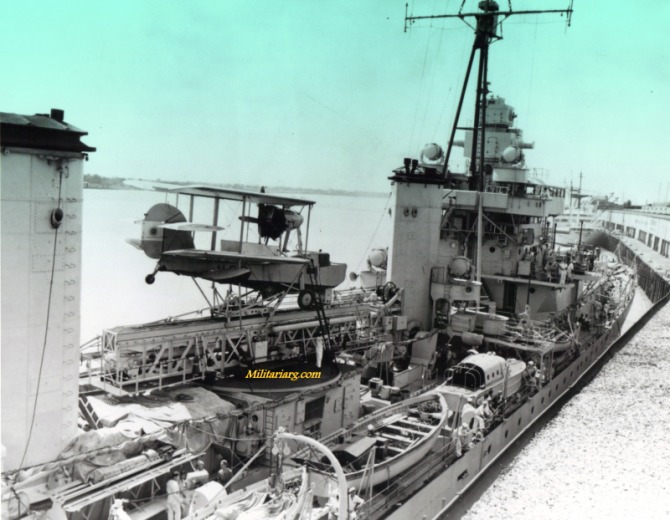
Photo: Supermarine Walrus from ARA La Argentina.

Supermarine Walrus Mk.I, a British-built amphibious biplane that served on the cruiser ARA La Argentina starting in the late 1930s.The marking M-O-10 identifies its specific role and squadron within the Argentine Navy (Armada de la República Argentina): M (Marina)  naval aircraft. O (Observación) role of observation and reconnaissance platform, and 10: The individual aircraft number within the squadron.

While the Vought Corsairs were great scouts, the Walrus was an amphibian. This gave the La Argentina much more flexibility because the Walrus could land on a solid runway (using its retractable wheels) or on the water (using its hull), whereas the V-65 had to be manually converted between floats and wheels.
Unlike the Corsairs, the engine is mounted on the top wing and "pushes" the aircraft from behind. This kept the propeller clear of water spray during takeoffs and landings. It os a "flying boat", the fuselage itself is the boat whereas the V-65 was a "floatplane" that sat on top of separate pontoons.
Picture
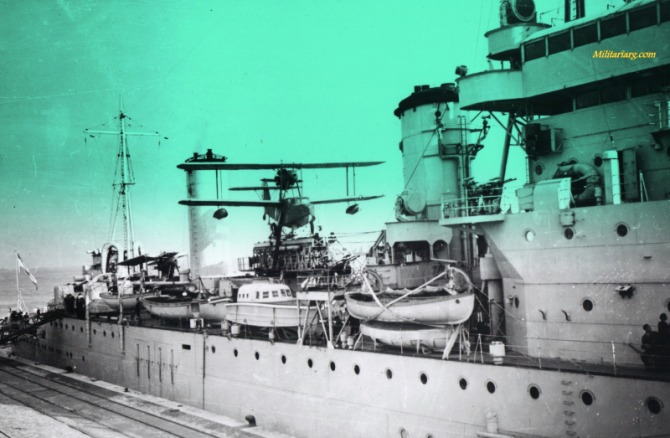
The ARA La Argentina was specifically designed to carry two of these Walruses in a hangar located behind the aft funnel.
The Supermarine Walrus was launched from the La Argentina's catapult compared to the bow-launch on the Veinticinco de Mayo.
Picture
​ARA La Argentina. Supermarine Walrus MKI.

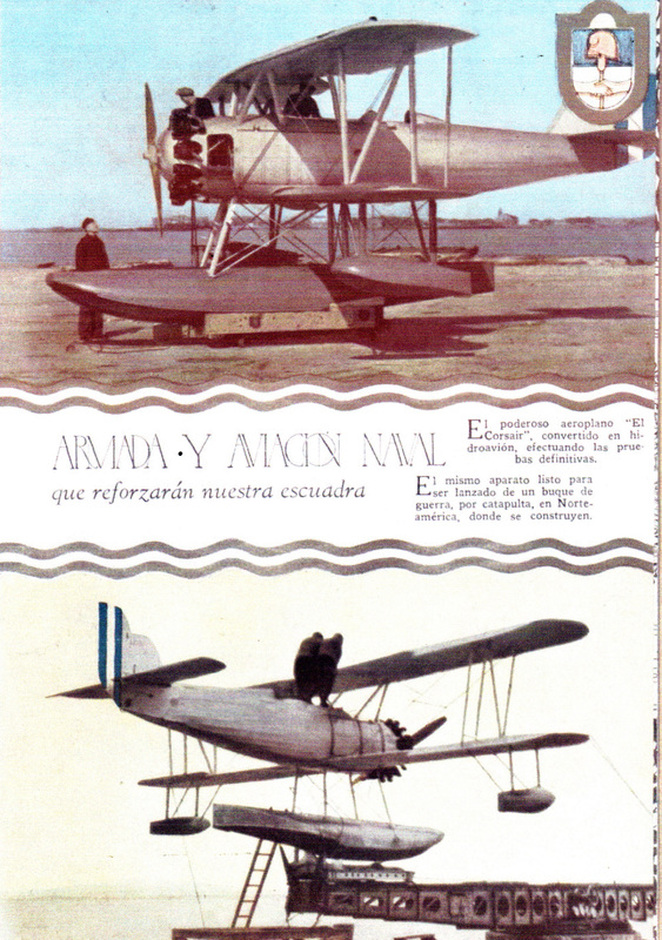
Vough V-57 "Corsair"

Picture
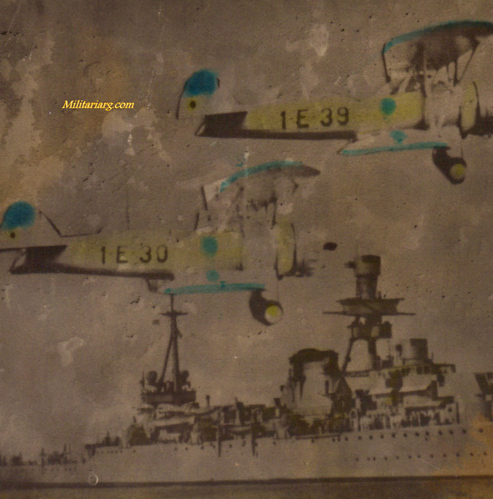
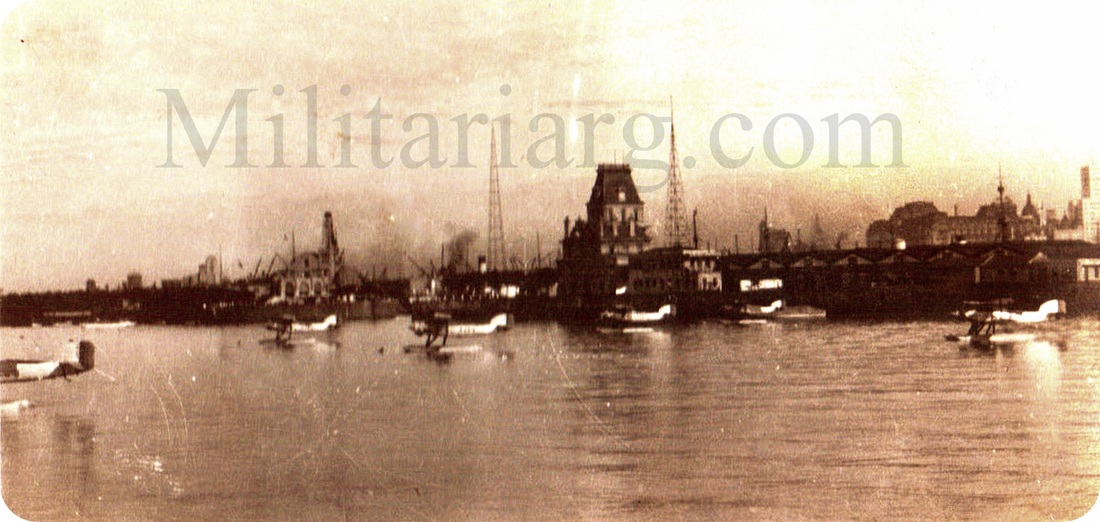
​1929. In 1929, these were the very first Vought V-65 Corsairs (specifically the O2U-1 export version) delivered to the Argentine Navy. Because they were still in the testing phase in the United States, they hadn't received their official Argentine service numbers (like HP-2 or 1E-30) yet.
​Photos: Caras y Caretas Magazine.
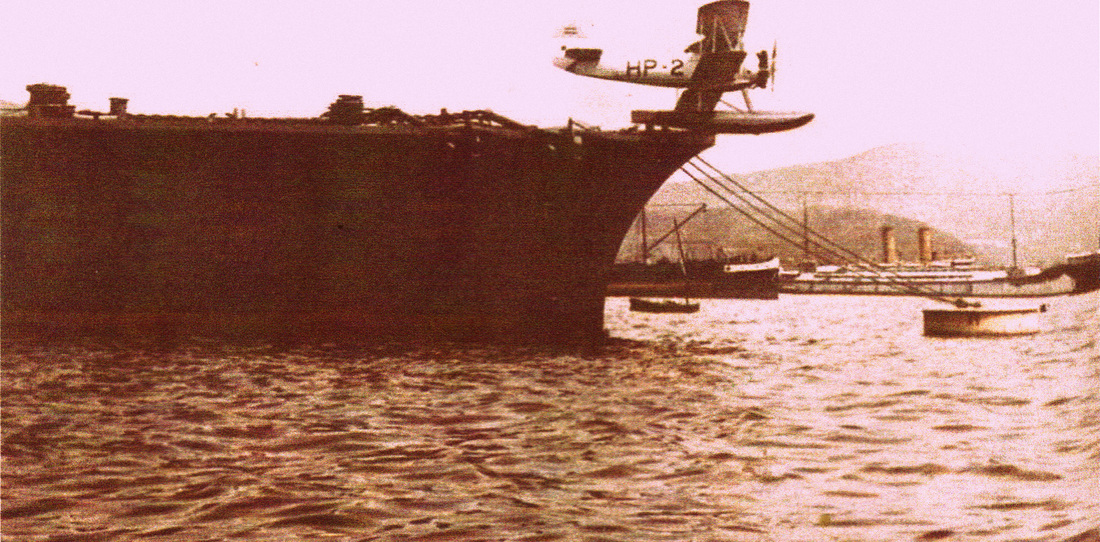
Picture
Vough V-65 Corsair positioned on the bow-mounted catapult of th ARA 25 de Mayo cruiser. In this photograph, that aircraft is a Vought V-65 Corsair marked with HP-2, which stands for Hidroavión de Primera Línea No. 2.
​HP (Hidroavión de Primera Línea): This prefix was used for "First Line Seaplanes" assigned directly to the fleet's major warships for scouting and observation.This indicates it was the second aircraft in that specific ship's air group. The Veinticinco de Mayo-class cruisers typically carried two of these Corsairs (HP-1 and HP-2) which were stored in a hangar located under the forecastle deck.
Caras y Caretas 1932.
In the photograph, the aircraft marked 1E 30 and 1E 39 are Vought V-65F Corsairs belonging to the Argentine Naval Aviation (Aviación Naval Argentina).
​
The V-65F was the specific export variant of the Vought O2U/O3U Corsair designed for Argentina. While the previous image showed the aircraft with the "HP" (Hidroavión de Primera Línea) designation, this photo uses the updated "1E" prefix, which identifies them as part of the 1st Escuadrilla de Exploración (1st Scouting Squadron).

This photo was taken (likely mid-to-late 1930s), the Navy had reorganized its naming conventions. The Corsairs were moved into more formal squadrons, which is why you see the 1E (1st Escuadrilla de Exploración) prefix instead of the ship-specific "HP" codes.
Picture
In the last photo, these aircraft are operating as land-based scouts. By removing the heavy central float and attaching fixed wheel gear, the Corsair became lighter, faster, and could operate from standard Argentine naval airbases like Puerto Belgrano or Punta Indio.
Known as the "Cradle of Naval Aviation," it was strategically located at the mouth of the Río de la Plata to control maritime access to Buenos Aires. This is where the 1st Scouting Squadron (the "1E" aircraft in the second photo) was frequently based. Its proximity to the capital made it a high-profile station for the Navy's most modern aircraft.

Gruman G-20 (J2F Duck)

Picture
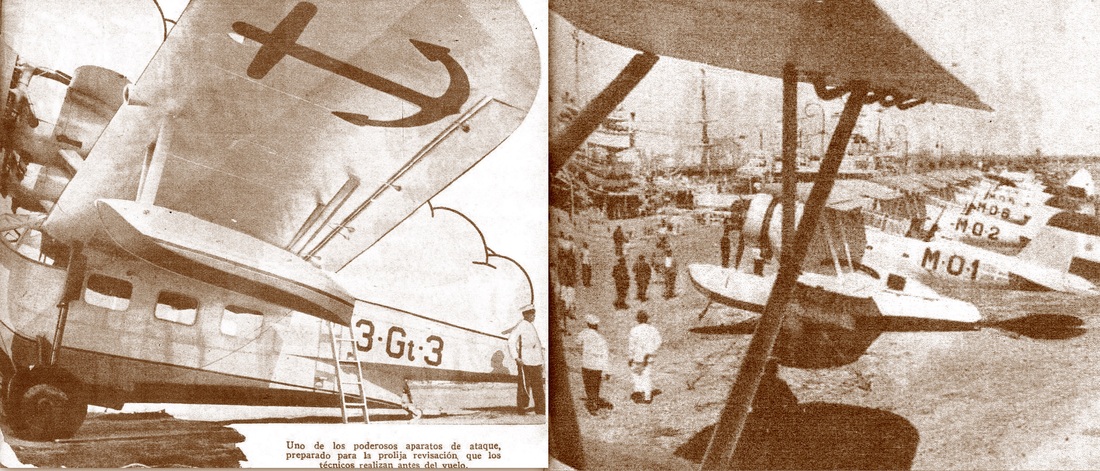
 Grumman G-20s, which were the export version of the famous Grumman J2F Duck.
M-O-1, M-O-2, and M-O-3, this sequence continues up to M-O-8. The "M-O" prefix stands for Marina - Observación (Navy - Observation). The Argentine Navy purchased eight of these Grumman amphibians in 1937 to equip the Escuadrilla de Observación. M-O-1 through M-O-8: Grumman G-20 (Ducks); M-O-9 and M-O-10: These numbers were assigned to the Supermarine Walrus amphibians that served on the cruiser ARA La Argentina."
​Photo: Caras y Caretas" 1938.

Fairey IIIF Mk.IIIM (1929–1942)

Picture
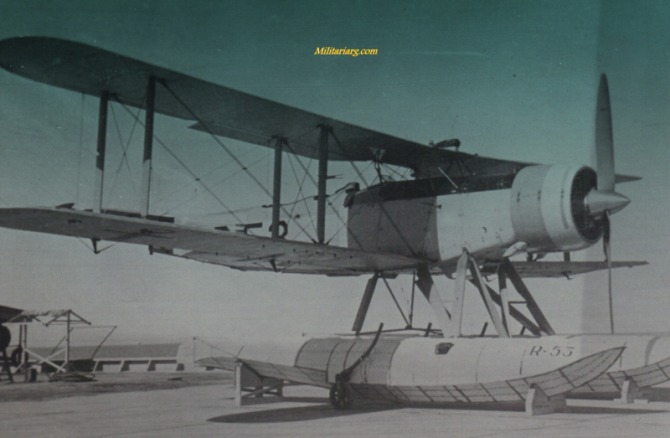
The Argentine Navy operated two primary models from the British Fairey Aviation Company during the 1930s and early 1940s. These were workhorse reconnaissance and patrol biplanes.
The Fairey IIIF was the most significant British aircraft in the Argentine fleet during this era. 
Argentina acquired six units starting in 1929. A three-seat reconnaissance biplane that could be fitted with either floats or wheeled landing gear. They were originally powered by the Napier Lion engine but were later re-engined in 1935 with the more powerful Armstrong Siddeley Panther IV to improve performance.
They served with the Patrol Plane Squadron and later the Reconnaissance Sea Fleet. In their final years, they were used as light bombers based at the Punta Indio Naval Air Base.
Picture

Consolidated P2Y-3 "Ranger" (1936 - 1942)

Picture
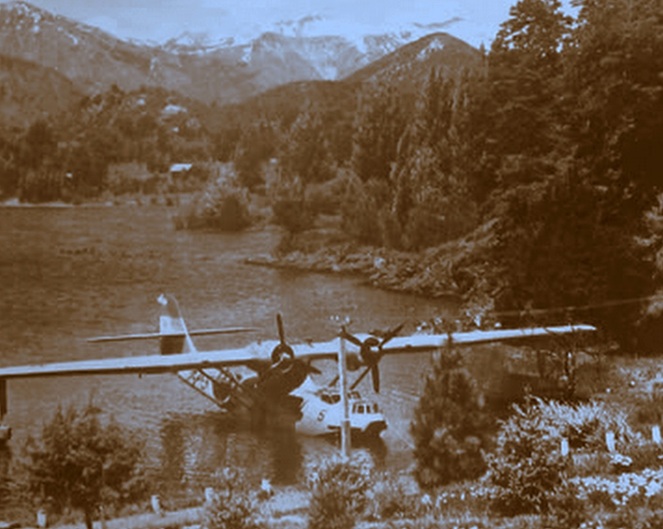
​Consolidated P2Y-3 Ranger (1936–1949):  maritime patrol flying boats that were sold to Argentina between 1936 - 1937 for use by the Argentine Naval Aviation.

The Consolidated P2Y was an American twin-engine flying boat designed for maritime patrol. It was a parasol monoplane with a fabric-covered wing and an aluminum hull.
Argentina placed the largest foreign order for this aircraft, purchasing six P2Y-3A variants delivered in August and September 1937.They were used for maritime patrol and exploration duties and patrols for the Neutrality Patrol after the Declaration of Panama in October 1939, operating out of Puerto Belgrano.
They served through World War II until they were eventually replaced by the more advanced Consolidated PBY Catalinas.
All P2Y-3A aircraft in Argentine service were retired by 1949.
​Specifications:
Engines: Powered by two Wright GR1820-F52 radial engines, each developing 770 hp.
Crew: Typically had a crew of 5.
Range: Had a range of approximately 1,180 miles (1,899 km).

Consolidated PYB "Catalina"

Picture
PBY Catalina, Flying Boat. Naval Aviation Museum.
The Consolidated PBY Catalina is widely considered the most successful and versatile flying boat ever built, with over 3,300 produced. While it didn't arrive in Argentina until 1946, it became the backbone of their long-range maritime patrol for decades.​
The Catalina was nicknamed the "Cat" for combat and "Dumbo" for its legendary search-and-rescue work. 
Argentina operated the PBY-5A (amphibious) and PBY-6A (improved tail) models starting in 1946. They were used for everything from patrolling the South Atlantic to supporting Antarctic expeditions until the early 1970s.

Picture
Dewoitine D-21 (Archivo Naval)
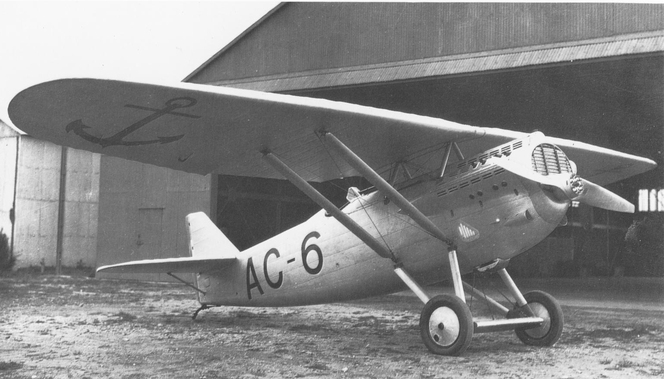
The Argentine Navy Dewoitine D.21 single-seat fighter. Nine of them were assembled in Switzerland. The type also saw extensive service with the Argentine Army Aviation Service, which bought seven French-built D.21s and built another 38 or 40 under license. 
The Dewoitine D.21 was used by both the Argentine Navy and the Argentine Army Aviation Service.
The Navy used examples that were assembled by EKW in Switzerland, while the Army utilized both imported French-built aircraft and a larger number built under license by the Fábrica Militar de Aviones (FMA) in Argentina.
While the original French D.21 used a Hispano-Suiza engine, the FMA-built examples for the Army were fitted with the licence-built Lorraine-Dietrich 12Eb W-type engine, effectively making them a D.12 variant, though the D.21 designation was kept.
The aircraft served as a front-line fighter in Argentina during the late 1920s and 1930s. The type remained in service with Argentina until it was retired in 1941.
Picture
D-21 Dewotine and S-2 Santiago del Estero (Tarantino).

139W and 139WAA - Martin B-10 bomber 

Picture
 ​The Argentine Navy ordered 12 units of the 139WAN variant, which were delivered in November 1937. This purchase was part of a larger acquisition of 35 Martin 139W aircraft for Argentina; the other 22 units were the 139WAA variant for the Argentine Army. A single 139WA demonstrator was also sold to the Argentine Navy. 

These aircraft served as medium bombers and were operated by the 3rd Aeronaval Squadron (3ª Escuadra Aeronaval).
After becoming obsolete for combat, they were used for various training roles. Some were later used as ground-training tools for engineering students in Buenos Aires.
In 1970, the Argentine Navy gifted the only surviving Martin 139W to the United States. It was restored and is now on display at the National Museum of the United States Air Force.

Picture
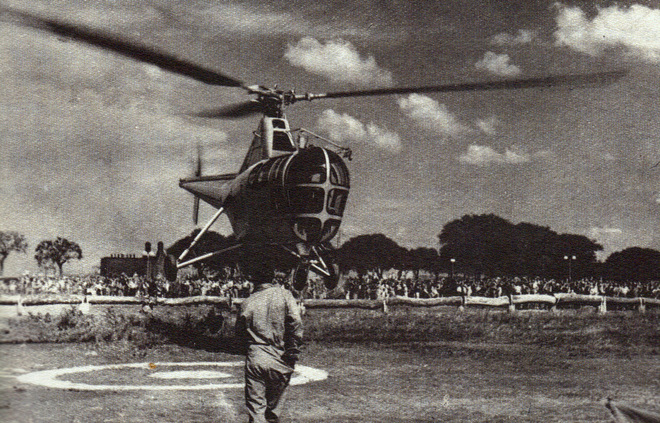
Sikorsky S-51

Picture
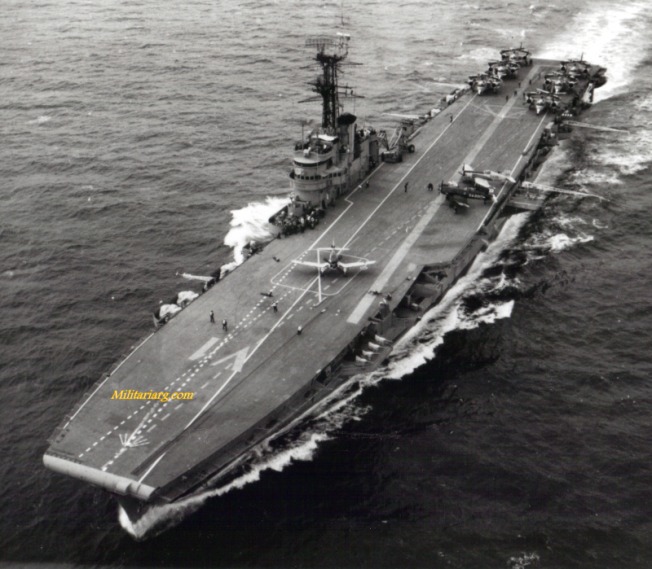
The ARA Independencia (V-1) was a Colossus-class aircraft carrier that served as the first true carrier of the Argentine Navy from 1959 to 1969. Like its successor, the Veinticinco de Mayo, it was originally a British-built ship (HMS Warrior) that saw service in the Royal Navy and the Royal Canadian Navy before being sold to Argentina. 
Service History and Milestones

Arrival (1959): The ship arrived in Argentina in mid-1959, marking a massive leap in naval doctrine by providing the Comando de Aviación Naval with a mobile landing platform.

The Jet Age: It was the first Argentine carrier to operate jet aircraft, specifically the Grumman F9F Panther and F9F Cougar.

Joint Exercises: Throughout the 1960s, it participated in numerous UNITAS exercises with the U.S. Navy, proving its capability in anti-submarine warfare (ASW) and fleet defense.

Beagle Conflict Prelude: In the mid-1960s, it was deployed during border tensions with Chile, serving as a deterrent in the southern waters. 

The Air Wing
The Independencia operated a diverse and rugged air wing during its decade of service:

F9F-2 Panther: The primary jet fighter, though its weight often pushed the carrier's catapult and arrestor gear to their limits.
S-2A Tracker: Used for anti-submarine patrols.
F4U-5 Corsair: The final era of piston-engine fighters in Argentine service.
North American T-6 Texan: Used for transition training and light attack.
Sikorsky S-55 / S-58: Early helicopter operations for search and rescue (SAR). 

Decommissioning and Legacy
By the late 1960s, the ship's machinery was heavily worn, and its flight deck was too small and weak to handle the newer, heavier jets Argentina intended to purchase (like the A-4Q Skyhawk). 

1969: The ship was decommissioned following the arrival of the more modern ARA Veinticinco de Mayo.
1971: It was sold for scrap and broken down in San Nicolás, Argentina. 
Picture
Argentina Navy F4U Corsair.

AT-6 "Texan"

The Argentine Navy (Armada Argentina) operated the North American AT-6 Texan (and its naval variant, the SNJ) for over two decades, primarily for advanced pilot training and light attack duties. 

The Navy acquired approximately 124 aircraft between 1948 and 1957 (Peron). This fleet included roughly 94 AT-6, BC-1, SNJ-3, and SNJ-4 models, along with 30 SNJ-5s. Many were used as parts donors to keep the active fleet flying.
While primarily used for advanced flight instruction, they also served in coastal patrol, liaison, and light attack roles.

Combat and Conflicts
​

Revolución Libertadora (1955): Naval Texans saw action during the coup that overthrew Juan Perón.
Picture
​Photo: 1955. AT-6 Texans (specifically naval SNJ variants) were among the primary aircraft used by rebel forces to bomb and strafe the Casa Rosada and the surrounding Plaza de Mayo on June 16, 1955.The rebels' main objective was to assassinate President Juan Perón by targeting the Casa Rosada (the executive mansion).

First air-to-air shoot-down in the history (Fighter to Fighter, Jet vs Piston)

​A Loyal Gloster Meteor
(registration I-063) flown by Lieutenant Ernesto Adradas of the Argentine Air Force (FAA) performed the first air-to-air shoot-down in the history of the FAA on June 16, 1955. 
The engagement occurred during the first coup attempt of 1955, known for the Bombing of Plaza de Mayo.
Lieutenant Adradas, flying a loyalist Gloster Meteor, intercepted a rebel North American AT-6 Texan (registration 0340/3-A-9).Adradas shot down the AT-6 over the Río de la Plata. The rebel pilot, Navy Midshipman Arnaldo Román, successfully bailed out and survived. 
This marked the first ever aerial victory for the Argentine Air Force. It was one of the few instances during the conflict where jet fighters (Meteors) engaged piston-engine aircraft.

Argentine Naval Revolt (1963): The aircraft were again involved in internal military conflicts.
Picture
1963.The Attack on the 8th Tank Regiment. On April 2 and 3, 1963, rebel Colorado forces from the Punta Indio Naval Base launched a series of airstrikes to stop a loyalist (Blue) Army column advancing on their position.

​The bombing of the Punta Indio Naval Air Base (BAPI) on April 3, 1963, was a decisive retaliatory strike by the loyalist Argentine Air Force (FAA) that effectively ended the 1963 Navy Revolt. 
The Air Strike
At 8:00 AM, a squad of loyalist aircraft conducted a high-intensity raid on the rebel-held base.
The strike was carried out by Gloster Meteor jets, F-86 Sabres, and Morane-Saulnier MS.760 Paris trainers.
The raid was highly effective, crippling the base's operational capacity. Reports state that at least 5 Navy aircraft were destroyed on the ground, and as many as 18–24 others were damaged or wrecked. A large hangar was wrecked, and two anti-aircraft positions were knocked out by Air Force fire.The overall revolt saw approximately 24 deaths and over 80 injuries across all fronts.

​
Most were retired by the late 1960s as the Navy transitioned to more modern platforms.

F9F-2 "Panther" and F9F "Cougar"

Picture
 A Grumman F9F-5 Panther of the Argentine Navy attacks Argentine Army's 8th Tank Regiment. During the Argentine Navy Revolt in 1963, the 8th Tank Regiment was mobilized to seize the naval base at Punta Indio. Under the orders of base commander Captain Santiago Sabarots, Argentine Navy F9F Panthers, AT-6 Texans and F4U Corsairs bombed the advancing column, destroying a dozen M4 Sherman tanks.
 The Grumman F9F-2 Panther was the first jet aircraft operated by the Argentine Naval Aviation (Comando de Aviación Naval), making Argentina the only foreign export customer for the type. 

In 1957, Argentina purchased 28 ex-USN F9F-2B aircraft. 22 to 24 units entered active service between 1958 and 1961, with the remainder used for spare parts.

Carrier Limitations
The Argentine Navy purchased the F9F-2 Panther in 1957 without properly verifying if their aircraft carrier, the ARA Independencia, could support them. After delivery, they realized the carrier's catapults were too weak to launch the heavy jets. The Panthers spent their entire service life as land-based aircraft, defeating the purpose of buying carrier-capable fighters.

In July 1963, a Panther made the first-ever jet landing on an Argentine aircraft carrier during trials on the Independencia, though it had to be crane-unloaded rather than catapulted. 

1963 Navy Revolt. During the "Azules y Colorados" internal conflict, rebel-controlled Panthers saw combat. They famously bombed and strafed the Army’s 8th Tank Regiment, destroying several M4 Sherman tanks. One Panther was shot down during these actions.
The fleet was mobilized during the 1965 border clash with Chile, though no combat took place.
The type was withdrawn in 1969 due to a critical lack of spare parts and was replaced by the A-4Q Skyhawk. The final ceremonial flight occurred in March 1970.

​F9F Cougar.
​In 1962, Argentina also acquired two F9F-8T Cougar trainer versions. These swept-wing jets were the first aircraft in Argentina to break the sound barrier. One is currently preserved at the Naval Aviation Museum (MUAN) in Bahía Blanca.

Picture
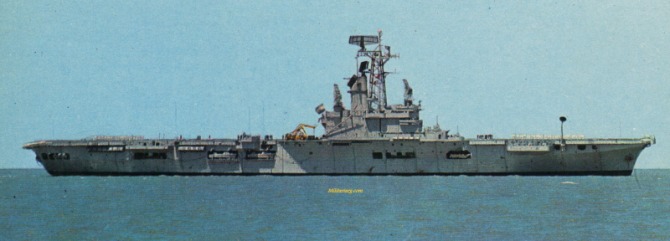
The ARA Veinticinco de Mayo (V-2) was a Colossus-class aircraft carrier that served as the flagship of the Argentine Navy from 1969 to 1997. Originally built for the Royal Navy as HMS Venerable, it later served in the Royal Netherlands Navy as HNLMS Karel Doorman before its sale to Argentina. 

The 1970s: The carrier underwent several refits and updates during this decade. It was famously deployed during the 1978 Beagle Crisis with Chile, though a direct conflict was ultimately avoided.

Falklands War (1982):
Invasion: It participated in the initial landings (Operation Rosario) to retake the islands, carrying over 1,500 troops outside Stanley.

The "Banzai Night" (May 1st): The carrier planned a high-risk strike against the British fleet using eight A-4Q Skyhawks. However, a lack of wind prevented the heavily-laden jets from launching safely, and the attack was aborted.

Withdrawal: Following the sinking of the ARA General Belgrano by a British submarine, the carrier was withdrawn to port to ensure its safety for the remainder of the war.

Post-War and Retirement:
1983 Refit: In 1983, it was upgraded to carry Super Étendard jets and received new Dutch combat data systems.

Mechanical Failure: From 1986 onward, severe engine and machinery problems largely confined the ship to port at Puerto Belgrano.

Scrapping: After a failed modernization attempt in the late 1980s due to lack of funds, it was stripped of parts (some used for the Brazilian carrier Minas Gerais) and officially discarded in 1997. It was finally towed to India for scrapping in 2000. 

Aircraft Group Over Time
Initially, the carrier operated F9F Panthers and Cougars, but its most iconic air wing included: 

A-4Q Skyhawks (Attack)
S-2E Trackers (Anti-submarine)
Sikorsky Sea King helicopters
Naval aviation (Comando de Aviación Naval) operated helicopters from both land bases and ships like the aircraft carrier ARA Veinticinco de Mayo. 

Sikorsky SH-3 Sea King: Five were in service, used for anti-submarine warfare (ASW) and transporting commandos.
Aérospatiale Alouette III: Ten were in service for light utility and scouting.
Westland Sea Lynx (HAS.23): Two were in service; one was lost during the invasion of the islands.
Picture
Macchi MB.326

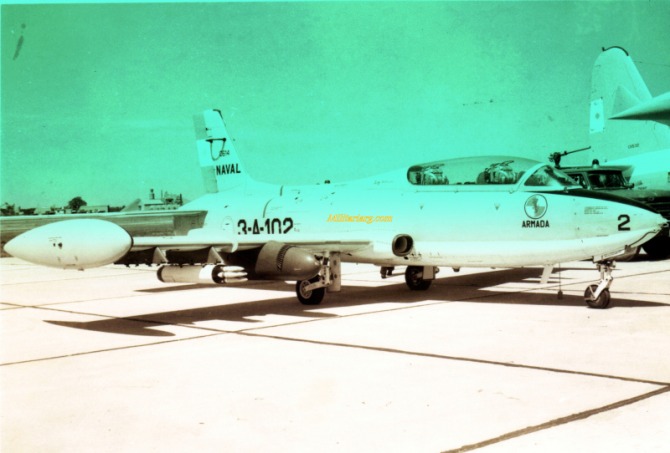
The Aermacchi MB.326 (locally nicknamed the "Macchi") was a cornerstone of Argentine Naval Aviation (Comando de Aviación Naval - CANA) for over three decades, serving as both an advanced jet trainer and a light attack aircraft. 
Service and Roles

Argentina was the first foreign customer for the ground-attack variant, purchasing eight MB-326GB models directly from Italy. They were assigned to the 1st Naval Fighter and Attack Squadron (1ra Escuadrilla Aeronaval de Ataque) based at Punta Indio.

The "Xavante" Era (1983): After the Falklands War, Argentina purchased 11 used EMB-326GC aircraft from Brazil (where they were license-built as the AT-26 Xavante) to replenish their fleet and replace the prematurely retired MB-339s. 

Combat and Conflict (1982)
During the Falklands War (Guerra de las Malvinas), the MB-326 and its successor, the MB-339, had distinct roles: 

Mainland Defense: While the newer MB-339s were deployed to Port Stanley (BAM Malvinas), the older MB-326GBs remained on the Argentine mainland to provide coastal defense and pilot training.

Camouflage: Just before the conflict, the aircraft were repainted from their original light gray-over-white scheme to a more tactical tan and green over white. 

Technical Legacy

Versatility: The aircraft was prized for its 8 underwing hardpoints, allowing it to carry a mix of gun pods (typically 12.7mm or 30mm), rockets, and bombs.

Low-Vis Era: Following the war, the survivors were repainted in a dark gray-over-light gray low-visibility scheme, matching the Navy’s A-4Q Skyhawks. 

The Argentine Naval Aviation (Comando de Aviación Naval - COAN) played a pivotal role in the 1982 conflict, specifically in pioneering the use of air-launched anti-ship missiles. 

March 28, 1982: S-2E Trackers from the 2nd Naval Air Antisubmarine Squadron began reconnaissance flights in support of the invasion fleet.

April 2, 1982 (Operation Rosario): COAN helicopters (Sea Kings and Alouettes) supported amphibious landings at Port Stanley.

April 3, 1982: A naval Alouette III helicopter provided fire support during the invasion of South Georgia. 

The Carrier Engagement (May 1–2)

May 1, 1982: Following the first British attacks, the aircraft carrier ARA Veinticinco de Mayo prepared a full strike of eight A-4Q Skyhawks against the British fleet.

May 2, 1982: The planned strike was canceled due to a lack of wind, which prevented the heavily armed jets from taking off safely. Following the sinking of the ARA General Belgrano later that day, the carrier was withdrawn to coastal waters for the remainder of the war. 

The Exocet Offensive

May 4, 1982: In a landmark mission, two Super Étendards launched Exocet missiles, sinking the destroyer HMS Sheffield. The targets were vectored in by a naval P-2 Neptune reconnaissance aircraft.

May 25, 1982: Super Étendards launched two Exocets at the British task force, hitting and sinking the large transport ship Atlantic Conveyor.

May 30, 1982: The final Exocet mission was launched against what Argentina claimed was the carrier HMS Invincible; British records indicate the missile missed or was destroyed, though a joint Navy-Air Force strike followed. 

Land-Based Naval Strikes

May 21–23, 1982 (Battle of San Carlos): COAN A-4Q Skyhawks operated from the mainland to attack British ships in San Carlos Water.

May 21: Skyhawks attacked and significantly damaged HMS Ardent, though three naval jets were lost to Sea Harriers in the engagement.

May 23: Naval Skyhawks attacked HMS Antelope; during the mission, pilot Lt. Marcelo Márquez was shot down and killed.

Late May – June: Aermacchi MB-339 and T-34C light attack aircraft operated directly from the Port Stanley airfield to harass British ground forces and helicopters until the final surrender. 

Surrender

June 14, 1982: Hostilities ended with the Argentine surrender at Port Stanley. COAN had lost several aircraft, including most of its A-4Q fleet and its only operational P-2 Neptunes (due to mechanical wear), but it remained a highly respected force for its tactical successes against the Royal Navy. ​

A-4Q Skyhawks

Picture
Picture
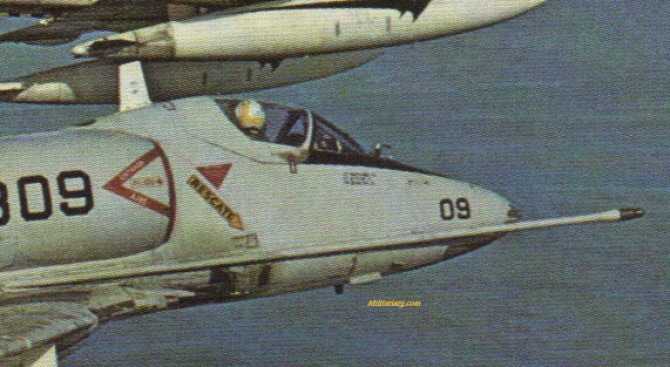
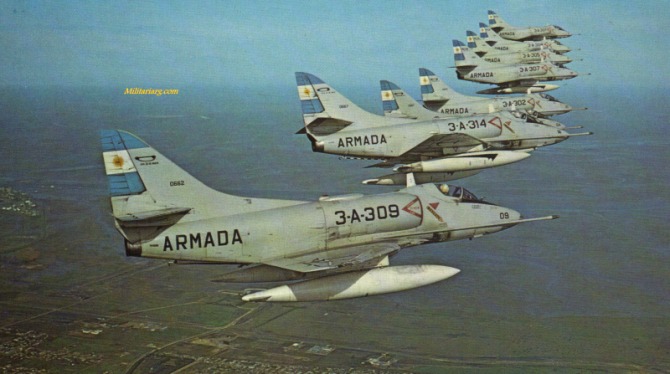
 The Douglas A-4Q Skyhawk was the backbone of Argentine Naval Aviation (Comando de Aviación Naval Argentina - CANA) for over a decade, specifically designed for operation from the aircraft carrier ARA Veinticinco de Mayo. 
Origin and Specifications

The "Q" variant was unique to the Argentine Navy. These were surplus US Navy A-4B airframes remanufactured and upgraded by Douglas in Tulsa, Oklahoma, in the early 1970s.
    
Argentina purchased 16 A-4Q aircraft, assigned naval serials 0654 through 0669.
Unlike the Air Force's A-4P/B models, the Naval A-4Qs were powered by 8,400 lbf J-65-W-20 engines and were specifically wired to carry AIM-9B Sidewinder air-to-air missiles.
They were fitted with specialized navigation equipment, including the Omega-VLF navigation system, crucial for long-range over-water operations. 

Combat History (Malvinas Falklands War 1982)

The A-4Qs of the 3rd Fighter/Attack Squadron played a critical role in the 1982 conflict, though they operated under severe technical limitations, including cracked wing profiles and expired ejection seat rockets. 


Sinking of HMS Ardent: On May 21, 1982, A-4Qs flying from Rio Grande naval air station successfully bombed and sank the British Type 21 frigate HMS Ardent.

While initially intended to strike the British fleet from the carrier Veinticinco de Mayo, the lack of wind prevented the heavily-laden jets from launching, forcing them to operate from land bases for the remainder of the war.  
Picture
This iconic image captures an Argentine Air Force A-4B Skyhawk attack on the Royal Navy frigate HMS Broadsword during the Falklands War on May 25, 1982. 

Super Etendard

Picture
 1979. The Argentine Navy ordered 14 Super Étendard aircraft. The contract was signed in July 1979.

Pre-War Delivery: Between August and November 1981, the first 5 aircraft and 5 Exocet missiles were delivered to Argentina. Of the original 14 aircraft ordered, only 5 Super Étendards and 5 Exocet missiles had been delivered to Argentina
before France joined the international arms embargo * following the invasion of the Falkland Islands in April 1982.
   
The Navy specifically wanted a modern platform capable of firing the AM39 Exocet anti-ship missile. The A-4Q was a purely "iron bomb" and "sidewinder" platform; it lacked the radar and bus systems to guide a sea-skimming missile.
The aircraft were purchased specifically to operate from the carrier ARA Veinticinco de Mayo. While the A-4Q was already doing this, it was an aging airframe (dating back to the 1950s). The Navy envisioned a future carrier wing where the SUE provided long-range standoff strikes while the A-4Q (and later potential replacements) handled close air support and dogfighting.

 Post-War Delivery: After the 1982 Falklands War, the remaining 9 aircraft from the original order were delivered between 1982 and 1984 once arms embargos were lifted.

2018 Super Etendard Again but Modernized. Argentina bought five SEM units from the French Navy for approximately €12.5 million to replace its aging fleet. The aircraft arrived in Argentina by ship, but they were already non-operational due to missing critical components. 
The planes were grounded because they lacked the pyrotechnic cartridges for their Martin-Baker ejection seats. As Martin-Baker is a British company, the UK government blocked the sale of these parts under a long-standing arms embargo following the 1982 Sout Atlantic War.


*The 1982 Super Étendard embargo on Argentina (Falklands/Malvinas) is often compared to the 2014 Mistral ship cancellation for Russia (Crimea), as both cases involved France halting major military contracts.

Powered by Create your own unique website with customizable templates.