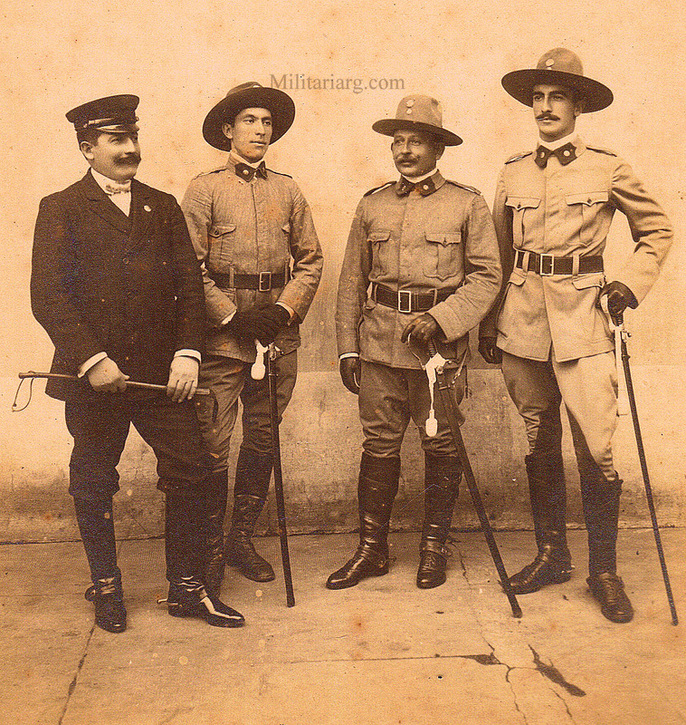
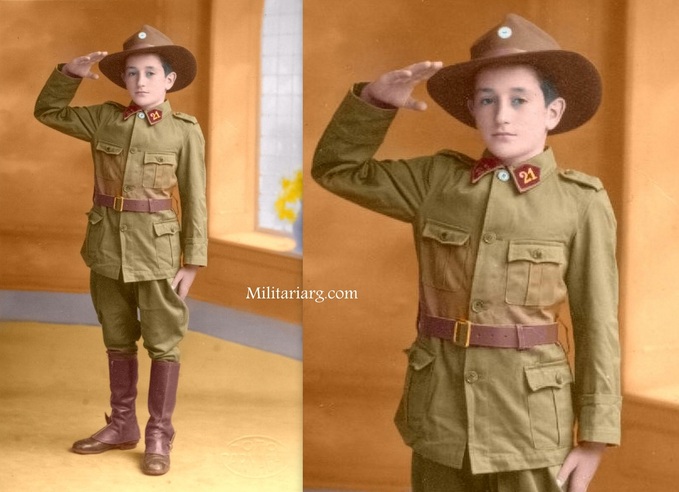
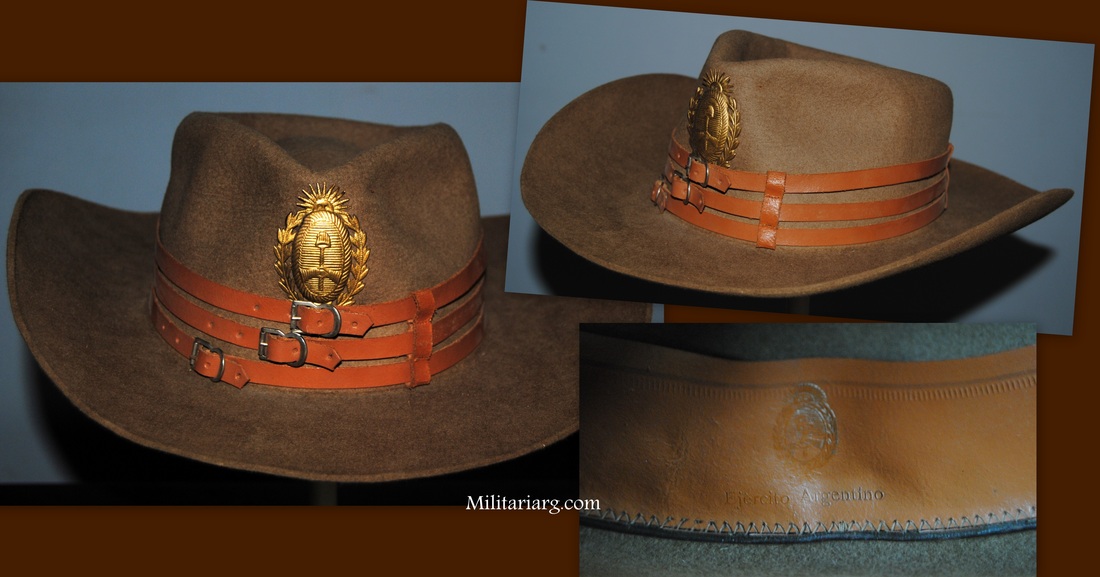
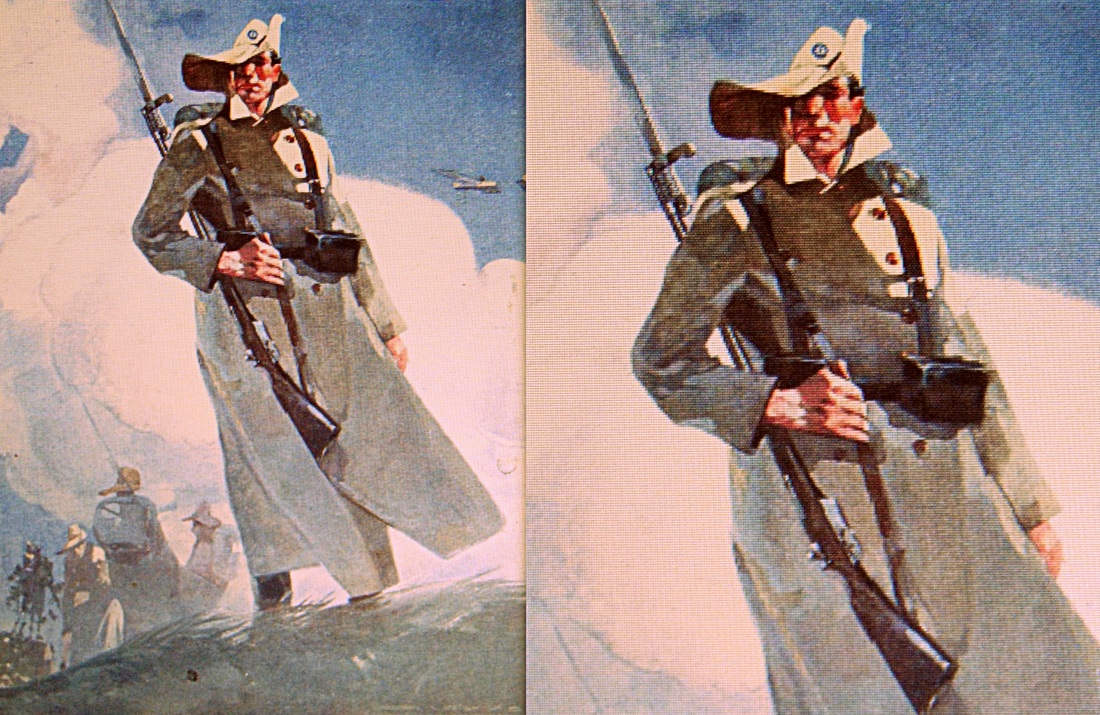
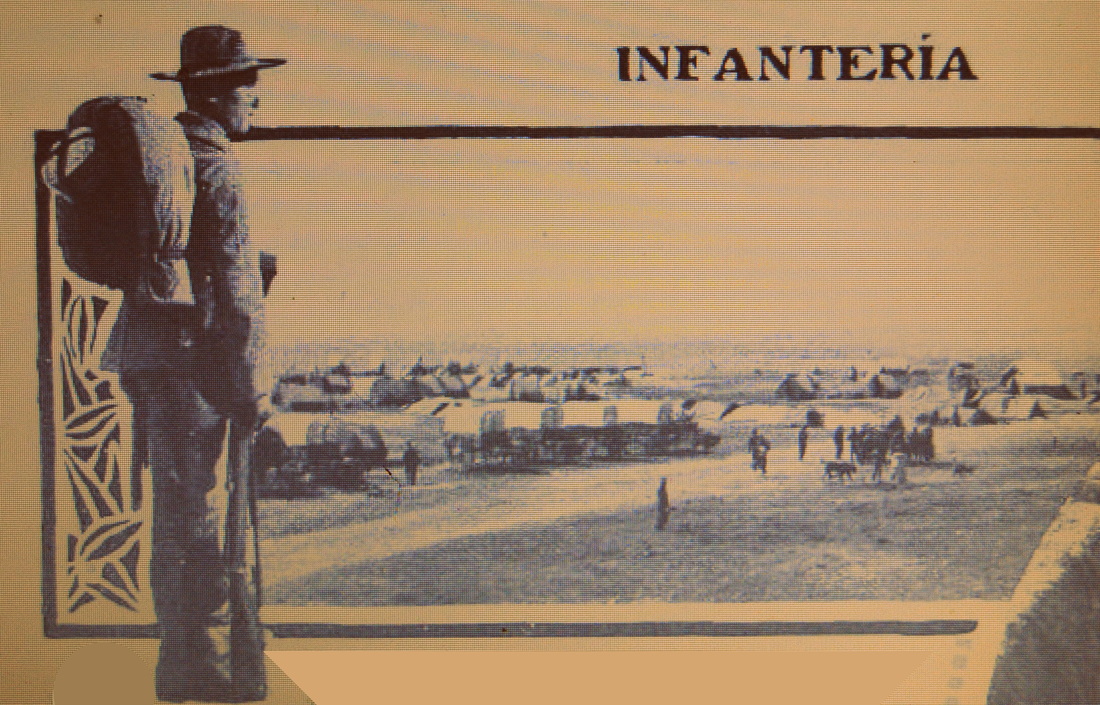
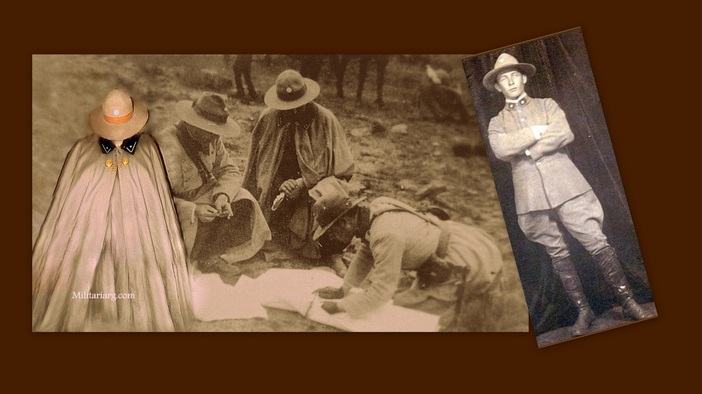
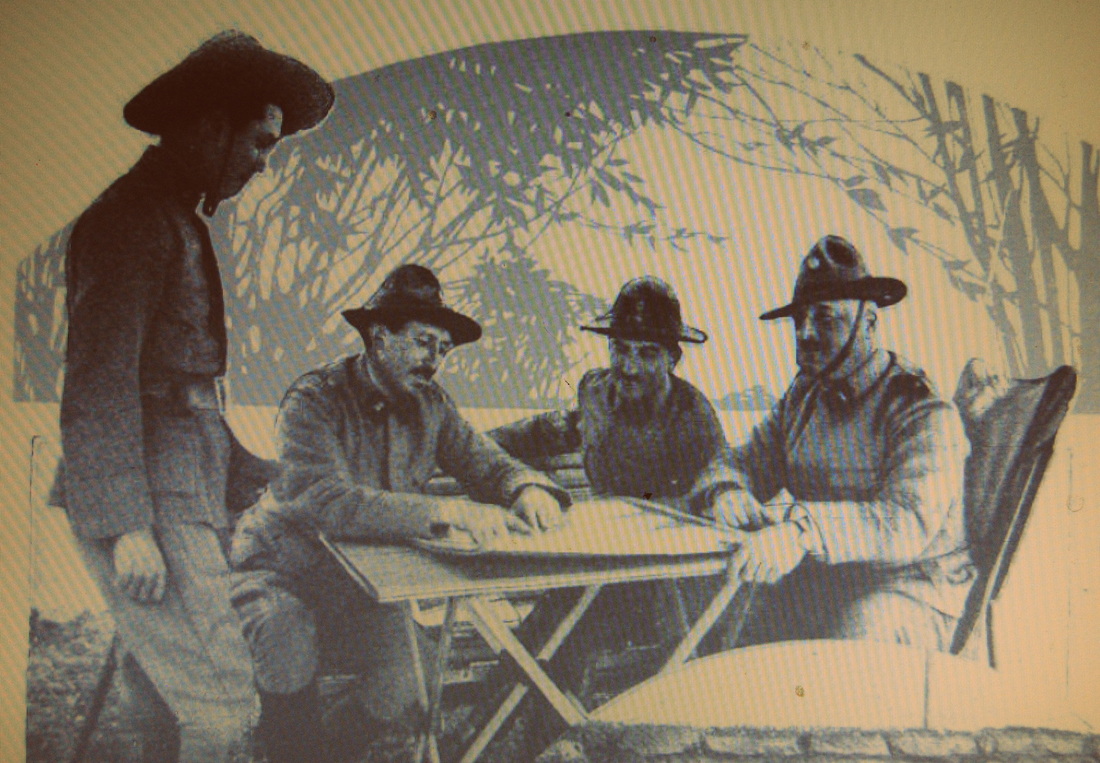
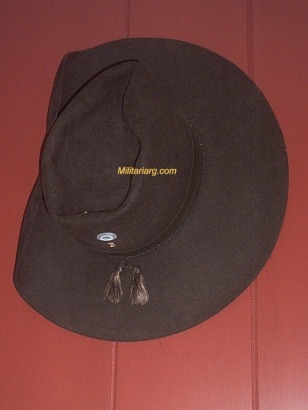
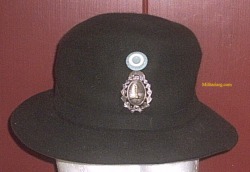
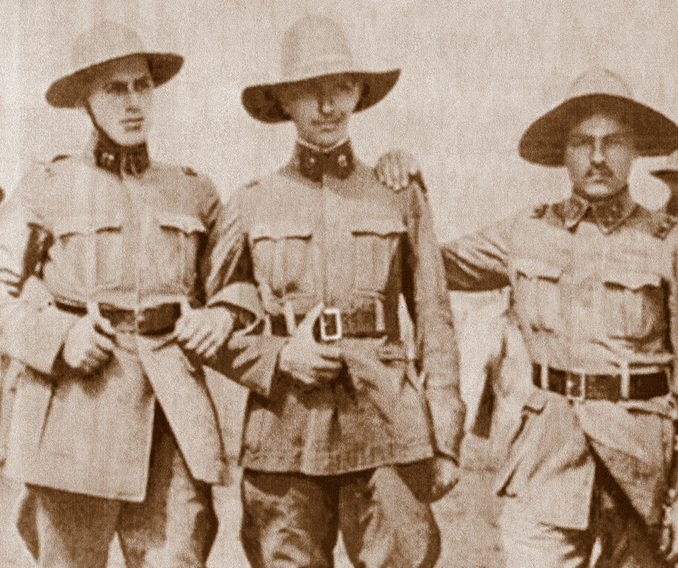
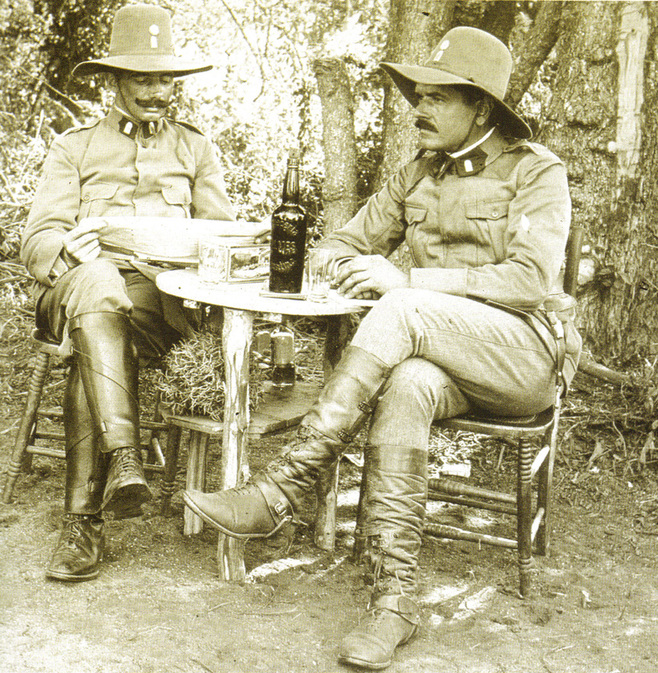
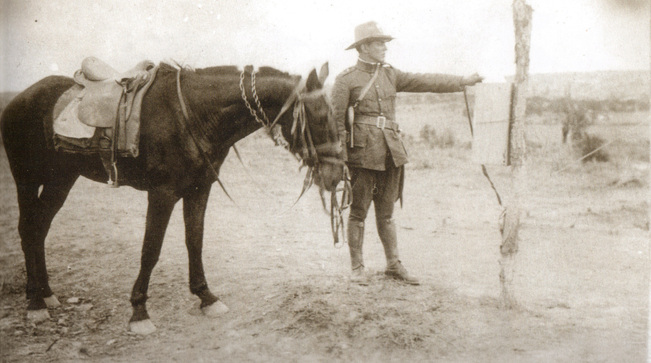
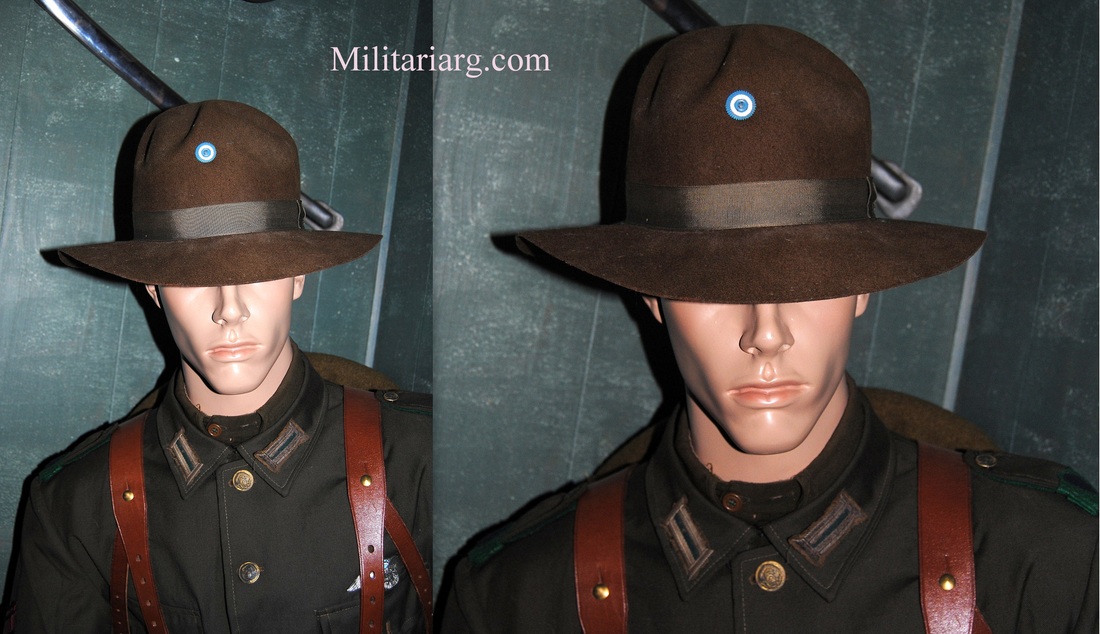
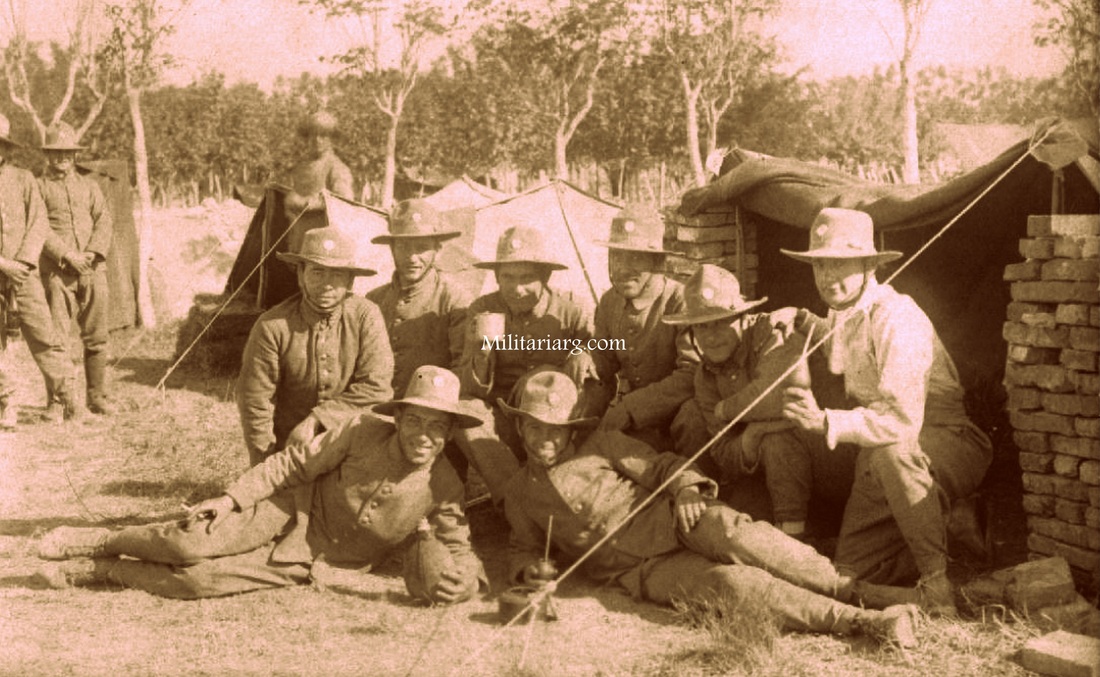
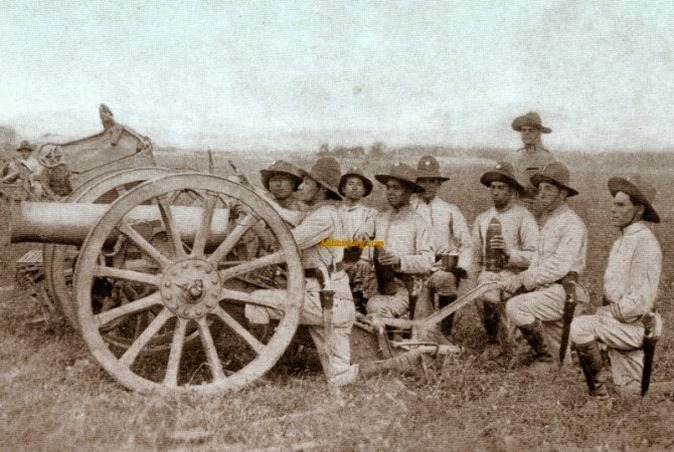
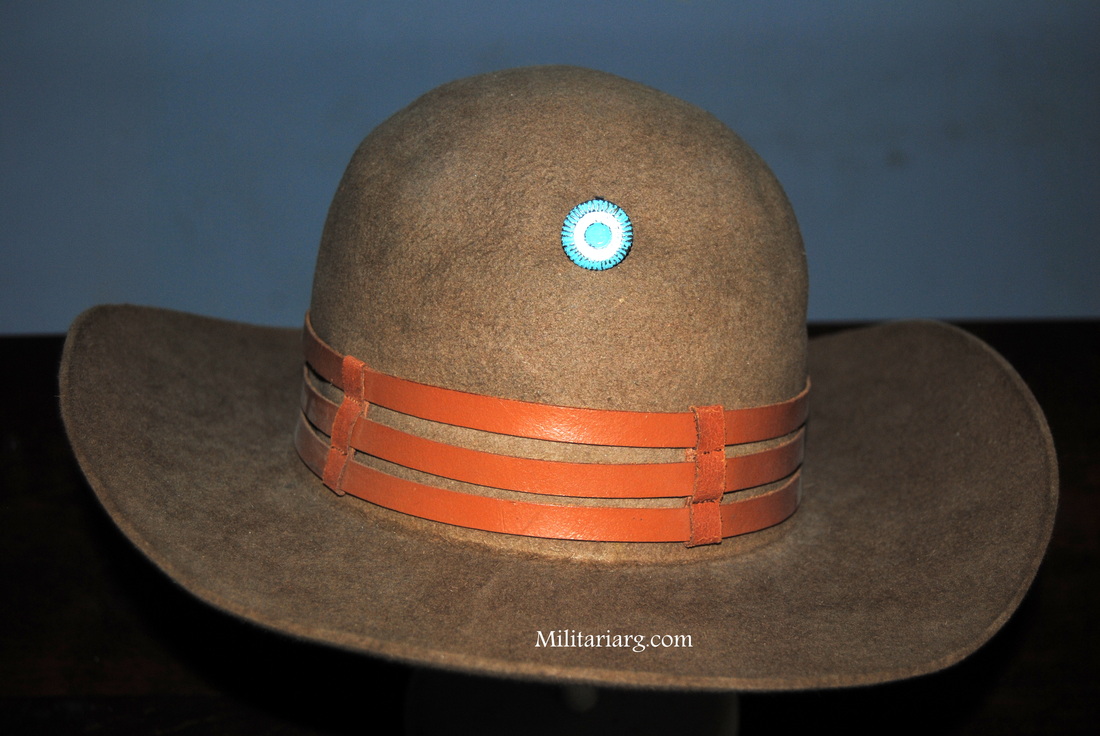
This wide-brimmed hat was directly inspired by the "Campaign hat"* worn by the United States, and adapted by many countries, including Argentina. At one time it was known as "Sombrero de monte" and as in the United States, it ended up being worn by park guards and early scout groups.
*"Stetson" is a brand name that manufactures many types of hats, including the campaign hat style.
The campaign hat's history begins with practical use by U.S. Army soldiers in the American West in the mid-19th century and evolved into a formal military uniform item, a symbol for law enforcement and scouting, and a recognizable cultural icon.
Western Frontier Use The hat style originated from the wide-brimmed civilian hats and "Boss of the Plains" models worn by U.S. Army mounted troops, frontiersmen, and cowboys in the American West to provide protection from the sun, wind, and rain.
1870s-1880s: Early Military Regulations The name "campaign hat" came into use after U.S. Army regulations in the 1870s and 1880s introduced a felt hat for field use. These early versions were often soft and varied in style.
Spanish-American War & "Montana Peak" A version with a crease along the top of the crown, later known as the "Montana Peak," was used during the Spanish-American War. Buffalo Soldiers were instrumental in popularizing this specific pinch, which became iconic.
1911: Official U.S. Army Adoption The U.S. Army officially adopted the "Montana peaked" design as its standard service hat in 1911.
WWI Era The hat was a standard part of the American military uniform during World War I, although the advent of steel helmets meant the hat was often replaced in combat zones by the more practical overseas cap.
WWII and Phasing Out The campaign hat ceased to be issued generally in 1942 during World War II, largely due to cost and impracticality with helmets, although it was still found in the Pacific theater and was the trademark of General Joseph Stilwell.
Post-WWII Reintroduction as a Symbol The hat was later reintroduced in different contexts to serve as a symbol of authority and professionalism:
U.S. Marine Corps Drill Instructors: Re-established as the specific headgear for drill instructors in 1956.
U.S. Army Drill Sergeants: Reintroduced in 1964 as the official headgear for all U.S. Army drill sergeants to distinguish them from trainees.
U.S. Park Rangers: The National Park Service adopted the campaign hat as part of its official uniform in 1911, inspired by the cavalry troopers who protected the early parks.
Scouting Movement: The founder of the Scout Movement, Robert Baden-Powell, adopted the hat as part of the Scout uniform after seeing similar hats worn by American scouts in Africa.
Today, the campaign hat remains a strong symbol associated with military drill instructors, U.S. Park Rangers (leading to the nickname "Smokey Bear hat" due to the character wearing one), and various law enforcement agencies like state troopers and the Royal Canadian Mounted Police.
Western Frontier Use The hat style originated from the wide-brimmed civilian hats and "Boss of the Plains" models worn by U.S. Army mounted troops, frontiersmen, and cowboys in the American West to provide protection from the sun, wind, and rain.
1870s-1880s: Early Military Regulations The name "campaign hat" came into use after U.S. Army regulations in the 1870s and 1880s introduced a felt hat for field use. These early versions were often soft and varied in style.
Spanish-American War & "Montana Peak" A version with a crease along the top of the crown, later known as the "Montana Peak," was used during the Spanish-American War. Buffalo Soldiers were instrumental in popularizing this specific pinch, which became iconic.
1911: Official U.S. Army Adoption The U.S. Army officially adopted the "Montana peaked" design as its standard service hat in 1911.
WWI Era The hat was a standard part of the American military uniform during World War I, although the advent of steel helmets meant the hat was often replaced in combat zones by the more practical overseas cap.
WWII and Phasing Out The campaign hat ceased to be issued generally in 1942 during World War II, largely due to cost and impracticality with helmets, although it was still found in the Pacific theater and was the trademark of General Joseph Stilwell.
Post-WWII Reintroduction as a Symbol The hat was later reintroduced in different contexts to serve as a symbol of authority and professionalism:
U.S. Marine Corps Drill Instructors: Re-established as the specific headgear for drill instructors in 1956.
U.S. Army Drill Sergeants: Reintroduced in 1964 as the official headgear for all U.S. Army drill sergeants to distinguish them from trainees.
U.S. Park Rangers: The National Park Service adopted the campaign hat as part of its official uniform in 1911, inspired by the cavalry troopers who protected the early parks.
Scouting Movement: The founder of the Scout Movement, Robert Baden-Powell, adopted the hat as part of the Scout uniform after seeing similar hats worn by American scouts in Africa.
Today, the campaign hat remains a strong symbol associated with military drill instructors, U.S. Park Rangers (leading to the nickname "Smokey Bear hat" due to the character wearing one), and various law enforcement agencies like state troopers and the Royal Canadian Mounted Police.
Campaign Hats
Caras y Caretas 1916.
Soldados 1848-1927/Editorial Fundacion Soldados