After WW2, like the rest of the Eastern European countries, Bulgaria entered the Soviet orbit and soon was absorbed into the Warsaw Pact. This Bulgarian communist government would end its days together with other countries of the Warsaw Pact with the revolutions of 1989, and like them absorbed into the NATO bloc. Despite having been subordinated to the Soviet Union through the Warsaw Pact, this country seems to have maintained a certain independence in its helmet designs.
During the Cold War, the monarchy-era and WW2 veteran M36 helmet continued in service. It is very likely that Moscow had pressured Sofia to standardize their equipment and uniforms in the Soviet style. Towards the end of the 40s, beginning of the 50s, Bulgaria designed its own brand new helmet based on the Italian M33 (something similar to the Polish ones with the Wz51). This helmet was known as the M51, with a shell that looked like a copy of the Italian M33. The shell did not perform to expectations and these batches were left in storage or exported to satellite countries of the Soviet bloc, while improvements to the original design were tested (rivets, liners and chinstrap).
In the 1970s, Bulgaria manufactured an improved version of the M51 with a liner that was a direct copy of the Italian M33 which would be called the M72. While the M51's depot shells were either completed or refurbished with this new type of liner, the result is known as the M51/72 which can be considered a transitional or hybrid helmet.
The M72 was basically a shell of the M51 with better material and refinement. There were two variants of the model 72, an earlier one without curved rim, and a more modern one with more curved rims.
Despite the mallet production of the M72 and the refurbished M51, the old M36 model could not be replaced.
During the Cold War, the monarchy-era and WW2 veteran M36 helmet continued in service. It is very likely that Moscow had pressured Sofia to standardize their equipment and uniforms in the Soviet style. Towards the end of the 40s, beginning of the 50s, Bulgaria designed its own brand new helmet based on the Italian M33 (something similar to the Polish ones with the Wz51). This helmet was known as the M51, with a shell that looked like a copy of the Italian M33. The shell did not perform to expectations and these batches were left in storage or exported to satellite countries of the Soviet bloc, while improvements to the original design were tested (rivets, liners and chinstrap).
In the 1970s, Bulgaria manufactured an improved version of the M51 with a liner that was a direct copy of the Italian M33 which would be called the M72. While the M51's depot shells were either completed or refurbished with this new type of liner, the result is known as the M51/72 which can be considered a transitional or hybrid helmet.
The M72 was basically a shell of the M51 with better material and refinement. There were two variants of the model 72, an earlier one without curved rim, and a more modern one with more curved rims.
Despite the mallet production of the M72 and the refurbished M51, the old M36 model could not be replaced.
WW1
The Bulgarian Army during World War I (1915–1918) was part of the Central Powers and was equipped primarily with German and Austro-Hungarian weapons and artillery designs. It did not possess tanks or armored vehicles during the war.
Weapons
The primary rifles were of European design, with a high proportion of modern, quick-firing machine guns for the era.
Rifles: The standard infantry rifle was the Mannlicher M1895 (or M95), a reliable straight-pull bolt-action rifle, alongside older Mannlicher 1888 and Mosin-Nagant M1891 rifles. Various captured Turkish and Serbian Mauser rifles were also incorporated into service.
Pistols: The Bulgarian Army used a variety of pistols and revolvers, including the German Luger P08, Mauser C96, and Austro-Hungarian Frommer M1912.
Machine Guns: The army was well-equipped with machine guns for its time.
Maxim machine guns: The German MG08 variant was the primary heavy machine gun.
Schwarzlose MG 07/12: This Austrian heavy machine gun was also widely used.
Madsen machine gun: A small number of the world's first LMG was in limited use.
Artillery
Bulgaria's artillery corps mainly comprised modern Krupp and Schneider designs. The army often incorporated large numbers of captured enemy guns from the Serbs and Romanians into service due to supply shortages.
Field Artillery:
Krupp 75mm QF Field Gun M.1903/1904: The primary quick-firing field gun for the Bulgarian Army.
Schneider-Canet 75mm QF Field Gun M.1904: Another standard 75mm field gun, supplied by the French manufacturer.
Older 87mm non-quick-firing Krupp guns were used by second-line units until replaced by captured quick-firing pieces.
Howitzers and Mortars:
Krupp 150mm QF Howitzer: Used for medium howitzer support.
Schneider-Canet 120mm QF field howitzers: Provided additional howitzer capabilities.
Various light and medium mortars were used for trench warfare, including the German 9cm Minenwerfer M.14.
Anti-Aircraft: The Bulgarians were among the early adopters of specialized anti-aircraft guns and converted Maxim machine guns for the role.
The Bulgarian Army during World War I (1915–1918) was part of the Central Powers and was equipped primarily with German and Austro-Hungarian weapons and artillery designs. It did not possess tanks or armored vehicles during the war.
Weapons
The primary rifles were of European design, with a high proportion of modern, quick-firing machine guns for the era.
Rifles: The standard infantry rifle was the Mannlicher M1895 (or M95), a reliable straight-pull bolt-action rifle, alongside older Mannlicher 1888 and Mosin-Nagant M1891 rifles. Various captured Turkish and Serbian Mauser rifles were also incorporated into service.
Pistols: The Bulgarian Army used a variety of pistols and revolvers, including the German Luger P08, Mauser C96, and Austro-Hungarian Frommer M1912.
Machine Guns: The army was well-equipped with machine guns for its time.
Maxim machine guns: The German MG08 variant was the primary heavy machine gun.
Schwarzlose MG 07/12: This Austrian heavy machine gun was also widely used.
Madsen machine gun: A small number of the world's first LMG was in limited use.
Artillery
Bulgaria's artillery corps mainly comprised modern Krupp and Schneider designs. The army often incorporated large numbers of captured enemy guns from the Serbs and Romanians into service due to supply shortages.
Field Artillery:
Krupp 75mm QF Field Gun M.1903/1904: The primary quick-firing field gun for the Bulgarian Army.
Schneider-Canet 75mm QF Field Gun M.1904: Another standard 75mm field gun, supplied by the French manufacturer.
Older 87mm non-quick-firing Krupp guns were used by second-line units until replaced by captured quick-firing pieces.
Howitzers and Mortars:
Krupp 150mm QF Howitzer: Used for medium howitzer support.
Schneider-Canet 120mm QF field howitzers: Provided additional howitzer capabilities.
Various light and medium mortars were used for trench warfare, including the German 9cm Minenwerfer M.14.
Anti-Aircraft: The Bulgarians were among the early adopters of specialized anti-aircraft guns and converted Maxim machine guns for the role.
WW2
The Bulgarian Army during World War II was equipped with a mix of older, World War I-era weapons, supplemented by German, Czechoslovakian, and Italian-supplied armor and artillery as they aligned with the Axis powers. After switching sides in September 1944, they also received Soviet equipment.
Weapons
The Bulgarian infantry relied on a combination of older and some German-supplied small arms.
Rifles: The primary rifle remained the WWI-era Steyr-Mannlicher M1895. Later in the war, some German Karabiner 98k rifles were supplied, and after 1944, Soviet Mosin-Nagant rifles and SVT-40 self-loading rifles were introduced.
Pistols: Various pistols were used, including the Luger P08, Walther P38, Star Model B, and Polish Vis wz. 35 Radom.
Submachine Guns: German MP 40 and MP 34 submachine guns were in use, and after 1944, Soviet PPSh-41 and PPS-43 were supplied.
Machine Guns: WWI-era Maxim MG08 and Schwarzlose MG 07/12 were common, alongside German MG 34 general-purpose machine guns later in the war.
Artillery
Bulgarian artillery was largely based on early 20th-century designs, eventually supplemented by German anti-tank guns.
Field Artillery: The army mostly used pre-WWI 75mm field guns (Krupp and Schneider-Canet designs) and 105mm howitzers.
Anti-Tank Guns: Anti-tank capabilities initially relied on the 20mm Solothurn anti-tank rifle and some Škoda 37mm guns. Later in the war, they received German 3.7 cm Pak 36, 5 cm Pak 38, and 7.5 cm Pak 40 anti-tank guns.
Anti-Aircraft: German 8.8 cm Flak 36 guns were also used for air defense.
Tanks and Vehicles
Bulgaria had a small, mixed armored force, mainly consisting of light tanks and tankettes acquired before the war and German-supplied medium armor later.
Tankettes & Light Tanks:
Italian CV-33 tankettes and British Vickers Mk E light tanks were acquired in the 1930s.
Škoda LT vz. 35 (T-11 in Bulgarian service): 36 of these effective Czechoslovak light tanks were delivered between 1940 and 1941.
Renault R-35: The Germans supplied 40 captured French R35 tanks to Bulgaria in 1941.
Medium Tanks & Assault Guns:
Panzer IV: 88 of these standard German medium tanks (Ausf G and H models) were supplied from 1943.
StuG III: 55 of these effective German assault guns were delivered.
After switching sides in 1944, the Soviets transferred some captured German vehicles, including Jagdpanzer 38(t) "Hetzer" tank destroyers and T-34 medium tanks.
Vehicles: The Bulgarian Army was primarily a horse-drawn force and suffered from a major shortage of motorized transport vehicles, with typically only 40-50 trucks per division.
The Bulgarian Army during World War II was equipped with a mix of older, World War I-era weapons, supplemented by German, Czechoslovakian, and Italian-supplied armor and artillery as they aligned with the Axis powers. After switching sides in September 1944, they also received Soviet equipment.
Weapons
The Bulgarian infantry relied on a combination of older and some German-supplied small arms.
Rifles: The primary rifle remained the WWI-era Steyr-Mannlicher M1895. Later in the war, some German Karabiner 98k rifles were supplied, and after 1944, Soviet Mosin-Nagant rifles and SVT-40 self-loading rifles were introduced.
Pistols: Various pistols were used, including the Luger P08, Walther P38, Star Model B, and Polish Vis wz. 35 Radom.
Submachine Guns: German MP 40 and MP 34 submachine guns were in use, and after 1944, Soviet PPSh-41 and PPS-43 were supplied.
Machine Guns: WWI-era Maxim MG08 and Schwarzlose MG 07/12 were common, alongside German MG 34 general-purpose machine guns later in the war.
Artillery
Bulgarian artillery was largely based on early 20th-century designs, eventually supplemented by German anti-tank guns.
Field Artillery: The army mostly used pre-WWI 75mm field guns (Krupp and Schneider-Canet designs) and 105mm howitzers.
Anti-Tank Guns: Anti-tank capabilities initially relied on the 20mm Solothurn anti-tank rifle and some Škoda 37mm guns. Later in the war, they received German 3.7 cm Pak 36, 5 cm Pak 38, and 7.5 cm Pak 40 anti-tank guns.
Anti-Aircraft: German 8.8 cm Flak 36 guns were also used for air defense.
Tanks and Vehicles
Bulgaria had a small, mixed armored force, mainly consisting of light tanks and tankettes acquired before the war and German-supplied medium armor later.
Tankettes & Light Tanks:
Italian CV-33 tankettes and British Vickers Mk E light tanks were acquired in the 1930s.
Škoda LT vz. 35 (T-11 in Bulgarian service): 36 of these effective Czechoslovak light tanks were delivered between 1940 and 1941.
Renault R-35: The Germans supplied 40 captured French R35 tanks to Bulgaria in 1941.
Medium Tanks & Assault Guns:
Panzer IV: 88 of these standard German medium tanks (Ausf G and H models) were supplied from 1943.
StuG III: 55 of these effective German assault guns were delivered.
After switching sides in 1944, the Soviets transferred some captured German vehicles, including Jagdpanzer 38(t) "Hetzer" tank destroyers and T-34 medium tanks.
Vehicles: The Bulgarian Army was primarily a horse-drawn force and suffered from a major shortage of motorized transport vehicles, with typically only 40-50 trucks per division.
WW2 - Bulgarian helmet M36 model A. Made by Brno Czech.
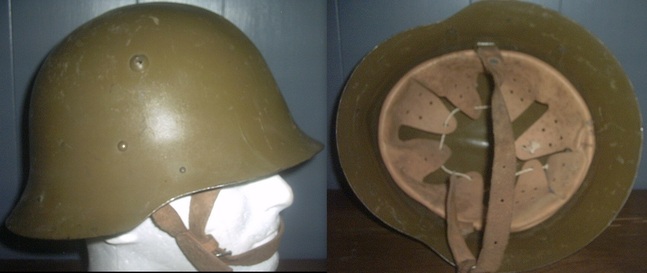
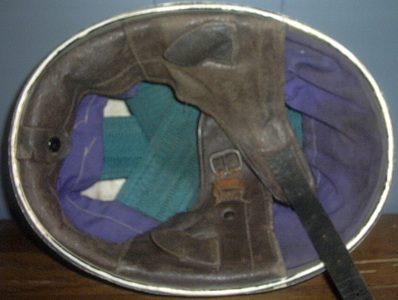
Bulgarian Kingdom helmet Model 36/A with rolled edges, two vent holes and six rivets. This model was one of those used in the WW2 and reused in the post-war period. It still has the original Czech chinstrap but unfortunately lost its liner.
Bulgarian helmet type "A". "It was introduced in regular service in 1936. Initially, production began outside Bulgaria in three foreign factories: Sandrik in Dolné Hámre and Brüder Gottlieb und Brauchbar in Brno (Bratři G&B – Brno) in Czechoslovakia and Eisenhuttenwerk Thale in Thale, Germany". Wikipedia
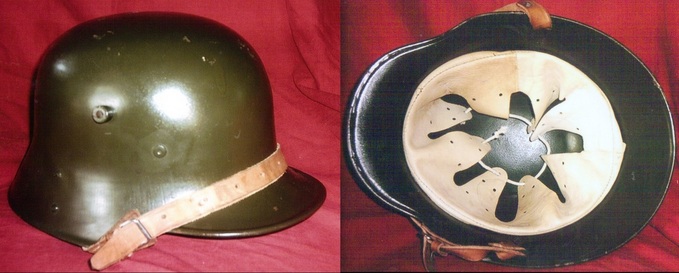
Bulgarian helmet M16 (German).
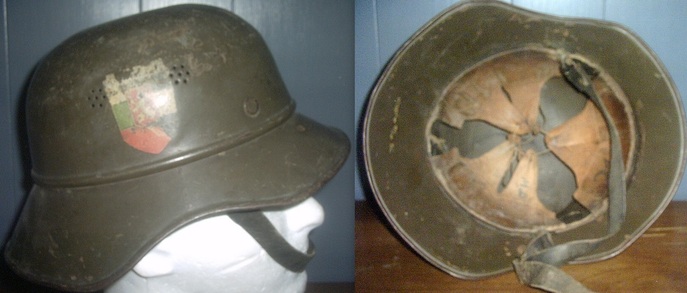
WWII. Bulgarian German M38 "gladiator" helmet used by Bulgarian Air-Defense units .
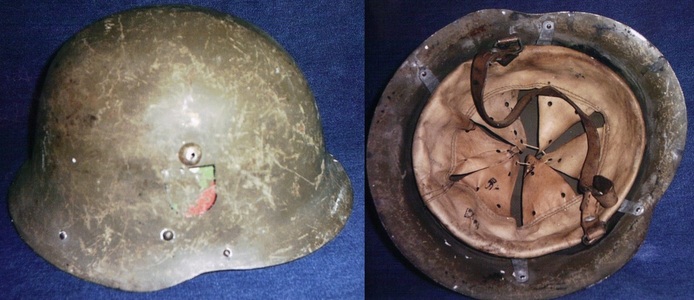
The Bulgarian M36 Type C helmet (Каска M36) was the primary and most common combat helmet used by the Bulgarian Army from 1939 through World War II and remained in service with the Home Guard until the 1990s and 2000s.
The M36 Type C was the third and final variant in the M36 series, designed to be lighter, more compact, and more comfortable than its predecessors (Type A and B).
While distantly reminiscent of the German Stahlhelm, the M36 had a unique shape with a shallowed shell and a distinctly shorter brim. A prominent projecting rib, or crest, ran from mid-front to mid-rear along the top of the dome, intended to deflect blows and shrapnel.
A key differentiator from the M36 Type A (rolled edge) is that the Type C had a sharp, raw, unrolled edge.
The shell was made of steel and typically painted in various shades of olive or grayish-green.
The suspension system was a leather liner version with multiple "tongues" (usually 6 or 8) attached via four small domed rivets inside the shell. The chinstrap was also leather with swivel bales.
Factory-issued helmets initially featured a small shield in the Bulgarian national colors (white, green, and red) on the right side of the helmet. The use of this decal became sporadic after 1940. Postwar reissues often featured a red star painted on the front after Bulgaria aligned with the Soviet Union.
An estimated 70% of all M36 production was of this Type C model, making it the most commonly encountered variant today.
The M36 Type C was the third and final variant in the M36 series, designed to be lighter, more compact, and more comfortable than its predecessors (Type A and B).
While distantly reminiscent of the German Stahlhelm, the M36 had a unique shape with a shallowed shell and a distinctly shorter brim. A prominent projecting rib, or crest, ran from mid-front to mid-rear along the top of the dome, intended to deflect blows and shrapnel.
A key differentiator from the M36 Type A (rolled edge) is that the Type C had a sharp, raw, unrolled edge.
The shell was made of steel and typically painted in various shades of olive or grayish-green.
The suspension system was a leather liner version with multiple "tongues" (usually 6 or 8) attached via four small domed rivets inside the shell. The chinstrap was also leather with swivel bales.
Factory-issued helmets initially featured a small shield in the Bulgarian national colors (white, green, and red) on the right side of the helmet. The use of this decal became sporadic after 1940. Postwar reissues often featured a red star painted on the front after Bulgaria aligned with the Soviet Union.
An estimated 70% of all M36 production was of this Type C model, making it the most commonly encountered variant today.
Cold War era. M36 Bulgarian helmet upgrade with postwar type liner.
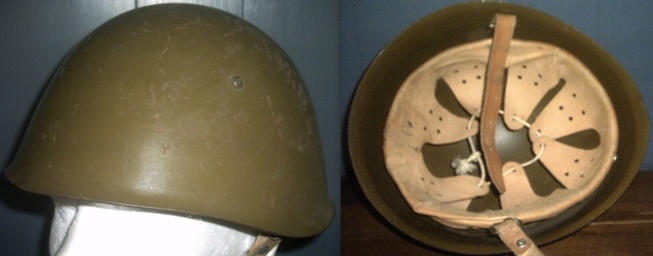
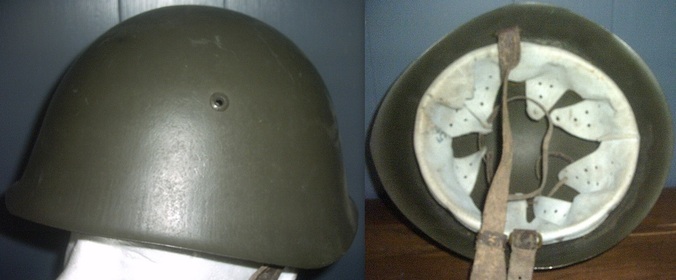
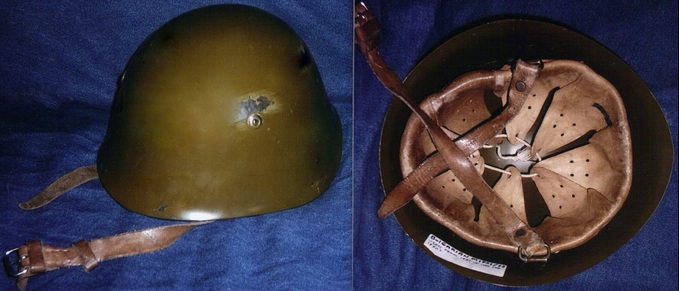
Bulgarian helmet M51 with early rivets and liner. Introduced in 1951, was a key piece of Bulgarian military equipment heavily inspired by the Italian M33 helmet design. It was intended to replace the earlier, German-influenced M36 models, but due to production constraints, both were used for decades. It features a smooth, rounded dome with a slightly pronounced, rounded visor or bill, distinct from the sharper peak of the Italian M33 or the deeper flare of German helmets. The shell has a raw, unrolled edge.
The helmet is made of steel, typically finished in a matte olive green or khaki-green paint.
The liner system is leather and uses metal arms to separate the liner completely from the shell. It is similar to the Italian M33 liner, but usually has an ink-stamped size rather than perforated size holes.
The liner frame is held in place by three hollow rivets visible on the upper third of the shell, which also provide ventilation. It features a leather chinstrap, in contrast to the herringbone cotton used on some Italian models.
A specific version for the Military Police was painted white and featured a circular Bulgarian flag decal with a large black "P" (for Politsiya) on top of the flag at the front and back.
M51/72 (M72)
An improved version of the M51 was adopted around 1972, often referred to as the M51/72 or simply M72. This variant had a slightly shorter visor and other minor variations in rivets and liners, moving towards a closer resemblance to the Italian Model 1933.
Both the M36 and the M51/72 saw extensive service well into the 1990s and even the 2000s in the Bulgarian Army and Home Guard before being replaced by modern composite helmets.
The helmet is made of steel, typically finished in a matte olive green or khaki-green paint.
The liner system is leather and uses metal arms to separate the liner completely from the shell. It is similar to the Italian M33 liner, but usually has an ink-stamped size rather than perforated size holes.
The liner frame is held in place by three hollow rivets visible on the upper third of the shell, which also provide ventilation. It features a leather chinstrap, in contrast to the herringbone cotton used on some Italian models.
A specific version for the Military Police was painted white and featured a circular Bulgarian flag decal with a large black "P" (for Politsiya) on top of the flag at the front and back.
M51/72 (M72)
An improved version of the M51 was adopted around 1972, often referred to as the M51/72 or simply M72. This variant had a slightly shorter visor and other minor variations in rivets and liners, moving towards a closer resemblance to the Italian Model 1933.
Both the M36 and the M51/72 saw extensive service well into the 1990s and even the 2000s in the Bulgarian Army and Home Guard before being replaced by modern composite helmets.
Bulgarian Helmet M51
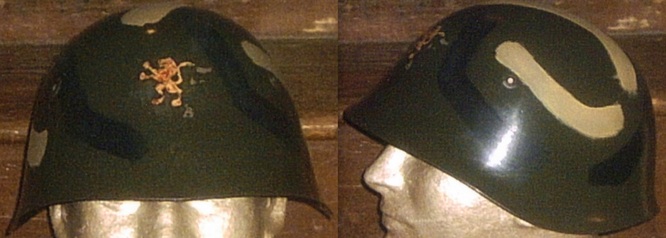
M51 Bulgarian Helmet Camo with Rampant Lion stencilled Emblem.
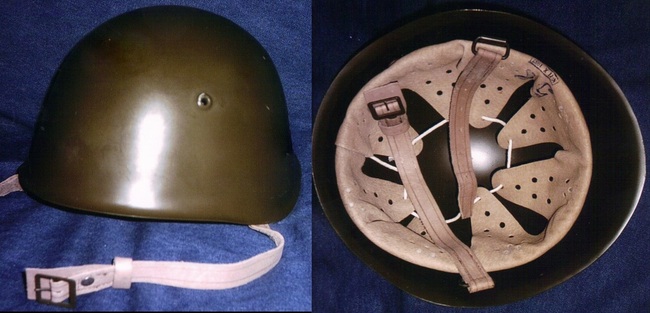
The Bulgarian M72 helmet is a Cold War-era steel combat helmet, developed and issued by the Bulgarian People's Army starting in the 1970s. Its design is a unique blend of Italian and Soviet influences, marking Bulgaria's independent approach within the Warsaw Pact.
The M72 has a distinctive "ball shape" shell that draws heavily from the Italian M33 helmet design.
It is constructed of high-quality, thick steel and typically painted an olive drab green color.
The interior features an adjustable leather liner system, often made of pigskin, that closely copies the Italian M33 liner design. Sizes are typically marked in centimeters on the leather.
It includes a secure, adjustable leather chinstrap with a reliable closure, ensuring stability.
The exterior is generally smooth, with three rivets visible on the outside to attach the liner system. Some versions have a modern curved rim, while earlier versions (often referred to as M51/72 hybrids) lack this.
The M72 has a distinctive "ball shape" shell that draws heavily from the Italian M33 helmet design.
It is constructed of high-quality, thick steel and typically painted an olive drab green color.
The interior features an adjustable leather liner system, often made of pigskin, that closely copies the Italian M33 liner design. Sizes are typically marked in centimeters on the leather.
It includes a secure, adjustable leather chinstrap with a reliable closure, ensuring stability.
The exterior is generally smooth, with three rivets visible on the outside to attach the liner system. Some versions have a modern curved rim, while earlier versions (often referred to as M51/72 hybrids) lack this.
Cold War
The Bulgarian People's Army (Bulgarska Narodna Armiya, BNA) during the Cold War was a key member of the Warsaw Pact and relied almost exclusively on Soviet-designed and produced weapons, artillery, tanks, and vehicles. The country possessed some capacity for domestic production of small arms and minor equipment but imported virtually all heavy weaponry from the USSR.
Weapons
The Bulgarian Army was equipped with standard Soviet small arms, many produced under license domestically.
Rifles: The standard service rifle was the AK-47 and later the AKM, produced in Bulgaria under license. Bulgaria developed a diverse range of AK variants over the years.
Pistols: The standard sidearm was the Makarov PM pistol, also produced domestically as the Pistol Makarov or simply PM.
Submachine Guns: Soviet models were used by security and internal forces.
Machine Guns: The army utilized Soviet-designed machine guns, including the PK/PKM general-purpose machine gun and the heavy DSzK and KPVT machine guns.
Anti-Tank Weapons: The standard shoulder-fired weapon was the Soviet RPG-7 rocket-propelled grenade launcher. The army also used anti-tank guided missiles like the AT-3 Sagger (Malyutka), often mounted on BRDM-2 vehicles.
Artillery
Bulgarian artillery comprised standard Soviet towed and self-propelled systems.
Towed Artillery:
122 mm howitzer D-30
152 mm howitzer-gun D-20
130 mm field gun M1954 (M-46)
Self-Propelled Artillery: The BNA operated Soviet self-propelled gun howitzers, including the 2S1 Gvozdika (122mm).
Multiple Rocket Launchers (MRLs): The BM-21 Grad (122mm) was widely used for ground support.
Missile Systems: The army had Soviet tactical missile systems such as the FROG-7 (Luna-M) and, in the late Cold War, SCUD-B missile systems, capable of delivering conventional or, under Soviet control, nuclear warheads.
Tanks and Vehicles
The backbone of the BNA's armored forces were numerous Soviet main battle tanks, all imported directly from the USSR.
Main Battle Tanks (MBTs):
T-34/85: These WII-era tanks were used in the immediate post-war era and for training and reserves well into the Cold War.
T-54/T-55: These were the most numerous tanks in the Bulgarian inventory, forming the core of the armored divisions throughout the height of the Cold War.
T-72: Bulgaria received the more advanced T-72 main battle tanks in the late 1970s and 1980s.
Armored Personnel Carriers (APCs) & IFVs:
BMP-1: Soviet-designed infantry fighting vehicles were a mainstay of mechanized units.
BTR-60: A range of wheeled APCs, supplied by the USSR, were used by motorized rifle divisions.
BRDM-2: Amphibious scout cars were used for reconnaissance.
Utility Vehicles: The army relied on standard Soviet utility trucks like the ZIL-130 and ZIL-131.
The Bulgarian People's Army (Bulgarska Narodna Armiya, BNA) during the Cold War was a key member of the Warsaw Pact and relied almost exclusively on Soviet-designed and produced weapons, artillery, tanks, and vehicles. The country possessed some capacity for domestic production of small arms and minor equipment but imported virtually all heavy weaponry from the USSR.
Weapons
The Bulgarian Army was equipped with standard Soviet small arms, many produced under license domestically.
Rifles: The standard service rifle was the AK-47 and later the AKM, produced in Bulgaria under license. Bulgaria developed a diverse range of AK variants over the years.
Pistols: The standard sidearm was the Makarov PM pistol, also produced domestically as the Pistol Makarov or simply PM.
Submachine Guns: Soviet models were used by security and internal forces.
Machine Guns: The army utilized Soviet-designed machine guns, including the PK/PKM general-purpose machine gun and the heavy DSzK and KPVT machine guns.
Anti-Tank Weapons: The standard shoulder-fired weapon was the Soviet RPG-7 rocket-propelled grenade launcher. The army also used anti-tank guided missiles like the AT-3 Sagger (Malyutka), often mounted on BRDM-2 vehicles.
Artillery
Bulgarian artillery comprised standard Soviet towed and self-propelled systems.
Towed Artillery:
122 mm howitzer D-30
152 mm howitzer-gun D-20
130 mm field gun M1954 (M-46)
Self-Propelled Artillery: The BNA operated Soviet self-propelled gun howitzers, including the 2S1 Gvozdika (122mm).
Multiple Rocket Launchers (MRLs): The BM-21 Grad (122mm) was widely used for ground support.
Missile Systems: The army had Soviet tactical missile systems such as the FROG-7 (Luna-M) and, in the late Cold War, SCUD-B missile systems, capable of delivering conventional or, under Soviet control, nuclear warheads.
Tanks and Vehicles
The backbone of the BNA's armored forces were numerous Soviet main battle tanks, all imported directly from the USSR.
Main Battle Tanks (MBTs):
T-34/85: These WII-era tanks were used in the immediate post-war era and for training and reserves well into the Cold War.
T-54/T-55: These were the most numerous tanks in the Bulgarian inventory, forming the core of the armored divisions throughout the height of the Cold War.
T-72: Bulgaria received the more advanced T-72 main battle tanks in the late 1970s and 1980s.
Armored Personnel Carriers (APCs) & IFVs:
BMP-1: Soviet-designed infantry fighting vehicles were a mainstay of mechanized units.
BTR-60: A range of wheeled APCs, supplied by the USSR, were used by motorized rifle divisions.
BRDM-2: Amphibious scout cars were used for reconnaissance.
Utility Vehicles: The army relied on standard Soviet utility trucks like the ZIL-130 and ZIL-131.
Cold War Bulgarian Helmets.
M51 Bulgarian Helmet
M51 and M36 type C:
M36 type C and M51.
M51/72 (Transitional M51 shell w/ M72 liner). Dark Gray Green Color with flat rivet.
M72 Bulgarian Helmet
M51/72 (Transitional M51 shell with M72 liner) and M72 Helmet.
Curved Edge Variants
The differences between the two models are obvious. This M72/51 has the same shape as the M51 but with less curved edges. And unlike the M51, the quality of the steel is much better, quality and refinement comparable to the M72.
In this image, two M72s are seen face to face. One is early and the other late. In the early one, a slight curvature is seen, while in the late (1989), the edge curve is more visible. This may have been simple differences in the manufacturing process since the model is the same.
Shell sizes
There does not seem to be substantial differences between the shell sizes, however in this case the difference between two M51/72 shells is visible. The one without curved edges is small and slightly taller than the M51/52 curved edges with a large size. In this case, the steel of the M51/72 without curved edges is thicker than the M51/72 with curved edges, which seems to have been a shell from the first production batches.
In this photo, an early M51 is compared in profile with the M51/72 without curved edges. It gives the impression that the liners can be interchangeable with each shell.
Bulgarian M51 and M33 Italian Helmet
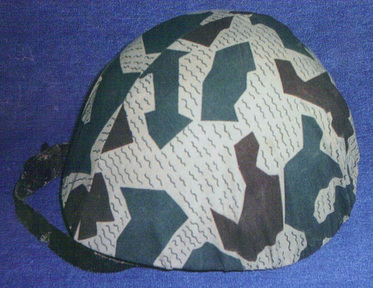
Bulgarian Splinter type camo cover Helmet.
1960s. M51 Helmets for Export. Cuba and Algeria
1960s. Cuban soldiers with Bulgarian M51 helmets.
1962. Algerian Liberation Army with Bulgarian M51 helmets. The Algerians received these helmets from Cuba in the early 60s. These helmets were in their original factory condition. Towards the 90s, appeared M51 helmets refurbished with Spanish M42/79 (Z) helmets liners and without the three rivets that supported the original liner.
Export helmets appear to have been with or without curved edges. In this photo the most common are those that did not have curved edges. They were probably the most common.
Bulgarian M51 next to a Czech WZ53 in Cuba. Photo: Gettyimages.
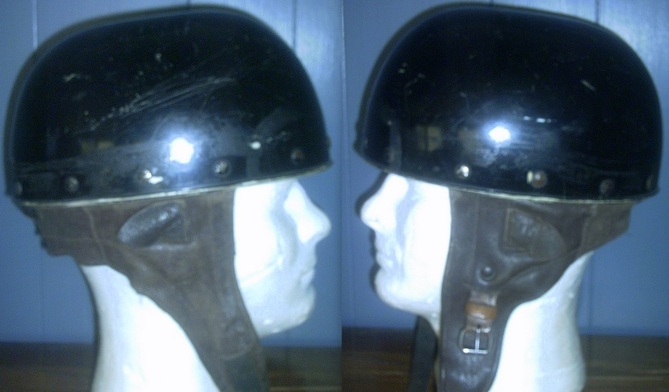
Bulgarian Paratrooper Helmet
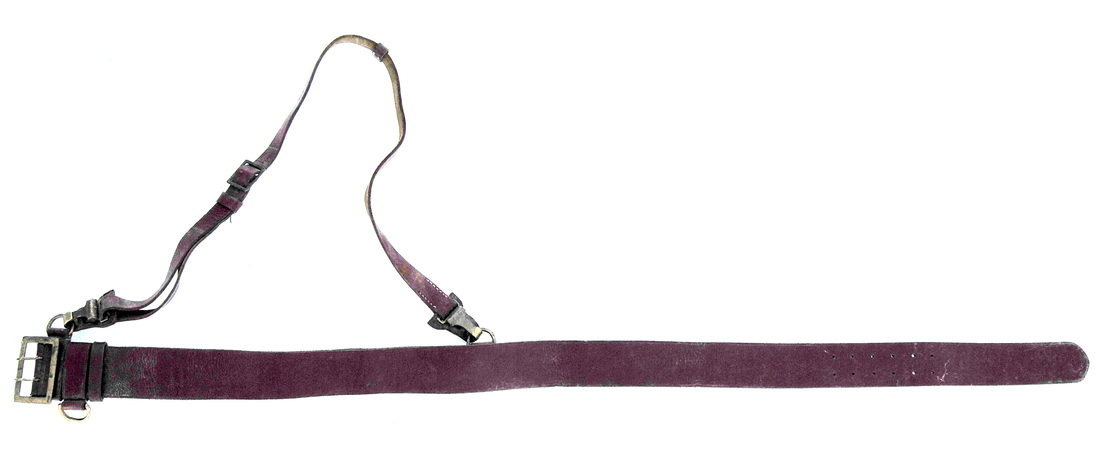
WWII/Cold War: Bulgarian Sam Browne Belt.
Bulgarian Army jacket. Cold War era