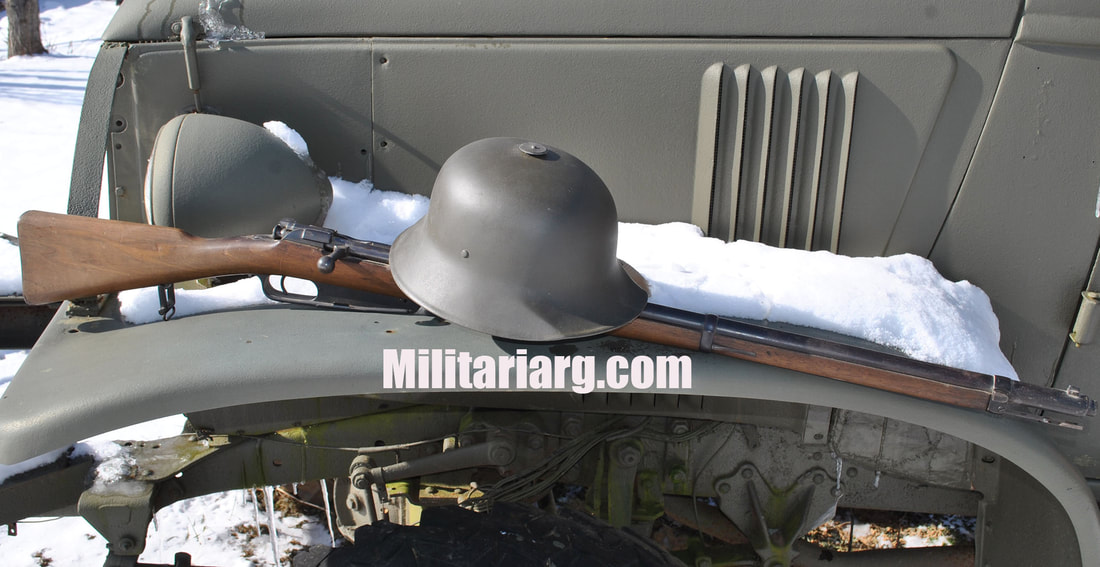
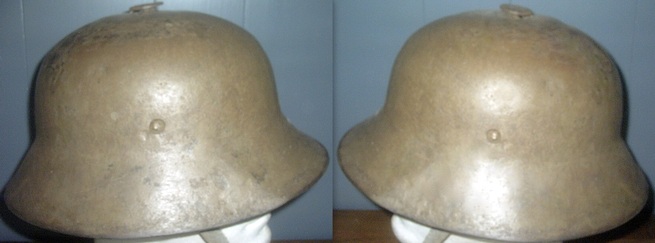
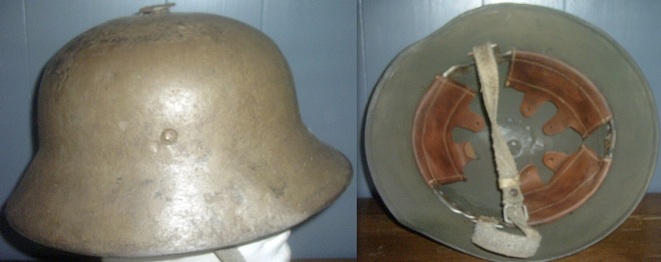
Militariarg.com
  • Home
  • Army
  • Aviation
  • Navy
  • Uniforms and Badges
  • Arms and Weapons
  • Equipment
  • Vehicles
  • Operational and Organizational Structure, Security Forces, Transportation, Books, Models and More.
  • Argentine Confederation Era. 1829 - 1852.
  • From 1852 to 1910 (French fashion)
  • Bunker 1982: South Atlantic War Militaria
  • International Militaria
  • Argentina WWII Era (Neutral) Reenactment Impression
  • Links ~ Enlaces
Picture
The Austro-Hungarian Empire declares war on Serbia following the assassination of Archduke Franz Ferdinand in July 1914, starting the "Great War" WW1.

The Austro-Hungarian Empire's military in World War I was equipped with advanced heavy artillery, but much of its small arms and field artillery were considered outdated at the outbreak of the war.

Weapons
The primary service rifle was highly effective, known for its fast firing rate compared to standard turn-bolt rifles

Rifles: The Steyr-Mannlicher M1895 (or M95) was the standard infantry rifle. It featured an innovative straight-pull bolt action and a 5-round en bloc clip-loading system, which allowed for a high rate of fire. The older Werndl-Holub M1867 single-shot breechloader was used by rear-echelon forces.

Pistols: Common sidearms included the semi-automatic Roth-Steyr M1907 (issued to cavalry) and Steyr M1912, as well as the older, but reliable, Rast & Gasser M1898 revolver.
 

Machine Guns: The primary machine gun was the Schwarzlose MG M.07/12. This reliable, water-cooled heavy machine gun was used in both the heavy machine gun role and sometimes as a light machine gun in a modified mount.

Artillery
While a large number of older artillery pieces were used, Austria-Hungary was a pioneer in heavy artillery development, thanks to the Škoda Works. 

Field Artillery: At the start of the war, the army lacked enough modern field guns. Standard pieces included the 8 cm Feldkanone M. 5 (76.5 mm) and the 10 cm Feldhaubitze M. 99 (104 mm). The Škoda 75 mm Model 15 was a highly effective mountain gun used extensively in the rugged Italian and Balkan fronts.

Heavy and Siege Artillery: This was the strength of the Austro-Hungarian artillery.

Škoda 305 mm Model 1911 Siege Howitzer: Nicknamed the "Big Bertha of the Alps," this super-heavy howitzer was used to destroy Belgian and French fortresses early in the war and Italian defenses in the Alps.​
Škoda 42 cm Haubitze M. 14/16: An even larger, super-heavy siege howitzer used to level the heaviest fortifications.
Trench Mortars: As trench warfare set in, the army produced various trench mortars (Minenwerfer), including 9 cm, 12 cm, and 26 cm models, for use against enemy trenches. 

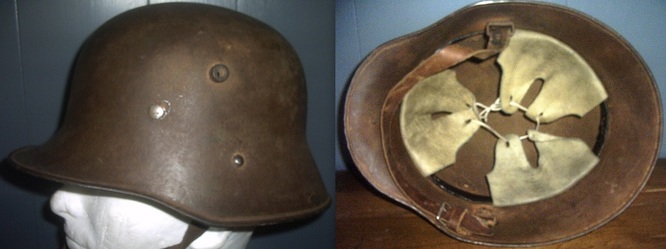
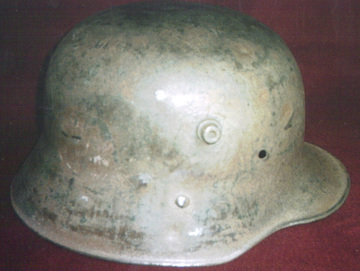
M16 "Berndorfer" Austro-Hungarian Helmet.

​Austrian “Berndorfer” Model 1916. This helmet was discovered by an Italian friend who explores the Alps in search of WWI relics.  This particular model was restored and a liner was added.
Picture
The Austro-Hungarian Berndorfer helmet (officially Stahlhelme nach inländischem Muster, or "steel helmet of domestic pattern") was the first domestically produced steel helmet of the Austro-Hungarian Army during World War I, highly sought after by collectors today. Produced by the Arthur Krupp A.G. firm in Berndorf, Austria, only about 140,000 units were manufactured between May and November 1917, making original examples rare and valuable. 
​It has a distinct bell-like, rounded shape, with a small, rolled rim.
Picture
Unlike the German M1916 helmet, which had side ventilation lugs, the Berndorfer has a unique ventilation system with a single disk at the top of the helmet crown. This vent also served to attach an optional frontal armor plate (Stirnpanzer).
The liner system was unique to the Berndorfer, utilizing stud-type side fasteners (not German split rivets) to secure the liner band. It commonly had three brown leather liner pads with padding often made from non-military surplus fabric, such as burgundy-colored cloth with floral designs.
The original chinstraps were made of cloth (due to leather shortages) and used a clamp rather than a roller buckle.
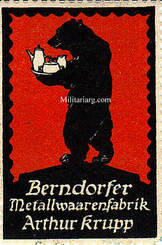
The rear inner skirt typically bears a stamp of a bear logo (the Berndorf manufacturer symbol) and the size, which was usually 66 cm, the single size in which they were produced.
Helmets were painted a distinctive field brown color, often referred to by collectors as "Isonzo brown." 

M17 German "Berndorfer" Helmet Shell

Picture
Picture
Austro-Hungarian M17 (or M18) "German Pattern" helmet manufactured by the Berndorf factory (Arthur Krupp A.G.). 
The Bear Stamp: The most definitive feature is the Berndorfer bear logo stamped into the rear inner skirt, usually accompanied by a size number (e.g., 64 or 66). On original German M16s, the chinstrap rivets are lower. On Austrian-made versions, these rivets are placed higher up on the shell.
The Berndorf-made German pattern often secured the liner band with a single split pin at the rear and used specialized side fasteners rather than standard German split rivets.
These helmets were typically finished in "Isonzo-braun" (a reddish-brown or field brown) rather than the standard German field gray.

M17 Austro-Hungarian Helmet

Picture
M17 Austro-Hungarian Helmet. (Found in Afghanistan).
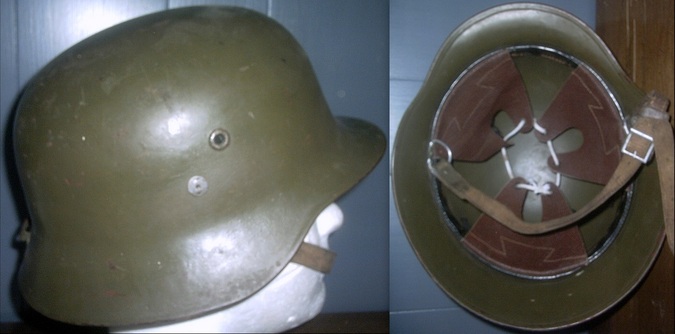
​The Austro-Hungarian M17 helmet was the final helmet pattern developed and used by the Austro-Hungarian Army during World War I, essentially a locally-produced variant of the German M16/17 model modified to use a chinstrap attached to the liner band rather than the shell.
M17/M18 helmets are frequently found in Afghanistan because the Afghan Royal Army purchased thousands of WWI-surplus German and Austro-Hungarian helmets during the 1930s. These helmets remained in active service for decades, appearing in photographic records as late as the 1960s and 1970s. During the modernization of the Afghan military under King Amanullah and later King Zahir Shah, Afghanistan acquired diverse European surplus, including Austro-Hungarian M17s and Czechoslovakian vz.20s.
These "unkillable" steel shells served well into the 1980s. .
Picture
The same helmet re-shoot with new camera.

M38 Hungarian Helmet

Picture
The Hungarian M38 helmet (Model 1938) was the primary steel combat helmet of the Royal Hungarian Army during World War II. It is virtually identical in shape to the German M35, as the Hungarians were allowed to copy the German design, but differs in specific internal fittings and the addition of a unique rear hook. There is no distinct "M35" Hungarian helmet; the Hungarian model is simply known as the M38.

The helmet has the classic rolled edge and flared skirt of the German M35, with riveted ventilation holes.
Rear Carrying Hook: A defining feature of the M38 is a small, horizontal, rectangular hook or loop riveted to the rear skirt, used to attach the helmet to a backpack when on the move.
The liner system and the position of the liner pins are different from the German M35. The original Hungarian liner was made of leather, attached by pins behind the ventilation holes. Many surviving examples, especially those from Finnish surplus, may have post-war Finnish-made liners or chinstraps.
Manufacturer and shell size markings were stamped inside the brim. The main manufacturers were Mavag of Budapest, Weiss of Csepel, and Gyori Vaggon-es Gepgyar. Domestic Hungarian helmets would also have Hungarian Crown inspection stamps, which are typically absent on models made for export to Finland. 
Picture
Picture
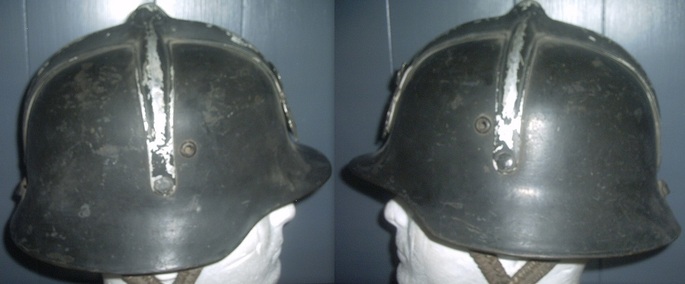
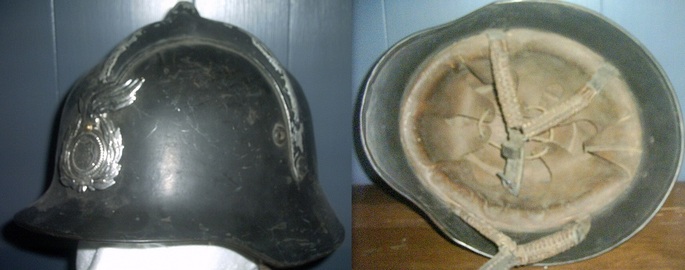
Hungarian Helmet. M35-38. Firefighters.
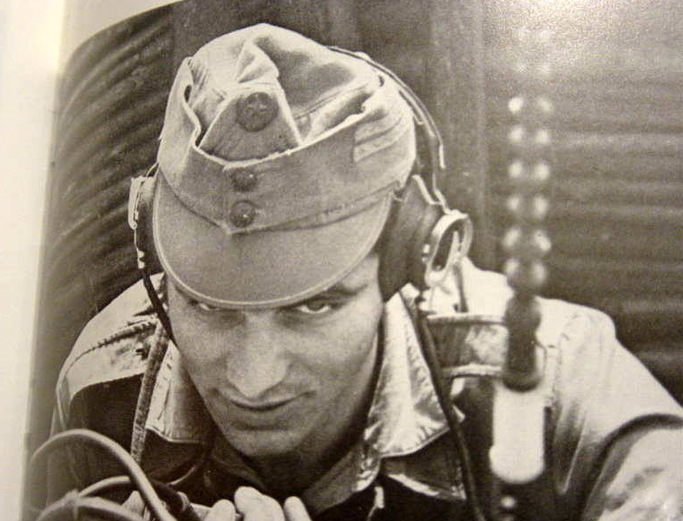
WW2

The Royal Hungarian Army during World War II was equipped with a mixture of domestically designed and manufactured weapons and vehicles, supplemented by a variety of German and Italian imports, particularly later in the war.

Weapons

The primary weapons were domestic designs, often of high quality for the time.

Rifles: The standard service rifle was the 35M rifle. A later, modernized version, the 43M rifle, was also produced. These used the 8x56mmR ammunition inherited from the Austro-Hungarian era.
Pistols: The main service pistol was the domestically produced FÉG 37M.
Submachine Guns: Hungary produced the unique, high-quality Danuvia 39M and later 43M submachine guns, designed by Pál Király and chambered for the 9×25mm Mauser cartridge.
Machine Guns:
31.M Solothurn Golyószóró: A licensed-built version of a German design (MG 30), this light machine gun was the standard LMG.
Schwarzlose MG M.07/31.M: An updated version of the reliable WWI-era Austro-Hungarian heavy machine gun remained in service.
Anti-Tank Rifles: The Solothurn S-18/100 20mm anti-tank rifle was a key weapon in the early war years. Later, German Panzerschreck and Pak 40 guns were introduced to counter newer Soviet armor.

Artillery
Hungarian artillery was a mix of older WWI-era pieces and newer domestic and German designs.

Field Artillery: The 10 cm 14.M light howitzer was a WWI-era staple. Newer domestic designs included the 10.5 cm 40.M light howitzer and the 10.5 cm 37.M.
Mountain Guns: The Škoda 7.5 cm Model 15 was used extensively in mountainous terrain.
Anti-Aircraft: The 4 cm 36.M L/60 Bofors anti-aircraft autocannon was produced under license and used for both ground-based AA and on the 40M Nimród SPAAG. German 8.8 cm Flak 36 guns were also used later in the war.
Assault Guns: The domestically produced 43M Zrínyi II assault gun, armed with a powerful 105 mm howitzer, was effective in the assault role.

Tanks and Vehicles
Hungary developed its own armored vehicles, although they were often under-gunned and under-armored compared to Allied and Axis counterparts later in the war.

Light Tanks: The 38M Toldi I and II (based on the Swedish Landsverk L-60) were the primary light tanks. Initial versions used a 20mm anti-tank rifle that was ineffective against Soviet armor; later variants were up-gunned with a 40mm gun.
Medium Tanks: The 40M Turán I (40mm gun) and 41M Turán II (75mm gun) were the main domestic medium tanks, inspired by the Czechoslovak Škoda T-21 prototype.
Armoured Cars: The 39M Csaba was a domestically produced 4x4 armored car used for reconnaissance.
Self-Propelled Anti-Aircraft Guns: The 40M Nimród was an SPAAG (also used as a limited tank destroyer) armed with a 40mm Bofors autocannon.
German Imports: As the war progressed and Hungarian designs proved obsolete, Germany supplied numerous more advanced tanks, including the Panzer III, Panzer IV, Panther, and Tiger I, as well as StuG III and Jagdpanzer 38(t) Hetzer tank destroyers, to bolster the HPA.

Austria Post War and Cold War

Picture
1938 Anschluss (Austria Germanay union): Throughout World War II, Austria was a part of the German Third Reich, referred to as Ostmark, and Austrian resources, industry, and manpower were fully integrated into the German war machine.
After World War II, Austria did not join NATO and maintained a policy of permanent neutrality throughout the Cold War. This neutrality was a condition of the 1955 Austrian State Treaty that ended the Allied occupation and restored Austrian sovereignty.
The Austrian Army (Bundesheer) during the Cold War utilized a diverse inventory of weapons, artillery, tanks, and vehicles, sourcing equipment from the United States, Europe, and domestically produced designs, reflecting its neutral status and post-war limitations. 

Weapons
The army used a mix of post-WWII surplus and modern domestic small arms. 

Rifles: The standard service rifle for much of the period was the StG 58 (Sturmgewehr 58), a license-built version of the highly regarded FN FAL. In 1977, this was replaced by the domestically designed and revolutionary Steyr AUG (StG 77), a bullpup assault rifle still in use today. Earlier, US M1 Garand rifles were also in service.
Pistols: The army used a mixture of surplus M1911 and Walther P38 pistols, eventually adopting the domestically produced Glock 17 in the 1980s.
Submachine Guns: The domestically designed Steyr MPi 69 and the surplus WWII-era MP40 were in use.
Machine Guns: The US-made Browning M1919 and the German-designed MG 42 (designated as MG 74 in later Austrian service) served as general-purpose machine guns.
Anti-Tank: The army utilized US Bazooka and M72 LAW rocket launchers, along with the M40 recoilless rifle. 

Artillery
Austrian artillery included US-supplied systems and later self-propelled howitzers acquired from surplus stocks. 

Field Artillery: Towed howitzers and guns were used, including various 105mm and 155mm systems.
Self-Propelled Howitzers: Austria acquired numerous US-made M109A2/A3 self-propelled howitzers from surplus markets in the 1990s (just at the end of the Cold War) and upgraded them domestically.
Coastal/Fortress Artillery: Notably, Austria bought obsolete British Centurion tanks at scrap prices and used their turrets with 105mm guns as fixed anti-tank emplacements in fortified zones along potential invasion routes. 

Tanks and Vehicles
The armored forces were primarily equipped with US-made tanks received as military aid, as well as a unique, domestically produced light tank/tank destroyer. 

Main Battle Tanks (MBTs):
M47 Patton: Received as US aid in the 1950s, replacing older WWII-era T-34s and M24 Chaffees provided by the Allies post-occupation.
M60 Patton: The main battle tank of the Austrian Army from the 1970s onwards. These were domestically modernized by Steyr to M60A3 standard in the 1980s.
Light Tanks/Tank Destroyers:
SK-105 Kürassier: An indigenous Austrian design (developed by Steyr-Daimler-Puch) introduced in the 1970s, featuring a 105mm gun in an oscillating turret based on French AMX-13 technology.
Armored Personnel Carriers (APCs) & IFVs:
Schützenpanzer Saurer A1: A domestically produced tracked infantry fighting vehicle that became the standard IFV.
M8 Greyhound & M3 Half-track: WWII-era US vehicles used by the early post-war army.
Utility Vehicles: The army relied on a variety of utility trucks and jeeps, including the US Willys MB and GMC CCKW, and the Austrian-made Steyr Pinzgauer light utility vehicle.

Hungary Postwar and Cold War

Picture
The Hungarian People's Army (HPA) was a member of the Warsaw Pact and relied almost entirely on Soviet-designed equipment, with limited domestic production capacity focused on smaller systems and vehicles. 

Weapons

The NVA utilized a range of Soviet small arms, many of which were produced domestically under license. 

Pistols: The Makarov PM (Pistole-M) was the standard sidearm.
Assault Rifles: The HPA manufactured its own variants of the Kalashnikov rifle, known as the AK-63 series, which was based on the AKM design.
AK-63 (AMP-69, AMD-65): The standard issue assault rifles chambered in 7.62x39mm.
Machine Guns: The HPA used various Soviet machine guns and locally produced copies.
SGM Nehéz Géppuska: A Hungarian copy of the SG Goryunov heavy machine gun.
DShK and KPV: Soviet-designed heavy machine guns.
Anti-Tank Weapons:
RPG-7: The standard anti-tank rocket launcher.
9M14 Malyutka (AT-3 Sagger): Anti-tank guided missiles used on IFVs and helicopters. 

Artillery
Hungarian artillery included towed and self-propelled systems, mostly supplied by the Soviet Union. 

Towed Artillery:
M-1938 (M-30) 122mm howitzer
M-1943 (D-1) 152mm howitzer
D-20 152mm Gun-Howitzer
Self-Propelled Artillery:
2S1 Gvozdika 122mm self-propelled howitzer
2S3 Akatsiya 152mm self-propelled howitzer
Mortars: 82mm and 120mm mortars were in service.
Multiple Rocket Launchers: The BM-21 Grad (122mm) was used for saturation fire. 

Tanks and Vehicles
The backbone of the HPA's armored forces were Soviet-made tanks. Hungary lacked the industrial capacity to produce its own tanks or aircraft, relying entirely on imports from the Eastern Bloc. 

Main Battle Tanks (MBTs):
T-34/85: Used in the 1950s, but largely retired or returned to the USSR after the 1956 Revolution.
IS-2: Heavy tanks used from 1950 to 1956, also returned to the USSR.
T-54/T-55: These tanks formed the bulk of the armored forces, with around 1,200 in inventory in the late 1980s.
T-72M/M1: More advanced T-72s were delivered from Czechoslovak and Polish stockpiles starting in the late 1970s.
Armored Personnel Carriers (APCs) & Infantry Fighting Vehicles (IFVs):
BMP-1: Amphibious IFV, supplied by Czechoslovakia, which allowed infantry to fight from within the vehicle.
BTR-60: Soviet-made wheeled APCs.
D-944 PSzH and D-442 FUG: Hungary had limited domestic production of these wheeled armored scout cars/APCs, utilizing its established heavy industrial capabilities for these specific vehicles.
Transport: A variety of Soviet utility trucks were used for transport.
Picture
Picture
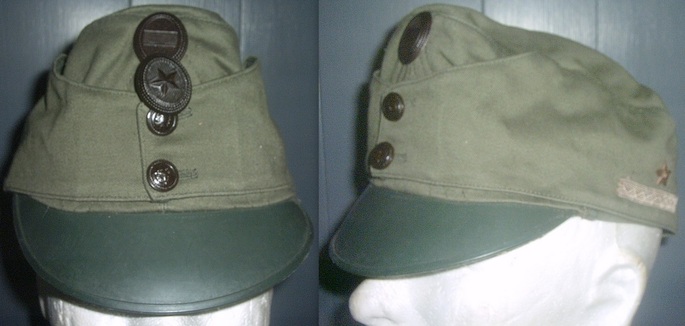
Cold War. Hungarian Hat K.U.K. Austro Hungarian Style.
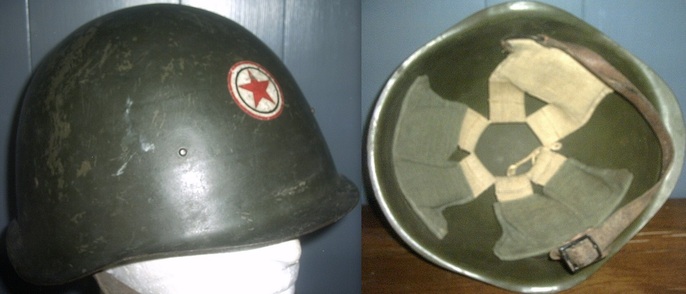
Hungarian M50 Helmet

Picture
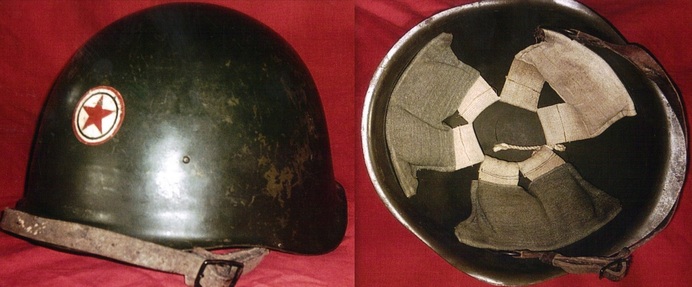
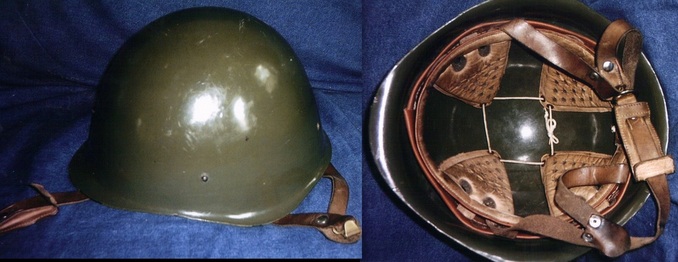
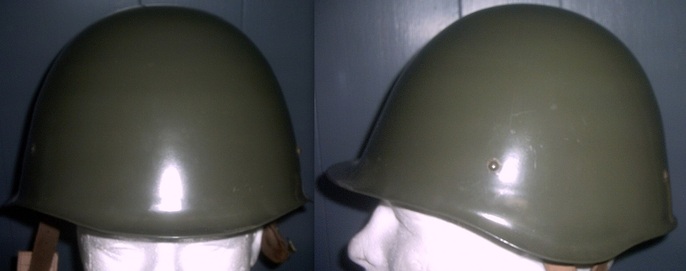
The Hungarian M50 helmet was the standard steel helmet of the Hungarian People's Army during the early Cold War, from around 1950 to the 1970s. It is essentially a domestic copy of the Soviet SSh-40 helmet but with a unique Hungarian-made liner system.
The shell is an exact copy of the Soviet SSh-40 design, covering the main portion of the head and ears with a dip at the back for neck room.
Picture
The key difference from the Soviet original is the liner. The M50 features a three-pad liner system made of cloth, which contrasts with the oiled tar fabric used in the SSh-40.
The liner pads are held individually by rivets visible on the outside of the helmet shell.
The helmet is typically a dark olive green color, with some later models featuring an "anti-infrared" paint finish that gives it a slight sheen.
Early parade versions of the M50 often featured a stenciled red star encircled by the national colors on the front.

M70 Hungarian Helmet

Picture
Picture
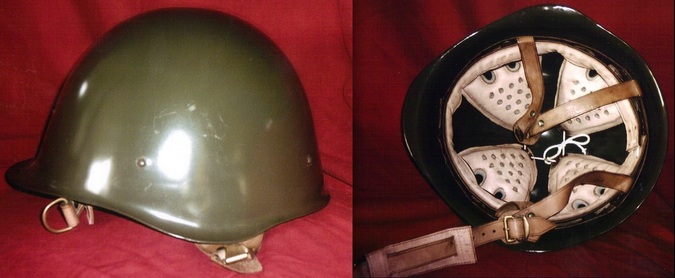
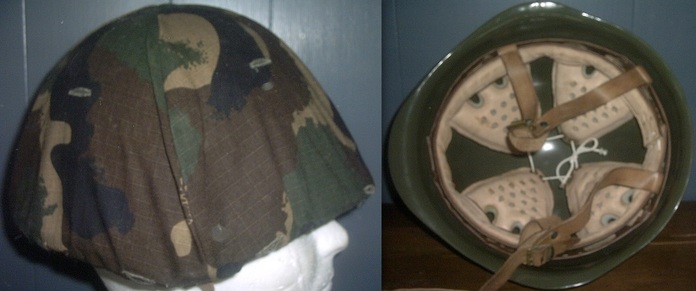
The Hungarian M70 helmet was the final steel combat helmet used by the Hungarian People's Army and post-communist Hungarian Defense Forces. It was introduced in the 1970s and served until it was fully replaced by modern ballistic helmets in the 2000s. 

The M70 shell is identical in shape to the earlier M50 (and therefore the Soviet SSh-40), but the interior liner system is unique to this model. 
The M70 features an improved, more comfortable liner made of four separate pads that are part of a larger metal band assembly, then covered in leather. This contrasts with the M50's three separate cloth pads.
It was updated with a robust, often canvas or webbed, four-point chinstrap that uses a hook-and-catch clasp assembly for quick release.
Made of steel, finished in a matte, dark olive-green paint.
Manufacturer stamps and dates are usually found stamped on the inner front rim of the shell.
Picture
Picture
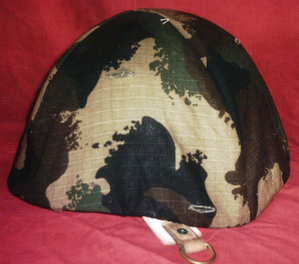
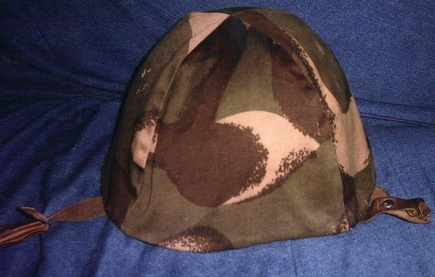
The Hungarian M1949/82 (commonly called M82, "Swirl," or "Rába") is a three-color camouflage pattern that was an adaptation of the original 1949 design. It was officially reintroduced in 1982 and remained in service until it was replaced by the M94 pattern around the year 2000.
The pattern consists of reddish-brown and olive green splotches on a pinkish-tan background.
It is characterized by blurred, "soft" edges and swirling shapes, which led to its "Swirl" nickname. The design is often compared to a simplified version of British DPM. Unlike standard infantry patterns, it was primarily issued to specialist units, including border guards, paratroopers, and Air Force ground crews. 
Picture
The Hungarian 1994 pattern camouflage (officially M1990 four-color, but adopted in 1994) is a woodland-style pattern that served as the standard uniform camouflage for the Hungarian Defence Forces during their preparation for, and early years in, NATO.

​The pattern features four colors: black, dark brown, olive green, and tan (or stone) shapes on a tan background.
The overall effect is similar to other contemporary European and U.S. woodland designs, which were popular at the time of Hungary's adoption of the pattern.

Picture
The adoption of this pattern, which moved away from older Eastern Bloc styles, was likely intended to align Hungary with NATO standards and encourage its membership, which was attained in 1999.

Picture
Picture

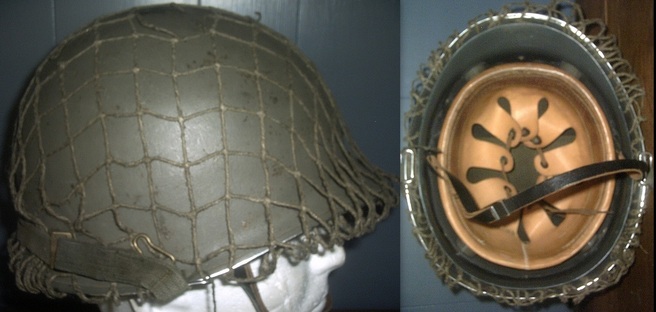
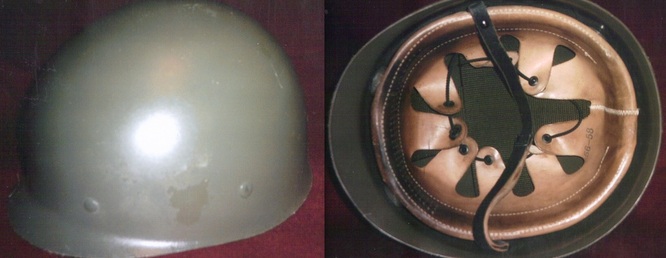
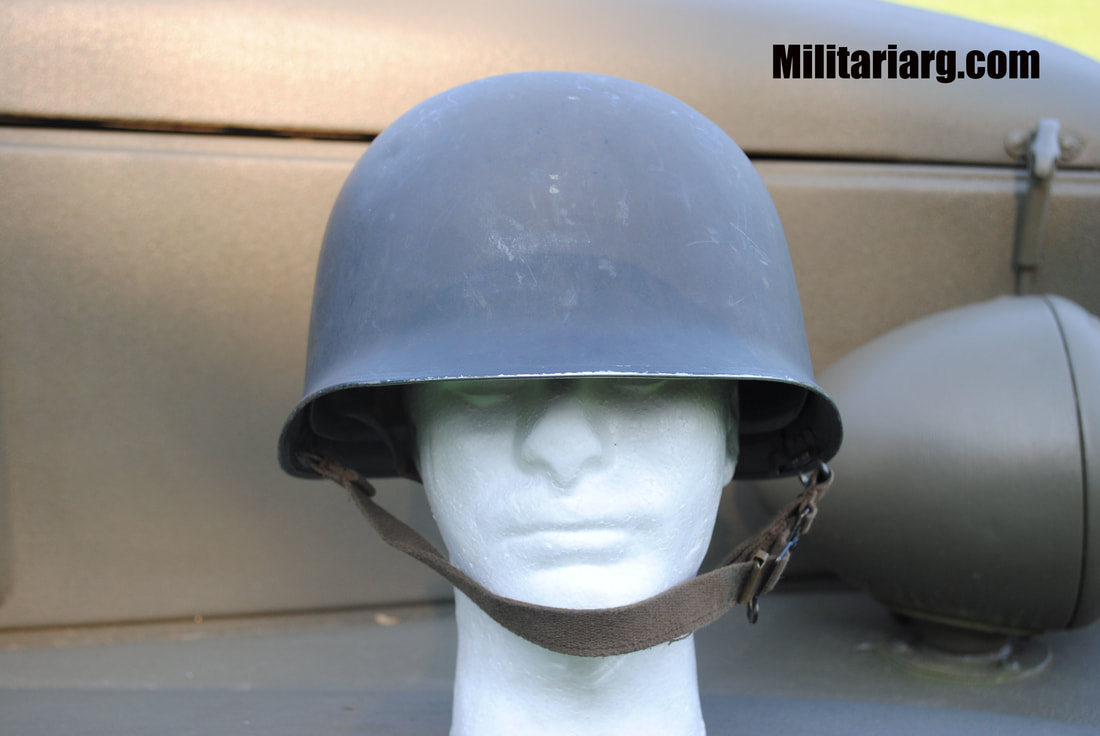
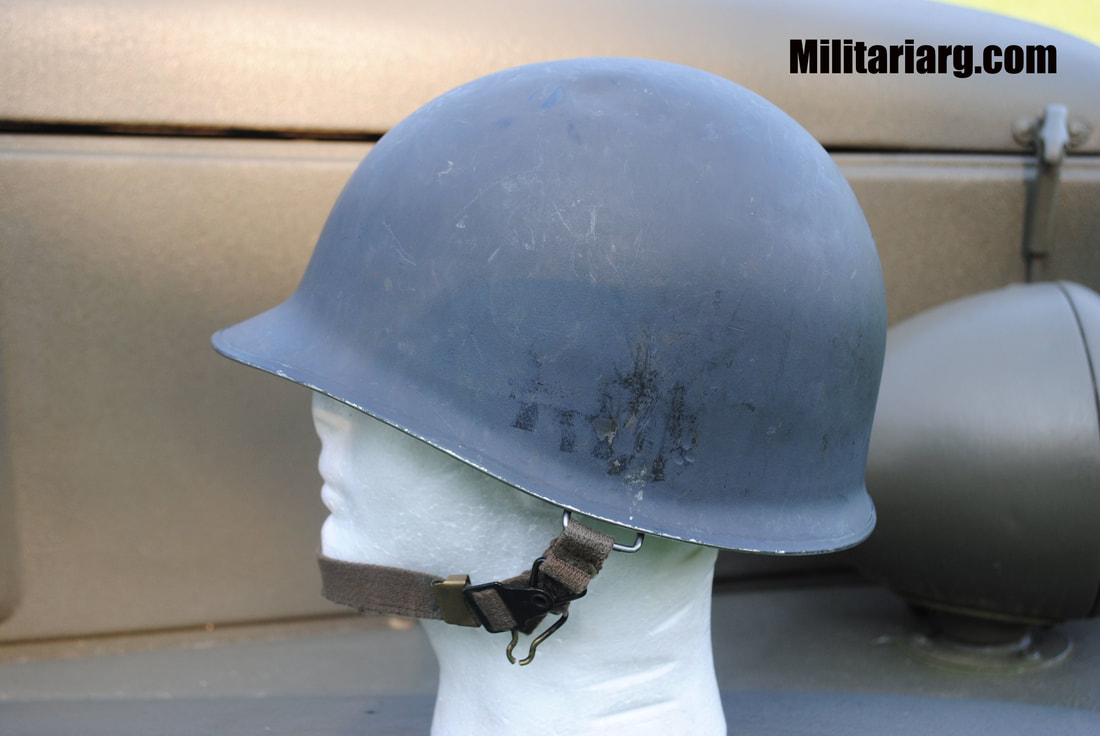
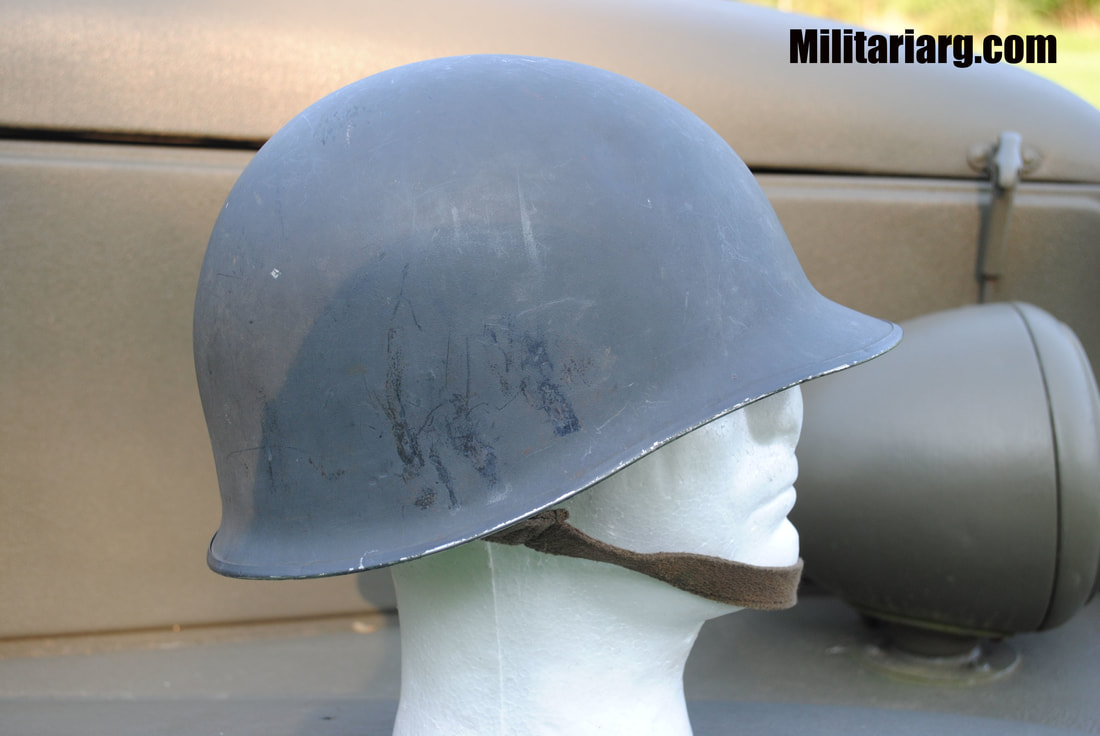
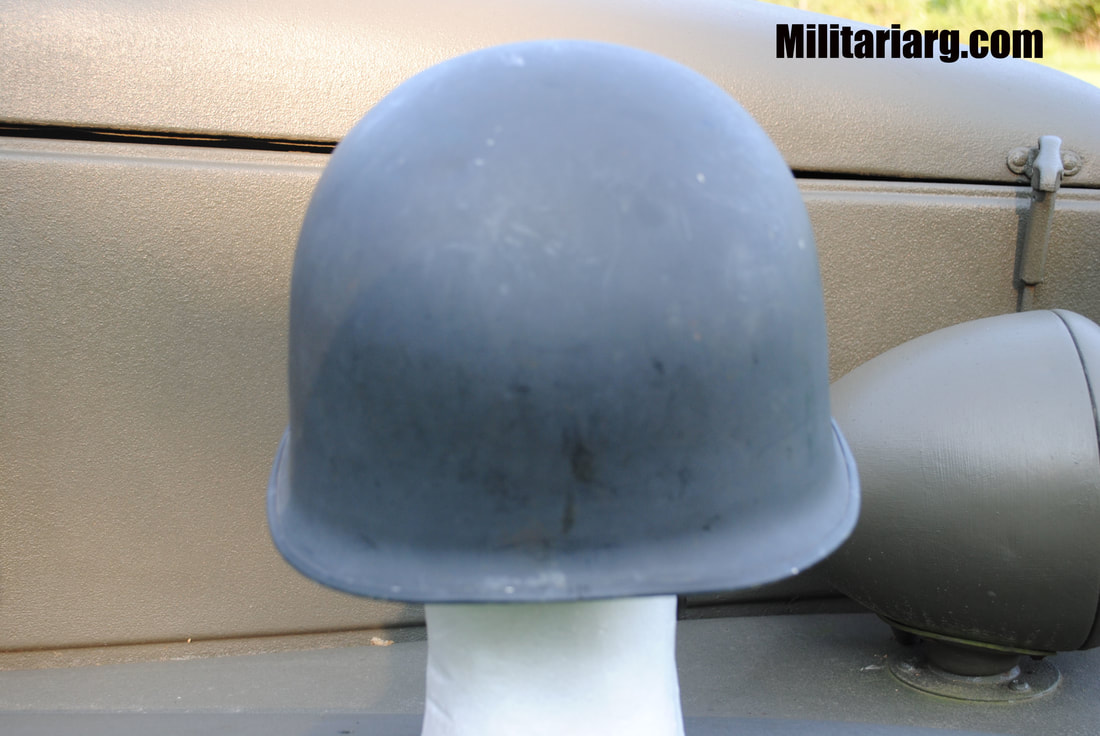
M58 Austrian Type M1 Helmet

Picture
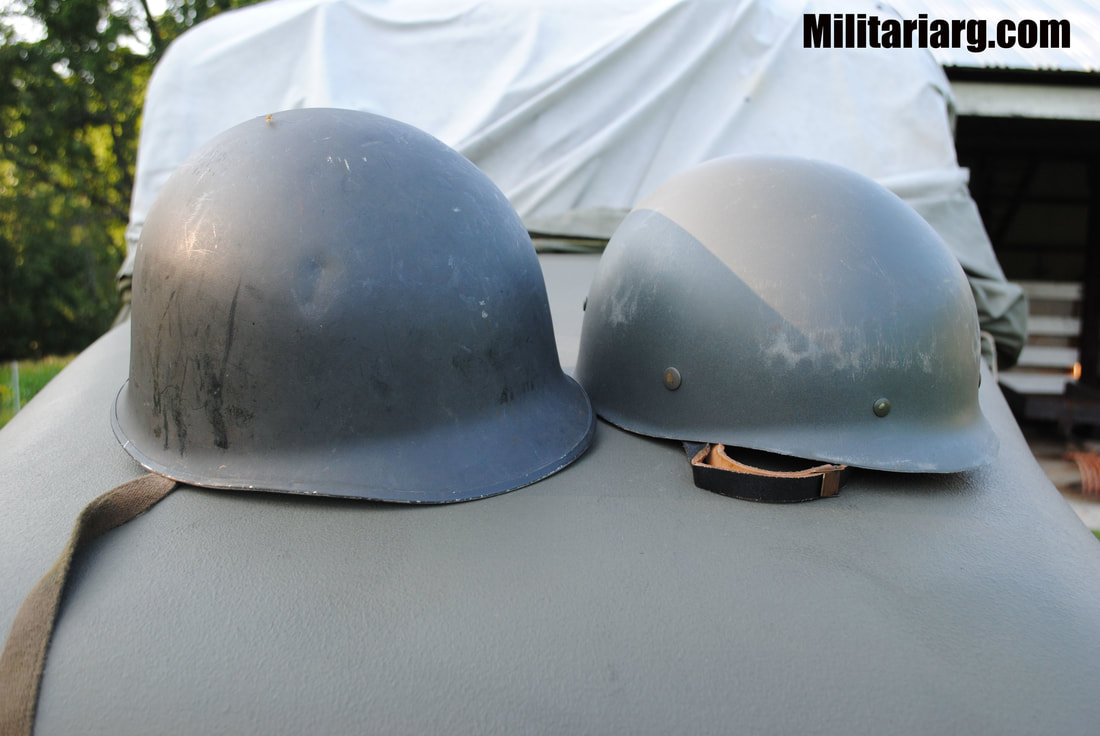
The Austrian M1 M58 helmet (officially Stahlhelm M58) was the first domestically produced version of the iconic U.S. M1 helmet, adopted by the newly reformed Austrian Armed Forces (Bundesheer) in 1958. It remained in service until the 1990s. 

It closely resembles the U.S. M1 helmet, featuring an outer steel "pot" and a separate inner liner.
The shell was made from a non-magnetic manganese steel alloy.
The liner is made of plastic (unlike the U.S. fiberglass liners) and uses a suspension system similar to the U.S. "Riddell-style" webbing, typically in grey herringbone twill material with a gray pebbled leather sweatband.
The steel shell features sewn khaki chinstrap bales similar to the U.S. WWII versions, but the chinstrap itself is typically a cloth or webbed material, not the full leather found on the later M75.
Manufacturer stamps, such as the Ulbrichts Witwe Schwanenstadt logo (often a small "U" or "UW" stamp), can usually be found inside the inner rear rim of the shell.
Picture
Austrian Plastic Parade Helmet (Type M1 NATO).

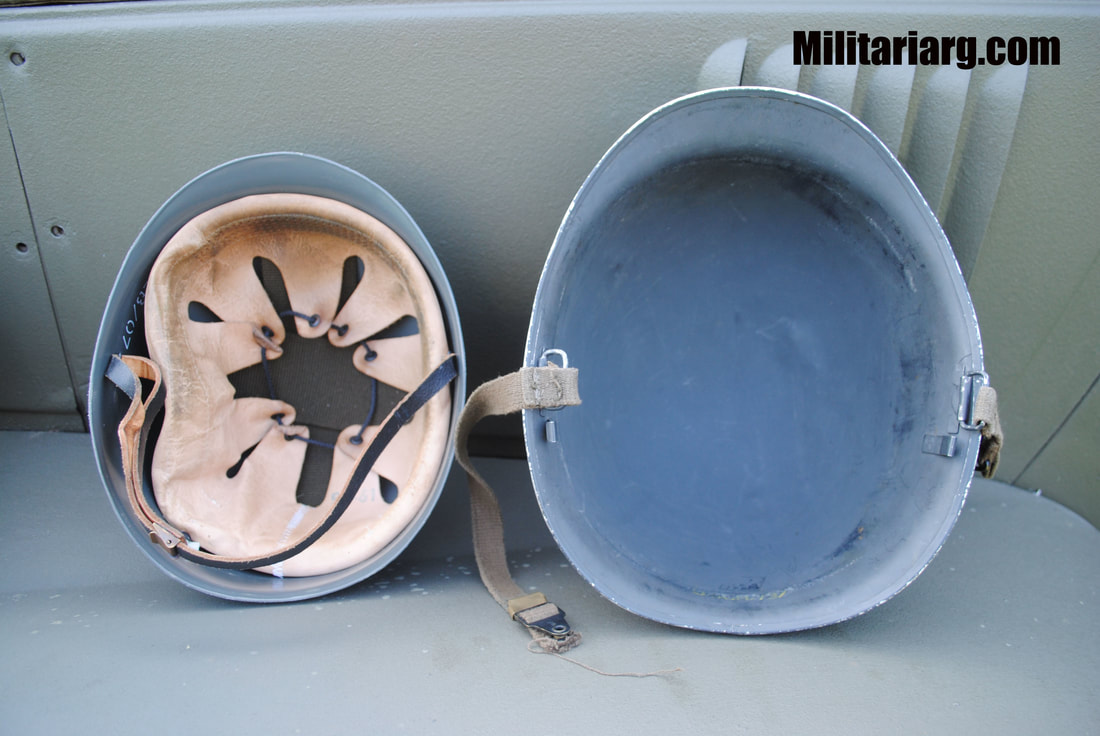
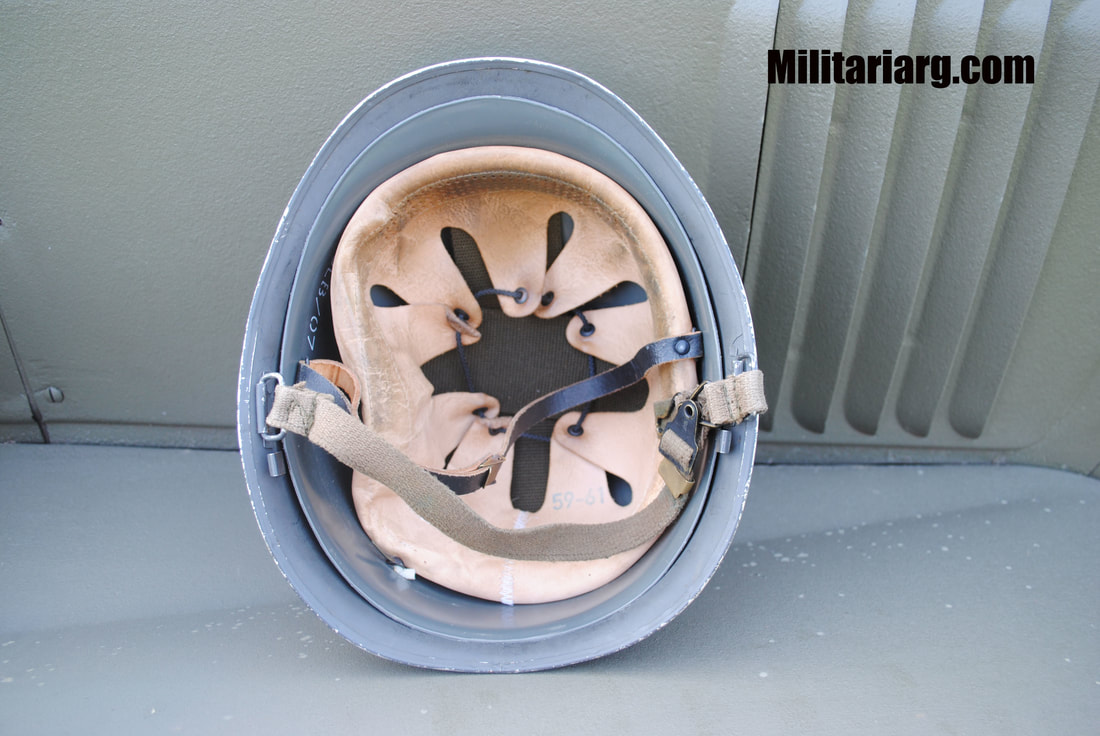
M75 Austrian M1 Clone Helmet
Picture
Picture
Picture
Picture
Picture
Picture
Picture

Powered by Create your own unique website with customizable templates.