Militariarg.com
  • Home
  • Army
  • Aviation
  • Navy
  • Uniforms and Badges
  • Arms and Weapons
  • Equipment
  • Vehicles
  • Operational and Organizational Structure, Security Forces, Transportation, Books, Models and More.
  • Argentine Confederation Era. 1829 - 1852.
  • From 1852 to 1910 (French fashion)
  • Bunker 1982: South Atlantic War Militaria
  • International Militaria
  • Argentina WWII Era (Neutral) Reenactment Impression
  • Links ~ Enlaces
In the early 1940s, military aviation in Argentina was still part of the
Argentine Army (as the Servicio de Aviación del Ejército) and the Navy, as the independent Argentine Air Force was not created until January 4, 1945. 

Army Aviation in the WWII Era (1939–1943)
 

During this period, the Army operated a significant fleet of roughly 150 aircraft. Due to Argentina's neutrality and a subsequent U.S. arms embargo after 1941, the force was a mix of aging European designs, U.S. aircraft purchased pre-war, and new indigenous prototypes. 

Combat and Reconnaissance:

Fighters: The Army used Curtiss P-36 Hawk (Model 75O) and older Dewoitine D.27 monoplanes.
Observation: The backbone of the fleet included the Ae.M.O.1 (a local design by FMA) and the Stearman 76 D1.
Attack/Light Bombing: They operated Northrop A-17 and Martin B-10 heavy combat craft.

Transport and Training:
Transport: The fleet utilized Junkers Ju 52 (Germany) and Lockheed Model 14 Super Electra (USA).
Primary Trainer: The Focke-Wulf Fw 44J Stieglitz was the standard primary trainer, with 190 units built under license by FMA. 

Re-establishment and Modern Roles
After losing its air branch to the Air Force in 1945, Argentine Army Aviation (AvEj) was re-established as a separate command in 1956. 

Modern Structure: Headquartered at Campo de Mayo, its primary mission today is tactical support, including assault, intelligence, and disaster relief.

Active Inventory:
Helicopters: The fleet is dominated by the Bell UH-1H Iroquois (being upgraded to Huey II), Aérospatiale SA315B Lama for mountain rescue, and new Bell 407GXi models.
Fixed Wing: Operates CASA C-212 Aviocar for transport and Diamond DA62 for surveillance.
Antarctic Operations: In 1965, Army Aviation used a Cessna U-17 to perform its first expedition to the South Pole. 

Strategic Transitions: 1945 Separation: The Army transferred almost all its aircraft and infrastructure to the newly formed Air Force.
Picture
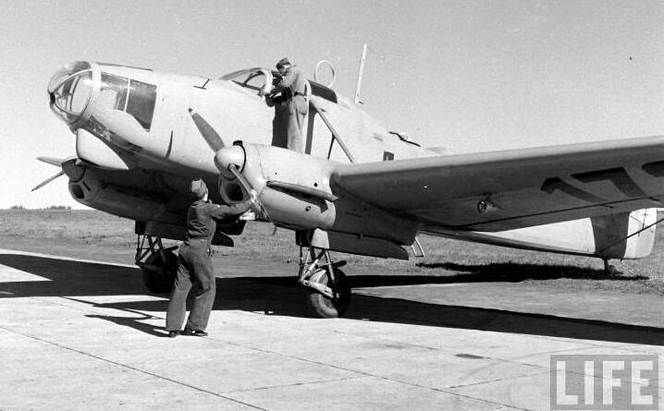
​(1938-1952) The Focke-Wulf Fw 58 Weihe ("Harrier") was a German aircraft, built to fill a request of the Luftwaffe for a multi-role aircraft to be used as advanced trainer for pilots, gunners and radio operators.
Separation and the Birth of the Air Force (1945) 

On January 4, 1945, a decree established the Argentine Air Force as an independent military branch, separate from the Army.
The Army transferred the majority of its aircraft and related installations, including the Fábrica Militar de Aviones (FMA), to the new Air Force.

Since its re-establishment in 1956, the Argentine Army Aviation (AvEj) has evolved into a tactical arm that functions similarly to the US Army's air assault and cavalry models, relying on helicopters as its primary "steed" for rapid insertion and reconnaissance. 

The "Assault Cavalry" Doctrine

Helicopter-Centric Force: As of January 2026, the branch's primary offensive and logistical strength resides in its rotary-wing fleet, which includes approximately 50 Bell UH-1H Iroquois and 12 Bell 206 units.
Tactical Integration: The Army has organized specialized units, such as the 601st Air Assault Regiment, which utilizes doctrine based on the US 101st Airborne Division for "vertical envelopment"—using helicopters to drop troops behind enemy lines.
​
Combined Arms Support: Much like the US Army, Argentine Army pilots are often officers from traditional combat branches (Infantry, Cavalry, Artillery) who retain their original branch identity while flying, ensuring they deeply understand the needs of the ground troops they support.

Helicopter Deployments: Falklands/Malvinas (1982)
 
The Argentine Army Aviation (AvEj) played a vital logistical and tactical role during the 1982 conflict, operating under harsh South Atlantic conditions. 

Fleet Deployment: The Army deployed a diverse helicopter force to the islands, including:
9 Bell UH-1H Iroquois: The primary workhorse for transport and liaison.
6 Aérospatiale SA330 Pumas: Used for troop movements; one was notably shot down at Grytviken on April 3.
3 Agusta A109A: Primarily used for medical evacuation and VIP transport. Two were captured by British forces at Port Stanley and later utilized by the SAS.

2 CH-47C Chinooks: Heavy-lift assets crucial for shifting artillery and large troop groups.
Combat Roles: While primarily used for 796 general support missions, some Army helicopters were fitted with rocket launchers or machine guns.

Losses: The war was costly for Army Aviation; six members died, and most of the deployed aircraft were either destroyed or captured (only a few returned to the mainland). 

From 1945 to 1975, the Argentine Army went through a significant period of reorganization. In 1945, the Army lost its aviation component when the Argentine Air Force became an independent service. It was not until 1956 that Army Aviation was officially re-established, eventually forming the Comando de Aviación de Ejército (CAE) in 1964. 

The following helicopters were incorporated into the Argentine Army during this period: 
Early Re-establishment (Late 1950s – 1960s)
During the initial years of its rebirth, the Army focused on light utility and training aircraft, eventually introducing its first rotary-wing assets. 

Bell 47G: Introduced in 1965, these were the primary light utility and training helicopters used until the early 1980s.
Fairchild Hiller FH-1100: Acquired in the 1960s for observation and light utility roles. 

Modernization & Combat Operations (1970 – 1975)
In the early 1970s, the Army significantly upgraded its fleet to support counter-insurgency operations, such as Operativo Independencia in 1975. 

Bell UH-1H Iroquois (Huey): The backbone of the fleet, first received in the early 1970s. These were used extensively for troop transport and assault.
Bell 205A: A civil variant of the Huey often utilized alongside the UH-1H for utility missions.
Aérospatiale SA 315B Lama: Introduced in 1975 specifically for high-altitude mountain operations in the Andes. 

Domestic Developments

Cicaré CH-1: While not an operational military acquisition, the first helicopter designed and built in South America by Augusto Cicaré flew in 1961, laying the groundwork for later domestic military projects.

Picture
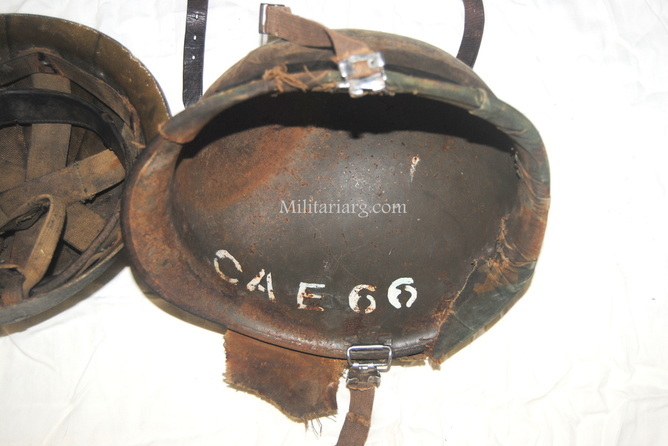
Argentine Helmet with camo cover type ERDL, battlefield relic. CAE66 "Comando de Aviacion del Ejercito".
​(This helmet was one of the first helmets found in the Falklands after the war that I had in my collection).
​
Picture
  • "Angeles sobre la turba".

  • The book provides an authentic, firsthand account of the experiences of an Argentine Army Aviation soldier during the 1982 Malvinas War.

  • Title Meaning: The title originates from the name given to the helicopters by the frontline soldiers, who saw the aircraft as "Angels" coming to their aid over the peat bogs (turba) of the islands.
  • ​
Falcón's book is highly regarded among military historians as a vital source of information on the logistical and tactical challenges faced by the helicopter units in the South Atlantic.

The Army's aviation branch (Comando de Aviación de Ejército) provided the bulk of the transport and utility support on the islands. 

Bell UH-1H Iroquois: The primary utility workhorse; 9 were deployed to the islands.
Aérospatiale SA330 Puma: Used for heavy transport and troop insertion; 6 were deployed.
Agusta A109A Hirundo: Utilized for reconnaissance and medical evacuation; 3 were deployed.
Boeing CH-47C Chinook: Heavy-lift capability; 2 were deployed to the islands.
Aérospatiale SA-315B Lama: Primarily used for mountain operations and scouting on the mainland.
MBB Bo 105: Several were commandeered from provincial police forces for use during the conflict.

​Helicopter related items in my collection

Picture
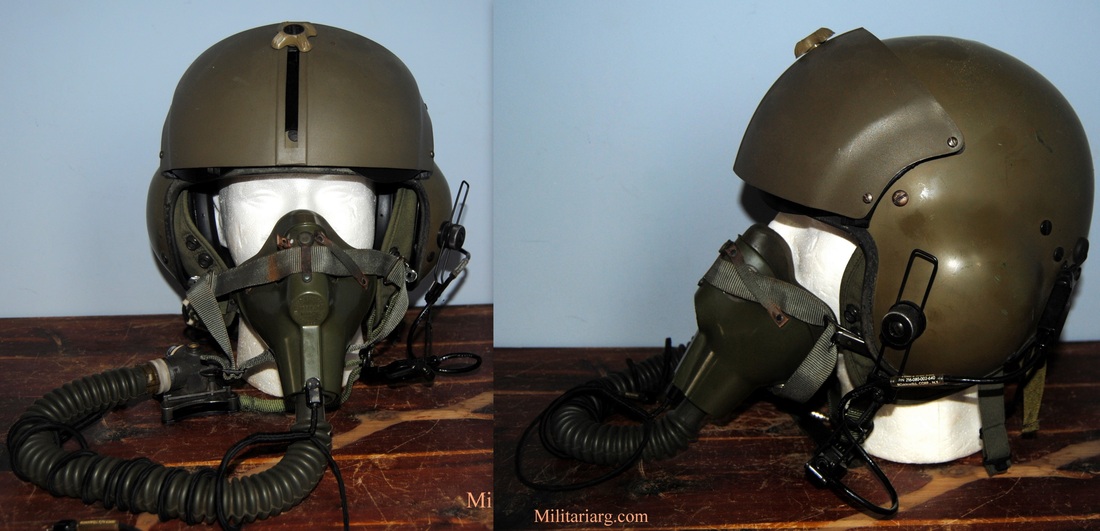
SPH-4 Helicopter Helmet (Bell Inc). Microphone Dynamic M-67/AIC Acousticom. MBU/P Oxygen mask. MBU/P Oxygen Mask, Hardshell assy
Picture
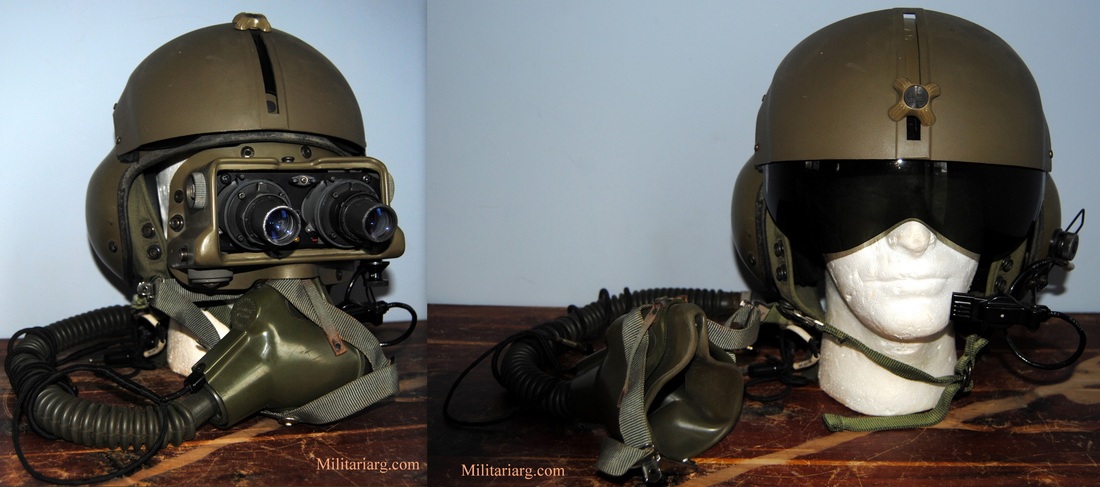
AN/PVS-5A/B Night Vision Goggles

Powered by Create your own unique website with customizable templates.