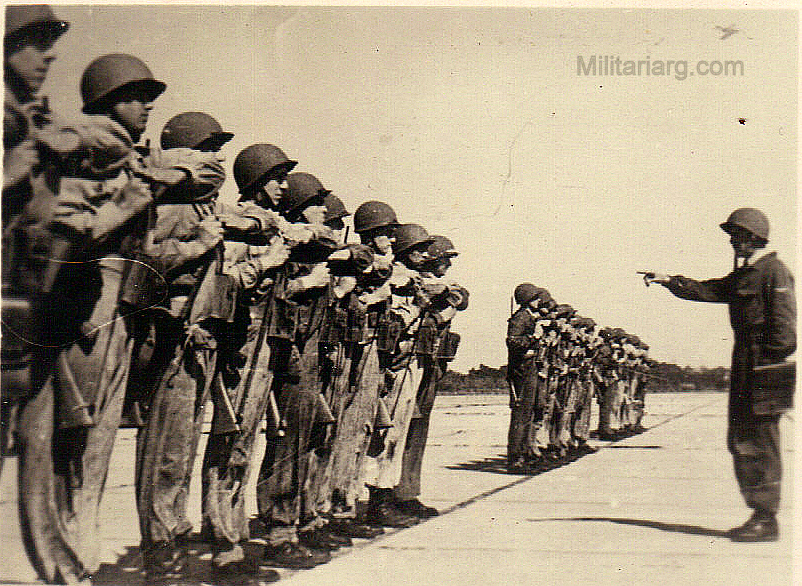
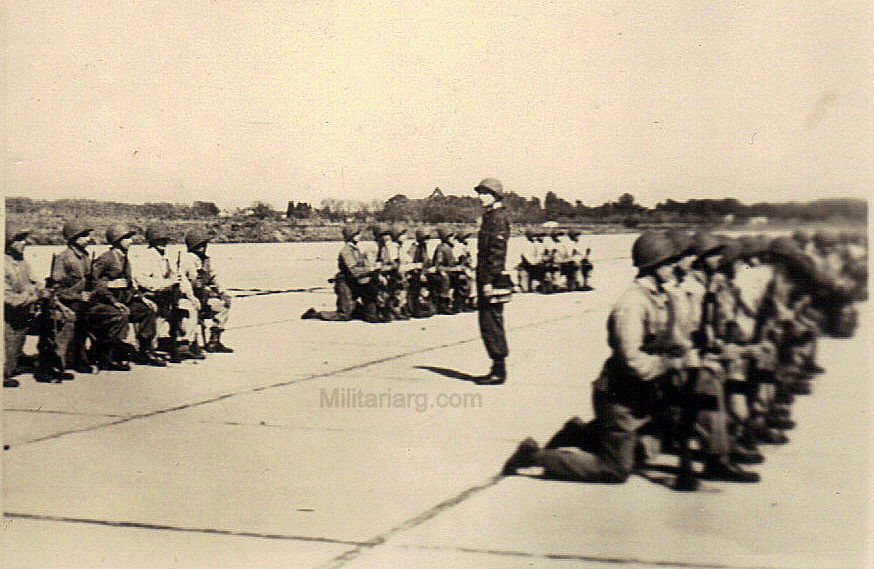
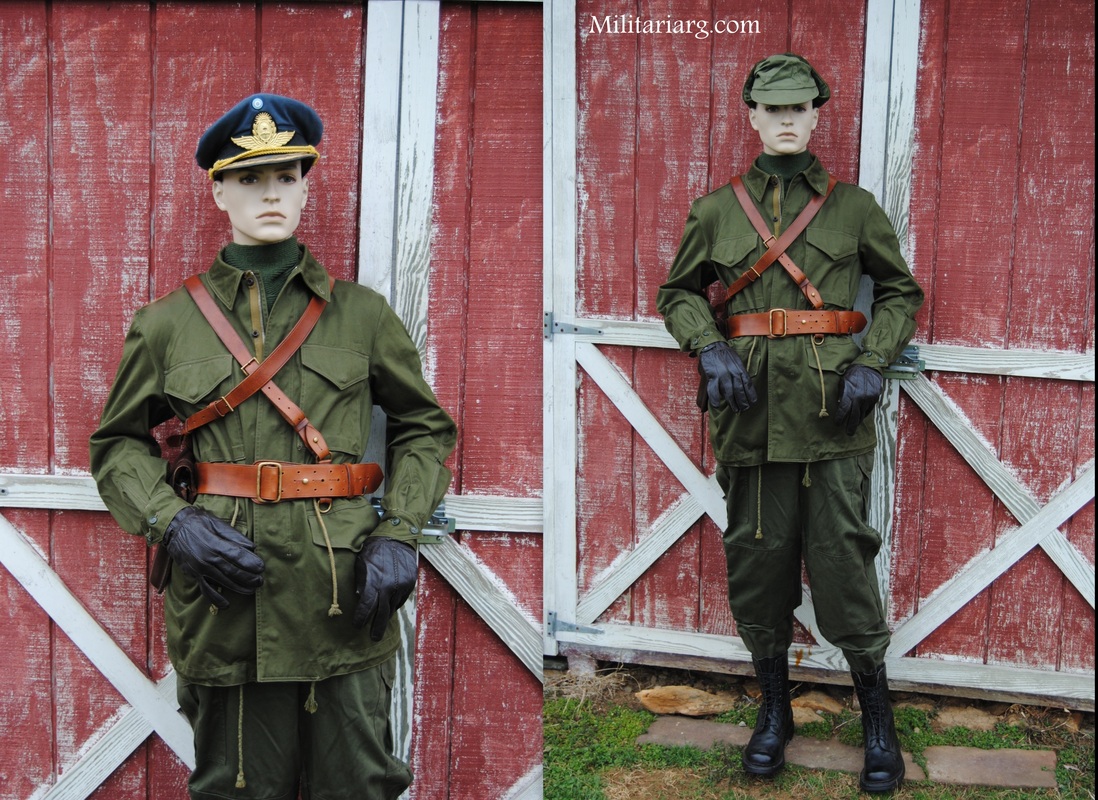
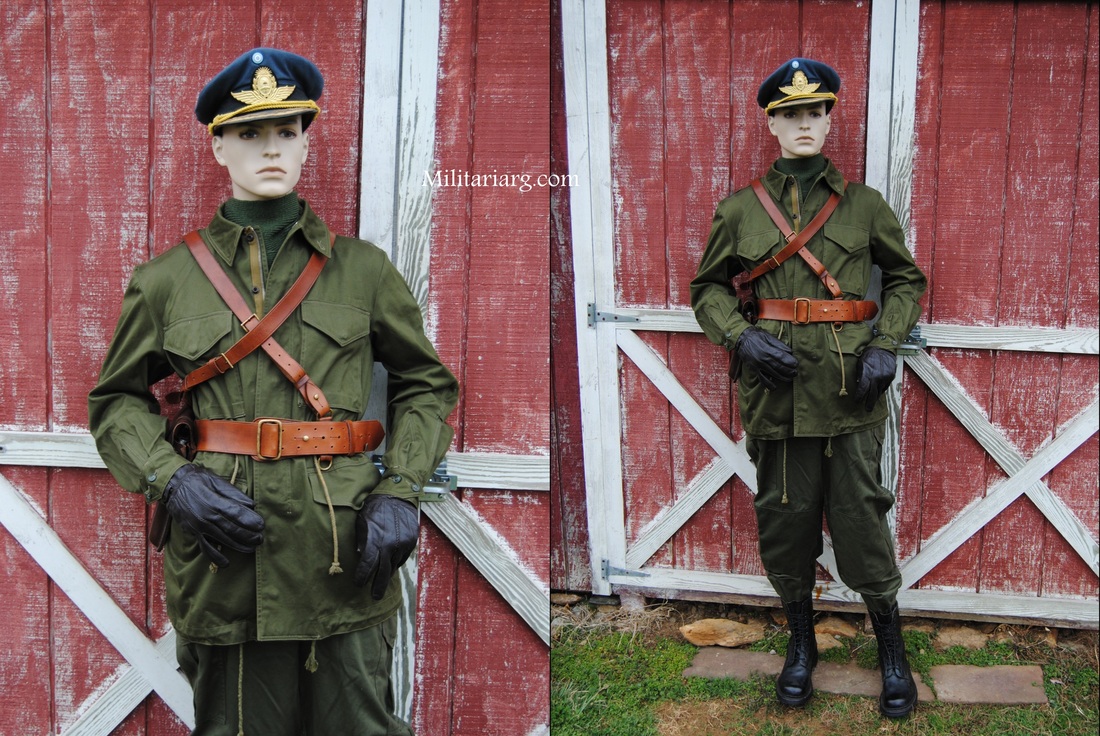
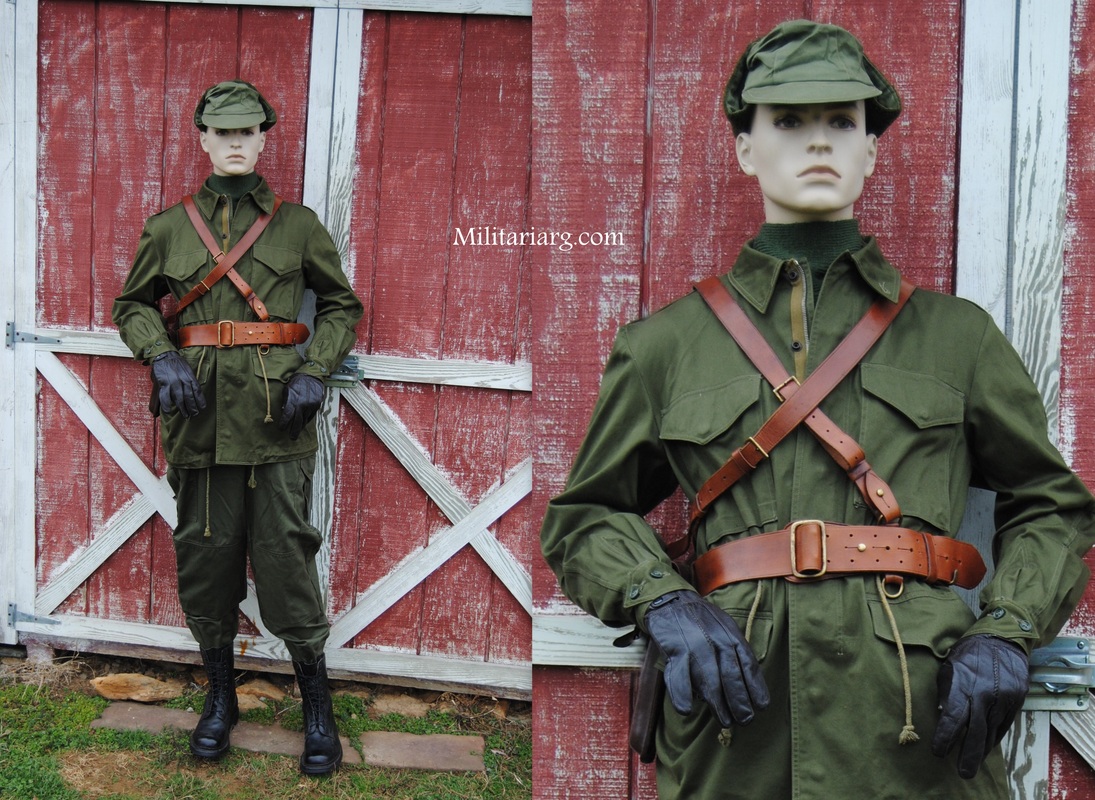
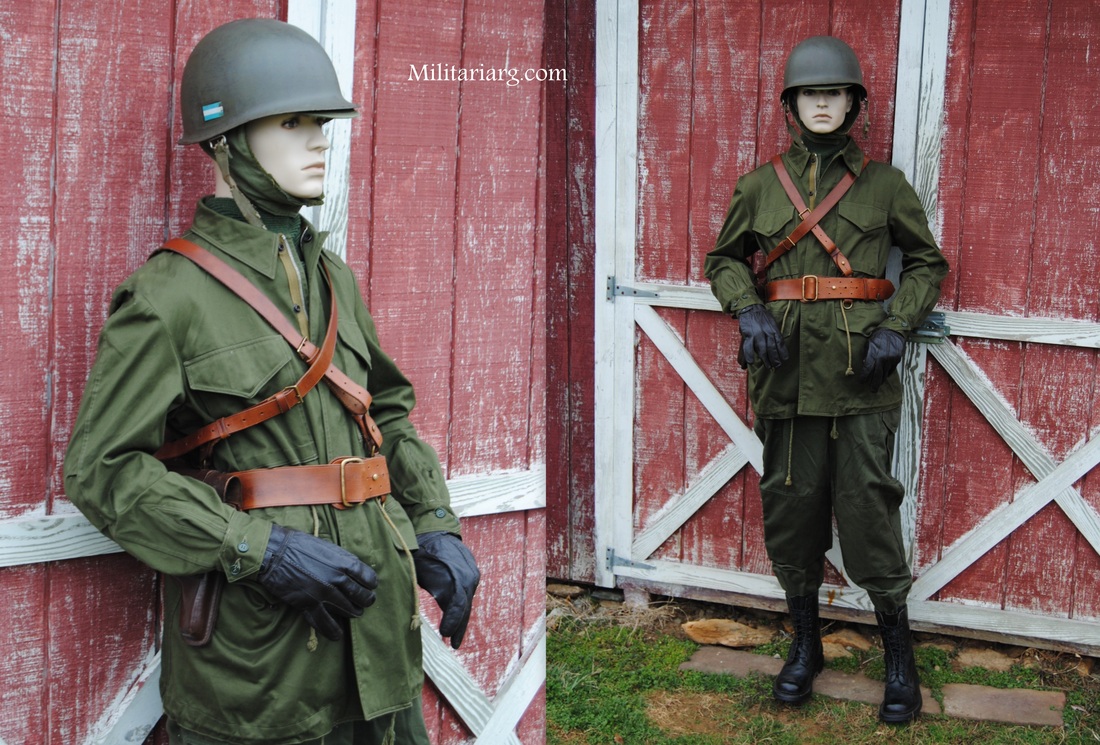
On January 4, 1945, the Argentine Air Force (Fuerza Aérea Argentina) was officially established as an independent branch of the Armed Forces, ending its status as a subsidiary of the Argentine Army. This separation was the culmination of a modernization process that began in the early 1940s.
On February 11, 1944, the "Aeronautical Command-in-Chief" (Comando en Jefe de Aeronáutica) was created directly under the Department of War, serving as the first major step toward independence.
The formal split occurred via decree on January 4, 1945, which also established the Secretariat of Aeronautics. This elevated the air arm to the same institutional status as the Army and Navy.
The move was heavily supported by then Colonel Juan Perón, who was a dominant figure in the military regime (1943–1946) and saw a strong, independent air force as vital for national sovereignty.
When the Argentine Air Force (FAA) became independent in 1945, it didn't just take the pilots; it absorbed the entire infrastructure and support personnel of the former Army Aviation.
This included:
Technicians and Mechanics: The ground crews who had been maintaining Army aircraft were transferred to the new branch to provide immediate operational support.
Base Security: Troops responsible for guarding airfields, previously Army soldiers, became the foundation of the FAA's ground defense units.
Administrative Staff: Logistic and personnel units that managed the "Aeronautical Command-in-Chief" were integrated into the new Secretariat of Aeronautics.
Training Schools: Institutions like the Military Aviation School (Escuela de Aviación Militar), which had operated within the Army since 1912, were transferred entirely to Air Force control.
This transition allowed the FAA to function as a "complete" service from day one, rather than just a collection of flight wings. It also set the stage for the creation of specialized units like the Special Operations Group (Grupo de Operaciones Especiales*) later on.
* In terms of their high-level role, the Special Operations Group (Grupo de Operaciones Especiales, GOE) shares similarities with the SAS, but they are not exact equivalents.
On February 11, 1944, the "Aeronautical Command-in-Chief" (Comando en Jefe de Aeronáutica) was created directly under the Department of War, serving as the first major step toward independence.
The formal split occurred via decree on January 4, 1945, which also established the Secretariat of Aeronautics. This elevated the air arm to the same institutional status as the Army and Navy.
The move was heavily supported by then Colonel Juan Perón, who was a dominant figure in the military regime (1943–1946) and saw a strong, independent air force as vital for national sovereignty.
When the Argentine Air Force (FAA) became independent in 1945, it didn't just take the pilots; it absorbed the entire infrastructure and support personnel of the former Army Aviation.
This included:
Technicians and Mechanics: The ground crews who had been maintaining Army aircraft were transferred to the new branch to provide immediate operational support.
Base Security: Troops responsible for guarding airfields, previously Army soldiers, became the foundation of the FAA's ground defense units.
Administrative Staff: Logistic and personnel units that managed the "Aeronautical Command-in-Chief" were integrated into the new Secretariat of Aeronautics.
Training Schools: Institutions like the Military Aviation School (Escuela de Aviación Militar), which had operated within the Army since 1912, were transferred entirely to Air Force control.
This transition allowed the FAA to function as a "complete" service from day one, rather than just a collection of flight wings. It also set the stage for the creation of specialized units like the Special Operations Group (Grupo de Operaciones Especiales*) later on.
* In terms of their high-level role, the Special Operations Group (Grupo de Operaciones Especiales, GOE) shares similarities with the SAS, but they are not exact equivalents.
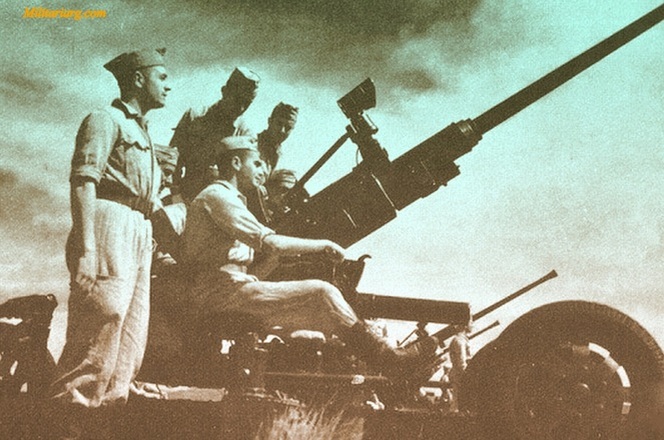
Argentine Air Force F.A.A Anti-Aircraft Artillery.
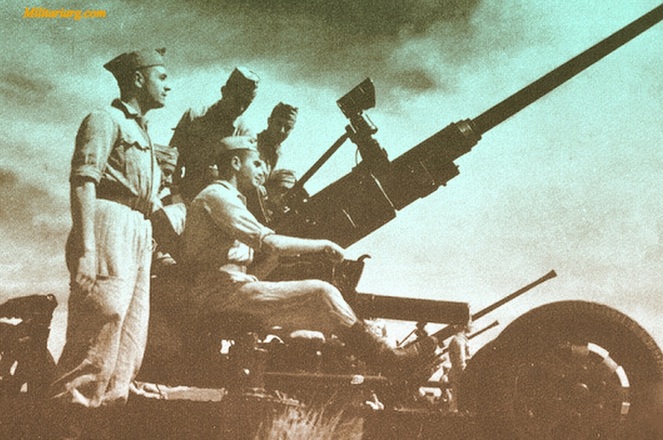
Argentine Air Force. Bofors 40mm L/60.
The early Argentine Air Force (FAA) utilized the same anti-aircraft (AA) artillery systems as the Army, primarily relying on European designs acquired during a major rearmament program in the mid-to-late 1930s.
When the Air Force split from the Army in 1945, it inherited and continued to operate these established systems:
20mm Oerlikon: A Swiss-designed autocannon used for short-range, low-altitude defense.
40mm Bofors L/60: A Swedish-designed weapon that served as the backbone of medium-range air defense. It was often truck-mounted on GMC or Dodge vehicles for mobility.
The early Argentine Air Force (FAA) utilized the same anti-aircraft (AA) artillery systems as the Army, primarily relying on European designs acquired during a major rearmament program in the mid-to-late 1930s.
When the Air Force split from the Army in 1945, it inherited and continued to operate these established systems:
20mm Oerlikon: A Swiss-designed autocannon used for short-range, low-altitude defense.
40mm Bofors L/60: A Swedish-designed weapon that served as the backbone of medium-range air defense. It was often truck-mounted on GMC or Dodge vehicles for mobility.
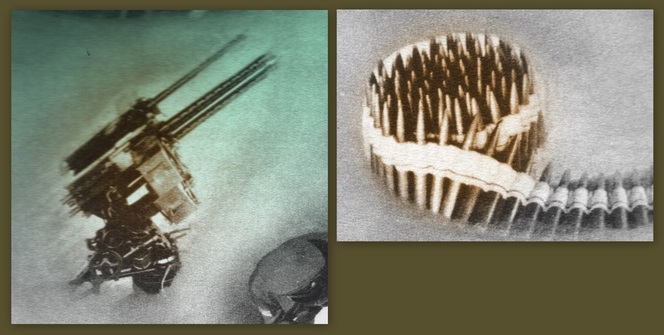
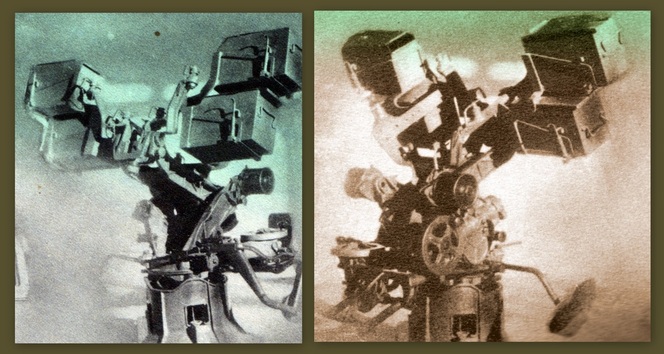
Oerlikon FF fixed pedestal mount M28. (Argentine 1938 model).
The Argentine Air Force (FAA) explicitly operated the Oerlikon FF 20mm in a fixed pedestal mount, often referred to as the Model 1938 (based on its acquisition year) or M28.
While the "FF" designation (Flügel Fest) originally signified a wing-mounted aircraft cannon, Argentina utilized these weapons in a ground-based anti-aircraft role to provide low-altitude "point defense" for its airfields.
Unlike the free-swinging naval mounts common in other militaries, the FAA’s early 20mm guns used a fixed pedestal mount. This provided a stable platform for defending specific stationary high-value targets like hangars and fuel depots.
These were part of a massive 1930s rearmament program where Argentina sought technology from neutral nations like Switzerland (Oerlikon) and Sweden (Bofors) to avoid the political complications of dealing with major powers during the lead-up to WWII.
The FF series typically fired a 20x72mmRB cartridge, which was smaller and had a lower muzzle velocity than the later "SS" models used by the U.S. and Royal Navies.
It utilized a drum magazine (typically 45 to 60 rounds), a characteristic feature of the FF series that allowed for rapid fire but required frequent reloading by ground crews.
FAA vs. Army Usage
When the branches split in 1945, the Air Force Ground Troops took over these specific light AA assets.
Air Force (FAA): Focused on these 20mm Oerlikons and 40mm Bofors for immediate "base-perimeter" protection.
Army (GADA): Maintained the heavier 76.5mm Skoda guns for broad territorial defense of cities and strategic infrastructure.
The Oerlikon FF remained a staple of FAA ground defense until it was eventually superseded by more modern belt-fed systems like the Oerlikon GDF 35mm in the later 20th century.
The Argentine Air Force (FAA) explicitly operated the Oerlikon FF 20mm in a fixed pedestal mount, often referred to as the Model 1938 (based on its acquisition year) or M28.
While the "FF" designation (Flügel Fest) originally signified a wing-mounted aircraft cannon, Argentina utilized these weapons in a ground-based anti-aircraft role to provide low-altitude "point defense" for its airfields.
Unlike the free-swinging naval mounts common in other militaries, the FAA’s early 20mm guns used a fixed pedestal mount. This provided a stable platform for defending specific stationary high-value targets like hangars and fuel depots.
These were part of a massive 1930s rearmament program where Argentina sought technology from neutral nations like Switzerland (Oerlikon) and Sweden (Bofors) to avoid the political complications of dealing with major powers during the lead-up to WWII.
The FF series typically fired a 20x72mmRB cartridge, which was smaller and had a lower muzzle velocity than the later "SS" models used by the U.S. and Royal Navies.
It utilized a drum magazine (typically 45 to 60 rounds), a characteristic feature of the FF series that allowed for rapid fire but required frequent reloading by ground crews.
FAA vs. Army Usage
When the branches split in 1945, the Air Force Ground Troops took over these specific light AA assets.
Air Force (FAA): Focused on these 20mm Oerlikons and 40mm Bofors for immediate "base-perimeter" protection.
Army (GADA): Maintained the heavier 76.5mm Skoda guns for broad territorial defense of cities and strategic infrastructure.
The Oerlikon FF remained a staple of FAA ground defense until it was eventually superseded by more modern belt-fed systems like the Oerlikon GDF 35mm in the later 20th century.
Caliber .50 M2 Browning Machine Gun air-cooled w/ Oerlikon pedestal mount. Photo "La Aeronautica Nacional al servicio del Pais, 1948".
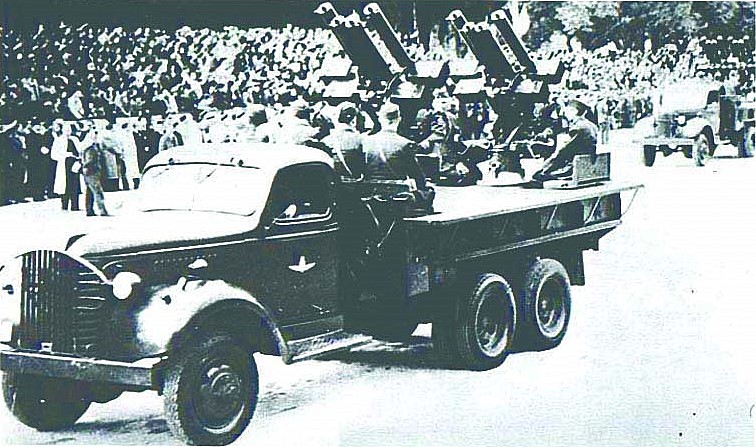
In the late 1940s, the Argentine Air Force (FAA) utilized a unique hybrid anti-aircraft configuration by mounting the .50 caliber M2 Browning (air-cooled) on the same Oerlikon pedestal mounts originally designed for the 20mm cannons.
This configuration is famously documented in the 1948 commemorative publication "La Aeronáutica Nacional al servicio del País" (The National Aeronautics at the Service of the Country), which showcased the newly independent branch's capabilities.
The FAA .50 Cal "Hybrid" Configuration
The FAA used the air-cooled version of the Browning M2 (often the AN/M2 aircraft variant adapted for ground use) rather than the heavy-barrel (HB) or water-cooled versions common in the Army.
By adapting the .50 cal to the Oerlikon fixed pedestal mount (Model 1938), the FAA gained a high-elevation, 360-degree rapid-response weapon for airfield defense.
This adaptation allowed the FAA to standardize its "Ground Troop" equipment. Using the existing pedestal infrastructure from their 20mm Oerlikons made it easier to deploy these lighter machine guns for point defense against low-flying threats.
The 1948 photo you referenced was part of a propaganda and institutional effort to show that the Air Force had successfully integrated its own autonomous ground defense and logistical support following the 1945 split from the Army.
Identification
Air-Cooled Shroud: The gun is easily identified by the perforated "ventilated" cooling sleeve around the barrel, typical of the AN/M2.
Pedestal Base: The heavy, flared circular base is the unmistakable Swiss-designed Oerlikon mount, which provided better stability and tracking than a standard infantry tripod.
In the late 1940s, the Argentine Air Force (FAA) utilized a unique hybrid anti-aircraft configuration by mounting the .50 caliber M2 Browning (air-cooled) on the same Oerlikon pedestal mounts originally designed for the 20mm cannons.
This configuration is famously documented in the 1948 commemorative publication "La Aeronáutica Nacional al servicio del País" (The National Aeronautics at the Service of the Country), which showcased the newly independent branch's capabilities.
The FAA .50 Cal "Hybrid" Configuration
The FAA used the air-cooled version of the Browning M2 (often the AN/M2 aircraft variant adapted for ground use) rather than the heavy-barrel (HB) or water-cooled versions common in the Army.
By adapting the .50 cal to the Oerlikon fixed pedestal mount (Model 1938), the FAA gained a high-elevation, 360-degree rapid-response weapon for airfield defense.
This adaptation allowed the FAA to standardize its "Ground Troop" equipment. Using the existing pedestal infrastructure from their 20mm Oerlikons made it easier to deploy these lighter machine guns for point defense against low-flying threats.
The 1948 photo you referenced was part of a propaganda and institutional effort to show that the Air Force had successfully integrated its own autonomous ground defense and logistical support following the 1945 split from the Army.
Identification
Air-Cooled Shroud: The gun is easily identified by the perforated "ventilated" cooling sleeve around the barrel, typical of the AN/M2.
Pedestal Base: The heavy, flared circular base is the unmistakable Swiss-designed Oerlikon mount, which provided better stability and tracking than a standard infantry tripod.
GMC ACKW fitted with eight wather cooled 12.7mm Browning machine guns.
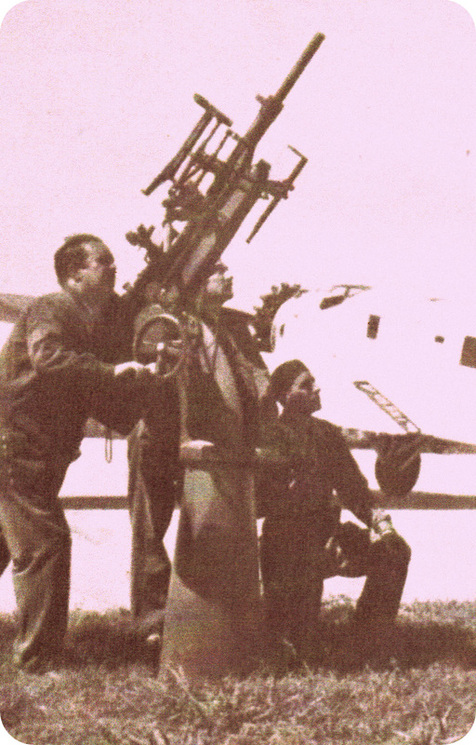
The GMC ACKW (a COE or "Cab Over Engine" version of the CCKW) equipped with a multiple mount of eight 12.7mm (.50 cal) Browning machine guns is one of the most distinctive and formidable airfield defense assets documented in the 1948 FAA publication.
This specific configuration was a "Super-Quad" of sorts, doubling the firepower of the standard American M45 "Quadmount".
Technical Breakdown of the FAA "Octomount"
The GMC ACKW-353 was a 2½-ton 6x6 truck. The cab-over design provided a larger rear bed area, making it an ideal platform for heavy, high-recoil anti-aircraft mounts.
It featured eight water-cooled 12.7mm Browning machine guns. The use of water-cooled barrels was critical for this setup; with eight guns firing simultaneously, the heat generated would have warped air-cooled barrels almost instantly during sustained anti-aircraft barrages.
Assuming a standard rate of fire of ~500–600 rounds per minute (RPM) per gun FN Herstal, this single truck could put up a wall of lead totaling roughly 4,000 to 4,800 rounds per minute.
It was essentially two M45 Maxson Quadmounts synchronized into a single unit. The 1948 image serves as proof of the FAA's post-split industrial ambition. By mounting eight guns on a single mobile platform, the FAA created a "mobile flak battery" specifically designed to protect runways from the new threat of high-speed strafing runs.
Why Water-Cooled?
Unlike the air-cooled M2s on the Oerlikon pedestal mounts, these truck-mounted guns were meant for high-volume suppression. The water jackets allowed the gunners to stay on target longer without the risk of "cook-offs" or barrel failure, which was a lesson learned from the intensive air-defense needs of WWII.
The GMC ACKW (a COE or "Cab Over Engine" version of the CCKW) equipped with a multiple mount of eight 12.7mm (.50 cal) Browning machine guns is one of the most distinctive and formidable airfield defense assets documented in the 1948 FAA publication.
This specific configuration was a "Super-Quad" of sorts, doubling the firepower of the standard American M45 "Quadmount".
Technical Breakdown of the FAA "Octomount"
The GMC ACKW-353 was a 2½-ton 6x6 truck. The cab-over design provided a larger rear bed area, making it an ideal platform for heavy, high-recoil anti-aircraft mounts.
It featured eight water-cooled 12.7mm Browning machine guns. The use of water-cooled barrels was critical for this setup; with eight guns firing simultaneously, the heat generated would have warped air-cooled barrels almost instantly during sustained anti-aircraft barrages.
Assuming a standard rate of fire of ~500–600 rounds per minute (RPM) per gun FN Herstal, this single truck could put up a wall of lead totaling roughly 4,000 to 4,800 rounds per minute.
It was essentially two M45 Maxson Quadmounts synchronized into a single unit. The 1948 image serves as proof of the FAA's post-split industrial ambition. By mounting eight guns on a single mobile platform, the FAA created a "mobile flak battery" specifically designed to protect runways from the new threat of high-speed strafing runs.
Why Water-Cooled?
Unlike the air-cooled M2s on the Oerlikon pedestal mounts, these truck-mounted guns were meant for high-volume suppression. The water jackets allowed the gunners to stay on target longer without the risk of "cook-offs" or barrel failure, which was a lesson learned from the intensive air-defense needs of WWII.
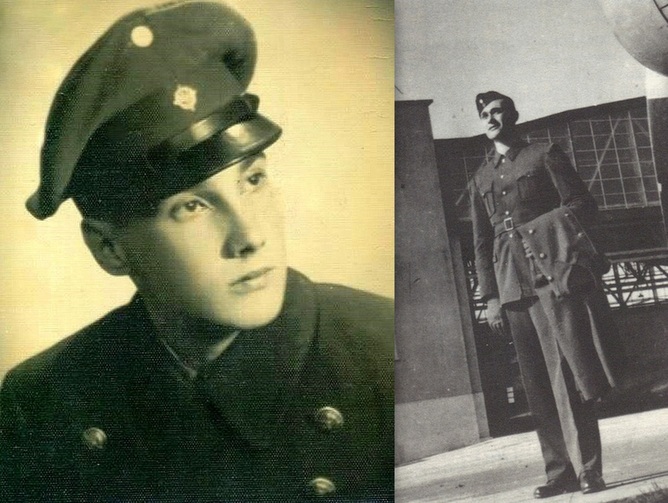
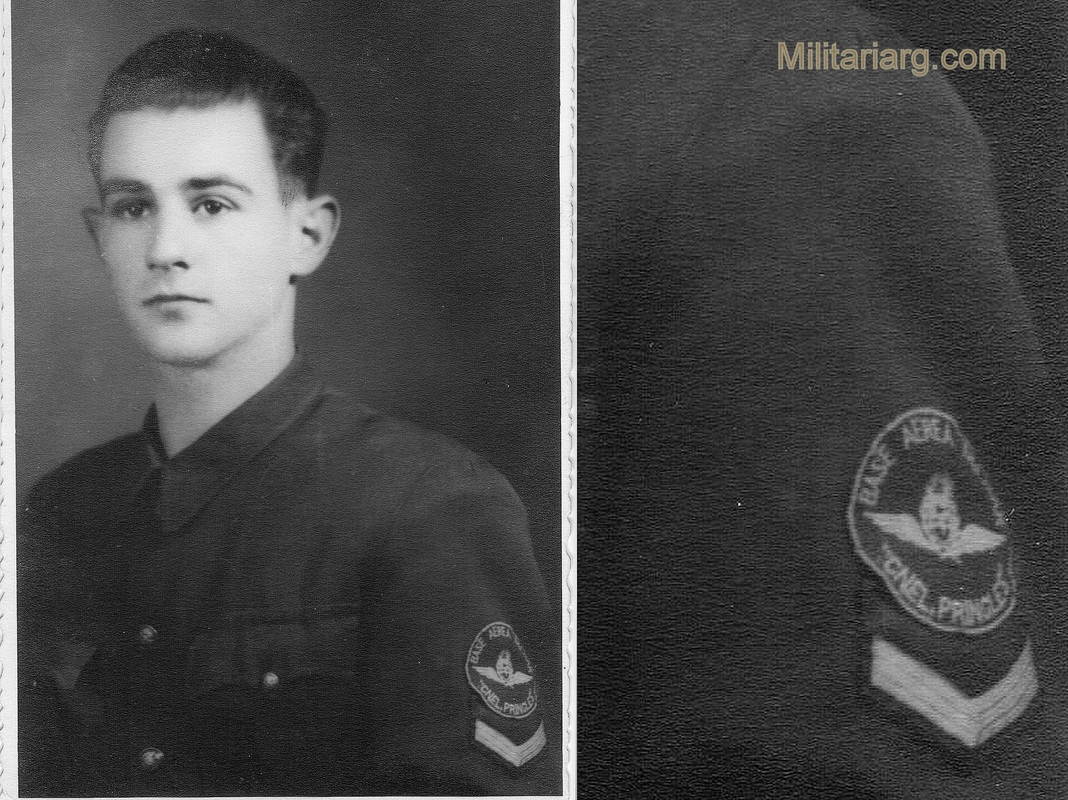
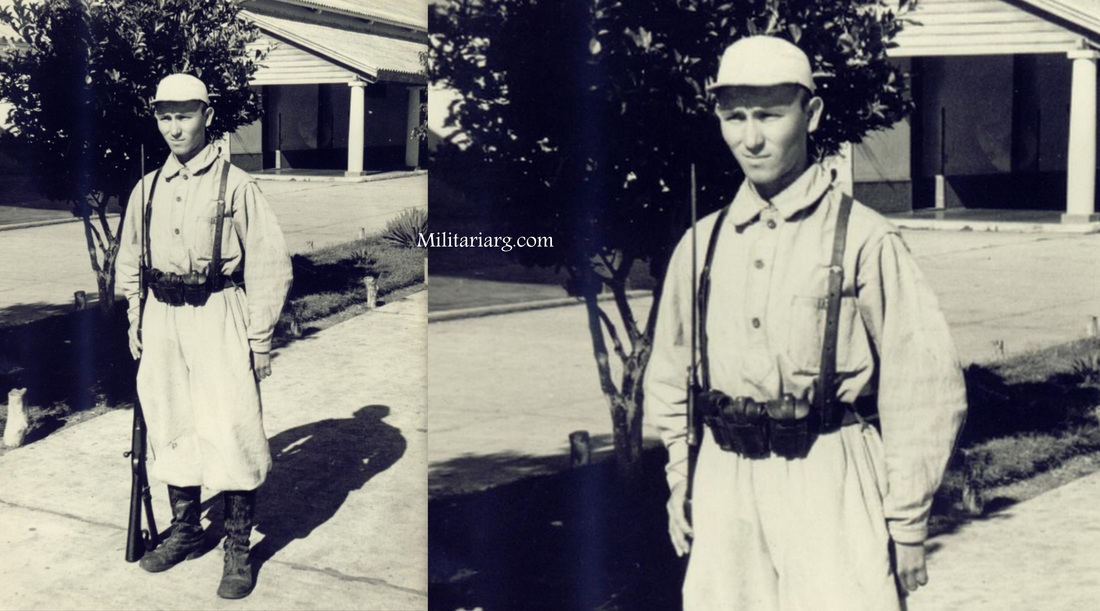
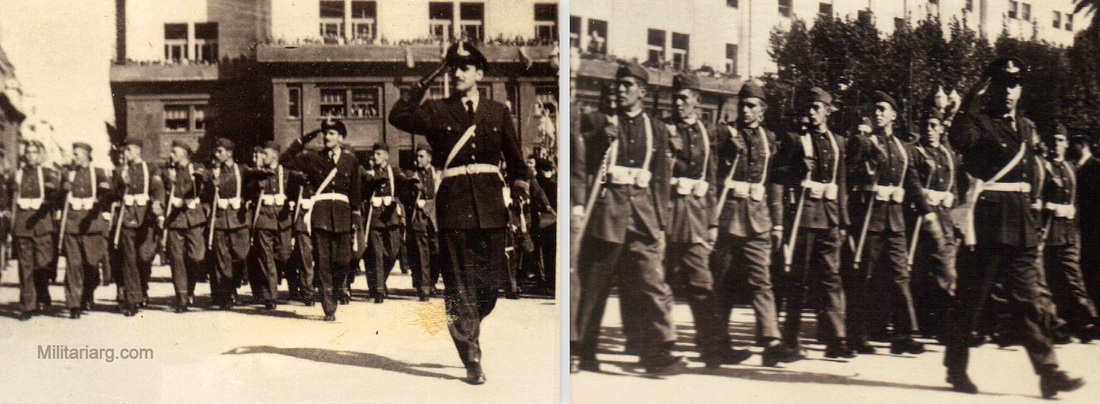
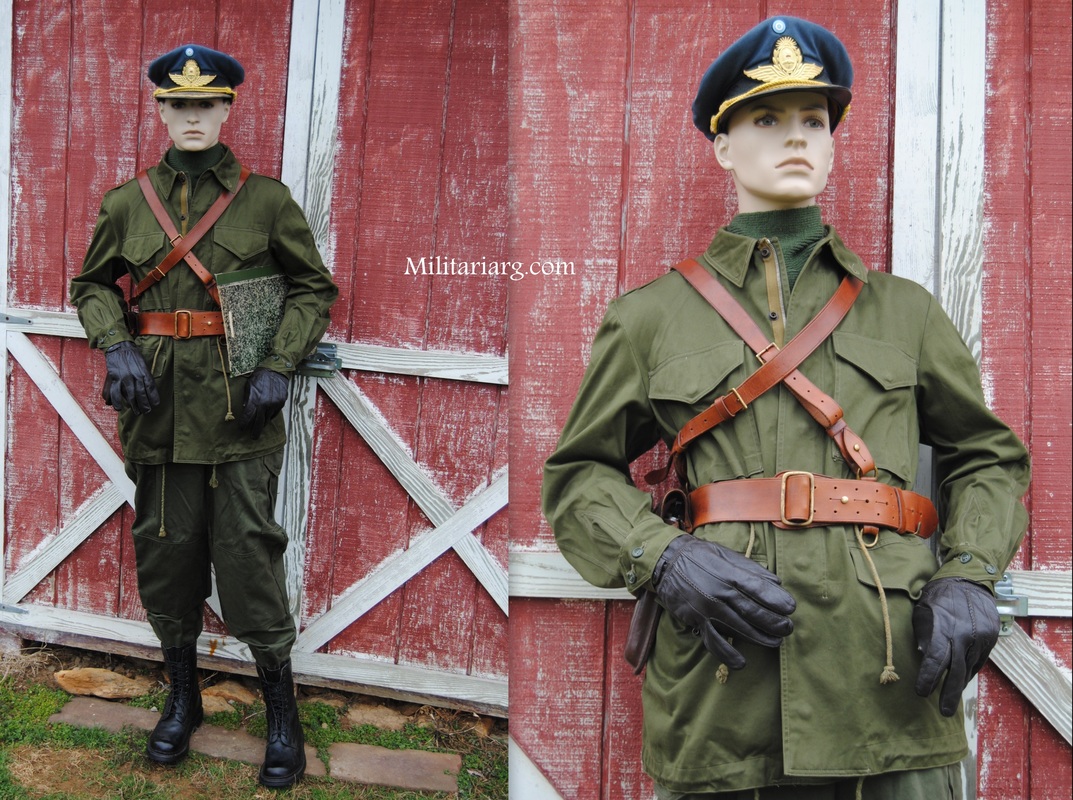
On the left is a postcard of an aeronautic cadet. On the right is a photo of an aeronautic conscript.
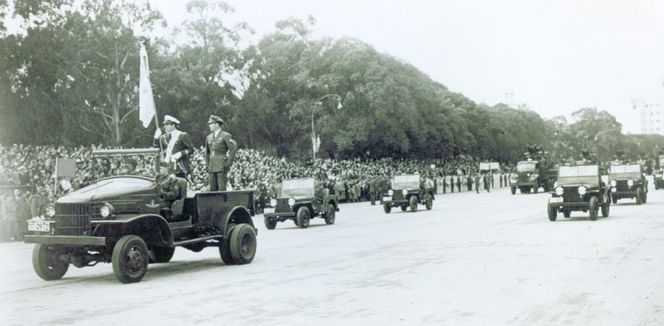
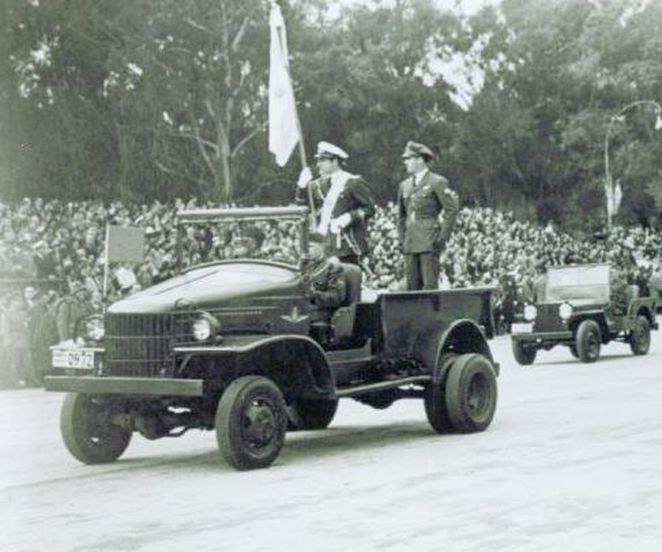
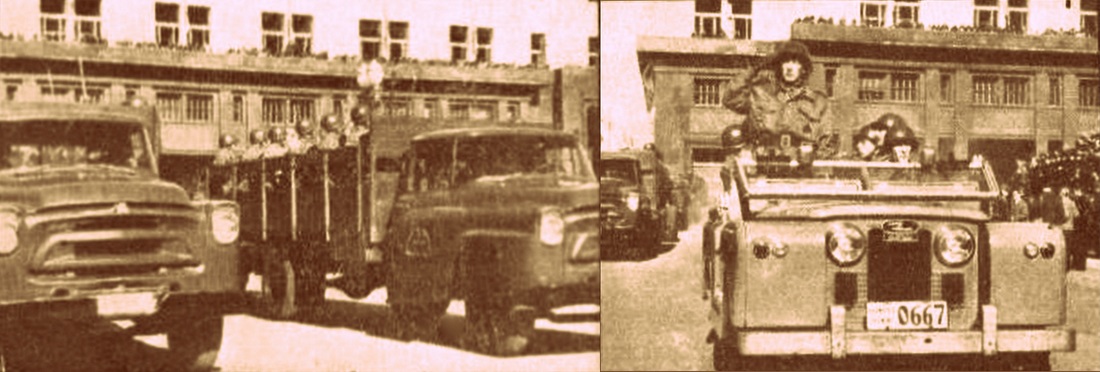
Dodge WC series, Willys and GMC truck w/ 12.7mm AA multiple gun.
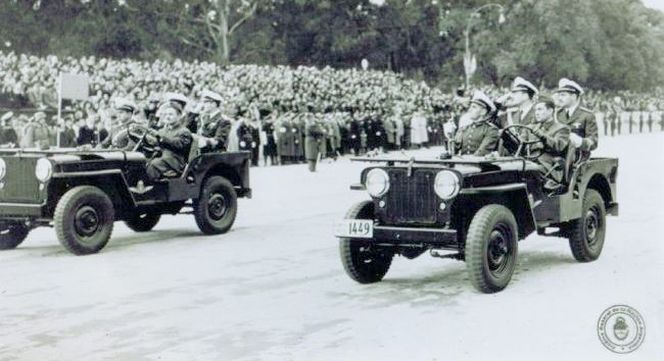
F.A.A Willy's jeep. 1950s
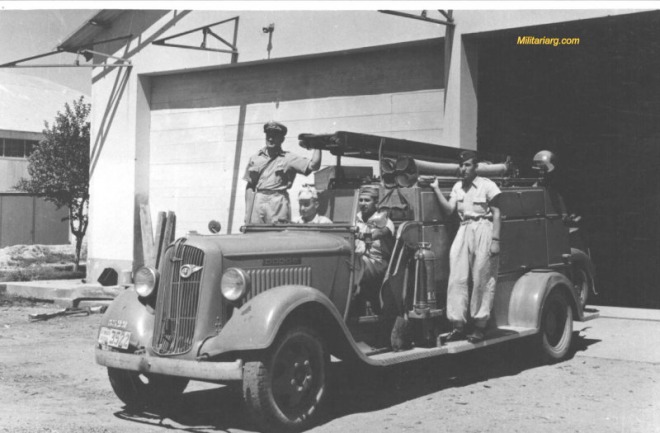
Dodge military and Land Rover Mk 1 (Ceash Fire Rescue) from the FMA. Photo is courtesy of Juan Ignacio de San Martin, grandson of Brigadier San Martin.
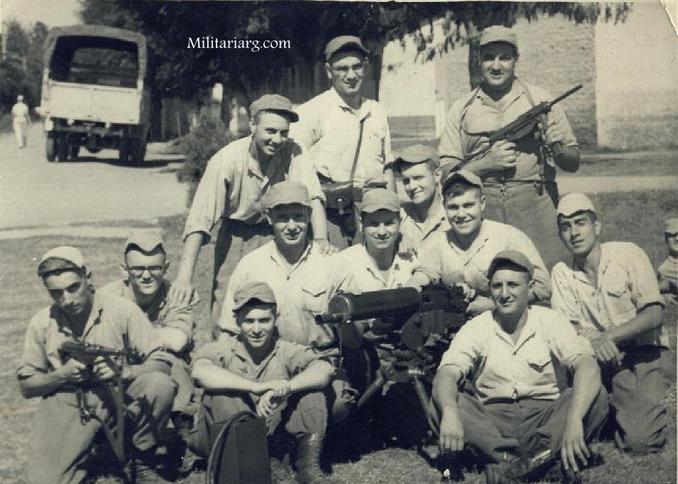
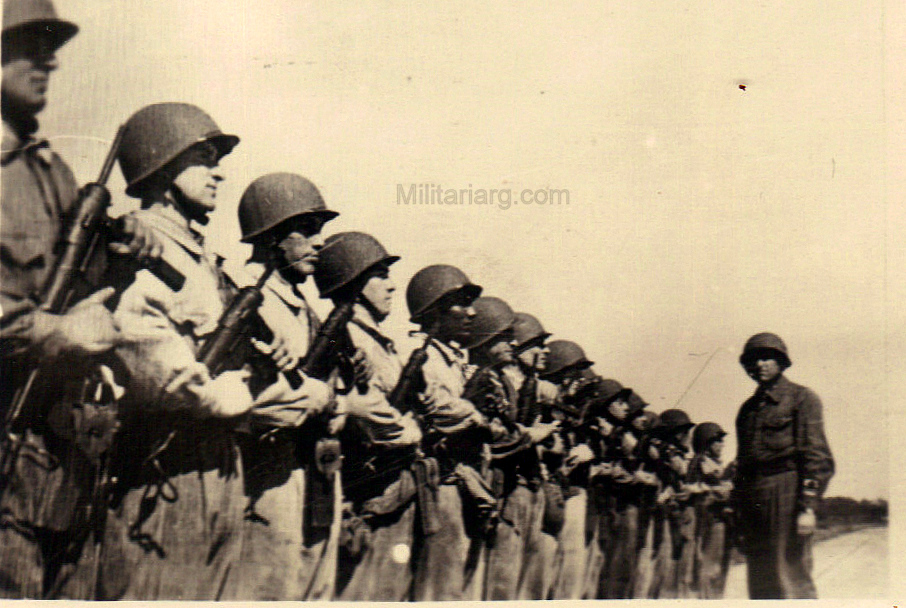
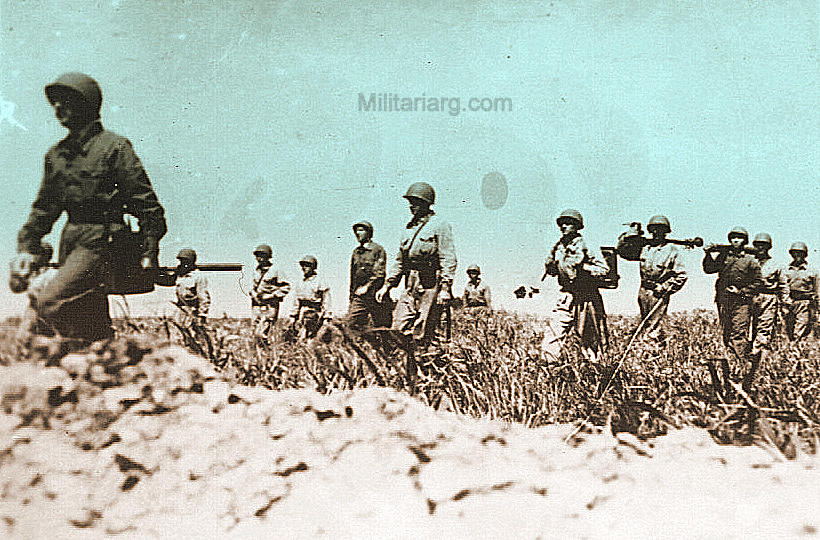
The soldier on the left is holding a Halcón M-1943 submachine gun, specifically the variant known as the Modelo Aeronáutica (Model 1946). This version was lightened at the request of the Air Force for its paratrooper units. It replaced the bulky wooden stock of the standard Army model with a pistol grip and an under-folding wire stock.
On the center a Colt 1929 water-cooled machine gun. Unlike the .30-06 US version, these were manufactured by Colt specifically for Argentina in 7.65x53mm Mauser, the standard caliber of the Argentine Armed Forces at the time. If you could see the receiver clearly, it would be stamped with the Argentine crest and "EJERCITO ARGENTINO" (even after being transferred to the Air Force).
Above a PAM-1 SMG, (Pistola Ametralladora Modelo 1). It is the unmistakable Argentine "Grease Gun" in its original form. It is a direct derivative of the American M3 Grease Gun, featuring the same stamped-steel construction and side-mounted charging handle.
The Caliber Change; While the US original was .45 ACP, Argentina chambered the PAM-1 in 9mm Parabellum to standardize with their other service weapons like the Halcón and Browning High Power.
Safety Features: The PAM-1 was famous (and sometimes notorious) for lacking a manual safety on the bolt, which was later addressed in the PAM-2 by adding a "grip safety" on the back of the magazine well.
NCO’s bandolier, it is most likely a Colt Model 1927 or a Ballester-Molina. In the late 1940s, the newly independent Air Force utilized both, but the Ballester-Molina was specifically favored for its lower production cost and ruggedness for "ground troop" use. Both pistols are chambered in .45 ACP (referred to in Argentina as 11.25mm) and utilize interchangeable barrels and magazines, making them nearly identical in a tactical sense for the men in the photo.
On the center a Colt 1929 water-cooled machine gun. Unlike the .30-06 US version, these were manufactured by Colt specifically for Argentina in 7.65x53mm Mauser, the standard caliber of the Argentine Armed Forces at the time. If you could see the receiver clearly, it would be stamped with the Argentine crest and "EJERCITO ARGENTINO" (even after being transferred to the Air Force).
Above a PAM-1 SMG, (Pistola Ametralladora Modelo 1). It is the unmistakable Argentine "Grease Gun" in its original form. It is a direct derivative of the American M3 Grease Gun, featuring the same stamped-steel construction and side-mounted charging handle.
The Caliber Change; While the US original was .45 ACP, Argentina chambered the PAM-1 in 9mm Parabellum to standardize with their other service weapons like the Halcón and Browning High Power.
Safety Features: The PAM-1 was famous (and sometimes notorious) for lacking a manual safety on the bolt, which was later addressed in the PAM-2 by adding a "grip safety" on the back of the magazine well.
NCO’s bandolier, it is most likely a Colt Model 1927 or a Ballester-Molina. In the late 1940s, the newly independent Air Force utilized both, but the Ballester-Molina was specifically favored for its lower production cost and ruggedness for "ground troop" use. Both pistols are chambered in .45 ACP (referred to in Argentina as 11.25mm) and utilize interchangeable barrels and magazines, making them nearly identical in a tactical sense for the men in the photo.
1950s. "El Palomar. Air Force Ground Troops
Small Arms and Equipment
FN FAL.
Halcon SMG.
FN FAP.
The ALAM-1 was used by the Argentine Air Force (Fuerza Aérea Argentina) for airbase security and by specialized ground units. It served alongside other Browning variants, such as the AN/M2 (the lighter, high-rate-of-fire aircraft version) which was sometimes salvaged or modified for ground use.
By the late 1960s, these Browning-based designs were largely phased out in favor of the more modern FN MAG (7.62mm), which became the primary general-purpose machine gun for all branches of the Argentine military.
ALAM-1 (or A.L.A.M. 1), which was an Argentine adaptation of the air-cooled Browning M1919 (itself the air-cooled successor to the water-cooled M1917/M1928).
In Argentina, the name ALAM-1 stood for Ametralladora Liviana de Apoyo de Mano Modelo 1 (Light Hand-Support Machine Gun Model 1).
It was a domestic modification of the Browning M1919A4/A6 platform, often chambered in the standard Argentine 7.65×53mm Mauser caliber during the 1950s.
Unlike the heavy tripod-mounted M1919A4, the ALAM-1 was configured more like the M1919A6 "squad" version, featuring a bipod, a carrying handle, and a buttstock.
Since it was based on the Browning design, it looks like an "air-cooled version" of the water-cooled M1928 because they share the same boxy receiver and short-recoil operating system, but the ALAM-1 replaced the heavy water jacket with a perforated air-cooled barrel shroud.
By the late 1960s, these Browning-based designs were largely phased out in favor of the more modern FN MAG (7.62mm), which became the primary general-purpose machine gun for all branches of the Argentine military.
ALAM-1 (or A.L.A.M. 1), which was an Argentine adaptation of the air-cooled Browning M1919 (itself the air-cooled successor to the water-cooled M1917/M1928).
In Argentina, the name ALAM-1 stood for Ametralladora Liviana de Apoyo de Mano Modelo 1 (Light Hand-Support Machine Gun Model 1).
It was a domestic modification of the Browning M1919A4/A6 platform, often chambered in the standard Argentine 7.65×53mm Mauser caliber during the 1950s.
Unlike the heavy tripod-mounted M1919A4, the ALAM-1 was configured more like the M1919A6 "squad" version, featuring a bipod, a carrying handle, and a buttstock.
Since it was based on the Browning design, it looks like an "air-cooled version" of the water-cooled M1928 because they share the same boxy receiver and short-recoil operating system, but the ALAM-1 replaced the heavy water jacket with a perforated air-cooled barrel shroud.
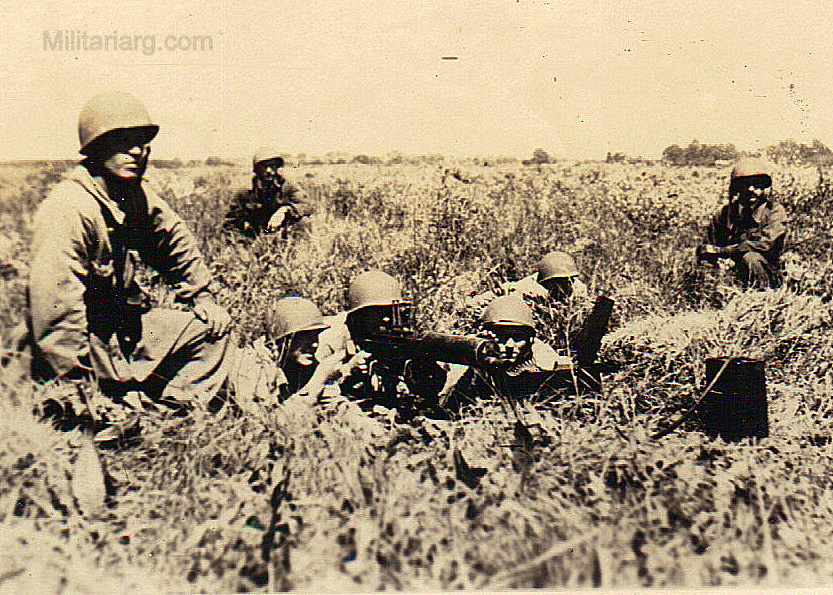
Water cooled machine gun.
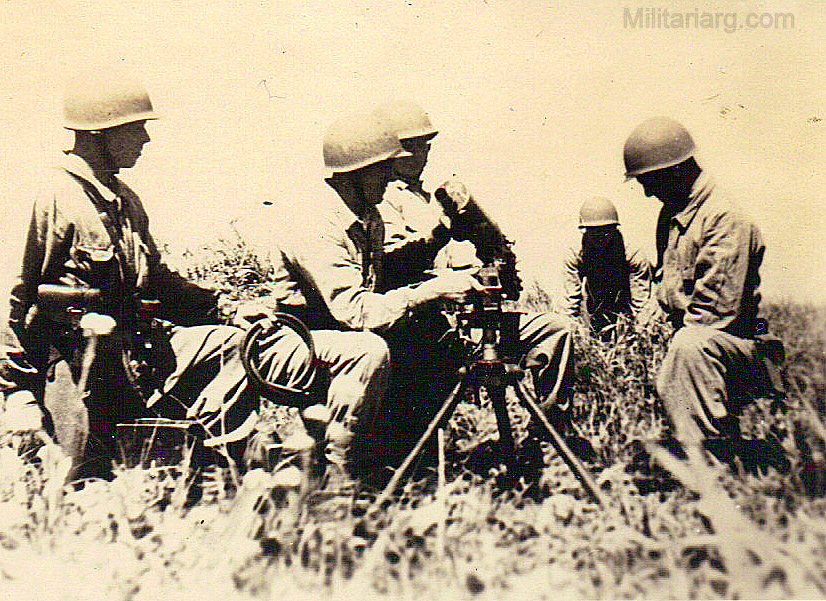
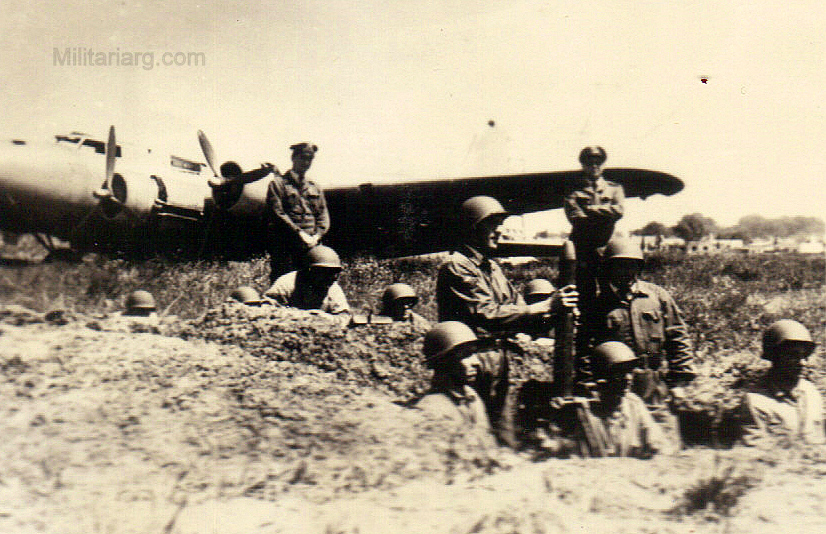
While the primary base defense used heavy machine guns, the ground troops in your photo are training with a mortar, specifically the 81mm Brandt type. In the 1950s and 60s, the Argentine Air Force (Fuerza Aérea Argentina) and Army used the 81mm Brandt Mle 27/31, often manufactured domestically by Fabricaciones Militares (DGFM) as the M1 Type.
Boeing B-17 Flying Fortress.
The aircraft in the background is likely one of these two "Argentine Fortresses." They were a common sight at the I Brigada Aérea (El Palomar) and Morón through the 1950s. They remained at these bases, gradually falling into disrepair until they were finally scrapped around 1964.
Boeing B-17 Flying Fortress.
The aircraft in the background is likely one of these two "Argentine Fortresses." They were a common sight at the I Brigada Aérea (El Palomar) and Morón through the 1950s. They remained at these bases, gradually falling into disrepair until they were finally scrapped around 1964.
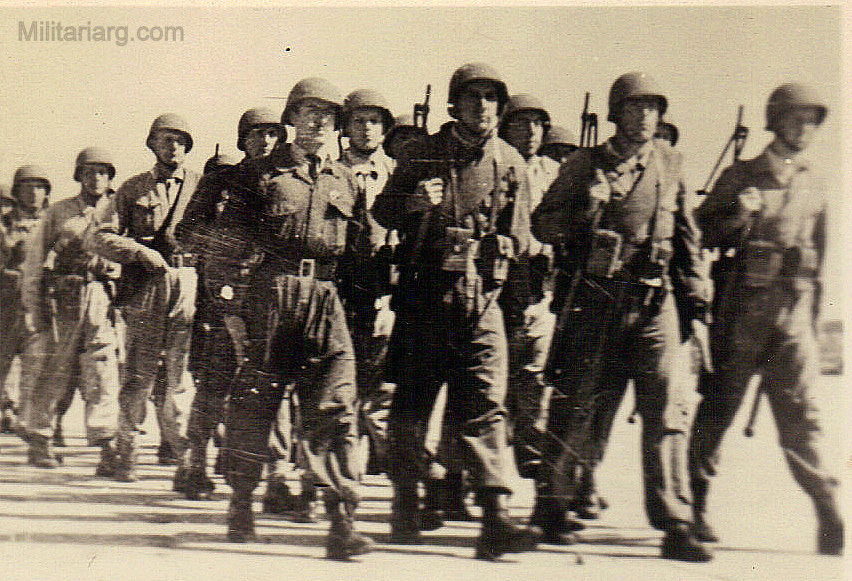
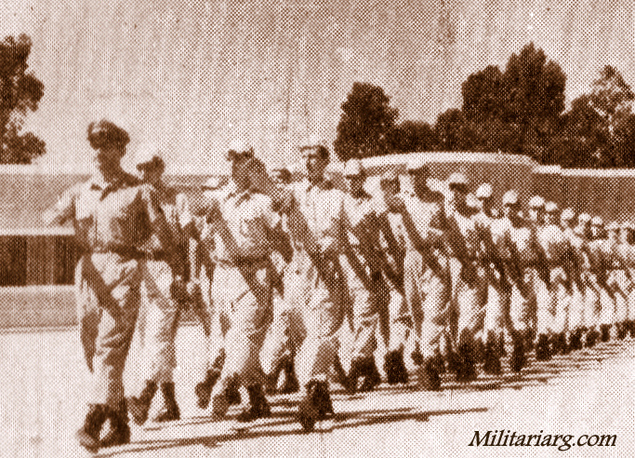
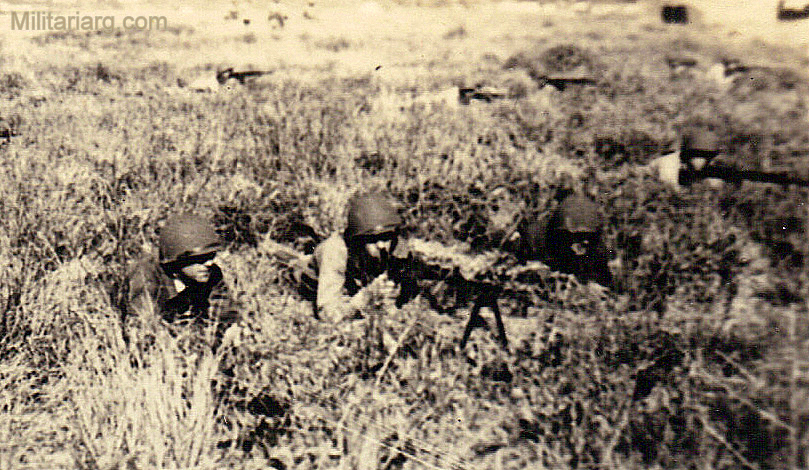
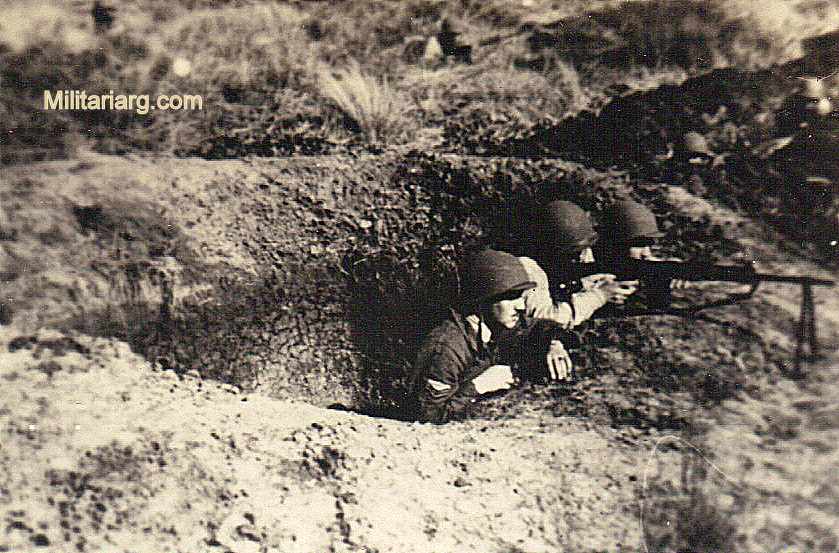
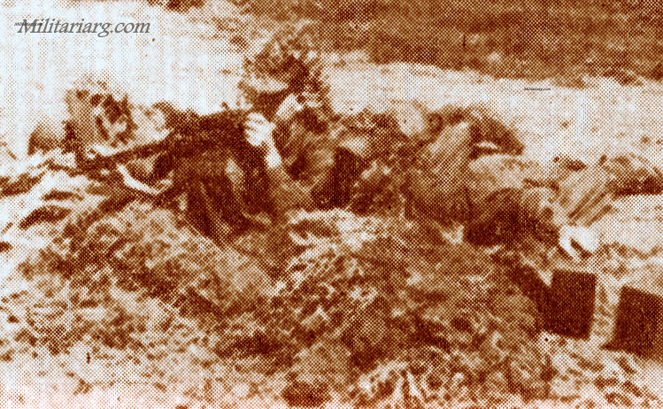
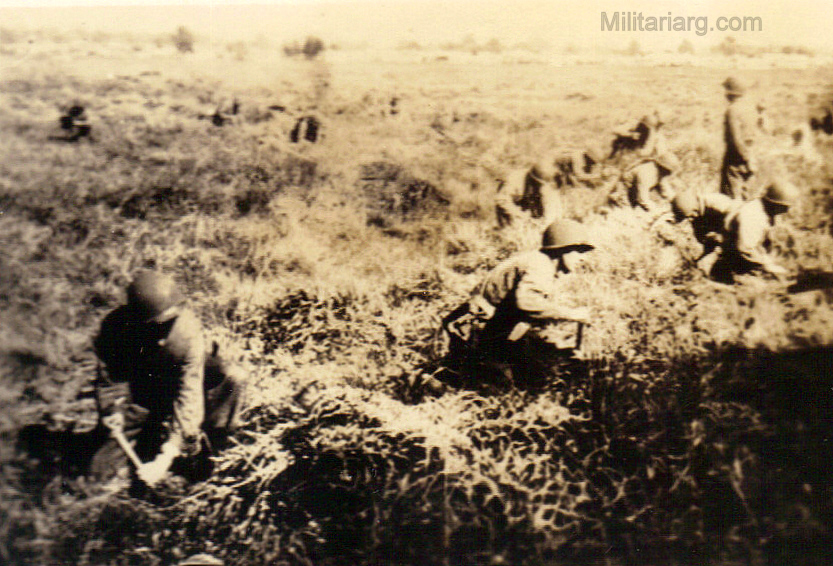
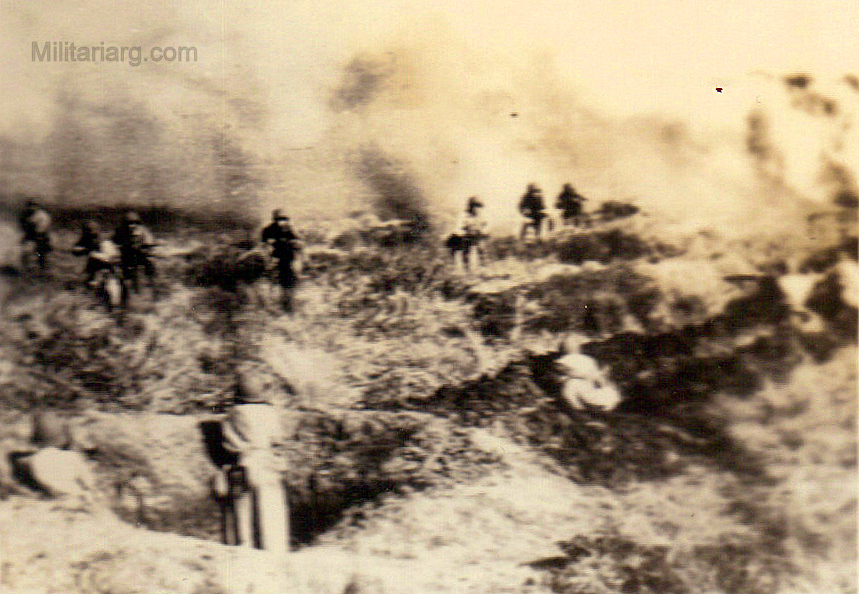
It has the gritty, smoke-filled look of a major 1950s battle like Dien Bien Phu, but it actually captures maneuvers of the Argentine Air Force (Fuerza Aérea Argentina) ground troops during a massive training exercise
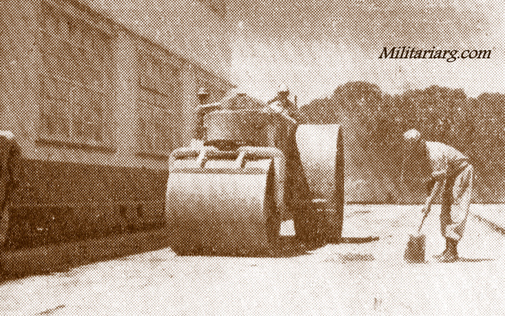
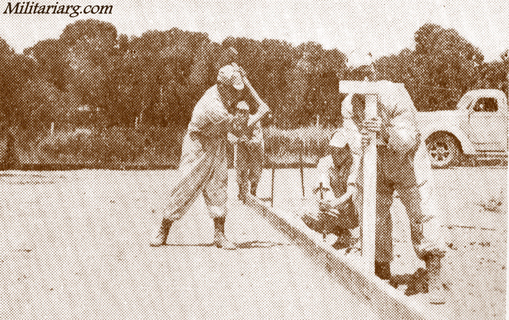
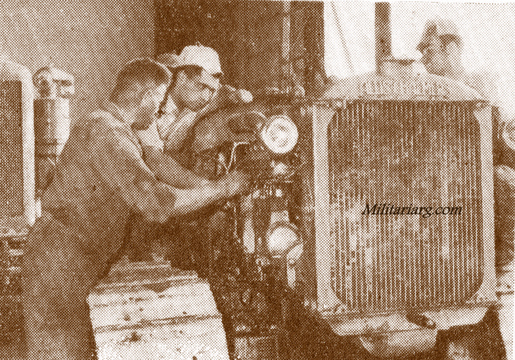
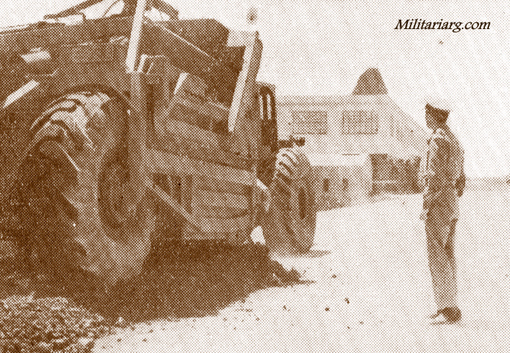
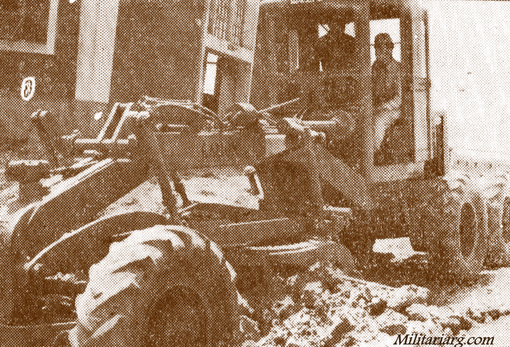
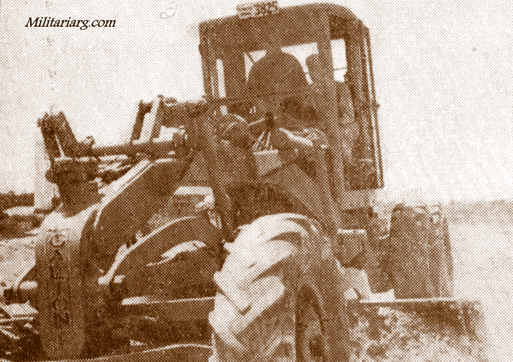
1950s. Air Force. Engineerin vehicles.
OM Truck (?)
The Argentine Air Force (FAA) anti-aircraft defense during the 1982 South Arlantic War was
centered on the Grupo 1 de Artillería Antiaérea, which was primarily tasked with defending the key airfields at Port Stanley (BAM Malvinas) and Goose Green (BAM Cóndor).
Anti-Aircraft Units & Equipment
Grupo 1 de Artillería Antiaérea: Specifically responsible for airport defense. Their arsenal included:
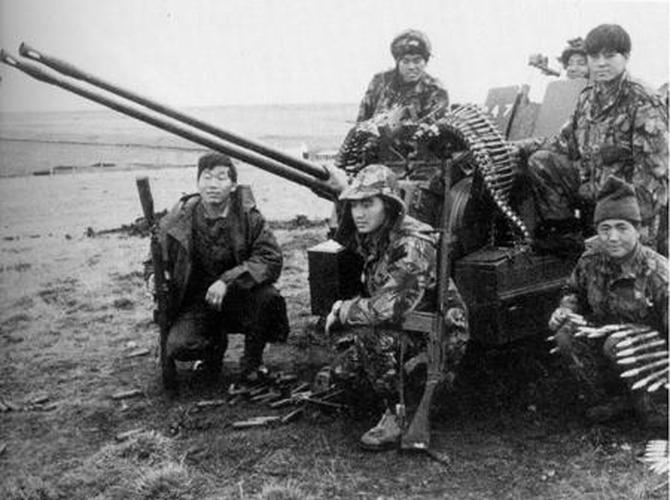
9 twin 20mm Rheinmetall Rh-202 cannons.
3 twin 35mm Oerlikon GDF cannons guided by Super-Fledermaus Fire Control radar.
Shared Defense Systems. The Air Force's defenses were often integrated with Army units, notably the GADA 601, which provided more advanced systems like the Roland-2 surface-to-air missile (SAM) and Skyguard radar-controlled guns.
Radar Infrastructure. The FAA operated a vital early warning network using an AN/TPS-43 3D long-range radar located at Sapper Hill, which provided crucial situational awareness for all Argentine air defenses on the islands.
Operational Impact
Airfield Protection. Despite heavy British bombardment—over 230 bombs and 1,200 naval shells—the Air Force's defenses and maintenance crews kept the Port Stanley runway operational for C-130 Hercules transport flights until the very end of the conflict.
British Losses. Ground-based anti-aircraft fire (AAA) and missiles were responsible for several British aircraft losses. For example, a Roland-2 missile (jointly operated) shot down a Sea Harrier (XZ456) on June 1, and 35mm fire downed multiple Harriers over Goose Green.
Captured 35mm Oerlikon guns and Skyguard radars were later refurbished and used by the Royal Auxiliary Air Force to form a highly effective reserve squadron.
centered on the Grupo 1 de Artillería Antiaérea, which was primarily tasked with defending the key airfields at Port Stanley (BAM Malvinas) and Goose Green (BAM Cóndor).
Anti-Aircraft Units & Equipment
Grupo 1 de Artillería Antiaérea: Specifically responsible for airport defense. Their arsenal included:
9 twin 20mm Rheinmetall Rh-202 cannons.
3 twin 35mm Oerlikon GDF cannons guided by Super-Fledermaus Fire Control radar.
Shared Defense Systems. The Air Force's defenses were often integrated with Army units, notably the GADA 601, which provided more advanced systems like the Roland-2 surface-to-air missile (SAM) and Skyguard radar-controlled guns.
Radar Infrastructure. The FAA operated a vital early warning network using an AN/TPS-43 3D long-range radar located at Sapper Hill, which provided crucial situational awareness for all Argentine air defenses on the islands.
Operational Impact
Airfield Protection. Despite heavy British bombardment—over 230 bombs and 1,200 naval shells—the Air Force's defenses and maintenance crews kept the Port Stanley runway operational for C-130 Hercules transport flights until the very end of the conflict.
British Losses. Ground-based anti-aircraft fire (AAA) and missiles were responsible for several British aircraft losses. For example, a Roland-2 missile (jointly operated) shot down a Sea Harrier (XZ456) on June 1, and 35mm fire downed multiple Harriers over Goose Green.
Captured 35mm Oerlikon guns and Skyguard radars were later refurbished and used by the Royal Auxiliary Air Force to form a highly effective reserve squadron.
British Gurkhas with captured Argentine Air Force Rheinmetall 20mm twin anti-aircraft cannon.

Argentine Air Force (Fuerza Aérea Argentina)
1982 South Atlantic War.
The Air Force focused on search and rescue (SAR) and logistical support.
Bell 212: Two were deployed for SAR and general support.
Boeing CH-47C Chinook: The Air Force operated its own separate unit of 2 Chinooks (7th Air Brigade).
1982 South Atlantic War.
The Air Force focused on search and rescue (SAR) and logistical support.
Bell 212: Two were deployed for SAR and general support.
Boeing CH-47C Chinook: The Air Force operated its own separate unit of 2 Chinooks (7th Air Brigade).