Admiral Brown's Fleet
(Wars with Spain, Brazil, France, Anglo French naval alliance and Garibaldi Fleet):
Admiral William Brown (1777–1857), an Irish-born commander known as the "Father of the Argentine Navy," led several pivotal naval campaigns that secured Argentina's independence and protected its sovereignty. His career spanned three major conflicts in South America.
1. Argentine War of Independence (1814–1816)
Brown was commissioned to lead the newly formed Argentine fleet against Spanish royalists.
Battle of Martín García (March 1814): Brown captured this strategically vital island, known as the "Gibraltar of the River Plate," which controlled access to major rivers.
Siege of Montevideo (May 1814): He defeated the Spanish squadron in a multi-day engagement. Despite his leg being shattered by a cannonball, he continued directing operations from his flagship, Hercules. This victory led to the fall of Montevideo and the end of Spanish naval power in the Río de la Plata.
Pacific Campaign (1815–1816): Brown led a privateering expedition around Cape Horn to harass Spanish shipping in Chile, Peru, and Ecuador, even storming the port of Callao.
2. Cisplatine War / War with Brazil (1825–1828)
When war broke out over the territory of Uruguay, Brown was recalled from retirement to break a massive Brazilian blockade.
Battle of Los Pozos (June 1826): In full view of the people of Buenos Aires, Brown’s 11 ships held off a fleet of 31 Brazilian vessels.
Battle of Juncal (February 1827): His most brilliant victory, where he destroyed an entire Brazilian river squadron of 17 ships while commanding only 7 vessels and a few launches.
Battle of Monte Santiago (April 1827): A fierce engagement that ended in a tactical defeat for Argentina's small navy, though it is remembered for the extraordinary courage shown by Brown and his crews.
3. Oriental Band Campaign / Civil Wars (1841–1845)
Brown returned to service to defend the interests of the Argentine Confederation during internal and regional conflicts.
Campaign against Garibaldi (1842): Brown defeated a Riverist Oriental Band fleet on the Paraná River led by Giuseppe Garibaldi (who later became a hero of Italian unification).
Anglo-French Blockade (1845): He was eventually forced to surrender his fleet to much larger British and French naval forces who intervened in the regional conflict.
1. Argentine War of Independence (1814–1816)
Brown was commissioned to lead the newly formed Argentine fleet against Spanish royalists.
Battle of Martín García (March 1814): Brown captured this strategically vital island, known as the "Gibraltar of the River Plate," which controlled access to major rivers.
Siege of Montevideo (May 1814): He defeated the Spanish squadron in a multi-day engagement. Despite his leg being shattered by a cannonball, he continued directing operations from his flagship, Hercules. This victory led to the fall of Montevideo and the end of Spanish naval power in the Río de la Plata.
Pacific Campaign (1815–1816): Brown led a privateering expedition around Cape Horn to harass Spanish shipping in Chile, Peru, and Ecuador, even storming the port of Callao.
2. Cisplatine War / War with Brazil (1825–1828)
When war broke out over the territory of Uruguay, Brown was recalled from retirement to break a massive Brazilian blockade.
Battle of Los Pozos (June 1826): In full view of the people of Buenos Aires, Brown’s 11 ships held off a fleet of 31 Brazilian vessels.
Battle of Juncal (February 1827): His most brilliant victory, where he destroyed an entire Brazilian river squadron of 17 ships while commanding only 7 vessels and a few launches.
Battle of Monte Santiago (April 1827): A fierce engagement that ended in a tactical defeat for Argentina's small navy, though it is remembered for the extraordinary courage shown by Brown and his crews.
3. Oriental Band Campaign / Civil Wars (1841–1845)
Brown returned to service to defend the interests of the Argentine Confederation during internal and regional conflicts.
Campaign against Garibaldi (1842): Brown defeated a Riverist Oriental Band fleet on the Paraná River led by Giuseppe Garibaldi (who later became a hero of Italian unification).
Anglo-French Blockade (1845): He was eventually forced to surrender his fleet to much larger British and French naval forces who intervened in the regional conflict.
Argentine Navy 1810 - 1852:
(The following list may be incomplete or erroneous in some data.
|
Frigate-Frafata "Hercules"
Frigate-Fragata "25 de Mayo". 1826. Frigate-Fragata "25 de Mayo". 1828. |
Frigate-Fragata "25 de Mayo". 1841.
Frigate-Fragata "Heroina". Frigate-Fragata "La Argentina". |
|
Steamboat-Vapor "La Merced". 1848.
|
Steamboat-Vapor "Correo". 1852.
|
|
Corvette-Corbeta "25 de Mayo"?
Corvette-Corbeta "Neptuno". Corvette-Corbeta "Cefiro". 1814. |
Corvette-Corbeta "Agradable. 1814.
Corvette-Corbeta "Belfast" 1814. |
|
Brigantine-Bergantin "Nancy". 1814.
Brigantine-Bergantin antilope 1814. Brigantine-Bergantin "San Julián - Galvez". 1814. Brigantine-Bergantin "Santisima Trinidad". 1814. Brigantine-Bergantin 'Nuestra Señora de Aránzazu". 1814. Brigantine-Bergantin "General Balcarce". Brigantine-Bergantin "General Belgrano". Brigantine-Bergantin "Americano". Brigantine-Bergantin "Echague". Brigantine-Bergantin "Chacabuco". 1817. Brigantine-Bergantin "Maipu". Brigantine-Bergantin "Cacique". Brigantine-Bergantin "Belen". 1814. |
Brigantine-Bergantin "Independencia". 1826.
Brigantine-Bergantine "Palomo". 1814. Brigantine-Bergantin "Congreso Nacional". Brigantine-Bergantin "Republica". 1829. Brigantine-Bergantin "25 de Mayo". Brigantine-Bergantin "San Jose". Brigantine-Bergantin "Trinidad" Brigantine-Bergantin "Halcon". Birgantine-Bergantin "Sophie". 1842. Brigantine-Bergantin "Tatler". 1843. Brigantine-Bergantin "General Rosas". 1834. Brigantine-Bergantin "General Rosas". 1850. |
Schooner-Goleta "Invencible".
|
Schooner-Goleta "25 de mayo" 1815.
Schooner-Goleta "San Martin" Schooner-Goleta "Libertad". 1841 Schooner-Goleta "Entreriana". Schooner-Goleta "9 de Julio" 1841. Schooner-Goleta "Republicano". 1842. Schooner-Goleta "Chacabuco". Schooner-Goleta "Restaurador". 1841. Schooner-Goleta "Sarandi". 1826. Schooner-Goleta "Venus". 1834. Schooner-Goleta "Federacion". 1835. Schooner-Goleta "Entrerriana". 1840. |
Brigantine- Schooner "Uruguay".
|
Brigantine-Schooner. Bergantin Goleta "Vigilante". 1840.
|
|
Cañonera-Gunboat "La Correntina".
Cañonera-Gunboat "Lagos". Cañonera-Gunboat "Restaurador". Cañonera-Gunboat "Americana". 1814. |
Cañonera-Gunboat ? "Congreso" 1826.
Cañonera-Gunboat "Mistico". 1845. Cañonera-Gunboat "Republicano". 1845. |
|
Falucho "San Luis". 1814.
|
Falucho "San Martin".1814.
|
|
Balandra "Carmen". 1815.
Balandra "Tortuga". Balandra "Potrero". |
Balandra "L'Hyene - Hiena". 1810.
Balandra "Ánimas". 1814. Balandra "Coopé". 1815. |
|
Bote de Estado N° 1
|
Bote de Estado N° 2
|
The painting "El Almirante Brown frente a Montevideo" by Diógenes Hecquet, depicts a pivotal moment for Admiral William Brown (Guillermo Brown) and his crew during the Battle of Buceo in May 1814. The image captures Brown on the deck of his flagship, the Hercules, while blockading the Spanish-held city of Montevideo. During the heavy fighting on May 16, a cannonball shattered Brown's leg. Despite this severe injury, he refused to leave his post and is shown here lying on the deck, still issuing orders to his men as they continued the engagement.
The capture of the Argentine fleet in August 1845 - The "theft of the squadron"
|
The capture of the Argentine fleet in August 1845 was a swift, aggressive act of naval seizure that occurred even before the official deadline of the Anglo-French ultimatum had expired. This event, often called the "theft of the squadron," saw the combined forces of the British Royal Navy and the French Navy take control of five Argentine ships anchored off the coast of Montevideo.
The operation was described by witnesses as a quick "cutting out" expedition similar to those of the Napoleonic era. Around 3:00 PM on the day of the seizure, British ships like HMS Comus and HMS Satellite, along with the French brig Desaix, got underway and surrounded the Argentine Confederation fleet. |
The Comus fired a shot across the bow of the Argentine Admiral's brig, and the Satellite fired several shots into a corvette. Faced with overwhelming firepower, the Argentine Admiral struck his flag, and the rest of the schooners and brigs followed suit to avoid material destruction.
The victors took five ships in total; the French raised their flag on two, and the British on three.
Argentine officers and sailors were promptly sent back to Buenos Aires, and the legendary Admiral William Brown was forbidden from sailing further. This wasn't just a loss of hardware; it was a decapitation of Argentina's naval defense.
Some of the captured ships were handed over to the Colorados in Montevideo, the local faction supported by the European powers. By seizing the entire navy, the Anglo-French forces effectively cleared the River Plate for their merchant convoys and prepared for their subsequent push up the Paraná River, which would lead to the famous Battle of Vuelta de Obligado later that year.
This seizure remains a powerful symbol in Argentine history of how foreign powers used their technological and naval edge to physically dismantle the sovereignty of nations that dared to implement protectionist policies.
The "theft of the fleet" in August 1845 was a calculated act of international piracy designed to cripple the Confederation’s ability to defend its sovereignty. When the Anglo-French forces seized Admiral William Brown’s ships in Montevideo, they weren't just taking wood and cannons; they were removing the only obstacle to their penetration of the continent's interior.
San Martín was outraged. He wrote to Juan Manuel de Rosas, offering his services despite his old age. He understood that this wasn't a minor skirmish, but a clash of civilizations. He famously stated that the Europeans would find out that "Argentines are not empanadas that can be eaten just by opening the mouth."
San Martín made a symbolic decision that changed Argentine history: he willed his curved saber (the one he used in the War of Independence) to Rosas.
The victors took five ships in total; the French raised their flag on two, and the British on three.
Argentine officers and sailors were promptly sent back to Buenos Aires, and the legendary Admiral William Brown was forbidden from sailing further. This wasn't just a loss of hardware; it was a decapitation of Argentina's naval defense.
Some of the captured ships were handed over to the Colorados in Montevideo, the local faction supported by the European powers. By seizing the entire navy, the Anglo-French forces effectively cleared the River Plate for their merchant convoys and prepared for their subsequent push up the Paraná River, which would lead to the famous Battle of Vuelta de Obligado later that year.
This seizure remains a powerful symbol in Argentine history of how foreign powers used their technological and naval edge to physically dismantle the sovereignty of nations that dared to implement protectionist policies.
The "theft of the fleet" in August 1845 was a calculated act of international piracy designed to cripple the Confederation’s ability to defend its sovereignty. When the Anglo-French forces seized Admiral William Brown’s ships in Montevideo, they weren't just taking wood and cannons; they were removing the only obstacle to their penetration of the continent's interior.
San Martín was outraged. He wrote to Juan Manuel de Rosas, offering his services despite his old age. He understood that this wasn't a minor skirmish, but a clash of civilizations. He famously stated that the Europeans would find out that "Argentines are not empanadas that can be eaten just by opening the mouth."
San Martín made a symbolic decision that changed Argentine history: he willed his curved saber (the one he used in the War of Independence) to Rosas.
Schooner-Goleta "Republicano" 1842, was a traditional sailing vessel and played a heroic, tragic role in Argentine history alongside Captain Thorne.
Battle of Vuelta de Obligado (November 20, 1845)
During this iconic battle against the Anglo-French fleet, the Republicano was stationed to guard the three thick metal chains stretched across the Paraná River to block enemy ships. After an intense day of combat where the Argentine forces suffered heavy casualties, the Republicano ran out of ammunition. To prevent the ship from falling into enemy hands, its commander, Tomas Craig, ordered it to be blown up.
The schooner-goleta Republicano (1842) was built on the island of Sardinia. The Argentine government purchased the vessel in the port of Buenos Aires on June 4, 1842, for a cost of 34,000 pesos. The ship became a symbol of Argentine resistance as it was the only Argentine warship present at the Battle of Vuelta de Obligado in 1845.
Type: Brigantine-schooner (bergantín-goleta).
Dimensions: 20 meters in length and 6.8 meters in width.
Displacement: 75 tons.
Armament: It carried 6 guns.
Battle of Vuelta de Obligado (November 20, 1845)
During this iconic battle against the Anglo-French fleet, the Republicano was stationed to guard the three thick metal chains stretched across the Paraná River to block enemy ships. After an intense day of combat where the Argentine forces suffered heavy casualties, the Republicano ran out of ammunition. To prevent the ship from falling into enemy hands, its commander, Tomas Craig, ordered it to be blown up.
The schooner-goleta Republicano (1842) was built on the island of Sardinia. The Argentine government purchased the vessel in the port of Buenos Aires on June 4, 1842, for a cost of 34,000 pesos. The ship became a symbol of Argentine resistance as it was the only Argentine warship present at the Battle of Vuelta de Obligado in 1845.
Type: Brigantine-schooner (bergantín-goleta).
Dimensions: 20 meters in length and 6.8 meters in width.
Displacement: 75 tons.
Armament: It carried 6 guns.
1865. The Correo renamed Pinto-Murature. Photo Archivo Naval.
Correo (1852) was not the first steamboat in service in Argentina, but it was a vessel of several "firsts" for the region.
Earlier Steamboats in Argentina Steam navigation began in the Rio de la Plata nearly three decades before the Correo was built. While not the very first, the Correo was a major technological upgrade for its time.
The Druid (1824): This is widely cited as the first steamship to arrive and operate in the Rio de la Plata, performing trips between Buenos Aires and Montevideo.
The Merced (1849): A former merchant ship named Carlota was purchased and renamed La Merced in 1849, becoming the first steam-driven warship officially acquired for the Argentine Confederation Navy.
SS Correo, a historic vessel built in Dundee, Scotland, in 1851. The vessel was ordered by the Rosas administration to modernize the naval and postal communication between Buenos Aires and the interior provinces.
The ship's arrival in South America was part of a larger trend where the Argentine government utilized European-built steam technology to open up its internal waters to international commerce.
While it was launched in late 1851, it is often associated with the year 1852 when it began its service.
It was built by John Brown at his shipbuilding yard on East Dock in Dundee.
The Correo was notable for being the first screw steamer (propeller-driven rather than paddle-driven) ever built in Dundee.
Tonnage: 395 tons.
Engine: It was equipped with a pair of geared engines producing 70 horsepower.
The relationship between the Argentine Confederation and the Kingdom of Sardinia (Piedmont-Sardinia) was a cornerstone of Rosas’s foreign and commercial policy.
The connection was so strong that in 1837, Sardinia became one of the first European powers to formally recognize Argentine independence and sign a Treaty of Friendship, Commerce, and Navigation with the Confederation.
Argentina looked to Sardinian shipyards and sailors for quality. Many Sardinian mariners (like Juan Lamberti and Nicholas Descalzi) served in the Argentine Navy.
This was the era of the first great wave of Italian immigration, specifically from the Genoese and Sardinian regions. These immigrants were vital to the development of the river trade and the shipyards in La Boca.
Mario Tomás Perón (Juan Perón’s grandfather) was the son of Tomás Liberato Perón, whose family roots traced back to these early Sardinian/Genoese migrations that thrived under the Confederation's trade agreements.
Many established merchants and sailors were shipbuilders in La Boca and supported Rosas because his "Federal" system protected local trade and maintained order.
While the Argentine Confederation had official treaties with the Kingdom of Sardinia, the liberal and revolutionary Italians (the carbonari and followers of Mazzini) saw Rosas as a tyrant identical to the absolute monarchs they were fighting back in Europe. This is where Giuseppe Garibaldi comes in. During the Great Siege of Montevideo, Garibaldi formed the Italian Legion. They wore red tunics (originally destined for slaughterhouse workers) and became the elite shock troops against Rosas’s forces.
Correo (1852) was not the first steamboat in service in Argentina, but it was a vessel of several "firsts" for the region.
Earlier Steamboats in Argentina Steam navigation began in the Rio de la Plata nearly three decades before the Correo was built. While not the very first, the Correo was a major technological upgrade for its time.
The Druid (1824): This is widely cited as the first steamship to arrive and operate in the Rio de la Plata, performing trips between Buenos Aires and Montevideo.
The Merced (1849): A former merchant ship named Carlota was purchased and renamed La Merced in 1849, becoming the first steam-driven warship officially acquired for the Argentine Confederation Navy.
SS Correo, a historic vessel built in Dundee, Scotland, in 1851. The vessel was ordered by the Rosas administration to modernize the naval and postal communication between Buenos Aires and the interior provinces.
The ship's arrival in South America was part of a larger trend where the Argentine government utilized European-built steam technology to open up its internal waters to international commerce.
While it was launched in late 1851, it is often associated with the year 1852 when it began its service.
It was built by John Brown at his shipbuilding yard on East Dock in Dundee.
The Correo was notable for being the first screw steamer (propeller-driven rather than paddle-driven) ever built in Dundee.
Tonnage: 395 tons.
Engine: It was equipped with a pair of geared engines producing 70 horsepower.
The relationship between the Argentine Confederation and the Kingdom of Sardinia (Piedmont-Sardinia) was a cornerstone of Rosas’s foreign and commercial policy.
The connection was so strong that in 1837, Sardinia became one of the first European powers to formally recognize Argentine independence and sign a Treaty of Friendship, Commerce, and Navigation with the Confederation.
Argentina looked to Sardinian shipyards and sailors for quality. Many Sardinian mariners (like Juan Lamberti and Nicholas Descalzi) served in the Argentine Navy.
This was the era of the first great wave of Italian immigration, specifically from the Genoese and Sardinian regions. These immigrants were vital to the development of the river trade and the shipyards in La Boca.
Mario Tomás Perón (Juan Perón’s grandfather) was the son of Tomás Liberato Perón, whose family roots traced back to these early Sardinian/Genoese migrations that thrived under the Confederation's trade agreements.
Many established merchants and sailors were shipbuilders in La Boca and supported Rosas because his "Federal" system protected local trade and maintained order.
While the Argentine Confederation had official treaties with the Kingdom of Sardinia, the liberal and revolutionary Italians (the carbonari and followers of Mazzini) saw Rosas as a tyrant identical to the absolute monarchs they were fighting back in Europe. This is where Giuseppe Garibaldi comes in. During the Great Siege of Montevideo, Garibaldi formed the Italian Legion. They wore red tunics (originally destined for slaughterhouse workers) and became the elite shock troops against Rosas’s forces.
Scotland, Dundee 1850. First class steamboat. It is most likely the illustration of the "Vapor Correo". Photo Alamy.
At the time of its construction, John Brown's yard was a significant employer in the city, with records from 1851 showing he employed approximately 80 men. The Correo represents a pivotal moment in Dundee's maritime history, marking the transition from traditional paddle steamers to more modern screw-propelled technology.
Dundee later became world-famous for other pioneering vessels, such as the RRS Discovery (1901), but the Correo was one of the early steam-powered innovations that established the city's reputation for engineering.
After its completion, the vessel was acquired for service in the Argentine Confederation. Its name, "Correo" (Spanish for "Mail"), reflects its intended purpose as a mail and packet steamer. During this era, the Argentine Confederation relied on such steamships to navigate the River Plate and maintain contact between the provinces and international trade partners.
Although bought by Rosas, the ship's actual period of service began just as he was being overthrown. After his defeat at Caseros, the Correo (along with other assets of the Confederation) was integrated into the fleet of the new government led by Justo José de Urquiza, who continued to use it for official mail and transport.
Juan bautista Thorne (a US-born naturalized Argentine hero known as the "Deaf of Obligado") was commanding the Correo on a mission for Rosas. He was transporting troops and military supplies from Buenos Aires to the province of Corrientes.
Upon reaching the port of Corrientes, Thorne was unaware that Governor Benjamín Virasoro had joined Urquiza's rebellion against Rosas.
As soon as the Correo docked, the provincial authorities seized the vessel. Thorne, being a staunch loyalist to Rosas, was dismissed and arrested (along with his officers), and the ship was formally incorporated into the revolutionary forces of the "Great Army" (Ejército Grande) led by Urquiza.
Once seized in Corrientes in 1851 and integrated into the Argentine Confederation's military forces (eventually as part of the Pintos-Murature group), its armament was typically composed of:
Armament:
2 to 4 Medium-Caliber Cannons: Typically 12-pounder or 18-pounder guns. These were the standard naval ordnance for steamers of its size (approx. 395 tons) during the mid-19th century in the Rio de la Plata.
Swivel Guns: Small-caliber antipersonnel guns mounted on the rails for close-quarters river combat.
Small Arms: As a transport and dispatch boat, the crew and any transported troops carried smoothbore percussion muskets and sabers.
At the time of its construction, John Brown's yard was a significant employer in the city, with records from 1851 showing he employed approximately 80 men. The Correo represents a pivotal moment in Dundee's maritime history, marking the transition from traditional paddle steamers to more modern screw-propelled technology.
Dundee later became world-famous for other pioneering vessels, such as the RRS Discovery (1901), but the Correo was one of the early steam-powered innovations that established the city's reputation for engineering.
After its completion, the vessel was acquired for service in the Argentine Confederation. Its name, "Correo" (Spanish for "Mail"), reflects its intended purpose as a mail and packet steamer. During this era, the Argentine Confederation relied on such steamships to navigate the River Plate and maintain contact between the provinces and international trade partners.
Although bought by Rosas, the ship's actual period of service began just as he was being overthrown. After his defeat at Caseros, the Correo (along with other assets of the Confederation) was integrated into the fleet of the new government led by Justo José de Urquiza, who continued to use it for official mail and transport.
Juan bautista Thorne (a US-born naturalized Argentine hero known as the "Deaf of Obligado") was commanding the Correo on a mission for Rosas. He was transporting troops and military supplies from Buenos Aires to the province of Corrientes.
Upon reaching the port of Corrientes, Thorne was unaware that Governor Benjamín Virasoro had joined Urquiza's rebellion against Rosas.
As soon as the Correo docked, the provincial authorities seized the vessel. Thorne, being a staunch loyalist to Rosas, was dismissed and arrested (along with his officers), and the ship was formally incorporated into the revolutionary forces of the "Great Army" (Ejército Grande) led by Urquiza.
Once seized in Corrientes in 1851 and integrated into the Argentine Confederation's military forces (eventually as part of the Pintos-Murature group), its armament was typically composed of:
Armament:
2 to 4 Medium-Caliber Cannons: Typically 12-pounder or 18-pounder guns. These were the standard naval ordnance for steamers of its size (approx. 395 tons) during the mid-19th century in the Rio de la Plata.
Swivel Guns: Small-caliber antipersonnel guns mounted on the rails for close-quarters river combat.
Small Arms: As a transport and dispatch boat, the crew and any transported troops carried smoothbore percussion muskets and sabers.
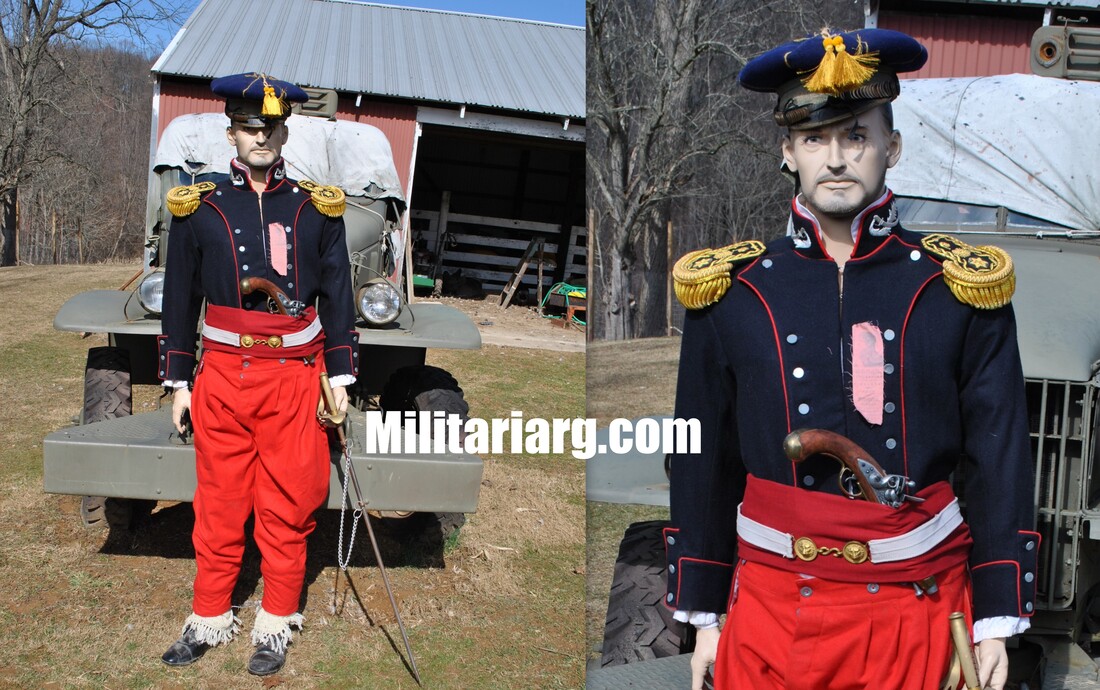
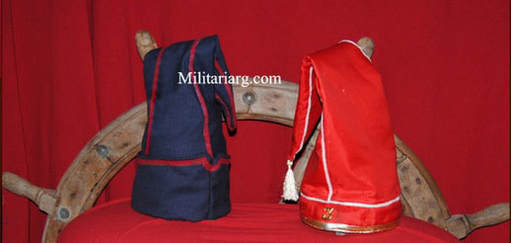
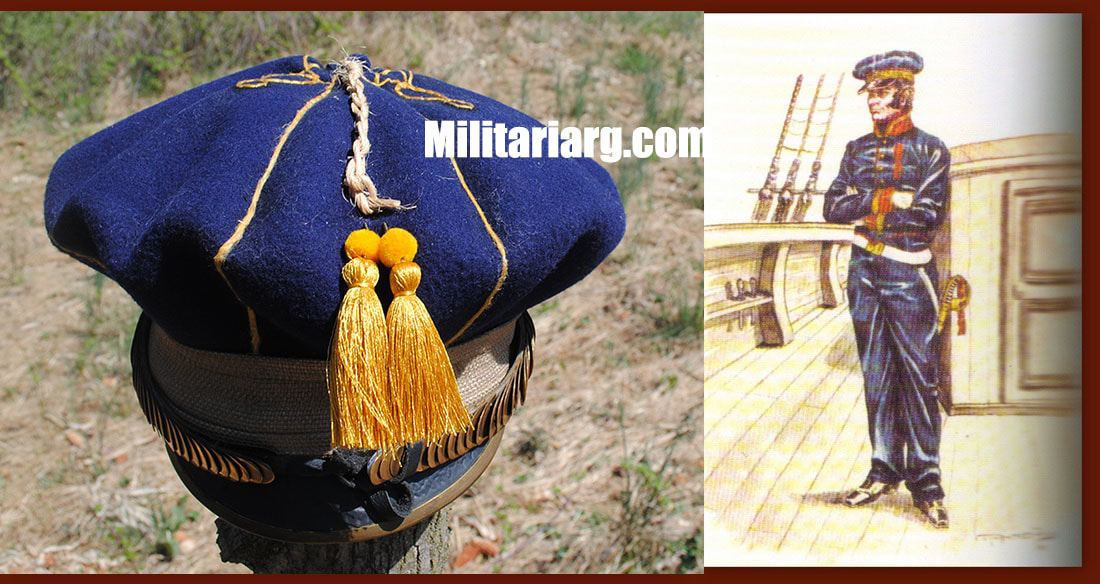
Reproduction of a wheel cap (Early 19th Century Officer Visor hat) of Colonnel, commonly used as forage or campaign caps in the Army (Cavalry, Horse Grenadiers) and Navy.
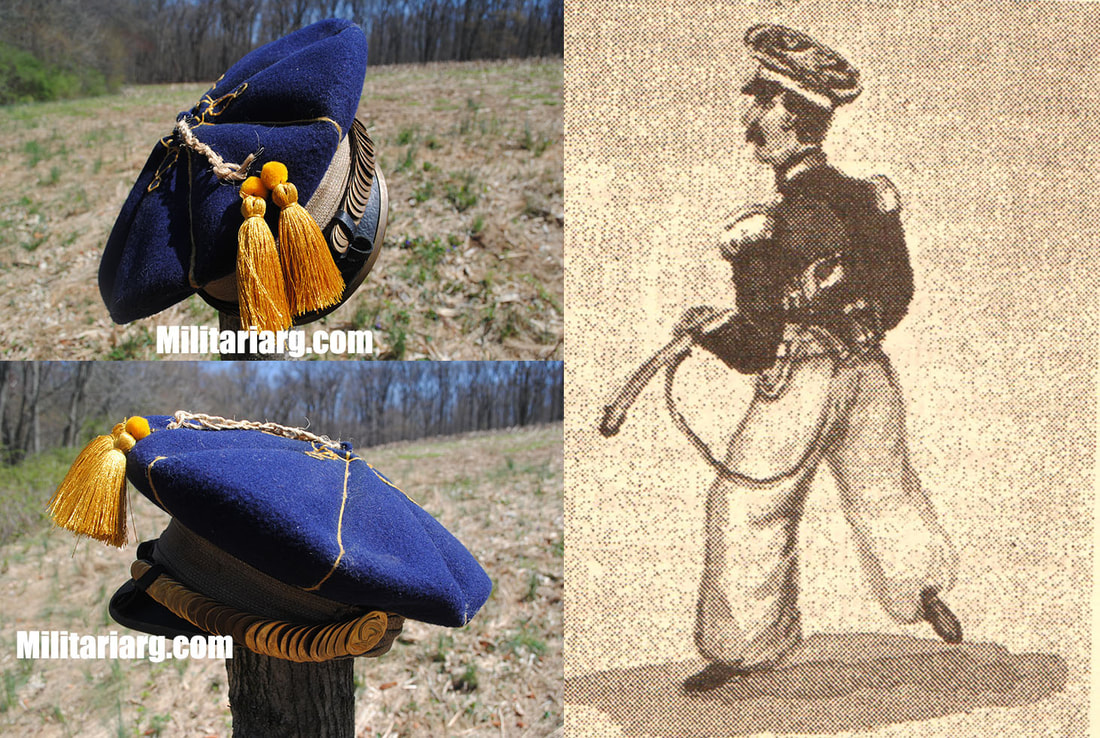
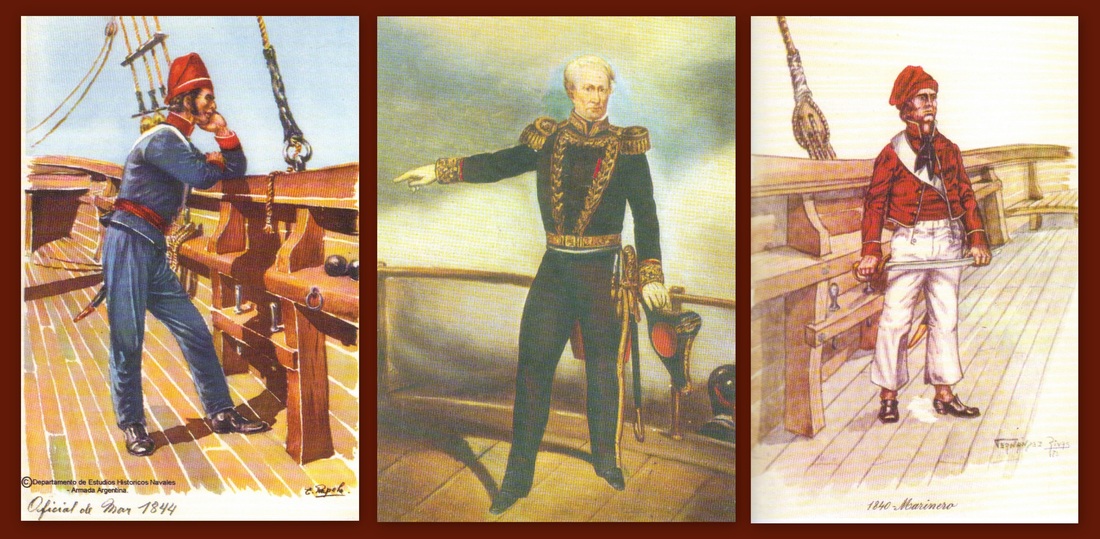
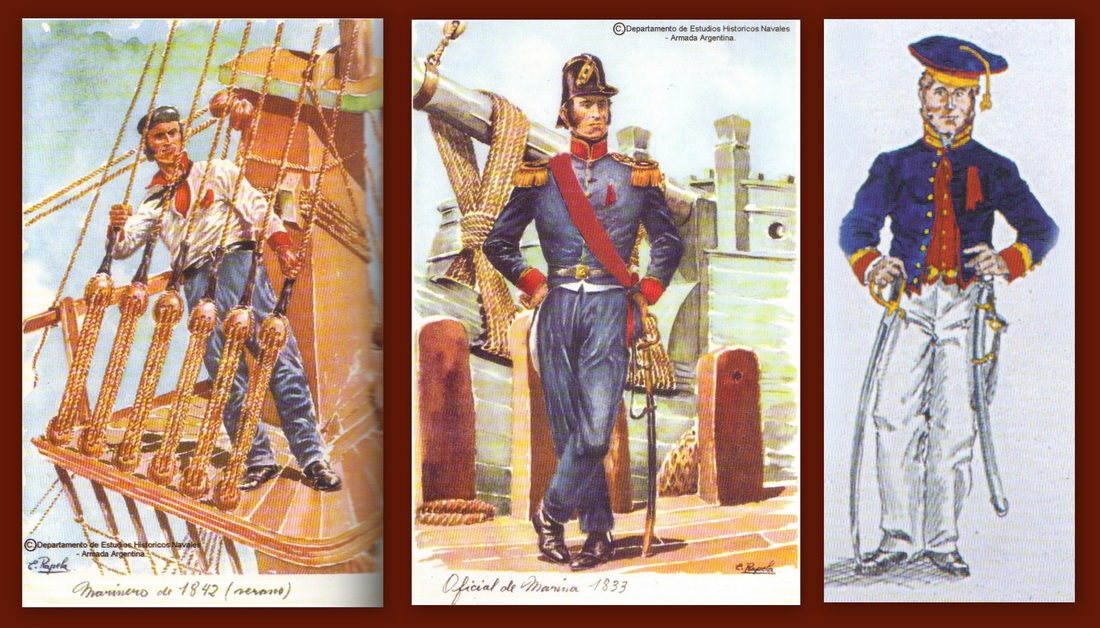
Rapela; Fernandez Rivas;
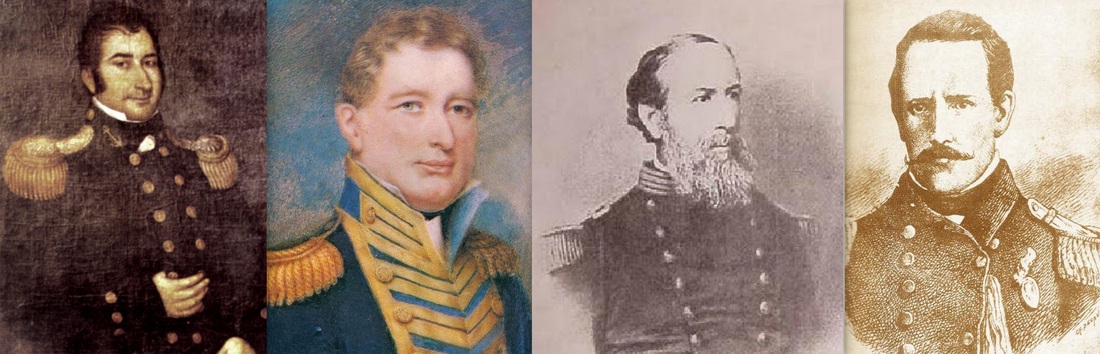
Hipólito Bouchard.
|
Tomás Santiago Harding.
|
Tomás Nother.
Elias Smith. Ricardo Baxter. Rubén Bernard. David Smith. Bartolomé Ceretti Francisco Linch. Antonio Lamarca. Patricio Drury. Santiago Phillips. Enrique Sinclair. Gullermo Clark. Juan Francisco Seguy. Martin Jose Warnes. Guillermo Chambers. James Cahyter. Tomas Taylor. David Jewett Guillermo Hall. |
José M.González.
Mariano Cordero. Jose Maria Cordero. Thomas Craig. Santiago Jorge Bynnon. Juan King. Santiago King. Bartolome Leonidas Cordero. Jorge Foster. Luis Cabassa. José Celedonio Elordi. Malcolm Shannon. Roberto Ford. Silvano Luce. Prudencio Murguiondo. Guillermo Anderson |
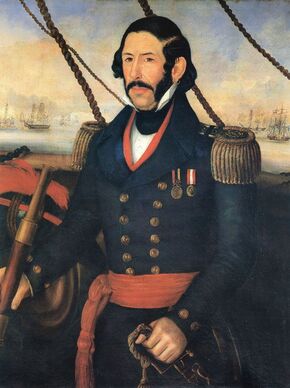
Colonel Joaquin Hidalgo 1807 - 1849.
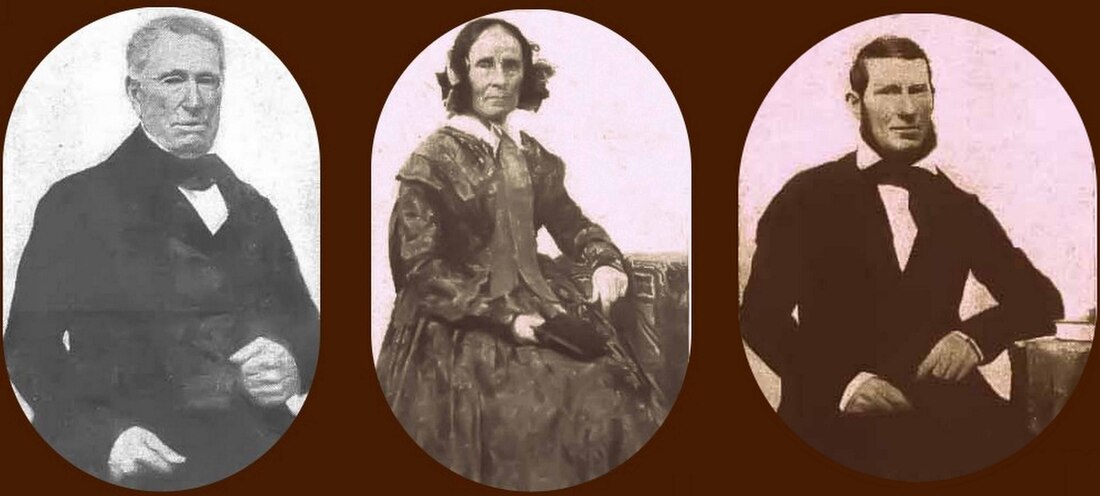
Admiral Guillermo Brown (Daguerrotype from 1855) - Isabel Chitty, Admiral's wife (Daguerrotype from 1855. Guillermo Brown jrs eldest son of Admiral Brown (Daguerrotype from 1852).