Militariarg.com
  • Home
  • Army
  • Aviation
  • Navy
  • Uniforms and Badges
  • Arms and Weapons
  • Equipment
  • Vehicles
  • Operational and Organizational Structure, Security Forces, Transportation, Books, Models and More.
  • Argentine Confederation Era. 1829 - 1852.
  • From 1852 to 1910 (French fashion)
  • Bunker 1982: South Atlantic War Militaria
  • International Militaria
  • Argentina WWII Era (Neutral) Reenactment Impression
  • Links ~ Enlaces

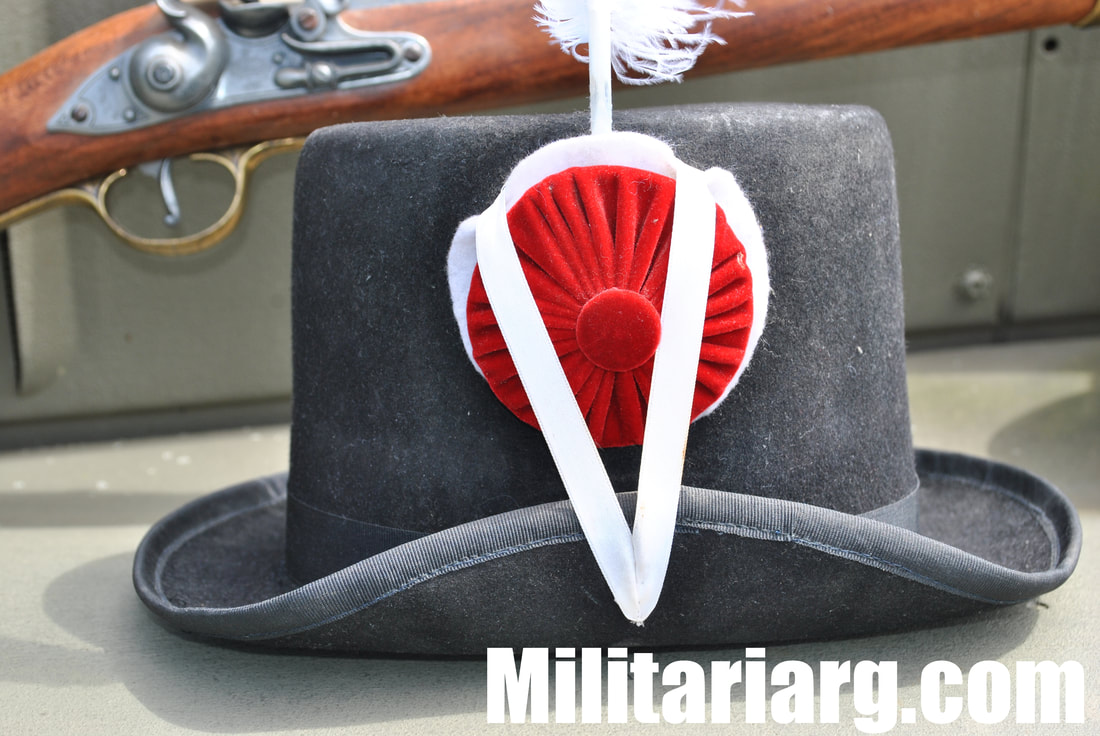
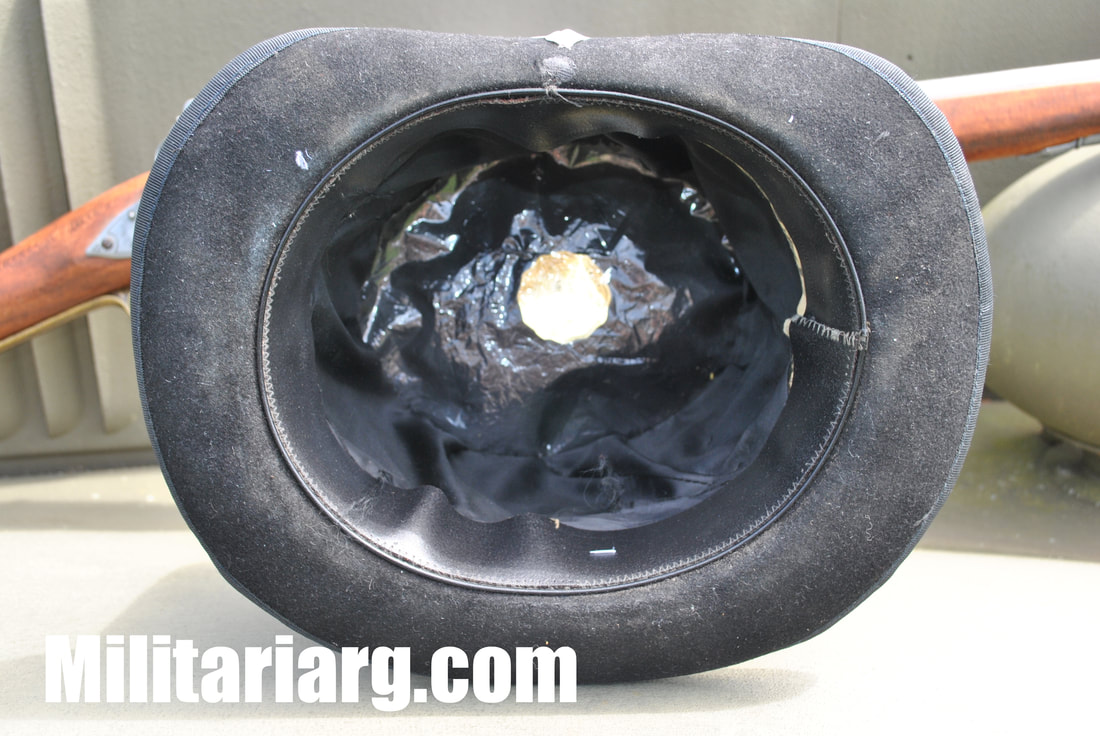
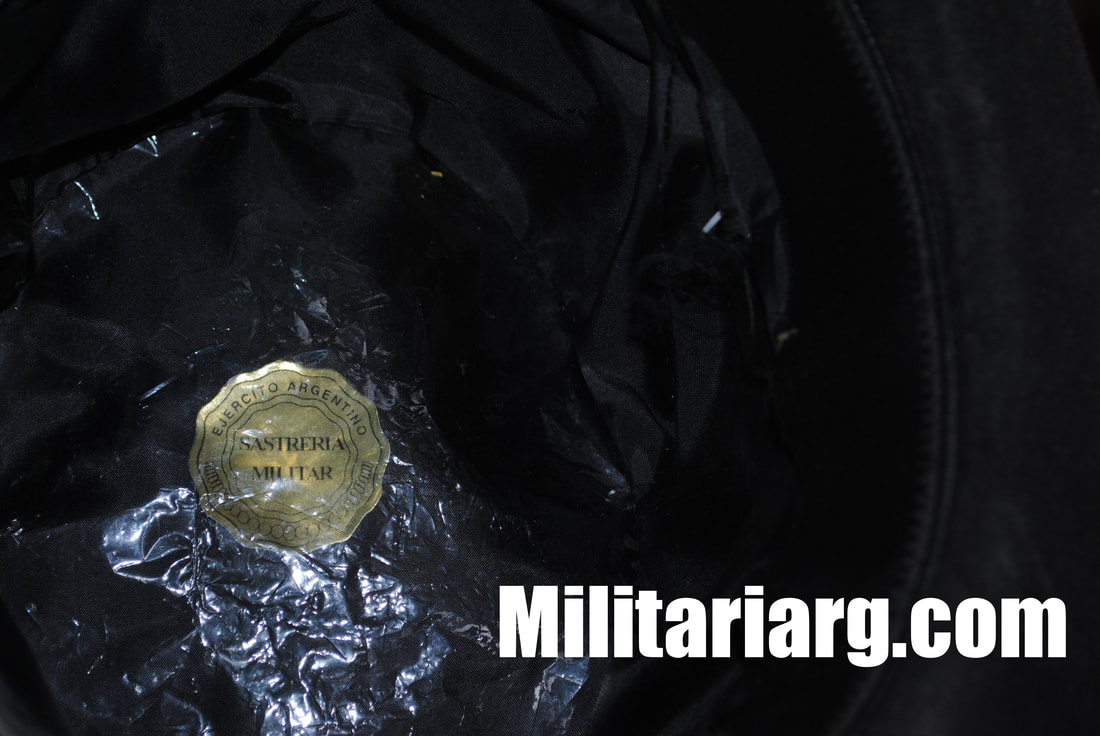
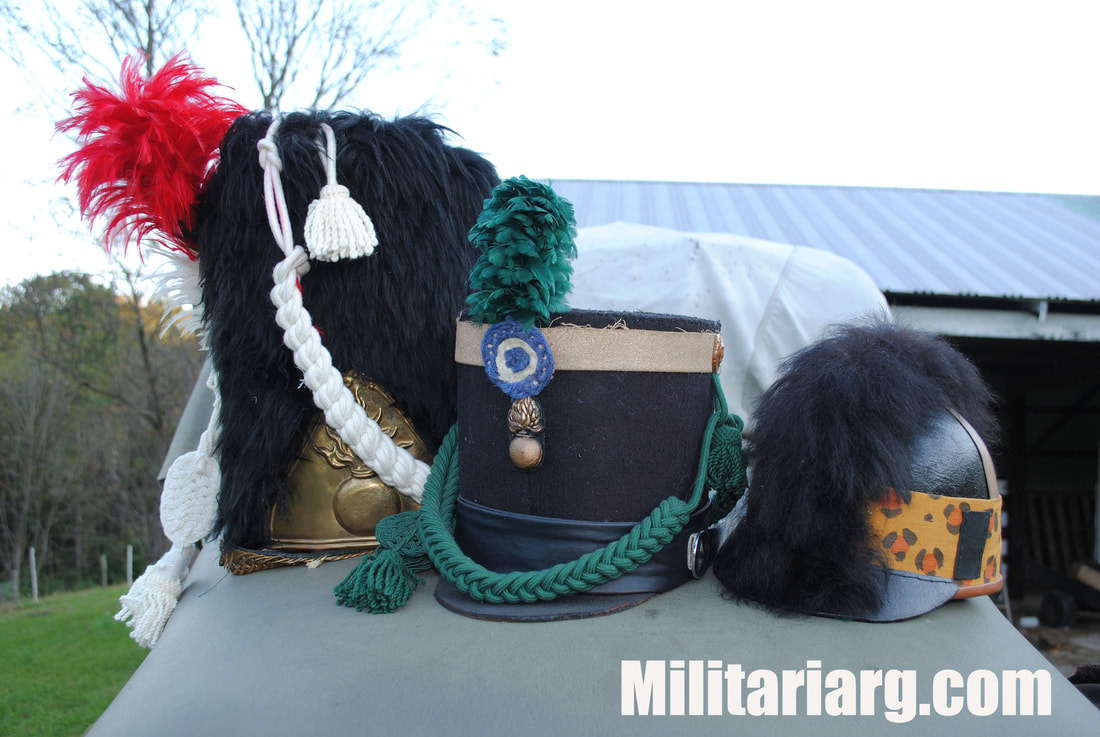
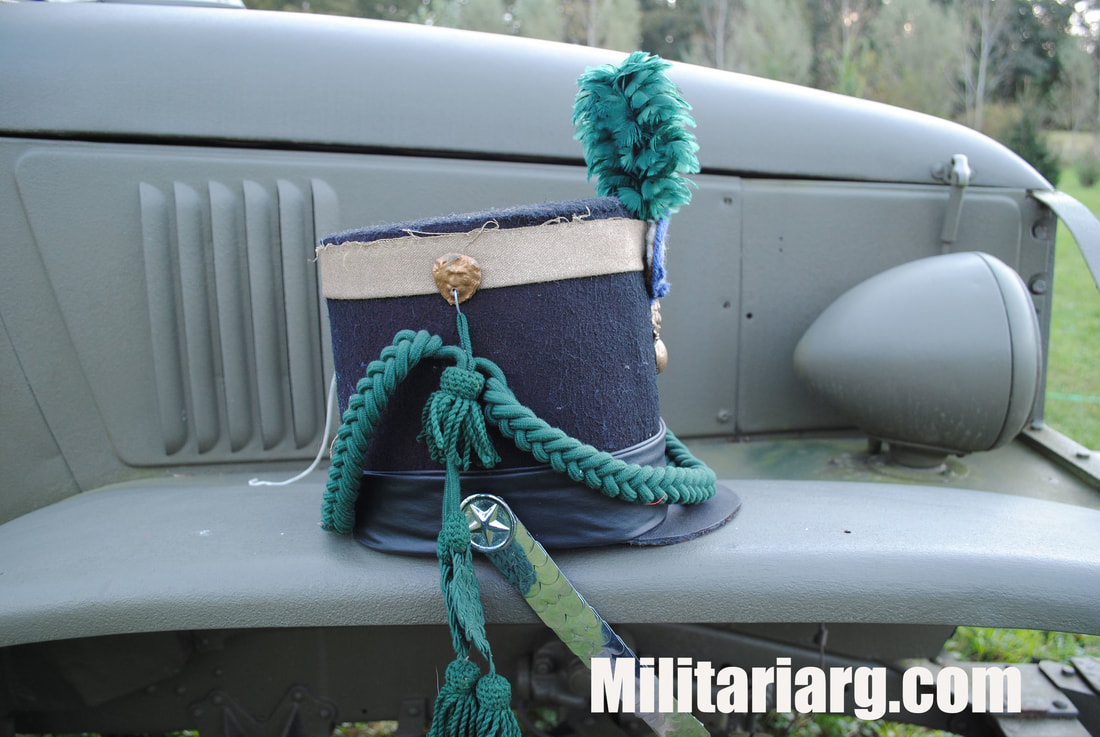
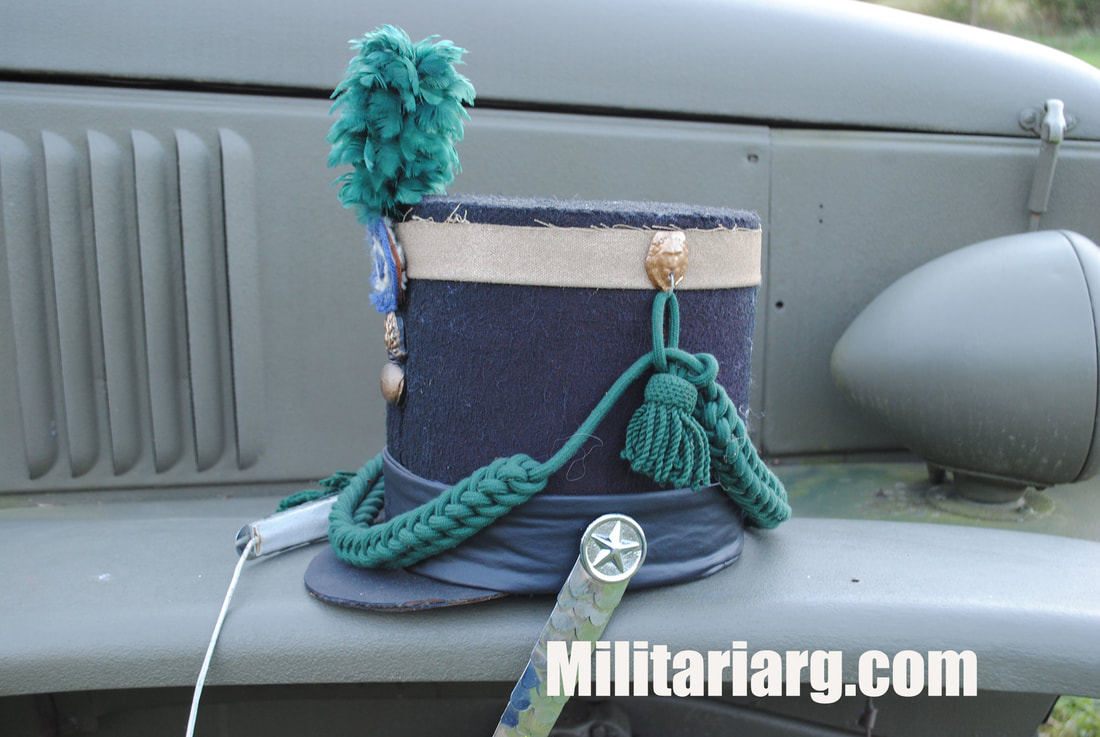
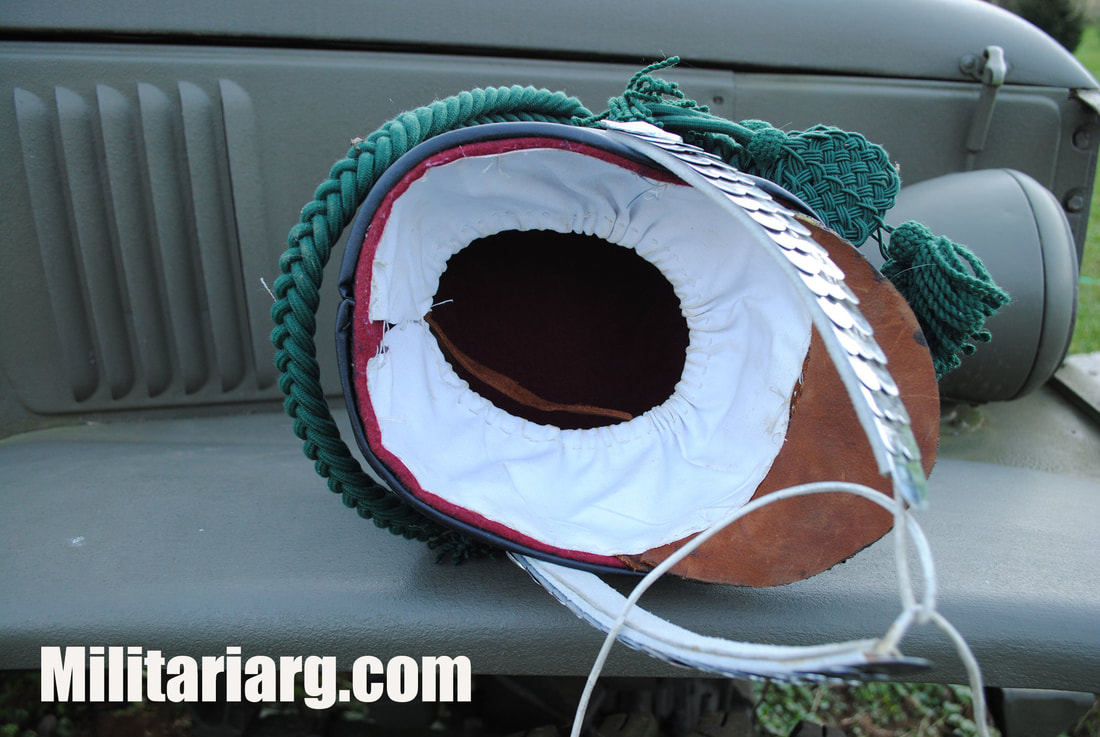
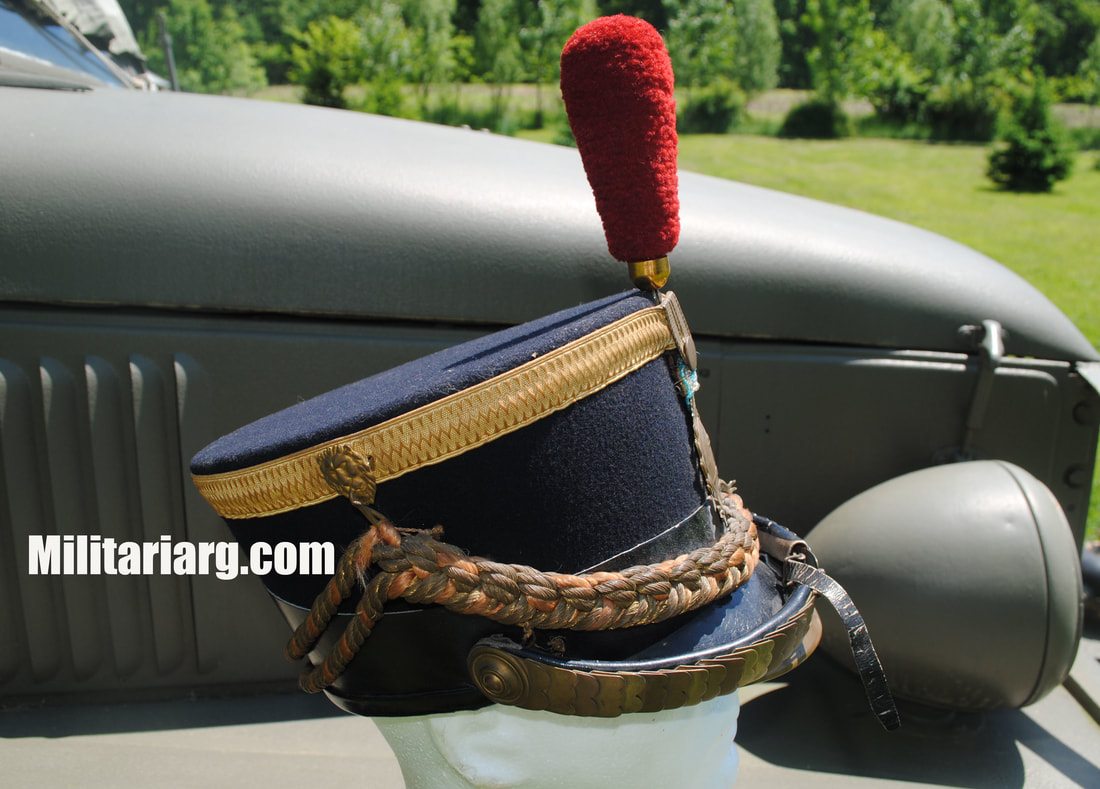
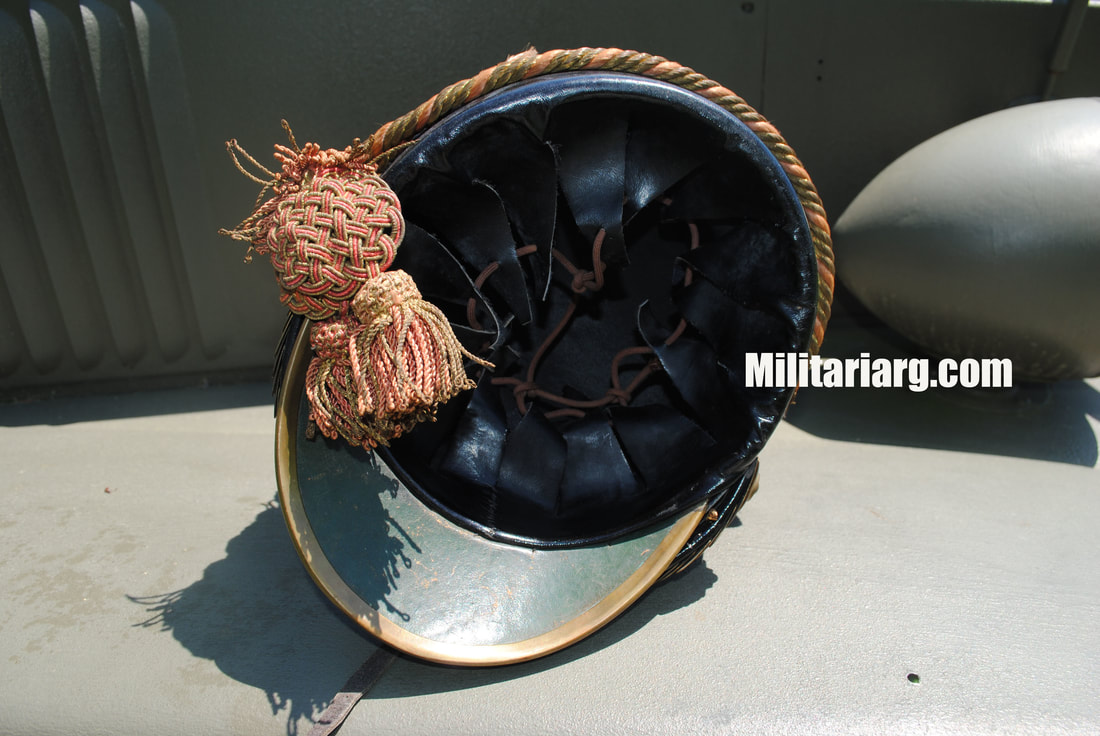
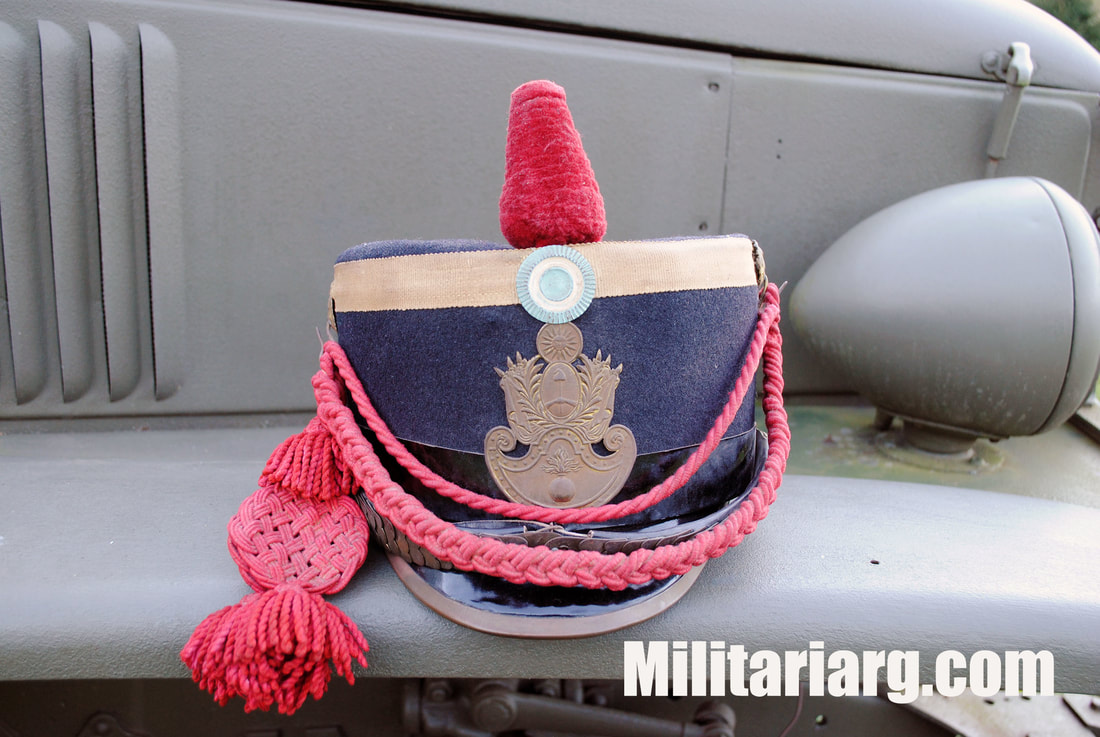
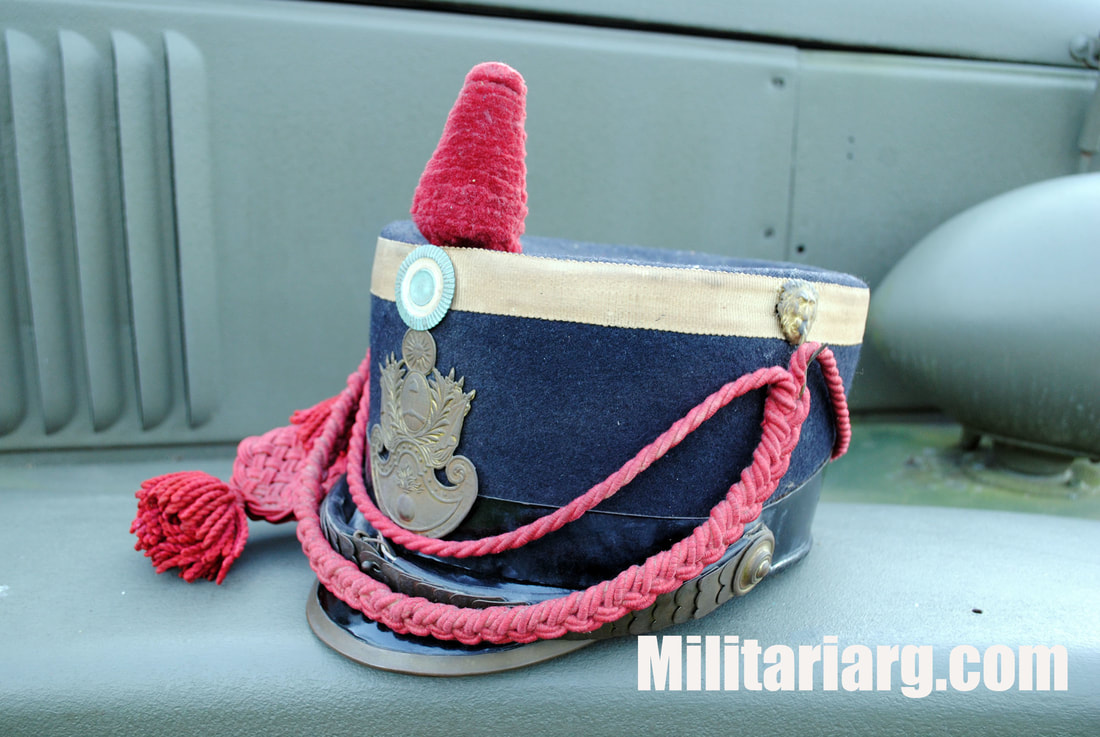
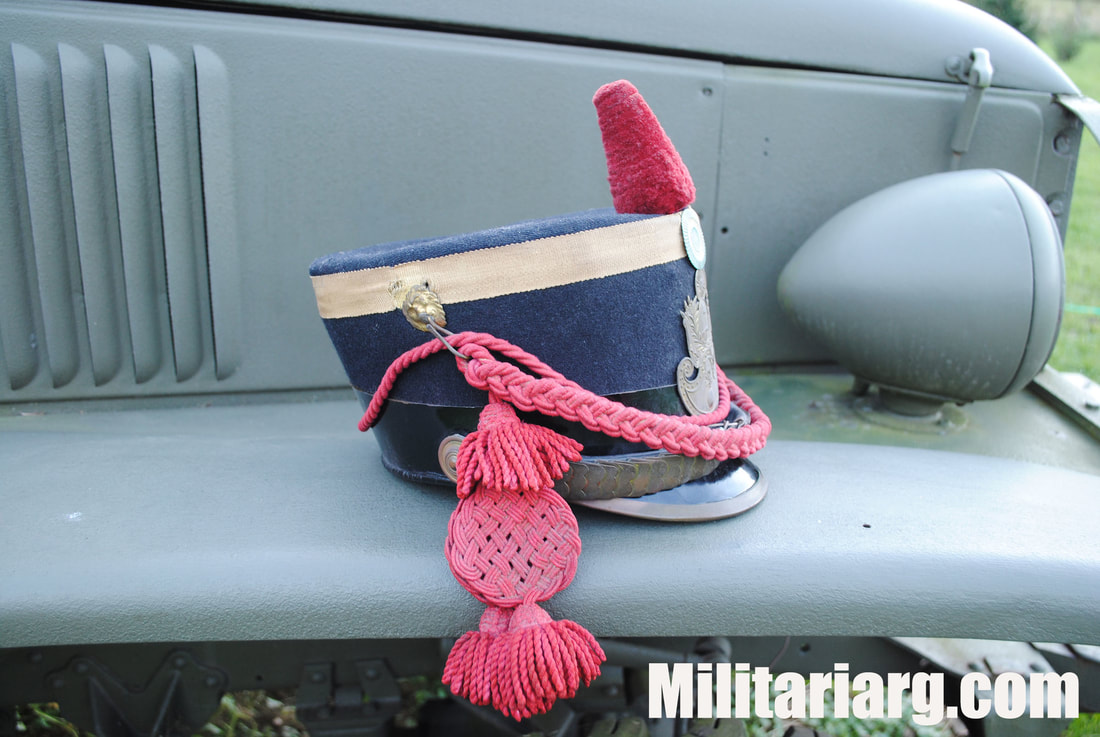
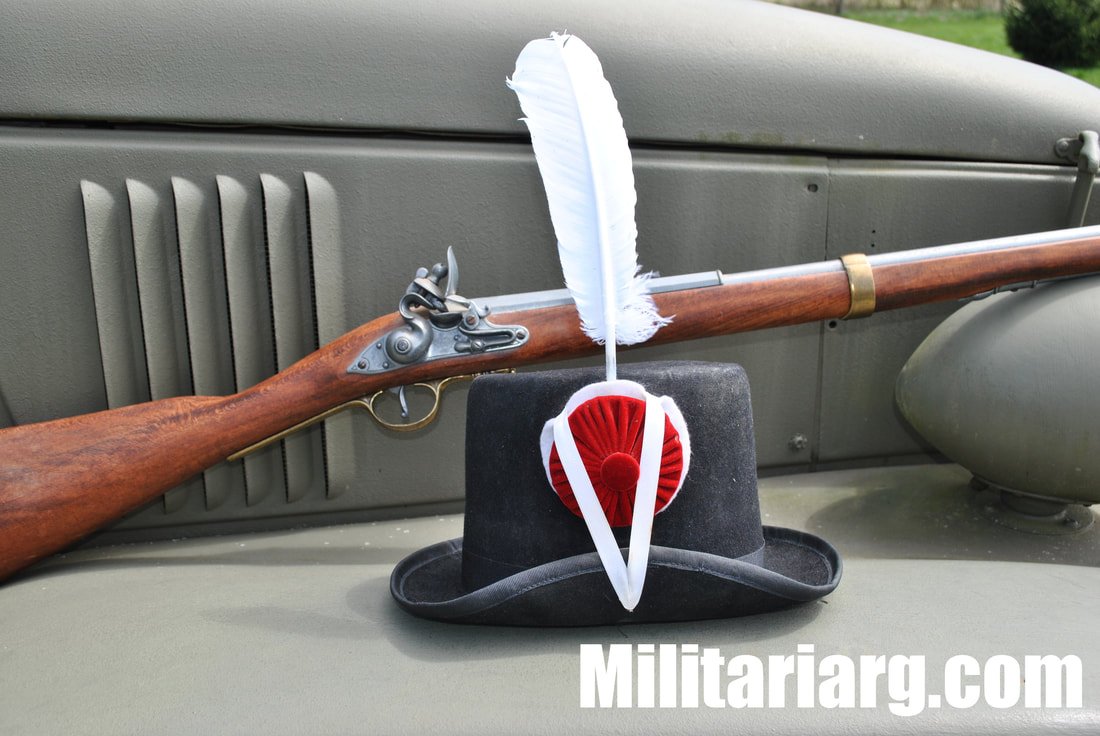
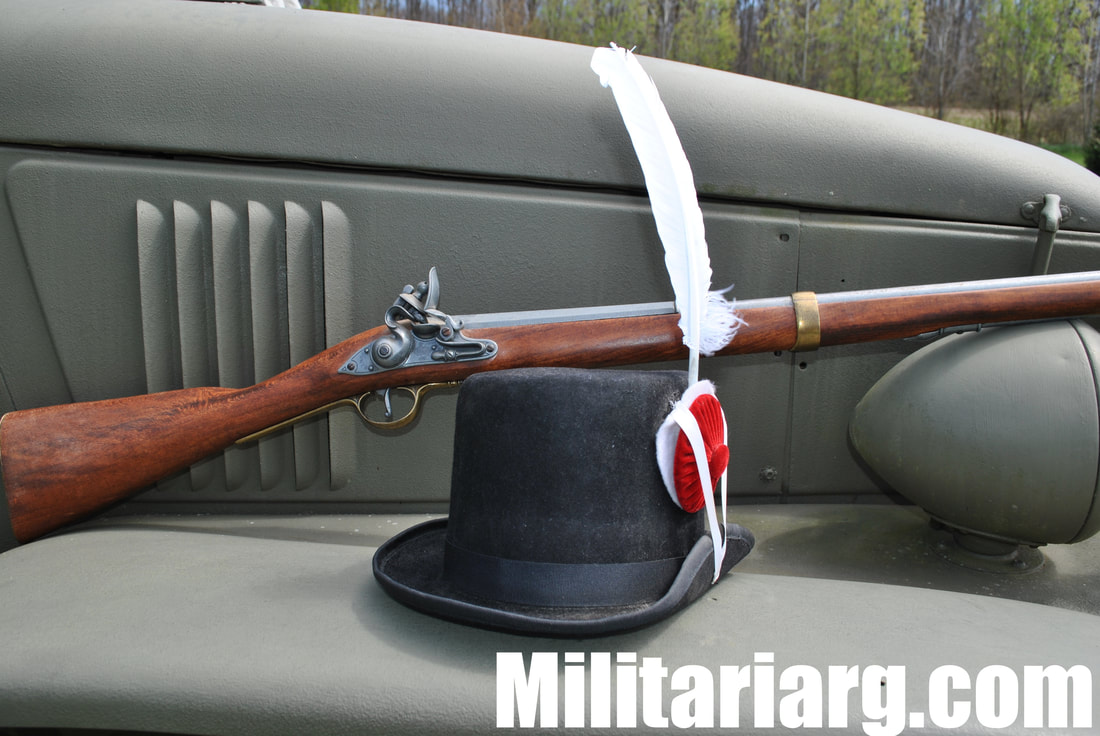
Regiment of Patricians "Regimiento Patricios" Top Hat "Galera".
Picture
Picture
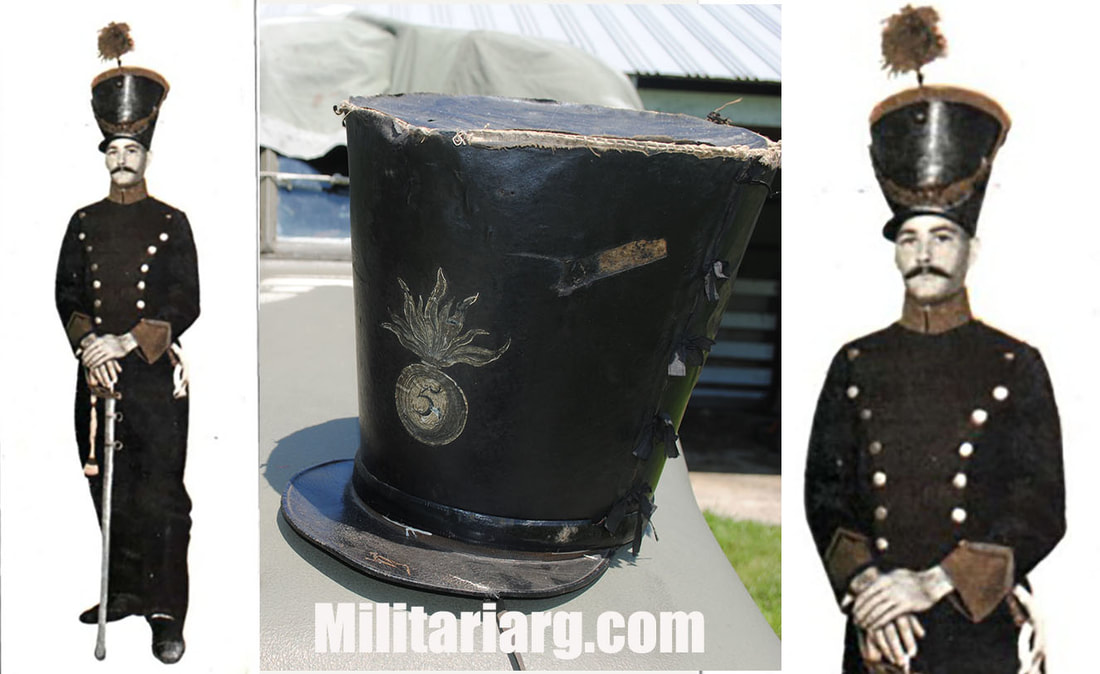
The Top Hat, was the typical civilian gentleman's hat of the late 18th century but militarized in many conflicts in its time. Often seen on naval crews. In the Río de la Plata he saw it in use in several militias created to contain the British invasion of 1806 and 1807 and continued to be used during the indpendence war. The Patricios Regiment currently uses it, ​not only as part of the historical uniform but also as a regimental symbol.
Picture
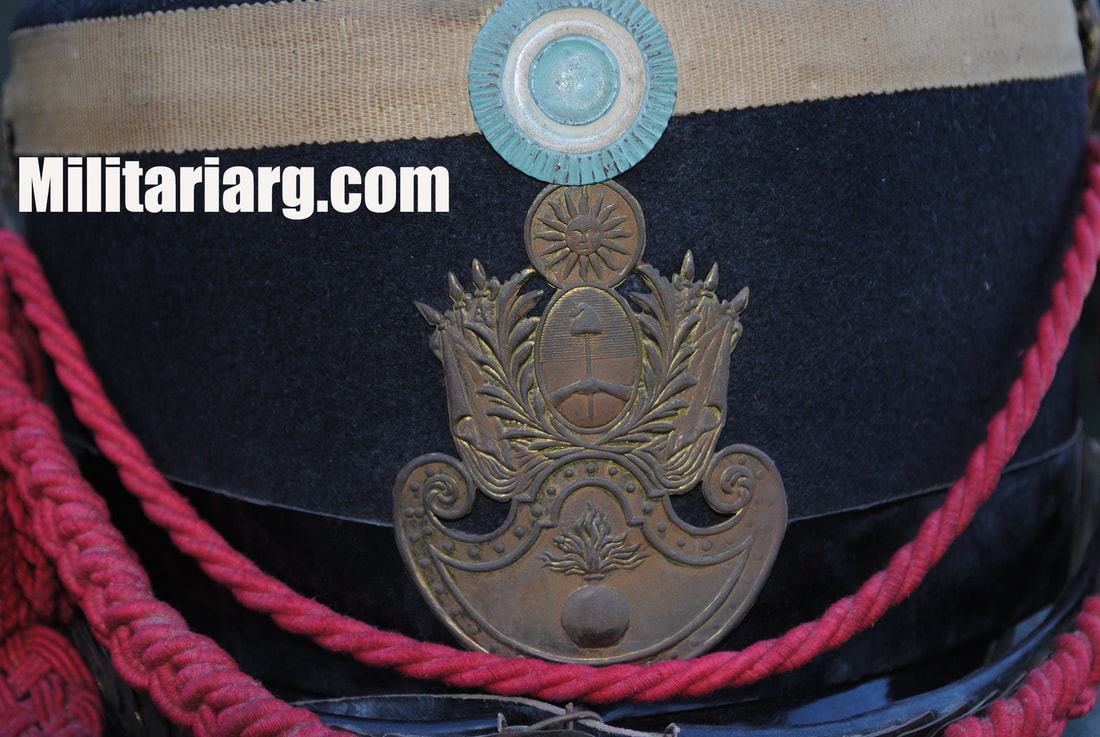
​The "Galera" top hat bears the cockade of the Spanish Empire, and a feather just as it was militarized in its time.
Picture
Picture

Picture
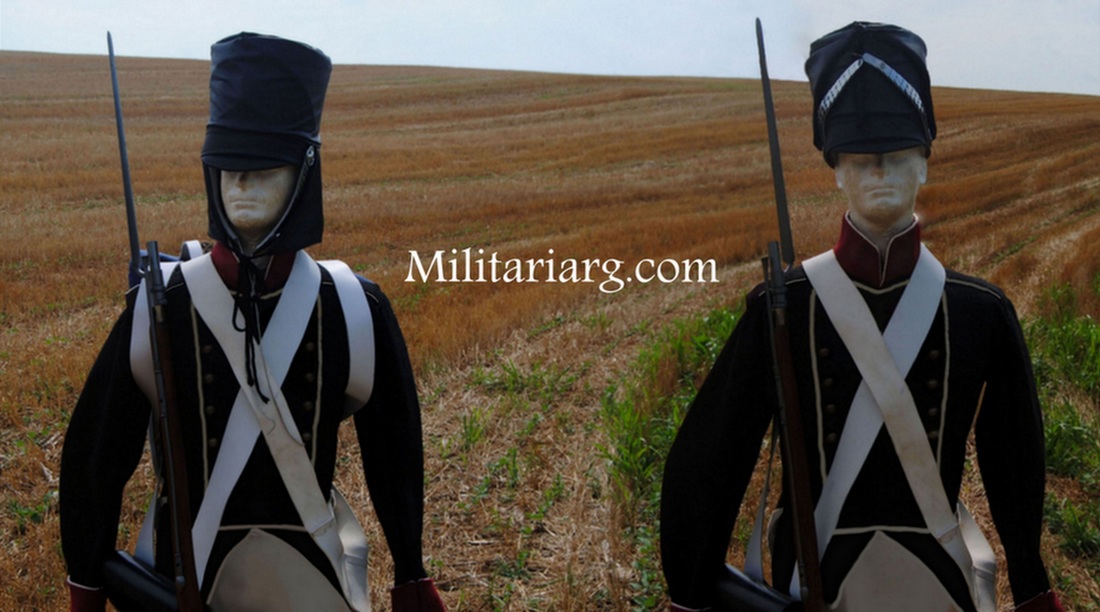
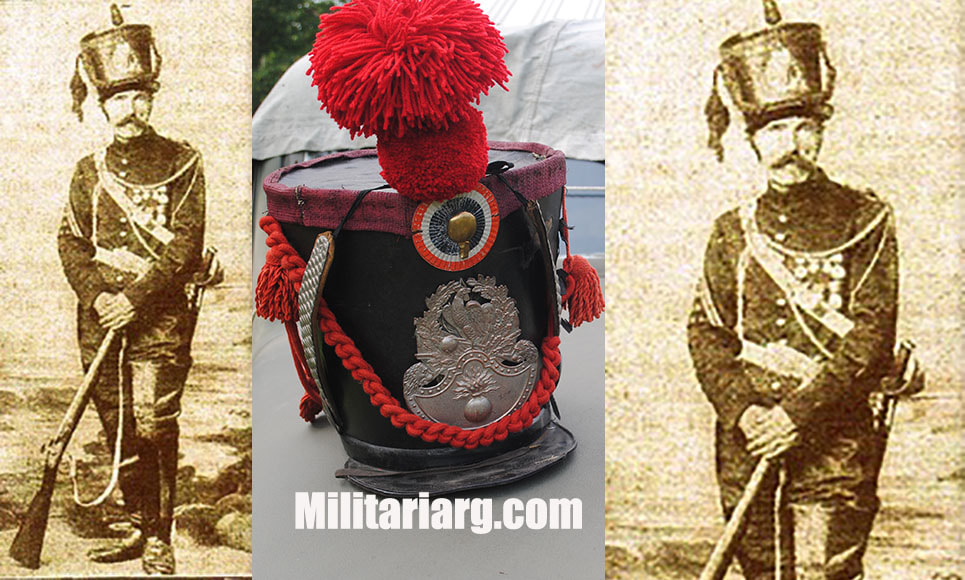
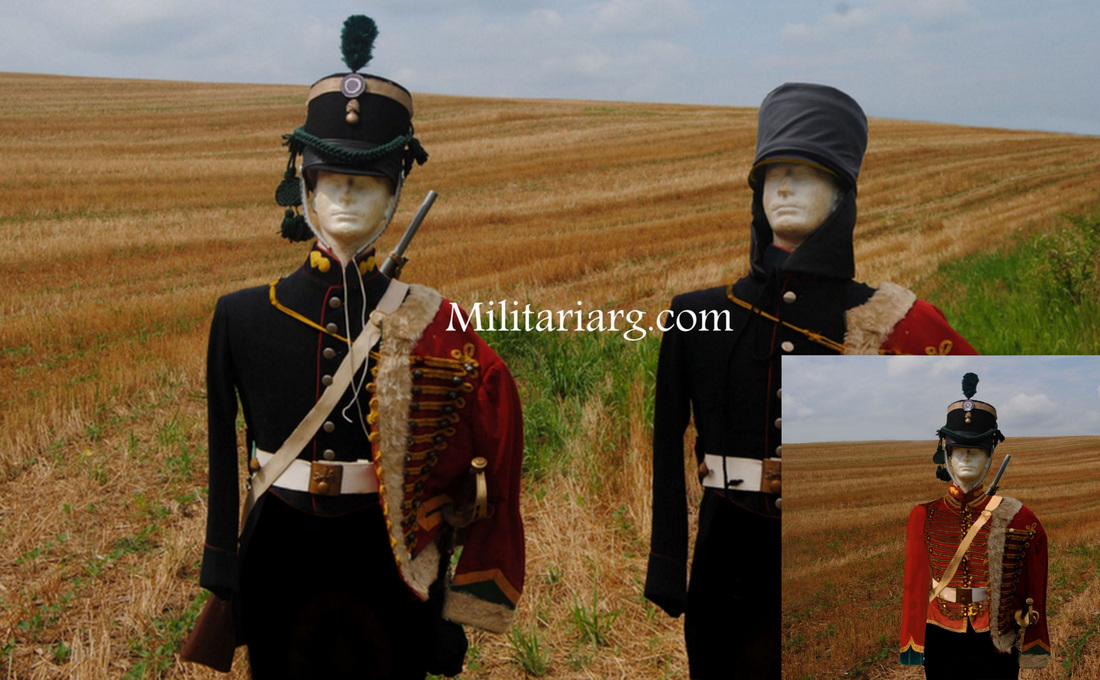
In the middle of this collage photo is an old engraving from the period showing the uniform of the Patricios Regiment. The rest of the photos are historical recreations of the Napoleonic Wars by French and Swedish armies. The collage serves as an idea of how the Patricios regiment originally became uniformed. Notice the similarity of how the French cockade is fastened to the shaco with that of the top hat of the Patrician Regiment. Notice the similarity of how the French cockade is fastened to the shako with that of the top hat of the Patricios Regiment. The jacket with three rows of buttons may have been the Spanish version of the French 1786-1793 jackets, as Spain incorporated the French style into its uniforms.

The Overlap (1810–1812)

In the early years of the Independence War (1810–1814), the "Top Hat" and the "Shako" existed side-by-side. While the frontline battalions of the Army of the North began receiving standard infantry shakos, the city-based or reserve units in Buenos Aires often still wore the brimmed hats.
Picture
At the time of the Battle of Trafalgar in 1805, British Royal Marines did not wear the standard Army shako, but instead a unique, cylindrical hat commonly referred to by historians as the "Round Hat" or informally as a "Top Hat". This was the most distinctive feature. It was made of lacquered felt or hardened leather, tall and black, with a small peak (visor) in front. It resembled the civilian top hat that was emerging at the time, leading to the informal nickname.
The Patricios Regiment hat from the British Invasions (1806–1807) and the British Royal Marine "Round Hat" are essentially the same style of headgear.
This was not a coincidence; it reflects a major transition in global military fashion between the Bicorn of the 1700s and the Shako of the 1800s. By the time of the British Invasions, many Spanish "Provincial" and "Urban" militias had adopted the sombrero redondo because it was cheaper and easier to produce than the formal bicorns used by regular line infantry.

​


Picture
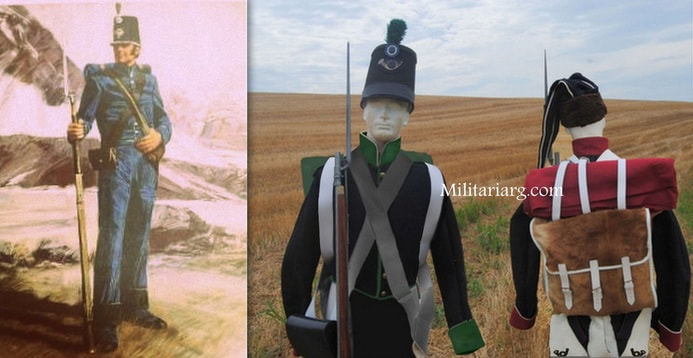
​These are historic Swedish uniforms from 1792 – 1815. The photo on the right is a modern reenactment. Notice the use of the top hat.
The Swedish "Round Hat" (Rundhatt)
The Swedish version (notably the m/1799 and m/1807 models) was a tall, cylindrical felt hat with a distinctive extended brim turned up on the left side. A tall plume (usually white for infantry) was attached to the upturned left side, where a regimental cockade or badge was also placed.

Campaign History
​

This was the iconic headgear of the Swedish infantry during the Pomeranian War (1805–1807) and the Finnish War (1808–1809) against Russia. While the British and French had moved to shakos, the Swedes were still wearing these "old-fashioned" high felt hats in the German campaigns of 1813.

Use in Other 18th/19th Century Armies. The "Top Hat" style was surprisingly widespread during the Napoleonic era and the late 1700s:


United States (1790s–1810s). The early U.S. Army and many state militias used the "Round Hat." It was the standard headgear for the Lewis and Clark Expedition (1804).
French Revolutionary Army. Before Napoleon standardized the Shako, many French revolutionary "Volunteer" units wore the Chapeau Tarleton or basic round hats with large tricolor cockades.
British Light Dragoons. In the 1780s and 90s, light cavalry units often wore a "Round Hat" with a large turban wrap and a bearskin crest (the "Tarleton" helmet evolved from this).
Portuguese Army. They utilized a version of the round hat known as the Barretina before adopting the shako.
Picture
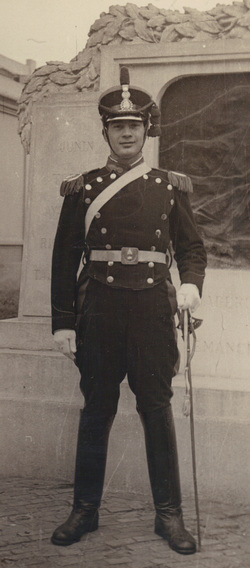
WW1, Belgian carabiniers with top hat. In World War I, the Belgian Army also famously utilized a "top hat" style, specifically within their elite light infantry unit, the Carabiniers. 

The "Corsican Hat" of the Carabiniers

At the outbreak of war in 1914, the Belgian Carabiniers marched into battle wearing a unique, archaic-looking headpiece known as the "Corsican Hat" (Chapeau de Carabinier). It was a tall, cylindrical black felt hat that closely resembled a civilian top hat or a simplified shako. It often featured a green pompom or a black plume, and was frequently protected by an oilskin rain cover that made it appear even more like a glossy top hat.

Combined with their very dark green (nearly black) coats, these hats led German soldiers to nickname the Belgian Carabiniers the "Black Devils" (Schwarze Teufel). 

Picture
​The shako is a tall, cylindrical military cap with a visor that originated in the late 18th century as a practical, lightweight alternative to cumbersome tricorns and bicornes. It became the predominant military headgear across Europe and the Americas throughout the 19th century. 

The name "shako" comes from the Hungarian word csákós süveg, meaning "peaked cap". It evolved from the caps worn by Hungarian hussars (light cavalry) and Grenzers (border light infantry) in the Austrian Empire in the mid-18th century.
    
The shako was more comfortable and offered better weather protection (with a visor) than the hats it replaced. Its fashion and functionality led to its rapid adoption across European armies in the late 1700s and early 1800s, including the British Army in 1800.

Napoleonic Wars: 

The shako was standard headwear during the Napoleonic Wars. Various nations developed distinct styles, such as the British "stovepipe" shako and the French inverted cone shape. The height and embellishments (plumes, cords, badges) were believed to make soldiers look taller and more imposing on the battlefield. 

The shako underwent numerous design changes throughout the 19th century, with different "fashions" such as the "bell-top" and "Albert" shakos in Britain. These were often heavy and provided little protection from anything other than saber cuts.

As military tactics changed and more practical headgear was needed, the shako began to fall out of favor for active service in the mid-to-late 19th century. It was replaced by softer caps like the French kepi, the German Pickelhaube (spiked helmet), and practical felt campaign hats.

WWI: 
By the outbreak of World War I, most armies had phased out the shako for field use, though some, like the Swiss and Dutch, still used them in the field until after 1916. Belgian forces also retained it as field dress in the early weeks of the war. 

Modern Ceremonial Use
Today, the shako has a second life as a ceremonial hat, preserving 19th-century military tradition. 

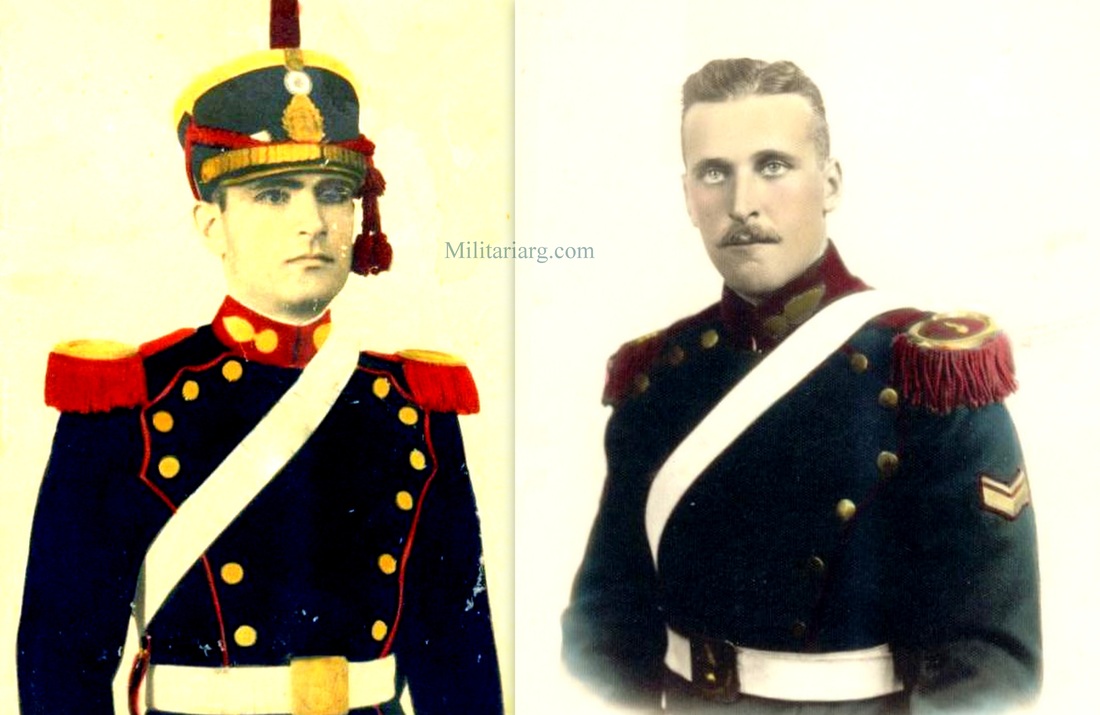
Morrion - Shako (Mounted Grenadiers):
Picture
Picture
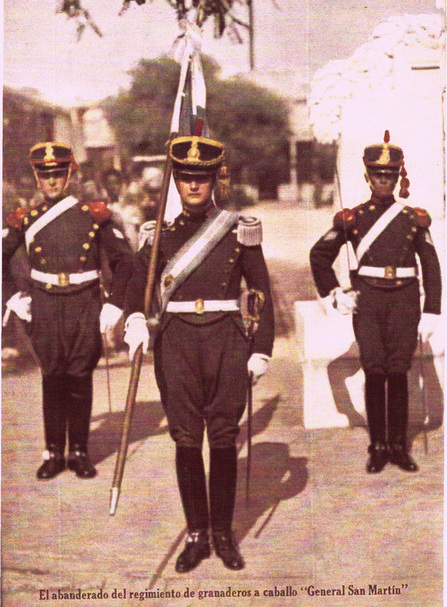
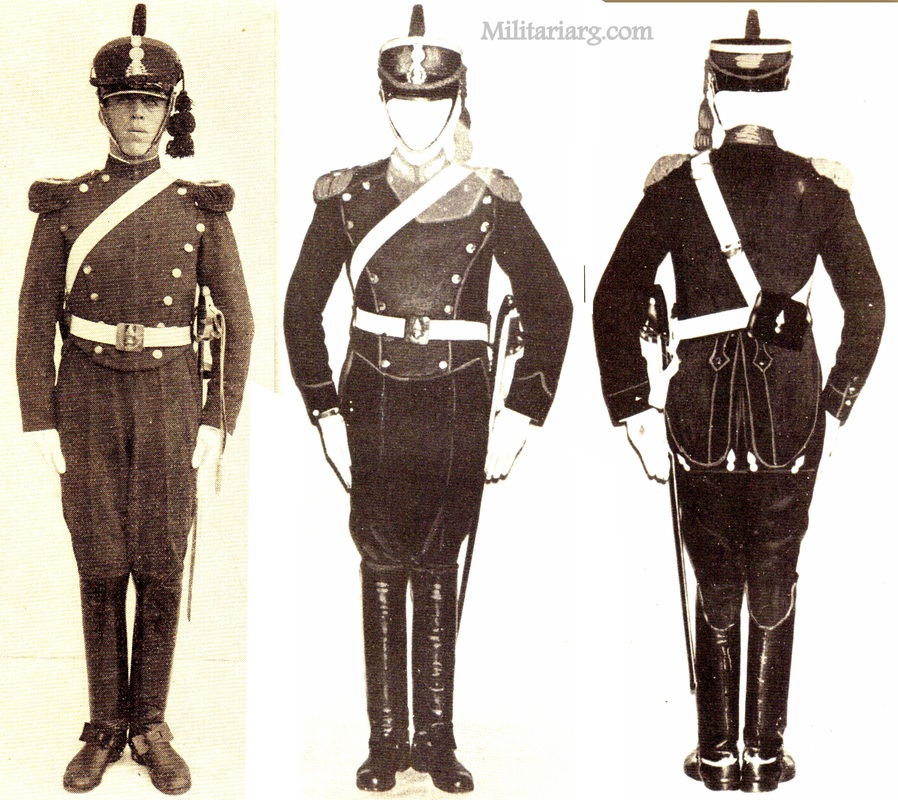
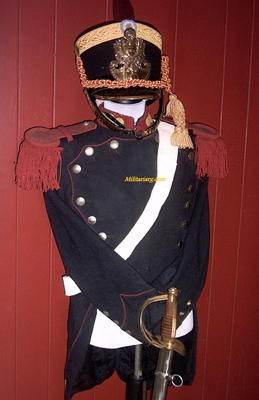
​Historic uniform from the Grenadier horseback corps, custodians for the government house or Casa Rosada ("Pink House") as well as escorts.  The uniform was approved with a regulation of 1909/1913 Chapter IV.  
Source: Los Cuerpos Militares en la Historia Argentina 1550-1950 by Julio Mario Luqui-Lagleyze
Picture
Picture

Granaderos A Caballo del General San Martin - Cruce de los Andes 1816 - 1917
Horse Mounted Grenadier - Andean Army, Crossing of the Andes.
Picture
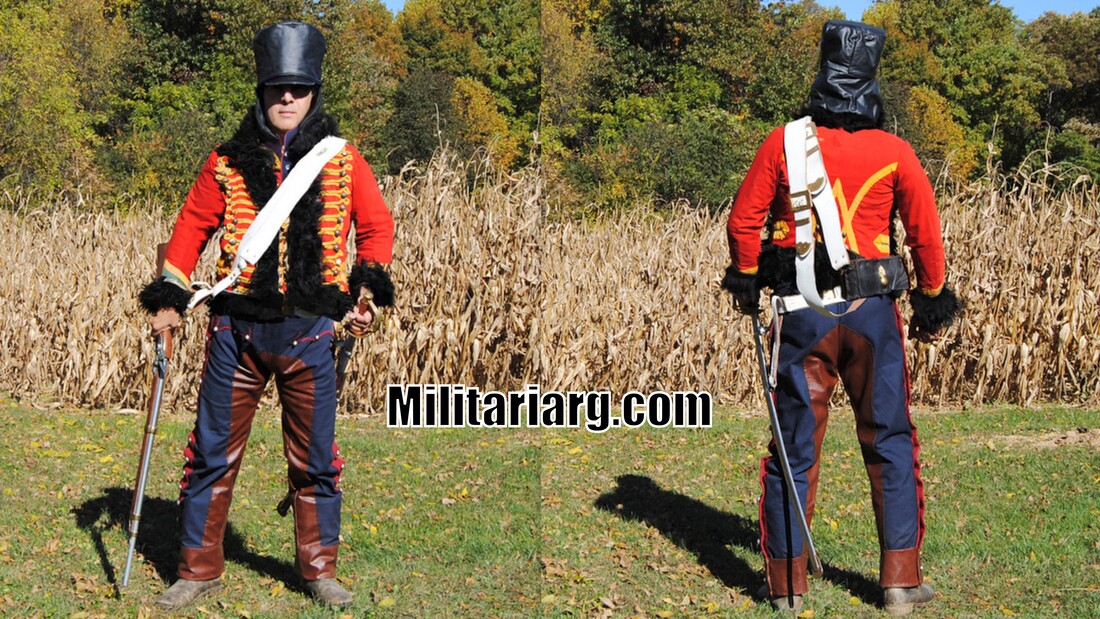
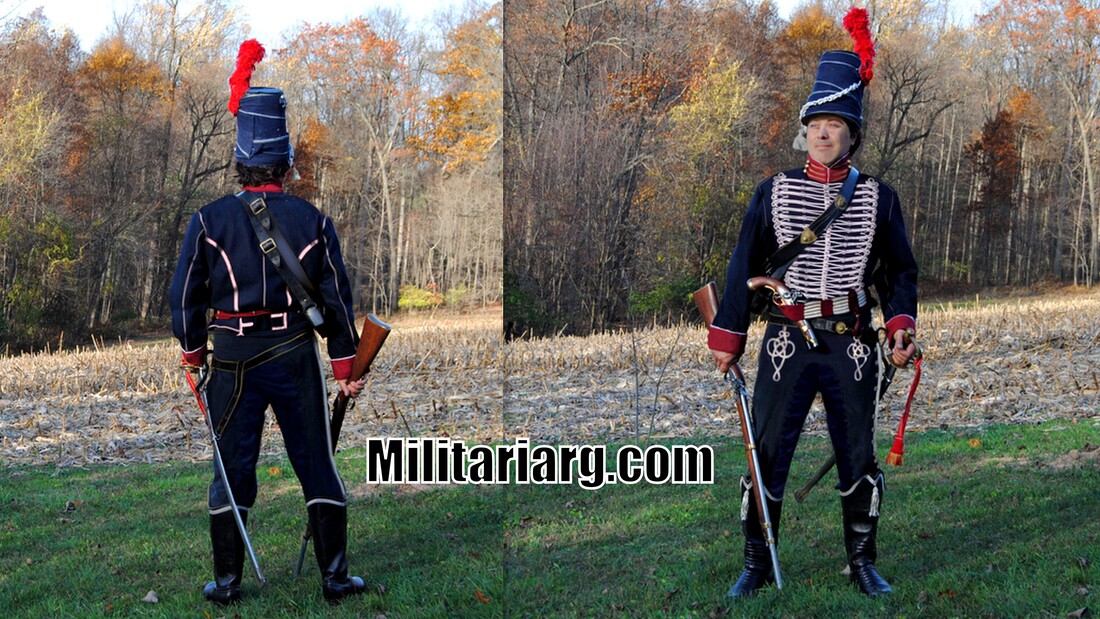
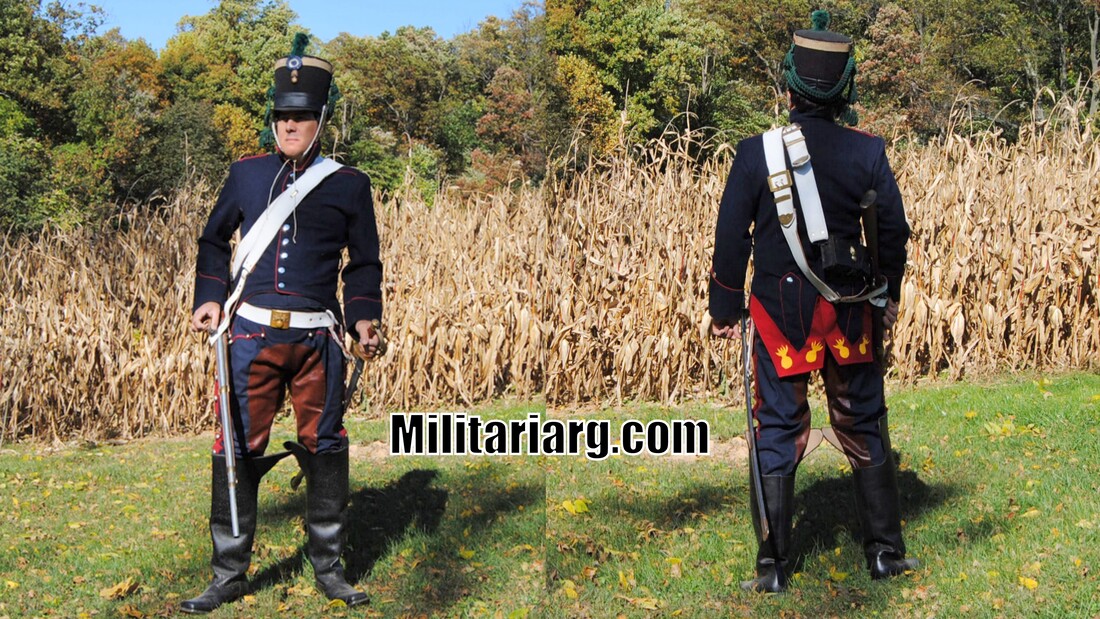
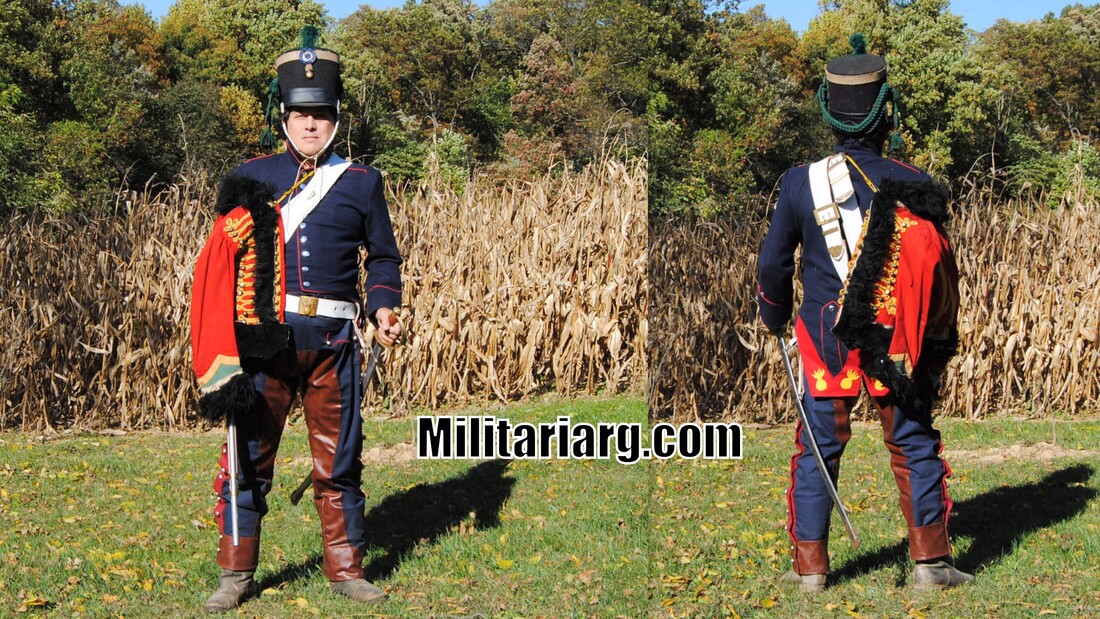
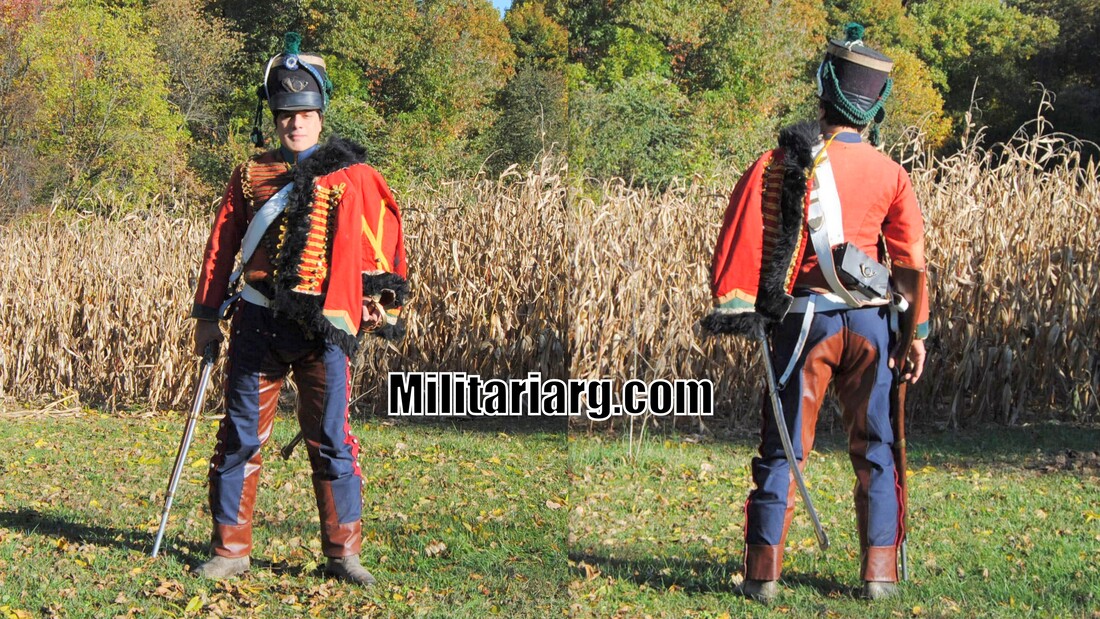
The charivari was essentially an "overall" or over-breeches worn by French light cavalry (Hussars and Chasseurs-à-cheval) and, later, heavy cavalry during the Napoleonic period. They were intended to protect the primary uniform breeches during campaign, marching, and battle. 
They were generally made of sturdy wool or kersey, often grey or dark blue, and featured a long row of buttons or hooks running down the outer seam of the leg. They sometimes had a contrasting colored stripe (piping) along the button line.
This design allowed the rider to put the trousers on or take them off while still wearing their boots, a practical necessity for soldiers who spent long periods mounted. They typically featured leather strapping on the inside leg and leather cuffs with stirrup straps that fastened under the sole of the boot to keep them in place while riding.
The charivari first appeared in French military regulations (specifically mentioned in the 1812 Bardin regulations) and were widely used by the French Army throughout the 19th century. They were a very practical and defining feature of the French cavalry uniform during that time.​
Picture
The uniform of the mounted grenadiers of the Río de la Plata was based on that worn by the Napoleonic horse artillery in 1815. ​After 1815, the end of the Napoleonic Wars resulted in massive amounts of surplus arms and ammunition in Britain, which were cheap and readily available for the South American revolutionaries.
Picture
Granadero French type Morrion and jacket, belt and buckle, French charivari riding equestrian breeches pants troussers. French Hussards type pelisse and carabine bandolier and ammo box. 
According to "The Armies of Bolivar and San Martin" published by Ospres: "The high boots of the grenadiers were replaced by San Martin on 18 March 1815 for Russian boots and blue saxon type trousers with leather reinforcement".
Picture
Trooper Horse Grenadier 1816. "The Armies of Bolivar and San Martin" #232.
​Osprey UK. Terry Hooker. Illustrated by Ron Paulter.
Picture
Photo from modern Napoleonic War Era Reenactment Group from Russia (It is called the First Patriotic War (or more commonly, the Patriotic War of 1812)It was called "Patriotic" because it was seen as a total war involving the entire population (peasants, partisans, and nobles) defending their "Fatherland" (Otechestvo) against Napoleon’s Grande Armée.​

The armies during the Napoleonic era used shako covers made from cotton or linen canvas that was treated to be water-resistant, often referred to as oilskin. 
The covers were made from simple, undyed (beige/off-white) cotton or linen canvas. This was the cheapest and most durable fabric available for mass army production. The "waterproof" quality was achieved by coating the fabric with wax or linseed oil, turning it into "oilskin". This treatment made the material highly water-resistant, shedding rain effectively, though it wasn't perfectly waterproof. The primary purpose of the cover was not just to keep the soldier's head dry, but to protect the felt or leather body of the expensive shako itself from rain and mud, preserving the uniform's appearance and longevity during field service.

Cazadores de los Andes 1817 - General San Martin Guard - Custodia Coronel Necochea. Andean Army.
Picture
Picture
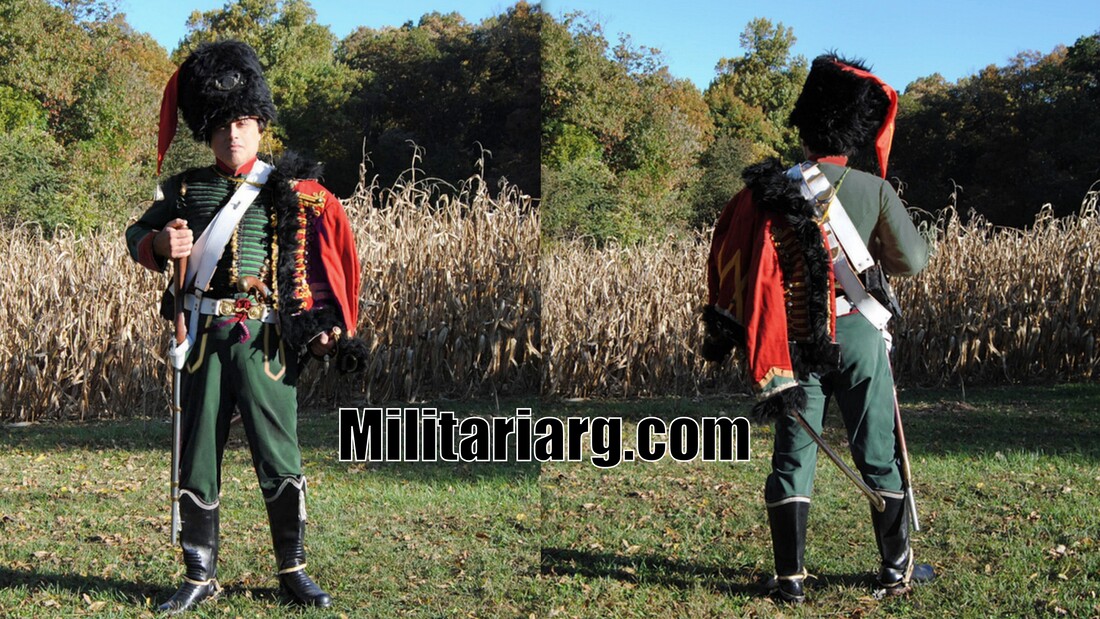
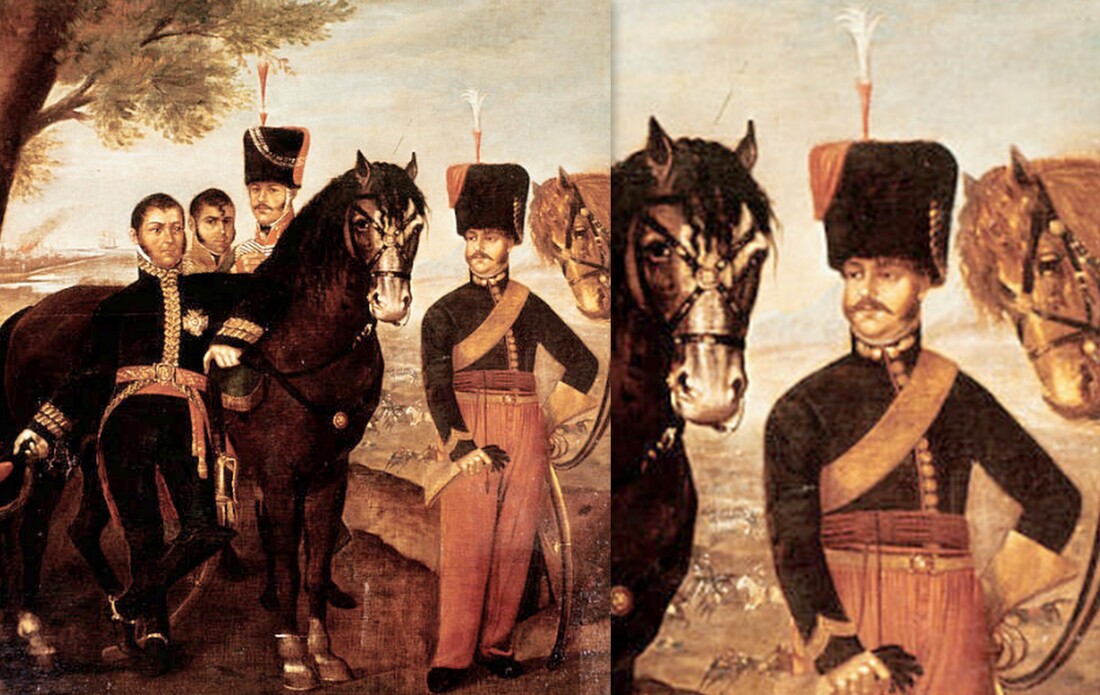
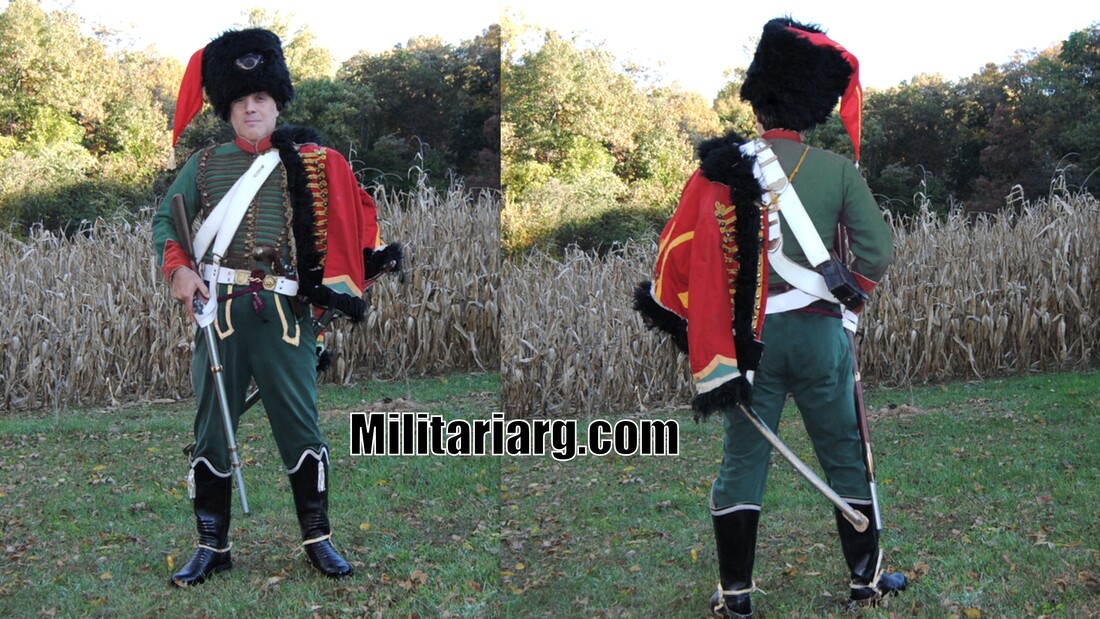
Colbac, dolman and pelisse.

​Cazadores de los Andes 1820 - Chasseur à Cheval Andin - Horse Mounted Andean Hunter. Independence War.
Picture
Hunter, Chasseur Hussards, Dolman, pelisse and chavari chaps riding equestrian pants troussers.
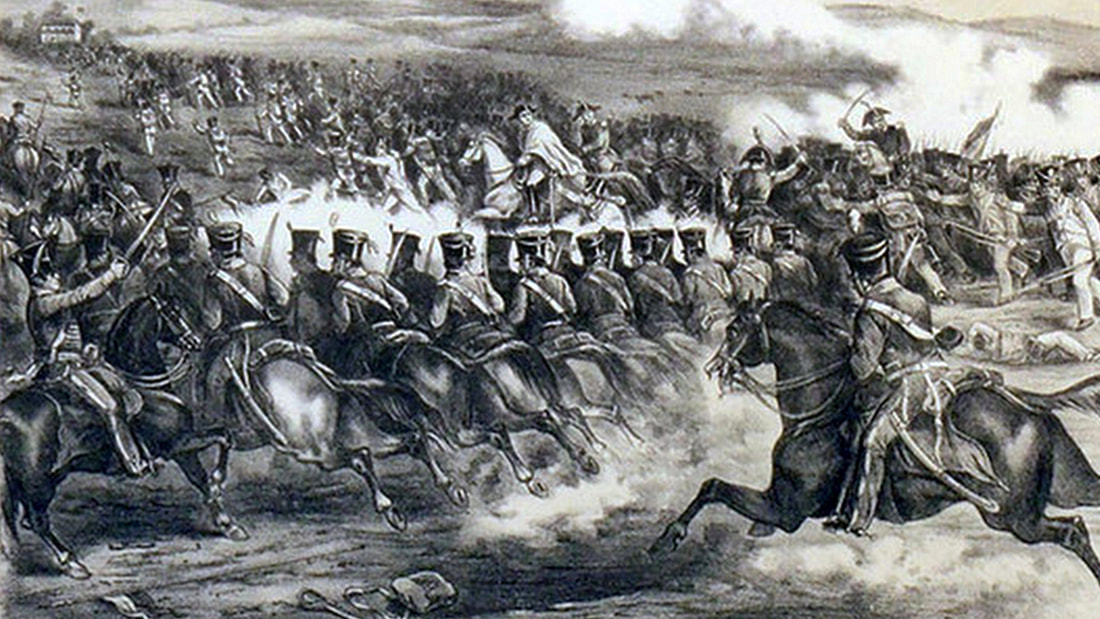
Picture
1818 Maipo, Maipu Battle by Braun.
​The Battle of Maipú was a decisive military engagement fought on April 5, 1818, that effectively secured the independence of Chile from Spanish colonial rule. The patriot forces, a combined Argentine and Chilean army under the command of General José de San Martín, decisively defeated the Spanish royalist army near Santiago, Chile.

Independence War era shakos:

Picture
​Line infantry/cavalry shako with French style, waterproof cover.
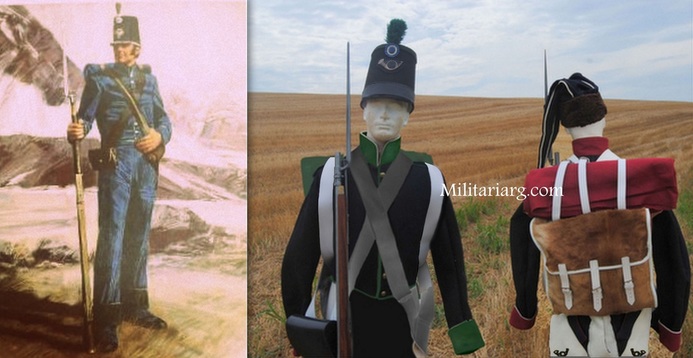
Battle of Carabobo 1821 by Martin Tovar

Picture
Picture
Date: June 24, 1821
Location: The plains of Carabobo, west of Caracas, Venezuela

​Commanders:

 Patriots: Simón Bolívar (overall commander), General José Antonio Páez, and volunteers from the British Isles.
 Royalists: Field Marshal Miguel de la Torre.

Forces Involved: 
Bolívar's army of approximately 6,500 to 8,000 troops (including a British Legion) faced a slightly smaller or comparable royalist force.

Outcome: A decisive victory for the patriot forces, which lasted less than an hour but resulted in heavy casualties for the Spanish army.

Battle of Ayacucho 1824.

Picture
​Paso de Vencedores by Francisco Antonio Cano shows General José María Córdova leading the 2nd Colombian division into their assault.
Picture
Battle of Ayacucho 1824 by Martin Tovar.

​Date: December 9, 1824.
Location: Pampa de Ayacucho (also known as Pampa de La Quinua), near the town of Quinua in the Huamanga province of Peru.

Patriot Forces: Approximately 6,000 men led by Antonio José de Sucre, a trusted lieutenant of Simón Bolívar. The army included soldiers from Peru, Gran Colombia (modern-day Venezuela, Colombia, Panama, and Ecuador), Argentina, and Chile, as well as British and Irish volunteers.

Royalist Forces: Approximately 9,000 to 10,000 men commanded by Viceroy José de La Serna. They held a significant advantage in artillery, possessing ten times as many pieces as the patriots.
The Conflict: Despite being outnumbered and outgunned, Sucre utilized tactical positioning on the high-altitude terrain. The battle began with a Spanish feint, but a brilliant patriot cavalry charge led by José María Córdoba routed the royalist lines. 

Outcome:

Decisive Victory: The victory consolidated the independence movement across Latin America, directly leading to the establishment of the Republic of Bolivia, named in honor of Bolívar.

Picture
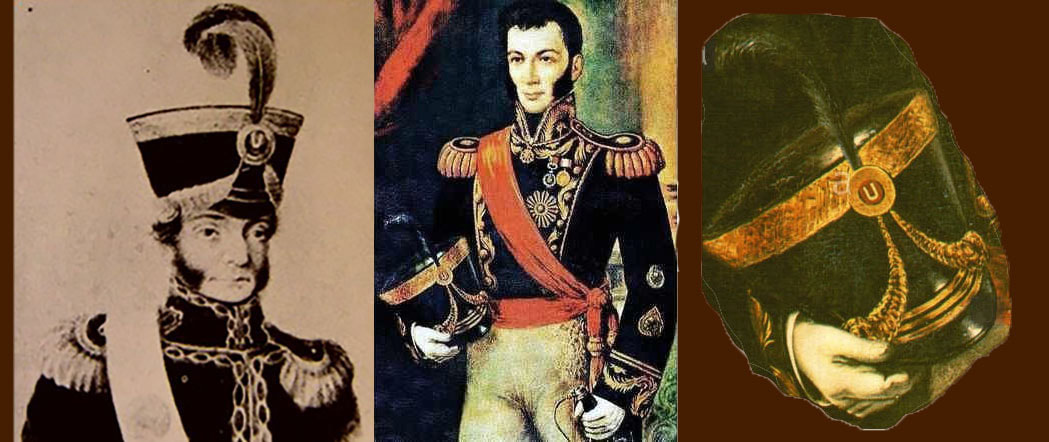
Captain Rufino Guido - Cazadores a Caballo de los Andes by Gil de Castro circa 1816/18 with type British shako.
​Captain Rufino Guido (1796–1880) was an Argentine military officer who played a significant role in the South American wars of independence, particularly in the campaigns to liberate Chile and Peru. He was the younger brother of General Tomás Guido, another prominent figure in the independence movement.
Picture
Gral Arenales (1770 - 1831) with type lancer shako.
​General Juan Antonio Álvarez de Arenales (1770–1831) was a Spanish-born military officer and a key figure in the South American wars of independence, fighting for the United Provinces of the Río de la Plata, Chile, and Peru. He is considered an Argentine and Bolivian general for his significant contributions to those nations. 

Picture
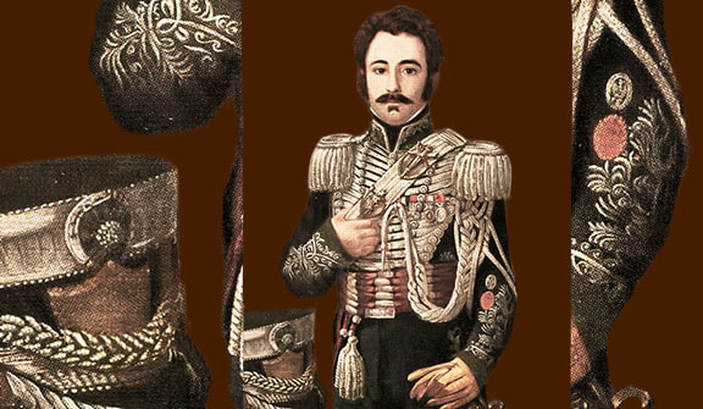
Colonel José Valentín de Olavarría (1801–1845) was a notable Argentine military leader and patriot who fought in the South American wars of independence. He served in key campaigns led by José de San Martín and Antonio José de Sucre.

Picture
Grenadier Regiment on Horseback with colback. General Jose de San Martin. Painting by unknown author.

Argentine Confederation Era:
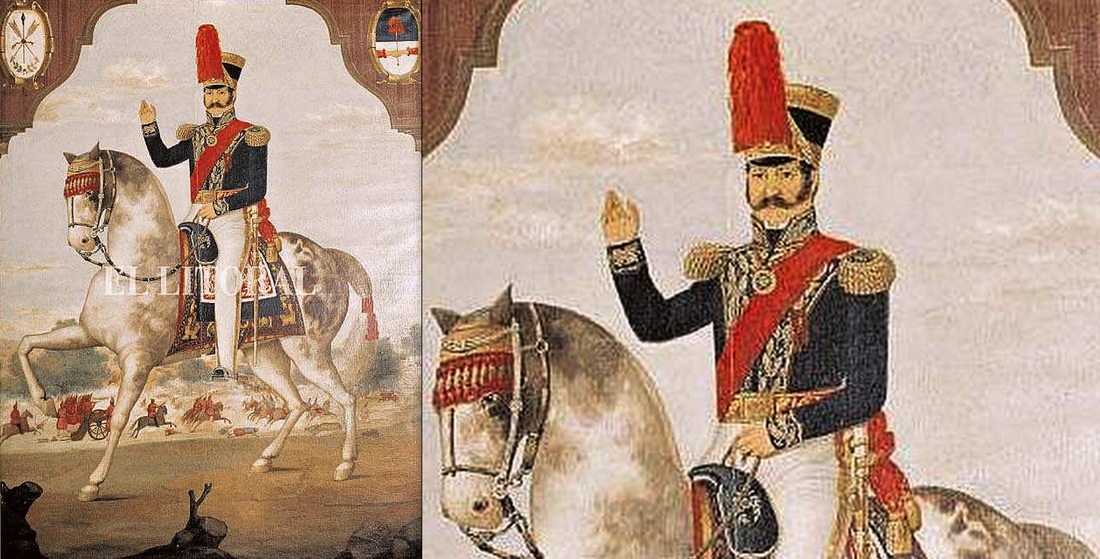
Picture
Oil of Felix Revol preserved in the Historical Museum of Santa Fe with the image of General Pascual Echagüe, governor of the province to the time of the battle of Quebracho in June 1846. Photo: ellitoral.com
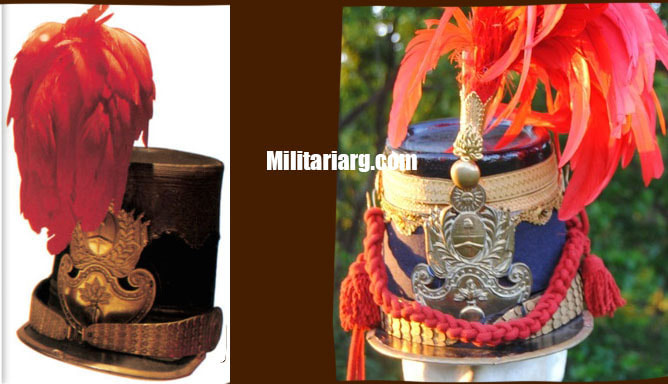
Picture
On the left, an original Argentine-Confederation Shako, possibly in some Montevideo Museum or Collection; Note the wavy gallon,which probably came from the bicorn pattern for Superior Officers. Photos: Kalipedia.com
Reproduction n the right.

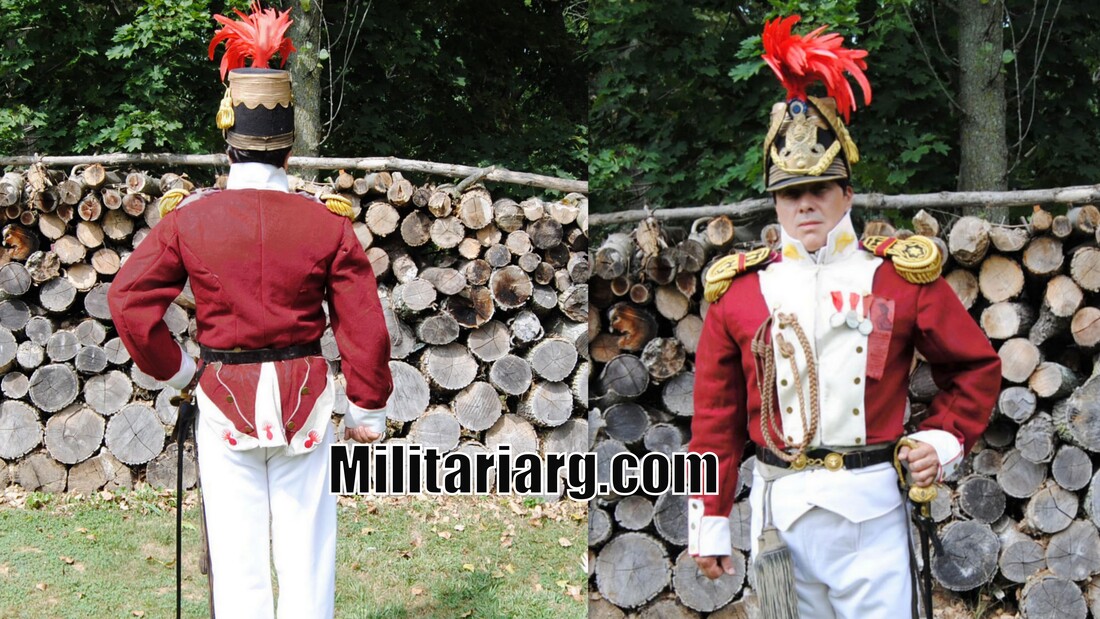
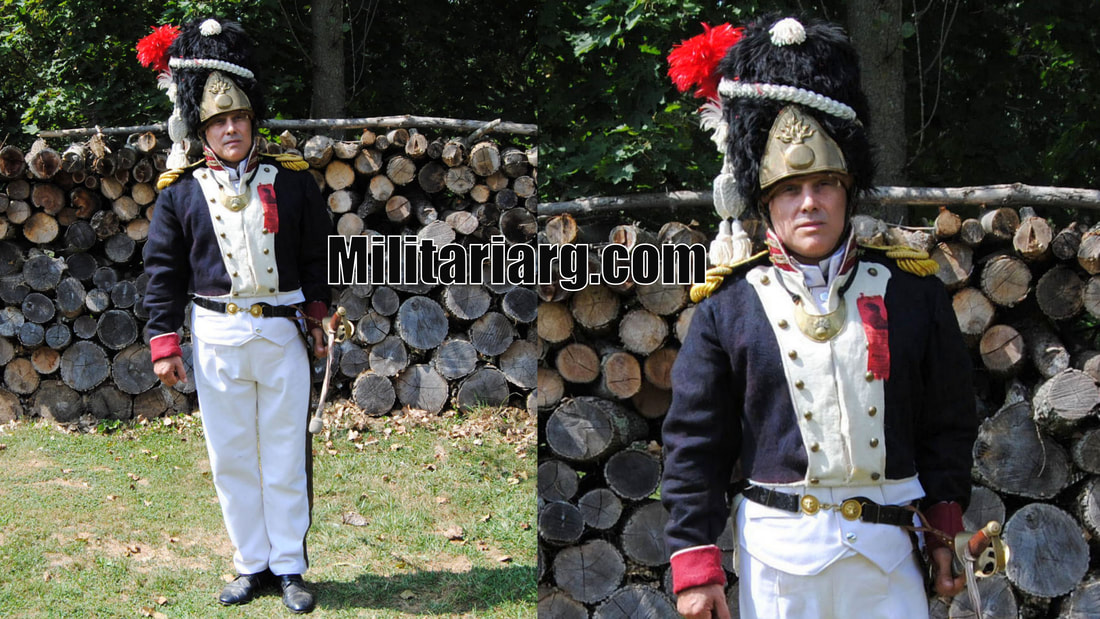
Argentine Confederation Era Replica Uniforms:
Picture
Picture
Picture
Picture
Picture
Picture
Picture

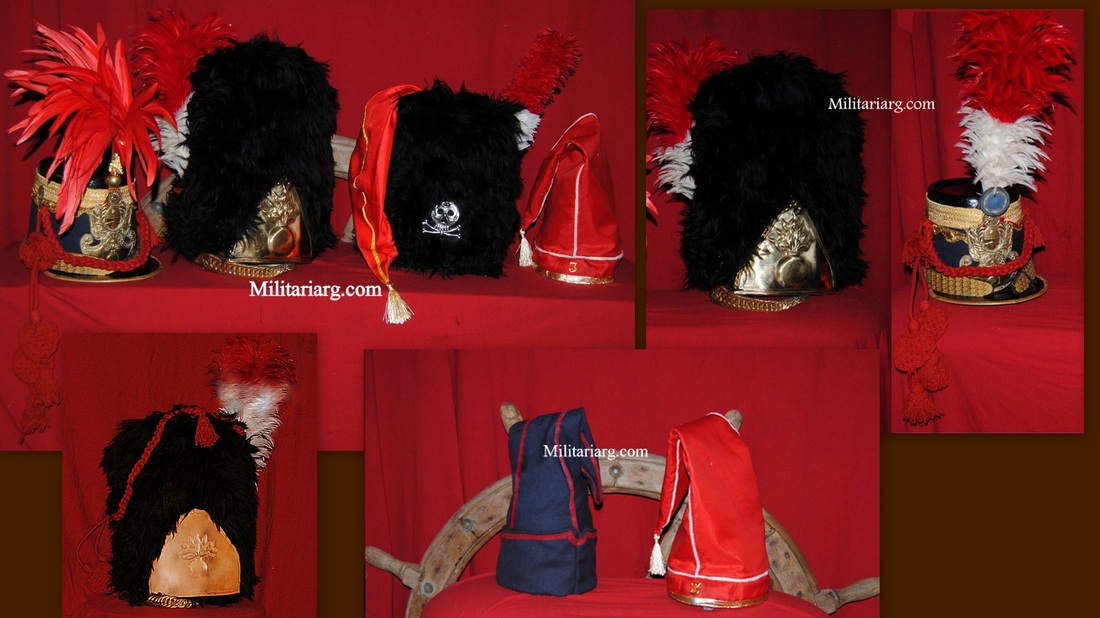
​Bearskin Morrion de pelo, bonnet à poil'. Btg Guardia Argentina (Replica)
Picture

Picture
​19th - Confederation Era. Argentine Shako Rosette.

Mirliton or Miter Pattern:

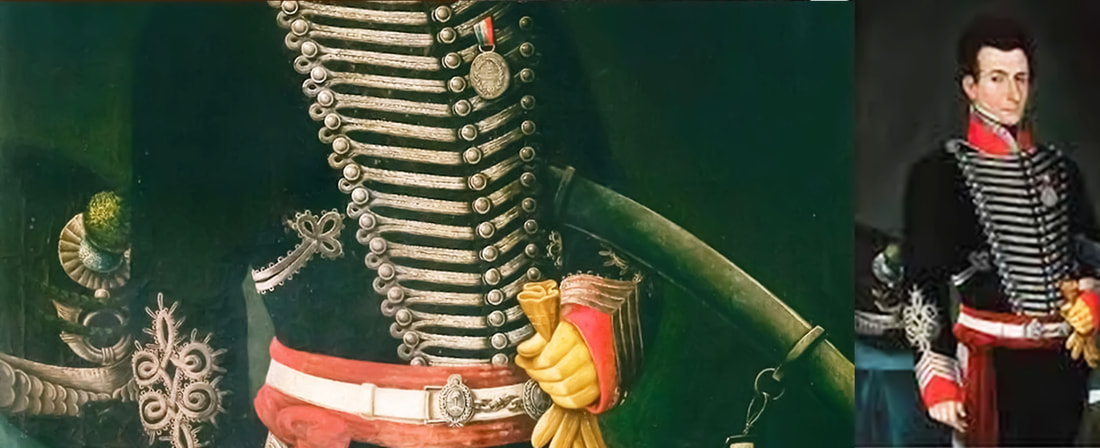
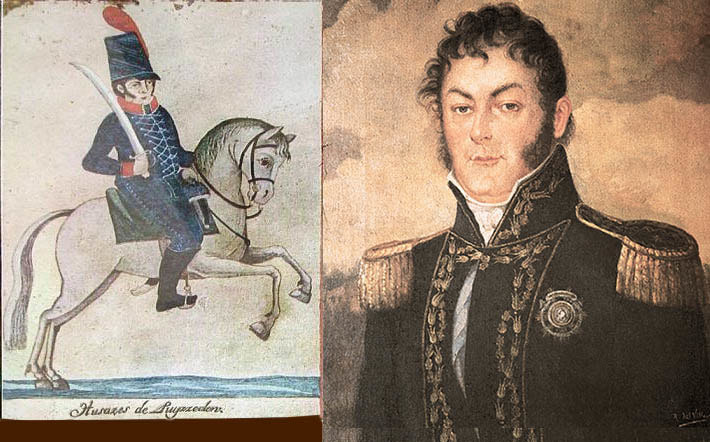
​1807 - 1809. King's 1st Buenos Aires Hussar Squadron (Husares de Pueyrredon)
Picture
Juan Martín de Pueyrredón (1777–1850) was a crucial Argentine general and politician during the South American wars of independence. He is best known for his role in repelling the British invasions of the Río de la Plata and for serving as the Supreme Director of the United Provinces of the Río de la Plata from 1816 to 1819. 

 In 1806, he was a leader in organizing local resistance against the first British invasion of Buenos Aires. He formed a volunteer cavalry regiment, the Hussars of Pueyrredón (Húsares de Pueyrredón), which participated in the recapture of the city and the subsequent defense against the second invasion.

Picture
Mirliton pattern shako with visor.

The Combat of Perdriel was a minor but significant skirmish that occurred on August 1, 1806, between local militia led by Juan Martín de Pueyrredón and British troops during the First British Invasion of the Río de la Plata.
The British had captured Buenos Aires in June 1806. Juan Martín de Pueyrredón was actively recruiting volunteers to form a local resistance force to counter the invasion.
The engagement took place at the Chacra de Perdriel (Perdriel farm) near Buenos Aires, where the local forces were training.

Forces Involved:

Local Militia: Around 300 poorly armed gauchos and a few artillery pieces, led by Pueyrredón.
British Troops: Soldiers, primarily from the 71st Highlanders Regiment (Scots), under the command of William Beresford.

The local forces were quickly overwhelmed and dispersed by the better-armed and disciplined British soldiers. Pueyrredón himself narrowly avoided capture when his horse was killed by a cannonball, escaping with the help of a local farmer.

Picture
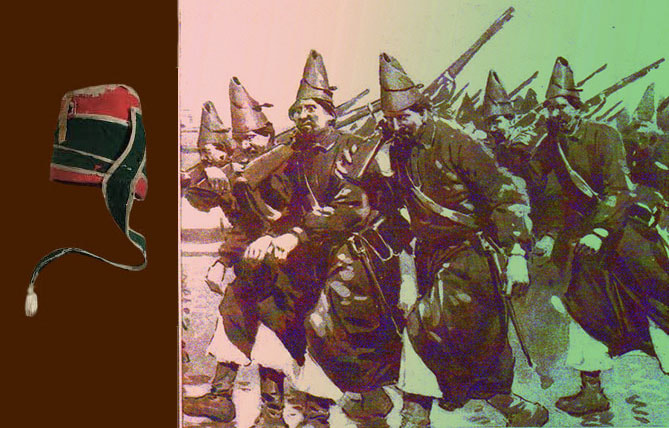
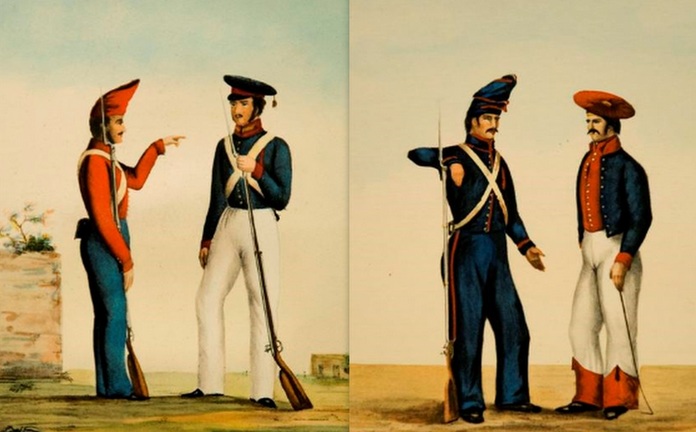
On the left in the photo above, a French "Mirliton" from the late 18th century. On the right, the humble infantry of the Argentine Confederation (1829 - 1852) in an early twentieth century illustration. Like this drawing, many drawings and paintings reproduce the image of this type of rigid bonnet, but without determining what type of headgear it is. At first glance it looks like a fatigue cloth cap, called at the time "Cap de Manga", but it would not be the same. This pattern is rigid and maintains its shape like a shako. It could have been a Mirliton, a simple conical shaped shako, covered by a continuous band of felt. Some old documents speak of a conical shako with a viewer, towards the beginning of 1830, but they would not have been of the model of the French model 1837, since they were earlier. Probably these conical shakos with visor and without visor, would have been successors in Argentina of the classic Mirliton of the Husares, but completely conical.  Or it could have been another, unidentified shako.
Picture
Picture

Picture
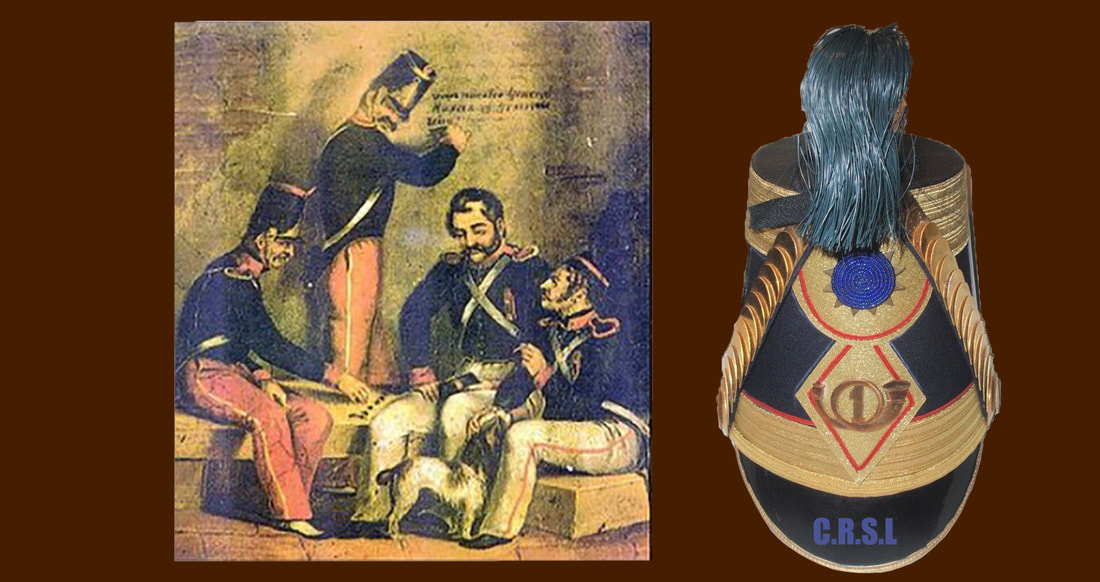
​ On the left, soldiers of the Argentine confederation. Painting from that time. National Historical Museum.
Right: Uruguayan Army shako, from the 1st Florida Infantry Battalion.
​
As it is known, Argentina and Uruguay have a common history until their separation. During the  government of Juan Manuel de Rosas while in charge of the Argentine Confederation, an intense struggle was fought in support of the Federales of the Oriental Band against the Unitarians of Montevideo until the defeat of the Argentine Confederation in 1852. This Uruguayan shako is very similar to those of the time of the Argentine Confederation, probably inspired by those civil wars of the 19th century. The 1st Florida Battalion is in charge of the custody of the presidential palace in Montevideo. Photo of item C.R.S.L
Picture
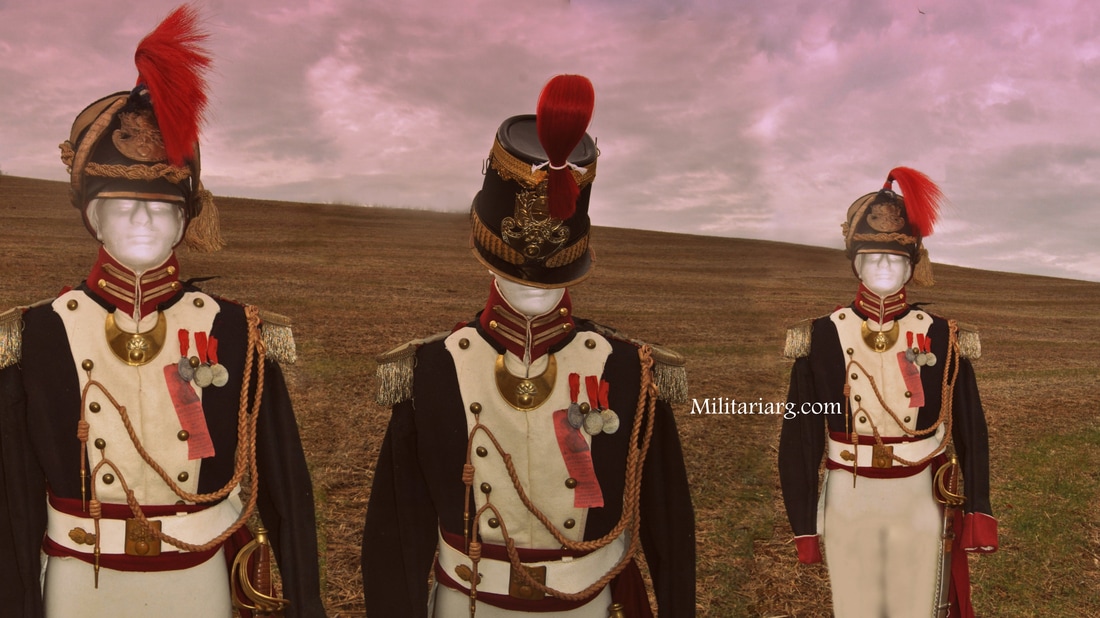
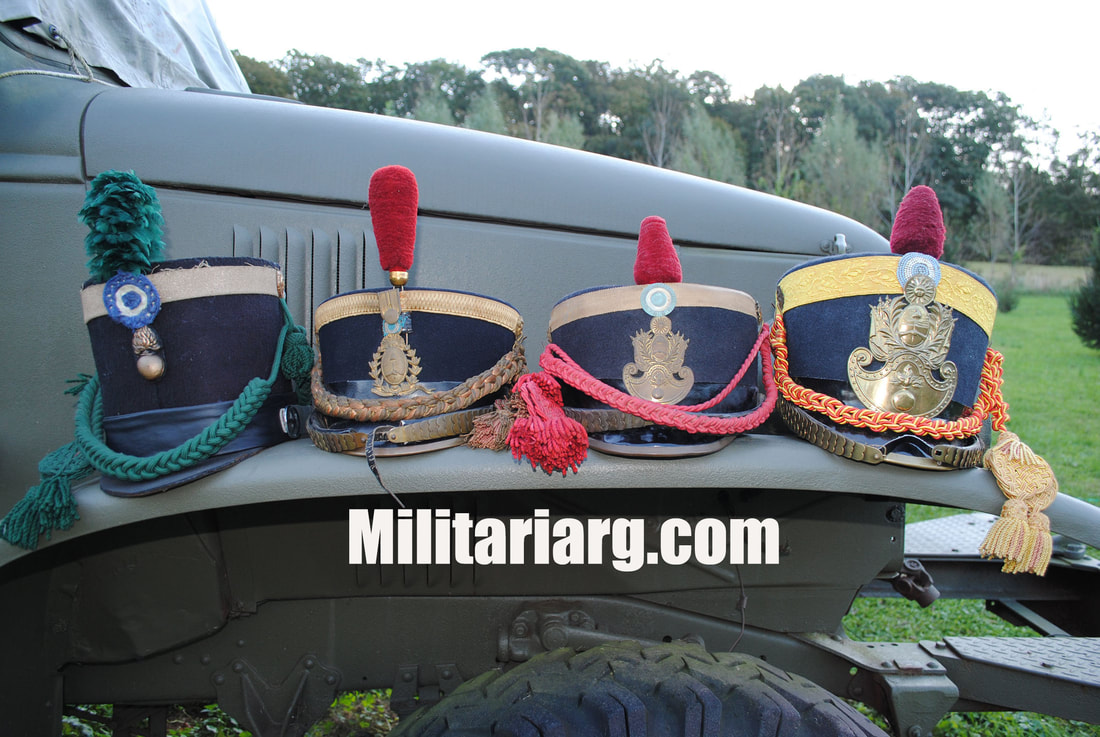
1) Horse-Grenadier San Martin 1812 pattern replica.
2 - 3 - 4) 1826 pattern Grenadiers on horseback of the Presidential Escort "Rivadavia": 1910 model. 1940s Peron Era and 1970/80 shakos

 Shako Replica 1812 Pattern
Picture
Picture
Picture
Picture
Picture

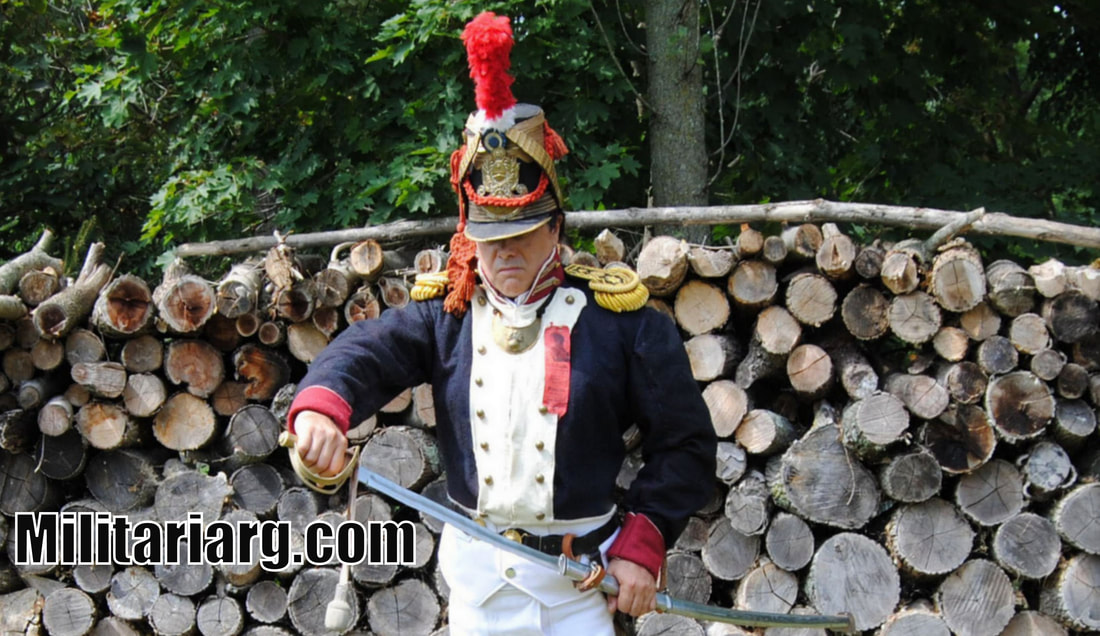
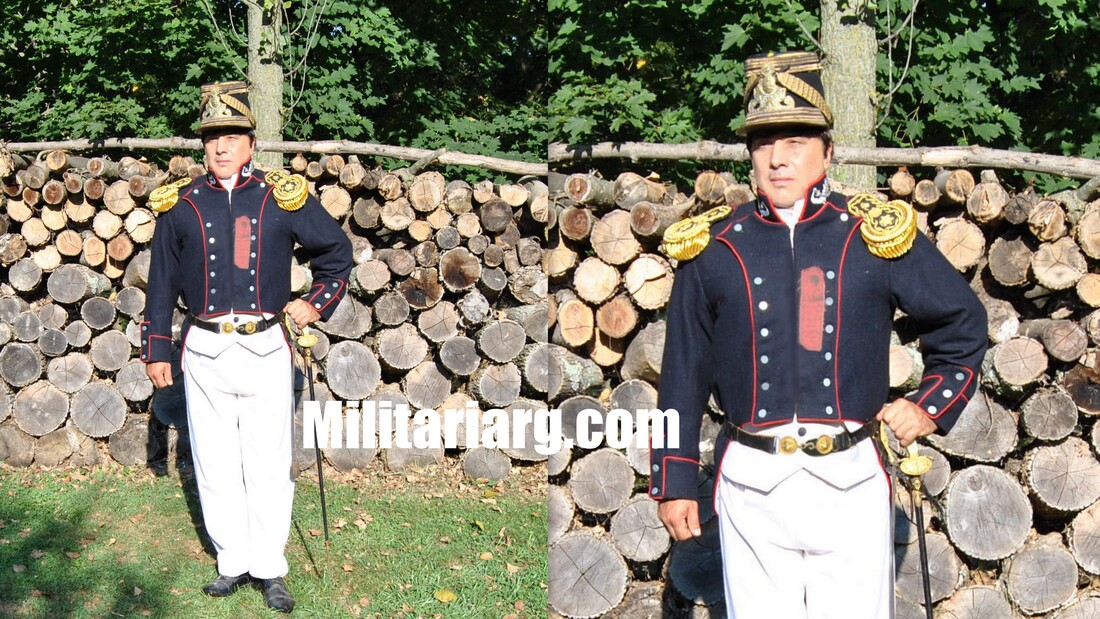
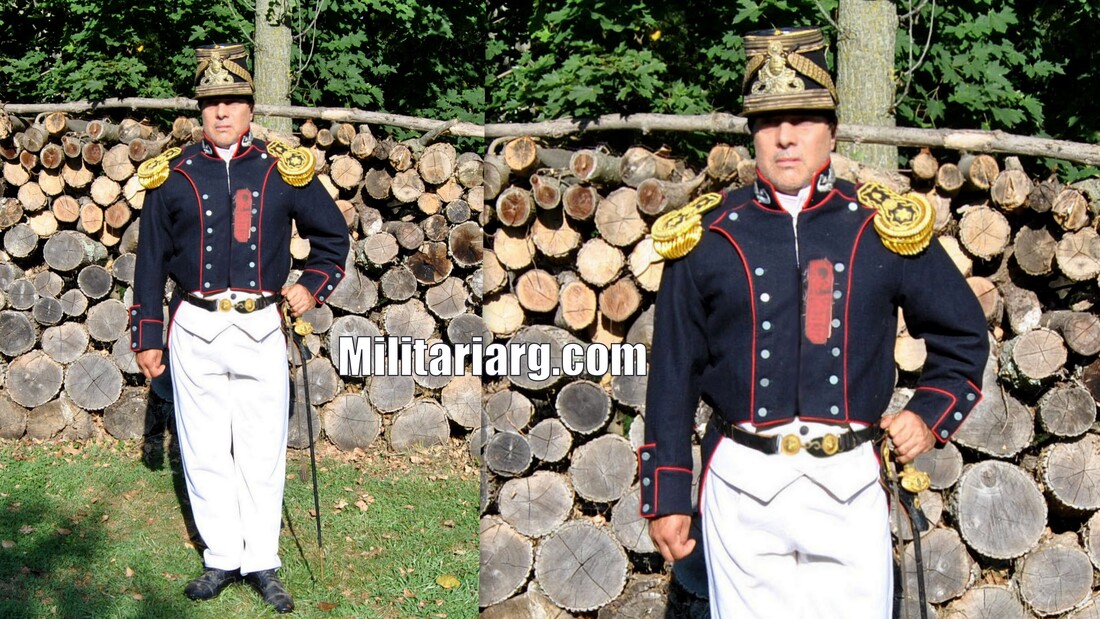
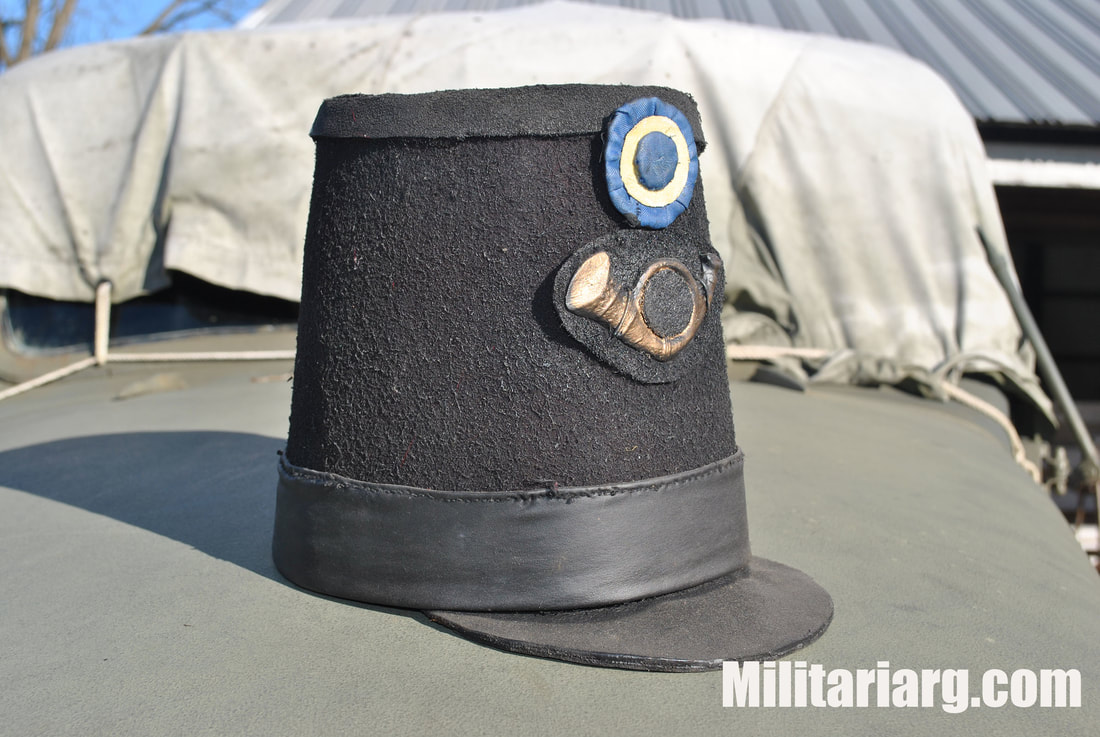
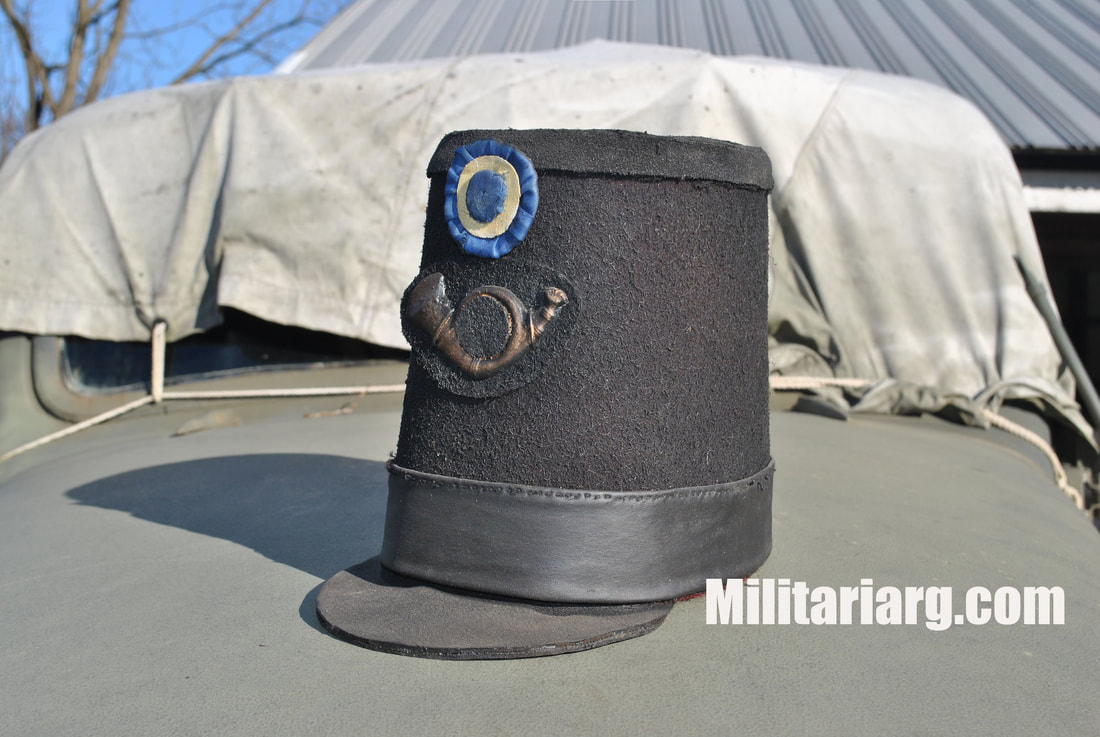
1804/1815 British type "Stovepipe" shako" replica.
Picture
Picture
Picture
Picture
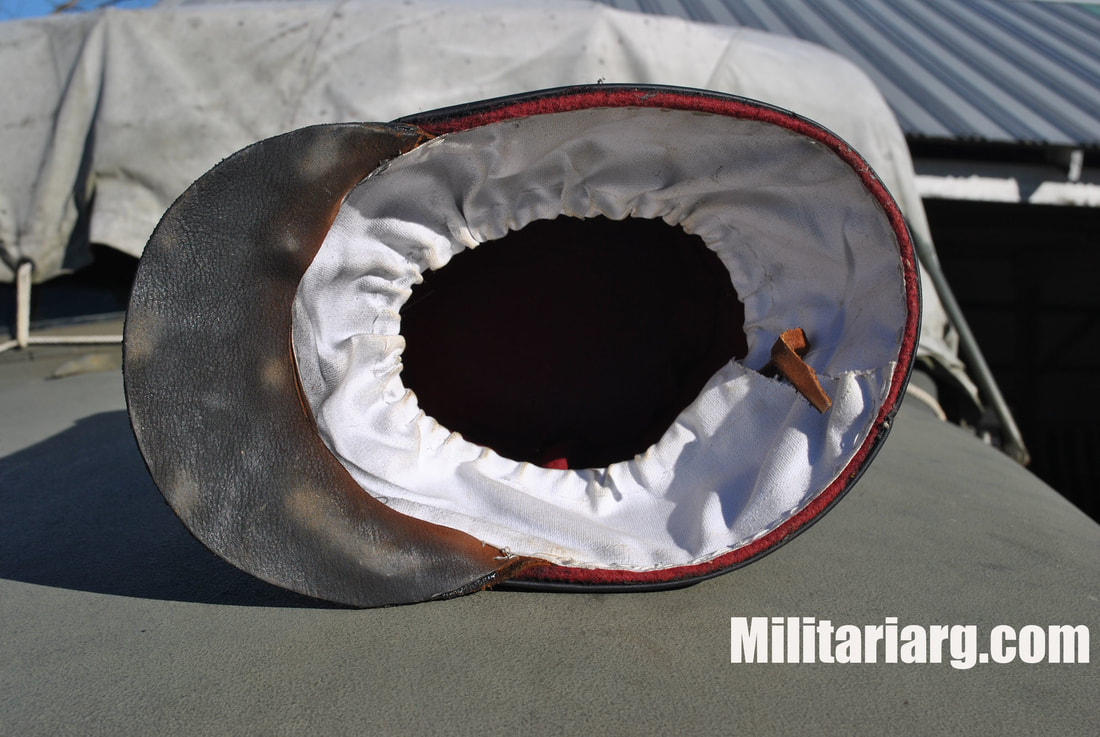
The shako on the left is a reproduction of the Cazadores de los Andes Chasseurs of the Andes (Light Infantry). The shako style is the British foot regiment light infantry
Picture
Next to San Martín is drawn a Second Lieutenant of the Cazadores de los Andes Battalion. The officer is wearing the shako type "Stovepipe". The Armies of Bolivar and San Martin. Osprey. Series Men-at-Arms.
​
In the South American Wars of Independence, the stovepipe shako served as a distinctive link between European military tradition and the revolutionary forces of Simón Bolívar and José de San Martín. 

British Legion "Rifles" (Bolívar) 
The British Legions recruited by Simón Bolívar were largely equipped with British-pattern gear, reflecting the origin of the volunteers and their suppliers. 

San Martin's Cazadores de los Andes". Why the Stovepipe?
For the British Legion, it maintained their professional connection to the British Army; for San Martín’s troops, it symbolized their transformation into a modern, disciplined regular force.
Picture
Stovepipe shape shako ( type 95th rifles). Seargeant Venezuelan Rifles (British) 1818. Series Men-at-Arms. Osprey "The Armies of San Martin and Bolivar. 
The British Legions  were foreign volunteer units composed of over 7,000 veterans and adventurers mostly from Great Britain and Ireland who fought under Simón Bolívar during the Spanish American wars of independence. 
Often called the Albion Legion by Venezuelans, these soldiers provided critical military professionalization and combat experience to the Patriot forces between 1817 and 1824.

The "Stovepipe" Shako (1800–1816) 
While most of the British Line Infantry switched to the "Belgic" (or Waterloo) shako around 1812, the Rifle regiments famously kept the Stovepipe model throughout the entire Peninsular War and at Waterloo. 

It was a tall, cylindrical cap made of stiffened felt with a leather peak. Unlike the brass plates worn by line infantry, the Rifles wore a bronzed (blackened) bugle horn badge.
Bugle badge. This symbol represented their role as light infantry. Because they operated in skirmish chains rather than tight blocks, they used the bugle to communicate commands over long distances and through the smoke of battle.
Instead of a white-over-red tuft, the Rifles wore a green tuft (or plume) on the left side or front, matching their iconic green jackets.
The shako was entirely black, including the badge, to maintain the "camouflage" effect of the Green Jackets, avoiding any shiny brass that could give away their position to French scouts.

Why a Bugle and not a Trumpet?
In British military terminology, there is a distinction:
Trumpet. Associated with the Cavalry.
Bugle. Associated with Light Infantry and Rifles. 
The badge on the shako is technically a "crowned bugle horn" with strings.

1830 Pattern

Picture
Picture
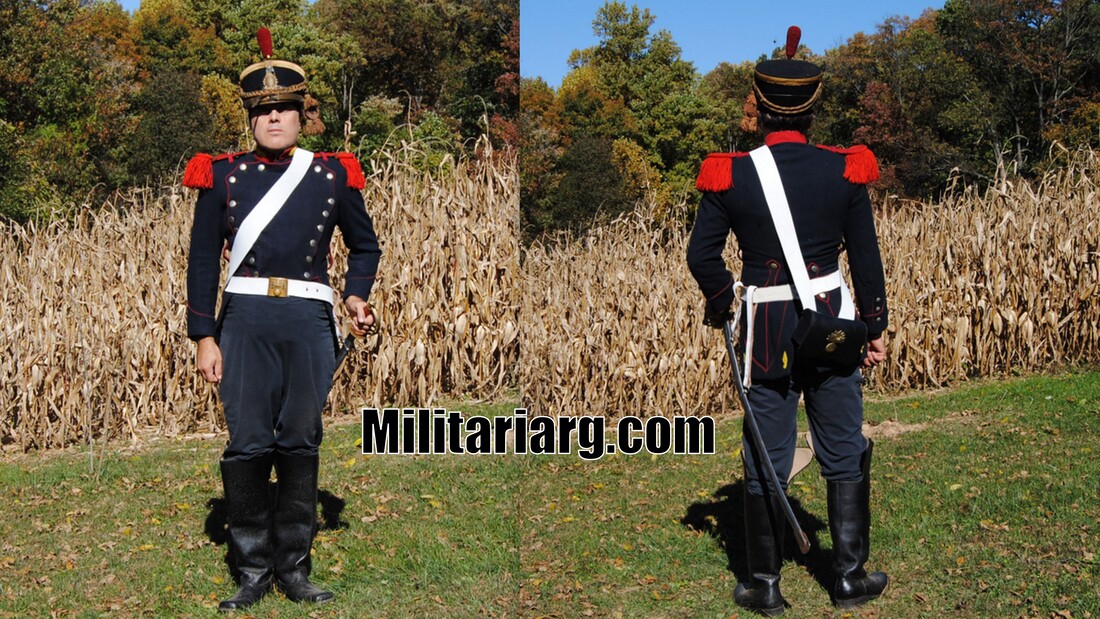
When the remains of General San Martin were repatriated in 1880, a corps of guards for his mausoleum was created. This unit had obsolete (historic) French uniforms from the mid-19th century, and among these, came the old French shako model 1830.

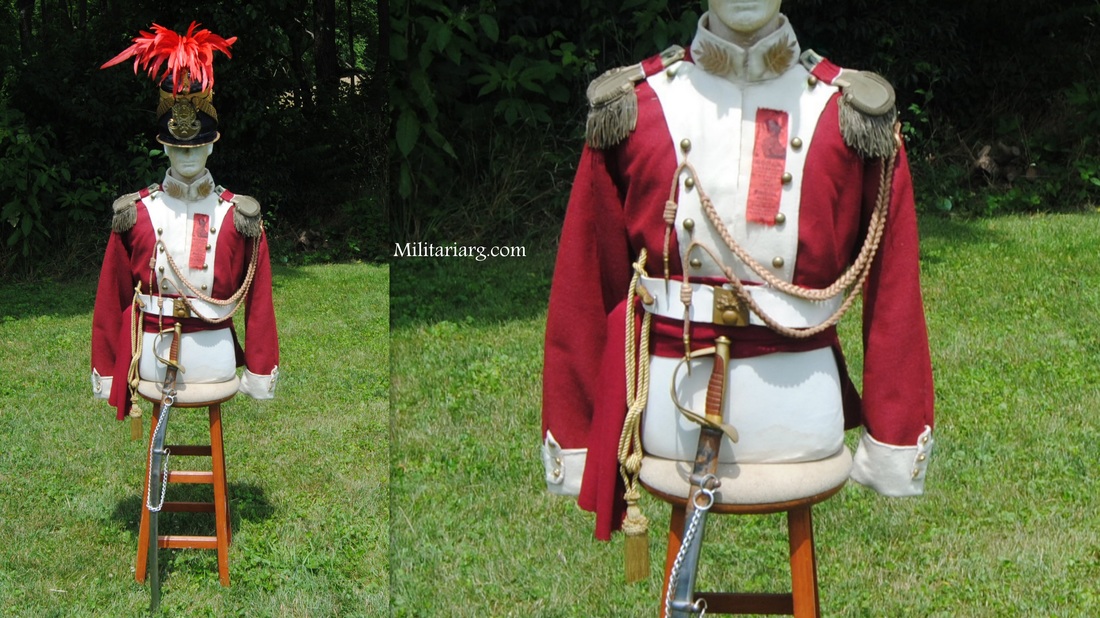
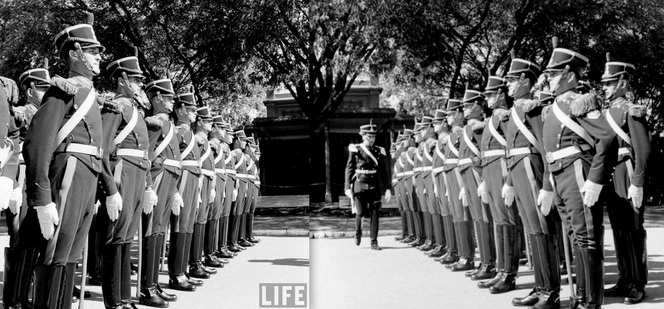
1826 - Horse Grenadier Custody of Presidente Rivadavia. 
Picture

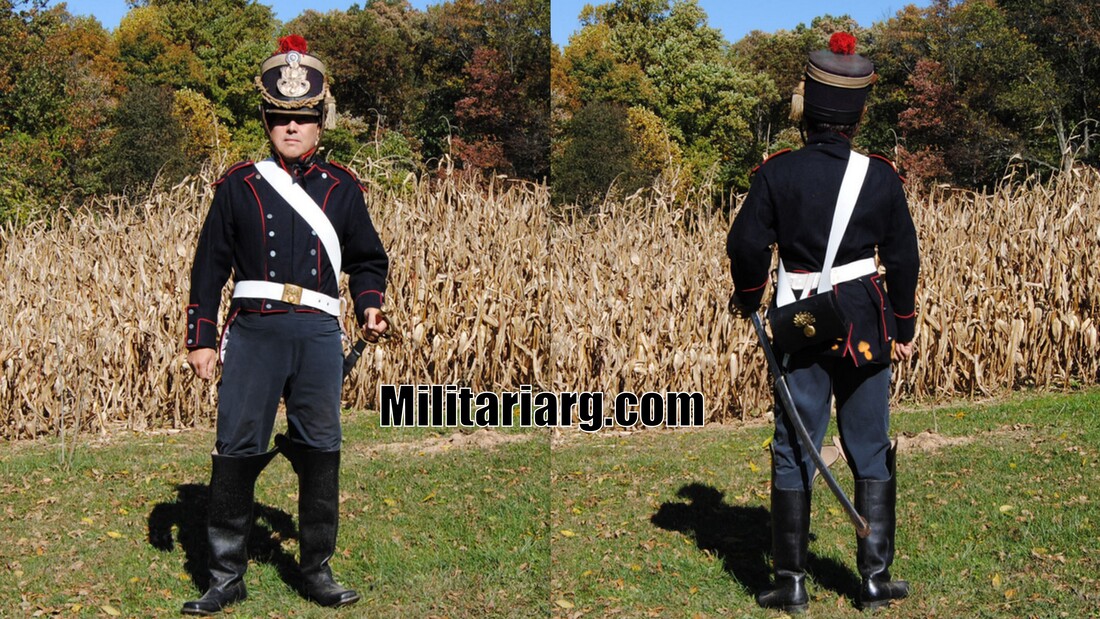
1909 - 1910. ​Recreation of the Historic Corps of Grenadiers on Horseback based on the 1826 pattern (Custody of President Rivadavia)
Picture
​The recreation of the historical uniform of the mounted grenadiers of San Martín is based on the uniform of the grenadiers who acted as guards of Rivadavia. ​Bernardino Rivadavia was a significant political rival and opponent of José de San Martín. While both men were involved in the Argentine independence movement, their differing political ideologies and visions for the new nation led to a long-standing and well-documented conflict.
Picture
Picture

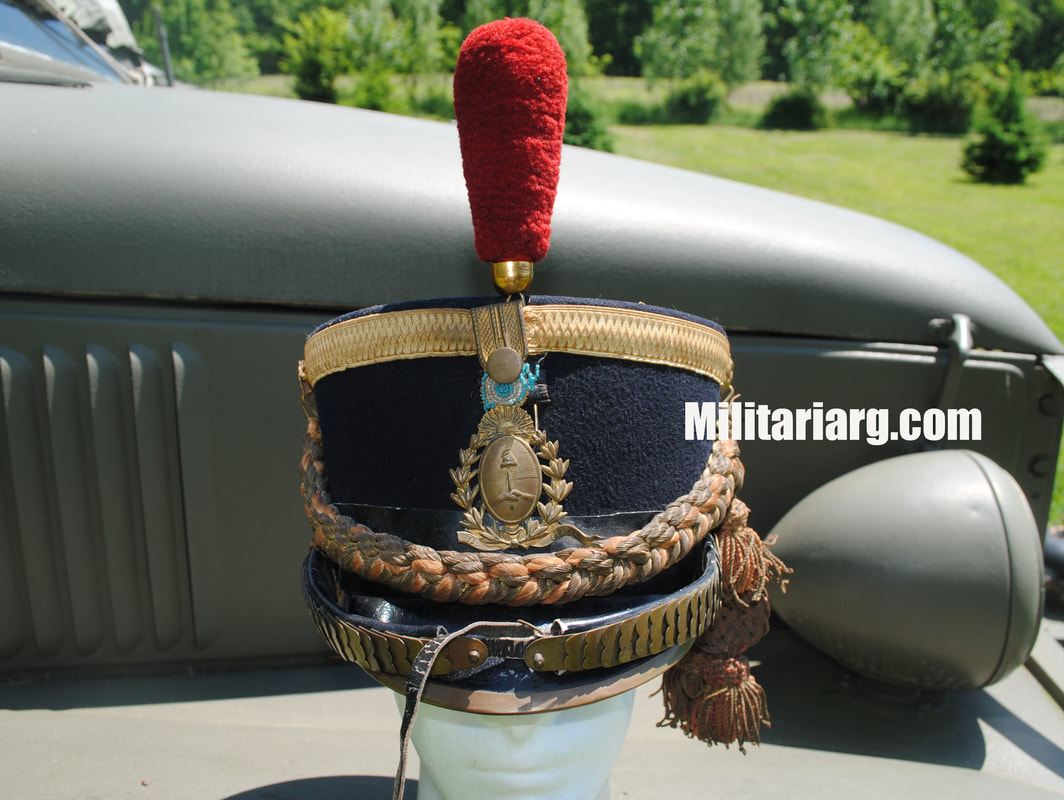
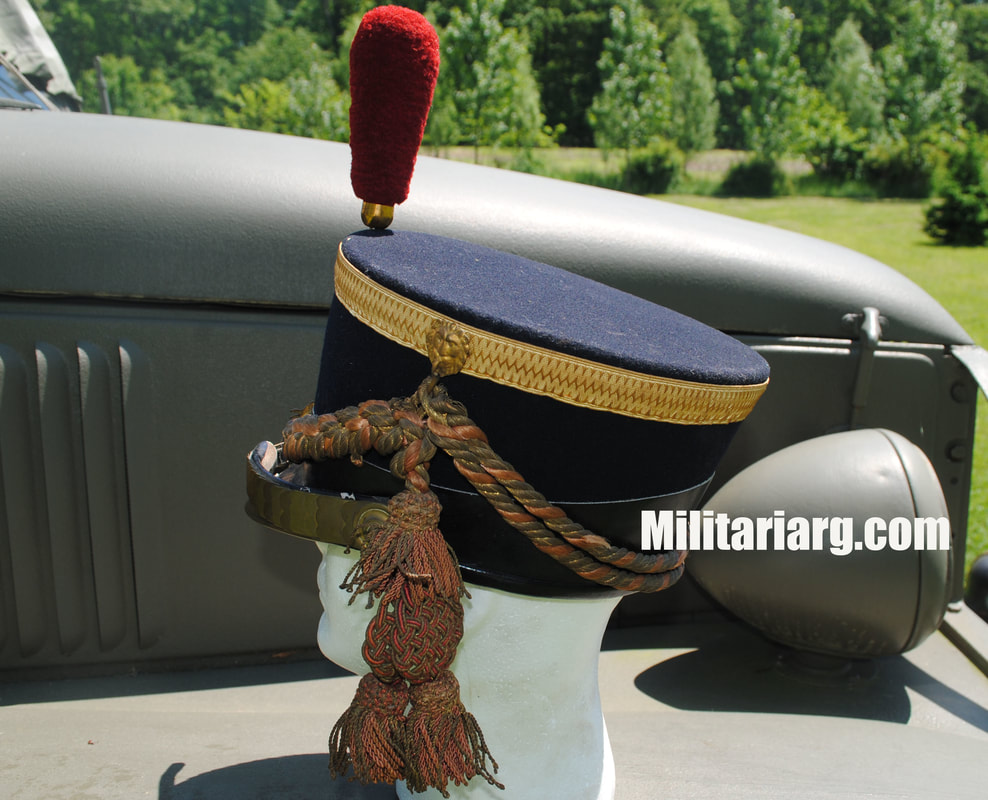
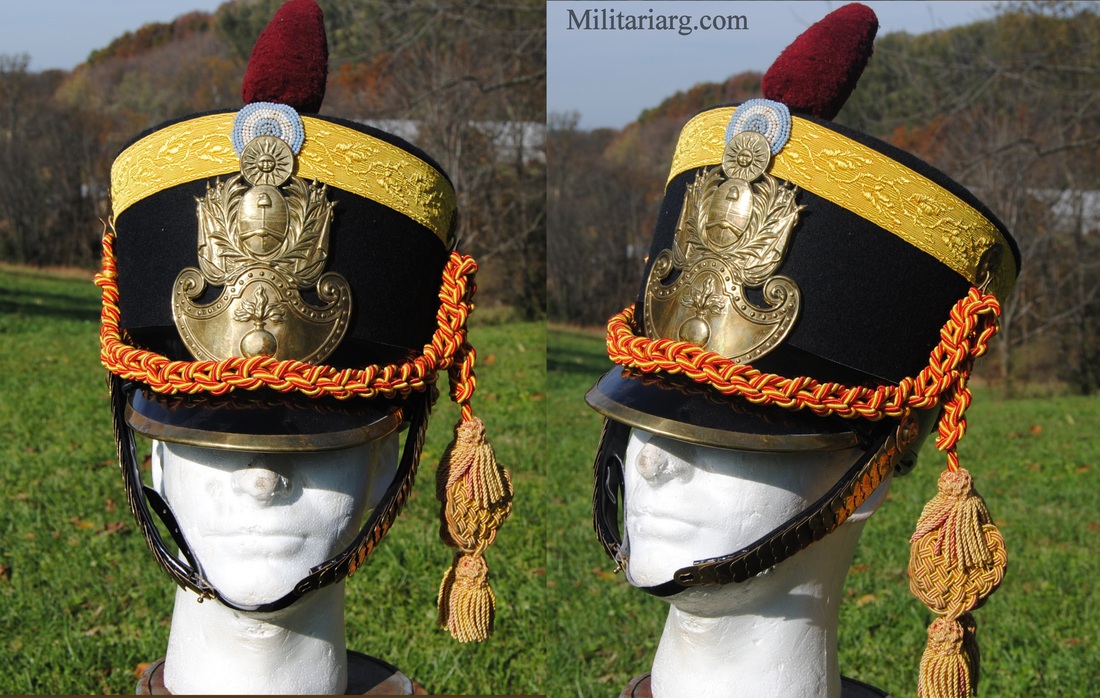
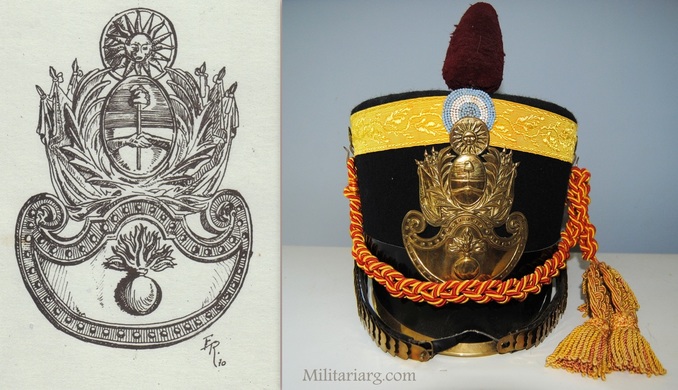
Model 1910 Grenadier Shako.

Picture
Picture
Picture
Picture

1940s "Peron Era"

Picture
Picture
Picture
Picture

Picture
Left: Model 1936 Uniform. Center and Right: Model 1967 Uniform. R.R. M. 44
Picture

1980s Grenadier Shako

Picture

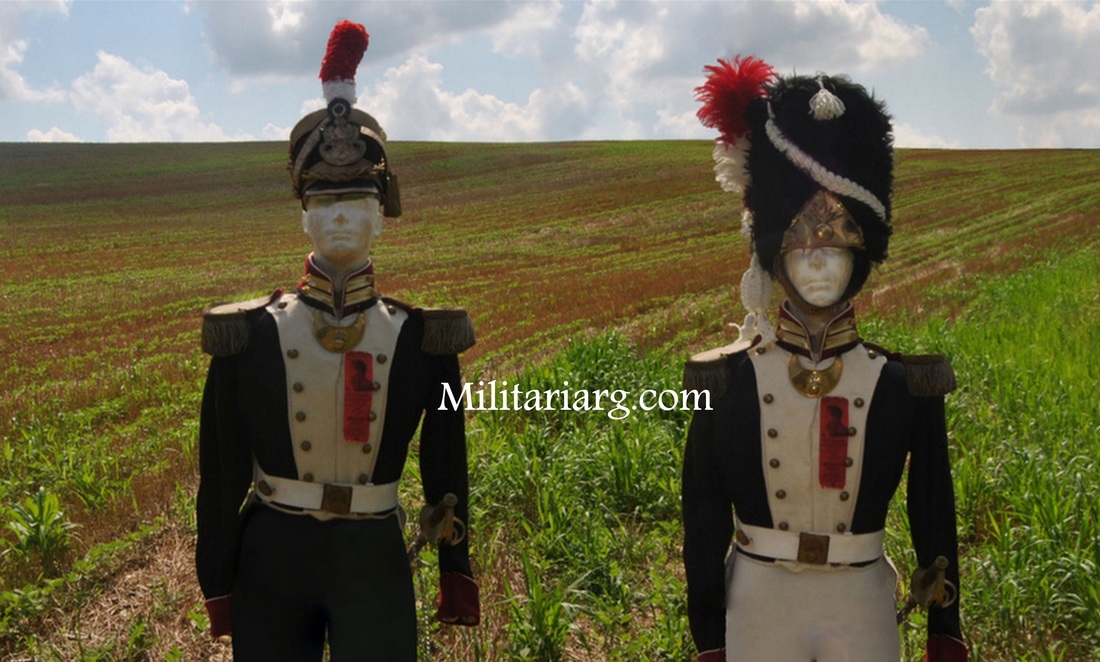
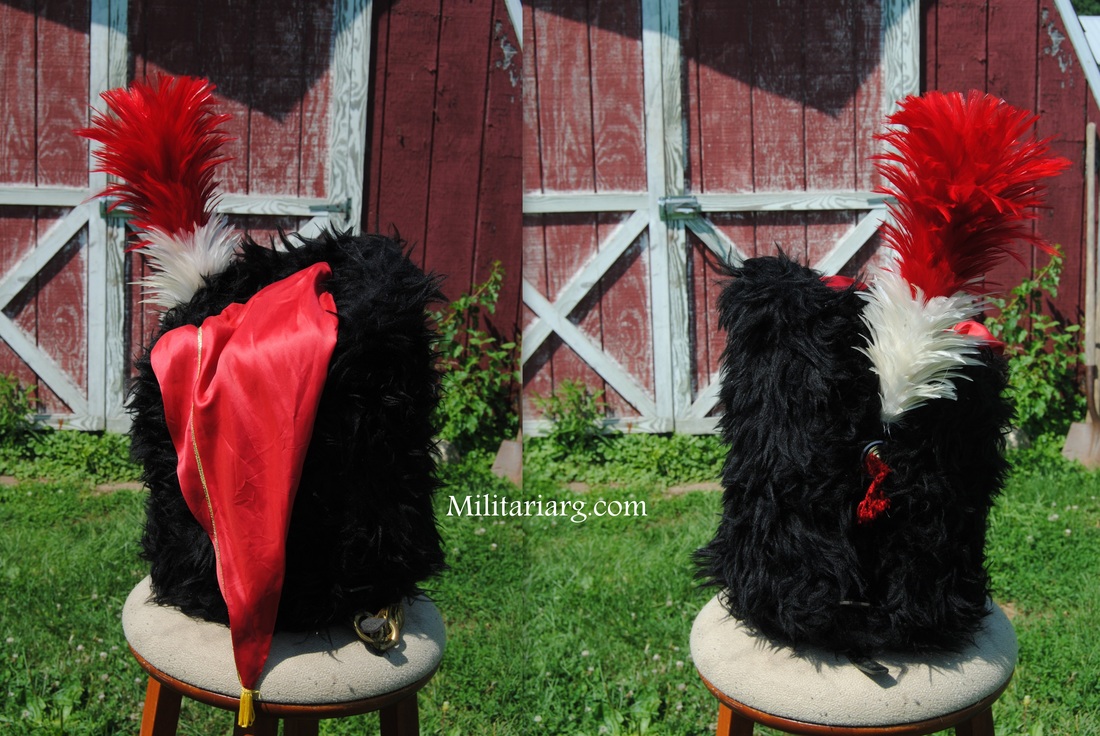
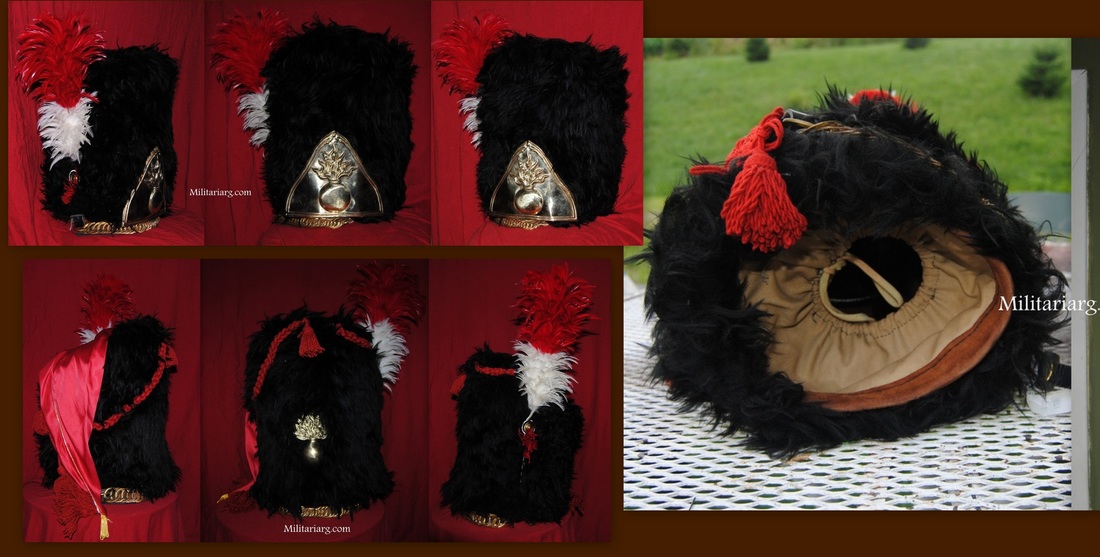
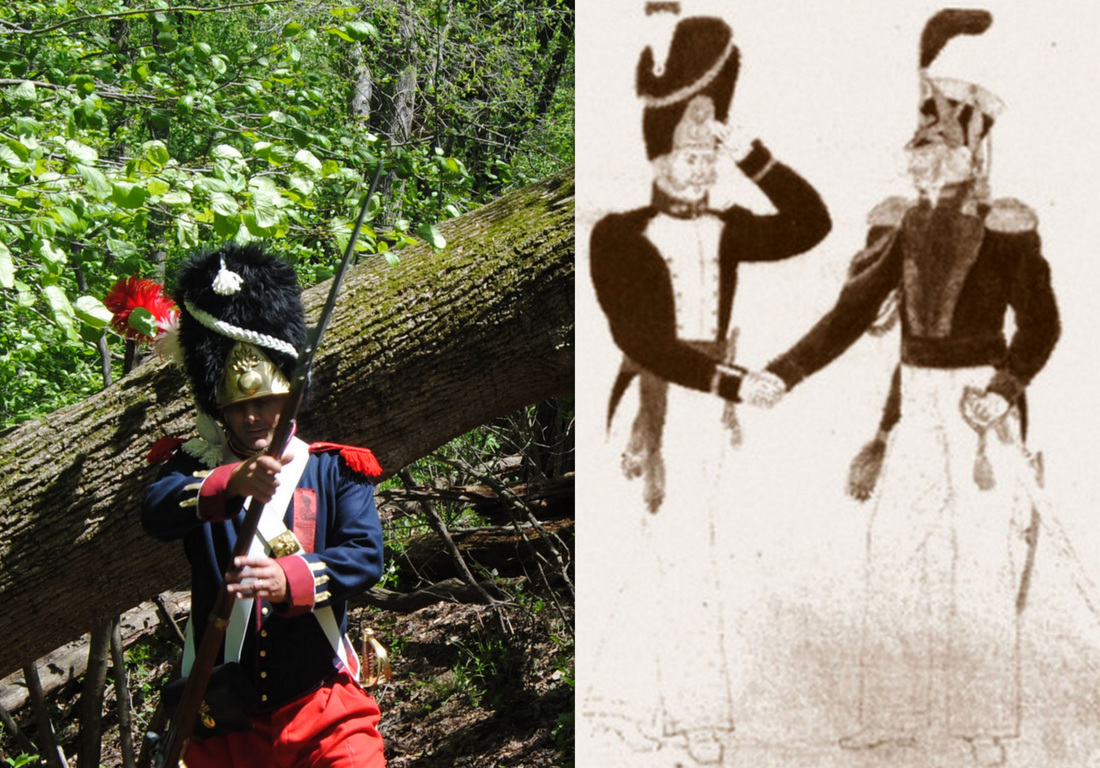
Guardia Argentina Grenadier Bearskin - Bonnet de Poil - Bonnet d'Ourson Oursin Reproduction Replica
Picture
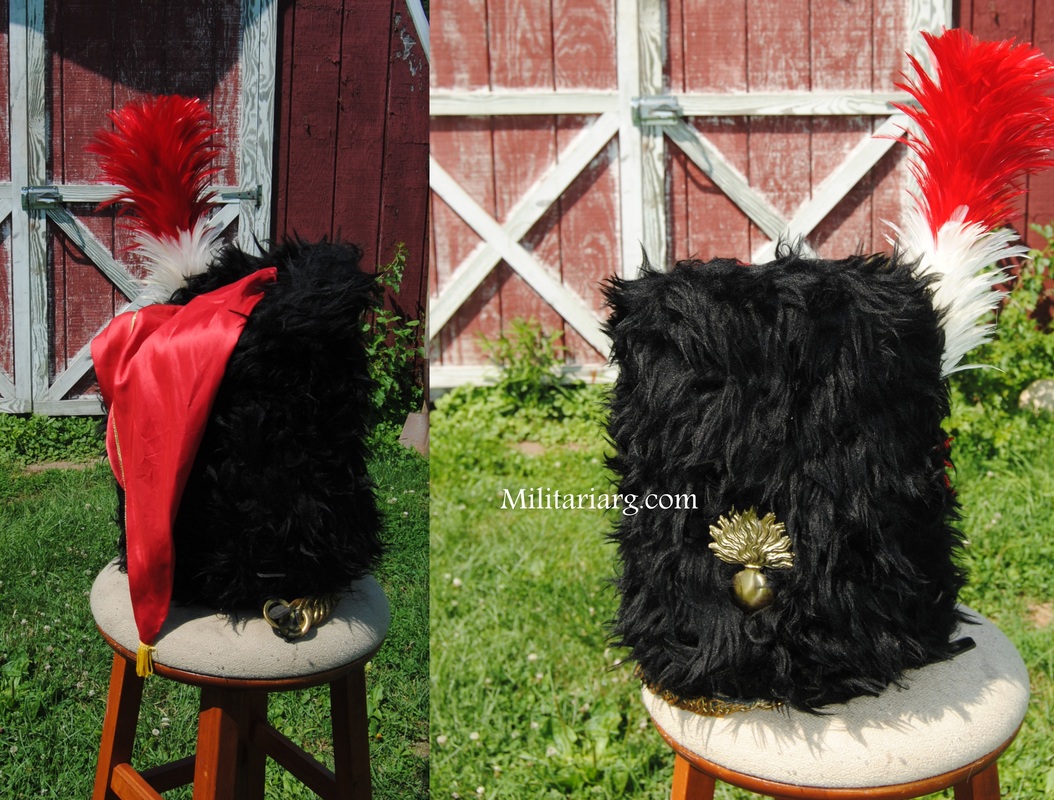
Officer's Bearskin Shako Replica. (1791 Type French Foot Grenadier Plate).
Picture
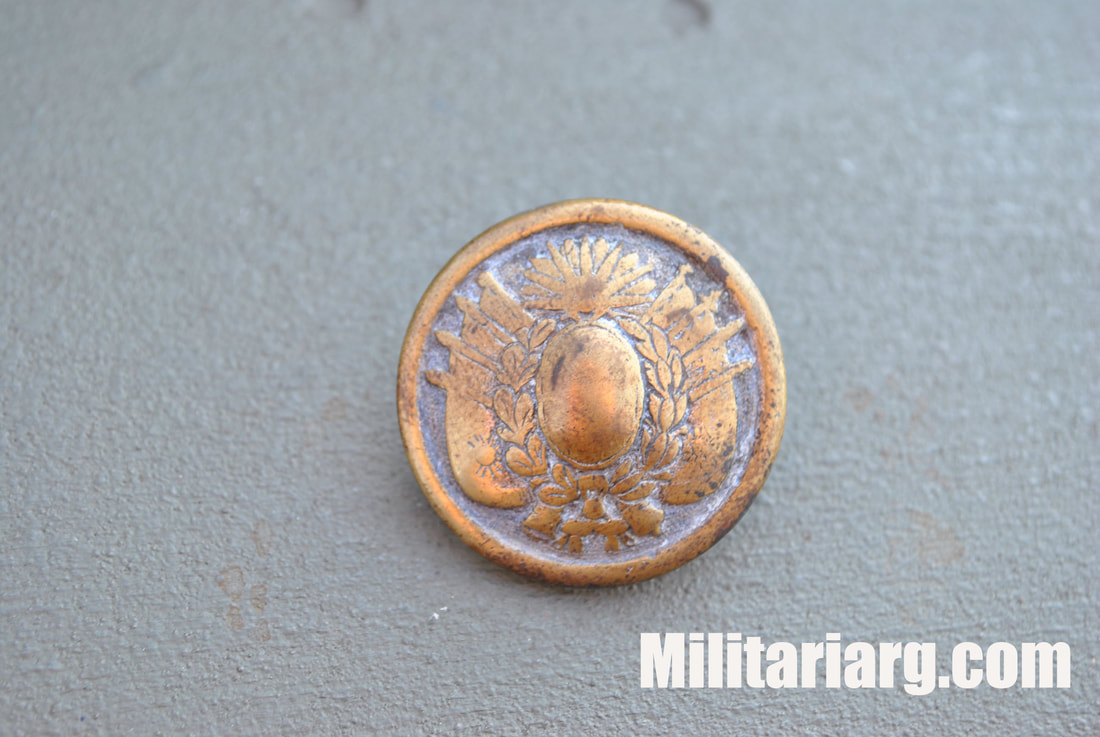
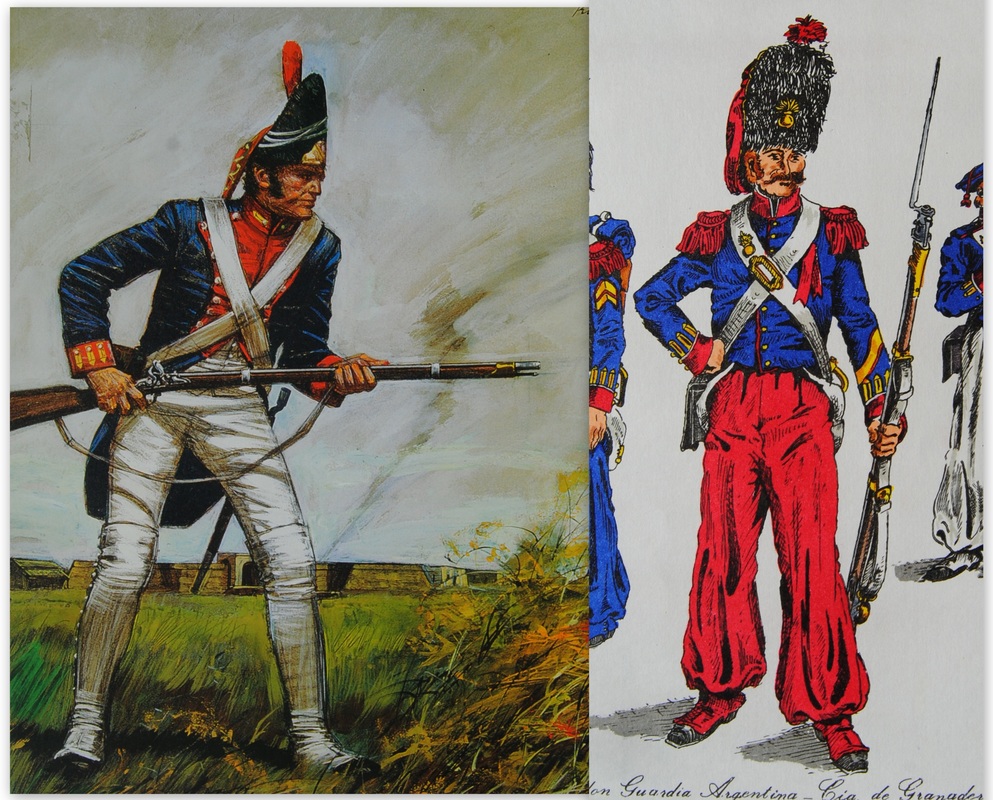
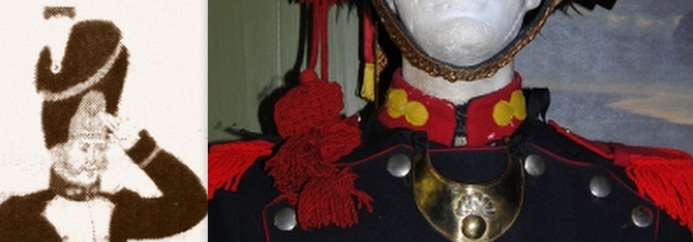
Based on the above drawing by Fonteneau, I believe the collar grenades of that era are very similar to those used by today's grenadiers.  The shako is French bearskin with a plate from the late 18th century, typical to foot grenadiers of the time.  ​
Picture
Picture

Picture
Comparison between a Felipe VII Grenadier (Buenos Aires Colonial era 1810-1811) and Argentina Confederation era, Grenadier 1843-1849.  Note the details on the sleeves.  They seem to have characteristics in common.  The ranks did not change much between eras.
Picture
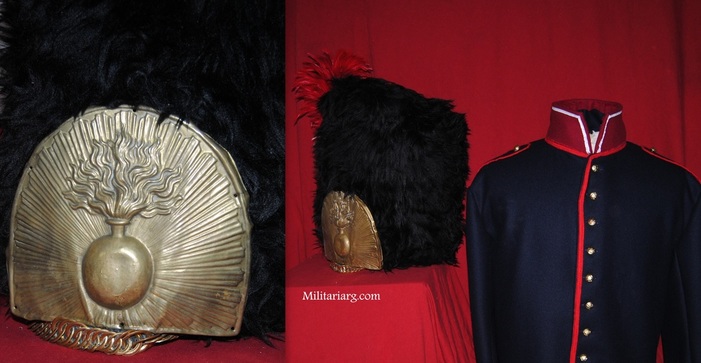
Grenadier Plate (French Restauration/Louis Philippe Era 1815-1830).
Picture
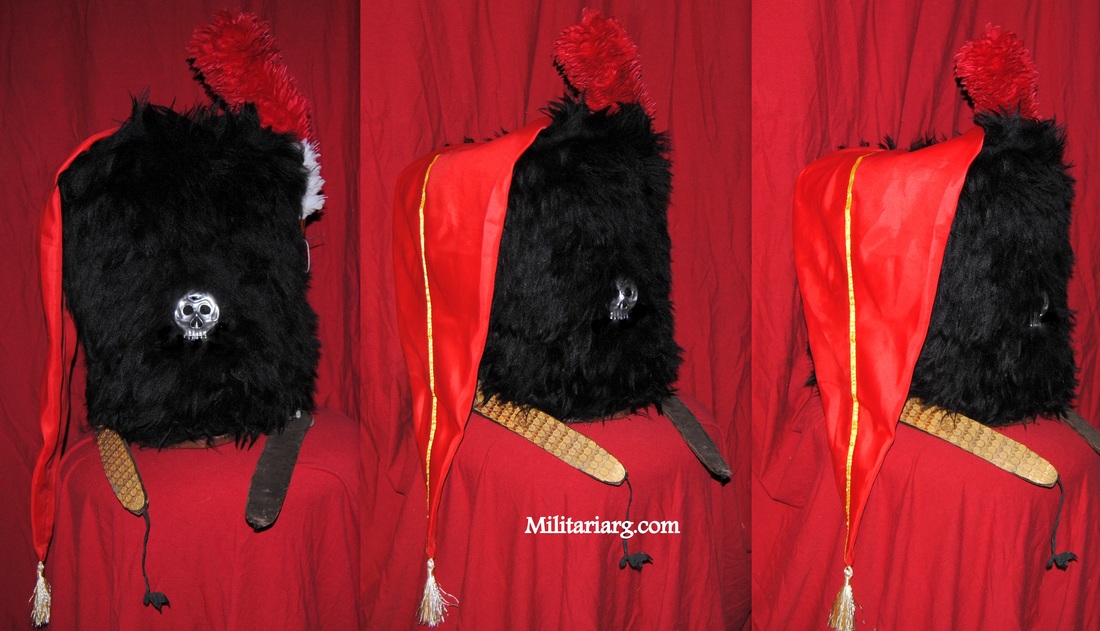
​Sapeur (Engineers) Colback Replica.
Picture
Picture
Powered by Create your own unique website with customizable templates.