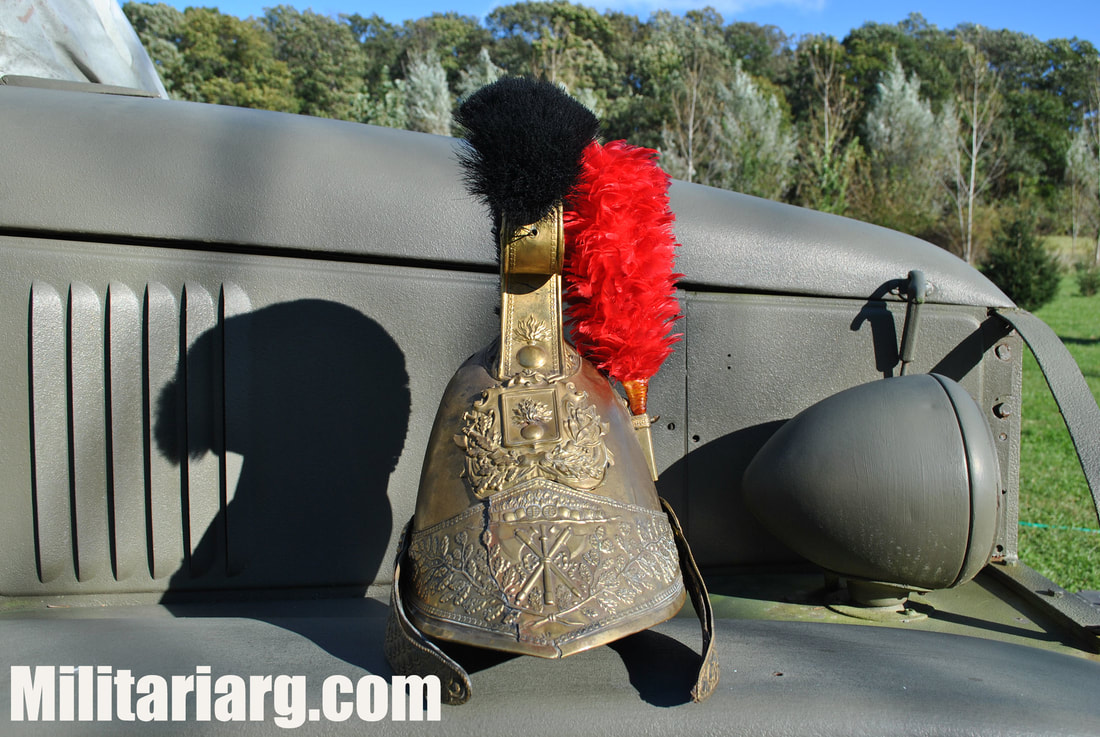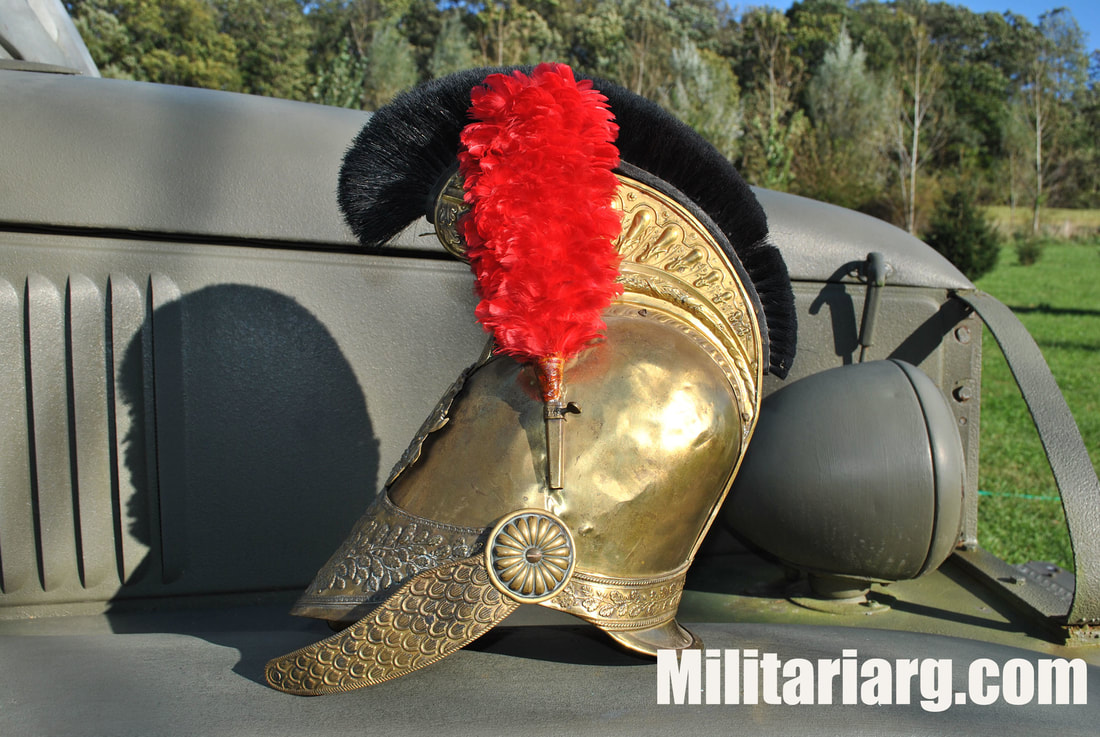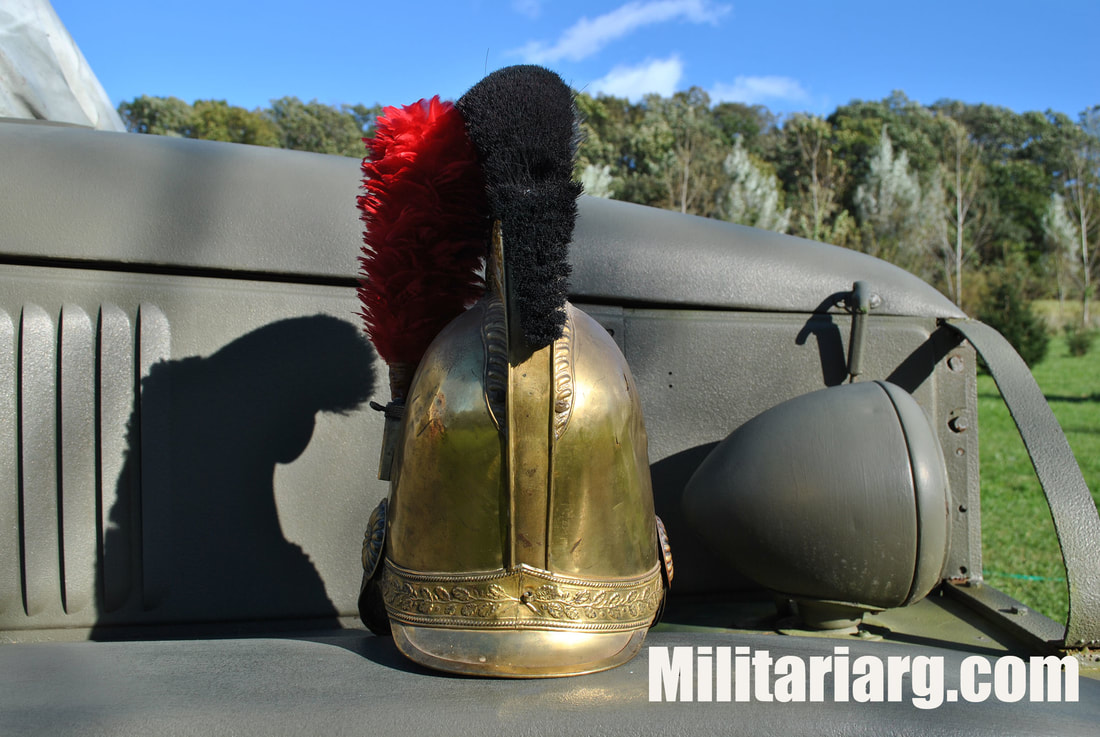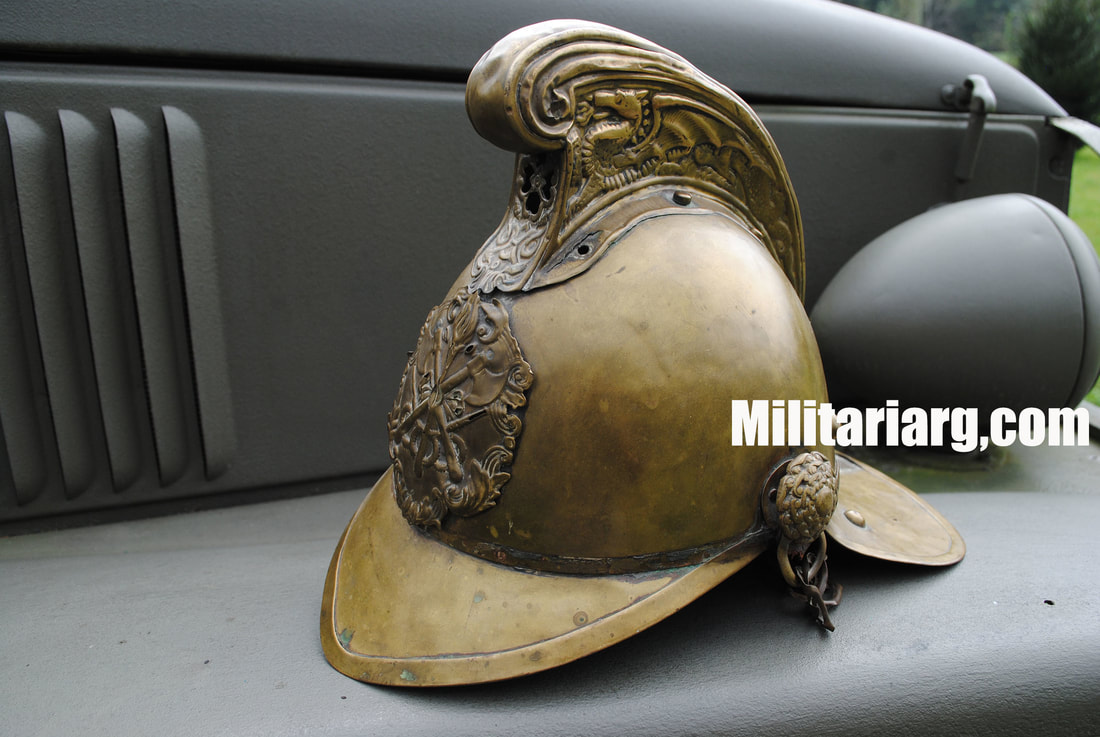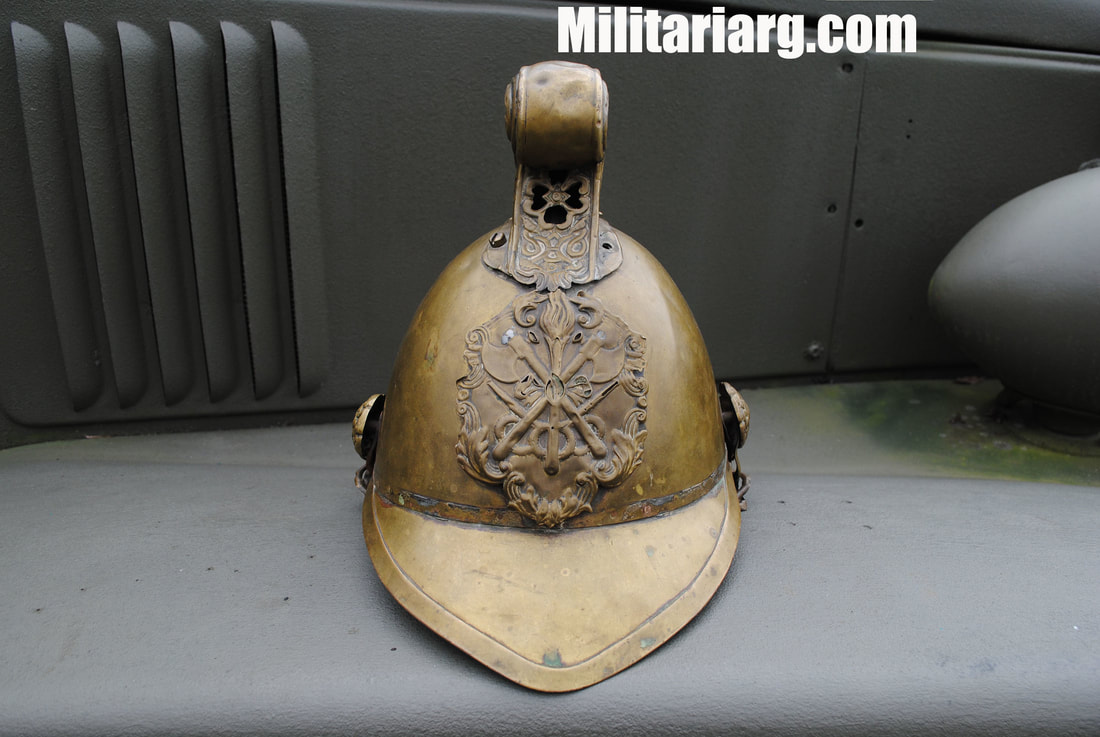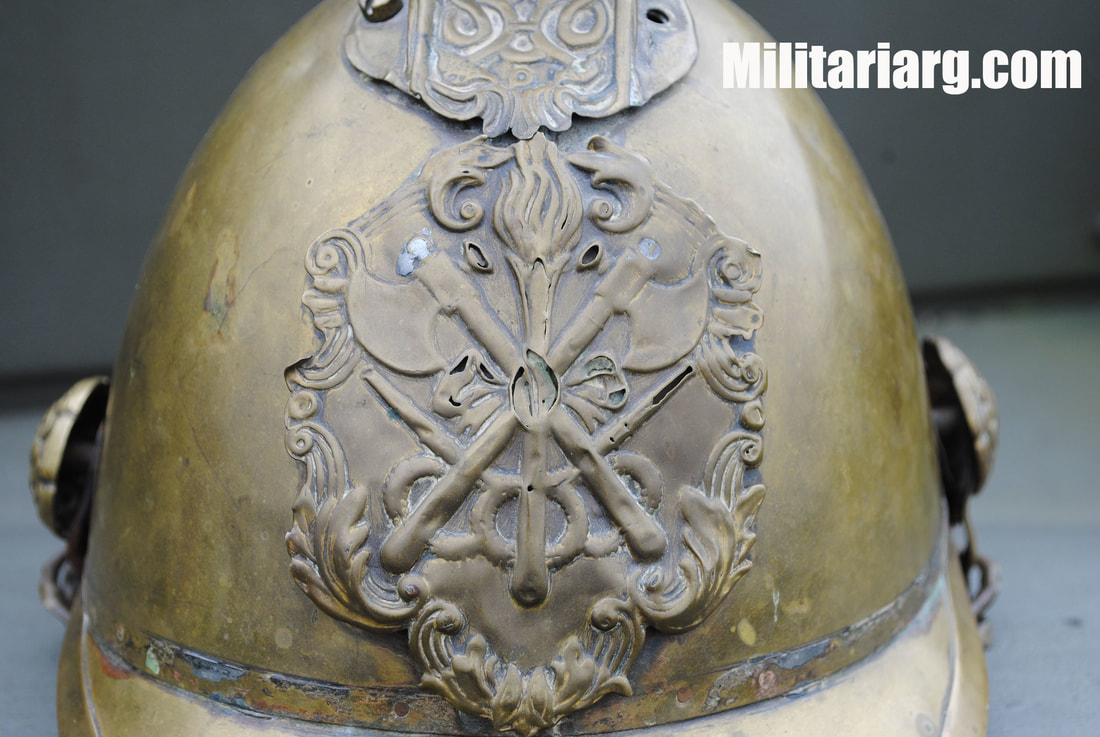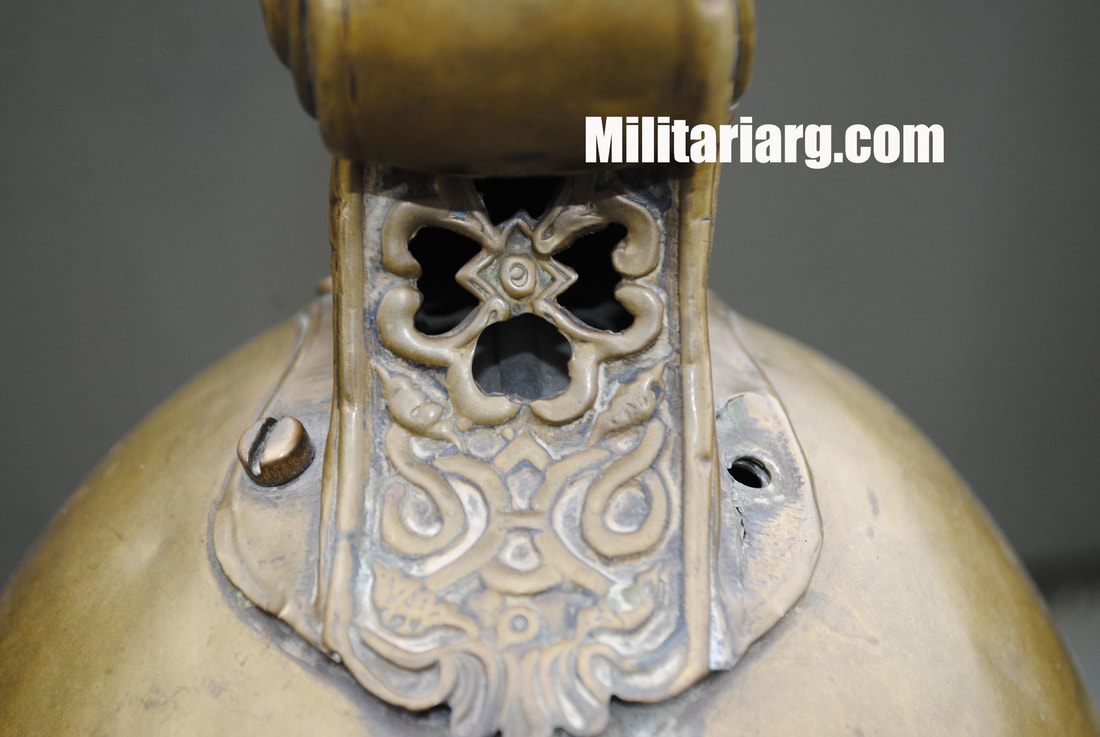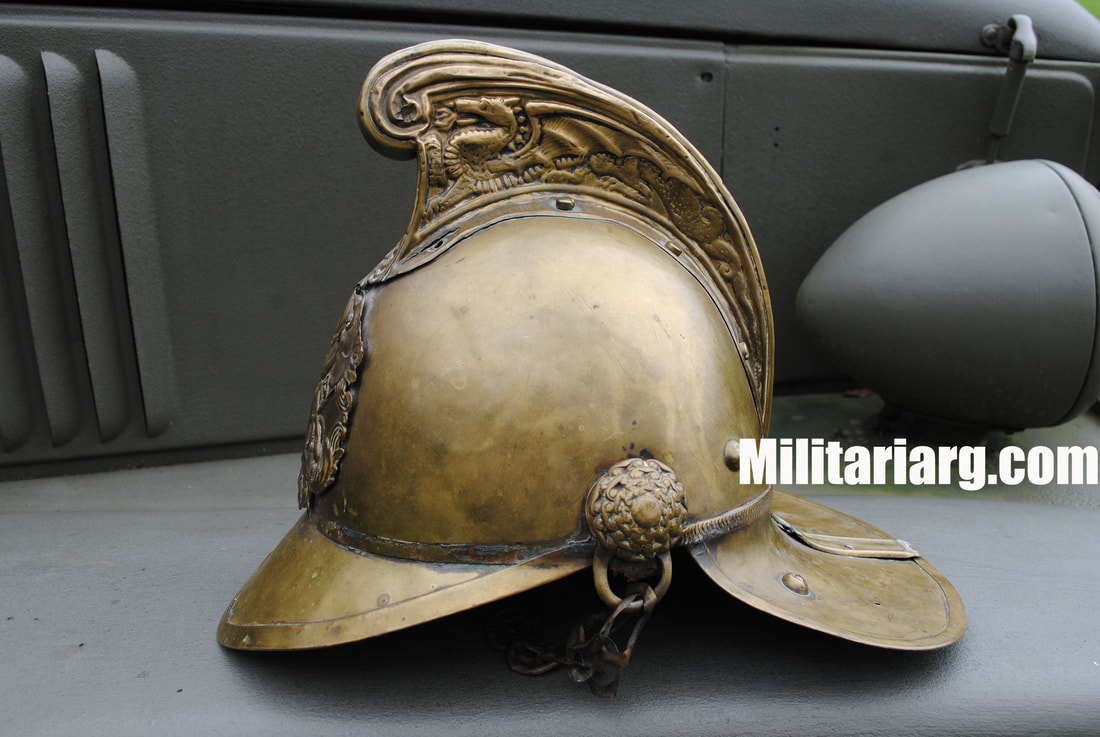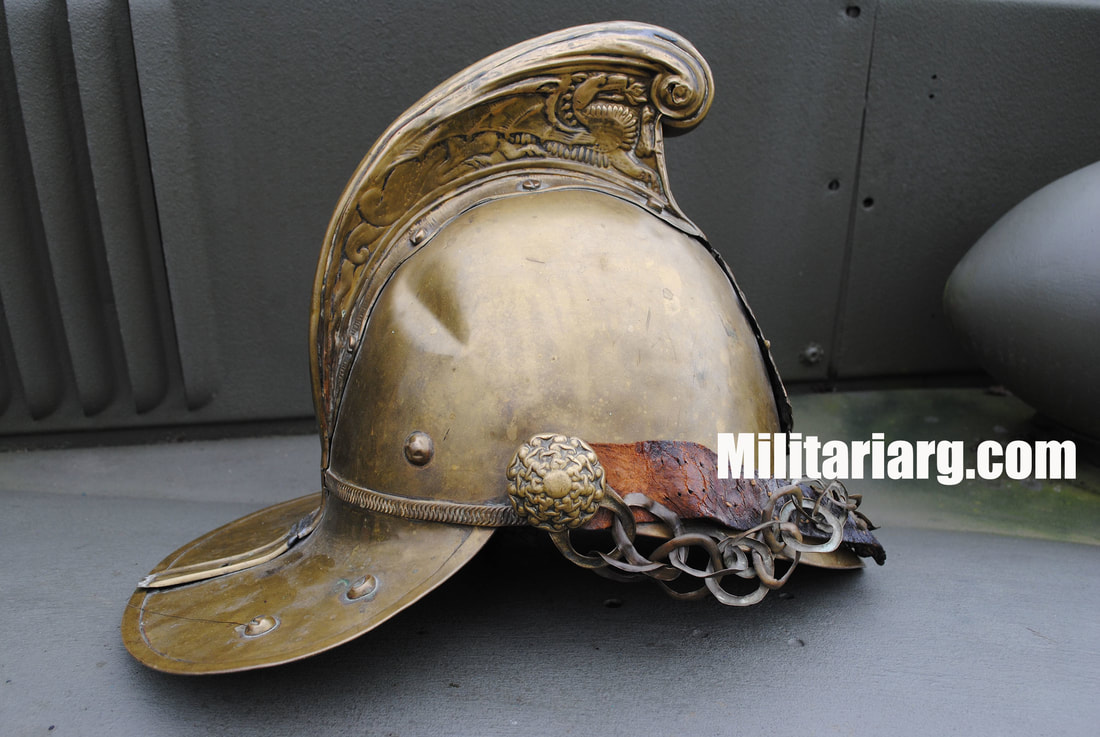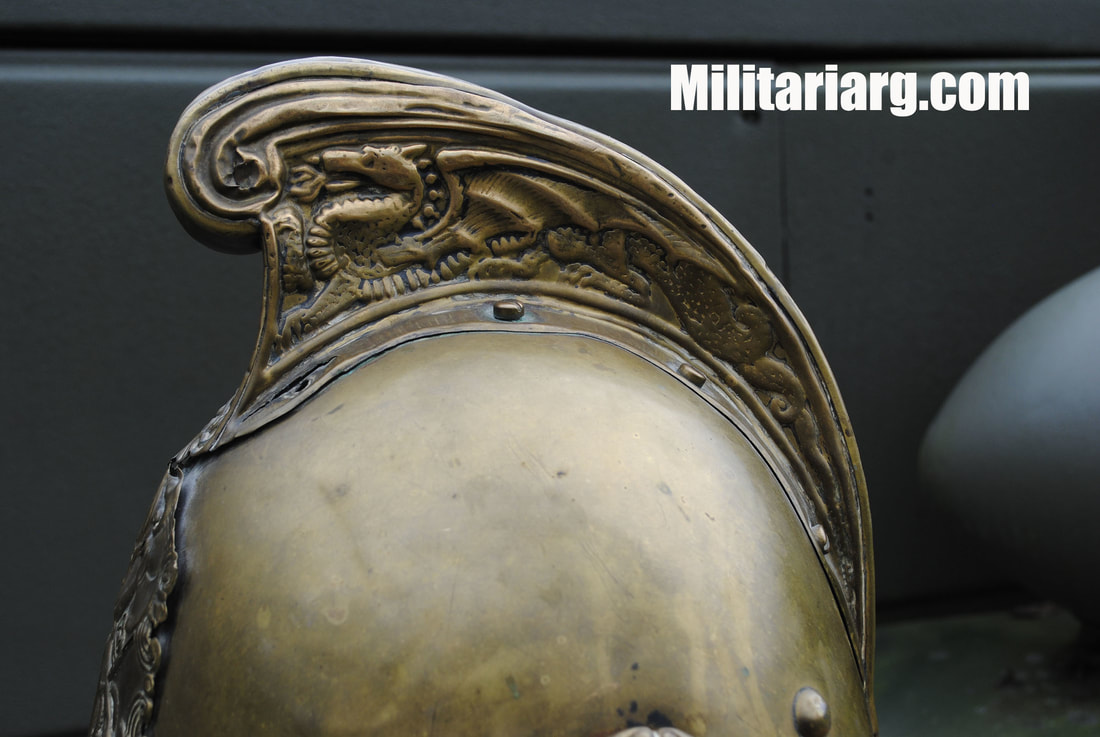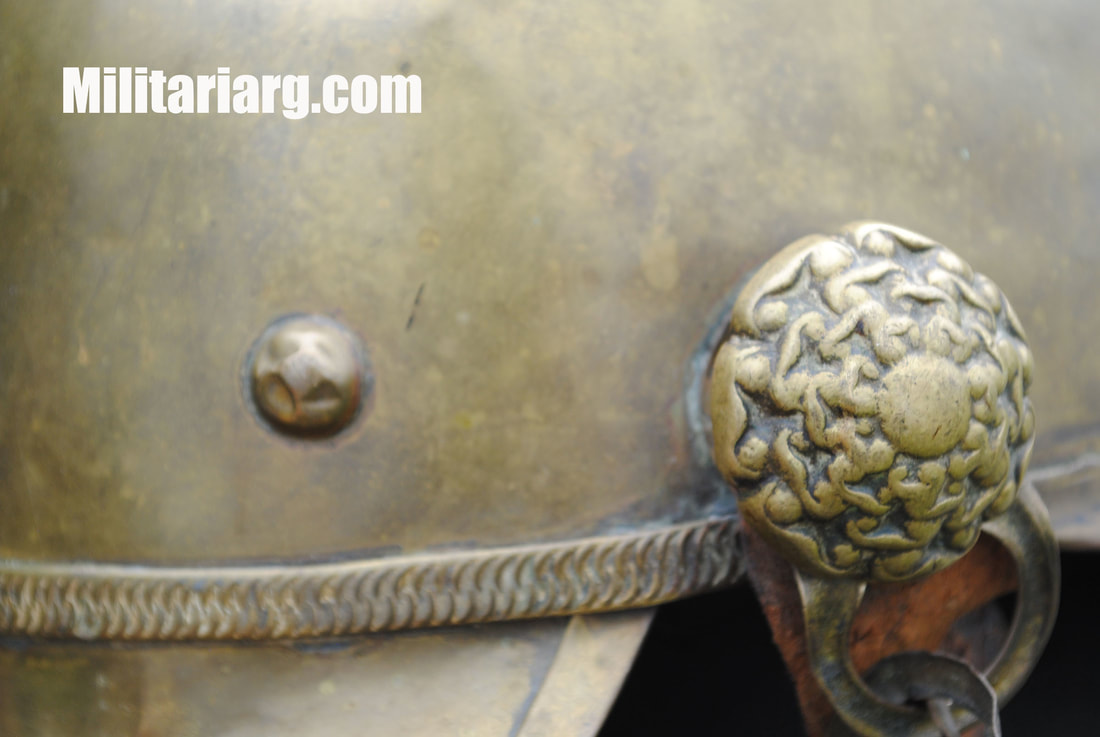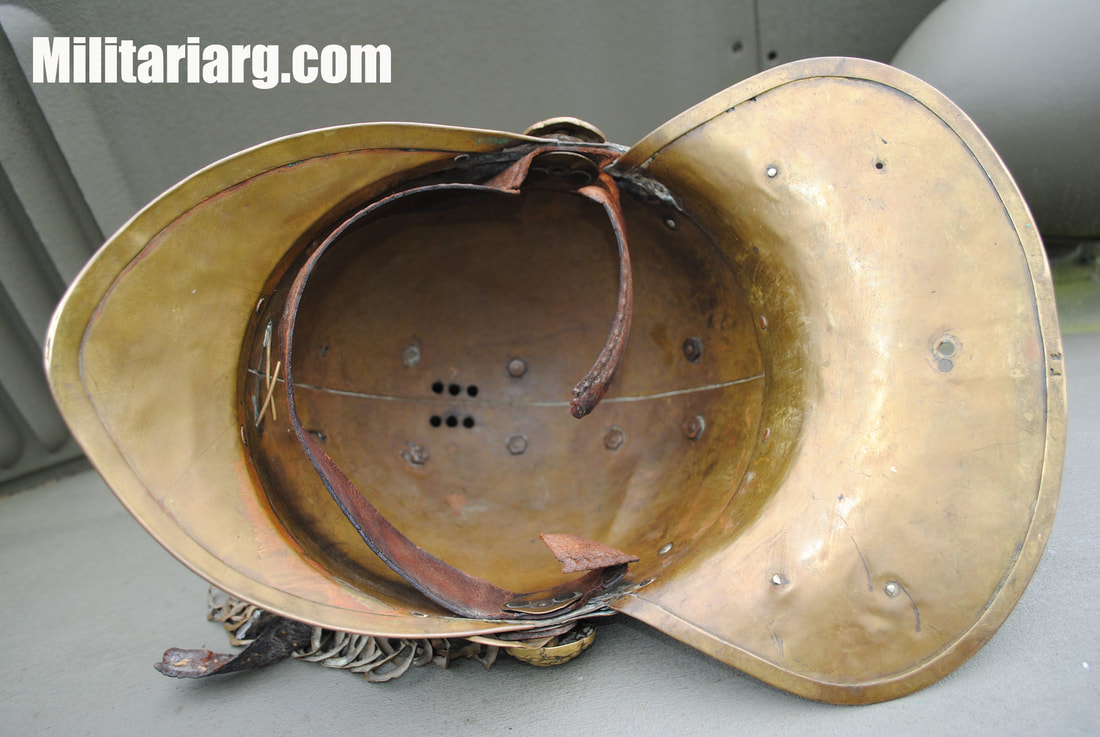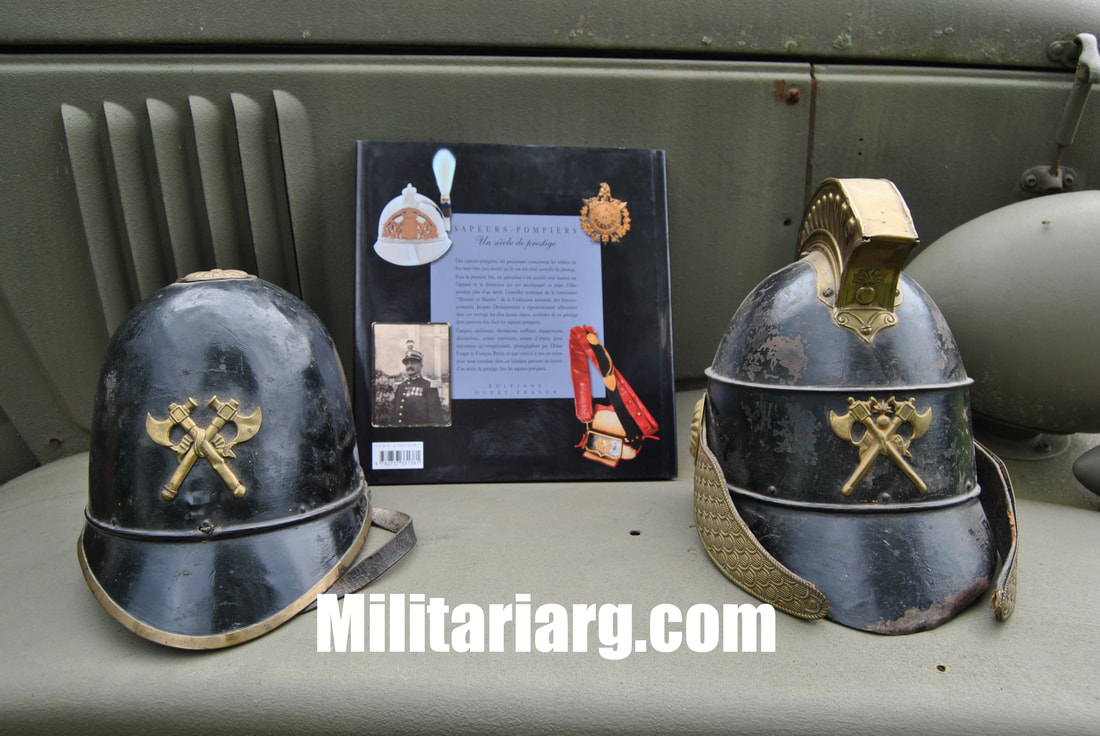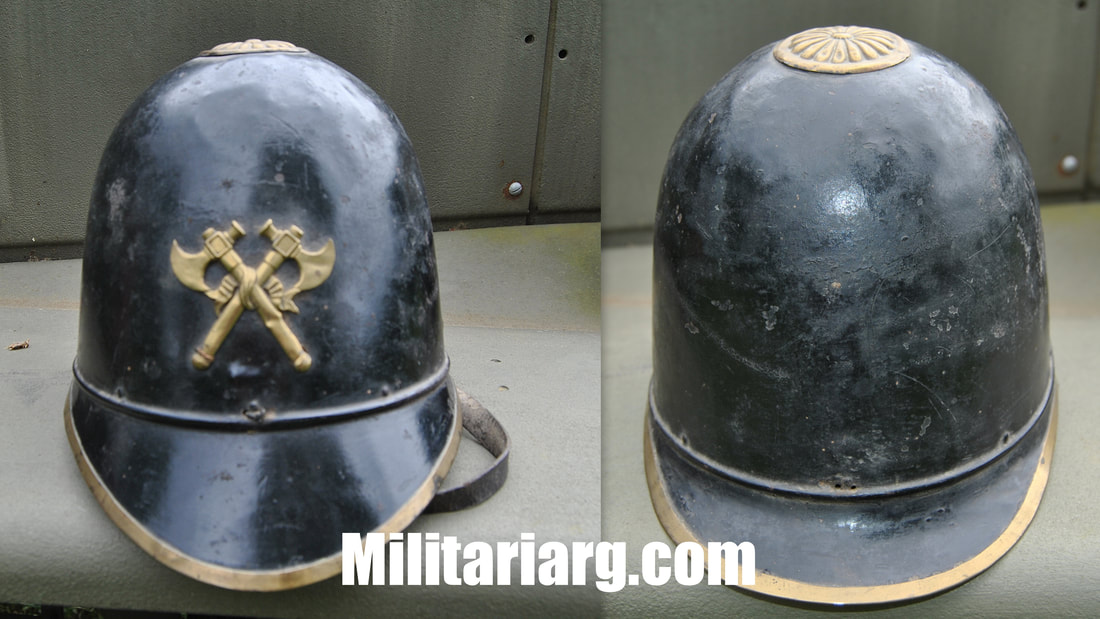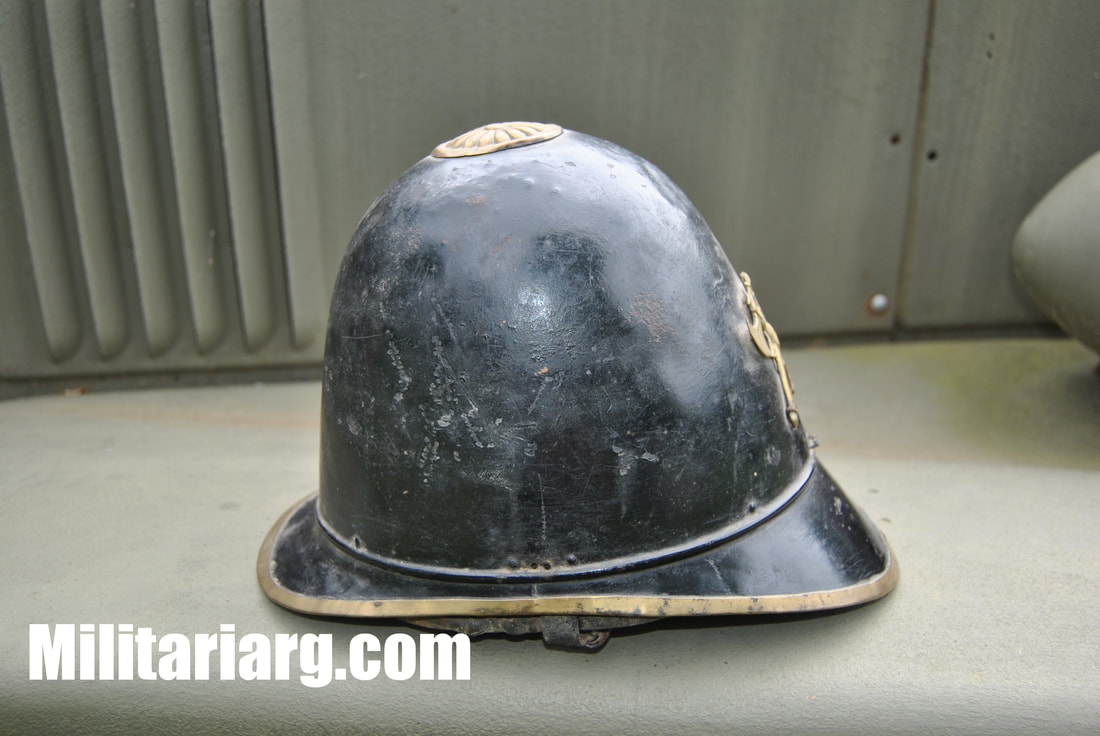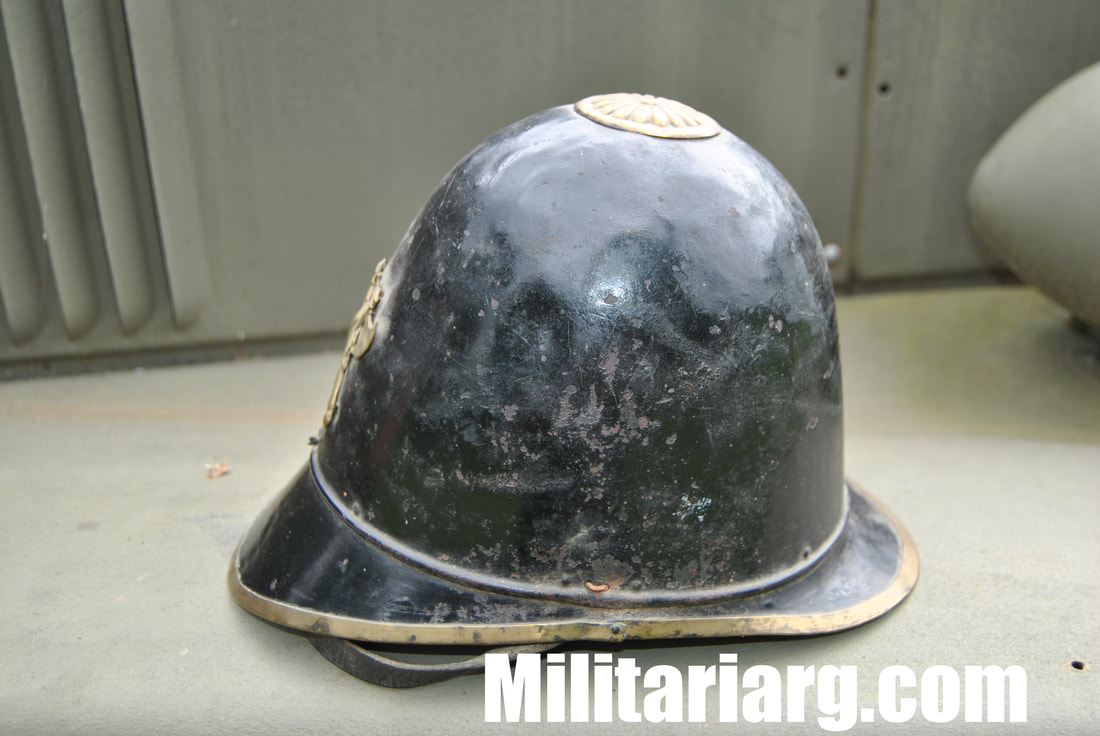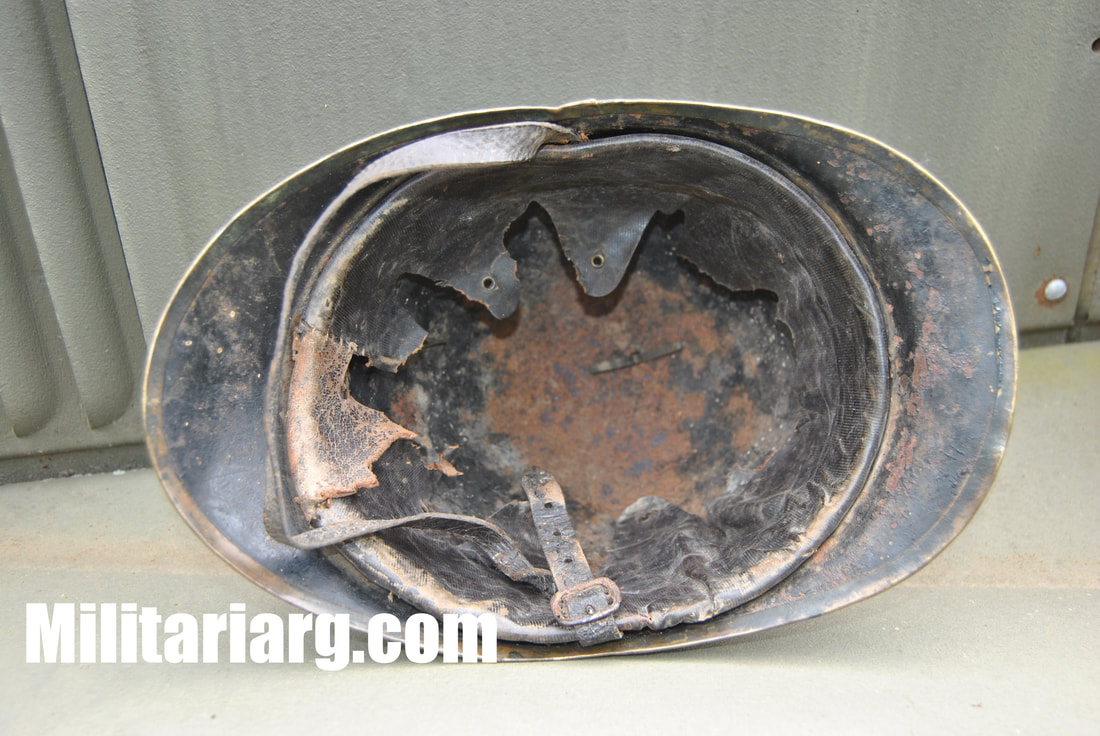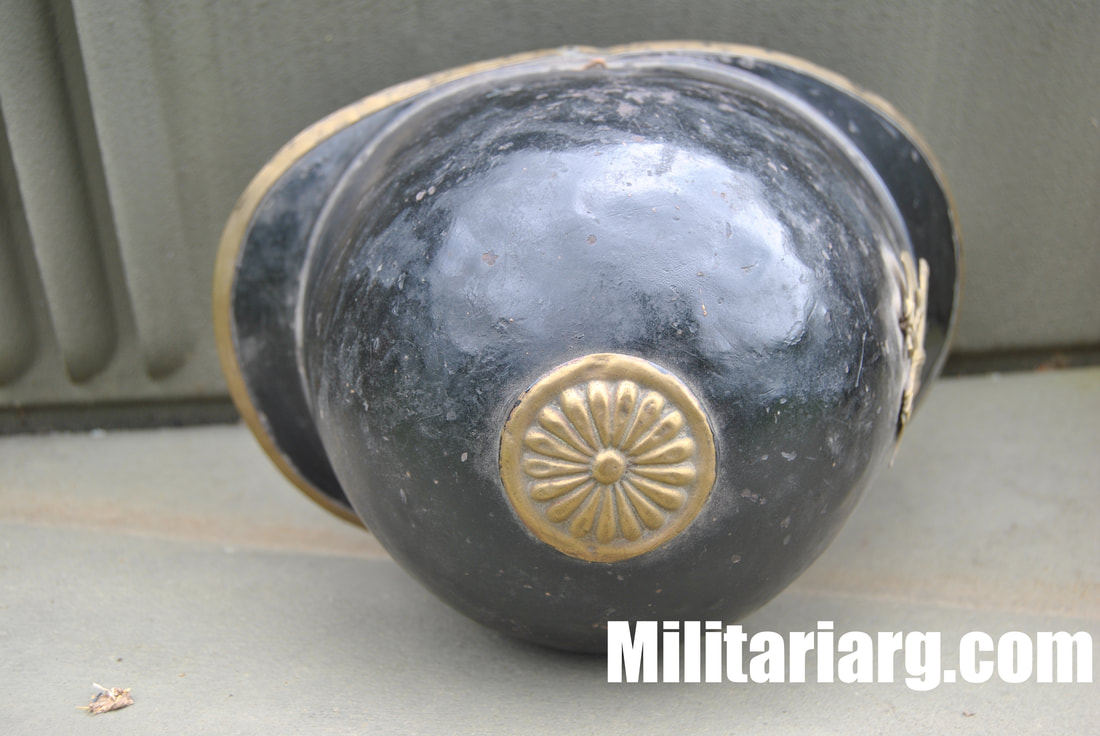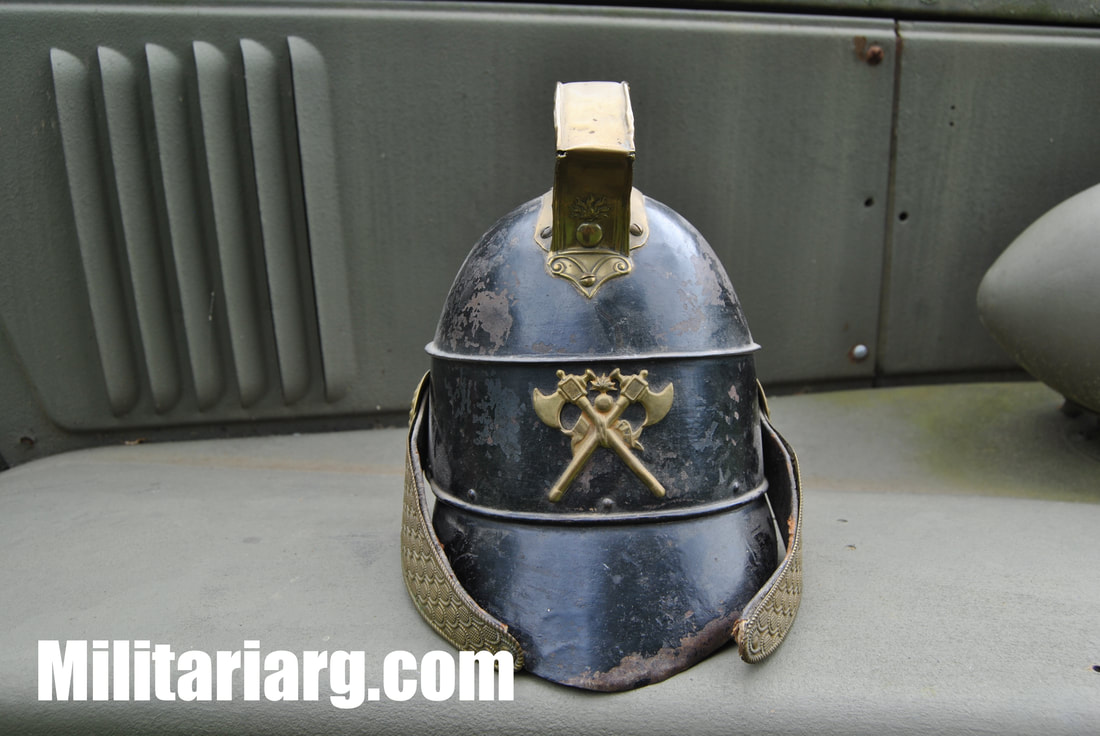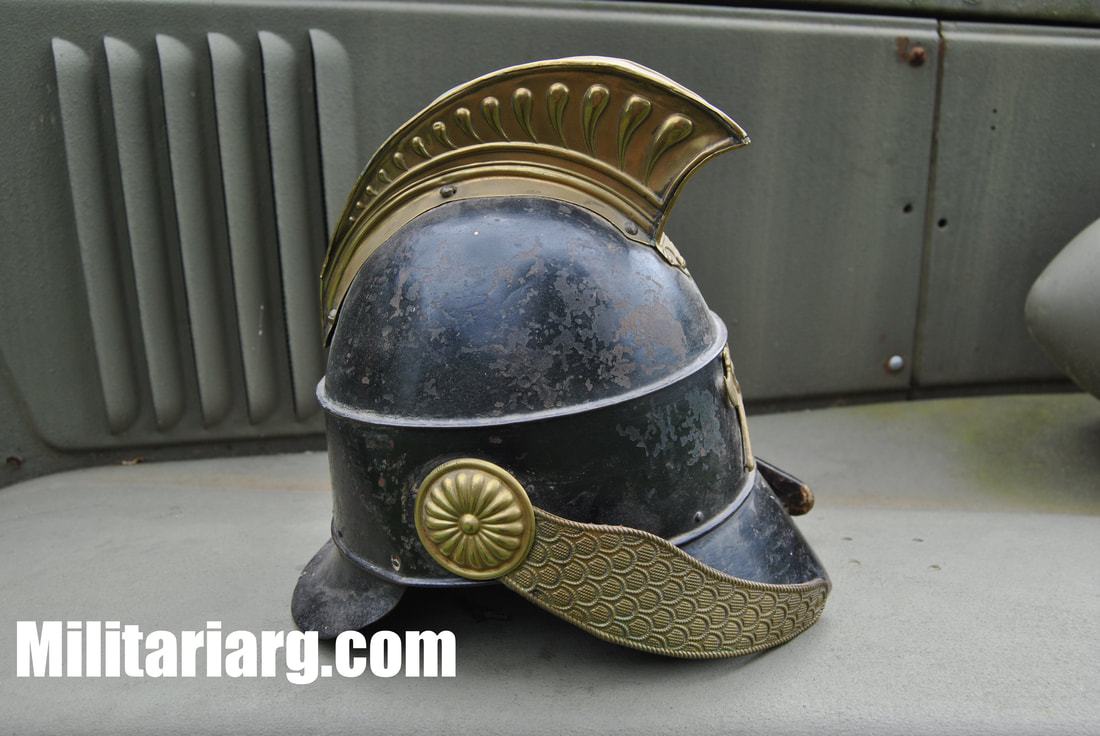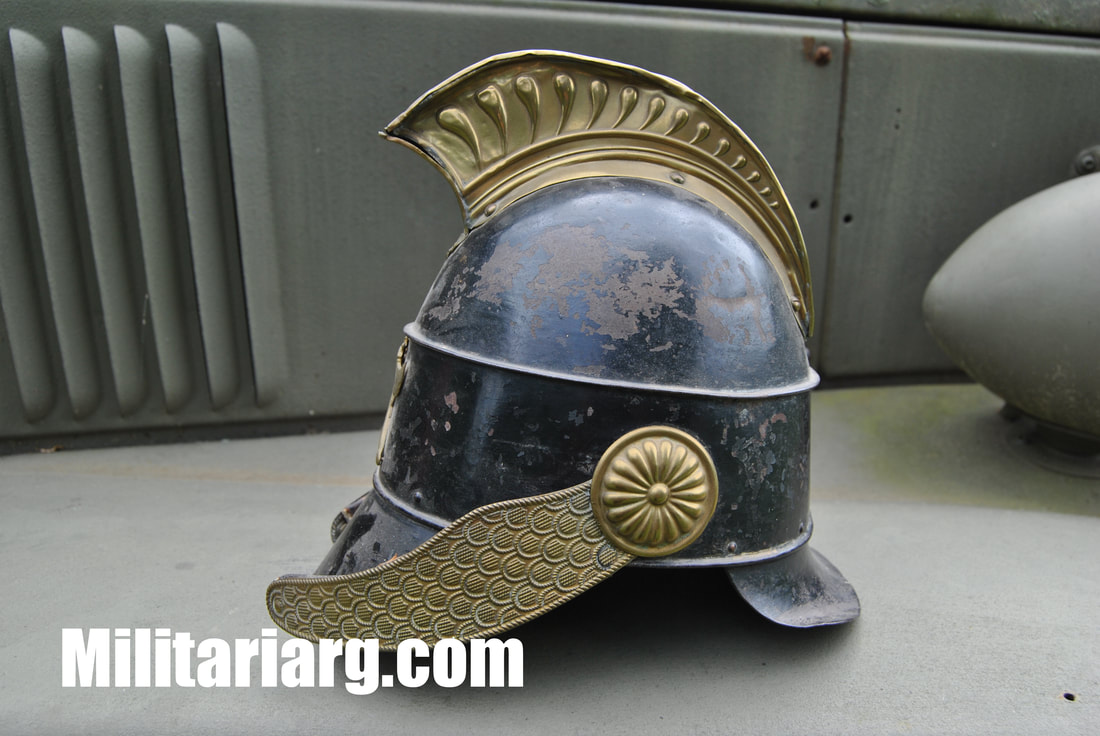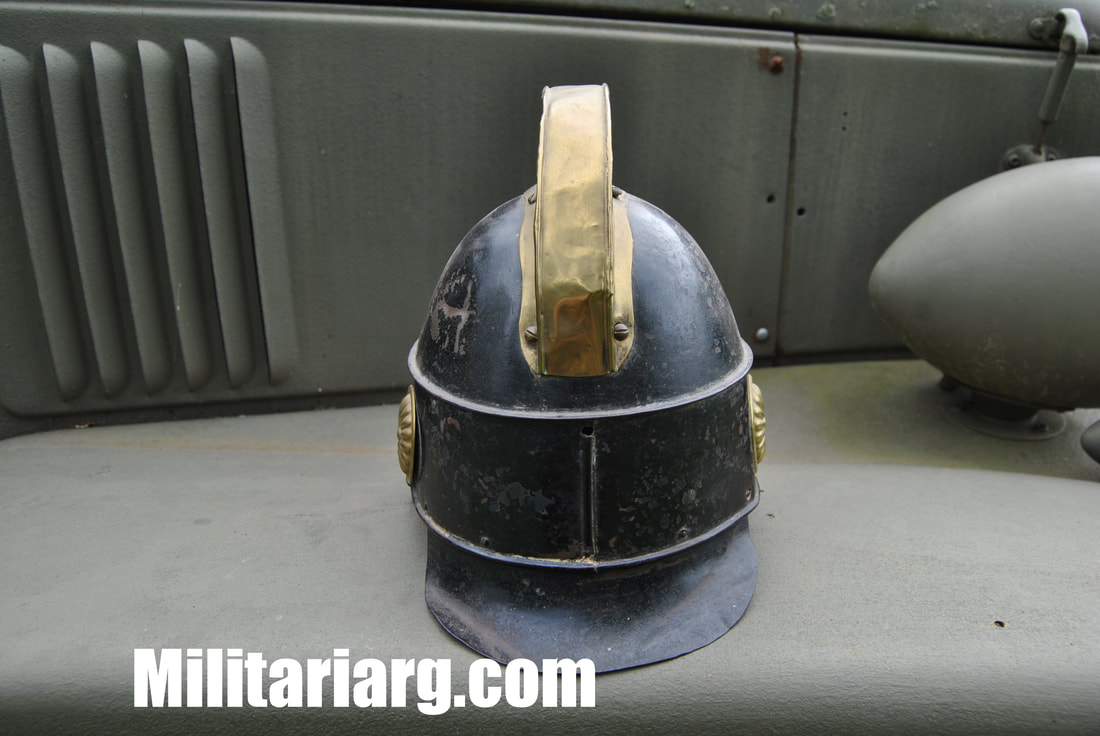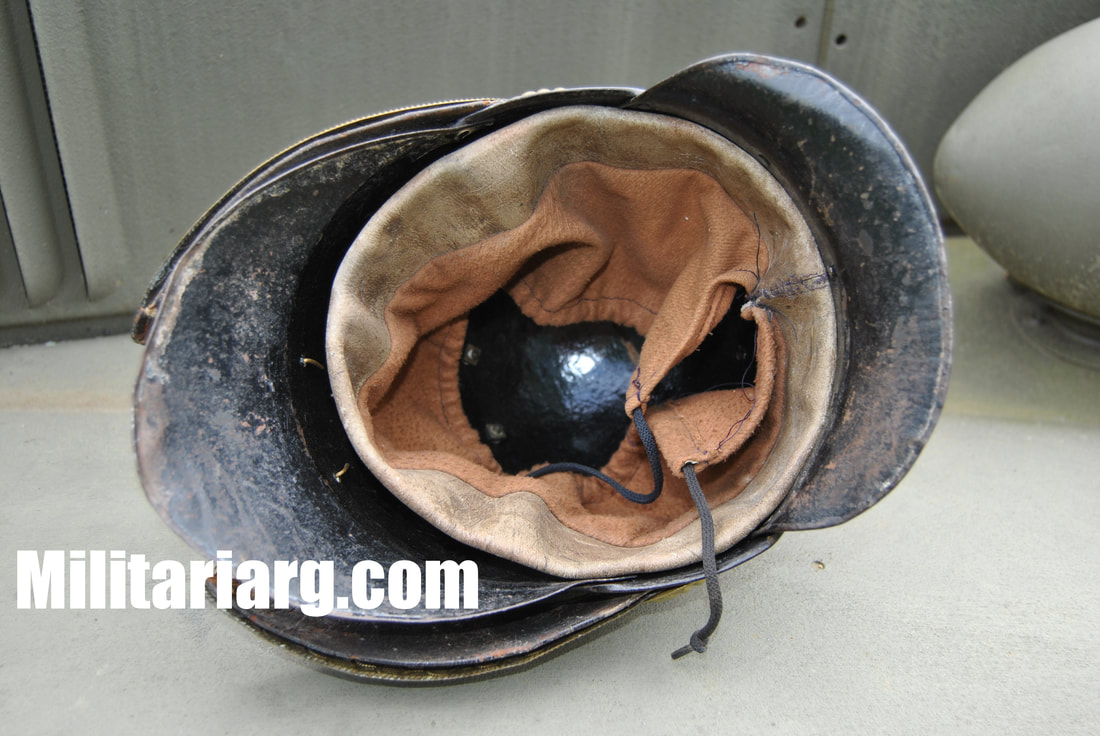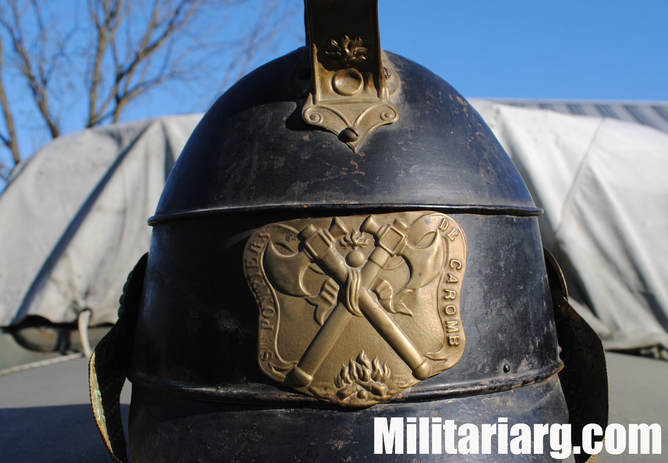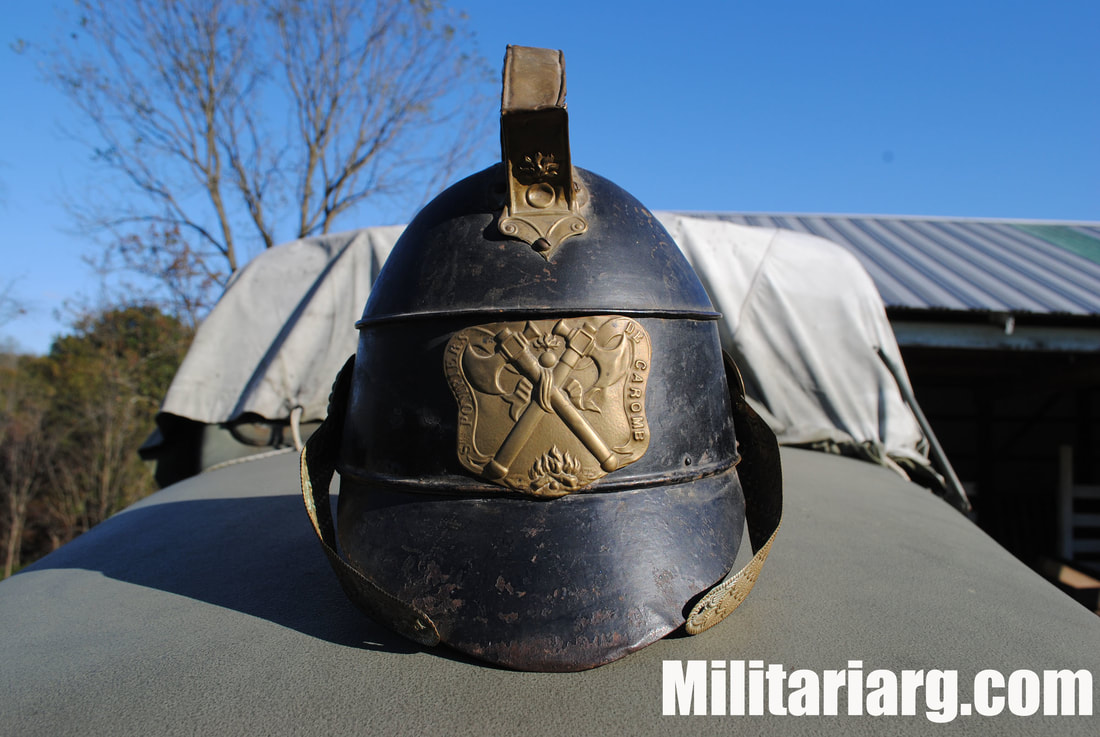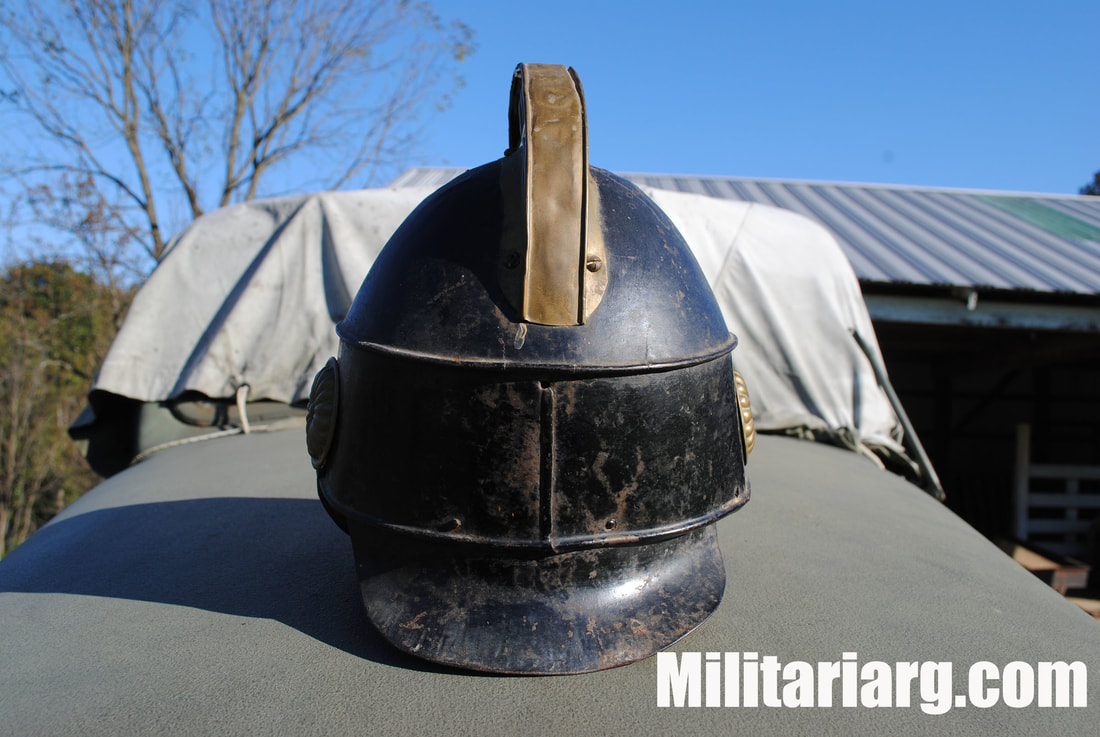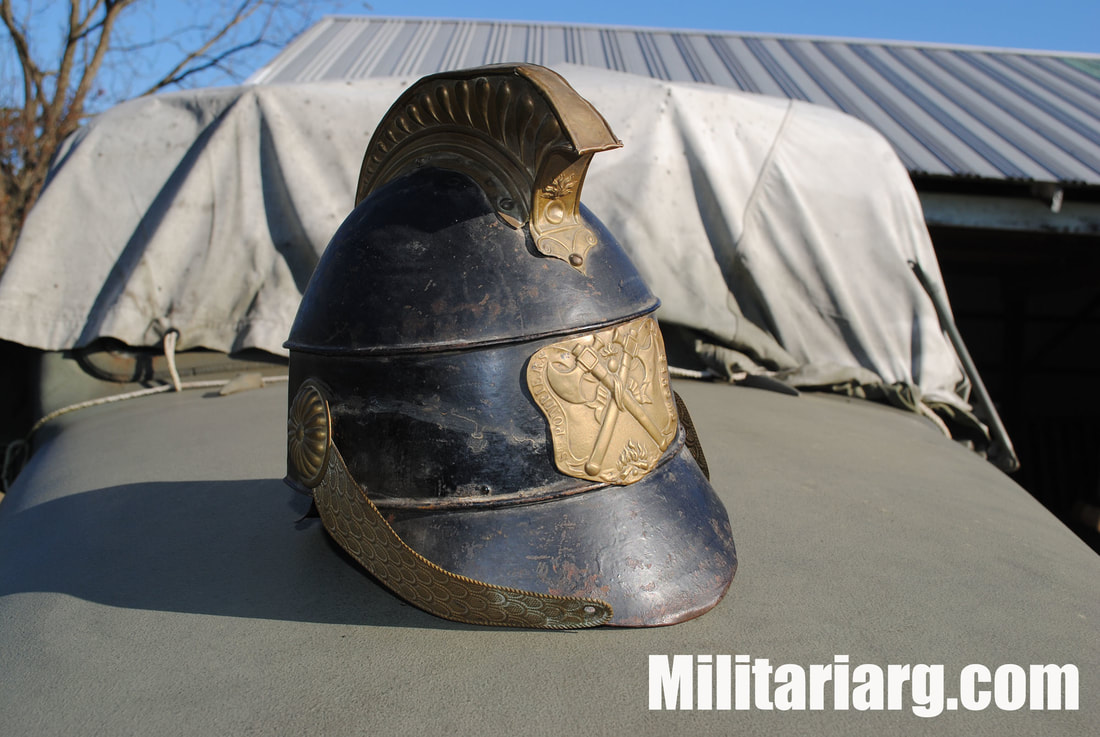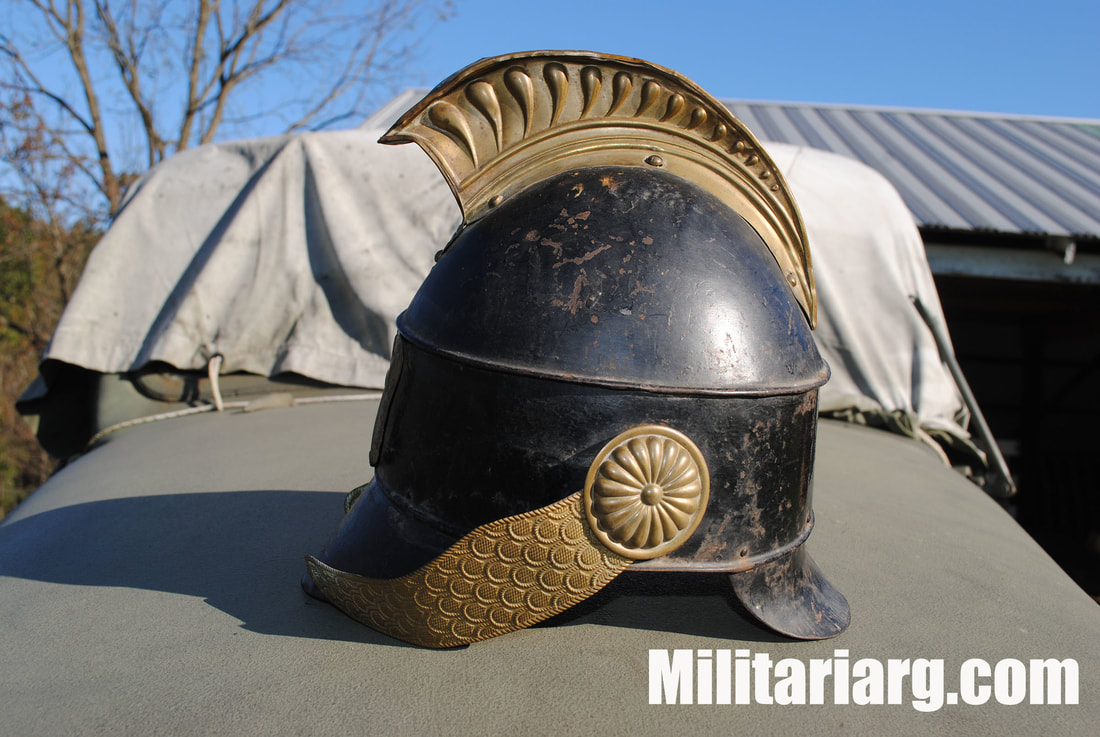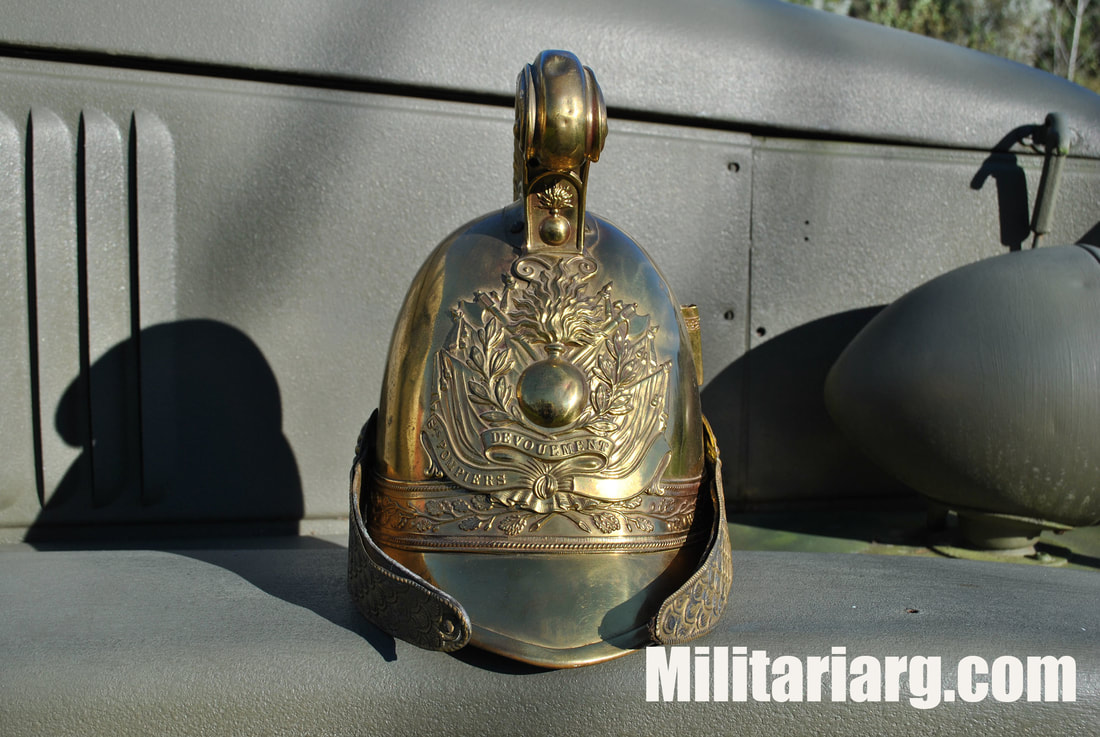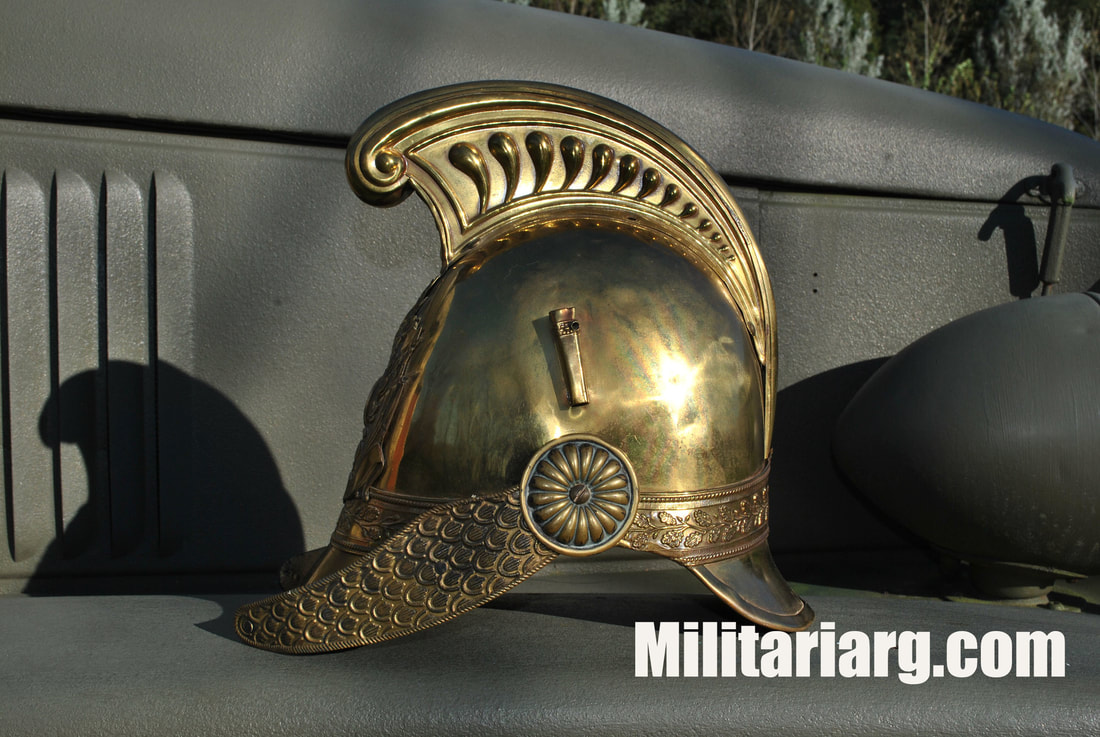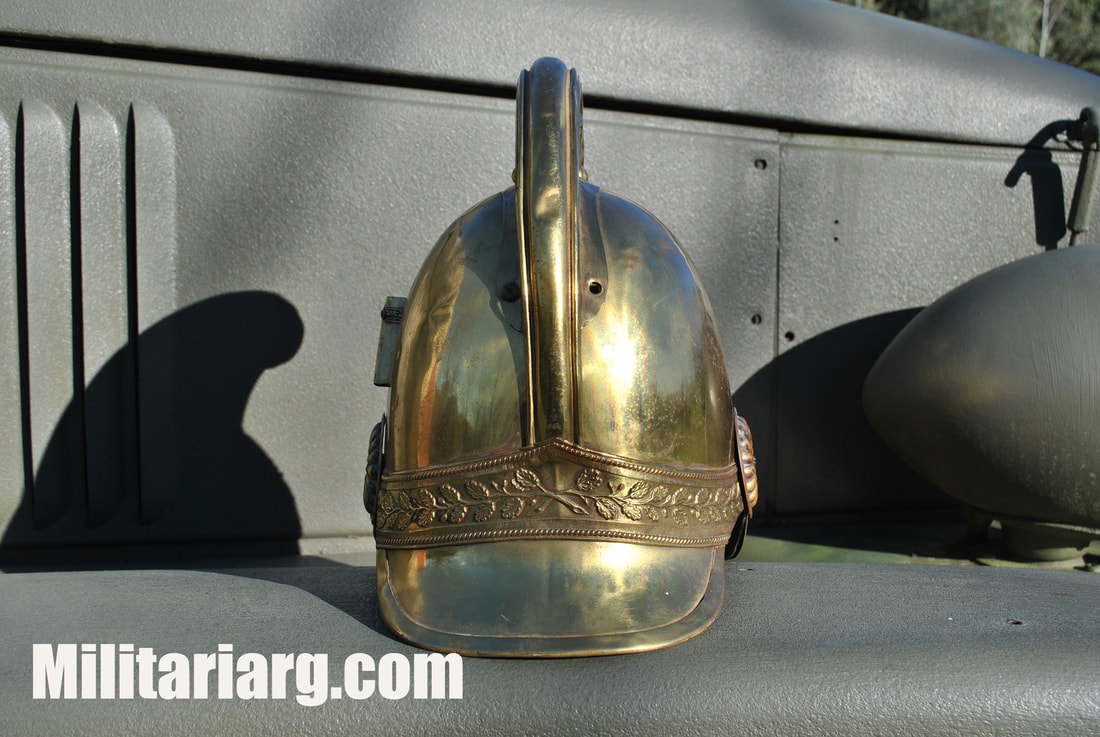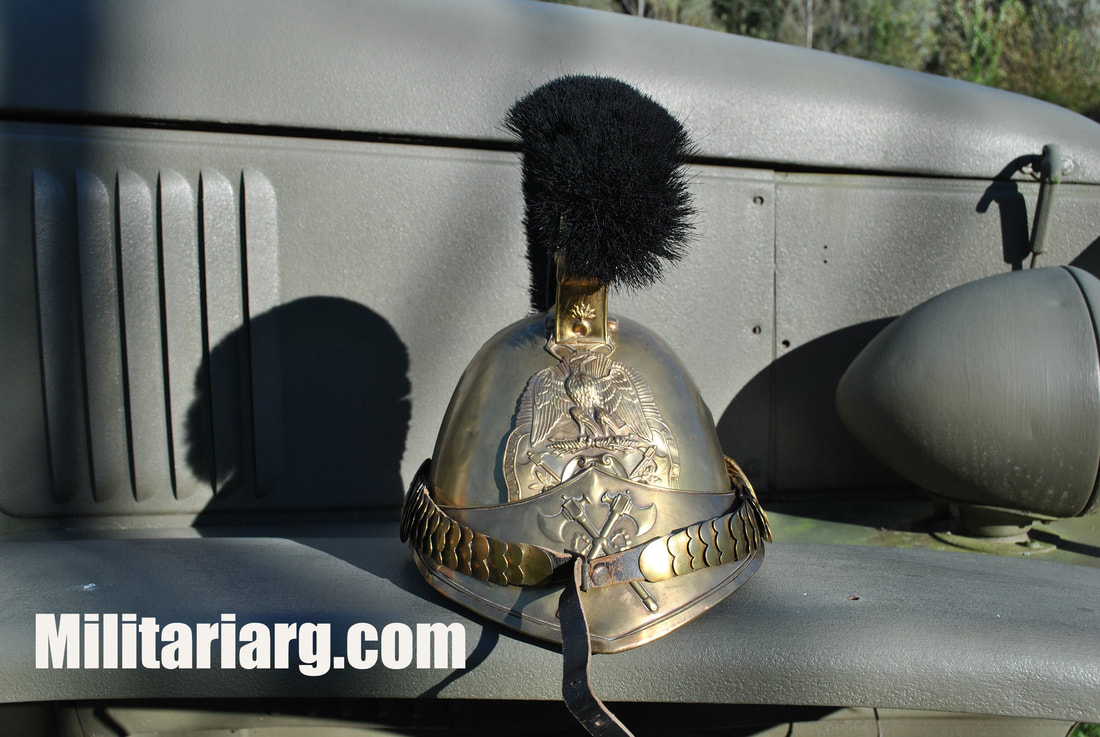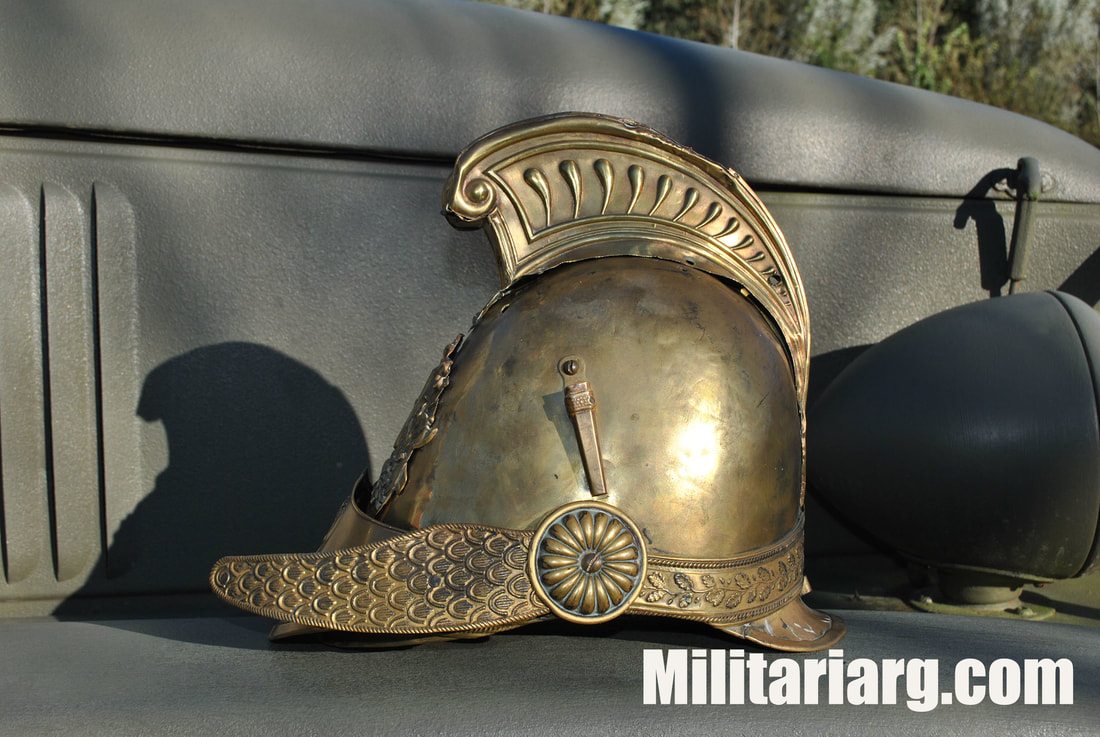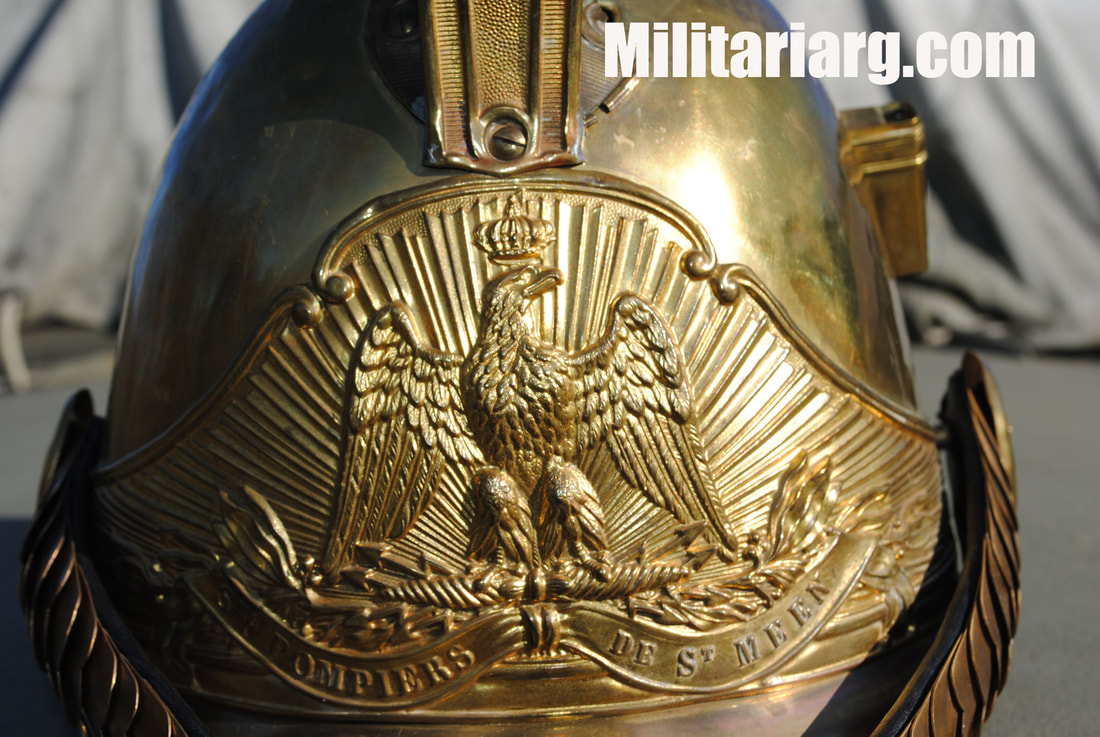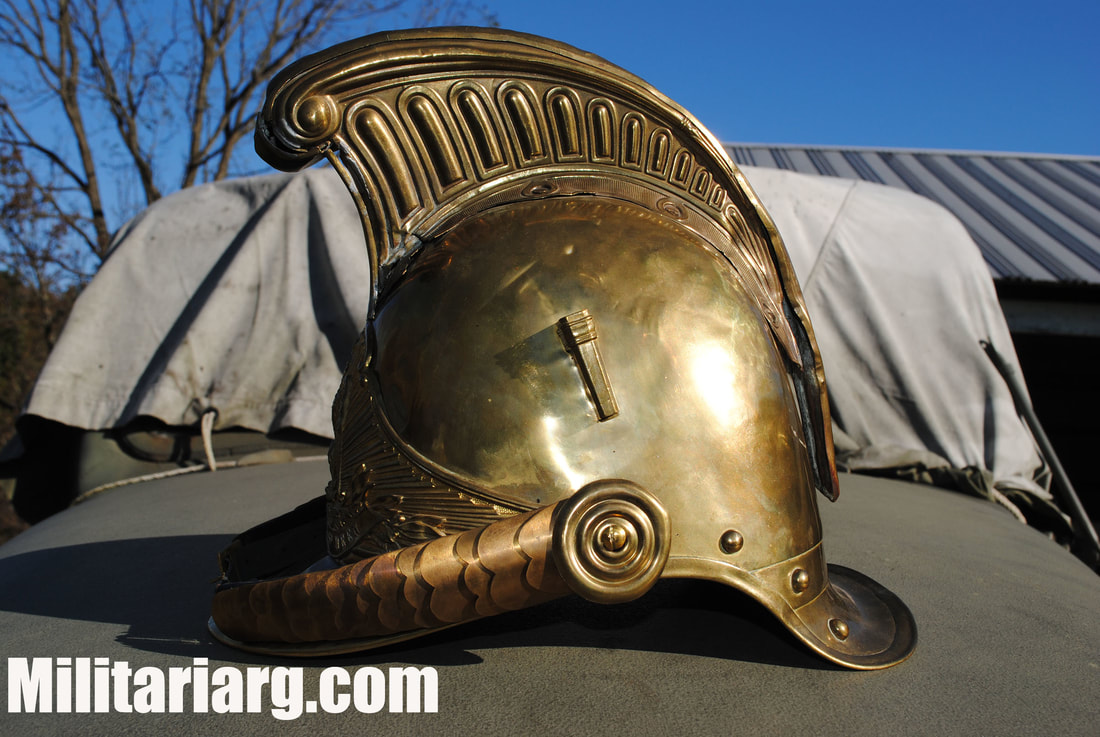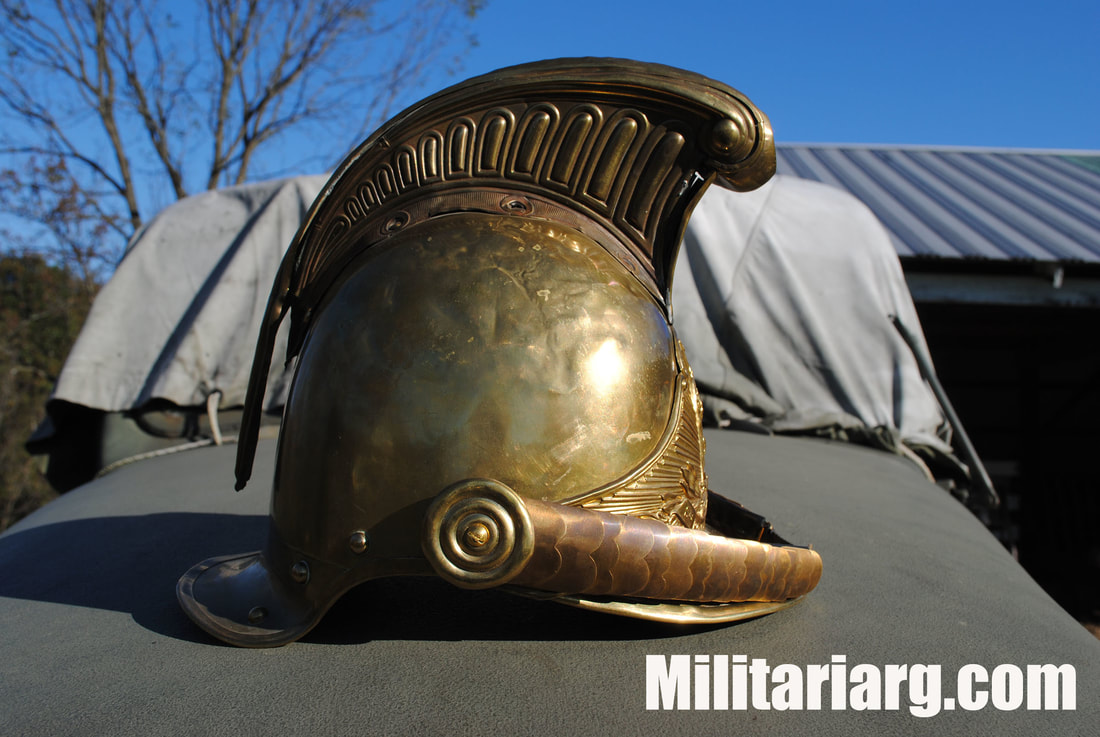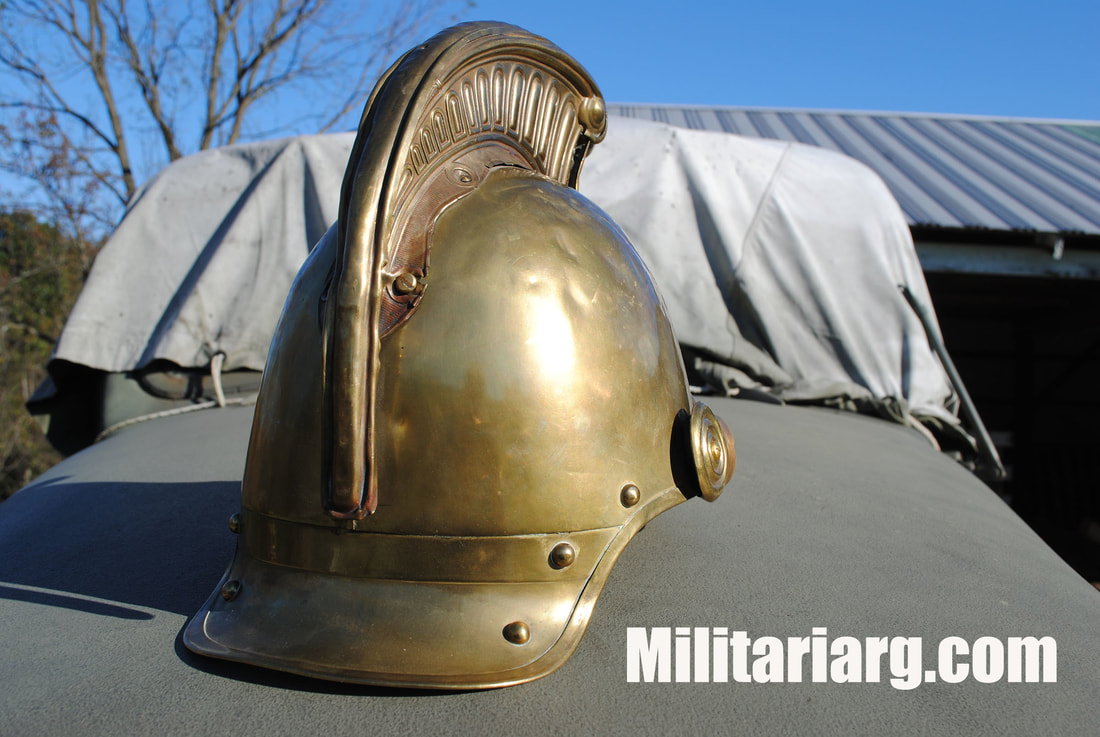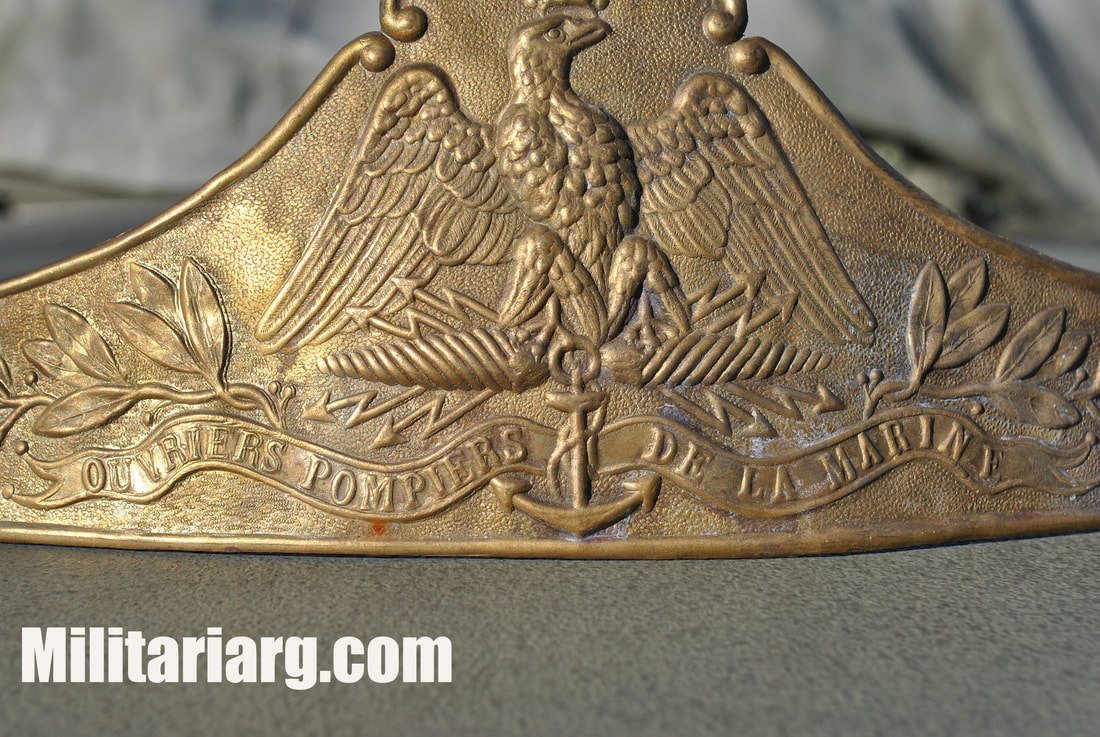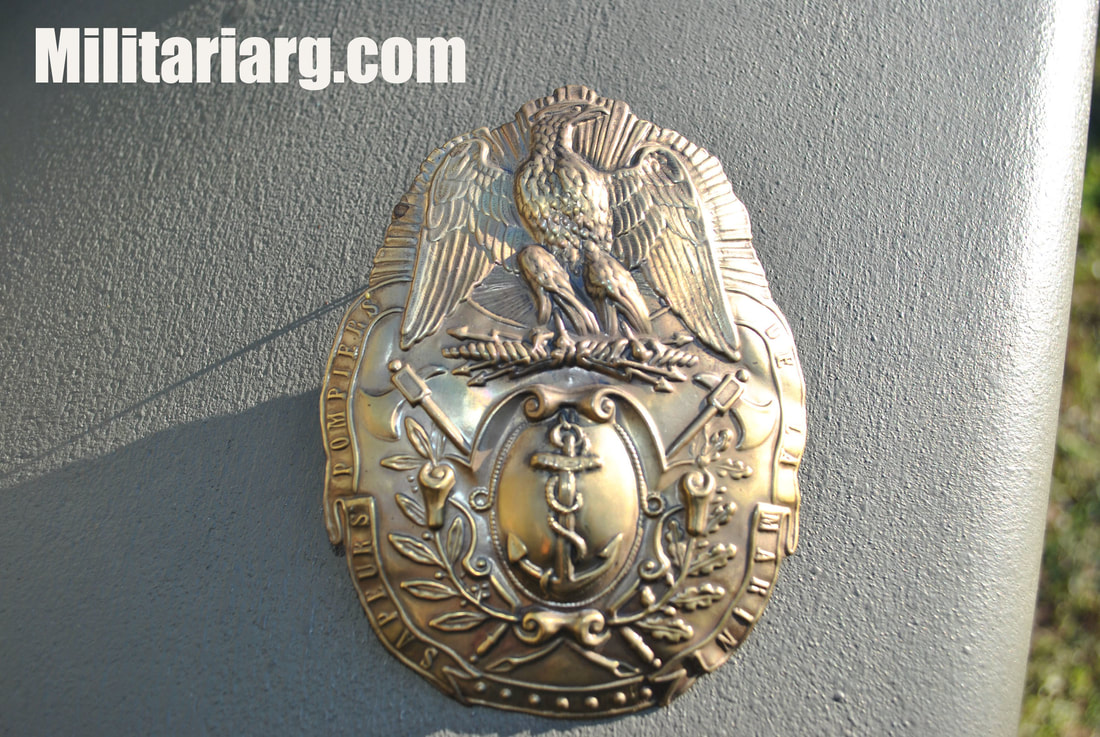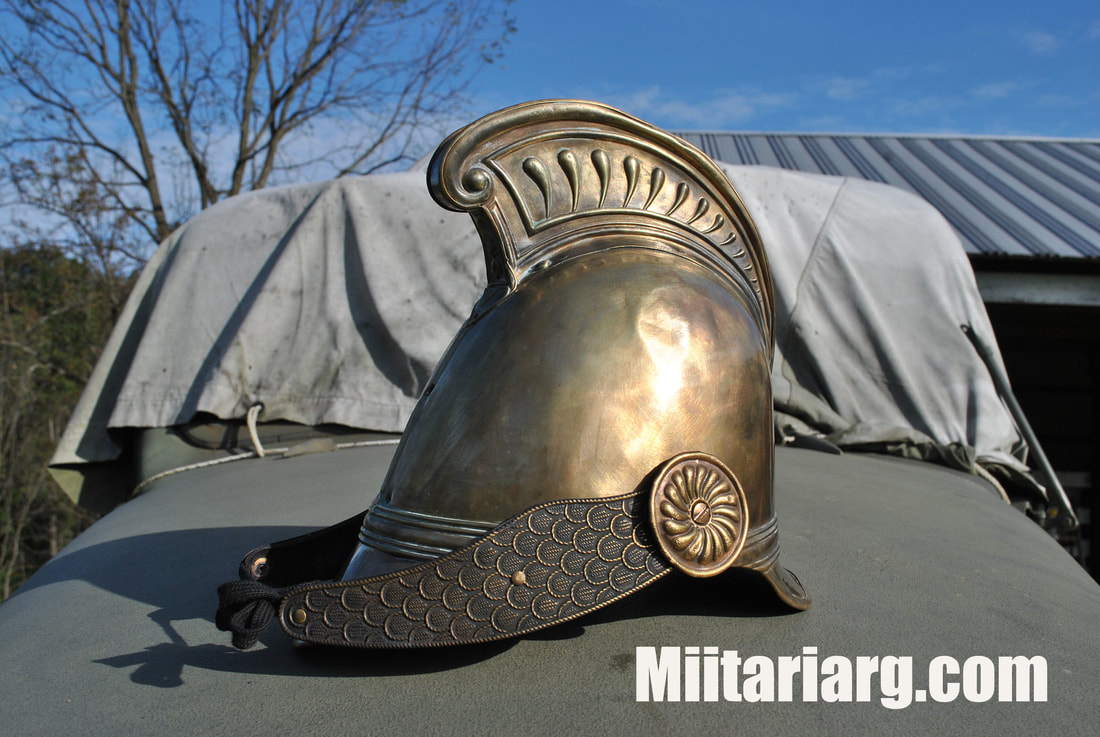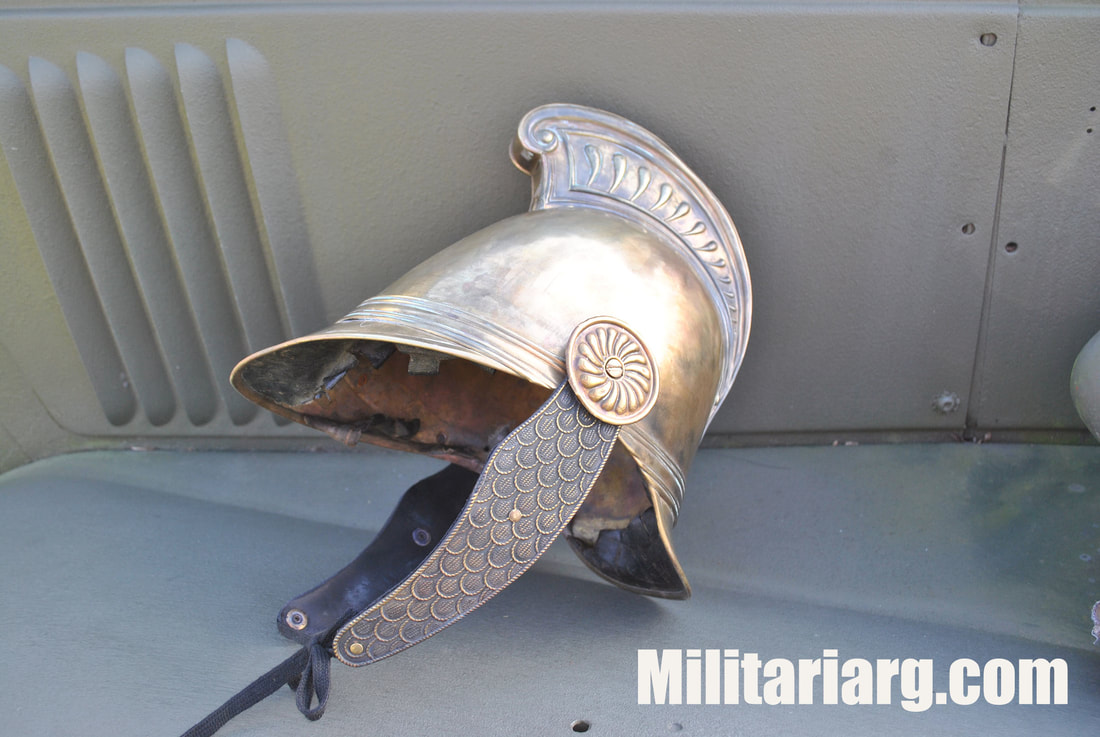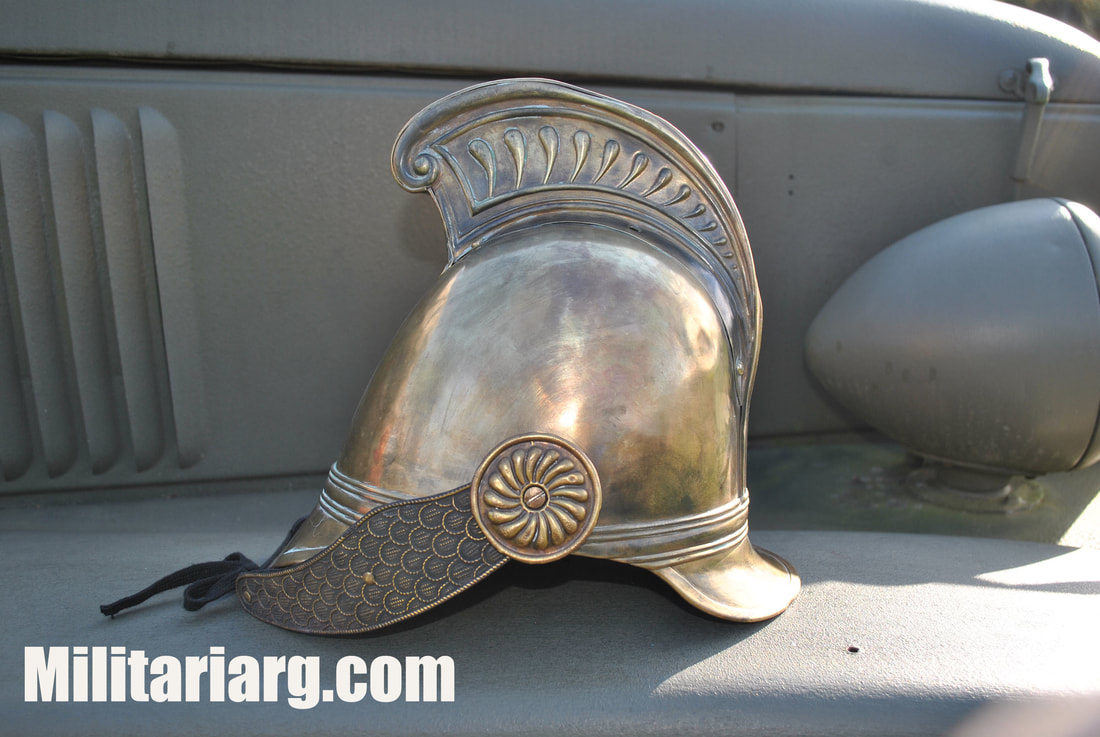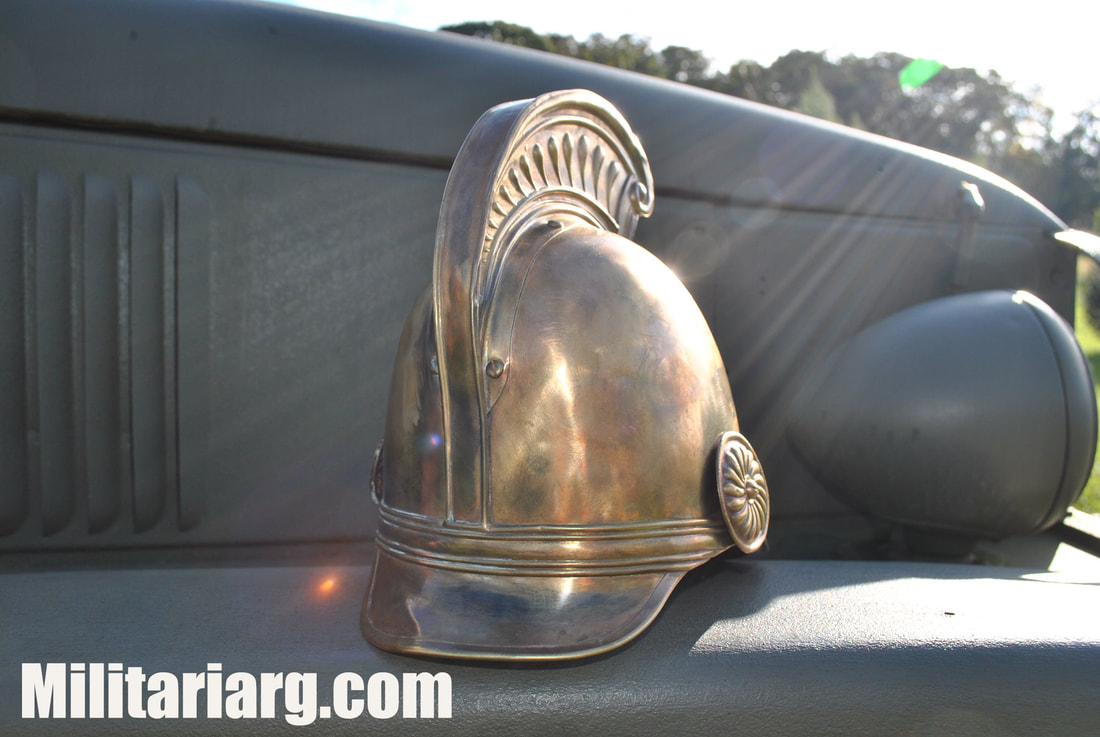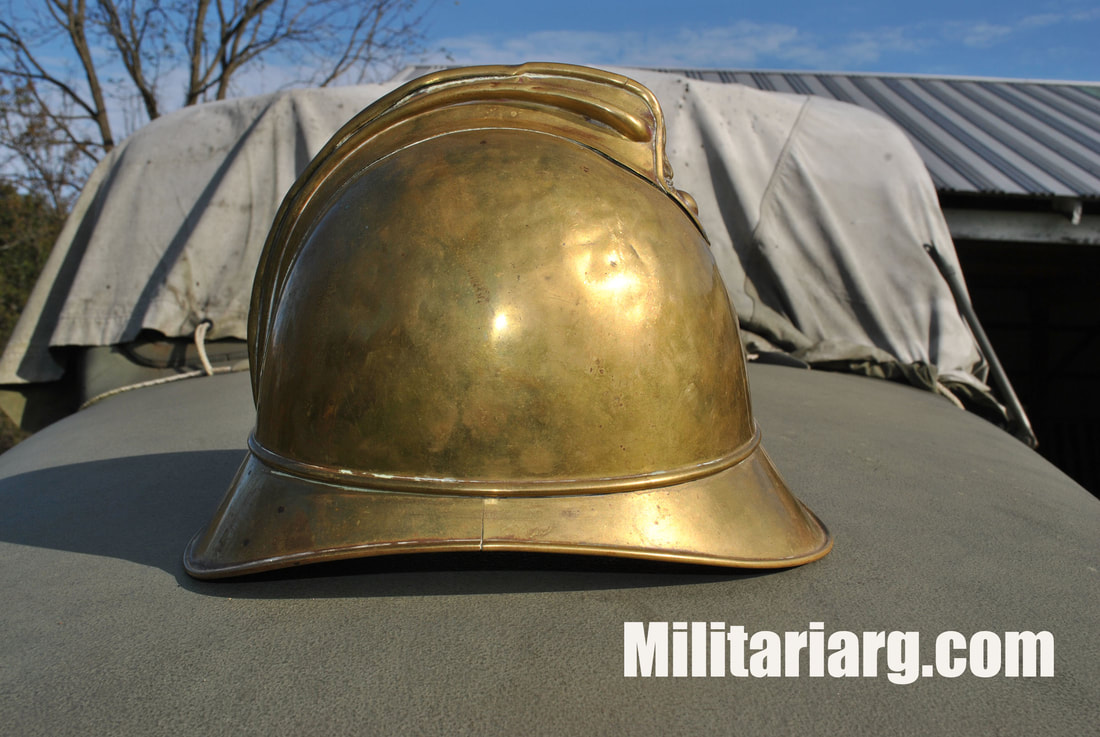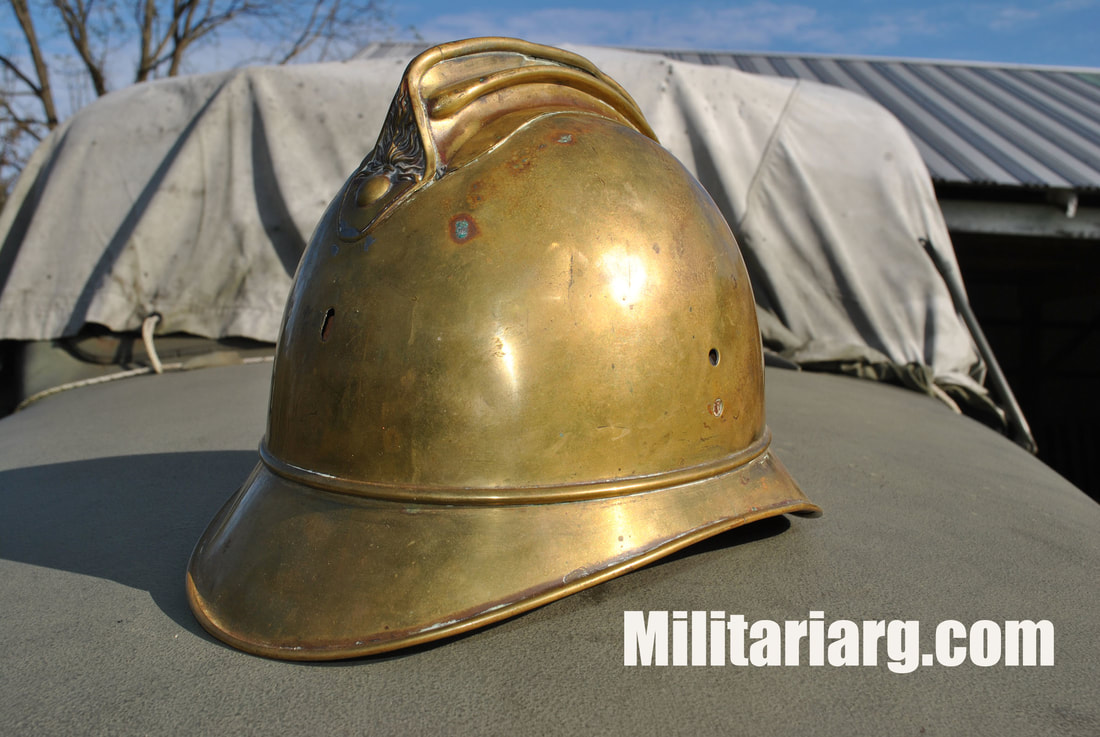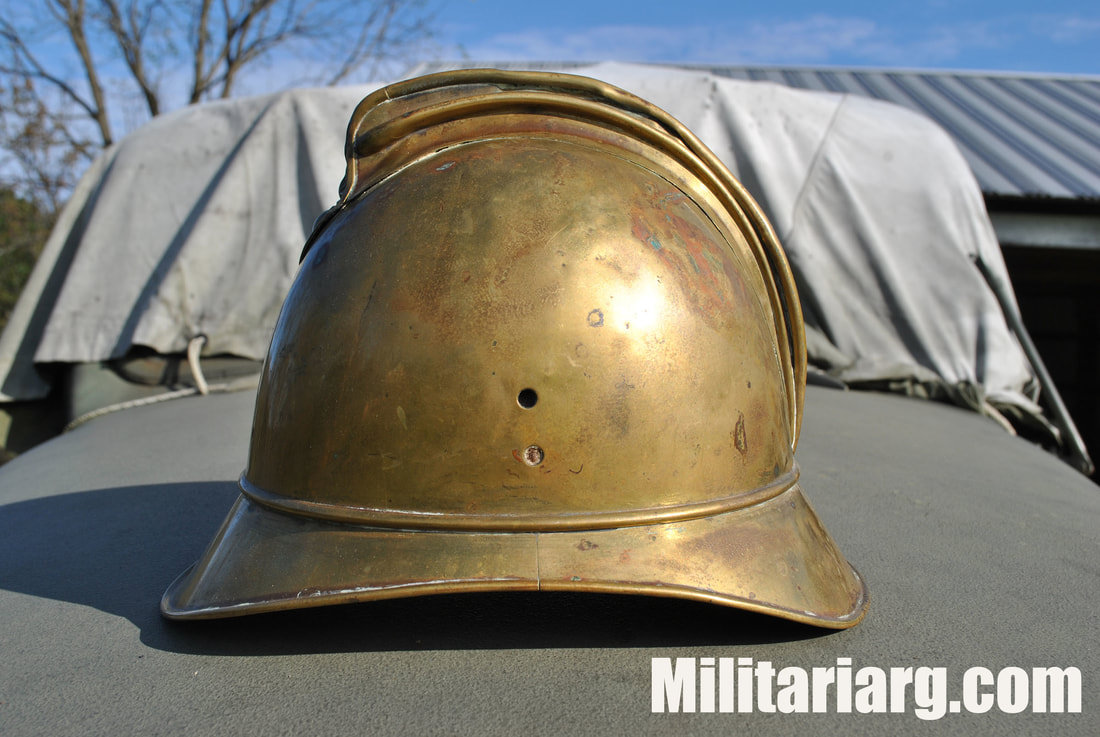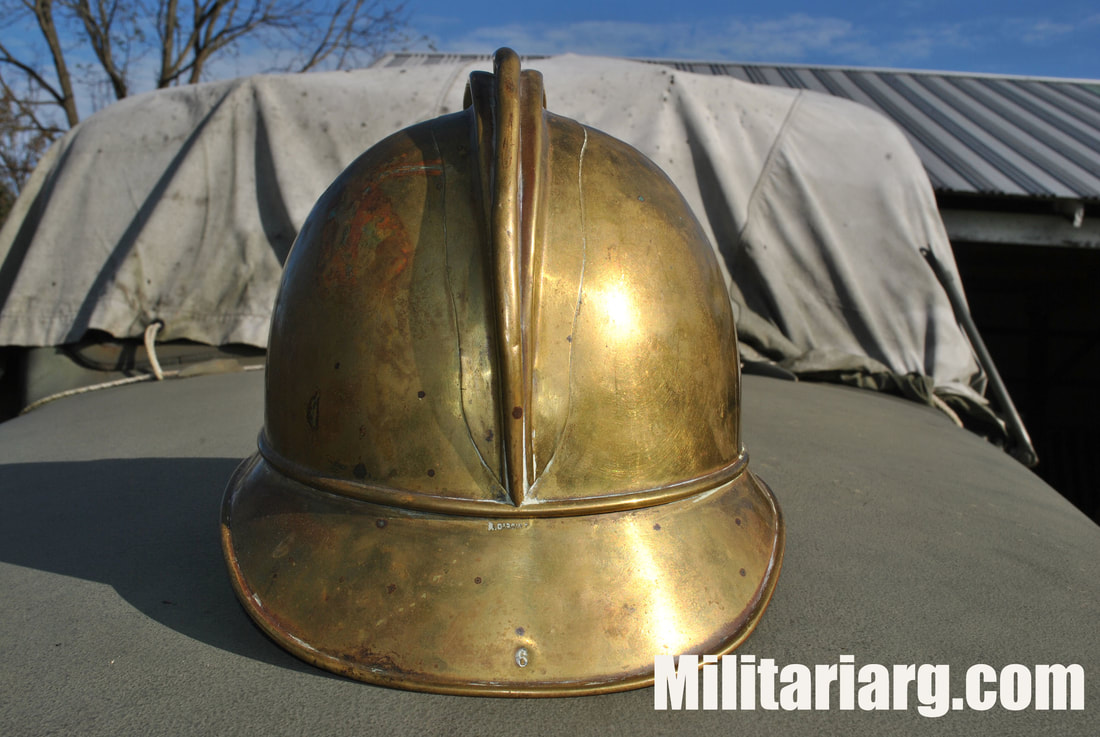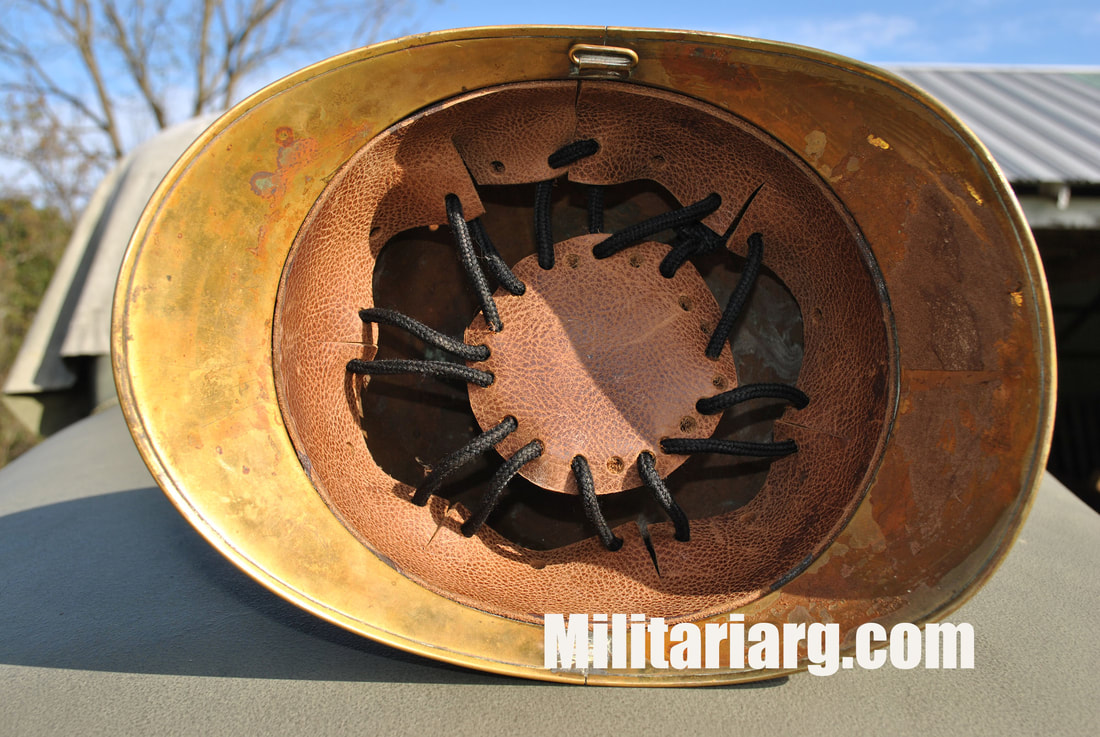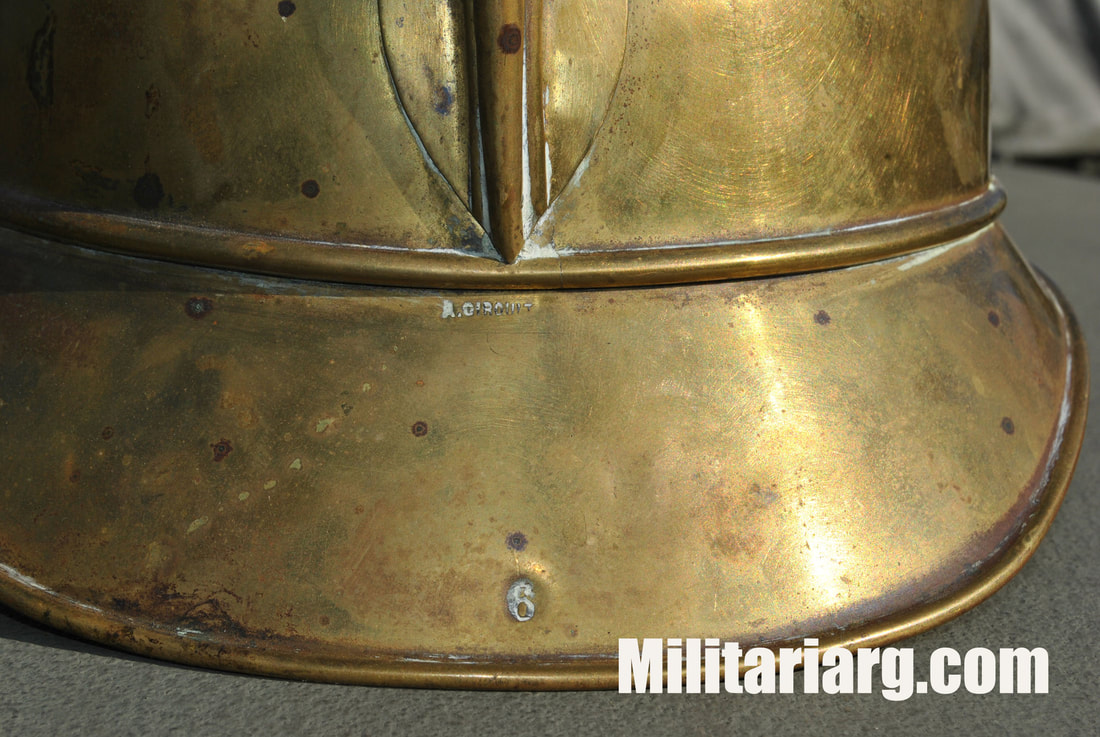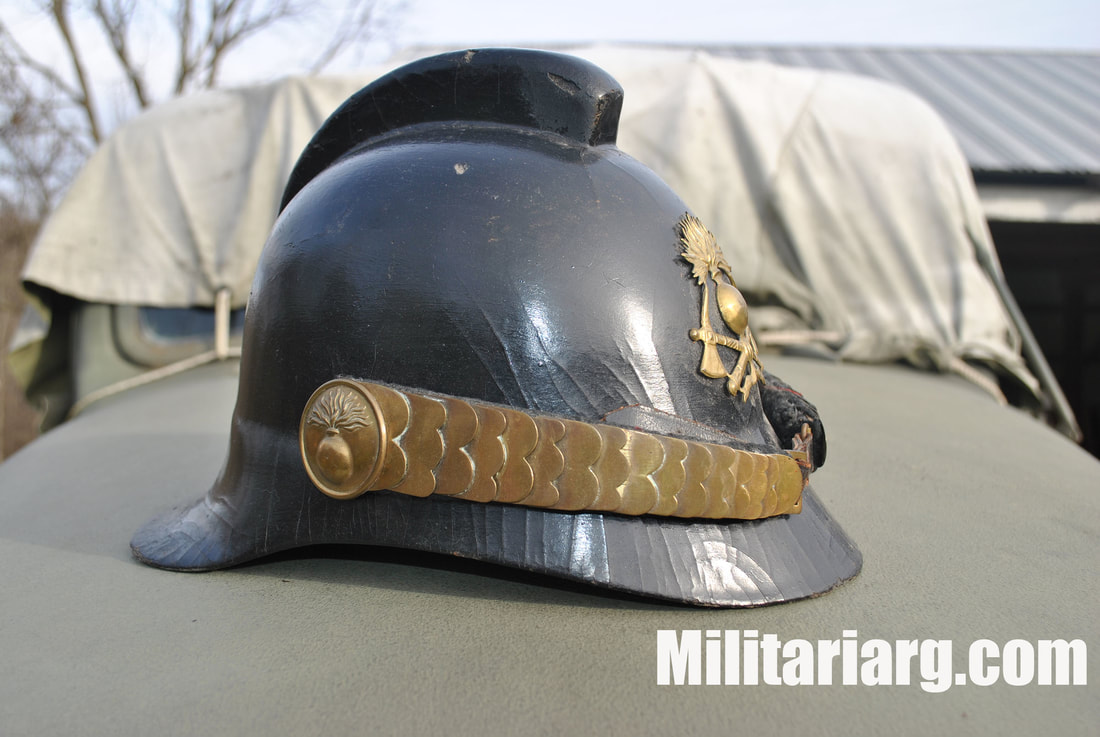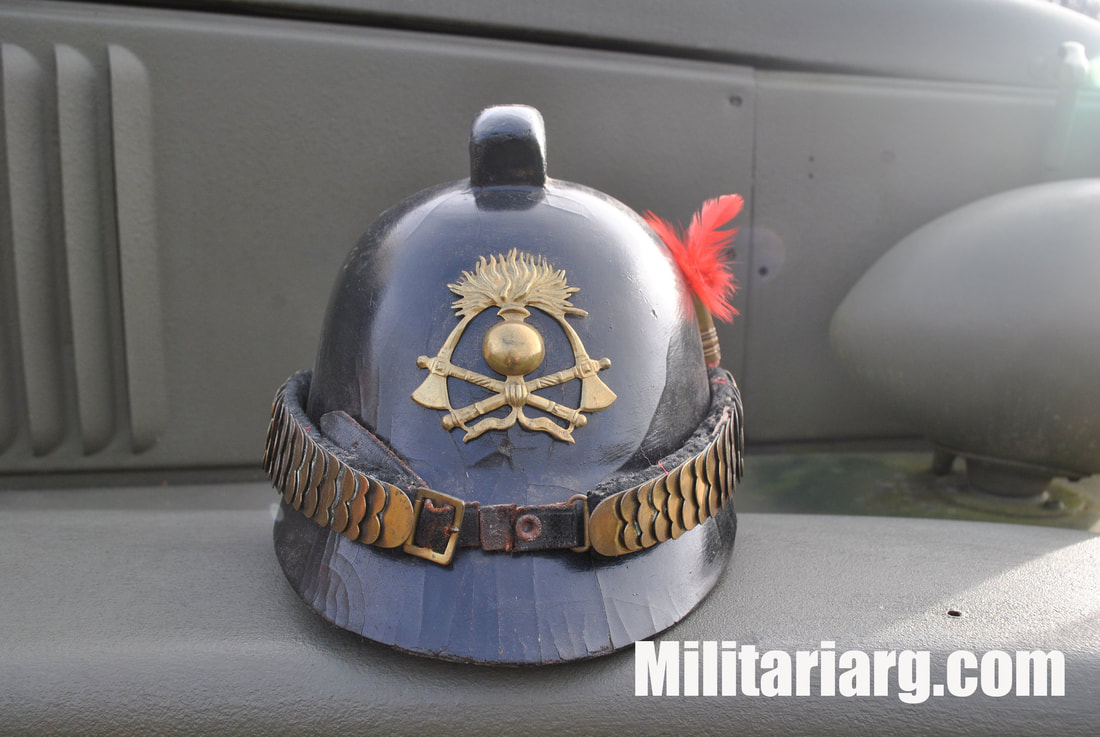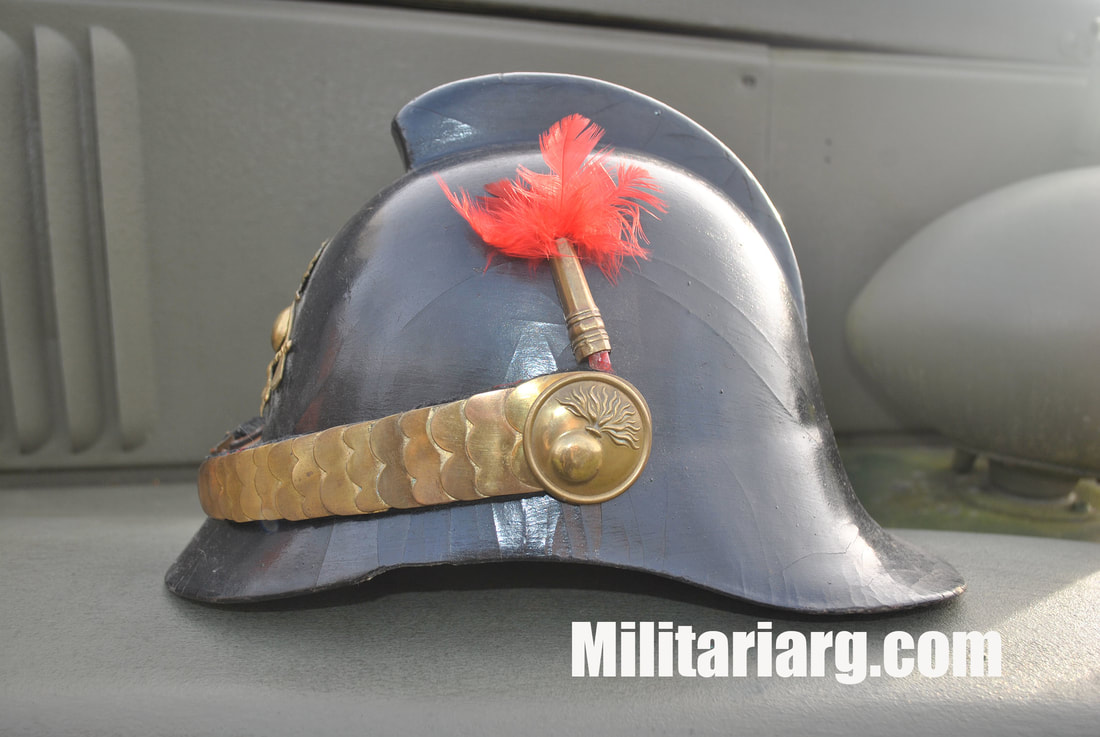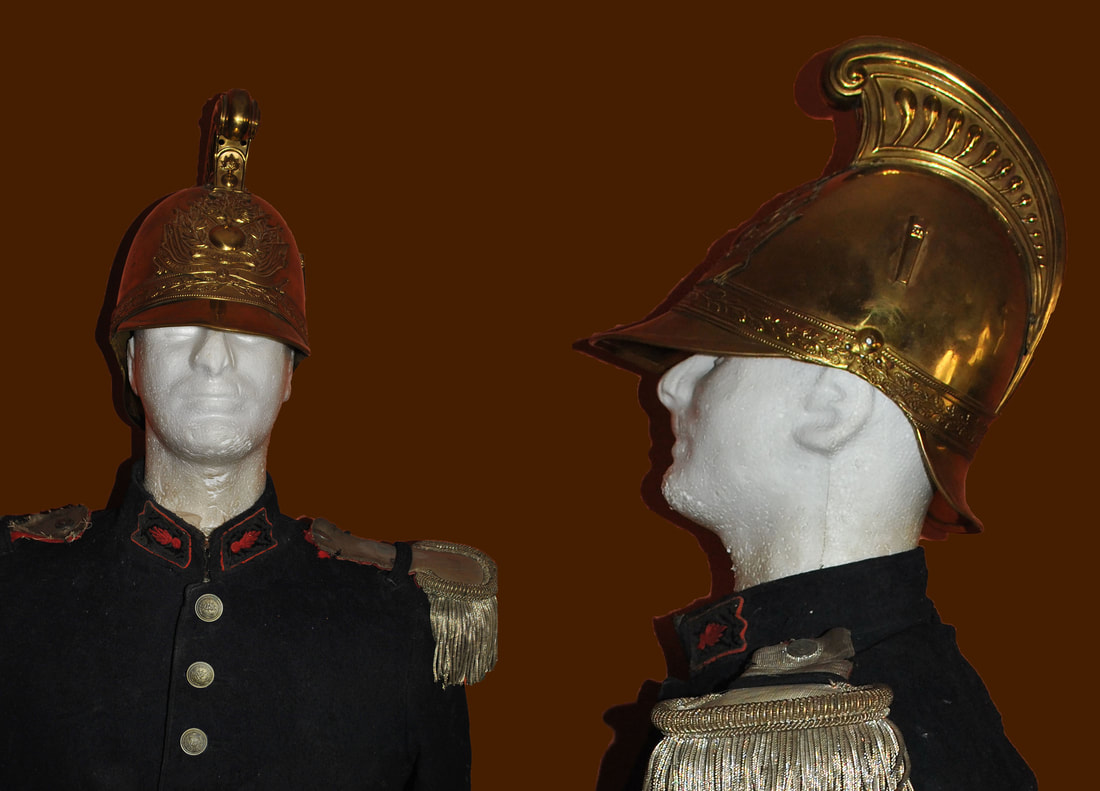
Campagnard 1840 helmet and jacket model 1880.
European firefighter helmets of the 19th century were predominantly made of brass or other metals and featured a militaristic design with a high central crest to deflect falling masonry, a response to the prevalent stone and brick architecture of European cities.
The design of the helmets was largely influenced by military headwear, particularly cavalry helmets, prioritizing deflection of heavy falling debris over the impact absorption and water channeling features of American leather helmets.
The primary material was polished brass, valued for its strength, durability, and resistance to corrosion. Some officer helmets were silver-plated. Other metals like iron sheets were also used, joined with rivets.
A distinguishing feature was a high, rigid crest running from the front to the back of the helmet. This was strategically designed to make falling bricks and other heavy debris glance off the helmet rather than hit the skull directly.
Most designs included a small front visor and a flared rear neck guard (also called a neck visor) to provide 360-degree protection from falling embers and water.
These helmets often had a formal, decorative appearance, featuring intricate badges, civic coats of arms, and details like dragon-shaped comb holders that reflected local pride.
Different European nations adopted variations of this general style:
France: Napoleon Bonaparte reordered French firefighters into a military unit, the Sapeurs-pompiers, who wore a brass helmet with a high central crest, a style that was widely copied across Europe. The French casque became an iconic symbol of the fire service.
Great Britain: Captain Sir Eyre Massey Shaw introduced the French-inspired Merryweather helmet
to the London Metropolitan Fire Brigade in 1868, replacing an earlier leather helmet. These were made by manufacturers like Merryweather & Sons and were widely adopted across the British Empire.
Germany: The evolution of German fire helmets was heavily influenced by the military Pickelhaube (spiked helmet). They adopted a similar shape, with a leather or metal body and a prominent spike (later replaced by a simple finial or vent) on top, a style that persisted well into the 20th century.
The design of the helmets was largely influenced by military headwear, particularly cavalry helmets, prioritizing deflection of heavy falling debris over the impact absorption and water channeling features of American leather helmets.
The primary material was polished brass, valued for its strength, durability, and resistance to corrosion. Some officer helmets were silver-plated. Other metals like iron sheets were also used, joined with rivets.
A distinguishing feature was a high, rigid crest running from the front to the back of the helmet. This was strategically designed to make falling bricks and other heavy debris glance off the helmet rather than hit the skull directly.
Most designs included a small front visor and a flared rear neck guard (also called a neck visor) to provide 360-degree protection from falling embers and water.
These helmets often had a formal, decorative appearance, featuring intricate badges, civic coats of arms, and details like dragon-shaped comb holders that reflected local pride.
Different European nations adopted variations of this general style:
France: Napoleon Bonaparte reordered French firefighters into a military unit, the Sapeurs-pompiers, who wore a brass helmet with a high central crest, a style that was widely copied across Europe. The French casque became an iconic symbol of the fire service.
Great Britain: Captain Sir Eyre Massey Shaw introduced the French-inspired Merryweather helmet
to the London Metropolitan Fire Brigade in 1868, replacing an earlier leather helmet. These were made by manufacturers like Merryweather & Sons and were widely adopted across the British Empire.
Germany: The evolution of German fire helmets was heavily influenced by the military Pickelhaube (spiked helmet). They adopted a similar shape, with a leather or metal body and a prominent spike (later replaced by a simple finial or vent) on top, a style that persisted well into the 20th century.
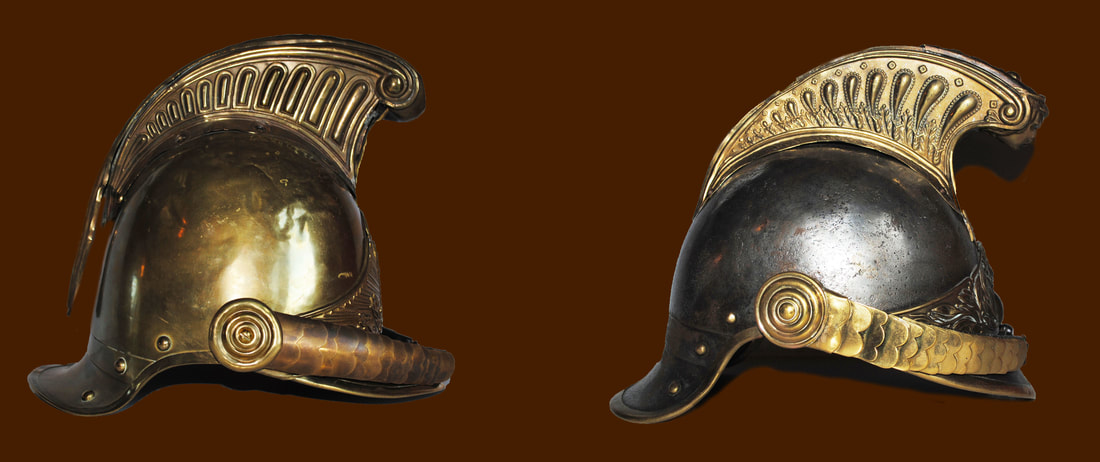
French helmet 1816 -1821 "Minerva style", modified 1830. Bourbon Restoration - July Monarchy.
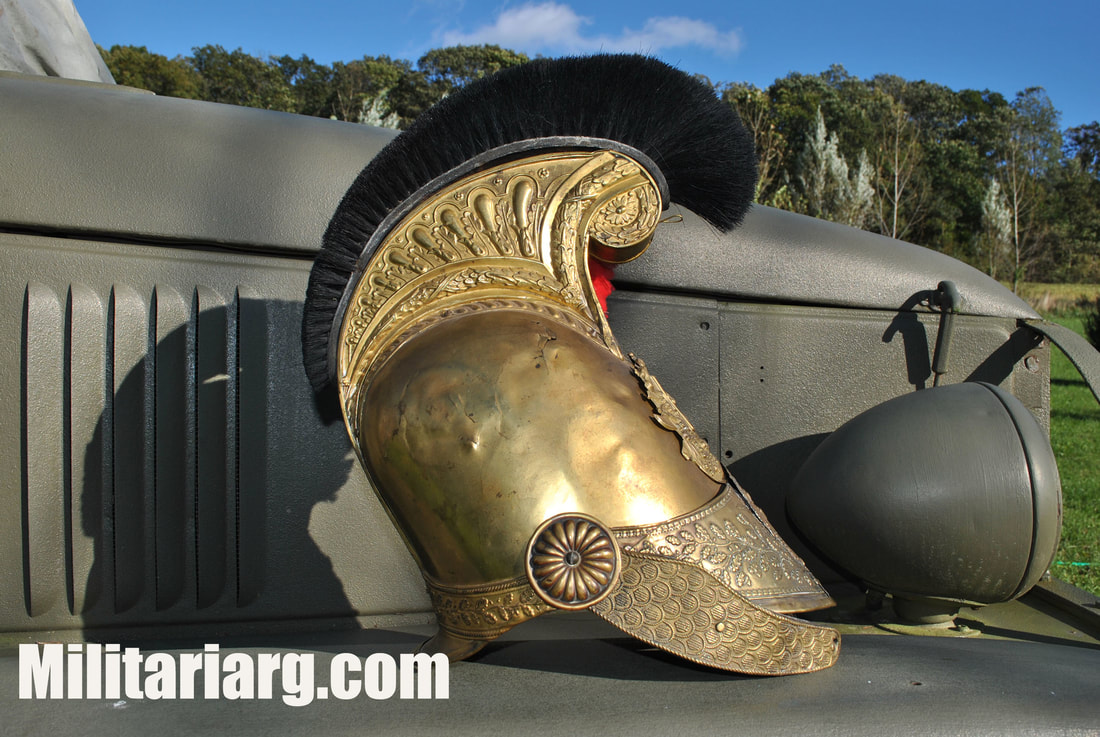
French firefighter helmets of the 19th century were predominantly made of polished brass or copper and featured a distinctive, militaristic design with a high central crest, inspired by cavalry headwear.
Design and Features
The French casque de pompiers (firefighter's helmet) was largely a continuation of styles developed under Napoleon Bonaparte, who organized Paris firefighters into a military unit called the Sapeurs-pompiers.
Material: The main material was brass, which was durable, corrosion-resistant, and visually imposing. Officer helmets were sometimes silver-plated.
High Central Crest (Cimier): A prominent, rigid crest ran from front to back. It was designed to make heavy, falling masonry and other debris glance off the helmet, a functional response to the stone and brick architecture prevalent in French cities.
Frontal Plate: The front featured an ornate plate, often displaying a flaming bomb symbol (an emblem of elite troops), the city's coat of arms, or motifs like oak and laurel branches. The inscription "Sapeurs-Pompiers de" followed by the town name was common.
Visor and Neck Guard: A small fixed front visor and a flared rear neck guard (sometimes in a "lobster tail" style) provided protection to the face and neck.
Chin Strap: The helmet was secured with a chin strap, often featuring decorative, fish-scale-patterned leather or metal links, attached to the helmet via roundels (ear pieces).
Plume and Chenille: For parades and ceremonies, a decorative horsehair plume (often red for sappers and NCOs, tricolor for officers) was inserted into a holder on the side, and a wool "chenille" was sometimes added to the crest. These were removable for actual firefighting duties.
Models: Different models were produced throughout the century, such as the Model 1812 and Model 1855, with slight variations in the height of the crest and the design of the front plate. The Model 1895 was another version, which eventually led to the widely used "Adrian" helmet in the 20th century.
This distinct and recognizable style was widely copied by fire services across Europe and the British Empire.
Design and Features
The French casque de pompiers (firefighter's helmet) was largely a continuation of styles developed under Napoleon Bonaparte, who organized Paris firefighters into a military unit called the Sapeurs-pompiers.
Material: The main material was brass, which was durable, corrosion-resistant, and visually imposing. Officer helmets were sometimes silver-plated.
High Central Crest (Cimier): A prominent, rigid crest ran from front to back. It was designed to make heavy, falling masonry and other debris glance off the helmet, a functional response to the stone and brick architecture prevalent in French cities.
Frontal Plate: The front featured an ornate plate, often displaying a flaming bomb symbol (an emblem of elite troops), the city's coat of arms, or motifs like oak and laurel branches. The inscription "Sapeurs-Pompiers de" followed by the town name was common.
Visor and Neck Guard: A small fixed front visor and a flared rear neck guard (sometimes in a "lobster tail" style) provided protection to the face and neck.
Chin Strap: The helmet was secured with a chin strap, often featuring decorative, fish-scale-patterned leather or metal links, attached to the helmet via roundels (ear pieces).
Plume and Chenille: For parades and ceremonies, a decorative horsehair plume (often red for sappers and NCOs, tricolor for officers) was inserted into a holder on the side, and a wool "chenille" was sometimes added to the crest. These were removable for actual firefighting duties.
Models: Different models were produced throughout the century, such as the Model 1812 and Model 1855, with slight variations in the height of the crest and the design of the front plate. The Model 1895 was another version, which eventually led to the widely used "Adrian" helmet in the 20th century.
This distinct and recognizable style was widely copied by fire services across Europe and the British Empire.
Victorian Era British helmet (1850 - 1870) made by Merryweather & Sons - London Fire Brigade.
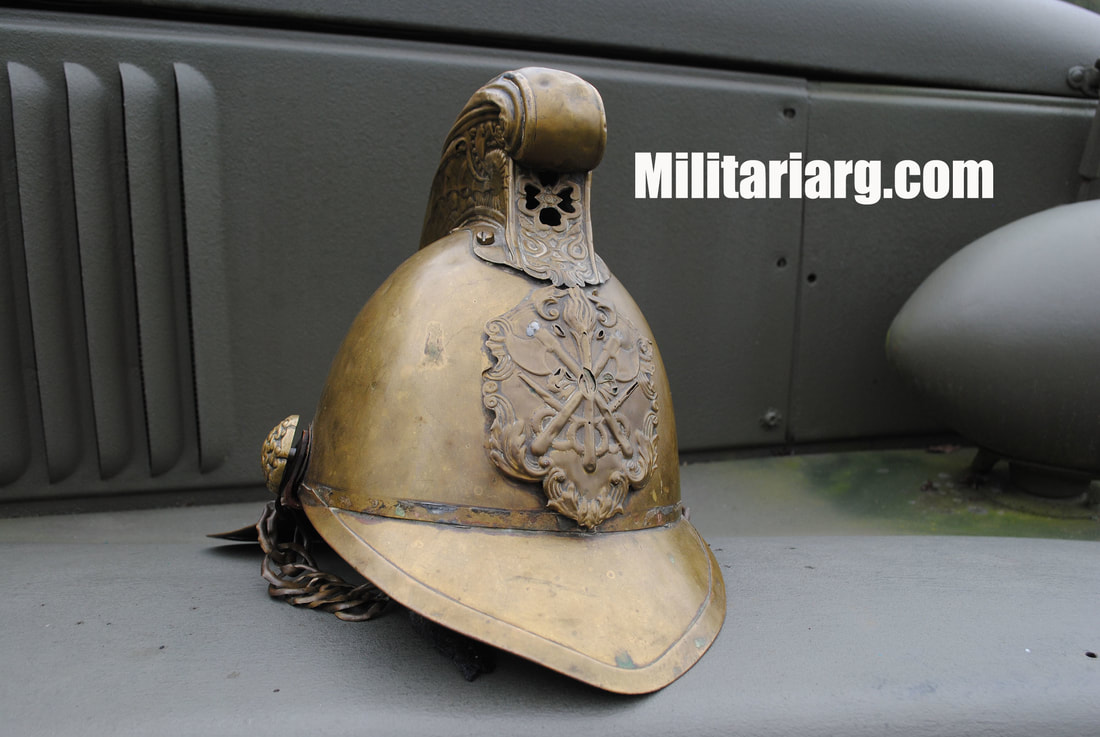
The Merryweather helmet was the standard issue for most British fire brigades during the Victorian era and well into the 20th century. Manufactured by Merryweather & Sons, a prominent fire equipment company, the helmet was highly recognizable and became an iconic symbol of the British fire service.
French Inspiration: The helmet's design was modelled after the brass helmets of the French Army's Sapeurs-pompiers. Captain Sir Eyre Massey Shaw, the first Chief Officer of the London Metropolitan Fire Brigade (MFB), adopted the style after seeing the French design on a visit to Paris and introduced it to the MFB in 1868, replacing an earlier black leather helmet.
Material and Construction: The helmets were typically made of polished brass for firemen and silver-plated for officers. The construction was lightweight yet sturdy, featuring a multi-part design with components that could be repaired or replaced if damaged. The internal lining was made of leather for comfort.
Design:
Central Crest: A prominent, high crest ran along the top, designed to deflect falling debris. It often featured an ornate design, such as a fire-breathing dragon. Front Plate: A badge on the front displayed the brigade's name, city coat of arms, or a motif of crossed axes and hoses.
Chin Strap: A chin strap made of leather with brass scales secured the helmet.
Protection: The design provided protection to the head and neck, though it later posed a safety hazard due to metal's conductivity with the rise of widespread electricity use in buildings.
Widespread Use and Legacy: Although Captain Shaw intended the design to be exclusive to the MFB, Merryweather & Sons sold it to other brigades, making it a familiar sight throughout Britain and the British Empire. The helmet remained in continuous use in the UK for over 60 years, with some traditional brass helmets remaining in service in places like Queensland, Australia, until 1970.
French Inspiration: The helmet's design was modelled after the brass helmets of the French Army's Sapeurs-pompiers. Captain Sir Eyre Massey Shaw, the first Chief Officer of the London Metropolitan Fire Brigade (MFB), adopted the style after seeing the French design on a visit to Paris and introduced it to the MFB in 1868, replacing an earlier black leather helmet.
Material and Construction: The helmets were typically made of polished brass for firemen and silver-plated for officers. The construction was lightweight yet sturdy, featuring a multi-part design with components that could be repaired or replaced if damaged. The internal lining was made of leather for comfort.
Design:
Central Crest: A prominent, high crest ran along the top, designed to deflect falling debris. It often featured an ornate design, such as a fire-breathing dragon. Front Plate: A badge on the front displayed the brigade's name, city coat of arms, or a motif of crossed axes and hoses.
Chin Strap: A chin strap made of leather with brass scales secured the helmet.
Protection: The design provided protection to the head and neck, though it later posed a safety hazard due to metal's conductivity with the rise of widespread electricity use in buildings.
Widespread Use and Legacy: Although Captain Shaw intended the design to be exclusive to the MFB, Merryweather & Sons sold it to other brigades, making it a familiar sight throughout Britain and the British Empire. The helmet remained in continuous use in the UK for over 60 years, with some traditional brass helmets remaining in service in places like Queensland, Australia, until 1970.
1830 Pattern - Casque Casquette de Feu Variants:
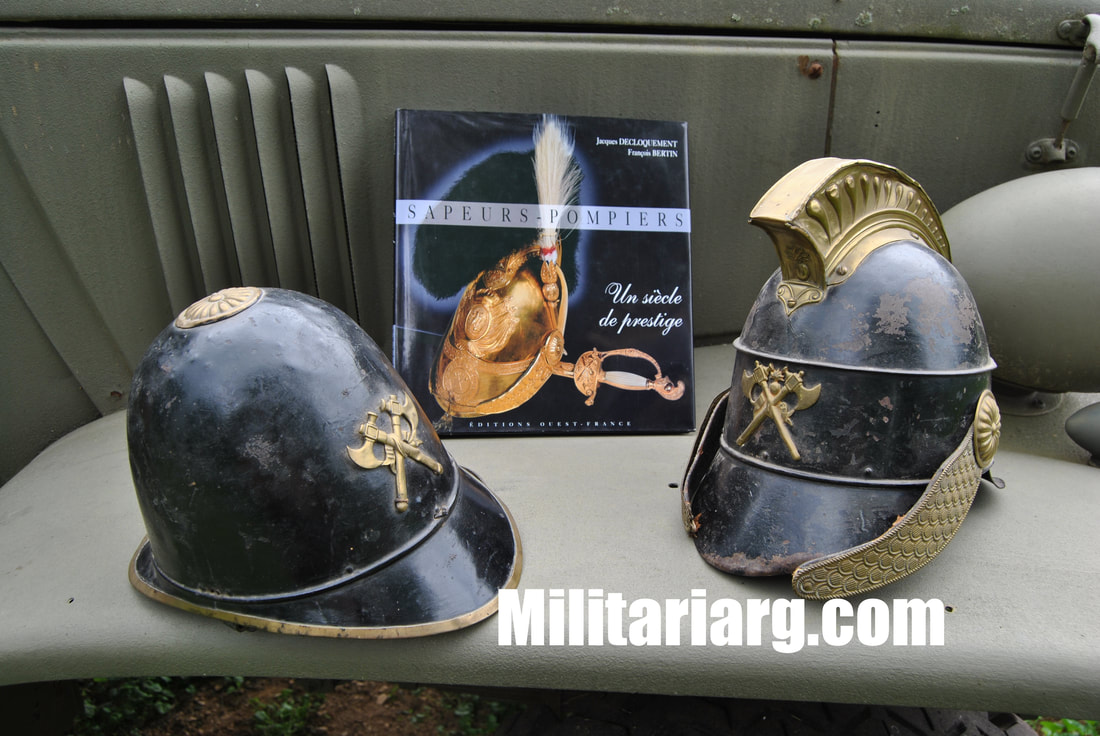
French helmet model 1825 - 1830 (July Monarchy - Louis Philippe). Comune de Caromb - (Provence-Alpes-Côte d'Azur region in southeastern France).
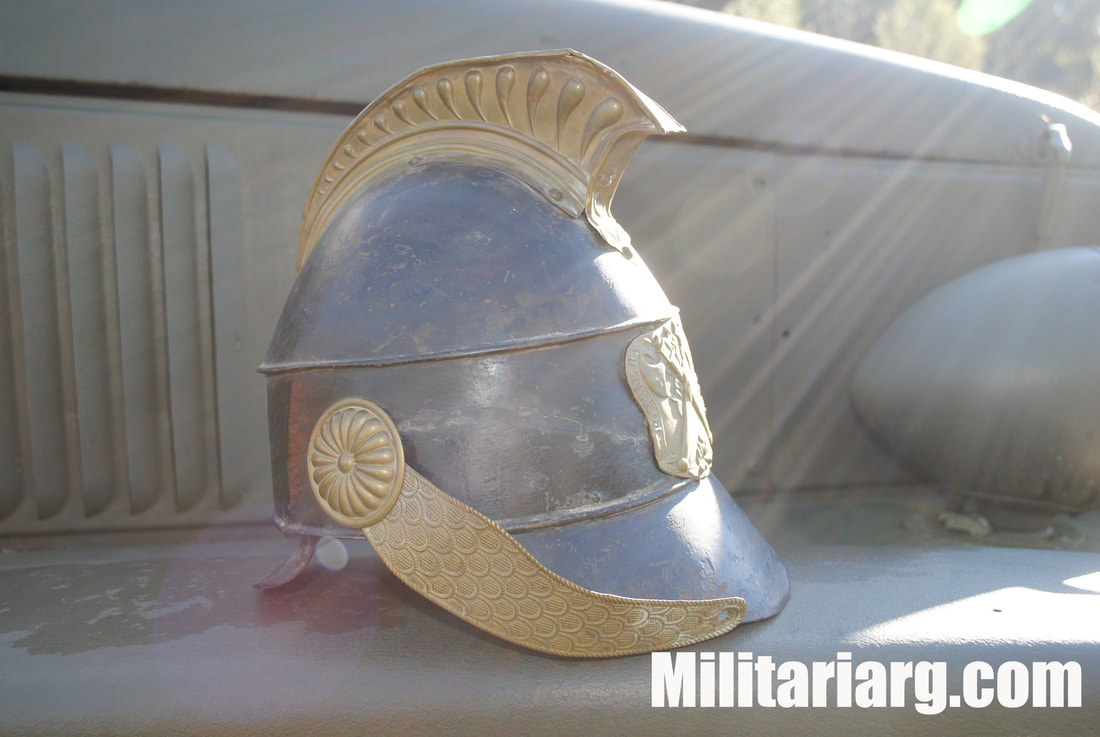
French helmet 1840 model "Campagnard" with crest model 1855.
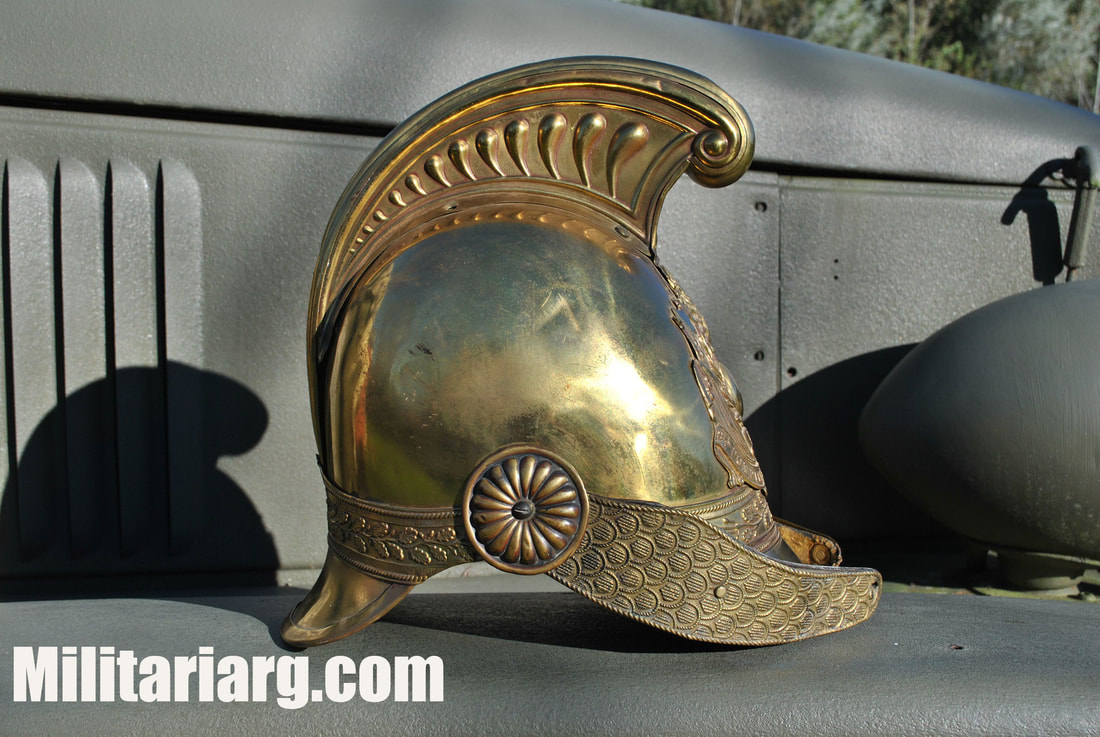
French helmet Model 1852 with chinscales model 1855. Second Empire - Napoleon III
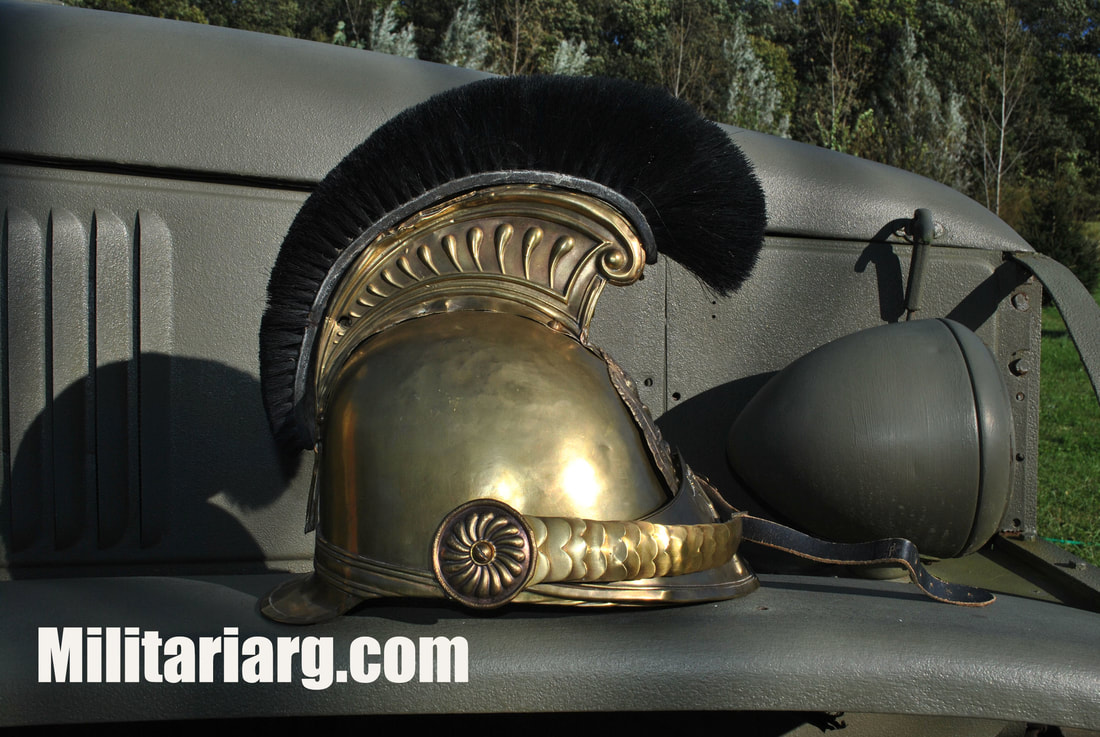
French Helmet 1850 - 1860.
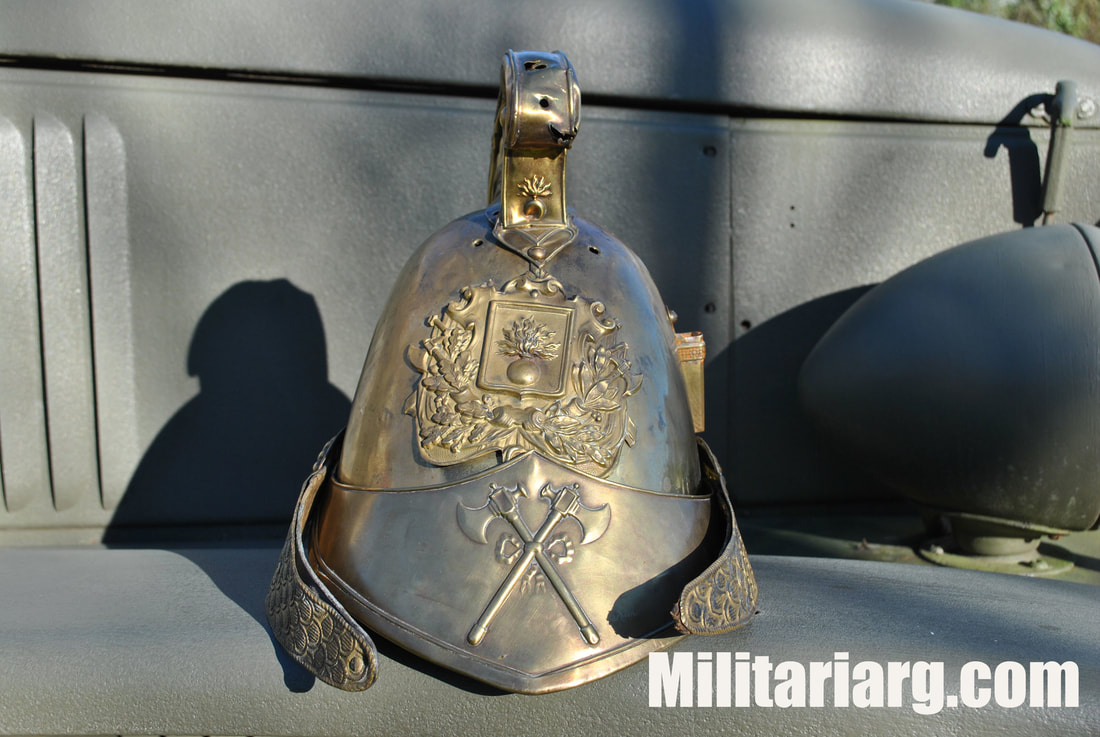
French helmet model 1855. Second Empire - Napoleon III. "Comune St Meen"
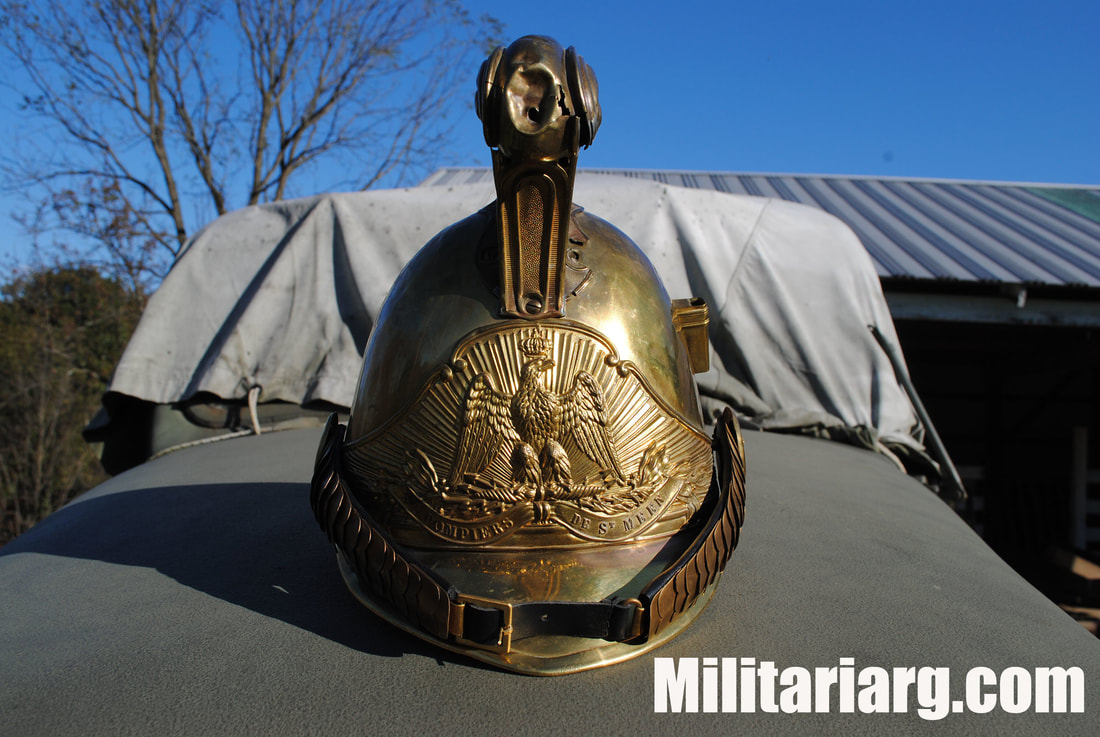
French Fire Helmet Model 1855 (Second Empire) and French Cuirassier - Dragoon Helmet Model 1872 (III Republic):
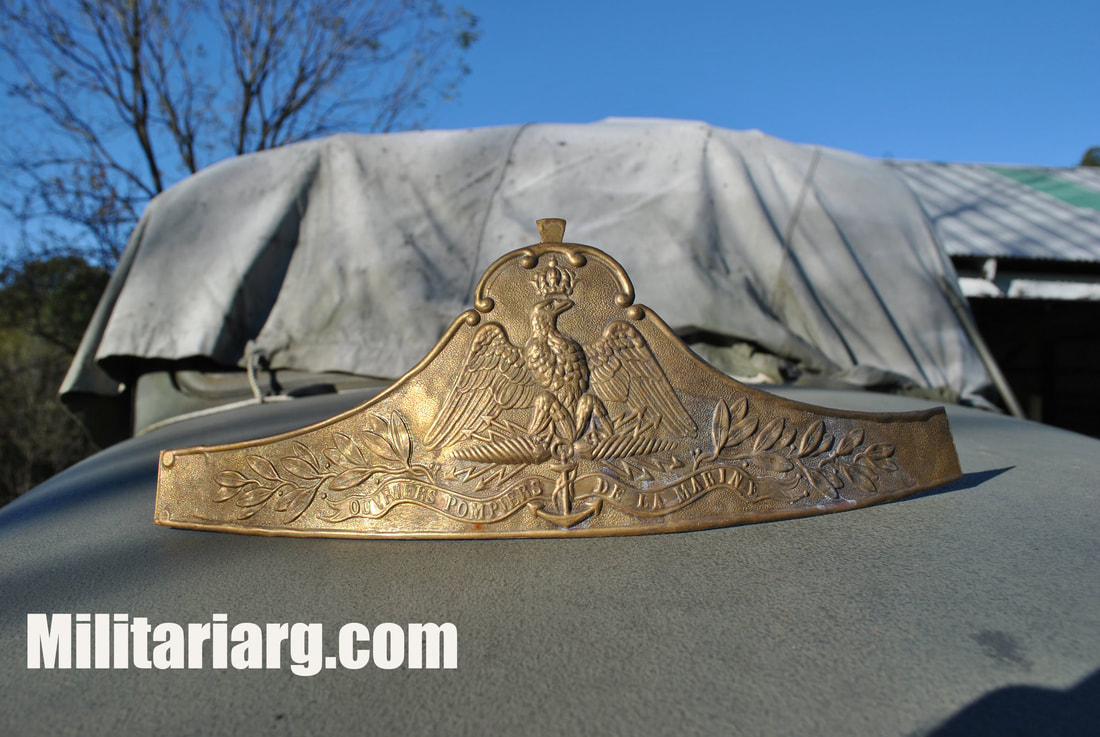
Navy badge for French helmet model 1855. Second Empire - Napoleon III.
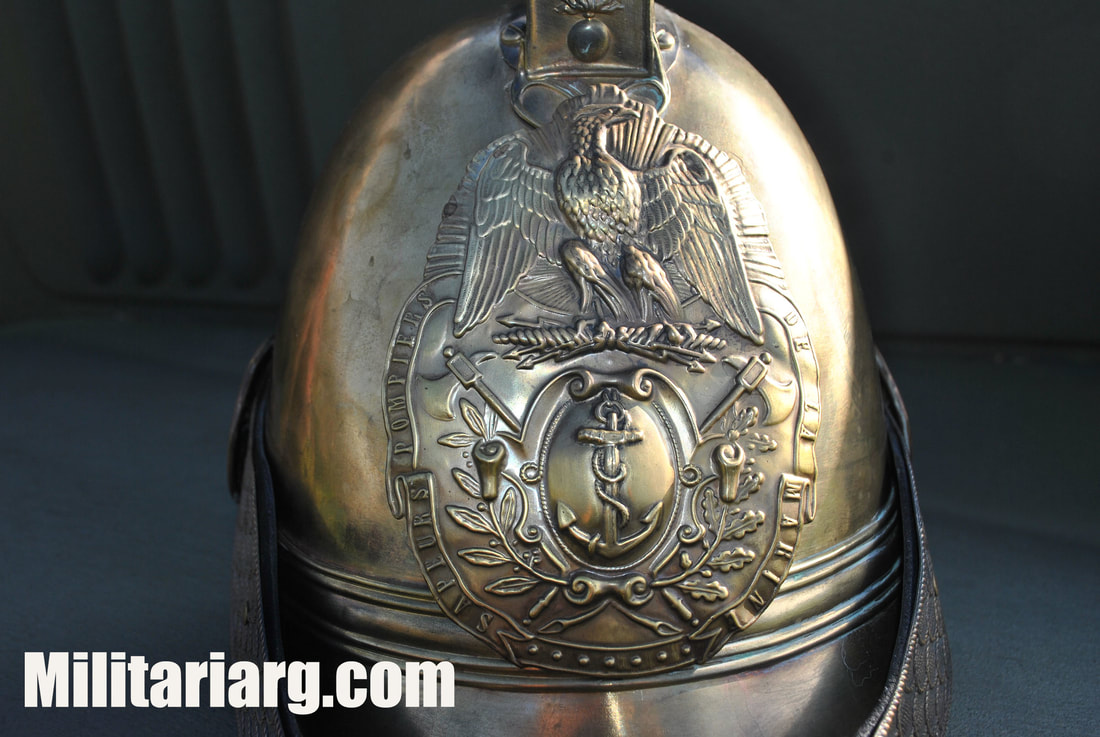
Naval badge for French helmet. Second Empire - Napoleon III.
French helmet model 1850 - 1860 "Façon Paris".
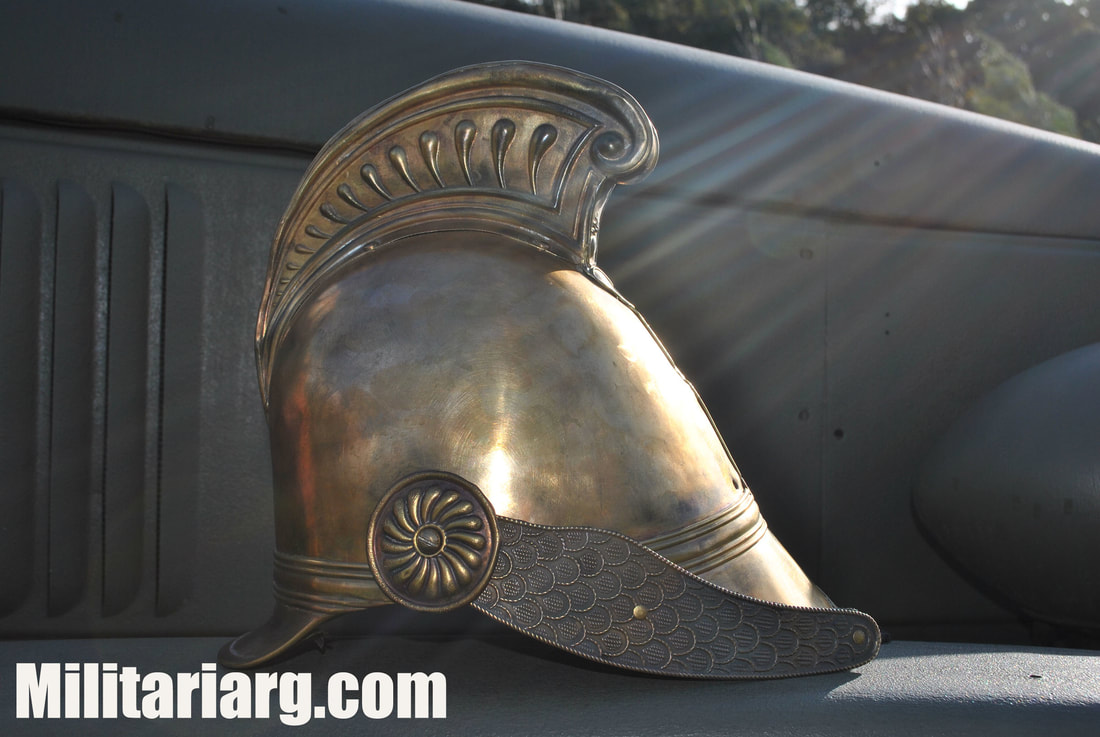
French helmet model 1885 (Ex Argentina "Bomberos de la Capital Buenos Aires")
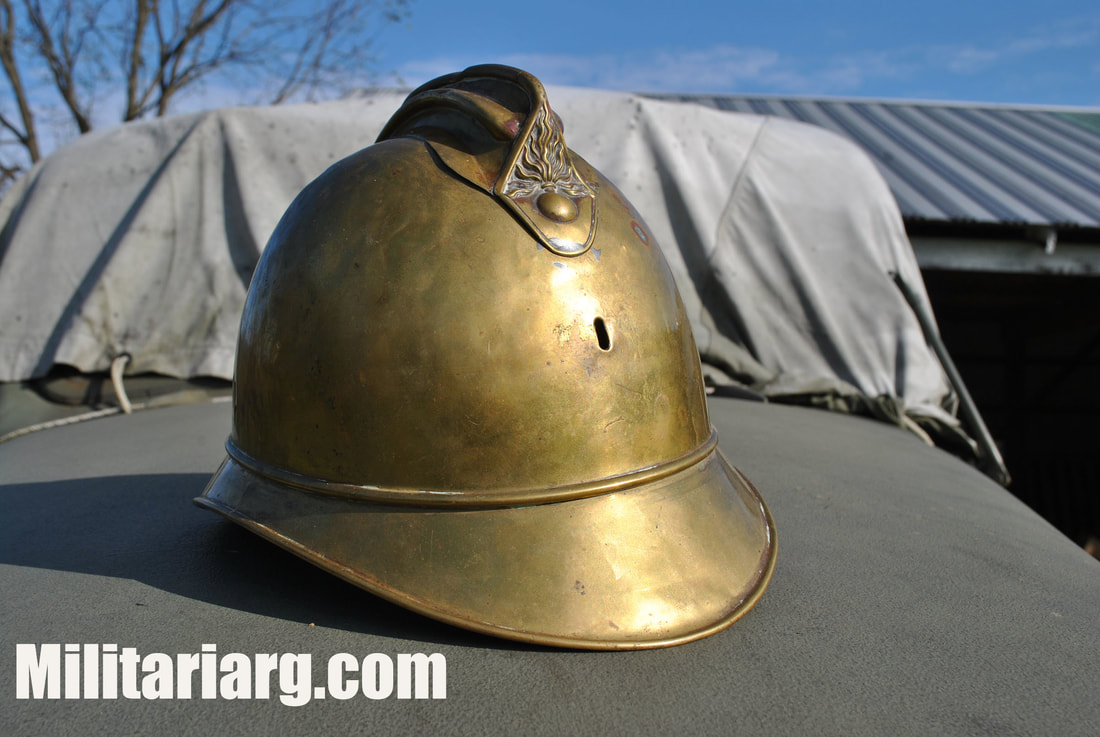
Early 1900's Argentine (French Type) Firefighter Helmet:
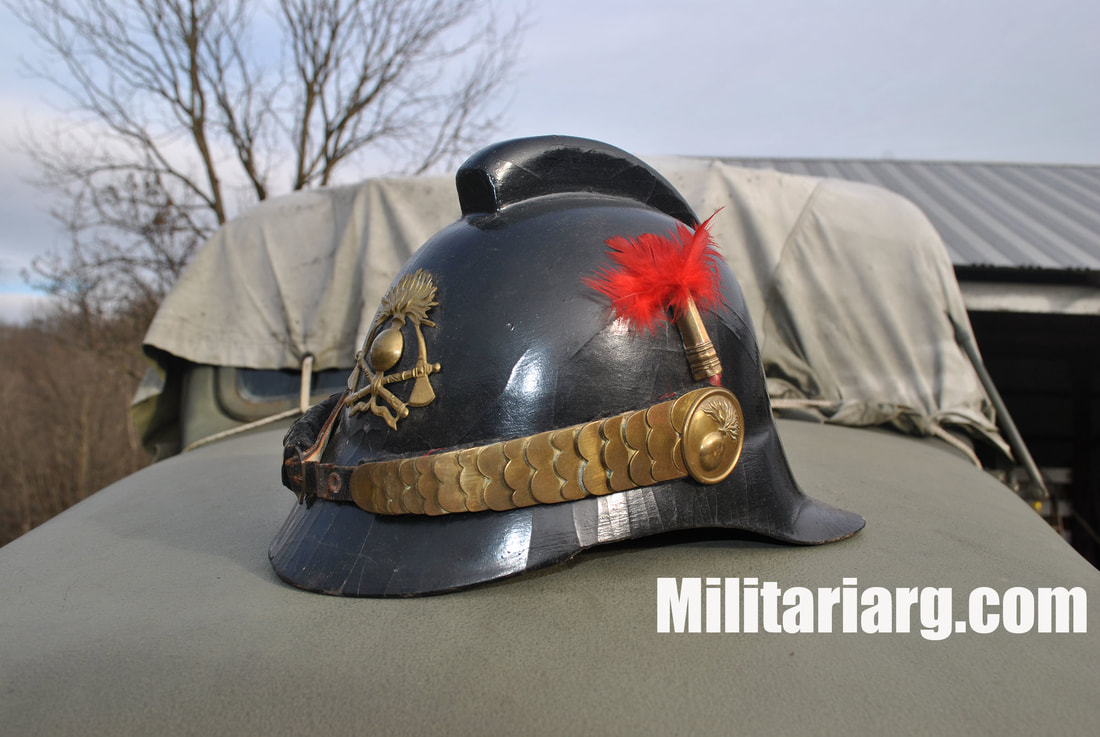
Miscellaneous:
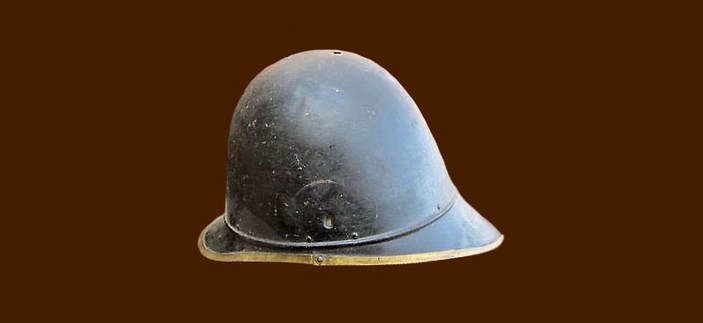
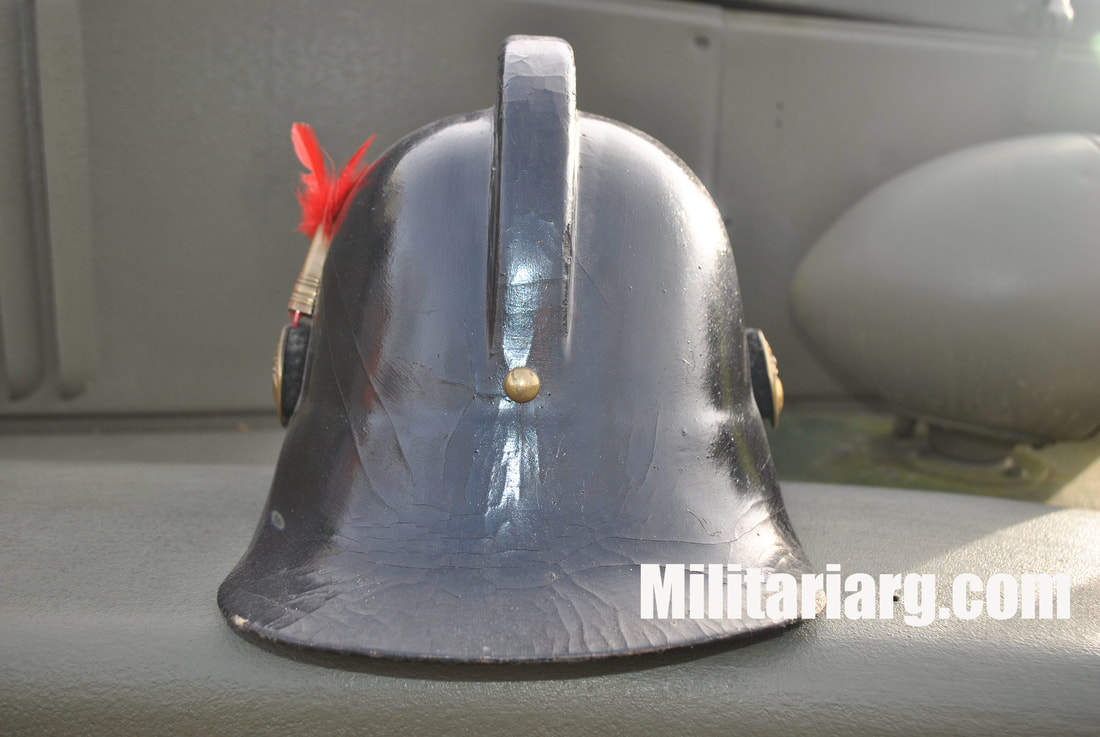
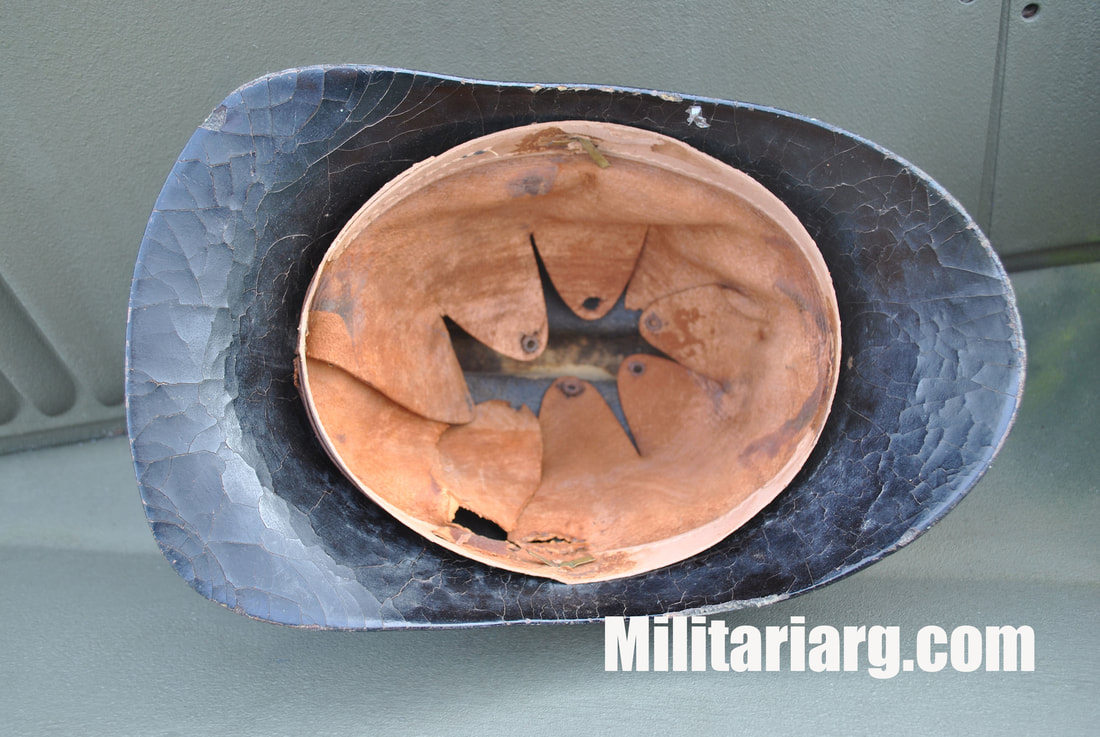
Unknown Fire Helmet Shell. Some sources found on the web:
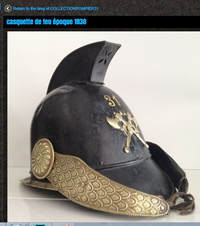
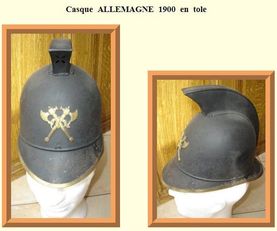
Above left image capture: According to the photo's website, this piece could be a French fire helmet 1830. You can access the page by clicking on the image.
Above right image capture: In this fireman's helmet collection page, the same helmet model but it said to be a German fire helmet from 1900. You can access the page by clicking on the image
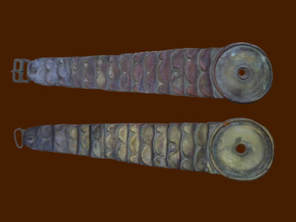
Early French Fire helmet, scales chinstrap.